

Deep Kindness With Houston Kraft
Posted by John Livesay in podcast | 0 comments

Everyone can agree that kindness is a vital character everyone must possess, but in today’s world soaked in ambition, achievements, and ego, its meaning sadly wanes day after day. Houston Kraft, the author of Deep Kindness, believes that this can still be remedied by integrating the idea of kindness in the education system. Together with John Livesay, he discusses how providing training and curriculums centered on compassion can help change the perspective of kids in showing kindness rather than merely chasing success. Houston also explains how to bridge the empathy gap by sharing his touching story of one rainy night in Haiti.
—
Listen to the podcast here
Deep Kindness With Houston Kraft
Our guest is Houston Kraft, a professional speaker, author, curriculum designer, and kindness advocate who speaks at schools, conferences, and events internationally. He spoken to over a half a million people at 600 engagements and counting. He’s the Cofounder of CharacterStrong, which is training and curriculums that create more compassionate cultures in schools and communities. They work with 2,500 schools serving over a million students with their content. In 2019, he was featured by Lay’s on BBQ and Jalapeño chip bags for their spreading smiles campaign. His first book, Deep Kindness, is being published. Welcome to the show, Houston.
Thanks, John. It’s always nice to have kind things that you helped write read back to you. I don’t know what to do.
It’s quite a journey. What I love about your website is these pictures of you as a young boy. I’m imagining, there’s a story there of what got you into wanting to be involved with schools and students, as well as this a-ha moment of when you realize that kindness was going to help you through something.
My roommate, who’s a comedian and amazing storyteller says, “I was in middle school and I hugged someone and said, ‘I can monetize that.’” His joke for how I’ve ended up where I’m at. It’s not how it happened. My world has revolved around the practice of kindness for a long time. In my senior year of high school, I came together with a group of friends and we started a club at our school that was about weekly kindness practice. That was the premise. It’s protected time to put into action. What we believed was we knew we wanted our school to be a more compassionate place.
[bctt tweet=”The more anxious people are, the less empathetic they become.” username=”John_Livesay”]
We wanted people to feel accepted, belonging and safe in our schools, organizations and for our world. We thought, “What is the most practical way to make sure that we did that on a weekly basis?” That was a turning point for me was the experience of running that club with friends and watching it grow, feeling the joy that I got from participating and practicing kindness. My world and life ever since have been like, “How do we do this for more people in more places?”
What did you decide you’re going to major when you were in school? Did you think you might be a teacher? How did you get to this level where you are now writing books and speaking about it?
Mostly on accident. My two big passions in high school were theater and student leadership. When I got to college, I’m at student leadership, I said, “What does that look like in the real world and politics. I’ll be a politician.” I took one political science class and I was like, “No, I’m not going to be politician.” Acting was my other passion. I went to Los Angeles, the summer after my freshman year. I worked on a movie with Lindsay Lohan. I was like, “I’m not going to be an actor either.” I realized that the fusion of the two was speaking in schools. I got to be a storyteller, performance aspect, but I also got to talk about how to lead in a way that had integrity, that was focused on service and compassion in the world. That’s what I started doing. As I was finishing college, I was beginning to speak on stages and here we are.
Do you find that people are asking for you more than they were even many years ago because of bullying issues, school shootings and things like that? If that’s on the opposite end of what you’re teaching and no matter where you stand on gun control, the whole point is how do we prevent people from feeling isolated and angry that they need to act out is most likely not a lot of kindness coming to them in their childhood.
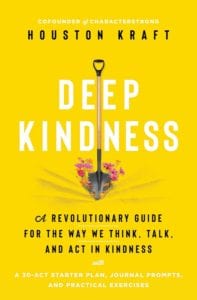
Deep Kindness: A Revolutionary Guide for the Way We Think, Talk, and Act in Kindness
My ultimate aim is to work myself out of job, and yet, I feel busier than ever, which is tough. It is the context of the world. We’ve always had challenges and access to information distribution that allows us to be more conscious or aware of some of the challenges that we already had. As we communicate information more quickly and widely, the way that we speak about things to me is what I’ve grown to be passionate about. In some ways, it’s why I wrote the book. The language we have around kindness doesn’t do kindness a service.
Tell me more about that.
With every word in our world, we have the dictionary definition, cultural definition and our own personal lived experience definition. The cultural definition of kindness for most people brings to life the things that the news talks about what kindness is, which is like the pay it forward coffee lines or the high five hallways or the Post-it note that were positive. In the book, I talk about that as confetti kindness, which is not inherently bad. We’re about to celebrate World Kindness Day and there are all kinds of organizations that promote random acts of kindness. I suppose my argument is that the kindness the world needs, in my opinion, presently is not random at all. It’s incredibly specific, intentional, thoughtful. It is the by-product of listening and empathy.
As we look into the reality of how most people interpret kindness, a lot of people think about that it’s free. My argument is that kindness is not free, but it requires time, energy and comfort from us in order to in many ways be humbled and do good for people who look different, act different, talk in front of us. In a time where we have divisiveness, kindness is going to require a tremendous amount of listening and perspective taking. That’s what I’m advocating for is a new way to speak about kindness so that we can navigate those issues that even you’re alluding to more honestly. How do we tackle things like gun control or the political divide or bullying? It starts with an honest assessment of what kindness looks like in my life and how to practice it in ways that move the needle, not just the surface level of goodness that the media pays attention to.
[bctt tweet=”The language people have around kindness doesn’t do kindness a service.” username=”John_Livesay”]
I know your opening chapter is titled Something Somewhat Provocative. I love that it grabs the attention with my storytelling and advertising background, which is the kindnesses. I thought, “I guess it isn’t.” What can a parent or teacher do to change that, so that it wouldn’t be normal for a child to do the kind thing first as opposed to it not being the norm?
To me it’s a little bit gentle attack on how we perceive ourselves versus what we do in the world. One of the studies that I think about often comes out of Harvard’s Making Caring Common project. Dr. Richard Weissbourd asked families, “Rank for me what you would prioritize most for your kid. Would you rather they be high-performing or happy or kind?” Eighty something percent of parents said, “They’d rather their kids be happy and kind over high-performing.” It seems like encouraging data. They asked the kids of the same parents say, “What do you think your parents want you to be, high-performing, happy or kind?” The data is the exact opposite. In fact, one of the clever distillations of the study, they said, “The vast majority of kids said that their parents would rather they get good grades, than be a good people.” Which to me runs counter to the argument of most parents or teachers or whoever would say, “We want our kids to be kind.”
The question becomes, “Do we allocate our time, energy, resources, education in order to make that real? What questions do we ask?” The family, when the student gets home is like, “How was your day? What did you learn? How was the test? How was practice?” It’s all about them versus my friend Keith Hawkins have a beautiful paradigm shifting question which is, “What did you do for others today? Who did you serve today? Would did you help?” Those are the questions that rarely get asked. As a result, for the younger generation, they pay attention to more so the indirect communication than they do the direct communication. Most of our indirect communication would say that achievement is more important than generosity.
I love this because I was interviewed by NBC on how to help parents get more than a one-word answer out of their child when they come home from school. With school and you get fine. What I suggested was ask your child, “Tell me a story about the best part of your day,” and then the child can decide beginning, middle, or end. Ideally, the parent tells a story and then you start teaching your child storytelling skills, but this takes it to another level, which would be, “Tell me a story about what you did to help somebody else today.” It would be even more aligned with what you as a parent value. Therefore, the child would then say, “That’s the story they want to hear. Not the best part of my day was I got an A or my team won or whatever the performance measures would be.” Let’s talk about what you described here as the empathy gap. What’s your definition of empathy? Where is the gap occurring?

Deep Kindness: Most indirect communication would say that achievement is more important than generosity.
The definition of empathy is going to require a couple of episodes for me to delve into it a bit more because in the context of kindness, my friend Barbara Gruner has a lovely phrase. She says, “Empathy gives kindness its why.” Which is to say, kindness without empathy, which we can reinterpret for the context of at least as listening and understanding perspective taking. Usually, that kindness is going to serve me more than it does you. To bring an example to it, after the Sandy Hook shooting, this national global tragedy, where there was moment of collective need, people wanted to give kindness to this community who was hurting.
People from all over the world sent stuffed animals or teddy bears, but Newtown, Connecticut had to rent a 20,000 square foot warehouse to house all the inbound gifts. One of the people that helped plan the candle light vigil in a profound quote he said, “There were more stuffed animals present than there were people. A teddy bear is great, but a teddy bear doesn’t pay for counseling and a teddy bear doesn’t pay for a funeral.” I reinterpret to mean, you gave me something that made you feel good, but it wasn’t what we needed. Empathy to me plays a huge role then in our ability to practice kindness effectively, because if I don’t listen to what you need, then I’m giving what I’m projecting you need, as opposed to potentially what you are in need of at the moment.
That might require asking a question of what you need versus thinking, “I’ll send him teddy bear, because that’s what I would like.” That’s easy than taking that extra step. Empathy, as you are saying is not just, “I feel sorry this happened to you,” but literally listening into what it feels like now and what would be the best way or thing I could do. That’s the gap. We think we’re being helpful and showing some, “I’m sorry.” There’s a big difference in my opinion between sympathy and empathy. I think you’re narrowing it down. Sympathy is you send a teddy bear and empathy is you take the time what I’m hearing you say to find out, “You need counseling? Let’s figure out a way to get that right.”
Not empathetic kindness lets me feel like the hero without ever even acknowledging whether or not I’ve made a difference. The gap itself is not in between intention and reality. The gap is between our ability to do it for others and how we’re feeling in the moment. The empathy gap, the term itself comes from Dr. Michele Borba, who spent 30 years researching empathy. She says that the biggest barriers in her research between why we wouldn’t be empathetic to another person or a group of people are anxiety, fear, and narcissism.
[bctt tweet=”Personal relationships will fall short when we prioritize things that do not lead to success.” username=”John_Livesay”]
She goes, “When any of those increase, empathy decreases.” If you think about the reality of the world, where we’re seeing at the huge increase in anxiety and fear, the by-product of that is decreased empathy. She says, “The empathy gap widens as anxiety increases.” The more anxious we are, the less empathetic we are as a culture. If you look at students, the data would tell us the average student now has as much anxiety than the average psychiatric patient from the 1950s. Empathy has dropped 40% in the average college aged students since the year 2000. She correlates that data. She’s like, “It makes sense. The more worried I am about what’s going on in my world, the harder time I’m thinking about what’s going on in yours.” Collectively, the more anxious we get, the more disconnected we get and the more disconnected we get, the harder it is to practice empathy in our life. It’s a little bit of a vicious cycle that creates that loneliness that we’re sensing in our world.
That’s what you talk about here that we created a lonely generation, not just a few people who don’t have friends that even people who have all that are still feeling lonely. It’s not how many people are in your life. You can still feel lonely if you’re not connected to people beyond your own fears and anxieties is what you’re saying.
If our own personal metrics of success are about winning or achieving, which mine for many years were unconsciously around that. I found myself successful and lonely. I was busy. I was traveling to the new school or event every single day, but personal relationships, my friendships, all the things that also mattered in my life had fallen short because I was prioritizing the thing that I thought was success.
You have a section here on incompetence and talk about empathy is standing in the rain. Can you expand on that a little bit?

Deep Kindness: The empathy gap is between the ability to serve others and how you are feeling at the moment.
We get to go down the storytelling route if you want. Many years ago, I had a chance to work in Haiti, alongside my friend, John. He lived in Haiti for over twenty years in American living there because he wanted to make an impact in a community where he saw tremendous need. I was lucky because back in the early 2010s, John was building a school in a poor area of Haiti called Bourjois about an hour outside of Port-au-Prince. I landed, I’ve never been to Haiti before I get off the plane with my camera and my Fedora. I’m working perfectly out of place. We get picked up and we’re driving through Port-au-Prince. As I look around, it’s the first time I’ve come face to face viscerally with that poverty. The beauty of Haiti is the contrast. Poverty sits alongside joy eloquently. As you look around, you see evidence. Although, it had been years since the earthquake had happened, you still saw staircases on top of buildings. You saw potholes that went 8 feet into the sidewalks.
You saw shanty towns with 700 people on top of each other. We drive up to John’s house in the mountains. We pull in and a part of the school is a choir. The name of the choir is Wozo, which is Haitian Creole for bamboo. Their motto is, “We bend, but we do not break.” An attitude of resilience is a natural resource in Haiti. We pull in and we get out of the car and Wozo is singing. I don’t speak the language. I don’t have no idea what they’re saying, but it doesn’t matter. I felt like that love and that welcome is always translatable. As soon as I got out of the car, it was clear that people were gearing up for a big event.
They kept calling it the big event and it was this celebration down in Port-au-Prince by the brand Life is Good, was putting on this concert series. Wozo, the choir was going to perform there and they were pumped. Finally, the big day rolls around, the big event and Wozo, the choir shows up and the bus is three hours late to pick them up. We’re standing outside, it’s over 100 degrees. We’re all sweating. The bus pulls in and it’s not a bus.
It’s a twelve-passenger van to fit these eighteen kids to travel an hour without air conditioning, down into Port-au-Prince. We get there right when it’s about to be their set time. The person who is organizing the event has to explain that they’re running behind and they have to cut Wozo set in half. You can tell that they’re disappointed, but they go backstage. They change their robes and formal gear and they get up and sing their brains out. I have no idea what they’re saying, but exuberance and joy are translatable.
[bctt tweet=”Your primary job is to listen well to love better and suffer alongside people to understand them better.” username=”John_Livesay”]
They get off stage and it’s time to head back home. In the distance, you see this rain cloud coming in and rain in Haiti is not a gentle experience. It is aggressive. You hear the thunderclaps. You see the rain coming in and people are scurrying to get in the cars. We realized that we have another car that can fit some of the kids in the back. We take about six girls from the choir, put them in our car and we begin driving up the mountain. At one point, the thunder is loud that it feels like it’s inside the car. There’s a five-year-old in the back who’s rightfully terrified. I am too, but she starts crying. I want to say something to this girl, but I don’t speak the language. I have no idea what to say. All of a sudden, the girls grabbed her hand and they all start sing.
We drive an hour with the girls in the back, singing and comforting this little girl. Finally, we pull up to the first stop. John who created the organization, hops out of the car, opens up the back and he grabs one of the girls out of the back and it’s pouring rain. This girl’s brother is standing there waiting for him because as I learned, the roads don’t get to these people’s homes. Many of them are going to have to walk another 1 or 2 miles to get back to their homes in the middle of this rain. We do this on repeat for the next hour. Every time we stop, John gets out of the car, gets out with the girl, walks him over and talks to the family and leaves them to go. Finally, he gets back in the car after the last interaction with the girl.
This is me, his brother Jesse and John. I remember feeling so bad because they’d been gearing up for this for long. I’m like, “I’m sorry. This day has not been anything that has been planned.” Jesse in the front was like, “In the US, there would be lawsuits at these girls to walk home in the rain.” I’ll never forget John looks back and he goes, “You don’t understand the big event had nothing to do with the celebration in the park. For many of these young people, this was the best day of their life that they had this opportunity to celebrate, be seen and sing. For me, the big event was standing in the rain with those girls. If I could’ve, I would’ve stood there all night with them.”
For me, it was a paradigm shifting moment in empathy, because I thought for a long time, that empathy was this thing that you had to live it to give it. You had to live through someone’s story in order to feel bad for them or with them in what they’re suffering. The reality is for people in Haiti, my life experience, I’ve never lost someone to a treatable disease. I’ve never had to walk my house for basic necessities, like water or medicine. I do know what it feels like to feel let down, to have disappointment, to be excited to share something and to stand in the rain.

Deep Kindness: You have to live through someone’s story to feel bad for them or with them.
There’s a distinction in my mind between the levels of thy. Which is you got apathy, which means, “I don’t care if you’re in the rain as long as I don’t get wet.” You got sympathy, which is, “I’m sorry, you’re getting wet. Here’s an umbrella.” You have empathy, which is, “I’ll stand in the rain with you.” It’s to suffer alongside someone and recognize that the human experience, whether or not it’s the same story to put myself into your experience and say, “Where do we overlap?” Empathy is an exercise in intentional imagination. Whenever I think about wanting to have empathy with someone, I think about standing in the rain.
It doesn’t get better than that. That’s an amazing story. I love the alliteration of intentional imagination. I love the contrast between, “I don’t care,” to, “Here’s an umbrella,” to, “I’ll stand in the rain with you whether we have an umbrella or not,” as our new definition of empathy so that we can start to work on reducing that empathy gap with a new awareness of what empathy is. Any last thought or quote you want to leave us with Houston?
To me, the whole premise of empathy, the whole purpose of standing in the rain would be, our primary job is to listen well in order to love better and to suffer alongside people means to truly tune in to contextualize who they are through all the pieces of their identity that’s different than mine. Where you grew up, your race, your gender, your orientation, your family, your traumas, everything that you’ve lived that’s different than me makes the way that you experience a situation wildly different than how I might. To stand in the rain with someone means to give our attention to someone well enough to truly understand how their needs are different than mine because that’s what kindness is. It’s my willingness to listen well enough to truly meet your needs in a given moment.
The book again is called Deep Kindness. If people want to follow you on social media, what’s the best way to find you?
I can’t thank you enough for putting this needed message out into the world with a new framework that we can all learn how to be better at it. Kindness. Thanks, Houston.
Thanks, John.
Important Links
- CharacterStrong
- Deep Kindness
- @HoustonKraft – Instagram
- https://www.HoustonKraft.com/
- Better Selling Through Storytelling Method Online Course
Wanna Host Your Own Podcast?
Click here to see how my friends at Podetize can help
Purchase John’s new book
John Livesay, The Pitch Whisperer
Share The Show
Did you enjoy the show? I’d love it if you subscribed today and left us a 5-star review!
- Click this link
- Click on the ‘Subscribe’ button below the artwork
- Go to the ‘Ratings and Reviews’ section
- Click on ‘Write a Review’
Love the show? Subscribe, rate, review, and share!
Join The Successful Pitch community today:
- JohnLivesay.com
- John Livesay Facebook
- John Livesay Twitter
- John Livesay LinkedIn
- John Livesay YouTube
Backable With Suneel Gupta
Posted by John Livesay in podcast | 0 comments

Whenever you’re faced with what looks like a massive failure, you can either be an ostrich and bury your head in the sand or be a peacock and say, “I’m owning this.” That is what Suneel Gupta, the founder of RISE and author of Backable, learned from his experience. Imagine spending your whole career trying to paint a picture of success, only to become a poster child for failure. That is exactly what happened to Suneel as he tried and failed to pitch his idea of a one-on-one nutrition coaching platform to one naysaying investor after another. Put that on top of halted startups, canceled projects, missed promotions, and missed opportunities and you’ve got the perfect person for The New York Times to label as “The Face of Failure.” How does one get back up from that? You’ll be surprised how deceptively simple the answer is. Join in as he shares some of it with John Livesay.
—
Listen to the podcast here
Backable With Suneel Gupta
Our guest on the show is Suneel Gupta, the author of Backable. He says that when we focus on seven qualities, anybody can learn to be backable. We go over some of them so you can learn how to be backable. The concept of embracing something negative is an interesting way to look at something and your power to reframe something. Most importantly he said, “It’s not charisma that convinces people, it’s conviction.” Enjoy the episode.
—
Our guest is Suneel Gupta, who is the Founder of RISE, and is on faculty at Harvard University. Using the seven steps inside this book, Suneel went from being the face of failure for The New York Times to being the “New Face of Innovation” for the New York Stock Exchange. His ideas have been backed by firms like Greylock and Google Ventures. He has invested in startups including Airbnb, Calm and SpaceX. He also serves as an emissary for Gross National Happiness between the United States and the Kingdom of Bhutan. Welcome to the show, Suneel.
It’s nice to be here, John. Thanks for having me.
I’d love to hear a little bit more about your own story of origin. You could go back to childhood or school. It’s always interesting to see what got you to where you are now.
Why don’t we pick a moment that always stands out to me? It is the basis for this book that came out called Backable. The moment was in 2004. I am working as a junior-level speechwriter for the Democratic National Committee. I’m at the 2004 convention, which was being held in Boston that year. I’m backstage. The convention draws the who’s who crowd to be there and give speeches. Backstage, there are the Clintons, the Gores, the Liebermans, the standard faces of the Democratic Party. There was one face that I did not recognize and that was Barack Obama. I didn’t know who he was. A lot of people didn’t know who he was. While he gave his speech that night, that changed his career and I would argue changed the world. I got to watch that speech from backstage.
It was interesting because while it seemed like the world was watching Barack Obama, I got to watch the world. What I saw was this tidal wave of energy just ripped through the stadium. I became one of the millions of young people that night who became interested in his story. I started to dig deep into, “What is this guy all about?” What I realized surprised me. Four years earlier, he had run for Congress, not for Senate, not for president. He had run for Congress and he had lost. He had lost by a big margin. What surprised me more, John, was the way that he was received during that campaign. People described him as boring, stilted and professorial. There was a guy named Ted McClellan, who was a journalist who covered the campaign. He said, “Barack Obama is so dry that he sucks all the air out of the room.” Four years later, in 2004, he is this bastion of hope, inspiration and charisma.
The reason that story stands out for me, not only for my career in the way that I view the world but also this book that I wrote is because it turned me on to the power and possibility of human transformation. We can always change and reinvent ourselves. I have become obsessed and fascinated by how people do that. What happened in those four years between 2000 and 2004 for Barack Obama? What happens when we take the stories of all of the people that we admire who we now are looking at the chapters 14, 15, 16 in their story? If we go back to chapter one, what does that look like? Where did that begin? How do they evolve over time? That’s what makes me tick.
[bctt tweet=”Being #backable is not just for celebrities and CEOs. It’s something that all of us can learn.” username=”John_Livesay”]
In your own story, you were called out by The New York Times, “The Face of Failure.” You weren’t the only one. You and Barack share that similar history of being called something that’s not exactly positive and something that most people would say, “You’re never going to recover from that label.” The face of failure, in this case or in Barack’s case, sucking the air out of the room or the opposite of charisma. What’s the story? What happened? What did you do that caused The New York times to say that?
I was an entrepreneur at the time. I was pitching every investor I could find on this idea called RISE, which was one-on-one nutrition coaching right over your mobile phone. I was passionate about the idea and felt like it should exist. I could not get any investors to say yes. I also had a checkered past in terms of success and failure. I’d been part of a couple of startups that didn’t go anywhere. I’d been on the other side of canceled projects, missed promotions and missed opportunities. One day, I got a phone call from the organizer of a conference called FailCon, which stands for Failure Conference. She said to me, “You have been nominated twice to be a speaker at this conference.”
John, it’s a humbling experience when somebody calls and says, “I’m running a conference on failure. We would love for you to be the keynote speaker.” The reason I accepted that is because I thought, “Maybe there might be some investors in the audience, people who I can get on board with this new idea.” It turned out there wasn’t but there was a reporter in the audience from The New York Times. Fast forward to sitting in my apartment one day in San Francisco, my wife turned to the newspaper. There was a full-length feature story on failure with my story as the photo up top. That article went viral. It went viral to the point where for months you could have Googled just the word failure and you would have seen my face as one of your top search results.
That’s some SEO challenge in there.
I bet it’s still there. It’s still probably on page 1 or 2. When something like that happens, you have a couple of choices. One is you can pretend that it doesn’t exist and move in any direction. The other is you can embrace it. I had spent my whole career trying to paint this picture of success. Now, I’m the poster child of failure. I decided, “What would it look like to embrace that a little bit?” The way that I thought about there were all these people that I was trying to get coffee with and get advice from. I was cold calling them. I was reaching out to them the same way that anybody else would. “I’m living here in San Francisco trying to break through into tech and entrepreneurship. Would you grab a coffee with me?” Most people would say no or disregard the email. Now, I changed my approach. I sent them the article and I would say, “As you can see from this New York Times article, I have no idea what I’m doing. Would you be willing to spend a few minutes grabbing advice?” People loved it.
One bullet breaks through the clutter. It’s self-deprecating and clever. It’s the fact that The New York Times covered it, not just you saying it. It works on so many levels. You could be an ostrich and bury your head in the sand or you could be the peacock and say, “I’m owning this.” This story continues to get better. After all those noes and getting labeled that, you did get some funding. It was eventually acquired by One Medical. The full circle to your opening story about Barack is, in 2016, Michelle Obama partnered with RISE to bring this coaching to low-income communities. Nobody could have predicted the outcome of the story. I love that story. When a story has a twist like this, it is fascinating to hear. We all have the hero’s journey of like, “He’s down or she’s never going to recover from this.” Recovering might have been, “We finally got some funding.” It probably went beyond your wildest dreams when you started it, to get the first lady involved with it.
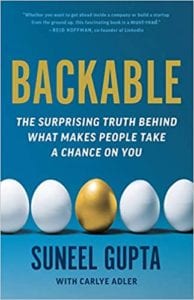
Backable: The Surprising Truth Behind What Makes People Take a Chance on You
John, you and I both love Joseph Campbell. We both love the hero’s journey. We know that one of the components of the hero’s journey is like, “Along the way, there’s an insight, learning, something that changes your worldview.” For me, through these conversations that I started to have, creativity and persuasion are two different things. Oftentimes, we think about them as one. We all know that you can have a great idea, be a great candidate for a job, have a beautiful product and still be dismissed. We see it happen all the time. That’s what I was feeling. Many of us have felt that way.
One of the stories that always pops for me especially is the story of Alexander Fleming, who came up with penicillin. Penicillin, to date, has saved nearly 200 million lives, yet it took him ten years to get people to buy into it. He got dismissed over and over again. Brilliant, game-changing ideas aren’t always met with a room of people who are going to support them. All of that got me interested in this idea of backable people. These are people who tend to be able to go into a room whether that be an interview, an audition or a pitch and they tend to shine. The trick of it is that, oftentimes, it’s when they aren’t the obvious choice. When they don’t have a fully baked product, we still feel like we want to take a chance on them. I wanted to understand like, “What is that quality? Can it be learned?”
Following up on this New York Times article, I started to have these conversations with people and said, “Let me have more and more.” Eventually, I found myself having hundreds of conversations with backable people from all walks of life including Oscar-winning filmmakers, Michelin Star chefs, military leaders, founders of iconic companies and fast-rising community initiatives. What I found was that being backable is not just for celebrities and CEOs, it’s for all of us. Being backable is not something that you’re born with but it very much is something that you can learn.
Let’s take a pause there. You’re being very humble. I’m going to shout-out. You have this book that has reviews from Reid Hoffman, the Cofounder of LinkedIn and Brian Grazer, one of my all-time favorite Oscar-winning producers of amazing movies. You’ve been able to not only have your own insights on what makes someone backable but figure out a way to grow your network and get out in front of people who are clearly backable and believe in what you’re doing. It’s a one-two punch there that gives it so much credibility much like The New York Times. One extreme to the other that social proof that gets transferred is what you’re demonstrating here in a big way that helps a lot of investors. You’ve invested in some successful companies yourself. I’m sure there are some things you look for in a founder that would be helpful to share that other people saw in you. The basic question is, as an investor, what makes a founder backable besides the idea?
The book outlines these seven qualities. We should talk about them. One of the things that I tried with this book, part of the reason that it’s doing well and a number-one new release is it talks about the stories and the substance but we get into the techniques. I personally love it when you can break it down for me and give me some specific techniques that I can use to bring it into my life immediately. Let’s start talking about some of these qualities. One of the first ones in the book came to me as a surprise. When I first started studying backable people, I thought that I was going to find a certain pattern of communication. I thought that backable people generally were going to end up being gifted speakers. They were going to make use of eye contact, hand gestures and pacing. I did not find that to be the case.
You certainly had backable people who are gifted speakers. It can be very Dale Carnegie-esque or Toastmasters-esque. There are plenty out there that are not. They’re shy, quiet and introverted. They’re not what we think of when we think of charisma. If you want an example of that, take a look at the most popular TED Talk of all time. What you’ll find is a brilliant talk being given by a guy named Sir Ken Robinson. It’s got over 65 million views. Amazing talk but not what you might expect. It’s a very un-TED-like talk. He’s got one hand in his pocket. He naturally walks with a bit of a slouch. He meanders on and off script, yet it was very well-received. What I found is that it’s not charisma that convinces people, it’s conviction.
[bctt tweet=”It’s not charisma that convinces people. It’s conviction.” username=”John_Livesay”]
There we go. There’s a tweet if I ever heard one. Plus, I love the fact that it’s got all those great alliterations. “It’s not charisma that convinces people, it’s conviction.” That’s a great line.
Backable people take the time to convince themselves first. They let that conviction shine through, whatever style it is that feels most natural to them.
Going back a little bit to your own story of origin, you have a relatively famous brother. I’m guessing that there’s a story there of what your parents taught you both. Why don’t you do the big reveal of who your brother is? It’s this concept of environment versus genetics. What causes certain families to produce such high achievers that are not just backable but impactful in the world? I wanted to ask, was there any sibling rivalry? Tell us a little bit about that experience with your brother and who he is.
It’s impossible for me to talk about my family without talking about my mom first. My mom was born and raised in a refugee camp on the border of Pakistan and India. She decided that somehow, she was going to become an engineer with Ford Motor Company. Her parents got behind the vision and dream. She got on a boat to the United States, ended up getting a scholarship at Oklahoma State University, drove to Detroit the day after graduation and went into the interview. When she got into the interview, the hiring manager said, “I’m sorry. We don’t have any female engineers here.” She, at that moment, was deflated. She picked up her resume and purse. She started to walk out of the room. In this last-ditch moment, she turned around and told this hiring manager her story of all the struggles that it had taken to get to this country, to get to Detroit, to get to this room. This guy was so moved by her story that he ended up taking a chance on her. She became Ford Motor Company’s first-ever female engineer. That was in 1967.
That’s the genesis story in a lot of ways for our family. I will talk about my brother here in a moment. We were raised with the refugee mentality even though we grew up in a very different environment than my mom. We had all the stuff that she didn’t have. We grew up in a safe, almost boring suburban Michigan. There’s still this refugee mindset of impermanence and possibility combined. It cuts both ways. With impermanence, you almost feel sometimes that things can be taken from you. You almost have an appreciation sometimes for what you have because you realize it could be gone. There’s the possibility. The possibility is there are no boundaries. Your past doesn’t necessarily determine your future. That’s what we learned simply from her story. She didn’t have to tell us that. It was who we were.
For my brother, he went to medical school and became a practicing surgeon in suburban Michigan. He realized he liked his job but he felt like there was more. He felt like he could be doing more of the type of work that he wanted to be doing. Naturally, he’s a gifted storyteller. He wanted to be telling the stories of patients. I remember I was in college at the time. I came home and he was home as well. We were with my parents. He was like, “I think I’d like to be on television. I’d like to start reporting on healthcare and patients’ stories.” I remember my mom was like, “Go do it. Figure out a way to make it happen. There’s no time like the present.”

Backable: When failure happens, you have two choices. The first one is to pretend that it doesn’t exist. The other one is to embrace it.
My brother, very similar to my mom’s improbable story, somehow gets himself in a room with the powers that be at CNN. This was in the year 2001. He has no Journalism and on-air experience but made himself backable in that moment. There are a lot of the techniques in the book that we talked about that he brought to that moment naturally. One of which is that he talked about his central character. He talked about the patient. Even though he didn’t have the on-air experience, his argument was, “I spend day in and day out with these patients. I understand them at a level that I may not be able to understand them if I wasn’t practicing day in and day out. These are the stories that I want to tell. These are the people I want to connect with.” It worked. They gave him a shot just like a hiring manager gave my mom a shot. That’s how Dr. Sanjay Gupta was at CNN.
One of the things that you talked about in the book, Backable, is this ability to put ourselves in a story that makes it memorable. You are singing from my song book. When people are pitching themselves to get a job, as your brother and mom did, pitching people to hire them, to buy their course and as speakers we have to pitch ourselves. If you can’t say something that makes you memorable during that interview and you’re just pushing out facts and figures or the details of your resume, “I’m a doctor. I went here,” and you don’t have a story to go, what I often do is I’ll tell a story of what happened at a recent speaking event and how that transformed the audience and made the people who hired me looked like heroes, all of those things and the feelings that get associated with it.
Stories are the emotional glue. We’re wired for stories. Few people understand that. You are supporting this so much that these personal anecdotes are what make us memorable. If you put yourself in the shoes of a hiring manager, an investor and the number of pitches that you hear in a year, there’s got to be somebody who says something to you that makes that memorable so that you can tell other people. That’s what people don’t realize. When someone like you, your brother or your mom tells a story or anybody who reads this book, Backable, learns is, “Once I have a story that makes me memorable, it’s not just that person who can remember it. They remember my story and tell other people.” That’s when it starts to grow viral or whatever else you might need it to do for those meetings when people are thinking, “Should we hire Suneel or someone else? Should we hire John or someone else? Did anybody tell us a story that we can tell other people of why we want to pick this person over another person?”
It’s such a good point, John. We’re not anymore pitching people. Hardly ever are we pitching the people who are going to be the only decision-makers. Typically, they’re going to have to sell their partners, other people, their boards, even their teams, on the decision they’re making. We’re not just looking for backers. We’re looking for advocates. Salman Rushdie has this great quote, “Most of what matters in our life takes place in our absence.” We don’t know what these conversations are like when we’re not there. We are trying to have people who are as passionate about what we’re trying to do with our own careers and ideas as we are. I do think stories are such a big part of that.
I remember pitching to Tim Ferriss on my company, RISE. I thought Tim was the perfect investor. When I was doing this one-on-one nutrition coaching right over your mobile phone, he had just written a book called The 4-Hour Body. He was starting to invest in companies. I thought it was the perfect fit. It turned out, he ended up passing on the idea. Along the way, he gave me some feedback that I will never forget. When I pitched to him, if you would have looked at that pitch, I spent the vast majority of my time talking about the market. I talked about the rising rates of diabetes, hypertension, obesity and how many people were out there spending money on trying to get into better physical health.
At the very end of the presentation, I told the story of my father. When he was in his 40s, he had an emergency triple bypass surgery. I still remember going to the hospital, I was about ten years old. I remember going to the hospital and felt like I had seen my father aged 25 years overnight. When we were leaving the hospital, they gave us a piece of paper. That piece of paper said things like, “Eat broccoli. Eat Brussels sprouts.” We were an Indian family. We didn’t eat broccoli and Brussels sprouts. There was nothing on that paper about chicken tikka masala. We struggled to make this diet that we were supposed to have now work. We struggled to make it fit for us. It wasn’t until insurance helped us pay for some time for a nutritionist that we were able to customize our lifestyle into something that worked. I believe that’s the reason that my father lived through that experience. He’s still alive now.
[bctt tweet=”The meaning of life is to find your gift. The purpose of life is to give it away.” username=”John_Livesay”]
I told Tim Ferriss that story. His feedback to me was like, “Why the hell are you leaving that story to the very end? Tell that story upfront.” My response to him was like, “It’s an Indian story. It’s an Indian thing.” He said, “No. It makes it even more important that you tell that story upfront even if the people who are sitting on the other side of the table from you look different than that. Even if they didn’t eat chicken tikka masala, it’s important. What you’re doing especially when you get into the details, is you’re helping them see themselves through the eyes of your central character, the one person that you’re trying to serve with this idea. If they can see themselves through the eyes of that central character, that’s when you hook them emotionally and then you talk about the numbers and the market. It’s the story that brings us in. It’s the substance that keeps us there.”
It brings us in and the substance keeps us paying attention but you can’t open with the substance. You did a beautiful job describing 5 of the 7 parts of what makes somebody backable. It’s drawing people into the story that makes them feel like insiders. I did this with Olympus Medical. I was saying to them, “What are you saying to doctors to get them to buy this equipment?” They said, “This equipment makes your surgeries go 30% faster. Do you want one?” I was like, “There’s no story there. That’s a left-brain analytical data like the market size.”
The story I helped them craft was, “Imagine how happy Dr. Higgins was six months ago using our equipment. He could go out to the patient’s family in the waiting room an hour earlier than expected. If you’ve ever waited for someone you love to come out of surgery, you know every minute feels like an hour. He came out, put them out of their waiting misery and said, ‘Good news. The scans showed they don’t have cancer. They’re going to be fine.’ He turned to the rep and says, ‘That’s why I became a doctor, for moments like this.’ That rep told that story to another doctor who sees themselves in the story and says, ‘That’s why I became a doctor too. I want your equipment.'”
That is your dad’s story with getting out of the hospital. By adding those little elements like, “If you’ve ever waited in the hospital for someone you love to come out of surgery, you know every minute,” that’s what pulls people in. Even if they haven’t had that experience, they probably know someone who has or they can certainly imagine how painful that would be. Those are the details that make me love your books so much. I have rarely seen anybody else talk about how to tell stories that are memorable. I say, “Tug at the heartstrings to get people to open the purse strings,” is what you’re showing us together.
I could talk to you forever. We’re only going to talk about a few things enough. Hopefully, it incentivizes people to run, not walk, to the nearest way to get a book. The last question I have for you is this beautiful cover, gold and blue, the gold egg. We all know there’s a story there about the goose that laid the golden eggs. I know, as an author, how much work goes into a book cover. What’s the story behind the book cover?
I’m glad you asked because I don’t get to talk about this enough. The book cover went through a few iterations. I worked with a great publisher. Little, Brown has been fantastic. I will say that when they sent me their first vision for the book cover, it was not something that I gravitated towards. It was the Facebook like thumbs. It was a cover full of thumbs where all of them were thumbs down but one of them was thumbs up. Same metaphor, it was like, “How do you get the thumbs up?” What I didn’t like about it was it felt overtly negative. It was almost littered with negativity.

Backable: Backable people take the time to convince themselves first. They let that conviction shine through, whatever style it is that feels most natural to them.
The other thing was it was very techy. I initially started writing this book because I felt like I was coming from the point of view of somebody who worked as an entrepreneur. I worked in tech. What I realized was like, “There’s not a single person out there who isn’t trying to make themselves backable in some way. You don’t have to be working as an entrepreneur. You don’t have to be working in tech.” It’s a human problem that we’re dealing with, which is unused creativity. We don’t sometimes know how to take these ideas that are inside us and get other people as excited about it as we are. That’s a human problem, not a tech problem. It’s not necessarily even an entrepreneurial problem.
I wanted to take this metaphor and do other iterations. It was interesting, John. I don’t know what your experience was like. With me, there was a push-pull that you have. We were very collaborative about it. I was super grateful to them for being that way. It reminded me a lot of one of the techniques that you talked about, which is flipping outsiders to insiders. One of my favorite stories from the book is it takes us back to the 1940s where Betty Crocker has introduced instant cake mix to the market. They were excited about this instant cake mix. All you have to do is pour water into a mix, pop it into an oven, and voila, you get this tasty treat. Who wouldn’t want that?
They were surprised when they find out that instant cake mix was not selling. Sales were terrible. They were trying to figure out why. They hired this psychologist named Ernest Dichter to go out into the field and start talking to homes across the country. What Dichter found when he came back with was fascinating. He said, “I think you’ve made the process of making a cake too easy and too simple. You removed the customer from the creative process so much so that when a cake comes out of the oven, they don’t feel any ownership of it.” His recommendation was, “Why don’t you remove one ingredient and see what happens?” They did. They removed the egg. Now, as a customer, you have to crack and mix in your own fresh egg. Sales skyrocketed. Now, when the cake comes out of the oven, customers felt like they were a part of it.
I think that comes back to this idea of we’ve been told that creativity and innovation is a two-step formula. You come up with a great idea and you execute on it well. I think there’s a hidden step in-between. That hidden step is where we flip outsiders into insiders so they feel like it’s their idea as well. In that way, when we show up to the execution, we show up together. These can be early employees, early investors, early colleagues who decided to take a leap of faith in your idea. You can trace every successful project, every successful organization, nonprofit company, political movement back to this hidden step.
There are many wonderful takeaways. Flipping outsiders into insiders. It’s not charisma that convinces, it’s conviction. This whole premise that the stories bring us in but it’s the substance that keeps us involved. The book is called Backable. The website to go read about the book and buy the book is Backable.com. Any last comments or ways that you want people to follow you and read about the book?
Go to Backable.com. I’ll leave you with one thought. I have two daughters, an 8-year-old and a 4-year-old. We do this little game every morning. I ask both of them, “What is the meaning of life?” They say, “To find your gift.” I said, “What is the purpose of life?” They say, “To give it away.” The meaning of life is to find your gift. The purpose of life is to give it away. I wrote this book, Backable, so that we can learn how to give our gift away. Thank you, John. I appreciate you having me on.
Thank you, Suneel. What a gift you are to the world. I’m sure you’re a great dad. I can’t wait for all kinds of people to benefit from learning these learnable insights on letting us all become a little bit more backable than we were before we got to read your wonderful book.
Thank you.
Important Links
- RISE
- Sir Ken Robinson
- The 4-Hour Body
- http://backable.com/
- Better Selling Through Storytelling Method Online Course
Wanna Host Your Own Podcast?
Click here to see how my friends at Podetize can help
Purchase John’s new book
John Livesay, The Pitch Whisperer
Share The Show
Did you enjoy the show? I’d love it if you subscribed today and left us a 5-star review!
- Click this link
- Click on the ‘Subscribe’ button below the artwork
- Go to the ‘Ratings and Reviews’ section
- Click on ‘Write a Review’
Love the show? Subscribe, rate, review, and share!
Join The Successful Pitch community today:
- JohnLivesay.com
- John Livesay Facebook
- John Livesay Twitter
- John Livesay LinkedIn
- John Livesay YouTube
Discovering Your Inner Purpose With Dr. Benjamin Ritter
Posted by John Livesay in podcast | 0 comments

With so many things happening around us, we tend to lose focus on why we are doing something or what we can really gain out of it. But by understanding our inner purpose in life, we can get a better grasp of our reality. In this episode, John Livesay sits down with speaker, author, and the Founder of Live For Yourself Consulting, Dr. Benjamin Ritter, as he shares how he changed the course of his career from being a government employee to a full-time coaching professional by discovering what he really loves to do and where his strengths lie. Dr. Ben also delves into his Three C’s of Leadership and explains how every workplace should have the ability to redesign itself according to the tide of times – even a global pandemic.
—
Listen to the podcast here
Discovering Your Inner Purpose With Dr. Benjamin Ritter
Our guest on the show is Dr. Benjamin Ritter who runs a consulting business called Live For Yourself. He helps people who are unhappy in their careers get unstuck. We talk about that we don’t have to be attached to the path that we are on. Finally, we also talk about that you, as a leader, have to work on clarity, confidence and control. Enjoy the episode.
—
Our guest is Dr. Benjamin Ritter who is a leadership, career and empowerment coach. He is a national speaker, podcaster, author, mentor and he’s passionate about guiding others in finding and creating a sustaining career they love. With many years of experience coaching and a background in organizational leadership and adult learning theory, he understands how to navigate any career path you decide you want to travel. Since launching his coaching practice, he’s guided hundreds of professionals towards creating the career they love and impacted thousands through his events and media content.
From empowering young professionals to take accountability and feel empowered over their own job level with satisfaction to guiding senior leadership on how to stand out from the competition, develop executive and discover meaningful work. Ben is an expert in his field and guides people towards truly living for yourself at work and in life. I get to call you Ben because we’re friends as opposed to Dr. Benjamin. Welcome to the show.
Please call me Ben. You can call me Neb sometimes. For some reason, people want to turn my name around.
You and I are relatively new to living in Austin and that’s part of the joy is getting to meet people. We both are also from Chicago. It’s been fun to look at the similarities and our passion for helping people in different ways. Would you mind taking us back to your own story of origin? You can talk about childhood or school and where you got this premise of, “I’m going to live for myself.” I don’t think that’s normally a concept that we think about. I’m sure there’s a great story of origin there.
[bctt tweet=”Being clear with what we can and what we love to do is the first step in discovering our inner purpose.” username=”John_Livesay”]
I never thought I’d be a coach. I still don’t think I’ll be a coach, even though I’m a coach. At every single major turning point and milestone in my life, especially the ones where I felt lost, stuck, underutilized and questioning things, having those existential moments that we all tend to have, coaching popped up. The first time it ever happened, I was training to become a professional athlete in college and I didn’t make it. There were many things that happened to that.
I had my major canceled in college. I had hip surgery when I thought I was going to go abroad and play. I went abroad to play and got told that if I stay there, then I might have a chance, but I only had a semester left in school. There were many different rough points in that separate story. I lacked confidence there. When you set yourself up to achieve something outside of yourself, all you do is focus on achieving it. You hold yourself accountable to that and you define who you are by that, and then you don’t achieve it. Along the way too, you struggle to achieve it. You experienced some tough internal dialogues.
When I finally realized that I wasn’t going to make it, when I realized that I had to make the decision to make this my main priority or take away this priority for my life, I had to figure out how to redefine who I was. Luckily, we had the internet then. It wasn’t still that prominent, but I went online and searched something along the lines of, how to be confident, how to find yourself, what is the meaning of life? All of these keywords that you think you might type if you’re questioning life and searching for them on the internet, which is an interesting strategy, which I don’t think is as interesting nowadays.
What came up was this field of personal professional development. What came up were articles upon articles and books upon books on how to become more attractive, how to become more confident, how to become successful in business. It was never, “This is the meaning of life.” You’re probably more likely to find books like that nowadays than you were back in 2005. In my search engine results, that didn’t pop up. I spent the next 4 or 5 years studying that industry, studying all the material I could find, and not just studying it though, but going out and applying it.

Inner Purpose: Without clarity, you don’t have confidence, so you don’t know what the next step is.
As I mentioned, confidence was a big issue of mine. All of the material that you find on confidence as it relates to men is mainly focused on attraction, dating and being social. I would go out by myself to bars. I would walk up to strangers on the street. I would do things to make myself extremely uncomfortable to ensure that I never felt those things were uncomfortable. I probably lend a lot of those experiences to my stage presence, my ability to walk into a room, to my networking capabilities nowadays. That was the first little pinpoint in my life where coaching became influential and became something important to me.
If you fast forward a little bit, coaching came back when I got out of grad school. I couldn’t get a full-time job for about two and a half years because of the recession. I wanted to work in the federal government and public health policy at that time. I was doing some work for the Illinois Department of Public Health. I thought I was going to keep doing work for the Illinois Department of Public Health after grad school but the world had a different story. It had something else planned for me. I got a job offer from the Illinois Department of Public Health, from the CDC, and from two other health departments, but they were all canceled after I signed them.
It was almost like clockwork into the next day or within three days, they were pulled back due to funding. That was a two and half-year period of time where I was getting a job and then not getting a job. I made it work. I bartended and then interestingly enough, I was out by myself one day being social, because this is a habit that I kept. Someone approached me and said, I know what you’re doing. You need to meet my boss. The next day, I ended up getting hired to run a nationwide bootcamp program for men in relationship to interpersonal dynamics. For the next year, I was leading men on bootcamps in how to be more social, how to be more attractive, and how to have more confidence. At the same time, I ended up getting federal funding for six months of free life coaching for public health professionals. This is hilarious because there was no funding for a job. It was a grant that I applied for through networking, through going off on my own and meeting people.
Coaching again came up. I never thought about it as a full-time job. It was always a way for me to make some side money. It was a way to develop because after working for this guy, I ended up seeing an opportunity starting my own business. I started my own coaching practice but again, as a side hustle, there was demand to make some money. Fast forward another 6 or 7 years, I’m working in healthcare which I got that job because of the networking and meeting someone across the bar. I get selected to become an executive in my system. Because of that, I get the opportunity to receive sixteen months of leadership training from our Director of People who was a coach, who then becomes my coach. All of a sudden, I realized, “This could be a job. I could do this for a living.” I’m sitting here going into work on a daily basis feeling stuck, underutilized and feeling like, “This isn’t the place that I belong.”
[bctt tweet=”Are you truly living for yourself in a way that is positive and proactive towards what you care about and what puts you front and center?” username=”John_Livesay”]
Every job I’ve had up to that point was a reaction to the environment that something I needed to do because I needed to put money in the bank. I needed to create a career journey for myself. I finally felt empowered at that point in time to ask myself, “What is it that I want to do? What are my strengths?” I now have control. I have the ability to live for myself at this very instant. I don’t have to be held in handcuffs to the economy or to what people think I’m able to do or not able to do. I went and asked my coach, “How do I do what you do? How do I do this?” We came up with a little bit of a plan. I went back to my boss. I asked her to be involved in the talent development space. She said, “You can do this. Talk to the department. Get involved in projects.” I had a lot of energy for the first time in probably six years at this job. I felt like I was going to do something that I wanted to do, and then we got acquired. Everything I was going to do stopped.
I’m proactive and action-oriented, so plan B is I’m going to find a job in this field. All of them were about half my salary because I had no resume experience in this other than my side coaching business coaching men. That doesn’t make a resume seem lofty. I don’t have a lot of expertise in talent development and coaching individuals from my side business, at least not on my resume. I’ve been running this coaching practice for 5 or 6 years. I have experience doing this. I know I’m good at it because I got hired to do this in the past and I have a lot of media attention for it. I was writing for AskMen and Men’s Health at that time. I was getting interviewed on a live stream Facebook show with 100,000 or 200,000 people. I can prove it. I was in the Apollo Theater in Chicago as a panelist for The Great Love Debate.
There was stuff that was like, “You’re good at this,” but it wasn’t the industry I wanted to do it in. I’m like, “I’ll take all this knowledge and I’ll start my own business again. I know how to do this, but I’m going to do it in an industry that I’m passionate about, that I care about.” This is always a theme in my business development stages. How do I get seen as someone credible with no experience here? How do I sell myself to individuals? I’m like, “I know how to get media attention, but I’m still 30 and I want to work with executives. How does that work? I want to work with managers. I want to go into organizations. How are they going to believe me? I’m going to get my doctorate. I’m going to get the golden key to open up the door to at least get people to listen to me.” That led to me getting published in this field because I got to do some research in it and I got to speak on it. It did skyrocket my business. It probably sped up the timeline for more than a few years in terms of becoming successful. That’s what I’ve been doing for the past few years.
That’s not an easy feat getting your PhD, but that gives you the credibility. A lot of people write a book to try and get that credibility, but the PhD is at a whole other level of commitment and time. What I hear as a consistent theme is a lot of resilience going on. This awakening that you were stuck in something that you didn’t love and there are many people out there that feel that same way and because you’ve been in their shoes, you know what it feels like. The irony of you can change jobs, but you still have similar challenges if you’re not doing what you love. Would that be a fair assessment?

Inner Purpose: Your purpose isn’t bigger than you because you create your purpose.
Taking what was way too long of a story. I’m distilling it down and saying that I’ve been stuck. I’ve been underutilized. I’ve been overworked and I’ve made decisions for my career that weren’t based on what I wanted and mutually living for myself. They were based on what I thought I needed to do at that time. Instead, I hit a point in my life where I wanted to change that. I dove into what I cared about, what challenges I wanted to face. I plotted the course and I went to take action.
The good news is not everybody has to get a PhD like you did to have credibility and find their dream job or your consulting firm is Live for Yourself, LFY. You have something in there that I wanted to double click on which is The Three Cs of Leadership. This applies whether we’re leading other people or leading ourselves into a career we love. Can you talk a little bit about what those three Cs are?
It was working with clients and I had the Live Framework, which is a decision-making tool to live a much more aligned life for yourself. I was noticing that through working with clients, we were developing core traits within themselves like these pillars. I identify those pillars as the three Cs of self-leadership: clarity, confidence and control. If you have these, you’re able to lead yourself. You’re able to take action towards what you truly care about. Often, when I first start working with clients, they have this pain and they have this desire for change, but they don’t truly know what they stand for, what they care about, and how they’re going to get there. Because they don’t know that, they don’t have confidence in themselves. If you don’t have confidence in yourself, you’re never going to take action. If you get clarity and confidence, all of a sudden, you can prioritize that in your life. You can have control over your life.
I have not heard anybody phrase it like that. Without clarity, you don’t have confidence so you don’t know what the next step is. They build on each other. It’s not like you work on three things simultaneously necessarily. It seems to me like you do one, you get clear, which gives you the confidence to then have the ability to control. That concept of control from your perspective now, having felt like you’re not in control. All of us are experiencing what it’s like to not be in control when a pandemic comes. Let’s say we have some clarity, we worked on our confidence, and then all these other outside things, whether a funding going away or a pandemic. How do you advise people to get a sense of control when there are many things going on outside of their control?
[bctt tweet=”To gain full control of our lives, we first need to figure out why we are doing something and if we really love doing it.” username=”John_Livesay”]
First, if we start with clarity and confidence at least at any given point in time, we know what we stand for. We know what’s important to us. If we have that and outside of us, we’re not able to go along the path that we set ourselves to go on due to a global pandemic or shutdown, anything that can happen because we don’t have control over the external world, we then can reflect and say, “I still want to live these values. This plan doesn’t work anymore,” but those values are still the goal. The goal is not, “I want to achieve X, Y, Z.” The goal is, “I want to live a life that allows me to apply the values and strive towards what I care about in any fashion.” The first step to control is understanding that no matter what happens outside of yourself doesn’t change what you can feel about yourself.
As long as you keep applying your values throughout your life, you wake up and you know what you care about, you feel like you’re making an impact towards what you care about, and you can do that in any way possible. There’s an infinite number of ways for you to apply your values in the world. That’s what control is. It’s noticing what isn’t working anymore and a couple of different avenues that could work that could allow you to feel fulfilled on a daily basis. Just believing that you’re capable of that, that you have the choice and the ability to take action in a new way or a new path that’s still is important, and that your ego isn’t attached to whatever this other path was because the path itself isn’t important. It’s what you’re working towards and how you’re living on a daily basis. That in itself is inspiring and motivating that lends us to take greater control of our life and apply it to our life.
That’s going to be a great tweet, “Outside events don’t change what we feel about ourselves.” That’s a big a-ha. I know for myself, when I was laid off, it was like a kick in the gut, overwhelming and scary. You realized, “I haven’t lost my identity. My job is not my identity.” Getting re-centered around that was a big moment and realizing that if we don’t do what you’re saying, we’re going on l the self-esteem roller coaster. We only feel good if things are going well and bad if they’re not. To reframe that is wonderful. This premise of not getting attached to the path that we’re on, that’s a big one. We tend to like comfort zones and routine. We think, “If I’m doing this, then the outcome is that. I’m staying on this path. I can’t vary from that path.” In your own life, whether it was your athletic career getting derailed or a company getting defunded, you have to constantly be willing to not be attached because you said there’s something bigger than the path which is your purpose.
Your purpose isn’t bigger than you because you create your purpose. We lose sight of that often. There’s this interesting mindset of you need to think that the world is bigger than you because that keeps you motivated and that there’s more. I like to turn away from that and say, “You create all the things you care about.” You’re more than everything else around you. You come first or your health comes first. When you wake up and don’t feel good, it’s okay. Let’s figure out what’s going on in me, not what I have to do outside of myself.

Inner Purpose: An important component to motivate and engage your employees is to help them find their stories – why they’re doing what they’re doing and what matters about that work to them.
If we were able to have that focus and say, “My purpose is important because it’s a tool for me to find more happiness in my life.” All of a sudden the, “I need to do this because it’s my purpose,” changes from, “I enjoy doing this because it brings me happiness and it matters to me.” I give it energy, power and intention. I will define it as my purpose, but only to the point where it brings me a level of happiness. That doesn’t mean that struggle can’t create happiness. Waking up and building a business, figuring out solutions and the stress from that is something that I enjoy. That can be filtered through this lens of, “This is how I’m enjoying my life right now,” but the “This has to happen,” or “I’m not valuable,” that’s where I get lost.
I like to think that we’re the movie director of our own life. We can say cut, we can recast it and change locations as opposed to being at effect of everything that’s coming at us. We’re the thinker thinking the thoughts. That’s the whole concept of we created the purpose, therefore, the purpose isn’t bigger than we are.
I was listening to an interview and the guest said a few things that resonated with me. One of them was, “Are you the actor or the character?” I think in our life, we need to be the actor. The character is who we’re playing at the time, the things that happened to us, but it doesn’t define who the actor is. If we know who the actor is, it all allows us to play a variety of roles.
The other thing that you’re good at and when people hire you to come to speak is helping people find jobs satisfaction and get motivated even if it’s a job that they’re just doing for the money. It’s not necessarily something that they see as a career, but it’s what they need to do now. That could be working at a fast-food restaurant. Companies could bring you in to say, “How do we motivate somebody who is not making a lot of money and the job is fairly routine, yet we’re pressuring them to give amazing customer service?” When you have a client like that, how do you help them keep these people motivated and feel like what they’re doing is meaningful.
[bctt tweet=”Each and every single day, we don’t live in that broader world. We live in that right now.” username=”John_Livesay”]
I was running in Lady Bird Lake in Austin. We were running by this kayak shop and there were already people lined up getting their kayaks. I was like, “It’s a cool scene here.” As I was running, I saw the guy lifting the kayaks up and bringing them to the water, going back, talking to the customers and getting the oars. I had a thought that I have all the time. When I’m in Chicago, watching someone shovel the streets of snow, which I’m happy we don’t have here. I always think to myself, “What motivates them? What gets them going to do this job each and every single day?” It doesn’t connect with me. I don’t know if I would want to do that each and every single day, and doing what I enjoy doing.
You work on this. You find people stories. You help people figure out why they’re doing what they’re doing and what matters about that work to them. That is such an important component of figuring out how to motivate and engage your employees. It’s one of the pillars. It’s what motivates you, what drives you, what brings you to the office? It doesn’t have to be the paycheck. It could be, “My kids get to go to the school that’s a little bit safer. We get to have a special dinner once a week because now, we have a little bit more disposable income. My dad did this and we get to resonate and share stories about what it’s like to give people kayaks and then see the smiles on their faces,” or whatever it is. It’s their drive.
“I don’t have to worry about filing reports or sitting behind a cubicle.” I did that for five years. It could literally be anything that touches someone that sparks somebody. It’s very easy to forget these stories because these are the broader world. Each and every single day, we don’t live in that broader world. We live in that right now. A manager, a leader or a speaker can come in and remind them of those stories. It’s like what you do as well in terms of sales. You remind people of their stories to help them be more energized. You teach them strategies on how to remind themselves of their stories on a daily or weekly or monthly basis.
That’s probably the most important component of all the different things that I’d speak about in terms of job satisfaction. The other two are figuring out what work your employees love to do and what work they don’t love to do. Getting in there as a leader and crafting their work to be more fit to their strengths and likes, and helping minimize the work they don’t like to do, or knowing what work they don’t like to do, and then praising them for that work. It’s figuring out ways to make the work that they don’t like a little bit more enjoyable. It’s maybe giving them some more freedom to say, “You don’t like to do this work you do on Wednesdays, do it from home.”

Inner Purpose: You are literally the center of your own universe. To that point, you are the most important leader that you’re ever going to be.
You can come up with strategies to help someone to enjoy certain aspects of their job they don’t like. The other aspect is the social context of the way that we work. Where is the conflict in your department? Are there conflict between two specific members? Figuring out ways to mediate and solve that conflict, and then also to figure out who are friends at work and try to pair them up more and more together. At least build in time for them to talk not about work stuff, but venting about personal stuff, and being the conduit to positive relationships within work itself.
I think to allow that a lot of people are having to work from home versus being in the office so much, they don’t realize how much value there is in those water cooler moments, catching people in the hallway, “How was your weekend?” a little bit of a download or grabbing a coffee with somebody to vent. Without those release valves, the stress builds up and the sense of isolation that work is more than a paycheck. When someone like you with your expertise can come in and help people reframe that, sometimes those little moments of scheduling people to go on break together that like each other. That little detail showing that you care enough about them can make a huge difference. I love that specific example as well as the example of the person unpacking the kayaks.
There’s one more thing to add because I think it’s important in the remote world. It’s the resources. This goes along with the actual work that somebody is doing. What do they need to do their job? Many organizations sent everybody home and they’re like, “Go for it.” I don’t have a working webcam. Do I have to buy new headphones? Can I get a second screen? I don’t have pens. I don’t have printer paper. I don’t have a journal. I know these are extra expenses, but as a leader, have you ever sat down and spoken with your employees and say, “Think about your workflow. Where are the struggles? Is your computer slow? Is there a program that’s not working? Do you wish you had a different type of program? You have pens? Do you want me to send this stuff to you?”
You think about the level of productivity like, “I don’t have a stapler.” “I can go order one on Amazon,” but it’s like, “I could probably use a stapler.” That’s overlooked because organizations thought working from home was a day off. They thought it was like Fridays at least in Chicago. You work half day on Fridays or you don’t work. Nowadays, there has to be a very different mentality in terms of, do your employees have the tools and the resources they need? Are the same work boundaries also in place, which we didn’t even touch on? That’s just a side.
As you said, it’s the details, whether it’s a break time with someone you like and/or what do you need to do your job? Let’s not assume that you’re going to have it all figured out by yourself. Originally, they’re like, “This might be a month. We’re not going to worry about it.” Now, it’s much longer. The resources become much different. This is going to be a long-term thing versus a short-term thing. I’ve worked with people on basic sound and lighting. If you’re going to be presenting, especially if you’re in a sales role, people need to see your face. You’ve got to be properly lit so they can trust you. That’s a thought you’ve never take into consideration. When you’re seeing people in person, you don’t worry about the lighting in the conference room, but you need to worry about the lighting on a video call at home. Any last thought or a favorite quote you have that you want to leave us with?
If you haven’t noticed, I’m very big in personal empowerment and personal accountability. I think that’s also highlighted through my story, but personal accountability and responsibility that is healthy that is focused on you being at the center of everything. It’s not other things being at the center of everything. You are your own universe. Even in general, you’re preceding the world around you. You’re making that up. Everything you’re seeing is based on your brain and your eyes in how you see the world. You are literally the center of your own universe. To that point, you are the most important leader that you’re ever going to be. Are you truly living for yourself in a way that is positive and proactive towards what you care about and puts you front and center? If you do that, life gets a little bit more enjoyable.
It’s like the oxygen mask on the airplane. You’ve got to put it on yourself first before you could save a child, and a lot of us don’t do that. We put everything else ahead of that, including our career at the expense of our happiness and our health. You are definitely helping other people realize without that, inner happiness is not something sustainable because you burn out in one way or the other. If people want to find you, they can go to LiveForYourselfConsulting.com. Ben, I can’t thank you enough for sharing your own story, your insights that are certainly well-earned and much needed right now. I’m looking forward to hearing how you continue to make a difference in big and small companies.
Thank you.
Important Links
Wanna Host Your Own Podcast?
Click here to see how my friends at Podetize can help
Purchase John’s new book
John Livesay, The Pitch Whisperer
Share The Show
Did you enjoy the show? I’d love it if you subscribed today and left us a 5-star review!
- Click this link
- Click on the ‘Subscribe’ button below the artwork
- Go to the ‘Ratings and Reviews’ section
- Click on ‘Write a Review’
Love the show? Subscribe, rate, review, and share!
Join The Successful Pitch community today:
- JohnLivesay.com
- John Livesay Facebook
- John Livesay Twitter
- John Livesay LinkedIn
- John Livesay YouTube