

Discover Your WHY With Dr. Gary Sanchez
Posted by John Livesay in podcast | 0 comments


There’s a big difference between knowing your why and not knowing your why. When you don’t discover your why, you can’t understand yourself. When you don’t understand yourself, you won’t find the words to articulate your message. John Livesay’s guest is Dr. Gary Sanchez, the creator and founder of the WHY Institute. John discusses with Dr. Gary how important your “why” is in figuring out your marketing strategy. Join in the conversation and discover how you can find your “why” and why you need to!
—
Listen to the podcast here
Discover Your WHY With Dr. Gary Sanchez
Our guest is Dr. Gary Sanchez, the Creator and Founder of the WHY Institute. He talks about his own personal journey, how specific pains and frustrations have been a motivator for him to create solutions. He said that sometimes the fear of looking bad causes people to say nothing, and that if all you’re saying is what you do, then you blend in with your competitors. Find out how to find out what your why is and how it can change your life. Enjoy the episode.
—
Our guest is Dr. Gary Sanchez. He is the CEO and Founder of the WHY Institute. His own personal why is to find a better way and share it. How he does this is by making things clear and easy to understand. What he brings are simple solutions to help people move forward. He and his team at the WHY Institute have worked with over 40,000 individuals, as well as 500 companies, from a small yoga studio to a Fortune 500 company. He helps them get clear, stand out and play bigger. Gary, welcome to the show.
John, thank you for having me. I’m excited to be here.
Your story is fascinating to me. I want to invite you to take us back to your own story of origin. Did you grow up wanting to be a dentist your whole childhood? Was that a new thing? A lot of people may not think of dentists as entrepreneurs, but they really are. Let’s start your story wherever you want. You can start pre-dental school, in dental school, and then we’ll get to how you got to the WHY Institute.
Like a lot of people who are probably reading this, I had no idea what I wanted to do. It wasn’t a lifelong passion or dream that I had to be a dentist. When I was in college, I started with the major of undeclared. I kept that until the last possible second until I almost had an emotional breakdown or something when I had to decide what I’m going to major in. I picked Biology because that was the only thing I had a good grade in. That only prolonged it for a few short months because soon, you got to figure out what are you going to do with the major of Biology. My dad was a dentist. I knew the lifestyle and said, “I’m going to give it a shot.” Off I go to USC Dental School. I enjoyed it. I had a great time there. When I graduated, the advice that I was given from the experts at that time was to build a great product and people will come. Have you ever heard that before?
I have heard that. It’s very Field of Dreams. Build and they will come. Work hard and you’ll get promoted. Build the best mouse trap and somehow, magically people will find you.
That’s exactly it. I took that to heart and spent about twenty years doing that with my brother. We went to the best institutes. We reached the highest levels you could go to as far as technical dentistry. We built a beautiful facility. We had a well-trained team and all the latest technology. For us, that wasn’t enough because everybody says they have everything, even if they don’t. If all you do is talk about what you have, you blend in with everybody who has what you have or what you do. If I went to a cocktail party or something and they say, “What do you do?” I say, “I’m a dentist.” They say, “One of my nephews is a dentist too,” or something along those lines. I’ve spent twenty years perfecting my craft. Their nephew had just gotten out of dental school and we were considered the same. It was very frustrating. How do you stand out in this crowded marketplace? I’m in Albuquerque. There were like 600 dentists here. How do you stand out when everybody says they do the same thing? I’m guessing many of your readers have experienced the same thing.
Yes. Even if you’re not in the professional services industry like doctors, lawyers, accountants, a lot of people think of all that being the same and then that becomes commoditized. You’re an entrepreneur trying to come up with a new idea and maybe you’re trying to even get funding. If you make the fatal mistake of saying, “I don’t have any competition,” then investors say, “Then you don’t have a market.” One extreme or the other is bad. Being lost in a sea of sameness is the kiss of death. That’s the big problem that you’ve solved with the WHY Institute.
The other thing about you that fascinates me is most people would be like, “I’m going to double down, be the best dentist and figure out how to grow my practice, even though a lot of people don’t see what I’m doing is different.” You said, “I’m also going to start something called the Health Chair.” That was way before people were even thinking of that as an investment. We have beds that we now spend a ton of money on sometimes. There’s been Herman Miller of the world that companies get to spend a lot of money on fancy conference room tables and chairs. Was it from a personal pain point where you’re sitting in an uncomfortable chair as a dentist and then that led to this? Those are always the best story of origins as you’ve experienced the pain yourself.
[bctt tweet=”Fear of looking bad causes us to say nothing at all.” username=”John_Livesay”]
Pain is a motivator. Before dental school, I was very active. I was playing professional racquetball. I was traveling around the country, playing all these tournaments. I went from being very active to getting into a dental school where I sat all day long. I would show up at 8:00. I would sit in the chair until 10:00 at night, five days a week. My back was killing me. I kept injuring my back to the point where I couldn’t do much. I had to give up all the sports that I loved. All that skiing, basketball, racquetball, squash and tennis. All the things I want to do, I couldn’t do. I started going to different experts, chiropractors, massage therapists, physical therapists, acupuncture and Rolfing. I went to all these different people to try to get results and nothing would work. I learned that you could not out-therapy bad posture.
That’s like you can’t outrun your diet when people think they can just exercise to compensate for bad eating.
I was at this chiropractor’s office and he gave me this book called The Egoscue Method of Health Through Motion. It’s written by a guy named Peter Egoscue out in San Diego. It was like, “You got yourself into this and you can get yourself out.” It was exactly what I was looking for. I flew out to see him in San Diego. I went through his program. It was about a six-month-long process of straightening up your body, getting your body to function correctly, and then it would heal itself, which was exactly what happened. When I graduated from his program, I had to carry a 200-pound guy on my back through an obstacle course. No problem and I went on. After that, I played in the World Racquetball Championships. I won the World Championships. I had played 52 games in five days.
I learned the value of good posture. Good posture starts with sitting correctly. I started buying chairs. I tried to find a chair that would fit me and I couldn’t find one. I took all these chairs that I bought. I had a whole room full of chairs. I cut them apart and developed the Health Chair. The difference between the Health Chair and any other chair, when you sit down on this, it forms itself to you versus you having to form yourself to it. You push these buttons and the chair forms to you.
Would it be fair to say it’s almost like some of those mattresses that take your body shape a little bit, except yours is automated with technology where you push buttons?
Imagine looking at a regular chair that you see anywhere. Who does that fit? Nobody. It’s a universal size that doesn’t fit anybody. The chair that I developed has two individual backs that go up and down, forward and back individually. When you sit down on it, you push these buttons on the side of it and the chair forms itself to you. You can put the lumbar exactly where you want. You can have as much lumbar as you want. You can just form it to exactly how you like to sit. Periodically, you change the position, so you’re not stuck in one place. That was another better way.
The reason I wanted to talk about this before we go into the WHY Institute was that early seed of, “There’s a problem I’m experiencing and I want to solve it.” Using the skills that you have, not just as a dentist who is good with your hands and understands how the engineering of things, and that whole MacGyver description of what you did with those chairs, it’s like taking spare parts from robots and creating a new one. That led to you experiencing another kind of problem, which was distinguishing the “how do I stand out” problem. You worked with experts like Simon Sinek, figuring out the why. What you’ve done that I am so impressed with is you’ve figured out a way like you did with the chair, where you push certain buttons and then out pops up people’s individual why. You have an actual formula that’s based on that research and now using artificial intelligence to make that available for people in a whole another way.
Let’s rewind the story of, you’re on your own quest. You’re the hero in the story, trying to figure out, “What is my why? How can I explain it to people that makes my dental practice take off?” Once we hear that, then we’ll be able to apply it to whatever our business is. Let’s start with you’re on this quest. You learn some things from Simon, getting to talk with him, not just watch his talk like a lot of us, but get to ask questions and figure out your own why. What was the big click for you of, “Now that I know what my why is, that’s going to help me stand out?” How do you connect those dots?
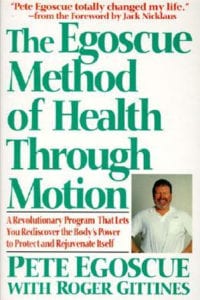
The Egoscue Method of Health Through Motion: A Revolutionary Program That Lets You Rediscover the Body’s Power to Protect and Rejuvenate Itself
I had hired a coach previous to that. His name was John Assaraf, who you might be familiar with and the movie, The Secret. Through John, I learned how to use the internet. I learned how to do websites, SEO, drip campaigns and video marketing. I learned how to get my message out to the world. Now, I can tell everybody about how great I am, but the only problem was what am I going to say that doesn’t make me sound bad, desperate or like I need new patients. Since I didn’t know what to say, I bet a lot of your audience is this way. When you don’t know what to say, so you don’t say anything for fear, which is what I had. As a professional, you don’t want to look bad to the public by what you say.
I didn’t say anything until I heard John interviewed Simon Sinek. Once I heard about this concept of why, how and what, it made so much sense to me. I was like, “That is the missing piece. I’ve got a great what but I don’t know my why. Until I know my why, it’s going to blend in with everybody else.” I became obsessed with discovering my why. That’s when I called Simon. I said, “Simon, I need you to help me discover my why.” He said, “That’s not necessarily what I do, but let’s take a stab at it.” He and I spent about eight months together, going back through my life, looking for clues as to why I do what I do. As we kept working and working, I finally figured out that my why is to find a better way and then share it. My life made so much sense to me. That’s why I developed this chair. That’s why I’ve made the decisions I have. That’s why I haven’t made other decisions. It was all based on finding a better way and then sharing it.
Since that was the case, I went and took what Simon was trying to do and made it better. First, I went from 6, 8 or 10 months to helping people discover their why in about an hour. I can sit down with you, John, and take you through this series of questions. We could develop your why and discover your why in about an hour. I did this so many times all over the world, on stages, on Skype, in different languages that I started to keep track of all the whys that I discovered. I figured out that there are only nine different whys. That was the most important thing I discovered because once I saw that, then I could help someone discover their why in about fifteen minutes. I got more data, developed the algorithm and wrote the software to where you can now go online and discover your why in about five minutes.
Let’s take a pause on all that incredible journey from figuring out yourself, interviewing enough people, and then figuring out a way to automate it so that people can now do that. Let’s zoom out again when companies or coaches don’t know their own personal why, they have a very hard time expressing it in their marketing materials, LinkedIn profiles, and the messages when they’re talking to potential clients. Once you figured out someone’s why, the next steps are now the what fits into the why and the how much like Simon’s talk. Can you give us a story of what you did with your dental practice once you found out your why? What did you say in your marketing materials that made potential patients care that you want to know or find a better way of doing things? You had to figure out what it meant to them.
This is something I know that’s important for you, John. That is authenticity. That’s why telling a story is so important because it’s authentic. When you develop your message, it has to be real. It can’t be some marketing firm that goes into a closet and comes back out and says, “Here’s what you’re going to say, John. Here’s what I want you to talk about yourself.” That doesn’t feel good. It doesn’t feel right. It’s not authentic. It’s not truly you, so you don’t want to say it. When it comes from you, that’s the big difference between knowing your why and not knowing your why. You can not only understand yourself, but you’ll have the words to articulate your message to say it. Your branding, messaging, marketing and culture all become based on your why.
The simplest example is a radio spot that you got in millions and millions of dollars that people are going to love that will bring it all the life. In that radio spot, you’ll notice that I don’t talk at all about crowns, bridges, fillings, gum care, X-rays, pricing, none of that. It’s all based on what we believe that life is better when you have great teeth. You can’t have a good life when you have bad teeth. There are so many people who are being held back from who they were meant to be by their teeth. It doesn’t have to be that way. We’ve developed a process where they can sleep through their visits so they can get the smile they’ve always wanted smile so they can be who they were meant to be. You’ll hear that in the radio spot and it’s very powerful. Often, we get people who are coming into our office saying, “I was driving down the road. I heard that radio spot and that is me. I know I’m in the right place.”
That’s your headline on your website, “Great teeth, better life.” That is connecting the dots. You figured out that your why is all about a better way. Your better way in this case was people hate going to the dentist. Let’s not pretend that’s not a thing. They’re not only worried about paying, but they’re also worried about being scolded, “You’re not flossing enough.” You addressed all of that on your website, which then people go, “He has found a better way for me to not dread going to the dentist.” Would that be a fair connecting of the dots?
It’s very much, no scolding, no lectures, just a healthy mouth in about an afternoon.
[bctt tweet=”When you are passionate about what you do, you have unlimited energy.” username=”John_Livesay”]
People are like, “I’ll do it. Why do I need to be?” We can get into all the details. I happened to be passionate about this study as a hobby that oral health connects to your heart health. Most people aren’t even aware of that. Your premise is based on science again that you can’t be having your best life if your mouth isn’t healthy because we all know heart issues. It’s this concept of, “Why then do I avoid it?” It’s like, “Why do I avoid exercise?” You’re going, “There’s a better way to exercise. There’s a better way to sit in a chair. Now, there’s a better way to take care of your teeth so that you can have a better life.”
What I work with people on is, “We have to grab their attention.” What you’ve done is you’ve taken your why and used it to stand out from the clutter. Instead of just saying to somebody at a cocktail party, “I’m a dentist,” you’re saying, “I help people have a better life.” You might even leave it at that. They’re like, “What do you mean?” “I help people get over their fear of the dentist and the dread of it.” That is a much easier thing to remember and certainly something to look at. If you’re looking for dentists and you hate going to the dentist, he’s promising a better life. It doesn’t matter. They don’t need to know. That’s connected to your why. That’s what sticks. That’s the story that brings it together.
Here’s another way to say it that I use. Instead of just saying, “I’m a dentist,” I’ll say, “I believe that when you have your health, you have a thousand dreams. When you don’t, you have one.” I help people have a better life and reach their dreams by helping them have great teeth. We’re having totally different conversations then, “How much is a crown? How much is a cleaning?”
It’s that whole premise of, what do you notice about somebody first? Is it their smile? Is it their eyes? Is it their whatever? Your confidence level and everything gets connected to all of that. A lot of people don’t connect those dots. You’ve talked to anybody who doesn’t feel confident that they have a good smile and how that shuts them down and not speaking out. They don’t want to draw attention. They speak with their mouth closed. They’re not putting themselves out there. They’re not living their best life because of this shame and guilt around my teeth are crooked, stained or whatever the issue is that takes them away from not feeling attractive. If you can fix that, then the emotional stuff starts to come and soar.
The great part of this interview is, how do I apply this to my career? You have these nine whys. Do you find that people who have similar whys get along better? Your why is to find a better way of doing things. Mine from taking your test is to clarify. Do you find that people who like to clarify get along with people who like to find a better way of doing things? Is there any connection between the compatibility between the whys?
What we haven’t talked about yet is there’s your why, how and what. What I found is that 1 of the 9 whys is your why, 1 of the 9 whys is your how, and 1 of the 9 whys is your what. My why is to find a better way. How I do that is by making things clear and understandable to clarify like you. Ultimately, what I bring is a simple solution, which is simplify. My why is a better way, my how is clarify and my what is simplify. Your why is clarify, which is right in line with how I think. In my case, if it’s not better, clear and simple, I don’t want it. In your case, it’s got to be clear.
We’re speaking the same language. We’re just emphasizing one over the other, but it still feels like we’re in the same lane. One of the outcome is when people hire you to speak or take your workshops to all these companies. If you’re trying to get your boss to take action, promote you or approve something, and you know their why, how and what, and you phrase things in that lens, you’re not asking them to shift gears at all. I think that is the secret sauce. The other thing that you had said that I want to bring out is there are a lot of other companies that are known for testing personality types and people trying to figure out all that, but you’re not in that competitive set at all or before that. Can you clarify that?
There are a lot of great assessments out there. There’s Myers-Briggs, Kolbe, StrengthsFinder, DISC. You go on and on. They are awesome assessments. They are all about how you take action, but not why you take action. The why is the essential first step. When you are trying to figure yourself out, your culture, your marketing or your messaging, the first step that you take is discovering your why, and then everything else will make a lot more sense to you. You’re starting with your why and then your how. Your how is all these other assessments. They’re great, so you use the why first and then you see the other assessments from the perspective of your why. They’ll make a lot more sense to you. They’ll be much more valuable for you when you look at them from the perspective of your why.

Discover Your Why: Telling a story is so important because it’s authentic. When you develop your message, it has to be real.
We’re not competing with them. We’re collaborating with them. Whichever one you like the best as far as understanding your how, that’s great. That will work for you. What’s interesting John is when I talk with a lot of coaches, consultants or speakers, you hear them often refer to the why, “We love the why. We love Simon Sinek’s work. In fact, we help our clients discover their why.” I say, “That’s great. How do you do that?” They’ll say, “We read a couple of books. We talk about different things going on in their lives. We look for clues.” I say, “The client you’re working with right there, what is their why?” They’ll say, “We’re still refining that. We’re working on that.” I say, “What is your why?” They’ll say, “I’m still working on mine too.” It has become this airy-fairy, mysterious thing helping someone discover their why. If it’s that critical, how can you not know it? How can you not be clear on it? That’s where the why discovery came in. That was what happened to me. I heard so much about it from so many different experts that I have to know my why, but nobody ever helped me discover it.
In a way that was scientifically backed up and you’ve done that with the algorithm. The analogy for me is anyone building a house knows you must have a strong foundation. Anyone building a practice, whether it’s a dental practice, coaching practice, sales team, etc., you have to have the why as the foundation. If it’s airy-fairy, you’re not solid and it changes with the wind or whatever the latest trend is, then that’s not how you build a brand. I wanted to give the readers another example of using these nine whys in a format you gave yours so eloquently.
For me from taking the test, it instantly resonated. I am all about my why is to seek clarity. How I do it is teaching people how to tell stories which then creates authenticity and builds relationships built on trust. In sales, that’s what you need. The what of what all this comes down to for me is we found a better way to sell. It’s not pushing information out. It’s pulling people in with stories that target their heartstrings. That’s how I’ve processed this. It gives me a completely different framework to explain what I do.
Let me take a stab at it as well. For you, things have to be in clarity. The only way to get clear on what we’re talking about is to enhance it with a story. Your why is to make things clear and understandable. How do you do that? It was by making sense of these challenges that people are facing. It’s taking in all this information and boiling it down to the thing that’s keeping them stuck. What you bring is a better way to help them move forward, utilizing storytelling. Make things clear by figuring them out and understanding them so that you can bring a better way to help them move forward.
If someone else is maybe an engineer, they love making sense out of complex things. That’s their left brain at work. That’s their why, then they’ll have a different way of expressing that in the world. It is so valuable to all kinds of people, whether they’re entrepreneurs or big companies. Do you have a story of a big company that’s brought you in to speak and having the why, how and what formulated and not guessing at it? You have some incredible testimonials. I’m trying to get you to tell the story of one of them. I’ll let you pick.
I’ll tell you two. One quick that will bring it home very simply because everybody knows about Apple. I have not worked with Steve Jobs, but I know what his why, how and what are. His why is to challenge the status quo. How he does that is by finding better ways and what he brings is a simple solution. You see that in his life everywhere, the way he dropped out of school. He didn’t want to do it the way they said he should do it. He found a better way and snuck into the ones that he wanted to go to. He simplified the process. He found a better way and simplified it. You take his why, how and what and you apply that to Apple.
In everything Apple does, they challenge the status quo and think differently. They go into that market, whether that’s phones, computers, watches or the music industry and then they find a better way. What they bring is a simple solution where a 3-year-old and a 93-year-old can use it and do it. Their why is the exact same why, how and what as Steve Jobs. What is Apple’s tagline? It’s, “Think different.” Where do you think that came from? From Steve Jobs. His why is to think differently. All of their commercials and stuff are about thinking differently and challenging the status quo. Your why, how and what are directly related to the why, how and what of your business if you are the visionary.
As you said, people can relate to that. I want to let them have a second to digest that. When I was selling advertising and I had them as a client, they took that because my whole passion is getting people to see themselves in the story. We were talking about when you communicate and you know someone’s why, it’s much clearer. They go, “Think different, not differently.” Even that alone makes you go, “What? Are you doing something a different way?” They would show people in the ads who thought different like Picasso and you would say, “Oh.” It begs the question, “Maybe I don’t relate to Steve Jobs, but I relate to Picasso. I’d like to be the Picasso of my business, even if I’m not in the art business.”
[bctt tweet=”Pain is a motivator.” username=”John_Livesay”]
By having those kinds of people in the campaign, that’s a great example of the WHY Institute at work because it kept going. It’s not just Picasso, it’s Amelia Earhart. It’s all these people, Maria Callas. It makes you want to know their story. What I love so much about what you’re doing, what we’re doing and why there’s such synergy is, why are those three people chosen to represent think different and bring that why to life? There’s a story that you have to understand of them thinking different like Cubism in Picasso’s case or not letting the fact that you’re a woman stop you from flying and all that. That’s where people are pulled in. The same thing is true whether it’s a dental practice or a Fortune 500 company. Now, your next story.
I was called by a gentleman. He was the CEO of one of the larger investment firms, a $565 billion investment firm. I had helped him with one of his daughters, who was struggling with some things. He said, “I own about 1,500 companies. I’d like you to start working with some of them.” I said, “Okay.” The first one was one of the larger venture capital firms on the East Coast. I went out and worked with the executive team. I took the CEO through discovering his why, which was trust, creating relationships based upon trust, being that trusted source.
What they wanted us to do was redevelop their website, messaging, marketing and more specifically, their presentation deck because they needed to raise a lot of money for their next round. We did that. We went through all of their belief statements and created their tagline. Their tagline became, “Trusted relationships, better outcomes.” We redid their deck. They had all the right things. It was all in the right order to tell the story. They raised $300 million in that next week. He gave me a $10,000 tip. I’ve never had a $10,000 tip. He said, “How much do we pay you?” I told him and he went, “That’s not enough.”
Talk about over-delivery, that’s fantastic. That’s a better way to get paid is to have so much value that people decide they need to pay you more.
That was quite a fun experience. They won. We won. Everybody won. It was a great experience for us. They love the results. They’re still using it. There are lots of stories like that. I’ve done it with school systems, cities, country clubs, banks and so many different kinds of businesses. We’ve gone through this same process. Locally here, we’ve got a country club that had gone bankrupt. We went in, worked with the new owners, developed their why, how and what and used that for their tagline, website and branding. Now, they have a waiting list. It’s on fire over there. There are lots of stories that way. When you get that right, when you start with the right foundation, all the rest becomes a lot easier.
You’re cutting through the clutter. People go, “This is for me. This is not for me.” You’re not trying to be all things to all people. If people want to interact with you, there are so many options. They can listen to your show called Beyond Your Why. They can go to the WHY Institute website and take their WHY quiz and get the results very quickly. They can hire you as a speaker. Companies can put their team through your workshops and training programs. I might be missing something, but please expand if I have.
If you go to the website, there is the WHY Discovery there. You can take that as your first step, discovering your why. The next step is we have launched the WHY.os Discovery, what we call your why operating system. That’s the system that drives you, which is your why, how and what. There will be a discovery there. You can go online and discover your why, how and what. There are ways to either use that to get on the right career path or take your business to the next level, depending on where you’re at in your entrepreneurial stage. Any of those would be great.
It’s not just for yourself but for other people. There’s always an unspoken question when I’m working with salespeople that they need to address, which is, “Will this work for me?” If you’ve told a great story and people see themselves in the story, the answer is yes. They want to go on the journey. What I love and admire so much about your work, Gary, is you’ve done it for yourself. You weren’t somebody who’s like, “I’m going to figure this out and try to see if I can help coaches and their clients figure out their why.” You were like, “No, I’m an entrepreneur. I helped my dental practice soar.”

Discover Your Why: Knowing your why is the essential first step.
You’ve got a proof of concept that works for you. A lot of people might be saying, “I’m still not a dentist. I’m not as smart as Gary.” You go, “No, it works.” As you’ve listed, banks, country clubs, companies, then we start to say, “It would work for me because it’s been proven and it’s scientifically backed.” It’s not something that changes with the wind or the time of day you were born. It’s complementary to existing programs that people might have to see what personalities will work in certain cultures.
At the end of the day, all of this is helping us emotionally connect and communicate. That helps you break through the clutter, but more importantly, it makes you feel seen, heard and appreciated. That’s what the best people, leaders and companies are all doing. They pull people in. You’re doing it in such a way that’s accessible for people without them having to stay stuck in this land of confusion. I can’t thank you enough for being on the show and doing this incredible work that the world needs more than ever.
John, thank you for having me here. I’m a fan of what you’re doing. I appreciate you helping me bring this to the world. Our vision is to be that essential first step in self-awareness. Our goal is to reach one billion people in the next five years to help them discover and live their why and make decisions based upon their why. That’s where we’re headed. I would love for everybody to help us be part of this. It’s going to be a fun journey for everybody involved.
Because if you know that, then you don’t have any regrets on your deathbed. That’s what everyone’s fear. Thanks again.
Take care, John.
Important Links
- WHY Institute
- The Egoscue Method of Health Through Motion
- John Assaraf
- Beyond Your Why
- WHY.os Discovery
- Better Selling Through Storytelling Method Online Course
Wanna Host Your Own Podcast?
Click here to see how my friends at Podetize can help
Purchase John’s new book
John Livesay, The Pitch Whisperer
Share The Show
Did you enjoy the show? I’d love it if you subscribed today and left us a 5-star review!
- Click this link
- Click on the ‘Subscribe’ button below the artwork
- Go to the ‘Ratings and Reviews’ section
- Click on ‘Write a Review’
Love the show? Subscribe, rate, review, and share!
Join The Successful Pitch community today:
- JohnLivesay.com
- John Livesay Facebook
- John Livesay Twitter
- John Livesay LinkedIn
- John Livesay YouTube
ClozeLoop With Hilmon Sorey
Posted by John Livesay in podcast | 0 comments


Sales is all about how you create a space that allows for honest and trusting communication. John Livesay’s guest is Hilmon Sorey, the managing director of ClozeLoop. In this episode, you’ll learn why sales is equal parts acting and psychology. Acting comes in when you speak out the script you’ve practiced a hundred times. But you own it in a way that’s engaging, trust-based, and sincere. Psychology helps you understand the triggers that attract customers to your product. Join in the discussion to learn more!
—
Listen to the podcast here
ClozeLoop With Hilmon Sorey
Our guest on The Successful Pitch is Hilmon Sorey, the Cofounder of ClozeLoop and the author of many books on selling. He shares with us the five secrets of rapport. He said that sales is equal part acting and psychology. Find out what he says is the big problem that confusion causes. Enjoy the episode.
—
Our guest is Hilmon Sorey, the Managing Director of ClozeLoop which is a sales management, consulting and training firm located in Silicon Valley, Nashville and Johannesburg. He has worked with companies that range from early-stage startups to Salesforce, Box, SurveyMonkey and some of the fastest-growing companies in the world. Hilmon is an award-winning trader, bestselling author, and sought-after speaker around the world. He thrives on growing individuals and organizations with repeatable and scalable processes. He’s co-published eight books on sales and he’s regarded as the top thought leader in that category. One of his books is 46 Reasons Why Your Cold Calls Fail and How to Fix Them Fast. Welcome to the show.
Thanks, John. Can I take you everywhere with me to step in front and introduce me?
Back in the day, people could call Moviefone and hear what the movies were. I used to impersonate that voice and fool all my sister’s friends, “If you know the name of the movie, you’d like to pay it.” If you know why your cold calls are failing, you can call Hilmon.
It’s still Moviefone.com, which is a whole weird meta-type thing happening.
That alone is something fun to talk about. How important your voice is if you’re in sales? Whether you’re a speaker or not, the concept that our voice is a musical instrument and in order to keep people’s attention, especially if you’re leaving a voicemail is part of what we’re selling.
What’s interesting about that is I often say to teams, particularly teams of newer salespeople, because so much of sales has to do with what’s between the ears, more so than tactics, skills and things like that. Often, when people have got into the profession, maybe they’ve gone through college or whatever it might be, but they’re early to sales and they have a hard time getting over themselves. These are the folks who don’t like listening to their calls, don’t like to watch back at their Zooms, and don’t hear themselves. One of the challenges is not understanding that sales is equal parts acting and psychology. It’s that piece around listening to your voice, being able to create laugh and being able to create inflection. Another interesting piece around this is the listening side.
One of my early careers at the time that I was doing it was called Inside Sales. Now they called it Sales and Development Rep. I lied about my age at fourteen years old and I got this summer job selling two products. It was for a company called Fifth Media Marketing in Chicago. I can say that now because the statute of limitations is gone and they’re not coming after me for it. We were selling World of Beauty so I was calling people around the country all day long. I have developed such an ear from having done that for all of these summers where I can hear crazy stuff going on in the background when I’m talking to a prospect. It’s like, “You’re getting a cup of espresso.” It creeps people out. Listening to yourself as well as the person that you’re talking to is critically important.
I normally ask people to tell us their story of origin and you got a great one at fourteen years old of having a voice strong enough that someone believed that you were older. I had the opposite problem when I got out of college. I was in Silicon Valley at the peak of all of that taking off. There was a Dick Cavett commercial on the radio to buy computers to keep your recipes on because there was no internet back then. I remember getting hired to sell multimillion-dollar mainframe computers and plug-compatible devices. I would make the appointment, I’d go see them in person and they’re like, “You’re awfully young.” I said, “Everyone is young in the tech biz.” They’re like, “Okay.”
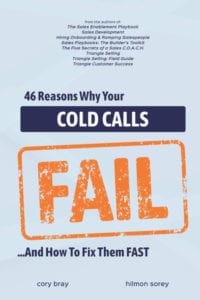
46 Reasons Why Your Cold Calls Fail: …And How To Fix Them FAST
It’s the thing with the B.
Now, it’s even more expected that everything is young. I want to ask you about that soundbite you gave us that sales is equal part acting and psychology. Let’s double-click on that. From the acting standpoint, it’s clear that you got to be prepared. A lot of people think they can wing a sales presentation or they can become so robotic with a script. Actors who have to give the same performance night after night on Broadway or multiple takes on a movie do not do it robotically and yet they’re prepared. What advice do you have for someone who does one extreme or the other, either they wing it or they are a robot reading a script? There’s a happy medium like an actor but for someone who doesn’t understand and they don’t want to do either, how do you help them find that sweet spot?
The perception of ease comes from hard work in about anything. I’ve been watching the Tiger Woods documentary on one of the streaming stations. You’re watching a golf ball and you’re like, “He makes it look so easy.” That’s because he’s hit ten million golf balls. It looks like he’s winging it when he steps up there and he doesn’t do all the crazy things that everybody else does when they’re addressing a gold ball. It’s part of perfect practice.
I love that you make that analogy to acting because there are people who say, “I don’t want to sound scripted. I don’t want to be in a script. I don’t like scripts when I talk about sales.” My business partner, Corey Bray often says, “Do you have a favorite movie, John?” John’s like, “I love the Godfather.” He’s like, “You realize Marlon Brando wasn’t winging it, right?” There’s a way you can take a script, own it, bring your own personality and value to that, and have an impact. What is the goal of the script? It’s all about conversation and communication.
Sales is all about how you create a space that allows for honest and trusted communication and this is where the acting piece comes in. When I say acting, I don’t mean it in a manipulative way. I don’t mean even the smile and dial, “John, how are you doing?” You’ve seen people do it. We’ve heard people do it before and hopefully, these aren’t people that are calling you because it’s annoying. If you’re able to get out of whatever is going on with you and reflect on something that offers an opportunity for the person that you’re talking to, to engage in a dialogue that’s trust-based and leveled on honesty around whether or not there’s a problem that you can solve.
Sometimes that requires acting. Sometimes you’re not in the mood. Sometimes you’re talking to somebody who you may perceive in your head to be significantly more expert in their field or have significantly more tenure. You’ve got to act the part. Sometimes it’s the opposite. Sometimes you’ve got so much subject matter expertise and you’re talking to someone for whom this is something they do every now and then. You have to be able to meet them where they’re at to able to have a conversation that they want to invest in and feel comfortable having with you.
It reminds me of Einstein’s quote, “If you don’t understand something simple that you can explain, then you don’t really understand it.” People think they have to impress everybody with a bunch of acronyms and big words. I’m like, “You need to be able to talk like a fifth-grader should understand it even if you can speak it at a more complex level.” One of my favorite expressions is the confused mind always says no, and most people will not tell you they’re confused.
I thought this was my thing but I say that confusion does not create conversion, but I like yours better.
[bctt tweet=”5 secrets to getting rapport.” username=”John_Livesay”]
The other thing you’re talking about is with Tiger Woods. His father who people thought was almost abusive would torture him in a way by constantly jangling coins or all the things you’re not supposed to do when someone is about to swing so that he could get in the zone and not let things get him distracted. That’s what you’re also saying where the acting part comes in. If someone forgets a line or there’s a phone that goes off in the Broadway show, those actors cannot let those distractions throw them. You need to stay skilled enough to rely on your skills to keep going.
One thing that is critically important is there is so much in the sales universe with respect to tips and tricks. It’s like, “Here’s how you start a conversation. Here’s how you get somebody to do something else.” Here’s where the psychology piece comes in. We are all human beings and we all operate under a certain set of assumptions that are innate. We are triggered to be attracted and threatened by certain things. This is the psychology piece. As a salesperson, if you understand those triggers and have done the work to create for yourself a framework that you’re operating within. Whether it’s a scripted framework or whether it’s a looser framework where you understand, “These are the things that I need to accomplish to create this opportunity for conversation and to do business.” You have a richer environment in which you can be yourself.
What’s interesting is that the people who practice regularly adhere to frameworks and understand that dynamic to have much more longevity and success in sales because then the authenticity of who they are is allowed to shine through in a way that is received well as opposed to being rigidly adherent to who you are. Not everybody likes Hilmon. Believe it or not, John. Can you imagine having to adapt your personality and shapeshift all day long to get people to like you? That’s not necessarily the goal. We create an opportunity for conversation. This is why we, at ClozeLoop, are huge proponents of this. In all of our books, we talk about things that are framework-driven. Not just high-level tips and tricks without substantiating them with some defensible science.
The other part of psychology that I want to ask you about is the fear of rejection. It’s the number one reason people don’t go into sales, get out of sales, or have trouble bouncing back after a no. What advice do you have for that?
The advice for a fear of rejection goes back to the idea of understanding what you’re doing as a salesperson and not being emotionally invested in the outcome of your conversations. There are a couple of layers that I talked about with respect to this. We work largely with B2B salespeople, folks who are selling business-to-business things. Here in Silicon Valley, we work probably 90% with technology companies that range from startups to growth organizations. Not to say that it’d be any different than B2C but this is my corpus of knowledge.
What we often say is you need to approach the sales having a lab coat and a stethoscope around your neck. How does your doctor engage with you? Is your doctor wanting John to like him and want the treatment? No. The doctor is diagnosing for pain. Having a dialogue with you about whether or not you’re willing and able to resolve that problem. He’s mentioning any resources that are necessary or a commitment that you need to make to do so, and make an agreement to either move forward or to part ways. It’s that simple. What it requires also is for you to have a separation of who you are as an individual and who you are as you’re engaging with someone to solve a problem.
If someone says to me, “No, Hilmon. I’m not interested,” that’s not a negative mark on who I am as an individual. It doesn’t mean I’m a bad person, I don’t communicate well or I don’t know my subject matter. It means this person either doesn’t have a problem I can solve or doesn’t have enough initiative to solve the problem that I’ve uncovered so I’m going to move to the next one. The biggest cure for rejection is ensuring you’ve got a lot of pipelines. This is such a sales axiom. You care a whole lot less about the one that says no when you’ve got 100 more waiting in line when you do and that’s half of your pipeline. Being able to combine those things is important.
It’s an abundance mindset versus a scarcity mindset. You get too attached to one person having to say yes or no. One of the things I love in your book is about one of the many reasons cold calls are failing is there’s no empathy for what a day in the life of that potential buyer is. You do a great job of showing they do this, they get up, they’ve got this to do, they’ve got to deal with this, this happens, they got a problem, and all of a sudden, the phone rings. If you aren’t able to figure out that that person has a life before and after you, you are so obsessed with, “This is all about me all the time,” as opposed to, “Is this even a good time to talk?”

ClozeLoop: The perception of ease comes from hard work; you need to keep practicing.
“They’ve been waiting for my call all day, haven’t they? They’ve been on my list. You knew I was calling at 12:13, didn’t you?” You’re absolutely right. This correlates to something else that’s become more and more popular where you have a lot of salespeople because of the access to information, whether it’s Google or LinkedIn or wherever you’re finding your people. You can find out what they had for breakfast this morning if they’re on Facebook and they posted it. Leveraging that information, sometimes a lot of salespeople believe that that level of personalization directly correlates to trust and it doesn’t. There are a couple of reasons why. One reason is because everybody is doing it. If everybody is doing something and everybody who falls under the auspices of a salesperson is doing the same thing, you get perceived as a salesperson.
I don’t remember what that show was years ago where they would give a synonym. I say salesperson and the person say something. It’s a word association type of thing. I’ve done this in rooms before and people were like, “Shyster slick, self-involved, self-motivated, greasy and snarky.” I’m like, “You’re ruthless salespeople saying this about ourselves.” Imagine the impression of the people who don’t do this all day long. We have to separate from that a little bit. We have to differentiate, but to your point, how can you reflect things that are like that individual?
As magnanimous as we’d like to be, we are hyper concerned to the extent of our nose. It’s all about Hilmon, “What did I do today? What do I have to struggle with tomorrow? What are the conversations I have? What are the things on my plate? What needs to get moved?” The closer a salesperson can get to that level of understanding, whether it’s through inquiry or they understand that to be the role that someone is faced with because of their subject matter or industry expertise. That goes a long way to creating that kind of rapport that is long-lasting and creates opportunities for communication.
Speaking of rapport, you have five secrets to help people build them. Can you reveal a couple of them?
I can reveal all five. How about that?
It’s our lucky day, everybody. Not all the guests are that generous.
It’s just for you, John. In our book Triangle Selling, which is our sales methodology, having trained salespeople for so many years, everyone understands in sales that establishing rapport is something that’s key. It’s talked about all the time and people will say everything from, “You’ve got to smile, be friendly, and get them to like you. You should look them up online and figure out where John went to college or where he’s living now. You should talk about the weather in Austin and what happened a couple of weeks ago,” and all these types of things. They say this is building rapport.
There’s nothing wrong with doing any of that, but there are some smart people over at the NeuroLeadership Institute who has studied rapport and brain science for the last 10 or 15 years. What they have come up with are five drivers that trigger rapport from the standpoint of either reward or threat in human beings around the world. Here’s the important piece around that. We travel around the world doing sales training and helping organizations grow. There are things that you do in France that wouldn’t wash in San Francisco. There are things you do in DC that you don’t do in San Francisco. In San Francisco, there’s a lot more time for you. There’s a lot more qualification. Let’s have a chat in the beginning. In New York, it’s like, “I’m here, John, what’s up?” That’s not considered a breach of rapport. That’s getting down to business.
[bctt tweet=”Fear is the anticipation of pain.” username=”John_Livesay”]
Apart from all of those cultural or geographical nuances, these five drivers have a significant impact on whether or not you can create a trusted relationship with someone. We bundled them into the term SCALE as an acronym. The reason is so that salespeople can understand that if you keep these things in balance, you have a higher likelihood of becoming a trusted advisor and creating a trusted relationship. The first is the S. That S stands for status. Status is respecting and understanding an individual’s perception of themselves with respect to their peers.
Salespeople all the time struggle with this idea of, “How do I get above Hilmon’s head? He’s not the decision-maker.” What a lot of salespeople do is they come in with a blunt hammer and they go, “Hilmon, who else needs to be involved in this decision?” What am I going to say? I’m going to say, “I’m the guy,” even if I’m not because you’re threatening my status. If you think about the status from the consciousness of you walking outside your door, you’re looking at your neighbor’s yard. You’re looking at the car that your friends are driving. We’re constantly comparing ourselves and evaluating our worth as it relates to other people we deem to be like ourselves. As salespeople, we have to ensure that we’re preserving status.
The C stands for certainty. Certainty is key. There are people who are reading this that are going, “Where’s Hilmon going to go? What do A, L and E stand for? When is he going to finish talking about this?” Part of our programming as human beings, which has kept us alive all this time is searching for the next thing and having some certainty towards what’s going to come next. Ambiguity creates a dangerous response. You said this idea around confusion. The reason that confusion does not correlate to conversion is because we don’t know what to do. We don’t have certainty, and therefore we back away to keep ourselves safe. How do we, in the sales process, ensure that someone understands where we’re going and what’s expected of them and the decisions they get to make?
That takes me to the A, autonomy. The most impactful thing that you can do to challenge a person’s human rights is to put them in jail and give them freedom of choice. This is the worst thing that a human being can experience besides death. Autonomy is important in creating rapport. It’s letting people know, “John, you can tell me now. I’m going to share with you a little bit about the types of folks that I’m working with. Feel free to tell me that this isn’t you.” What do we as salespeople do? There have even been books written about this. It’s like, “Get to the yes. Four yeses and then you close.” We know that doesn’t work. It may work temporarily, but it doesn’t work long-term. Allowing folks to have autonomy in their sales process with you is key.
The last two pieces here are likeness. Likeness is relevant. Don’t send me the LinkedIn message that’s constantly telling me that you’ve got offshore people who can do software development for me because I don’t own a technology company. It sounds obvious, but there is a challenge for salespeople to truly have empathy for the role, for the job to be done, and for the challenges that the person you’re talking to on a regular basis, and how you can go about solving their problems. Only reflect on the things that are relevant to that individual. Don’t just pull down that you’ve worked with Google, Amazon and Facebook. If I’m a three-person company sitting outside of Dallas, then that may not be relevant to me. That’s not creating rapport with me.
Finally, this is an obvious one, but equity, which correlates to fairness. How much fairness is there in the process? If I have a conversation with you that’s five minutes long, I can’t expect you to want to hop on a two-hour demo with me and bring your entire team. Let’s create equitable engagements that you deem as fair that I can expect you to make a decision or commitment with respect to given the amount of time that we’ve spent together and the amount of information that I’ve shared with you. Apart from all of the other stuff that is part of being a human walking the face of the earth, and how we’ve established friendships and relationships, if you can nest this scale driver concept, these five secrets into how you go about managing and measuring rapport, you go a long way.
The last thing I’ll say here is when we work with teams, we will often go into their pipelines to take a look and say, “You’ve got these five companies in your pipeline. Who of these you haven’t heard from before? Let’s run them against SCALE and see if there’s anything here that could be a reason as to why they’re not responding.” Ninety-nine percent of the time, they didn’t know what they were supposed to do next, “I didn’t give them a choice. I didn’t demonstrate to them how this is relevant in their world.” All of these things come into play so this tool has been impactful for helping salespeople have a framework within which to authentically show up, and not have to use some nifty little tip and trick to establish trust.
There’s so much gold there to unpack. Let’s take the concept that you were talking about, which is the L, the likeness, “Is this relevant to me?” I tell people that the joy of learning how to tell a story is you’re answering an unspoken question everybody has when they’re deciding whether to buy from you or not, which is, “Will this work for me?” If you’re talking to a coach about why they need to learn how to sell better to get people to hire them as coaches and you have a story of a coach who struggled with selling, then that story is relevant. They see themselves in the story and they want to buy.

ClozeLoop: Listening to yourself as well as the person that you’re talking to is critically important.
If you’re telling a story of a multimillion-dollar company you worked with and they’re like, “That’s not me. I don’t know if this is relevant,” It may give you some credibility, but you’ve got to make sure that you’re not just telling one story and that you have customized stories that allow people to think, “That may not be relevant to me but there’s something else coming up.” That’s where the certainty comes in of that fight or flight response. The handshake was to show that we didn’t have a weapon in our hand. We underestimate the value of giving people a sense of, “Is this safe? Did I get introduced to a warm intro? Is this spam that I’m getting?” All of those levels are unspoken and going on. If you’re aware of them like, “This is a fifteen-minute call. If you decide we want to go on, we can have another call.” You’re like, “This isn’t going to go on forever.” There’s a choice there of what it is. The equity thing is so important because nobody asks somebody to marry them on a coffee date in dating and yet, some of these LinkedIn requests or a five-minute chat is a few hours of commitment and you’re like, “What?” You jumped the gun there.
A lot of times, those folks are self-interested. You hit it on the head. It’s absolutely equity where I know I want to close some business by the end of this month and I’ve got four days left. I’m going to ask John for two hours of his time to bring everybody to the table and to have his checkbook ready. This has nothing to do with you.
The other thing that I loved about the relevance part is if you give someone the ability to interact with you a little bit, especially if you’re having a Zoom call. Have you ever been in this situation? For example, I will talk to a group of people and I’ll say, “Have you ever had someone say they’re interested, they send me some info and it’s crickets after that? You’re stuck at the friendzone at work?” They’re like, “That’s exactly how it is.” You’re like, “I used to have that problem too,” and now you present your solution. In my case, it’s storytelling.
If you present that, they go, “This is relevant to me because you’re talking about a feeling that I’ve never been able to express.” We all know what a friendzone in dating is. I’ve relabeled it to being stuck at the friendzone at work. You get all excited and you tell management, “They’re going to buy. They said they were interested. I sent them something.” You’re like, “What happened there?” In your case, you’re talking to companies to hire you for better sales training. It’s like, “Has your sales team ever been stuck at the friendzone at work and they’re getting all the people saying they’re interested in them?” “Yes.” Now we have a conversation about something relevant because you’ve shown the ability to express their frustrations, pain and struggles in a way that’s fresh to them and not another going, “We get people that say no,” or “We don’t hear from them again.”
Putting a little spin on it makes it memorable and that’s what you’ve done with this acronym SCALE. The other thing you have here that I find fascinating is this wonderful graph between what’s the priority and what’s the timeframe around pain, fear and pleasure. For me, the example is taking a vitamin to stay healthy versus, “I’ve got the splitting headache. Where’s the Advil? I need to take care of that now.” There is something between pain and pleasure that I’ve never seen before graphically displayed, which is fear. Can you talk about those three circles and how they relate?
If you look at this as an X and Y axis of urgency and commitment to resolving the problem, pain is the most compelling emotion that motivates people to purchase. What we found is that people purchase anything for 1 of 3 reasons, the anticipation of pain, which is fear or pleasure. If you think about your last pleasure purchase from the vantage point of things that we buy. My wife and I are looking for vacation because it’s time to get out again. Sure, we’re motivated. We want to do it and now we’re going to find a decent price. We’re going to go where we want to go. We’re highly motivated and excited about it.
If we’re encountering a salesperson in that environment, there’s not much you can do to keep us from going. You’d have to fumble that one. We’ll make a decision on our own timeline. It’s not an urgent thing and it’s something that we’ll get to versus if I’m afraid of earthquakes. I live in San Francisco. Earthquake insurance is probably an important thing to buy but nobody owns it out here. That’s a fallacy. Let’s say that earthquake insurance is an important thing to buy. That’s on my list of things that I got to get done this year. It’s absolutely true or you could say, “I got a Peloton and I pulled my hamstring in such a way that I couldn’t walk.” How long do you think I sat around waiting for that to fix? Not even an hour. I’m going to the doctor immediately because I’m in pain.
This goes back to this concept of human beings and homeostasis. We sweat when we’re hot, we shiver when we’re cold, and we eat when we’re hungry. It’s all about homeostasis. If I’m in pain, I’m seeking to immediately resolve that problem. This is B2B selling. I’m not selling vacation homes somewhere or anything like that. I’m selling solutions to business problems for folks. We coach people to say, “You got to find the pain or else you’re going to end up with pipelines and people who are interested. They want to take a look, learn about your technology, and it’s going to take them forever to make a decision.” Once you find the pain and once you’ve got that prospect to articulate that to you, you can now help them to help themselves. You can now hold them accountable for what they’ve told you is their problem and help to reflect some solutions to that problem.
[bctt tweet=”Sales is equal parts acting and psychology.” username=”John_Livesay”]
I want to say one more thing, which is important about this concept of relevance. As a salesperson, you want to spend time with people who are likely to purchase from you. That doesn’t mean a salesperson should not be spending time with people who should be disqualified. You brought up such a great example of your ability to tell a story that someone can see themselves reflected in. Getting them to opt-in to a process will move a sales process so much faster than you picking out something that is not relevant and having that person try to figure out how this might work and might not work, “I’m thinking about it. I’ll have that conversation with Hilmon later.” Being able to disqualify early, there’s nothing wrong with someone telling you, “John, I appreciate you sharing that story with me but it’s not something I’m experiencing.” You go, “Great, Hilmon. Congratulations. Do you know anybody else who might be?” You then move on.
I’ve never heard anybody describe fear as the anticipation of pain before. I like that because if you have two ways of running an ad, for example, three mistakes to avoid or three tips to be better at. People click on the three mistakes to avoid more than the three tips to be better at something.
It’s self-preservation.
I don’t want to look like an idiot or make a mistake. Even as a cold call salesperson, if you can give them a reason to want to hear something, you might want to hear three mistakes to avoid the next time you’re hiring someone because I know that’s part of your expertise as well. You’re like, “I’m in.” They’re like, “We have best practices on hiring people.” In that framework, especially during a time when salespeople haven’t been getting together for meetings as much, I hear a lot of management saying, “We’re struggling how to keep our team bonded when we’re not seeing each other as much.” Their job is to keep top talent happy. Have you come across any solutions for management? I know you have a whole thing about how to get the top salespeople, but is there anything about keeping them?
One of the things that are important is creating casual conversations. By that, I mean opening up the opportunity to get out of the calendar. Internal Zoom meetings, by virtue of the fact that it’s Zoom, need to be on a calendar. They need to happen at a certain time, everybody’s clicking into a certain link, they show up in their little boxes, do their little things and they go away. One opportunity that exists and we all have a lot more time. No one’s driving to work and your meetings are probably shorter because they’re boxed by time on your calendar now. You’re not just walking in seeing people and having this management by walking around that was such a big deal before.
As a manager, it’s creating opportunities for casual conversation where I just ping John every now and then at 2:00 PM. I ask how things are going. No agenda necessarily, but meaningful conversation. Not also, “How’s the dog? How’s the son?” It’s saying, “How’s your day going? What are some of the conversations you have? What can I help move for you?” That’s one piece.
The other thing that’s important is training and collaborative activities go a long way towards creating camaraderie, esprit de corps, and when you’re coming together and benefiting from it as opposed to coming together and being berated. Some folks have these pipeline review meetings that are punitive. Some folks have meetings in general where everybody’s present, but two people are participating. It’s creating greater opportunities for folks to share opinions, learn things, and be involved in conversations goes a long way. The last piece that I’ll say that we’ve been recommending for a lot of our clients is having cross-functional meetings. Let’s take away the silos because back when you were at the office, you weren’t just friends with the sales team. Maybe in the programs that we’re all together. I’m kidding.
It’s saying, “We’re having a product marketing meeting with a couple of salespeople. Do you guys want to join? You can come on over. You can sit, audit, and you can hear how we do our stuff.” There are relationships that should be fluid throughout the organization. The greater exposure and transparency we have to how our little cog in the wheel is supporting the entire machinery, the stronger the organization is, the greater the contribution from each individual and the bigger impact everyone has. Also, the more cohesive you feel as a team as opposed to them sitting here, staring at my screen, doing the thing, hop on my gerbil wheel every day, and I get off, and I go back to work. I think about those old cartoons. It was those black and white cartoons showing things going across the screen. I don’t know that it needs to be contrived or that it needs to be formalized necessarily. We just need to have a consciousness of it.

ClozeLoop: There’s a way you can take a script and own it with your personality and value to actually have an impact.
If you are a manager of a department, you can easily say, “Does anybody want to attend the sales team meeting? We’re going to talk about what our plans are for next quarter and some of the things that are in the pipeline. It might not be the most exciting thing for those of you who are in marketing or product but do you want to see how we do stuff? Do you want to see how the sausage is made? Come on in. You’re welcome to come.” Things like that go a long way. Whatever your corporate culture is, if you used to have lunches on the Kombucha all the time, once a month, shoot somebody a lunch and have a meeting, and do that kind of thing. There’s a lot of creativity to be had.
If people want to find out more about you and any of your wonderful books, they should go to ClozeLoop.com.
If you want to connect with me directly, I’m Hilmon Sorey everywhere. I don’t check Instagram much but if you go to @HilmonSorey on Twitter, Facebook and LinkedIn, I’m happy to connect with anybody.
Hilmon, thanks for being with us. There are some great ideas in getting over the fear, figuring out how we can be relevant, and more importantly, the importance of being clear so we don’t confuse people. It will give us the confidence to make cold calls turn into something warm and fun.
John, it’s been my pleasure. Thank you for having me on.
Important Links
- ClozeLoop
- Hilmon Sorey – LinkedIn
- 46 Reasons Why Your Cold Calls Fail and How to Fix Them Fast
- Moviefone.com
- Triangle Selling
- Instagram – Hilmon Sorey
- @HilmonSorey – Twitter
- Facebook – Hilmon Sorey
- Better Selling Through Storytelling Method Online Course
Wanna Host Your Own Podcast?
Click here to see how my friends at Podetize can help
Purchase John’s new book
John Livesay, The Pitch Whisperer
Share The Show
Did you enjoy the show? I’d love it if you subscribed today and left us a 5-star review!
- Click this link
- Click on the ‘Subscribe’ button below the artwork
- Go to the ‘Ratings and Reviews’ section
- Click on ‘Write a Review’
Love the show? Subscribe, rate, review, and share!
Join The Successful Pitch community today:
- JohnLivesay.com
- John Livesay Facebook
- John Livesay Twitter
- John Livesay LinkedIn
- John Livesay YouTube
Unlock The Sales Game With Ari Galper
Posted by John Livesay in podcast | 0 comments


Sales may be a real-world problem, but most salespeople live in a world of fantasy, full of impervious myths peddled by one “sales guru” after another. Ari Galper disdains these myths and dismantles them one by one through Unlock the Game, a revolutionary sales approach that overturns the notion of selling as we know it. Ari is the world’s number one authority on trust-based selling who offers his top-notch services to clients in over 35 countries. Does sales seem like a futile exercise of chasing ghosts? Are you constantly encountering resistance right from the get-go? If you’re experiencing any of these, then you are definitely doing a thing or two wrong. Listen in as Ari joins John Livesay in this episode to discuss the most common myths and pitfalls that salespeople fall prey to and shares the best practices that will turn your sales process around.
—
Listen to the podcast here
Unlock The Sales Game With Ari Galper
Our guest on the show is Ari Galper, the author of Unlock The Sales Game. We talk about the importance of storytelling and he has an impressive compelling story to open the episode with. We then talk about some sales myths and why they’re no longer true if they ever were. Finally, he gives us some core principles, some actual new statements to say when we’re trying to get someone to buy something from us. Enjoy the episode.
—
Our guest is Ari Galper. He is the world’s number one authority on trust-based selling and is one of the most expensive sales growth advisors in the world. He’s the creator of Unlock The Game, a completely new revolutionary sales approach that overturns the notion of selling as we know it. With clients in over 35 countries, his global sales system has become the most successful trust-based selling systems of our time. He’s been featured in all magazines like Inc. and Forbes, including the Australian Financial Review. In a day and age where technology rules the selling world for many growth-oriented businesses, authenticity and trust have taken a back seat to the sales process. Unlock The Game puts trust back into the selling in such an elegant and natural way that the truth quickly emerges between the seller and the buyer so that the painful and arduous chasing process no longer has to happen to make a sale. Ari, welcome to the show.
Thanks, John, for having me. I appreciate it.
We were chatting a little bit before the show. I asked you about your experience not only as a trust builder and unlocking this thing that’s been in the back seat for far too long. I agree with you, but you also practice Aikido, which diffuses conflict. That might be a fun place to start. Did you start your sales experience or Aikido first?
The sales experience happened first. The story behind that and my whole philosophy is based upon the Aikido concept of defusing resistance first and trying to overcome resistance. Karate and Taekwondo are linear arts where when someone attacks you, you try and overcome the resistance and you back defend. Aikido is different. If someone comes at you, rather than trying to defend or hit back, you step aside and you diffuse the resistance. The concept is at the end, no one gets hurt. I took that philosophy and bolted it underneath my sales approach, and the rest is history.
One of the reasons I wanted to have you on the show is you have this amazing story about when you were in the trenches. I know storytelling is part of your process as it is mine. I always like to have people who have been in the field as opposed to just writing a book about what they imagine it’s like. Would you tell us that story of when you thought you were going to get a yes for sure, and then one little accident caused you to have a big awakening?
About many years ago, I was a sales manager in a software company. We launched the first online website tracking statistics tools to track website behavior. It is now called Google Analytics, but it had a different name a long time ago. It costs money back then and now it’s free. Essentially, we lost the first online product and a fast-growing business. I had underneath me about eighteen salespeople and I was the manager of the group. Big leads came across my desk. I’ve got big opportunities. One lead crossed my desk. It was a big company. I recognized the name.
They had lots of websites, a big opportunity for the company. If I close this one sale, it will double the revenue of the company with one sale. That’s how big it was. As you can imagine, we’re excited. The whole team was high-fiving me. They were like, “Good luck, Ari. Get that sale.” I was trying to relax and be my normal self. I called the guy back. We had a nice conversation. He’s my contact there. He agreed to a conference call, and we did a webinar to demonstrate what we do on our tool. They finally came on a Friday at 4:00 in the afternoon. I’ll never forget it. I went into the conference room with my CEO and I closed the door behind me. We closed the blinds. No one could look inside the room. In the room, there was a long conference table. On the middle of the table was a speakerphone, the ones with the three legs on it like a spaceship, the corporate ones.
I’ve been there many times in my career. I am in the story. I love it.
I sat in the room and I hit the on the button and the dial tone came up and I dialed the number that he gave me. My contact says, “Hello.” We said, “Hello, how’s it going?” We have a bit of a chat. He says to me, “Ari, let us tell you who’s with us in the room today.” I was like, “Sure, I’d like to know that.” The next thing I hear is, “My name is Mike, I’m CEO.” I was like, “CEO of the whole company. I had no idea.” I then hear, “My name is John, I’m head of IT.” “This is even perfect.” “My name’s Julia. I’m the head of marketing.” It was amazing. Everybody on this phone call was a decision-maker.
[bctt tweet=”There is an invisible river of tension in all sales calls.” username=”John_Livesay”]
They were all there in one place. This is the perfect sales call you’d ever imagine because it’s going to happen right there or not. I was relaxed and stayed calm as much as I could. I introduced myself. We then begin the live demo over the web to show them one of the websites. We collected the data in advanced to show them what it looks like to log in and see their visitors, to flag around the stats around that. These were the early days of the internet. I was showing this to them online and I start hearing this noise in the phone call like, “This is great. I can’t believe we can see this information. This is fantastic.” They started asking me questions like, “How does it work? How do we install it?” There was almost like a love fest on the phone.
They were acting like they already had the product. They’re trying to have you talk about what’s life going to be like after it’s in.
They had all the right questions and I had all the right answers. It was fluid and I was like, “This is wonderful.” I was a student at selling at the time. I had the CDs in my car back then, and the books on my shelves. I went to the gurus’ seminars. I was studying and I answered objections. I built a rapport. I told stories. I was doing everything I was told to do. They were loving it. My boss in the corner was like, “High five, nice job.” He’s on the phone calling for the car. He wants to go to the bonus money like the wheels, the color of the car. He’s excited. Honestly, this could not have been a better call.
An hour goes by and the call comes to a close and my contact says to me, “Ari, this is great. This is what we need. We love it. Give us a call a couple of weeks, follow-up with us, and we’ll move this thing forward.” I said to myself, “Thank you, God. What an amazing ending.” I was excited. I took my hand to reach for the phone in the middle of the table to the off button. As I’m reaching for the off button, by complete accident or divine intervention, my thumb hit the mute button instead of the off button. They were right next to each other and I hit the wrong button by accident. A small click happened and they hung up the phone. That split second, a voice inside of me said, “Ari, go to the dark side, go where no one has ever gone before the sales world. Be a fly on the wall. You got nothing to lose.” In that split second, I pulled my thumb back for a moment. They started talking amongst themselves, thinking I had left the call. You probably know what happens here, but what would you imagine them said after a call like that? What’s the normal thing you would imagine them saying?
The normal thing and what we all hope when we get that feedback is, “Let’s pull the trigger. Everybody agrees. Yes. Set up the next call and sign the IPO. Send them the order form.”
It’s a no-brainer. Let me tell you what they said verbatim, word for word. I’ll never forget it. That’s why we’re here. They said, “We’re not going to go with him. Keep using him for more information and make sure we shop someplace else cheaper.” Knife in the heart twist. I was in a state of shock. I hit the off button, move to the wall, and I said to myself, “What did I do wrong?” I was competent. I was sharing concepts. I built a rapport. I answered objections. I told a story. I did everything I’m supposed to be doing in selling. I asked myself, “Why were they afraid to tell me the truth?” I realized at that moment that finally hit me that somewhere along the way, it has become socially acceptable not to hold the truth to people who sell.
We’re doing it to them.
It’s okay to say things like, “It sounds good. Send me the information. We’re definitely interested,” without having any intention of buying.
I talk about this in terms of people say, “I’m interested. Send me information.” They don’t even get as much positive feedback as you had. People start celebrating and I’m like, “You’re in the friend zone at work.” Just because someone’s interested, it doesn’t mean they’re buying. You got up to what I call the intriguing rung of the ladder which is, “Tell us more. We’re intrigued. This sounds incredible.” You’re inches away from what you think you have is irresistible to them. Until that paperwork is signed, you never know. What’s unique about this story and if you’ve been in sales at all or you’ve been in that situation and you scratch your head. Especially if you are someone who comes from truth, integrity, and you can’t imagine ever doing that to someone, you think to yourself, “How did I read the room wrong? How is my radar off in who else can I not trust that I’ve been trusting?” It can do a mind game with you.
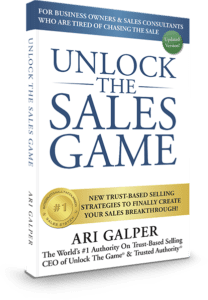
Unlock the Sales Game: New Trust-Based Selling Strategies to Finally Create Your Sales Breakthrough!
I asked myself at that moment, “Why were they afraid to not tell me the truth?”
If they want to use you, they’re not going to tell you.
I realized at that moment that there is an invisible river of pressure that flows underneath every sales and pre-sales conversation you have with someone. If you aren’t constantly aware of that going on, you don’t remove the pressure from the sales process, you will always never build enough trust with someone. They will feel uncomfortable and vulnerable to tell you where they stand. Therein lies the core behind our whole Unlock The Sales Game mindset approach where our objective is shifted from letting go of the end goal of the sale, to instead focus 100% only on building trust with people.
This is great and you’re busting the myths. The old myth of sales training that I went through back in the day was, “Try to get them to say yes as many times as possible. By the time you ask them to buy, they’re already nodding their head and they’re used to saying yes.” You’re flipping the script on that and saying, “No, get them to say no.”
I’m saying your goal is not the sale. Your goal instead is the truth of where they stand. That mindset shift is everything. We’ll walk through examples of how to use this. That mental shift is a game-changer because that allows you to be present with people and believe me, they can tell a mile away if you think you have that next step with them in a split second. That’s where we’re going to go with this.
That’s an amazing story to open the show with. Thank you. I love the story. It’s memorable. It tugs at the heartstrings to do everything right and there’s a takeaway, which is even better. That’s what a good story does. Is there anything else you want to talk about in terms of storytelling before we move on to some other myths that you’re busting?
That is the story and the premise behind this whole shift in thinking, and that was a painful experience for me. That pain got me to the truth of why is it going on in the industry and the fact that we accepted it as normal. We’d be conditioned to not be aware of how to be able to penetrate that wall of distrust. I hope that your readers can learn from this and use some of what I’m about to share, to help them break through that wall of distrust, get the truth to become more successful and not chase ghosts. Do you know what ghosts are?
It’s like being ghosted in dating. You don’t hear back from them.
People will say, “It sounds good. I’m interested. Call me next week.” They spend 80% of the time chasing ghosts and never know the truth of where they stand. If this is a total flip, you can eliminate the chasing game, imagine their possible revenue opportunities, and your state of mind and insanity as well.
[bctt tweet=”Stop chasing ghosts.” username=”John_Livesay”]
Especially that because that’s what causes burnout. This fear of rejection is high in salespeople. One of the things I’ve heard is whoever is asking the questions, that’s who controls the conversation. Is that a myth or do you think that’s true?
There’s a layer beneath that. It’s the person that is building trust cautiously with the other person is the one who is able to create this bubble of vulnerability, while the other person feels comfortable to tell them the truth. From that point forward, you both can decide if you’re a fit together. If you’re a fit, then you either engage or you disengage. We set up the situation so you’re not locked into a yes mode. You open it up to see if it’s a fit or not. If it’s not a fit, you disengage. You walk away with your integrity and your head held high.
One of the things I’ve enjoyed watching your videos from your talks is this concept of the two most common objections we all get. It’s I don’t have enough money, this is too expensive or this isn’t the right time. You have a wonderful phrase that you teach people that I would love you to share. From there, that’s going to trigger all emotion in our audience and more questions. Whatever my objection is, you have the same answer to it. “It’s too expensive. Sorry, we don’t have enough time. This isn’t the right time for us to make a change.” You say what?
With typical traditional selling, when you get an objection, you’re supposed to overcome it. We’re taught that by all the gurus. The problem with that is if they’re giving you an objection that they believe is true and you try to overcome it with them, you break trust with them instantly. The sale is overdone right at that moment because you’re trying to overcome something that they believe is true. You lost the ability to connect with them. I have a whole body of work around trust-based languaging. Not scripts, but phrases you use that does not risk the relationship and re-engage again in real-time and natural flow. Let’s get to this example. We have training around this, but the concept is this. If someone gives you an objection coming to your direction like the Aikido thing, if someone gives you a pressure on you like, “Your price is too high,” for instance. What would be the number one response to that in sales?
“You don’t see the value of it. We have a payment plan,” whatever.
You defend yourself, “We’re the best. We have this.” You start to defend, get your shoulders up and say, “We can work with that.” We either get passive or aggressive. There are only two options. Our approach is different. We’re going to diffuse the pressure to preserve the relationship to re-engage again. It’s the same scenario. The guy says that your prices too high. In this specific situation, what we’re going to say is, “You’re absolutely right.” Here’s the operative word. “It can be perceived as high. If you haven’t had a chance to use it in your company, see the results, document it, and get the ROI. You’re absolutely right, it appears that way from the outside in. There is no doubt about that.” Now stop for a second at the role play. What did I do right there?
You made me feel right. I then feel like, “I’m not arm wrestling you anymore. You said I’m right. You gave me a reason why I should feel right.”
They’re expecting you to defend yourself or negotiate lower prices. That’s the game. That’s called the sales game. We unlock that process by going, “I’m not going to play that game with you. It’s nothing personal, but I don’t operate in that level of that plane.” It can be perceived as high as a true statement. Can it? It’s perceived because you hadn’t had a chance to use it. Obviously, it’s going to be high. It’s logical. It makes sense what they’re saying. You then re-engage with this, “Would you be open to us re-looking at the issues you want to try and solve, and make sure that those problems you want to solve have enough ROI behind it to justify solving them?”
You could use this in a lot of scenarios. You and I are both speakers and we have agents that typically negotiate for us, but that price thing comes up all the time. We’ve never paid more than X for a speaker and that’s below what your minimum is. I love that you could say, “I could see where that would be perceived as a high fee. You’ve never heard me speak. You’ve seen a video clip. Would you be open to going back to the whole purpose of what the sales meetings about in the first place?” It’s like, “We get one more salesperson to close one more sale at $50,000. That seems like that would be an ROI, but maybe not.” It’s that conversation where they’re going, “I got it.” When I called on ad agencies, their job was to get the lowest cost per $1,000. They analyze how many readers you have and you get a bonus if you get them to lower their price every year. The price goes up. We didn’t have any of this training. It was a nightmare for everybody.

Unlock The Game: If you’re trying to overcome an objection that the people you’re selling to believe to be true, you’re breaking trust with them instantly.
It might be helpful if you want to go through some of the sales myths that might help uncover some of this, that people are probably going to be shocked. We’ve been conditioned over the years to believe certain things. Our construct is narrow and I want to bust some of the myths that I think will be helpful for you to understand where we’re coming from. One key myth is this concept called, sales is a numbers game.
Keep calling and calling. I hate that.
The more contacts you make, supposedly the more sales you make. We discovered in our research that it is not how many contacts you make anymore. It’s about how deep you go on each conversation, not how good you are at making more calls, having more contacts or more LinkedIn connections. It’s not about that. It’s how good you are at trust-building. If you aren’t thinking about how good you are at trust-building, you’re missing the whole point of your time and efforts. That’s number one. Number two is that the sale is lost at the end of the process. I’m sure you’ve been there before, John, where you had to deal pending and you worked hard for it.
It’s a green light and at the end, it falls through. They don’t send the contract over and you’re like, “What the heck? What happened?” We discovered in this economy now that the sale is not lost anymore at the end of the process. You lost it at the beginning of the process. I’ll prove it to you in a fun way. If someone calls you on the phone and they say to you, “My name is, I’m with, we are a.” What goes through your mind in about three seconds?
You’re a solicitor.
It’s over at hello. I’ll make the case that most of your readers are losing their sales, not at the end of the process. We’re losing it where?
At the beginning.
It’s the opposite of what they’ve been trained to think about because it’s always been about the sale. It turns out that if you don’t build enough trust at hello, it’s over there and not the end.
I was hired by a real estate company to train their real estate agents that answered phones about setting up appointments for listings and things. They were saying what we’ve all heard 100 times, “To whom do I have the pleasure of speaking?” I said, “That’s so scripted. Nobody talks to people like that.” They go, “We want to get their names so they can use their name in the conversation to try and build trust.” I’m like, “Let me role play with somebody.” They’re like, “You haven’t been trained as an agent, are you sure?” I’m like, “It’s fine.” I said, “This is John with so-and-so real estate.” The person goes, “I have a question about a listing in a house down the street.” I’m like, “I’m sure you didn’t catch my name because I said it so fast at the beginning. My name again is John and you are?” It was little things that people don’t even begin to have a real authentic conversation.
[bctt tweet=”Sales is not a numbers game. It is a trust-building game.” username=”John_Livesay”]
There’s one more myth I’ll cover and this is a big one. The idea that rejection is a part of the sales process and game. It came from the old sales managers who said to you over the years, “If you can’t take a no, if you weren’t tough enough, if you can’t get out there and take the bullets, you aren’t made for success.” That’s the old messaging that we’re being brought up to believe. We discovered that rejection is triggered by certain things you say and do unconsciously that caused the other person to put their guard up, push back, make you chase them, and not tell you the truth.
I brought enough personal triggers in my own life. Let’s get trigger around rejection. What causes people to reject us?
Let’s talk about the principles that will roll into it then behind our Unlock The Game concept. Our core principle number one is the idea of always be diffusing pressure in the conversation. Always seeking yourself, “How can I hit the sales pressure out of this so do they feel I’m authentic and I care about them,” which is hopefully where you’re at. Let me give you an example of a live scenario using our languaging and our approach to how we handle this. Let’s say you’re on the phone with somebody for a first phone call or first lead. You’re on the phone with a potential client. Good conversation and it looks like a good opportunity for you. The chemistry is good. It all looks positive and you’re heading to the end of the call. The call comes to a close. What do we normally say to a call like that? We say, “How about we get together? How about we have the next step?” We’ve been trained to move people forward, that’s how we’ve been trained by the old gurus. What could happen if you try and move somebody forward and they aren’t ready yet? What do you break with them right there at the beginning of your process?
I feel pressured. I’m out.
Your trust is over. They won’t tell you this the whole time that it’s over. They’ll play the game with you, but you’ve broken the trust. The same scenario, but our mindset and our languaging. The call is going well. It’s your first to call with somebody, with a good opportunity. The call comes to an end, and rather than saying, “How about we schedule another call? How about we move forward?” What we say instead is, “Where do you think we should go from here?”
They’re in the driver’s seat.
What’s happening there is a power shift where they now feel they’re in control. When you say that to somebody, they’re usually in a state of shock. They can’t believe somebody in business asked them what they want to do. This is astounding for them. Do you know what starts to happen? They say to you, “I’ve got one more question.” All of a sudden what comes out is the truth. At the beginning of your process, you begin with them by you not trying to move them forward. It is counter-cultural to a traditional sale which is all about moving them to the next step.
Believe me, they know when they’re on your process and it’s over when they feel that from you. When you say that to somebody, you send the message, “I’m with you now, 100%. I’m listening.” Listening takes active concentration, not hearing, which is passive. One of the triggers of rejection is languaging. The phrases that you use to trigger an association of you being with the negative salesperson, stereotype. The other trigger is delivery. What do you notice when I said, “Where do you think we should go from here?”
A lot of pauses and a soft voice. I’m always saying that competent people are comfortable with silence and stressful people are not.

Unlock The Game: Most salespeople don’t lose their sales at the end of the process. If you don’t build enough trust at hello, it’s over there and then.
If you weren’t centered in your mindset, you’ll rush through it, you’ll sound scripted and unnatural. When you lower your voice and you’re relaxed and you say that to somebody, they feel almost obligated to step in, save you and bring you back up again. It’s human nature to step in to help people who aren’t walking on top of them. Part of the languaging and being centered in our mindset is about how to deliver this in the most authentic way possible to send the message that I’m not here for the next step. I’m here for your challenge right now.
You have another question that I love when people give an objection that we talked about. Would you set that one up too? I’m guessing that’s one of your principles. It’s one of the all-time favorites.
Why don’t you give me an objection you imagine?
“This isn’t the right time for us to make any changes.”
We have this magic phrase that we use whenever we get resistance like that. Things like, “We don’t have the time or we don’t have the budget.” How about, “We’re using somebody else. Thank you.” That’s a classic one. Let’s say if someone says we already have another vendor or we’re using someone. It’s common. The phrase you always say to create enough space for you to stay calm and re-engage again is you are going to say, “That’s not a problem.” “I don’t have the time.” “That’s not a problem.” “We don’t have a budget.” “That’s not a problem.” That’s the first thing you say to slow things down, to slow motion because you’ll react fast with defensiveness when someone challenges you like that. “We can’t afford it.” “Wait for a second, you can’t.” We’re conditioned to react and hit back to overcome the moment.
We get stuck in the game and we’re like, “How did I get here?” If you can stay centered and relax and use, “That’s not a problem.” When they hear that from you, they go “Really, it’s not a problem?” They get confused. They’re expecting that. They’re expecting a reaction back. When you say it to them, “That’s not a problem,” they open their mind up waiting for what’s next. There is the next step. The first step is to defuse the moment and have them recognize you’re not going to play the game with them anymore. They can back off a bit. After saying, “That’s not a problem” when they say to you, “We’re using someone else,” you can say this, “I wasn’t looking to replace who you’re currently using.” That’s the first thing you say. What does that do by saying to somebody, “I wasn’t looking to replace what you’re currently using.” What’s happening there?
That’s even more confusing because it’s like, “If it’s not a problem and you don’t want to replace the person, are you thinking I have a budget to hire two people?”
The wall of defensiveness is coming down. They’re like, “That’s good.” You’re relaxing them by diffusing the pressure with the languaging. You’d say, “I wasn’t looking to replace who you’re currently using.” You then say this, “I wanted to see if you’d be open to a different perspective on how you guys track your visitors that you may not have access to before or seen before. Would you be open to that?”
That’s it. Now, you’ve taken down that defensiveness, and 9 out of 10 people love to think of themselves as open-minded. It’s part of their job to look at all the options. Even if it’s just you and you’re running your own show, you’re like, “I’m an open-minded person. No, I’m not open to hearing any other options that are available to me in the world.”
[bctt tweet=”Sales only sucks if you focus on the end goal instead of on the truth.” username=”John_Livesay”]
The keyword there is, would you be open? The sales world is typically, would you be interested? Never again use the word interested forever after this show. That’s the sales word that sets alarms off. Instead, always use these words, “Would you be open,” because the word open doesn’t force them into a yes or no. It creates an open space. It gives them permission to tell you the truth. We get no space to engage as we’re wired to chase the next opportunity.
It’s a whole game changer. I can see why you’re in such demand. The book is called Unlock The Sales Game. You can see how Ari has shown us how to unlock each lock on someone’s head, their heart and their gut. I believe you first got to make people safe. It’s a fight or flight response. Once you diffuse that response, then you might get them to say, “Would you be open,” and then, “Yes.” It then can get into the head a little bit without all those other blocks and reaction happening.
If you remove the noise from the sales process you create a deep human connection, which is called real trust. Not fake trust. Fake trust is the whole rapport-building thing, “How are your kids doing? I love that golf on your wall there. How’s it going over there in Milwaukee?” That’s fake rapport. We’re talking about real trust. It’s when you remove the noise, you connect with them at a deep level, and they can sense that you are present in their world, not your world. I’ll give you one key phrase for everyone to know, and take an oath with me to remove this forever for the rest of your lives.
It’s open, not interested, then we’re no longer going to say the next steps.
This is a new one now. For those who have been in sales for a long time, this might hurt a bit. I’m going to ask everyone to remove this phrase forever and never use it again, it’s follow-up.
I’m following up on a call, a voicemail or an email.
What’s the only industry in the world that uses the word follow-up? It’s sales. You’re trying to be heart-centered and authentic in helping people but your languaging screams the opposite, “I’m giving you a call to follow-up on our last proposal.” They’re like, “What?” It’s over at hello. There are classic ones. Do you remember the old days? There are a few other ones like, “I’ve given you a call to check-in.” That’s a classic one. There’s one more, “I’m giving you a call to touch base.” It’s classic sales 101, the 1980s. These were all horrible words that will kill your trust right there. Let me give you the answer to all of this, which I have in our work here.
Rather than say hi or tap an email, “I’m writing to you to follow-up.” You say, “I’m giving you a call to see if you have any feedback.” Don’t ever ask questions. That’s cross-examination like a lawyer. You say, “I’m giving you a call to see if you have any feedback on our previous conversation, any feedback on our proposal or any feedback on my previous X.” You go backwards, not forwards. Follow-up and touch base is moving things to the sale. When you say feedback, you’re going in the opposite direction. You’re moving the momentum. You’re taking the pressure out. When you say to them, “I’m giving you a call to get feedback on our previous conversation.” Do you know what starts happening? They start talking. They tell you the truth. They tell you everything like, “This guy was right.” It’s like a dam opens up. They’re like, “I got some feedback for you. Here it is.” It comes rolling out their chest. It’s amazing what happens when you change your mindset and your languaging.
That has got to be one of the most insightful things I’ve ever heard from a guest, and I’ve had over 300 guests. The concept of pressure moving forward, destressing people, let’s go back and see if there’s feedback on what we’ve discussed. It causes you to rethink it without making you move forward at a pace that you’re not ready to. How can people find you to hire you as a speaker, to take your course or learn more about how to unlock the sales game so that they can get feedback and never ask people if they’re interested in anything or ask anybody for a next step?

Unlock The Game: Never say “interested”; always say “open.” Never “follow up”; always ask for feedback.
Go to UnlockTheGame.com and there is a free course that they can register for. My book is there. We have a couple of interesting courses that we have in our membership program. One of the courses we finished is called the One Call Sale. How do you onboard somebody on a preset consultation phone call without closing, without pressure, without proposals, and without next steps out of one phone call? It’s a powerful course. You can check that out when you’re in there. After our free course, you can access that. This requires somebody who’s willing to challenge their own thinking and evolve into the future. If you’re stuck in your old ways, please do not approach us because we can’t help you. You got to be open-minded and challenging your current thinking.
It’s a choice. We can continue to be like what Blockbuster was and be, “This is working. Why would we change it,” or be like Netflix and go, “Maybe we should come up with something else besides mailing out an envelope with a disc in it.”
I’ll tell you a funny story. You’ll enjoy this. I was brought to a company in 2019 with a big opportunity, a big sales team and a multimillion-dollar business. I did a talk with a sales team and they enjoy what they heard. They have me come in and discuss moving forward. I told them that my fee was high on a retainer basis. I came in to the conference room myself, they had the sales and the CEO in this conference room. It’s a similar story before, but a little different. The guy says to me, “Ari, we like your program and stuff, but your fee is way too high. We’ve never paid anybody that money before as a consultant from the outside. We need from you a proposal. We need it broken down by ROI. We need to see a document that lays this so we can go to our board to justify getting that fee.”
That’s not a problem.
This is more black belt level now that I’m getting done. What I said to him was, “We don’t do proposals. We don’t know how to do proposals. We’re not in the proposal business. We’re in solve the sales problem business. That’s what we do.” He was in complete shock, John. He turned white and said, “What?” He then said to me, “For that amount of money every month, how much of your time do we get for that?” I said to him, “Not much. It’s not about time. It’s about focusing in on solving the problem. If we have to do a lot of time, that means we’re not focused.” He said, “We’re doing well already. We’re doing $8 million a year. We have sales coming in. Why should we invest in this to change?” I said, “It’s not about how much money you’re making. It’s about the 80% that you’re losing by chasing all these deals that never get closed that falls through your fingertips. All those losses justify this.” The CEO in the corner is listening to the whole thing. He gets up and he says to us, “Enough of the game’s already, just invoice us. Let’s get you paid and get it started right away.”
You have to be confident in who you are and what you do, and not be attached to the results. People can smell that a mile away, just like in dating, if you’re desperate or not. If you are that confident in what you do and you kept shifting the focus of time.
Your prospect wants to frame you. They want to put you in a frame, which gives them control to trigger like a pinball in the pinball machine. They want to be able to control everything, make you bounce and jump, and put your hopes. They want you to play the game with them. We unlocked that game in the beginning. We let them know that we don’t play those games, but we will focus on solving your problem. It’s up to you to choose what you want to do. We walk away from those who can’t accept that and that’s the end of it.
You look at how much time you saved by not chasing people who are going to ghost you anyway.
It’s called the hopium. Do you know the hopium drug? We hope we got the deal and we never get it. The hopium, “It was a great meeting. They loved it.” You go back to the office, “We’re looking good.” You then have this hopium drug in your body. You are so excited and you chase them down, and they will call you back. You just detox the whole hopium. You’re like, “Sales suck,” because you don’t focus on the truth. You focus on the end goal.
I love that it’s about how many deep relationships you have, and not how many conversations you have. That’s true in social media and everything else. What a great gift you’re giving the world, literally. Thank you for being on the show and sharing your wisdom and your insights. I appreciate you. Thanks.
Thank you, John.
Important Links
- Unlock The Sales Game
- https://UnlockTheGame.com/
- Better Selling Through Storytelling Method Online Course
Wanna Host Your Own Podcast?
Click here to see how my friends at Podetize can help
Purchase John’s new book
John Livesay, The Pitch Whisperer
Share The Show
Did you enjoy the show? I’d love it if you subscribed today and left us a 5-star review!
- Click this link
- Click on the ‘Subscribe’ button below the artwork
- Go to the ‘Ratings and Reviews’ section
- Click on ‘Write a Review’
Love the show? Subscribe, rate, review, and share!
Join The Successful Pitch community today:
- JohnLivesay.com
- John Livesay Facebook
- John Livesay Twitter
- John Livesay LinkedIn
- John Livesay YouTube