

Becoming Kings With Johnny King
Posted by John Livesay in podcast | 0 comments

Our body is our kingdom. We keep the peace inside our kingdom. In this episode, Johnny King, the author of Becoming Kings, shares his insights on reaching our highest potential to become kings in our kingdom. Our inner kingdom encompasses our mental, emotional, and physical well-being; the outer is our purpose in the world, while the eternal kingdom is the things you take to go beyond our human experience. Once these three kingdoms are in alignment, that is how we reach our highest potential. Johnny also shares some tips on how we can become productive. Tune in to this insightful interview!
—
Listen to the podcast here
Becoming Kings With Johnny King
My guest is Johnny King who has some great insights and a description of how to work on your inner, your outer, and your external kingdoms. Enjoy the episode.
—
My guest on the show is Johnny King. Before Johnny became a transformational coach for men to help them reach their highest potential, he first had to discover his own. Amidst the recession of 2010, Johnny was broke. In fact, $35,000 in debt, jobless, and picking up the pieces of a failed marriage, he thought he was done. Little did he know it was the start of his journey.
He resolved never to experience hopelessness like that again. For more than a decade, he’s built and sold several successful businesses. He owns multiple short-term rental properties, travels the world, and operates a growing HVAC business. He sells his book Becoming Kings worldwide while producing a podcast that I’ve been fortunate enough to be on called Becoming Kings. Out of the pain of countless losses, he systematically designed his habits and routines to create a life he fell in love with. He’s now teaching others those tools so you can realize your own dreams and truly become the king or queen of your kingdoms. Welcome to the show.
Thank you. It’s a privilege to be on and to connect with you once again.
We were talking before the show about how we spontaneously ran into each other at a dinner in Austin, where I live and you live in Denver, so it was completely unexpected and a lot of fun.
I got you by surprise, for sure.
I don’t know about you, but I put people in categories like this person lives here and I only live here. I’m like a man at the airport and I run into somebody, I’m not as shocked, or at a sporting event or something. You’re like, “There’s a lot of people here.” That was an intimate 30-peer supper club event. What are the odds of that?
As you well know, the longer career we have, the more people we connect with, so the more likely you’re going to run into someone and it’s hard to always connect a name with a face. Along with anything else, that’s a challenge for sure.
For me, moving to Austin years ago at the peak of the pandemic, even though I’ve been here for years, doesn’t feel like that. I feel like I’ve started to find my tribe and my friends. I lived in LA for many years and I would run into people much more frequently there. Anytime anybody knows my name at a grocery store or anything in Austin, I’m always shocked. Tell us a little bit about your own story of origin. Can you go back to where you grew up, college, or school where you got onto this journey of having some success before 2010 came along?
Similar to you, I grew up in the Midwest, primarily in St. Louis. The short of the long ultimately is that I grew up in a relatively traditional blue-collar, white-collar, Midwestern family with four other siblings and was busy and always running from sporting events to choir concerts to everything else. The older I got, the more I realized that there were things going on between my parents and their relationship and how deeply that started to affect my own behavior in relationships, romantic relationships, and my relationships with my parents.
My father was a workaholic and primarily, he was around, but he wasn’t necessarily emotionally present. That’s such a gift to have that level of that connection and that presence. Ultimately, my mom got ill in 2006 and passed away. It was not easy, but the first record scratch in where I thought my life was going in my vision of it.
I had gotten married shortly thereafter. My father came out of the closet the year after that. The year after that, my ex left. Everything that I knew for what my life was going to be on the trajectory I thought it was on was blown up. That started the journey of, clearly, the man that I had become, and the life that I created was all facade, quite frankly.
It was legit, but I was trying to fake it until I make it because I was so insecure. I didn’t know what it meant to be a man. I started to heal myself and my relationship with my father. All those things brought me back to being where I am now, proud of who I am, happy with what I’m creating, and having my father be one of my best friends, which was great.
What a full circle that is.
[bctt tweet=”Productivity is achievable in small steps.” username=”John_Livesay”]
That’s a huge part of my journey, for sure. That’s the short of the long.
Lots of healing there. It’s funny, I watched the Garth Brooks documentary on his life and you look at that career and you’re like, “Wow.” You don’t realize that even someone at that success level struggled for a long time. They left Oklahoma, went to Nashville, and came back in 24 hours like, “This isn’t for me.” He has this amazing career after getting discovered, and then in the same year, much like you.
This is what I find so fascinating about stories. We don’t have to be a famous person to have these kinds of events, multiple events. A divorce, dad coming out, career, financial challenge, any one of those things by themselves knocks people down and keeps them down for a while. I call it the 1-2 jab. I’m not even fully standing back up from that.
Garth says, “I got divorced after many years. I have kids with this woman. I lost my mom, my closest supporter.” That was devastating. You went through that with your mom getting sick and then finally, he decided to retire from performing because he wanted to spend time with his kids. He goes all in the same year. Talking about losing your identity. That’s why I was like, “Look at you. You had that 1, 2, 3 like Garth did.” For seventeen years, he was not performing. He’s remarried and his new wife said, “I think you should go back on the road.” He said, “Is anybody going to remember me?”
That journey, whether you’re a man or not, of being disrupted and getting knocked down is huge. Your name is King and the title of your book is Becoming Kings. I love some of the takeaways in this book. The one I wanted to start with is how can we avoid this ordinary person mindset and not sabotage our life of abundance.
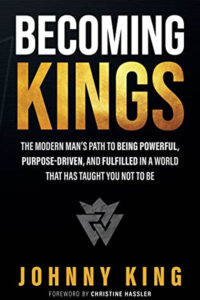
Becoming Kings: The Modern Man’s Path to Being Powerful, Purpose-Driven, and Fulfilled In A World That Has Taught You Not To Be
Abundance is not, for me, defined strictly by money, but it’s how many friends I have. Do I have an abundance of health? Do I have abundance and joy? I’m asking you to describe, first of all, what abundance is and then what we are doing in our minds to prevent us from feeling like we don’t deserve it, do you think?
Answering your first question, I feel like abundance ties into yes, my last name is King and yes, I’ve played my branding off of that, but I feel like it’s always been something that I’ve been connected with and driven towards. It is wanting to live a life where I have exceptional health physically, emotionally, relationally, and financially. Back in the old days, a king obviously reigns over the kingdom and has riches and everything. I wouldn’t say so much that my definition of being a king is that traditional, let’s say, but more focused on what we as men have control over in our lives.
You could have a lot of things. You could look like you’re a king and yet still be deeply insecure and hurting. You could be addicted to various substances, doing horrible things in the world. That’s certainly not what I feel is a king. That gets to answering the second question, which is what I feel prevents us oftentimes is our own insecurity. That has a lot to do with our upbringing and our lack of mentorship.
That ordinary mindset is, “Who am I to think that I’m going to be successful? Who am I?” It’s almost like impostor syndrome a little bit.
It’s 1 of 2 things. I do feel like there are a lot of people that are “hugely successful” and yet they are so driven by their insecurities. They’re like, “I’m going to prove the haters wrong,” and everything else. My father, too, was driven that way and I can relate to it as well. We have these deep underlying skeletons in our closet that we’re not enough and that we’re not lovable, so I must achieve X, Y, and Z.
I feel like that’s what guys oftentimes do. If I can get this thing, if I can get this person to hitch their wagon to mine, if I can have this many commas in the bank or live in this area of town, then I’ll be set. A lot of times, we get it and then it’s not there. We’re like, “Is this all?” Nothing changes. If anything, we’re more depressed and lonelier.
I remember a friend of mine in LA was an actress and very successful for a period of time, so much so that she could afford to rent a beach house in the Malibu colony. She was on this successful sitcom and she was never more depressed. Nobody wants to hear about it because you’re living the dream. You’re on a sitcom, you’re in the Malibu colony, and you wanted to throw a 4th of July party. What most people don’t realize about Malibu is it’s foggy in July. They call it the gloom June, which extends into the 4th of July holiday.
There you are and you can’t see the fireworks and so nobody wants to come and it’s cold. You think the show you’re on is stupid and it’s not why you became an actress. You’re, again, feeling so isolated that you can’t complain because you’ve got the money. It transcends gender. I used to do that. “As soon as I get out of college, I’ll be happy. As soon as I live in this neighborhood, I’ll be happy.” I remember talking to another friend of mine who lived in Bel Air and she said, “Everyone always says the grass is always greener. What I’ve come to learn is it’s all grass and it all needs to be mowed.”
We’re defining ourselves by our ZIP code and the prestige of our address or our car and all that stuff. That’s why it wears off after a while, doesn’t it? For me, the whole process of buying a house is so arduous, but by the time escrow closes, I’m like, “I don’t care anymore.” Even the new car is fun and then it’s been a couple of months and now, that’s my new norm. What is it that you help people become, as you say, mentally bulletproof so that we’re a little free of all that? That’s one of the things in the book that’s so powerful.
I’ve learned this by having these types of amazing conversations. These are not my original ideas. I have learned that for me, a lot of my healing has come through relationships with myself, with God, with my dad, making amends and various other things, and taking responsibility. A lot of my identity, the way that I viewed myself before, was in my relationships of how I attached to people or attached my value or my sense of self-esteem or self-worth to what they thought of me.
I was somewhat of a chameleon. I was inauthentic in my interactions with them. I was never taking ownership of my own fulfillment, my own sense of self-love, peace, and congruency. I feel for anyone to be ultimately bulletproof would be to get to the point where sticks and stones can break my bones, but words cannot hurt you. It’s because you’re very secure with who you are. That’s ultimately not what I feel like a king or a queen. Not to use those words obviously, but someone who knows themselves through and through has very few craps to give and they love what they do.
They love people, they’re present, and they’re great at what they do. They’re like your 2:00 AM friends who, if you had a busted down car and you needed to call someone, you could rely on them. We’re blessed if we have multiple of those people in our lives. I feel like a lot of guys who didn’t have very great role models in their lives learned to be very pleasing, yes men, if you will, which is inauthentic. We were too worried about getting our feelings hurt or hurting other people’s feelings. At some point, to be bulletproof, you got to know yourself, have done the work, and know that you’re not going to make everyone happy and that’s okay.
Even as a sales keynote speaker, I have to realize that not everyone’s going to resonate with my message or me and that’s okay. When you’re free of being at the effect of other people’s opinions of you, then you’re off that self-esteem rollercoaster. If you’re willing to put yourself out there as you do, where you have these programs for men and helping them become resilient, helping them get fit, and helping them with their mindset, there’s going to be people who critique that.
Whether it’s on a YouTube comment or as a speaker, they usually send out surveys. The odds of all 500 people or however many on the audience loving you, some people are going to go, “He’s okay,” or some people rave, but if you let yourself attach to, “That person liked me so I’m okay and this person didn’t, so I feel bad about myself,” it’s exhausting, isn’t it? I’ve been on it.
It’s relentless. You don’t sleep. You can’t concentrate. You can’t ultimately be present for other people.
You talk about there being three kingdoms that we should each build. Can you tell us what those are?
I talked about them a little bit already without saying the names, but it’s your inner kingdom, which is where you first start. It’s that relationship with yourself where most guys think that, as we were saying earlier, the solution to their problems is an outside-in job. They’re looking for something outside of themselves to solve or fill the big void that’s within. It’s an inside-out job. You’ve got to work on the inner kingdom, the mental, emotional, and physical health.
You have the outer kingdom, which is more about what’s your purpose in the world. What are you here to build and contribute? At the end of the day, the older we get, the more we realize how short life is. What are you here to do? What’s the impact? Your eternal kingdom focuses more on what things you get to take with you beyond this human experience. We don’t get to take our bodies. We don’t get to take any of the things that we acquire, but I believe that we get to take the love, the memories, and the relationships. The eternal, long-lasting, never-ending kingdom is where the juice is. It’s the interactions with people.
It’s a little bit of a legacy that you’re leaving behind. Children, you can still leave a legacy, relationships you’ve built, or something you wrote that inspired someone. I love that you’ve labeled those. You’ve taken that branding to a whole other level. Why I’m impressed by that, Johnny, is it’s memorable. I’m always striving for what I can create and say that is memorable and actionable. You have labeled those in such a way that if something’s not working, we now have a go-to checklist.
Is this an internal thing? Am I not exercising enough or am I so depressed, upset, grieving, or whatever it is that the inner work is not happening? I’m not meditating or doing whatever we need to do. Is it, “I don’t even know what my purpose is?” That’s why people hire you. They go, “I’ve lost my way. I didn’t grow up wanting to be an accountant. Do I have to do this the rest of my life because this is what I know how to do, golden handcuffs? Is there another purpose I could maybe figure out?
People retire and they don’t know what their purpose is if they don’t have that job and that title anymore. There are so many people who need what you do at different stages of their life. I’m pretty disciplined and I know my purpose is this. I went to a friend’s memorial and I realized I don’t have any legacy. I’m blowing all my relationships off the minute work makes one request that I’m so afraid of saying no to because I won’t get that promotion or whatever else. There’s no balance here. I’m painting a picture of all the different scenarios of why people would want to come work with you. Is that pretty close?
[bctt tweet=”Failure to commit is the high cost of low living.” username=”John_Livesay”]
That’s close because before I’d started working with men, I was working with women for eight years. I was doing a lot of health coaching, which was anything but health coaching. It was all psychiatry and everything else, being like a therapist. I’ve started to realize so many of these women had amazing relationships with their spouses. They were a great mother, and they loved what they did, but their relationship with their physical health and their inner kingdom was blowing up all of it.
It’s similar to my mom. She had so much that was going for it, but because she didn’t take care of her own health, she passed away at 61 years old. A lot of times, when we would get into it, sure enough, there was a rape or an abortion. There was something that was unresolved. That was why they were overeating. We all have our things. That’s a hard one to hide when you have excess weight on you. A lot of us who are, let’s say, healthier can still hide porn addictions, alcohol, sex addictions, or gambling addictions. It’s oftentimes the result of things that we’ve had that are unresolved.
You might have a great body and a great business, but you have no legacy or no one to share life with. You’re like, “What is this all about?” You could have someone who’s amazing in your life and you could have great health, but you have no real passion towards something that you’re building. You have to have all three. I see them as like circles that overlap each other and right in that sweet spot where they all overlap is that congruence. That’s where I feel like a king ultimately lives.
It’s like a three-legged stool. With a missing leg, it’s going to fall over. I see here you also can help people with productivity. You don’t have to have attention deficit disorder to have challenges with distractions. We’re constantly being bombarded with distractions and people go, “I didn’t get anything done. All I did was put off fires.” I hear that often. What is the one little tip that could intrigue people to want to engage you to learn how they could be a little more productive?
I struggle with it too. I’ve attempted to eliminate as many distractions, particularly off my phone. However, because our phones are literally on us pretty much 24/7 when they weren’t twenty years ago, it’s so crazy difficult given that we’re all pretty much connected to devices in general. One simple one that, to me, makes a massive difference because I know of so many people who scroll at night, the first thing they do in the morning is to scroll is putting their phone across the room.
It’s such a simple thing. I charge it across the room so when I put it down and then get into bed, I can’t grab it. That is a big part of allowing yourself to slow down and then be able to focus on what you are aiming towards. This is a lot bigger conversation to do a whole episode on but focuses more on your external outer kingdom. What are you committed to? What are you creating? What’s your impact on the world?
In what way are you going to bed knowing that when you wake up, you have a fire lit underneath you to get those things done? There are so many different hacks that I have in my programs that help you be productive because I’ve had to work for myself for many years. I got no one to whip me or any boss to tell me. I have to get stuff done. Otherwise, there’s no food on the table. There are a lot of things there that we could get into.
You have worked on your own story, your own three kingdoms, and it shows. When I ran into you in Austin, you were happy. Your face lights up and I don’t feel you can’t fake that. When you feel someone’s energy and you don’t know what’s off, you go, “I don’t know what’s on, but everything’s on with this guy. I feel it. It’s not like he’s faking it.”
You’re walking your talk and that’s why people want to work with you. They can start by listening to your podcast. They could buy your book Becoming Kings and then the weekly newsletter. There are lots of ways to work with you. Do we just send everybody to JohnnyKing.com? Is that the best place for everyone to get into your world?
There are so many people obviously that are out there that can support. One of those things that you have to look for is some type of resonance. Do you connect with someone? I work with Christine Hassler and Stefanos, who are down there in Austin as well. They work with Preston and Alexi. I’m always looking for that type of person to connect with. Similar to you, people can look at my website and see what I’m up to and if what I’m doing resonates with them. If not, like connect with me and I’ll put you in touch with some people who are also amazing coaches.
It’s because you come from a place of abundance. That’s what I like about you.
I’m here to serve and connect people with.
It shows. Any last thought or a quote you want to leave us with?

Becoming Kings: What prevents us from becoming kings and queens is our insecurity. That has a lot to do with our upbringing and lack of mentorship.
There are several quotes that are up in my room that I look at, but there’s one that says, “Failure to commit is the high cost of low living.” It’s the commitment to improve, the commitment to be, which is scary to get out of the rut of. I know on paper everything looks good, but there’s something missing. It’s scary to upset the apple cart. Start creating healthy boundaries and start doing the work to figure out who we are and who we might love ourselves as. The lack of commitment usually results in a lot of regrets, so I don’t want to live my life that way.
Thank you, Johnny, for being you, for writing your book, and for offering so many ways for people to get all three kingdoms at maximum. Your impact is huge and I’m happy to be someone in a small way to get that out into the world. Thanks for coming to the show.
Thank you. Likewise, your energy is palpable, but it’s contagious. I saw you and people want to be around you. It was fun to connect and so fun to have you on my show. It’s fun to be on yours. Thank you for having me on.
My pleasure. See you soon in Austin.
You bet.
Important Links
- Johnny King
- Becoming Kings Book
- Becoming Kings Podcast
- Better Selling Through Storytelling Method Online Course
Wanna Host Your Own Podcast?
Click here to see how my friends at Podetize can help
Purchase John’s new book
John Livesay, The Pitch Whisperer
Share The Show
Did you enjoy the show? I’d love it if you subscribed today and left us a 5-star review!
- Click this link
- Click on the ‘Subscribe’ button below the artwork
- Go to the ‘Ratings and Reviews’ section
- Click on ‘Write a Review’
Love the show? Subscribe, rate, review, and share!
Join The Successful Pitch community today:
- JohnLivesay.com
- John Livesay Facebook
- John Livesay Twitter
- John Livesay LinkedIn
- John Livesay YouTube
The Selling Well With Mark Cox
Posted by John Livesay in podcast | 0 comments

Sales is a critical part of any business. So, how do you ensure your sales team is supported so they can perform at their best? Here to share his insight is Mark Cox, the Chief Revenue Officer of In the Funnel Sales Coaching and podcast host of The Selling Well. Joining John Livesay, Mark highlights the impact of mindset on performance by looking into how the sales process is about working together with your team and a relentless focus on the client’s needs. Stay tuned as he shares advice for sales leaders on bringing important strategies to propel your team and your business forward.
—
Listen to the podcast here
The Selling Well With Mark Cox
Our guest is Mark Cox who’s the Founder of In The Funnel, which is all about helping sales teams become more productive. He said, “Don’t try to describe a color no one has ever seen before when you are painting a picture, and no one ever goes to a sales call and says, ‘Did I over prepare for that?’” Instead, he said, “You must have a relentless focus on what the client needs.” Enjoy the episode.
—
Our guest is Mark Cox, who has sold, structured, and negotiated some of the largest single-family transactions in North America, including a $1 billion transaction with the top US bank. After several years working for large corporations, he founded In The Funnel, ITF, sales coaching with the mission to dramatically improve the performance of business-to-business sales teams.
With a focus on strategy, process, tools, and discipline, he has helped hundreds of companies achieve predictable double-digit sales growth by implementing the ITF proprietary sales playbook. He’s been named one of the leading sales consultants of 2022 by Selling Power Magazine. He’s also been appointed to partner with the Canadian Professional Sales Association with all of his training content being officially accredited. While he’s not coaching clients to sell better, he can also be found goaltending in the local hockey rink, playing drums, or doing fitness training. When he’s not doing all of that, he hosts his own podcast. It’s called The Selling Well. Welcome to the show, Mr. Cox.
First of all, thank you so much for inviting me here. I have never been as excited about my past as much as when you described it. It sounds so much more exciting when it comes from you.
We try to bring a little passion and energy to everything we described, edify our guests, make them feel welcome, and let the audience know how much of a treat they are in for, which is certainly the case with you. Before you start playing hockey and winning all kinds of sales awards, can you tell us a little bit about how you got into sales in the first place?
This is our second conversation and I was so looking forward to it. I will be honest. I fell into sales. During college and university, I got the opportunity to run a small business, these student franchise companies for painting, and so forth. Way back in the day, years ago, I had that opportunity, maybe even more. It changed my life. It made me realize that my heart that I’m probably an entrepreneur and I loved every aspect of it. It was crazy hard. It was my first introduction to sales.
Even back then, this organization at the time was called AAA Student Painters, and now it’s called the Student Works. They were so good at teaching and coaching on sales, making sure the whole conversation was about the client and their better future after having worked with you. Looking back, I’m amazed at how good that sales training was.
I partied my way through university for a few years, and when I graduated and was looking for a job after starting that company in a couple of different areas in North America, I went full-time into this student franchising. I ended up deciding I had to get back into the corporate world, and the one skill that was easy to translate was sales. I have been an entrepreneur.
When you are applying for a job or talking to somebody in HR about running a business, they have no idea what you are talking about. You are describing a color they have never seen. When you are talking about your capabilities in sales, they could sense that. I started selling photocopiers as my entrance into the corporate world into professional selling with a great company Kodak in the early-90s.
What a phenomenon that company was. Who would have ever predicted they would get out of business? It’s like Google going out of business. That had been around for so long and did so many things right. Also, Xerox had great sales training, I imagine.
They did. They are a good example on the business side. They never wanted to cannibalize their cash cow. When you study them as a business case now, they had traditional film, insanely profitable, and digital film was coming on the table. They invented it, but they’d never invest enough in it because they are always worried about cannibalizing the cash cow.
[bctt tweet=”Have a relentless focus on the clients’ needs.” username=”John_Livesay”]
While they waited to decide what to do, other companies cannibalized their cash cow. Agfa, Sony, and all these guys got into it, but we got hired and we went down to Rochester, New York, and the sales training program was 90 days. Put up in a beautiful townhouse, and we went to a marketing education center, which was a sales university. Each week you had some tests, demos, and recorded sales calls that were being graded. You were rated against the other 80 people in the program every week. Every week, they tapped a couple of people on the shoulder, and unfortunately, they had to go home.
Hearing that is so valuable for people who are in sales to realize that it is a profession like being a lawyer, doctor, professional athlete, or actor that there’s a structure to it, and there are people who don’t always graduate, especially in law school. Also, it helps your mindset go, “My confidence is going to be so much stronger because I’m not just learning product detail. I’m role-playing. I remember when I went through sales training, we were timed.” How long did it take you to give the person your business card in case they forgot your name?
It’s little subtle details like that of trying to anticipate somebody being embarrassed to have you repeat your name again, and you hand the business card back when people did that in a way that the person didn’t have to read it upside down. Taking in a lot of details, especially in my case, I was selling multimillion-dollar mainframe computers and there were so many different decision makers, the financial people, software people, and analyzing.
What I admire about your work is the structure and making sure people don’t forget a step. It’s ironic because if you are baking a cake and you leave out a major ingredient or have it at the wrong temperature, that doesn’t turn out. The same thing is true in sales. I would love you to speak to that. How important is it to have a process and then follow it?
Which mainframe company were you with? Which computer company were you with?
A company called Amdahl that was owned by Fujitsu.
I remember Amdahl. That was a great time to be selling those mainframes. Those were early days for large computing technology. It’s competitive, but those were great days indeed. You described a complex sale. Those were the earliest days of the complex sale with multiple people influencing the decision to move forward.
One of the important things now is that there are steps in any process. Edwards Deming has that comment. I will get the quote wrong but, “It’s not enough to work hard. You have to know what to do and then work hard.” There is this way that you try and engage somebody and build trust and credibility, and then earn the right to proceed with a discussion or conversation about them and their business.

Sales: It’s not enough to work hard. You actually have to know what to do and then work hard.
You can collaborate to figure out how you can help them get to a better future. Whatever that means for their company, and for that particular individual in the company because everybody has these personal and emotional things. They have these things they are trying to accomplish for their client. Whatever role you play in professional sales, whether you are that sales leader, that process is a lot about working with your team and ensuring that, the Liz Wiseman, you are multiplying their capabilities instead of diminishing them when you are trying to coach them and develop them that you are coaching them.
From the salesperson’s perspective, there’s this constant and relentless focus on, “How do I help the other side of the table run a better business?” If they believe your intent is always to help them and that you’ve got some skills, experience, capabilities, and resources to help them do that, I don’t think they go quiet on you. With sales development, the more junior roles in professional sales, but hard now, I do think the checklist and the coaching are so important for them because those poor folks get hired on, get completely lost and overwhelmed, and turn at a shocking rate.
You have a statistic that about 1/3 of salespeople are churned every year. The Great Resignation, the lack of training, overwhelm, and all of those cost companies so much money, doesn’t it?
It sure does. It’s shocking. It’s the bigger cost. You were gracious enough to ask me about my start in professional sales. When I started selling back in the day and I’m selling photocopiers, it was a pretty big deal to get my first corporate job. For my generation, that first start was important and everybody knows you are in that job, and you’ve told your parents or a peer group.
I couldn’t believe how badly I felt for these people at Kodak who got tapped on the shoulder because it didn’t work out. There were tears. This was a major thing and the embarrassment and the impact on self-esteem for young people. That’s where I think about it a lot with the sales teams that we are coaching and developing. We have this responsibility to enable their success.
They have to put the work in. Don’t get me wrong and it’s 51% then, but there are too many environments that have this sink or swim and we’ll hire 30 and hope 15 works out. I don’t like the impact on somebody’s self-esteem or their future when they have got a mishit with the first job they get out of college or university.
When you talk about self-esteem, one of my big purposes and mission now is to help as many people, but specifically, salespeople get off that self-esteem rollercoaster because you get so attached to your results, determining whether you feel like you are a worthy person, let alone worthy salesperson. You are up and down all day long, vetting when you make a sale or not. Many salespeople only focus on the noes and not the yeses. They don’t celebrate the yeses. They move on. Maybe they had a boss that said, “You are only as good as your last sale.” What advice do you give people to make sure they don’t get on that self-esteem rollercoaster?
I’m a big believer in focusing on the positive. I’m no different. Nobody can see us now but I got a little journal beside me here. I do, particularly on a Sunday, sit down and jot down a few of the great things that happen during the week because you and I are entrepreneurs, and the professional salespeople out there are entrepreneurs as well. So much happens in a given week, and you are always on to the next thing. We rarely take a pause and go, “Let’s jot down or write down in a journal all the amazing things that happened this week.” That’s a big one. I like to do that. I find it changes my mindset setting. It gives me energy and enthusiasm for the week.
[bctt tweet=”What is your intent when you meet. ” username=”John_Livesay”]
The second thing is in sales we have got a tough job. We do things and we are trying to help people. At the end of the day, we introduce people to something they’d never thought of before, that can help their business in a way maybe they have never even considered before, and we invite them to spend money that they hadn’t budgeted to spend oftentimes. It’s a pretty tough thing to do.
I’d rather focus on the activities that I can control. If I try and do the right things, the outcomes will come. We have been through this for a long time. We have done things and great things have happened for us that maybe we didn’t deserve it. It just came our way. There were a lot of other times when we put enormous amounts of work, heartache, stress, and commitment into something and it didn’t go our way. I do find that everything reverts to the mean in terms of a large enough sample size. Over the course of a career, it’ll even out.
That’s great advice, especially for somebody starting out. I remember when I was interviewing for a job selling digital ads and I had never done digital, only print. I was giving it my all. I learned how to put a PowerPoint presentation together because I used to have an assistant that did that. I did all this research, mock-up, and preparation for this interview.
A friend of mine said, “You are certainly putting in a lot of effort for one interview. What if you don’t get it? Aren’t you going to feel bad?” I said, “I’d feel bad if I didn’t give it my all,” but a lot of people say, “I’m going to give a 50% effort. If I don’t get it, I will not feel bad.” What do you think about that mindset?
It’s so obvious what the right answer is. Have you ever left a sales call or left a client meeting and said, “I over-prepared for that, what a mistake?” I will be honest with everybody. Even at this stage with what I do, I remember a couple of years back, we had a great sales development team and someone said, “We have got this company and they want to talk to you and all of this.” I had a quick chat with the CEO and whether he was distracted, doing three things at the same time, or something didn’t go very well, and he said, “Come and see me.”
I had very little hope for this and the only way I agreed to see him was I was thinking to myself, “He’s in the same building as my gym. I will go in and go see him, and then right after that, I will do my workout and go home.” I remember showing up for that meeting. This was a few years ago. I hadn’t had time for the proper prep.
When I walked into his boardroom, he had our website up online. He’d been watching our digital video testimonials. He’d been contemplating getting us in for sales consulting. I knew the prep he did for the meeting immediately as I walked in. He was more prepared for that meeting than I was and the confidence came right out of my feet. You know that feeling. This was a few years ago, so I should have known better by this point in time.
I probably came out of an event where I was coaching people on now doing the same thing. I always liked that idea, whether it was playing a game of hockey or working out. I like to develop that DNA that says, “I will give it 100%. I’m going to do my best.” Sometimes things are going to go well, and sometimes they are not going to go well, but I will try and coach myself on the mindset that says, “If it doesn’t go well but I did my best, I’m going to sleep like a baby.”

Sales: Have you ever left a sales call or left a client meeting and said, “Boy, I over-prepared for that. What a mistake!”?
A skill is like a muscle. You get stronger and stronger at those presentation skills and interview skills and nobody bats 1,000 for every goal. That big picture zooming out is key. Since you are a Canadian and you play hockey, is it the Wayne Gretzky quote that says, “You anticipate where the puck is going?”
Thank you for making me comfortable by using a Wayne Gretzky quote. That’s the only language we speak as you well know. He said he’s not looking where the puck went. He’s looking at where the puck’s going. The other quote he’s well known for is, “You miss 100% of the shots you don’t take.” He was well-known that be shooting from behind the net and somehow would go in.
There’s a lot of positive there. One other note since you brought up our cultural hero, one of the things that he always said he learned when he was playing with a team called the Oilers and they were trying to win their first Stanley Cup. They were going against the team that had been on a roll, winning Stanley Cups, which was the New York Islanders in the US.
They, once again, lost to the Islanders in the final, and they were disappointed. As the Oilers left their dressing room, they had to walk by the Islander’s dressing room. They couldn’t believe what they saw. They saw the Islanders team walking around on crutches. Many of them had limbs in casts. What they realized was they were all warriors playing wounded, giving an enormous amount of commitment, and that woke up the Oilers. They didn’t walk away saying, “We are so talented. We’ll beat them next year.”
They started the next season saying, “We have learned something here about what commitment it takes to win.” They showed us. Thank you, Islanders. In the following year, they beat the Islanders in the final, and the commitment, and all those kinds of good things. I bring it up. When we were talking about self-esteem, sometimes when we have a failure in life, we see it as this scarlet letter.
I have had those failure failures as much as anybody else. When I was in my twenties, I started a business. It failed. It wasn’t like now. Now any startup that fails, it’s like a badge of honor. Back then, it was just a failure. That ever sit with me for a long time. It was because I had a bit of a mindset issue where instead of seeing it as an opportunity to learn, I used it as a judgment against myself and that stung. There’s this real opportunity for all of us to think about that, particularly in sales. If something goes bad, what can I learn from it to apply for the next time?
We talked about two companies we worked for before. In your case, it’s Kodak. In my case, it’s Amdahl. They are no longer here. What if those companies or us as entrepreneurs that are reading, start taking that Wayne Gretzky quote to heart and go, “Where’s the market going? Are print sales dying down? Maybe I need to learn digital. Are we ever going to be able to replace the number of digital sales with print sales? I don’t see a way path for that. What else can we do?”
That anticipation of what clients are needing before it becomes so obvious that the competition’s figured it out and you don’t have a product or whatever it is that’s causing you not to win is valuable. Doctors have meetings after they lose a patient to try and figure out what went wrong, learn from that every time, no finger-pointing. I don’t hear a lot of companies doing that in sales when they lose a sale. It’s a lot of finger-pointing. A lot of, “They beat us on price,” or whatever, and then move on. That’s not an in-depth analysis, is it?
[bctt tweet=”Being good at sales solves any other problem in a business for the most part because it’s going to bring revenue in the front door. It’s critically important. ” username=”John_Livesay”]
It’s not. Maybe it’s because some of those environments aren’t psychologically safe. I have no problem. Everybody jokes that I’m self-deprecating most of the time, but it’s also easy to be self-deprecating when you are running everything. Nobody’s judging me and I don’t feel it that way. I want to want to get better.
One of the things we have to think about is if we are going to do a loss review on an account or even do a strategy workshop, we have to go in and understand the rules of conduct. If we want to work on some collaboration or strategize on an account or a big deal we are working on, that meeting isn’t inspection and judgment about what the quarterback of the deal has or hasn’t done.
There might be a time for a little coaching there but put it into a different meeting. If you kick those things off and it’s not about an inspection or judgment, let’s assume you’ve got three other sharp people in a room here as your think tank to help. Maybe that’s a big topic in sales these days. Do we have environments where there’s psychological safety?
Let me ask a really basic question. Sometimes I have worked with sales teams. First of all, not everyone thinks of themselves as a sales team. I have worked with architects who don’t like to consider themselves sales and they have to go in and present. Some of them are so uncomfortable even standing up to speak. “Can’t I just stay seated and read my notes?” At a certain point, you go because I have told you all the reasons to stand up. Your energy changes. You come up in the room on and on. How do you work with people who don’t even want to stand up?
I will be honest with you. I may not be the biggest expert on that, but I do like to try and focus on the positives. I want to make sure that anyone we are working with knows our intent. A fellow by the name of Dr. Nick Morgan has got a couple of books out. His principle is he says, “When we meet someone, what we are always trying to assess is what’s their intent.” It goes back hundreds and hundreds of years that we shake hands. Remember when we shake hands? It’s to prove I don’t have a weapon where I’m going to club you.
To that extent, I’m always trying to make sure that folks understand the intent is only to help to make you better, but if that’s what you say, then you have to back it up. Am I saying that? I’m walking out of the meeting going, “Mark needs a little work here.” Am I being upfront and honest and practicing Kim Scott’s Radical Candor, but doing it so that you are not leaving a bruise? There’s a real art to that.
Feedback without leaving a bruise is one of my favorite things that you said. You also talk about virtual selling and certainly, with the pandemic, that was a big issue. One of my clients said, “Can you teach my sales team how to look and sound good on Zoom? They are uncomfortable presenting on camera,” especially if the client has their camera off.
It was interesting because I was talking to some of those people and they said, “What if a competitor is listening in?” They started making up all these worst-case scenarios. What if the doctor is not even listening? I’m like, “I don’t think virtual selling is going away. It’s going to be a hybrid like this return to the office.”

Sales: Sometimes things are going to go well and sometimes they’re not going to go well, but try and coach yourself in a mindset that says, “if it doesn’t go well, but I did my best, I’m going to sleep like a baby.”
They will be some people, all virtual, everybody, every day, 9:00 to 5:00, but this hybrid 3 days in 2 days off. We’ll continue the need to be good at virtual selling. That’s one of the things you’ve written about, and it’s one of the pieces of training you offer. Tease us a little bit with what you give people that help them in those situations.
Remember when we were kids and the first time you heard your own recorded voice? We can’t stand it and it’s, “I don’t sound that bad.” When I’m doing a face-to-face sales call, nobody’s recording it. I’m not watching myself in real time. You and I do these podcasts and I’m not sure how many of your podcasts you listen to after the podcast from start to finish, but it’s not that much fun.
We all have these kinds of barriers. None of us like seeing ourselves on camera or hearing our voices. A few of us who do become actors in Hollywood. Maybe you need that personality. A couple of thoughts for the meeting, there’s the Albert Mehrabian stuff that says, “A lot of communication is non-verbal.” With all of your training, you are much more of an expert in that area than me, but ridiculous percentages, well north of 80% of non-verbal communications. Where you are trying to make a connection, it’s important. A Zoom call or a video call sound, believe it or not, is more important than the visual.
It’s far more annoying if you can’t hear the person or there’s background noise and all of those kinds of good things. For all the salespeople out there, think of this. Where are you more compelling? If I’m trying to convince somebody and build a relationship and trust, is it best that I’m physically in their building, or do I want to pick up the phone? Easy answer. I have got to be in the building.
Virtual selling was a bit of a bridge between the phone and being in person. It’s the next best thing. If our intent is to make a connection, communicate clearly, demonstrate some energy and enthusiasm, and also play off some cues of other people, you’ve got to have the camera on. You got to be in the center of the screen. For some, they should be able to see your hands when you are on that call.
There are a bunch of subconscious ticks. Somebody else’s brain is going to be wondering about things, so you’ve got to be cognitive. Stress comes into play if you’ve got a complicated background. They can’t see your hands. You are not staring into the camera. You are not squaring the screen. For all of those reasons, remember that at the beginning of the pandemic, that’s why we are all so exhausted after five hours of meetings. Our brain was processing everything. When you are in a big group and you have the gallery view, so you can see twenty people at a time, it makes your brain tired subconsciously.
There are a lot of those things that come into play, and the only thing I can say to folks on the video side is that we have to get over it. None of us like ourselves on video. I’m not sure exactly why a lot of psychological stuff is in there, but it is critical for a connection. Try and stare into your camera, which is quite awkward because I can’t see you perfectly when I’m staring into my camera, but for you to feel a connection to me, you have to see my eyes and vice versa. Those are a couple of quick tips on the virtual side.
You’ve covered so many great tips. There’s no such thing as ever being over-prepared to relentlessly focus to my favorite, “Give feedback without leaving a bruise,” and now these great virtual tips. Do you have a last thought or quote you’d like to leave us with?

Sales: It’s a bit of a responsibility for all of us in sales today to make sure it moves forward as a profession and not a trade.
My first thought is to thank you, John. Your books are fantastic in terms of the importance of storytelling in sales. I love your focus on helping the self-esteem of salespeople. My last thought for everybody is that it’s a bit of responsibility for all of us in sales to make sure it moves forward as a profession and not a trade.
Applying that focus and some discipline, our relentless focus is on putting a client first or a prospect first and making it all about them. For the most part in most businesses now, the most important line item on a P&L is the revenue. Being good at sales solves any other problem in a business for the most part because it’s going to bring revenue in the front door. It’s critically important. It’s going to continue to be so, and it’s been a pleasure connecting with you again. I appreciate being a guest on your amazing show.
Thanks. If people want to reach out to you, they can find you at InTheFunnel.com where they can learn more about your sales workshops and your wonderful podcast, and explore learning how to be better at sales and drive that bottom line. Mark, thanks so much.
John, thank you. We’ll talk again for sure.
Important Links
- In The Funnel
- The Selling Well
- Radical Candor
- Better Selling Through Storytelling Method Online Course
Wanna Host Your Own Podcast?
Click here to see how my friends at Podetize can help
Purchase John’s new book
John Livesay, The Pitch Whisperer
Share The Show
Did you enjoy the show? I’d love it if you subscribed today and left us a 5-star review!
- Click this link
- Click on the ‘Subscribe’ button below the artwork
- Go to the ‘Ratings and Reviews’ section
- Click on ‘Write a Review’
Love the show? Subscribe, rate, review, and share!
Join The Successful Pitch community today:
- JohnLivesay.com
- John Livesay Facebook
- John Livesay Twitter
- John Livesay LinkedIn
- John Livesay YouTube