

Focus@Will With Will Henshall
Posted by John Livesay in podcast | 0 comments
A great part of what hinders our productivity is our tendency to become distracted and lose our focus on what we are supposed to do. Did you know that music can actually help you solve that problem? Focus@Will is a new neuroscience-based tool that uses sequenced instrumental music tracks to increase your attention span up to 400% when working and studying. The mind behind this incredible invention is Will Henshall, a musician, scientist, songwriter and technology inventor. After a successful seven-year run with Londonbeat, a British-American dance-pop band who scored two number one hits in the early 1990s, Will turned to entrepreneurship, starting a number of startups in the digital recording industry. Listen as he describes the amazing benefits of Focus@Will in this interview with John Livesay.
—
Listen to the podcast here
Focus@Will With Will Henshall
Our guest on The Successful Pitch is my friend, Will Henshall, the Founder of Focus@Will. He and his team have created a way for us to find the right music to play at the right time to make us all more focused. Not only does it make us more focused and gets us in the zone faster, but keeps us there longer and makes us happier. We do a whole in-depth conversation around how boredom at work stems from not feeling productive Focus@Will can help you solve that problem.
—
Our guest is Will Henshall, who is the Founder of Focus@Will, which is a new neuroscience-based web/mobile tool that especially uses sequenced instrumental music tracks to increase your attention span up to 400% when working and studying. Will is a musician, scientist, songwriter, technology inventor, working with audio to find the right music at the right place at the right time. He was the Founder of the British pop-soul band Londonbeat and had two Billboard number one hit records. He went on to found Rocket Network, a Paul Allen/Cisco-funded San Francisco company in 1995. Afterward, he created a professional audio media transfer system, DigiDelivery, which he sold in 2003. Will has achieved notable global success as a technical inventor. Will, welcome to the show.
Thank you, John. That was quite an intro. I was worried you were going to say, “It’s 400 times more productive.”
If your productivity is ten, we get you to 40% or something like that. I have always admired you. We’re personal friends. The concept of having you share your wisdom about entrepreneurship and, more importantly, about life in general. You’ve also had some certainly challenging obstacles, let’s say. We’ll leave that as an open loop. Would you mind taking us back to childhood a little bit? Many people have a dream of being a rock star, movie star, or author. You certainly were able to fulfill, in a big way, one of those dreams. I’d love to hear the story of when that dream started.
For me, it was not wanting to be a rock star. It was about wanting to be a composer and songwriter, and not even wanting to be because I was. I would have been 3 or 4 years old and I can remember sitting at my folks’ piano and playing the black keys. If you play the black keys, it’s a pentatonic scale. It sounded like something from the South Pacific. I remember doing that at the age of four and going, “This is nice.” That got me intrigued with the way that the sounds all fit together.
At the age of 4 or maybe 5, I remember thinking, “If I made each one of these notes go up one, does it sound the same?” I was playing a pentatonic scale in the key of G major. I’m now telling you, but at the time, I didn’t know. That’s what got me fascinated by the math of music. I was always fascinated with getting a sound and looking for a grid and a method and different instruments. I had many instruments as a kid. I got a trombone and I was like, “Here are the partials.” You play octaves. As soon as I learned something, I put it down and not want to do it anymore. Music is in the blood, 100%.
Did you come from a musical family?
No. I have no idea why that happened. I often wonder whether the Milkman was musical or not. My dad plays piano a little bit by ear. There’s nobody else in my direct family that plays. My grandfather on my mother’s side was an artist. He was a technical drawing artist. He wrote books on steam engines and did all of the photographs and pictures. He was a visual artist.
Even though you didn’t have dreams of performing in front of thousands of people, you still found yourself on stages.
I did. Was that a cue to do this? Here’s something I wrote. Here’s one I made. I was the founder and the guitarist in this band, Londonbeat. This was in 1990, 1991. It’s the most played song in the world on the radio by a British writer.

Focus@Will: You can play in your unconscious mind a music that soothes it, that makes it calm. It’s like having the kids in the backseat be quiet so you can concentrate on driving.
You wrote the song. You played the guitar on the song. I’ve seen a video of you singing as part of that.
I wish was. No. I co-wrote the song. I was the main writer, but I wrote the song with the three singers, who are African American living in the UK, in London. I’m playing everything on the record apart from the drums and some of the bass parts. I can sing well enough to do backgrounds, but no one would ever pay me to sing lead. I’m a songwriter. As long as I can go, “Da da da,” someone who can sing can make what I mean. It was an interesting collaboration. The guys were much older than I was. I was in my twenties. They were in their 40s. They were soul brothers from the ‘70s. They were American. I was British. They were black. I was white. It was this fascinating hybrid of British pop music and American soul. It was successful. We were together for seven years, signed to MCA Records and RCA Records outside of the states. We sold a lot of records.
How have you parlayed that experience and success into being successful as an entrepreneur as part of working for a startup that raised a lot of money? Tell us about that experience, some of the challenges, and the highs and the lows.
I tell people that I’ve done seven startups, which is true. The first real startup was the band. The band, Londonbeat, how it works is similar to starting up a startup. What used to happen has changed a lot in the last few years. What used to happen is you write some songs and you’d finish them and you’d demo them. You’d take those demo recordings to a label and then the label, if they’re interested, would either sign you to a development deal to write some more songs or they would sign you and then you would find a producer. They would fund your startup. What happens then is that you run this little intrapreneur business within the major labels.
I’d been running a recording studio in my early twenties. I got a handle on how to survive and pay the rent and to be self-sufficient. Forming the band, I was lucky. I was introduced to the Eurythmics Management, Sandra Turnbull. At the time, Eurhythmics was one of the biggest bands in the world, Sweet Dreams (Are Made of This), and so on. They were signed to RCA Records. I had these songs that me and the singers, Jimmy Helms, Jimmy Chambers, and George Chandler, had written. All four of us had careers where we made a living independently in the business. We understood what mattered. What mattered was being careful with the cash, testing the songs, testing the product, finding the direction. We were the first MTV Unplugged band. We were the number one.
We used to go out all the time with me playing acoustic guitar and these three guys singing and then I join in and do the background. We did that a lot promoting the records that we made. MTV called up and they said, “Would you come and do some of your songs without the band?” We’re like, “Of course, we will.” I said, “Yes, but I want you to make a big huge TV set. I want us to be on TV.” Bless them, they did. They made us this cheesy cartoon-like TV, a big one, and then we stood inside it. It was the early wacky days of MTV. That was with a guy called Ray Cokes, who was in the MTV Europe. Ray Cokes had a show called Most Wanted with Ray Cokes. He was one of the first shock jocks. He used to do a live show to 220 million people every night without a delay on it. No profanity delay or anything.
Let’s talk about that company you’re working with in Silicon Valley and what that experience was like.
After I was in Londonbeat, I got interested in digital recording. I’ve always been a recording engineer and back in the day, it was tape machines going round and round. You would record on multitrack. That was an early convert to digital recording, particularly with the Avid Pro Tools system, DigiDesign Pro Tools. With three other guys in 1995, we created something called Rocket Network, which was an audio collaboration system that allowed you to network recording studios. We got funded by Paul Allen, by Cisco, by a number of other investors back in the early days before there was an internet, and startup scene. It started in London, in the UK, and then moved it to San Francisco in the end of ‘96, early 97. We raised about $50 million. We created the technology, which is available in Avid as Avid Cloud Collaboration, the first iteration of that. We sold the company to Avid in 2003. That was a rapid and vertical lesson on how to manage and how to build and grow a company. I went from being a guitarist and a songwriter to being a Tech CEO almost overnight.
What was the biggest challenge during that? Managing people?
[bctt tweet=”Running a development team was like being in a band with fifteen drummers.” username=”John_Livesay”]
Yes.
Not the tech. That’s what’s always interesting.
It was the fact that many developers are socially awkward and that’s part of the reason why they end up as developers. I’m painting a broad stroke here, but it’s fair to say that most of the incredibly talented developers I’ve met have been atypical. I knew about that because drummers are similar. Drummers are atypical. We have a common friend, Kenny Aronoff, who’s one of the most famous drummers in the world. For a drummer, he’s a good guy. He strings a sentence together and he’s funny, but he’s still a drummer. I should say that many of my musician mates are professional drummers, Mark Schulman, and a bunch of them. They’re atypical. They think about different things. I found that running a dev team was like being in a band with fifteen drummers.
Interesting analogy.
It took me a while to figure that out.
Everyone is on their own rhythm. You have to deal with each one slightly different. There’s a reason the band usually has one drummer as opposed to fifteen. Herding cats, a little bit, could be a reference.
Herding drummers and herding cats are similar.
You’ve started Focus@Will, which is a play on words about willpower and your first name. It’s the story of origin of the company.
It wasn’t my idea to name it. We were looking for a name and one of my investors, Salim Ismail, came back and he said, “Focus@Will, that’s the name.” I was like, “Yeah.” Do you know how he sold it to me? It was not my name. He has a strong spiritual outlook on life, similar to my own, and he said, “Will is Prana. Prana is Will, which is the will to live. It’s the will and it also means universal source. It could mean God, too. It’s that thing that is outside of you.” I was like, “That makes sense because it’s a play on words in multiple ways.” It’s been successful. People like it and it makes sense.
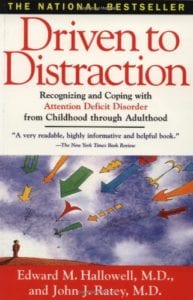
Driven to Distraction: Recognizing and Coping with Attention Deficit Disorder from Childhood Through Adulthood
The big problem you’re solving is that a lot of people have trouble staying focused, especially if they’re students and they’ve got many distractions going on. Most people don’t take regular breaks and their retention goes down the longer they try to retain things. That concept of solving that problem through music, you’re uniquely qualified to run it. What I find fascinating is a lot of businesses have a narrow niche, but this is for anyone who is both creative and logical. It’s not mutually exclusive. It’s for people who are students and entrepreneurs.
It’s not like you get out of college and you’re done, you still need to focus. Even if you’re a tech person or you’re someone who’s an artist, the need to focus on is something that changes throughout. The fact that you’re using science and math with music, which goes back to your childhood story, is something that I found fascinating when I took a deep dive into this. Would you mind describing some of the distractions? People might say, “I get distracted if my doorbell rings or there’s noise outside.” There are many other distractions that we may not even be aware of. Let’s talk about that.
You know how when you’re sitting down at work and, in theory, there’s no chainsaw outside and there’s no one distracting you and still, you can’t seem to get in the groove. You can’t get your flow going. There are two types of distractions. There are external distractions, which are the ones I talked about. By far, we are more limited by our internal distractions. We have two types of attention. We have our exogenous and our endogenous, our external and our internal. I learned a lot about this through the science team we have at Focus@Will.
Evolutionarily, our non-conscious minds pay attention to certain things that are keeping us safe. For instance, right now, if you smell smoke, you’re going to be like, “I need to check that. I need to pause.” If you smell burning, but it’s toast, you’re going to be like, “That’s toast. It’s not burned.” Your nonconscious attention, your exogenous attention, is constantly monitoring your surroundings. Your internal attention, which is me talking to you, you can concentrate and focus on what we’re talking about.
It was described to me beautifully by Dr. Ed Hallowell, who’s one of my science team. He’s a psychiatrist. He has written some bestselling books. Driven to Distraction that’s the one, which is about being distracted at work. He said, “Your nonconscious attention is like the kids in the backseat when you’re trying to drive somewhere and they’re like, ‘Are we there yet?’” What you can do is you can give them a book or put a video on or give them a Game Boy or whatever the kids are using these days. You can have them be quiet so that you can drive the vehicle.
If you think about, “I’m sitting on my computer and I have a spreadsheet. I have a piece of creative writing. I have some coding to do. I have to look at some QA on a science project.” What you want to do is have the kids in the backseat be quiet. What you’ve found you’re able to do is to play specific types of music. It has to do deal with how easily distracted you are, the types of music. You can play in your unconscious mind a music that soothes it, that makes it calm. It’s like having the kids in the backseat be quiet so you can concentrate on driving.
What a great analogy. One of the things you talk about on the website is that boredom is a distraction. If you’ve ever had to try and tackle something that you’re having trouble remembering, you don’t particularly it’s interesting and you’re like, “I’ve read this. I don’t remember a thing I read. How am I going to pass this test?” About blockchain, I was like, “This is not my idea of fun.” If we’re listening to the right music, science proves that even if something is boring to us, it somehow goes down like the Mary Poppins’ Spoon Full of Sugar concept.
There is a fascinating link between boredom and or lack of happiness. We did a survey with 25,000 of our most engaged users. We have a couple of million people on the system regularly. We asked these 25,000 and we said, “What is your single biggest challenge at work?” We’re like, “I know that’s something to do with productivity.” The answer came back from everybody first was happiness, “I am not happy at work. My challenge is being happy that work.” Second question is, “How do you manage that?” They say, “We like to listen to music when we’re working.” You’re like, “Why do you listen to music while working?” “It’s because it allows me to focus and concentrate and that makes me happy at work when I’m being productive.”
If I can turn around your question, is being bored a problem? It’s not being productive is the problem and that often creates boredom. If you’re able to manage this process, which is your non-conscious attention, it’s your limbic system. It’s the fight and flight reflex that’s spin all of our brains. If you can manage that response, what it gives you is this sense of peace and calm. It’s a flow state. Even if you’re doing something that is repetitive and is not particularly rewarding, if you’re able to get into a flow state doing that, you will find that there is a pleasure in it and you will be happy at work. Cue the music.
[bctt tweet=”Boredom is not the problem. Boredom comes from not feeling productive.” username=”John_Livesay”]
That’s going to be a great Tweet, “Boredom comes from not feeling productive or not being productive at work.” That’s a big a-ha moment for me, certainly. You also have a quiz that I took and I was fascinated. The question that made me laugh was, “Are you considered ADD or OCD?” I meant to check no and I checked yes and I was like, “I’m not exactly paying enough attention to the answer. That’s the wrong outcome. Let’s start the quiz over.” It asked a lot of different questions that I’ve never been asked before. I thought it was a fascinating process in that premise around distraction and focus and work and the combination of questions. You have twelve different options, at least.
There are 36 different options on the main because there are three flavors of each one.
They said, “You would be most productive listening to Electro Bach.” Since you know me, I thought, “Is that a surprise? Does that seem to be much in sync? Did I answer the questions wrong?”
Electro Bach is a unique channel that we created originally for a TV show called Genius on Nat Geo. It’s about Einstein. Einstein used to play the violin to get himself into a flow state. He had some specific pieces he used to play. The producers of the show said, “Is there a link between the pieces he used to play and the research that we’ve done in focus?” We said, “There is.” If anybody is reading and is musical, you’ll know there’s something called a sixteenth note. If the beat is going 1, 2, 3, 4, a 16th note is dividing each one of those up into fourths. You can see there’s a musician going, “Diga, 2, 3, 4 diga.” That is a pulse. Those pulses have been shown to help put you into a flow state. If you listen to Bach, in particular, any of the things that Einstein used to play, they are similar. Techno music is similar. Let me play a little burst of some of Electra Bach. This is what it sounds like.
Would this be something I would listen to on my phone while typing on my computer?
Yes. Listen to it on your computer while you’re working. Eighty percent of our users listen on their laptop because you’re working on your laptop and your phone is a distractor. I talked about the, “Diga.” There’s a pulse intrinsic in this.
How long does it take for the average person to hear that customized choice of music before they feel like they’re in a flow state?
There’s a timer on the app. Most of our users, the average session length is 80 minutes, which is a long time. That’s an hour and twenty minutes. That’s a long time. If you’re working without music that’s helping you focus, you can usually do about twenty minutes before the internal distractions kick in. The reason why we’re able to say that the Focus@Will system increases your focus state and your productivity by 400%, four times, is because instead of working in a twenty-minute chunk, you can work in 80-minute chunks.
Would it be fair to say that the monkey mind that we’ve heard about, conscious conversations with people, it’s quieting?
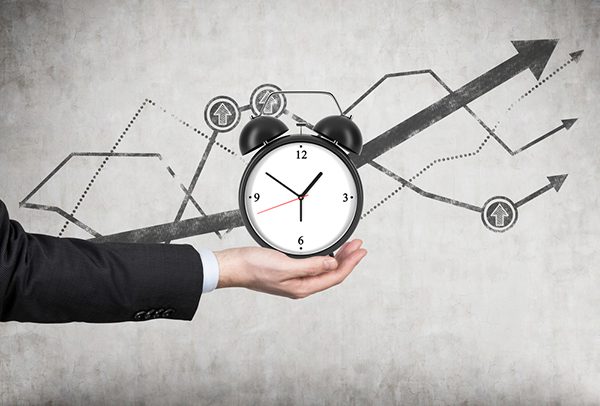
Focus@Will: If you’re working without music that helps you focus, you can usually do about 20 minutes before the internal distractions kick in. Focus@Will increases that time to 80 minutes.
It is.
The kids in the backseat are another way of looking at it. It’s the monkey mind of like, “I need to go. Am I hungry? Am I this? Why haven’t I heard back from that person?” Your mind starts going crazy.
All of the things that you’ve talked about are evolutionarily helpful to us as humans. You and I are in a cave back in the day and we’re drawing on the cave wall, doing some pictures of some tigers and stuff and we’re drinking a cave beer. Our backs would be to the entrance of the cave. What happens is there’s this timer in our brain that goes, “I can’t hear anything outside.” Your nonconscious attention is listening to the sound of the forest, the jungle. After a certain amount of time, you have this urge to check that there isn’t anything dangerous outside the cave.
It makes sense because you can’t assume that something safe now will be safe twenty minutes from now.
We all have this timer, about 20, 25 minutes. When that thing, in our brain, goes, “Did I lock the door? I think I left the oven on. I forgot to do that thing.” When you’re wired into a flow state, that timer is running. There is something called the Pomodoro Technique. You may have come across that. It’s a technique where you work hard for twenty minutes and you take five minutes off. Why is it twenty minutes? It’s called habituation. Our brains work with something called habituation and novelty. We’re always getting used to the sounds around us. If you’re interested in this, anybody reading, you can go to the Focus@Will site. There are articles about this.
You created a little bit of an open-loop saying there are three kinds of flavors once you’re inside a choice. What does that sound like?
It’s a little counterintuitive, but it makes sense if I quickly explain how this works. The quiz, that’s free, you can check it out and it’ll recommend a channel or a type of music that works well for your brain type. Our quiz, you said they’re weird questions. They’re based on a standardized psychological model called The Big Five. They’re weird questions. There are double negative questions in them after thinking them through. What we’re trying to do is to figure out, on your brain type, how easily distracted are you.
We’ve all got friends who are easily distracted. They are like hyper monkeys the whole time. Elon Musk, ADD. He’s not a friend of mine. You can see him and you’re like, “That guy is ADD.” Here’s another one, Jeff Bezos. Look at him. Steve Jobs. They’re all tech guys. What about Oprah? She’s got to be super hyper all the time. The more hyper you are, you might think, “I want to play someone some gentle music to calm them down.” That’s not going to work. It’s the opposite. The more hyper you are, the more energy you need in the music to calm you down.
This is similar to the fact that kids with ADD are often prescribed stimulants. You probably heard of Ritalin and Adderall, all the other drugs that kids are doing. Weirdly, if a kid is hyper, it calms them down. It’s to do with the way that your nonconscious mind is active if you’re ADD. The stimulants around you, including the music, are able to have you focus. Perhaps I should play you a little burst of this. There’s a channel on the system called ADHD Type 1. About 5% of our users listen to this and find it relaxing and they’re able to work.
[bctt tweet=”We are soul beings in human bodies.” username=”John_Livesay”]
I would not be in that percent.
Isn’t that crazy?
Yeah.
If you are ADD, that is good. It sets you on a groove and helps you get into a flow state. Most people in our system come up with either the Electro Bach or there’s a downtempo channel called Alpha Chill. Here’s a typical track from that. It’s like musical and easy going.
One of the things that I wanted to talk to you about before I let you go is you experienced a life-threatening heart attack and did a little bit of a recovery period. My first question is, what music did you listen to deal with the pain and the boredom of being in the hospital after your heart attack?
I had never been in a hospital before. In June 2018, I had an out of the blue widowmaker heart attack. I had no idea I was at risk. They said, “Look at your father.” My dad is in his late 80s and still causing havoc. I had this heart attack and then I woke up eight days later. My life was saved by my wife who gave me CPR and then the medics came, but I had no recollection of any of that. I started to regain consciousness over the next 8 or 9 days. The hospitals are noisy, pokey, prody. You can’t sleep. Every three hours, they wake you up. The music is awful, generally. They have music on the TV. I was in a hospital in Santa Monica, in California. The music that helped me was Baroque string music, Vivaldi, Four Seasons, music that I knew as a kid growing up. I trained as a classical musician so I had to learn some of this stuff.
Are you finding yourself more focused not just at work but being more present in life and not sweating the small stuff after this life-changing event?
I’m more still, generally, than I was. I found peace. I died and I described it as I shook God’s hand. There was no white light tunnel for me. Everything went off and I had a widowmaker heart attack experience. I was aware that there is this beautiful and loving energy. I was always coming back to consciousness. Every time you breathe in, you connect to this beautiful loving energy. It’s like loving awareness. It’s like a familiar love you have from your mother. It’s the love you have from people you know. It’s the love you feel when you see something beautiful. You see a beautiful nature scene or you’re in a forest. Every time we breathe, we connect to that. I was taken off the ventilator. You’re on this breathing tube, which is gruesome. The first breath I took after they took me off the ventilator was the sweetest, beautiful breath. I remember connecting to the source, to Universal Power, to God. Whatever you want to call it, there’s this loving awareness. There’s this beautiful, loving energy that we’re all part of. It’s simple. We are soul beings in human bodies.
Music is a way. Focus@Will is a way to get the right music to get us into that state as much as possible. That’s why you’re reinforced and you’re doing the right thing, even before you had the heart attack. It’s even a bigger mission for everyone. Will, I can’t thank you enough. If everyone wants to know more about you and Focus@Will, the website is FocusAtWill.com. Any other last thought you want to leave us with?

Focus@Will: The more hyper you are, the more energy you need in the music to calm you down.
The whole heart attack and coming back to life, it’s made me conscious of wanting to make a difference and be of service. Entrepreneurial Men’s Group based out of Los Angeles is called METAL International. It’s a group of entrepreneurial thinking, heart-centered men. We represent all kinds of men. I’ve become the CEO and co-leader of this group. Since I came back from the dead, a big part of my life has been wanting to serve and to make sure that the elders of the tribe are passing their wisdom down to the younger members who have a fresh and different view on it. Reply with the favor back. Men’s work and leading men’s work is an important part of my life.
That’s where we met, at that METAL organization. Now that it’s virtual, it’s global. It’s another wonderful way to get back and connect and learn. You’re certainly loved and admired as a leader. I’m honored to have some time to ask you some questions and get some insights into what makes you that we can all aspire to be the best version of ourselves.
Thank you, John.
I got a soundbite for you, you know how you’ve got special friends in your life and then any your special friends, you have someone else who accepts you and loves you exactly as you are? These are the special, few humans in my life and you, John Livesay are on that list. It’s a small list. Thank you.
I was honored to speak at your virtual wedding and have to visit me in Austin here. It’s likewise, equally, reciprocal. If you can find friends that become your family, you have a lot to be grateful for. That’s for sure.
Thank you.
Important Links
- Focus@Will
- Driven to Distraction
- METAL International
- Londonbeat
- Eurythmics Management
- Salim Ismail
- Better Selling Through Storytelling Method Online Course
Wanna Host Your Own Podcast?
Click here to see how my friends at Podetize can help
Purchase John’s new book
John Livesay, The Pitch Whisperer
Share The Show
Did you enjoy the show? I’d love it if you subscribed today and left us a 5-star review!
- Click this link
- Click on the ‘Subscribe’ button below the artwork
- Go to the ‘Ratings and Reviews’ section
- Click on ‘Write a Review’
Love the show? Subscribe, rate, review, and share!
Join The Successful Pitch community today:
- JohnLivesay.com
- John Livesay Facebook
- John Livesay Twitter
- John Livesay LinkedIn
- John Livesay YouTube
Inbox Detox With Thanh Pham
Posted by John Livesay in podcast | 0 comments
Every one of us has had that experience of sitting down to really focus on a task only to be bothered by an email notification. Thanh Pham, the Managing Director at Asian Efficiency, has a program called Inbox Detox, which helps you optimize your email and break free from distraction to become more productive with your work. Thanh’s work at Asian Efficiency is all about helping people become more productive by maximizing their time, energy and attention. He believes efficiency is the product of focus and attention – something that goes against the popular demand for multitasking skills in the corporate world. Listen to Thanh explain this and more as he joins John Livesay on the show.
—
Listen to the podcast here
Inbox Detox With Thanh Pham
Our guest on The Successful Pitch is Thanh Pham, who is an expert on productivity. He has something that allows us to detox our inbox. He said that the myths about having to answer them immediately and how stressful it can be can all be fixed with some solutions that he shares with us. He said that when you text and drive, that’s multitasking and you might as well be driving drunk. He said that you have to learn how to manage yourself, not just your time, and he has a wonderful story of someone he helped do just that. Finally, this concept of getting in the flow to be productive is the secret to his formula of TEA, time, energy, and attention. Enjoy the episode.
—
Our guest is Thanh Pham, who is the Founder and Managing Director of Asian Efficiency. He’s considered to be one of the top thought leaders in the productivity industry and has been featured in Fast Company, Inc., Forbes, Huffington Post, and many more. On a day-to-day basis, he’s responsible for executing the company’s mission and helping people become more Asian Efficient. He also has his own podcast called The Productivity Show. Welcome to the show, Thanh.
John, it’s good to be here. Thank you for having me. I’m excited to help people become more productive.
Who doesn’t need that? Everybody needs it all the time. Before we get into giving away some great content and secrets, because I love a good story, would you mind taking us on your journey and your own story of origin? Did you always know you wanted to be a productivity expert? Did you have trouble with it and then solved it? Take us back as far as your childhood, high school, college, or wherever you want.
First of all, thank you for having me. My story started when I grew up in the Netherlands. Even though I am Asian and my parents are Vietnamese, I grew up for the most part in the Netherlands. When I was eighteen, I moved to Los Angeles where I know you’ve lived as well. We’re both in Austin, Texas, which is one of the greatest cities in the world. I ended up going to college in Los Angeles but ended up committing cardinal sin number one of any Asian kid, and that is dropping out of school. I did that after three years because I wanted to work full-time for this life coaching business in Los Angeles. Within three months, I got promoted. As a twenty-year-old kid, I had no clue what I was doing. I was overwhelmed by my new responsibilities. I had to manage clients and grow the top-line revenue. I had many things that needed to take care of that I started to drop the ball. I knew that if life went on like this, eventually, I was going to lose my promotion and even lose my job.
I was stressed out about this. I was not sleeping right and I gained roughly twenty pounds in three months. It was bad and I lived unhealthily. I remember waking up one day looking at myself in the mirror saying, “I’m heavier now and I don’t look as good. I have baggy eyes.” I knew something had to change, so I started to study productivity. I started to read different books about this. I went to different workshops and seminars. With a little time that I had, I took the opportunity to say, “I need to get better at this because I have so much to do. With so little time, I need to figure out how to be twice as productive as I am now.” Every day, I would commute from Pasadena to West Hollywood. It’s a two-hour commute every single day and I was inspired about all these different stories of how people are working from home.

Inbox Detox: People need to learn how to be more productive working from home because it is so relevant now and it may become the hot trend in the future.
I said, “This is a great opportunity to save a lot of time.” I begged my boss to allow me to work from home one day and reluctantly, he allowed me to do that. Over time, I figured out how to be productive working from home, which saves me a lot of time and energy. From there, I said, “This is the way to live.” I want to work from home all the time because I’m more productive. I ended up working from home one day a week and then it turned into two days a week, and then my boss started to notice how much more productive I was working at home that he wanted me to be home more often than being at the office. Eventually, I left that job.
That’s such a myth that a lot of people who like to micromanage people assume that the opposite happens, that people are less productive because they get distracted or they just kick off early and no one can see. The results speak for themselves, don’t they?
Exactly. That’s a common fear that people have. As we go through the pandemic and a lot of people start to transition to work from home, that was a big concern for a lot of people because we don’t see people in the office. It’s a level of trust that’s not there. The beautiful thing about working from home or working remotely is that the results are black and white. If you’re managing people, if you’re a boss, or if you’re a business owner, even though you don’t see your people, the results are black and white. Either someone got it done or they didn’t get it done, and there’s no nothing in between.
That’s the benefit of working from home and being remote as well. The people who are productive or superstars of the company are the ones who are going to keep producing. The ones who aren’t as productive are going to stand out in a bad way because they’re not getting the stuff done. The results aren’t there unnecessarily. It’s one of the reasons why we wanted to start teaching people how to be more productive working from home because it’s relevant but also going forward, this is the hot trend in the future.
What is another big myth that people have about productivity? I’m going to ask specifically around the concept of multitasking because I bet you have an opinion on that.
[bctt tweet=”Inbox Detox, Manage Yourself to Manage Your Time” username=”John_Livesay”]
A lot of people think that multitasking is a productive thing to do and you see it in job descriptions all the time. It’s like, “We love people who are good multitaskers. We want to hire people who are good at this.” I used to think the same way where I would walk into my office and if I had fifteen things to do, I would say, “Let’s work on five of them.” I work on five things at the same time. I would listen to an audiobook, have a spreadsheet open, have another browser open to do some research, and then have some stuff on my desk to review.
What ended up happening was day after day, I ended up looking at my to-do list at the end of the day and nothing got checked off and nothing got accomplished, and it felt frustrating. I wasn’t sure why this was happening. It wasn’t until I read this book called Brain Rules. It’s a great introductory book on how the brain works. What the author is showing is how our brain works and how it is designed to be able to focus on one thing at a time. If we want to maximize our brainpower, we want to make sure that we only do one thing at a time so the brain cannot multitask.
When you are seeing people who are “multitasking”, what they’re doing is what they call switch tasking. The brain is switching focus between things and tasks quickly, which is also taxing and cognitive demanding on the brain. It requires a lot of energy to do that. Several studies have also shown that when we multitask, not only do we make more mistakes, but also, we are slower at getting things done. It’s one of the reasons why we don’t want people to be texting and driving at the same time because we see accidents quite a bit when that happens.
In fact, I’ve read this. It’s almost like being drunk to do that. You’re that impaired.
Also, if you only sleep 4 or 5 hours a night, it has the same effect as well. If we want to be productive, we have to take care of our brain and that means sleeping enough but also focusing on just doing one thing at a time.
Inbox Detox: When people say they multitask, what their brain is actually doing switching focus between tasks very quickly, which very taxing for the brain.
You also have something that has a great name. Coming from an advertising background, nobody loves a sound bite better than I do. Congrats and kudos to Inbox Detox. Tell us how you came up with that and what it is.
We have a program called Inbox Detox. As you are probably familiar with, we have tons of emails that we get every single day. Most of our email inboxes are a big mess. Some of us have hundreds of unread emails. I’ve worked with clients who have thousands of unread emails and the record that I’ve ever seen personally is 22,000 unread emails. That’s multiple years of accumulated never checking them. Oftentimes, when we get in that kind of situation, we only check the new emails. We don’t go back to what we’re sent five years ago or whatever.
Inbox Detox is designed to help people say, “Let’s look at your inbox and create a system for you to be able to one, mandatory email inbox in less than one hour a day, regardless of how many emails you get every single day and then also two, let’s get it to an empty inbox, or as we like to call it, Inbox Zero.” Make sure that it stays there so that whenever you look at an empty inbox, it’s like a sense of accomplishment saying, “I have everything under control. Everything has been taken care of. Everything has been addressed.” The main technique that we teach in there is showing people that if you do have such a large inbox of unread messages, what only matters are the emails that were sent in the last 30 days.
Oftentimes, what we do is we say, “Let’s look at all the emails that are sent in the last 30 days. Anything beyond that, we will just archive.” We’re not going to delete them. We’re going to archive them so that if there’s something sensitive in there and someone said, “John, did you see this email that I sent you that contains this piece of information,” you can say, “I didn’t see it but I still have it there and I can definitely look for it.” You can always look for archived emails and be sure that you have any information that you need. We’re not deleting emails, we’re just archiving them.
People have a big sense of relief. When someone’s a hoarder and you ask them to throw something out, they’re like, “I can’t.” We’re not asking you to throw the emails out, just archive them. I love that. Let’s do a little deeper dive into this because this is something everyone has a problem with. You have some great myths you talk about. “The only way to stay on top of my inbox is to answer every email within seconds of getting it, especially if it’s from my boss and I’m stressed out all the time. I’m checking my phone and every time it dings, I get sweat beads coming off my forehead.” Enter Thanh and Asian Efficiency to the rescue. Yes?
[bctt tweet=”TEA: Time, Energy and Attention” username=”John_Livesay”]
I like to hope so. The email has been such a big challenge for many people because people in the workforce, oftentimes what they do is they keep their email clients open all day long, whether it’s Outlook or Gmail, or another client that they use. As soon as they start working and sitting down doing stuff to keep the client open and as soon as the email comes in, a notification comes up and they get sidetracked and distracted. They start focusing on the email rather than doing the work that they’re getting paid to do. Most of us are paid to do certain things at our jobs and it often does not involve email directly.
There are always exceptions. If you work in customer service or you’re an account manager, replying to emails quickly is probably a good thing but that is a rule-specific feature for most jobs that we can get away with replying to an email within an hour or two and everything will be fine. Oftentimes, we have a self-fulfilling expectation of, “If an email comes in, I need to reply within minutes.” When it’s okay to reply within 1 hour or 2 or even 3, when I work with people, that’s the first thing I address. What is your expectation around email? Is that an expectation because you were told to do that or is that something you just created yourself? It’s like an imaginary expectation.
Do you feel that a lot of people expect someone to respond faster to a text than email? How does that impact our productivity?
People definitely respond faster to a text message, but also expect that in a way rather than an email. In fact, in my company, we have what we call communication guidelines or protocols. We are a completely remote company and I have team members all over the world in four different time zones. We have different levels of communication. To give an example, if we have an emergency and they need to reach me, the best way to do that is to call me because if you call me, I know this is going to be important. Otherwise, you would never call me.
If it’s semi-urgent like you need my response relatively quickly, then you can always text me. That’s a different option. We also use Slack, which is like the instant messenger app that we use to communicate within our company. Oftentimes, when we message on there, you can expect the response within usually 6 to 8 hours or so, depending on where we are in the world. Also, we use Jira, which is our task manager. I think of it as a project management tool. We post stuff in there, we leave comments and such, and then we expect people to always reply within 24 hours.
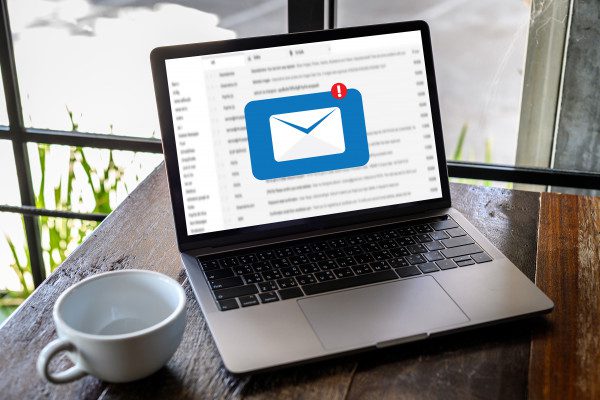
Inbox Detox: Many people keep their emails open all day. As soon as they get to work, an email notification pops up and they get sidetracked.
When we have these guidelines in place, we know how we can communicate with each other depending on the level of urgency. If it’s an emergency, you would call that person. If it’s just like, “I need a reply from you within 24 hours,” then you can leave a comment somewhere or send an email. That way, you allow everyone to streamline their work and also not get easily distracted. One of the reasons and something I’m proud of is I rarely send internal emails. If you get an email from me, people are scared because this is unusual and this must be important.
The Slack picks up the slack of email. You have these great concepts. I love painting the story of the hero’s journey of which way we will go. The story you talk about when it comes to productivity is if someone had to write a 100-page book in the next week and they could only write for an hour a day, the question you pose is, “Which schedule creates the best possible book? Once a day for an hour without any interruption or ten times a day with six-minute chunks of writing?” Both allow us to write for an hour a day. You pose this question, which one would we pick? Don’t keep us in suspense. Let us know and then tell us why that’s the right answer.
I can tell someone has been doing a lot of research and been reading our content. Thank you, John, for doing that. I pose this a while back because we all have the same amount of hours in a day and we all have the same 24 hours. You’ve probably heard of this before. It’s up to us to manage that in the best way possible. We can’t control it because time goes by whether we do something or not, but we can manage it. When I posed that question of how do we maximize our time, if you only have one hour a day to do something, it’s better to have one block of uninterrupted time to do something rather than have multiple chunks of time to do something.
If we have to write a book or write a chapter, it’s a creative process. We have to sit down, think, imagine a little bit, and visualize what we’re trying to do. If you have one hour to do that versus, say, six blocks of ten minutes, anytime you sit down for a block of ten minutes and you’re about to get into flow state and groove but when ten minutes are up, you have to stop, do something else, and then get back into it. Oftentimes, we have to start and stop. It’s an inefficient process. It’s like when you’re driving a car, your fuel efficiency is higher when you’re continuously driving versus driving around the city where you have to start and stop.
It’s the same thing with how our brain works and how we are productive at work. If we can have that flow of continuously focusing and working in one big chunk of time versus multiple smaller chunks, we can be more focused and more productive. I always recommend people if you have to focus, carve out at least 30 to 45 minutes or so. That’s a nice chunk of time to be able to accomplish something creative and start there. Over time, you develop that focus muscle where you can focus for 30 minutes at a time and then 45. Before you know it, you’re up to an hour and oftentimes, we peak at 90 minutes or so before we have to take a break.
[bctt tweet=”If you want to be productive, don’t overwork your brain.” username=”John_Livesay”]
I love that. We’re going to make that tweet. “Get in the flow to be productive.” The analogy of a car stopping and starting in rush hour traffic and how inefficient it is with gas versus going 60 miles an hour on a freeway is great. You have these three pillars of productivity. Nobody loves an acronym more than I do. You’ve created TEA, which is such a clever tie in to Asian Efficiency. Please tell us what TEA stands for and how we can use it.
Asian Efficiency is known for our TEA methodology or framework, and it stands for Time, Energy, and Attention. When we look at productivity and how we can help someone become more productive, we look at their TEA framework. We look at their time, energy, and attention. We like to think of them as three different currencies. If you can maximize all three, then we know that you’re going to be productive. If you miss 1 of them or even 2 of them, then it’s hard and challenging to be extremely productive.
For example, you could have all the energy to do something. You could be focusing on the right thing, but if you don’t have the time to do it, then nothing is going to happen. You could have all the time in the world and you can have all the energy in the world, but if you don’t have the focus or the attention on the right thing, then you could be wasting a lot of time, energy, and resources on doing the wrong thing. Most of us have probably experienced that before. We’re focused on something and we’re spending all this time, even money and energy, only to find out that that was the wrong thing to do. That’s painful when that happens.
The other way is also true. If we have all the time in the world and we have all the attention and focus to do the right thing but we don’t have the energy, it’s like having a sports car in your garage that you know how to drive but if there’s no gas in it, you’re not going to go anywhere. We need to have the energy to do things as well. If you’re missing 1 of those 3 currencies, we’re not optimized to be performing at a high level. We always want to look at ways to maximize all three when it comes to time, energy, and attention. Most people, when they come to us, they look for time opportunities. They come to us oftentimes saying, “John, I wish I had an extra two hours a day. I wish there were more hours and I wish I could do X, Y, and Z so that I could get everything done in the limited amount of time that I have.”
When we free up some time for them, anywhere between 5 to 10 hours a week, then they go, “I have all this extra time. I’m doing the right things but I’m feeling tired. I’m doing all these different things that require a lot of energy but I don’t have enough energy to do stuff.” When I come home from work late in the afternoon, I just want to sit down, relax, and not do other things. We’ve all been there. We start to address that and say, “How can we address your energy levels?” Whether it’s through sleep, which is a big factor here for most people. We look at nutrition. Are you eating healthy or not? Also, exercising. Are you doing that on a regular basis? If you do all three, we know that you’re going to have enough energy to do the things you need to do.

Inbox Detox: It’s better to have one block of uninterrupted time to do something rather than multiple chunks of time to do it.
Sometimes, it’s almost, “Go take that walk even when you want to nap.” You’ve got to override that feeling sometimes and you need fresh air to rejuvenate yourself. I had an experience like this. I didn’t have the framework of time, energy, and attention. When I graduated from college, I took six months off and traveled to different countries and stayed in hostels. On that journey, I realized there’s a lot of people who just have two weeks’ vacation and they’re cramming everything in. I had six months, so time wasn’t my problem. There’s a lot of people who are older and can’t climb up the pyramid. I had energy and I was young. The other thing was money. Not everybody has a lot of resources to stay in the nicest places. That’s the one thing I didn’t have when I was right out of school. I thought, “Rarely do we have all three, the time, money, and health to live our best lives.” This TEA Framework that you have is fantastic for helping us craft the best outcomes that we want.
I love that example because I always tell people, “When you go to Vegas when you’re 21 versus when you’re 45, even though it’s the same city, it’s such a different experience based on your income level, time availability, health, and if you have a partner or not. It’s a different experience.” I always like to look at things from a contextual point of view as well. For example, if you are younger, having six months of free time to explore and travel is such a different experience compared to saying, “I only have two weeks.” I’m fortunate enough to have lots of flexible time in my life.
If I’m dating someone who only has two weeks off a year, the way we travel is different because the other person wants to cram as many things as possible. She only has two weeks to explore. Whereas I’m like, “I’m relaxed about this. Do whatever you want to do. Maximize your time. I can always come back later if I want to.” When we give people the opportunity to have all this extra time in life and free up 5 to 7, or even 10 hours a week, it changes your perspective on how you live and how you experience things as well. Once people get a taste of that, they see like, “I wish I’d done that earlier because if I had an extra 10 hours a week when I just had a newborn or before I had a kid or now that my kid is older, it’s a totally different way of living.”
You have an online course that you offer people so they can maximize their time, energy, and attention. Do you have a story of someone you’ve helped after they’ve taken your course with what their life is like before and after?
Yes. One of the top loan officers in the country. His name is Scott. He works at a Fortune 100 company and he took one of our courses. He was overwhelmed because he has so much to do. He was working in corporate for over twenty years and he worked his way up by working hard. I’m sure all of us can relate where we show up at 8:00 and then leave at 8:00 at night. That grind, especially if we’re fresh out of college and we’re extremely motivated. Once we have kids like he did, he has two beautiful daughters, it became a precedent for him where he continued to work from 8:00 AM until 8:00 PM and that was his thing.
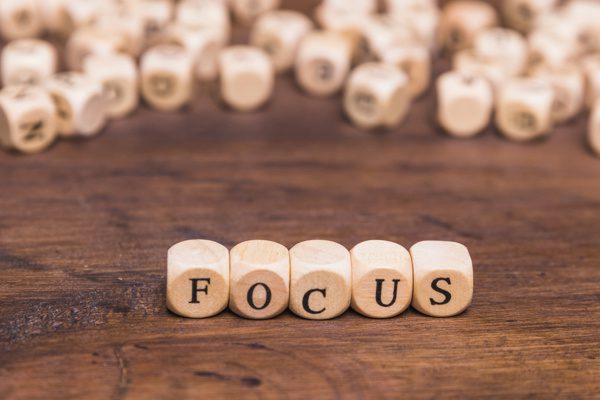
Inbox Detox: You could have all the time and energy in the world, but if you don’t have focus, then you could be wasting a lot of time and energy and resources on doing the wrong thing.
Eventually, it stopped working because it didn’t get him to where he wanted it to be. We had to change his approach a little bit and he started to notice that he wasn’t getting all the things done that he needed to get done. He started to use typical time-management stuff where he was trying to learn how to manage his time better, make appointments with himself, and put stuff on the calendar. That didn’t work for him. When he went through one of our courses, he realized it’s not time that he needs to manage. He needs to be able to manage himself. If he can manage himself, then everything else will usually fall in place.
What’s the difference? When you think about managing your time, you think about putting stuff in your calendar, making appointments with yourself, and so on but managing yourself is about getting yourself to do the things you need to do, especially the stuff you’re not doing. We need to have the energy levels to do that. We need to have the right focus to be able to do that. Also, the time on top of that to be able to execute on these different things. Once he realized, “I need to be able to manage myself to do the things I need to do,” that’s when things start to click for him.
For the first time in seven years, he was able to take his wife and two beautiful daughters to Hawaii for vacation for nine days. It was only because he changed his approach from managing his time and being obsessed about it to learning how to manage himself to do the right things and consistently following through on that. It was such a simple mindset shift, but also the way he approached work that made such a big difference. Oftentimes, when people want to become more productive, you don’t have to make drastic changes. We just need to change 1% or 2%, or how you look at things or how you do things, and it can make all the difference.
What a great story. I love that happy ending of getting to go on vacation with the family and not be overwhelmed. You certainly took us on a great journey there. Thanh, if people want to smartly engage, get your course, and learn how to be more efficient with their time, energy, and attention, I know you have your website Asian Efficiency. Is that where they can find the course as well?
Yes. They can go to AsianEfficiency.com. If people want to get more productivity tips from us, they can subscribe to our newsletter. We also have a podcast called The Productivity Show, which is a weekly podcast that will show you some productivity strategies as well.
Thanh, I can’t thank you enough for sharing your wisdom and your personal story. Any last thoughts or a quote you want to leave us with?
First of all, thank you, John for allowing me to be here. I hope everyone is inspired to be able to live their best life. That’s why I’m inspired to run my company to help as many people as possible because I feel like it’s my mission to help as many people as possible to live their best life possible on their terms.
Important Links
- Thanh Pham
- The Productivity Show
- Brain Rules
- Inbox Detox
- Slack
- Jira
- TEA
- Better Selling Through Storytelling Method Online Course
Wanna Host Your Own Podcast?
Click here to see how my friends at Podetize can help
Purchase John’s new book
John Livesay, The Pitch Whisperer
Share The Show
Did you enjoy the show? I’d love it if you subscribed today and left us a 5-star review!
- Click this link
- Click on the ‘Subscribe’ button below the artwork
- Go to the ‘Ratings and Reviews’ section
- Click on ‘Write a Review’
Love the show? Subscribe, rate, review, and share!
Join The Successful Pitch community today:
- JohnLivesay.com
- John Livesay Facebook
- John Livesay Twitter
- John Livesay LinkedIn
- John Livesay YouTube