

Real Business Connections Network With Ben Albert
Posted by John Livesay in podcast | 0 comments


We all took a hit when COVID-19 struck the world. Many businesses closed, and many more became unemployed. Ben Albert was one of those people. Furloughed from work, he went on a downward spiral towards depression and battling imposter syndrome. Fortunately, this was only the start of his hero’s journey. Now, he hosts a network of five podcasts called Real Business Connections Network and is the owner of Balbert Marketing LLC. What is the key to his success? Join this episode as he sits down with John Livesay to fill in the gaps of his story of reinvention, overcoming his feelings of being unworthy, and starting an incredible marketing firm. You just might find the missing piece to your own success story!
—
Listen to the podcast here
Real Business Connections Network With Ben Albert
Our guest on the show is Ben Albert, who has a real hero’s journey story of how he reinvented himself and overcame the Imposter syndrome to start an incredible marketing firm. He said, “The true key to success is finding your unique combination and unlocking it.” Enjoy the episode.
—
When COVID hit, Ben Albert was furloughed from work. He found himself down and out staring at an empty handle of Jim Beam whiskey. He was unemployed, depressed and felt unworthy. Presently, he opened his MacBook and started reaching out to strangers on LinkedIn. This spearheaded his entrepreneurial journey. The rest is history. Ben hosts a network of five podcasts called Real Business Connections, runs a massively successful marketing firm, Balbert Marketing and has replaced his established sales income in over a year.
Ben found his way. Once an underdog, now a successful entrepreneur. Ben is passionate about helping other underdogs find their way and achieve their dreams. He’s on a mission to move the needle on 1 million lives 1 conversation at a time. I’ve had the pleasure of being on his podcast and I am thrilled to bring him to my audience and readers. Ben, welcome to the show.
John, I’m humbled to be here. Your episode has been one of my favorites and one of my reader’s favorites. You always over deliver and that’s why I love hanging out with you.
Thanks. Let’s talk about your story of origin. Take us back before COVID, if you don’t mind, when you were saying, “I want to get into this business, whether it’s sales or marketing.” What were you doing that got you into the world of marketing in the first place?
Feel free to dissect this because I am here to learn something new every single day in every single conversation. It’s funny because I didn’t see myself as a marketer, promoter or podcaster. When I was a kid, I was the quietest kid in school and very reclusive. I got bullied so I’d make myself even smaller. Everyone starts to hit a growth spurt. I stayed the same height.
I’m the second smallest kid. There was a little Asian girl that was a little shorter. I was always proud of myself for not being the shortest but I also had a basketball jersey for every single day of the week because I wanted to be the next Vince Carter and Michael Jordan. Imagine what happens to the shortest kid in school that’s bullied and is too quiet that wants to be the next Michael Jordan. The probability of getting there was pretty low.
I was always identified as an underdog. I didn’t quite realize it at the time but I was developing this love of learning and a growth mindset. I didn’t have a sense of belonging at the time. It wasn’t until around high school that I started to, as a late bloomer, find my way. It was a friend, Brendon Gansemer, who introduced me to the music industry. I became obsessed with music.
There’s a local band. I don’t know if anyone’s heard of him, Giant Panda Guerilla Dub Squad but I love them. They’re a great band. Before you know it, I was the one handing out flyers, selling merchandise and setting up MySpaces at the time. I found that I was in alignment with great people that uplifted each other and it was something I was passionate about. I was no longer the quiet person. I still wasn’t the best musician per se but my sweet spot was quite amplifying musicians and being the promoter and the marketer.
I wasn’t going to school for marketing. I didn’t even know what I wanted to be when I grew up at the time. I started developing this love of promoting underdogs and at the time musicians. I found my way in marketing by accident. It was a sales job and I wanted to make a lot of money. I realized in that role that I was passionate about connecting with people, taking their businesses and helping them reach the next level by listening first.
[bctt tweet=”Keep doing it to get over feeling like an imposter.” username=”John_Livesay”]
I like to joke, “I get to ask questions for a living.” In the podcast, it’s all about interviewing incredible people like you to learn about storytelling and then learn tangible tips. Learn through their stories and what they have learned throughout. Ultimately, take their wisdom, put it into practice and multiply their wisdom. In the marketing firm, I’m still that curious growth-minded person so it’s asking questions for a living and determining the best fit if I can serve them.
Knowing that I’m not a good fit for everyone and every company’s different, I went in, asked questions and learned that I once had no sense of belonging and was sad with an alcoholic father. They joke about this in psychology. People get into psychology because they’re trying to figure themselves out. I got into podcasting and marketing because I’m trying to figure myself out.
A lot of people will talk about podcasting as a great networking tool or a way to monetize your content. I started my show 450 some episodes ago. I realized that I had some fears about it. I had to put a face on them. For me, it was the fear of, “How do I even do this? I’ve been a guest but how do I be a host?” I found someone that does that for me.
The fear of the unknown of the tech part went away. There was the fear of rejection, “What if I ask people to be on the show and they say no?” I’ve been in sales like you. We don’t take rejection personally and then the fear of failure. “What if I launch it and nobody listens? I’ll waste time and money. I’ll be embarrassed.” Did you have any of those fears, Ben?
At that time, I didn’t have too much to lose because you touched on it in the bio. I was furloughed for my sales executive role. I was able to replace my income by starting my marketing firm but it was because I had been through so much failure and struggle and learning experiences to get me there. I grew up with an alcoholic father. When I started binge drinking when COVID hit, I saw myself. Imagine, you know where the North Star is and you’re running backward in the wrong direction. Since I’m running backward, I can still see that North Star.
I know how to get there but whether it’s binge eating or drinking, I was doing all the wrong things and I knew better. It wasn’t until I started the podcast with nothing to lose. Granted, let’s be transparent. The government was cutting me checks for being unemployed. It was the weirdest time in human history. I was getting these fat checks for being unemployed. What I did is I lived very humbly, took that money from the government and reinvested in the business knowing the power of podcasting.
I didn’t necessarily do it to monetize the podcast. I did know that podcasts don’t make money on their own but I knew that if I could network with the right people and obtain the right knowledge, that would be worth its weight in gold. The rest is history. We’ve got a couple of hundred episodes plus. I’ve built a good community and a great company but it’s by learning from brilliant people like John.
What’s your biggest surprise in hosting a podcast?
No one’s ever asked me that before. The biggest surprise was what you had mentioned as one of your fears and it still is a fear sometimes when you’re stepping out to ask someone out of your league. I’ve had so many people on. You’ll be able to go listen to it. Chris Van Vliet was on my show. He is a four-time Emmy Award-Winning Host. He’s been nominated for eleven. I’m stumbling forward, networking well and learning as I go but I’m no Chris Van Vliet.

Real Business Connections: Part of building a lifestyle business is not working with people that are completely misaligned with your vision and your truth.
He was willing to put his chips on me, the little guy, knowing that there is a high potential that even if we reach 1,000 people and change 100 of those people’s lives, he thinks it’s worth his time to spend 45 minutes with me. I’m humbled every single day at the ability to connect and learn from such brilliant people. You do get the nerves because you have that Imposter syndrome feeling like you’re unworthy sometimes when you reach out to some of these big names.
Let’s talk about Imposter syndrome. I’ve certainly suffered from it. I remember once I was engaged to be one of the speakers at the Coca-Cola Summit for the CMOs of brands that carry Coca-Cola at movie theaters and quick service restaurants. They create this beautiful brochure that’s in the hotel room. I’m reading all the bios of all the other speakers whom all went to Yale and Harvard and have New York Times bestsellers. My Imposter syndrome kicked in big time.
I thought, “I didn’t go to an Ivy League school. I went to a good school, don’t get me wrong but it’s not Harvard or Yale. I have a book that sold well but it wasn’t a New York Times.” I started getting all this anxiety like, “The VP who hired me, she’s going to get fired for bringing me in.” I did talk myself off the ledge and say, “Maybe she knows what she’s doing. She’s been here a long time. Maybe she saw something in your speaker video that she thought she liked.”
I was able to talk myself off the ledge by saying, “Do I care where somebody went to school when I hear them speak? No. Do I care how many books they sold? No. I care about how they make me feel and think and if I learn something that I can use.” That is the only way I was able to get out there and not be so intimidated. What tips do you have for people when they find themselves feeling like an imposter?
First, I’d like to say that it’s not going to get easier but you’ll get better. The number one tip is to go do it. If you do it and you’re not getting the result that you expect, seek a mentor because they can shorten that curve, create a bridge and maybe even connect or introduce that person in some scenarios. Learn because for every single one of these failures, there are great opportunities. Sit back and decompress, “What did I do wrong here? What can I change?” Be a scientist.
Sometimes the Imposter syndrome starts before you even open your mouth or do anything. One of your real strengths is the preparation that you do for each guest. One of my favorite quotes is from Arthur Ashe, the famous Tennis pro, who said, “The key to success is confidence and the key to confidence is preparation.” Internal thoughts are a strong way to dial down Imposter syndrome. Can you speak about the preparation you do as a podcast host, as a template for success? How important do you think it is to do it?
Preparation begins the moment you open your eyes in the morning. Everything beyond that is going to be unique. Brad Lee, a big sales mentor says, “There is no key to success. It’s a combination lock.” The true key is finding your unique combination because no two are alike as how no two fingers are similar. If you were to try to break into my phone, you’d have to cut my finger off and tape it to your finger. I don’t even know if that would work.
It’s possible but it’s not the best route. The preparation begins the moment you open your eyes. You have to ask yourself, “What’s the end in mind? What am I looking to achieve here?” Everyone’s going to be different. I don’t over-prepare but I want to prepare enough that I know at least a little bit about the person’s bios and their audience.
For me, the biggest piece of preparation in a podcast is taking a minute to ask them a couple of questions and get a feeling like, “What are you looking to accomplish? What’s bringing joy to your life? Is there anything that you’d like to promote,” and sudden attention of explaining who the audience is, whom they’re speaking to then go in. John, I used to prepare much more than I did. I’ve got a three-page sheet of questions. I created those questions on episode one. I did come in very prepared for episode one but now, I don’t use that cheat sheet because I know the general narrative.
[bctt tweet=”Create, Connect, and Community.” username=”John_Livesay”]
What’s more important and things that I’ve learned from people like you are giving people permission to tell their unique stories in a way that lights them up. The biggest preparation I can do and I’m not going to go into every little detail is to have a morning routine, work on myself first so I can show up to that podcast interview energized, prepared, ready to go and allow them to be their best self. All I am is a bit of a Sherpa or a guide. I guide the conversation. However, they choose the destination and the story.
You are very excited and grateful about the success you’re having in Balbert Marketing. Tell us who your ideal client is and how you find them.
I joke about this. I don’t work with craps. That’s a start. I immediately get rid of surprisingly a lot of people.
I saw Justin Bieber doing some little meme thing and he was asked to do something. He went, “Immediately no.” That’s my favorite. You don’t have to think about it. It’s like someone said to me, “Would you like to eat raw liver?” “Immediately no.”
I’m not there yet. I’m still on the journey like most people, readers and anyone else. I want to build a lifestyle business. Part of building a lifestyle business is not working with people that are misaligned with your vision and truth and growth-minded people that care about their community. I like to have a little bit of fun. When it comes to growth, community building and fun, those are three major values.
I’ll work with someone that don’t have those three values but for the most part, I’m trying to vet and work with people that have similar alignment and we’re looking to grow this thing and have fun doing it. We do want our pockets to overflow but overflow into everyone we meet and get to affect and collective impact we get to create as business people.
Do you have specific industries that you’ve helped with their brands or is it most individuals that are small business owners?
This is where you see that I’m an entrepreneur who has a new startup. The first thing you do when you’re an entrepreneur, they tell you to do all this planning. No one does it. Honestly, you could plan and fail. I dived in. Small to medium size businesses are 50 employees or less. Once you get to a certain size, there are marketing teams, a lot of checks and balances and hoops.
Part of the lifestyle business is I don’t want to jump through a lot of hoops. I like someone who’s agile, small and an underdog with massive growth potential but you can see that I’m an entrepreneur. I got started in the fact that I would take on about any client. As long as they fit those standards, I work with an aesthetician, a realtor, an eyecare clinic or a tech startup. The goal, which isn’t quite clear yet is to double and triple down on specifically podcasting and LinkedIn. Social selling, in addition to that, how to use podcasting and LinkedIn for social selling because quite honestly, that’s where 98% of my clients come from.

Real Business Connections: The amount of impact we can make is more valuable than the time it takes to do.
Why am I selling all these different services to fifteen different people when I can focus on what drives revenue for my business and teach other businesses how to do it? I’m still in that analysis paralysis working with multiple different companies. I’m very humbly proud to say that everyone I work with, we have an alignment of values. That’s still going to be the most important thing to me but long-term, I’ll niche down.
What’s the biggest mistake people make before they work with you in their marketing?
I’d say the biggest mistake most people make is not acknowledging the fact that it’s a long-term investment. Most marketing professionals guarantee an ROI. I’d have to see the metrics but in most of the cases, they’re crap. They can’t guarantee you to be first on Google unless you’re paying for ads to be there. The moment you stop paying for the ad, if you don’t have organics, you’re not going to come up. There are a lot of misconceptions. A lot of times, it’s salespeople creating a falsified vision of what they’re going to get out of marketing, people get burned time and time again then no one knows whom to trust.
Since you’ve been in sales and then you’re in the marketing side of things, there typically is a lot of animosity between the two departments. Salespeople say, “Marketing is not giving us good enough leads.” Marketing says, “The salespeople aren’t closing. They’re not saying the right message and not consistent.” You’ve been on both sides of the fence able to help your clients with that so that it doesn’t work against each other but work together.
It’s funny because I sold marketing. Since I sold online marketing, day one, I walked in the door and had no clue what I was doing. I had a CRM. We click dial and their name would pop up. I was so nervous and such an imposter and did so uncomfortable that I would try to transcribe every word they said. I’d call John and Elizabeth would pick up, the executive assistant, and say, “This is Elizabeth. How are you?” I’d be writing down the name Elizabeth.
She told me the name. I don’t need to write it down but I was so caught in my head and struggling. Over time, what we learned in this organization was to sell features and benefits. It wasn’t entirely unethical but it was more of a boiler room approach than it was like a Sherpa consultant being a guided approach. I learned to hammer down and create at that time. I didn’t realize what I was saying or know what I was doing. We were creating a false narrative of the results that they were going to get.
The number one reason I started to do well in my job is I started to pivot and not do what everyone else did. I started asking a bit more questions. I was okay jumping up on. If they didn’t buy the first time, I still would follow up. I would do all the friendly essentials and got better at it. I got to a level where I was one of the top producers kicking butt. I started to want to learn more about the products because I’m obsessed with that growth mentality.
I’m researching Google, looking up the keywords and starting to learn not as well as them at the time but what the marketers were doing on their end and fulfilling the orders. I would hear people saying things that were wrong. I would call them out on it and I had the door slammed in my face one time. My sales manager said, “Fix this,” and close the door on me with my trainer. What I was doing was questioning the narrative that was creating sales but we were the issue, John.
We were in the weeds in understanding the wrong way to do things and the value of marketing. Being able to paint a picture and how people realize and see their goals but not doing a great job fulfilling them or creating a false narrative ate away at me. I’m talking about years in the past and we can fast forward. When I started my company, it was to do everything differently from what I was taught. I had been in the weeds so I had seen the opportunity. Marketing creates billionaires when done the right way. My goal is to do it the right way.
[bctt tweet=”The preparation begins the moment you open your eyes.” username=”John_Livesay”]
I see one of your goals is to be a keynote speaker on the power of networking. Talk to us about how did you pick that topic and what your talk was about the topic of networking.
One thing I like to talk about is what I call the CCCCAN system. I didn’t realize the concept of the CCCCAN system when I started my business. I started to quantify everything twelve months later. If I had only known this going in, it would’ve taken me a quarter of the time. There are lots of Cs. I like adding Cs. I’m a big C guy. Create, Connect, Collaborate, Community And Networking. Creation is the reason and purpose for my networking. I can create content and network. We can build community and network.
When you go into a networking conversation with a creation-driven mindset and a can mindset like, “I can collaborate. Let’s look for collaborators,” you put on a different lens. It’s not like, “I do this for this person and I’m looking for this referral. Do you have them? Here’s a business card. If you don’t, maybe you’ll call me.” Who am I alignment with so that I can create something fun? Who can I create and network with?
I like the word fun a lot because it’s part of your culture. In addition to not being crap is, “Let’s have fun while we’re working together.” I believe people buy energy. With your energy and passion, fun comes through any marketing materials or websites. The other thing I want to ask you about is one of your goals is raising money for cystic fibrosis. Is there a story there that makes you pick that charity?
To give you the short version, I spent most of my life not giving back. I was raised Jewish and in Jewish, they call them a mitzvah. Mitzvahs are good deeds. The best mitzvah you can give is the ones that can’t be repaid. For example, in Judaism, helping bury a body is a great mitzvah because there’s no way in the world that they could ever repay you. I was raised on doing good deeds in mitzvahs. I was raised a certain way and then anxiety hits you and you start smoking weed and drinking in college. You’re following all the shoulds that people tell you, “Go to school, get a job this or that.” You forget to give back.
My connection with cystic fibrosis transparently wasn’t a personal one. It was as simple as I was so mad at myself for going so long selfishly that they asked me and I said yes. In doing so, we raised a lot of money and I love it. I raised $3,000 for cystic fibrosis in a grassroots campaign with 60 donors. We raised on under $5,000 for the Alzheimer’s Association. I’m looking to build an event for diabetes. My brother has diabetes. My mother had multiple sclerosis.
This was always within me but I did the wrong thing for so long that quite transparently, Cystic Fibrosis Foundation was the first person that asked and I gave him an emphatic yes. I’m happy I did because I realized the impact I get to make. My time is valuable but the amount of impact we can make is more valuable than the time it takes to.
Let’s double-click on that. Somebody at that foundation had the courage to reach out to you and ask. They happen to catch you at the right time. What a wonderful full circle moment. That’s what marketing is, knocking on the door going, “This is something you want to explore,” and not attached to the results.
To create another circle around that circle, I met him through networking on LinkedIn when I launched my podcast. I was meeting people like crazy. One thing that was happening to me all the time is people were saying yes. They were putting their chips on Ben and coming on a podcast that a lot of people said yes to before it even existed yet. The moment someone came to me with an ask, I said yes.

Real Business Connections: How can I serve you that I maybe haven’t served you yet?
My final question is, is there a question that you wished someone had asked you on a previous podcast or that I had asked you on this show that I haven’t asked you yet?
I ask questions like this once in a while, John. I stump people and I’m stumping myself. I probably thought about a question that hasn’t been asked.
Is there a question that you wish somebody would ask you, whether it’s about networking, charity, marketing, podcasting or anything?
How do I listen to John Livesay on your show?
The whole focus is on how can you be of service. I felt that as your guest and I strived to make you feel the same way. Welcome, cared about and surprise you with questions that maybe other people haven’t asked. That’s always been a goal of mine, doing a little deeper dive than maybe somebody else would’ve done, the preparation we talked about. If someone is intrigued and I’m sure many people are saying, “This guy sounds amazing. I want to have fun. I want some marketing that’s out of the box and someone who’s going to take the time to be empathetic to my needs,” what’s the best way for them to find you?
I want to connect and have a one-to-one conversation. I don’t have anyone running my social media. It’s just me so you’ll speak to me. To touch on that question, people have asked me this before but how can I help you? It always goes both ways. I never want the conversation to end at the end of a podcast conversation.
If there’s any way I can serve you, yes. If there’s any way you can serve me, yes. I want that everybody to be asking that question forever. How can I serve you that I maybe haven’t served you yet and find a way to collaborate? If anyone wants to connect with me, you can go to BalbertMarketing.com. The website is under construction for a little bit. It’s a landing page with all my links in one spot.
In there, you’ll get the podcast, social media and LinkedIn but reach out and send me a DM. Let’s figure out how we can work together. I found this in my past. I would listen to a podcast, I’d love it and six weeks later, nothing happened. Forgot everything about it. If you’re reading this and you haven’t reached out to John yet, reach out to him. Say hello. You can reach out to me as well but subscribe. Start a conversation and we’d be humbled to chat with you.
Ben, thanks for bringing your wonderful story and warmth to the episode. It’s been great.
Thanks, John.
Important Links
- Ben Albert
- Real Business Connections
- Podcast – Past Episode on Real Business Connections featuring John Livesay
- Giant Panda Guerilla Dub Squad
- Chris Van Vliet – Past Episode on Real Business Connections
- Alzheimer’s Association
- Cystic Fibrosis Foundation
- Better Selling Through Storytelling Method Online Course
Wanna Host Your Own Podcast?
Click here to see how my friends at Podetize can help
Purchase John’s new book
John Livesay, The Pitch Whisperer
Share The Show
Did you enjoy the show? I’d love it if you subscribed today and left us a 5-star review!
- Click this link
- Click on the ‘Subscribe’ button below the artwork
- Go to the ‘Ratings and Reviews’ section
- Click on ‘Write a Review’
Love the show? Subscribe, rate, review, and share!
Join The Successful Pitch community today:
- JohnLivesay.com
- John Livesay Facebook
- John Livesay Twitter
- John Livesay LinkedIn
- John Livesay YouTube
Command Your Brand With Jeremy Slate
Posted by John Livesay in podcast | 0 comments

Doing business involves trial and error, and some mistakes are bigger than others, but that shouldn’t stop you from striving for the top. Today’s guest is entrepreneur, media expert, author, host of the Create Your Own Life Podcast, and CEO/Co-Founder of Command Your Brand, Jeremy Slate. In this episode, he joins John Livesay to share what it takes to pave your path to success. Jeremy shares his journey and the major mistake that led him to success. The two also discuss how to grow a business and differentiate public relations, marketing, sales and how these three should interact to help you succeed. Plus, he talks about how he got into podcasting and why it’s the next big thing. Get valuable business insight and life advice as Jeremy shares insight from his upcoming book, Unremarkable to Extraordinary: Ignite Your Passion to Go From Passive Observer to Creator of Your Own Life. Stay tuned!
—
Listen to the podcast here
Command Your Brand With Jeremy Slate
Our guest is Jeremy Ryan Slate, who’s an entrepreneur, a media expert, author, CEO, and Founder of Command Your Brand. He studied Literature at Oxford University and is a former champion powerlifter that helps visionary founders to impact the world and better mankind through podcasting and new media to create trust and opinion leader status. He has experienced some of life’s toughest challenges will certainly get into, including a routine surgery that led him into receiving last rights from a priest.
A few years later, his mom had a massive stroke which left her with permanent disabilities. Professionally, he’s tried it all, from teaching and network marketing to selling life insurance but he’s good at creating debt and not paying bills. He had an idea to start a podcast. Rock Your Life was the first one that didn’t do so well.
I love that part of the story because everyone thinks the first thing you try is always going to be a hit. He launched another one called The Create Your Own Life Show, which saw 10,000 listens in the first 30 days, which has led him to speaking to many of his heroes and on stages globally. Jeremy, welcome to the show.
Thanks for having me. I’m stoked to hang out.
You have done a lot in a short amount of time because your podcast literally took off, and you were named one of the top Millennial influencers by Buzzfeed. A lot of people in that generation are still thinking, “I’m not quite sure what I want to do with my life. I haven’t had my big break yet.” You are like, “I have probably lived three times than what most people have lived.” You also have a book, Unremarkable to Extraordinary, that we want to get into as well. Let’s go back to your own childhood or in college. Where did you get this tenacity? Was it from sports or this concept of, “I’m going to create my own life and not follow everyone else’s path?”
It was more of frustration at the life I had. My parents are both two hardworking, blue-collar people, neither of which went to college. They always thought college was that thing that was always imprinted on me like, “You’ve got to do that because that’s going to help you get that career and go wherever it may be.” For me, I created a lot of debt. I basically became a professional student. I’ve got a Master’s degree in Ancient History. It’s not a very usable skill in the world of getting jobs but I have always loved to learn. I have always enjoyed that. At the same time, it was a frustration with the world we are in.
Interestingly, you mentioned in your intro a lot of people in my generation are still trying to figure it out like, “What does that look like?” One of the main problems with that is they’re not willing to try things and fail at them to find the thing they want to do. You’ve always got to keep moving forward, trying things, and working. There’s this weird idea. I don’t know where it came from. “If you find your purpose, you’re never going to work a day in your life.” The first part of that is key, and that’s to find your purpose.
You’ve got to do some stuff to find your purpose. That’s one of the biggest things that has been a key guider in my life. I have worked hard on a lot of different things. Some were right, some were wrong for me but all of those experiences have helped me to become the person I am now. When I look at being back in college at that point in time, I came out in 2011 with a Master’s degree in Ancient History in a bad economy, which is funny looking at now, this economy. We’ve lost 20% of the value of the dollar of that day versus now.
There weren’t a lot of jobs for coming out of school at that point in time, especially for somebody that has a Master’s degree because it’s like, “What are you working, in a museum? What do you do?” I came out and ended up working for a house painter during the day. This is old school, by the way. We did everything by hand, hand scraping, 40-foot wooden ladders. It was wild.
No electric sanders for you, right?
No, we did all old Victorian homes where everything was supposed to be done by hand and things like that. I did that during the day from 7:00 AM until 5:00. I had come home. I had dinner and showered quick, and I had had to be at the gym at 6:00 where I had worked as the nighttime Manager from 6:00 to 11:00, and then I would be sleeping in between that. I ended up running into a priest friend of the family. He’s like, “The Catholic school I used to teach at is looking for teachers. You don’t need any requirements other than a college degree.” I’m like, “I’m in.” For me, it was going through and realizing like, “This isn’t what I wanted to do with my life.”
[bctt tweet=”PR is the cornerstone to growing your business. ” username=”John_Livesay”]
When my mom had a stroke when I was 24, it made me look at a lot of what I’m doing and realize like, “There’s got to be something more than this. You don’t work and be miserable until you are 65 and then end it. What’s the point?” From there, I took that jump to entrepreneurship and tried a bunch of things. It didn’t work. You’ve got to try some things and find out what you like. That’s how you find your purpose.
One of the things that fascinated me about you when I was preparing for this interview was this wonderful combination of intellect and physical fitness. The two are not known to be going together. In other words, there’s the “stereotype of the dumb jock” or “the nerdy skinny intellectual” that studies history all the time. You, right off the get-go, have blown that stereotype out the window.
That are the diametrically opposed parts of my life. I was always the guy sitting in the front asking way too many questions, unable to fit in my shirt.
The biceps are bursting. The assumptions that people make about you, either way, is interesting in terms of your potential because you are now working on this remarkable, extraordinary. Where are the book and the journey? Are you still interviewing people?
The podcast is still always an ongoing thing. We started it back in 2015. That was where the bulk of the conversations that I have had that are in the book came from. We are launching on June 7th, 2022. The advanced reader copy came in. We’ve got the cover design going. We are setting up media, waiting up to the launch. It has been an interesting experience to do that. I have learned a lot, even in the process of putting it together, even that formative process can change you as a person.
To get people at the level that you’ve gotten to be agreed to be on your podcast, you are having to sell yourself. There’s a lot of trepidation that would be worth going through because as both of us being podcasters, launching and wanting the big names or at least somebody with this incredible story, for me, there was the fear of rejection.
If I asked somebody from Shark Tank, especially at the beginning, when you don’t have a lot of episodes under your belt or the fear of rejection, the fear of failure, nobody listens, and then the fear of the unknown of like, “How do you do all this?” You go to school and learn how to be a good host, let alone all the tech stuff behind it. Can you walk us through your process of how you dealt with those three fears, launching your podcast? It’s relevant to launching anything. The first one is, do you ever struggle with the fear of rejection? If so, how do you handle it?

Command Your Brand: You’ve got to try some things and find out what you like. That’s how you find your purpose.
I sold life insurance for a year. That will solve your fear of rejection. The biggest transformative thing in my life was selling life insurance for a year because you’ve got to make 50 to 100 phone calls a day. When you first start, that phone is heavy. Once you realize that people, maybe, will verbally assault you but they cannot physically assault you through the phone, that’s a big freedom point, frankly. For me, that willingness to keep going, I’ve got a lot of that of selling life insurance.
I feel like anybody that’s willing to go get a commission-only sales job or anything like that will learn so much from that experience. You will become better at accepting rejection because of that. To me, you’ve got to do things where you are willing to fail and realize the estimation of effort. That’s the other biggest thing. A lot of people reach out to 1 person or 2 people, they don’t hear anything, and they are like, “I will quit.”
When you realize you’ve got to reach out to 50 to 100 people, whatever it may be, to get what you want, that’s all the difference. I would say for most people, get yourself a commission sales job and an internship where you are good at. Do something like that, and you will find that rejection doesn’t hurt much when you have been rejected a lot.
For me, my whole thing is I never take it personally. No now is a no forever. I’m not so freaked out by getting a no or rejection, I go into the fear of failure. You touched on that a little bit but it’s a separate fear in other words, “I’m going to keep calling people to sell insurance or I sell whatever it is I’m doing.” In this case, getting a great guest on the show.
I remember for myself, when Larry King interviewed me, I was like, “Game on.” I never dreamed that was ever going to happen. I’ve got to be prepared. I don’t want to blow it when I have the amazing opportunity. When you are interviewing somebody, the kinds of people you have had on the show, that could be a little intimidating for someone. I’m not saying it was for you but how do you handle that? What advice do you have around that?
It’s gradients. When I first started, I was afraid of a microphone. I was afraid of those conversations. The first conversations I had is I took a look at people I knew locally that had successful businesses. I went to their houses, and we recorded it on my MacBook, which I did not know how to do audio mapping or anything at that point in time.
The sound quality wasn’t good but it allowed me to have those first conversations with people I was comfortable with and people I know. That’s one of the biggest things. It’s something that I have talked a lot about in the book. It’s consistency, doing things over and over again, and continuing to do it until you get better at it.
[bctt tweet=”Focus on what you can control when dealing with fear. ” username=”John_Livesay”]
That’s how, for me, how you get more comfortable at either reaching out to a guest or that’s how you get more comfortable with doing an interview with somebody. As you mentioned, being on the other side of the mic, even from somebody that’s well known. You have to have more conversations and be willing to handle that. If you do it on your first time, it may not go as well for you because you need to be get used to that. It is that continue doing it. At first, I started in people’s homes, then I went to doing it on Skype, without video, by the way, because I was too nervous to talk to people that I didn’t know with the video on.
We moved from there to then doing it on Zoom. I’m like, “They can see me now. I’m okay with that.” Now I look at where we are at several years later, we do a full video show on YouTube, Rumble, and all those places. We are talking to some great people but I could not do the show now like several years ago. It had to get through, continually showing up and improving every day.
One of the tweets is, “Consistent practice delivers excellence and not being frustrated that you don’t hit a home run in your first time at-bat.”
There’s an Abraham Lincoln quote around that, too. I don’t remember exactly what it is but it’s something like, “I will prepare my day will come.” That’s one of the biggest things. I’m a huge football fan. One of the things that is a big deal is something I like to call a Mo Lewis moment. Mo Lewis was a former linebacker for the Jets. In 2001, he hit the quarterback of the New England Patriots, Drew Bledsoe. He almost killed him, by the way.
After that hit, in walks a little-known guy named Tom Brady. Tom Brady became the starter of the New England Patriots for many years, won six Super Bowls with them and another one with the Bucs. Had he not prepared every single day for his moment to come? There’s no Tom Brady. What you have to look at is you don’t know when that moment or opportunity is coming but you always need to be preparing in the background.
I also find it fascinating that you, as a professional power lifter, and that is all about being seen, and little clothing usually, that you would still have situational confidence almost. To get in front of the camera with your clothes on is still a whole new trip. That’s why as a sales keynote speaker, I always go on the stage the night or the morning before the audience comes in so that my brain does not say, “We have never been up here before. What’s happening?”
I do that same thing, by the way, because you’ve got to feel the room. You’ve got to be able to sense the back of the room, the front of the room, see how big or small the room is, because at the same time, how you show up in that space is going to be vital to how you understand that space.

Command Your Brand: When you let go of that stress, a lot of good things start happening.
Let’s deal with that third fear that I have experienced. This is so valuable for everyone reading. Try and fail until you find what you love to do. Realize that progress is in steps, not leaps. Where you will be a year or three years from now is not even possible now. Don’t even compare it to that. This almost stopped me from doing it is the fear of the unknown. For my solution, don’t go it alone. I have somebody produce the show for me. Let’s face it, we have all been through a pandemic. There’s so much unknown going on in the world now, even after the pandemic is starting to not be such a threat but the fear of the unknown is not going anywhere.
We don’t know what shoe’s dropping next.
How do you, as an athlete, as a successful business person, and running a team of people and ideally inspiring people of all ages but in particular your own niche, I always think that, “You are old. You figured it out but I’m still going to have ten years of being afraid of the unknown.” Some people never stop being afraid of the unknown. What is it that you do, Jeremy, that you think could help people around that?
The thing to take a look at in this situation is you look at what things you can control. “Can I control what John’s doing? No. Can I control what my kids are doing? Sometimes. Can I control what my animals are doing? It depends how well-trained they are.” The only thing you can control is yourself and your reaction to things. Frankly, the biggest thing that I try to make a major thing that I do every day is making sure my fitness, the way I eat, and the way I go through my routine is taken care of.
At the same time, even looking at situations and saying, “How can I manage myself in that situation?” We’ve got some rough situations. If you come at that situation with a head of steam, you are going to make it worse. The only thing you can control is yourself and your reaction to things. When you do that, you can change the game a lot of times. It’s interesting.
I’m thinking where sometimes you get your stressful days. It is what it is. I had one of those days where you say, “Whatever. What comes, comes. I’m going to continue to prepare and keep going in the right direction.” You find when you let go of that stress, a lot of good things start happening because you are not focused on the stress you have loosened and opened up. That’s what you have to take a look at. You can control yourself and your reaction to things. That’s it.
What I’m hearing is when you have a system in place, a structure, and a routine, we all know our children likes structure.
[bctt tweet=”You’ve got to do things where you’re willing to fail and realize the estimation of effort.” username=”John_Livesay”]
Mine doesn’t.
Even our pets like structure. They need to know where they are getting fed at a certain time. Even if a child says they don’t like structure, they really do. They might fight the bedtime. We have seen a lot of parents struggling with the lack of structure with the kids being homeschooled, totally throwing off the routine of kids, interacting with themselves, and having trouble waking up since it’s just a Zoom call, it’s not leaving the house. All that stuff was stressful on a lot of levels.
You need to keep your fitness up no matter what’s going on. It’s a baseline, let’s say, and then the eating, so that you are prepared for whatever surprises because if you are not rested and on a sugar plunge, you are not nearly as equipped to think clearly. Your success on how you help other people become successful, tell us a little bit about what your business model is.
We believe that podcasting is the next great frontier. It is that place where incredible conversations can happen. It’s the direction the media is going. The incredible thing about it is, it’s user-driven. You look at why people watch Netflix and Prime. It’s because they can decide what they want to watch. The same thing with podcasts. People are making the decision to spend time with us and listen to it, their leisure.
That’s an important thing to think about. It’s because of that we have decided that we help people to tell stories on the podcast medium. We have been doing this back since 2016, where we help people to tell a better story. We find the right podcast for them. We helped them get booked in those shows because we see this as the new world PR play to be telling your story on the podcast.
There have been all kinds of research that the number one thing that sells books for new authors are podcasts. Not TV, being in The Wall Street Journal or whatever. Part of it is behavioral. If you are listening to a podcast on your iPhone or whatever, and you go, “That sounds like a good book. I like what that person said in the interview. I probably would like the book,” you are a click away from ordering the book. Whereas if you are seeing somebody on TV, you are like, “Maybe I should get that book.” You’ve got to go find your phone as opposed to the phone being in your hand when you are listening.
That’s even if you watch TV. I don’t even watch TV anymore. I listen to podcasts and that’s it. That’s where I find everything anyway.

Command Your Brand: Public relations should always be the first thing you’re doing because it should be something where you create that “know, like, and trust” factor.
This is part of my background and one point of your niches, there’s a right combination to public relations versus marketing versus sales. First, let’s do a quick definition for people who might not understand the distinction of paid versus unpaid exposure. Let’s start with PR. Most people have a sense of it but what’s your definition of PR?
Public Relations is how you relate to your public but the public, in this way is a type of audience. It’s the people that you want to know you. You may say, “My public is business owners. My public is CEOs.” It’s basically how you want to be known and seen by those people. There are different types of public relations within that. There could be crisis public relations. “If the ships are burning down, you’ve got to figure out how to bail it out.” There could be an awareness campaign or a launch campaign but it’s how you relate and create a relationship with your public or your audience. That’s Public Relations.
Also, it’s not paid for. Whatever you are creating, the content you are creating is newsworthy in some way, shape, or form.
It’s made newsworthy too because the positioning of it and how you position it can make it seem newsworthy.
Versus marketing, which for the most part is paid advertising. Some things can go viral, and then you get unpaid exposure. Part of PR can be seen as part of marketing. For the readers who are entrepreneurs, understanding one is paid, one is non-paid. Marketing and sales sometimes in big companies can butt heads, and the salespeople are demanding.
The sales guys were like, “Those marketing guys stinks.” The marketing guys were like, “Sales guys can’t close all the leads I’m getting.”
What is the right combination if you are a business owner, do you think?
[bctt tweet=”You don’t know when that moment’s coming, you don’t know when the opportunity is coming, but you always need to be preparing in the background. ” username=”John_Livesay”]
It’s all three. I look at it this way. If your sales aren’t working, you take a look at marketing. If marketing isn’t converting, you take a look at public relations. Public relations should always be the first thing you are doing because it should be something where you create that know, like, and trust factor. You could have a great marketing program but if a lot of people are landing on your site and never heard of you, they are not going to convert. They need to know who you are, like you, and trust you. That’s why I look at it as the combination of things. You always work it backwards. If sales isn’t working, you take a look at marketing. If marketing isn’t working, take a look at public relations.
You can work it back the other way now, public relations create the things for marketing to now promote because they are creating the pieces where that can be seen as trustworthy and create that opinion leader status for you. Now you promote those things, and you get them out there, and either paid traffic, a social media campaign or something like that, to then get somebody in front of you to sell. When you look at it that way, you can work it back and forth, and you can find out what’s wrong in your organization if one of those things isn’t working well.
A lot of people think, “I don’t even need PR. I’m going to focus on spending ads. That should drive people to my funnel, and then I will close them.” You are like, “You forgot a big part of that ingredient there.”
There’s a misconception in that too, John because a lot of people will say, and this happens in sales conversations for us, “I’m going to wait until people find me.” To me, that tells me that you don’t quite understand how the media world works. When you understand how the media world works, they are not looking for feel-good stories all the time because they are more interested in telling you about, “Something on the news at 10:00 could scare you and buy our products.” They are 24 hours a day trying to fill a new cycle of things that do get eyeballs and attention. For you, you have to be the one willing to get out there, tell your story and get it in front of people because they are not going to be looking for you.
Let’s close up our interview with a happy story, not a sad story or a scare you story, of how you were able to make your brand grow 71% in the economy, and what other people can be doing to get those same kinds of result.
Frankly, the biggest thing that we did was the whole COVID situation, we have been a digital company since 2015 or 2016. We had that foot above. What we did is when companies started laying people off, we started hiring. That was the biggest thing we looked at. Now there is a talent pool of people that were not available to me a year ago or a month ago or whatever it may have been. We started hiring because we are like, “You can work from home. You are incredibly talented. We are excited to have you.” We focused on hiring. The next thing we focused on was our training. Our company training was okay but now if we are going to hire all these good people, we need to train them better.
We focused on having better company training. That was vital. The other thing we focused on is better processes. Especially since we are hiring and training more people, you need a better-written process. When we write our processes, we call them hats. It’s the hat you wear to do a job. Within that, it’s, “How should that person be? What should they be doing on a daily basis? What is every single step to what they are doing every single day?” Our job descriptions are like little books. There’s so much to them. Focusing working on our business rather than in it was one of the biggest things that helped us to growth because we were able to locate the right people, put the right processes there, and focus on how can we train them better. When you do that, everything else you are doing works better.
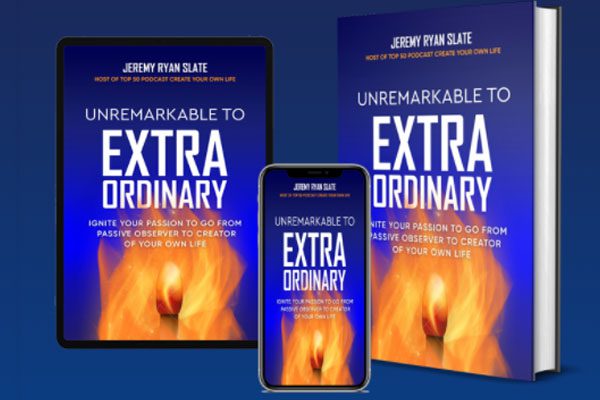
Unremarkable to Extraordinary: Ignite Your Passion to Go From Passive Observer to Creator of Your Own Life
That’s a huge takeaway. Most people don’t spend the time training people. They figured, “I’m hiring you. You should be able to hit the ground running.” We don’t even talk about our culture and whether you are a fit or not.
That’s a huge misconception.
If you don’t have clear expectations or boundaries like we were talking about with children and pets, for the employees, they don’t know. “Is it okay if I come in at 10:00?” “Not really.” “Nobody told me.” I can set up a problem right off the get-go. “Here’s what we do. This is our workday. We are totally flexible. As long as you get the work done, you can come in what time you start.” Everyone is different. That training as a speaker who gets hired to sometimes also train after the keynote and help people get a new skill because the skills you have are not enough. You have to constantly be learning new skills is my experience.
That’s one of the things. If you are not growing, you are dying. You always need to be growing and working on what you are doing. That goes back to what we have been talking about all through this conversation. It’s about incremental improvements and consistent improvements. You have to be thinking about the same thing for your team. They should be training weekly, whether it’s on some sort of new process, some process you have been running for all, whatever it is, they need to be improving as much as you do because that’s how you keep your organization growing.
If people want to listen to your podcast, it’s called Create Your Own Life. If people want to learn how you can help them with their branding, they should go to CommandYourBrand.media.
CommandYourBrand.com or CommandYourBrand.media, either one will get them to us.
Any last thought you want to leave us with?
I would encourage people to go out and grab my book, which is now in pre-order. It’s going to be released on June 7th, 2022, which distills down a lot of what we talked about and brings that into something that you can bring into your life to make some huge improvements and find your extraordinary. It’s Unremarkable to Extraordinary. They can get that over at GetExtraordinaryBook.com.
Jeremy, thanks again for inspiring us all to put a little structure in our life and get some practice in.
John, thanks so much for having me. It’s a lot of fun.
Important Links
- Command Your Brand
- Create Your Own Life Show
- Unremarkable to Extraordinary
- YouTube – Jeremy Ryan Slate
- Rumble – The Create Your Own Life Show
- CommandYourBrand.media
- Larry King – YouTube, Larry King interviews Sales Keynote Speaker John Livesay
- Better Selling Through Storytelling Method Online Course
Wanna Host Your Own Podcast?
Click here to see how my friends at Podetize can help
Purchase John’s new book
John Livesay, The Pitch Whisperer
Share The Show
Did you enjoy the show? I’d love it if you subscribed today and left us a 5-star review!
- Click this link
- Click on the ‘Subscribe’ button below the artwork
- Go to the ‘Ratings and Reviews’ section
- Click on ‘Write a Review’
Love the show? Subscribe, rate, review, and share!
Join The Successful Pitch community today:
- JohnLivesay.com
- John Livesay Facebook
- John Livesay Twitter
- John Livesay LinkedIn
- John Livesay YouTube
The Lucky Titan With Josh Tapp
Posted by John Livesay in podcast | 0 comments

Many entrepreneurs are successful enough to get to a million dollars in revenue, but struggle to figure out how to scale past that. Tapping into his personal experience in building strategic partnerships with industry titans, Josh Tapp, host of The Lucky Titan podcast, teaches people proven methods for entrepreneurs to scale without having to spend a lot of money on advertising. It’s all about leveraging the right kind of relationships with the right kind of people through joint ventures. Learn how exactly you can do this as he talks to John Livesay in this episode. Plus, listen to John as he helps Josh improve his elevator pitch so you can learn how to improve yours, too!
—
Listen to the podcast here
The Lucky Titan With Josh Tapp
Do you know how certain entrepreneurs are successful enough and they get to $1 million in revenue, but they struggle to figure out how to scale past that? Our guest, Josh Tapp at The Lucky Titan podcast, shares his proven method to get entrepreneurs to scale without having to spend a lot of money on advertising or getting frustrated reaching out to people that can’t help them. Find out how he does this. Learn how I helped him with his own elevator pitch so that you can learn how to improve yours too. Enjoy the episode.
—
Our guest is Josh Tapp, who’s the Founder of The Lucky Titan podcast. Josh has helped over 500 entrepreneurs scale their business through joint venture partnerships. Josh, welcome to the show.
Thank you. It’s going to be fun to be here.
Tell me a little bit about your own story of origin. How did you decide you want to even launch a podcast? You can go back to childhood or wherever you want to start your own journey of being an entrepreneur.
My story goes clear back to childhood. What it comes down to for me is I grew up in a family of a long line of entrepreneurs. My dad had a construction company and he started multiple different companies. We experienced the entrepreneurial cycle but growing up, I knew what I wanted to do. In our house, it wasn’t preached to go to college and get a good job. It was preached to start something, be a creator, and college could be a great vehicle for you to get there. For me, I didn’t even think about college until high school, but I remember my first entrepreneurial venture and how great it was.
My dad owned a construction company. I worked for him and he paid me money, and I hated the manual labor. If you want a great way to scare your kids out of having a job, be a contractor. Make them work construction. What it came down to for me was, “I can make money other ways.” I’m probably 8 or 9 years old and I decided to get a bunch of my stuff out of my room. I pulled it to the end of my parent’s street, which we lived in a rural community. There were maybe 25 cars passing every hour. I put up a sign and it was a big white poster, but I wrote on it in pencil and said, “Stuff for sale.”
Not exactly a niche to an eight years old.
I did not understand marketing one bit, but it was a cool lesson for me. I sat there for about three hours and nobody was stopping like, “What is this kid doing?” I didn’t have money for lemonade so I’m like, “I’ll just sell my crap.” One of my dad’s friends stopped and he bought this little polished rock from me, one of your treasures as an 8 or 9-year-old kid. He paid me $0.25. Most people will be like, “It sucks. $0.25 in three hours?” I was elated. I made money doing nothing and it totally sparked that entrepreneurial fire. From there, it went on to starting landscaping companies and moving on to virtual space digital marketing or what have you.
It led me to where I am. I love speaking with people. I love audio and video interviews, and getting to know high-quality people. For me, I found the people I resonate a lot with are entrepreneurs. That’s where the podcast came from. It was being able to meet people like John Livesay and all these people who are untouchable in the market. Being able to bring him into your world for an hour and to be able to interview him was amazing for me, and being able to “pick your brain” for an hour. That’s the kind of stuff for me that drove me towards podcasting in general and entrepreneurship as well.
[bctt tweet=”Luck is putting yourself into a situation where you have opportunities to win.” username=”John_Livesay”]
What made you name your podcast The Lucky Titan?
That one was an intentional play on words. Before this, we had a marketing agency doing Facebook ads for people and I was constantly struggling to get my own clients for that. The problem was I hadn’t built an audience yet. I didn’t have a following of people. I was just reaching out in my town saying, “I’ll do Facebook ads for you.” We could do good for them because they were a local business but generating leads for myself was difficult. I was in that constant wave of not being able to make money. During this time, I ended up hiring a coach, and that coach walked me through. He said, “You need to brand yourself.” He’s under the belief that you shouldn’t brand your name, but you should create a memorable brand. I know there’s a lot of back and forth on that. Both worked great. He’s like, “Start with creating a brand that’s memorable.”
My partner and I would play around with a lot of different names and imagery. We’re like, “Let’s base the podcast off of the people we want to interview. What’s something that would entice them and make them want to come on and give them something to identify with?” It ended up becoming The Lucky Titan because we were going with The Lucky Entrepreneur, but we’d get in trouble. Entrepreneur Magazine will sue you if you have entrepreneur in your title. Word to the wise, if anybody has entrepreneur in their title, make sure you’re prepped for a lawsuit. They have the trademark on the word entrepreneur, the copyright or whatever you have to have. I’m not versed in that stuff. My brother-in-law is a lawyer and he’s like, “Do not do that. Don’t put entrepreneur in there.” That was a good word to the wise. This is not legal advice. I’m going to disclaim that.
For us, we ended up being like, “We want to interview these industry titans and these amazing people who accomplish something great.” That’s where the title came from. We’re trying to get people that when they come on, we put the cape on them and making them feel like the Superman for the day or the Wonder Woman for the day. Our whole brand has stemmed around helping people feel that way and join the ranks of Titan is our whole game plan with the brand.
What about the concept of luck? That’s fascinating to me because a lot of people say, “Luck is where opportunity and preparation meet.” What is your definition of luck?
That was answered better by one of our first guests, Elaine Keltz. I don’t know if you’re familiar with Elaine, but she’s a successful lady. She’s like, “I don’t believe in luck.” People are waiting for the door to open for them. She’s like, “I found a hallway with a lot of doors and started kicking them down.” That’s my definition of luck. It’s putting yourself into a situation where you have opportunities to win. People call me The Lucky Titan and I’m lucky to be there. I’m happy to be there with people. That’s what it’s stemmed out of.
Let’s talk about who you help and what problems you solve. The old elevator pitch that I love to work with people on. What is your current elevator pitch? How are you telling people the answer to that?
This is a good one. John is going to pick this apart for me and he’s going to be mad at me because I haven’t done this well. John, I’m sorry. Our elevator pitch is that we help people to build joint venture partnerships and scale an audience of 1,000 raving fans. Our entire purpose with that is helping people to understand that they don’t have to go it alone. For me, as an entrepreneur, that’s where I was in my previous company. I was trying to do everything by myself and to grow. When we started this company, we decided we’re not going to run ads. We’re not going to run anything other than joint venture deals. We’re going to find successful people and partner our brand with theirs. We built our whole company around that and built our products around helping other people do that.

The Lucky Titan: Don’t brand your name. Create a memorable brand.
Let’s give an example. I know you work with online course creators. I have a course and we’re going to be doing a masterclass together. How do you help online course creators create joint ventures?
That one is a good example because course creators if you’re atypical, “I need to build a funnel with fifteen different steps. I need to have a bunch of Facebook ads and all this different stuff.” What it comes down to when you want to launch a course or a book or anything like that, it helps to have an email list of people. It also helps to have a group of people that you know you could reach out to and say, “Can I come on your show to launch this new thing? Can I come to your Facebook group to launch this new thing?” They’re coming to us and saying, “I want to launch this course.” My goal isn’t to nickel and dime them and charge them $1,000 to say, “Let’s get you on a podcast for $1,000.” A lot of people do that. For me, that should just be a given. That’s good networking, connecting people with high-level people.
The way we were able to grow quickly was because of a few strategic people who were great givers. They connected us with some amazing people and it grew from there. What we typically do is we put them in a room with anywhere from 5 to 10 other entrepreneurs who are non-competing entrepreneurs who have the same ideal customer. John, we both market to a lot of virtual entrepreneurs. Our products are non-competing, but they’re compatible. I’m not great at sales and John is good at the elevator pitches and helping people to build course and everything, and lock in their sales process. What it’s come down to for our company is we want to find people like John to partner with not just ourselves, but the other people in this room.
We try to facilitate that relationship for people so that they can build these partnerships while they’re in the room with one another and they can leave having some joint venture deal set up. One of our favorite ones is getting these long-term partnerships where it’s saying, “Next time I launch something, would you be alright if I come on your show and give an interview?” The problem I see a lot of times when people are trying to launch something is they’re trying to cash in relationships that they haven’t built yet. For example, you’ll join MatchMaker.fm or something to get on podcasts. “I watched this new product. I need 25 people to have me on their shows.” That’s the wrong way to go about it. The right way to go about it is to have these relationships built where you’ve got 100 people who’ve committed to having you on their show at some point. When you go to do a launch, you do 100 interviews in 30 days and you launch your product. That’s the fastest way to scale and grow joint ventures in my opinion.
You’ve got multiple podcasts airing all at the same timeframes is what you’re saying.
Right. I can give you a good example of this. If you’re familiar with Rachel Hollis, she wrote the book, Girl, Wash Your Face. It was the second bestselling book in the world in 2019. She was only beat out by Michelle Obama. That puts it in perspective. Rachel Hollis is one of those people where she had some influence. She was interviewed and this was something that solidified our theory in my opinion. She didn’t spend a single dime on ads, didn’t have a publisher or anything. All she did was she went and she had 180 of the top female influencers interview her on their podcasts, TV shows or whatever they had. She knocked it out in about 90 days right before the launch. She sold something like twenty million copies of her books, something crazy. That is the value of that.
How long did you have to work with her to get that all queued up?
No, she wasn’t a client of ours. That’s just a good example of that. A client of ours, one of the ones that we’ve seen that was cool. They ended up partnering in the travel sector. The vacation sector and the travel sector is being hurt because nobody can travel. This company was saying, “We’ve got to go back to the books and do something or we’re going to have to close our doors.” What we did is we partnered with them, two people who are travel influencers like the Instagram influencers who have big followings. We partnered with Volkswagen and a subsidiary company of Expedia.
[bctt tweet=”Sell through people, not to people.” username=”John_Livesay”]
Combined, we all had a list of about five million people with our reach. We were trying to grow our list and sell something out. We did a giveaway. We said, “All of us email our lists.” From that, we said, “There’s a free vacation giveaway. Come to this page.” Anybody who opted in, all five of us got their emails and it was legal. We had all the GDPR compliance and everything in place but the coolest thing happened with that. It took us a grand total of maybe twelve hours to get this whole thing put together and we got 50,000 emails off of it, each of us did. If you have any perspective of this like with Facebook ads, that would cost you anywhere from $50,000 to $150,000 to generate that through almost any other means. It cost us all a grand total of $400 each.
How do you find clients, Josh?
For me, honestly, I practice what I preach. My entire goal is to not ever have to spend Facebook ads for my own company. That might slow us down but for us, it hasn’t seemed to slow us down. We’ve been focusing 100% on building out these partnerships. I’m always going on podcasts and generating these relationships and bringing people onto mine or onto summits, building goodwill with people because one day, when I need to launch something and they’ve already committed to having me on their show, I can hop on and launch something. That has been the best way for us to generate clients. Our higher ticket masterminds, which is our core business, we typically get those all through referrals of these people that we know have a good following of people. Our lower ticket products and everything like that come through email joint ventures and our higher ticket products come directly through peer-to-peer referral.
You have some funnel. Can you walk people through what that funnel is and the timeframe? You have a relationship with someone and you invite them on your podcast. How do you figure out who you want to have on your podcast? Is that your potential ideal client?
I believe that podcast is not about the listeners overall. That is one piece of the puzzle. You do need to pay attention to who your ideal listener is, but you need to tailor your podcast or your show or what have you to make it the best possible platform for the people that you want to work with. For The Lucky Titan, our ideal customer is somebody who has made $1 million a year and plateaued. They’ve gotten stuck and they know, “I’ve gotten here by being a rainmaker. I’m good at sales and I’m good at closing deals, but I need systems and I need partners in place in order to scale.” That’s where we come in.
Our podcast, The Lucky Titan, what we do is we interview people about how they got to $1 million and how they were able to scale and grow. It opens up a sales opportunity for us every time. One of the things, and you might have even told me this, the sell-through people, not to people. I love that concept. What we do, and I didn’t realize I was doing it, was we bring them on. Instead of saying, “I want you to join my mastermind. Here’s the cost,” and it became this big sales pitch, I’m like, “We’re building this thing. We’re looking for people in this category. Who’s that one person that you know who would be a perfect fit for this that you could connect me with?”
I have to back up a little bit. I want to share the strategy with your people because this will be beneficial to them. I handpick these people from the start. I listen to podcasts all the time, almost all day while I’m working. If I’m not on a call, I’m listening to a podcast because I like to find the people who are the best in the industry. I’m listening to podcasts like Entrepreneurs On Fire and Marketing Secrets. I find these people who interview super high-level people. Mixergy, they bring on these high-level entrepreneurs and interview them. What we do is I look at their guests and handpick them, and then I outreach to all of them. This is something I do myself. I don’t outsource a lot of this because I want to make sure that they know I’m reaching out to them personally and it’s not some bots or paying somebody in the Philippines to build that relationship.
You’re taking a ticket, something they said on the podcast, and be specific about. I resonated with what you said to John Dumas on Entrepreneurs On Fire.

The Lucky Titan: You need to tailor your podcast to make it the best possible platform for the people whom you want to work with.
“The title of your podcast was about this. I loved exactly what you said in that episode on EOFire. Would you come on mine and share the same thing? I’ll promote you and XYZ.” Just to give you an idea when we outreach that way, we get about a 98% positive response rate and about 80% of them come to join our show.
It’s personalized. If you hear them on the other show and you think they look successful, they probably have $1 million in revenue, they might be a good fit. You compliment them and they say yes to be on your show. It’s a compliment, baby step, “Do you want to be on my show?” You build a relationship when they’re your guests. From there, you follow up and ask them if they might know somebody who might want to be in a mastermind.
There will be steps in there. I want to caveat too. If you do this correctly, if you do an hour-long interview and you only record for twenty minutes, that gives you 40 minutes of your time to get to know them. I spent about 10 to 15 minutes becoming friends with them. I will record for about twenty minutes. That gives us air from 15 to 20 minutes to ask this question. It’s the question I asked every single person. “How can I help you to expand your business today?” They’ll usually say, “I lost the podcast. This, that or the other.” The beautiful thing about that question is it’s almost like an open-ended question.
The human answer that you should be saying to that question is, “How can I help you?” They always ask that question back to you. I’ve not had somebody say that to me. Instead of saying, “How about you buy my stuff? I’m opening up this huge sales opportunity.” I’ll typically say to them, “This is the product we’re launching. This is the audience that we’re promoting to. Who’s one person that you know who fits that deal that maybe you could connect me with?” I’m like, “That’s the one thing you could do for me. I don’t need you to do a bunch of promotions for me or anything like this. I just need you to connect with one person.”
Just to give you an idea, John, typically what our numbers look like from this because I am not your typical salesman. I’ve never been trained in it. What I found is I’m good at the inviting side like, “Maybe it would be a good fit for you. Do you want to come to join us?” We’ll have about 10% to 20% of the people that I interview end up buying our products and the rest of them will typically refer me to at least one other person. That’s where the sales opportunities get opened up. You asked for timeframe. I’m listening to podcasts anyways. It takes me about fifteen minutes of research on the person to get maybe five people on my show. It’s an hour interview with each of them. I’m building content and getting all this great content from it but it also opens up all these sales opportunities. We end up closing typically, for ten people will close about 1 to 2 people who come on our show.
Do you have one mastermind or juggling a lot of masterminds?
We juggle quite a few masterminds because I like to put people with the right people. If you’ve ever been in a mastermind before, I personally pay for five different masterminds at any given time. I like to jump through them to do my research. I want to know what other people are doing and what’s working. The best ones that I’ve seen are not just entrepreneurs. It’s entrepreneurs who have generated a certain amount of revenue. For example, if you’ve generated $1 million in revenue, you failed dozens of times, so you know how to overcome problems. When you put them in a room together like that, everybody can solve anybody’s problem. On top of that, we put them in a room where they have the same ideal customer. I’m not going to put somebody who’s in the travel sector with somebody who’s promoting a course unless it’s in the travel sector because it doesn’t make sense for them to be in the room. They’re going to learn from each other but that partnership can’t happen.
We get what I call the networking effect, where it’s like the BNI groups where you go to the Chamber of Commerce and people are throwing their business cards around. Maybe we could work together someday. That’s not a great way to network. The best way to network is to give them a purpose, hand them partnerships, and give them the actual thing that they should be doing so there’s no question in their mind. They’re like, “We’re both in the room together so we can get on each other’s podcast. That’s why we’re in this room.” That then eliminates this awkward barrier. That’s the process in a large nutshell.
[bctt tweet=”Come in with a purpose, leave with a partnership. #TheLuckyTitan” username=”John_Livesay”]
What’s your secret sauce to your masterclasses that people who may have been in other masterclasses say, “I don’t need that,” or “That didn’t work for me?” What is it that makes yours unique besides it being customized, which is important?
The thing that people come to us for and that they beg for, and they’re like, “This is what I love most about yours,” it’s because I’m not selling me. I’m not that cool. I’m a young guy and I’m inexperienced, but I know a lot of cool people. They know that I’m going to get the right people in the right room and that they’re pre-vetted. I would say our secret sauce is we give them an actual reason to be there and a purpose for their networking instead of a woo-woo happy session. Those are great and they’re good for motivation, but they die quickly. Our secret sauce is helping people come in with a purpose and they leave with a partnership.
Now, I have enough information to give you a new elevator pitch.
Let’s do it.
A lot of entrepreneurs who have struggled to get that first $1 million in revenue feel maybe a little burnt out, but they’re happy they’ve made that much progress. Now, they don’t know how to scale. What we do at Lucky Titan is we create a place to let them find partners that help them scale with a proven system, which doesn’t require a lot of money or work on the entrepreneur’s part. When that happens, they are able to get their purpose out through partnerships in a way that doesn’t tap into their energy or their bank account.
You think you’ve done this a few times, John?
That’s the gist of it in a short, concise, compelling way, which is what everybody wants in a good elevator pitch. I took some of that pain point because we all know, the better you describe the pain of somebody, the more you have their solution. They’re proud of it but they’re exhausted. If you don’t tap into their bank account or their energy resources, and you can get them to scale, that’s where people are going to want to be intrigued to know more. The whole purpose of this is to get people to say, “How does that work? Tell me more,” and then you could go into a case story or of a case study of somebody that you’ve helped.
One of the things that came to my mind as you were talking about that was one of the biggest pain points for our audience is they all love masterminds. They love connecting but I don’t have time. I only have one hour a month allotted to masterminds. For us, that’s why we’re like, “It’s an hour-long mastermind.” There you go. It’s bringing it down to where it simplifies it. Thank you for that. I appreciate that.

The Lucky Titan: Lock in your platform and make sure you commit to it.
It’s like, “Give us an hour a month and we’ll give you 10% growth in six months or something.” It all depends on what the objection is, but you have to have multiple stories ready to go. There are three kinds of personalities. There’s the numbers person so you would have a numbers case story, “We had somebody just like you. They were accountant,” or “They were productivity experts.” Somebody else who’s feeling more like, “I’m awkward. I feel uncomfortable. I don’t like being pushy. I don’t like selling myself.” You’re like, “This is the perfect mastermind for you because you don’t have to sell yourself.” You get your own objections, “How do you know so many people, you’re only 26?” You have a story ready to go like that. “I understand. In fact, some of our best clients felt the same way.”
You’re like, “I’m listening to podcasts. I’m doing all the things you don’t have time to do such as listen to podcasts to find the right people for you. Think of me as a curator. It doesn’t matter how old you are. I have the time and the energy to curate the right people based on who you need, then I’m saving you tons of time. We all know your time is worth a lot of money.” They then go, “I need that.” You can even say, “Do you know how a virtual assistant can make you five times more productive and you get to do the things you love? A mastermind with the right people in it is a virtual assistant on steroids.” They then go, “Right. Got it. Yeah. Okay.” That’s the gist of it. Any last quote or thought you want to leave us with?
The last thing I want to leave everybody with is to think about the platform. What’s the platform that you stand on? I feel like the thing that made the biggest difference in our company is when I finally stopped trying to be everything and just highlight the other things that people want to share about, and building a podcast for me was the easiest way for me to do that. It allowed me to meet some of the most amazing people and networks and continues to do that for us. I’d say lock in your platform and make sure you commit to it.
You’ve gone full circle from being a little eight-year-old boy saying stuff to sell through realizing now the importance of having a niche. Thanks, Josh. It’s great having you.
I appreciate it. Thanks, John.
Important Links
- The Lucky Titan
- Elaine Keltz – Past episode on The Lucky Titan podcast
- MatchMaker.fm
- Girl, Wash Your Face
- Entrepreneurs On Fire
- Marketing Secrets
- Mixergy
- Better Selling Through Storytelling Method Online Course
Wanna Host Your Own Podcast?
Click here to see how my friends at Podetize can help
Purchase John’s new book
John Livesay, The Pitch Whisperer
Share The Show
Did you enjoy the show? I’d love it if you subscribed today and left us a 5-star review!
- Click this link
- Click on the ‘Subscribe’ button below the artwork
- Go to the ‘Ratings and Reviews’ section
- Click on ‘Write a Review’
Love the show? Subscribe, rate, review, and share!
Join The Successful Pitch community today:
- JohnLivesay.com
- John Livesay Facebook
- John Livesay Twitter
- John Livesay LinkedIn
- John Livesay YouTube