

Social Selling With Tim Hughes
Posted by John Livesay in podcast | 0 comments


Do you have a hard time driving more leads from your LinkedIn account? Are you spending most of your time on your social media accounts? In this episode, Tim Hughes, the co-founder and CEO of DLA Ignite, discusses the social selling strategy to influence buyers and change makers. People are looking for experts that can help them. Tim Hughes suggests three things to attract leads: Build a Buyer Centric Profile, Network, and Content. Learn more from these three things to attract leads for your business. Tune in to this episode now.
—
Listen to the podcast here
Social Selling With Tim Hughes
Our guest on the show is Tim Hughes, the author of Social Selling. We talked about how to build trust, how to use social media, and most importantly, how to create a buyer-centric profile. Enjoy the episode.
—
Our guest is Tim Hughes, who is universally recognized as the world leading pioneer and innovator of social selling. He’s ranked number one by Onalytica as the most influential social selling person in the world. In 2021, LinkedIn said he was one of the top eight sales experts globally to follow. Brand24 announced that he was the sixteenth most influential person in marketing globally based on measured social media influence.
He’s also the Cofounder and CEO of DLA Ignite, and the co-author of bestselling books, Social Selling: Techniques to Influence Buyers and Changemakers and Smarketing: How to Achieve Competitive Advantage through Blended Sales and Marketing. He has launched a second edition of Social Selling: Techniques to Influence Buyers and Changemakers, which that’s been completely updated. Welcome to the show, Tim.
Thanks for having me on and spending time with me. I’m really excited.
I think this topic of influence is always something someone’s so interested in. More brands now are saying these earned impressions, people’s recommendations, and word of mouth, coming from someone that people trust are even more valuable than paid impressions. Before we get into all of this and how you became this influential social selling person, I want to hear your own personal story of origin. Did you grow up going, even before the internet was created, “I’m going to conquer this world,” or were you just the young boy at college that you could convince everyone to go to your restaurant of choice versus others? How did that all begin?
I’m a salesperson. I didn’t actually even know what sales was until I was in my twenties. I got into a graduate program at a company like many computer companies that were around in those days. It doesn’t exist anymore. I was in a technical role because I did Electronic Engineering. I made the mistake that a lot of young people make, which is I saw these technical people who were amazing and I thought, “I’m never going to be like that because it’s going to take me so long.” What we always do is measure things by 0 to 100, and we see the experts who are 100, and what we need to do is go from 0 to 1.
I was looking around for something else, and I could see these people out in the car park who had company cars. In those days, they just had started having mobile phones. There were these massive big brick phones. I thought, “I quite fancy some of that.” I went and started working. I got a job working with sales teams. When I was doing that, I really enjoyed it. I then moved into sales. I have now been in sales for several years. That’s my background, new business sales. I’m always the person that goes out and finds new customers and builds trust really quickly.
Let’s dive into that. I have worked as a sales keynote speaker with lots of different companies. I usually get involved. When they are already invited, they have done the RFP, they are in the door, and it’s between them and a competitor. This building trust quickly, especially for those people who have to cold call, I don’t think a lot of people think about cold calling as still a thing. Whether it’s somebody knocking on your door saying, do you want solar panels on your home, to all the medical sales teams that have to cold call on doctors and dentists, to try and get their attention? Let’s start with that because that’s one way of getting new business, and then there’s the other way of getting new business where you fill out a proposal, and you are invited to present. You cover both, I’m guessing.
In the past, I have sold to government organizations where you fill in RFPs. What you are trying to do is actually influence that early, so you are going out and you are contacting people. I started selling back in the ’80s when there was no internet and mobile, and you are just given a printout and said, “Go and call these.” That’s how I started. It was about making sure what you are doing is being able to come across as being the expert.
I started off selling payroll systems. I didn’t know anything about payroll and its technicalities. What you start doing, you start learning about it. You start learning about the verticals that you are selling into and stuff. What you do is feed off one conversation and take it to the next one. You take one conversation and use that as a way of asking questions. It’s that organic thing that takes place.
[bctt tweet=”Make your profile buyer-centric. Social selling is not about you.” username=”John_Livesay”]
What do you think is the biggest mistake people make when they are trying to build trust?
I wanted to set the record straight. As an organization, we have never cold-called ever. We have not ever made one cold call. We have never ever sent a spam email. We don’t have an email database. We deleted it in 2018 to be GDPR compliance. We have never placed an advert. What we do is we are an organization that teaches social selling, and therefore we see ourselves as the highest watermark in the industry. People want to see what good social selling is. They come to people who work for DLA Ignite because we are the high watermark of that. What we are doing is, if you think about what I did in the ’80s, going out and having conversations with people, but I’m doing that on social media rather than necessarily using the telephone to get it.
That doesn’t mean that we are anti-telephone. Sometimes people think and say, “It doesn’t work for us because we can’t do all of our business on social media.” I totally understand that. This is about using social media as a platform for you to get conversations. In the past, I used a telephone as a way to get through to people and start conversations. What I sell and what most people reading this sell, require us to have a conversation. What I’m doing is I’m using social media, and that allows me to have conversations at scale rather than doing it what I did way back in the ’80s.
Let’s loop back to my question because I think it still is relevant, your social selling and reaching out to people of let’s say, LinkedIn. I see one of the big mistakes people make is they ask people to connect, and then they try to sell them something in the same conversation. I’m sure you have examples of other mistakes like that.
The issue that we have now is way back from the 1980s, what we have always done is that we have used interruption as a way of selling. To make a cold call, I interrupt you and pitch. When I send you a spam email, I interrupt you and pitch. When I place an advert, what I do is I’m interrupting your day and basically pitching. Everybody thinks, “Therefore, that’s what you do in sales, you interrupt people.” They go to social media, and what they miss is in the title, social media, which it’s media where you are social. What you will find is that you have got a lot of people, for example, posting brochures. You research shows that nobody comes to social media to read brochures.
Everybody I talk to, I say, “Do you ever do this with your LinkedIn timeline? Boring.” “That’s interesting. I love John’s podcast.” “What’s he doing in that?” Everybody says, “I do that all the time. Don’t the organization do boring?” What you are doing is that this is not about going to social media and posting, this is about going to social media and posting to get a conversation. That’s fundamentally different. In this show, you introduced me before you started recording, and showed me your website and what you do. All of what you do there is a mechanism to create conversations.
That’s probably the best way to build trust, which is to have conversations.
One of the things about trust, what happens is that you like people who are like you. The other mistake that people make on social media is they think it’s about them, it’s about their company. The thing is, I don’t know anything about you or your company. What happens is I’m actually not interested. I’m not interested in what you are selling until I actually know you, maybe like you, trust you, and at that point when I understand that I have a need. Right now, all you have is you. Everybody goes to the market exactly the same way. What they do is that they say, buy my product because I’m great.
My background is in selling accounting systems in IT. All of the accounting system vendors go to market in exactly the same way. SAP, Oracle, Sage, and Xero all say the same thing. As a buyer, you cannot differentiate. What you can do, because we are really clever at this as humans, I can differentiate and say, “I just spent three minutes with John before I came onto this show. I think that John’s a really nice person. If I went out for dinner, I think he would be really interesting to talk to.” We were talking for 3 to 5 minutes, and I came to the conclusion that you would be interesting to talk to during dinner. That’s because as humans, we are really good at that.
Social Selling: Social Selling is not about understanding LinkedIn. It’s about understanding social media and what it’s like to be social.
I was going to elaborate on that and say trust is transferred. The fact that Hesha Abrams, who’s been on this show before, introduced us that trust gets transferred, “I think this is someone that would be a good guest on your show.” I read your book and bio, and I go, “Yes,” and then we start bonding. That concept of trust being transferred is something I wanted the audience to take away from this interview because you are big on that. Those warm introductions cannot be beaten in terms of social selling. If somebody is liking and comments on a post that you have made and you happen to know that person who liked and commented, there’s an example of social selling in action.
It’s about building trust and building it at scale. One of the things that you get a lot of people saying that they don’t do or they don’t like is, for example, posting something personal. Now, if you think about sales and the way that we have solved it for years, you say to a salesperson. How is it that you get the salesperson to trust you? You say, “I took them to the Super Bowl. We went out for a meal.” I said, “Did you take some brochures?” They say, “Don’t be so stupid. Of course, I didn’t do that.” I said, “What did you talk about?” “I talked about the fact that we like barbecues. We go to France.” “You are talking about yourselves?” “Yeah.” That’s how we bond, we learn about each other.
LinkedIn is a platform where you can learn about each other. One of the sales guys that work for me basically has just posted the fact that he’s taken his dogs for a walk. He’s English, but he lives in France. Now, if you have got dogs that are similar to that, you are going to look at that and go, “That looks fantastic. I can see it’s French the way it looks. I love France.” All of a sudden what you are doing is that you are bonding with that person. I won’t bond with someone posting a brochure or some brochure warehouse, or saying how great their company is. What I do is bond with you because I see that you are a human being.
I have a story about that in action, and then I’m going to ask you to share a story either from the book or what you worked with companies on. I was up for speaking at the Olympus medical sales convention, their kickoff meeting, and it was between me and another speaker. During that process, I saw that one of their VPs at a division had reached out to connect with me on LinkedIn. I accepted the request, and then I started looking at some of the posts he’s made. I instinctively just started liking and commenting on a couple of things I resonated with.
Later he told me that when they had the big meeting and they looked at my book and the other speaker’s book, our videos, and all the other things that he raised his hand, and this is always what you want is somebody to be your inside brand ambassador saying, “I really think we should pick John because I’m trying to teach my sales team to like and comment on the doctor’s social media posts. He did it to me. He walks his talk if he comes in, and encourages our team to do that.” I thought, what an amazing story of social selling in action that got me a speaking job. I’m sure there are other examples of that human connection that you might have to share.
We have got lots of examples. One of those is one of my sales team posts a picture of him and his son on the beach. It happened to be during COVID. It was his son’s sixteenth birthday. There was a lockdown. His son wanted to be out with his mates getting drunk, but he, unfortunately, had to go with his boring dad and they live by the sea and he took some photos. I just wanted to get the figures right. Off that post that he posted, he got 165 likes, 37 comments, and 18,000 views, which is pretty okay, and you would have seen lots of things like that on LinkedIn, but the thing is that behind it is a methodology.
That methodology allowed him to harvest that post to get 124 leads, 6 C-level meetings, 2 proposals, and 1 purchase order, and it took him 10 minutes to do that. Now, there’s not one single piece of demand gen out there that allows you to get that level of traction and results by doing something in that shorter time. That’s just an example of where people are using social media as a mechanism to get meetings and conversations that turn into commercial interactions, so sales.
Now, I think a lot of people reading are going to be wondering, is that post on LinkedIn or Instagram, or does it matter?
That particular post was on LinkedIn. One of the things that we talk about is the need nowadays to understand how to walk digital corridors and have digital conversations. What you will find is that a lot of people will teach you about LinkedIn. It’s not about understanding LinkedIn, it’s about understanding social media and what it’s like to be social. What that allows you to do is to pick up that skill and say, “I need to get in contact with the head of human resources. They are not active on LinkedIn, but they walk their dogs, and they have got two Labradors, and I know that they are on Instagram.”
[bctt tweet=”It’s about building trust and building it at scale.” username=”John_Livesay”]
How do I go across to Instagram, and basically enable me to have a conversation, so I don’t go to the person and say, “Buy my product because we are great.” Everybody says that. It doesn’t differentiate you. What you need to do is to do something different. It doesn’t matter whether it’s Twitter, TikTok, or Instagram, it allows you to walk that digital corridor and have that digital conversation. That’s fundamentally different from, “How do I hack the algorithm on LinkedIn,” which actually doesn’t help you.
What I’m hearing you say is it doesn’t matter what platform you are using, be yourself on all of them. Would that be accurate?
What you are looking for is to be your authentic self. In a world where everybody goes to a market and says exactly the same thing. The only thing that differentiates you is your experience, who you are, and what you believe in. That’s the thing that differentiates you as a salesperson.
In our pre-chat, I was talking about you being in England and I have a King Charles Cavalier Spaniel. I shot a short video of me with a baseball cap on taking my dog out for a morning walk. As I was narrating that, I said, when I took my dog to dog training, the trainer asked me, “Are you walking out the door first or is the dog?” I said, “I guess he walks out first and I follow.” He said, “No, you are making a mistake. Dogs are pack animals. You must be the first person out the door to be the leader of the pack” I just had this thought of, “How gay am I, as an openly gay man, that my little King Charles dog is butcher than I am?” That was me being authentically myself.
Dogs actually like hierarchy. You going to need to be a butch, John.
This dog is butcher than I am because he’s walking out the door fast. That was two minutes, and it was a cute little video. That got so many other fellow dog lovers to comment and connect with me. There are lots of ways to be authentic. I thought you’d like that story.
For those that are reading this to understand, if you post pictures or videos about your King Charles Spaniel all the time, they are going to assume that you are a dog walker. The same as if you are posting pictures of yourself on the beach, they are just going to assume that you spend all the time on the beach. When someone comes to your LinkedIn profile, what they need to see is what you stand for. In the B2B space where I work, what they are looking for is an expert.
You may have read the Matthew Dixon book on The JOLT Effect. What people are looking for is an expert. They are looking for somebody that can help them. When they do that, they are looking to see, does that person have that experience. Also, they are looking to see that if they are going to buy something, they are going to build a relationship with you. How do they do that? There are three things that you need to look at, and this is what we do in terms of helping people. The first thing you need is a buyer-centric profile.
What do you mean by the word, buyer-centric?

Social Selling: HubSpot says that the average person spends 2 to 4 minutes on a website.
A buyer-centric profile is a profile that is attractive to your buyer. The mistake that we all make is that, especially in sales, we think it’s about ourselves, and we think, “We are great relationship builders. I have been to President’s Club 5 out of 6 times.” That isn’t what buyers want. What buyers want is, does that person understand my business? Does that person understand my business needs? Will that person sell something, and then disappear? What we are looking for is someone that’s going to help us. What we need to do is come across as that. Now, the more you share about yourself, and we have done research on this, the more people will walk toward you. This is transformation.
When you look over at LinkedIn and you see salespeople, the first thing you think is, “I don’t like you. I don’t believe a word you say. You are just going to try and sell me something I don’t want.” That’s what buyers are thinking. By becoming buyer-centric, people are going, “I think that person can help me.” We know now, because the research shows this, that people under 30 search more on social media than they do on Google. We actually do it at the same time.
Quite often though, we use Google because we know what we want. Give me the capital of Nigeria. Tell me about the best Italian restaurants in London. The problem with Google is if you go to Google now and put in, what is the best CRM system, it won’t tell you. What will happen is there will be loads of people buying that search.
What happens is that people come to social. Quite often, they don’t know what they want. It’s called discovery rather than search. What’s happening is that they come, and make that discovery. They are looking for people again. It’s about thinking about, how can I get people to come and find me. Now, I’m not saying that you sit at home hoping that people are going to find you. We are going to talk about prospects at the moment. For example, for one of our clients, Namos Consulting, we have taught them how to have buyer-centric profiles. The other thing that we taught them is about building a network. What you need is a wide and varied network as you can.
This is about connecting into the account, so not going to them and saying, “Buy my product because we are great,” actually, going to them and saying, “I’m really interested in what you are doing. I’d love to connect with you because I’d like to learn from you.” This is switching it around from me trying to pitch to you. If anyone comes to you and basically flatters you, you fall for it. What you are able to do is then turn that into conversations.
The way that LinkedIn works is as you build up that network, what you are trying to do is getting the people that you are trying to influence, the customers that you are trying to sell to into that network, and all the people that it may influence them. You are doing that because the way that search works on LinkedIn is that it’s based on your network.
You need to get people in that network so that when they start searching, they will find you. For example, Namos Consulting. We taught them 2 of those 3 things. What happened was that one of the buyers was online looking for what it is that they sell, which is Oracle Consulting. The buyer said, “You look like a person that’s interesting.” He walks towards the salesperson, and you just don’t get that. What happened was that turned into a $2.6 million deal. They have subsequently taken another $500,000 out of that customer. This is what I’m saying, this is where people are using social as a mechanism to get conversations, doing it at scale, and making significant money from it.
You said there are three things, have a buyer-centric profile, build a network, and the third one is?
The third thing is content. Content is important because one of the things that we do when we are buying is that we are looking for content and insight. We are looking to be told things that we don’t know. We are not looking for brochures. Brochures and brochureware sit on the website. If I want to see whether you exist as a company, I will go to your website. HubSpot says that the average person spends 2 to 4 minutes on a website. That’s it. “Okay, they exist. I’m back.” I’m looking for a solution to my problem. I know I have got to talk to a salesperson. What I’m looking for is someone that can help you.
[bctt tweet=”A buyer-centric profile is a profile that is attractive to your buyer.” username=”John_Livesay”]
If people are posting authentic content about themselves, in accounting, for example. I think that the top three things impacting telco companies are the three things. For example, I met the chief financial officer of Vodafone, which is our biggest mobile company. I met that person and said to him, “What are the 3 to 5 things that are impacting telcos?” He told me, “You could walk out of that meeting, and turn that into the content.”
You wouldn’t necessarily mention the person or the company, but you could say, “This is insight.” As people say, what do you think? That would create a discussion. What happens is that would then go through people’s networks. You would then find people finding you go, “This person seems to know about accounting in telcos. I think I need to talk to them.” They then start inviting you in.
As a storytelling keynote speaker, I’m constantly posting clips of my talks on my LinkedIn profile. Part of your job as a speaker is to get through the clutter of all the other speakers out there and get bureaus to want to represent you, so you have all ways to build relationships and all that good stuff. You hear occasionally these, what I was calling urban myths, like an actor being discovered at the Schwab’s Drugstore.
Every once in a while, someone will say, “Somebody reached out to me and wanted to represent me, or they heard me speak,” and I thought that would be amazing. I thought that was just for a very few people that I couldn’t imagine that ever happening. A-Speakers Bureau based in Denmark reached out to me on LinkedIn and said, “We have been following you on LinkedIn. We see your clips, and we think we would like to represent you.” I was surprised.
I can believe that story. We get inbound all of the time. Part of that is you set it up. For example, I spoke at one of Hewlett-Packard’s kickoffs. I had basically decided that Hewlett-Packard was one of my key targets, so I connected to a whole bunch of people at Hewlett-Packard. It’s like a source sitting there simmering on great visuals. They then come and contact you. Someone says, “I don’t believe this social selling works.” You say, “How do you think I have got this speaker gig?”
People forget speakers have to sell themselves.
I have sat in front of so many CEOs. They fold their arms and say, “I don’t believe this works.” I say, “How do you think I got this meeting?”
One of the things I want to ask you about your wonderful book, Social Selling: Techniques to Influence Buyers and Changemakers, is the future of personal branding. Everyone always is interested in the future. Since you have your pulse on the zeitgeist, what do you think the future of personal branding is?
I think personal branding is so important. The thing quite often with personal branding is that people see it as being, I see Kim Kardashian, Brian Solis, and these influencers, and think, “I could never be like that.” This is about them thinking I have got to go from 0 to 100, where really where they need to go is from 0 to 1.
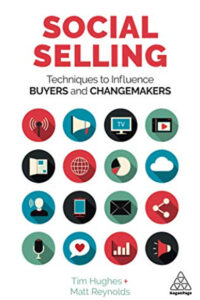
Social Selling: Techniques to Influence Buyers and Changemakers is the future of personal branding
Part of that is saying, “First and foremost, I need to have a buyer-centric profile. I need to do the basics out there to have a profile that is at least attractive to my bias.” Quite often, people don’t understand how to create content. Again, it’s about going to the gym. When I first went to the gym, I thought all the weights were really heavy. After you have been there six months, you go, “These weights aren’t heavy enough.”
Creating content is like a muscle, you just get used to doing it. One of the things that we are still going through a process is getting leaders to understand that this is how you prospect now. Quite often, people think of going onto LinkedIn, changing their profile, and creating content and a network. I can’t be bothered to do it because I have got all these other things to do. This is how we prospect. This is how we as a business run. What people need to do is make that switch to say, “In 2023, we need to stop using 1980s sales methods, and we need to start using 2023 sales methods.” It’s making sure that leaders understand that switch.
I think what you are saying is exactly what I say the old way of doing it is to push out information, as you said, brochures. The new way is to tell stories, which I love to teach people how to tell stories, and you are teaching people how to use social selling. Both of those things pull people in. If your content is story, people remember it, repeat it, and share it. I think that’s really the secret to all of this new way of being magnetic instead of repulsing. You pull people in with social selling and storytelling. Thank you so much. If people want to reach out to you, what’s the best way?
Thank you so much for having me on. It’s been fantastic talking to you. The best place to get me is on LinkedIn. I’m Timothy Hughes on LinkedIn. The website is DLAIgnite.com. I’m also @Timothy_Hughes on Twitter.
Thanks, Tim.
Thank you so much.
It’s so great talking with you. Congrats on the huge success and influence you are having. I’m sure that buyers and sellers are embracing this because nobody wants to be pushy, and you have shown us a new way.
Important Links
- Social Selling
- Tim Hughes
- DLA Ignite
- Smarketing: How to Achieve Competitive Advantage through Blended Sales and Marketing
- Hesha Abrams – Past Episode
- The JOLT Effect
- @Timothy_Hughes on Twitter
- Better Selling Through Storytelling Method Online Course
Wanna Host Your Own Podcast?
Click here to see how my friends at Podetize can help
Purchase John’s new book
John Livesay, The Pitch Whisperer
Share The Show
Did you enjoy the show? I’d love it if you subscribed today and left us a 5-star review!
- Click this link
- Click on the ‘Subscribe’ button below the artwork
- Go to the ‘Ratings and Reviews’ section
- Click on ‘Write a Review’
Love the show? Subscribe, rate, review, and share!
Join The Successful Pitch community today:
- JohnLivesay.com
- John Livesay Facebook
- John Livesay Twitter
- John Livesay LinkedIn
- John Livesay YouTube
Communication Connection: How To Build A Resume That Gets The Job With Daniel Usera
Posted by John Livesay in podcast | 0 comments
First impressions last long, and the first impression usually comes from your resume when it comes to finding the right job. In today’s episode, John Livesay is joined by Daniel Usera, an Executive Assistant Professor at Texas A&M University and a Corporate Trainer and Communication Coach. Daniel is a Nationally Certified Resume Writer and has helped over 500 job seekers find employment by improving their resume, interviewing, and networking skills. He shares the key to building the right resume for getting the right job. Plus, Daniel explains how to improve your LinkedIn page and network successfully. Get more insight on how to land the job of your dreams and build the right connections by tuning in to this conversation!
—
Listen to the podcast here
Communication Connection: How To Build A Resume That Gets The Job With Daniel Usera
Our guest on the show is Dr. Daniel Usera, who is a Communications Consultant, as well as being a teacher of it. He talks about how to have a great resume, how to bring your LinkedIn profile to life as well as how to communicate in a way that has an emotional connection. Enjoy the episode.
—
Our guest is Dr. Daniel Usera, who is an Executive Assistant Professor at Texas A&M University and a Corporate Trainer. His public speaking career started with high school speech and debate, where he won numerous tournaments and made multiple state championship appearances. He then earned a scholarship to do it for Washburn University, where he was a nationally ranked Debater.
After earning his Doctorate in Interpersonal Communication from the University of Iowa, he decided to enter the workforce to gain some valuable industry experience to complement his scholarship. He started as a career coach at a Workforce Development Center in Kansas City, Missouri, where he helped over 500 job seekers find fulfilling employment by improving their resume writing, interviewing and networking skills.
He joined the National Resume Writers Association and became a Nationally Certified Resume Writer. After realizing there was a large market of working professionals seeking his expertise outside of the center, he started his own career consulting business in June 2015, where he produced job-winning documents and interviewing coaching for hundreds of professionals across several industries.
As he now transitioned into a business in corporate training in April 2009 where he teaches essential communication skills, including presentation, customer service, and teamwork, Dr. Usera has held an academic appointment at the Arkansas State University, California State University Channel Islands and Austin Community College. At each institution, he taught Business and Professional Communication courses that helped both graduate and undergraduate students launch their careers and improve their communication. He continues to teach graduate-level Business Communications at Mays Business School. Welcome to the show, Daniel.
Thank you, John. Thanks for having me.
That is certainly a great little insight into how you’ve got to be where you are but I want you to expand on it and you can start anywhere in your career. You could even start younger than where you started all of this training in public speaking. How did you know that this was where you wanted your career to go?
When you are a kid, the world is very open to you and there’s no limit to your creativity, you always have that big dream. That’s a little bit out there. I still remember in 1st, 2nd, and 3rd grade, I wanted to be in the NBA. I saw this movie about Isaiah Thomas with my brother and I was super inspired by his story of how he overcame injury and played good basketball for the Pistons. I was super inspired and the takeaway was I want to play basketball like Isaiah Thomas, but then early on, I was playing Pee Wee basketball and we had this tall red-headed kid in our grade. His name was Billy.
I remember the very first Pee Wee game, I thought I had a good game but I take my first shot and he’s way taller than me. He just packs the ball. You have that moment where you were like, “Basketball is fun but I don’t know if I’m going to be tall enough.” Once you see all these other kids playing and I have a lot of work to do but for a long time, I thought I wanted to become a sports psychologist and do that for a while. I’ve got interested in Psychology. My sister is three years older than me but she’s two grades ahead of me. When she was a sophomore, she started doing a debate in high school. I didn’t think much of it at that time but at dinner time, we would eat dinner as a family, she would start telling stories about her debate experiences.
[bctt tweet=”Research is Me-search.” username=”John_Livesay”]
She would be talking about this one team said this thing, and then I went up there and I said this other thing. She made it sound really cool and fun. When I became a freshman and she was a junior, I started at my very first tournament and she had already built a reputation of being an excellent speaker and an excellent debater. She set the standard of, “You set a standard,” if you will. When I first joined the team, my nickname was Little You because my sister Marissa was the big person. She had laid down the path and it set the standard. I did well at my very first tournament. My sister helped me and she helped me get better.
I ended up building a whole career of my own while she was there. After she left, I went on with it. During that time in high school, I fell in love with speech, debate, speech competition, persuasive speaking and formative speaking. I was doing well. I was pretty much the varsity in my freshman year. I did some state competition all four years and got a scholarship to at Washburn. I thought I was going to be a lawyer. All of these speaking skills and such, I thought, “I’m going to be a lawyer when I go to college and maybe a politician. Who knows?” I started watching lawyer shows in high school. I watched The Practice, Boston Legal, Law and Order. Do you watch any of those?
All of them. Ally McBeal, even.
I did not watch that one because I heard about the dancing baby thing. I was totally enamored with the legal field but in college, I majored in Pre-law, took Political Science and also Communication because I figured, “I was good at it, might as well get a degree in it.” It’s a double major and then minored in Philosophy. In my sophomore year of college, I had this Political Science professor named Dr. Beatty. He was young-ish, maybe 40s or late 30s, something like that, but he made professoring looks so much fun coming to class so energetic, happy, lots of knowledge and experiences. He had met Gorbachev. He had been to North Korea.
He had done all these things. One day in the middle of class, I was thinking like, “I could become a lawyer but I was hearing all these stories about it being 70 hours a week paper-pushing.” One of my fraternity brothers who graduated got a law job or he’s an alum. He was talking about the works in a telephone booth-sized office. He’s working all the time. In the middle of my Political Science class, I thought to myself, “What if I became a professor instead? It has all the skills that I want and all the passions that I care about.” After that, I said, “Sure. It looks like fun,” and no looking back.
To this day, I still wonder you have those key moments in your life where you have to make a big decision. I call them the forks on the road. When you have made decisions about moving to Austin or you have made career decisions, it’s like this big fork in your life. You are like, “If I go left, what would my life look like? If I go right, what would my life look like?” You don’t get to know what would have happened if.
It’s a whole another story even deciding what university you go to. You realize that one decision impacts who you meet, your life, your choices, changing majors and all of that stuff. There’s a movie years ago with Gwyneth Paltrow called Sliding Doors, which is all about in one scenario, she catches the subway in time to catch her boyfriend having an affair. The other one, she doesn’t catch the subway and she doesn’t catch him. It completely changes, whether she stays with him or not, and how that impacts the rest of her life. It’s constantly cutting back and forth.
I love anything around changing one decision. There’s another story playing and in another channel, you never get to see. The thing that fascinates me about your PhD is that your dissertation on online dating interactions. How did that come up? That’s an evergreen topic for goodness sake. First of all, I usually don’t understand half of them. The other is it doesn’t sound interesting to me but this definitely sounds interesting. What was your look at it? Has it changed now since you did it?
I had a professor and actually in the actual dissertation. I quote her saying it, which was a little bit unconventional for a dissertation because it was just a one-sentence foreword. It was, “Research is me search.” At that time, I was studying Interpersonal Communication, particularly persuasion, and this concept is called Facework. Facework is the idea that we all portray a particular image in interpersonal interaction. The image can vary from audience-to-audience, context-to-context. Sometimes an interaction stink puts our image under threat.

Communication: Face work is the idea that we all portray a particular image in interpersonal interaction, and the image can vary from audience to audience, context to context.
For example, if I say, “I’m a very smart person who knows everything about communication,” and then you ask me a basic communication question and I don’t know the answer. I put out this front or the space that I’m this smart guy, but then you call me on it, which is a simple question, and I don’t know the answer. Something has to happen called face work. I have a face threat here. There are different strategies and tactics that I can do to try to make up for the fact that I didn’t know the answer.
It’s quite amazing what the human mind will come up with. It’s predictable what people will do to a degree. I was interested in all that, but then online dating was this booming thing. At that time, I was doing online dating. As a guy on an online dating site, I was always like, “I wonder if I’m doing stuff wrong. What can I do to improve my own profile? How does that tie into what I’m interested in?” In the dissertation, you are spending a year writing, researching and talking about something. When you go to academic events and you say, “I’m writing my dissertation.” You have to be ready to talk about it. I want it to be interesting that means something to other people but also means something to me because I’m the one who has to do all the late work of this.
My advisor would help me a little bit. He was great, don’t get me wrong but the whole point is it’s supposed to be yours and only your project. I picked something that I thought would be interesting, timely and useful. I went with online dating plus, a lot of the dating research had limitations. It wasn’t even a purely selfish thing.
When you study First Interactions like opening interactions between two people who are potentially interested in each other, usually, it’s done in the context of speed dating and speed dating is a context. The problem is speed dating has its own context. It’s rare. It’s not a naturally occurring context. You have to go to speed date and you know that somebody is recording you. That’s going to put you off a little bit.
It’s going to change things. You can’t secretly mic up people in a public setting and then say, “Go talk to people at a singles bar, and secretly, you can’t do that IRB.” What you were able to do is ask people to submit conversations that they have had with people anonymize who they send it to because online dating is already anonymous but to a larger degree, any identifying information and look at the conversations themselves. What I was interested in was, how do people begin the conversation? What were the first messages like? What was those opening? What kinds of topics do people talk about?
There are five different types of openings that I found in my data based on people mostly submitting from OkCupid and Plenty of Fish. Now, I don’t remember all five but there are things like the phatic opening like, “How is it going?” Something that’s like, “How was your weekend?” There is something like the profile opener where you talk about something in their profile, and a random opening in which you asked some random questions. I still remember one, it was like, “Pizza or sushi?” That was literally the first.
It couldn’t be shorter, could it? It could be less threatening.
The person responded. They had a fun conversation. Most of the messages I saw were ones that led to a conversation. It wasn’t just all these bad ones. Somebody submitted pretty bad ones but it was a qualitative study. I couldn’t make generalizations about, which ones work better than others. It was more of what were the types and how did they play out conversationally. It was called Conversation Analysis. It’s what I did.
What I find so fascinating is it directly applies to people’s LinkedIn profiles. Of course, you are not trying to date but it’s the same conversation. How do you reach out to somebody that you don’t know on LinkedIn? How do you open that conversation? Many people make the mistake of you want to connect and I want to sell you something. They are asking someone to marry them that they haven’t had a coffee date yet.
[bctt tweet=”When you network, focus on giving, not getting.” username=”John_Livesay”]
It feels like spam because it’s a sales pitch right away.
A lot of it is. Sometimes, it’s artificial intelligence now looking for certain titles and sending the same email out every day to 50 people or whatever. I do a whole thing toggling back and forth between dating and business in terms of going from invisible to irresistible, and jumping the gun. Being stuck at the friend zone at work is a big soundbite of mine where you get people to say they are interested but they never buy. It’s almost like, “I’m not going to date you because you are in the friend zone.”
The dating stuff now has evolved where they try to help people. “Here are six things you could click on and not even have to type now an opening to a conversation.” The other thing that I instantly find that would let me know that’s not somebody I want to date is when they can’t come up with anything more interesting to say than, “How long have you been on this site?” It’s like, “What am I, a house on the market? You can’t think of one other thing to ask me than that? That’s the last thing I want to talk about.”
It reminds me of The Office, Michael Scott. He’s like, “I’m a dating expert. I have been on 100 first dates or something.”
You are also an expert at helping people to write their resumes. Two questions, the first one is, how closely should someone resume mirror what’s on their LinkedIn profile for consistency purposes?
Here’s the interesting part. Your resume is supposed to be targeted towards a specific job posting, and somebody can have 2 or 3 different resumes depending on the degree of difference between the jobs that they are targeting. For example, if somebody’s account is targeting accounting, let’s say. They have an Accounting background and they should make an accounting resume. That’s geared towards the accounting job postings that have those keywords from accounting job postings and make it sound like you are a born and bred accountant. If that same person is also like, “I like marketing too,” then they need to have a marketing resume that takes their work history and highlights the marketing aspects of their work history, and then sell themselves as a born and bred marketing person. Now, that’s the interesting question.
That’s fine because companies aren’t going to know which resume you submit to where if you apply a Deloitte for an accountant and then XYZ marketing company in New York. They are not going to know how you are selling yourself. On the LinkedIn side, that’s where things get a little bit interesting. You might keep your LinkedIn profile a little bit more generic and talk more about you are a professional overall in these two areas and here’s where you’ve excelled in these two areas. Your LinkedIn becomes more of a broad, full story of you. The resume is an opener that leads you into the funnel of your LinkedIn but your LinkedIn should do.
The resume is boring basically. It’s texts. It’s very technical, resume speak, summary, key skills listed out, your work history, maybe some accomplishments highlighted, bullet points and all that but it’s still very two-dimensional. LinkedIn should be what makes you four-dimensional. This is where you get to share stories. Linkedin is where you get to share videos, share pictures of you accomplishing those things and should be a story page more than anything else. The idea is that you put your LinkedIn profile on your resume and you should be hoping they click on your LinkedIn profile because your LinkedIn has everything else that you could put on a resume that makes you look good because LinkedIn is also a branding enterprise as well.
LinkedIn has allowed you to create a short little 29-second video on your headshot.

Communication: Your resume is supposed to be targeted towards a specific job posting. It’s possible for somebody to have two or three different resumes, depending on the degree of difference between the jobs they are targeting.
You can take advantage of that. Now, it gets complicated because it’s like, “That can lead to discrimination and so forth.” That’s where those things come into play. In the age of Google and search engines, people will find out anyway. If I’m going to be filtered for looking older or looking younger, I would rather filter the process that happened earlier rather than later. Being passed over on the resume side, I don’t think it’s always a bad thing or in the early interview stages if they are screening for bad criteria.
Your resume has to have certain keywords to get past the AI that’s scanning them now to even get you to interview because that’s the big challenge, correct?
Yes. That’s why on the resume side, there are three levels of resume that everybody should have. They should have their super generic resume that has their whole life career history, every single job that you have had. You would rarely deploy that resume ever but let’s say you’re giving it to a recruiter or you are going to put it on a reverse job search like Monster.com, where you post your resume and employers come to you. If you have no idea what you want to do, then maybe you would do that. You have your second level, which is your job-type resume. You will have an accounting resume, and then your marketing resume, let’s say. You then have your third level, which is your company job-specific resume.
It branches off the accounting resume, for example. This is for the accounting position at Deloitte and it’s keyworded directly to Deloitte’s job posting. Whatever Deloitte’s job posting highlights, I’m going to highlight that summary and all that. On the marketing side, ABC company. It’s three levels and it gets more specific. What you send to a job board or a job link is the job-specific resume that you might give to a recruiter. Let’s say, recruiter, comes to you and says, “We are looking to fill accounting positions.” You then would give them your generic accounting resume. You do deploy those but it depends on who you are giving it to.
One of the things that makes you unique is not only can you help someone get all these three different types of resumes. It’s like an investor. Founders need to have three different kinds of pitch decks depending on who they are pitching, then you have the skillset, and I’m going to say expertise, to help them communicate when they do get the interview, whether it’s virtual or in-person because you’re such a communications expert. Usually, someone will say, “I do resumes or I help people with their communication skills.” You could help somebody from start to finish on the whole experience.
I technically can. That’s actually what I do more of. I don’t write resumes anymore. I had fun doing it. When I first went into consulting, I took the dive. I quit my 8:00 to 5:00 job to do resume writing and it was so much fun, but then I realized very quickly that it’s mentally taxing because you have to get to know the person, interview them, you have to figure out how to word this and you don’t always know all the specifics.
Anyways, it’s a lot of fun. What I still do because it’s fun is interview coaching. That’s where we are helping people prepare post-resume. How do I take that document and answer those generic questions, “Tell me about yourself? What are your weaknesses? What are your strengths?” Also, there are very job-specific questions. I’m a full-service guy and I do pitch coaching, too. That definitely resonates too with the idea of the different pitch decks, who you are talking to and all that as well.
A lot of people make a mistake when they are pitching in an investor. They treat them like a customer. If you love this as a customer, you will love it as an investor. They are like, “They have completely different criteria.”
You are exactly right. They have to know the difference between a product pitch and a business plan pitch. It’s nice to know what the product is but what they want to know is, “Is there a market for it? Do you have a production plan? What’s their price point is going to be? Do you know when you are going to be profitable?”
[bctt tweet=”The resume is like an opener that leads you into the funnel of their LinkedIn.” username=”John_Livesay”]
“Do you have a secret sauce?” Any of that.
“What’s your unfair advantage,” as they say? If you say, “Here’s why you need this product, that’s good if they were a consumer.” That’s why business plan pitching is its own thing. I did some coaching with the pitch this summer with that at the contest. It was a lot of fun.
We know you are going to get asked on a job interview after they ask you tons of questions, “Do you have any questions for us?” Some of my friends who have kids on their first job and all that stuff, I try to help them a little bit and say, “What questions are you going to ask them?” I’m sad to say that half of them will say, “How much vacation do I get and when does it start?” They don’t know better.
Your questions are statements in that phase. If my question is, “What’s the tardy policy?” Behind every question is, “Why do you want to know?” I’m asking a question, and then as the inquiry, something that goes through your head is, “What’s the answer and why does this person want to know.” If I say what’s the tardy policy, what’s the vacation, even what’s the pay too early on, there’s a potential statement in there that you may not want to convey at least that early.
The pay is an interesting one because as somebody who you want to make sure that meets your requirements, there are different theories on when you should bring that up. Definitely what’s the tardy policy and what’s the vacation, you don’t want to come across as somebody who may be wanting to use a lot of those.
The question I give them to ask is, “What would it look if I were to exceed your expectations in this job?” You are painting a picture of you are already in the job. Instead of saying, “I’m someone that goes above and beyond.” By asking that question, you are showing it instead of telling it, which is why I love that.
That’s a good generic one too that you can use in almost any phase of the interview regardless if you are interviewing with the HR person versus your potential manager. One thing that I generally coach is part of your interview process when you get ready is you should be doing a ton of homework on the company. You should be looking at their website, mission statement, and products. You should be going to their LinkedIn page and look at their social media. You should become an expert on that company and learn as much as you can about the company as much as possible. As you do your homework, as recruiters call it or your research, some natural questions will probably come up in your research.
What you want to do is prefaced with a little bit of research that you have done. Something like, “I saw on the website that your company announced a partnership with the Susan Komen Foundation. Can you tell me more about how I will be working in service? Can you tell me more about what other initiatives the company is taking towards serving women?” Something like that. Now, I have done two things. First, I showed that I have done my homework, I have done my research and I’m paying attention to this company. Number two, I’m able to use that to ask an insightful question that might be important to me.
It’s a win from both sides, isn’t it?
Communication: Your LinkedIn has everything else that you could put on a resume that makes you look good because LinkedIn is also a branding enterprise.
Yes, because you get that preface in and then you also get that information. Generally, with the questions, you should still ask things that are important to you as a job seeker as somebody who’s going to take on the role. If there’s something unclear in the job posting that you think might be important, for example, when I interviewed for my first job ever, post-graduate school, one of the job descriptions was, teach workshops on the job search. I didn’t know what kind of workshop, so it’s a very easy question for me to ask. The first interview was, “I saw on the job posting that it says, ‘I’m going to teach job search workshops. Can you tell me a little bit more about what those workshops would look like, what the class size might be and how I can best prepare?’” Something like that.
You start by mentioning the job posting and saying, “I read it. I want some particular clarification. I’m paying attention. I know the job posting.” It’s a win-win on both sides. I generally recommend that people write down their questions. Here’s the next part, the delivery of the question. You could ask the questions but what I like to do also for preparation and asking questions is when they say, “Do you have any questions for us?” I will say, “Yes,” and I will pull out a legal pad or a notebook, something professional-looking, and I will already have my questions written out. Sometimes when you do the questions, you forget what your questions are, and then you have to go, “Yes, I had a question. What was it?” You have that.
You don’t want to stumble, so have the questions written out, and then you go to your first question. Have 3 to 5 written out is what I would recommend and then prioritize them. If you look at the clock and there are only two minutes left, pick the most important one. You don’t have to ask all five by any means. You just have five picked out. If they have already answered some of your questions throughout the interview because maybe the interviewer will be conversational and they will talk through things, you can still show your preparation and your listening skills by going through the list and doing something like this.
Let’s say, your first question was about the Susan Komen Foundation. You could say, “My first question was actually about the Susan Komen Foundation and your service initiative with that. What you said earlier was that we are actually going to be doing a lot of events with that, is that correct? Great. Is there anything else that I should know about that?” I can ask a follow-up or I can move on to the second question. “You also answered my second question. My second question was going to be,” and then say the question, “But it sounds like the answer is this.”
You are making them look good like, “We are on the same page because you have already answered a lot of my questions but I’m reinforcing I heard the answers properly.” That’s what builds a connection with people. They go, “We want to hang out with you.” At the end of the day, what you are offering people is the ability to create communications in multiple platforms that create a connection, which is energy.
People forget whether you are a coach, consultant, lawyer or whatever your job is you are selling yourself, people buy your energy. When you are interviewing, you have to stand out in a sea of sameness against everyone else who’s graduating, everyone else who has the skills that are required or if you are an entrepreneur, you’ve got to stand out.
The way to do that is those energy things but it takes some preparation and strategy that you obviously have thought through to help people in these situations. Let’s face it. A few of us interview that often. You are a little rusty and you are crazy to think, “I will just wing it,” versus someone who prepares and ask strategic questions. The big other parts of that are the follow-up. Back in the day, people actually write a letter or a handwritten one even, get in the mail and they would be checking how fast did they do it and all that stuff. Now, it’s acceptable to email something.
I think so, too. I still hear people, “You should write a handwritten note.” I’m like, “Now, it’s a little personal, I feel. Maybe it seems too personal and slow.”
Do you have tips for people like you did with the questions on the active listening part on, the recap on those because you are still selling yourself? We want to avoid those cliché things, “Great meeting you. Thanks for the opportunity.” Everyone says that, so don’t say stuff that’s common as my initial thing.
[bctt tweet=”Going to a networking event is to do two things: to teach and learn. ” username=”John_Livesay”]
Definitely, you want to send a thank you email after your interview with anybody. They gave you their time and this opportunity. It’s an opportunity to reinforce your key points, your summary of who you are, and your branding statement. Depending on when you interviewed and how people they are interviewing, if you were that 9:00 AM interview and they interviewed three more people that day, it’s very easy for you to get buried in memory because you were primacy but a lot of things happen. You want to have another shot to reinforce those memories and reignites the memory bank one more time of you before they decide if possible if you know when you think they will make a decision.
There’s a timing thing that gets involved in. I usually recommend 12 to 24 hours after the interview, send that thank you, email. I don’t want to send it right away when I’m done because if they don’t decide until the next day, I can come in the morning before. I don’t like to be too quick. I feel like you’ve got to let it sit. Maybe the next day after they slept on it because they are more likely to forget about you when they sleep.
It’s almost like the dating thing. You don’t want to be too needy.
That’s what I generally recommend. It’s called the 24 hours depending. As far as the content of the thank you, you do want to thank because after all, it does make a thank you email. You definitely want to start off with a thank you. What I generally like to do is start off with, “Thank you for the opportunity to interview with your company.” I usually say something about what I really like about the company. “In our interview, I learned that you all are driven towards innovating in the green sector and this company is very committed to building a team that will take us to the next level. Here’s what I have learned from what you told me in the interview. Things that you, the interviewer or interviewing committee told me.”
That way I listened again because listening skills are always valuable. I would also say something along the lines, and it depends on what happened in the interview like, “I also know that with my,” then I reiterate 2 or 3 key qualifications in 1 to 2 sentences that basically say, “Here’s why I’m qualified for this role. Seeing how I have done that industry experience and I know a lot about solar panels, I know that we will work well together. If any other materials can further demonstrate my qualifications or sample works that can help you with your decision, please let me know. I look forward to meeting you.” It’s a thank you and a sales letter a little bit but you don’t want to be too overt about the selling because I feel like if you are, it then makes the thank you seen. You have to balance it right.
It’s like a sales call. You need to follow up, it’s a thank you and, “Let’s do this. I really want this.”
That’s more or less the point of the thank you email more than anything else. It’s to indicate that you want this job and you are really interested in the position because here’s what you can also do with the thank you email. Let’s say I don’t want to move on. You may have been there. You interviewed for a job and you were like, “Heck no.” How do you bail out without your burning bridges? You send a thank you email and you say, “Dear company, thank you so much for the opportunity to interview. I enjoyed learning about your company and all the great things that it does. At this time, I would like to pursue other opportunities, but I thank you again for this. I will keep you all in mind in the future.” Something like that and you bailout.
The other thing that is necessary for your expertise is the networking part of this, whether you are looking for another job or not, or you are an employee already, so many people want their employees to network, even if you are not quoted in sales. I know you do workshops and coaching on this. Before I let you go, do you have any tips that you can give people on how to become better networkers, especially if they have gotten a little rusty during a pandemic?
I went to a networking event. That was my first in-person one in a while because of the pandemic. I can definitely understand that. There are a lot you can say about networking. I used to teach a whole workshop on it. If I was going to give some beginner short tips, the first thing is a mindset. Mindset is this. A lot of people think networking events are the place to get things from people. The point of going to a networking event is to get more customers, investors or recruiters to call me. It’s getting mindset.

Communication: Questions are statements in that [interview] phase. Every question is a ‘why do you want to know?’
Getting mindset messes people up because number one, they come in to try hard to the extent that I have seen realtors and insurance agents. I have seen people literally handing out their business cards like it’s a flyer or something like, “Hi, I’m Chris.” These are called cardboard connections, I have no reason because you know you leave the networking event and you have a fat stack of business cards. You have to sort through them.
For that reason, at least to try harder. We call it try-hardism. The second reason is when you go to a networking event, sometimes you don’t meet a client. You based on who shows up. There isn’t anybody there who matches what you are looking for or there wasn’t a recruiter there, whatever your goals are. You start to get frustrated, “Networking events are a waste of time because the one time I went, nobody was there. It’s no point.” If you think that way, you are going to have a hard and bad time.
Again, back to the dating. If you are going to a party, “I have to meet my soulmate or this is a bust. It’s too much pressure.”
The whole point of networking is this. This comes from a book called Make Your Contacts Counts by Anne Baber. It’s a really good book. She puts it well. That’s how I teach my students, too. If you go into a networking event, it’s to do two things. To teach and to learn.
If people want to reach out to you and find out more about, either having you come to coach them, run a workshop on communication or giving better presentations, where should they go?
I have a consulting website it’s www.DanielAlexanderCC.com. I’m also on LinkedIn as well. Send me a connection request on there or a note that hears me on this show. I love to connect with you all. I also teach at Texas A&M. If anybody here decides to get MS in Business or an MBA of any type, I would love to have you in the classroom as well. Texas A&M is climbing the rankings in the MBAs. It’s Top 20, I believe now, in business schools and MBA programs. It’s a great place to be.
Thanks so much for sharing your wisdom and your passion for what you do.
You too, John. I appreciate you, your passion, your energy and all your storytelling. We’ve got to talk more about storytelling. There are a lot to discuss there. Let’s do part two sometime.
Important Links
- Daniel Usera
- Texas A&M University
- National Resume Writers Association
- Monster.com
- OkCupid
- Plenty of Fish
- Make Your Contacts Counts
- LinkedIn – Daniel Usera
- Better Selling Through Storytelling Method Online Course
Wanna Host Your Own Podcast?
Click here to see how my friends at Podetize can help
Purchase John’s new book
John Livesay, The Pitch Whisperer
Share The Show
Did you enjoy the show? I’d love it if you subscribed today and left us a 5-star review!
- Click this link
- Click on the ‘Subscribe’ button below the artwork
- Go to the ‘Ratings and Reviews’ section
- Click on ‘Write a Review’
Love the show? Subscribe, rate, review, and share!
Join The Successful Pitch community today:
- JohnLivesay.com
- John Livesay Facebook
- John Livesay Twitter
- John Livesay LinkedIn
- John Livesay YouTube
The Attention Switch With Itzik Amiel
Posted by John Livesay in podcast | 0 comments

Did you know that networking is all about listening? John Livesay’s guest in this episode is Itzik Amiel, the founder of EyeRon™ Group and author of The Attention Switch. Itzik shares his deeply personal story about the hug of life. It’s when the bus he was supposed to ride in exploded. Do you know what made him miss the bus and narrowly escape death? It’s hugging his girlfriend, who’s now his wife. From then on, he never passed by any opportunity to establish true connections with fellow human beings.
The only way to make real connections is by giving attention. If you want to succeed in networking, you need to learn how to pay close attention to the people you’re interacting with. Are you ready to get the success you always wanted? Then this episode’s for you. Tune in!
—
Listen to the podcast here
The Attention Switch With Itzik Amiel
Our guest on the show is Itzik Amiel, who is the author of The Attention Switch. We go into great detail about the different kinds of attention, how to get attention and how to keep it. He said, “Where energy flows, that’s where the attention is going. Attentional networking is the art of being you.” Enjoy the episode.
—
Our guest is Itzik Amiel, who has extensive experience for decades, gained as an international tax and M&A lawyer where he’s worked with companies around the world in the trust and financial situations. He founded a company called EyeRon. It’s the leading global expansion company where he listens to client’s needs and helps them grow their business internationally. There are lots of things you can imagine that you need to know and each country has a different situation.
He and his team operate in over 27 countries with a special focus on BRIC countries and emerging markets. He also founded the Power Networking Academy, which is the number one provider of business networking and relation capital. He is traveling all the time, has been featured on all kinds of international business TV channels, and has a great book out called The Attention Switch. He is working on a new mastermind for those people who qualify. We’ll find out more about that. Welcome to the show.
Thank you very much, John. I’m so excited to be here. I was listening to how other people introduced me because I’m learning about myself. The older you get, you start forgetting what you’re doing in your life and not appreciating it enough. When somebody else is talking about it, what goes in your mind is, “Is that me? Is that everything about me?”
I love the quote about your book being considered the Dale Carnegie super upgrade for the cyber age, which is fascinating. I want to ask you your own story of origin. You can go back to childhood or school, call it law school, wherever it was. When did you start having an interest in law and international? Did that lead to networking or did it start with networking?
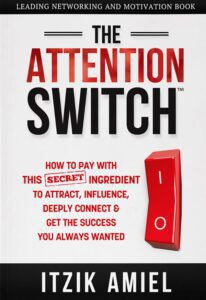
The Attention Switch: How to Pay with This Secret Ingredient to Attract, Influence, Deeply Connect & Get the Success You Always Wanted
You touched a very interesting one that nobody ever asked me in any show. You told about the book and about the fact that it was compared to Dale Carnegie. Here’s a secret I never share to nobody. The first book I ever read in my life was from Dale Carnegie, How to Win Friends & Influence People. I’m an Israeli originally. I read it in the Hebrew language. I remember finding it on the shelf in my room. It was owned by my father. He declined that he ever read that book. He doesn’t know about this book. I know it looks like, but I could not find this book anymore.
Since that day, it has influenced my life. I used to give it to a birth or for friends, but I never used to talk about it. It’s almost taboo in the legal world to talk about how to influence people and win friends while you are miserable. You have to do it. Nobody will understand. It’s almost like Napoleon Hill’s Think and Grow Rich. If people go, “I don’t want to be rich,” it’s not about that. It’s about thinking, mindset, ability and skills. We’re celebrating them but many years ago, nobody did.
I was embarrassed to say that I love people. Can you imagine? That’s a true story. This is my real story that my bestselling book, The Attention Switch, starts with. I hid this story for all my life as a lawyer. It’s from February 25, 1996. At the time, I used to live in Israel and work for a law firm in Tel Aviv. I’m originally from Jerusalem. My girlfriend then, which is my wife now, was working as an au pair in Jerusalem.
You know with boyfriend-girlfriend, I’ll sneak few times a week to Jerusalem and stay with my girlfriend. Early in the morning, I go to the bus station and from there to the center station to go to the Tel Aviv office. In that morning on 25th of February, ‘96, I woke up. If you work with me, I’ll have coffee. I was about to go to get the bus. At the station, my girlfriend hugged me. I ran and I missed the bus. It’s always the same routine. People stay in the same place. You’re going to know it because if you miss this bus, you miss the next connection and you’ll be late.
I remember being annoyed to wait there. Twenty minutes later came another bus. I was on the way to the center station in Jerusalem. There were police who stopped the bus. In the ‘90s, there was a lot of incidents in Israel, terrorists attack, all kind of stuff. We were curious about what was going on because we had to go from a different way to the central station. We asked the bus driver if he could open the radio so that we could hear what happened exactly. At that moment I heard that the first bus I was going to take exploded and everybody died.
You wouldn’t be with us if you got on that bus.
[bctt tweet=”Give attention when you love somebody.” username=”John_Livesay”]
I never shared that story. If you go over to Jerusalem, that’s a big place, though. It was the biggest terrorist attack we had. They had the same bus, same number and same hour the week after again, which was a very crazy incident. I will never think once I was miserable. I had power within myself. I was very successful. If you’re asking me, John, what was the time that I endorsed life and people? That was the moment.
My girlfriend is my wife now. This hug that I talked about is the act that I based all my life, the act of giving attention. It is the period of Corona. I guarantee you, John, if you go to an event, people meet and start hugging each other, count on me. Feel the feeling that people can transfer to each other but just warm hug. Without talking, pitching or anything, you can transfer it to another human being so much more warmth, love, care and empathy. “I’m here for you.” It’s everything you want with just a hug. That can be an act of giving attention.
That brings me to one of the things in your book, where you call it The Hug of Your Life. Can you tell us that story?
That’s exactly the hug of my life. When my girlfriend hugged me, because of that, I have my life. I will talk about this metaphorically, but also strangely enough, when I speak on stages around the world, it’s not in my culture. We don’t hug in Israel for business. People are thinking we hug, maybe in the Middle East but not in Israel. When I spoke on stage, people came around and hugged me. It’s unbelievable. I even caused people to hug each other. For me, more than the symbol, it’s a way of people understanding human-to-human. “I don’t care who you are or where you are from.” Nobody can ever convince me.
I don’t necessarily look like an Israeli or a Jewish. I could look like an Indian, Brazilian, Spanish or Arabic. I look like everything. I use that all my life to show people how miserable we are when we judge people. You’re missing so many opportunities. John, when I was speaking on the big stages and you know yourself, there are many very known figures. I’m the unknown guy doing the big stages. Everybody that’s there was Les Brown, Dalia Lama and Richard Branson. I’m the unknown guy.
I will not sit in the green room, John. There is so much bullcrap there. We don’t like that. I’ll sit between the audience somewhere in the back. I’ll talk to people. I look at the brochure. In the brochure, whose picture is there? It’s the speaker. They’ll say, “Who’s this guy? Who’s the speaker” It’s me, but I say, “Let’s see what they’re going to tell us.”

Attention Switch: Scientists prove that attention is a muscle of the brain. You need to practice the muscle of attention.
Suddenly from the big stage, they announced, “Ladies and gentlemen, our next speaker is Mr. Itzik Amiel.” “That’s my turn. I have to go.” People will look at me and say, “I’m sorry.” I’m going to use that because in the middle of my presentation, I’ll ask this person to stand up. “How did you feel you didn’t know who I am? I was not important, but you connect me out of authenticity.”
When people stand in line and they want to hug you and take a picture of you, I’m not sure what they want. I always believe you build a relationship for a reason, season or lifetime. I’m begging each one that’s reading to stop building a relationship for a reason or season because you’ll be miserable. Every relationship we build, build it for a lifetime. When I look at a person, I said, “Will I be a friend of this person the rest of my life?” If the answer is no, don’t walk away from them because it’s embarrassing. Run away from them. You don’t want these people in your life.
There are so many things you’ve said here that I want to recap for the readers. One is when you don’t have something go exactly the way you think it is. I was flying back from surprising my sister for her birthday party in Chicago to Austin. The plane was delayed. I’m like, “I’m not going to get home until after midnight.” You can get frustrated and annoyed or you can zoom out again and go, “There must be a reason I’m not supposed to be on that plane.”
The other thing I love about who you are as a person is I can feel your energy come through. That is a reminder to everyone that what you’re offering people is your energy. I remember once I was interviewed for a speaking gig and the agent emailed me, “Congrats, they picked you. They liked your energy.” I thought, “There it is in writing.” It’s not our credentials or the outcomes we’re going to give people. The client said, “I felt so good after talking to you. I figured you could make all of the people in the audience feel the same way. We want to learn about ROI and all that other good stuff.”
Whatever it is you’re selling, whether it’s to get funded, get people to join your team, start using your app or buy your product, if you can remember that you’re selling energy and money is energy in action, it totally shifts how you interact with people. You’re a walking talking example of that, which is why we become friends. I love it.
The other thing I want to ask about is this beautiful visual you’ve created called The Rainbow of Attention. You’ve got some great distinctions. Let’s go through all of them because they merit a chat. We all know what a rainbow is, but we don’t realize that there are some differences between giving attention versus getting attention. How did you come up with this wonderful concept of a rainbow?
[bctt tweet=”Build relationships for a lifetime, not a season. ” username=”John_Livesay”]
The first is out of frustration, for example, in our days in social media. If you look at it, every marketing on social media online is based on the act of getting and grabbing the attention of the audience. People measure your success by how many likes you get and how many people give you attention. I don’t care about that. I care about those people watching it. They say, “Why don’t I get likes? Why did I get only two? I’m miserable. I’m nobody.” You see all this stuff. I hate it because I feel bad for those people. It’s not true. I wanted to show it, so I’m helping more than 25,000 professionals that don’t go to some LinkedIn or somewhere else.
I’m doing everything behind the scenes, like in the messaging. I’d build the relationship. By showing them, they’re getting huge deals. If you look at the profiles, it’s like, “I’m a miserable person. I get only two likes and then a few posts,” but behind the scenes, the opportunities, the relationship building is unbelievable. We have the biggest scars in our world of getting and giving attention. How many people, when you talk to them, shut up their mouths and listen to your story? In networking, what I teach is you don’t need to speak. The introvert among us knows that. It’s not about talking. There are other network jerks many times. Listen from the bottom of your heart.
Stephen Covey talks about seven ways of listening, synthetic, inactive and disactive, whatever it is. Listen with all your heart and soul. Not dreaming what you’ll eat at dinner while speaking to another human being. Not floating around with a face while talking to somebody. Being there in the moment, you’re going to magnetize the soul of the other people. They don’t even know what happened, but they felt in their gut, “I want more from that.” You don’t even have to give them your business card or tell them the name. I promise you, they are going to find you who you are because they want more of that. They will find an only excuse to find again where you are to go there to invite you. They’ll pitch you on themselves.
John, don’t get me wrong. It’s frightening to a lot of people. Some people talk to me where they met me as a stranger and within minutes, they’re telling me the deepest secrets of their life. There comes a moment where they look at me and say, “I don’t know why I told you the story.” I said, “Relax. Enjoy it.” Attention is not an artificial thing. Attention, as proven by scientists, is a muscle of the brain like you have muscle on the body. It’s like if you go to the gym to practice your muscles, you also need to practice the muscle of attention.
Let’s give our readers a little exercise. Let us ask each one of you there, what do you hear in the room where you are? Maybe it’s the birds, a car driving, some screaming children, the pot or TV. What is out there? It was a tricky question, John. All those things are there all the time, but their brain is choosing to give attention to us. Do you see what the power of it is? From all the noises in the world, from all the sounds over there, they shut them all off and give full attention to one human being. That’s why in English, you say, “You pay attention.” It’s a financial term. Which other thing could you pay with? If you could pay with attention, they’d be a billionaire without money.
One of the biggest compliments I can ever give someone or that I can ever receive is that someone would say to me, “I feel safe to be myself with you.” That goes back to what you were talking about, the magnetizing of the soul that causes someone to open up because they feel like you’re not going to judge them. That sends any kind of basic rapport 101 because you’re getting an emotional connection, which is how we all want to connect.

Attention Switch: Speak slowly and articulate the word.
That’s why people are missing an opportunity in networking. A lot of interesting people in networking don’t stand in the middle of the floor. They’re somewhere on the side. Think about it. If you’re a CEO of a big company, you don’t want to see people to bother you if you want to come and listen to whatever lecture. You’ll sneak in the back and stand.
You’re a speaker. I’m a speaker. When we go and sneak in to watch another speaker on stage before we’re done, where are we going to go? We’re going to go in the back of the room. If you want to connect with people, find them in the side of the room. You will be surprised by what amazing people they are. Everybody will miss it because everybody looks at these people in the middle. They’re talking to everybody there. Talk to the one in the side. The one in the room, don’t worry. You’ll meet them one at a time. The one on the side, they are many times crazier than great people. I promise you. You’ll be surprised how amazing people you meet. Only give them attention. That’s all that you need to do.
You also have a distinction between positive attention and negative attention. My first thought is, “If I do something stupid like trip or drop food on myself, that gets me negative attention.” I’m guessing you have a different meaning here.
When I wrote this chapter, I was in a hotel in whatever conference. I was sitting with friends and talking about it. We start discussing philosophically. I don’t remember exactly the detail, but there was an incident that happened with the lady there. I could see the look on her. She didn’t have to say much, but it looked like, “I’m going to kill you,” with the eyes. You know that’s not positive attention, but she gave you the entire message by her two eyes looking at you.
I remember even when I was a child, my mother used to open her eyes and we know exactly that we didn’t behave nicely. These are the ability to transfer. You could use it. It’s positive-negative but not in the sense of discouraging you but more of warning you and stuff like that. Some of them is awareness alerts. “I’ll wait from here. You’ll be in danger. Don’t put yourself in danger.”
Attention is a muscle. You need to learn how to play with it. I’m playing with it a lot in airports, John. It’s also connected to body language. I used to think that attention is about eyes. I thought people give attention with their eyes. When I did the book, I found the research. It’s bullcrap. Do you remember the time you called somebody? You’re on the phone and suddenly they’re silent. “Are you still there?” We need the sign of attention. People do it in different languages, cultures or ways. They will do something or symbolize it. You know they’re giving you the attention. It has nothing to do with the eyes. A lot of it is based on the brain, how the brain works or the brain need symbols.
[bctt tweet=”Don’t put yourself in danger. Pay attention. ” username=”John_Livesay”]
Here’s another tip for people. If you want to get people to listen to you to know that you’re given attention and even you are the best expert in the world on this subject, you know so well everything about it, if somebody asks you a question, count 1, 2, 3, and now go out and answer the question. Why? It’s because the brain of the other person has to perceive you’re listening and giving attention. If you don’t give this time of silence and you answer right away because you’re the expert and you know the answer, the other brain said, “You didn’t give attention to me,” and then you lost them.
I’m big on teaching people about the concept that confident people are comfortable with silence and pauses. That completely supports what you said. You might be the expert. If you’re the expert, you don’t have to prove anything to someone else. You can be comfortable with that silence of three seconds or whatever it is before you answer, not without worrying about, “People think I don’t know the answer.” No, you own the room.
It’s the same thing when you get up to speak. You don’t necessarily have to start talking fast right away. You look at the room and the audience. You take it in and then you begin, but that takes a lot of confidence to be comfortable with not rushing through what you want to say. It’s a very unconscious thing sometimes when people talk too fast. It’s nerves plus the fear that, “I’m losing the audience. What I’m saying isn’t interesting enough, so I have to talk fast.” If you’re comfortable, you can take a pause between your thoughts.
That’s a very good one because I had to learn that myself. I tend to speak fast because I think fast, but with an audience, if I don’t think fast and I start speaking slowly, they’ll think I’m thinking they’re idiots, but it’s not true. What you said is exactly right. If the idiot will speak slowly, articulate the word and give poses, they let it sink and go even deeper in them. They get you more and they’re with you.
This is why I talk about speakers or people speaking. For example, if you go to the audience, you come in the morning and you know those speakers come in the morning, they say, “Good morning, everybody.” There are two people who answer, “Good morning.” Some of us goes, “I said good morning, everybody.” Everybody shouted. That moment, you lost the trust of the people because they gave you what they want and now you manipulate them. It takes fifteen minutes to get the attention back.
That’s why the pauses are so important because what you get is the biggest gift people give you and that’s the biggest commodity of their times, the thing that does not come back. It’s something that Microsoft did in 2005. Probably every entrepreneur know this, they do not know that Microsoft did it, but they searched the attention span of a human being. They found that in 2000 it used to be twelve seconds. 2013 was eight seconds. In 2021, who knows where it is? Do you remember what has one second more attention span from the human being? Do you know which one was that?

Attention Switch: When you let your brain relax, it will show you where the opportunities are.
Is it a goldfish?
Exactly. Don’t ask me how. I tried to see a goldfish in the aquarium. I couldn’t get its attention, but that’s what the research shows. That’s how sad it is. When it comes from that point of view that is declining, you need to know what people pay attention to because they’re going to be more and more things coming our way to steal this attention. More instruments, TV, iPad, telephone, people, all these things. How do you select what to give attention to? That’s the skill. If you know, you’ll succeed. If you give it to the wrong thing, you lose. The time’s gone.
It’s the same to network. You go to an event. You need to know who the people you want to meet are. You enter the room with 5,000 people. How will you know who to talk to? You have a two-day event. You know you’re not going to meet everybody. How will you meet the right people? Here’s a secret, John. It’s shown by research. When you go to the room, do you agree with me, John, that you are probably going to see maybe 10, 15 faces? You pick them up. The person with these glasses or the lady with the red scarf. What happened? Here’s what the research shows.
With all the 5,000 faces, your brain scans the room. The brain compares them to the library you have in your head because you have the library all the time. You cross the street. You see strangers. Your brain said, “Like, don’t like.” The brain is doing it all the time. It’s updating the library. When you’re in a room, the brain compares all these 5,000 people and shows you on the silver tray that you have 10 or 15 people you must go and speak to because something awesome comes out of it.
What most people do is push the delete button and start talking to everybody. Let the brain relax and it will show you. If you don’t have a good memory, take a pen and paper. Write it down, “The person with the red glasses. The lady with the blue scarf.” Now talk to these people. I promise you. You’re going to be so shocked. You’re going to find commonalities and opportunities in seconds. Within an hour of networking with ten people, you get opportunities. You have two days to enjoy. You have no stress. You don’t need to meet anybody else. Everything else is a bonus. This is a new thing.
The artificial intelligence inside of our brain is scanning. We just have to trust our gut. Is that what you mean when you talk about spontaneous attention versus planned attention?
[bctt tweet=”You have to be careful when you introduce the wrong people because you build relationships for years. ” username=”John_Livesay”]
That’s more out of frustration. In most of the professions I know, when they build relationships, they build it on most serendipitous attention. They go there and meet some nice people. They maybe follow up something to get you a referral. “Networking works.” To those people reading who want to build everything on serendipitous networking, do yourself a favor.
Don’t go to a networking event. When the world comes back to normal, sit at the airport in your country and meet awesome people. Each one of them could be a client. You’re not going to go wrong every day. If that’s what you want, but that’s not how you build a business because it’s not predictable. When you build a business, you need both, the planned and serendipitous.
Serendipitous is a cherry on the pie. It sounds nice, but if you have planned, then you know who you give attention to, why you give attention and when do you give attention, you’re going to get results and everything above it is an extra. This is the fun thing. Unfortunately, a lot of professionals build their business only on the serendipitous without any predictability on the model. In networking, most people don’t have predictability. They don’t know what they do. They just want somebody who told them to go to events.
All those are important things, we forget them. It doesn’t take the authenticity of it. It’s not manipulation. A lot of it is preparation. You prepare and you know who you meet. Nowadays, people are doing things online. Before you meet people physically, start building a relationship online. When you meet them physically, you feel like you met them years ago, but you just met them the first time. That’s the power of it.
I teased it out in the introduction that you have a mastermind. Can you tell us who that’s for and how you decide who you let in?
That’s a way to bring yourself back. As you know, I own Switch, which is a big training company, as well as Done For You Services for a lot of professionals around the world, but there’s one thing I was missing. My career was as a lawyer and accountant. I was helping companies expand internationally. This is my expertise in tax, legal and M&A but also in other subjects of the matter.

Attention Switch: Start building relationships online.
That’s where I started my career as an entrepreneur. I wanted to do that because I felt like the big companies know how to do it that maybe medium and a small entrepreneur doesn’t know. Some people have an amazing product, but they’re not okay. “I need to sell it somewhere else, but how do I do it? I don’t have the money to travel.”
I used to travel every two months to Brazil, India, China and Ukraine. I was traveling the world. No one paid me. The boss paid the bills. Each travel like that is $5,000, $10,000. That’s a lot of money for a small entrepreneur. The idea was, how do you find them the right opportunities faster? They don’t need to build twenty years of relationship, but they have the product. That’s all I did. It’s shaping and hopefully, we’ll go out with it for the first group. It’s very limited. It’s about 8 to 10 people because we wanted to get the business. It’s not theoretical teaching or something. All I did behind it was tap into what I call network intelligence or the power of the crowd.
There’s a lot of knowledge in there that people do not know and can solve the solution, thing that looks like, “How do I do it?” People solved it before. If you get your people to solve it and give you the answer, then you don’t need to look for consultants to do it. That’s always cheaper but also more valid and specific. They were in the franchise, so it’s not a book to read or something. We build it around global expansion. It’s mainly for entrepreneurs that are successful, maybe selling the product locally and want to expand to a new market but also those who have a good product that didn’t sell it locally. If you have lifeguard services, but you live in this area, you don’t sell it inside. You need to look.
Don’t get upset. Don’t bankrupt yourself. Maybe you’re in the wrong market. Maybe the other market is dying to have your product. I have a lot of companies that I helped in the past that I was shocked to see that they didn’t sell a single product in the local market. Let me tell you this. Many people who specialize are using that. They’ll buy it for pennies because they know they can take it to another market and sell it for a lot more money.
For example, the Canadian Goose, the coats. Once it starts declining, the German guy, after many years trying, has to sell it. The next person who bought it, within five months, sold it in a new market and made 100 times more money. People are doing things in the wrong market. There are lots of opportunities, but for me, it’s more selecting the right people that cannot be mass destruction with hundreds of people. It’s dedicated work and relationship-driven. They seem to know CEOs of company or top levels of relationship as well. You have to be careful when you introduce the wrong people because it’s something you have built for years.
When it’s up, I’ll let you know. We call it The Global Expansion Incubator. It’s not a mastermind. You know what a mastermind is. A lot of people, unfortunately, misuse the word mastermind to not make a mistake. It’s a place where you take people and expand the business internationally. That’s what I did behind it.
[bctt tweet=”Where attention goes, energy flows. ” username=”John_Livesay”]
You’re uniquely qualified for that. That’s for sure. The book is called The Attention Switch. If people want to reach out to you or follow you, what’s the best place to send them?
LinkedIn is the best place to find me. I’m always answering and active over there as well. Unfortunately, I don’t do much on Facebook. I have there a lot of followers but don’t look for me there. If you want to have the book, The Attention Switch, go to AttentionSwitch.com. The reason for it first is the limited edition. I have two versions of my book. The limited edition is four chapters more. I signed the book. It’s a free gift as training but also the most important thing, the money goes to charity to support the kidney foundation in the Netherlands because my mother died from kidney disease. It’s the same price like Amazon, I promise you, but it’s a different version of the book I made as a lawyer.
She’s 1 of the 4 women that you dedicated the book to, I saw as well.
My mother is the reason I’m speaking as a lawyer. People ask me, “How did you shift from being a successful lawyer? This is strange.” A lot of people don’t even know I was a lawyer because every brand is so good that I’ve hidden there. If you look at my profile, you won’t find it. I’m no lawyer than a speaker.
A short story is there were thousands of people at my mother’s funeral. I didn’t get it. I was like, “My mother is not a celebrity.” I asked one lady at my mother’s funeral, “How did you know my mother?” She said, “I don’t know your mother.” I said, “What are you doing at her funeral?” She said, “Your mother was a very special person. If somebody was sad in the corridor in the office, she would encourage them, speak to them, tell them good things and then she’d go back to her room. We didn’t know your mother, but we knew that’s the lady sits in that room.” When the lady in that room died, they all came to her funeral.
I remember sitting with my father and my four sisters on Memorial Day, which is the seventh day when we do it in Israel. I knew my mother never knew it. I said, “I hope she could see that because she never knew it in a lifetime that she touched so many people.” I promised myself that was the time for me. During my lifetime, I want to feel that I helped a lot of people. I don’t want to wait until I die. That’s the shift that I made of what I’m doing and the rest is history.
Thank you so much for bringing your energy, your wonderful stories and teaching us how to pay more attention and how to get it without being pushy.
Thank you very much, John, for the opportunity. Remember, where attention goes, energy flows.
Important Links
- The Attention Switch
- How to Win Friends & Influence People
- Think and Grow Rich
- LinkedIn – Itzik Amiel
- Better Selling Through Storytelling Method Online Course
Wanna Host Your Own Podcast?
Click here to see how my friends at Podetize can help
Purchase John’s new book
John Livesay, The Pitch Whisperer
Share The Show
Did you enjoy the show? I’d love it if you subscribed today and left us a 5-star review!
- Click this link
- Click on the ‘Subscribe’ button below the artwork
- Go to the ‘Ratings and Reviews’ section
- Click on ‘Write a Review’
Love the show? Subscribe, rate, review, and share!
Join The Successful Pitch community today:
- JohnLivesay.com
- John Livesay Facebook
- John Livesay Twitter
- John Livesay LinkedIn
- John Livesay YouTube