

Pivot, Disrupt And Transform with Marcia Daszko
Posted by John Livesay in podcast | 0 comments


Episode Summary:
How leaders behave directly impact the course of the business. They are the ones that lead the people in the team to work towards a common goal and succeed. As we know it, everyone has the capacity to become a leader. The only thing therefore is to be good at it and not the judging critique that blames others. One of the world’s leading business strategists and catalyst for leadership and organizational transformation, Marcia Daszko, talks about how leaders beat the odds and survive with her book, Pivot, Disrupt, and Transform. Marcia gives the three-step process that tells people to stop focusing on the bottom line and performance appraisals, and shares how leaders should ask the right questions. On top of that, she talks about the foundational business strategies that will soon work towards improving and innovating to ultimately serve the customers.
—
Listen To The Episode Here
Pivot, Disrupt And Transform with Marcia Daszko
Our guest is Marcia Daszko and she’s one of the world’s leading business strategists and catalyst for leadership and organizational transformation. She’s got over 25 years of proven success running her own consulting firm and workshops for executives. She’s also a researcher, a graduate level teacher, a keynote speaker, and an award-winning writer. She’s been an adviser to Fortune 500 companies, government agencies including the Pentagon. Marcia, welcome to the show.
Thank you for having me.
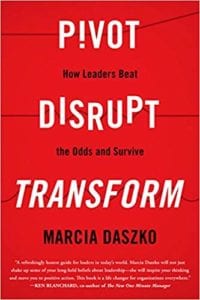
Pivot, Disrupt, Transform: How Leaders Beat the Odds and Survive
Your book is fantastic it’s called Pivot, Disrupt, Transform: How Leaders Beat the Odds and Survive. You’ve got some great testimonials from authors like Ken Blanchard who wrote The One Minute Manager, which is one of my all-time favorite books. Before we double click and do a deep dive into this great book of yours, can you take us back to your story of origin? You can go back as far as you want. Your childhood, high school or college. Where did you start getting interested in leadership?
I never thought of myself as a leader because I was so excruciatingly shy. Although my friends when they hear me say that they laugh and roll their eyes and wonder. They see something maybe I don’t see. I grew up in the Midwest in Iowa. My family moved to California when I was in college. I transferred out here. I attended Santa Clara University and San Jose State University and ended up getting my master’s in mass communication. I worked for various companies in corporate communications and marketing. Then one of the organizations that I worked with was owned by Dr. Perry Gluckman a statistician who had a group of colleagues’ consultants who worked with organizations to help them learn and apply Dr. Deming’s philosophy of leadership and management. For those who don’t know, Dr. Deming was a man who went to Japan at the invitation of General MacArthur after World War II to help turn around Japan and help them become a global competitor. In the 1980s, he came back to the US and worked with the CEOs of General Motors and Ford to help save our auto industry.
That’s an impressive background that’s certainly a huge impact and now that changing with Korea and China. I was looking at how China’s overtaken Japan lately in gross national product and all that good stuff. What made you want to write this book?
Once I had begun working with Dr. Perry and Dr. Deming they became my mentors. I learned from them that everyone within them has natural leadership. How I learned that is because my two mentors pulled it out of me. Over time, they taught me how to consult and that’s how I got into consulting years ago. We worked from small organizations to companies like the Fortune 500. I wrote the book because in my 25 years plus of consulting, I had seen the fork in the road for leaders. Some leaders struggle and fail and others succeed wildly. It’s like, “Why does this happen and why are some struggling so much? Why is it that we have 6,000 startup companies in the Silicon Valley Bay Area and probably 90% of them won’t go out of business? Why is it that there was a list of Fortune 500 companies that came out in the in 1955 and more than 60% of those Fortune 500 corporations do not exist anymore?” Some were merged in, but many went out of business. When we think about Montgomery Ward, Pan Am, Circuit City, and Blockbuster, they disappeared pretty fast. Does that mean that companies like IBM, Walmart or Shell Oil like we’ve seen with Sears or Target, will they go out of business? I wrote the book because I wanted to help leaders who have so many challenges see that there’s a better way. There’s a different way. There’s a bold way. There’s a courageous way to lead and it’s not that hard.
What would you say would be the one takeaway? Let’s give some great insights right off the bat. If someone is saying to themselves, “If everyone has natural leadership within them, how do I find that? What is it that I can do to discover that if I don’t have a mentor?”
I would ask people to follow their own strategic compass. If they’re thinking about their own leadership and/or they’re thinking about leading their team or their organization, even at home. That they think about what are we trying to accomplish. What am I trying to accomplish and getting people together. Knowing nobody works alone. How do we learn, work, and improve together? That is key. If you don’t have that question answered well, then everything else following it, you’ll struggle and eventually fail.
[bctt tweet=”Everyone has natural leadership within them. ” username=”John_Livesay”]
You’ve got a three-step process here where you tell people to stop focusing on the bottom line and performance appraisals. They need to start doing something new, which is asking some questions and seeing what they can do to encourage an environment of change. Finally, the transformation part of being more resilient. What do you mean stop giving performance appraisals? What do you mean stop looking at the bottom line? How else would we run a company? What do you say to that question?
We need to go back to the aim. What are you trying to accomplish? If you say, “We’ve started this company and now we have 200 employees. We need to start implementing performance appraisals,” I would ask again, “What are you trying to accomplish?” “We want to we want to coach people. We want to give people feedback. We want to help and so on.” That is usually the answer that I get around performance appraisals. What has happened is performance appraisals end up being in practice what people use to judge, rate, rank, criticize, and blame people for. The problem is the people worked in the system. They didn’t create the system. They can’t change the system. Yet, people want to hold them accountable for the system’s results. If they don’t like the results they blame and judging criticize the people, but it wasn’t the people. People come to work to do a good job. They want to be proud of their work. They want to contribute. They want to serve customers. They want to work together. Yet we saw the performance appraisals that we rank and rate the people which creates internal competition. Then we tie it to a compensation system that again is more limiting. Then we say, “Our corporate values are teamwork, collaboration, and integrity.” Yet they don’t see that there’s a huge gap between the two in the practice of even using performance appraisals which is a total waste of time. They are in direct conflict with what they say their values are.
Having been in the corporate world myself and selling advertising for Condé Nast for a number of years and selling my multi-million-dollar mainframe computers, nobody likes them. I have managers who used to dread doing that. It was a huge amount of time and they were under a lot of pressure from top management to not give anybody perfect scores. You must find something to ding somebody on so that there’s something for them to improve on. Otherwise, if you tell them they’re doing a great job, they will stop working so hard. Like, “Next year, hopefully, my three will go up to four on creative ideas or some weird category that they create.” There’s a great quote in your book from Dr. Myron Tribus, “Looking at results is like driving the car by looking in the rear-view mirror.”
That summarizes what you’re saying here. That you can’t motivate or even come up with an inspiring vision of what the future could be if all you’re doing is evaluating someone’s past performance. This concept of teamwork, I always found so amusing, especially in a sales department. They do rank you and yet they want you to all work together. Oftentimes, you would split accounts. Like if Lexus is based here and there are agency is based here, but that wasn’t always the case. Sometimes I’d have a client that the agency was in LA and the client was in New York. The rep in New York and I had to work together and split the commissions if we got the business or we grew the business, but it was still a competition of who’s the top sales person this week and this month, this year. It’s a very bizarre compete, work together, and you’re going to get paid on how you perform, not so much how the magazine performs.
That’s why another thing that I suggest is that not only does a company get rid of the performance appraisals, but they also get rid of incentives, arbitrary, numerical goals, and commissions. That’s a unique, bold, radical revolutionary thinking for most organizations because it’s not best practices. That’s what part of the book is saying too is stop best practices and management fads. If you step back and think, what are you trying to accomplish those don’t help you?

Leadership: Salespeople are successful if they ask the best questions.
You also talked about helping people understand why they lose customers to the competition. That’s a fascinating topic for me particularly because I had to win back a client at one point. Then I’ve helped other companies put a strategy together on how to win back a client. A lot of people don’t have a clue that winning back a client is very different than getting them in the first place. Can you expand on your insights on what companies can do to prevent losing clients and what they might do to get them back?
I have beautiful examples of that. Personal examples that’s what brings everybody to heart. If leaders think about what they are passionate about and get their whole organization focused on supporting each other to serve customers. Doing what they love to do to serve customers, they tap in on being close to their customer. It’s not by surveys and focus groups. It’s by talking to their customer. What do you like? What do you want? What do you need? It is beyond that because it’s not the customer’s job to tell you that they want the fax machine or that they want the iPhone. It’s the companies, the leader’s job to create the future. To create new products and services that are innovative and will serve and satisfy new customers and new markets. For example, for me, I was a very loyal customer of American Airlines years ago. I had more than three million miles on American Airlines. Whenever I would fly with colleagues I would say, “Come on my flight.” Even though there are tickets generally on average worth $50 more than the competition, I would stay loyal. Then their service over time drastically changed. It was a change of CEOs that was part of it. There were mergers after that and then they pulled out the San Jose market as a hub. That drastically impacted our ability to have as many routes and so forth.
The point being, their customer service drastically went down. One time, I got on 40 flights with American Airlines. On those flights, 39 out of 40 I didn’t get a hello, a thank you or a goodbye. As a premier flyer, I wrote them a letter. Months later, I got a wrinkled form letter back justifying their behavior. That’s when I said, “That’s it. I’m done.” I fly American Airlines only if I absolutely have to. I would say they’re a little bit better, but they still have so far to go. I have no interest in flying them. Plus, their seats are the tightest together. You could starve on their flights. I love JetBlue, I love Southwest Airlines. The point being that it didn’t cost them anything to say hello, thank you, and goodbye. It cost nothing for that customer service. I knew that leadership had changed because when leadership doesn’t have the mindset to serve customers, it’s for them maybe all about the bottom line or they’re competing with their peers or whatever it is, it shows up in the people who are touching the customers.
Let’s dive into the second part of the book, which is if we’re going to stop focusing on the bottom line and giving people these performance evaluations, we should be doing something new. That’s the first thing you start talking about, which is also fascinating to me. I also believe that salespeople are successful if they ask the best questions. You were talking about leaders asking questions. Can you expand on that?
What we need to help leaders do then is yes let go of the old because otherwise, if you are trying to start something new but you don’t get rid of the old, I always say it’s like trying to put strawberry jam on moldy green bread. Let’s get rid of the old is essential. Leaders need to start thinking and asking different questions. These are not questions like, “Why did you do this and why did you do that?” Instead, the questions of, “What are we trying to accomplish?” It’s a strategic compass, which I have in the book. “What are we trying to accomplish together? By what method will we achieve it together? What are the values that we’re going to stand for with our customers, with our markets in our community and with our colleagues? Who are our customers? What do they need and how do we know?”
[bctt tweet=”Looking at results is like driving by looking at your rearview mirror.” username=”John_Livesay”]
That’s significant because that means we’re going to collect data and look at that data over time and not react to it. Based on what we see about that data over time, what are the trends? Is it stable? Are we serving customers or not? Then we ask the final questions which are, how do we measure progress? How do we measure success? Most management teams and executive teams, when they have management team meetings, most of them are focusing on and that might be a day or two at a time. You’ve been in the sales team meetings where you spent a day or two or three talking about the numbers and the quotas and goals. You kept manipulating the numbers. I’ve seen those meetings and they’re a sad use of time. I share with my clients that we focus on discussions about the aim, about quality, and about the customer. About serving customers, about the systems, the processes that we need to create and improve, and enable to flow so that we can then get the results that we want.
The last thing in a management team meeting that we need to talk about if we have time are the results or the goals or the numbers. Everything that you do before that are the things that create the numbers. If you don’t like the results, if you don’t like the bottom line, if you don’t like the profit margin or the profits you need to go back. Leaders need to go back and spend 90% plus of their time thinking about, “How do I create an organization where everyone understands what the aim is and how we create the systems and processes so that we have these strategies?” Quality is a business strategy. Improvement is a business strategy and innovation is a business strategy. We need to have those three as foundational business strategies. Then we can go through the organization, work together and see how we improve and innovate to serve our customers.
It sounds like a very different use of time than what I used to have to do, which was once a week all sales reps from around the world will be on this long conference call. We have to say, “For this upcoming issue, I’m going to bring in ten ads. I have five of them who verbally said yes. Another ten that are 50/50 and maybe another seven or so that are less than 50%. Then they say, “We take 90% of the verbals, 50% of the 50/50 and then 10% of all the others. You still are short a couple of pages. Where are you going to get them from?” Then you’d have to listen to everybody else’s story. Then they go, “If we add up all the numbers that everyone says they’re promising and committing to bring in, here’s the number for the month. That’s not high enough for what our goal is.” We will do that for three months out. Tedious, painful, and unproductive. Everywhere I work, that’s what it was. That was the given way of doing it.
It’s the best practice, it’s the management bat. It’s the way we always do things even though the way we always do things isn’t helpful, isn’t innovative, isn’t serving customers, isn’t fun and isn’t motivating. That process you described is demotivating. It doesn’t make me feel good. I’m not happy when it’s over, it’s like, “I’m so relieved.” It’s all about the numbers. It’s not about things that you can get passionate about like serving customers and being creative. It sucks the life out of people.
Then they would add a layer on to it where it’s like, “You promised that you bring in as many ads.” Something fell out. You promised to the whole room as if getting people to commit to something makes them do it. If they don’t feel bad enough that something fell out.

Leadership: Once you make the decision to pivot and start trusting your people, you cannot go back and start trying to manage from fear again.
One of my friends had 1,200 sales people in his corporation. He had sales of $500 million. He was constantly competing for his share of the pie. He was frustrated with it and looked for a better way. That’s when he decided to transform his organization. He spent a year transforming his own thinking about leadership. Then he decided to change his system. He made the plan to do it. He communicated both to his key executives, his key salespeople, his employees, and his customers what he was going to do before he did it, then took all of his 1,200 salespeople off of commission and off of incentives. No more performance appraisals. He did many things to transform his organization and then he took it from $500 million to $2 billion in six years.
People think that salespeople aren’t motivated unless they’re tied to a performance and that’s not the case. I love this concept where you have here on how we transform as leaders, the old way and a better way. The biggest level is the high level of fear, anxiety, and stress or in the old way of, “If you don’t make your numbers, after three months you’re going to be fired.” There’s a constant fear-based culture. This is multiple companies, this is not unique to one. The better way you propose is to reduce the fear and build trust that if you have a bad month or two, we’re going to look at you your attitude and your work ethic. All other things besides just the numbers deciding whether or not you keep your job. Is that a fair summary of what you’re saying on the better way?
[bctt tweet=”You can’t motivate or even come up with an inspiring vision of what the future could be if all you’re doing is evaluating the past.” username=”John_Livesay”]
The better way is that the leader is finally going to lead instead of being judge and critique and blame the king or queen. Their job as a leader is to create an environment where everyone understands and contributes to the aim of the organization, and people support each other. That means that it’s up to the leader to communicate effectively, to build trust and they do that through communication. I’m not saying to put out a memo or an email or anything saying, “Here are our mission, vision, and objectives.” That old static document has to go away anyway. Instead, the leaders are the people that are communicating a hundred times a day but they’re asking questions. They see that their job is to develop all of the people’s natural leadership in the organization. Not just the top ten people or the management team, it’s everyone. Their job is to reduce fear and build trust. Over and over again, they have to be asking questions, listening and then responding to find out what are the barriers for you in doing your job. For you personally, for your team, for this department for this division, what are the barriers getting in the way of them supporting each other? In them learning, in them developing as a team, and in them serving customers. We have to ask more questions.
One of my clients, I was sitting down with him one day. It was one of the first meetings and I had a feeling that he would get value out of seeing that list of the old way and the better way. I went over it with him and he looked at it and he said, “I’ve been doing the old way. Can I change and start doing the better way?” I said, “Yes.” Overnight he transformed. He scared the wits out of his management team. His executive assistant asked me, “What did you do to him?” I said, “What are you talking about?” She said, “He’s changed so much. It’s great, but will he change back?” I said, “When he’s under stress, he might change back but that’s why I’m here. Until he’s not wobbling on that bicycle, but he’s riding that bicycle and that’s then who he is. He’ll transform. He transformed his thinking overnight and said to me, “Marcia, over the 30 years that I’ve been managing this organization, I wish I would have known that I had a different option than the one that I was never taught in school. That I’ve never learned from anyone else before.” He felt a huge sigh of relief being able to lead, coach and develop his people and create an amazing organization versus being the critic he used to be.
That’s one of my favorite takeaways from a book. Once you make the decision to pivot and start trusting your people, you cannot go back and start trying to manage from fear again. Your final words in the book are, “Think different, act different, and be different.” Thank you so much for being on the show. The name of the book is Pivot, Disrupt, Transform: How Leaders Beat the Odds and Survive. How can people find you? If people want to hire you as a consultant, what’s the best way to find you?
They can go to my website via MDaszko.com. Through the book, my contact information is in there. They can call, email or reach out. I look forward to helping leaders however I can.
Links Mentioned:
- Marcia Daszko
- Pivot, Disrupt, Transform: How Leaders Beat the Odds and Survive
- The One Minute Manager
- MDaszko.com
- Quantmre.com
Wanna Host Your Own Podcast?
Click here to see how my friends at Brandcasting You can help
Get your FREE copy of John’s latest eBook Getting To Yes now!
John Livesay, The Pitch Whisperer
Share The Show
Did you enjoy the show? I’d love it if you subscribed today and left us a 5-star review!
-
- Click this link
- Click on the ‘Subscribe’ button below the artwork
- Go to the ‘Ratings and Reviews’ section
- Click on ‘Write a Review’
Good Enough Now with Jessica Pettitt
Posted by John Livesay in podcast | 0 comments

Episode Summary:
Instead of sitting around pointing fingers and waiting for change to somehow magically appear, which never happens, a lot of people are looking for, “What can I do to make myself have better relationships and stronger teamwork?” Jessica Pettitt, author of Good Enough Now, provides some great insights on how to be a better leader and how to have difficult conversations with your team. Jessica compares Martin Luther King to Gandhi and to Mother Theresa, looking at what they have and don’t have in common. Discover lessons we can learn from how they led their life in getting us to a place where we’re more collaborative and diverse.
—
Listen To The Episode Here
Good Enough Now with Jessica Pettitt
Our guest is Jess Pettitt. She pulls together her standup comedy with over fifteen years of diversity training in a wide range of organizations that serves groups to move from abstract fears to actionable habits that lead teams to want to work together. With a sense of belonging and understanding, colleagues take on more risks and they conserve resources through collaboration and maintain those all-important connections with clients over time.
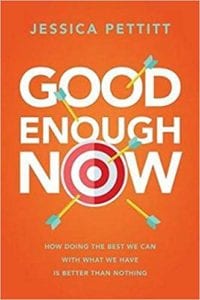
Good Enough Now: How Doing the Best We Can With What We Have is Better Than Nothing
She’s got a great book out called Good Enough Now, which I love. Instead of sitting around pointing fingers and waiting for change to somehow magically appear, which never happens, a lot of people are looking for, “What can I do to make myself have better relationships and stronger teamwork?” She’s got this nailed. We’re in for a big treat. Jess, welcome to the show.
Thank you.
Jess, I always love to ask my guests their own story of origins. You can go back as far as you want, a little girl, high school or college, whenever it was that you had your first insights as to, “I want to solve a problem of not feeling good enough, self-doubt, help others do it,” however you want to start. How did you come up with this concept and how did you come up with who you are today?
Two pieces converged and ended up in the book. I would say it was a cold fall football night in September of 1974. As a kid growing up in Texas, I was very aware at a very early age and lucky enough to have parents who were very supportive that there is a certain script that I was supposed to conform to. No one could tell me who wrote the script, why I was supposed to be doing these things or did I have any input in what I was supposed to be doing, which largely made me question authority and think it was stupid. If you can’t tell me where it comes from, I’m not doing it. I was fortunate that I was raised by parents where any question I had, they would show me the section in the library of what to read, how to do research and discover my own answers.
The most positive memories I have of my parents is when I would be doing research on something difficult and realize that either things that supposedly were very diabolically opposite each other were saying very similar things or that people who were trying to support each other were motivated by very different things. Those are fundamental learnings and I’ve taken them through my professional life, through high school, college, serving in the Peace Corps as a college administrator and then when I started my own business as a speaker or consultant years ago. I notice inconsistencies, I notice unfairness, I notice injustice and I notice the patterns of those things, which has led me very much to the work that I do around diversity and inclusion. There’s a pattern of our excuses, there’s a pattern of our engagement and there’s a pattern of paralysis that most of us find ourselves when it comes to contentious topics. That’s where I dive in.
[bctt tweet=”What is your intent versus your impact? Are you more like Mother Teresa or Gandhi?” username=”John_Livesay”]
You go where other people are afraid to go, it sounds like.
That’s where I live. It’s not even a summer home. It’s my home.
You were in the Peace Corps and then you had a standup comedy career. Are you still doing that and keynote speaking or are you just doing keynotes?
I do probably about 75% keynotes and maybe about 25% annual or year-long retainer-consultant work.
I’m assuming because you have a comedy background, that your talks, while they’re an intense topic, there’s still some humor you bring to it.
I use a lot of humor because it’s the greatest equalizer and if everybody can laugh, no matter how different someone’s opinions are, then I get to go one level even deeper and I keep it going.
I love how you say on your website, Good Enough Now, “I struggle being called a thought leader, I like to think that I make leaders think.” What’s the one thing that you find that leaders are not thinking about that they should be thinking about?

Good Enough Now: There’s a pattern of paralysis that most of us find ourselves when it comes to contentious topics.
I don’t know that there’s one thing. The concept of being a thought leader is irresponsible. Maybe irresponsible is too strong of a word. In our business, to be a solopreneur who is an expert, there are two horses you have to ride at the same time. One of them is the ego to have the audacity to call yourself an expert on something anyway, when in reality most of us are working in topic areas that are the exact topic area we have the most to learn about. How can I be an expert if the more I know about my topic area, the more I know I don’t know everything? I’m going to call that an expert or a thought leader. The second horse is the horse of humility where I need to be constantly learning, I need to be listening to my audiences and I need to be adjusting, growing, learning and getting better. I’m certainly not done. When someone says, “You’re a thought leader,” at least for me, it’s more congruent with my mission to say, “I’m not a thought leader, I make leaders think about the things that they don’t even realize they are thinking about as well as the things they’re not thinking about.”
Can you give me an example of what they’re not thinking about?
If we take a typical diversity and inclusion conversation, part of the reason why diversity trainings don’t work is that the approach is all about adding new things in. If you’re adding new things into a broken system or something that’s not inclusive, then you’re just decorating, which is making you spend time, money and resources pretending that you’re doing something when you’re just making it worse. The first step in having a diversity and inclusion conversation or initiative is to have a conversation and be intentional and thoughtful about what are you excluding. Once you know what you’re excluding, you get to pick and choose what you want to keep excluding and where you need to work. When you know where you need to do some work, then you can start doing some outreach in those areas, but that’s not where most people start. They start at wall hangings and murals.
One of the things that you talk about in your book is how we can be more curious and authentic without feeling the pressure to cover up who we are, so we fit in with the rest. Can you expand on that?
The idea of authenticity is there is a way that it’s being approached that it’s yet another veneer you’re supposed to have so that you appear that you are being real, which is the least authentic thing you can possibly do. There is a difference between being authentic and being able to also be a private person. I’m a pretty authentic person and there’s a lot of my personal life that is not available for public consumption. I can be honest about that. I don’t have to shift back and forth between being secretive and inauthentic or private and authentic.
You have this great freebie you’re offering our audience and it’s all about having conversations that matter. Everyone is so sick of having these cocktail conversations about sports and the weather and never talking about anything that matters, yet afraid to talk about politics or #MeToo or whatever else is going on in the world that makes everybody not even know how to even start to have a conversation that matters. You’ve got some pros and cons of having that. Can you start there with us when you’re talking about the difference between something that’s attentive and focused versus something that’s overconfident and resistant?
What you’re pulling from is a handout and anybody’s welcome to go there. GoodEnoughNow.com/Freebies is the collection of all the handouts and activities in my book. I’m one of those people that don’t like to write in books. It’s very strange when people ask me to sign their books. Those are all the handouts. The one that you’re referencing is a chart that I’ve pulled together from multiple years of participants of the pros and cons that fit into a model I have of how people tend to show up. I believe one of the big tenets that I have is that you are responsible for who and how you are when you show up in all of your relationships, whether they are someone you will never see again or someone you have a long-term relationship with. They’re all moments of connection and you’re either heady, hardy or action-oriented in how your lived experiences have taught you to be.
Once you know where you fit in, there are pros and cons to all of those ways. Everybody is a frustrating person. If we spend time only focusing on, “How do I make Todd less frustrating?” You’ve already learned you can’t control Todd, so why don’t you figure out how you’re frustrating and do something about that? That particular chart pulls together the common pros and cons of probably 40 to 50 different participants that have done the interactive activity. I see patterns, they’re very similar answers that come up to what’s annoying about all different kinds of people. Once you can identify yourself, then you can know what’s annoying about you. If people are interested, you can either download the app, which is free. It’s Jessica Pettitt. You can go to GoodEnoughNow.com/Survey and take a baker’s dozen quiz and it’ll help you identify if you tend to lean more head, hearty or action. That’s free too.
[bctt tweet=”Humor is the greatest equalizer.” username=”John_Livesay”]
On the same handout, you’re talking about Martin Luther King, Mother Teresa and Gandhi. I would tend to think that Mother Teresa and Gandhi, in particular, would have a lot of things in common as it relates to head, heart and action, but you’ve identified that they are slightly different. Let’s talk about the two of them so we can bring this head, heart, action stuff to life for people.
All three of them are the archetypes. I’ve discussed in the book that you typically show up using two of the variables leaving the third to dangle. Those three people are where I’ve done all of my research about what was frustrating about them, why they were annoying to work with and yet they were still able to do good work. Martin Luther King, I would say his strongest variable is the heart, which doesn’t necessarily mean emotions or like paternalism or something. It means a connection to something larger than yourself.
Certainly, his speech is an example of that.
He had a dream, not a plan. He was super charismatic but was completely dependent on other people to do the stuff. Most leaders that are the face of movements or nonprofits or even corporations often are a heart-action person like Martin Luther King and are grateful for the people scurrying around behind them. Most politicians, even though their political views may differ, the way they respond to things in the world are very similar, which is why Bernie Sanders and Donald Trump are very similar in how they grasped toward systems to connect within the model.
You have Mother Theresa, who is very heady, which is very detail oriented. Because she’s a head-heart person, she can get very stuck in a spin cycle, questioning everything, never landing on an answer, not sure what to do, that inaction-action response. Until in her work, she eventually realized that she could build a school. Once she knew what to do, then she was able to show up in her trifecta, which I talk about is where you’re the most powerful. Gandhi, I would say, is very action oriented first, which is why he had an ego big enough to think that his own, individual hunger strike would be effective enough to overthrow a government. It wasn’t until I identify very similar as a head-action person like Gandhi. It’s when we stumble into our heart parts, Gandhi had a sense of compassion that his work would impact people who weren’t even born yet. When he was able to stumble into that kind of third place, then his work became much more impactful. It’s the same thing with me.
Tell your story a little bit. What did you do? What was your discovery there?
For me, as a head-action person, I tend to be detail-oriented and I get hung up on details. I tend to act and ask questions later, which can make working with me annoying because someone always has to come up behind me and clean up. Usually, personal relationships are the first things that I damage or wreck. When I’m coming from a place of excuses, I often feel like a fraud or that someone’s going to find out that I am not supposed to be here. Every time I feel like I’m going to quit or not do something again, I get one email or one phone call or one participant who tells me that what I did mattered. That’s more motivating to me than cashing a check or closing a deal or something like that. That’s my third place.
[bctt tweet=”If you’re adding new things into a broken system or something that’s not inclusive, then you’re just decorating.” username=”John_Livesay”]
I can relate to this imposter syndrome that you’re alluding to where you feel like, “I’m not good enough.” I have had this challenge my whole career myself. I was fortunate enough to be part of the Coca-Cola CMO Summit and I was looking at the bios of all the other speakers, Harvard, New York Times bestsellers, all these credentials. I thought to myself, “I did not go to an Ivy League school. I have a book but it’s not a New York Times bestseller. What am I doing here? Is the person who invited me going to get in trouble?” Then I realized I have to trust that she knows what she’s doing. She must have seen something in my sizzle video demo reel that she liked. I got very quiet and I thought to myself, “What do I care about when I’m listening to somebody talk? Do I care where they went to school?” No. “Do they care how many books they sold?” Not really. I care about how they make me feel and maybe how I might want to learn to do something differently after I hear them speak. That’s what got me re-centered. I wondered if you have your own little journey of what you do when any of those self-doubts come up.
What you’re talking about ultimately is practicing an exercise of self-reflection. It’s noticing those patterns like, “That thing is happening again. Let’s review. What happened the last time I did that thing? Did that work out the way I like? No. Do I want to try it again? Sure, why not? It’s a habit. It turns out exactly the same way. Do I want to try something different? I don’t know. That’s scary. I’ve never done something different.” That conversation you can have with yourself burdens you with your own growth, not the person that you’re trying to engage with.
We’ve got this wonderful flowchart about if we have better conversations, we have better connections and then that turns out to allow us to reclaim the responsibility of what kind of impact we’re having. Can you expand on that?
It’s a chart that’s also at the freebies thing to download and it’s at the end of the book the, “Now what?” When you know that you’re about to have a challenging conversation or send a hard email or have a hard phone call, what I recommend is practicing. Ideally if you can practice this before you need it, then you could practice it at the dry cleaner’s or the barista or with your dog. If you decide you’re going to have a better connection, that’s more important to have a first step than even having an intentional conversation. You decide, “I’m going to try and connect with this human.” You’re not entitled to them also playing along and you don’t need them to play along. You can practice this as one person. If you decide you’re going to try and have a better connection, it’ll either work or it won’t, then you can have an intentional conversation and the first step is to listen, not speak. Listen. See where they’re coming from, what kind of space are they in, what’s happening for the other person. Then you form your message. You deliver your message, you take responsibility for if it worked or it didn’t work, and then you decide what kind of meaning that impact has or doesn’t have on the connection that you’re trying to make with that human being, then you repeat the process.

Good Enough Now: When you know that you’re about to have a challenging conversation or send a hard email or have a hard phone call, practice.
Let’s double-click on the difference between our intention and the impact we have. You’re a comedian. Sometimes you tell a funny joke about divorce and it doesn’t land. The impact is because somebody just got divorce papers. As they say in comedy sometimes, “It’s too soon.” People talk about intention all the time, “It wasn’t my intention to hurt you,” and I’m like, “Yes but that doesn’t get you off the hook the fact that you did something that wasn’t kind or considerate. That’s not the excuse that you can have.” I want to have you talk about how you came up with this. Was it just noticing behavior? What’s the big takeaway for our audience and how can they be more cognizant of the impact they’re having?
In diversity work, we talk about intention and impact a lot. We only set it up with well-meaning intentions and not meaning a certain impact like, “Oops, sorry.” The worksheet that you’re referencing, it can be congruent or incongruent and it can be positive or negative. The example that you used about divorce is when I see a friend I haven’t seen in a while, I haven’t talked to in a while, I might crack a joke about something and I don’t know that they were just handed divorce papers so it’s bad timing. Last week they would have thought it was funny, but you don’t know everything. Does that mean you should never crack a joke again? No. It means sometimes you’re going to get it wrong, but there are other times where you could mean something negatively and it lands positively.
I think of parents a lot with this. I know parents are stressed out about how to discipline a kid for doing something. They haven’t ever done it before. They don’t know what to do and they’re comparing it to what their parents would do. They either do or don’t want to continue the patterns of the kids’ grandparents even though that relationship is very different. As someone who doesn’t have children, I process this with parents all the time so they eventually come up with what they’re going to do and it turns out that the kid loves it. They wanted it to be a punishment and the kid’s like, “Awesome.” That’s exactly the same situation. It’s an unintended impact, so what do you do? Sometimes it’s congruent. The key is to notice your own patterns and figure out what you’re going to do because it’s the connection that matters, not the consistency of you being able to have the impact you’re looking for.
[bctt tweet=”You are responsible for who and how you are when you show up in all of your relationships.” username=”John_Livesay”]
One of the things that people have to deal with all the time, especially if you’re in the management of any kind, is making the decision to fire or let someone go. Let’s say firing for cause or not being a good fit or someone’s on a 90-day probationary period. You didn’t give them a lot of training, you hope that they would figure it out but they haven’t. They don’t have critical thinking skills and no amount of training can fix it. What advice do you have for people when they have to let people go?
Before doing it, figure out why you’re letting them go. Is it about you or is it about them? The next thing I would say is if it is about them, do they know this and see it coming? If you can answer that question, then you’ve done the preparation you need in order to have what might be a challenging conversation. You can turn the challenging conversation into coaching someone into an awesome next opportunity, letting someone go who doesn’t want to be there in the first place, standing up for the rest of the people in the office so that there’s a bigger positive that comes from addressing a problem and listening to the other people in the space, and/or providing the space to have a conversation where that person gets to break the news that they want to quit.
This concept of, “Do people see it coming?” My experience is more than half of the people don’t see it coming. You give them warnings and then when it comes to having that tough conversation of, “We’ve made the decision. We’re going to let you go today,” most people go into shock. Have you found that?
I don’t think I know what you mean.
By shock, I mean they act like it’s completely unexpected even though you’ve been giving them warnings that say, “You’re going to get fired if you don’t come into work on time or get your sales numbers up.”
That’s a different form of communication. If you don’t have the kind of relationship with someone to know what is or isn’t going to happen, you can’t make anybody else do anything else so that goes back to you. If your employee is shocked about anything that you’re doing, it’s because they didn’t see it coming. Why would you do something with someone who you work with intimately or you collaborate with intimately that would be shocking? If it is shocking, you have work to do far bigger than the person who is shocked by whatever you’re doing.
As a leader, you’re not communicating your expectations clearly enough for them to realize, “If I don’t make them, there are going to be consequences,” is what I hear you saying. You are also an expert on building better teams. Can you leave us with an upbeat tip on how we can build better teams?
Let’s go back to Martin Luther King, Gandhi and Mother Teresa. First off, Gandhi’s work inspired Mother Teresa and Martin Luther King. Gandhi and Martin Luther King were both assassinated. Martin Luther King was assassinated by someone outside of his work. Gandhi was assassinated by one of his own group members because that’s how you know you’re that frustrating to work with. From what we can tell, Mother Teresa died of natural causes. All three were horrifically annoying, frustrating people that the more you know about them, the more you’re like, “This could be a despicable human being,” and they were able to do good work or at least take credit for really good work that groups of people did that made a lasting change that surpassed their life and impacted their legacy.

Good Enough Now: The team that is usually perceived as not high functioning usually are widely diverse and have all kinds of ideas and inspiration.
In any given team, often when I come in, one of the first things that I do is doing an assessment of where people fit into the model. Usually the leadership will tell me, “This team is high-functioning but this team isn’t.” It turns out that what they think is the high-functioning teams are all very similarly placed in the model. They are bored, they’re in a routine, they are not creative, they are not innovative and if you were to hire a new person and put them into that group, they would completely fall apart and have no idea what to do. The teams that are usually perceived as not high-functioning usually are widely diverse, have all kinds of ideas and inspiration and if rewarded or able to have the kind of space, would be the most creative and most innovative with the current budget freezing of who or what resources they can use. Whatever underwhelming situation in particular organization is in, what is often described as the least functioning group are the most diverse within the model therefore whatever decisions they make will actually have better long-lasting outcomes.
If I take a search committee, if you have all head-action people, which are usually the people who are voluntold to be on search committees, the group of head-action people is all going to hire another head-action person. They like them. They fit in. “I could go have a beer with them,” whatever that means. This is subjective stuff. That makes it even worse because they’re all exactly the same. What you need is to get rid of all that, have three really strong people from each of the three different places on the model. If they can agree on someone to hire, that’s going to be a better hire that can navigate and fit in with more people at work. Therefore, they’re going to feel more connected like they belonged there, which is a retention tool. You’re not going to have to hire a new person for a while.
That’s a great takeaway that the better you are at building a great team and keeping those people happy, it impacts your bottom line without having to have all the turnover costs that people don’t even begin to realize how expensive that is in terms of time, training and productivity. It’s been a pleasure having you on the show, Jess. Again, the book is called?
Good Enough Now.
How can people follow you on social media and all that good stuff?
I’ve got an Instagram account. It’s called @GoodEnoughNow. Otherwise, it’s Jess Pettitt on Facebook, LinkedIn, Twitter. Anything I can ever do to help any of your audience, my main mission in life is not the idea of Good Enough Now, it is how to do the best you can with what you’ve got some of the time. That is how to have better teams and do better work.
You’re the right person to take it out into the world. Thanks again for sharing your wisdom and passion.
Thank you.
Links Mentioned:
- Good Enough Now
- Jess Pettitt
- Good Enough Now
- GoodEnoughNow.com/Freebies
- Jessica Pettitt on iTunes
- GoodEnoughNow.com/Survey
- @GoodEnoughNow on Instagram
- Jess Pettitt on Facebook
- Jess Pettitt on LinkedIn
- Jess Pettitt on Twitter
- www.GoodEnoughNow.com
- Quantmre.com
Wanna Host Your Own Podcast?
Click here to see how my friends at Brandcasting You can help
Get your FREE copy of John’s latest eBook Getting To Yes now!
John Livesay, The Pitch Whisperer
Share The Show
Did you enjoy the show? I’d love it if you subscribed today and left us a 5-star review!
-
- Click this link
- Click on the ‘Subscribe’ button below the artwork
- Go to the ‘Ratings and Reviews’ section
- Click on ‘Write a Review’