

Build A Big Network By Becoming A Friend Of A Friend with David Burkus
Posted by John Livesay in podcast | 0 comments

 Episode Summary:
A lot of successful business owners keep saying that for you to get ahead of everyone else, you need to see the disruption before it happens. But how exactly do you do that? David Burkus, the world’s top business thought leader believes that best way to do this is creating connections to build a network so you can see what other people are seeing and then you can connect the dots to the disruption. This authentic and collaborative relationship starts when you become a friend of a friend.
—
This episode’s guest is David Burkus, the author of Friend of a Friend, and he tells us about our hidden networks. If you’re not familiar with the term of what a weak tie is or a dormant tie is in your network, he’s going to explain what that means so you no longer have to push yourself out in these networking situations handing out business cards to strangers and hoping that suddenly works. He’s got a whole different way of doing it. David is all about figuring out what your social capital is so that your network can become your net worth. He said when you tap into this hidden network, you’re doing it in a structured way that’s been proven scientifically so that you can become a super connector and realize that what you have to offer other people is what makes them want to know, like, trust, and keep you in their network.
Listen To The Episode Here
Build A Big Network By Becoming A Friend Of A Friend with David Burkus
Our guest is David Burkus. He’s a bestselling author, a sought-after speaker, and business school professor. In 2017, he was named one of the world’s top business thought leaders by Thinkers50. His new book coming out, Friend of a Friend, offers readers a new perspective on how to grow their networks and build key connections, one that’s based on the science of human behavior, not just rote networking advice. He’s the author of Under New Management and The Myths of Creativity. He’s a contributor to Harvard Business Review. His work has been featured in everything from Fast Company to Inc. Magazine and CBS This Morning. David’s innovative views on leadership has earned him invitations to speak to leaders from organizations in the Fortune 500 like Microsoft, Google and the US Naval Academy. His TED Talk has been viewed over 1.8 million times. When he’s not speaking or writing, David’s in the classroom. He’s the associate professor of leadership and innovation at Oral Roberts University. He was named one of the nation’s Top 40 Under 40 Professors Who Inspire.
David, welcome to the show.
Thanks so much for having me. You’ve outed me as under 40. Thanks for saying you’d love to have me as a teacher.
When I was that young, and I’m not anymore, someone said to me, “It’s a handicap you’ll soon outgrow.”
I have been excited about being an up and comer.
In Hollywood, everybody wants the young people.
The only problem is I have to actually arrive. The problem with being an up and comer is you got to actually arrive, otherwise you are forgotten. The pressure is on.

Friend Of A Friend: The problem with being an up and comer is you’ve got to actually arrive, otherwise you are forgotten.
Not today. That’s a lot to accomplish at any age, let alone under 40. What inspired you to say, “This is what I want to do with my life.” You could take us as far back as you want, your old story of origin.
I went to undergraduate university as an English major. I want to be a writer. I want to be like Ernest Hemingway but with a lot longer life expectancy. When you are nineteen years old, the big dilemma if you want to be a writer is, “I’m going to write fiction,” because that’s the only thing I am aware of because I’m nineteen years old. “Am I going to be Ernest Hemingway? Virender Kapoor? Am I going to be James Patterson?” You have no idea of all the other genres out there. While I was at university, I also learned one other thing, which is the fact that most of the faculty that were teaching were pretty poor. They weren’t exactly successful writers, otherwise they wouldn’t be teaching in university. Some of them has some decent success, but they were all going that track of trying to be literary genius, which doesn’t pay well.
I found a paperback copy of Malcom Gladwell’s The Tipping Point, which is my least favorite of all of his books now. This is ironic, but what was amazing about it to me as someone studying writing and storytelling was how good he could tell a story about something that was true. This whole idea of narrative non-fiction had never occurred to me. What he was telling was also useful because it was steeped in science and good ideas. That was one where I’m like, “This is fun. Where do I learn more about this?” I started reading a lot of the other folks that were arriving at the time, Daniel Pink, Chip and Dan Heath, and those kinds of books, and left university thinking, “This is what I’m going to write, non-fiction steeped in social science with a story-telling bend,” because that’s what I learned how to do these last four years.
I also need to eat, so I worked in the pharmaceutical industry for six years as I went to graduate school part time. Eventually, I graduated that and made a big leap. I was an accidental professor. At no point in time have I planned on doing that. What happened was the affordable care was signed. One thing is for certain, it is going to change just about every industry that are butted up against healthcare. I started thinking, “Maybe I should look for a lifeboat now while no one is looking.” I jumped ship and I started collecting some adjunct courses. Eventually, that turned into, “We like you. Would you like to apply to this full time position that’s open?” I did, and it has been a phenomenal job to have while focusing in on being a writer and speaker. They have done a good job of not caring that I write in the academic journals and publishing tier one stuff that gets read by fifteen people but gets you tenure. I work for a small university. They love any attention that we bring them.
I figured out in grad school easily that I am a way better storyteller than I am a researcher. I’m terrible at doing it, I find it boring, but I love talking about other people. That has become the unifying thing in everything that I do. I’m trying to get good ideas out of the ivory tower and into the corner office or the co-working space or the coffee shop, wherever work gets done, trying to get those ideas that are complicated, put handles on them so people can start using them as a tool.
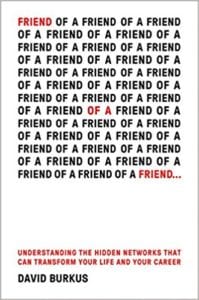
Friend of a Friend . . .: Understanding the Hidden Networks That Can Transform Your Life and Your Career
I love it. That line you said, “Look for a lifeboat while no one’s watching,” is a great tweet because that concept of anticipating disruption before it hits is what allows people to stay ahead. Let’s talk about your book, Friend of a Friend. The subtitle is Understanding the Hidden Networks That Can Transform Your Life and Your Career. What’s a hidden network?
When we use term hidden network, we are referring to different elements from network science. For most people, when they hear the word networking, they’re thinking one of two things. They’re thinking of that cocktail people full of strangers where they stood in the corner of the room and talk awkward the whole time, or they think about those people who are just focused on running up the count, collecting as many business cards as possible or as many LinkedIn connections. We took for this book a different approach, which is that you don’t have a network, you can’t grow a network, you exist inside of a network. The best networkers are the people that figure that out and respond accordingly.
Your hidden network specifically refers to things that get overlooked if you are in that first faulty mental model of trying to run up the count. It’s made out of things like your weak and your dormant ties. A lot of folks are familiar with some of the early research on weak ties. Dormant ties, in particular, which are a form of stronger connections that fell by the wayside, are incredibly powerful and incredibly useful. It’s also referring to who is at the fringes of the network and who is one introduction away from you. A lot of people wait until they need something and they start begging for specific introductions. There are better ways to develop an awareness of who’s just one introduction away from you so that when you do need it, you are there but you are in touch with the people who are going to be those pathways often enough that it’s not an awkward ask. The rest that is hidden is less about the network structure itself and more about the phenomenon of networks and the things that happen in every network, whether it be people, electrical grids, computer systems, and food chain ecosystems. There are a bunch of different principles from network science that are universally true that people start to understand how to have a way better map of their map and figure out how to respond accordingly.
Let’s double-click on each of these terms you gave us so that the people can say, “Now I understand what a weak tie is and what a dormant tie is.” We do encourage people, once they understand the concepts, to write out those people in those two categories.
You don’t need to write them out. You just need to pay better attention. I love that term double-click. A lot of people are familiar with the term “weak tie.” I’m not the first person to talk about it, but it’s misunderstood. A lot of people believe that a weak tie is your friend of a friend or is a person you don’t know but is one introduction away. It’s not a weak tie. Specifically, a week tie is someone you know but you don’t know that well. You know their name, their face, you are a little bit familiar with their background, but you never hung out together. You never had a long conversation. You don’t them know that well but they are still there.
Would that be like a Facebook friend that somebody asked them to friend you, but you’ve never met them?
[Tweet “Tap into your hidden network.”]
It could be. I actually reject all of those. You and I are both in a powerful Facebook group for speakers, and there are a lot of folks that you and I both know but we probably don’t “know” know. We haven’t hung out, we haven’t had dinner together, we haven’t seen each other in an event yet. We are a little familiar with their work but we are not super familiar with them. We just interact in those space. Some of them will become close-knit ties, but most of them will probably stay weak ties just because you can’t be best-friends with everybody. It doesn’t work. It’s simple linguistics. It wouldn’t be best then. That’s different from a dormant tie. A dormant tie is somebody who was a close connection at some point but for some reason they fell by the way side. Either you changed jobs or they changed jobs or they moved cities. Sometimes there are some reasons we make someone a dormant tie, but they’re somebody whose connection was stronger but they fell by the way side.
If you think about your community, if you think about the network that you are in as a three-dimensional object, the circles and lines that you can picture when I say the term “network,” your close connections are close to you three-dimensionally. Your weak and your dormant ties are far out in the network. But because they are far out in the network, they are close to other people, which means your weak and your dormant ties are usually a source of new information, new opportunities, new connections, and new referrals. They are usually a better source than your close-knit connections. Often, the people that we are closest to, we all think alike, act alike, sometimes look alike. We all have access to the same information, so it’s not as useful a lot of times as those weak and dormant ties.
I have an example of that happening to me a couple of years ago. It’s someone I went to college with many years ago. We lost touch, I moved from Illinois to LA, he moved from Illinois to DC. Then he was Googling for a speaker at his company and I came up in the search. Somehow, he found my content or looked me up, and then he just reached out. I hadn’t heard from him in years. He said, “We’re looking for a speaker to come and talk about how to help the architects tell better stories to get more clients. Would that be something you’d be interested in?” I was like, “Oh, my God.” Is that the dormant contact you’re talking about?
That’s exactly right. I had a similar experience happen one time. I was in pharma for six years and I used to see this rep who used to work for one company and he changed jobs, became a trainer, started working internally. He moved on to New Jersey where basically all the pharmaceutical company is based. The same thing happened. Fast forward five or six years, he’s looking for folks for their internal speaker series for the executives, and he’s like, “I know this guy.” He started reaching out and we had that whole connection. It happens often.
In the book, we talked about the craziest example I have ever heard, which is the UFC Mixed Martial Arts became the fastest-growing sport in America because Dana White and Lorenzo Ferttita were dormant ties. They went to high school together and Dana got kicked out. Fast forward ten years, they see each other at their high school friend’s wedding and they reconnect and start trading text messages and emails about prize fighting because they both love that sport. Dana is the one that is connected to the UFC’s original owners and finds out that they were losing money. He calls up Lorenzo and says, “I think the UFC is for sale and I think you should buy it.” Lorenzo just happens to be running around in the Nevada State Athletic Commission, hosting boxing events at his family’s casinos. You have this perfect mix of this guy who is running around the UFC community which is on the verge of getting banned, and then this other guy who’s running around in the sport regulatory agencies. They reconnect after ten years and come together, they purchased the UFC, they take it over, they get it regulated, they do the things you need to do to be a successful promotion, and two years ago they sold it for $4 billion. $4 billion is the same amount of money that Disney paid Lucas Film for the entire Star Wars franchise. This is a lot of money and it literally wouldn’t have happened if two guys didn’t reconnect at a high school friend’s wedding.

Friend Of A Friend: Your weak and dormant ties are usually a source of new information. They are usually a better source than your close-knit connections.
That is a great example of your network being your net worth, don’t you think?
Absolutely. In sociology, they use the term social capital to describe the value that’s in your network, both the value that’s created for a community, and also the value that you create for yourself when you start tending to the network and worrying about its internal connections and who is connected to you. There are a ton of research that shows that just simple lessons about how social capital works and how network works make executives more likely to get promoted, more likely to get raises, more likely to end up in leadership roles, just all of these incredible forms of value that happen when you stop paying attention to “who do I know?” and start paying attention to the whole network and the potential for value that’s there.
That leads right into one of your key takeaways from your talk about Friend of a Friend on your book is how do we foster authentic and collaborative relationships?
In terms of weak and dormant ties, you already have this. You can do something rudimentary, like you could make a list of people when you scroll through your phone and you realize you haven’t talked to them in a year and a half. If you have a Facebook account or a LinkedIn account, you probably feel like I do. You newsfeed is just overloaded with people that are like, “I met you at conference two years ago, and now I see every update you post on LinkedIn.” Those broadcasts are great opportunities to reach back out. To some extent, the social network companies know this. That’s why they do weird things like, “Congrats on your work anniversary.” If you ever had a work anniversary, you know there are so many people sending you those that you can’t keep track of it all.
What I tell people a lot of time you can do, just strolling through that newsfeed and you see something that connects, even if you haven’t talked to that person a long time, you can offer them something simple. Maybe it’s just a simple, “We’re moving from Illinois to Washington, DC.” Maybe it’s a simple, “This is the single best place in DC to get handmade pop tarts.” Don’t post it on LinkedIn. Send them an email or a text message or a phone call, something more intimate that depends on your relationship with them, and then follow up with a simple question. “Besides that, what else is new?” or, “Tell me more about your transition.” Use that little piece of information and that offer of something valuable as an opportunity to reengage that conversation. If you make this a regular habit with all of these weak ties, then they are there when you need them. It just seems like one other conversation.
[Tweet “What is your social capital?”]
Here’s my key takeaway, everybody, from what he just said. This is gold. You might want to write this down, highlight it, whatever you do to retain information because what David just said is worth so much in your social capital. Respond to people in a way that’s personal and relevant. Take the time to not just ignore or give thanks when someone says something as simple as, “Congrats on your work anniversary.” After you’ve given some content that has some value, follow that up with, “What else is new with you?” Take an interest in someone else. Is that a fairly good summary of what you said?
I love it. People do the exact opposite. They ignore people until they need something, and then they usually send that, “What’s new?” and then the four-paragraph thing about what they need. You know they don’t care about what’s new.
The big takeaway for me is building relationships before you need them, almost like what you did when you talked about, “I got to find a lifeboat before anybody knows I’m looking. Let’s not wait until there’s a crisis.”That’s the importance if you have a job to keep your network alive so that you’re not waiting until you’re laid off to go find a job.
That’s exactly right. My actual situation, what I did was I gave myself a year. I was in an all-company meeting the day after it was signed. It was signed on Sunday night, I was in an all-company meeting on Monday, but it wasn’t about that. It was already a planned meeting, we were all talking about, “This is what’s coming in the fall,” and how we were excited and how we are going to make all this money and I’m sitting there going, “No one is addressing what just happened and how things are going to change.” I wrote my resignation letter on my company laptop sitting in that meeting, me in a sea of a thousand employees supposed to be excited about whatever new drug they were talking about. I wrote my resignation letter, but I dated it for a year later. I came home, I print it out, and I told my wife about it. It was sitting at my desk at home a little less than a year.
I gave myself a year because I knew I need to start building relationships in this new area. Because I was in graduate school, I had a couple of connections. I picked that as the easiest transition for me, but I need to stop focusing on any relationships inside the pharmaceutical industry that’s not going to help me anymore. I need to start focusing on the relationship over here. It took nine, ten months of building out those relationships to get to the point where it happened. I didn’t run around begging people I just met for a job, I was just focused on, “I need to start creating these relationships so that this network is there when I ultimately do need it inside of a year.” I was prepared to quit inside of a year anyway, but I didn’t need it. It was ten and a half months when I signed the actual contract for the full time position.
One of the things that makes you so unique and what your keynotes and your books are about is you have this ability to combine insights about creativity with management skills and now hidden networks. I love that thread because once someone like me find someone like you, I want to read all of your books. You gave us an example of coming up with a creative new place to eat for someone who’s moved to a new town, but let’s double-click on your expertise on creativity. You have this other great book, The Myths of Creativity. How can people use creativity in their ability to build their network?
The big shift here on creativity is there needs to be a mental model shift. A network is not just growing the number of context that you have, it’s looking at the entire network. There is a mental model shift that needs to happen with creativity, too. The Myths of Creativity attacks this idea that only certain people are creative and other people aren’t. It attacks it on the linguistic level. There are terms that people who are trying to dismiss their own creativity use that people who are doing creative work from day to day do not. They’ll say things like, “It just came to me.” Where was it before? They use these terms. The book is about changing that terminology. First and foremost, the biggest terminology when it comes to networks and connecting is people always say this phrase like, “It’s all who you know.” That’s good news because it means that if it’s all who you know, then just go know people. Figure out who to know.

Friend Of A Friend: People ignore people until they need something.
When you look at the creative process, we tend to think it starts with brainstorming and coming up with great ideas. That’s the first fun moment, but when you look at design firms or even films, there’s a ton of research that goes in ahead of time. In my case, with looking at trying to make a job transition, the research part is the most overlooked part of getting creative. In a job transition, too, people will usually tap their closest circle and they will start blindly to respond to job postings on Monster.com instead of going, “I need to research, which means I need to map this network. I need to figure out who’s connected to who, who I’m connected to, who I’m on one degree of separation from.” Truthfully, it’s less about coming out with new and novel ideas and more about taking the time the way that someone at a design firm or someone who’s making a film or writing a book would do to research and to start understanding that network around you. Usually, the path appears.
All of that said, there are definitely some small tactical things you can do to get creative. I already mentioned one, which is ignore the built-in tools and start thinking about creative and unique ways you can reach out to someone. I love John Ruhlin who does a lot in gift-giving.
I have had him on.
He’s the most creative guy I have ever known in terms of figuring out how to give gifts and who to give. He even talks about the first thing you need to do is figure out who is in your inner circle, and you have to take care of your inner circle. They’ll appreciate that and see it as a gift. To me, it’s about doing this research to see the entirety of the problem, and that’s when the great insights happen.
His book, Giftology, along with your book, Friend of A Friend, would be the one-two combo punch that I would recommend people get because then you understand all the mistakes about horrible gifts like gift cards and when to give a gift especially around building your network. The thing that I hear from you is this concept of being aware of the importance of our network and then having some time dedicated to focusing on growing it and planning it as opposed to it just haphazardly happening.
That’s definitely true. Networks do not happen by accident. We tend to think they do and that’s why we throw up our hands and go, “It’s all who you know.” Yes, there is definitely nepotism, there are definitely people who are born into the right social circles. That happens. Especially in the west, especially in the United States, it’s much more likely that somebody got a great network from actually working.
In the book we talk about this term super connectors. It’s an overused term. Some people believe that it comes from the networking advice books. The truth is it is actually a network science term to describe the people who are usually in the gravitational center of the network and have the most connections. The thing that is most interesting about super connectors is not that they are connected to everybody, it’s that after a certain period of time, a principle called preferential attachment takes over. This is essentially when a new person joins a community, they are more likely to get introduced to the person who is most connected. They are going to give preferential nature to attaching with people that are already very well connected. I think about it more like a gravitational pull. Once you get a certain mass, the gravitational pull gets larger enough to pull other things to it and then that mass gets its center. There are two good news here. It’s kind of bad news. This is why people who seem like networking happens to them easily, you’re seeing them after ten years of work. The good news is that if you put in the work, eventually that gravitational mass starts accumulating and it does take over. It gets easier, but that’s not an excuse not to put in the work on the forefront.
[Tweet “Are you a super connector?”]
We’re back full circle to your book, The Tipping Point. I love connecting the dots.
Gladwell used the term super connectors in that. I think he uses super connectors, then he makes a brief reference to the terminology from network science. Most people actually say that it was Perozzi that invented it, but in network science, it referred to those people that are always connected to everyone with the assumption being that the most connected people are the reason that everybody is so interlaced. You heard the term “six degrees of separation.” The belief was that it’s the super connectors that are the reason that everybody is well-connected. The truth is that networks, by their very nature, are so resilient that everybody is connected anyways because people move. People move from Chicago to Southern California and as a result, they bring those connections with them. In that regard, in movie networks, the most famous super connector person is Kevin Bacon. We found out he’s the 669th most connected person in Hollywood, which is good news. You don’t need to be Kevin Bacon to have an incredibly useful network. Even if you are Kevin Bacon, you can still have an incredibly useful network that connects other people that you can get new connections from.
For myself, and I’d be curious to see if this becomes something you notice as well, it’s almost like a muscle. Creativity is a muscle. Making introductions becomes a muscle if you start orienting your brain to what value can I give? Who can I introduce that I know in my circle could help someone? I recently met a guy, Rich, who said, “I’ve got this company, RichNuts. I’m growing nuts from sprouts. It’s all very healthy and they taste better and the nutrition’s better. I used to be a fireman and I use that to get through my long shifts and now I got this company.” I said, “That’s a fascinating product. Do you know Eric, the Founder of Tender Greens which is a restaurant that’s here in California in New York that serves healthy food?” He goes, “No.” I said, “Let me see if I can make an introduction.”
I reached out to Eric at Tender Greens to say, “Here’s Rich’s story. Here’s his website. This is the person you would like an introduction to because you have the same philosophy of the quality of food and all this other stuff.” I got his permission first and he just wrote back one word, “Absolutely.” I made the intro and I’m thinking in my head, “What if Rich Nuts suddenly became what they put on the salads at Tender Greens. How cool would that be?” That gave me a charge. I get nothing out of it except introducing two people that are both into health food that are trying to make the world healthier. That stuff just lights me up. Is that the creativity with a muscle? How can other people do something like that if they don’t automatically think like that?
It’s a habit. You develop the habit. Creativity is a habit of just knowing now’s the time to do research, now’s the time you need to have lots of ideas. Network is a habit. In Friend of a Friend, we interviewed Jordan Harbinger, a friend of mine and a fellow podcaster as well and a super connector, but he wasn’t always. He was a law school dropout. He didn’t technically graduate. He quit his first company that he went to work for as a lawyer. He runs a podcast. It’s the only thing he does. It’s the only thing he wants to do. There’s no other business venture there. Most people he meets, he can help, unless you could be a good guest on the show, he can help them. One of the things they have developed is that habit of whenever he’s meeting somebody, what’s he’s listening for is “Who is the person I already know that this person needs to get connected to? How can I offer this person value by letting them tap into someone else?” Then he introduces. Even when he has a smaller group of people that knew who Jordan was, he still was thinking, “When I meet someone new, how can I help them through an introduction?” Over time, it became a habit, and over time, his amount of influence and connect level and connections grew. Now he’s at the point where he can ask for an introduction to anyone because anyone who knows him know he’s someone who’s super generous with his own connections and his own ability to give an introduction.

Friend Of A Friend: Creativity is a habit of just knowing now’s the time to do research, now’s the time you need to have lots of ideas.
I love it. What would be the one thing that you would want people to know about your book, Friend of a Friend, that would make them say, “How have I survived without this book?”
Most people get turned off by the idea of networking. If there is a small group of people who love it, this book will help you. It wasn’t written for you. It was written for the people that have read the networking advice book, read the How to Win Friends & Influence People. They are great books but they are someone else’s advice and experience. They’ve gone and tried to put that into practice, and then they felt sleazy and inauthentic, and no wonder because they are not being them in that moment. They are being someone else. They are wondering, “Why isn’t this working? Why doesn’t this come easier?” I don’t think you need another book and advice. What most people need is to understand what is universally true about networks. Once you learn how the network that’s around you is already operating, you can figure out your own advice. You can figure out, “This is what I need to do because this is what I’m neglecting.” The biggest takeaway is if you’re ever trying to give the perfect elevator pitch and you feel so inauthentic, stop and go learn how networks work. Then you’ll figure out how to work it properly.
It’s funny because I worked with people all the time on how to have a good elevator pitch.
It’s a different thing though. You even will probably tell people, “You’re not going to run into the pitch for your whole venture.” You are going to work your network to get the introduction to go meet with a venture on the list, and then you get into the pitch. There is definitely a place and a time for it, but it’s not a cocktail party.
I often tell people when someone says to you, “What do you do?”it is not an invitation for a ten-minute monologue. David, I can’t thank you enough for sharing your insights not only on how we can be a friend of a friend, but also how we can take our creativity into building our network so that we have more authentic and collaborative relationships with the people we work with and the people that we don’t know yet but our friends know. It’s been valuable. If there’s any last little takeaway you want to leave us with, obviously we’re going to follow you on social media, which is just your name @DavidBurkus.
To find the link to my book, go over John’s show notes. I am on a lot of podcast. I’m a podcaster and I am jealous of his show notes. You’re going to find a lot of value just in that, so please go over to that, especially for this episode. Go see them. They are fantastic.
Thanks, David. We are going to not let this weak tie stay weak.
I love it.
Thanks.
Links Mentioned:
- David Burkus
- Friend of a Friend
- Under New Management
- The Myths of Creativity
- David’s TED Talk
- The Tipping Point
- The Myths of Creativity
- Monster.com
- John Ruhlin
- Giftology
- Jordan Harbinger
- How to Win Friends & Influence People
- @DavidBurkus – Twitter
Wanna Host Your Own Podcast?
Click here to see how my friends at Brandcasting You can help
Get your FREE copy of John’s latest eBook Getting To Yes now!
John Livesay, The Pitch Whisperer
Share The Show
Did you enjoy the show? I’d love it if you subscribed today and left us a 5-star review!
-
- Click this link
- Click on the ‘Subscribe’ button below the artwork
- Go to the ‘Ratings and Reviews’ section
- Click on ‘Write a Review’
TESLOOP vs. Amtrack with Haydn Sonnad
Posted by John Livesay in podcast | 0 comments
 Episode Summary:
The key to success is not about being perfect but having the confidence to pursue your vision in your market. Haydn Sonnad takes smart marketing to another level with TESLOOP and how he pitched this to Elon Musk. The first thing he knew was to not compete with Uber or Lyft. Rather, his company puts the customer first. To do this, Haydn becomes the customer first before giving out something to other people. Haydn explains how TESLOOP offers a cheaper way of traveling in the long haul from San Diego to Palm Springs.
—
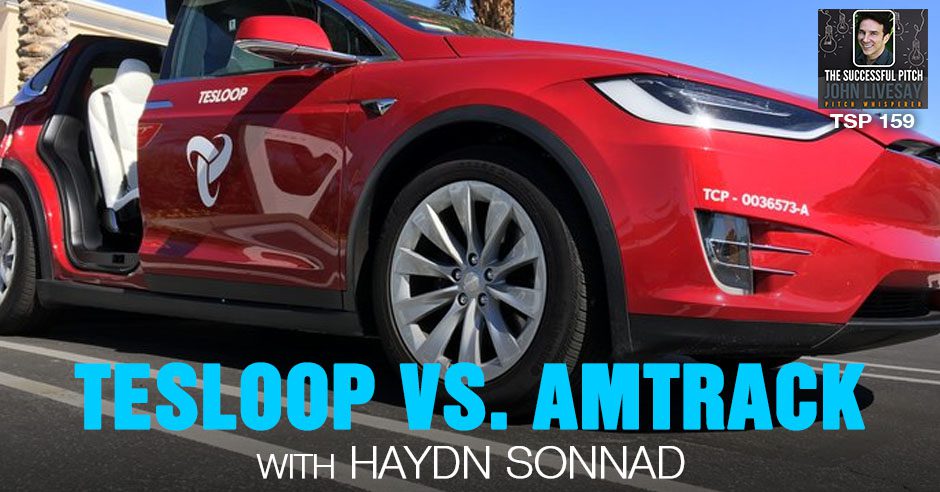
Our guest on The Successful Pitch is Haydn Sonnad, who is the Founder of TESLOOP, which allows you to be in a Tesla and go from Los Angeles to San Diego or Los Angeles to Palm Springs. It’s an amazing new way to get around in a long distance ride without having to fight traffic or take the train or plane. I took it myself and loved it. He’s only nineteen years old. He’s gotten his startup funded. He talks about how he puts himself literally in the mind or the seat of the customer, how he anticipates every potential thing they might want to have, and what he’s going to do in the future with a car that drives itself.
Listen To The Episode Here
TESLOOP vs. Amtrack with Haydn Sonnad
Our guest is Haydn Sonnad, who is the Founder of TESLOOP. I have personally experienced this incredible service from Angeles to San Diego in a Tesla. Think Uber meets the Concorde jet; that was my experience of it. Everything from a concierge that’s making sure you’re happy, to first class service from “Would you like a drink? Would you like a snack? Would you like a pillow? Would you like earphones? What music would you like to hear?” It was amazing. When I had the opportunity to hear him speak about how he came up with this idea and how it’s scaling and how he got funding, I wanted to have him as a guest on The Successful Pitch. Haydn, welcome to the show.
John, thanks.
Back in 2015, you told your dad that you wanted a Tesla, correct?
Yeah, I just found out what Teslas were in late 2013. Ever since I saw one in person for the first time, I was just fanatic about them.
What did your dad say to you that made you come up with the idea of TESLOOP?
For a decent amount of time, maybe a little over two years before I had the idea, my dad had also been relatively fanatic about Elon Musk and all of his companies he was creating. I’d always hear videos of Elon talking in the background my entire life, so I wasn’t naïve about Tesla. When I was exposed to the economics of Tesla, I just dug into them and how Elon was preaching how these cars had longevity and they were backed by unlimited mile eight-year warranties, it caught my interest because I’ve never enjoyed vehicle maintenance work, like working on cars. I thought it’d be cool if you didn’t have to work on a car as much and you could just drive it a lot. From there, I initially had the idea to just lease out one car because I wanted to get into it and just look at the cars and see how they work for me. I figured that the lease was about $2,000 a month, insurance would be about $1,000, so if I can make up $3,000 month by dragging people back and forth from LA to Vegas, I’d be able to pay for the car and then I’d be able to drive the car when it wasn’t being used. That seemed great to me, because it was a win-win. I wanted to drive these cars, but obviously I couldn’t just buy one.
The range for the Tesla when it’s fully charged is about 250 miles, correct?
Yeah, give or take. The battery has a degradation curve, so it does get a little worse over time. Our 300,000-mile Tesla is probably at 80% of its initial capacity.
How many miles is it from LA to Vegas? Do you have to stop?
Yeah. LA to Vegas was 280, and you do have to do one charging stop in Barstow, which made it not the best trip for us. We generally don’t want to be doing trips that require charging stops. It would just add time to the trip. If you’re already competing on time against airlines, you want everything to be in your favor.

Smart Marketing: If you’re already competing on time against airlines, you want everything to be in your favor.
Is that why you decided you’re going to pivot and go to different locations, like San Diego and Palm Springs?
Initially after the first two months, we wanted to switch into Southern California, but there’s an intensive permitting process for going intrastate, which is like departing in California and arriving in California. For about a year, we bypassed that by leaving California and going to Nevada. After all the permits and TCP got sorted out, we were able to do the intra-California routes, which is where we first launched Palm Springs. Palm springs for TESLOOP is a great route. It’s the perfect distance. You don’t have to do a charging stop on the way. It’s a very isolated community, so nobody living there has a better way of getting in and out, the trains are bad, planes are super expensive, and not too many people like to drive themselves, especially the elderly who cluster in Palm Springs. They want to get back to their family in LA, but they don’t want to have to drive for three hours in traffic. That’s just both tiring and frustrating.
When did you launch Palm Springs?
We launched Palm Springs I believe in June of 2016, but the month might be wrong.
You’ve just hit your year mark there. Where along the route did you get a co-founder?
I got co-founders about a month in. Originally I pitched the idea of getting that one car and driving people back and forth to Vegas to my dad because I wanted him to financially back the down payment on the car, and he was pretty skeptical about the idea. He was like, “You’re sixteen, you’re not a good driver, and the time to drive back and forth from LA and Vegas is a terrible safety hazard.” I was like, “It might be, but at the same time, autopilot is going to drive these people anyways in the next couple of years, so it doesn’t matter if I’m good at driving or not. It just matters how well Tesla can put together their autonomous capabilities.” He was like, “That makes sense, but I don’t know enough about it, so go ask Elon Musk.” I managed to finesse my way into the Tesla shareholders meeting.
Let’s paint the picture. You’re sixteen years old, using some of your connections because I’m imagining you’re not a stockholder of any size, and you somehow managed to get in there. Tell us that story a little bit because that’s phenomenal vision, chutzpah, confidence that many people at many ages don’t even think to do.
I can’t dig too deep into the details of how I got into the meeting. It wasn’t from having connections. Security at the event wasn’t too strong. It’s not too hard to make people believe you’re a shareholder, if you can provide documents that back up your story.
You get in and there’s a bunch of people that want to get his attention and ask a question. How did you get picked?
I looked at the videos. They just stopped doing the whole Q&A with Elon at the last shareholders meeting, but they’ve done like four or five before, so I had already seen what the setup was like and I noticed that the microphone stands were on either side of the aisle and towards the end of the pitch, they just said, “Get lined up behind the microphone and then you ask Elon your question.” He normally didn’t get to everyone, so the first man on each side got to ask their questions. I just got in and I sat the closest chair to the microphone, and the second they opened up for questions, I got the second question.
[Tweet “Let go of being perfect.”]
I love that you did some due diligence. That right there is such a great takeaway. It’s not about just due diligence on pitching an investor or pitching a client. It’s figuring out the lay of the land before you even walk in the room. Good for you. What was it like talking to Elon who you grew up with his voice in the background?
It was a little intimidating definitely, and I wanted to make sure I got my question down right. I did and I went up and stuttered a little bit, but that’s fine. I conveyed my point and then I got him to answer it well and he said “Within three years, autopilot is going to be able to drive someone from LA to New York 100%.” He said he estimated it by three years, but they’re on track to do it in three years or one year from now. I was like, “My plan will work.”
I love that you just said that I wasn’t perfect and I stumbled a little bit. That’s the key to success. You probably have already figured this out, but you don’t have to be perfect to be successful. The fact, is you’re probably going to be nervous, you can practice as much as you can, and even if you stumble, at least you still got your question in and got your affirmation going. Let’s talk about the name because it’s not Tesla, it’s TESLOOP. From what I’ve read, they didn’t say they had a problem with it, so you didn’t have any big lawsuit pending with people thinking it was a Tesla company?
Originally I came up with the name TESLOOP when I was brainstorming ideas with my dad and he said something like Viperloop and I was like, “That’s terrible. That just sounds weird.” I did like loop because it incorporates the Hyperloop, which isn’t going to be possible for at least a couple more years. It also works out because TESLOOP, we’re just creating loops in Tesla, the car, so it’s a very literal name. Even when I talked to Elon, I’m going to be creating a constant loop between LA and Las Vegas and I’ll call it TESLOOP. He chuckled at that, he thought it was funny. About six months after we had started service, we got an email from Tesla. It was some lower-end corporate guy and he was like, “We’d like for you to change the name because we think it’s a little close and there may be a copyright issue.” We were like, “Of course, we had some backup names. There was no problem with that.” We of course liked the name TESLOOP the most, but if there’s any problem with Tesla, we didn’t want to go forward on that because we’re based on their platform and we want to be as friendly with them as possible. We responded and we’re like, “If you could have someone from the actual corporate come and let us know and tell us what exactly the problem is, we’ll change it.” They never responded back to that, so we’ve had the name for over two years now. They haven’t had a problem, and it’s trademarked under a different industry category than Tesla, so we got through in the trademarking process.
The other thing I love about what you’re doing is that you’re not competing with Uber and Lyft. This is not for short, little, long distance. This is for the long haul, San Diego, two to three-hour Palm springs-LA, and that market is not being tapped because that would cost way more than what you’re charging around $49 or so depending on where you sit if you were to take an Uber there and it wouldn’t be nearly as comfortable. That is smart marketing. Can you tell us the story of how far in were you? How much proof of concept did you have before you reached out to investors?
Let me just go back one step and talk about why we’re not competing with Uber and other intercity ride-sharing services. Fundamentally, they’re all based on the car won’t come on a platform, which is your internal combustion engine and you drive it yourself, an old car. I can almost bet that just don’t make sense in the future. There’re no other players in the regional mobility space that are on this platform, so we’re able to offer a way cheaper product than what you could do in an Uber. Uber from LA to Palm Springs is generally about $150, maybe $160 or $170, whereas the TESLOOP is about a third of that cost, if not less. I don’t think Uber is ever going to be competing in the long distance mobility space, just because they’re not on this car 2.0 platform and it doesn’t make sense for them. Eventually there are going to be competitors. There’re even competitors right now, but they are just planes, trains and buses, so they are again not economic competitors; they’re just in the same space as us.
Smart Marketing: It’s great when travels are rewarding and people are looking forward to it and they can see something to gain out of it.
When you look at the product required for regional versus in-city mobility, it’s a lot easier to get a fully automated in-city mobility product like the Tesla Network, which is going to be mobilizing all of the Model 3s to allow people to book them out on the months that you’re not using them. That’s going kill the inter-city space, and we don’t want to be competing at all with Tesla especially. When it’s in a long distance model, there’s a lot more human interaction, there’s a lot more routing that needs to get done, and there’s a lot more attention required to deliver a consistent experience. That’s very key to long distance, where if you’re going to be in the car for three or four hours, you don’t want to have that aspect of unpredictability like you find in Uber.
Let’s just take little reality check on that, especially if you’re taking senior citizens back and forth between LA and Palm Springs. I’m guessing that bathroom stops are a concern as opposed to train that might have a bathroom on it, but you’ve addressed that.
We definitely have always considered that and surprisingly it very infrequently comes up. Very little people ever request bathroom stops. When they do, we make it simple for them so you can either just tell your pilot, “I need to go to the bathroom. Can you pull over at the next exit?” If you don’t feel comfortable since it is in a ride-sharing scenario, you can just text your ground control operator and they’ll convey the message to the pilot, so you don’t have to expose yourself if you’re uncomfortable with that.
That’s forward thinking, that concept of putting yourself in the seat of the passenger’s mindset. That’s great.
We spent a lot of hours just driving around in the cars and testing out every single possible amenity. We’ve gone through twenty different travel pillows and all these headphones and we’ve tried to create the most consumer-friendly cabin as possible.
When I was hearing your talk, you said it’s the vibe of being in a Starbucks with Wi-Fi and all the amenities of free water and everything. It’s a great experience and it’s a great model and no one else is doing it. Do you ever worry that you could get competitors?
There’s definitely going to be competitors in the future once people understand that this model makes a lot more economic sense and it’s a lot cheaper for them to run mobility on it, but TESLOOP is relatively defensible. When you look at Starbucks, coffee is not a defensible industry. There’re so many coffee shops. It’s unprecedented for a coffee company to reach into the billion-dollar market caps. Starbucks did that by creating an experience. We’re creating an experience at TESLOOP that’s very consistent. It’s not going to be something that you’re unsure what you’re going into. Our routing is all done on proprietary software, so it’s very hard to replicate the exact routing we’re using. There are very different requirements when it’s electric autonomous cars as compared to gas cars, because there’s a lot more considerations to take into account. Also these cars can query so much telemetric data every quarter of a second, so there’s a lot more data processing. That helps you also get better estimations of everything related to the car. That’s hard to replicate, but that’s not impossible. If a company were to take $15 million and get a bunch of cars, they could do this. At scale, we could get better. The trips become shorter because we’re able to link people that are closer together at origin and both destination.
We’ll have more frequency, so it’ll become to a point where even though they are pre-scheduled trips, it’ll be on demand. If we’re having a trip leave every hour, that’s pretty close to on-demand. You never going to have to wait more than two hours until one car is full or something. When you’re doing this long distance, you also want frequency, because there’re a lot of different times that people are traveling for different reasons and you want to be able to satisfy everyone’s time. Also, we can make a more personalized experience through social engineering, which is linking similar people with each other in the car so we can get beneficial human interaction and get people talk to each other and have party cabins and whatnot. There’re a lot of possibilities for creating a very personable brand.
[Tweet “Have a conversation not a presentation when you pitch.”]
That’s where it is an exciting, unexpected treat. I had somebody in the car with me on the way to San Diego that we had a lot in common. We didn’t know each other, but he was fascinating and he found me interesting, so the kinds of people you meet doing this are great. One of my friends, Mark Lovett who lives in San Diego is the Founder of the TEDx down there, and when I told him that’s how I arrived, he got jazzed because one of their goals is getting as many people in LA as possible to come to San Diego to the TEDx events. Imagine getting several cars of yours taking people down to San Diego at different times that everyone in the car would be going to a TEDx anyway and you start this interesting conversations before you even arrive or on the way back talking about the talks you heard. It’s an incredible opportunity.
It’s great when travels are rewarding and people are looking forward to it and they can see something to gain out of it instead of just losing their time and money and motivation to move.
Who knows what connections you would be making there? I was also fascinated that you call the driver a pilot. I believe there’s a two-day training. Can you talk about that?
The training is more intensive than what you’d find in Uber. We train them to be a brand ambassador. We train them how to handle the in-cabin experience, so how to regulate that everyone’s happy. They have to learn how to operate the cars, because driving a Tesla is different than driving a normal car. There’s autopilot you need to deal with, and there are no gears. It’s very different, so we give them at least five hours on-the-road training experience then they do a practice loop where there’s a TESLOOP employee, and then they do one solo loop where they’re heavily monitored. If they pass and we like them and they’re friendly, they become pilots. The pool of people we choose our pilots from is also what adds to TESLOOP. Instead of just having professional drivers that have come to a point in their life where they’re strictly professional drivers and they have less outside experiences to talk about, that can be boring. If you’re bringing in young actors and people that are just full of life and enthusiasm and like talking to others, it can help some people feel more comfortable in the car and just having a rewarding time.
The other thing that’s coming down the road, no pun intended, is the concept that eventually a passenger could be the pilot in exchange for not having to pay for the ride. How would that work? Would you have to train the passenger?
The passenger program could be one of the most revolutionary thing that’s happened to travel that’s tapping into consumer mobility. The way it’s going work is after you are a passenger on TESLOOP and you’ve taken it maybe once or twice. We haven’t finalized the details on this. You’ll be able to apply to a position called the passenger pilots where on any of our routes, you can book the driver’s seat for free in exchange for being a conductor of the trip. Yes, there’s going to be a little bit of training for them. They’re still going to have to do a couple hours, but by that point, once we launched this, autopilot is going to be driving the car safer than any human can drive the car. The actual driving task is going to be very mitigated through autonomous capabilities and it’s not going to be something that’s dangerous to give out to people that aren’t very experienced drivers. We are going to feel very comfortable that we’re able to do this very safely and efficiently. The insurance companies have given us the okay on this. We’ve already done a couple of tests on our Vegas route, but we haven’t pushed that forward just yet. We still want to create the most consistent experience as possible for now and it becomes a little less consistent when you have uncontracted pilots.
Smart Marketing: The people we invest in are the ones that are human and are authentic.
Take us back to what your experience was pitching to get funded.
We’ve done a lot of different fundraising angles. We have had more than one person involved. There’s been me, my dad, the other two co-founders, Jared and Brian, we’ve all pitched in and tried to help get money for the company. That’s of course an important thing to do for any startup. I’ll just go through one. The very first one I ever did was up in the Bay Area. I forgot the name of the firm, but I went in and it was hard to say anything other than intimidating. It was scary. They were the most institutional investor stereotypes. They were just guys in suits with notebooks all sitting across from me on a table. You can prepare your deck and you can get all your talking points together. Every time once you get into a meeting, the conversation will organically drift into something else and you have to have all these answers that you need to figure out. There’ll be raising questions you haven’t even thought about. It can be scary to think that you’re answering a question in a way they don’t want to hear and that could result in them not giving you money which could in turn be very detrimental to the company. There’s definitely a lot of pressure in situations like that, but at the end of the day, I always go back into the conversational tone and just try to explain it to them as if they were my friend. I don’t try to bring in all these terms. It’s just as simple as possible and go into the fundamental values of TESLOOP and why this makes sense in the future and why it’s a good investment for them now.
That’s so smart. If all the investors I’ve interviewed on my podcast tell me, “The people we invest in are the ones that are human and are authentic,” and as you said, having a conversation like you’re a friend, because it is a relationship that you’re building. It’s not just “Here’s the money, bye.” They typically want to be involved and on your board and there are certain milestones they want you to hit and you have to be transparent if you’re hitting a bump in the road, again another pun. They’re investing in you even more than the idea. I can see why someone said yes to you. What are your next steps? Do you have big milestones? Did you raise enough money to last you twelve months or longer?
I’d say we have about until early next year enough money to run until then in the bank, but we’re going to start raising a real Series A probably end of September or early October. We want to get a lot of money so we can horizontally scale out these operations to a lot of different cities and find what markets work best for us and then further scale in there.
Do you plan to do LA or San Francisco to New York, that kind of venture? Are you’re going to stay within this 200-mile sweet spot?
The sweet spot is the 50 to 250-mile routes. The sweet spot is going to get a little bit longer as car batteries get better and supercharging speeds get quicker. I don’t think ever it will make sense to go from LA to New York. That’s 2,000 miles. That’s way too far. The plane is always going to beat you in that scenario, unless there’s some Hyperloop that does it better. We’re sticking to that electric car loop and hold that range. There’s a ton of markets that play into that. We can go to Texas and there’s the Houston, Dallas, Austin, and San Antonio area. There’re places all over Florida and Seattle, Portland. There’re a lot of routes. Even with 2% of the market share of people commuting between the cities, we can fill hundreds of cars. It won’t be too hard for us to get a decent amount of cars out there and a decent amount of markets.
What piece of advice you have for our audience on getting a startup to become a reality? Getting it funded and scaling it?
What we focus on always at TESLOOP is put the customer first. That’s cliché and everyone tries to say that, but you have to become the customer before you can give out something to other people. You have to take a second to try out your product and anything that you don’t like about it, there’s going to be someone else who doesn’t like that. Even if it’s most insignificant, like you think the travel pillow should be rectangular instead of horseshoe-shaped, you have to make sure that you’re confident in that and that’s how you would like this product to be.
[Tweet “Become the customer to anticipate their needs.”]
That’s great. Become the customer is a great mindset and a great way to watch what you’re doing. This is going to be successful because I’m a customer and I’m a fan and I’m telling all my friends. I even did a Facebook Live about it and it got a ton of views. It’s exciting. As you said, no one gets off a plane at United Airlines and says, “I just had the best flight ever.” There’s a real buzz about what you’re doing and I couldn’t be happier to be on the sidelines cheering you on. Thanks for sharing your insights and your passion for what you’re doing and making a difference on the carbon footprint and giving us all a better way to get around.
For the audience, email [email protected] and you’ll get a free first ride to try out TESLOOP on any of our routes.
That’s very generous of you, Haydn. Thank you so much.
If you want John’s free PFD of the three mistakes to avoid when you pitch, go to JohnLivesay.com and enter your email. Remember people have to trust, like and know you before they say yes.
Links Mentioned:
Wanna Host Your Own Podcast?
Click here to see how my friends at Brandcasting You can help
Get your FREE copy of John’s latest eBook Getting To Yes now!
John Livesay, The Pitch Whisperer
Share The Show
Did you enjoy the show? I’d love it if you subscribed today and left us a 5-star review!
-
- Click this link
- Click on the ‘Subscribe’ button below the artwork
- Go to the ‘Ratings and Reviews’ section
- Click on ‘Write a Review’
Connecting The Millennial Generation with Josh Tickell
Posted by John Livesay in podcast | 0 comments

 Episode Summary:
Parents often teach their kids that there are many ways to solve a problem. Whether its fossils fuels, climate change, or connecting the millennial generation, Josh Tickell will find a way to solve it. As America’s number one strategist for generational conflict, Josh has filmed many movies geared towards millennials. He creates a future and works around it backwards so everyone can tag along his non-linear journey. His concept of reverse engineering the concept of business is the future of storytelling and a great blueprint for success and scaling.
—
Our guest on The Successful Pitch is Josh Tickell, the author of Kiss the Ground. The foreword was written by the CEO and Founder of Whole Foods. He has an amazing story that he shares with us of how Whole Foods got started. The book is sold on Amazon who also owns Whole Food. Josh talks about how if we put the right food in our body, we’re not only healing our body but healing the planet. He said the real key is to figure out how you want to reverse engineer the future. He has some great insights on how he’s done that not only with this book, but other movies that he’s created. He’s been on all kinds of press. He has smart insights on reverse engineer something, tells a story, and then solve a problem, whether that problem is oil, climate change, or the generational conflict. He is literally an expert on knowing why the cultures don’t get along and have different work styles and values.
Listen To The Episode Here
Connecting The Millennial Generation with Josh Tickell
Our guest is Josh Tickell and he has been called America’s number one strategist for connecting with the millennial generation a.k.a. generation Y according to Inc. magazine. He’s also a film director that specializes in movies that are geared to the millennials. He grew up in Louisiana where he lived next to waterways that were polluted by petroleum refineries. In 1997, he captured national attention by driving a van powered by used French fry oil across the US. The Veggie Van, as it was called, became a viral sensation. Then four years later, after the first web browser was introduced, his website was receiving over a million unique visitors. Today, that would be equivalent to probably 100 million. He’s done so many other incredible things. I’ve had the pleasure of hearing him speak. He’s got a great book called Kiss the Ground. Josh, welcome to the show.
Thank you, John. Thanks for having me.
It’s so exciting to see all the different things that people like you have created in their life. I always like to ask my guests to take us back to their own story of origin. Can you take us back to what it was like then? How that has led you to decide that you wanted to be a keynote speaker as well as an author and filmmaker?
It is not a linear journey as you might expect. I was born in Australia. I grew up there until I was nine years old. I grew up very much outdoors in nature, enjoying the beauty of planet earth. When I was nine, we moved to Louisiana. My mother’s mother, my grandmother, was sick and dying of cancer. We realized that all of the people that we knew were sick and dying of cancer. It’s no exaggeration to say that the lymphoma leukemia and cancer rate in what’s called Cancer Quarter is a thousand times the national average. There are 150 petrochemical facilities in a hundred mile stretch of land between Houston and Baton Rouge. That’s where we lived. It set me off at young age thinking, “There must be alternatives to everything we see. There’s got to be at least one other pathway.” My guiding light all these years is to find a solution to a problem. What’s the problem? Is it oil? Is it climate change? Is it generational conflict? Is it all of these things together? That’s led me on this distinct and non-linear path that has brought me through promoting alternative fuels, to making movies, to writing books on how to reverse climate change.
[Tweet “Reverse engineer your future.”]
You’re almost like the male version of Erin Brockovich. You see a problem, you’d become the voice of the people who don’t have a voice. That turns into a movie.
To some degree, yes. I don’t consider myself an activist. I don’t consider myself a front lines type person. What I try to do with my work, my team, and everybody I work with, is I try to create a future and work backwards. What does the future look like without fossil fuels? In 2006,we were filming Fuel which won Sundance, went to the White House, went to 150 countries, and was translated in all languages. When we were filming Fuel, we go, “What does the future look like?”We said, “We have a particular desire for this one fuel.” I was into biodiesel at the time. It definitely looks like plugs on electric vehicles. We found a company that would modify a Prius. They put a big battery where it previously used to have a little battery. They put a big battery in the Prius and they put a plug on the Prius. We filmed a Prius plugging into solar panels and we said, “This is the future that we see.”We got a letter from Toyota right away, “You can’t modify our Prius without our permission.”Fast forward six years and Toyota releases the plug-in Prius.
That’s what we try to do with all of our work, create the future and visualize the future. Tell the story and make sure it’s scientifically valid. Sometimes it does shame car companies, oil companies, and these big companies. They’re not organized around future vision. The exception is Elon Musk who I interviewed later for Pump, the third film that we made. His companies are organized around a future vision. You are seeing this with the new generation. You’re seeing this with millennials. You’re seeing this with a lot of the companies that are being formed today, which are B Corps, Benefit Corps. They are organized around future vision. That’s where we get powerful, where we can use the vehicle of corporation to make a big difference in the world.
I look for problems to solve, whether it’s oil, climate change, or generational conflict. If you’re a startup trying to figure out, “How am I going to scale my business or even get it funded?” I love this concept of, “No matter what business you’re in, how do I reverse engineer what I want to have happen?” This concept of reverse engineering this future, telling a story that is solving a problem, is such a great blueprint, whether you’re making your film, working on scaling your business, or growing your brand as yourself, no matter what it is you’re selling. Clearly, you’ve had some success there. It’s fascinating that you’re not an activist yet you have the results of one without possibly the controversy. Would that be fair?
Yes, sometimes there’s a little controversy.

Connecting The Millennial Generation: Food is the basis for society so we have a more peaceful, equitable planet.
It’s unintentional. You’re not approaching it from an antagonistic, “Let’s go out and scream and yell,” necessarily. You find your voice through your filmmaking. It’s even much less confrontational than someone like Michael Moore who also makes movies that get a lot of attention about pointing out disruptive concepts. Let’s talk about how you became an expert in Generation Y. What’s the problem that you see happening with the generational conflict? Is it baby boomers versus Generation Y? Tell us that story.
Let me answer that question after I talk about my journey to learn about millennials. The journey began with my first film, Fuel. Wed did over 100 college bookings with the movie, which is unheard of. You don’t go to 100 colleges. These were paid speaking engagements. As a filmmaker, you’re not going to say no. I did a lot of them with my wife who is a millennial. It was so interesting to see the generational difference between myself. I was born in 1975.A lot of the young people that we were speaking with were born after 1985, ten years’ difference but a totally different mindset. The more colleges I went to and the more we screened the film commercially in theaters, the more I saw the audience was such a clear linear divide in terms of age range. We had young people come in to see the movie.
We did not have Generation X-ers. We did not have baby boomers unless they were dragged by their millennial children. It was college age at the time. As that progressed three movies later, I went, “We got the same people showing up to all these films. We got the same people not showing up to all these films. What gives?” That’s when I decided to turn the camera the other way on the audience and really dive into what are the values differences. What is the core of the code of the millennial generation? That’s been an investigation that I’ve been on for four years now. It started by looking at corporate social value. Corporate social value came in when the millennial buying power came online.
What year was that do you think?
A lot of people are confused as to which generation is which. The other confusion is many people conflate the idea of a marketing segment and the idea of a generation, and they will mix them up. Asocial generation is a group of people born in the span of about twenty years who experienced the same touchstone moments. Have a birth rate either rise or fall. For millennials, we’re talking about people who came of age in the new millennium. They were born roughly from the end of the oil crisis and the financial crisis of the 1970s, at the end of 1979, beginning of 1980 until September 11th, 2001 when the birth rate dropped. Those two periods of time has the most intense rise of human births in the history of our civilization, 80 million people in the US and 2 billion worldwide.
That’s a big a-ha moment. A lot of baby boomers think, “We’re the biggest and we’re growing up be the biggest forever.” Everything’s been so geared to marketing and advertising world towards baby boomers because they had the money. The baby boomers are causing a lot of disruption. A lot of the values are different. I’m fascinated that it ended 2001 right when 9/11 happened. Is that a strange coincidence or is that what you were talking about when you mentioned big social marker?
No coincidence at all. We experienced social moments viscerally when they are huge. People have more babies when things are going well, less babies when things are not going well. Economically speaking, that factors in tremendously to people’s procreation numbers. When you look at the millennial generation and the baby boomer generation, they’re roughly the same size. There are 78 million baby boomers and 80 million millennials in the US. Millennials is a little bigger. Largely, the millennials are the children of the baby boomers. There is a generation in between, which was a dip in births. That’s Generation X. We’ve got these two massive generations. They’re like two weights on the end of the spring.
The baby boomers are known for creating great music. They set culture on its path. They’re moralists so it’s very much right or wrong. Abortion is right or abortion is wrong. There is no in between. That’s the way they are in many issues. You can see that in the presidential race of 2016.We had two baby boomer candidates. We had Hillary Clinton and Donald Trump. Everything was either morally right or morally wrong. There was no gray area for them. Then you’ve got somebody from a completely different generation, Bernie Sanders. You saw the radical difference in terms of view of the world. We also get our worldview from our generation. When you look at the boomers and you look at millennials, your question was, “What’s the generational conflict we see?”
I finished the manuscript for the book on millennials. We’re looking at The Revolution Generation. Most people seem to gravitate to it. The big a-ha, the big OMG in the book is when we look at wealth dynamics, at social dynamics, at class dynamics, race dynamics, all the way down the line. There isn’t a massive aggregation of income, not wealth, inside the baby boomer generation. This cuts across all developed nations, like eighteen developed nations. Australia is the only exception. Baby boomer income is growing. Millennial income is declining, meaning the money we make, not the money saved. You’ve got these economically disparate generations. What set the millennials apart was 2008, not 2001. 2001 changed the birth rate, but 2008 created the tenor of a generation.

Connecting The Millennial Generation: Create the future and visualize the future.
Social generation experiences touchstone moments together. All millennials were born by 2008. The youngest were about eight years old, the oldest were about 28. That middle range of those people were experiencing the workforce. They were experiencing college. They were experiencing debt. They’re experiencing parents being laid off in mass, coming home with their things in boxes, their photographs. Social security was a concept that was part of our social construct. That is not part of the construct of millennials. Now you’ve got an economic free for all generation that doesn’t believe in any of the economic principles that came before. They don’t believe in the patriarchy of the man making the money and the woman being the housewife. They don’t believe in corporate power. They don’t believe the corporate structure will be around. You see this explosion and disruption, Uber, Bitcoin, all of these things. That is a different universe than the one in which baby boomers grew up in.
Airbnb is classic. The fact that we work is going to create shared living space for that generation. The baby boomers would not be comfortable in that work or living space. This group’s whole shared economy concept is revolutionary to say the least.
When you put these two generations in a room together and you go, “You are going to accomplish tasks.”The baby boomers organize in a hierarchical manner. They begin to dole out who’s going to do what. There’s an alpha. That person gets established very quickly. All of the hierarchy gets established all the way down to the bottom level of bureaucracy where you’ve got people just sitting there, mouth breathing, drooling. Millennials are completely different. They create a team, they organize as a unit, then they begin to attack tasks together. It’s almost like parallel processing. The communication style is different. It’s dynamic. It’s constant communication. There’s information flowing back from all the points. If one person isn’t as strong as the rest of the team, the team compensates. You try to create a work style that’s going to work for a hierarchal military patriarchal model and an equitable teamwork model. When you put those things together in the workplace, there’s explosions, fireworks.
Baby boomers are like, “I’m not using Slack. I’m not going to give way. You better answer my email. I’m not answering your texts right back and forth.” I’ve seen it. I’ve experienced it. It’s quite fascinating. You said there’s a ten-year difference between you and your wife. You can’t believe how much difference there is. My youngest sister is five years younger than I am. I experienced a complete disconnect with her because we have completely different tastes in music. Her frame of references of what she remembers and what she doesn’t historically is very different. That’s why I like your book title, The Revolution Generation. Instantly, in my head I go, “You say you want a revolution?” that music. For some people, they don’t have that song as a reference guide so they wouldn’t resonate with it. For me, that was instantly what came up. Take a minute and talk about how music reflects what’s going on with this generational conflict.
Music is part of our shared value system. Part of how you know what generation you’re from is by the music you resonate to you. There is no way to grow up in a westernized culture without being inundated with music. I don’t care if you only go shopping once a year, you are going to hear that stuff coming in over the pipe, the canned speakers. I took a yoga class and the woman teaching it is about my age. All the music was the coolest stuff in the late ‘80s. I’m going, “This is such awesome music.”I’m thinking to myself, “All the twenty-year olds in this class, none of them even know who these musicians are.”Part of how you construct your identity is through your peer relationships, through what you speak about. Music is a generational expression of what’s going on in the world. Think about Billy Joel and how influential he was. Think about Billy Idol. The millennials are like, “That’s classic.” You’re like, “Who’s cool? Katy Perry is.” It’s a totally different world. That’s how you know what generation you’re in.
Let’s transition into Kiss the Ground: How the Food You Eat Can Reverse Climate Change, Heal Your Body, & Ultimately Save Our World. That is amazing to think of all of those things being influenced by what we put in our mouth, whether it’s climate control, oil, what we put in our car, fuel. There’s a whole generational focus that’s very different than the baby boomers who grew up on Jolly Green Giant and Favita cheese. There was no concept of farm to table. Only the people who lived in a farm had that. Now, people living in urban areas want that.
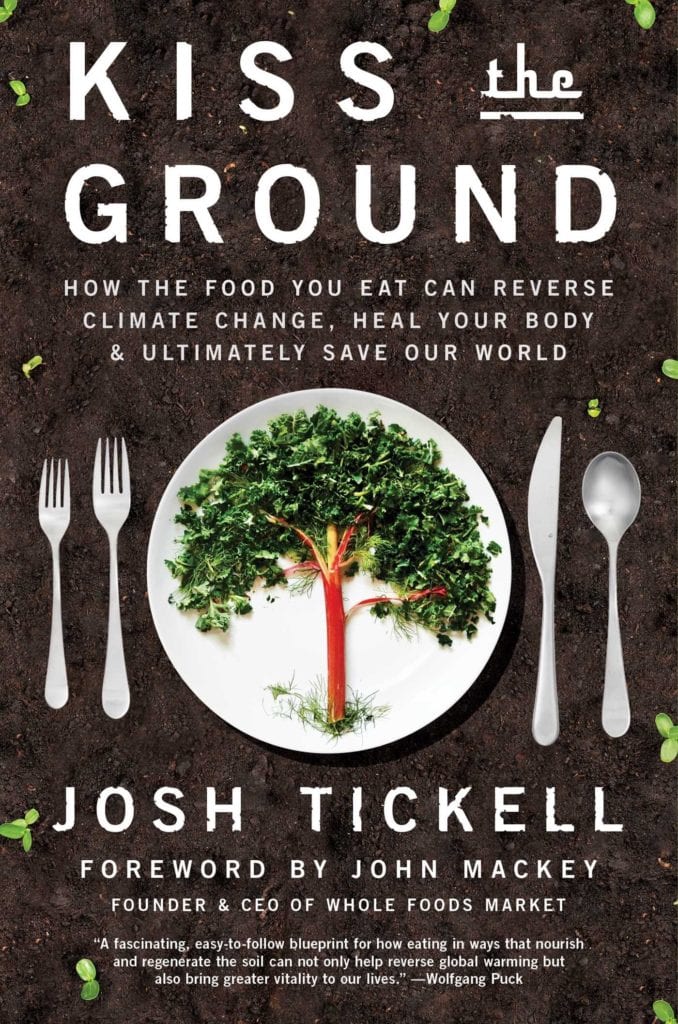
Kiss the Ground: How the Food You Eat Can Reverse Climate Change, Heal Your Body & Ultimately Save Our World
That’s a very millennial concept. Health has come online hugely as they see their parents age, as they see a generation of people who are mired in a medical system that is about going after disease versus going after prevention. That is economic. When you have the money to have surgeries, do pills, and all of that stuff, you have a different mindset than when you grow up in an economy that doesn’t have money. If you don’t have money, you’re about prevention. You’re going to go to yoga classes, you’re going to run, and you’re going to try and eat healthier. That is a generational mindset. The two stories, Kiss the Ground and The Revolution Generation, are part of the same arc. We’ve talked about The Revolution Generation. It’s about the people who are going to change the world, hopefully save it. Kiss the Ground is the blueprint. It’s the how-to. If we look at all the dynamics of humanity right now, we look at all the great challenges that we have, we have huge geopolitical challenges with North Korea with the potential for a new nuclear threat. We’ve got bio-terrorism. Then we’ve got the dynamics that affect everyone. Food, water, climate. I’m not talking about, “Did humans create global warming?” We don’t even have to have that conversation.
We know stoic and metrically that if you burn a gallon of fuel, it creates 22 pounds of carbon dioxide. It is provable. It is absolute. There is no question. That’s 22 pounds of carbon dioxide goes into the atmosphere. What it does after that long-term, whether it heats or cools the planet, is a different conversation. We know once again scientifically, the majority of that carbon dioxide will go into the oceans where it acidifies the water. In that water is the phytoplankton and coral. The phytoplankton and coral creates 50% of the oxygen we breathe. We’re acidifying and killing the life forms that create oxygen for humans. This is a very simple conversation. If we want to have human life three generations from now, we have to deal with carbon dioxide in our atmosphere. I don’t care what you believe in, I don’t care what your system of understanding is, that is absolute. The best way to suck carbon dioxide out of the atmosphere is to put it in the soil.
Here’s what happens. When you bring carbon dioxide in the soil, you also bring water and nitrogen into the soil. The soil fertility goes through the roof. You can grow more food. The water that’s stored becomes part of the localized water cycle which diminishes drought. It reverses desertification and brings life back. Let’s look at the other human problem. A billion refugees by 2050 don’t have food, they don’t have water, and they don’t have a place to farm. That’s happening already. That’s what happened with Syria which expressed itself as a civil war. If we go back, what actually happened was serious. Farming intensified because they had to get water. Desertification was happening, which is a man-made problem. Now, Syria has a few million refugees. Let’s expand that to a billion. What does the world look like? The world looks dysfunctional with a billion refugees. If we’re going to deal with the biggest and most immediate threat to humanity, we have to address carbon dioxide. The way we do it is by building soil fertility. That’s what Kiss the Ground, the book, is about, which is on Amazon.com. You can order it. It is an incredible book. It’s a blueprint for the future.
[Tweet “Heal your body and heal the planet at the same time.”]
You also have the foreword by John Mackey. For those who don’t know, tell everybody who John is and what an interesting, impressive person to get to write your foreword.
John started a health food store in Austin, Texas. The store started about 30 years ago. It got flooded in a freak flood that totally destroyed it. He put his family’s money on the line. He put all his friends’ money into it. The store was gutted. He had nothing. No money. He was going to go bankrupt. The next day, the entire community of people that bought food from that store showed up. They began to mop, clean, and built. What that community built under John’s leadership is something called Whole Foods.
I never knew that story of origin. I love it. Thank you so much for that.
Whole Foods has been sold to Amazon.com. It’s an amazing testament to our society’s change in taste and what we value.85% of Americans will buy organic food this year. That is a huge vote for clean and healthy food for our children.
That generation who’s buying the organic food typically doesn’t have a huge disposable income compared to the baby boomers, yet they see the value in it for prevention.
It’s a value shift. Baby boomers were raised largely in TV dinner, Levitin, suburbanite explosion of the world, that everything could be George Jetson-ized, wrapped in plastic, and come out a machine. Fast forward 40 years and we realize that is the worst thing you can do for your health. That is the worst thing you could do for the planet. The values are shifting.
In the book, there are interesting and accessible interviews. You don’t have to be a scientist to want to read this book at all. You’ve interviewed celebrity chefs, farmers, and ranchers. It’s being turned into a documentary film narrated by Woody Harrelson.
I basically lived on the road for a year with the support of my amazing family. It was an incredible experience to go and meet these people, live with them, and see this whole other world. How we can heal our bodies and heal the planet at the same time? That’s the big lesson. If what you’re putting into your body is good for your body, it’s nutritionally dense, it’s full of life, and it’s also good for the soil, that is the big lesson.
[Tweet “Everyone who eats needs to read Kiss the Ground.”]
Talk about zooming out and thinking on a spiritual, philosophical look at life and everything being connected, that you’re not isolated from plants, trees, and animals. You’re putting that into your body as nutrition and fuel. It’s makes perfect sense, but I don’t think I’ve ever heard anybody explain it quite the way you did in a very concise and compelling pinch. If you’ll hear your body, you’re healing the planet at the same time, even if that’s not your intent or goal.
One of the people who did a review of the book on Goodreads said, “Everyone who eat needs to read Kiss the Ground.” If you are interested in health and you don’t care about the climate, you don’t care about the future. You’re going to do what’s best for your body. That is agreed instinct that is, in this case, very good. We want people to do the absolute best thing for their health. As we show in the book, The Harvard Medical School has what they call The Healthy Eating Plate, the culmination of a thousand studies that they’ve done over decades. That is what we codify in the book as the regenerative diet, a diet that’s rich in plants and vegetables. We’re not saying don’t eat meat. We’re saying be very selective with the type of meat you eat. It’s a diet that eschews things that are made from corn syrup and things that are highly processed. It’s not a hard diet to follow because it’s a lifestyle. When you take that on with Kiss the Ground as your manual, you begin to transform inside and outside.
When we’re healed, we’re not healed alone. We’re healing not just ourselves but hopefully, our family and ideally the planet along the way. Are there any last thoughts you want to leave our audience with about Kiss the Ground or telling a good story?
Part of what we always try and do with our stories is in part reverse engineering the future. In Kiss the Ground, we went, “What does the future look like where the climate is balanced, where carbon dioxide is not in excess in the atmosphere?”The good news is that is achievable within your and my lifetime, and definitely within the lifetime of millennials. That is a world which has abundant food and abundant fresh water. Ultimately, food is the basis for society, so we have a more peaceful, equitable planet. When you look at that future, you go, “It’s too big. I can’t participate.” You go, “You do. You participate.” If you’re in America, you probably participated three times a day by what you put in your mouth. In terms of telling a good story, the biggest thing that I can leave as a takeaway is how do we get people to participate in creating the story? That’s what we’re doing with Kiss the Ground. That’s why the book is out there on Amazon and other places. We want people to take that story into their own lives, and then write their own story. Write the future because that’s what’s available.
That’s the ultimate summary. When you get a shared vision, you get a lot of customers, you get a lot of investors, you get the best people to join your team. Josh has given us that blueprint, not only in Kiss the Ground, but in this interview. Thank you so much, Josh.
John, thank you. Thanks to your audience.
Links Mentioned:
- Josh Tickell
- Kiss the Ground
- Whole Foods
- Elon Musk
- The Revolution Generation
- Kiss the Ground: How the Food You Eat Can Reverse Climate Change, Heal Your Body, &Ultimately Save Our World
- Amazon.com
- John Mackey
- The Healthy Eating Plate
Wanna Host Your Own Podcast?
Click here to see how my friends at Brandcasting You can help
Get your FREE copy of John’s latest eBook Getting To Yes now!
John Livesay, The Pitch Whisperer
Share The Show
Did you enjoy the show? I’d love it if you subscribed today and left us a 5-star review!
-
- Click this link
- Click on the ‘Subscribe’ button below the artwork
- Go to the ‘Ratings and Reviews’ section
- Click on ‘Write a Review’