

Data Fluency With Zach Gemignani
Posted by John Livesay in podcast | 0 comments


Even as we get bombarded with so much data today, many still don’t know how to use it for their business. It is time to change that and start to become data fluent before it is too late. In this episode, John Livesay interviews the founder and CEO of Juice Analytics, Zach Gemignani, about the need for data fluency, learning the language of data and turning it into an empathy tool that will set you apart from your competitors. More importantly, Zach highlights the role of taking action. After all, data without implementation is wasted money. He shares the ways we can present and use it effectively in our business in providing analytics and solutions that can positively impact people most.
—
Listen to the podcast here
Data Fluency With Zach Gemignani
Our guest is Zach Gemignani, the Founder Juice Analytics. We talked about the need to be data fluent. It is a language that if you can take data and turn it into an empathy tool, it will set you apart from your competitors. He said, “The last mile that people have to go to make data something that people take action from is the secret sauce.” Enjoy the episode.
—
Our guest is Zach Gemignani, who is the Founder and CEO of Juice Analytics, which is the company behind Juicebox. Zach is passionate about helping organizations present their data in ways that allow them to show it and not just tell it. He’s focusing on using some visualization solutions with his platform Juicebox. He focuses on advertising, media, healthcare, and research. They work with companies like Cablevision, HealthStream, and the University of Notre Dame. Zach has many years of experience in design analytics and data visualization. He’s also the coauthor of Data Fluency. Zach, welcome to the show.
John, I am happy to be here.
Our own little story of origin is quite interesting because I love the story of origins. We connected because we’re both passionate about storytelling. I work with sales teams on how to turn boring case studies into case stories. What you do is you’re turning relatively boring data into stories. That’s what made us want to connect and help clients with a combined solution. Before we get into that, let’s talk about your own story of origin. You can take us back to childhood or school wherever you want. Were you always somebody who loves numbers?
I was someone who was into math early. One of the interesting bits about my origin story comes from my parents. It helps inform a little bit about what we do at Juice and what I’m passionate about. I grew up in a family where my father retired from his job early so he could become an artist. There were a whole bunch of lessons in there for me, both around learning about art and visual representation, but also about pursuing your passion. That was an important lesson growing up for me. My mom was an educator. She’s a teacher. There were things about her passions that I’m sure I picked up in our interest in teaching people about how to communicate data better and doing that visually.
I often think that those two things tied together. As a company, Juice was founded many years ago. I started the company with my brother, Chris. We got to a point in our careers that we wanted to do something together and get out of the corporate world and strike out on our own. We knew we wanted to do something with data. He has a great computer science and data background. He’s the technologist and I am not, but we wanted to do something together. We decided we’re going to start this company. We didn’t quite know what we wanted to do, except that we wanted to do something with data. We found this passion in data visualization and around communicating data. This is a problem we saw long ago, and it’s a problem that organizations deal with still a lot these days. In fact, almost every organization we run into struggles with the fact that they’ve collected a lot of data, but they aren’t great at finding ways to present and share that data in ways that are impactful and useful to the people who should be looking at that data.
Give us an example of a company that you worked with or worked for where you see a lot of time and money is spent collecting data and the whole purpose of collecting that data was to allow management to make better decisions. Otherwise, it’s a stab in the dark of, “Should we do this or that? What do people want?” What happens when you present a bunch of data in a way that’s overwhelming and too hard to consume for top-level management decisions?
[bctt tweet=”Data without implementation and interpretation is really wasted money.” username=”John_Livesay”]
That is the standard mode. People present data in lots of charts and in complex reports. I will often go back to one of our first clients. This is where we found our passion. We were working with a client in the online schooling space. They wanted to understand better their customers and students who were unenrolling and the journey that customers were going through as they were working with this company. We had done a bunch of analysis and put together some results. I remember it was a day before our presentation to be able to share that data. At the time, we were working in my basement because we were just a startup.
Chris and I started to think about how we could share this data in a way that was going to be far more compelling that would capture the imagination of the executives. It’s hard to take a bunch of dry data, get people to understand it, and have an emotional connection with it. What we did through that night was we created an animated movie out of the data that presented how students came and left the schools, where they went, and things that happened to them. We got excited about this and we felt like this was a way to try to hook our audience and help them have more of a visceral connection with the data.
We presented that the next day a little tired having stayed up the night. We were younger then and it did have a great impact. That was the jumping-off point. That was the epiphany for me. If you can get creative with data and visually show it in ways that are going to be far more engaging, you can open up the minds of your audience so that they start to understand what’s going on with that data. That’s what’s going to get them closer to doing something about it. You need to make that human connection and that emotional connection with data.
I love what you said because it’s the same thing that I talk about, which is stories allow us to be compelling, capture our imagination, and have this emotional connection. Everybody buys products and services or changes their behavior emotionally first and then backs it up with logic. The challenge is data are traditionally left-brain analysis where decisions are made. Behavior changes are done on the right side of the brain, which is where imagination lives and all of that potential lives. You bridge that gap. I would say that what you’re doing here is the data without implementation and interpretation is wasted money.
This is something that a lot of organizations don’t necessarily look at or understand, but it’s a fact of a lot of situations where companies have spent a lot of money on gathering data. There’s been a lot of investment in big data and data warehouses, and getting all that information together. There’s no value created out of that data. In fact, that data should be considered a cost up until the point that it is delivered to people who make decisions and those people start to make better decisions based on the data. It’s a concept that we’ve talked about for a long time that we call the last mile of data. It’s that last step of how do you present data in ways that are going to be easy enough for your audience to understand what it means and how it ties to things that they can do in their job?
What actions can they take based on what they’re seeing so that they can make a better outcome for their organization? It’s that last step that a lot of companies struggle with. I’ve theorized that people ran out of energy, in a way. They get the ball to the 2-yard line and they’ve exhausted the resources. If the data part of what you’re doing has been driven by a technology organization that feels like the job is done by simply making the data available, that is also not a success. We’re trying to get people across that finish line or into the end zone so that people are using that data. That’s the key.
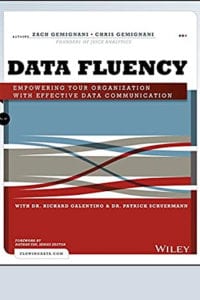
Data Fluency: Empowering Your Organization with Effective Data Communication
It’s a great tweet, “Go the last mile with your data so people can make better decisions.” There’s a book called 212: The Extra Degree and it’s all about water doesn’t start boiling until it hits 212 degrees. When it comes boiling, it creates steam and the steam could move the train engine, let’s say. Many of us get all the way to 211 degrees and then we dial down the heat. This analogy holds up going the last mile. If you’ve got all this time, money, effort, and you’re exhausted, and you’re like, “It’s good enough. We got the Excel chart, let them figure out how to make this mean something.” It’s that extra degree of effort that you’re bringing.
To go back to our combined origin story and talking to you about storytelling, it’s a skillset that a lot of people haven’t yet learned. They need to learn of combining both the understanding of the data, but then how do you connect that to your audience and to people. It’s a mix of skills there that combines understanding the psychology of your audience, what they do in their job, and what does it take for them to be more successful, which is a sales attitude. If you’re in sales, it’s instinctual to understand your audience and what makes them successful. If you’re in a reporting role or a data analyst or something that is not instinctual, it ties to data visualization, which we’re experts at of thinking about what is the best way to present data, and how do you make it intuitive? It ties to the structure of storytelling. A lot of what we think about at Juice is how do we take the concepts of storytelling and bring that into how you present data?
What you described that you are turning this data from the online school into an animated movie, you were taking data and turning it into an empathy tool, which is the key to storytelling and sales? I tell my clients all the time, “Put your empathy hat on. The better you can describe a problem, the better people think you have their solution.” There’s all of that storytelling journey of painting a picture of who, what, where, and when. This is the moment in time that you took and collected the data, and then here’s the problem we discovered.
If you are telling case stories, for example, you tell the solution and then the secret sauce that’s similar to that last mile. What most people don’t use when they’re telling stories whether it’s a case story, their own story of origin, or even an elevator pitch is what is life like after these changes have been made. When you’re telling that story of the online school and seeing the animated film, they then could have empathy for the students and knew what they needed to change to keep students from dropping out or to get the students to give them more referrals, something along those lines.
You touched on a couple of things that are important themes in data storytelling. One is setting those stakes is something that people don’t do. A great story has high stakes. This is why every action movie is about how do we save the world? They’re always cranking up the stakes, but whatever story you’re telling has to matter to people. It has to connect to why is this important to you. This is something that often you’re never going to see in a traditional dashboard or some Excel report. No one’s setting up why this matters, why it’s important, and why if you make that change, something good is going to happen. We do try to incorporate that into the data stories that we created. It’s setting that stage and those stakes, and showing what actions you take. If you take those actions, what the value is.
The other piece that I love to connect to storytelling is the specifics. Data has this nature to it that is an abstraction. Data is taking a bunch of things that are happening in real life and turning those into numbers. Often, we are rolling up, averaging, or summing up those numbers in a way. You get separated from the real thing that’s happening on the ground that you’re measuring. An event that’s related to that is the COVID pandemic. We’re always talking about the numbers and how big those numbers are, but those are real deaths. We talk about 180,000 deaths in the United States. Those are real people.
[bctt tweet=”Whatever story you’re telling has to matter to people; it has to connect with them.” username=”John_Livesay”]
The ability to combine both the big picture, the analytics and the numbers, but also be able to bring in the specifics that are way more likely to create those emotional connections that you’ve talked about. It’s hard to connect to a big number, but if you bring it to a person and you have a human face on something, that’s something where you start to build that bond with your audience and they start to feel what you’re expressing through the data. One of my favorite quotes is, “Specificity is the soul of narrative.” It’s by John Hodgman, another well-known podcaster. He likes to say, “When people tell stories, you want to bring in the specifics because that’s where you do connect with people.”
I work with people all the time when they’re telling a case story of that exposition. I said, “Was this last year, six months ago? Where was it? What city are we in?” Give your client a name. Don’t say, “My client or my customer.” Nobody wants to be thought of as a customer. You don’t want to be thought of as a vendor. If you want to warm things up, give this person a name, say where they work, describe their pain point in such a way that people can see themselves in the story. That’s where the magic happens is when that empathy comes in. Storytelling allows people to change behavior without being pushy because when we tell a good story visually and with some structure to your case stories, people see themselves in it.
Imagine you’re telling another online school or even a major university that had to go online in ways they never expected before and they’re struggling to try and figure out, “How do we justify our higher fees that we have for live classes?” That is much like I’ve had to do as a speaker. What value am I bringing to a virtual keynote that might make it even more impactful than in person? You have to think like that and have that story ready to go so that if you’re struggling to justify your prices as a Harvard or Pepperdine or whoever it is.
Imagine the journey of what this person’s life is like and get specific. If you look at the data, I know a lot of major universities have people from foreign countries coming here to become educated. If that’s not possible and they have to do it virtually, the more specific we get into one person’s journey, then it applies. It’s the same thing when I work with nonprofits. I go, “Don’t tell us about how many meals you deliver. Talk about one person’s story of why they needed a meal delivered in the first place and what would happen to them if they didn’t have the food coming.”
You can zoom out and be like, “That’s happening a thousand or a million times.” You can then multiply that out and it’s powerful if you can connect that stuff to a dollar figure, so people relate to that. Those are great places to start in the stories. One of the things that I’m curious about and that I’ve been surprised by is how much bringing data storytelling can be valuable in the sales process. While we work with lots of clients who are building data products to deliver value to their customers, the customers they already have, and had this data conversation with our customers.
There are many scenarios where it feels like bringing data into the sales process in a way that ties the storytelling can be powerful. It’s the combination of telling those compelling stories of the value of what your product delivers and being able to back that up with often interactive data so that you can have a customized story that creates that foundation of like, “This is a compelling message in our sales.” There’s also this foundation, a solidity to data that some people react to. I’m curious in your experience, how much bringing data have been valuable in the sales process?

212: The Extra Degree
The key mistake most people make when they’re selling is, they start with data. For example, one client was saying, “Our equipment makes surgeries go 30% faster. That’s what we’re opening with. Do you think that’s a good hook?” That’s data. I’m like, “There’s no story there.” I zoomed out and I said, “What is it? Paint the picture. What are they doing? Without your equipment, how long is the typical surgery?” They said, “It is 2.5 hours.” I said, “If we do the math, what’s 30% faster?” “Only 1.5 hours.” You could try and make a case for the doctors. They could do one more surgery and make so much more money, but a much more compelling story was, “Imagine how happy Dr. Higgins was at Long Beach Memorial using our equipment. He could go out to the patient’s family in the waiting room, where every minute is like an hour, and tell them an hour earlier than expected that their loved one did not have cancer.”
It’s the same data point, but it’s wide and that data point matter. That’s what you’re emphasizing.
The visuals that could go with that could be anything. Imagine this person’s telling that story and they have an image of a clock and every minute feels like an hour. If you’ve ever been in a waiting room waiting for a loved one to come out of surgery, you know that’s the truth. That shows empathy. Who you have in your stories? That’s the real secret that we bring to the party. It is the characters that a lot of people don’t even think about. They don’t think about the patient and the doctor. They hadn’t even considered telling a story of what the patient’s family was going through. The doctor then says, “That’s why I became a doctor, for those moments where I could give good news and earlier than expected makes me a hero.” When the salesperson tells that story to another potential doctor, that doctor sees themselves in that story.
It’s bringing humanity and empathy into the equation. I’m sure people in sales struggle with that case. I might argue it’s even more of a challenge in the data world where there’s this separation. People think of things like data and they often create this separation from the people who are on the other side of that data. It is often like, “Go ahead.”
You mentioned something about interactive data. Tell me more about what does that look like to people?
This is fundamental to what we do. We have this technology platform called Juicebox, which is a self-service tool for being able to build interactive data stories, which is a more compelling way of presenting data than traditional dashboards and reports. When we think about data stories, we’re not thinking about a static collection of slides that you might be familiar with a number of charts on it. We’re thinking about giving your audience the ability to navigate through the data in a guided and narrative-driven way. The solutions that we create with Juicebox allow the users of that data to walk through the data where we’re explaining what’s going on with the data, why it’s important, all the things we’ve touched on. We are giving them specific examples. We’re also giving them the power in that interactive data story to be able to choose things that matter to them.
[bctt tweet=”When people tell stories, you want to bring in the specifics because that’s where you really do connect with them.” username=”John_Livesay”]
As the user, everyone who comes to a report or data is going to have their own needs or things that they care about. They’re coming from the perspective of, “I care about this product or this region or these types of customers.” They have their own needs. You’re trying to meet them in a place where you’re telling this guided story through the data, but the user is also empowered in that process to be able to select where they care about. The data is going to change as they select things or as they explore the data. It makes the story relevant to that audience member, which is important. You want people to see themselves in the data or see what’s most relevant to them so that they can understand what they should do about it.
CFO cares about something different than the CMO would care about.
We can argue their stories, there will often be a number of different metrics you’re looking at that are the key metrics for your organization, but a CFO is going to want to drill in on cost-related things. A CMO is going to be worried about leads that are being generated or revenue side things.
“What if we raise our price by X percent and keep selling the same? What would that do?”
You’re mixing. In our data world, we want to be able to have this balance of letting someone explore and customize based on their needs, but in a way that it doesn’t require them to be a data analyst or to be super familiar with the data. It’s a challenging balance to find, but it’s what people want when they’re working with data.
We all are familiar with Excel sheets, which allow you to change one variable and see what the differences are. If you don’t have to be the first person that manually goes in and changes it and then still looks at a chart, but can click to change one thing and then see the visuals of sales going up or down. That’s to me is more engaging than considering looking at an Excel spreadsheet, which is you’re solving a problem.

Data Fluency: Almost every organization you run into struggles with the fact that they’ve collected a lot of data, but they aren’t great at presenting and sharing it in an impactful and useful way to the people who should be looking at that data.
If you send someone an Excel spreadsheet, the chances of them opening it up and wanting to get in there and deal with it are a little low. Making your stories attractive, intuitive, and easy to get started with is important. We’re focused on the design and the user experience so that we can give people data in ways that feel a lot more like the mobile apps that we work with or the modern website experiences we have, rather than feeling like, “I’m opening up a spreadsheet. I got to go figure this out.” Attention spans are short.
You’re like a Sherpa. If you look at the data of climbing Mount Everest, you’re trying to tackle it, get up there by yourself, and you get frustrated and maybe lost even. If you’re the Sherpa who’s been up this mountain many times and knows the shortcuts, you guide them through this data. It almost reminds me of some video games that let you create your own ending. If you click on this, then that completely changes how the story ends.
To go back, I will often think about those old Choose Your Own Adventure books. A data story can be a little different than a traditional narrative that has a clear sequence and gets you to a single ending. In an interactive data story, there’s an opportunity for the reader to decide what they care about and to make some choices in the paths. It should be as compelling as a regular story, but you’re giving that user some amount of autonomy and control of what they’re seeing.
What’s where the title of your book comes from. Data is fluent. There’s a fluidity to it, as well as it being a language. Are you fluent in data as you are fluent in Spanish or something? It’s a clever play on words of thinking of it not being the solid piece of ice, going back to the 212-degree thing, that can become steam and move things if you have fluidity and understand that language in a way that encompasses visuals.
We wrote that book because we saw a lot of organizations gathered a lot of data. They’re trying to figure out how they get value out of that data. They want people in their organization to be data-driven. We hear this a lot, but organizations struggle with how to make that happen. There are a lot of skills and changes in mindset that need to occur to get to this point where you’re using that data. You’re incorporating it into how you do your work, how you make decisions, and how you talk to each other. It’s language-based. You’re trying to teach people both the language of data, but also how to express yourself using data. Talking about it with you, it’s not just about data.
People need to understand that we can talk about data-driven, but that shouldn’t mean that the data tells me something and therefore I do something. Humans are an important part of this. It’s not dictatorial. We don’t want that. We all know where that ends up. It’s the combination of being able to incorporate data into how you think and how you have conversations with clients and so forth, but bringing that human aspect into it. You are recognizing that people are driven by emotion and you need to connect to what’s important to people. All that stuff needs to be in the mix. It’s the combination and it’s powerful.
[bctt tweet=”The magic happens when empathy comes in, and storytelling allows people to get others to change behavior without being pushy.” username=”John_Livesay”]
How did you come up with the name of your company and the product?
Juice Analytics is the name of that company. When Chris and I were thinking about naming the company, we were thinking about how do you extract value from data. We had this concept of extraction and squeezing things out of it, creating the essence of it. That’s how we got to the word juice and we were attacked on analytics that people think we’re making juice. We get a lot of emails for people wanting to sell us juicing equipment.
It sharpens a lot of strange SEO outcomes, I’m sure.
The product itself that we are selling as a self-service platform is called Juicebox. That was a natural extension of taking all of our best practices and thinking about how do you tell data stories and putting that in a box so other people could use it.
Who would you say is your ideal client? Who needs this platform that when they find it, they’re happy?
It’s a broad range. There are a lot of people in organizations. I’ll give you a few examples of people who are working with data. They have an important audience that they’re trying to influence with that data and yet, they struggle with bridging that last mile. Marketing professionals and marketing analysts who are running campaigns and measuring their performance of those campaigns, the most important thing that they need to do at the end is to define what has been the impact of that campaign and how do we improve it next time. Packaging that up, extracting the message, and communicating that to the people who have the budget is critical. Whether that’s a marketing agency or that’s an internal person, that step of showing the value that you delivered and how you can do better or tune it is a common use case for us.
Nonprofits who want to tell their story of what they’re doing is delivering an impact. Sometimes, that’s done in a public way. They want to put it on their website and show that they’ve served an audience and it’s delivering a lot of value. That’s another example. Anyone who’s done consultants and people who do research, done a survey, or gathered a bunch of data, they now need to show the results in a way that is going to demonstrate the value of what they’ve done, and the messages and the conclusions that they’ve reached. We get deep into this because we talked a lot to organizations. It’s hard not to find organizations and people who at some point, don’t need to take some data that they have and have a much better way of being able to deliver that so that they can reach the audiences who should be looking at that data.
The company name is Juice Analytics and the website is JuiceAnalytics.com. The book that Zach co-authored is called Data Fluency. Do you have any last thoughts or quotes that you want to share with us?
I don’t have a quote, but I do appreciate your emphasis on creating those emotional stories. I hope that we continue to work together to learn more about that. That’s a piece that we would love to incorporate even more into how data analysts, and people working with data can make the connection to people and change their minds. It’s been a real pleasure.
Thanks for coming to the show, Zach, and sharing your brilliance.
Important Links
- Juice Analytics
- Data Fluency
- 212: The Extra Degree
- Choose Your Own Adventure
- Juicebox
- Better Selling Through Storytelling Method Online Course
Wanna Host Your Own Podcast?
Click here to see how my friends at Podetize can help
Purchase John’s new book
John Livesay, The Pitch Whisperer
Share The Show
Did you enjoy the show? I’d love it if you subscribed today and left us a 5-star review!
- Click this link
- Click on the ‘Subscribe’ button below the artwork
- Go to the ‘Ratings and Reviews’ section
- Click on ‘Write a Review’
Love the show? Subscribe, rate, review, and share!
Join The Successful Pitch community today:
- JohnLivesay.com
- John Livesay Facebook
- John Livesay Twitter
- John Livesay LinkedIn
- John Livesay YouTube
Emotional Sobriety with Bill Stierle
Posted by John Livesay in podcast | 0 comments


Episode Summary:
Bill Stierle, founder of Corporate Culture Development and a dynamic and commanding thought leader in emotional intelligence and thinking styles, gives an interesting perspective on how we can communicate in business. Bill spills the secrets on how to resolve conflict while giving us a peek into his new book called Emotional Sobriety. He talks about how to become a communications lifesaver while laying down the differences between criticism and critical, empathy and sympathy, and truth and trust. Bill provides great examples that present situations where we can apply effective communication amidst tension where people become defensive in one way or another. He gives a great formula to handle the very common objection of, “I have to think about it.”
—
Listen To The Episode Here
Emotional Sobriety with Bill Stierle
Our guest is Bill Stierle and he is a dynamic and commanding thought leader in emotional intelligence and thinking styles. His impact has been felt everywhere from the top business schools to Fortune 500 companies, nonprofits, and even government institutions around the world. He’s the Founder of Corporate Culture Development and has a unique knowledge of how to create successful training programs. We’re going to ask him to open up the secrets on how to resolve conflict and what happens after he comes in is people have more productivity and performance and are generally more effective. Bill has a book called Emotional Sobriety that we’re going to talk about and he also speaks on the topic. Bill, welcome to the show.
Thank you so much for having me on. This is going to be a lot of fun.
I always like to ask my guest to take us back to their own story of origin. You can go back as far as childhood, high school, college. Nobody starts off as the expert on emotional intelligence. Where would you like to tell us of how this whole concept came about for you?
It came about when I was teaching high school anatomy and physiology many years ago. It started with a very simple question that my brain couldn’t let go of. The simple question was, “Why do people think the way they do?” That’s where it started. At that time of the mid-‘80s, there was a lot of brain research being done from the ‘70s and the ‘80s. They were having the tools and the abilities to stretch into what’s happening in the brain. How does thinking work? How does thinking works with certain jobs? I fell upon a good mentor. His name was Ned Hermann who worked at General Electric. He came up with this thinking tool called the Hermann Brain Dominance Instrument that he used at General Electric in management leadership training as well as human resources. This tool is a 120-question survey that talks about why people think differently. That tool allows us and gives us an insight into the differences between an engineer and a social worker. Those are two different people, as well as an artist and a drill sergeant. Those are two other different people. Those are extreme or focused thinking types.
Engineers are spending a lot of time in logic and rational thinking, whereas social workers are spending a lot of time in interpersonal and connection style of thinking and dealing with human interaction. Artists are in the visual space and drill sergeants are in the organized space and they’re into implementing things. An artist is into creating things. This is the start down the path of why do people think the way they do. I get a lot of work here in the corporate space when I do strategic planning or team analysis. When the start process takes place of here’s what a person is listening for and here’s what a person’s brain is shutting down or shutting off when you talk too much about a certain type of topic. The brain will shut off if a marketing person and an operations person are in the room at the same time because the marketing person is talking about risk and trying to catch as many eyeballs as possible. Whereas the operations person is, “How am I going to manufacture, implement or distribute what that guy over there is trying to sell?”
[bctt tweet=”What can I say or do to meet your need for truth? ” username=”John_Livesay”]
Those are two different brains that are working in different places. An executive team is much like The Avengers. The Avengers are a group of superheroes and they all are sitting in different thinking styles and they’re approaching the world in different ways. They’re doing that in different ways, they have to come together as a team in order to defeat the enemy. The same thing has to happen in an executive team. They all have to come together. The finance person, the CFO, has got to have an honest discussion with the VP of human resources about how much staffing it’s going to take to get certain work done and how much the cost is going to be. That’s called an honest executive discussion. The VP of sales has got to have an honest discussion with operations because whatever they’re selling, the operations person has to be able to distribute or deliver to the person’s doorstep. Those two people have got to talk because if the sales get too big, the customer service and the operations can’t deliver it. Can you see how that one works?
A lot of finger pointing and blaming. You talk about how to become a communication lifesaver. I used to be a lifeguard, so I’m interested to hear how you can help people become a communication lifesaver when those conflicts come up.
That’s the second part of my origin story. I noticed that this work on the brain and thinking only took me so far. Whenever emotions show up, a person’s brain will activate into a protective strategy. Being a communication lifesaver is that if the brain is communicating in a protective way, what winds up happening is not hearing what the other person is saying. As a lifesaver, I’ve got to throw them a communication life ring in order to keep them in a conversation that’s productive and healthy versus one that is safekeeping and reductive and one that puts people at their poles.
Do you have a story of how that would work? What does it look like when someone throws a communications buoy to somebody to keep them in the conversation?
What it would look like is if an engineer or somebody that’s thinking in a logical and rational way quotes a fact or an inaccuracy that another person has said in the room. It’s a critical accuracy piece. The problem is the rest of the room doesn’t hear it that way. The rest of the room hears it as criticism, not critical. A life ring in that moment would be, “Joe, it looks like you’re stating the accuracy for everybody in the room and you’re pointing out how it’s not 39% but it’s 41% when you consider these other data. Is that the accuracy we’re going for?” He wasn’t telling the other person that they were wrong for not knowing the number. He was stating the accuracy piece because his brain needed to express it. Criticism and critical are mixed up. Three-fourths of the people can’t tell the difference between critical and criticism.
Let’s underline that distinction one more time. Criticism sounds like versus being critical.
The distinction would be like this. Criticism is, “You should have known this answer already.” Critical is, “Here’s the fact I would like the whole room to know.” That’s different. The second thing that I need to throw a communication life ring at is the word defensiveness or the construct of defensiveness as a protective strategy. Defensiveness is when somebody is trying to create either order or safety and it’s not considering that the order or the safety or the sequence that they’re doing needs to change. They’ll become defensive and say something like, “That’s not the way it’s done. I’m just following procedures. It takes too much work to rewrite that procedure. We have to keep doing it that way. I’m following the letter of the law.”
All of those are and can be heard as defensive sentences that usually a person points out, “You’re being defensive.” It’s like, “I’m not. I’m just stating what the rule is. I’m just stating what the procedure is. If you want to write the procedure and you want me to retrain people on the procedure, I’ll be glad to do that for you. Right now, I’m trying to follow the procedure.” A drill sergeant is following a procedure. Why? They need to get 30 people to act as one person, to rely on the same set of rules and the same set of procedures. When you have a procedure that’s effective, it creates a lot of stability and a lot of trust. Everybody’s on the same procedural page.
People like structure but the flip side of not becoming defensive, I see that often in selling or pitching. Let’s say you’re pitching to investors to get your startup funded and they ask you some questions. The minute the founder gets defensive as opposed to collaborative then they don’t get funded. If you’re presenting to a customer your product or service and they give you an objection, if you become defensive you don’t get the sale. Do you have any tips on what people can do in those situations where they don’t become defensive?
I do. This one’s going to be a little bit difficult and we have to stretch this one a little bit because this one is a toughie. I’m going to start with a quote that I live by. This quote is valuable. If you can get it in your noggin and do it, it will save a month to two months of time over the next year. Get this sentence and apply it. Here’s the sentence, “Empathy before problem-solving.” Here’s the first problem you have to deal with. The problem is most people have a junkie or an ineffective definition for the word empathy. They don’t know what it means. Here’s the difference. What most people use is a form of sympathy. They don’t do a form of empathy. A form of sympathy is, “I understand what you’re going through.” That’s sympathetic. It’s not empathetic. Here’s another sympathetic sentence, “I hear that happened. That was too bad. I wonder what you can learn from this.” That’s sympathy. That’s not empathy.
[bctt tweet=”Empathy before problem solving.” username=”John_Livesay”]
One of the things that I do in my training on emotional intelligence for executives is I get them to practice real-time empathy and how it takes place. The guideline for a real-time empathy and to know that it takes place is to follow this definition. Empathy only occurs when a feeling word and a need word are connected and agreed upon. You’ve got to have those two fill in the blanks. There has to be a feeling word and there has to be a need word. Let me give you an empathetic sentence to the expression that you gave me. “Huh,” you said. The empathetic sentence would be, “John, could you be feeling inspired because your need for awareness or learning is being met?”
The feeling word is feeling inspired and it’s a question. It’s not an assumption. Could you be feeling inspired because of your need for awareness and learning?
The two of them worked in there and you’re going like, “Something’s moving across from Bill Stierle to John.” You got the jolt and you became a little inspired. Your eyeballs and eyebrows went up a little bit. You leaned in a little bit. Something significant is coming. You got to move across the plate. I better pay attention and my audience better pay attention. This is going to be helpful to the people that I’m working with. Immediately, it’s generating this quality of contribution that people experience on your podcasts. They experience the knowledge transfer and the wisdom transfer and that they can have helpful tools that can enrich their life and their life experience.
Nobody loves the formula and the step-by-step process more than I do. I love that concept of a feeling word and a need word and I totally get it from even a nonverbal response that can elicit empathy. Let’s take it one step further in a real-life scenario. Let’s say you’re pitching someone to buy your product. You’ve gone to all the steps and you’re getting ready to ask for the order and then the person goes, “Your price is too high,” which is a common objection to anything. Instead of trying to solve that problem or even active listening, the empathy factor combines active listening skills but in a new way of that. Let’s try to use this feeling word and need word around, “Your price is too high.”
Let’s do that in real-time. Pretend you’re the buyer and I’m the seller and say, “Bill, your price is too high.”

Emotional Sobriety: Whenever emotions show up, a person’s brain will actually activate into a protective strategy.
Bill, I like what you’re offering but your price is too high.
John, a part of you likes the product that I’m offering. Another part of you is feeling doubtful because you see the value is not at the same level as I see. Is that correct?
Yes.
Notice I got the word yes out of your mouth. That’s how you know empathy has taken place is when the person says yes to the feeling word doubt and the need word value. That’s what I did. In real-time, I filled in the blank of you giving me the objection.
Part of you likes what I’m doing but a part of you is also feeling doubtful that your need for value is not at the same place that I perceived it.
[bctt tweet=”Empathy only occurs when a feeling word and a need word are connected and agreed upon.” username=”John_Livesay”]
The person can’t help but say yes. You’ve actually removed the emotion from the discussion because you got the doubt out of the room. Now with lightning speed, I can say, “John, what do you think might be the value that would fit the product that I was offering?” I’m not trying to justify the value. I’m trying to find out what is in this person’s brain called the value or is it a red herring that they’ve used in the past? It’s too much money. “It’s not too much money, but it might be too much money, but not really.” The person could have a red herring. Now watch this and say, “Bill, it needs to be priced at $250, not $375.” Let’s try that.
Bill, it needs to be priced at $250, not $375.
John, I’m hearing that you’re feeling more confident that the $250 price would work better for you rather than a $375 price that would work in the marketplace. Is that correct?
Uh-huh.
You still gave me the “Uh-huh,” which is good because I’m still connecting with you and your objection. I still haven’t given in and I still haven’t become defensive. I still haven’t brought up criticism or justification. I didn’t bring out spreadsheets to show you that you’re wrong. I didn’t say, “The marketplace has already proved this.” I’m not interested in making them wrong and I’m also not interested in solving a problem that I don’t need to solve. Empathy allows us to get around this particular nuance of communication because the person is using their belief structure to fight my sale, not the reality. The reality is, “If we’re able to get the value or demonstrate in the marketplace that the $375 would work, would that be better for your investment?”

Emotional Sobriety: Empathy allows you to not solve problems that don’t need to be solved.
Yes.
Do you see how that, “Yes,” trickled out of your mouth? You go like, “How did Bill get me to say yes three times?” I’m not working yes on the deal. I’m working yes on the obstacle. This is particularly important in a slide deck. I did an investor slide deck for a workforce educational program. During the slide deck, I said to the guy, “Give me the top ten objections. I want to type them all up.” I typed all the top ten objections, it costs so much, etc. I’m like, “We do not need to prove any of these because I already have the data that proves all these. What we need to do is design empathy sentences for all of those.” “Empathy sentence?” He looks at me. I go, “If I got to get the person’s emotion to change before I get them to buy, not in the place of.” If the sale happens too soon, either they’ll have buyer’s remorse and kick out later or they will develop resentment on the money they spent.
I love what you said that empathy allows you to not solve problems that don’t need to be solved. That’s a big distinction between doing it before solving a problem. Sometimes another big benefit of it is we don’t even have to solve a problem because it may not be what the real objection is.
That’s a great catch there. That’s helpful because people come in with all or many or most, talk about many things that kill a business right now, this sentence here. People work out all the obstacles and overcome all the obstacles and wonder why the person doesn’t buy or refer the product. The reason why is that you did not allow the purchaser to be on the journey with you. You solve the journey before they could discover it themselves. People do not want to buy things that are done. They want to buy the journey of getting it. The sale is a mythic journey. It’s a journey of the hero. Who’s the hero? The person that’s buying it, not the person that’s selling it.
This is a big part inside of the investor pitch deck that I was working on. I told them, “We need to follow this investor, this person” and we’re looking for high net worth individuals to fund this that are looking for a legacy project. We’re looking for them to come in. It’s like, “We cannot solve this thing, it’s got to be a seven-slide slide deck. You’ve got to inspire them to get on that their money is going to get there and we’ll work out the details later.” If we come with all the answers solved, they’ll walk out. There’s no emotional connection. I have to build the investment inside their body before I can take the investment out of their pocket.
[bctt tweet=”People do not want to buy things that are done. They want to buy the journey of getting it.” username=”John_Livesay”]
I say there’s something similar. You have to tug at people’s heartstrings to get them to open their purse strings.
The heart string piece here, the way I see it and especially in the world of conflict is people are going to do something to meet a need of theirs, not to satisfy an emotion of theirs. They’re going to take the action towards the need. If it meets their need for trust, then they’ll invest. If it meets their need for certainty, then they’ll invest. If it meets their need for respect, then they’ll invest. If it meets their need for identity, then they’ll invest. If it meets their need for connection, then they’ll invest. The investment doesn’t come from how much money they’re going to get back. In fact, when surveyed, return on investment is number seven in the list before they invest. The question then is, what is the number one need of the investors that are at the top of the list before you can even get them to move? What do you think that number one is? I’ll push this one to you so you and I can have a little fun.
I would say that somebody has to trust you first.
You are right on top. Number one at the top of the list is the need for trust. That’s the number one need that needs to be met during the presentation, during the content, during the delivery. The weird part about it around the need for trust is you can’t get trust through over solving their problem or over presenting your product. You need to leave the mystery in the journey.
That’s what good stories have. I’m fascinated by the image that you created of how many times have our audience said, “It’s like whack-a-mole. If you got four objections and I whacked them each down, then for sure you will buy and not have four new ones pop up after I leave.” That is valuable. Few people have that awareness that you have, Bill, which the reason is you’re not taking them on the journey. The goal is not to just keep, as Maslow said, using your hammer over and over again looking for nails. It’s this empathy tool versus a hammer tool.

Emotional Sobriety: The feeling of doubt, most of the time, comes from the need for truth not being met.
That whack-a-mole metaphor is exactly right on target because if you empathized with the objection that comes up, you do not have to swing the hammer at all. You’re feeling skeptical and you need some more trust on this. “Tell me what trust looks like? I need to trust that your CFO runs the numbers correctly.”
Let’s do another one because besides money, the other big objection that everybody gets is, “I need more time to think about this.” Either I need to talk to somebody else or we’re not ready to make a decision yet. That’s a common objection, whether it’s an investment or selling something. How can we use this great formula of yours of feeling and a need, so that we can handle that common objection?
I usually empathize with the time objection with the following empathy sentence, “Could you be feeling hesitant because you might need more information or more clarity? Would you be willing to tell me which one is it? Is it more information or is it more clarity that you might need?” These need time. This is the fantasy that not just the investor has, but also the seller has is that they need more time and they’re going to start thinking about it, and then do what? The answer is once they’re walking away, they’re not thinking about your project anyway. What emotion they’re walking away with is skepticism.
Even relief that they didn’t get pressured into something.
I want to know what need is causing skepticism. It could be two or three or four, but watch what happens when I ask the question, “Could you need more clarity or do you need some more information? Which one of those two are you looking for?”
[bctt tweet=”You have to tug at people’s heartstrings to get them to open their purse strings.” username=”John_Livesay”]
That’s valuable because most people assume it’s the same thing. You’re saying, “Do you need more clarity on the information I’ve already given you? Is there something that’s missing for you to understand?” and then it goes back to because you don’t see yourself in the story.
What happens is that they’re looking for a way to get out of the journey. They’re looking for a way to use the great power of doubt and skepticism. Doubt and skepticism as feelings because both of them are two very different feelings. The feeling of the doubt most of the time comes from the need for truth not being met. The feeling of skepticism most of the time comes from the need for trust not being met, but it also could be clarity or it could be information that causes skepticism.
If something sounds too good to be true and you’re like, “I don’t trust this guy or gal.” Let’s double-click on the distinction for people between truth and trust because a lot of people go, “You’re trustworthy if you’re truthful.”
This is the best discussion ever. The reason why it’s such a vibrant discussion is that people don’t know how much power words and language have. Words and language change our physiology instantly. There’s a big difference between saying the word spider and the word ice cream. The same difference is between truth and trust. Truth is that there is either something factually inaccurate or informationally inaccurate or there’s something omitted. I don’t have some truth about something. When something’s too good to be true and I’ve solved all the problems and I don’t have any skin in the game, I will even manufacture doubt because this is all the things that have been answered. There might be something missing. What is the thing that’s missing? Doubt shows up in their body because what happens is they don’t buy the thing, they don’t make the next call, they don’t follow up. You chase them around and they start running. Trust, the reason why truth is a fact thing.
Trust has to do with, “I don’t have any memorable history with you. I don’t have a memorable history with someone that has vouched for you.” There’s no trust because there’s no experience that when the going gets tough, you’re going to be there with me. When the going gets tough for this product, you’re going to be there with the product and be there with my investment. You’re going to treat my investment as if it’s your money, not my investment. As if it’s my money that you get to spend any way you want like a seven-year-old because that’s going on in their mind. Somebody that’s an investor most certainly either has a family member that is not really good with money that they have to keep bailing them out.
They made bad investments before. They’re trying not to make that mistake before.
Truth and trust have a very different frequency to them and also a very different way to establish them. The key question then is to ask this question to the person that is sitting with doubt. It might sound like this. “What can I say or do to meet your need for truth in regard to this product or service that we’re looking to have an experience with? What could I say or do to meet your need for truth?” To the skeptical person, it’s going to be similar, “What can I say or do to meet the need for trust between the two of us?” What that does is that brings us closer together and puts us in the same tribe because now I’m listening and I am ready to repeat back what the person said to me. For example I said, “What could I say or do to meet the need for truth that the $375 would work a little bit better than the $250 thing that you recommended? What can I say or do to meet the need for trust that this number will work a little better?”
What happens there is we’re trying to extract the belief thought that is driving and pushing the button of truth or trust in their consciousness. We want that out in front of us not to solve it but to empathize with it. If I have an investor that’s been burnt before, I do not want that past relationship being in my relationship with him or her. I’ve got to pull that out. Let it air out. Create a new moment between me and that person. I’m not the same guy as that guy. That guy and that product had a whole another set of problems to it. It’s not to say, I don’t have the problems I’m going to have.
We’ve hit the reset button basically.
It’s a reset button because once I’m on truth or trust, once I’m on clarity or information, once I’m on respect or acknowledgment or the need for connection. Once I’m on that need and I know what it looks like to that person, the quality of relationship and the quality of connection deepens.
[bctt tweet=”People are going to do something to meet a need of theirs, not to satisfy an emotion of theirs.” username=”John_Livesay”]
Once you’ve got that connection deepened, then they’re on the journey with you as opposed to you jumping ahead to the end without them going on it. They feel that’s not for them.
They want the experience of incremental moments of success with our product. They are not as much interested in, “Give me the money back with my 30% in the next 60 days,” because they already have the money. They’re interested in the journey that the money’s going to provide them.
This is incredibly insightful and useful. I could talk to you forever. I can’t thank you enough. The book is Emotional Sobriety and there are all kinds of nuances. What’s the one thing you want people to know about your book?
The thing I like them to know about the book is it is the step by step way to diffuse the emotions that come up inside others, as well as the emotions that come up inside ourselves. We’re able to reduce the emotional load that we carry because many folks are carrying a lot of anxious, nervous doubt, some hesitancy, some depression, some anger. We want to be able to diffuse those things on our side and not make it to the outside world that’s doing it to us but it’s how we’re taking it.
We can control our reactions and when that happens, we’re free from walking around with all this anxiety and resentment. I’ve heard somebody say once in personal relationships, “As long as one of you stay sane at any one given moment, you’ll make it through it. We both can’t be crazy at the same time.” That’s the gist of what you’re saying here. If you’re walking around with anxiety of needing, a quota is met or whatever, a fear of losing your job if you don’t sell something. The buyer has got their own level of, “I can’t make a bad decision here,” that anxiety is never a good recipe. Whereas your book, Emotional Sobriety, can help people diffuse that. The buyer’s anxieties can be dealt with in a much cleaner way.
The thing that I like to say about what Emotional Sobriety gets you is with practice. This has been my experience when in the past I’ve been called to come into a city council meeting where people are screaming and feuding or other conflict situations. Usually, it takes me about somewhere between seventeen and 23 minutes to get everybody to calm down and to be on the same page and start working together even though they’d been feuding for months or sometimes years. That’s what it gets you.
What a great outcome. The book is Emotional Sobriety. If people want to reach you for seminars and workshops, what’s the best place to find you?
The best place is CorporateCultureDevelopment.com. You can also do it through my name, BillStierle.com.
I can’t thank you enough for sharing your wisdom on how we can get people to have more empathy connection with us and get out of solving problems that don’t need to be solved.
John, anytime you want to do other topics and things like that, have me back. I’ll be happy to contribute.
Thanks again, Bill.
Thank you.
Links Mentioned:
- Bill Stierle
- Corporate Culture Development
- Hermann Brain Dominance Instrument
- CorporateCultureDevelopment.com
- BillStierle.com
Wanna Host Your Own Podcast?
Click here to see how my friends at Brandcasting You can help
Get your FREE Sneak Peek of John’s new book Better Selling Through Storytelling
John Livesay, The Pitch Whisperer
Share The Show
Did you enjoy the show? I’d love it if you subscribed today and left us a 5-star review!
-
- Click this link
- Click on the ‘Subscribe’ button below the artwork
- Go to the ‘Ratings and Reviews’ section
- Click on ‘Write a Review’
Negotiation Secrets From An FBI Special Agent with Chip Massey
Posted by John Livesay in podcast | 0 comments

Episode Summary:
Growing a business means having to go through high-pressure situations. Sometimes, you get involved with misunderstandings among clients that take a toll on the entire business relationship. Talking about the art of negotiation in these kinds of situations is someone who is no stranger to this. Chip Massey, CEO of Plowshare Communications, is an FBI Special Agent who worked as a hostage negotiator. Sharing his experiences as an agent, he re-aligns it with how people running businesses can take some of the key points he learned in establishing a connection as quickly as possible. He talks about how to create instant rapport as well as how to de-escalate tense conversations with angry clients threatening to leave. Spilling negotiation secrets, he provides great insights that you can apply to your business.
—
Listen To The Episode Here
Negotiation Secrets From An FBI Special Agent with Chip Massey
Our guest is Chip Massey, who is the CEO of Plowshare Communications, which advises business leaders on strategic negotiations on how to accelerate the sales process by building strong, powerful, and trust-based relationships. For more than two decades, Chip has served as an FBI Special Agent and hostage/crisis negotiator. During his tenure, his work has ranged from collaborating with the CIA to crack espionage rings to high profile corruption cases to the post 9/11 counter-terrorism investigations in Washington, DC. As a hostage negotiator, he’s worked extensively in crisis situations including international kidnappings and fugitive apprehensions.
While he was within the Bureau, Chip was noted for his ability to quickly build rapport and his deep expertise interviewing both victims and criminal suspects. He spent several years coordinating with the FBI’s Victim-Witness Program as well as directing the FBI Citizen Academy in DC. Before that, he was a Methodist minister, so he brings his early training in crisis intervention and a gift for public speaking to bear. As someone who grew up in the Methodist Church in the Midwest suburbs of Chicago, I can’t wait to welcome him to the show. Chip, welcome.
Thank you so much, John. It’s a pleasure to be here.
Let’s have you paint a picture, Chip, of your own story of origin. Where did you grow up? How did you decide you wanted to be a minister and then how did that parlay into what you’re doing now?
I grew up in Dover, Delaware. My family had a dairy farm and we grew crops, we had cows and the whole shebang there. It wasn’t until I got to college that I was trying to figure out where I was going to fit in. Farming was a very lonely existence. It seemed that way to me. I loved the contact and calmness of people and I loved hearing their backstories. That’s what led me on to figure out what was going to be my next step. In college, I thought that it was going to be a ministry for me, being able to reach out to people in that regard and deal with their problems and be of help. Follow that, I went to seminary and then went into an appointment at a two-point church. Since you’re familiar with the Methodist system, you know that those are two churches that you’re responsible for. It was a rural area. I knew the people. I know the mindset.
[bctt tweet=”Empathy is the secret weapon the FBI uses. ” username=”John_Livesay”]
My thing about that, John, is it was a fantastic experience in terms of getting to know people and finding out their deepest problems and how I could be of a help. You could find a person that was in a crisis every day in that job. That was both fulfilling and also humbling because you have these people that trust you with everything that’s going on in their world and their life. You are the one representative of what God’s plan or direction is for their life. They’re looking for you to be of help. That was tremendous and fantastic, but it was also hard for me and my family. It’s a 24/7 on-call all the time and you’re gone to a lot. I knew in the back of my mind that I wanted something else. I felt something was missing. I don’t know if you can resonate with that or not but I knew that there was more that I needed and I wasn’t entirely happy in the position.
I can completely resonate with that. There have been stories throughout the decades of movies. Even if you think of Yentl, the Barbra Streisand movie back in the day, there’s got to be something more. That sparks the entrepreneurs’ spirit too. It’s like, “I don’t want to just work for somebody for the rest of my life. I have more to do. I have a book in me. I have a talk I want to give.” You were giving talks every week but there’s a sense of, “I’m here for a bigger purpose. I’m here to do something else besides just this.” Not that whatever I’m doing is not enough or okay, but that inner urge to express yourself in a bigger way is something a lot of people can relate to.
It is tying into that, honoring that and following that. Instead of saying, “I’d like to do that but,” “It would be fantastic, but,” there was something in me that was pushing forward. I went ahead, I looked into it and I talked to some people who were agents. I didn’t know what those guys did. I’ve seen the various shows like everybody else, in movies but I didn’t know what their day-to-day life was like and I didn’t know if that was going to be a solution for my current situation and whether I needed to look at something else. I knew what was inspiring for me and was pivotal in choosing the FBI as a career was the movie, Mississippi Burning. There was this government entity that was dedicated to taking down the Klan. They were above the politics, they were above the prejudices, they were enforcing the laws of the land, of the constitution. They were going to do it and they were going to stay there until it was done. It made a real impact on me. What a force of good that was. That’s what got me toward that lane and looking in that direction. You take a test. It’s how it starts out. You fill out a form, you turn it in and then the process goes from there. You are interviewed if you pass a certain test and then you take a battery of tests. It goes on and on.

Negotiation Secrets: That inner urge to express yourself in a bigger way is something that a lot of people can relate to.
Is it a personality test or an intelligence test?
I would love to tell you that it was based on intelligence and personality. I don’t think that’s what it was. At least when I took it, there was a criterion. It is more of a judgment screen. There was also a math portion, which I thought that a door slam shut in my face, I’m done. My math was not the greatest. There was also a writing portion. That was part of the screening process. There was also where you had to go through the medical clearance, you had to go through a polygraph, and then they went and did the background check with your neighbors, people that you’ve known and teachers. Most of your audience knows the drill on that. It’s extensive.
I preached my last sermon that Sunday morning and that afternoon, I reported to Quantico. I told the classic because you had to go around and introduce yourself and where you’re from. You’ve got guys there that are Special Forces, lawyers, accountants. There was a judge in our class. There were former police officers, pilots and here’s Chip Massey, a minister. It was a great experience. Thinking about it, I wish the academy would open up something that the general public could go to and participate in. Aside from the stress that they put you under in a class, there are so much interesting things to learn that people would benefit from.
[bctt tweet=”How To Create Instant Rapport.” username=”John_Livesay”]
Is it like the law school thing where they say, “Look to your left, look to your right. Only one of you will still be here by the end?”
They don’t do that. There is the idea, “We’re going to weed out the weak.” That’s what it comes down to. In my class, we started out with around 50, we ended up with 44 so not many washed out, but some wash out because of injury and that happens all the time. Some after the first few days of them telling you, “This is the real world of being in law enforcement,” some people that were not totally in tune with that and what that meant would also decide to part ways. They had a vested interest in making sure that you were going to get through this if you were the kind of person they were looking for.
Do you get to specialize and say, “I want to be a hostage/crisis negotiator,” or everybody has to carry a gun and go through and then you can specialize, almost like med school? You have to become a doctor and then you can become a specialist. Is that the way it was?
Exactly, that’s it. Everybody starts out as a special agent. That’s your title. Anything else you do is a collateral duty. We had people that were on SWAT Teams, that’s a collateral duty. We had people that are Evidence Response Team, that’s a collateral. It goes on and on, but your main focus is still investigations of crime. The way the Bureau is set up is that there are two houses. There’s the National Security side of it and then there’s the Criminal side of it. You will be selected to participate in one of those programs and in general, you stay within that lane. There is movement. I started out in National Security and moved eventually to Criminal. It took some time. You have to establish yourself, establish a reputation that you’re a hard worker, that you’re able to perform and you know how to have success. That’s how it works.

Negotiation Secrets: Establish a connection as quickly as possible.
I’m curious to ask you about what it was like to collaborate with the CIA because there was so much controversy after 9/11 that that was part of the problem, that the FBI and the CIA were not collaborating and sharing information. Do you have a story around that?
It was amazing to me when I first reported to the Washington field office. I was on an espionage squad and our specific area of focus was on Americans that have been co-opted by a foreign power to provide information. It was our job to track those people. On this specific squad, we were involved with trying to find a spy that we believed Russia had co-opted and was operating within our US government, which brought us to the CIA. We had certain allegations and information that led us to a specific individual at the CIA. It was a case officer. We were devoting a lot of resources to try to find who that person was. Part of that is to work with the agency, the CIA and figure out who this person is. There were tremendous people over there. I’m continually astounded by the level of professionalism, abilities and talents. These are fantastic people. It is both gratifying to see that not only do you believe in your own home as an FBI agent in the FBI, but you also have this huge respect and belief in the CIA and what they do. They’re fantastic analysts and case officers. It was a fantastic experience.
You’ve been featured as one of the people at the Carnegie New Leaders program at the US Military Academy at West Point. You have multiple places that are having you come and speak on these techniques to corporate leaders about how to build professional relationships quickly and profitably, which allows them to grow their business. Let’s double-click on how we create instant rapport as opposed to people checking their phone or just walk out of there going around, “That didn’t go well.” What clues are there that we can do to prevent that from happening?
The first thing that we would say in terms of a hostage negotiation skill set, what we want to do is we want to establish a connection as quickly as possible. The same is true in the business world. The stakes are different, certainly. One person that is holding somebody for ransom and on the other hand, you’re trying to make a connection to somebody who is in and out of a conversation with you, not engaged with you. The first thing that we would do and I advise my business leaders to do is to find that thing that is going to pull them out of that phone, that text and that email.
[bctt tweet=”Whatever I’m doing now is not enough.” username=”John_Livesay”]
One time when we were on an arrest, a lead came out of the Philadelphia field office. We were to find this person and make the arrest, take them to court and so forth. It turned out that there was a bad address that we had. He wasn’t there. This is bad news because there is a huge force out to accomplish this and you’ve got a guy out there in the wind, you don’t know where he is. We had a phone number for him. That’s all. They’re trying to make a decision. They’re contacting the heads of the field office. “What do you think is the best course of action?” They’re like, “We don’t know. Let’s talk about this.” Eventually it was, “Let’s try to call this guy.” I’m on the arrest team and who are you going to give the phone to but the negotiations? They hand me the phone and say, “Can you call?”
I’m thinking in my head, “What am I going to say to this guy if he picks up?” If it’s me and I’m on the run, I’m not picking up a phone that I don’t know the number to. I’m thinking I probably got one in a thousand shot he’s going to pick up. I’m thinking, “What do I say if he does?” I’m putting some things together and I’m looking around this area where he’s from, in the Bronx. I put the number in, it rings, it goes, it rings forever. It seemed like it probably was ten seconds. You hear that there is a connection, but there’s nobody talking. My next thing is, “My name is Chip. I’m here to help you.” I leave it hanging for a little bit longer and still nothing. I then say this, “How bad does your life suck right now?” I let that hang. It seemed like forever.
I’ve got all these people breathing down my neck. The bosses are waiting for the call. They’re like, “What’s going on? What’s happening?” Teams are looking around. It’s tense and then I hear, “What’s your name again?” I went on from there and I said, “I’m an FBI agent but I want to see if what I’m thinking about is right. You can say nothing or you can grunt, whatever, but I’m guessing that your life sucks because you don’t know where you’re going to sleep most of the times. You can’t keep staying at the same place. You can’t use an ATM. You can’t show yourself too much around with too many people that you’re familiar with because you don’t know who’s going to drop a dime on you.”

Negotiation Secrets: “The key to success is confidence and the key to confidence is preparation.” – Arthur Ashe
You’re putting yourself in their shoes, painting the picture.
That’s it, John. You key on the things that you already know that exist in their world.
They may not have even thought about it like, “You’re right. I can’t go to an ATM.”
It could be. Two weeks in, he’s been successful thus far to live on the lam but it’s draining. Hollywood glamorizes Bonnie and Clyde being on the run and so forth, but the fact of the matter is it sucks. It’s draining. You don’t have any friends. You can’t call home because if you’re doing it right, you’re not going to make those mistakes. That’s the same thing I tell my business leaders. It’s that if you’re going to meet a client for the first time or you’re going to meet a prospect for the first time, you had better do your homework before you even pick up that phone. By that I meant as an agent, before we would do any interviews, any interaction with the public in an investigation, we find out as much about that person as we could. Most of it was a result of public databases. It was Googling, it was finding out on LinkedIn, it was seeing if did they have an IG profile, what they were saying on Twitter. All these things. Some of it is going to be strange or fabricated or not in line with who they are, but you’re going to pull some things. You’re going to tease out some information that’s important.
It reminds me of a quote from Arthur Ashe, “The key to success is confidence and the key to confidence is preparation.” I’m a big proponent of that when it comes to sales and any situation. You’ve described a tense conversation but in the business world, those happen a lot even if someone’s not on the lam. Losing a client, they’re mad at you and people have a very hard time with their emotional IQ not getting them back or defensive. How do you help clients deescalate these tense conversations when they’ve got an angry client threatening to leave?
[bctt tweet=”If you’re going to meet a client for the first time, you’re also going to meet a prospect for the first time. ” username=”John_Livesay”]
This is perhaps one of the greater opportunities for a breakthrough. This is the thing that gets me excited when I explain this concept to clients because it’s counterintuitive. We are designed by nature that when we’re under attack, when we feel that there is something that could be pulled from us, we become defensive. We contract. We try to come up with things as to why this is a dumb idea. One of the things I like to do is I talk about the relationship you have with your significant other. If you think about the last time you were in a fight, you were in an argument, were you thinking about the greater points that they were making when they were yelling at? Or were you thinking that, “I should take some of this to heart and there’s something here I can change or there’s something here I know that I could modify, this is an excellent point?” No, none of that is going through anybody’s head. We’re waiting for that person to pause because we’re looking to attack. We’re looking to jump in at that point, go for the jugular and say, “No, it’s you that’s wrong and here’s why.”
This is the thing I say, “Did anybody solve a problem in that? You might have won a fight in your mind, but what did you gain?” What is your goal? If your goal is to understand and create a better relationship, you failed. If your goal was to win a fight or to dominate the other person, you did that well. Congratulations. I say to them the same thing. If principles of de-escalation are the same thing, what you need to do is put yourself in their shoes and you have to keep the goal in mind. This takes training. As I said, it’s counterintuitive. It doesn’t come naturally. You have to keep at it. Every interaction you have with somebody when you’re under that kind of stress and when that threat is present, you have to train yourself to think, “What do I want to do here? What is my goal?” My goal is I want to keep this client happy. I want to make good on the promises that we made them. I want to find out deeply where we messed up.
I want to show them that it’s important to me and this is where empathy comes in. Empathy is huge and I am glad that it’s being touted now as being an important skill. The FBI uses it. The FBI use it not because we want to be soft and cuddly. We use it because it is deadly efficient. It is the quickest way to get into somebody’s world and then to bring them to a more rational mindset. That’s all part of the de-escalation process. If somebody is at a ten, like my guy on the lam and they’re attacking, it’s my job to bring them down. How do I do that? By showing empathy.

Negotiation Secrets: Utilize empathy, reach out with those feelings, and then use your active listening skills.
The third part of what you do, which is so crucial, is building trust. You have this wonderful blog about My Dog Is A Better Listener Than You. I’m guessing that listening and trust go hand-in-hand. Can you tell us about that?
We say it all the time, “I need to be a better listener. You’re not listening to me.” We hear these comments and we think about these things. In reality, we do suck at listening. It wasn’t until I took the certification course to be a hostage negotiator that the skill set of active listening opened up to me. I’ve heard about it, I’ve been trained about it in the past but this took it to a different level. I’m not only listening for the information that they’re trying to give to me and trying to portray themselves at, but I’m listening for the things that are emotional. I’m listening to the content that holds value to them because what I want to do is I want them to put the gun down. I want them to walk out of the house.
I can’t get there from the jump, so I need to work that through. I need to hear their side. I need to hear what’s going on and I need to connect to that. The only way to do that is by them talking to me and me listening to the point where I can identify with what they’re saying. I can see it. I can feel it. I can almost smell it. What are their fears? What are their concerns? Who’s done who wrong?
I’m utilizing empathy, reaching out with those feelings, active listening skills and I’m going to pick up on things that they’ve said. “You said that the person that fired you, you felt it was unjust. What else can you say about that? How was it unjust?” I get them to unpackage more and more about it. You never let a motion go by without identifying it. We’re talking about a very tense situational anger with a client. Not only are you angry but it sounds like you have a real deep resentment toward us. If you key on those things in their world, the more they’re going to come to you. They’re going to open up. You use those open-ended questions, you expand, you get more robust answers and they then begin to feel that this is now a collaborative process. This person is hearing me. I use that with my dog. My dog, when I am around the house and she’s engaged with me, she’s looking at my face. The dog is reading that but the dog is also picking up on my body language. She sees when I’m rushing around, she knows when I’m trying to get out of the house or she sees when I might be frustrated. She also knows when I’m going to go for a snack and she makes sure she positions herself to be right there. There’s so much that we leave on the table and that’s what I try to get across to my clients. If you’re not deeply listening to somebody, you are missing cash on the table. I guarantee you, you’re missing opportunities.
[bctt tweet=”You better do your homework before you even pick up that phone. ” username=”John_Livesay”]
Double-clicking on, “It sounds like you’re not just angry, but that you resent us. Is that accurate?” What you’re doing there is you’re describing the problem. I’ve said this many times when people are pitching to get a new client. The better you can describe the problem that someone is experiencing, the more they think you have the solution. That’s another way of looking at what you described there. This concept of listening as a way to not lose cash, I’ve had several clients that have said, “We have a whole list of cold case files.” We call them the dead accounts we’ve lost. We didn’t even know how to begin to get them back so I work with them on repairing and rebuilding those relationships through listening. Nine times out of ten, the number one reason why clients leave is, “You didn’t listen to me. I told you I was concerned about that deadline not being met and it didn’t get met. I’m leaving because you didn’t listen to me.”
Even if it was an old team of people that now there’s a new team, you still have to own what the old team did. Getting people to understand that the people have to feel listened to and before they can start trusting you again, to maybe hire you again, it’s quite a journey and so many people make the mistake of, “We’ll go in with a lot of research and numbers. I’m not going to listen to you and showing how smart you are.” You’ve got to repair this stuff first. You offer different kinds of workshops for different kinds of companies. There’s basic negotiation, there’s the intermediate, then there’s the executive intensive. Who’s your ideal client for the executive intensive?
That would be the leadership team or anybody that has client-facing responsibilities. I’m looking for people that are trying to have a breakthrough in how they connect to their clients and how they deal with their employees to bring up the organization as a whole. That would be the people that could benefit from that the most.
How can people reach out to you? Are there any social media platform you will encourage people to follow you on?
I’m on LinkedIn, Instagram and Twitter, @ChipJMassey.
Chip, thank you so much for being a great guest and sharing your wisdom from your experience working in incredible intense situations that we can now apply to our own lives, where the stakes aren’t quite as high but the same lessons can definitely be applied.
Thank you. It was a pleasure.
Links Mentioned:
- Chip Massey
- Plowshare Communications
- My Dog Is A Better Listener Than You
- LinkedIn – Chip Massey
- Instagram – Chip Massey
- @ChipJMassey on Twitter
- https://www.ChipMassey.com/
- Quantmre.com
Wanna Host Your Own Podcast?
Click here to see how my friends at Brandcasting You can help
Get your FREE copy of John’s latest eBook Getting To Yes now!
John Livesay, The Pitch Whisperer
Share The Show
Did you enjoy the show? I’d love it if you subscribed today and left us a 5-star review!
-
- Click this link
- Click on the ‘Subscribe’ button below the artwork
- Go to the ‘Ratings and Reviews’ section
- Click on ‘Write a Review’