

Referral Diva With Virginia Muzquiz
Posted by John Livesay in podcast | 0 comments


There is an art and science to being a magnetic human. John Livesay’s guest in this episode is Virginia Muzquiz, known as the “Referral Diva” and the Founder of Master Connector. Virginia talks with John about how you can influence without being manipulative. The key is empathy, which is the secret to quality referral partnerships and friendships. The sustainable method of referrals and connection is creating a team. You’ll need affiliates, ambassadors, and advocates who work on your behalf because they like who you are. If you want more tips on how to be magnetic, this episode’s for you. Tune in!
—
Listen to the podcast here
Referral Diva With Virginia Muzquiz
Are you looking for a way to improve the number of quality referrals you get? Our guest, Virginia Muzquiz, is the Referral Diva who’s going to give you a plan on how to get referrals, execute the plan, track it, evaluate and repeat. Enjoy the episode.
—
Our guest is Virginia Muzquiz, who is the Founder of Master Connectors and the creator of Referrals On Demand, which teaches solo entrepreneurs how to turn their network into a referral generating machine. With more than two decades of experiencing, developing and leveraging social capital to build a business, she has been teaching entrepreneurs and small business owners the art and science of filling their sales funnels with high-quality referrals.
She is passionate about increasing prosperity across the globe and uses her business to further the efforts of Ten by Three, an international nonprofit, creating economies of scale in third world countries by turning artisans into entrepreneurs. Her IMPACT FIRST philosophy inspires her clients to make different skills that inspire others to promote, connect and refer them to perfect ideal clients. Virginia, welcome to the show.

Referral Diva: There is an art and science to being a magnetic human and using influence without being manipulative.
Thanks so much, John. It’s great to be here.
Let’s go back as far as you want, your childhood, college, wherever you want to go and give us a little sense of when you start getting passionate about the value of relationships.
Every time someone says, “Tell me your story,” it makes me want to break into song and be like, “When I was a young warthog.” It’s from the lion king, I don’t know why that always cracks me up. I discovered the value of relationships because, as a kid, I grew up without them. I grew pretty independent. My brother is seven years older than I am.
He was off riding his bike when I was cutting my teeth on a tricycle. I didn’t have a playmate or anything. My mom was a woman who took great physical care for me but she was a victim of domestic violence and was deeply abused by her father. She was emotionally unavailable. My dad’s a grumpy old geezer and workaholic.
I grew up alone with Nancy Drew books in trees. I was a Betty Bossypants. I didn’t have a lot of friends. I didn’t have social skills, because where do you learn social skills as a kid? You learn them in your family. We didn’t do that. I grew up feeling lonely, disconnected and constantly seeking relationships and approval. What has happened is over time, I’ve realized that there is an art and science to being a magnetic human. Being able to use influence without being manipulative.
I work with people a lot when they say, “We want to be persuasive without being pushy when we’re selling something.” You have a different distinction around that as far as connecting in general, which is great.
I believe that there is a bit of a science to persuasion and influence but the difference between a narcissistic sociopath and a CEO is empathy. There are a lot of CEOs that are pretty narcissistic. I’m not being critical about that if you don’t understand what you do, what you say and how you walk in the world inspires or alienates people and you’re running around being the victim of your own bad behavior. I did one of those TTI assessments where they’re like, “Here’s your DISC and motivators.” There’s this like skill-based thing and it comes back. I have a 10 for influence and I have a 0 for empathy. I burst into tears years ago. I was like, “I am a sociopath. This is horrible.”
[bctt tweet=”Curiosity is the key to being more empathetic. ” username=”John_Livesay”]
The guy who did the testing said, “The simple fact that you can understand that influence untempered with empathy is a problem. It means you’re probably not a narcissist. You just don’t have a skillset.” I started coaching. Believe it or not, there are coaches who teach you empathy. It’s a vocabulary. I started realizing that understanding empathy was the key to quality selling, quality referral partnerships and, quality friendships. It’s that ability to understand, listen for and have some curiosity about, “What is John feeling in this moment and can I name it?”
I love that you said curiosity. That is one of the most underrated characteristics in a leader and people because it requires you to get the focus off yourself. You need to be interested in what’s going on in the world and learning a new skill. “I’m curious to learn about you. How did you get to where you are?” Any of those things lead to people saying, “You’re taking an interest in me. That makes me feel connected to you.” Ideally, the situation is reciprocal. There’s one thing you wrote in your LinkedIn profile. I’m a fanatic about reading those. It’s a great opportunity for people to tell their stories in a way that either pulls people in or pushes them away. How did the Referral Diva come up?
I was starting out in my coaching practice. It was 2010, 2011. I had purchased the Referral Institute Franchise, which doesn’t even exist anymore. It’s not a thing. The franchise rebranded and then got sold off. I realized the need for differentiation. You get behind a brand but you also need your edge. A friend of mine who was a mentor and an investor in my early coaching practice took me to this agency and said, “We’re going to take you to this agency. We’re going to brand you personally.” It’s going to be great. They’re way ahead of their time. They’re trying to give me a QR code and they’re like, “You need to be on Twitter.” I’m like, “I don’t do social media. It’s a time suck. I don’t want to do it. I’m not interested. I’m not going to Twitter.”
The owner of the agency walks through and goes, “Could you stop being such a diva?” The branding person that was assigned to my thing goes, “That’s it. Referral Diva, that’s you.” I was so incorrigible at the time. The definition of a diva is a woman of extraordinary talent. Not to brag but I’m extraordinary. I’m talented at the things I’m talented at, not much at the stuff I’m not but I’m talented at what I do. I started trying to embrace that side of the Diva brand. We are going forward and officially rebranding to the Referral Alchemist.
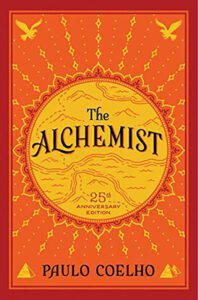
The Alchemist
I love the book The Alchemist. That’s the name of your process, the Referral Alchemy. This concept that you talk about, we’re lucky sometimes we meet a couple of referral archeologists who keep us in mind, referrals and take the time to think about who’s a smart connection. Most of us don’t know how to hang out with those kinds of people, let alone how to be one. It seems to me that you’re solving both problems. You teach people how to become an alchemist in terms of being able to tap into the network in a meaningful way and then how to find others so that you’re spending time with the right people. That helps your own network, which makes you a better referral.
If you look at the Master Connectors logo that I have, it’s a Buckminster Fuller Geodesic like the Epcot globe. The idea here is, first of all, the triangle is the strongest geometric shape. Geodesics are built out of triangles and the best relationships are three-way. I gain influence when I introduce you to a third party. You’re connected to me. They’re connected to me. You’re connected to them. That strengthens our relationships all the way around. The other thing about a geodesic that is unique is that it is the only geometrical structure that gains strength and durability as it gets taller. That has to do with the fact that it’s round and dome-shaped. The taller it gets, the wider base gets. It makes it more stable.
The key to the whole alchemy piece is being able to hub enough connections that you can get anywhere around the geodesic because you have a point of connection somewhere. I’ve got an alchemy epic fail and then an alchemy epic success. The success story is Rob Goyette was on my show and I asked him, “Who do you want to know?” I make it my business to introduce the people I meet to the people they want to know who do you want to know. He said he wanted to meet John Lee Dumas.
It happened that somebody in my network had coached with him and had presented me to John to have him on my show. It was a brand new show, so I was terrified to have this conversation with John Lee Dumas. I didn’t schedule him. If somebody hands you, John Lee Dumas, on a platter, I don’t care how unprepared you are. He’ll make you look good, just say yes but I didn’t have the confidence to say yes.
I ended up calling Zach, telling him, “I’ve got this guy, Rob. Do you still have a connection?” He said, “I don’t but my friend does because my friend lives in Puerto Rico.” Zach introduced Rob to the friend, the friend introduced Rob to John Lee Dumas, John Lee Dumas introduced Rob to someone at this party and those two inked a massive deal.
It’s like the Kevin Bacon, Six Degrees of Separation in a way.
They say everyone is Six Degrees of Separation and that’s not the case. Dr. Ivan Misner and Michelle Donovan did the research. What they found was that only 29% of people are capable of doing it. It’s based on a study that was done where you had to get a letter to a destination and mail it to someone you knew, then they had to mail it to someone else they knew. Only 29% of the letters arrived at their destination. I imagine that there were letters along the way that could have gotten to the destination but for the apathy of the individual who got the letter. I got the letter but I was apathetic about sending it on to the next person.
Most people are weak in the follow-up. That’s a big distinction I see in particular.
It can be fun for me. It’s an adventure. It takes on this LARPing quality, Live-Action Role Play like, “How can I get to the next step? Who else could I ask? Where could I push? Where could I find it?” For me, it’s going on an epic quest. I won’t work that hard for everybody but I’ll work that hard for people who I think are merit that much activity.
[bctt tweet=”Get a referral engine by planning and tracking. ” username=”John_Livesay”]
It’s like the hero’s journey in a way. There are obstacles along the way but then the stakes are high. Let’s get into what problem you’re solving. What happens to someone’s business if they’re only relying on advertising and they maybe get the occasional a lot of the blue referral but they don’t have a system in place to create that or support that coming?
Generally, they’re stuck not getting any clients. That’s the challenge. Here’s the real truth, John. I’m not against paid traffic, print advertising, television advertising or sponsorship but they all take money because if you’re going to do it, you need to be ubiquitous. In order to do that, there’s this frequency element. It used to be people saw you 3 to 5 times and that was enough. Now it’s 12 to 17.
Somebody needs to see your Facebook ad twelve times before they’re going to click on it. How much money do you need to put behind that? You’ve got to know how to beat the algorithms, know your SEO words, have the right message and AB split test. It’s so overwhelming. I’m a $75,000 a year coach. You don’t have a choice but to use referrals. I have this Referrals On Demand system but it’s the most simple form. I use PETE, it’s an acronym. Meet my friend PETE, Plan, Execute, Track, Evaluate. Without it, you won’t have a consistent revenue stream.
Do you find some people are hesitant to make referrals? Let’s say you’re coach and you got a great client. Maybe they’re embarrassed that they’re even using a coach that they don’t want to tell their friends. I see a lot of people who are financial advisors like, “Any referrals you have?” Let’s say you’re doing a good job, whether you’re somebody’s empathy coach or financial advisor and you want them to send you referrals.
You ask, “Should they be giving referral fees?” What’s the process that you teach because I know you have an upcoming course we want to talk about? I’m trying to identify some problems that you’re helping people solve. Most people are afraid to ask, then they ask and they still don’t get it. They don’t know why. That’s what I see.
There are a couple of things here. Number one, referral fees don’t work, so don’t do it. I’ll give you $25 if you send me your mother. That’s not happening. The only place that it works is in joint venture marketing but that’s a whole other ball of wax. We can talk about that but that involves paying people high dollar cost of client acquisition and the average solo entrepreneur doesn’t even know what client acquisition costs are, let alone how much their cost of client acquisition is. There’s that element of that. What I teach is very relevant to joint venture marketing and it is an essential skillset because if I want you to promote for me, I need to build this relationship with you that has some reciprocal value. Referral fees, in general, don’t work. They will not inspire your clients to refer you.
Second thing, your clients are not going to refer you because you do a bang-up job for them. The idea is like, “If you go to a movie, you tell everybody about it. If you go to a great restaurant, you tell everybody about it.” I’m sorry. No, one’s talking about what a great coach you are on an intentional basis. If someone says, “John, you’re killing it. What happened while I was working with Virginia?” Only if someone notices and asks, “Will your clients do it?” Your clients rarely are going to put their neck on the line, mostly because they often don’t know what to say, how to do it or what to work?
The real money and sustainability are in creating a team of affiliates, ambassadors and advocates that willingly work, out of goodwill, on your behalf because they like who you are. They believe in your worldview, what you’re up to and want to further your cause because they think you’re the man and they want to proliferate that.

Referral Diva: The real sustainability is creating a team of affiliates, ambassadors, and advocates who willingly work on your behalf because they like who you are.
People can tell that when they’re hearing or even reading an email, they can tell whether it’s an authentic connection or not. I believe everything’s energy from a quantum physics standpoint, money’s energy, relationships are energy and trust gets transferred. That’s the thing that most people do not realize. “I got to get you to trust me. Let me show you all the social proof,” look you in the eye and all that other stuff that you need. What you’re offering people is the roadmap to how to get trust transferred. That’s how I would sum you up to somebody.
I would say that to be true and a lot of it has to do with clarity, clarity about who I am, what I want, what I’m up to in the world and my purpose. Why am I here on the planet? What am I here to do? What change am I here to affect? It’s the ability to communicate it clearly.
Clear, concise and compelling are my three Cs. I’m constantly teaching people with their storytelling skills. Let’s double click on the concept of you working with solo entrepreneurs. Can you give us 2 or 3 industries? Are they coaches? If so, what kind of coaches? Are they the guy who owns the dry cleaning business? I don’t think that’s who it is. Who’s your ideal client? Who’s this for?
I’m working with midlife expert entrepreneurs is where that’s coming in. Coaches, consultants and I consider a financial advisor, accountant and attorney. They’re all consultants of some sort. People that are using their expertise to solve problems for others. They’re selling something intangible. It’s easy to be like, “I’m selling magic markers. Do you need a magic marker? A magic marker will suit your needs.”
That’s fine but when you’re talking about things like money, deep dark secrets, transformational journey or whatever that is, you start getting into stuff that people are going to hold tight to the vest in the trust level for that. It’s not just I can buy it at Walmart, think this is crap, throw it in the garbage and buy something at Target. That’s not that easy.
Tell us a little bit about what you have coming up with this program, Referral Engine. Is it an online course?
It’s delivered live. It’s a hybrid coaching program. There’s video support. I’ve got the video modules for the support and then we’ll be meeting once a week for Q&A. We’ll be covering things like how do you align your business with your lifestyle? Most people are building a business and then trying to fit life in. My clients decide on life and then they align their business with that.
It reminds me of some people who have kids and then once the kid arrives, everything revolves around the kid. The parents suddenly lose the time to work out. They don’t see their friends anymore and everything’s about the kid’s life. There are other people who have kids like, “The kid is joining our life. The kid is not our life.” I was like, “What a great distinction.” It doesn’t mean you don’t take your kids to birthday parties but that’s what I hear you saying. Is that a great analogy?
It is. By the way, my two girls are capable of sitting on a bench for four hours and entertaining themselves with their thoughts.
No electronics needed?
[bctt tweet=”Align your business with your lifestyle.” username=”John_Livesay”]
No. My kids grew up in the Game Boy era. It boils down to, “What is it that you want to be doing? What kind of life do you want to be?” It’s, “I know what life I want to be living. With whom do I want to take the journey?” I call it defining your tribe. It’s getting in touch with your values, mission, vision, passion, purpose, the impact that you want to have and who do you want to invite in. Dr. Ivan Misner and Stewart Emery wrote a book called Who’s in Your Room.
It’s up to us to decide who we let in. If we let somebody in by mistake, get them out. It’s so good.
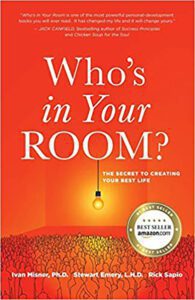
Who’s in Your Room: The Secret to Creating Your Best Life
You can never get them out. Did you know that? Ivan Misner does this. He’s like, “Think of somebody that you kicked out your room.” You said, “Get out of my room.” Did you think of somebody? They’re still in your room. They are still living because they have taken up space in your neural network. Unless you have a frontal lobotomy and you have a cut-out, it’s not going anywhere.
The notion of defining your tribe is, “Who do I psychographically want to take my life’s journey with?” It’s number one. Number two, “How will they know that I get them?” How do we communicate? I’m communicating to you how I see you. What you need to be thinking when I’m talking to you is like, “How did she get in my head?”
That goes back full circle about the importance of listening, being curious and having empathy. When you hear someone express a challenge or a problem they’re having, you can then say, “If you’re having this, I bet there are 100 or 1,000 other people like you.” That becomes part of the concept for your marketing. This whole concept is fascinating of how we communicate and what trust is. Virginia, where can people go to find out more about you and your wonderful program about building this Referral Engine?
You can locate information about the Referral Engine at MasterConnectors.com/ReferralEngine. On the forms there, it says like, “How’d you hear from us?” If you found out about it here, make sure you fill that out and let us know so that John gets brownie points and kisses.
Thank you so much. What a treasure. I love that you’re so passionate. Your daughters are lucky to have you.
Thank you so much, John. I appreciate it.
Important Links
- Virginia Muzquiz
- Ten by Three
- The Alchemist
- Rob Goyette – Previous episode on Business by Referral Podcast
- Referral Engine
- Who’s in Your Room
- Better Selling Through Storytelling Method Online Course
Wanna Host Your Own Podcast?
Click here to see how my friends at Podetize can help
Purchase John’s new book
John Livesay, The Pitch Whisperer
Share The Show
Did you enjoy the show? I’d love it if you subscribed today and left us a 5-star review!
- Click this link
- Click on the ‘Subscribe’ button below the artwork
- Go to the ‘Ratings and Reviews’ section
- Click on ‘Write a Review’
Love the show? Subscribe, rate, review, and share!
Join The Successful Pitch community today:
- JohnLivesay.com
- John Livesay Facebook
- John Livesay Twitter
- John Livesay LinkedIn
- John Livesay YouTube
Trustworthy: How The Smartest Brands Beat Cynicism With Margot Bloomstein
Posted by John Livesay in podcast | 0 comments
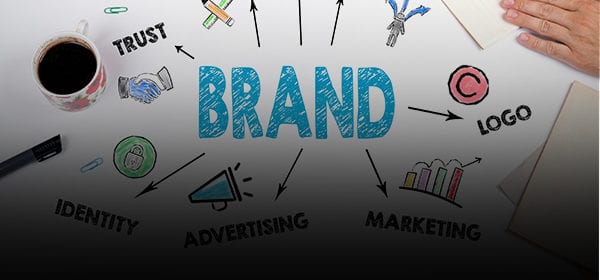
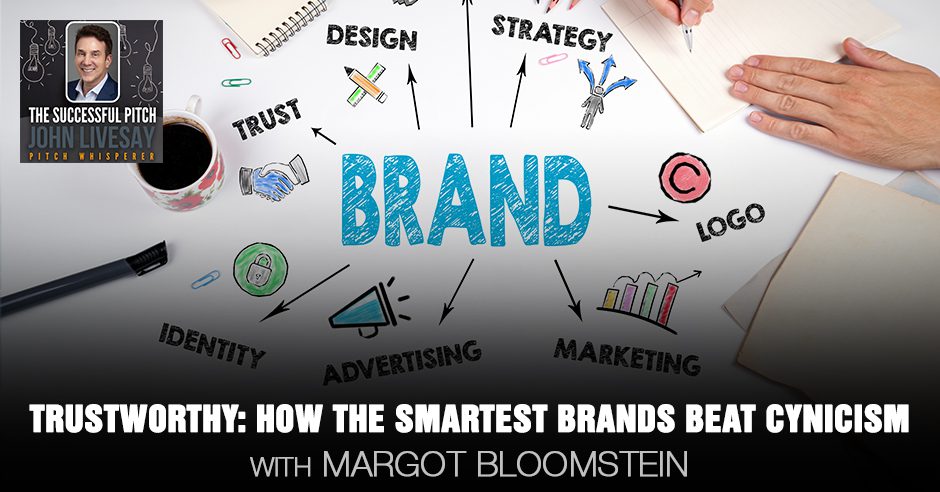
With competition getting tougher by the day, how can you make your brand stand out in the market? John Livesay has the perfect guest who can tell you which brands are doing it right and which ones are doing it wrong. He sits down with the creator of BrandSort, Margot Bloomstein. Bringing her book, Trustworthy: How the Smartest Brands Beat Cynicism and Bridge the Trust Gap, she highlights the importance of regaining the trust of cynical consumers through empathy and authenticity. While having the ability to understand and share the feelings of your customers is key, understanding yourself should come first. Margot then dives into the importance of knowing who you are as a company and brand so you can be in a better position to engage with audiences.
—
Listen to the podcast here
Trustworthy: How The Smartest Brands Beat Cynicism With Margot Bloomstein
Our guest is Margot Bloomstein, the author of Trustworthy. We get into conversations about which brands are doing it right, and which ones are doing it wrong, and why trust is so important as well as an interesting conversation around empathy. Enjoy the episode.
—
Our guest is Margot Bloomstein, who is one of the leading voices in the content strategy industry. She’s the author of Trustworthy: How the Smartest Brands Beat Cynicism and Bridge the Trust Gap and Content Strategy, with real world stories to strengthen every interactive project, as well as being the Principal of Appropriate, Inc., which is a brand and content strategy consultancy based in Boston. She’s a speaker and a strategic advisor. She works with marketing teams, leading organizations for the last several years. She’s the Creator of BrandSort where she developed the popular message, architecture-driven approach to content strategy. She teaches the content strategy graduate program at FH University in Austria, and lectures around the world about brand driven content strategy. Welcome to the show.
Thank you so much. I’m delighted to be here.
I always like to ask my guests their own story of origin. You can go back to childhood, school. Where did you get interested in this concept of trust and content and all that good stuff?
I’ve been working in the content strategy industry for many years, and over that time, I’ve had the opportunity to work with organizations in a pretty broad variety of industries in healthcare, retail and financial services. The common thread that I always see between all of them is this interest in meeting unsolved problems and identifying the problems for their audiences and their customers, and then figuring out how to combine what they offer with what their audiences need. My background before content strategy was in design focused on problem solving. That’s where my interest has remained over time. Our problems and our client’s problems have become more and more complex, but still, some of the tools that we use to meet them around establishing personal relationships and trading and empathy and compassion to meet their needs, those things haven’t changed.
[bctt tweet=”What responsibility do businesses have to care about trust? Why do trust and credibility seem like they’re under attack?” username=”John_Livesay”]
I am all about empathy. I’m always telling audiences when I’m in front of them about the importance of putting on your empathy hat, and the better you can describe a problem, the better people think you have your solution. What are you seeing in your work around empathy?
It’s interesting because in design, in content strategy, in the web industry and how we make the modern web, empathy has become almost like a buzzword in our industry. We talk about empathy and authenticity and transparency, a lot of marketing departments throw around those terms. Over the past several years as we’ve seen different social issues and different social movements come more and more to the forefront. Businesses are trying to figure out how they fit into them if they should comment on them at all. Empathy has become more and more of the latch word. I want to push back on that and say that sometimes empathy demands a level of arrogance of saying that “I can understand exactly your needs, even if I don’t have your life experience.” What we’re realizing more and more is that empathy maybe is a big ask for a lot of organizations, but let’s start with compassion and respect for our audiences first.
How did you come up with the name of your book, Trustworthy?
As I was looking at this problem of trust and seeing how cynicism and gaslighting were undermining the marketing and sales cycles in so many industries, I was starting to notice the brands that were doing it right, that were rising above and saying, “We can still combat cynicism. We can still establish rapport with our audiences. We can still build trust.” I want it to look and see what were the brands that were doing it right, and then figure out why, what can we learn from them, what can we unpack. In Trustworthy, a lot of what I profile are the organizations, brands, campaigns that are doing it right. It’s easy for us to find bad examples of organizations that are destroying trust and we can pile on them, but we don’t necessarily learn from them either.

Smart Brands: Empathy is a big ask for a lot of organizations. Start with compassion and respect for your audiences first.
What’s an example of one that you like?
They’re all my favorites in the book, but one of the ones that keep it much where we all are now is Zoom. When we look at how they’ve faced different challenges over the past several years, it’s a model in how you build trust. Starting back in probably December of 2019, they were seeing maybe 10 million daily users, 10 million daily business users. It’s mostly people coming from within businesses, within marketing departments, having meetings that were all supported by IT teams that were teaching them how to follow security protocols and set passwords. Within a few months, that all changed. Now they have something like 90 million daily users. People are using it that don’t have the support of an IT team. Every schoolteacher or preschool teacher, everyone that wants to get together with a happy hour with their friends over Zoom or celebrate a holiday with family over Zoom.
They’re not doing it with the support of an IT team. That’s when we saw the rise of Zoom bombers pretty early on in the pandemic and all sorts of problems around that. Zoom could have responded by saying, “You’re seeing problems because you’re using it wrong.” They didn’t. Instead, last April 2020, the CEO wrote this open blog post that came out as an apology to say, “You’re having problems with this? That’s our problem. That’s our fault. Thank you for noticing some of these security issues. We appreciate our critics calling out these problems. Here’s what we’re going to do about it.”
He phrased it first in the first-person singular saying, “I’m sorry,” and pivoted to that plural saying, “Here’s what we’re going to do about it.” Calling out his team and giving them credit. He proceeded to say, “Here’s what you can expect to see as far as changes from us. Here’s how we’re going to shift a lot of our engineering resources to support improving security and privacy. We’re going to submit to third-party audits. You can expect to hear from me at this frequency.” He was accountable. That way of building trust when he was at such a point of vulnerability, when the company was at such a point of vulnerability and in the public eye to say, “We’re sorry. Here’s how you can hold us accountable and here’s why things are going to improve from here.” That’s a model in building trust.
[bctt tweet=”Know what your organization is, who you are, and how you are so you don’t lose yourself when engaging with the rest of the marketplace.” username=”John_Livesay”]
The concept of building trust also comes into play for those companies that are trying to win back customers they’ve lost for whatever reason. I was working with one and they had said they didn’t make some deadlines. They were then let go for a year, then they had an opportunity to come back in and convince them to work with them again. I said, “What are you going to say?” They said, “We have all this research we’re going to share on how things have changed.” I was like, “You need to own that you caused the problem, even if it was other vendors and even if it’s the new team, you still have to own it.” What you said is so valuable. That’s why I want to underline it. You have to say, “Here’s what we’re doing to make sure this never happens again.” If you don’t have those systems in place, don’t even bother taking the meeting.
It sounds like you’re describing where a client was saying, “Here’s our new research. Here’s how things have changed maybe in the industry.” When you need to apologize, when you need to demonstrate accountability and show how you are responsible and ethical as a company, it isn’t about pointing to external research. You need to point the mirror back on yourselves and say, “Here’s what we’re doing. Here’s how we are changing.”
Texas was out of electricity and water. People want answers and they want to know what are you doing to make sure this never happens again? It’s not just a business thing. It’s a personal thing. It’s a political governing thing. This concept of trust is in the news.
Texas is a wonderful example. I had the opportunity to speak with someone in their Department of Public Works because I saw him tweeting in a personal way. It was a thread where he was saying, “Yes, this is a problem. I want you to know what I’m experiencing too in this leadership position. Here’s what went wrong. Here’s why we think we’re experiencing this problem. Yes, I am experiencing it too. Customer, as well as a leader here. Here’s what we’re going to do to make sure that hopefully we can right this ship now so that we don’t have this problem in the future.” I reached out to him because I said, “That’s wonderful.” I would love to see that level of discourse and detail and vulnerability as well as voice speaking in a way that your audience can understand. I’d love to see that from more public officials. We can learn from that. That’s what I would love to see moving forward.

Smart Brands: When you need to apologize, demonstrate accountability, and show how you are responsible and ethical as a company. It isn’t about pointing to external research; you point the mirror back on yourself.
You brought up something that if you can explain someone’s problem or their pain points, because you’ve experienced it yourself, your trustworthy factor goes up big time because you’ve been in their shoes. You also talked about that we should double down on qualities that we find that make us unique if we want to increase our social media engagement. The first question I’m thinking our readers will have is, what’s the quality that makes me unique? Let’s start there. How do we even find that?
As you mentioned, a lot of my focus within content strategy has been around brand-driven content strategy, looking at how organizations do identify, what makes them unique so that they can establish that consistent, cohesive, persistent tone of voice. When an organization does that, it does a few things. This is digging into ancient history, but that idea of gnothi seauton. It was carved over the door of the temple in Delphi. Ancient Greece, they said, “First, gnothi seauton.” Know thy self. Before you engage with anybody else, know who you are. In modern branding and modern marketing, we need to embrace that idea, know what your organization is, know who you are and how you are so that you don’t lose yourself when you’re trying to engage with the rest of the marketplace and prospective customers, prospective clients.
That idea of first figuring out who you are, that’s what I dig into around message architecture. A message architecture is simply a hierarchy of communication goals. I developed a tool called BrandSort to help organizations figure out is it more important for us to project that we’re innovative or traditional? We’re maybe witty and polished or scrappier and more creative, because knowing that can then help you determine which platforms should you be using. Where should you be investing your time? What’s the right tone of voice as well as then visually and verbally?
What’s the right look and feel and the color scheme and the style of imagery that projects those qualities? When organizations can first prioritize understanding themselves, then they’re in a better position to engage their audiences, as well as then differentiate better from their competition. I would argue it is a service that we offer our users, our audiences. It’s a service that we provide in saying, “It’s a crowded marketplace. If everybody’s competing with similar products, here’s how we’re different. Here’s how that we aligned with what.”
[bctt tweet=”When organizations can first prioritize understanding themselves, then they’re in a better position to engage their audiences.” username=”John_Livesay”]
Do you have a story from your book of a brand that does that well?
It’s one of the first examples that I have in the book. Writing this book was such a wonderful opportunity to talk with lots of different brands, hear their stories and gather up those examples because we all love the stories. It’s always good to get new stories from brands. One of the first organizations that I spoke with was Mailchimp, because in marketing, small business owners know them well. When Mailchimp first started out, they were a small business serving other small businesses. They’ve grown tremendously over time. Something like 60% of the world’s email marketing now goes through Mailchimp. As they’ve grown over time, they’ve offered new services. They’ve rolled out new offerings to their audience. That was always with a little bit of risk, because for their legacy customers, there’s always that concern of like, “Are you going to forget about me as you’re rolling out new eCommerce offerings? Are you going to forget about what I need and stop servicing basic email marketing customers?”
They’ve made choices to, first, solidify and codify what their brand means and how they manifest their brand. Their voice and tone guidelines are a model in the industry, and they’ve published them publicly so that other organizations can also see the level of detail that they document in them. Their design system, as well, is becoming more and more codified so that their content creators internally know where the guardrails are and then how to be creative within them. It helps them become more efficient and more effective. It also ensures that all their communication is more consistent. It’s serving their different audiences as well, because as they’ve grown over time, they’ve realized that there are parts of their brand that don’t scale or don’t make sense anymore.
It used to be that you would hear error messaging and calls to action in the voice of Freddie, their Mailchimp monkey, their little mascot. You don’t get error messaging from a monkey anymore though, but they have maintained other aspects of their brands, still the same sunny yellow, a lot of the tone of voice is still similar and it’s still consistent. They’ve varied other things around their illustration style, some of their phrasing. They’ve also varied it depending on the different audiences they’re trying to reach. Their guidelines document all of that, both to make things easier for their internal users, their copywriters and any freelancers that they might engage, as well as then their external audience. They know who they are, and they know how they’ve had to change over time to maintain visibility, a familiar face as well as then reassure their audience that, “Yes, we’re still Mailchimp, still the organization you’ve known and trusted for years. You can still make sure and feel confident that you know who we are and how we are and where we’re going.”
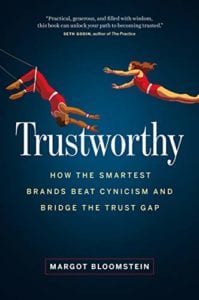
Trustworthy: How the Smartest Brands Beat Cynicism and Bridge the Trust Gap
You bring up a good point about the need to be evolutionary instead of revolutionary as you’re growing your business. If you’ve made your core customers feel they’re not seen and heard or appreciated trying to go after bigger ones, you can trip yourself up there.
Moreover, those customers need to feel both that they’re still important and that they still matter, but also that they know where you’re going. It can be as simple as strategically sharing your roadmap to build that buzz, but also so that people feel confident that, “This is a company I’ve known for a long time, and I know where they’re going in the future.” Also, by giving them hooks of familiarity so that you’re not relaunching your brand right now, you’re still maintaining elements of it that helps to maintain their confidence in themselves that they still know this brand. They feel like they can still trust this brand, that they made a good decision in going with this brand and investing with it. That’s especially important right now because there is so much upheaval in our world and in our economy. For organizations that say now is the time to relaunch, now is the time to completely overhaul our website, when I hear that, I shudder and my head and say, “No, now is not the time for revolution.” It’s more about evolution. Your audience needs to feel they still know you. If you can offer them that level of comfort and confidence in you and in themselves, that’s helping to ground them in a time that is so otherwise unsettled.
In your book, Trustworthy, you have a three-piece action plan. Can you give us the highlights of what that is?
The framework that I present in Trustworthy, it focuses on three parts, voice, volume and vulnerability. I present this as a framework for anybody that’s in professional communication. Designers, the CMO, copywriters, content strategists. If you’re the small business owner and you’re wearing all of those hats, great, this is something that you can take on. To build trust, you need to focus on those three areas. Voice, we’ve been talking about that a lot. Voice refers to the familiar and consistent way in which a brand engages with the world visually and verbally, so word, choice, the overall look and feel of the organization, the different content types you use across different platforms. That’s your voice. That’s what Mailchimp does so well. Some of the other examples I share like Banana Republic, the early days of that, they did so well.
[bctt tweet=”Be evolutionary instead of revolutionary.” username=”John_Livesay”]
The second section, volume, that refers to the volume of information that you’re publishing. The length and level of detail that you go into, in blog posts, in long form copy, if you’re deciding between long form copy and bulleted lists, as well as then, visually. Are you using images that maybe have a great level of detail in them, or are more streamlined to project the sense of simplicity? Do you have images that are maybe in 1 of 50 in a photo gallery or are things more streamlined so that people can get the gist more quickly? For some organizations, they feel like in order to build trust, they need to publish a lot. They need to have a lot of content marketing. That makes sense for some organizations. I profile in the book, Crutchfield Electronics, in order for their audience to feel good about a purchase, maybe it’s high-end audio equipment or camera equipment, they spend a lot of time on the site.
If you look at the pages on that site, they’re long. There’s a lot of different types of content there. You can make sure that you understand a product fully by the time you’re ready to buy because that’s what’s right for their audience. They know that it’s right. They can measure the success of that in the rate of product returns. They’re low because when people are finally ready to make that decision, they can make a decision with confidence. That’s how you know you’ve got enough content, when people can make good decisions and feel good about the decisions they make.
The third section, vulnerability, that focuses is, we were talking about on how organizations maybe prototype in public, come back from a big mistake, take that risk to say, “Do we double down on what we did that was maybe stupid? Maybe the CEO did something wrong or do we seize this opportunity to say we messed up. Here’s how we’re going to own it and here’s how we’re going to make sure it never happens again. Help us in this process, watch how we’re improving, keep giving us feedback.” It’s a tremendous opportunity to bring your audience closer.
The other way that I look at vulnerability in the book is also around how organizations make their values visible. One of the organizations that I profile there is Penzeys Spices. They’re a spice retail chain based in the Midwest. They’ve been bold talking about their politics, why they support immigration, why they oppose some of the other big intractable social problems that we’re facing now and their stance on it. When they first took to social media, sharing their politics, people pushed back. People said, “Stay in your lane there, spice boy. Why are you sharing this?” It was largely the CEO sharing his personal politics. He was pretty upfront about it. He said, “This is our lane. Not only are we a business that sees itself as part of a community, therefore issues in the community are important to us, but also the stuff that we trade in, spices, they come from war torn regions. Furthermore, cooking as an act of love, that’s not just our tagline. We believe that. Many of the recipes that we all love come here on the backs of immigrants. This is much our lane.” It was risky for him to take that position, but when organizations share their values in such a visible way, what usually happens is that people don’t look away. They respond loudly and they got a lot of headlines for that. They lost a lot of customers.
They expanded their audience. They gained a lot of customers, and they weren’t just people that were interested in cooking, they were people that said, “Your values align with my values. This is where I’m shopping next Christmas to get presents for my family. The people that I know that do cook, this is where I’m going to buy presents for them.” They saw something like 50% growth year over year in their profits after they got more political and made their values visible. It’s such an act of vulnerability, but more and more, what we hear is that people do want that level of insight into the organizations where they spend their money.
The book again is called Trustworthy. It’s available wherever you can buy a book. Any last thoughts or link you want to leave us with?
No, thank you so much. This was wonderful. If you want to learn more about it, please visit AppropriateInc.com/Trustworthy. You can follow me on Twitter @MBloomstein. I look forward to hearing how more people use the ideas in this book.
Thanks, Margot.
Important Links
- Trustworthy: How the Smartest Brands Beat Cynicism and Bridge the Trust Gap
- Content Strategy
- Appropriate, Inc.
- BrandSort
- @MBloomstein – Twitter
- Better Selling Through Storytelling Method Online Course
Wanna Host Your Own Podcast?
Click here to see how my friends at Podetize can help
Purchase John’s new book
John Livesay, The Pitch Whisperer
Share The Show
Did you enjoy the show? I’d love it if you subscribed today and left us a 5-star review!
- Click this link
- Click on the ‘Subscribe’ button below the artwork
- Go to the ‘Ratings and Reviews’ section
- Click on ‘Write a Review’
Love the show? Subscribe, rate, review, and share!
Join The Successful Pitch community today:
- JohnLivesay.com
- John Livesay Facebook
- John Livesay Twitter
- John Livesay LinkedIn
- John Livesay YouTube
Brain+Trust With Tim Hayden
Posted by John Livesay in podcast | 0 comments

In today’s fast-paced world overrun by technology, understanding how the human brain behaves, works, and reacts is an important aspect of digital consumption. John Livesay delves more into this topic with Tim Hayden, the founder of Brain+Trust and chief business strategist at The Next Practice, by discussing how empathy and getting a full grasp of audience emotions can result in a compelling marketing strategy. Tim also explains how data science is being applied to COVID-19 trials as well as the concept of sonic gardens.
—
Listen to the podcast here
Brain+Trust With Tim Hayden
Our guest is Tim Hayden, who is the Founder of Brain+Trust, which is an agency that helps companies use empathy and technology to anticipate how to get inside their customer’s head. He’s also involved with a company called The Next Practice, which is about anticipating what’s coming around the corner. We go into things like how to tend to your sonic garden, a consent management platform, what’s happening in the world of AI, and consent and data privacy. All through a lens of how do we make the world better. Enjoy the episode.
—
Our guest is Tim Hayden, who has many years of marketing and business leadership experience. He’s been the founder of new ventures and a catalyst for transformational progress with some of the world’s largest brands. He is a strategic business executive, studies human behavior and how media and mobility are reshaping all of the business. From operations to marketing and customer service, he assembles technology and communications initiatives that lead to efficiency and revenue growth. He’s an investor and advisor to technology startups. He actively works with entrepreneurs and ventures to capitalize on opportunities and shifts across many different industries. Tim, welcome to the show.
John, thanks for having me. I appreciate that introduction.
Tell us your own story of origin and take us back a little bit. You can go back to childhood. You can go back to your days at Texas State. How did you get interested in being involved in startups in general? It seems to be a part of your path.
Growing up, my mom was a school teacher and later on, she became an executive with several nonprofits including The Hurst Euless Bedford Chamber of Commerce, right in the middle of the Dallas-Fort Worth. My dad on the other hand was in software. That’s probably what made me acutely aware of what was happening with technology and how it was iterating as time went along. Technology got faster. It got better. My dad, I wouldn’t say it was cumbersome, but he was absent for a lot of my formative years because he was working for somebody else. That’s the easiest way. I’ve always thought if I could wake up on Monday mornings knowing that the world is on my shoulders to win, to survive, or to do whatever else, that’s the path I’m going to take. That’s even been the case when I’ve gone to work for a large corporation or somebody else. I’ve always tried to be entrepreneurial in my approach.
Doing my research in preparation for this is, you have a fascination with human behavior and that’s why we’re looking forward to getting to talk with you because I share that passion from my advertising background. That’s what made me get into advertising was, what motivates people to change their behavior or buy one product over another. The same concept to persuade one person doesn’t necessarily work for another. You have certainly done a deep dive into that. Let’s start with what you’re doing at a company where you’re the Chief Business Strategy at The Next Practice? I find that concept fascinating “unlocking what’s next?” This premise that we all have to find what’s coming around the corner, we can’t stay in our comfort zone is what I get from what you’re doing there.
I’ve worked across a number of industries. You take municipalities and state local governments. This comes from even me sitting on the board of the Austin Chamber of Commerce at one time. The art of economic development is always being able to look 5 to 10 years in the future to understand what do you need to do to develop an infrastructure, the systems, the processes, and the environment for business to be conducive for a long period of time. That’s one part of it, but at The Next Practice, we’re all about doing that in terms of marketing customer experience and communications. We think that without calling it digital transformation, how can we help organizations with their endeavors be able to realize revenue growth, find new customers, and experience repeat behaviors from the customers that have already bought from them?
[bctt tweet=”Going on the next level by having empathy is what every entrepreneur should keep in mind.” username=”John_Livesay”]
How can we do that and always be ready for how behavior is going to change? That’s the important takeaway there is that, as the world becomes more automated as immediacy. During COVID, we can buy anything and have it delivered to our house in a matter of minutes, hours or days. That’s been a reality for some time, but we all know it way too well and we expect the rest of the world to be that way. At The Next Practice, we’re about being always on the next level if we can. It doesn’t mean that we’ll overshoot what needs to happen, but it means that we’ll have an understanding or maybe empathy with where things need to go from here.
You were very involved with the Austin Chamber of Commerce. Let’s give a shout-out to Austin and what an amazing community. I live here myself. I’ve been impressed by the friendliness, openness and collaboration that everyone finds here. A lot of people are moving from Silicon Valley here. The city has been voted the number one place to live for a couple of years in a row. There’s so much that it has to offer. From your perspective, both with your experience at the Chamber of Commerce and being an entrepreneur here, what is it that makes Austin special for you?
I went to school in San Marcos about 30 miles South of here. In the early and mid ‘90s, I was exposed to a lot that was happening with Austin. My wife went to UT. Neither one of us grew up here. She grew up in East Texas. I grew up in the DFW area. It’s the vibe that Austin has built on the edge of the Hill Country with a river running through it. It’s between the University of Texas and Ohio State, which has the largest public university in the country. Lots of young people live near the middle of town. You put a state government in the middle of it. The state government that leans a different way than the local government leans. It makes for an interesting mix of developments in terms of culture and business. That’s why Austin is the place for a creative class and for people whether they want to start new companies or they have fresh new ideas, this is a wonderful Petri dish to do that in.
You add in how green it is with an aquifer, the beauty of all the parks, amazing food, and live music. There are many special sauces to it that companies, even Tesla are coming here. It continues to attract and see what makes it unique. The thing you said that resonated with me, Tim, is as it relates to The Next Practice is this concept of empathy. Can you define for everyone reading what empathy is from a business standpoint? How is that a great tool to anticipate what’s coming next?
We look at it through the lens of design thinking about being human-centered, customer-centered in business is to understand exactly the preferences, needs and disposition of your audience. You said it first, “No two people have the same behavior traits, no two people have the same wants and needs, or have that same disposition.” When you talk about empathy, it’s about putting yourself in someone else’s shoes as best as you can. That’s a tall order. It’s an impossibility to do at scale, but thanks to the way we’re connected digitally these days and more so every day, we have the beauty of data turned into insights. That helps us understand how people behave, what their preferences are, what they imply and state, and maybe how they respond to questions we put in front of them.
It’s always about understanding and being customer-centric. That goes for internal communications, as well as understanding teams and business units, how can they better share information, how can they be on the same page having a true north of insight on that customer behavior. We believe at The Next Practice and Brain+Trust partners, that’s the remit for companies that want to not just survive, but want to succeed and grow over the next decade.

Brain+Trust: Being customer-centered in business is to understand exactly the preferences, needs, and disposition of your audience.
Let’s take some companies, maybe Kodak or Blockbuster. They had a little more empathy and been able to take a look at what’s coming. Maybe they would have seen that the business model that they had relied on for so long wasn’t going to stay either because the technology was changing and customer preferences were changing. The hassles of back in the day going to a store. Imagine young people today, they don’t know how to even operate a rotary phone. Let alone the concept of you had to wait for a movie to be returned before you could see it. All that is fascinating to me. You touched on Brain+Trust. As I said, you are busy in many projects. Tell us your role at Brain+Trust and what the story of origin was there?
In 2016, I was in the process of moving back from the Bay Area in California to Austin. I was out there in the Bay Area for two years. I had a couple of colleagues that I knew who had come from large global digital media roles with major companies. We all had a conversation and said, “There’s a wave of new technology coming into the market.” Artificial intelligence, machine learning, automation, not to mention what was happening with social media. Not to mention what’s happening in mobility in the automotive space with cars getting smarter. Some cars are able to drive themselves. All of this and the speed at which it’s happening is extremely confusing to decision-makers and leaders.
We built Brain+Trust, first and foremost, to be a sage counsel and at least a resourceful guide to be able to help business leaders roadmap where they need to make investments and decisions for investing in the future, whether that’s new process and operations or new technologies. Thanks to the pandemic in one way, it accelerated the need for companies in light of customer data privacy laws. In terms of the imminent threat that companies like Amazon and others pose to certain verticals, is to build a direct and personalized experience with your customers and to operate on their terms, which brings us back to empathy. Understanding your customers in their needs and serving those needs, that’s what businesses must focus on.
I spoke at the Coca-Cola CMO Summit and it was the CMOs of all of their quick-service restaurants that serve Coke. I was speaking to the CMO of Domino’s Pizza. He was explaining that their philosophy was creating the perfect pizza experience. Meaning you have a thought, “I’d like a pizza,” and it magically appears and fast. He and his team created that app that tracks the thing. I want to ask you about that whole thing of transparency and that people feeling part of the process is a new behavior. They’re using artificial intelligence.
That’s one of your areas of expertise. They said, “If you tend to order the same pizza at the same time every day, and you open the app or pick up the phone, the AI notices it and says we’re going to take a risk the odds or whatever. Put the pizza order in before you finish completing what you want on it to try and shave off a few seconds of the delivery time.” The bigger picture is the perfect pizza experience, and that’s where I’m fascinated to get your insights on because technology is great. Unless we’re connecting it’s feelings and emotions. What’s coming next and have this overall vision of in this case. I think about a pizza and it shows up and then using AI to make that happen without the customer even knowing it is something that you’re talking about.
We used to call that surprise and delight. KLM Airlines does this in several airports in Europe, where if you put up a signal, if you tweet or back in the days when everybody’s to check in on Foursquare. If you let the world know you’re at the airport and KLM has got their ducks in a row from a technology standpoint. They sense that you’re at the airport because you said you were. They already know what flights you’re on, what gates you’re on. They’re going to surprise you with a gift. They’re going to surprise you with something. We’re going to see more and more of that. What’s fascinating though is that because of the choices that consumers have, in terms of where they can get the goods and services they need. The way they can go about discovering new flavors, new products, and new brands. We got to be careful.
[bctt tweet=”Understanding your customers in their needs and serving those needs—that’s what businesses must focus on.” username=”John_Livesay”]
We need to know that it’s okay when I call my local pizza. I order from East Side Pies a lot here in Austin. If I call them up, I’ll ask, “What did I order last time?” They tell me what I did. I said, “Let’s do it again.” I don’t have to tell them my name. Because of caller ID, they knew who I was. That’s good but understanding that maybe shaving a few seconds off the delivery doesn’t mean that you have to preempt the consumer. Let’s allow our customers to be in control as much as we can. Let them opt-in. You’re required to do that because of data privacy laws that are popping up in 27 states. The bottom line is let’s make sure that they’ve consented, they’re opting in, and they’ve given you the green light to do that thing.
Which leads me to an article you wrote about, “If you can’t give a customer a cookie.” You talk about this premise of Consent Management Platform or CMP. Tell us what that means and how that can help businesses do better marketing.
Most people that are reading this are going to be aware of websites, especially news websites that they visit. That has a little banner that comes up and says, “Will you accept these cookies?” Most of those outlets will allow you to click on a different link and be able to see how your information is used. That’s how global data privacy regulations in Europe, which started a few years ago. That’s how that spelled out and how you’re supposed to do it. That’s how the California Consumer Privacy Act, which went into effect here in the United States. That’s what it says you need to do. What’s happening is Google is no longer going to support third-party cookies, which empowers brands to do so much from tracking a customer from a search result to the website. Maybe to the mobile app, to an eCommerce store, to a physical location and to do so on their terms, not Google’s.
Google is saying no longer will they support third-party cookies or use them in terms of how they do everything from rank searches and guide people to your doorsteps. You’re going to see probably more of investment directly with Google that will be required to leverage the behavior that’s there within Google. Apple at the same time has come out with a new operating system, iOS 14, which puts the customer in total control of who gets access to their data. Who gets to understand where they go with that device, whether an iPhone or an iPad or a Mac. What is consumed on that device, where has it been used, maybe what speed were you going, what direction you were going back to your place. Your point about predictive pizzas, “Does he drive by here every day?”
What we’re seeing is twofold. One, commitments to customer data privacy. That’s what we see there, but we’re also seeing that Apple, Google and others are doing all they can to be able to compete with Amazon. They understand that in Apple’s case with maybe Apple News before but with Apple TV plus, they’re getting more minutes of the day and more hours of the day with you in their ecosystem. You’re consuming media that flows from Apple. You already have the devices. You carry Apple with you all day that, how do we get more of your time while you’re in at home, your vehicle, and other environments. That’s what’s going to be fascinating over the next few years, as we see that shake out alongside more scrutiny to customer data and customer data privacy.
The other thing that I was interested in and impressed by was your Brain+Trust partners are a member of The Next Practice Group and you’re working with the Johns Hopkins University on their trials during the COVID. Can you explain how you’re helping all of that effort that everyone is concerned about?

Brain+Trust: The flip side of understanding consumer human behavior is how to get on the other side with behavior change.
I can’t tell you everything, but I can tell you that we’re employing data science to be able to identify audiences and opportunities to have people enroll in the trials. This is for convalescent plasma. This is a partnership between Johns Hopkins University, UCLA and several other universities. It’s about helping them as quick as possible as the trial needs to run, because with COVID, it’s a race for everybody to get the best possible treatments in place. The best possible vaccines through the approval process and trials. It’s a treatment with convalescent plasma and it’s not different than a company that’s trying to get to market as fast as they can before their competition does. In this case, their competition happens to be a virus.
It’s always a race and this case, the stakes are very high. How wonderful that you and your team have the technology that you used, crafted and honed to help companies have successful launches and anticipate what’s around the corner and play all scenarios out of imagining. What could go right, wrong and how can we mitigate those to help us all lead happier and healthier lives again without this fear hanging over us. There are some to going back to the empathy thing. There’s a toll that we all feel over time that we’re going to start to look at. What is the toll of isolation, depression, and all these other things that are separate from the fear of getting sick? I was talking to people at assisted living and how much longer it’s taking to get people to put their parents in an assisted living home because of those fears. Not being able to visit the parents and all those issues come up into play. You’re at the cutting edge of anticipating what’s going to be needed to help people get through what could be seen as a post-traumatic syndrome situation when this is finally over.
That’s the flip side of understanding consumer human behavior is how do you get on the other side of it with behavior change. How do you be able to temper expectations because there are many statements being made some by the government, some by brands companies that purport to have solutions, whether that’s vaccines, it’s more hospital beds, or it’s certain types of treatment or medicines. In terms of the fear that hangs over us, it’s intimidating or even worse than that it creates anxiety. There’s the associated things that happen there if going to the office was the only time you socialized with others. I think is the case for a lot of people.
There are some problems that can occur in terms of depression and isolation. How do we manage this in terms of a much calmer approach to educating people on how to stay safe. Educating people on when there may be changes to certain protocols, whether that’s businesses reopening, schools reopening, or new types of testing being available in the market. There’s much in the way that we can all learn from this experience on how we should go about education, which is a communications remit. Not only understanding behavior, but helping change results in better outcomes for certain populations or the population at large.
I have to ask you about your concept that we all need to tend our sonic garden. First of all, nobody loves words and can appreciate good writing as much as I do with my advertising background, speaking and helping people become storytellers. That’s what sticks is when our brain goes, “I know where the garden is. I know what sonic waves are. What is a sonic garden?” You have the skill of pulling people in with your words crafts. Tell us what you mean by tending a sonic garden.
People talk about elevator pitches. There are certain tones that when you’re on your couch, in your home, and a TV spot comes up of your favorite fast food restaurant or an automotive brand, you can tell within the first few seconds who that is. Even without looking at the screen, you usually can tell. The same thing with jingles, for shows tones like for Intel Inside, these are all pieces of us at Brain+Trust. I need to give all the credit in the world to my business partner, Tracy Arrington. She comes from years of advertising and has always looked in audio, especially with radio, satellite radio, and podcasting. The opportunity to build more trust with an audience and to do with certain sounds, audio cues, messaging, and the narrative you put forth.
[bctt tweet=”How to forge better relationships with your audience and catch their interest? Understand their needs and emotions first.” username=”John_Livesay”]
Back in the day, television shows used to have a theme song and then they got so frenetic about every second costing money. They’re like, “Can we cut that out and have a show without a theme song, friends, and all that stuff?” A song that people would hear that and they smile. Now because they want more time for ads, they have cut that out. If people want to know more about Brain+Trust or The Next Practice, any other way you want people to follow you? I see you’re big on Twitter.
I don’t know that I’m big on Twitter. I’m @TheTimHayden on Twitter. I always doing a podcast or anything like that would say, “If you had about anything we talked about or want to challenge me on it, please do it out in public. Bring it on Twitter.”
Any last thought or quote you want to leave us with, Tim?
We have a number of things that are going to greatly reshape how the country and our cities and our states are run because of all the different positions and different referendums that are up. The sun is going to come up tomorrow. Saddle up. Know that there’s always a new day.
Thanks so much, Tim.
You got it, John. Thank you for having me.
Important Links
- https://Braintrust.Partners/
- https://NextPracticeGroup.com/
- @TheTimHayden – Twitter
- Better Selling Through Storytelling Method Online Course
Wanna Host Your Own Podcast?
Click here to see how my friends at Podetize can help
Purchase John’s new book
John Livesay, The Pitch Whisperer
Share The Show
Did you enjoy the show? I’d love it if you subscribed today and left us a 5-star review!
- Click this link
- Click on the ‘Subscribe’ button below the artwork
- Go to the ‘Ratings and Reviews’ section
- Click on ‘Write a Review’
Love the show? Subscribe, rate, review, and share!
Join The Successful Pitch community today:
- JohnLivesay.com
- John Livesay Facebook
- John Livesay Twitter
- John Livesay LinkedIn
- John Livesay YouTube