

Marketing With Webinars With Tom Poland
Posted by John Livesay in podcast | 0 comments

One of the difficulties many businesses face is finding the perfect timing to pop the question and ask potential clients to take the leap. How do you make people have the confidence and trust to work with you? In this episode, multiple best-selling marketing author, Tom Poland, joins John Livesay to reveal his unique answer: webinars. Tom shares with us his book, Marketing with Webinars, to guide us into the key benefits of using this method and what you can do to successfully get people to your lane. What is the Goldilocks marketing? How can you become more relatable? What role does storytelling play in the process? Why is reciprocity the most powerful force in marketing? Tom gives the answers and more in this discussion.
—
Listen to the podcast here
Marketing With Webinars With Tom Poland
Our guest is Tom Poland. He’s a multiple best-selling marketing author. Over the past 41 years, he started and sold five businesses, taking three of them international. He has led teams of over 100 people with annual revenues of more than $20 million. In his book, which is called Marketing with Webinars, he reveals the unique method that has helped thousands of organizations globally enjoy the fulfillment and prosperity that comes with a weekly flow of high-quality inbound client inquiries. Tom, welcome to the show.
John, thanks for having me.
Let everybody know besides your accent, where are you located in the world?
Just a correction first. I don’t have the accent, the Americans have. I am in the center of the universe, which is little Castaways Beach in Queensland, Australia.
It’s such a beautiful country. I’ve been up to the Barrier Reef. I know it well and lucky to be in all that beauty. Tom, I like to ask my guests to take us back to their own story of origin. You can go back to childhood, school, wherever you want to start the story, your interest in communications or marketing. It’s always fascinating to hear those stories are rarely linear.
[bctt tweet=”We’ve got to give people an opportunity to get to know us before we even pop the question of maybe talking about working together.” username=”John_Livesay”]
If I went and clocked back 41 years, I started out as a young management consultant. As a 24-year-old setting up shop as an independent management consultant. I was competing against the likes of the big fours that were then, the PricewaterhouseCoopers and Coopers & Lybrand. Way back then also, if you didn’t have a brick and mortar office with a receptionist behind a typewriter, you didn’t have a business. I had the overhead of a brick and mortar office and I had mortgages, three of them. I had children and I was broke. It doesn’t take too long to figure out that if you’re going to set yourself up as a 24-year-old management consultant marketing in competition against some big brands, you better get bloody good at marketing. You better get good fast. I bought every book, I went to every seminar and put everything in place. It didn’t work. I was going broke. Long story, I survived. I ended up thriving, but it was because I figured out there was one vital difference between almost all the marketing information and teaching that I was consuming and what would actually work. That one vital piece of information could be summed up by me saying, “When you’re marketing services advice or Software as a Service, it’s far more like you’re proposing marriage in your marketing than it is selling a washing machine.”
I was learning from people that were selling cars, real estate or dry-cleaning services. I was suggesting that a prospect enters into a long-term relationship with me so that I could give them advice. That meant the direct mail letters and whatever else we use back then, radio ads, “Come and get it, call this number and we’ll give you one.” None of that worked because I had to set up a scenario where people could have a first date with me. Before I propose, we talk about business. That first night became the event. It became the seminar, the workshop, the conference. I found that was a tremendously effective way to get new clients in the door. I reflected on that and I thought about the oldest, most successful marketing method in the world, which is speaking to groups of people.
If you have any doubts about that, ask yourself how many clients Buddha, Christ, Muhammad have. There are billions of them. All those three guys did was speak to groups of people and often quite small groups but it produced billions of followers. They didn’t even write anything. How I got to marketing webinars goes way back to that origin story. We’ve morphed from physical events into webinars mainly because I’m lazy. I got sick of running around the planet. I did have 500 physical events over those years. You’ll hire a conference center, send out direct mail letters, give everyone tickets, fill a room and struck your stuff on the stage for a couple of hours, hand out feedback forms and pick up the clients. It works well but it’s complicated. Long story short, when you’re marketing services advice or development software, you’ve got to give your prospect, your audience an opportunity to get to know you, much the same way as if I said, my now wife, I could have proposed to her at first sight, but I didn’t. I was only smart enough to know that that wouldn’t work. I asked her out for a date. One thing led to another. I think that’s analogous to the consultant, the coach, marketing services. We’ve got to give people an opportunity to get to know us before we even pop the question of maybe talking about working together.
For those first requests, I have found that the smaller they are, the easier it is. You don’t go from, “Fill out this form.” Maybe say, “If you want this free PDF, give me your email.” It’s like a little baby step. The risk is low and the reward is hopefully some good content as a sample.
It’s a bit like Goldilocks marketing. It could be too hot, it could be too cold. It can be just right. The right part depends on where the prospect is at because some of them want to know, where do I order? Almost literally they buy more of my books. I’ve got webinars. “Do we have to go through a consult? I want to work with you.” Those are the hot ones, and this is about 3%. Not a lot, but if you have enough volume, it can become significant. We find about 12% want to explore deeply. These are 12% of the people who comprised our audiences who want to explore deeply. They’ll read every word on a sales page. They’ll delve say for every second of a webinar or so on. That is what I call the explorers.
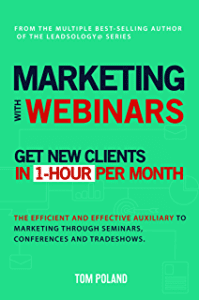
Marketing with Webinars
The 85% are the wanderers. They want to download the free PDF or the one-page blueprint. If you want to cater for the whole marketplace, you do need more than one marketing medium. The one I find that is the best, the Goldilocks. That’s about the right temperature is the webinar. If you align the title of the webinar with the benefit of working with you then you’re going to attract the right people. My webinars are about marketing with webinars. My book is about marketing with webinars, my program is about marketing with webinars and that’s an alignment. You think about this, we talked about how we’ve got to give people an opportunity to get to know us before we propose.
It’s like the first date. You can do speed dating. That’s not quite enough. That’s like social media. Six minutes and the clock goes, “Tell me all about yourself, I’ll do the same.” It’s not long enough to get to know someone. You could ask people to sign up for a six-week boot camp. It’s probably too much, but the webinars like the night out on the town. Let’s have dinner, let’s have a show, maybe have some coffee and we’ll go from there. They’ve got to register. It’s going to be an hour of their lives that they’re prepared to commit. If they’re prepared to put that much skin in the game, it’s about right for them at the end of that hour and 90 minutes, if everything’s clicked to reach out and book a time to talk with you about becoming a client. That’s why I call it Goldilocks marketing because we were hitting the sweet spot for the people that are ready to explore further.
I was doing one and somebody who’s a friend was listening, and he said, “Do you ever worry about giving away so much free good content that people might think?” I have my answer, but I would love to hear yours and I’ll share what I said to him. An open-loop we call that in storytelling. It’s creating a little suspense of, “I wonder what the answer is.”
My take on that is this. The simple answer is to give it all away, but there’s a caveat. I often start my webinars with a picture, a point of view photo of someone driving a beautiful car and you can see the dashboard and the screen, everything else. I said, “This webinar is going to be a bit like a test drive of the car.” Bringing them to the showroom. We can look under the hood and pop the trunk and fit you in the driver’s seat. We’re not going to build the car. We don’t have time to do that, but I can show you the car. If you want to build one together, we can talk about that later.
Don’t worry. You still going to get great value. You’re going to get lots of ideas and what to look like on a car. It’s going to be worthwhile. Please do understand that while some are paid to answer every single question, it’s not actually building the car. You will need help with that. If you want to work with someone else, work with me. I don’t mind. Please know that is a pivot to it. With that caveat, I’m happy to tell them everything.
[bctt tweet=”You don’t actually have to be smart to be successful. You only have to be smart enough to know how dumb you are.” username=”John_Livesay”]
The other thing to think about is what I say to my clients when they asked me this question, “Do you want to work with people who have the money to pay you and who are smart, or would you rather work with people that are broke or dumb?” It’s like, “It’s a no-brainer there, Tom.” If people are smart and they had the money having attended your webinar, they will want to work with you. If they don’t have the money, they can’t so give them lots of value because it’s good karma. I can help ignorant, but I can’t help stupid.
My response back to my friend who said that was, “I don’t worry about that because even if I show people step-by-step what to do, you still need help.” Everyone needs help. Crafting it, refining it, practicing it, honing it, whether you’re right. You’ve written a book, you need an editor. You don’t try to edit your own stuff. The same thing is true with everything. Reading a book on how to write a book, you don’t eliminate the need for the editor.
It’s like when we go out to the Australian Open watching Djokovic win it. I said to my wife, “I’m going to get his book because I’ve seen him play. I’ll go on the pro-tech.” I can see it how he’s done that. That doesn’t look too hard. I do always add that caveat, John, which is, this is not as easy as it might look.
I love that because you have to manage expectations. People either have one extreme or the other. They either think in the case of storytelling, “You’re either a born storyteller and I’m not so I can’t possibly learn it, or it’s easy for you because you are a born storyteller.” They don’t realize the skill, the training and the practice.
There are many subtleties and nuances to storytelling. To get to a level of professionalism, to get to a level of impact, you are going to need help from a specialist. It’s every other single specialization in the world, whether you’re a lawyer, an accountant or a software developer. It’s no good telling me how you do that. I’m not going to be able to do it. I would need your guidance. People that have money will want to reach out and work with you because they understand that.

Marketing With Webinars: If we can be humble enough to recognize that we only have to be smart enough to know how dumb we are, we can reach out and get help.
I took an Accounting class in school, but I certainly don’t want to do my own taxes. I watched somebody cut somebody’s hair, I’m not going to cut my own hair. It’s fascinating.
To finish this off, there’s a little-known secret of success. You don’t actually have to be smart to be successful. People think you’ve got to be like Bill Gates or Zuckerberg smart. You don’t. You only have to be smart enough to know how dumb you are. If you’re smart enough to know how dumb you are, then you get help. That’s what I’ve done for years. I’ve started trying to learn from the marketing masters because I knew I wasn’t good at it. I knew I was dumb at it. I needed to upskill on that. I think if we can be humble enough to recognize that we only have to be smart enough to know how dumb we are, we can reach out and get help.
That will be a great tweet. If you are smart enough to know how dumb you are, you get help. One of the things you talk about are these immutable elements. One is what you touched on about, you’re not Hugh Jackman. Most of us are not famous. Our brands aren’t famous and so forth. It’s a bit of hubris to act like we don’t need to flirt or date. That’s where we have these stages. You talk about these four Rs. Rapport, you get respect, relatability and reciprocity. Relatability, let’s double click on that word and we’ll go to the last one. What is something that someone could do to become more relatable, in your mind?
They should work with you and understand that the story is a great way for having an audience feel like you can relate to where they’re at, the before and after part.
Revealing some of your pain points and not coming across perfect is all a big part of that.
[bctt tweet=”Reciprocity is the least spoken about and yet the most powerful force in marketing full-stop.” username=”John_Livesay”]
You would know better than me.
This reciprocity factor, this concept of giving before you get is my definition of it. What does it mean for you?
It’s the before and after photo of the weight loss thing. You look at the photo before and think, “That’s me and I hate it.” You go to the after, “That’s what I want to be.” That’s a story I told you being a management consultant, having the overheads, going broke, reaching out for help, not working, and discovering, that’s part of my story. People go, “That’s where I’m at. I’m on a left-hand side of the Canyon.” I could see over the other side of the Canyon. It’s people who leads in and how do I get there? People can relate to that. The unpredictable nature of marketing, sometimes random acts of marketing, people can write to that. “I do that. I go run at a client, so I go to meetings and hope to get lucky.” Commercially wise. That’s the whole reliability thing. Somewhere early in the webinar, you want to be able to tell you the story in such a way that people can go, “He used to be where I’m at now and now he’s where I want to get to. I better listen up because he’s going to show me how to get there.” That’s a big part of relatability.
Reciprocity in my view is the least spoken about and yet the most powerful force in marketing full-stop. What is reciprocity? Let me tell you a story. A neighbor calls and I answer the phone, and they say, “Why don’t you come for dinner Friday nights?” “It sounds terrific. What time? What should we bring?” “Don’t bring anything,” she says. Me being a man goes, “She means what she said.” I said to my wife, “Are you up for dinner with Russell and Sally on Friday night?” She goes, “What are we bringing?” I said, “It’s okay. She said don’t bring anything.” My wife looks at me and she says, “Tom, are you so stupid? How old are you again? Eight.” It doesn’t mean don’t bring anything. We take wine. We take chocolates. We take flowers. Why? It’s because of reciprocity. Giving us a beautiful dinner, invite us into their home, but they’re going to clean the thing for half the day, if there is anything like my wife and so on.
She feels she needs to do something to even the score. The next morning, we wake up, on the front doorsteps there’s a pot plant because we went over the top and our neighbors have to even the score. This is like a perpetual giving machine. It never stops. That’s an example. Psychological reciprocity typically means it’s a fancy way of saying, “In our mind, we like to keep the score of giving even.” It is unconscious and it is powerful beyond belief. In the world of marketing, it means if I do something cool for someone else that’s genuinely helpful, they will feel unconsciously compelled to want to even that score up all other things being equal. If I have a Hitler youth party do something for me, I don’t want to even the score. When I say a lot of the things being equal. You’re interviewing me for your show, which is terrific. It’s a great example of reciprocity. At the end of the show, I would love to reach out and say, “How can I help you, John?” Reciprocity. It’s not going in with strings attached. It’s going in with extremely low expectations of a return on that giving, but a high expectation for the management of the giving.

Marketing With Webinars: Understand that the story is a great way for having an audience feel like you can relate to where they’re at, the before and after part.
The other thing you talk about is to be consistent in what you do. You alluded to that before. The book, your website, everything is about webinar marketing and consistency. I love it. Where I want to take you and the readers is when we get in a situation when someone asks us to do something for a famous company for a lot of money that’s not in our expertise, and you’re thinking to yourself, “Can I figure out how to do this? Can I suddenly become an expert in whatever it is that I am not an expert in so that I could shake and maneuver myself into this little box that they are describing, which I actually know somebody else who is good at that?” I was in that situation and I said to the event planner, “Here’s what I’m hearing you need. This, this and this. You want someone who’s comfortable entertaining people going out into the audience, 1,500 people and razzle, dazzling them, talking about customer service and getting into all of the nitty-gritty of operations and all these other things.”
I said, “My sweet spot is storytelling and an audience of salespeople, not people who run a quick-service restaurant.” I do know someone. That’s what they do, they perform, they’re an entertainer and they’re also a speaker. They’re getting everybody clapping. The irony was, they then started to change the parameters to fit my niche. “Maybe we could have you in a breakout room then.” I thought how funny. I’m like, “It’s not the number of people. It’s the audience and the topic that I was saying no to but, okay.” I’m curious if you’ve ever had people approach you going, “Can you also help us launch this product?” Whatever else they might ask you to do that you go, “I didn’t know how to do this well, but I’m not going to pretend I know how to do everything well.”
If I want the clock back 30 something years and you can have a look at my overdraft, and you asked me that time, “Can you do juggling on stage in front of 10,000 people for half an hour?” “Yes.” Realistically without wishing to seem too pure about it right now, I would say no to that request if someone asked me that exact same question. “Can you go through and make them laugh?” No, that’s not me. Call John. Way back when I was desperate for money, I probably would have said yes and figured out how to get paid and do the best job I can.
The yes-no response to that is dependent on how hungry I am. A beggar on the streets in Calcutta, if you ask them to do cartwheels for $10, they’d probably go, “Yeah.” I would say no right now because cashflow is pretty good. We’ve had a few years of successful business. I did have a friend of mine who did a lot of work on Twitter, LinkedIn and had millions of followers decided to focus on LinkedIn. She said she had a request to speak on Twitter a day after she made that decision to focus on LinkedIn. She turned down $25,000 gig. I would have said yes to that. She knew the subject. She had made a mental decision to make a break. That’s fine. Take the $25,000. You can deliver the value. It’s good money. It’s meat and drink for you. Go get them, girl. That’s what I would’ve done. People will draw the line in different places, but I have respected the decision all the same.
What I found fascinating with that, and I never tested it, was when you pull back and go, “I’m not sure this is for me.” Sometimes people pull in even, and they go, “I’m going to give you someone else.” “That’s the person we want is somebody who cares.” I phrased it in a way and I’m like, “I want you to be a success. If I’m not going to give you what you’re looking for, then I might not be the right person.” That takes a lot of awareness, confidence. You each decide, I heard Matthew McConaughey talking about his own career in these terms. That’s why I think it’s so relevant for everyone. Pick a niche, double down on it. He’d been known as the romantic comedy guy for years making all these movies with a shirt off making a lot of money. He decided he didn’t want to do that anymore. He’d made enough that he never had to work again if he didn’t want to. For six months he got more offers in that niche. He kept saying no and gets millions. He still said no. It was eleven more months for a total of twenty months before he finally started getting an offer for the serious roles that he’d always wanted to do. I thought, “We don’t all have that luxury,” but mentally it’s a great story in terms of consistency. If you’re in a box you don’t like to be in, it’s up to you to get out of it. It’s my takeaway from that story.
[bctt tweet=”You’ve got to make sure that the majority of your lead generation is in-house.” username=”John_Livesay”]
The big thing that helped him was the luxury of having millions of dollars in a bank account. That’s what I was referring to before. Years ago, my bank account was in overdraft. I was desperate. I probably would have said yes to about anything. These days you don’t have to. Where you draw the line might move. There’s a terrific book and I had a chance to have a preview of it. It’s the Greenlights, which is Matthew McConaughey’s book.
Your third element is, we must control our own oxygen supply. We’ve all heard that premise. If you are traveling with a child, put the oxygen mask on yourself first, not the child. It seems somewhat counterintuitive, but maybe even selfish if you think it through a bit. If you pass out, the kid doesn’t know what to do. In terms of business being leads, being a supply of oxygen, how do we help people make sure their lead supply doesn’t stop?
What I’m essentially saying there is that you’ve got to make sure that the majority of your lead generation is in-house. You can push the buttons and pull the levers. I’ve heard a lot, and it’s a tempting value proposition is, “Tom, if you could get me all the appointments, please. If you could set those up or if someone could do my marketing for me because I like to work with client,” which most of us do. The problem with that is if you outsource it to an agency, about 85% of the time, you will pay the money and they won’t get you the results. After 3 to 6 months you go, “I don’t want to keep doing that.” You write them the Dear John letter, “Dear John, I taught you, it’s me. I need to put this on pause for a while.”
Fifteen percent of the time would deliver results, you create a dependency. That dependency is dangerous. Someone once said the scariest number of businesses is the number one. One supplier, one client, etc. If you have one organization that you are totally financially dependent on for the supply of all your business and they go over or they sell, COVID hits, who knew? It’s like you’ve outsourced your oxygen supply. You wouldn’t outsource the oxygen supply to your body because if that third-party supplier fell over, you’re dead. The difference with the business is the death takes longer, but you’re still as vulnerable. By all means, if you have a great agency that can supply leads and they’re prepared to get started, especially if they’re prepared to give you a split of results that you pay them from a split of results, not money out upfront, do that. Make sure that they’re not supplying any more than 1/3 of your new business requirements. You’d have to have the rest of the house otherwise you’re vulnerable.
Any last thoughts or tips that you want to leave us with before we talk about how people can follow you? The book is called Marketing with Webinars.
The best thing people can do is buy the book, Marketing with Webinars because it’s the most prescriptive book I’ve ever written. It’s the sixth book I’ve written. It goes into the most detail. I go into all sorts of tech equipment to get and what not to get platforms. It will be going to things like titles and every single slide. When they get the book, they’ll have access to my 31 template slides, which is the same 31 slide template all my clients use. When I give it to my clients, I said, “When you bring it back, I don’t want to see 32 slides.” You can have any type of color font you would like, as long as it’s black, any background. It’s prescriptive. That’s what I’m saying.
They’re going to get a lot of value out of that, but other than that, I think the big thing is to make your strategic commitment to do your marketing and webinars. I do all of mine. It is the combination of the most efficient and effective marketing medium. It combines that oldest, most proven marketing message in the world, what I mentioned before, Buddha, Christ, Muhammad, billions of followers. I was speaking to groups of people with the world’s newest marketing medium, which is internet. It’s got the best blend of the old and the new in terms of marketing.
What’s the best website for people to find you?
Leadsology.guru, there are a lot of free resources there. There’s also LeadGenDemo.com because that’s where they can sign up for our monthly lead generation demo using marketing webinars. It’s completely free. People can come along. The website is a good place to start.
Tom, thank you for not only sharing wisdom but humor. What a fun way to have the medicine go down as they say. That’s why I’m sure you’re so successful. Thank you.
Thank you. All the best.
Important Links
- Marketing with Webinars
- Greenlights
- Leadsology.guru
- LeadGenDemo.com
- Better Selling Through Storytelling Method Online Course
Wanna Host Your Own Podcast?
Click here to see how my friends at Podetize can help
Purchase John’s new book
John Livesay, The Pitch Whisperer
Share The Show
Did you enjoy the show? I’d love it if you subscribed today and left us a 5-star review!
- Click this link
- Click on the ‘Subscribe’ button below the artwork
- Go to the ‘Ratings and Reviews’ section
- Click on ‘Write a Review’
Love the show? Subscribe, rate, review, and share!
Join The Successful Pitch community today:
- JohnLivesay.com
- John Livesay Facebook
- John Livesay Twitter
- John Livesay LinkedIn
- John Livesay YouTube
The Five Questions With Dr. James Mellon
Posted by John Livesay in podcast | 0 comments

Life always has many questions in store for us, but a precious few of them are actually, in the long run, productive. Dr. James Mellon is the founding Spiritual Director of Global Truth Center Los Angeles and author of the new book, The Five Questions. James joins John Livesay to give you a little taste of the titular five questions that you should be asking yourself. There are certain questions—and answers—that move the needle in terms of the progress you want to see for yourself. But the journey to finding these questions and answers begins with believing in yourself and your own capabilities. After all, life’s too short to keep comparing yourself to other people.
—
Listen to the podcast here
The Five Questions With Dr. James Mellon
Dr. James Mellon is the Founding Spiritual Director of Global Truth Center, which has launched a new way to experience a body, mind, spirit connection in a program called Welcome Home. James’ philosophy of life is enlightenment through entertainment. He wears many hats in the entertainment world from being a Broadway actor, director, writer and producer. He’s a sought-after speaker in the field of personal growth. He is also the author of the book, Mental Muscle: Sixteen Weeks of Spiritual Bootcamp and has a new book, The Five Questions. James, welcome to this show.
It’s so great to be here, John.
You’ve been on the planet for a while and you’ve done a few things that have made a big impact. That’s a part of why I was so excited to be able to put a spotlight on you. I know you’ve helped so many people including myself, get clear on who they are and the impact that’s possible. A lot of the people who tune in to The Successful Pitch Podcast are entrepreneurs and they’re looking for a little bit of inspiration, motivation, and maybe some tips on when it’s time to pivot and make a change. I also want to talk to you about resilience because you’re the expert in that and that’s one of the keys to being an entrepreneur. One of the things I like to ask my guests is to tell us your own story of origin. You have so many stories and you can go back as far as you want. You can go back to being someone who wanted to be a priest in Philadelphia or you can jump right into your decision to get to Broadway. You start the story wherever you want.
Mine does start out as a kid in Philadelphia who could see the world outside of Philadelphia as something enticing and exciting. I always knew that I would be a Broadway, movie star or a television star. I had a sense that I was made for something bigger than Northeast Philadelphia. Even with all of the race consciousness and the familial encouragement or I should say lack of encouragement, making the world a big, bad place, a place that’s difficult to get into and succeed at. This is where it all began for me. I never listened to what other people had to say about what I wanted to do. I went and did it. I’ve always been that person to jump in before I knew what I would hit.

The Five Questions. Never listen to what other people say about what you want to do.
Automatically, I’m starting to think of Broadway musicals because that’s a part of who you are from Good Morning Baltimore to There’s Gotta Be Something Better Than This to Sweet Charity.
Even the one that I started on Broadway, which was West side story and that was against all odds because I didn’t have the dance training that Jerome Robbins was looking for. I didn’t have the singing training that Leonard Bernstein was looking for and I didn’t have the acting chops that any of them were looking for. Somehow when I stood on that stage and auditioned, it was like, “I’m here and I’m the right person for this. Give me a chance,” and they did. You’re right. When you decide to do something like Tony sings in West Side Story, “Something is coming.”
[bctt tweet=”Life is too short to compare yourself-tick frickin tock.” username=”John_Livesay”]
My whole life I have believed something’s coming. Even now, I still feel something’s coming. I don’t feel that I’m in the, as Jane Fonda likes to talk about, the third act of her life, I don’t feel that. I feel that there’s something new always coming. You used the word pivot. Pivot is so important to my life and I noticed yours too. If something doesn’t feel right, we need to pivot and not be afraid to pivot. Too much of the world is spent dealing with what they are accepting out of life as opposed to, “I don’t want to only accept this. I want to actually be passionate about something.” I pivot whenever I need to pivot and I don’t worry about what people will think about it.
This concept of jumping in without “having all the qualifications or the background that a lot of people think you need to do” is a helpful thing for us to double click on. How do you get the confidence or the mindset to do that?
How would you get the confidence to do something like that? It’s innate in all of us. It’s right there for us to tap into. The question is, “Do we tap into our natural authentic selves or do we tap into what the race consciousness around us is telling us?” For most people, unfortunately, we tap into what we’re being told as opposed to what we know and I mean in a deep sense not what I know because of what I’ve been told but what do I know in spite of what I’ve been told.
I want to get right to your book, The Five Questions, because I want to make sure we cover what those questions are. Think of it as a roadmap, readers, for your own entrepreneurial journey as well as your own personal growth journey. As you’re learning these questions, you can think about what your answers are for both personal and professional. Then I’ll ask you, James, how you’ve applied some of that on your own pivot. Tell us what those five questions are and we’ll go back to each one.
These questions came to me because I was caught off-guard. As you know, I’m a busy person and I tend to do a lot of things at once. I was at a retreat center and one of my partners came up to me and said, “I’m looking forward to your workshop.” I said, “When is my workshop?” They said, “It’s in an hour.” I hadn’t realized my workshop was that day. I went and sat under a tree and I said, “What do I need to know here?” All of a sudden these questions downloaded to me and they came in a specific order. It’s this, the first question was, “Why am I here?” Followed by, “What wants to know me?” Then came, “What wants me to release it?” “What is mine to do right now?” The last one was, “Do I know how great I am?” Those five questions came and I wrote them down. It was almost like a download. I wrote them down and thought, “I can work from these.”
[bctt tweet=”Money is a demonstration of integrity and passion on the right path.” username=”John_Livesay”]
I went into the conference hall and there were about 200 people there. They were all sitting and I asked them all to lay down on the ground and I said, “I’m going to go through some questions for us to start this off with.” When I started and I asked the first question, “Why am I here?” I was flooded with 100 other questions. The first question took about 30 minutes and people were crying, moving around and wriggling. I was like, “There’s something here.” When I got to, “What wants to know me?” I explained that we live in an energetic field of ideas and desires. Elizabeth Gilbert in her book, Big Magic, talks about how these ideas come up and you either take them or you don’t. If you don’t, someone else will because they’re all such viable living things and entities.
What wants to know me is, what am I allowing in my passion, intelligence and my wisdom? What am I allowing myself to absolutely engage in my own mind? It’s been a pretty amazing journey for me with these five questions and how they play out. That first question, “Why am I here?” I think of you and your amazing journey through your many careers and there are moments when something is ending like, let’s say your work at Condé Nast. When something ends, the question, “Why am I here?” can be answered on so many different levels. Why am I here at the end of this journey but why am I here at the beginning of this journey?
When entrepreneurs can ask themselves that question, why am I here? Why am I starting this company? What is my bigger purpose than just making money? They define a culture and attract the right people to their team, which attracts the ideal customers. People go, “I don’t need to figure out what my culture is in my company yet. It’s only me or me and a couple of people.” I tell people, “No. You need to know from the beginning why you’re doing this beyond profit.” That’s what people are responding to energetically.
This concept of what wants to know me, as an entrepreneur, a lot of people have a lot of ideas and in fact, so many of them that I help, say, “Don’t try to boil the ocean. Figure out one thing. Who you help and what problem you solve.” This concept of creating time through meditation or any other options. Google and big companies that now have nap rooms. A lot of people leading tech companies are saying, “One of the keys to my success is meditation and allowing other ideas to come in that are yours and not reacting to the world and emails all the time.” This question of “What wants to know me?” do you have any advice or suggestions for people of what they need to do to create that space to hear their own ideas?
It’s funny you should say that. One of my newest projects is a live space people will go to called Welcome Home. The whole purpose of creating Welcome Home is to give people an opportunity to go somewhere, into a room, into space which is our physical spaces, although they can also be entered virtually, to allow yourself to decompress. Get rid of the outside voices and world, to give yourself the opportunity to focus your mind on only you and allowing nature and nurture and all of the intentional energies out there to flow in and get into the fluidity of this thing called creative mind.
[bctt tweet=”EGO-Enter Greatness Only” username=”John_Livesay”]
You asked the question about, “Why I am here and what wants to know me about an entrepreneur?” One of the smartest things an entrepreneur can do or anyone with a new idea is to ask the question at the onset of something. “Why am I here?” If we find out that the only reason I’m here is that I feel I have to be here or it’s going to make me money, money cannot be the end goal. Money for me is always the demonstration of the integrity and passion that wants to be brought forth. Money is just a natural outcome of when someone is on the right path. Sometimes we hear, “Why am I here?” We may hear, “I’m here for all the wrong reasons.” It’s like you. I’m here for all the wrong reasons. I need to pivot. I need to ask myself, “What can I do to find what’s mine to do?”

The Five Questions. If something doesn’t feel right, you can’t be afraid to pivot.
This concept of, “What do I need to release?” Bob Iger was quoted in the New York Times launching Disney+ saying, “They realized they needed to release something true to only making money from the model of traditional television of owning ABC.” He started the streaming service and he said, “If you don’t innovate, you die.” Sometimes you’re even killing off your existing revenue source. In terms of spirituality and how people are doing things, what you’ve created with welcome home is the Disney+ of church.
Thank you.
You’re creating a place for people who want to watch ABC can still do that and go to church whether virtually or online or go to Global Truth Center or in going to hear you speak every Sunday. For others who are like, “That’s not me or I never did like that format,” you’re doing your own version of Disney +/Netflix for this place of Welcome Home. It’s important too because I’m so big on the story of every origin that Welcome Home is not a destination like, “I’m going home to see my family for the holidays.” It’s a welcome home to yourself going inside. Is that accurate?
That is absolutely right. Welcome Home, meaning that there is a place in you and a place in me that when we’re in that place, we’re in the same place. That’s what Namaste means, when you honor the sacredness and another person. John, you are so correct. I am a minister, a Reverend, I have my Doctorate in Consciousness Studies and yet I lean away from the religious side of even my own ministry. Everyone has a ministry in life. Even whoever’s the head of Sony has a ministry. It’s called Sony. I lean away from the religious side of it because, to be honest, that’s one of those dinosaurs and albatrosses that are dying out. You watch a lot of these religions and churches people aren’t supporting it anymore.
[bctt tweet=”You can’t really run very far if you are weighted down with all of the things that have no purpose in your life anymore.” username=”John_Livesay”]
There are still the holdovers, the ones that still want that type of experience but as the younger generation moves up and becomes the older generation, they want experiential. They want to feel what it feels like to be spiritual. They don’t want to be bored to death being told what it’s all about or asked to do some archaic exercises of prayers and whatever. What they want is to feel it. They want to be involved in it. That’s where we came up with the idea of Welcome Home. I still love Sunday services at Global Truth Center. I love being on stage, singing, band and fellowship. I love all of that but I recognize that there are many people who want something different so we came up with Welcome Home. It’s a series of 45-minute sessions where you go in and either have a sound bath, heart breath meditation or heart math. There are so many different modalities out there that can get us tapped into our inner self so you can finally say, “Why am I here? What wants to know me?”
What is the sound bath for those people who might not be aware of that?
A sound bath is a concert. I remember when we used to go to hear concerts and people still do. It’s a concert. It’s allowing your audible senses to be bathed in sound. Usually, those sounds are glass bowls, chimes, gongs, some rain. Also, those with big tusks that have all those pebbles in them and you turn them upside down and it sounds like a rain forest. It’s a beautiful place to go to. You usually lie on a mat with a beautiful pillow and a blanket and you’re surrounded in love and sound. People take about 45 minutes out of their day to go be immersed in this sound bath.
It gets you out of your head and all the frustrations of worrying about something. You’re fully present and you’re immersed in this experience that can reset your button. This concept that we recharge our phones and yet we somehow think we don’t ever need to recharge our bodies or our minds.
If you recharge your phone, why wouldn’t you be willing to recharge your body? You know what happens when you don’t recharge your phone.
That will be the visual image for Welcome Home. It will be a phone being charged in. It will be the future of us all becoming chips inside of us. The other question of what’s mine to do right now, everyone, whether they’re an entrepreneur or not struggles with time management. So much is coming at us with tweets and text messages and things that we weren’t expecting and our day gets away from us. How does that question allow us to make sure we are in fact doing the right thing at the right moment?
All of these questions take into consideration that you’ve given yourself space and time to let these questions answer you. It’s not about you answering them. If you allow that question to answer itself through you, sometimes we hear things that we may not want to hear like what’s mine to do right now? We may be shocked to find out that a lot of what we’re doing isn’t mine to do right now.

The Five Questions. If you recharge your phone, why wouldn’t you be willing to recharge your body?
The keyword there is mine versus delegating it to someone else.
Even the question, “What wants me to release it?” I have been on the other end of that question and found out that what wants me to release it is a relationship that no longer works for me. It could be a business partner, a friend or a family relation. It could be anything. You can’t run far if you are weighed down with all of these things that have no purpose in your life anymore. You’ve got to let it go and ask, “What’s mine to do right now?” Now you have the ability to go do whatever that is when you’ve let go of everything else. For the businessman and entrepreneur to say, “What’s mine to do right now?” If I were in the middle of it or at the beginning of a business project and I asked myself that question, “What’s mine to do right now?” I might give myself the opportunity to get out of thinking of the seven billion things that need to get done for this company to succeed and hear the first thing that I need to do.
It’s trusting your intuition to let it bubble up as opposed to, “Last night, I wrote down the number one thing is this.” Things might’ve changed and you’re still obsessed and attached to what you think has to get done first. It may not be the case. You said something about being burdened with so many things to do. A lot of this concept of what’s mine to release now might be being obsessed with what other people are doing aka what’s my competition doing and comparing ourselves to other people. That can be a burden. What advice do you have for people who want to release that trap?
It’s a big trap. You put your finger on it beautifully, it’s competition. Not to go all spiritual on you but for me, spiritually speaking, there is no competition. I understand that there is competition in the world. I am in the world. I succeed well in the world but for myself, I have to be clear that when it comes to truth, spirituality and energy of life, there is no competition. Energy is always expanding, creative, growing and moving. If I put my attention on what someone else is doing, not only am I not moving forward, I’ve stopped to pay attention. I’ve heard you talk about Michael Phelps. If you take a second to look at your competitor, you have lost because you’re not doing what’s yours to do.
[bctt tweet=”It is knowing who you are that allows you to step onto the largest stage possible.” username=”John_Livesay”]
There we go. It’s full circle because if you were to analyze what percentage of my day am I focused on what’s mine to do versus what’s everyone else is doing, how they’re ahead of me, how many more likes they have, how many more books they sold or widget, how much more money they’ve raised, or 101 things to be focused on besides what’s mine to do. You said, “I’m spending 30% or 40% of my time subconsciously thinking and focusing on that.” I’m reading the news and I’m thinking about, “Look at what that person did or got that I didn’t get.” What happened? Will you focus some of that energy on what I can do best?”
What would I do with all that time if I wasn’t doing that? I love Holland Taylor. I interviewed her for a show I’m doing called The Inner View and Holland was one of my guests. Someone in the audience, I forget who asked her, but it was a question about, “Do you ever worry about opportunities in what may go to other actresses?” She leaned forward and said, “I don’t have time for that stuff. My life is continuing to move forward, tick-freaking-tock.” I laughed because she put her finger on it. She said, “I’m living my life. Meryl Streep lives her life. Everybody else does what they do. I don’t need to be Meryl Streep. I personally don’t need to be Tony Robbins, Deepak Chopra or Marianne Williamson. I am who I am. They are who they are and we’re all doing what is best for us to do at any given moment.”
This final question of, “Do I know how great I am?” This is one that most people might struggle with. I’d love for you to talk about the difference between confidence and arrogance as you see it.
That’s a great way to put that. I always look at the ego. We think of ego sometimes as a bad thing when someone says, “That guy has such a big ego.” You better have a big ego. You better have a big understanding of who you are because it’s your belief in yourself. It’s your knowing who you are that allows you to step onto the largest stage possible. I don’t have a problem with ego whatsoever. Here’s the difference. You said confidence and arrogance. Confidence comes from an ego that knows who it is. It’s entertaining greatness only as opposed to people in spiritual terms, say edging God out, meaning edging the greatness out.
Confidence to me is someone who knows who they are. I tell this story a lot about Tom Cruise. Tom Cruise was my roommate back in the 1980s or early ‘80s. I was starring on Broadway and West Side Story and he was this teenager from New Jersey who wanted to be an actor. He would stay at my apartment because we had the same manager. Tom used to tell me all the time he was going to be a movie star and I used to laugh. I’d say, “Tom, you’re 5’7”. I didn’t see it but it didn’t matter that I didn’t see it. It didn’t matter who didn’t see it. It just mattered that he saw it because he had confidence and certainty about who he was that you could not fight him off of that. He’s also the nicest guy in the world. Arrogance is when you’re actually insecure about yourself. You don’t know who you are so you put up this pompous air of, “This is how great I am,” but you don’t believe it. Let me tell you as a director, when an actor walks into a room and they don’t believe in themselves, they barely have to speak and I already see it.
Listening to you describe these wonderful questions again and I can hear this over and over. It seems to me that there’s a circular connection to all this when I’m thinking visually. If we answer, do I know how great I am, ties into my belief in myself, which stems from answering the first question of, “Why am I here? What is my purpose?” Does the answer to why I’m here help the foundation to answer this is how I know how great I am because I know why I’m here? Is it all connected?
It’s totally all connected, John. Those five questions can be used in any situation. When you peel the onion back, every time you peel a layer back, start over, ask the questions again because if I know who I am and I know how great I am, when I say, why am I here? I’m going to get a different answer.
I promised at the beginning of this that I would ask you about resilience. You’ve had two major incidents in your life that most people would have a difficult time jumping back from. If we’re going to have things happen to us and it’s not a matter of if we get back up but I’m keen on how fast do we get back up. From being diagnosed with cancer to having your daughter tragically die at nineteen in a car accident, you’ve had more than your share of challenges in life. I don’t want people to go, “What an easy-breezy life this guy’s had from Broadway to this to that.” You’ve had all of that too. Somehow you model for yourself and other people this ability to be resilient. My big question to you is, what advice do you have for people on how they can be more resilient?
When you look at the word, resilience, resilience is the capacity to recover quickly, to recover quickly from some difficulty. When I was diagnosed with stage four cancer, to be perfectly honest, as devastating as it was to look at on the surface, I never ever felt that it would kill me even though they gave me a few months to live. They said in March I would be gone by August if they couldn’t find everything. They had no idea where it was. There was something in me that said, “You’re not going anywhere.” I had to go through five months of chemo, radiation, tearing things out of my neck. I went down to 130 pounds. For a six-foot male, that’s not a great weight. The whole time there was something behind me, which is my true self that said, “You’ll be fine. Keep going.” I’ve never had to get back on my feet through that. I don’t think I ever left my feet so I was pretty clear.
When my daughter died, which we’re about to reach the anniversary, if resilience is the capacity to recover quickly, perhaps I haven’t been resilient because I don’t think I will ever recover from that. However, what I did do quickly was to make sure everybody knew that just because the worst thing that I could have ever imagined happening to me happened, it did not change my faith. It didn’t change what I believed about God and about myself. It didn’t change how I would answer, do I know how great I am or that life may unfold perfectly no matter what.
It’s caused me to go deeper into what is life and what is death and try to have a better understanding of that. A day after my daughter passed, someone wrote on my Facebook page, and they didn’t mean it in a mean way. They wrote that they were sorry that it happened and perhaps I would reconsider the many things I’ve said as a minister and as a speaker. When I say, “Life unfolds perfectly and there’s always good in everything.” This person brought that forward and my reaction to it was so visceral that I went back onto the stage within three days of her passing and did not leave the stage. I stayed in my pulpit and my work. I have still stayed within my work this whole time. It was in reaction to that. I still do believe all this and no one is going to argue me down just because I have suffered something because my daughter’s fine. Wherever she is and whatever her next journey is, she’s fine. I miss her. I can’t even tell that I miss her every day. I miss her every moment of every day.
You always remember why you’re here. That’s the key to resilience that goes back to that answer to that first question.
“Why am I here?”
That purpose and reason for being allows you to be such a light and a gift to all of us. How can people find your book, The Five Questions, and find out about Welcome Home? What’s the best place for people to do all that?
If you go to JamesMellon.org, you will find me and my programs and you will find the book there. It’s simple. You’ll find me there. I don’t send people, I don’t even like using the word church anymore, to my center my spiritual center. If you’re interested in that, it’s called The Global Truth Center. You’ll find what goes on there. To me, it’s all one thing. Thank you for saying it at the top of the show, enlightenment through entertainment. I’m an entertainer. I will always be an entertainer, actor, singer, dancer, director, writer and minister. I get to take all that I do, wrap it up into one thing and focus my attention wherever that takes me.
James, I can’t thank you enough for reminding us that we get to remember who we are, figure out where we want to go, what wants to know us and all the other great questions that we can now ask ourselves in any situation.
Thank you, John. This has been a real treat.
Important Links
- Dr. James Mellon
- Global Truth Center
- Welcome Home
- Mental Muscle: Sixteen Weeks of Spiritual Bootcamp
- Big Magic
- The Inner View
- Better Selling Through Storytelling Method Online Course
Wanna Host Your Own Podcast?
Click here to see how my friends at Podetize can help
Purchase John’s new book
John Livesay, The Pitch Whisperer
Share The Show
Did you enjoy the show? I’d love it if you subscribed today and left us a 5-star review!
- Click this link
- Click on the ‘Subscribe’ button below the artwork
- Go to the ‘Ratings and Reviews’ section
- Click on ‘Write a Review’
Love the show? Subscribe, rate, review, and share!
Join The Successful Pitch community today:
- JohnLivesay.com
- John Livesay Facebook
- John Livesay Twitter
- John Livesay LinkedIn
- John Livesay YouTube
Lingo – Discover Your Ideal Customer’s Secret Language With Jeffrey Shaw
Posted by John Livesay in podcast | 0 comments

Understanding your audience is at the core of creating a successful business in today’s fast-paced world. It’s become easier and easier for audiences to move on if they feel that a brand doesn’t really try to understand what they need. Jeffrey Shaw, the author of LINGO: Discover Your Ideal Customer’s Secret Language and Make Your Business Irresistible, joins John Livesay about this essential element of catering to your audience. Businesses can’t grow if they don’t find ways to keep up with their audience. Let Jeffrey take you through how you can best work towards creating a full-fledged understanding of what your audience wants from you.
—
Listen to the podcast here
Lingo – Discover Your Ideal Customer’s Secret Language With Jeffrey Shaw
Our guest is Jeffrey Shaw. One of the reasons I’m excited to have Jeffrey on the show is he’s going to help us figure out how to stop wasting time on customers that will never appreciate us. For more than three decades, Jeffrey’s been one of the most sought-after portrait photographers in the US. His portraits have appeared on The Oprah Show, People Magazine, and have been even seen at Harvard University. Jeffrey’s going to share with us about how to make your customers feel seen, heard and understood like a photographer sees their subject. When that happens, you’ll attract and retain your ideal customers by learning to speak their LINGO, which happens to be the name of his book. When he’s not hosting waffle Sundays at his home in Miami, then he is a Brand Consultant, the host of the Creative Warriors podcast and a TEDx speaker. His book is called LINGO: Discover Your Ideal Customer’s Secret Language and Make Your Business Irresistible. Welcome, Jeffrey.
John, I’m thrilled to be here with you.
You are a keynote speaker, photographer and author. There are many great things about you that the readers are going to love knowing about. Let’s start with your own story of origin. I’d like to know the story of how you became interested in becoming a photographer.
My original interest was it seemed like the ideal thing to do as a young kid that I’m afraid of the world. I was a shy child until my twenties. In my teen years, that seemed like the ideal hobby because there’s a thing. There’s this box between you and the world. Of course, back in the day, a lot of the activity involved a darkroom, which I loved because you could isolate yourself in the dark. The darkroom was my survival technique through high school. I was fortunate that my father enjoyed photography as a hobby. We had a darkroom in the house, so that introduced me initially to the chemistry. Up to this day, I’d love to bake and I love to landscape. A common denominator with all these things that I am passionate about is the chemical interaction between art and science. That’s the root of the passion. That’s something I picked up as a teen and have been doing ever since.

Understanding Your Audience: You have to believe there’s an audience of people out there who will value what you do. It’s your job to find them.
An interesting hook that I wasn’t anticipating as part of your answer is the chemistry, this whole combination of a catalyst that triggers the reaction. I vividly remember that in school and being fascinated by something being a catalyst. Of course, in the business world, whether you have chemistry or not with your team or with your customers, it’s that vibe of, “Does something click or not?” In the dating world, I remember reading that when you kiss somebody, you’re smelling them. The chemistry between two people in a romantic situation has to do with pheromones and there is actual science to it. Let’s talk about chemistry as far as what you’ve learned being a portrait photographer and how important it is to have chemistry with the people you’re photographing.
It’s such an intimate experience photographing. On my job, I did all portraits on location. I was going to their homes, beach or second homes. Most of my clients have multiple homes. It’s such an intimate experience, not just being photographed, but also gaining the trust of our customers in a way of having them open up their lives and their homes to prepare for a portrait session. It’s almost more intimate than the actual act of being photographed because people are going to ask you, “What do you think I look best in? How do you think I should dress?” People are opening themselves up in a vulnerable way asking for your input into what’s going to bring out the best in them. I always appreciated that. I loved being a photographer.
There were things that I loved about it, but at the end of the day, the camera was my vehicle to have amazing relationships with people. I have found that to be a common denominator for one amongst successful photographers, we used to call it the dirty little secret in the industry, which is those of us that were the most successful in the industry tended to see what we did as a vehicle for something bigger. It wasn’t that we were photography nuts. We weren’t the people that were going to conferences with cameras on our neck. We were the ones that were there to allow the people we are interacting with to help us grow and be bigger at what we were doing. At the end of the day, the camera was just a vehicle. I find that to be true of some of our most purpose-driven entrepreneurs.
[bctt tweet=”You need to speak the same lingo as your customers in order to be successful.” username=”John_Livesay”]
How did you go from having a special place in your home to develop photography, to becoming known for getting relatively successful, even sometimes famous people to agree to hire you? There are some lessons here in a landscape full of photographers and especially now, everyone thinks they’re a photographer because of the iPhones. What did you do to get yourself to stand out as a place where people can trust your taste level and take the best picture of them?
I grew up in a small country town. It’s a couple of hours in North of New York City in New York State. I grew up lower to the middle class. That’s the reality of it. I had no expectations. I would ultimately be a family photographer for the most affluent families in my country. What changed everything for me was going back to my hometown after I went to a photography school. Quite honestly, I went to photography school because I had no guidance from my parents. Some people have helicopter parents. I had parents that forgot that I lived at home from the age of fourteen and on. I was the youngest, which is okay. I was the youngest of three boys and I was easy. I was the kid that nobody ever had to worry about. I never got in trouble. I was quiet.
I was left on my own and I didn’t have any guidance. University College wasn’t something I thought about. I went off to photography school. It was during that one year, I gained the confidence that this is potentially a career, although I couldn’t imagine what it could be. I returned to my hometown and that was the pivotal moment. I went back to this hometown with big aspirations, not that I was going to be super successful, but big aspirations that I felt being a photographer was important. Therefore, I commanded what I felt was a high price, certainly for that area.
The problem was three years in, it was a complete failure. I go through all the things like, “Am I not good enough?” My biggest fear was this is all I knew. I’ve been into this business for years and the only education I have is being a photographer. The real reason it wasn’t working is why I wrote my book LINGO. The turning point moment when I realized that the reason my business wasn’t working is I was not speaking the same lingo of the people that I was trying to serve. It was such a big division. The reason photography is valuable and important is because it’s something we hand down from generation to generation.
Being the youngest of three boys to this day, I have found one photograph of my childhood. I know that it emotionally drove me to feel it was important to have the moments of our lives preserved. These are the ideas I was promoting to these potential clients in my hometown that they should invest in photographs to hand down from generation to generation. They should invest in preserving their children’s memories. The problem was this is a community that’s struggling to get by a month every month, so investing isn’t part of their lingo. Responsibility for their children’s future is not part of their lingo. That was when I realized why I was failing.
It sounds like you were a little too high up on the Maslow hierarchy about self-actualization and legacy for someone who was still at the bottom rung of getting basic needs met.
I don’t know if you feel this way, but sometimes I wonder, “How does that happen?” This is where I was born into the world in that place to this family. To your point, I came into the world at a higher level of that pyramid. I had a completely different value system than my family because they said it was a lower-middle-class economic scale. Why did I have such value? I don’t know and I find that compelling and interesting, but I find that to be true because I work with creatives. I’ve taken surveys and I’ve asked people, “How many amongst us feel like we were the black sheep of our family?” Every hand goes up.
Surely, these cannot be my parents. It must have been some mistake at the hospital.
We prayed to find out that we were adopted, but to me that is a universal truth. The world needs that because we need people born into those situations to take everyone to the next level.
In LINGO, you talked about that your understanding of the affluent market came from watching Bing Crosby’s Christmas specials, so you weren’t in-sync. Did you change your language to the people in your town? Did you move to a town that cared about legacy and investing?
At the moment that my business was failing, I realized that it was the big question. Do I change everything about who I am, what I value and believe in to adapt to the market or do I fundamentally believe? I almost had no reason to believe this except in my absolute soul of soul and my gut. There’s an audience of people out there that will value what I do. They’re already out there and it’s my job to find them. The most tweeted moment on any of my keynotes is when I put up a slide that says, “It is not your job to prove your value to anyone. It is your job to find the people who already value what you do.” That shifts everything from a world of selling and convincing to taking on the higher-level responsibility of marketing and branding so that we put ourselves out in the world.
Also, the way that the people that we’re meant to serve to see us. That’s what I chose to do. I chose to say, “Instead of changing who I was, there must be people whose values were aligned with mine.” Ultimately, I realized that in order for their values to be aligned with mine, they had to have discretionary income. That’s how I led my way into the affluent market. Believe me, I had no experience or knowledge of what it meant to be affluent at that point in my life, but their value system was more closely related to mine. If you have the money, you can plan for the future. You invest. It’s part of your lingo.
Let’s talk about one of the stories that you shared with me about one of your clients, Stephanie Seymour, and why she wanted to have you photograph her family.
She’s definitely one of my most treasured clients and experience. Stephanie Seymour was one of the original supermodels with Christie Brinkley and Cindy Crawford. There’s even a portrait of them altogether. They were the models that even coined the term supermodel when models became a household name. She was Victoria’s Secret’s first breakout model. Everybody back in the ‘80s knew who she was. She was a recognizable and absolutely beautiful woman and inside as well. What most people don’t realize, she went on to have four kids in her life. She would hire me annually for many years to photograph her family.

Understanding Your Audience: Businesses that take the time to get the audience they want to reach will achieve their goals.
She’s been photographed by the world’s most famous photographers in the world. To have someone like you instead of Bruce Weber, Richard Avedon or whoever she’d been photographed by, is a huge deal. It completely ties into, “You spoke her lingo.”
I would walk into her bedroom helping her choose what to wear and there’s a nude portrait of herself by Richard Avedon in the bedroom and she’s hiring me. I asked her once, “Why me?” She said, “You have a way of seeing my family.” I had a way of seeing herself as a mom that these other photographers didn’t. Think about your experience as a well-known model. You must’ve come to wonder if anybody sees you for who you are because everybody’s just seeing the exterior. That was the difference. She was used to having been a model from her teen years. She was used to being seen for what the world saw on the outside. I saw something more. I saw a mom of four kids. I saw the relationship between her and her kids. I saw the relationship between the siblings and her husband. I saw all the relationships and I captured them. That’s why she felt that I saw her in a way that no other photographer had. That’s what she wanted to be portrayed in her family, photographs that she would share with her family and friends.
[bctt tweet=”You need to stand out to the right people.” username=”John_Livesay”]
What makes you special? What makes you picked to be the portrait photographer when people at her level have a lot of other relationships and choices? The takeaway here is that you have a way of seeing her that others don’t. As an entrepreneur, people hire you to come in to help them be better at attracting their ideal customers or clients. How are those lessons from a portrait photographer of helping people feel seen transferable to the entrepreneurial world? How does that lead to people hiring you as a speaker?
I love this part of the conversation because honestly, I’ve been spending years trying to unpack that. Sometimes, we don’t see the through-line where we come from and how it serves us today. For me, there are many layers to it. One is as a photographer, I’m used to not only seeing people and making them feel seen, but I’m also helping them see something in themselves. When you see someone gained confidence, it’s usually that they’re finding something in themselves that they didn’t see before. If I could be the facilitator of that, that’s an amazing thing. That applies as a photographer, brand consultant and speaker. As a speaker, there’s hardly anything more satisfying than seeing attendees of an audience in front of you get something you’re saying. You can see the visceral change in their expression and it’s more than just a nod of the head. You know when you’ve helped them see something in themselves that they didn’t see before.
Tell us about one of your ideal audiences where they had that a-ha moment that you’re referring to.
My ideal audience is a combination. My heart will always be with entrepreneurs because I love the entrepreneurial journey and how much heart entrepreneurs put into their businesses. At this stage of my career in business development and branding, I’m excited about working with companies and leaders because I like to see them have that same reaction. I’m beginning to see these walls being broken down between the whole B2B and the B2C world. I don’t even get it anymore. I’m embedded as an entrepreneur and has been a B2C type of business. What I’m seeing is the B2B world opening up to learning the entrepreneurial spirit and mind. Somehow, B2B has thought they are different. With the leaders that I speak in front of and I do workshops with, I’m seeing their eyes opening up to realizing that they’re B2B customers are just like B2C because, at the end of the day, we’re all humans.
Instead of thinking it’s all artificial intelligence talking to artificial intelligence. Jeffery, you have this wonderful coffee creamer story as part of your keynotes. It ties into making someone feel seen. Can you share a little bit about that story with us?
I love that you relate so much of your work to dating because I’ve always found that to be a useful tool as well. I was on a date and I observed that he took cream in his coffee and I drink my coffee black. At a later date, we had a casual diner. The waitress brought over the metal creamer and set it down in the middle, but almost a little bit more towards me. I immediately slid the creamer across the table and it was much an expression of, “This is for you,” because I had already observed that he took the cream and I did not. It was such an interesting reaction as his eyes were watching the motion of the creamer, but then he looked up with this look in his eyes like, “You get me.” It was the smallest gesture, but those are the ones that are always the most meaningful.
That’s what happens. We take that behavior into the business world where if you are having trouble standing out against a sea of competitors, the one that people are going to use and more importantly, stay loyal to are people who feel like, “You get us. That brand gets me. Therefore, I’m staying loyal to that brand,” whether it’s a hotel, a particular department store or whatever product or service you might be using. You have so many choices of stories to go to, whether it’s the Venice water taxi or Bergdorf Goodman. Tell us one of those, if you would.
Making your customers feel like you get them is the differentiator today. It’s only going to become more so because, with today’s technology-driven way of doing business, we’re often going to feel more distant. With my own concerns about businesses and how they use technology, which can be an incredibly useful tool, but the question I like to pose businesses is, “Using technology, will you make your customers feel like one in a million or one of a million?” The choice is yours and it’s going to make a difference as to whether you succeed or not.
Hopefully, it’ll only be the businesses that make their customers feel like one in a million that succeed. To understand the lingo of your ideal customers is to understand not just their values, behavior, and lifestyle, but these intimate ways in which they function. At the end of the day, if I looked at all my affluent clients, my photography clients, there are certain traits. We don’t want to judge people, stereotype people or put people in big buckets. However, there are certain behaviors that one can attribute to certain places of how they see themselves in the world.
Most affluent people are particular and detailed. They’re surrounded by a lot of staff and supportive people that can help them live their lives in a certain way. What I realized is that at the end of the day, the thing that was most important to them was being responsible because if you have money, money’s not an excuse. They can’t put two of their kids to Ivy League schools and the third one to community college. They can’t answer that. They can’t address that. I realized that their main lingo was the lingo of responsibility. Everything I did in my business spoke to the lingo of responsibility.
For example, one thing we did is we would produce these beautiful high-end holiday greeting cards. We’re talking about cards that were $10 apiece, and these are clients that are sending out 600, 700 or 1,000 of these cards. Big investment in holiday cards and my photographs would be on the front. Back in the old days, there were photographs mounted on the front and then when digital printing came along, the photographs were printed on the outside and maybe multiple photographs on the inside, all custom done. The smallest detail like the creamer of coffee would include in the box of cards and a pen that was a soft calligraphy nib, which the ink of the pen was as close as we could get to the recolor of the return address ink on the back of the envelope.
What I know of their lingo is that perfection is a big part of it and there’s no way they’re going to address or have someone else address the envelopes in black ink if the return addresses red, blue or green, which doesn’t match. We would give them that pen, it was a $2.50 pen and their faces, especially the first time they experienced it, would light up because of the amount of attention to detail. What I knew I was doing is helpful. I was saving them time from having to run around town to find that pen that I know that would be important to them. More than anything, it was the saving of time that I gave them. It was way more valuable than the pen. It saved them time and that meant the world to them.
Let’s share the story about the Venice water taxi because when you speak to someone’s lingo, that causes you to stand out.
At the time, it was funny how it stood out to me as an event in my life, but I wasn’t doing what I do in branding. It didn’t have the correlation, but it was one of those life moments that stood out. I was in Venice with my three kids and my kids were young at the time. It was our first European trip as a single dad and it was a big undertaking. I’m alone with three kids going to Europe and I don’t speak Italian, but this was the country you wanted to go to. We’re in Venice and we’re cruising down the Grand Canal in a crowded water taxi. If you’ve ever been in that experience, they’re packed and not all Europeans believe in deodorant.
[bctt tweet=”It’s your job to find the people who already value what you do.” username=”John_Livesay”]
It’s an intense environment and everyone around us is speaking Italian, which to my American ears sounds like white noise, a buzz. All of a sudden, someone on the taxi spoke English and my head whipped around. We made eye contact with that person with a smile. John, to this day, I would swear that the person’s voice was louder than everyone else. It was crystal clear to my English-speaking ears and I realized this is often how I even demonstrate what it means to speak someone’s lingo in the world. Because that person spoke my lingo, my native language, they stood out crystal clear. In today’s business world, standing out is not enough. We’ve been hearing that as an objective because we can stand out as being louder.
We can stand out by being dramatically different, but what’s the point of standing out if you haven’t taken the time to make sure it’s standing out to the right people and your ideal customers? That person could have stood out by speaking Italian louder, but they spoke out to me because they spoke my lingo. That is what makes lingo the most important strategy today because it’s a big world full of a lot of noise and a lot of messaging. Businesses will experience exponential growth in their businesses if they know who their ideal customers are. Who they’re meant to serve, who will love what they have to offer and learn to speak their lingo. That’s what cuts through the noise and raises a louder volume.
You have a lot of different keynote topics and I want to touch on a little bit on two. One is Life is an Everything Bagel: How to stop choosing between things and choose to have everything. What does this concept of having it all versus failure mean? Give us a little snapshot of who would want to hear that and one of the takeaways.
It’s a fun keynote for me. I was originally hired to give that keynote by an organization that wanted me to do to be the closing keynote. What they were looking for was how to inspire an audience to take action on what they had learned. I’d love it as both an opening and closing keynote because it’s one of the humorous because life is an everything bagel. The reason I use everything bagel as the metaphor is I envisioned what it must have been like when someone was in a kitchen and decided they didn’t want to choose between poppy seed, sesame seeds, raisins, garlic, and onion instead of saying, “I’m going to put everything in me in the batter.”
The creation of this talk came from when I was moving from New York to Miami because I was going through such trauma about not being a New Yorker and I realized, “Why do I feel like I’m being forced to choose? Why can’t I have everything? Why can’t I still be in New York or living in Miami? Why can’t I consider New York home and visit it often?” I don’t love how I tested this theory. I went to a burger joint once, a casual burger place like a lot of burger places, they had an endless number of different kinds of fries.
The waitress came over and I ordered my cheeseburger and she said, “What fries would you like with that?” I said, “What kinds do you have?” She said, “We have waffle fries, steak fries, curly fries, spicy fries, regular fries and sweet potato fries.” I said to her, “I’d like a little bit of all of them.” She goes, “You can’t do that.” I said, “I’m not asking for more fries. I just want a sampling of each of them.” She nervously responds like, “No, you can’t do that.” I was like, “Ask the chef. Maybe it’s possible. I bet you can do it.”
I wanted to pump her up a little bit. I wanted her to get this philosophy in life like, “Why am I being forced to choose? Why can’t I have everything?” Sure enough, a little while later, she came back and she was grinning from ear to ear giving me this burger with a little bit of a sample of all the fries. Let’s face it. They’re all premade. That is what this talk is about. It’s about learning to realize that in this black and white world, constantly forcing us to make a choice between things, when we stopped choosing between things is when we choose everything.
That’s important in business because many entrepreneurs have this experience as a roller coaster that we’re on. Often, the root of that roller coaster is because they’re unknowingly deciding, “Right now, I’m choosing to put all my attention and money towards my business. I’m neglecting my personal life and then I’m going to put all my attention towards my personal life, but my business is taking a slide. I’m putting all my attention towards the volume and not the price of services. I’m going to put all my attention to the price of services.” This is the route of why we experience this roller coaster and my philosophy is, “Why not choose to have everything instead of limiting your own thoughts?”
We understand now that speaking the right lingo is going to attract the right people and to help us stand out, but you have another keynote about how to attract and retain dream employees, not just customers and clients. That’s such a challenge for a lot of companies, especially the Millennials and younger. What is it that someone can do to speak the lingo of a Millennial versus someone else?
One of the key lessons in businesses today is about pivoting, but there’s a deeper level to pivoting. It’s paying attention to what needs you. When I wrote LINGO as a branding strategy, I joke about it in my HR keynotes that I have never had a job and I’ve never received a paycheck. Here I am speaking to HR, but I’m bringing this branding perspective into HR, which they desperately need. Every generation has had its differences and has misunderstood the generation following them. Honestly, I don’t know that there’s ever been such a dissonance between the generation that is typically doing the hiring and the generation of today’s workforce, which are the Millennials.
There are such huge misperceptions of Millennials and I have to have three of them as well. I’m a little more sensitive to this. It’s a key problem in HR because they’re not speaking of lingo. I’ll give you one example and it’s the recruiting process. Many companies recruit in such an old-fashioned way. It’s a lack of communication and this formal interview process. Even if a candidate gets in front of HR, there’s a lack of communication. There’s this old style of doing it. I go into companies and I refer to it as creating a frictionless recruiting process because the generation you’re speaking to, their lingo is frictionless.
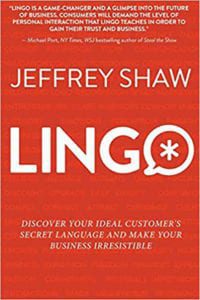
LINGO: Discover Your Ideal Customer’s Secret Language and Make Your Business Irresistible
We turn to Uber and Lyft, and the whole business model of technology is to create a frictionless experience. HR is like the fax machines of business practices and it’s a big problem in HR. If they want to get their dream employees, they need to develop the process itself to be more frictionless or more technology-driven. If they want the dream employees of today’s workforce, they need to think like them. They need to speak their lingo.
The takeaway I have is if you’re trying to target a tech Millennial and your application process, your whole interaction with them is a pleasant user experience as they call it in the tech world. It’s seamless and there’s not a lot of bumps. It’s easy to use and it’s intuitive. They think, “They’re speaking my language. They want me to do this, but they already arrived. I’m going to come here. These people already understand the importance of what is important and therefore, I’m intrigued to possibly pick them versus another company trying to woo me.”
You will stand out competitively. If you were that candidate or potential employee, wouldn’t that also mean to you what the experience of working for that company was likely to be like?
I was speaking at a Coca-Cola Summit for CMOs who carry Coke instead of the other brand. One of them was the CMO of Domino’s Pizza and I said to him, “What’s your biggest marketing challenge?” He said, “Attracting tech people.” I said, “Really?” He said, “Yes. We’re competing against a lot of other tech companies because we’re promoting this app that tracks your pizza from the time you ordered it online, how fast it’s getting there and who’s doing it. We used to say we’re a pizza company that uses tech to try to attract this top tech talent. Now we say we’re an eCommerce company that happens to sell pizza.” I thought, “You’re speaking their language because eCommerce company happens to sell insert books. It sounds a lot like Amazon, but you’re just inserting pizza.” That’s another example of what you’re talking about speaking the right lingo to recruit the right people.
I’m working with a company that layout offices. They get the furniture and they design it. It’s an integrated system that they offer and they’re big on what they refer to as resimercial design, which is this blend between residential and commercial design. In redoing their branding where you’re leveraging that as one of the key distinguishable properties that they want to promote to potential customers as to how they can attract their ideal employees. Many companies are having a problem attracting a good workforce. Designing their offices in resimercial styles are attractive to today’s workforce because it’s a cooler atmosphere. I even dig deeper and I was like, “There’s also an added psychological benefit here. In all our lives, the lines are blurred between work and in our personal lives. There are almost no lines.” Therefore, in the workplace when you soften those lines, it’ll feel like that. You increased productivity because it’s not like you’re going to take the hour and go down to the cafeteria. You’re going to sit in a café and keep working while you’re having your sandwich.
At least have a casual conversation with people you work with and collaborate on brainstorming ideas in a new space. I’m a big believer in that as well. Any last thoughts or a quote you want to leave us with?
Philosophically, I believe that businesses, whether they’re businesses seeking their ideal customers or their dream employees, those that take the time to get the audience, get them. They get the audience they want to reach and achieve their goals. Companies that are willing to get their customers will get better customers and companies that are willing to get today’s workforce will get their dream employees. It starts with having a willingness to understand the lingo of the people that you want to attract. I look at lingo as the evolution beyond buyer personas and avatars, which at best scratches the surface. It’s an attempt. Buyer personas and avatars is an attempt to understand that you have to go further than that today because all the companies that are producing buyer personas and avatars are all going to compete with one another. If you want to stand out, go beyond the buyer persona and avatar and find out what emotionally moves the audience that you’re trying to attract.
People can find you if they want to hire you and have a conversation about having you as a speaker at JeffreyShaw.com. Jeffrey, thanks for being such a great guest and sharing your secrets on lingo.
John, thank you for having me. I appreciate it.
Important Links
- LINGO: Discover Your Ideal Customer’s Secret Language and Make Your Business Irresistible
- Creative Warriors
- JeffreyShaw.com
- Better Selling Through Storytelling Method Online Course
Wanna Host Your Own Podcast?
Click here to see how my friends at Podetize can help
Purchase John’s new book
John Livesay, The Pitch Whisperer
Share The Show
Did you enjoy the show? I’d love it if you subscribed today and left us a 5-star review!
- Click this link
- Click on the ‘Subscribe’ button below the artwork
- Go to the ‘Ratings and Reviews’ section
- Click on ‘Write a Review’
Love the show? Subscribe, rate, review, and share!
Join The Successful Pitch community today:
- JohnLivesay.com
- John Livesay Facebook
- John Livesay Twitter
- John Livesay LinkedIn
- John Livesay YouTube