

Raise Your Standards With Mark Evans
Posted by John Livesay in podcast | 0 comments

There’s an old way, and there’s the new way of selling – which side are you on? It’s about time you raise your standards and get intentional with your sales. In today’s episode, host, John Livesay, is joined by Mark Evans, author and Standard Sales Company founder. Mark talks about the significance of building systems into your sales process and salespeople. He also deals with the subject of fear of rejection, the four types of people you interact with, and how to do follow-ups without being pesky. Discover how sales is not something you do to somebody and how to ask the right questions to start meaningful relationships that close the deal.
—
Listen to the podcast here
Raise Your Standards With Mark Evans
Our guest is Mark Evans, the author of Raise Your Standards: The Definitive Guide to Building Seven-Figure Sales. One of the things that Mark is known for is his energy. People call him one of the most enthusiastic people you’ll ever meet. His love of sales and the game of business is infectious. That’s one of the reasons I wanted to have him on the show. He believes that in its very core, sales doesn’t have to be manipulative or sleazy. He thinks it’s the greatest job in the world and he helps companies and individuals reach the seven-figure sales mark and beyond. Mark, welcome to the show.
John, thanks for having me. It’s a treat to be on here.
You are welcome. One of the questions I always love to ask my guests is to tell us your own story of origin. Were you born happy and enthusiastic? Did you love selling as a kid? Take us back as far as you want and tell us how you get to become you.
I come from a family of entrepreneurs. My parents are both entrepreneurs. My wife and her side of the family are all entrepreneurs. My story started back my parents, when I was a young boy probably 3 or 4. They had always been a part of other family businesses and that worked out okay, but they decided to risk it all and start their own business. They moved my entire family, my three sisters and I, about four hours away to a town they had never been in, to a city that they didn’t have any connections with to buy this business. From a young age, I was working with them and that’s where I got my first exposure to realize that sales is critical. It’s the lifeblood of all organizations, especially small and medium-sized businesses. At a young age, that was drilled down into me. It wasn’t just sales for corporate earnings or for a private jet. We weren’t close to that at all, but sales were what led to our family vacations and the tuition to my little parochial school in the town where we came from and basketball shoes. That’s where I got started and fell in love with sales as a young kid.
[bctt tweet=”Don’t just show up without preparation. Be like a chef. ” via=”no”]
I’m fascinated that you grew up with entrepreneurs and you married one. Sometimes for couples, it’s challenging if one is an entrepreneur and one is not or doesn’t have that background. They don’t understand the ups and downs, and the lack of a steady paycheck. It can be a big challenge for people to adjust to. What was your first sales job once you got out of school?
My family is in the printing industry and when I graduated, it was the week where the recession hit. I remember there was a Newsweek article or there was some news publication that probably isn’t even in business anymore that said, “Now is the worst time ever to get a job.” I remember thinking like, “This is something great to see after our graduation ceremony.”
To be clear, this is not the 1932 crash, correct?
Correct.
[bctt tweet=”Use video in your emails.” username=”John_Livesay”]
I’m guessing this was back 2008?
Yes. It’s the 2008 Great Recession. I may be balding but I’m not that old. I graduated and I went to work at a company. This is the start of my new book that’s coming out. I went to work for a commercial printing company and within three days of me being there, they laid off 40% of their workforce. In that same conversation said, “Don’t worry. Mark is here. He’s going to help us.” I said, “Is there someone else here besides me?” That’s where I started and that’s where I got the idea of two types of different companies. One that have and build systems into their sales process, where they’re systematic and intentional with their approach, both in their systems as well as with their salespeople. Those that are scattershot, are showing up and throwing up all over the place, whether it comes to their sales systems or their salespeople in general.
That concept, the old way of selling, “Let’s just throw a bunch of spaghetti up against the wall and see what sticks.” It doesn’t work well anymore. Let’s talk about the three things that you have of mindset, the preparation and the actual work of asking the right questions and getting the yes. Let’s start with the right mindset. Many people, especially if they’re professionals, architects or lawyers, you name it, they don’t like to think of themselves as salespeople. How do you help people who have that mindset?
There’s an old saying that I’m sure you’ve heard as well as the rest of the ones have heard, “If a tree falls in the forest and nobody’s around to hear it, does it fall?” The same thing can be said for companies. If you have a product, a widget or service and it can’t be sold, do you have a company or do you just have a hobby? That’s where I like to start the conversation off with people that say, “We’re not in sales.” You’re in business. I hate to break it to you, but sales are going to be the lifeblood of your organization. It’s going to be critical to everything you do. That’s where I start the conversation off. My book goes into four parts of what I consider the standard sales models. The first is mindset. You have to build your house on rock, not on sand. If you don’t have the proper mindset, whether it’s going to be in sales or whether you’re in any career, you’re not going to have a successful life and I truly believe that. The next part is prep work. John, are you familiar with a concept called Mise en place, a French cooking technique?
[bctt tweet=”Curiosity is a lost art.” username=”John_Livesay”]
I’m not since I don’t cook American, let alone French.
That’s okay. You’ve probably experienced it. Whether you’ve gone out to a great restaurant in LA or you’ve gone to waffle house, not that it’s not great, but let’s call them two different restaurants. Both of those restaurants are using a technique called Mise en place. If you have an 8:00 PM dinner reservation, the chef didn’t show up at 6:30 or 7:00. They’d been in the kitchen all day. They’d been there since 9:00 AM or 10:00 AM prepping, cutting vegetables, getting the meat ready, and getting the sauces right. When you come and experience the restaurant, you get this amazing experience where the dinner service flows and you have a great meal. Many salespeople and many sales-driven companies are showing up and throwing up. They’re showing up with no intention and with no schedule. If we can do this in a restaurant and if restauranteurs, chefs and servers can be intentional with their approach, then why can’t we do that in sales? The second principle that I talk about is all about making sure everything’s in its place before you start reaching out, start emailing, start cold calling or whatever you’re going to do to make that happen.
The tweet will be, “Don’t just show up without preparation. Be like a chef.” People will get that because everyone knows a chef, if you’ve hosted any dinner party, don’t show up when people are arriving to eat. That analogy is fantastic. Going back to the mindset, I want to get your thoughts, Mark, on rejection. People have such a fear of rejection. Since that falls under mindset, any tips that you have in your book or in life on that?
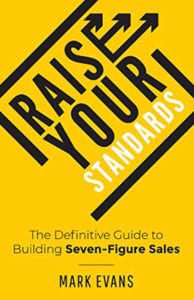
Raise Your Standards: The Definitive Guide to Building Seven-Figure Sales
I saw this study back a couple of years ago or so. I believe that about 90% of all the prospects that you meet, at any given time, aren’t ready to do business with you. Only 10% are ready to do business now. I was having this conversation with a client who was putting all of this weight into every single meeting. He was psyching himself out, to be honest with you. He’s trying to change almost his entire business model because 1 or 2 people have said no to him. We had this conversation, “Not everybody’s going to be ready that day to sign on the line that is dotted, especially the higher end and the higher level of service, widget or product that you provide.” You know this better than anyone, John, when selling luxury goods. Not everybody’s ready to drop six figures on something.
The next part of this is the actual selling and there are a lot of different steps to that. Do you reverse engineer it? Do you think to yourself before you even start building rapport, “How can I create a win-win?”
In creating a win-win and creating that type of scenario, you’ve got to have that in your mind. You’ve got to go in with some intention, but I caution salespeople to come in because I’ve been in situations where what the salesperson thinks I’m coming in for and the solution that I want are apart. We’re almost like train tracks where this person is going in one direction and I want to go somewhere else or we’re completely apart. I do a little reverse engineering, but honestly, I just want to be curious in sales conversations. That curiosity is a lost art and a lot of salespeople could benefit from being curious about the other person across the table, the company, the solution and where that company or person is trying to go.
I love a story, so I’m guessing you have a time where the buyer and the seller had a different track, then you had come in for something. Give people a story so that it locks in, whether you’re buying a car or matches.
I’ve made every mistake when it comes to sales, so I’ve got lots of horror stories if you will. I believe that there are about four types of people and I consider them to be either bowls. If you’re type A, you go get them and take no prisoners type of people. You’ve got your party people, that’s someone like me, energetic. We usually got cocktail parties. You’ve got your fact folks. Those are usually your CPAs and your engineers. The I’s are dotted, the T’s are crossed, and then they want to show you the math behind all of it. Your people pleasers are the type of individual that even if you eat their lunch right in front of them, they won’t say anything. They just want everybody to get along. How we interact with those types of people can be successful in a sales conversation.
[bctt tweet=”Sales is the lifeblood to all organizations, especially small and medium-sized businesses.” username=”John_Livesay”]
One story that comes to mind is I was trying to sell someone who is an electrical engineering manager. It’s almost the definitive individual when you think of fact folk. I saw his garage 1 year or 2 later and it was like you could eat off of it. It was impeccably clean. For the better part of a year as I tried to sell a high-end engineering solution to his company, I was constantly going up to this individual and there’s a way to build rapport and relationship. I was offering him tickets to a local sports team and front row seats. I offered him these great events where we’d have a table where he could network with fellow engineers and fellow people. I didn’t realize that and it didn’t dawn on me until a little bit later, that this person going out in public and trying to meet someone who is a complete stranger is a nightmare scenario for this guy and for this individual. He said, “Mark, I don’t want to be in a crowd. I don’t want to be around people socializing and networking. That’s a nightmare to me.” It was only when I said like, “Yeah.” Instead of trying to push these tickets on them, how about I just provide the facts and the figures that he’s asking for? As soon as I was able to do that, the business became a lot easier. We formed a great relationship.
You also talked about the fourth thing being follow-up and most people don’t do it. I know in my own career, it’s a big key to my success. How do you suggest people follow-up without being pesky?
A lot of people don’t want to be that “used car salesperson” where they feel like follow-up is something scary. They don’t want to be a pest. If you have a solution that’s providing value to someone, it’s in your best interest to follow-up with them. You can change their life if you follow-up and have a good consistent follow-up process. There’s a stat that I read that said something like 20% of salespeople are following up more than 3 or 4 times, whether by call or by email. That same study said that only 80% of all buyers will only respond to or buy something after the sixth or seventh connection attempt. We got this massive difference between salespeople that are stopping at three connects and people that are only buying at 5 or 6. John, for example, how many emails do you get in a general day?
I don’t even know anymore. It’s a lot. I can barely keep track.
[bctt tweet=”As a salesperson, your one voicemail or email is not going to make a difference. Don’t be afraid to follow up.” username=”John_Livesay”]
Probably north of 100, 150 or 200. The average executive gets over 250 emails a day. If you, as a salesperson, are out there thinking that your one voicemail or your one email is going to make a difference and reach out, that’s not going to happen. People are busy. They have lives, kids, spouses and parents that get sick or they get busy going on vacation. I always tell people like, “Don’t take it personally. It’s not up to you. It’s not about you, so don’t be afraid to follow up.”
You’re also a keynote speaker. Who’s your ideal audience?
I try to speak to companies that are looking to go to becoming sales-driven organizations. Maybe in the past, they’ve had a couple of salespeople or not professional sales organization and they want to be proactive when it comes to the sales process. That looks like a variety of different industries, whether it’s software as a service, professional services like CPAs, commercial real estate or realtors. It’s about those individuals and those entrepreneurs that want to grow their business, but they just don’t know how to get to that next level, especially when it comes to becoming sales-driven.
How did you come up with the title of your book, Raise Your Standards?
[bctt tweet=”If you have a solution that’s providing value to someone, it’s in your best interest to follow up with them.” username=”John_Livesay”]
I struggled with a title for a couple of weeks and nothing was coming up at all. I liked the Raise Your Standards part. I have a business coach. His name is Craig Ballantyne and he is out of Canada. He’s a New York Times bestselling author for 3 or 4 times and he’s a great guy. I was beating my head up against the wall for 3 or 4 weeks and within five minutes of one of our first conversations, he said, “It should be Raise Your Standards: The Definitive Guide to Building Seven-Figure Sales.” After explaining what I do and how I help a lot of sales companies, I loved it, but at the same time I was like, “Craig, how could you do this to me? You’ve figured this out right away.”
That’s what good people who have experienced do. I figured it out quickly, but it was 30 years of experience that allowed me to do that fast. We talked that your book can help people not feel pushy, sleazy or even difficult. Is there something in the book using these standards that takes it from feeling complicated or sleazy?
The core thesis of the book is that sales is changing. There’s the old way of selling and then there’s a new way of selling. John, I love your perspective on the new way of selling and you preach an intentional type of sales process. What I’m talking about is your personal interactions. Sales don’t have to be something that you have to do to somebody. You don’t have to use manipulation and kitschy techniques in order to close a sale. All you’ve got to do is ask some good questions, build some great rapport, and understand where that person is trying to go. If you have a solution, a product or a widget that can help them, then it’s your duty to make that pitch to make that ask of them. The sales approach and the sales genre that I’m trying to preach is that you don’t have to change and be the guru in front of a private jet or in front of a Lamborghini. You can work with someone else in order to get a win-win and to create a good long-lasting relationship.
Mark, what do you think makes a good question? We all know the difference between a close-ended question, yes or no or an open-ended question, but sometimes people feel awkward asking people a question. They don’t want to feel intrusive. How do you help people ask good questions?

New Sales Approach: Being in sales is like being a chef. You don’t just show up when people start coming in. There is an intentional approach and lots of preparation before you start reaching out to people.
When it comes to asking questions, that’s the core element of a good sales meeting and a good sales approach. The questions are where the magic happens. The level of depth, level of intention and level of thought that you put into your questions reflect on how you are approaching and how you are respecting your client or your prospective client. The framework that I like is thinking about what’s in it for the other person. Everybody’s tuned into the most, “What’s in it for me?” They’re trying to think of, “Where are they at currently? Where are they looking to go?” Those are the questions I tried because I firmly believed that if you can articulate the problem that your buyer or your prospect is having, better than even they can, they’re automatically going to think that you have some answer.
That’s the a-ha moment for many people. The better you can explain the problem, the better they think you have their solution, which in my mind requires some homework and some empathy. It’s not just, “It sounds like your problem is this,” but put some feeling behind it. “It must be frustrating to struggle with this particular problem and never figure out how to solve it or the same thing keeps happening and all that.” That is what makes people think, “You get me.” You have something where you say, “The first objection is not a real objection.” That intrigued me, Mark. Let’s say a couple goes into therapy and they said, “We’re here because we’re having trouble with our sex life.” The therapist is like, “That’s what you think is the problem, but there’s something underneath that.” How does that work in the sales world where you say, “Your first objection is not the real one.”
I had not heard that part but I liked that. That’s true and it’s an a-ha moment for me. John, if you’ve ever gone into a store even if you’re busy and even if you’re looking for someone and that helpful clerk comes scampering around and says, “Can I help you with anything?” Most people’s first answer is, “No, I’m just browsing. I’m just looking.” People naturally love to buy, but they don’t like being sold to. “I want to buy a new car. I love the thought and the thrill of driving off the lot, but I don’t like being sold at all.” That first objection often is real, whether it’s that therapy case. We put up these guards and barriers because we don’t want to let people in. We don’t want to be vulnerable and answer some questions. You’ve got to break through that.
Are you considered a Millennial or not?
I still fly into that, but I watch a lot of old movies and old books. I’m an old soul.
You’re what’s considered a digital native which is someone who grew up with computers as opposed to older people who had to learn it. You have whole expertise around how to stand out using video email. A lot of people don’t even know you can do it and they don’t even know what video to put in an email. Because this is your digital native, can you give us some tips on that?
One tactical that anybody who’s out there that is cold prospecting or trying to book appointments or book meetings with about anybody can benefit from is through video email. The average executive gets, let’s say 200 plus emails a day. Most of those are all text-based. One way I’ve found and my clients have found that’s effective in standing out in the inbox is a video email. The system that I use is called Vidyard. There’s a paid version and a free version. I use the free version, to be honest with you. I record a simple and easy video that can be converted into a GIF of me waving or me holding something up where I hold up my book and say, “John, it’s Mark. I’m the author of Raise Your Standards. I’d like to talk to you about X, Y, Z. We’d love to do this. I’d love to make an introduction.”
That little video stands out in people’s inboxes. Every time I send this or every time one of my clients starts using this practice, we see their conversion rates immediately jump. We see conversations come out of it. I use this to schedule a bunch of different appointments at a conference that I was attending, a big industry event. I was reaching out to different CEOs and executives and I became almost like this little mini-celebrity at these events. People are like, “I got your video. I loved it. It was amazing.” I’m still seeing the puddling effects or the ripple effects from that.
Give me the name of the service that you use.
There are two. The first is called Vidyard and the second one is a Wistia product called Soapbox.
Do people know that it’s a video in the email with the subject line somehow or you still got to get them to click to see the video?
They’ll see it when the actual video uploads. You can load it directly into your email, especially if you have Gmail or Outlook. In the email itself, there’s a little thumbnail like you would see any thumbnail. It almost looks like a YouTube box and you can turn that into a GIF. There’s motion like I’ll wave in it, I’ll move around or I’ll hold a sign up of that other person’s name. It will say like, “John, watch this video.” People naturally want to click. It’s clever. People can’t help but click on it.
What can sales teams learn from sports teams since you’ve written about this?
There are a ton that they can go with. Let’s start with the CEO, the entrepreneur who’s the head coach. I see a lot of CEOs who are the head coach and also trying to be the quarterback, the linemen, the person popping popcorn and the guy parking cars out in the parking lot. These small and medium-sized business owners are trying to be everything for everybody. The first thing is to start getting a team. Get your star performers and also start getting a good set of other coaches that can help you level up the entire team.
The book again is called Raise Your Standards. Any last thoughts or enthusiastic tidbits you want to leave us with?
In the end, sales are one of the greatest crews you possibly can be in. It doesn’t have to be something that’s manipulative. It can be a great career and at its core, it’s all about helping someone else.
Thanks for being with us, Mark.
John, thanks for having me. I appreciate it.
Important Links
- Raise Your Standards: The Definitive Guide to Building Seven-Figure Sales
- Vidyard
- Soapbox
- MarkPatrickEvans.com
- Vidyard.com
- Better Selling Through Storytelling Method Online Course
Wanna Host Your Own Podcast?
Click here to see how my friends at Podetize can help
Purchase John’s new book
John Livesay, The Pitch Whisperer
Share The Show
Did you enjoy the show? I’d love it if you subscribed today and left us a 5-star review!
- Click this link
- Click on the ‘Subscribe’ button below the artwork
- Go to the ‘Ratings and Reviews’ section
- Click on ‘Write a Review’
Love the show? Subscribe, rate, review, and share!
Join The Successful Pitch community today:
- JohnLivesay.com
- John Livesay Facebook
- John Livesay Twitter
- John Livesay LinkedIn
- John Livesay YouTube
The 10 Cent Decision With Laurie Guest
Posted by John Livesay in podcast | 0 comments
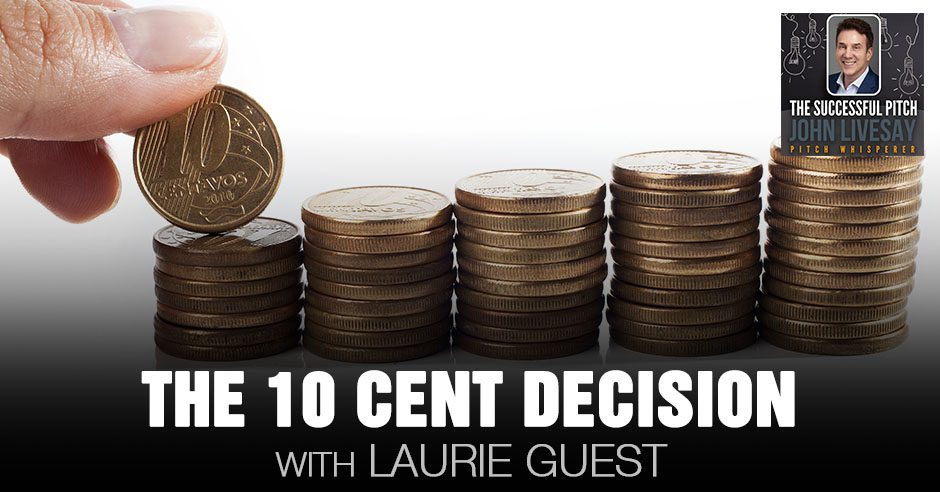
The core of every successful business starts from the small actions you do. By putting energy into the little things, you are actually creating a big impact on customer service. Entrepreneur, keynote speaker, and author of the great book called The 10¢ Decision, Laurie Guest, is the go-to resource for customer service excellence. In this episode, Laurie joins host John Livesay to talk about the power of not saying “no” and replacing that with the word “actually,” as well as the impact of doing small things and matching your energy zone with people to create loyal customers.
—
Listen to the podcast here
The 10 Cent Decision With Laurie Guest
Our guest is Laurie Guest, who is an entrepreneur, keynote speaker and author. She is a go-to resource for customer service excellence. For more than two decades, she has shared her practical point of view on customer service and staff development with audiences and companies across the country. Blending real-life examples and proven action steps for improvement. Her book, which I’ve read and loved, is The 10¢ Decision: How Small Change Pays Off Big. Laurie, welcome to the show.
Thanks for having me.
It’s so clever that you’re in the customer service world and your last name is Guest.
We should marry what we seek to be. If I wanted to be a guest speaker, I had to find a man named Tom Guest. I’ve often told people I should’ve been looking for Tom Skinny. That would have made all my problems go away.
That’s an illusion that we all have. People often ask me if I’ve changed my last name or was I born Livesay and became a speaker. I said, “That’s my name.”
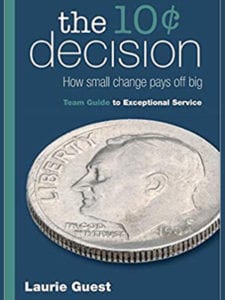
The 10¢ Decision: How Small Change Pays Off Big
You’re living up to it.
Let’s talk about your own story of origin before you were Laurie Guest and married to Tom. You can go back as far as childhood, high school or wherever you want to start. Tell us a little bit about your own experiences. Did you always know you wanted to be an entrepreneur? How did that come about?
I don’t think I’ve ever been asked that before and that’s interesting. I have been an entrepreneur since I was five. I was born wanting to invent businesses. I started out selling sweet corn on the corner in Somonauk, Illinois at a 1,300-person community, about 60 miles West of Chicago. My mom and dad were great with people. They taught me early on how you’re supposed to treat a customer. I sold more sweet corn than any other stand in town. That’s how I became an entrepreneur. Each idea I came up with was appropriate to my age level.
I kept doing stuff and building, selling and learning something and moving on one way or the other. Eventually, my trail took me as a young adult into healthcare. The core of my professional life prior to owning my own business was actually ophthalmology, the eye business. I was a trained technician and I would measure eyes for intraocular lens implants and schedule people for surgery. Our doctor was fabulous at customer service. Not only were they great surgeons but they knew how to train us to treat our patients.
That’s where all my wisdom came from early on. Other industries started calling and saying, “Could you come and share the secrets of your customer service and how you have such a thriving business?” My doctor looked around and he went, “Laurie, you like to talk. You go.” I jumped on that. I was born that way and I did that for quite a few years for him. One day, it dawned on me that there was actually a business I could have all on my own to be a customer service speaker and trainer. With his blessing, I left the firm and started out on my own. That was years ago. Here I am still owning my own business and I love it. Sales and entrepreneurship, we are the same kind of breed.
I want to double click on something that you intrigued us with. What was this doctor doing that maybe people can apply to their own business or life that made it so special and separated them from other people? Was it remembering birthdays?
We could talk all night long on what I learned there. Here are the big ones that came to mind. He had a mantra. He believed that a doctor should do only what a doctor must do. Examine, diagnose and treat and everybody else should do the rest of the stuff. What that means is you do what you do best. Whether there’s a guy reading this that owns a shoe store or a woman who owns a boutique, whatever it is, you should be doing only what you have to do. That means you have to hire great people, create a culture that they understand how you want your customers treated, empower them and the hard part is you’ve got to enforce these rules that you’ve made and the boundary that you’ve set. That’s where the problem comes. It’s easy to set the rules but it’s sure a lot harder to discipline and enforce them. It’s like parenting.
[bctt tweet=”Replace ‘No’ with ‘Actually.’ ” username=”John_Livesay”]
The more you reinforced those boundaries, the more people realize they’re real and you can’t negotiate your way around them. This concept of culture, even in a small company practice or business is so important that a lot of people don’t even take the time to define what the culture is. It influences everything. Not only who you hire and if it’s a fit culturally, regardless of their background and skill fit, but how you treat clients. I want to learn more about your thoughts on how defining culture impacts customer service?
It’s important that when people define a culture, they don’t confuse it with that special mission statement with all the perfect words and punctuation that has been matted, framed and hangs by the front door of your business. Most of your employees cannot recite that mission statement unless you force them to do it. I want to make sure that we define with people what we mean by culture. I’ll define it and you tell me if you agree. Culture is what we all agree to be true here. In this organization, we all agree that we’re going to and it’s X, Y, Z. It can be different for different places. In general, it’s going to be things like, “Treat the customer right and deliver the best product and service.” It becomes this bullet list that everybody has.
What differentiates our culture from your culture? It’s the delivery from the people who put it out there. Let’s say you and I both own a pizza place. You want a culture that you want good food served hot on time at a fair price. It sounds like my same list. Why would your pizza place be busting at the seams and people are waiting in line to get your pizza, assuming that mine is an equally good product, we’re not comparing pizzas here. We’re comparing service. Why do I have open tables and people are waiting to get in to see you. The only difference can be the delivery of the culture. The delivery of what we believe to be our values.
What’s so fascinating about that is, Domino’s has this mobile app that personalizes your whole experience. It’s like, “Billy placed your pizza in the oven and now Susie is wrapping it up. George is on his way and you can track it.”
It’s absolutely brilliant.
People are like, “I’m involved in the process and I never knew I needed to know the name of the person packing my pizza, but now I do.” It’s that level of extra care that comes along with it.

Creating Loyal Customers: You should be doing only what you have to do. That means you have to hire great people, create a culture that they understand how you want your customers treated, and empower them.
Before you go on, have you heard the new thing that Domino’s is doing about requesting?
No.
My college-aged daughter has left for college. She told me one summer she wanted pizza and she was insisting we order from Domino’s. We don’t normally use that vendor. I said, “Why?” She goes, “Go to the special request square, when you order it online, tell them that you want them to draw something inside of your pizza box and people do it.” I said, “You’re kidding me.” She types in something about, “Draw my dog named Lucky.” That’s all it says or something that. We don’t even have a dog named Lucky or something like that.
What happened was, when the doorbell rang with the pizza, she gets off the couch, came running like a 50-yard dash to the front door. She whipped open the door, she grabbed the pizza from the guy, I’m left to pay him. She runs into the kitchen, she opens the lid and sure enough, there’s a stick figure of a dog and he’s got a little collar on and it says Lucky. Somebody somewhere in my town drew what she asked for. That’s what I call a 10¢ decision. It cost them nothing to do that and she’s running to the door to get her pizza.
It’s customized and the fact that there’s a human being, especially with artificial intelligence taking over a lot of customer service. Press one, if you want this, and two, if you want that. This experience is the opposite of that. I have a King Charles dog and I get his food from this place called The Farmer’s Dog. They specialize in healthy food for your dog. I was emailing back and forth scheduling stuff with their customer service person. He ended the email with, “Give a belly rub to Pepe for me.” They knew the name of the dog from the order and he took the time to throw that in. That personalization of everyone who works there loves the dogs.
It’s where it’s at. Have you heard about Chewy that’s an online store?
[bctt tweet=”Match your energy zone to the moment.” username=”John_Livesay”]
Yes.
Here’s that culture. I love this. I have not experienced this but I’ve read about this. There was somebody that I know of that wanted to return two bags of dog food they had bought. They wrote and they said, “Our dog has passed away. We have these two bags of unopened dog food.” Chewy writes back to them with the condolences and said, “Please donate that food to your local shelter and you have our heartfelt sympathies.” It was something like that. It was genuine. A day later, fresh flowers arrived on the doorstep from Chewy at the house.
That unexpected extra that the person will never forget. That story gets passed on and on.
They’re going to have another pet. Most of us who own pets are not one and done. You’re always going to have another one and that’s where they’re going to be ordering their food, plus the story gets told.
That’s what I love and it’s unexpected. My favorite definition of luxury was doing something before somebody knows they need it. When I was working with Banana Republic, they wanted to up their game and they tested it in their flagship stores where you could charge your phone while you’re shopping. “It’s an unexpected luxury that I didn’t know I needed, but how great.” They were doing it to be unexpected. It turns out the sales went up because people kept waiting for the phone to fully charged and kept shopping. You hinted at what The 10¢ Decision is and I want to go back to that. It’s such a great title and easy to remember. The small changes that people can do, whether it’s writing something on a pizza box, sending flowers as condolence over, above and beyond and anticipating something like, “You might want to charge your phone when you’re shopping.” Things like that give us this little extra oomph. You have your own 10¢ story that you’ve talked about.
I do have my own 10¢ story. The way it came about is, as a speaker, I’m a frequent traveler and one time I checked into an expensive hotel. It must’ve been $350 or $400 a night. When I got to my room, as with all hotels, there were two bottles of room temperature water waiting for me with a tag on it that said $7. I thought, “I gave you $350 or whatever it was and now you want $7 more.” You and I both know why they’re doing that. It’s a brand standard. If I stay in that chain of hotel, it’s always going to be that water in that position. We also know that they could bring in a semi load of that water for about 10¢ a bottle if they wanted to, but they choose not to.

Creating Loyal Customers: It’s easy to set the rules but it’s sure a lot harder to discipline and enforce them.
They don’t make a 10¢ decision that makes a big impact. The next hotel that I went to, I get to my room, and this is a boutique hotel, it’s not a chain so they have the ability to make any decision they want. I get to my room and there’s a black mini-fridge. In the fridge, there are two ice-cold bottles of Ice Mountain, my third favorite water and sign on top of it that say, “Dear valued guest.” First of all, I love it when they take the time to put my last name on the sign. It said, “Dear valued guest, complimentary bottled water is found in the refrigerator. Please enjoy.” They spent almost nothing. It’s a 10¢ decision for my perceived value to be incredibly high. In the speech, I go on to explain the third stop which I won’t take the time to do in this interview, but at the third stop, there was a dramatic bottle of water waiting for me. It was a Bling bottle of water.
It was also free on a pedestal and an ice bucket. It had a brass plaque next to it that said, “Enjoy. Additional bottles may be purchased in the gift shop for $25.” Now, I have value. My point in this entire thing is we can either have a brand standard that says, “Not only are we going to take your $350 but we’re going to charge you $7 for a 10¢ bottle of water. We’re going to be the place that gives it to you for free or we’re going to be the place that goes, “We’ve got something spectacular for you and we’re going to make sure it has a value.”
The three levels is fantastic. You’ve got to pay, we’re going to give it to you for free and we’re going to give it a wow factor with the surprise. I’ve even had an experience where I’ve checked into a hotel and they offer me free water at the desk, “You must be thirsty after your trip.” I don’t even have to wait in my room to see if it’s free or I have to pay. I love that.
Here’s another interesting question. I rented a car from a well-known chain but I won’t name them. When I was waiting for my car, they handed me an ice-cold bottle of water. It was nice of them to do. When I got in the car for some reason, the only way you could charge your phone was with one of that cigarette lighter chargers of which there wasn’t one in the car. I didn’t have one with me and I usually use the USB port, but this car didn’t have it. It must have been older. I go back to the counter to get one of those cigarette lighter things for $16 and I’m thinking, “The 10¢ decision here is to have one of these in every car with their logo on it and with encouragement that you take it with you.” Every time I pulled that thing out of a cigarette lighter and it would have that brand caught on it and that would cost them probably about the same as the bottle of water if they wanted to make that choice. Isn’t that fascinating?
It is. For anyone stealing it or keeping it by mistake, we have to mark it up and all that stuff. Even when you go to Europe and they go, “If you want to have an adapter for to charge, you’ve got to pay us this.” The thing you talk about that I love in your 10¢ Decision book is matching the E-Zone of your buyer. The E-Zone is the energy that people bring to work every day. I could talk about energy all day long because when I initially got picked and it was between me and two other speakers, the speaking agent emailed me and said, “Congratulations. They picked you to be their next speaker at their annual meeting.”
We always go on three packs. You won the three-pack war.
[bctt tweet=”We should marry what we seek to be.” username=”John_Livesay”]
I did. We’re going to talk about that too. They said, “They liked your energy.”
You do have good energy.
Thanks but people realize, “They’re going to hire me or I’m going to sell this product or whatever it is I’m selling if I have the best price, information or whatever it is.” People don’t realize the value of your energy that people want to be around. Especially if you’re a speaker, you and I are. If you can make people feel good during the interview, they go, “I feel inspired after talking to him or to her. Maybe the audience will too.” Let’s talk about the E-Zone and how should I keep it up if you’re doing something that is your own customer service that might be a little rote or you’re having a bad day. You have this concept of the Big Seven of Service and my favorite one of there is where you talk about real greetings and not robotic acknowledgments.
Let’s move that all together. People are attracted to energy like a moth to the light. Let’s say you go to a cocktail party and you don’t know anybody. You’re scanning the room for who you might want to chat with. I don’t mean somebody that you’re romantically interested in. I mean a person to talk to. You’re going to scan the room and you’re going to spot the person that’s showing some energy. They’re making eye contact with you, they look they’d be friendly and could chat about anything. You and I would walk in a room as complete strangers and find each other because we each could talk all day long about absolutely anything.
If that’s what you seek, that’s what you’re going to find. We put that energy out there in our behaviors. When I talk about the E-Zone, I see it as a cardiac monitor and that there’s a heartbeat that goes inside this certain range. There are some people that come to work outside the range. On the top side, those are our Susie Sunshines. They’re coming to work going, “Good Morning,” and their pitch is high. I don’t believe them, I don’t believe you. You’re outside the zone. Underneath are the Boring Bobs. Those are the ones dragging themselves to work without any energy at all and complaining that it isn’t Friday yet. In between those two people is the zone, the place we want to be. That starts the moment you walk in the door. It’s a head game more than anything else.
When I was sixteen, I got a job at a grocery store and had to get up at 5:00 in the morning on the weekends and go make the donuts. You might remember a commercial years ago where the guy would get up and he’s like, “I’ve got to go and make the donuts.” That’s how my mom would wake me up in the morning, “It’s time for you to go make the donuts.” I’d show up to work. By the time the customers appeared at the grocery store, I had better be ready to sprinkle and deliver and keep on going. That’s the early age when I learned the energy thing.

Creating Loyal Customers: You have to believe in your own fees, even if you’re not the one who set them.
Inside the zone, we’ve got to match the moment and that’s where I bring the heart monitor part into it because people are disconnected. I’ll use healthcare as an example. If you’re sitting in front of me and I now need to give you a bad diagnosis or I need to perform a test on you that’s not going to be comfortable. It is a disconnect if I’m bringing my Susie Sunshine high-end like, “John, I’ve got you. This is only going to hurt a little,” and my pitch is high and I’m way off the energy zone. You’re uncomfortable with that. I need to bring the energy down and still stay in the zone but bring you that engagement that matches the severity of the situation.
Sometimes you do have to have tough decisions with people and not treat them children, which is what you’re talking about. Don’t be robotic. This needs to be authentic. That’s where empathy comes in big time. I’ve seen some people do this well in customer service when someone’s angry, they want to quit or return something. If the culture allows for that person to say, “I could see how that could make you mad. I would be mad if I was in your shoes.” That can diffuse the situation.
It can make a big difference. The whole idea of empowering people to be able to find those resolutions is an extremely big part of the culture we had. Our doctor felt that if the decision you made was the best thing for the patient and the practice, I back you on that decision rather than handcuffing us and not letting us do anything without permission. That becomes a culture choice.
We talked before about some of the clichés that people sometimes do only because they don’t know how else to ask the question. In a phone call situation versus an in-person one, they’re told, “Get the person’s name and try to use the three times within ten minutes.” They’re going, “To whom do I have the pleasure of speaking with now?” Nobody talks like that in person so why because when we’re on the phone, do we talk that to each other?
You get the idea that they’re reading a script to you. A script that doesn’t even match this conversation.
Talk about not matching the moment. I role-played with somebody and I said, “Let’s pretend I work here.” I said, “My name is John, I’m from XYZ company.” They say, “I want to do this or that.” I said, “Great, let me reintroduce myself to you because many times, people don’t hear it at the beginning. My name is John and you are?” That’s what I would to do in person. Do you have other ways?
[bctt tweet=”We put energy out there in our behaviors. What you seek is what you’re going to find. ” username=”John_Livesay”]
Sometimes it’s a simple question of, “May I ask your name?” How hard is that? That sounds so much better. There’s a well-known food chain that has taught its people to do this glorious greeting. They say, “It’s a great pleasure to serve you today.” When the greeting doesn’t match what we believe to be the reality, we have a disconnect. I do not believe you are that enthusiastic about giving me my chicken sandwich. We’ve got to figure out how do we give that energy and this service that you and I are both talking about in an authentic way? What’s weird about this is you would think it would be common sense, but it’s not. We have to train it. You have to teach what we want the words to be, but allow them to bring their own personality to the table.
The other thing in customer service/support sales is to build rapport and ask people questions. People don’t feel comfortable. I’ll go, “What questions are you asking them to say?” They’ll go, “We thought we’d start with, ‘How’s your day going?’” It seems it’s so off purpose for why the person called. They’re not calling to make a friend. Even if you are meeting somebody for the first time in a networking event, you probably think of something else to say besides that.
That would be a great title in the future book you’re going to write on sales. It’s like, “They’re not calling to make a friend.” Isn’t that the truth? They’re calling for results. They want a solution and an answer. I have this in the book. I am not a fan of the phrase, “How are you?” Unless you actually care and want to hear the answer. My replacement for that is, “It’s nice to see you.” I don’t say, “How are you?” I say, “It’s nice to see you.” It starts a conversation and you’ll be amazed how often do you first start using it. People respond, “I’m pretty good, thanks and you?” It’s so robotic. They’re so used to what the answer is supposed to be.
This concept of trying to be authentic and instead of saying, in this case in real estate, “How’s your day going?” I came up with another question that’s more pertinent, “How’s the house hunting experience going for you? Is it a nightmare?”
It’s so much better.
That’s a relevant question that I’m more than happy to answer and I feel that you might actually care about my experience from that question.

Creating Loyal Customers: Believe in your product and service enough that you feel the people will be lucky to have you.
As we used to say, “Get focused on the body part you care about,” so to speak, which is the same with the real estate. I worked in ophthalmology and if you’re coming to see us and I asked you, how are you feeling or how are you doing? What you’re going to do, especially as an older adult, is show me the scar from your most recent surgery. You’re going to tell me that you didn’t feel good last night. I at least got to get to the right body part. We were trained to say, “Tell me how your eyes are doing.” We’ve at least narrowed it down to what I can do something. That’s the same thing with real estate, “How’s your house-hunting going?” We’re not getting all this extra stuff. That’s a great one.
You talk about anticipating a customer’s needs and that small gestures can create loyal customers. Can you tell us what that means?
I do think that there are small things you can do to create loyal customers. The first one that comes to my mind is, a few years back, we did a remodeling at our home and we called four different contractors to come to the home to look at it and give us a bid. Two of them never showed up. One of them made the appointment and didn’t call back at all. The fourth one showed up when he said he would exactly on time every time he came. He explained things to us in a way that we would understand, not the internal lingo and if he used a lingo word, he would define it right behind it.
The biggest thing that I loved was when he explained that there are change orders, “After we go in with a quote, it’s locked in. This number will not change but if you decide you’re going to put in fancier windows, there will be a change quote and you’ll see the additional cost it’s going to be.” When the project was over, he came in at the penny of what he promised that it would. These are not dramatic things that he offered but I’ve been talking about him in the decades since we did this remodel because he was unique in his industry. You show up on time and do what you say you’re going to do.
Isn’t that amazing that that’s the new differentiator as opposed to the minimum acceptable behavior these days? That’s what it is. That’s how you can do this. You and I love words. You have a whole chapter devoted to choosing words wisely.
That’s my favorite chapter as a matter of fact.
[bctt tweet=”What differentiates a culture from another is the delivery from the people who put it out there.” username=”John_Livesay”]
You know that I love alliterations. The way you’ve structured your writing is Words Wisely. You talked about Careful Communication. It’s two Ws and two Cs. I want to get a hats off to that. That is important. Let’s do a couple of these great examples. You have version one which is going to cost you about $259 or the fee for that service is $259. That would sound fairly close to a lot of fees versus costs. What is that?
Fee versus cost and the other thing is your personal attitude towards the cause. One of my jobs was to help eye doctors who sell you glasses help them be successful. I would go in and therefore they would refer more people to us because we didn’t do eyeglasses in our firm. My point is when I would go and watch their teamwork, if the person checking you out from the eye care place thought that $259 was a lot of money to pay for a pair of glasses, they would say things like, “That’s going to cost you about $259.” The tone in my voice is, “You don’t want to pay this, do you?” We would have to train them to say, “The fee will be $259 and we take 50% now or I’ll need 50% now.” We would give them the words to say, you need to lean into this number because if you don’t believe they should pay it, they’re certainly not going to want to pay.
I use this all the time, “The investment to work with me is,” or “You’re getting a return on your investment when you hire me.”
We were at the dentist. We wanted to have some teeth whitening done for one of our children. It was going to be expensive under $500, but we would pay anything to help her smile. We want to do this. Multiple times, different people on the team kept going, “That’s going to be about $500. Why don’t you try the Crest white strips? Why don’t you try this?” They talked us out of it. We were begging. When I got in the car with my husband, I said, “We are begging for them to do this task. Why don’t we find another provider?” When we went to the other provider, they were all over it. They’re like, “Let us show you how we do this. It’s under $500.” It was the same fee. She called it under and had all this enthusiasm, that energy zone. We were like, “Sign us up.” The procedure has now come and gone and we’re thrilled with it. What bothers me about it is, don’t assume that I don’t want to pay the money. If I want that service or that product badly enough, I might’ve been willing to pay $1,000 for it. In fact, I was willing to.
It affects confidence and outlook. You think to yourself, “If I wanted that version of going and buying something from the drug store, I’m getting the results of that. If I want someone to take the time to match, what’s your skin tone? Your teeth should be this shade and not that shade. This is not a one size fits all. What you’re buying when you’re buying teeth whitening is how you’re going to feel. Does smiling more make you more confident? There’s research that says it elevates your mood. You know as well as I, that they tell people on the phone, “Smile,” because people can hear it your voice. If you don’t like your smile, you’re not going to smile all the time.
I want the salespeople who are reading, especially those who maybe are emerging salespeople that one of the most important things is you have got to believe in your own fees. Even if you’re not the one who said them, even if you have no control over the fees, you better believe in your product and service enough that you feel the people will be lucky to have you. It’s the same way in our business, John. We have to decide what our fee is for a certain job and if we act we’re not worth it or we’re not going to bring the value, then nobody’s going to pick you out of that three-pack. They’re going to go with somebody else. Sales to me are not about pushing you to buy something you don’t want. It’s educating you on why this is the right thing for you at the price I’ve set it at. There’s a big difference between those two.

Creating Loyal Customers: Sales is not about pushing people to buy something they don’t want. It’s educating them on why this is the right thing for them at the price you’ve set it at.
You’re singing my song because I talk about the old way of selling is to push out a lot of information and the new way is to tell a story that pulls people in.
The story is so critical because everybody wants to hear a story. Think about when you’ve been someplace, maybe it’s a church or something where someone’s talking a lot and you’re losing interest, and they click into a story and you’re back. That’s the same way with sales. It’s powerful that you teach that.
I want to leave the readers with one of my favorite parts of your book, which is, “Replace the word no with actually.” I’m going to be the person that the answer is negative. I’m going to say, “Can I expect to receive my lawn chairs tomorrow?”
The wrong way would be, “Nope. We don’t see those coming in until next Tuesday because of the holiday.” The right way to say it is, “Actually, that delivery is due on Tuesday.”
“Okay. Tuesday it is.” It’s so great. If you took nothing else from this book and believe me, that’s the tip of the iceberg of all the incredible value in The 10¢ Decision. I highly recommend people getting it. Laurie was generous enough to offer a little discount. Laurie, how can people get that discount and follow you on social media?
To get the discount, you can go to the book website, which is TenCentDecision.com. You can either do it as 10 or spell it out. Either way, it gets you there. When you go to buy the book, there’s a place where you can apply a coupon code. Anybody reading can use the word podcast, all one word. That tells us that you heard about it on this podcast. They can get 20% off for that. I’m on Facebook, Instagram and all the regular ones. I’m happy to connect with people there as well as LinkedIn. My regular website is LaurieGuest.com and we do reply to all messages on social media. Talk to us and we will talk back.
They’ll talk back in the right energy zone. That’s for sure. Thanks, Laurie, for being such a great guest, having such great energy and giving us such great tips. I’m never going to say the word no again. Even if somebody asked me out on a date, “Actually, I’m not available.”
Actually, you should be so lucky.
There we go. Thanks again.
You’re welcome.
Important Links
- The 10¢ Decision: How Small Change Pays Off Big
- The Farmer’s Dog
- Chewy
- Facebook – Laurie Guest
- Instagram – Laurie Guest
- LinkedIn – Laurie Guest
- LaurieGuest.com
- Better Selling Through Storytelling Method Online Course
Wanna Host Your Own Podcast?
Click here to see how my friends at Podetize can help
Purchase John’s new book
John Livesay, The Pitch Whisperer
Share The Show
Did you enjoy the show? I’d love it if you subscribed today and left us a 5-star review!
- Click this link
- Click on the ‘Subscribe’ button below the artwork
- Go to the ‘Ratings and Reviews’ section
- Click on ‘Write a Review’
Love the show? Subscribe, rate, review, and share!
Join The Successful Pitch community today:
- JohnLivesay.com
- John Livesay Facebook
- John Livesay Twitter
- John Livesay LinkedIn
- John Livesay YouTube
Turning Browsers Into Buyers With Billy Bross
Posted by John Livesay in podcast | 0 comments

Have you ever wondered how to turn a browser into a buyer on your website or your ad? Marketing consultant Billy Bross is here to tell you how to do it. Billy specializes in helping experts scale their online education businesses. In this episode, he joins host John Livesay tackle salesmanship, online marketing, and copywriting, and how copywriting made all the difference in Billy’s business. Whether you’re a solopreneur or an online entrepreneur, you don’t want to miss this episode.
—
Listen to the podcast here
Turning Browsers Into Buyers With Billy Bross
Our guest is Billy Bross. He’s an MBA turned independent marketing consultant. He specializes in helping experts scale their online education businesses. So far, Billy has helped experts in more than 30 different niches ranging everything from 3D printing to German language learning. He has such a great personality. We’ve become friends over the years. He’s mentioned in my book Better Selling Through Storytelling because he has the ability to analyze something and decide if something’s a smart business move. His laser focus is one of the many things that I’ve learned from being friends with Billy. Without any further intro, Billy, welcome to the show.
John, thank you so much. It’s great to be here.
I always want to ask my guests to take us back to their story of origin. I know some of yours. I’m completely fascinated that your dad was a dentist, you have a lot of brothers and everyone in your family has perfect teeth. That’s only me. I want to hear your own journey of what lessons did you learn? Many medical professionals, dentists included, are entrepreneurs in a way but you went a different way and decided to get your MBA. Tell us your own little story of origin. You can go back as far as you want.
It’s cool that you brought up my dad. You’re right about the teeth. It’s funny, in his office, he has a picture of the four kids. We’re all tan because it was the summertime and we’re smiling and we all have good teeth because my dad got us free braces. Everyone always comments on the photo. It’s hilarious. I’m definitely a hybrid of my dad and my grandfather. I’m actually the third. My dad is junior and my grandfather is Billy senior and I’m the third. My dad is more of a craftsman, whereas my grandfather is more of an entrepreneur. He started his own company. I am split down the middle and I’m not the typical entrepreneur. I always say I’m more entrepreneurial than I am a pureblood entrepreneur if you want to call it that.
I’m like Gary Vaynerchuk. He is a pureblood entrepreneur. He always tells a story about when he was ten years old and he was selling baseball cards on the weekend. He was hustling and making money. That wasn’t me at all. I was playing baseball on the weekends when I was ten years old with my buddies and goofing off. I didn’t follow that typical path of the entrepreneur where they usually drop out of high school or don’t go to college and start something right away. I took the traditional path. I love school and learning. That’s why I love working with online courses. Even when I got my MBA, I had no intention of using it the way people usually use MBAs, which is to go to a top school, go to some big management consulting firm and rise up the corporate ranks. I got it more so because, one, I wanted to stay in college and I was able to do that and get my MBA in my fifth year. I wasn’t quite ready to leave yet. It’s also for the learning, the education and my company paid for it too, which helps. That wasn’t bad.
I did that and I had a great and interesting career working in renewable energy. I was working on these big projects. If you think of those big solar installations out in the desert near Las Vegas or the big wind farms in Kansas, it’s that kind of a thing. I was doing finance and financial modeling for those projects. I like it and I loved the people who I worked with. It was interesting work. I’m entrepreneurial and the first day that I sat down at my desk for that job, I knew that I wasn’t going to be there forever. I said, “This is cool for a while but I’ve got to start a side hustle. I’ve got to get something going here. What can I do? I’ve got to have a project.”
I thought about what I could do and I was thinking, “What am I into? If I leave this, I want to make sure it’s something that I’m passionate about.” What came to mind was brewing beer, of all things. Back in college, my buddy and I got into brewing beer because we were drinking a whole lot of beer. We thought, “Maybe there’s a cheaper way to do this.” Which by the way, it turns out, it doesn’t save you a whole lot of money to brew your own beer when you factor in all the gear you’ve got to buy. As I tend to do it, I geeked out on it and went deep into it. I started learning the science behind it, entering competitions, creating my own recipes and winning awards for those. I studied for a year to become a beer judge, which most people don’t believe is actually a thing, but it is.
[bctt tweet=”80% of copywriting is research.” username=”John_Livesay”]
That was the obvious choice for me. After that corporate job, I would go home, fire up the beer website, start writing reviews about what I was drinking and posting tutorials. The next thing I know, fast forward a few years and I’m doing as well financially from that website as I was from my MBA job. It got to the point where I was ready to jump ship. I was ready to leave and strike out on my own. That’s when I put in my two weeks, said goodbye to everyone and became self-employed. I haven’t looked back since.
Was that a transition, because it seems like that’s a logical thought out and a non-risky way to do it. It’s like, “I’ve made as much money in my side hustle as I did. I’m not going to suddenly not have a lot of money. In fact, I’ve been able to save since I’ve got two sources of income.” You’ve told me in the past that there was a little bit of sticker shock trough of despair that we talk about sometimes on this show. It’s something that entrepreneurs go through where the newness is exciting, fun and you’ve got proof of concept. Was there something that was unexpectedly difficult when you made that decision to go full-time that you learned?
Absolutely. It was not all smooth sailing. There were a lot of failures along the way. I’m still failing all the time but I try to fail forward. The toughest thing for me was, I had this great business background, but the thing that they don’t teach you when you get your MBA is how to sell that you know you are a master at. I was not. What they teach you is how to manage the money once it already comes in but they don’t tell you how to make the money come in. I’m running my beer brewing course and selling these courses over my website. I had to figure this part out.
I had to figure out how to sell the courses. When you’re selling things online, I wasn’t selling things in person. I wasn’t doing face to face. I wasn’t doing things over the phone. It was, “Go to my website. Go to the sales page. Click buy now and check out.” Through reading about online marketing, I discovered direct response marketing and specifically copywriting. Copywriting has been the most valuable tool that I’ve learned in my whole life, to be honest with you. It teaches you how to communicate, how to sell things, and it teaches you a whole lot about psychology, which is something I’ve always been interested in.
Copywriting is essentially salesmanship in print. If you want to sell someone through the written word, copywriting is what you want to study. I got some advice a long time ago that if you want to learn something, go hire the best person because amateurs are expensive. I went out and I found the best copywriting coach in the world. This guy named David Garfinkel, who’s a legend. I paid him a whole lot of money to mentor underneath him for a year. He’s the one that taught me copywriting. It was the best investment I ever made and made all the difference in my business.
Let’s look at that. The willingness to invest in learning from someone is crucial. I had to do that launching my podcast, finding someone to edit it and promote it for me so I didn’t have to try to spend time doing something that’s not in my expertise. You can either hire someone to train you or you can hire someone to do it for you. You made the decision of, “I’m going to invest in myself to learn how to be a better copywriter because I’m going to need that skill for my own course.” Ultimately deciding that your real niche is to help others. What gives you such credibility and expertise is you have been in the shoes of the people who hire you.
I see this time and again from people I interview. Whether it’s an entrepreneur pitching an investor to fund them, when I’ve worked with clients, when I give keynote talks to big organizations, whether they’re an architecture firm or an executive search firm. When they go in and they have some time to pitch on why they should be hired, when they can tell a story where someone says, “You’ve been in my shoes,” or “You’ve helped someone who’s been in my shoes.” It transforms the concept of selling into, “Thank God you’re here.” My question to you is, did you know when you were going through this beer brewing business and developing an online course that your ultimate end game was going to teach other people how to sell their courses? Was that a nice a-ha moment after you decided you weren’t going to keep doing your own course?

Turning Browsers Into Buyers: Copywriting is essentially salesmanship in print.
I didn’t have any intention of doing that. I didn’t know when my next move was going to be. I knew that I wouldn’t be running the beer websites my entire life. I’ll put it that way. I knew that it was the best next step for me but knowing myself, I knew that I would eventually move on to other things. I love learning new things. I’m ambitious and I need new things to keep my interest. What happened was, as I tend to do, I geeked out on online marketing and copywriting and went deep into that. I love being around people, especially people in a similar field with a similar mindset like yourself, John. That’s why I like hanging out with you.
I started going to these marketing conferences and other people and other online course creators started to take notice of what I was doing. They reached out to me and said, “Billy, I noticed that your marketing is good. You have these great emails, great ads and you’re doing well with your site. Would you mind helping me out?” I said, “This has been cool. You have a cool site and niche.” To be honest, what I was doing got a little bit lonely. I liked what I was doing but I didn’t have anyone to talk to. I went from being in this career and a company that I like and being surrounded by smart people to sitting in my spare bedroom, which became my home office and it was lonely. That’s something that a lot of people don’t talk about when they talk about being a solopreneur and an online entrepreneur.
It’s important for us to talk about that. That is an unexpected emotion that comes up. In fact, there is a great quote, “The loneliest job in the world is being a solo entrepreneur.” Especially if you come from a place of being surrounded by a lot of other people who are creative, stimulating, sharing ideas and collaborating. How did you figure out a way to come back from that? Do you schedule lunches three times a week to make sure you get out and see people? What is your solution to that?
That’s certainly part of it. I would say it’s a multipronged solution with the in-person meetups. I still work from home and it’s still only me. What I discovered was, we have this amazing technology where we can do video chats and hop on the phone with someone from across the world. I didn’t think about that ahead of time. I realized that when I started consulting with these other businesses and I said, “I like this. This is fun. I want more of this.” That became my new passion. Eventually, it got to the point where I was more passionate about that and I saw how many more people I was impacting working with multiple businesses than only my own. I saw that as the next step. After running the beer site for about seven years, I got that feeling. The same feeling that I got when I was in my 9:00 to 5:00 job. It was saying, “It’s time to move on and take things to the next level.” Fortunately, I was able to sell the website and that went pretty cleanly. I was able to move on and now I love what I’m doing working with these people who are in the same position that I was in. They are experts at what they do. They’re top of their field. They have this amazing content that the world needs and they need help getting it out there to the people who need it.
Let’s describe your ideal avatar because it will be a great case study for everyone reading the transcript to figure out how important is it? In your introduction, I said you have such a wide range of people who are selling all kinds of things. It’s not like you only help people who sell 3D printing courses or learning a new language or something. There has to be some consistent problem that they’re having that they need you to solve. Within that problem that you’re solving for them, it’s important to identify where they are in their own journey. In other words, is it only an idea and they come to you? Do they already have a course and it’s making a certain amount of revenue and now you come in and get it to scale? Having that understanding of your ideal avatar and the criteria of what that is with you, telling your story of that will help everybody reading as they determine their own ideal avatars.
It’s people who have existing businesses and they want to scale. That’s where my skillset lies. I’m good at pouring fuel on the fire and this is why I have such respect for entrepreneurs. It’s such a tough thing to validate your product. It’s also the most important thing to create something that people want to buy. If you do that, the rest is easy. I’m not so much the launch your online course guy but if you have something that’s working and there is market demand, I love that. Usually, the people that I work with, they’re almost a little bit surprised by their success. It was like me with mine. I was like, “People are actually buying this?” There was a demand for it. That’s the thing, you can’t manufacture demand. It’s either there or it’s not.
I want to stop and let that sink in for people, “It’s either there or it’s not.” Let’s talk about product-market fit and how important it is. One investor said to me, “If you’re selling dog food, I want to see the dogs eating the food.” That’s my favorite way to describe what that is without being all MBA and for everybody to instantly get what that is. Someone has to figure out, “I have an idea for a course. What problem is it solving? Would people pay for it? What are they doing without this course? Is there proof that taking the course solves the problem or have they wasted money on something that didn’t work?” All of those things and objections that people have going on in their heads. What I see your expertise with your copywriting skills is, first of all, it’s clean and crisp. It’s not these long paragraphs but the question I have is, how important is it to get inside the head of the person reading the ad to see if they want to buy that course that makes them feel, “You got me. Therefore, this course would probably get me?”
[bctt tweet=”Let your customers write your copy.” username=”John_Livesay”]
It’s absolutely everything. The big secret that I learned from paying that copywriting coach all that money was, 80% of copywriting is research. I learned that the best copywriters spend, if you’re looking at a log of their time, you would see that they have 80% of their time on research but research is boring. Some people hear that and they’re like, “No, I don’t want to do research. I want to sell.” Fortunately for me, I like that. I’m curious about topics and I’m even more curious about people. I love the research and I tend to love these things that other people hate, research and getting on the phone with customers. That’s one of my favorite things to do. That was my hack when I was running my beer website.
There’s another marketer I respect a lot who said, “One phone call is worth 200 survey responses.” It’s true because you can dig. Someone can get a response and you can say, “Why is that? Why did you make that decision? Why is that important to you?” That is the trick, if you want to call it that, to copywriting, which is let your customers write your copy. They’ll tell you. They’ll spill the beans and they’ll ask you. I literally take a transcript of those calls. I highlight the important phrases and they become subject lines, Facebook ad copy or headlines on the sales pages. It writes itself that is everything.
Let’s give a couple of examples for people. Conceptually, they get it. For example, when I was being interviewed to give a keynote talk to a food company up in Seattle, the CEO said, “I want to hire a speaker who will teach my salespeople to be more persuasive.” I got it. What do they need to persuade people to do? It was A, B and C. I can customize my talk to that. I created a tab on my website under speaking, that’s a persuasion tab. I know that’s what people search for. If you search persuasion keynote speaker, there’s content that I created, a video on that one specific topic for one minute was created.
It’s all because I knew if there was one customer and I could get 100 of those people and that’s a problem I know how to solve through storytelling and makes people persuasive. That’s what he was searching for. That’s the problem he wanted to be solved and that’s how the metrics were. Your keynote will be successful if my people are more confident in being persuasive. I’m sure you have an example of an online course that you’ve done some research and found out from their existing customers why something is important to them. Tell us what that was and how you turn that into a subject line in an email or an ad.
Let me give an example from a beer brewing site. This was one of the courses that I created, one of quite a few. It was going to be a course on recipe creation. That was a skill of mine, how to come up with your own recipes. Let’s say I wasn’t a copywriter and I would’ve hired a copywriter but more a low-level one who doesn’t do the research. A lot of copywriters actually don’t know that and they go right to writing the copy. They probably would have written a headline that was something like, “How to create a recipe that tastes amazing,” or “How to create a recipe that is delicious,” with all these adjectives, “It’s so good. Everyone loves it.” To be honest, if I hadn’t done the customer research myself, that’s a headline that I would have written. I knew that I had to trust the process even though I wasn’t a marketer and I was a homebrewer. I’m like, “You’re too close to it though. You need to talk to people.” I did about a dozen or so customer interviews and what I discovered was that they didn’t so much want to create a recipe because they want something that tastes good. They wanted to create a recipe that they could call their own.
It’s almost like bragging rights.
What a homebrewer hates is when they have a friend over and they’re sharing a beer with a friend. They go to their kegerator, take their beer glass, pour the beer and hand it to their friend. The friend drinks the beer and says, “That is amazing. Where did you get the recipe?” What a homebrewer hates in that scenario is to go, “I got it from this guy Billy online.” What they love is when that person says, “This is amazing. Where did you get the recipe?” The homebrewer goes, “I created it on my own.” That’s what they love.

Turning Browsers Into Buyers: It’s the most important thing to create something that people want to buy. If you do that, the rest is easy.
It’s the pride, bragging rights and status. Also, everyone has different tastes. I’ve created a lot of beers that are actually good but their esoteric styles are weird and not everyone’s going to like them. It’s not all about that. It is about the pride and the craftsmanship that goes into it. This is a good tip for the readers. The way you know that you’re done doing customer interviews is when you start hearing the same thing and the same phrase over and over. That’s when you know that you’ve got something there. The phrase that I kept hearing over and over again was, “I want something I can call my own.” Guess what the name of the course became? It’s called Call it Your Own.
I love that because you’re tapping into the subconscious need. If you could say to somebody, “Would you ever buy a course on making your own beer?” They go, “Maybe.” You said to them, “Would you buy it because it tastes good?” They go, “Yeah, probably.” They wouldn’t even be able to verbally say they want to make it their own without you asking a series of questions to dig in a little bit. It’s important to not only stop at one question and go, “Done,” or do the bias confirmation, “Would you buy this or that?” Leave it. Let them tell you what they want to buy as opposed to giving them pick A or B.
Don’t say the word “would.” That’s a no-no on customer interviews. I’m glad you brought that up because they’ll tell you what you want to hear.
That’s why voting predictions aren’t necessarily accurate. All kind of things works the same research that goes into that. Is it easy for you to learn all kinds of different topics that people are selling on online courses? Is that part of your own curiosity and you love that?
I’m blessed with that natural skillset to learn and pick up on things. That’s also my background too. I took this unique major in college. My college, James Madison University in Virginia, go Dukes, is the only college in the country that offers it. It’s called Integrated Science and Technology. It’s a blend of a bunch of different scientific fields from energy, power production, biotechnology, manufacturing and computer science. I’ve been trained on how to learn things from different fields and pick up on them quickly and I’m naturally curious. That’s why I’m a good fit for what I do. I found my happy place.
When do you decide this business is best for Facebook ads versus LinkedIn or some other social media platform?
The way that I look at online courses and the goal is to get people onto your email list. When I go behind the scenes of these successful companies and a lot of people are surprised. There are riches in niches, as they say. A lot of them are doing 6 or 7 figures a year. When you look at the stats, most of those sales are still coming from good old email, believe it or not. You mentioned a couple of social media platforms, a big mistake people make is they try to sell on those social media platforms.
[bctt tweet=”One phone call is worth more than 200 surveys.” username=”John_Livesay”]
As opposed to that platform of the funnel where you opt-in and give them something free to get the email and continue the relationship. Is that what you’re going for?
Exactly. You have to use the right tool for the job. Going on Facebook with an ad and putting that in front of someone who’s never heard of you before and saying, “Buy now.” It’s like a party and walking up to someone and saying, “Want to buy my stuff? I’ve got some watches in my coat,” versus asking them some questions and delivering some value, maybe pointing them towards a resource. It’s important to lead with value and save the pitch for later.
Billy, I had this exact experience that happened to me and I want to share it with everyone reading and have you give an example, either from your beer business or one of your other clients. When I was a guest on a podcast about selling and talking about my book, in the end, he said, “How can people buy your book?” I said, “Before they buy the book, if they want to get a free sneak peek of it, they can text the word, PITCH to 66866 and I’ll send it to them on their phone. In order to get the free sneak peek, they have to opt-in.” The ability to do that with a text on your phone, for some reason, people find that less of a friction point than going to the website and entering their email for the free PDF.
Someone did that, liked what they saw, bought the book, reached out to me and put me in touch with someone who might want to hire me as a speaker. He literally told me, “Had you not offered that free PDF via text, as much as I like all the content on the podcast, I would not have jumped to buying the book on Amazon or going to your site to get the free PDF. It was the fact that it was texting and the PDF was well done. It had great graphics, good content and it made me hungry enough to want to know more and get the whole book.”
It was validating to hear that because you think, “I hope this works,” but to literally hear it from someone who became a fan. I talk about going from invisible to irresistible. He’s telling people to buy this book. When you get those brand ambassadors for an online course, I’m assuming as well, it’s all because you’ve nurtured that relationship and made it easy. My question to you is, do you have a story of someone you’ve helped create an easy next step versus buying the course?
Absolutely. It was my first consulting client when I was running my beer website. He’s still a friend to this day. He runs an excellent website called No Meat Athlete. It’s a website for people who are plant-based, vegans and vegetarians who are also into fitness. A big question that people in his market have is, “Where do I get my protein from?” That’s a big objection. They’re not eating meat anymore, which is cool, but the meat did provide a big source of protein. Where do I get it from? He had these blog posts that has a bunch of information on different foods and protein content. It was good.
I said, “We’re getting tons of traffic to this blog post. It’s one of the top-ranking posts on Google. Why don’t we offer something? Why don’t we put a free PDF on that page that they have to opt-in for?” What we did was we created a grocery list. We said, “We’ve got this long blog post and there’s a lot of background info, science, contexts and all this. Let’s give them something valuable.” That’s the key, John. It’s like how your PDF is valuable. You want to make sure that this thing is tangibly valuable to them. I said, “How are they using this?”

Turning Browsers Into Buyers: The goal of online courses is to get people onto your email list.
This is going to come into play when they’re shopping for groceries. Let’s create a grocery list. Let’s make it a one-page PDF. They can opt-in and take this thing to the grocery store with them. When they’re browsing the aisles, they have this easy reference. That thing generated about 800 new opt-ins in the first week. It crushed it from then on out. What we did was, we followed up. That’s where a lot of people make a mistake is that they dropped the ball on the follow-up. That was a great lead into the course, which was a meal planning course. There’s a key lesson there too. You want to make sure that the thing you give away is aligned with your main product.
It’s not jolting and going, “I thought I was heading this way and now you’re turning a sharp right.” It should be one straight long line that’s an expansion of what you’ve already done. I’ve learned that from what the headline in the ad is to the landing page, if that’s a disconnect, then you won’t get results as well.
We call that the ad scent. It’s like a beagle who picks up the scent on the trail. I’m making sure that the beagle doesn’t lose the scent. If they do, they get frustrated. You want to make sure that your reader doesn’t lose the scent. If you change colors and headlines and the promise changes, if you’re running an ad for a stereo and they land on the landing page and it’s for a TV, then it’s going to be jilted. They’re going to lose the scent.
Especially when you’re talking about the food guy, I love the scent. We’re keeping the metaphor going. How important is the pricing? Is that also part of the testing and if so, how?
Pricing is an interesting one. That’s one of the biggest levers that you can pull in your business and it doesn’t get enough attention. A couple of things with pricing is, one, you want to test it. Why I love testing pricing is because it doesn’t take a whole lot of work. You change the price. You don’t have to launch and create anything new. What you’ll find is that oftentimes raising your price increases conversions.
That’s counterintuitive. Explain that please.
Let’s imagine I go into a wine store. Let’s say I’ve got a hot date and I want to impress her. I want to get a great bottle of wine. Am I going to buy the $5 bottle of wine? Probably not. I’m not going with the Two-Buck Chuck. That’s only one I’m hanging out at the beach or something. I’m going to go with a higher-priced bottle of wine because we look for shortcuts. We’re distracted. We have all this sensory input coming at us and we need mental shortcuts. For the most part, a higher price is an indicator of quality. That’s what we use.
[bctt tweet=”Instead of lowering the price, increase the value. A higher price is an indicator of quality.” username=”John_Livesay”]
We see the $50 bottle of wine next to the $5 bottle of wine and we say, “That must be better. I’m in a rush. I’m going to grab that one. That’s going to get the job done.” What you’ll find is a lot of people are looking for that higher-priced option. I’ve had people and clients come to me and say, “I went with you because you’re more expensive than the next guy. We’re a legit company. We’re looking to do big things here. We don’t want Walmart. We want whoever the high-end retailer is.” I’m sure you’ve experienced the same thing.
Yes. If you’re calling on Fortune 500 companies to come to speak, they want to feel they’re getting value. They don’t want someone who hasn’t done it before or isn’t comfortable with being in front of a big ballroom full of people. They want to feel like they’re in the hands of someone that they can trust. If you’re going in to buy a Lamborghini, your expectations of who’s going to help you are different than going to buy a Kia.
The key thing is you’ve got to deliver the goods.
From the packaging to everything.
Otherwise, you might get by for a while but words are going to get around especially with what we do, which is based on our personalities and personal brand. If you don’t deliver and don’t get results, you’re going to be sabotaging yourself. Don’t get caught up in the race to the bottom. It’s lonely at the top. There are people who want the high-priced option.
Do you work with your clients on saying, “You’re selling an online course on selling. Let’s look at the top five other courses that are out there. Let’s see what they’re offering for the price point, see what the value is and see what your point of difference is?” Is that part of your research?
Yes, that’s a big part of it. It’s the competitor research. The second part at which I didn’t get to was you want to test your pricing. Instead of lowering your price, increase the value. Ask yourself, “How can I charge this much? What is the additional value that I can add?” You might be tempted to add more stuff. We tend to think that the more stuff in a box, the more bonuses and whatever. What I’ve found is that’s often the opposite. If someone can get the same results by taking a six-module course versus a twelve-module course, they’re going to do it. They want the results. If you can also save them time, that’s a huge score. That’s one thing that allows you to raise your prices.

Turning Browsers Into Buyers: Pricing is one of the biggest levers that you can pull in your business, but it doesn’t get enough attention.
Saving someone’s time on an online course creates value because if I only have to watch seven video modules versus twenty to learn how to be a better storyteller, then I’m in.
One of my favorite stories is Winston Churchill wrote a letter to a friend and said, “Sorry, I would’ve written a shorter letter, but I didn’t have enough time.”
I get it. That’s a great line because like a good pitch, it has to be clear, concise and compelling and that’s what makes you such a good copywriter. If you haven’t experienced Billy’s work, there are so many ways to do it. Your personality is coming through as well as great tips on Instagram @BillyBross. I want to encourage everyone to check out your company’s website, which is Linchpin.media. Is there any last thing you want to leave us with, Billy? A tip or an idea on how to best work with you, anything at all?
If you’re interested in working with me, I’m always interested in helping out experts who have a great course and need more people to hear about it. Also, if you’re on Facebook and I understand if you’re not but if you are on there, we have a free Facebook group called The 20-Minute Email Challenge. Check that out. There’s a lot of great marketing strategy, copywriting and email marketing tips in there.
Thanks for sharing your expertise. Your wisdom on 80% of copywriting is research, I loved that and how to do it. I can’t wait to see how you continue to scale your expertise and what you’re going to be doing helping all these other people. It’s the ripple effect. If you help someone who’s selling an online course and that person scales that business and they wouldn’t have done it without you, it must feel good. I hope it does because I can see it from the outside looking in at you. I hope you can go outside the fishbowl and see your impact because it’s huge.
I appreciate that, John. It is all about the impact on me. Thank you for having me on and thank you for being such a great friend and mentor. I value our relationship.
So, do I.
Important Links
- Billy Bross
- Better Selling Through Storytelling
- David Garfinkel
- No Meat Athlete
- @BillyBross – Instagram
- Linchpin.media
- The 20-Minute Email Challenge – Facebook Group
- Better Selling Through Storytelling Method Online Course
Wanna Host Your Own Podcast?
Click here to see how my friends at Podetize can help
Purchase John’s new book
John Livesay, The Pitch Whisperer
Share The Show
Did you enjoy the show? I’d love it if you subscribed today and left us a 5-star review!
- Click this link
- Click on the ‘Subscribe’ button below the artwork
- Go to the ‘Ratings and Reviews’ section
- Click on ‘Write a Review’
Love the show? Subscribe, rate, review, and share!
Join The Successful Pitch community today:
- JohnLivesay.com
- John Livesay Facebook
- John Livesay Twitter
- John Livesay LinkedIn
- John Livesay YouTube