

Raise Your Game With Alan Stein Jr.
Posted by John Livesay in podcast | 0 comments

The world tends only to see the wins and glorious moments in life. Many overlook the fact that behind all the success is the amount of work behind it, the blood, sweat, and tears shed leading towards that moment. In this episode, John Livesay is joined by the author of Raise Your Game, Alan Stein Jr. to share with us why we should not let outcomes determine our behavior and how the unseen hours we put in when no one’s looking determines our success. Having worked with amazing athletes, including Kobe Bryant, he then tells us some of the lessons he learned from the basketball court to the business world, such as preparing to do sales, focusing on being great where we are, and the difference between motivation and discipline. At the end of the day, success is not about the outcome but the preparation put into it. Join Alan in this conversation to find great nuggets of wisdom that will have you rethink the way you see success.
—
Listen to the podcast here
Raise Your Game With Alan Stein Jr.
Our guest is Alan Stein Jr., the author of Raise Your Game. He’s worked with amazing athletes, including Kobe Bryant. He shares the lessons he learned from the basketball court to the business world, including don’t let outcomes determine your behavior, how the unseen hours that you put in when no one’s looking determines your success. His big advice about being a star right where you are, and how that led him to incredible success. Enjoy the episode.
—
Our guest is Alan Stein Jr. He teaches proven strategies to improve organizational performance, create effective leadership, increased team cohesion and collaboration, and develop winning mindsets, rituals and routines. He’s a successful business owner and a veteran basketball performance coach. He spent fifteen years working with the highest performing athletes on the planet, including NBA superstars Kevin Durant, Stephen Curry and Kobe Bryant. In his corporate keynote talks and workshops, he reveals how to utilize the same approach in business that elite athletes use to perform at world-class level. He delivers practical lessons that can be implemented immediately. His clients have included everything from American Express, Pepsi, Starbucks, Penn State Football, and many more. The strategies from his book, Raise Your Game: High-Performance Secrets from the Best of the Best are implemented by corporate teams and sports teams around the world. Alan, welcome to the show.
I’m excited to be here. Thank you so much, John.
I’ve been a big fan of your work and your passion. I got to hear you speak at a virtual meeting. I thought I’m going to reach out because you and I love this passion for getting people to stretch themselves a little bit beyond who they are or what they think they can do. Let’s take it back a little bit to your own story of origin. You can go back to the first time you ever shot a basketball to wherever you want to start the story. Before you became such an expert in all of this and working with these athletes, what is your own little story?
[bctt tweet=”Don’t let outcomes determine your behavior.” username=”John_Livesay”]
The point of origin that is applicable is that basketball was my first love. It was my first identifiable passion. I fell in love with the game at 4 or 5 years old, several decades later, basketball is still a major pillar in my life. For that, I’m thankful that I’ve been able to build a life and make a living built around something that I enjoy and have a passion for. That stems from arguably the best piece of advice I ever received when I was young, which is find what you love, find what you’re good at, and then find where those two things intersect. For me, that’s always been around the game of basketball. Even now that I left the direct training space and do mostly corporate keynote speaking and workshops, it’s still centered on all of the themes, lessons, principles and strategies that I learned through the game. Most of the stories that I tell on stage or to a webcam are rooted in my basketball experience. Basketball is still a foundational pillar in my life.
For frame of reference, because everyone is always curious, how tall are you?
I’m 6’1”, which according to the average height of males in America puts me a little bit on the taller side, but it’s funny because I looked like an absolute shrimp in some of the pictures that I have because I’m usually standing next to someone that’s 6’8”, 6’9”, 7 feet tall. Even when I worked at the high school level, even though they were 15- and 16-year-old kids, many of them were 6’8”, 6’9”, 7 feet tall. When you see a team picture, it makes it look like I’m 5’4”.
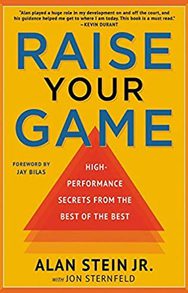
Raise Your Game: High-Performance Secrets from the Best of the Best
If you’re built a certain way in basketball heights, I remember in gym class in high school, the guy goes, “You got muscular legs.” I go, “I’m a competitive swimmer.” He goes, “You should be on the football team with those legs.” I had the opportunity to meet Michael Phelps and everyone was like, “He’s a successful swimmer because he’s got a big lung capacity.” There’s so much more to that success in any career, whether it’s an athlete or a salesperson or whatever you’re doing, than just your physicality. I wanted to start there. Did you have anybody encourage you or discouraging you like, “I don’t know if you’re tall enough?” What was it about basketball versus other sports that you go, “This is for me?”
I was always on the taller end of kids in my class. I’m not freakishly tall, 6’1” is a hair above average. It’s not like I’m 6’10”. My main attraction to basketball funny enough was, and this is a little-known fact that most people don’t know about me, is I’m heavily introverted. I love solitude. I love alone individual time. That’s how I recharge my battery. That was what unconsciously attracted me to the game of basketball because it’s one of the only team sports that you can practice by yourself and still improve the major skillsets. As long as you have a ball in a hoop, you can work on your ball handling, you can work on your shooting. Whereas when you think of soccer or baseball or football, you need someone else there with you to throw the ball and to catch or to tackle or to do whatever it is that you’re going to do. It’s harder to improve those sports in solitude. I love that I could take a few hours on a Saturday, go down to the park, work on my game by myself in complete silence.
Back in the ‘80s and ‘90s, we have a little boom box with some hip-hop music playing. I could go with my team and be around others and contribute to the greater good. That was one of the early attractions. I have seen in my time since the pressure that people put on young people when they’re tall at an early age. They make the assumption, “You should be playing basketball, or you should be playing volleyball because you’re tall.” They don’t quite get that. I understand that’s helpful, but they have to have a passion for it, for this to come to fruition.
[bctt tweet=”Emotions inform not direct your life.” username=”John_Livesay”]
I love that inside story of your introversion allows you to be by yourself to recharge and still be part of a team and toggle back and forth. That’s why basketball resonated with you. That’s nothing to do with your height, which is I happily found that insight for people. A lot of people think, “Why did you pick that or why does that resonate with you?” Let’s talk about your book, Raise Your Game. You’ve got some secrets in here. How did you come up with the title? That’s always a fascinating question for me, because as a fellow author, I know it’s not the first thing that comes to top of mind. There are many things that are considered.
Before we do that, I want to take one quick step back and say that my introversion is also what drew me to keynote speaking. I get to spend so much time by myself rehearsing, writing, and working on my craft. People often make the mistake of thinking if you’re introverted, you’re not social, that you don’t like people, that you don’t like large groups. Nothing could be further from the truth. I love being on stage and I love being around people, but that’s what drains my battery. It’s solitude that allows me to recharge. That’s the definition of introversion versus extroversion.
Extroverts get their energy from other human beings. Whereas for me, when I do a 60-minute keynote onstage and then mingle with some folks after, I can’t wait to get back to my hotel room and be in full solitude because I am emotionally exhausted at that point. I’ve been able to embrace my introversion and know that if I can put in the individual time to fill my bucket, then I can be of more value and of more service when I step on stage. I took that same mindset that drew me to basketball. That’s one of the key things that drew me to keynote speaking as well.

Raise Your Game: If you do have tendencies of being introverted, that in no way, shape or form should limit your potential as a sales professional.
That’s helpful because a lot of our readers are entrepreneurs. That’s a lonely job. I don’t think people, unless you’ve done it, realize that speaking can be a lonely job. The joke is we speak for free. They pay us to travel. If you’re a salesperson like I was, you’re on the road, you’re in a hotel room, people don’t realize it. If you are recharged by being around your friends and family, and you’re on the road in a strange hotel in a strange city, then that drains you. If you’re someone like you, it recharges you. The things that are hard for people who are extroverts, being on the road, alone in an airport, and all that isolation of not having one to talk to, it drains them. For you, it recharges you. It’s the same thing with sales. It’s like, “You got to be outgoing to be in sales.” Maybe or maybe not. It depends on how you can frame it.
If you are naturally extroverted, you will gravitate to something like sales because you make that connection of, “Nothing would make me happier than meeting with eight clients or prospects a day and talking.” While that may be true, that doesn’t mean that if you’re naturally introverted, that you should have an aversion to sales. You can still be an incredible sales professional if you’re introverted. You have to know your lane. You have to know that, “I’ve got a sales call today at 4:00, or I’ve got a presentation this evening.” I need to be in solitude to prepare for those two events so that I can bring my best and that I can show up as my best self. For the readers, if you do have tendencies of being introverted, that in no way, shape or form should limit your potential as a sales professional.
Also, as an entrepreneur. Bill Gates and Zuckerberg are quite introverted person. They’ve figured out ways to deal with that and make that work for them. You’ve said something that stands out to me, which is the need for preparation. We know athletes do it, Broadway performers do it, movie stars don’t get in front of the camera without rehearsing. Yet I see many sales professionals that are like, “I’m just going to wing it.” Whether they’re pitching for funding or pitching to win a new client, this resistance to practicing is the same personality that doesn’t like to stop and ask for directions before GPS. What is that do you think that causes people to realize, “All these people need to practice, but I don’t?”
[bctt tweet=”Don’t play the comparison game.” username=”John_Livesay”]
In any work that I’ve done with sales organizations, that’s one of the chief recommendations I make. You need to develop some type of system for practice. Whether you want to call it rehearsal, role-playing, whatever you need to do, you need to get into reps. It is interesting that we make that assumption with sports. We make an assumption when we’re watching a movie. None of us think that when we’re watching a movie that the first time Al Pacino or Meryl Streep is saying those lines is when the camera is on. Of course not. They said those things hundreds of times in preparation so that when the lights go on, they can nail it. Sales professionals should be doing something of the same effect.
One of the concepts in the book is we talk about the unseen hours. It’s the hours that you put in when no one is watching. A basketball player is made during the unseen hours. Us as novice fans, we get to enjoy their greatness when the lights come on, and the cheerleaders start dancing, but their game was built in an empty gym, working on their game by themselves. It’s the same thing with sales professionals. If you can start to look at that sales call you have or that presentation you have, if you can look at that as your game, or you can look at that as showtime on Broadway, then you’ll do what you need to do to prepare and to anticipate, “What am I going to need to be able to do during that sales call? What are some of the potential objections they may have or excuses they may make? What are the most insightful questions that I can ask them to get to know them, and qualify them as a legitimate prospect, and make sure that what I’m selling is the right fit for them.” That’s another important key.
A lot of sales professionals want to lead with their features and their benefits and what makes them unique. That stuff is important. However, it’s way more important to show the customer or the prospect or the client, how much you care about them and how invested you are in what will solve their problem. You’re not worried about selling them anything. You’re worried about making sure that you understand what it is that they need. If what they need is what you sell, then the sale will take care of itself. You don’t have to force it. You don’t have to manipulate. You certainly don’t have to convince anyone. You simply have to make sure that they can see the alignment between what they need and what you have. Once you get to that point, then you can share some features and some benefits and your unique selling proposition. It’s way more important to go into it with asking insightful questions and getting to know them.

Raise Your Game: With sales professionals, if you get too hung up on the outcome and the sale, it’s going to erode your preparation and your mindset.
This concept of the unseen hours, even as a speaker, sometimes people come up to you and go, “You’re a natural.” I smile like you did because nobody wants to hear about the work, unless they’re a speaker and then you’re having a conversation about the draft. People want to think that you can do that because you’re a “natural.” They don’t realize how much time you’ve spent crafting that TEDx Talk or whatever it is, let alone the keynote.
There’s no question that a certain level of charisma might be innate. You and I may have been born with certain personality traits that make it more conducive for us to be speakers and to be on. I say this respectfully and politely because people say the same thing. It’s almost insulting when someone says, “You’re a natural.” I do appreciate the intended compliment, but there’s a lot of work that goes into this. Ray Allen is one of the all-time best shooters in the history of the NBA. He’s still the leader in three pointers made.
He used to say the same thing because people would tell him, “You are such a natural shooter.” He said, “Natural shooter? Do you have any idea how many baskets I’ve made in the unseen hours in a dark gym by myself? This is not natural.” He would acknowledge. Maybe he was blessed with above average hand-eye coordination or spatial awareness. He was on the taller end. He was around 6’6”. He wasn’t discounting that he had some advantages, but at the end of the day, the reason he’s one of the best shooters ever to play the game is because he put in the work and he honored preparation.
[bctt tweet=”Find what you love, find what you’re good at, and then find where those two things intersect.” username=”John_Livesay”]
It’s the same thing for speakers. Could guys like us get away with not preparing? We might be able to do okay if we go up there and wing it, but we won’t come anywhere close to being as impactful and as influential as we’re capable of if we do prepare. This is why you can’t play the comparison game in speaking or in sales. If you’re comparing yourself to others and you’re using that as your yardstick, you’re going to fall short. My only comparison is, “Did I do as well as I’m capable of? Did I turn over every stone in preparation to make sure that I could deliver a customized message for this client? Did I bring my A-game and show up as my best self?”
If the answer to that at the end of the day is yes, then I know that I honored that client, respected that client, and did the best that I was capable of. The hardest part about that is learning to detach yourself from the feedback. There have been times where I felt like I killed it on stage and got good feedback, but they weren’t rave reviews. There have been other times where I got off stage and thought like, “Today wasn’t my best day. I was a little off my game.” I get some of the best feedback that I’ve ever gotten. It’s so important to keep all of these things in perspective and have some balance with them.
A lot of people secretly suffer and struggle with the imposter syndrome sometimes. A lot of that comes from comparing ourselves. We say, “Why am I not more successful by this age or by this stage of my career?” The first time I learned this was when I was in high school competitively swimming. They lined us up in heats. There’s always this guy that was faster than I was. They measure your time to the thousands of a second when you touched the wall. They said, “You won.” I said, “How did that happen?” They go, “He turned his head when he took a breath to see if he was ahead or not, and you stayed focused on the wall.” That was my first life lesson of, “When I focused on my own progress, I win.” When I was in the world of fashion, luxury entertainment magazines like, “Vanity Fair and Style are having an Oscar party. What should we do?” I was like, “Not that.” When you watch the Tiger Woods documentary, all that pressure and the crowd cheering, when you’re in basketball, you have that and so much at stake. It’s the same thing with salespeople when they’ve got the big sale coming up. I’m sure you’ve trained some of these athletes on how to be focused and turn off the noise.

Raise Your Game: Discipline is so much more important than motivation because discipline will get you through times when you’re not feeling motivated.
We can use swimming as a perfect example when we play the comparison game. If we compare you to me in swimming, you come out on top by a fast margin. I don’t even know anything about you, but I know I’m not a great swimmer. However, if we compare you to Michael Phelps, he’ll more than likely come out on top. It’s all a frame of reference. Yet, in both instances, you are the exact same swimmer. Nothing changed other than who we compared you to. It’s same thing with going out to eat. Some people will say that the Outback is expensive and other people say, “No, Ruth’s Chris is expensive.” It doesn’t change how much either one of them are charging, all it changes is what you decide to compare it to.
One of the hardest parts, especially in sales, because sales is numbers driven. Most sales professionals have sales goals and they have quotas. They’re earning a commission on sales, but when you can learn to detach from the outcome and learn to love the work, the process, and the preparation, that’s when you take that next step to being an incredible sales professional. If we use basketball as an example, there have been times I’ve been part of a team that did not play well and still won the game. There have been times where the team played the best they were capable of and they still lost the game. It’s the same thing with swimming. All you needed to worry about was, did you swim the best race you were capable of? It doesn’t matter whether the guy next to you beat you or you beat him, all that matters is that you did your best.
With sales professionals, if you get too hung up on the outcome and the sale, it’s going to erode your preparation and your mindset. You need to love the work because there will be times where you don’t get the sale, but you did everything right. You prepared. You were thorough. You brought your best self and they simply didn’t think it was a good fit. There will be other times where you nail it in, and somebody gives you the biggest check you’ve seen all year. You can’t let outcomes dictate your behavior. You need to be process focused, preparation focused, and aim to perform at your best. If you perform at your best consistently, I’m a believer that those things will take care of themselves.
I’m not saying that getting the sale isn’t an important because it is important, but that can’t be the focal point. It’s the same thing in basketball. Winning is important, but if you focus on winning every possession and you focus on taking great shots and playing great defense, the wins will take care of themselves. When you put your head down, your goggles in the water, and you swim your best race, chances are winning takes care of itself. It’s the same thing with sales, do all of the things that you’re supposed to do, and the sale will naturally be a by-product of that. We don’t focus on the sale. We focus on the preparation and the process. The end result more times than not will be the sale.
[bctt tweet=”Be a star where you are, no matter what level. Be great where you are, be great where your feet are planted.” username=”John_Livesay”]
I love what you said, “Don’t let outcomes determine your behavior.” I talk about it in terms of get off the self-esteem rollercoaster. You only feel good about yourself if your numbers are up and bad about yourself if your numbers are down. You can go up and down that multiple times in a day even. Our identity is bigger than anyone’s outcome. When we get that in not just an intellectual level, but a gut level, then we certainly don’t say, “I missed that shot. Therefore, I’m a bad basketball player.” Kobe doesn’t think like that.
Where this is so important is we don’t control outcomes, but we have much more control over the process, the preparation, our attitude, and our efforts. Most of this comes back to the happiness and fulfillment you’ll derive by taking control. I don’t want to give my power away. You said it so insightfully and perfectly. If my happiness and my self-worth is based upon the decision that someone else makes, that is a slippery slope. I don’t ever want to go down that path. I want to say that I prepared. I showed up as my best self. I did everything that I could, and then whatever happens happens. Either way, I’m going to feel good about the work that I put in. With that being said, I don’t want people to think that I’m a robot and that I’m completely stoic.
These are difficult principles to live by. It’s not easy when you think you’re going to get a speaking engagement and you find out they went with someone else. I’m not pretending that this is easy to do, but this is something we should all be striving for, which is detaching from outcomes and learning to love the work and love the process. Make that your enjoyment. When you can get as much satisfaction out of preparing for a sales call as you do from landing the sale, you own your happiness. No one else can control you. With that said, it reminds me of an important lesson I learned that our emotions are designed to inform us. They’re not designed to direct us. That’s so important when, as you said so perfectly, we can go on this roller coaster of highs and lows.
Some days we can sell anything and some days, we can’t sell anything, but that shouldn’t dictate the way we show up in our behavior. Hopefully, on the heels of a global pandemic where many sales professionals have been challenged, it’s okay if you’re feeling disappointed or pessimistic, or you’re in a low mood. There’s nothing wrong with having those feelings, but you can’t let those feelings dictate the way you behave, the way you prepare, and the way you show up. That’s what being a professional is all about. If you’re frustrated with a prospect, and then you act on that frustration, and you lash out at them, now you’ve got a problem. If you’re frustrated at that prospect, and you find a way to have the emotional regulation and control to still treat them with respect and civility, now you are a professional.
[bctt tweet=”Do the best job you’re capable of where you are. That will open doors and give you new opportunities.” username=”John_Livesay”]
Let’s loop back to how did you come up with the title, Raise Your Game, because we all are playing our own game whether we’re athlete or not. What was it that you said, “That’s the title for me, Raise Your Game?”
You hit it perfectly, almost as if you were reading my mind. I wanted to take something that I knew came from my sports background, which is playing games, but that would resonate with folks in other areas of life, business is a game. I want to raise their parenting game. I want them to raise their game as a spouse or leaders in their community. I wanted to find something that had a sports connotation, but was applicable and would resonate to anyone.
How did you get to, not only become a speaker, but get to work with the Kobe Bryant’s of the world? There are a lot of people who have your background maybe, but you’ve taken it to another level like the triangle on your book. You got one and then they send you referrals or what even made you want to do it or think that you could do it?
This is another lesson that applies directly to sales. I wasn’t always great at this when I was younger, but I’m getting better at it now. The answer to that is be a star where you are. Whatever level you are, even if you’re the lowest ranking sales professional, be great where you are, be great where your feet are planted. Do the best job you’re capable of where you are. That will open doors and give you new opportunities. The reason I say that is I worked at two different high schools here in the Washington DC area. Most of my work has been with high school age players, but I poured into them and did the best job I could as a high school strength coach. That opened the eyes of some people at Nike, the Jordan Brand, and USA Basketball. They gave me invites to come work at their events with Stephen Curry, LeBron James, Kyrie Irving, Steve Nash, and a whole host of players. That started, first and foremost, by focusing on, “Can I make the kids at my high school the best that they’re capable of, and then someone will take notice?”
[bctt tweet=”Folks are always focused on the next step that they don’t give the current step everything they’ve got.” username=”John_Livesay”]
A part of that, and this is an important part too, which also goes to sales, I’ve always been a relationship type guy. I’ve always valued relationships over about everything else. This wasn’t transactional of, “Can I make my high school players run faster and jump higher?” This is, “I truly care about them as human beings. I want to see them successful in life. I care about the coaches on the staff.” If you introduce me to somebody at Nike, I’m going to want to build a relationship with that person and find ways to add value to them, so the relationship, as well as the mindset of star where you are is what opened up the door.
That’s all any of us should be looking for, the opportunities and doors to open. Once you get in, clearly you need to be good at what you do, or they’re going to send you right back out that same door you walked in. Once I was able to work at Kobe Bryant Skills Academy, I’d like to believe I delivered at a high level, which is then what allowed me to work some other events, but that only came from focusing on and embracing the current role that I had instead of always having one foot out the door. I noticed that in a lot of professions, folks are always focused on the next step that they don’t give the current step everything they’ve got.
Whether you’re shooting a basketball or getting ready to do a race, and what I noticed with Michael Phelps, people forget he did not win gold, and yet he was able to let that go and get in the mindset of, “This is what I’m doing now.” Not let that loss of the gold, “I got a silver,” affect him for the next race. That’s what’s so challenging for many salespeople. “I lost a sale. Now I have to pretend like I’m in a good mood.” That resilience is what you’re showing and teaching people. I would be remiss if I let you go without asking the Kobe Bryant story. Talk about not comparing yourself to other people, but I have never had to swim against Michael Phelps or even being in the water with him, just at a party. You have a wonderful story of Kobe and even the timeframe that made me laugh of, “I’m going to get to work out with him.”
Kobe was an anomaly. The way he approached the game, and his now infamous mamba mindset is unlike anybody else that we’ve ever seen in sport. I would always have, and still to this day, have a lot of younger players that reach out to me and say, “I heard Kobe worked out three times a day for 2 or 3 hours at a clip. I want to be great. Should I do that also?” I say, “No, not necessarily.” Kobe had a work capacity and a mindset. I don’t know that we’ve ever seen anybody at that level. The goal is not to try to carbon copy what Kobe did. This would be something I’d tell young players, but it’s so applicable to sales professionals and to speakers. I’ve got a handful of speakers that do a remarkable job. They are some of the best people I’ve ever seen take the stage. I admire them and I respect them, but I’m not trying to copy them and I’m not trying to be them.
[bctt tweet=”Motivation is fleeting. Even the most motivated individuals don’t feel motivated all of the time.” username=”John_Livesay”]
They may have some traits that I’d like to emulate. I might be able to see you on stage, John, and go, “John has such a mastery of his content. He’s so captivating in his delivery that I would love to have a similar mastery of my content. I’d love to be able to deliver my stories with the same type of conviction.” That doesn’t mean that I’m trying to be you or that I’m trying to carbon copy you. It’s so important with anybody that we put up on a pedestal, that we look at some of their traits and try to emulate those traits, and figure out how we can take advantage of similar mindsets, but we don’t try to follow the script or the blueprint of somebody else.
We’ve heard some of these stories with Tom Brady. Tom Brady’s up at 5:00 in the morning watching 2 or 3 hours’ worth of film before the team comes in to practice. Once the team has done practicing, he stays after and watches more film. That doesn’t necessarily mean that if every quarterback did that, they would be as good as Tom Brady. Everybody’s got to find what makes them tick in their own recipe. That goes back to this comparison game. That’s why it’s such a slippery slope. If you think you have to do what everybody else is doing, that might not be what’s best for you.
There are many great takeaways, but the one that’s landing with me is be the star where you are and find your own rhythm, which allows you not to play the comparison game. That’s where the patience comes. Part of discipline is incredible patience of, “Why isn’t this happening faster? Why is it taking so long for my book to get published?” Whatever we can be impatient about. When we get in that zone of, “I’m at the right place at the right time doing the right thing. That’s all I can control. That’s all I have to worry or think about.” The anxiety and the stress level get so much lower and we do our best work. Is there any last thought you want to leave us with?
I’m so glad that you brought up discipline because motivation gets a tad bit overrated in this society. We’re all taught that we need to be these highly motivated people, and that everyone should be waking up at 4:00 in the morning, ready to hit the ground running. Motivation is fleeting. Even the most motivated of individuals don’t feel motivated all of the time. Discipline is so much more important than motivation because discipline will get you through times when you’re not feeling motivated. My goal is to perform at a high level consistently. My goal would be that you have no idea whether or not I was motivated to come on your show or not because it’s irrelevant.
Who cares whether or not I was motivated? All that matters is that I have the discipline and that I show up as my best self because I respect you, and because I respect your audience. I want to deliver as much value as I can. If you happened to schedule a show on a day where I wasn’t feeling motivated and I chose not to bring my best self, how is anyone going to attain any level of success or any type of reputation if that’s the case? Discipline is so important. I didn’t want you to think that I skirted your Kobe Bryant question. Arguably, the most important lesson that I got from watching Kobe workout at 4:00 in the morning during an off season, was that he has a strong appreciation for the fundamentals.
The line that he said to me, which changed my life forever was, “The reason I’m the best player in the world is because I never get bored with the basics.” I’m hoping that you and I collectively added tremendous value to your readers. If they can process that one nugget that “I’m going to focus on the basics and the fundamentals relentlessly during the unseen hours,” then you can become the best sales professional you’re capable of. Each reader needs to ask themselves, “What are my basics as a sales professional?” Preparation is a basic, active listening is a basic. Figure those things out and create a system to practice those things relentlessly, and you’ll become the Kobe Bryant of sales.
Your website is AlanSteinJr.com. The book is Raise Your Game in all areas of your life. Alan, thank you so much for hopping on, showing us how to be the best we can be. I loved all the secrets you shared. What a pleasure.
Thank you so much.
Important Links
Wanna Host Your Own Podcast?
Click here to see how my friends at Podetize can help
Purchase John’s new book
John Livesay, The Pitch Whisperer
Share The Show
Did you enjoy the show? I’d love it if you subscribed today and left us a 5-star review!
- Click this link
- Click on the ‘Subscribe’ button below the artwork
- Go to the ‘Ratings and Reviews’ section
- Click on ‘Write a Review’
Love the show? Subscribe, rate, review, and share!
Join The Successful Pitch community today:
- JohnLivesay.com
- John Livesay Facebook
- John Livesay Twitter
- John Livesay LinkedIn
- John Livesay YouTube
Amazon Mastery With Shaahin Cheyene
Posted by John Livesay in podcast | 0 comments

The future of commerce is online and mastering online marketplaces is something that anyone with anything to sell dreams about. We do live in fortuitous times because that wish of yours might just come true with Amazon Mastery, a new online course created by Shaahin Cheyene, the world’s #1 Amazon Accelerator. Sales has been Shaahin’s life and passion since his teenage years, when he became known as the “King of the Thrill Pill Cult” for dominating the rave scene in the 90s with his legal drug brand, Herbal Ecstacy. Shaahin founded his latest company, Accelerated Intelligence in 2009, which became one of the first sellers on Amazon. He has since developed an absolute mastery of all the tricks that it takes to dominate the site. Listen to his interview with John Livesay to learn the most important things you need to have if you want to succeed in the world’s biggest eCommerce platform.
—
Listen to the podcast here
Amazon Mastery With Shaahin Cheyene
My guest on the show is Shaahin Cheyene, who has a new book out and an online course about Amazon Mastery. We talk about how important it is to not only convert, and you need to speak Amazon’s language to do that, and also get in the top ranking. He said the keys to that are authority and social proof. He shows examples of finding out what your 20% effort is that gives you 80% of the results. Enjoy the episode.
—
My guest is Shaahin Cheyene, who was born in Iran. He’s an award-winning entrepreneur, writer and filmmaker based in Los Angeles. He’s the CEO and Chairman of Accelerated Intelligence. Through Accelerated Intelligence and Amazon Marketing & Advertising Agency, he manages the selling of his products and helps other brand owners to scale their online sales, not just on Amazon, but other marketplaces like eBay, Shopify and Walmart. He shares his passion for Amazon through his Amazon course entitled Amazon Mastery, which I have had the privilege of taking. It is incredible and full of information. He also has a new book coming out that we’re also going to talk about, which has a very compelling title that we’ll ask him about to explain, which is Billion: How I Became the King of the Thrill Pill Cult. Shaahin, welcome to the show.
John, it’s great to be on.
I love asking my guests to tell me their story of origin. In your case, you can go back to your days in Iran. Tell us what’s in this book you’ve written called Billion: How I Became the King of the Thrill Pill Cult. That is part of your story of origin before you became an Amazon expert.
I was born in Iran, in Tehran. I grew up there until I was about five years old to a solid middle-class family of Persian Jews, then revolution happened in Iran. My family was highly motivated to move out of what became the Islamic Republic of Iran. We landed in the US where we became lower middle class to the beginnings of poor from the standpoint of the kids that I was going to school with in a little enclave here of Los Angeles called Brentwood. I grew up around kids who had summer homes, their parents had multiple cars and all types of luxuries. I didn’t eat out at a proper sit-down restaurant until I was twelve.
It was not something that we did. If I needed clothes, me and my brother would go down to my dad’s dry cleaners in Westwood. We would keep our eyes open for clothes the customers had left behind for a year or more. Sometimes we’d get lucky, but usually our clothes would be several sizes too big for us. It’s an ongoing joke with me and my brother because we would wait by the door and look for people coming in who had a cool look. We would hope secretly that they wouldn’t come back to pick up their clothes because we knew that’s what we’d be wearing the next season.
From there, I decided that I wanted to become an entrepreneur. I don’t know how, but school life was very tough growing up an Iranian in the United States during a time where there was extreme prejudice against people from Iran. This was all during the Iran-Contra and things started heating up at home. I decided I’m going to go out on my own and I was going to leave home. I left home right around fifteen and went about my way. I discovered a mentor somewhere in Venice Beach who mentored me and started out in the rave scene, throwing underground parties, breaking into warehouses, having someone hop the electrical pole to get power, bring it in several car speakers to make sound and doing all kinds of stuff like that.

Billion: How I Became the King of the Thrill Pill Cult
We’re running illegal rave parties in the early ‘90, Los Angeles rave scene. It led me to a discovery that the only people making money in the rave scene, including the DJs and the promoters were the people who were selling drugs. For them, the supply of the most popular drug at the time, ecstasy, which is what they call Molly now had run out. It had completely been wiped off the tables. They were unable to get it. There were all types of dangerous stuff being sold as ecstasy. When people are at parties, raves and clubs, and they’re having a good time, they’re with their friends, and they’re enjoying life, they don’t have time to do a chemical analysis of the pills being sold to them.
This was causing some turmoil. I thought to myself, “What if I could break-in to this niche? If I could create a legal and safe alternative that wouldn’t hurt people and that people could use as an alternative, I’d be doing very well.” Long story short, I formulated a product in a girlfriend’s bathtub at the time somewhere in West Hollywood. I started going to the clubs and figuring out a way to convince the drug dealers who were pedaling real drugs to sell my pills.
Let’s pause for a second there so people can get a real picture. The cover of your book has a picture of you in this era with long hair wearing this pink guru gown on this very psychedelic cool background. If they’re looking at your headshot of the handsome guy you are now, they may not even recognize it as the same person.
That is right. I was long haired, defiant to no end, rebellious teenager who happened to be running $1 billion company with 200 employees, and had zero history in business, zero experience. I was a high school dropout. I never completed ninth grade and flying by the seat of my pants. The funny thing was that I had a system at the time, which I called suicide margins. What that meant to me was that I would make more money to solve all problems. I knew that if a problem arose, it would be easier for me to make more money to throw at it at that time, because we were printing money with these pills, than to go through the long process of fixing problems, building systems, and doing all that. The one system I had in place is make so much money that if something comes up, you can throw money at it and solve it. If somebody steals product, no problem.
How did you convince those drug dealers to sell your “herbal ecstasy” which is 100% legal to create this whole smart drug movement?
It all started out with one moment in one rave where I showed up. It was a huge rave. I was nervous and shaking. I had a backpack full of goof-filled capsules because that’s all we had at that time. There were either balls or capsules. I hadn’t gotten to commercial production. I was packing the stuff myself in a basement, kitchen and bathroom of girlfriends at the time. I showed up at the club with a backpack full of pills that I had very carefully packed in little baggies with a little card inside with a picture of a butterfly and an E in it. They were out of drugs at this party. I walked up to the biggest drug dealer in there and I said, “You’re going to go to jail. There are undercovers here. I’ve got a way for you to get out of it.”
At first, he was very aggressive and standoffish. I said, “Sell my stuff.” He said, “What?” I said, “Sell my stuff.” He said, “Give me some and I’ll try it.” He tried it. He was enjoying life in that moment. He took the whole backpack full, sold it all within minutes, and then came back asking me for more, which I nervously had to decline because I didn’t have any. I’d have to run back to the girlfriend’s bathtub and continue to produce more. He got my number. I got a pager and more people came on. He brought on others and more and more people came on. It grew from one guy in one club to 100 to 1,000 to 10,000 guys to the point where we created $1 billion in revenue.

Amazon Mastery: If you want to achieve success, you have to be able to find the one thing that’s going to be the most fruitful for the effort that you’re putting out.
In my upcoming book, I tell the story where I’m sitting in my office and the news breaks to me that we broke the $1 billion mark in sales. I’m sitting there going through my books, talking to the people sitting there. I did not even know how much $1 billion was. You could have told me and I wouldn’t have known. They wanted me to be on one of these big talk shows. It was Montel Williams. I was nervous because this was pre-internet and I didn’t know what $1 billion was. I was like, “Is he going to ask me how much a billion is? I don’t know what a billion is. Is it British billion, American billion?” I’m looking through encyclopedias. I’m like, “What are we going to do?”
Someone’s like, “Listen, idiot, they’re not going to ask you how much a billion is. They probably already know, but the bigger problem is they’re going to try to ambush you.” We have this whole situation developed where I’m going on this national talk show. I knew that I was being ambushed. Meaning that they were going to juxtaposition me, the fifteen-year-old, wearing Teva sandals, sweatpants or medical scrubs because I thought those were comfortable. I didn’t want to think about dressing. I had two modes. I had medical scrubs and I had sweats. That’s all I would ever wear anywhere, all in one color.
I decided to do the show anyway because I knew that even though they were going to have old government people against me, they were going to try to do some big thing where they would confront me on the air and prove how wrong I was that I was going to capitalize on that. What I did was I printed up t-shirts with our 800-number spread across the top. Before the internet, there was this thing called 800-numbers. I got to explain this to all the Millennials.
Pager was originally for drug dealers, doctors, and then actors waiting for their agents to page them. Now you have a pager to promote these drugs.
They’re going to be googling what a pager is. I had my pager and I had these t-shirts with our 800-number emblazoned across the top of them. I had a team go out and hand them out to everybody in the studio audience before, and then we gave them sweaters to put over them so they wouldn’t get busted. We gave them free pills. It was like a big party outside when the producers came up, they did not understand what was going on.
To be clear, those pills work quickly. It’s not like you have to wait an hour to feel a difference.
It’s 15 to 45 minutes was very effective depending on your bodyweight and metabolism. I had people who it affected them within 5, 10 minutes. For some people, if your metabolism is a little slower, it might take longer. If you’ve got a lot of food in your belly, it might take longer. Somebody may have incentivized some of the people on that show to stand up and wear our t-shirt on the show. The show host who later turns out may or may not have been a little dyslexic and didn’t read on the show because he was unable to do so.
[bctt tweet=”What is your 20% effort that gives you 80% results?” username=”John_Livesay”]
He pretended like he would read, he would hold up a package and he would say what the producers told them to say or what was on the prompter. I didn’t realize that this was happening. When the show aired, our 800-number was on everything. We made hundreds of millions of dollars from the airing of that show and others because my 800-number was on my shirt. We had government people saying, “This product could be dangerous.” They had Concerned Moms of America and DARE. They’re like, “Don’t buy this. It could be dangerous. This could very well be dangerous.” What are people hearing? What do you think they’re hearing, John?
When you say don’t, your subconscious doesn’t hear it. They’re hearing, “Buy this.”
When they’re saying it’s dangerous, that translates to the mind of all these people that maybe it does work. The real controversy in people’s minds were, “If I’m going to drop $20 on this, is it going to work?” That was the real controversy. The controversy on the news was, is it dangerous or is it not? The fact is people are willing to take a very high degree of risk in order to have a good time.
The younger you are, the more tolerant you are. You feel immortal and maybe not worried about anything happening. It has been many years and now Accelerated Intelligence has not the same product, but other products that have all kinds of enhancements around memory. I want to take us to that journey a little bit so we can get to the Amazon stuff, but it’s a fascinating launch of a career. It also stuck and morphed into something called Accelerated Intelligence.
I wouldn’t say morphed. I would say I learned a lot of lessons along the way. When you are a teenager and making hundreds of millions of dollars leading off to creating over $1 billion in value, before your 21st birthday, you learn a lot. Since then I created a number of companies, many of which failed, a few succeeded, which brings me to where I am now. I’ve got three lines of business. One is we make and sell products on the Amazon platform and beyond. We’ve got 300 different products in health and wellness, tea and supplements. We’ve got Excelerol, which is a fantastic brain supplement.
We sell one called FOCUS+ which people love, but we make all types of products. In addition to that, we have an agency where we do that for Fortune 50s, Fortune 500s. We charge some unreasonable amount of money, and we’ve got probably more demand now than we do have time and supply for our service. Somewhere along the ways, we figured out how we could win using the Amazon algorithm to our advantage. It seems now especially in COVID times, that’s something everybody wants to do with their product. We get brands approaching us all the time for that.
Let’s talk about one of those brands because what I love most among many things about you, your persona, your passion, your intelligence and grit is this organic Matcha DNA. That’s one of your products. There are a lot of places that sell matcha green tea. People are aware of the benefits of it from immune system stuff. You figured out a way because this is what you do for everybody, how are we going to make our organic Matcha DNA show up in an Amazon search, so that when someone puts into Amazon green tea, yours is going to be one of the ones that comes up. Maybe walk us through that path as an explanation of how you help others find a product, get it to appear on the first page of Amazon results, and then what that does for people’s income and life.

Amazon Mastery: Sometimes, starting and fixing problems as you go is a better tactic than working out all the kinks to make the best possible thing you can put out.
If you want to achieve success, you have to be able to find the one thing that’s going to be the most fruitful for the effort that you’re putting out. There’s a great book by Gary Keller called The ONE Thing. I’m sure you’ve read that, where he explores that. Not only that, what you have to do is you have to do an analysis of all of your efforts. In that analysis, there’s another great book by a guy named Richard Koch, The 80/20 Principle, which is based on the Pareto Principle. This guy a long time ago figured out that 20% of our efforts bring about 80% of our results. What is your 20%? When we look at Amazon, we look at all the stuff that people do to sell products online. What’s that one thing that you can do that can put your brand, your product above all the others?
The important thing on Amazon above and beyond all other things is ranking and being able to get visibility, but that’s not the only thing. Once you have that ranking, you have that visibility, you have to be able to convert. You have to be able to get them to buy your product. We do that by being able speak the language of Amazon and that has to do with influence. Another great writer, a man named Dr. Cialdini, who you’ve had on this show.
He wrote a great book called Pre-Suasion.
Also, Influence, I’m honored to be sharing the same airwaves, but he talks about the key factors of influence. I’ll give you two, which is the 20% to the 80%, even when it breaks down to influence. That’s social proof and authority. Those two things with any product make a big difference when you’re selling on Amazon. In my course, I’ve got a lot of students now who learn from us. A lot of people come to us and they’re like, “We’d love to use your service.” I’m like, “We’re ridiculously expensive.” They’re like, “You’re right. We can’t afford you. Thanks.”
We have a course people can take and do it themselves. The course is pretty reasonable. It’s not for everybody, but for the right people, it could be a game changer. We teach them how to do what we do using influence, using storytelling, which you are the master of on the Amazon platform. Learning how to sell products and create this real estate where they have this recurring revenue stream that’s happening for them day after day, week after week, making money while they sleep. That’s what we teach.
We’re both such fans of Dr. Robert Cialdini and Influence. There are three steps in any process. There’s the attract, convert and deliver. Most people have some challenges on the first two steps, but once they get hired to deliver something, they’re pretty good at it. What is so great about you is you walk people through all three steps. If you happen to say, “I want to sell something, but we need to import it from China.” There might be some delivery hold ups or what have you, that would impact your business.
You have been through enough of these to know the warning signs so that people don’t get stuck in the delivery part. That’s such a key part of expectations around anything I buy on Amazon. It better be here at least by tomorrow, if not a drone delivering it within the hour. When we talk about this first concept of attract what you describe as ranking to show up, that in of itself is worth the price of your course. People spend thousands of dollars to have that same result in Google searches. You are the expert on that for Amazon, but it’s not enough to show up. You got to show up as your best self and your brand and the packaging. The conversion starts the minute that page downloads in my humble opinion.
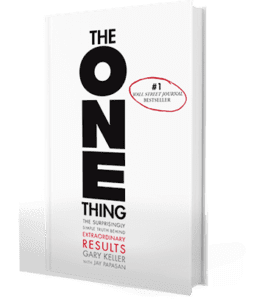
The One Thing: The Surprisingly Simple Truth Behind Extraordinary Results
A lot of people feel like they lose the sale at the end of the sale when they ask someone to buy. In your case, it would be the click here. I’m saying most of those sales are lost if that packaging doesn’t match who I think of myself as. It may be the least expensive, but I’m going to buy something that appeals to me. Maybe we should talk a little bit about authority as it relates to packaging. Those two things are tied together. Do you agree?
I’m going to push back a little bit on that with you because I know that you are a master salesman. You are a master of pitch, one of the best in the world. With that, I see where you’re coming from wanting to always put excellence forward. I’ve known you for a couple of years now. I always see you bringing excellence to what you do. That’s admirable. With products, however, on the Amazon platform, and I’m only talking about Amazon and selling on Amazon, sometimes you have to be careful not to have perfection paralysis, which is something that a lot of people suffer from. This line of conversation, I’m so glad that you brought it up because it’s so important, especially in these days of everything being politically charged, COVID, and all this stuff happening. We tend to gravitate towards black and white. Things are not black and white. They are nuanced.
In the order of selling on the Amazon platform, there is a lot of nuance there. I get students who come to me who cannot launch a product because they are so tied up in excellence. I say, “It’s good to be excellent, but you also need to do what Seth Godin talks about. You need to ship. Your product is good enough for what it is. Ship and fix the problems as you go.” Sometimes that’s a tactic that’s better than working out all the kinks and making it excellent and the best possible thing you can put out. This is a principle that I teach in my book because when you are sleeping, your enemies are planning your demise.
Two things. One, we talked about a mutual friend, Jay Salmon’s great line that, “Failure is just feedback. You keep going until you get a zombie idea. It’s so great it won’t die,” which gets you out of that perfection paralysis. I teach people all the time, let go of perfectionism and think of yourself as a progressionist. Start celebrating progress so that you don’t wait to launch something. Looking at my own website and the speaking video I’ve created multiple times and keep enhancing it. From where it was to where it is now is night and day. If I didn’t start, it wouldn’t have ever started to evolve. I agree with you that don’t let perfectionism stop you from launching and testing something.
If we take a look at the authority that organic Matcha DNA has and the social proof that you have from Dr. Eric Wood, who you were nice enough to introduce me to, that’s an example. It’s got authority plus social proof and great packaging. That all combines to tell this story. We’ve been able to bring those two things to life a little bit, but taking an example of when you look at this item. There are a lot of things you could open with. I tell people the same thing is true of a recipe, a job interview, when they describe what they’re looking for, and when you’re promoting details of the product. Put the most compelling thing upfront. Don’t bury the lead as they say in journalism. A lot of people could say, “I’m a left-brain person. I’m going to talk about how lab tested for lead this is.”
You lead with delicious and nutritious. That’s so smart because matcha green tea has a reputation for not exactly tasting very good. Sometimes it can be a little bitter for some people. The fact that you opened with that, pulls us into that story. We keep reading about how it’s certified, the doctor, and the way that it’s packaged. Here’s what I do in storytelling. When I give a fact or feature about something, I encourage people to say this phrase, “What that means to you is.” If we’re talking about something being certified BPA free packaging, and you’re the only one that does that, what that means to people is, then I’ll let you fill in the blank there.
It’s healthy.
[bctt tweet=”To sell on Amazon, you have to learn the Amazon language to convert customers. ” username=”John_Livesay”]
If you’re buying something organic, but it has a BPA in it, you’re taking away from it. That’s your unique selling point, but you lead with delicious and nutritious. When you’re talking about the nuances that are in your course, this is what we’re talking about?
Not every approach is right for everybody. What I’m hearing from you is that you want to lead with the one thing that your audience or your product avatar, whoever is buying your product wants to hear the most, the lead point of influence. That makes perfect sense to me.
Buy emotionally and then back it up with logic. If you’re putting the description of your item and logic at the top, they may not read down to the emotional hook first.
It depends on the product. This is the nuances that we’re talking about. You might have coat hangers and all coat hangers are the same. Your proposition there might be, “You get five more with us,” and then you would lead with that. It could be that, “We’re the low-price leader. We’re the same as all the other guys, but we’re $1 cheaper. Save that dollar.” It’s whatever that influencing factor is that will lead them to make a buying decision. It’s going to be different. For every product. I’m 100% on board with that.
Since you’ve been through my storytelling format, let’s leave everybody with an actual case story so that they can see themselves in the story, and want to go on the journey with you of becoming a master of Amazon. If you have a client in mind that you can tell a case story about, we’ll start with the exposition, their name, maybe the first name for anonymity purposes, where they live or approximately how old they are. Paint that picture a little bit for us if you have a case story in mind.
We don’t believe in anonymity here. All of my students, once they come on board, they know they’re on board. I will tell you this story. Me and my wife decided to have a kid several years ago. They grow up fast. My wife was working for the United Nations under Kofi Annan during Kofi Annan’s reign at the United Nations. She was a big-time publicist working for the UN and in government positions. Directly under Kofi Annan, who was her boss, was the head of the United Nations. We decided to have a kid and she said, “There’s no way I’m going to be able to do that high-level international politics work.” She came home. We had the baby. During that whole time, she was like, “I got to do something. I can’t just be a mom. I’d like to do something that brings in some money.”
By osmosis, she was watching me help clients and students, and mentor people. She just listened in and was like, “Honey, I think I can start an Amazon company.” I said, “You can do it. I’ll help you with whatever time you have.” She figured out, “I’ve got two hours a day when the kid’s sleeping or at the babysitter. I can do it.” She launched a company selling greeting cards and girly things that I don’t understand, recipe tips and floral flowery things that I have very little connection to. I would never think that somebody would need a recipe tin in this day and age. When she told me, “They don’t have an iPhone. What’s wrong? Why do they need a recipe tip?”
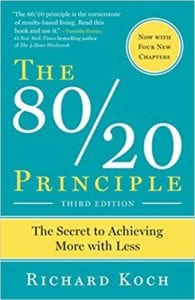
The 80/20 Principle: The Secret to Achieving More with Less
She is now doing close to $500,000 a year in sales working about four hours a week from home. She’s doing it by selling these products on Amazon. She expanded out to Etsy using our algorithms and the stuff that we teach. She sells on eBay. Day after day, we’re on vacation. We’re in Tulum sitting on the beach. She’s got her phones dinging with orders. She gets that tone and she loves it. We joke around about that and she’s adding products all the time. It’s amazing because she gets an opportunity to be a mom, to be a wife, to hang out with our family and friends and do that, and still bring in that revenue. That’s one of the amazing opportunities that Amazon has been affording its sellers and why it’s such an important company. We take that money and we turn it into other products and cashflow producing real estate.
Let me break that down for people to learn how to tell stories as well as you did. What is your wife’s name?
Her name is Matisse.
Several years ago, she became a new mom and we know that she had a very high-powered job before. The problem was she didn’t want to just be a mom and yet she only had two hours in a day as a full-time mom to juggle all this. We have a pretty good picture and a lot of women can relate to this. What I find fascinating about that story is even after your child got older, she could have decided to go back to work after they started school, she realized that the lifestyle and the freedom and the money is probably even better than she had when she was working for somebody that was such a high demand job.
We have the exposition. We know how long ago. We know the problem and then we go to the solution, which is an unexpected solution of something. The way you told that was like, “I would never think anybody needs it, but we have a way of testing it, and sure enough, it proved out to be something.” You then give us the solution of $500 million in eight years, four hours a week. You’re like, “That sounds like something I’d like to learn how to do.” The resolution is what brings that story home. Now we’re visioning you on the beach with your wife and son, and everyone’s happy. She’s feeling fulfilled, not just as a mom and a wife, but also as an entrepreneur and contributing to the family.
This is so important in storytelling. The money is going back into the business to launch other products and buy income real estate. We’re creating a legacy and that’s tugging at the heartstrings because a lot of people want to leave a legacy for their children and being on the planet, whether you have kids or not. I don’t know if you consciously did that, but it was valuable for people to hear how to tell a good case story in a way that is intriguing and will promote people to go check out what you’re offering on your course, but also at the same time, learn how to become a master storyteller in a new way. We’re doing two things at once.
I love how you broke that down and that’s amazing. How would you improve that?
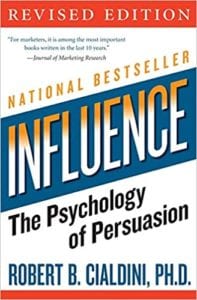
Influence: The Psychology of Persuasion (Robert B. Cialdini)
Mention her name because it’s more specific, “My wife” and then give her name, and then it will make us do the math in our head. Let us know that eight years ago when you decided to have a child, those little details pull us into a picture in a stronger way. Maybe give a little bit more of a description of maybe a problem she had along the way, and why people need your course in order to make this successful. The biggest mistake people make is they don’t test or they spend too much money or they don’t know the algorithm or they don’t speak the Amazon language. Give us some sense of what she started to do that you helped her not do before she had that success.
We’re on the journey a little bit to go from you have an idea for a product. We don’t know where she gets it from. We don’t know how she tested it. The more we see that there were some challenges. Remember in this case, you’re the Sherpa helping her climb Mount Everest of launching a new product to make money. It’s what we could add into that story to make it even more compelling. As it is, it’s intriguing enough that people are going to go, “I at least want to go to the website.” What’s the best website for people to go to find out more about you as a speaker, and to find out about your book and the course?
I’m going to do a couple of things. One, I’m going to give my email address and this will be my direct email where people could get ahold of me and I will get my website. The website is www.ShaahinCheyenne.com. If anybody’s interested in succeeding on Amazon, reach out to me with an email and that email is [email protected]. I will get back to you. You can also try [email protected].
Shaahin, thank you so much for taking us on this amazing journey of the first 40-something years of your life. I can’t wait to see what the next 40-something is going to bring and the impact it’ll have on the world.
Thank you so much for having me on, John. I’m honored to be on your show.
Important Links
- Shaahin Cheyene
- Accelerated Intelligence
- Billion: How I Became the King of the Thrill Pill Cult
- Matcha DNA
- The ONE Thing
- The 80/20 Principle
- Dr. Cialdini – Previous episode
- Pre-Suasion
- Influence
- [email protected]
- [email protected]
- Better Selling Through Storytelling Method Online Course
Wanna Host Your Own Podcast?
Click here to see how my friends at Podetize can help
Purchase John’s new book
John Livesay, The Pitch Whisperer
Share The Show
Did you enjoy the show? I’d love it if you subscribed today and left us a 5-star review!
- Click this link
- Click on the ‘Subscribe’ button below the artwork
- Go to the ‘Ratings and Reviews’ section
- Click on ‘Write a Review’
Love the show? Subscribe, rate, review, and share!
Join The Successful Pitch community today:
- JohnLivesay.com
- John Livesay Facebook
- John Livesay Twitter
- John Livesay LinkedIn
- John Livesay YouTube
Discover Your WHY With Dr. Gary Sanchez
Posted by John Livesay in podcast | 0 comments

There’s a big difference between knowing your why and not knowing your why. When you don’t discover your why, you can’t understand yourself. When you don’t understand yourself, you won’t find the words to articulate your message. John Livesay’s guest is Dr. Gary Sanchez, the creator and founder of the WHY Institute. John discusses with Dr. Gary how important your “why” is in figuring out your marketing strategy. Join in the conversation and discover how you can find your “why” and why you need to!
—
Listen to the podcast here
Discover Your WHY With Dr. Gary Sanchez
Our guest is Dr. Gary Sanchez, the Creator and Founder of the WHY Institute. He talks about his own personal journey, how specific pains and frustrations have been a motivator for him to create solutions. He said that sometimes the fear of looking bad causes people to say nothing, and that if all you’re saying is what you do, then you blend in with your competitors. Find out how to find out what your why is and how it can change your life. Enjoy the episode.
—
Our guest is Dr. Gary Sanchez. He is the CEO and Founder of the WHY Institute. His own personal why is to find a better way and share it. How he does this is by making things clear and easy to understand. What he brings are simple solutions to help people move forward. He and his team at the WHY Institute have worked with over 40,000 individuals, as well as 500 companies, from a small yoga studio to a Fortune 500 company. He helps them get clear, stand out and play bigger. Gary, welcome to the show.
John, thank you for having me. I’m excited to be here.
Your story is fascinating to me. I want to invite you to take us back to your own story of origin. Did you grow up wanting to be a dentist your whole childhood? Was that a new thing? A lot of people may not think of dentists as entrepreneurs, but they really are. Let’s start your story wherever you want. You can start pre-dental school, in dental school, and then we’ll get to how you got to the WHY Institute.
Like a lot of people who are probably reading this, I had no idea what I wanted to do. It wasn’t a lifelong passion or dream that I had to be a dentist. When I was in college, I started with the major of undeclared. I kept that until the last possible second until I almost had an emotional breakdown or something when I had to decide what I’m going to major in. I picked Biology because that was the only thing I had a good grade in. That only prolonged it for a few short months because soon, you got to figure out what are you going to do with the major of Biology. My dad was a dentist. I knew the lifestyle and said, “I’m going to give it a shot.” Off I go to USC Dental School. I enjoyed it. I had a great time there. When I graduated, the advice that I was given from the experts at that time was to build a great product and people will come. Have you ever heard that before?
I have heard that. It’s very Field of Dreams. Build and they will come. Work hard and you’ll get promoted. Build the best mouse trap and somehow, magically people will find you.
That’s exactly it. I took that to heart and spent about twenty years doing that with my brother. We went to the best institutes. We reached the highest levels you could go to as far as technical dentistry. We built a beautiful facility. We had a well-trained team and all the latest technology. For us, that wasn’t enough because everybody says they have everything, even if they don’t. If all you do is talk about what you have, you blend in with everybody who has what you have or what you do. If I went to a cocktail party or something and they say, “What do you do?” I say, “I’m a dentist.” They say, “One of my nephews is a dentist too,” or something along those lines. I’ve spent twenty years perfecting my craft. Their nephew had just gotten out of dental school and we were considered the same. It was very frustrating. How do you stand out in this crowded marketplace? I’m in Albuquerque. There were like 600 dentists here. How do you stand out when everybody says they do the same thing? I’m guessing many of your readers have experienced the same thing.
Yes. Even if you’re not in the professional services industry like doctors, lawyers, accountants, a lot of people think of all that being the same and then that becomes commoditized. You’re an entrepreneur trying to come up with a new idea and maybe you’re trying to even get funding. If you make the fatal mistake of saying, “I don’t have any competition,” then investors say, “Then you don’t have a market.” One extreme or the other is bad. Being lost in a sea of sameness is the kiss of death. That’s the big problem that you’ve solved with the WHY Institute.
The other thing about you that fascinates me is most people would be like, “I’m going to double down, be the best dentist and figure out how to grow my practice, even though a lot of people don’t see what I’m doing is different.” You said, “I’m also going to start something called the Health Chair.” That was way before people were even thinking of that as an investment. We have beds that we now spend a ton of money on sometimes. There’s been Herman Miller of the world that companies get to spend a lot of money on fancy conference room tables and chairs. Was it from a personal pain point where you’re sitting in an uncomfortable chair as a dentist and then that led to this? Those are always the best story of origins as you’ve experienced the pain yourself.
[bctt tweet=”Fear of looking bad causes us to say nothing at all.” username=”John_Livesay”]
Pain is a motivator. Before dental school, I was very active. I was playing professional racquetball. I was traveling around the country, playing all these tournaments. I went from being very active to getting into a dental school where I sat all day long. I would show up at 8:00. I would sit in the chair until 10:00 at night, five days a week. My back was killing me. I kept injuring my back to the point where I couldn’t do much. I had to give up all the sports that I loved. All that skiing, basketball, racquetball, squash and tennis. All the things I want to do, I couldn’t do. I started going to different experts, chiropractors, massage therapists, physical therapists, acupuncture and Rolfing. I went to all these different people to try to get results and nothing would work. I learned that you could not out-therapy bad posture.
That’s like you can’t outrun your diet when people think they can just exercise to compensate for bad eating.
I was at this chiropractor’s office and he gave me this book called The Egoscue Method of Health Through Motion. It’s written by a guy named Peter Egoscue out in San Diego. It was like, “You got yourself into this and you can get yourself out.” It was exactly what I was looking for. I flew out to see him in San Diego. I went through his program. It was about a six-month-long process of straightening up your body, getting your body to function correctly, and then it would heal itself, which was exactly what happened. When I graduated from his program, I had to carry a 200-pound guy on my back through an obstacle course. No problem and I went on. After that, I played in the World Racquetball Championships. I won the World Championships. I had played 52 games in five days.
I learned the value of good posture. Good posture starts with sitting correctly. I started buying chairs. I tried to find a chair that would fit me and I couldn’t find one. I took all these chairs that I bought. I had a whole room full of chairs. I cut them apart and developed the Health Chair. The difference between the Health Chair and any other chair, when you sit down on this, it forms itself to you versus you having to form yourself to it. You push these buttons and the chair forms to you.
Would it be fair to say it’s almost like some of those mattresses that take your body shape a little bit, except yours is automated with technology where you push buttons?
Imagine looking at a regular chair that you see anywhere. Who does that fit? Nobody. It’s a universal size that doesn’t fit anybody. The chair that I developed has two individual backs that go up and down, forward and back individually. When you sit down on it, you push these buttons on the side of it and the chair forms itself to you. You can put the lumbar exactly where you want. You can have as much lumbar as you want. You can just form it to exactly how you like to sit. Periodically, you change the position, so you’re not stuck in one place. That was another better way.
The reason I wanted to talk about this before we go into the WHY Institute was that early seed of, “There’s a problem I’m experiencing and I want to solve it.” Using the skills that you have, not just as a dentist who is good with your hands and understands how the engineering of things, and that whole MacGyver description of what you did with those chairs, it’s like taking spare parts from robots and creating a new one. That led to you experiencing another kind of problem, which was distinguishing the “how do I stand out” problem. You worked with experts like Simon Sinek, figuring out the why. What you’ve done that I am so impressed with is you’ve figured out a way like you did with the chair, where you push certain buttons and then out pops up people’s individual why. You have an actual formula that’s based on that research and now using artificial intelligence to make that available for people in a whole another way.
Let’s rewind the story of, you’re on your own quest. You’re the hero in the story, trying to figure out, “What is my why? How can I explain it to people that makes my dental practice take off?” Once we hear that, then we’ll be able to apply it to whatever our business is. Let’s start with you’re on this quest. You learn some things from Simon, getting to talk with him, not just watch his talk like a lot of us, but get to ask questions and figure out your own why. What was the big click for you of, “Now that I know what my why is, that’s going to help me stand out?” How do you connect those dots?
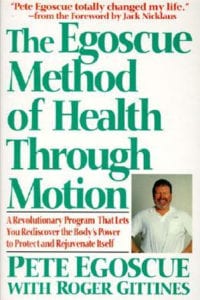
The Egoscue Method of Health Through Motion: A Revolutionary Program That Lets You Rediscover the Body’s Power to Protect and Rejuvenate Itself
I had hired a coach previous to that. His name was John Assaraf, who you might be familiar with and the movie, The Secret. Through John, I learned how to use the internet. I learned how to do websites, SEO, drip campaigns and video marketing. I learned how to get my message out to the world. Now, I can tell everybody about how great I am, but the only problem was what am I going to say that doesn’t make me sound bad, desperate or like I need new patients. Since I didn’t know what to say, I bet a lot of your audience is this way. When you don’t know what to say, so you don’t say anything for fear, which is what I had. As a professional, you don’t want to look bad to the public by what you say.
I didn’t say anything until I heard John interviewed Simon Sinek. Once I heard about this concept of why, how and what, it made so much sense to me. I was like, “That is the missing piece. I’ve got a great what but I don’t know my why. Until I know my why, it’s going to blend in with everybody else.” I became obsessed with discovering my why. That’s when I called Simon. I said, “Simon, I need you to help me discover my why.” He said, “That’s not necessarily what I do, but let’s take a stab at it.” He and I spent about eight months together, going back through my life, looking for clues as to why I do what I do. As we kept working and working, I finally figured out that my why is to find a better way and then share it. My life made so much sense to me. That’s why I developed this chair. That’s why I’ve made the decisions I have. That’s why I haven’t made other decisions. It was all based on finding a better way and then sharing it.
Since that was the case, I went and took what Simon was trying to do and made it better. First, I went from 6, 8 or 10 months to helping people discover their why in about an hour. I can sit down with you, John, and take you through this series of questions. We could develop your why and discover your why in about an hour. I did this so many times all over the world, on stages, on Skype, in different languages that I started to keep track of all the whys that I discovered. I figured out that there are only nine different whys. That was the most important thing I discovered because once I saw that, then I could help someone discover their why in about fifteen minutes. I got more data, developed the algorithm and wrote the software to where you can now go online and discover your why in about five minutes.
Let’s take a pause on all that incredible journey from figuring out yourself, interviewing enough people, and then figuring out a way to automate it so that people can now do that. Let’s zoom out again when companies or coaches don’t know their own personal why, they have a very hard time expressing it in their marketing materials, LinkedIn profiles, and the messages when they’re talking to potential clients. Once you figured out someone’s why, the next steps are now the what fits into the why and the how much like Simon’s talk. Can you give us a story of what you did with your dental practice once you found out your why? What did you say in your marketing materials that made potential patients care that you want to know or find a better way of doing things? You had to figure out what it meant to them.
This is something I know that’s important for you, John. That is authenticity. That’s why telling a story is so important because it’s authentic. When you develop your message, it has to be real. It can’t be some marketing firm that goes into a closet and comes back out and says, “Here’s what you’re going to say, John. Here’s what I want you to talk about yourself.” That doesn’t feel good. It doesn’t feel right. It’s not authentic. It’s not truly you, so you don’t want to say it. When it comes from you, that’s the big difference between knowing your why and not knowing your why. You can not only understand yourself, but you’ll have the words to articulate your message to say it. Your branding, messaging, marketing and culture all become based on your why.
The simplest example is a radio spot that you got in millions and millions of dollars that people are going to love that will bring it all the life. In that radio spot, you’ll notice that I don’t talk at all about crowns, bridges, fillings, gum care, X-rays, pricing, none of that. It’s all based on what we believe that life is better when you have great teeth. You can’t have a good life when you have bad teeth. There are so many people who are being held back from who they were meant to be by their teeth. It doesn’t have to be that way. We’ve developed a process where they can sleep through their visits so they can get the smile they’ve always wanted smile so they can be who they were meant to be. You’ll hear that in the radio spot and it’s very powerful. Often, we get people who are coming into our office saying, “I was driving down the road. I heard that radio spot and that is me. I know I’m in the right place.”
That’s your headline on your website, “Great teeth, better life.” That is connecting the dots. You figured out that your why is all about a better way. Your better way in this case was people hate going to the dentist. Let’s not pretend that’s not a thing. They’re not only worried about paying, but they’re also worried about being scolded, “You’re not flossing enough.” You addressed all of that on your website, which then people go, “He has found a better way for me to not dread going to the dentist.” Would that be a fair connecting of the dots?
It’s very much, no scolding, no lectures, just a healthy mouth in about an afternoon.
[bctt tweet=”When you are passionate about what you do, you have unlimited energy.” username=”John_Livesay”]
People are like, “I’ll do it. Why do I need to be?” We can get into all the details. I happened to be passionate about this study as a hobby that oral health connects to your heart health. Most people aren’t even aware of that. Your premise is based on science again that you can’t be having your best life if your mouth isn’t healthy because we all know heart issues. It’s this concept of, “Why then do I avoid it?” It’s like, “Why do I avoid exercise?” You’re going, “There’s a better way to exercise. There’s a better way to sit in a chair. Now, there’s a better way to take care of your teeth so that you can have a better life.”
What I work with people on is, “We have to grab their attention.” What you’ve done is you’ve taken your why and used it to stand out from the clutter. Instead of just saying to somebody at a cocktail party, “I’m a dentist,” you’re saying, “I help people have a better life.” You might even leave it at that. They’re like, “What do you mean?” “I help people get over their fear of the dentist and the dread of it.” That is a much easier thing to remember and certainly something to look at. If you’re looking for dentists and you hate going to the dentist, he’s promising a better life. It doesn’t matter. They don’t need to know. That’s connected to your why. That’s what sticks. That’s the story that brings it together.
Here’s another way to say it that I use. Instead of just saying, “I’m a dentist,” I’ll say, “I believe that when you have your health, you have a thousand dreams. When you don’t, you have one.” I help people have a better life and reach their dreams by helping them have great teeth. We’re having totally different conversations then, “How much is a crown? How much is a cleaning?”
It’s that whole premise of, what do you notice about somebody first? Is it their smile? Is it their eyes? Is it their whatever? Your confidence level and everything gets connected to all of that. A lot of people don’t connect those dots. You’ve talked to anybody who doesn’t feel confident that they have a good smile and how that shuts them down and not speaking out. They don’t want to draw attention. They speak with their mouth closed. They’re not putting themselves out there. They’re not living their best life because of this shame and guilt around my teeth are crooked, stained or whatever the issue is that takes them away from not feeling attractive. If you can fix that, then the emotional stuff starts to come and soar.
The great part of this interview is, how do I apply this to my career? You have these nine whys. Do you find that people who have similar whys get along better? Your why is to find a better way of doing things. Mine from taking your test is to clarify. Do you find that people who like to clarify get along with people who like to find a better way of doing things? Is there any connection between the compatibility between the whys?
What we haven’t talked about yet is there’s your why, how and what. What I found is that 1 of the 9 whys is your why, 1 of the 9 whys is your how, and 1 of the 9 whys is your what. My why is to find a better way. How I do that is by making things clear and understandable to clarify like you. Ultimately, what I bring is a simple solution, which is simplify. My why is a better way, my how is clarify and my what is simplify. Your why is clarify, which is right in line with how I think. In my case, if it’s not better, clear and simple, I don’t want it. In your case, it’s got to be clear.
We’re speaking the same language. We’re just emphasizing one over the other, but it still feels like we’re in the same lane. One of the outcome is when people hire you to speak or take your workshops to all these companies. If you’re trying to get your boss to take action, promote you or approve something, and you know their why, how and what, and you phrase things in that lens, you’re not asking them to shift gears at all. I think that is the secret sauce. The other thing that you had said that I want to bring out is there are a lot of other companies that are known for testing personality types and people trying to figure out all that, but you’re not in that competitive set at all or before that. Can you clarify that?
There are a lot of great assessments out there. There’s Myers-Briggs, Kolbe, StrengthsFinder, DISC. You go on and on. They are awesome assessments. They are all about how you take action, but not why you take action. The why is the essential first step. When you are trying to figure yourself out, your culture, your marketing or your messaging, the first step that you take is discovering your why, and then everything else will make a lot more sense to you. You’re starting with your why and then your how. Your how is all these other assessments. They’re great, so you use the why first and then you see the other assessments from the perspective of your why. They’ll make a lot more sense to you. They’ll be much more valuable for you when you look at them from the perspective of your why.

Discover Your Why: Telling a story is so important because it’s authentic. When you develop your message, it has to be real.
We’re not competing with them. We’re collaborating with them. Whichever one you like the best as far as understanding your how, that’s great. That will work for you. What’s interesting John is when I talk with a lot of coaches, consultants or speakers, you hear them often refer to the why, “We love the why. We love Simon Sinek’s work. In fact, we help our clients discover their why.” I say, “That’s great. How do you do that?” They’ll say, “We read a couple of books. We talk about different things going on in their lives. We look for clues.” I say, “The client you’re working with right there, what is their why?” They’ll say, “We’re still refining that. We’re working on that.” I say, “What is your why?” They’ll say, “I’m still working on mine too.” It has become this airy-fairy, mysterious thing helping someone discover their why. If it’s that critical, how can you not know it? How can you not be clear on it? That’s where the why discovery came in. That was what happened to me. I heard so much about it from so many different experts that I have to know my why, but nobody ever helped me discover it.
In a way that was scientifically backed up and you’ve done that with the algorithm. The analogy for me is anyone building a house knows you must have a strong foundation. Anyone building a practice, whether it’s a dental practice, coaching practice, sales team, etc., you have to have the why as the foundation. If it’s airy-fairy, you’re not solid and it changes with the wind or whatever the latest trend is, then that’s not how you build a brand. I wanted to give the readers another example of using these nine whys in a format you gave yours so eloquently.
For me from taking the test, it instantly resonated. I am all about my why is to seek clarity. How I do it is teaching people how to tell stories which then creates authenticity and builds relationships built on trust. In sales, that’s what you need. The what of what all this comes down to for me is we found a better way to sell. It’s not pushing information out. It’s pulling people in with stories that target their heartstrings. That’s how I’ve processed this. It gives me a completely different framework to explain what I do.
Let me take a stab at it as well. For you, things have to be in clarity. The only way to get clear on what we’re talking about is to enhance it with a story. Your why is to make things clear and understandable. How do you do that? It was by making sense of these challenges that people are facing. It’s taking in all this information and boiling it down to the thing that’s keeping them stuck. What you bring is a better way to help them move forward, utilizing storytelling. Make things clear by figuring them out and understanding them so that you can bring a better way to help them move forward.
If someone else is maybe an engineer, they love making sense out of complex things. That’s their left brain at work. That’s their why, then they’ll have a different way of expressing that in the world. It is so valuable to all kinds of people, whether they’re entrepreneurs or big companies. Do you have a story of a big company that’s brought you in to speak and having the why, how and what formulated and not guessing at it? You have some incredible testimonials. I’m trying to get you to tell the story of one of them. I’ll let you pick.
I’ll tell you two. One quick that will bring it home very simply because everybody knows about Apple. I have not worked with Steve Jobs, but I know what his why, how and what are. His why is to challenge the status quo. How he does that is by finding better ways and what he brings is a simple solution. You see that in his life everywhere, the way he dropped out of school. He didn’t want to do it the way they said he should do it. He found a better way and snuck into the ones that he wanted to go to. He simplified the process. He found a better way and simplified it. You take his why, how and what and you apply that to Apple.
In everything Apple does, they challenge the status quo and think differently. They go into that market, whether that’s phones, computers, watches or the music industry and then they find a better way. What they bring is a simple solution where a 3-year-old and a 93-year-old can use it and do it. Their why is the exact same why, how and what as Steve Jobs. What is Apple’s tagline? It’s, “Think different.” Where do you think that came from? From Steve Jobs. His why is to think differently. All of their commercials and stuff are about thinking differently and challenging the status quo. Your why, how and what are directly related to the why, how and what of your business if you are the visionary.
As you said, people can relate to that. I want to let them have a second to digest that. When I was selling advertising and I had them as a client, they took that because my whole passion is getting people to see themselves in the story. We were talking about when you communicate and you know someone’s why, it’s much clearer. They go, “Think different, not differently.” Even that alone makes you go, “What? Are you doing something a different way?” They would show people in the ads who thought different like Picasso and you would say, “Oh.” It begs the question, “Maybe I don’t relate to Steve Jobs, but I relate to Picasso. I’d like to be the Picasso of my business, even if I’m not in the art business.”
[bctt tweet=”Pain is a motivator.” username=”John_Livesay”]
By having those kinds of people in the campaign, that’s a great example of the WHY Institute at work because it kept going. It’s not just Picasso, it’s Amelia Earhart. It’s all these people, Maria Callas. It makes you want to know their story. What I love so much about what you’re doing, what we’re doing and why there’s such synergy is, why are those three people chosen to represent think different and bring that why to life? There’s a story that you have to understand of them thinking different like Cubism in Picasso’s case or not letting the fact that you’re a woman stop you from flying and all that. That’s where people are pulled in. The same thing is true whether it’s a dental practice or a Fortune 500 company. Now, your next story.
I was called by a gentleman. He was the CEO of one of the larger investment firms, a $565 billion investment firm. I had helped him with one of his daughters, who was struggling with some things. He said, “I own about 1,500 companies. I’d like you to start working with some of them.” I said, “Okay.” The first one was one of the larger venture capital firms on the East Coast. I went out and worked with the executive team. I took the CEO through discovering his why, which was trust, creating relationships based upon trust, being that trusted source.
What they wanted us to do was redevelop their website, messaging, marketing and more specifically, their presentation deck because they needed to raise a lot of money for their next round. We did that. We went through all of their belief statements and created their tagline. Their tagline became, “Trusted relationships, better outcomes.” We redid their deck. They had all the right things. It was all in the right order to tell the story. They raised $300 million in that next week. He gave me a $10,000 tip. I’ve never had a $10,000 tip. He said, “How much do we pay you?” I told him and he went, “That’s not enough.”
Talk about over-delivery, that’s fantastic. That’s a better way to get paid is to have so much value that people decide they need to pay you more.
That was quite a fun experience. They won. We won. Everybody won. It was a great experience for us. They love the results. They’re still using it. There are lots of stories like that. I’ve done it with school systems, cities, country clubs, banks and so many different kinds of businesses. We’ve gone through this same process. Locally here, we’ve got a country club that had gone bankrupt. We went in, worked with the new owners, developed their why, how and what and used that for their tagline, website and branding. Now, they have a waiting list. It’s on fire over there. There are lots of stories that way. When you get that right, when you start with the right foundation, all the rest becomes a lot easier.
You’re cutting through the clutter. People go, “This is for me. This is not for me.” You’re not trying to be all things to all people. If people want to interact with you, there are so many options. They can listen to your show called Beyond Your Why. They can go to the WHY Institute website and take their WHY quiz and get the results very quickly. They can hire you as a speaker. Companies can put their team through your workshops and training programs. I might be missing something, but please expand if I have.
If you go to the website, there is the WHY Discovery there. You can take that as your first step, discovering your why. The next step is we have launched the WHY.os Discovery, what we call your why operating system. That’s the system that drives you, which is your why, how and what. There will be a discovery there. You can go online and discover your why, how and what. There are ways to either use that to get on the right career path or take your business to the next level, depending on where you’re at in your entrepreneurial stage. Any of those would be great.
It’s not just for yourself but for other people. There’s always an unspoken question when I’m working with salespeople that they need to address, which is, “Will this work for me?” If you’ve told a great story and people see themselves in the story, the answer is yes. They want to go on the journey. What I love and admire so much about your work, Gary, is you’ve done it for yourself. You weren’t somebody who’s like, “I’m going to figure this out and try to see if I can help coaches and their clients figure out their why.” You were like, “No, I’m an entrepreneur. I helped my dental practice soar.”

Discover Your Why: Knowing your why is the essential first step.
You’ve got a proof of concept that works for you. A lot of people might be saying, “I’m still not a dentist. I’m not as smart as Gary.” You go, “No, it works.” As you’ve listed, banks, country clubs, companies, then we start to say, “It would work for me because it’s been proven and it’s scientifically backed.” It’s not something that changes with the wind or the time of day you were born. It’s complementary to existing programs that people might have to see what personalities will work in certain cultures.
At the end of the day, all of this is helping us emotionally connect and communicate. That helps you break through the clutter, but more importantly, it makes you feel seen, heard and appreciated. That’s what the best people, leaders and companies are all doing. They pull people in. You’re doing it in such a way that’s accessible for people without them having to stay stuck in this land of confusion. I can’t thank you enough for being on the show and doing this incredible work that the world needs more than ever.
John, thank you for having me here. I’m a fan of what you’re doing. I appreciate you helping me bring this to the world. Our vision is to be that essential first step in self-awareness. Our goal is to reach one billion people in the next five years to help them discover and live their why and make decisions based upon their why. That’s where we’re headed. I would love for everybody to help us be part of this. It’s going to be a fun journey for everybody involved.
Because if you know that, then you don’t have any regrets on your deathbed. That’s what everyone’s fear. Thanks again.
Take care, John.
Important Links
- WHY Institute
- The Egoscue Method of Health Through Motion
- John Assaraf
- Beyond Your Why
- WHY.os Discovery
- Better Selling Through Storytelling Method Online Course
Wanna Host Your Own Podcast?
Click here to see how my friends at Podetize can help
Purchase John’s new book
John Livesay, The Pitch Whisperer
Share The Show
Did you enjoy the show? I’d love it if you subscribed today and left us a 5-star review!
- Click this link
- Click on the ‘Subscribe’ button below the artwork
- Go to the ‘Ratings and Reviews’ section
- Click on ‘Write a Review’
Love the show? Subscribe, rate, review, and share!
Join The Successful Pitch community today:
- JohnLivesay.com
- John Livesay Facebook
- John Livesay Twitter
- John Livesay LinkedIn
- John Livesay YouTube