

The Amazon Jungle With Rick Cesari
Posted by John Livesay in podcast | 0 comments

The Amazon Jungle cannot be traversed without proper planning, knowledge, and tools. The same goes for every entrepreneur who tries to make it big in its online platform counterpart. Rick Cesari joins John Livesay to talk about finding success in the vast jungle of the internet: Amazon. Rick stresses the power of storytelling in connecting with your target audience, particularly in the form of backstories and customer testimonials. He also explains how to take advantage of digital media and why enticing videos are much more desirable to Amazon buyers than simple text and pictures.
—
Listen to the podcast here
The Amazon Jungle With Rick Cesari
Our guest is Rick Cesari, the author of The Amazon Jungle. We talk about how it is a jungle out there trying to sell products on Amazon and break through the clutter. He’s got the perfect experience in his book and in this interview to show you how to make your brand stand out, how to connect, and more importantly, the power of using video as a way to engage people emotionally. Enjoy the episode.
—
Our guest is Rick Cesari who’s been a pioneer in the direct to consumer marketing industry for more than many years. Using his carefully vetted direct response strategies, he helped many build iconic brands and products, including the Juiceman, Sonicare, George Foreman Grill, OxiClean, Clarisonic, Rug Doctor, and many more. As an entrepreneur, author, and speaker, he’s the recognized leader about anything to do with the video. We all know video is important. He’s on the cutting edge of direct response and branding campaigns and his book, The Amazon Jungle talks about how to navigate that complex marketplace. Rick, welcome to the show.
John, thanks for having me on. I appreciate it.
Let’s go back as far as you want. Childhood, school, college, whenever, what propelled you to get into the world of marketing, or maybe you saw some infomercial when you were younger and say, “I want to do that?” I’m not quite sure, but I’m sure the answer is going to be interesting.
I’ll go back to college because my degree is in biology. I was hoping to be a Marine biologist one day. I graduated from college and I knew that I had to go on to graduate school if I wanted to do anything in my field. I was living in Florida at that time and I was doing odd jobs. It’s a little bit of a fun bum type of thing. I was a bartender, lifeguard, and anything to make a little bit of money. I started reading a lot of books about how millionaires made money and it turned out a lot of them made it in real estate.
I started reading a lot of books about buying and investing in real estate. Some of the books at that time were like Robert Allen’s No Money Down book, that type of thing. I started going out, doing that and taking some seminars. I met a guy who was putting on these seminars. I went out and did what he said. I bought a house, turned around, sold it, and made like $12,000. For me at that time, I was 21 years old, it was like $1 million. I was happy about it. I called the local Florida business magazine called Florida Trend. They did a story on the guy and his business took off. He asked me to start working with them and that’s how I got into marketing. I got it to promoting real estate seminars.
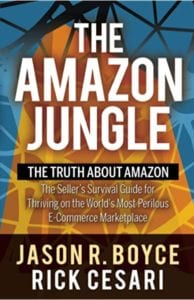
The Amazon Jungle: The Truth About Amazon, The Seller’s Survival Guide for Thriving on the World’s Most Perilous E-Commerce Marketplace
To show you how long ago this was, it was the mid-‘80s. We were using newspaper ads as our advertising vehicle. I did learn a lot of good lessons about direct to consumer marketing and what to put in an ad to get people to respond. Your show is all about the pitch. The pitch was important more from a sales pitch perspective with us because we’d have to get up on stage and convince people to buy a two-day $500 seminar. Little things that you changed while doing the pitch affected the results. That’s why I learned how to sell. I was able to take everything I learned in promoting these real estate seminars, my passion was health and nutrition.
I met a guy who was doing these small seminars and I felt like I could help him be successful. His name was Jay Kordich known as the Juiceman. I took the concept of the models we were doing with real estate seminars but used them to promote juicing seminars or health and nutrition seminars. The name of that company was Trillium Health Products. We were in the right place, right time with the right product. That business grew to $75 million in sales in only four years. We were able to sell it. Timeframe wise is about 1993. We’re still pre-internet. A company out of Chicago named Salton Housewares bought it for two reasons. They wanted our brands that Juiceman and Breadman, but they also wanted to know how to do the type of marketing I was doing.
They brought me a product which turned out to be the George Foreman Grill. I did all the television marketing for that. From that point, I got into the agency business by accident. People were coming to me saying, “Can you make a show or direct response commercial for us?” Sonicare was next and then OxiClean. I was fortunate to work with a lot of great products and watched how the business changed over the years. Starting before the internet to where we did all the television marketing for GoPro and the commercials, but then how you had to have a great online strategy as well as that. I’ve been in the business of pitching products through all of the different campaigns and things that I’ve done and figuring out how to get people to respond to what we said in our pitches.
I’m fascinated especially with something like GoPro, which is all about video. You’re creating a video to promote something that tells people to create their videos. You’re going down the rabbit hole there which is art imitating, life imitating and all that, which is great. When I was selling advertising for Condé Nast, Clarisonic was one of my clients. I used to drive down from LA to San Diego to talk to the agency about that. What a fascinating product and for those who don’t know, it’s a way to clean your face as if you’re getting a facial at home, it’s the quickest soundbite I would have for that.
I have a good kind of Clarisonic story too. The management team that started Sonicare did the marketing for that. They sold that business to Philips Electric for about $500 million.
[bctt tweet=”Stories give you an emotional connection. Video is a powerful way to connect with buyers.” username=”John_Livesay”]
For people who don’t know what that is, that’s for getting your teeth clean.
They held back from the patent or the sale to Philips the Sonic Technology for face cleaning. They started this whole other business, did the same exact marketing, they build good products if you’re familiar with it and started the Clarisonic, but it was a mirror of what they did with Sonicare. In both cases, the thing that launched both those businesses, they had some type of in with Oprah Winfrey and they got the Clarisonic skincare brush on Oprah. As soon as they do that, the business exploded and took off. It’s a fantastic product. It worked well.
Your book, The Amazon Jungle. You’re talking about that. I have a story of a founder I helped with his pitch who because in his culture, it’s a rite of passage into manhood was dropped in the Amazon jungle naked at eighteen after growing up in the Netherlands. He had to survive there for two weeks. I talk about lessons learned from the Amazon jungle, taking it to the concrete jungle of being an entrepreneur as part of his story of why investors invested with him. I love the title, The Amazon Jungle. I know it’s not your first book. What made you want to write this book?
Years ago, I got asked to do the keynote presentation at something called The Prosper Show. It is the main trade show for third-party Amazon sellers. At that time, my background was in direct to consumer marketing, but I knew very little about this platform that a lot of people were having success on. I gave that presentation and my eyes were open because I sat into a lot of the different seminars that were going on. I wanted to learn as much as I could about Amazon. I met a guy there who was at the Top 200 Sellers, named Jason Boyce. It turned out, he lived in Seattle where I live. We started dating together every Friday for coffee and he would pick my brain on what I knew about direct to consumer marketing and direct response marketing.
I pick his brain on Amazon and we came up with the idea said, “We should turn these conversations we are having into a book.” A lot of it is Jason’s expertise. He’s been selling on Amazon since 2003. He built an eight-figure Amazon business and he was at the Top 200 Seller. Now, he has an agency called Avenue 7 Media, but the book is a guide. When you talk about your friend being in the Amazon jungle, that’s scary to me.
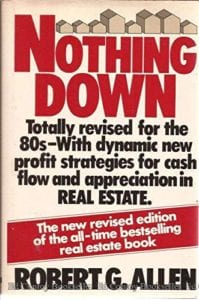
Nothing Down: How to Buy Real Estate With Little or No Money Down
If you do that without some type of guide, knowledge or whatever, you can lose your life, worst-case scenario. With the Amazon jungle, it is like that. It’s very difficult to set yourself apart. There are over a million third-party sellers. How are you going to differentiate your products? The book is a guide for anybody that wants to sell on Amazon from point A to point B. Everything you need to know, even going back to pick a category, a product, how to differentiate your product, how to optimize your listings, a step-by-step guide to be successful on Amazon.
You talk about the importance of sharing your story. That resonated with me that storytelling allows us to build trust. Do you have an example of the client that you’ve worked with that told their story as it related to a product they were selling and why that helped them break through the clutter?
It ties into Amazon a little bit. I’ve been doing that with almost every product we mentioned so far in the show. A good example of one, there were these two sisters that were from Taiwan and they were selling a product on Amazon called Puriya, which is a skincare cream that helps fight eczema. The name of the product was The Mother of All Creams. They were doing very well on Amazon. They came to me and they said, “How can we help our business?” I took one look at their website and the problem with a lot of Amazon sellers is, Amazon does all the marketing for them. They don’t have to do much outside of Amazon.
I felt like, “If they could tell their origin story, it helped their business. It gave some background to their product.” I helped them create an origin story where they grew up in Taiwan. When they wanted to treat an illness, their mother would go to the farmer’s market and buy different herbs. It was this recipe that they put into their product. That’s why they named it The Mother of All Creams because the recipe came from their mother. We put that on their Shopify site. Now, when somebody is on Amazon and saying, “Why should I buy Puriya?” They’ll go check the website and they see that there’s a story behind this product. It’s not some product that’s out of thin air. That’s a good example. Their business is thriving now. Not in the whole part of the story, but it helps build the brand.
That was my question that you’ve answered is the story doesn’t necessarily live in the product description on Amazon, but hopefully, there’s something in there that incentivizes people to go read more about it on the website.
[bctt tweet=”If people like your product or service, they’re more than happy to talk about it.” username=”John_Livesay”]
I’m a huge advocate of origin stories and tell the background story. If I start working with a client, I do a lot of marketing consulting these days. The first thing I do is go to their website, look at the About Us page, and see what happens. When I first come to the website, I’d love to see a video story of who we are, what we do, and why we’re different than the competition. If I want to dive into more detail and if a website doesn’t have that information, that’s one of the first things I tell people to do is to put that story in there because it creates credibility and authenticity to a product and helps their brand in general.
Also, the emotional connection.
That’s the most important part.
Do you have a lot of your clients putting short little videos on their Amazon product, whether it’s a testimonial?
I’m a huge believer in using video. I’ve used it for the many years. First on TV. Now online with Facebook and YouTube. There are all statistics about how powerful video is, and it’s an easy way for people to get information. Amazon is slowly opening up their advertising and even their product listings to include more video. I’m a big advocate of people using video as much as Amazon allows them online. I’m an advocate for doing that.

The Amazon Jungle: Stories create credibility and authenticity to a product and help build a brand in general.
Is that something that they can shoot on their iPhone, or do they need to hire a professional agent?
It’s funny you say that because I come from the background many years ago of you couldn’t go do a video shoot for less than $10,000 because of expensive camera lights. In testing that we’ve done and it’s obvious because of social media, people respond to video that is shot on an iPhone or whatever type of mobile device you have. More so than a very slick presentation. There are a couple of little things and your audio quality is always important. You need to have a nice little microphone and the lighting is good, but if you can go online and look at some basic video production techniques, the technology of mobile phones these days is almost as good as a $50,000 camera, ten years ago.
Since you’ve analyzed many different people selling things on Amazon, what are the common traits that you see that the top sellers have?
What a lot of sellers don’t have and you or your readers can go onto Amazon. Let’s use a coffee maker, for example, big brands that you’ve heard of. You’ll look at the product listing and you’ll see an image, a shot of the product from the front. You’ll see it from the side and they’re boring. They’re almost like something you’d seen in the instruction guide. What I’ve worked with Amazon sellers that we talk about in a book is use those listings. We took this from our success on TV. Each one of those listings should almost be like a magazine ad. If you’re going to show a coffee maker, call out the benefits of the coffee maker and use infographics so that when you’re looking at the image, you talk about the timer.
What’s the benefit of having a timer? You have delicious coffee ready for you when you wake up in the morning. Put people in your images. I was working with another guy who sold gaming products, foosball tables, ping pong tables, and he showed these products, but they didn’t have many people in them. I go, “You got to show people using the products.” It’s a simple thing that seems common sense to a lot of people. You see a lot of Amazon sellers not doing it. Those are some of the suggestions we talk about in the book and I bring to people when they ask.
[bctt tweet=”If you’re marketing a product, you must have a good foundation on Amazon.” username=”John_Livesay”]
It’s a lot like SEO with Google, where part of the problem is, if you don’t show up on the first page of a search for a product, then nobody finds you and you’re helping the book, gives some steps on how to get your product to show up fast.
We do talk about that. Yes, that is a problem. The goal is to be on the first page or first search when you come up on Amazon. We do talk a lot about how to do that with SEO, how you’re advertising both on Amazon and off Amazon can help you do that, people that are leaving reviews, and the importance of reviews. I’m a huge advocate of authentic testimonials. Mainly because they help tell your product story in a very authentic, credible way. I talk to people all the time about using real consumer testimonials on their Amazon reviews, but I tell them to take it a step further and try to get those people that are leaving reviews and do some video testimonials if possible and put those on your website. To me, that’s one of the biggest selling tools that you can have.
When someone left a review for my book, they put their picture with the review, as opposed to being the words, which I thought, “Even just that makes it pop.”
It adds a dimension. I do a little presentation on that. I talk about testimonials and exactly what you said, the basic layer is written with someone’s name, but if you add a photo to that, that’s even better. If you add audio to it, it’s even better. The ultimate is a video testimonial. Believe it or not, advertising wise, the more that you have in that testimonial from the standpoint of video or whatever, it will convert better than just a written Amazon review.
Do you have any tips on what people should do to try and get authentic reviews?

The Amazon Jungle: The goal is to be on the first search results page when you come up on Amazon.
I have one thing. Send me an email at [email protected]. I have a free download. It’s a six-step email template that if you have a database of customers, and even if you have 50 customers, this will still work. It’s something that I’ve used over the years to get people to come in and do a testimonial for you. I find that a lot of people that are product owners are afraid to reach out to get testimonials from people that have used their products. I’ve always found that if people like your product or your service, they’re more than happy to talk about it.
This email sequence is something that you can use to send to your database of customers. It’s a way of setting up and getting testimonials that you can interview. That does two great things. You can get a video testimonial of people that you can use in your marketing, but I also found it’s a great tool for product research. The feedback from someone, if you sit down and ask someone twenty questions, “How did you hear about my product? Why do you buy it? What do you like? What do you don’t like?” After interviewing ten people, you start to see a bunch of trends, and those are things that you can use in your marketing.
I do that with the students that have taken my online course. In the Facebook group, I’ll say, “What was the big takeaway from the session?” It’s fascinating to see 6 out of 10 people saying the same thing. “I learned how important it is to make my pitch conversational. I need to stay concise.” When other people keep reinforcing that that was their takeaway, the students locks in even stronger than just themselves thinking about it. Having people say it out loud, not only helps them, but also the sense of community. It helps me with my marketing knowing what to focus on for future students. If you’re struggling to say, “Be concise.” If you’re struggling not to sound like a robot, then you might need to learn how to tell better stories. It’s a continuous loop is what I found.
It’s a feedback loop. It’s awesome that you’re doing that. You’d be surprised how many people, course owners, product owners don’t talk to their customers. I got a funny story about Sonicare. We were going out doing interviews for Sonicare and we didn’t know what all the marketing messages were yet. It was a relatively new product. After interviewing about fifteen people, probably about half of them said that they had gotten better dental checkups since using the product. We put in the “the better dental checkup guaranteed” that if you bought this product, we guaranteed you have a better dental checkup or your money back. That came from customer feedback.
I’m not trying to imagine what is important to people, but hearing it. If that’s your ideal client, then that’s what we want more of. Let’s also talk about defending a brand. If we don’t have a strategy that sometimes marketing dollars that we think are driving traffic to our product, go to our competition. How does that work at Amazon? Is that unique to Amazon or is this true everywhere?
[bctt tweet=”Start an Amazon business with a product. Having a lot of money is not needed.” username=”John_Livesay”]
That’s probably true anywhere, but Amazon’s a good example. A few years ago, I underplayed the importance of Amazon. Now, you can’t. They own 50% of all the online sales in the US. They’re a gigantic place where people like to buy because it’s convenient and they get good prices. I always tell people, if you’re marketing a product, you have to have a good foundation on Amazon. Otherwise, any advertising dollars that you spend anywhere else people will end up searching automatically on Amazon for your product. Even if you tell them to go to your website, or you have some other special offer place, they can buy it. They’re going to check Amazon first. If you aren’t there and have a good brand page or good listing set up, your advertising dollars are going to drive somebody to buy your competitor’s product. It’s important to have a good Amazon foundation set up before you start spending a lot of ad dollars in other places.
Do you recommend that people start getting a product from China or something and then marking it up and then trying to sell it on Amazon? It’s something that they should have some experience with or where does somebody start to even think, “I guess I like it?” Does it require a certain minimum amount of money to make all this work?
Any business requires a certain amount of money. Starting an Amazon business is pretty low, you don’t need a lot of money. You do need to start with a product. We have an entire chapter devoted to a couple of things. You don’t know where to start. We tell you, “Think of your personal interest, whatever is your interests. You might have a pet. Let’s look at the pet category.” We tell you in the book the way to check different areas of how they’re doing because you don’t want to go into an area where there’s no sales or no interest, or nobody’s searching for it. We tell you to pick out an area where there is a lot of upside opportunity.
If you go over to China and you are going to find a product to market on Amazon, how to make that profit product different than the competition? The last thing you want is they always say, “There are 100 people selling toasters or blenders on Amazon. It’s a race to the bottom, whoever has the lowest price.” We go the opposite direction and say, “How do you take a product and make it more into a brand and differentiate it before you start selling on Amazon?” There some simple design tricks that you can work with the factory. My co-author Jason had an eight-figure Amazon business. He was selling on Amazon since 2003 and has made every mistake under the book. The book is a way of learning from other people’s mistakes.
We do get into various specifics things of doing it. It’s amazing things you find. One of our clients at Amazon Avenue 7 Media is a company that makes wheelchairs for dogs. You’d never think that that’s a big category. They get the same injuries as humans. They’ll torn ACL and they need to use these things. You would think of yourself, “That’s not a very big category.” These guys are doing six-figure business every month. It’s amazing what you can do if you do a little research and we show you how to do that.

The Amazon Jungle: The more testimonial videos you use, the more it will convert than just a written Amazon review.
Any last thought or a quote you want to leave us with?
If I tie it into the book, the biggest thing, and it relates to your friend’s story is that if you’re a seller, Amazon isn’t your friend, they’re your competitor. If you need a guide so that you don’t fall into a trap and let Amazon take advantage of you. We spent a lot of time telling you the pitfalls, what to look out for. It is almost like a map or a guide to be successful on Amazon. That’s probably the biggest thing.
The book is The Amazon Jungle. You can find it on Amazon as well as Rick’s website. Rick, thank you for sharing your fascinating background and all the successes you’ve had and how you continue to go from promoting something in a newspaper to not promoting the Amazon is the new newspaper in a weird way that everyone uses now to access and find information.
Thanks for having me on. I appreciate it.
Important Links
- The Amazon Jungle
- No Money Down
- Trillium Health Products
- Condé Nast
- Clarisonic
- The Prosper Show
- Avenue 7 Media
- Puriya
- [email protected]
- RickCesari.com
- Better Selling Through Storytelling Method Online Course
Wanna Host Your Own Podcast?
Click here to see how my friends at Podetize can help
Purchase John’s new book
John Livesay, The Pitch Whisperer
Share The Show
Did you enjoy the show? I’d love it if you subscribed today and left us a 5-star review!
- Click this link
- Click on the ‘Subscribe’ button below the artwork
- Go to the ‘Ratings and Reviews’ section
- Click on ‘Write a Review’
Love the show? Subscribe, rate, review, and share!
Join The Successful Pitch community today:
- JohnLivesay.com
- John Livesay Facebook
- John Livesay Twitter
- John Livesay LinkedIn
- John Livesay YouTube
Risk Forward With Victoria Labalme
Posted by John Livesay in podcast | 0 comments

What does it take for you to start embracing uncertainties? Taking a giant leap towards the unknown results in fear, but doing so can bring you to extraordinary things you may have never expected. What is the right attitude in the face of risks? John Livesay brings in actress Victoria Labalme to dissect the many nuggets of wisdom discussed in her book Risk Forward: Embrace the Unknown and Unlock Your Hidden Genius. She talks about how strict goal-setting may never lead to success, the five myths of achievement, and the right time to say no. Victoria also explains how art can be utilized to level up your businesses and change communities even in the smallest ways possible.
—
Listen to the podcast here
Risk Forward With Victoria Labalme
Our guest is Victoria Labalme, the Author of Risk Forward. She talks about trusting your hidden genius and how we have to learn how to embrace the fog of not knowing, and that sometimes goal setting can lead you astray. You’re going to enjoy the episode.
—
My guest is Victoria Labalme who is the Founder of Risk Forward and Rock The Room, which is a full suite of programs designed to help people express their hidden genius. Her strategies have been embraced by more than 700 organizations, entrepreneurs, senior executives and thousands of individuals around the world. As a performing artist and member of the Speaker Hall of Fame, she is known for her keynote performances. I can vouch for that. We shared a stage at the Coca-Cola CMO Summit. She is also known for her workshops, her private consulting, and online learning. Welcome, Victoria.
Thank you so much for having me, John.
It’s a joy to get somebody with so much talent, creativity and fun on the show and you have this wonderful book, Risk Forward: Embrace the Unknown and Unlock Your Hidden Genius. My first question before we get to your own story is did you start this book before the pandemic or did it happen to be a great timing?
I started it many years ago. I did a TEDx Talk on this topic back in 2016.
That’s what a thought leader does. They have their pulse on the zeitgeists of what people are going to need before they even know they need it, and that’s certainly you. Let’s go back to your own story of origin. I know you do such a fascinating job of this in your talks. You decide where you want to start the story whether it’s school days or the moment you decided, “I’m going to be an actress,” or wherever you want to start.
Growing up, I found that I was often making choices that took me down paths that are different from other people. I know many can relate. I made these choices that other saw were odd. I went to college out west and my family was back east. I decided to sign up for a 75-day expedition when my friends were signing up for graduate school. I was going left when everyone was going right. When people were getting married, I was staying single. When people were having babies, I was off dating different types of men. I always carved my own path. The thing that I found is that there was this judgment along the way where people would say, “What are you doing? What’s the plan? What’s the goal?” Whether it was your major or whether you’re going to get married or what your career was going to be, and I often didn’t know. Many people had a lot of different interests. We all often do, but we’re taught that’s wrong.
[bctt tweet=”Goal setting can lead you astray.” username=”John_Livesay”]
Pick one thing and major in it for the rest of your life.
It’s a counterproductive proposition for people who are multidisciplined, multitalented, and multi interested. I did lots of different things and oddly enough, me going into the not knowing, not getting married, not having a career path, not knowing how I’d put everything together led me to an extraordinary career. The book is about how we can go from this not knowing and follow what lights us up and find our way forward.
One of your early careers was being an actress. Give us a few highlights of Sex and the City back. I know you were on one of those episodes. I know people are always curious to hear some of those details.
I talk about that in the book. I tell a great story from being on Sex and the City. To answer your question, I started doing television commercials as an actor. I was interested in physical expression. I studied with a French mime, Marcel Marceau. I started studying all kinds of acting, performance, writing, directing choreography, character work in comedy. I got picked up by the manager who manages Robin Williams and Billy Crystal. I started doing all kinds of television appearances in a film with Robert De Niro and Harvey Keitel in documentary acting. My career started to take off and then something suddenly happened at the end of the 1990s. It was 2001. I witnessed 9/11 from my window and very much like the pandemic now, the whole world changed. I found myself again in a phase of not knowing and what’s next.
I started helping presenters, executives and entrepreneurs express themselves on stage and on-camera because I had this background. I had no idea how that was going to turn out. Someone had invited me to the National Speakers Association. They’d seen me in a comedy club and said, “You should come.” I thought, “I don’t want to be a speaker. That’s cheesy. That’s motivational. I want to be famous.” After 9/11 and like us in the pandemic, a lot of people started re-evaluating their choices. I thought, “How can I help? Here’s a place people are asking for my contribution. I’m being called to contribute.” I said yes. That yes was not knowing where it would lead. I had no plan. I had no goal but it took me into a whole new territory and I started in the world of speaking. I went from acting and performing to speaking in corporate, associations, and entrepreneurship. That career took off and that’s now how we met. I started coaching executives and entrepreneurs on storytelling, on presentation, on camera, on stage, in meetings and in life.
What I’ve found has happened since the pandemic is, I’ve been getting a lot of requests from sales teams saying, “In addition to teaching our team how to tell better stories to win business, can you help them be better on a Zoom call? None of them feel comfortable on the camera and they don’t have good lighting and there are some basic skills that they’ve never needed before?” What you are doing now is at a whole new level of, “This isn’t a nice thing to have a note. This is a must thing to have a note.”
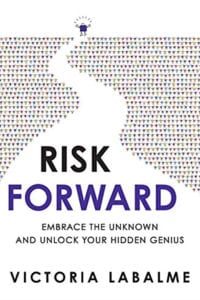
Risk Forward: Embrace the Unknown and Unlock Your Hidden Genius
I’m finding too that a lot of the people I’ve been helping are about how to bring out their own unique gifts. What you’re seeing with a lot of Zoom is everyone’s starting to look the same with their green screen background in their whizzbang technology. If you’re going to stand out and bring out what I call your hidden genius, what do you have that’s different from everyone else? How do you capitalize on that and trust that even if no one else is doing it? Part of what people get from reading the book Risk Forward and the whole methodology is to trust that, the permission to trust that what they’re doing is cool.
We also talk about how to navigate our way through the fog of the unknown, which is such a great visual. We’ve all been in fog. We’d have fog lights on our car and yet sometimes we have woken up a little foggy, pick our brain for whatever reason and no judgment. I’m fascinated to know when someone’s trying to embrace the unknown which is, “How long is this pandemic going to last? Should I change careers?” What is your advice in the book that can help people navigate that?
To circle back to what you called out, there are seven phases in the book and the first is to embrace the fog. I call it The Fog of Not Knowing. Most people see not knowing as something negative. In fact, in the pandemic, everyone says, “How do we get out of this? How do we have certainty again?” The assumption is that it’s bad to be not knowing. What the Risk Forward makes the case for is there’s huge potential in not knowing because in that gap or in that phase, one of the biggest mistakes we can make is to try to rush out as quickly as possible. To use the fog as an exact metaphor, it’s like jumping through the fog and you run into a wall. You go down a path that’s not right for you because you’re so panicked to get out.
The first phase is to embrace it and to say, “This might not be such a bad thing.” I’m not in any way saying that the pandemic is a good thing in the sense that people are losing their lives, their jobs, the economy has challenges, people are stressed in their marriages with their kids on Zoom. There’s a lot that’s very difficult, but there are also a lot of people saying they’re re-evaluating their lives and their choices. The fog is that gap between knowing and not knowing, that we want to not rush out of it too quickly.
You also talk about that sometimes taking action can be a mistake and I’m guessing that’s completely tied in to what you said about rushing into something because many people will tell everybody, “The worst thing you can do is think about something and don’t take any action.” That’s not always the case. If you run into a wall, there’s got to be a fine balance between no action and action too fast.
I have a client named Anne who like many people got into this treadmill of success. She was very successful and she felt like she had to keep going. She had to keep producing and people would always say, “You got to keep going. Why not?” It’s the more is better mentality. She came to me and she said, “I’m exhausted.” The thought of doing these next projects makes me drained. It’s not feeling good. What I want to do is risk forward and take a break. It’s not risking forward to always go for it.
[bctt tweet=”Embrace the fog of not knowing.” username=”John_Livesay”]
It’s not because you have an excuse like, “I’m pregnant. I’m sick.” This is like, “I’m taking a break because I want to.”
She lives in South Africa and she had the option to go into the bushes as they call it in South Africa. She said, “I want to not do this next series of projects. I want to pause on this. I want to honor myself and take a little break.” For her, that was the risk forward. That’s where the taking action. You’re that speed to market, go for it. We are in such a production type of culture where you’re evaluated and praised for your achievements, rather than acknowledge that sometimes it’s okay to take that break. She’s a private client. I was working with her in the Risk Forward private, VIP experience. She took the break and when she came back, she had clarity about where she wanted to go. Her launch did even better because she had taken that time off. She would have eroded her focus by doing all these other projects.
The big companies like Google give their team sabbaticals because they realize the value of it. You know this from your acting, the worst thing in the world to go to an actress, “What are you working on now?” If you’re somebody in the corporate world, “Have you gotten promoted lately?” Nobody wants to get stuck in that. That is a perfect segue into your tackling the five myths of achievement. Let’s pick the biggest myth and double-click on that a little bit.
The myth of goals would be the most or the myth of goal-setting. I have a phrase in the book which is, “Goal-setting can lead you astray.” I firmly believe that because there’s something called goal contagion. For example, and you probably know this because we’re in a similar field, when I run my Rock The Room programs so often people would come to me and they’d say, “I want to do a TEDx Talk or a Ted Talk. I want to have a New York Times Bestseller.” I thought, “You and 1,800 other people. Where did that come from? Did that come from within? Is that because everyone around you is doing it?” When I was in Hollywood, in my days of doing film and projects, this is now somewhat passed but all the directors used to wear leather jackets and have their hair in a ponytail. It’s like you see young women walking down the street in their flip flops, they have long hair, they’ve got white T-shirts, cutoff jeans, and all the girls look the same.
All the Millennial guys look the same with their beards.
There was a phase when all the guys would have their hair in that tuft on the top of their head with a little crisscross. I used to say like, “I want to put a golf ball in there and whack it like it’s a little tee.” The point is everyone starts to look the same. Whether it’s the cul-de-sac, the community, or the culture, what I’m encouraging in the book is to step back and make sure that what you want is what you want because otherwise, that goal will lead you astray. I’ve seen this so much in the entrepreneur, the speaker market, the corporate market, and the artists market where people have some target that is coming from without. They get it and they’re miserable, or they don’t get it and they’re miserable.

Embracing Uncertainties: One of the biggest mistakes is to try to rush out as quickly as possible.
I should tell you where the whole term comes from, but the risking forward is about following the inner current. Some of the most celebrated companies and creative endeavors didn’t begin with clarity and a goal. I worked with the leadership team at Starbucks, Microsoft, PayPal. I’ve worked with people on the opera stage. I worked with people with PBS Specials, huge talks around the world, Hollywood directors. I will tell you across the board, whether it’s corporate or Hollywood or anything in between, some of the most celebrated creative individuals and corporate individuals had no idea what they were doing. They were following that inner current.
It’s that gut. The classic story around that comes to mind is Steve Jobs creating the iPad. People were like, “Nobody wants that.” Do something even if no one else is doing it whether it’s a product launch or your own brand as opposed to going, “It looks like in order to be a speaker, you must have a New York Times Bestseller and give a TED or a TEDx Talk. Let me check those boxes off and then maybe I get to live my dream.” “Is that really your dream?” is what I hear you saying. If it is your dream then out of that, those things will happen more organically than outside references being, “I don’t want to write this book but I guess I have to.”
On that note, for years, people would say to me, “Where’s your book? You’ve got to have a book.” I don’t feel compelled from the inside out to write a book. I would only be doing it because I “should do it.” Finally, I got the idea of what I want to do. The idea came from within and it’s not your typical book. It breaks the mold because I have a background. I was doing all kinds of artistic disciplines, one of which was drawing and painting. The book is highly visual. It’s highly designed. Every page is different. Each chapter is unique unto itself. You can see this on Amazon. We have a little video that’s going up so you’ll be able to see that. This is full color. When people say, “I’m going to get the audio.” I go, “You’re going to miss out if you get the audio.” You’ve got to get this because the thing is you can read the book in any order. I didn’t want to make people feel like they could pick it up and read it in any section.
That is smart of you because creative people are not linear thinkers or linear learners. Rob Angel who created Pictionary is a client of mine. He took my online course and said, “I love that the modules could be done in any order.” It never even occurred to me because I tend to be linear that somebody might want to do that. I said, “Great.” You’re so smart to make your book like that for people like Rob Angel, who I’m sure will love this book.
Some people do like the linear and some people don’t. It sounds like what you’ve built in your course is both. It’s not that you have to do it out of order or you have to do it in the order, it’s you can choose. That’s exactly how my book is written. You can certainly read it from front to back or you can read it in one section.
It gives people the freedom to go, “I want to read that chapter again or that module again and reinforce one thing.” It does that. There are many good things that you have here. This concept that’s part of our uncomfortableness and anxiety around the unknown is a lot of people like structure, discipline and routine. Whether you’re training your dog or raising children, that’s all part of that world. We don’t realize how much we like it until things are uncertain, “When will I be back on the stage again?” You have a way to reframe that. Instead of thinking of it as the enemy, which we’ve all heard that wonderful quote, “What we resist persists.” If we’re going to resist uncertainty then you’re always at battle with yourself. How do you reframe that to being an asset?
[bctt tweet=”Some of the most celebrated companies and creative endeavors didn’t begin with clarity and a goal.” username=”John_Livesay”]
Things have always been uncertain. We’ve been under the illusion that they are not. I think 9/11 woke us up to that. When you have an emergency in your family whether that’s an accident that happens, an unexpected diagnosis, an unexpected death or a job loss, then we start realizing, “Things might not have been as secure as I thought.” The only thing that’s constant is change, as they say in the world of Buddhism. If we start by recognizing, things have always been uncertain. Part of why people are waking up so much now is they know that tomorrow is not guaranteed. They could have a job loss, we could have any kind of civil war. We could have any issue in our Coronavirus land.
People are waking up to the moment. That’s the first thing. That’s a good thing to wake up to the unpredictability and recognize that. The second thing is I’m all for clarity and goals. They’re great. What I’m arguing against is when we’re not yet clear. That window is fertile and it’s full of promise. In the book, I give people four questions that they can ask when they’re in that phase. They’re more than that but I call it the four questions. I’ll give you the first which is, “What interests me now?” That’s the key part.
Years ago, I took a workshop with a guy named Remy Charlip. He was this wonderful children’s book author, director and choreographer. He started the workshop not by having us introduce ourselves by what we have done because our past can hold us back. We feel we have to follow in line with what we’ve done. I’ve already produced ten films, I have to produce eleven. If I’m known for being this top salesperson, I have to continue to be a top salesperson. Instead, they’re going, “What interests me now?”
That pressure to not keep doing what’s been successful like Matthew McConaughey. You’re in sync with him completely because I watched him being interviewed. He said, “I’ve done rom-coms and made a lot of money. I don’t want to do that anymore.” He had to stop and put the pause button on. It was a while before he got another offer. He was willing to take the risk that might be the end of his career. Had he not, he’d never gotten those dramatic roles.
I have a line in the book which is, “Risking forward requires saying no.” There are times when it requires saying no.
I had a gentleman named Matthew Kimberley on and he said, “Your business should be a love story.” As a storyteller, I love that. You should be in love with what you’re doing, and you say we should approach our business as an art. I thought the two things together were a nice way for people to start going, “Maybe I could figure it out as a love story. How do I think of it as an art form?” What is your definition of art? Let’s start there.

Embracing Uncertainties: Today’s society has a production type of culture where you’re evaluated and praised for your achievements, rather than acknowledge that it’s okay to take that break.
It’s the expression of what’s inside of you. To that end, there’s a section in the book where I talk about something called the Prism Effect. I’ve been talking about this for many years. The idea is that each of us is this full range of colors. That’s your passions, your past, your personality. How do you harness that hidden genius of yours and bring it into your daily life even in the smallest of ways? For example, there’s a woman who is an administrative assistant. She happens to love the Oscars. She rolls out a red carpet by her desk every year in the Academy Award week. She is making a little piece of art in her own way. It’s small. I have another example in the book about the manager who loves poetry. She brings a line of poetry to every Monday morning meeting. This to me is turning your business into art even in the smallest of ways.
Even someone who’s making their coffee. Those people can be artists with those designs they make in the cappuccino.
Years ago in my office Downtown in Manhattan, the guy who was our janitor in the building used to lay out the garbage bags on a sidewalk in the most beautiful formations. He would enjoy that process. I find for myself that we all fall into the conveyor belt of our day, but if you step back and not get caught in the data, the duties, the deadlines, the details and say, “How do we make this moment a piece of art like the way I picked up the phone?”
What you’re encouraging all of us to do is broaden our term that unless I am a painter, I am not an artist. There are many forms of being artistic in communicating and expressing yourself. The most successful artists I’ve ever seen are making their art for themselves and not worrying about the masses. That goes full circle back to what you’re doing and saying.
That’s a scary thing. What I’m about to say goes counter-cultural to a lot of what people are teaching now so brace yourself. There are a lot of talks now about, “Who’s your avatar?” This crept up in the last number of years. An avatar is being, “Who’s your target market? Who’s your ideal client.” Because I came from the arts, we don’t think that way. We’re not thinking, “Who’s that ideal outcome?” It’s, “What is it I’d like to say? How do I say it in a way that’s going to land with people?” and then test it. This book, for example, a lot of people said, “Who’s the target meter?” I thought, “It’s resonating with people in their twenties who are out of college, or people who are in their 70s who were facing a creative project, or people who were in their 40s who were trying to find their new phase in life and a career transition. The book is for anyone who’s looking for that next step in work or in life.”
They’ll probably use it multiple times throughout their life if they start using it in their twenties. They’ll pick it up later in life and go, “I need to dust this off many years later. Now I need another hit of courage to take another risk.”
[bctt tweet=”Risking forward requires saying no.” username=”John_Livesay”]
You’re so intuitive because that is the vision for the book. I said, “I want this to be the kind of book.” It is the book that people will gift and give to others, and treasure for years to come, and keep for decades.
You’re certainly a treasure. Anyone who gets to hear you speak, that’s for sure. I want to ask you what interests you now? You’re always got something going on. In addition to your book launch, I’m sure there’s something else where you’re thinking, “What interests me now is?”
My full-on thing is the book and getting it into people’s hands because it’s beautiful. The response is quite moving for those who’ve read it early. It’s such a joy. We’re building this incredible community of people who want to risk forward in their work and in their life. What interests me now is hearing the stories of people who read this book and hear who it’s touching.
If people want to share their story of what they’ve done after reading your book, how should they do that? Is it by posting a review on Amazon? What’s the best way to do it?
There are three ways. Number one, they can post the review on Amazon. Number two, they can join us. We have not only a book but we’re creating a community inside. It’s called RiskForward.com/resources. Inside of that is not just the book. There’s more. For anyone who wants to also post their stories, they can come to me on my social media handles and post their stories there. In Amazon, the book and social.
What are your social media handles?

Embracing Uncertainties: When you’re in a period of transition, you are not wrong for not knowing because at the edge of it are the beginnings of the extraordinary.
@VictoriaLabalme but you can always find me through the #RiskForward.
It’s not just a book, it’s a movement. You read it here first. Victoria, any last thought or quote you want to leave us with?
When you’re in a period of transition, you are not wrong for not knowing because at the edge of not knowing is the beginning of the extraordinary.
It doesn’t get better than that. We’ll be sure to put the links to Risk Forward and Victoria’s website. Thank you so much for being on the show.
Thank you so much for having me.
Important Links
- Risk Forward
- Rock The Room
- Amazon – Risk Forward: Embrace the Unknown and Unlock Your Hidden Genius
- RiskForward.com/resources
- @VictoriaLabalme – Twitter
- Better Selling Through Storytelling Method Online Course
Wanna Host Your Own Podcast?
Click here to see how my friends at Podetize can help
Purchase John’s new book
John Livesay, The Pitch Whisperer
Share The Show
Did you enjoy the show? I’d love it if you subscribed today and left us a 5-star review!
- Click this link
- Click on the ‘Subscribe’ button below the artwork
- Go to the ‘Ratings and Reviews’ section
- Click on ‘Write a Review’
Love the show? Subscribe, rate, review, and share!
Join The Successful Pitch community today:
- JohnLivesay.com
- John Livesay Facebook
- John Livesay Twitter
- John Livesay LinkedIn
- John Livesay YouTube
Deep Kindness With Houston Kraft
Posted by John Livesay in podcast | 0 comments

Everyone can agree that kindness is a vital character everyone must possess, but in today’s world soaked in ambition, achievements, and ego, its meaning sadly wanes day after day. Houston Kraft, the author of Deep Kindness, believes that this can still be remedied by integrating the idea of kindness in the education system. Together with John Livesay, he discusses how providing training and curriculums centered on compassion can help change the perspective of kids in showing kindness rather than merely chasing success. Houston also explains how to bridge the empathy gap by sharing his touching story of one rainy night in Haiti.
—
Listen to the podcast here
Deep Kindness With Houston Kraft
Our guest is Houston Kraft, a professional speaker, author, curriculum designer, and kindness advocate who speaks at schools, conferences, and events internationally. He spoken to over a half a million people at 600 engagements and counting. He’s the Cofounder of CharacterStrong, which is training and curriculums that create more compassionate cultures in schools and communities. They work with 2,500 schools serving over a million students with their content. In 2019, he was featured by Lay’s on BBQ and Jalapeño chip bags for their spreading smiles campaign. His first book, Deep Kindness, is being published. Welcome to the show, Houston.
Thanks, John. It’s always nice to have kind things that you helped write read back to you. I don’t know what to do.
It’s quite a journey. What I love about your website is these pictures of you as a young boy. I’m imagining, there’s a story there of what got you into wanting to be involved with schools and students, as well as this a-ha moment of when you realize that kindness was going to help you through something.
My roommate, who’s a comedian and amazing storyteller says, “I was in middle school and I hugged someone and said, ‘I can monetize that.’” His joke for how I’ve ended up where I’m at. It’s not how it happened. My world has revolved around the practice of kindness for a long time. In my senior year of high school, I came together with a group of friends and we started a club at our school that was about weekly kindness practice. That was the premise. It’s protected time to put into action. What we believed was we knew we wanted our school to be a more compassionate place.
[bctt tweet=”The more anxious people are, the less empathetic they become.” username=”John_Livesay”]
We wanted people to feel accepted, belonging and safe in our schools, organizations and for our world. We thought, “What is the most practical way to make sure that we did that on a weekly basis?” That was a turning point for me was the experience of running that club with friends and watching it grow, feeling the joy that I got from participating and practicing kindness. My world and life ever since have been like, “How do we do this for more people in more places?”
What did you decide you’re going to major when you were in school? Did you think you might be a teacher? How did you get to this level where you are now writing books and speaking about it?
Mostly on accident. My two big passions in high school were theater and student leadership. When I got to college, I’m at student leadership, I said, “What does that look like in the real world and politics. I’ll be a politician.” I took one political science class and I was like, “No, I’m not going to be politician.” Acting was my other passion. I went to Los Angeles, the summer after my freshman year. I worked on a movie with Lindsay Lohan. I was like, “I’m not going to be an actor either.” I realized that the fusion of the two was speaking in schools. I got to be a storyteller, performance aspect, but I also got to talk about how to lead in a way that had integrity, that was focused on service and compassion in the world. That’s what I started doing. As I was finishing college, I was beginning to speak on stages and here we are.
Do you find that people are asking for you more than they were even many years ago because of bullying issues, school shootings and things like that? If that’s on the opposite end of what you’re teaching and no matter where you stand on gun control, the whole point is how do we prevent people from feeling isolated and angry that they need to act out is most likely not a lot of kindness coming to them in their childhood.
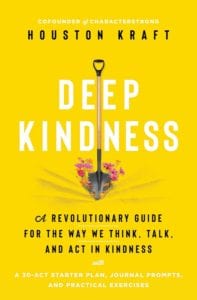
Deep Kindness: A Revolutionary Guide for the Way We Think, Talk, and Act in Kindness
My ultimate aim is to work myself out of job, and yet, I feel busier than ever, which is tough. It is the context of the world. We’ve always had challenges and access to information distribution that allows us to be more conscious or aware of some of the challenges that we already had. As we communicate information more quickly and widely, the way that we speak about things to me is what I’ve grown to be passionate about. In some ways, it’s why I wrote the book. The language we have around kindness doesn’t do kindness a service.
Tell me more about that.
With every word in our world, we have the dictionary definition, cultural definition and our own personal lived experience definition. The cultural definition of kindness for most people brings to life the things that the news talks about what kindness is, which is like the pay it forward coffee lines or the high five hallways or the Post-it note that were positive. In the book, I talk about that as confetti kindness, which is not inherently bad. We’re about to celebrate World Kindness Day and there are all kinds of organizations that promote random acts of kindness. I suppose my argument is that the kindness the world needs, in my opinion, presently is not random at all. It’s incredibly specific, intentional, thoughtful. It is the by-product of listening and empathy.
As we look into the reality of how most people interpret kindness, a lot of people think about that it’s free. My argument is that kindness is not free, but it requires time, energy and comfort from us in order to in many ways be humbled and do good for people who look different, act different, talk in front of us. In a time where we have divisiveness, kindness is going to require a tremendous amount of listening and perspective taking. That’s what I’m advocating for is a new way to speak about kindness so that we can navigate those issues that even you’re alluding to more honestly. How do we tackle things like gun control or the political divide or bullying? It starts with an honest assessment of what kindness looks like in my life and how to practice it in ways that move the needle, not just the surface level of goodness that the media pays attention to.
[bctt tweet=”The language people have around kindness doesn’t do kindness a service.” username=”John_Livesay”]
I know your opening chapter is titled Something Somewhat Provocative. I love that it grabs the attention with my storytelling and advertising background, which is the kindnesses. I thought, “I guess it isn’t.” What can a parent or teacher do to change that, so that it wouldn’t be normal for a child to do the kind thing first as opposed to it not being the norm?
To me it’s a little bit gentle attack on how we perceive ourselves versus what we do in the world. One of the studies that I think about often comes out of Harvard’s Making Caring Common project. Dr. Richard Weissbourd asked families, “Rank for me what you would prioritize most for your kid. Would you rather they be high-performing or happy or kind?” Eighty something percent of parents said, “They’d rather their kids be happy and kind over high-performing.” It seems like encouraging data. They asked the kids of the same parents say, “What do you think your parents want you to be, high-performing, happy or kind?” The data is the exact opposite. In fact, one of the clever distillations of the study, they said, “The vast majority of kids said that their parents would rather they get good grades, than be a good people.” Which to me runs counter to the argument of most parents or teachers or whoever would say, “We want our kids to be kind.”
The question becomes, “Do we allocate our time, energy, resources, education in order to make that real? What questions do we ask?” The family, when the student gets home is like, “How was your day? What did you learn? How was the test? How was practice?” It’s all about them versus my friend Keith Hawkins have a beautiful paradigm shifting question which is, “What did you do for others today? Who did you serve today? Would did you help?” Those are the questions that rarely get asked. As a result, for the younger generation, they pay attention to more so the indirect communication than they do the direct communication. Most of our indirect communication would say that achievement is more important than generosity.
I love this because I was interviewed by NBC on how to help parents get more than a one-word answer out of their child when they come home from school. With school and you get fine. What I suggested was ask your child, “Tell me a story about the best part of your day,” and then the child can decide beginning, middle, or end. Ideally, the parent tells a story and then you start teaching your child storytelling skills, but this takes it to another level, which would be, “Tell me a story about what you did to help somebody else today.” It would be even more aligned with what you as a parent value. Therefore, the child would then say, “That’s the story they want to hear. Not the best part of my day was I got an A or my team won or whatever the performance measures would be.” Let’s talk about what you described here as the empathy gap. What’s your definition of empathy? Where is the gap occurring?

Deep Kindness: Most indirect communication would say that achievement is more important than generosity.
The definition of empathy is going to require a couple of episodes for me to delve into it a bit more because in the context of kindness, my friend Barbara Gruner has a lovely phrase. She says, “Empathy gives kindness its why.” Which is to say, kindness without empathy, which we can reinterpret for the context of at least as listening and understanding perspective taking. Usually, that kindness is going to serve me more than it does you. To bring an example to it, after the Sandy Hook shooting, this national global tragedy, where there was moment of collective need, people wanted to give kindness to this community who was hurting.
People from all over the world sent stuffed animals or teddy bears, but Newtown, Connecticut had to rent a 20,000 square foot warehouse to house all the inbound gifts. One of the people that helped plan the candle light vigil in a profound quote he said, “There were more stuffed animals present than there were people. A teddy bear is great, but a teddy bear doesn’t pay for counseling and a teddy bear doesn’t pay for a funeral.” I reinterpret to mean, you gave me something that made you feel good, but it wasn’t what we needed. Empathy to me plays a huge role then in our ability to practice kindness effectively, because if I don’t listen to what you need, then I’m giving what I’m projecting you need, as opposed to potentially what you are in need of at the moment.
That might require asking a question of what you need versus thinking, “I’ll send him teddy bear, because that’s what I would like.” That’s easy than taking that extra step. Empathy, as you are saying is not just, “I feel sorry this happened to you,” but literally listening into what it feels like now and what would be the best way or thing I could do. That’s the gap. We think we’re being helpful and showing some, “I’m sorry.” There’s a big difference in my opinion between sympathy and empathy. I think you’re narrowing it down. Sympathy is you send a teddy bear and empathy is you take the time what I’m hearing you say to find out, “You need counseling? Let’s figure out a way to get that right.”
Not empathetic kindness lets me feel like the hero without ever even acknowledging whether or not I’ve made a difference. The gap itself is not in between intention and reality. The gap is between our ability to do it for others and how we’re feeling in the moment. The empathy gap, the term itself comes from Dr. Michele Borba, who spent 30 years researching empathy. She says that the biggest barriers in her research between why we wouldn’t be empathetic to another person or a group of people are anxiety, fear, and narcissism.
[bctt tweet=”Personal relationships will fall short when we prioritize things that do not lead to success.” username=”John_Livesay”]
She goes, “When any of those increase, empathy decreases.” If you think about the reality of the world, where we’re seeing at the huge increase in anxiety and fear, the by-product of that is decreased empathy. She says, “The empathy gap widens as anxiety increases.” The more anxious we are, the less empathetic we are as a culture. If you look at students, the data would tell us the average student now has as much anxiety than the average psychiatric patient from the 1950s. Empathy has dropped 40% in the average college aged students since the year 2000. She correlates that data. She’s like, “It makes sense. The more worried I am about what’s going on in my world, the harder time I’m thinking about what’s going on in yours.” Collectively, the more anxious we get, the more disconnected we get and the more disconnected we get, the harder it is to practice empathy in our life. It’s a little bit of a vicious cycle that creates that loneliness that we’re sensing in our world.
That’s what you talk about here that we created a lonely generation, not just a few people who don’t have friends that even people who have all that are still feeling lonely. It’s not how many people are in your life. You can still feel lonely if you’re not connected to people beyond your own fears and anxieties is what you’re saying.
If our own personal metrics of success are about winning or achieving, which mine for many years were unconsciously around that. I found myself successful and lonely. I was busy. I was traveling to the new school or event every single day, but personal relationships, my friendships, all the things that also mattered in my life had fallen short because I was prioritizing the thing that I thought was success.
You have a section here on incompetence and talk about empathy is standing in the rain. Can you expand on that a little bit?

Deep Kindness: The empathy gap is between the ability to serve others and how you are feeling at the moment.
We get to go down the storytelling route if you want. Many years ago, I had a chance to work in Haiti, alongside my friend, John. He lived in Haiti for over twenty years in American living there because he wanted to make an impact in a community where he saw tremendous need. I was lucky because back in the early 2010s, John was building a school in a poor area of Haiti called Bourjois about an hour outside of Port-au-Prince. I landed, I’ve never been to Haiti before I get off the plane with my camera and my Fedora. I’m working perfectly out of place. We get picked up and we’re driving through Port-au-Prince. As I look around, it’s the first time I’ve come face to face viscerally with that poverty. The beauty of Haiti is the contrast. Poverty sits alongside joy eloquently. As you look around, you see evidence. Although, it had been years since the earthquake had happened, you still saw staircases on top of buildings. You saw potholes that went 8 feet into the sidewalks.
You saw shanty towns with 700 people on top of each other. We drive up to John’s house in the mountains. We pull in and a part of the school is a choir. The name of the choir is Wozo, which is Haitian Creole for bamboo. Their motto is, “We bend, but we do not break.” An attitude of resilience is a natural resource in Haiti. We pull in and we get out of the car and Wozo is singing. I don’t speak the language. I don’t have no idea what they’re saying, but it doesn’t matter. I felt like that love and that welcome is always translatable. As soon as I got out of the car, it was clear that people were gearing up for a big event.
They kept calling it the big event and it was this celebration down in Port-au-Prince by the brand Life is Good, was putting on this concert series. Wozo, the choir was going to perform there and they were pumped. Finally, the big day rolls around, the big event and Wozo, the choir shows up and the bus is three hours late to pick them up. We’re standing outside, it’s over 100 degrees. We’re all sweating. The bus pulls in and it’s not a bus.
It’s a twelve-passenger van to fit these eighteen kids to travel an hour without air conditioning, down into Port-au-Prince. We get there right when it’s about to be their set time. The person who is organizing the event has to explain that they’re running behind and they have to cut Wozo set in half. You can tell that they’re disappointed, but they go backstage. They change their robes and formal gear and they get up and sing their brains out. I have no idea what they’re saying, but exuberance and joy are translatable.
[bctt tweet=”Your primary job is to listen well to love better and suffer alongside people to understand them better.” username=”John_Livesay”]
They get off stage and it’s time to head back home. In the distance, you see this rain cloud coming in and rain in Haiti is not a gentle experience. It is aggressive. You hear the thunderclaps. You see the rain coming in and people are scurrying to get in the cars. We realized that we have another car that can fit some of the kids in the back. We take about six girls from the choir, put them in our car and we begin driving up the mountain. At one point, the thunder is loud that it feels like it’s inside the car. There’s a five-year-old in the back who’s rightfully terrified. I am too, but she starts crying. I want to say something to this girl, but I don’t speak the language. I have no idea what to say. All of a sudden, the girls grabbed her hand and they all start sing.
We drive an hour with the girls in the back, singing and comforting this little girl. Finally, we pull up to the first stop. John who created the organization, hops out of the car, opens up the back and he grabs one of the girls out of the back and it’s pouring rain. This girl’s brother is standing there waiting for him because as I learned, the roads don’t get to these people’s homes. Many of them are going to have to walk another 1 or 2 miles to get back to their homes in the middle of this rain. We do this on repeat for the next hour. Every time we stop, John gets out of the car, gets out with the girl, walks him over and talks to the family and leaves them to go. Finally, he gets back in the car after the last interaction with the girl.
This is me, his brother Jesse and John. I remember feeling so bad because they’d been gearing up for this for long. I’m like, “I’m sorry. This day has not been anything that has been planned.” Jesse in the front was like, “In the US, there would be lawsuits at these girls to walk home in the rain.” I’ll never forget John looks back and he goes, “You don’t understand the big event had nothing to do with the celebration in the park. For many of these young people, this was the best day of their life that they had this opportunity to celebrate, be seen and sing. For me, the big event was standing in the rain with those girls. If I could’ve, I would’ve stood there all night with them.”
For me, it was a paradigm shifting moment in empathy, because I thought for a long time, that empathy was this thing that you had to live it to give it. You had to live through someone’s story in order to feel bad for them or with them in what they’re suffering. The reality is for people in Haiti, my life experience, I’ve never lost someone to a treatable disease. I’ve never had to walk my house for basic necessities, like water or medicine. I do know what it feels like to feel let down, to have disappointment, to be excited to share something and to stand in the rain.

Deep Kindness: You have to live through someone’s story to feel bad for them or with them.
There’s a distinction in my mind between the levels of thy. Which is you got apathy, which means, “I don’t care if you’re in the rain as long as I don’t get wet.” You got sympathy, which is, “I’m sorry, you’re getting wet. Here’s an umbrella.” You have empathy, which is, “I’ll stand in the rain with you.” It’s to suffer alongside someone and recognize that the human experience, whether or not it’s the same story to put myself into your experience and say, “Where do we overlap?” Empathy is an exercise in intentional imagination. Whenever I think about wanting to have empathy with someone, I think about standing in the rain.
It doesn’t get better than that. That’s an amazing story. I love the alliteration of intentional imagination. I love the contrast between, “I don’t care,” to, “Here’s an umbrella,” to, “I’ll stand in the rain with you whether we have an umbrella or not,” as our new definition of empathy so that we can start to work on reducing that empathy gap with a new awareness of what empathy is. Any last thought or quote you want to leave us with Houston?
To me, the whole premise of empathy, the whole purpose of standing in the rain would be, our primary job is to listen well in order to love better and to suffer alongside people means to truly tune in to contextualize who they are through all the pieces of their identity that’s different than mine. Where you grew up, your race, your gender, your orientation, your family, your traumas, everything that you’ve lived that’s different than me makes the way that you experience a situation wildly different than how I might. To stand in the rain with someone means to give our attention to someone well enough to truly understand how their needs are different than mine because that’s what kindness is. It’s my willingness to listen well enough to truly meet your needs in a given moment.
The book again is called Deep Kindness. If people want to follow you on social media, what’s the best way to find you?
I can’t thank you enough for putting this needed message out into the world with a new framework that we can all learn how to be better at it. Kindness. Thanks, Houston.
Thanks, John.
Important Links
- CharacterStrong
- Deep Kindness
- @HoustonKraft – Instagram
- https://www.HoustonKraft.com/
- Better Selling Through Storytelling Method Online Course
Wanna Host Your Own Podcast?
Click here to see how my friends at Podetize can help
Purchase John’s new book
John Livesay, The Pitch Whisperer
Share The Show
Did you enjoy the show? I’d love it if you subscribed today and left us a 5-star review!
- Click this link
- Click on the ‘Subscribe’ button below the artwork
- Go to the ‘Ratings and Reviews’ section
- Click on ‘Write a Review’
Love the show? Subscribe, rate, review, and share!
Join The Successful Pitch community today:
- JohnLivesay.com
- John Livesay Facebook
- John Livesay Twitter
- John Livesay LinkedIn
- John Livesay YouTube