

Strategy Sprints For SaaS With Simon Severino
Posted by John Livesay in podcast | 0 comments


Do you want to know the secret to becoming irresistible to your clients? John Livesay’s guest might just have the thing for you. In this episode, John talks with the man who created the Strategy Sprints method, Simon Severino. Simon talks about how strategy sprints work, and how they help improve businesses. Simon and John discuss business strategies that can help double revenue. Simon shares his insights on using strategy sprints to help run your business smoother. Join in and get a few pointers on improving your business profits.
—
Listen to the podcast here
Strategy Sprints For SaaS With Simon Severino
Our guest is Simon Severino who is the Founder of Strategy Sprints. He helps companies focus on what they need to do and how to do it to get their business to scale. Enjoy the episode.
—
Our guest is Simon Severino. He helps business owners run their company smoother and improve sales. He created the Strategy Sprints Method that doubles revenue in 90 days. He is the CEO of Strategy Sprints. He’s also a Forbes Business Council Member, a contributor to Entrepreneur Magazine, and a member of Duke Corporate Education. Simon is the Founder of Strategy Sprints, which is a global team of certified Strategy Sprints coaches helping business owners run their company smoother and doubling their revenue in 90 days. Simon, welcome to the show.
It’s so cool to be here, John.
You and I have become friends. I have seen your strategy in action. I have seen some of the ability to get people to focus and not be overwhelmed or as one person once said to me, “Many entrepreneurs try to boil the ocean and instead of being known for one thing.” Of course, we remember that Amazon just sold books and yet people forget that. They think, “I want to be Amazon, sell and do everything.” I think what you are doing is smart. Also, there are sports analogy there, obviously with sprinting. Let’s go back to when you were a young lad, childhood school, wherever you want, give us a flavor of some of the things you learned from your parents and how you’ve got to have this wonderful focus.
Back in school, Rome, the ‘80s, I was a nerd. I was the guy where you go, “What did he say? What?” You could say a philosopher. I was thinking fancy, very far away, somewhere in the universe, while my colleagues were playing sports. I was like, “I don’t get this thing with sports. I like books.” That’s what I was. The question was, “What is eternal and what is ephemeral?” For me, it was always about, “What’s this whole thing?” Before I do one thing like I become an engineer or a doctor or one of these boring things in here, “What’s the whole thing? What is a human being? How did we get here? Where did we go to? Does anybody have a clue? If I don’t have a clue, I don’t want to become an engineer or a doctor. I want to get the whole thing first. What is this?” That’s how I was, very strange.
I know you had a Philosophy and a Psychology background in school. You then went to MIT Design Thinking. This is not something that you just did on a whim but it was very strategic. I’m sure we can weave in as we discover more of what you are doing now, the importance of having a sense of self and a sense of purpose that gives you the focus. Would that be accurate?
It was a long road up to here what I’m just focused on one thing and it works on a global scale. The journey was super complicated, long with a ton of twists. The first part was studying Psychology and becoming a Psychotherapist. In between, I studied Philosophy because I was searching for this answer. “What is this thing? What is the whole thing and what are the parts?” I did find some answers in philosophy. They then sent me to psychology. They said, “What you were asking, you have to ask these Freud guys there. It’s the other department.” I went to the other department. I started that stuff and I liked it a lot, but it was everything backward. I said, “Beautiful. This department has taught me a lot but where is the forward part of that?” Individuals have their history but what about the future? How do we shape the future? What’s next? They then said, “You then have to talk to the other department. These are the coaches and so I landed with the coaches.
This is where I belong because coaching, I love it. It transforms stuff. You don’t take things as a given, but you break through and it’s always forwards. This is where I found my place. I am a coach. I belong in this world. I am thriving in this world and I love it. I am now certifying coaches on a global scale and we meet every Monday. We have a great time. We are helping people by having more cash and more time, which is a great act of service. What is more important and what makes more fulfillment than serving somebody?
You talk about helping people become irresistible to clients, which is you are singing my song. That’s what I love to do as well through storytelling. How do you do it through Strategy Sprints? What is it that allows people to become irresistible once they have this method in place?
Week one of the sprint, which is always twelve weeks. We have found that you need around twenty days to break current patterns and you take around 80 to 90 days to install new patterns. That’s why 90 days is the minimum chunk and this is our cycle, 90 days which is 12 sprints of 1 week. Week one is always the equalizer. Equalizer means find your niche. Do your Blue Ocean Strategy. What does that mean? Look around yourself. You are swimming in that direction. Who else is swimming there? You could call it, technically, it’s competitive analysis. Where are they swimming? Where’s the next thing that you need to swim around?
[bctt tweet=”Have a vivid vision. Get a unique niche.” username=”John_Livesay”]
This is the equalizer, which asks the question, what’s your uniqueness? This is important because if you just do what others do, you have to swim out of competition. There is only one John. There is only one Simon. What makes you, you? The equalizer helps you get that on a numerical level. It asks first and I’m happy to share it at the end of this episode with the people to share my real equalizer that we do every month for half an hour because it’s such a great tool.
For half an hour, you ask five questions. The first is, “What’s your competitive arena? What are your top three competitors plus what else can the customer do?” That’s why it’s a competitive arena and not just the list of top three competitors. It’s because your customer can not only go to another supplier, they can also have behavioral alternatives themselves. They can say, “If I don’t buy from you, I have Mike, the intern does it.” That’s a behavior alternative. That’s what they compare you to.
“If I don’t buy from you, I can hire somebody and do it internally, I can make a robot do it, I can just do nothing.” These are real alternatives that they are comparing. You make a list of the real alternatives, then you make a list of the features. What they are looking for? You rate from 1 to 10 if you are winning or if competitors are winning. Now, the equalizer does it for you because it’s a smart spreadsheet that creates three clusters. One cluster is where you are winning and the other cluster, is where you are losing.
You are taking a concept that’s intuitive and putting a numeric around it. What you are doing is so smart because you are allowing people to get their focus off of themselves and put their empathy hat on and say, “Where do people see me? Not just between me and my competitors but what else do I have to do?” For example, before Uber came, people could either walk in the rain, drive in the rain, rent a car or get a cab. Those were still other choices when they decide not to get an Uber. That’s an example of what other behavior they could do besides Uber versus Lyft, let’s say. Being able to understand your customer’s choices besides you and your competitors, is smart. I have never heard anyone else say that. Assigning then a number to it is even another level of sophistication.
As a speaker, I have done this exercise where I list about 7 to 8 qualities that speakers have, again putting myself in the shoes of an event planner or a client hiring a speaker, for example, how famous am I compared to other speakers? I’m not Steve Wozniak and yet I’m not unknown completely. I have been on TV. There’s a level of what that number is and then you look at what’s my marketing materials on a scale of 1 to 10. You go down each of those things and then you start to get a little scorecard for yourself. Of course, when you start doing that plus analyzing where your competitors are, again you are putting that lens on of, “Here’s where I can improve and here’s where my standing is.” What I think you are doing is giving people not just a roadmap, but here’s where you are on the map.
That’s a unique distinction, Simon. I want to say hats off to you for taking it another level beyond, “Here’s the roadmap of all your choices now, but where are you on this roadmap?” I haven’t heard of anybody else doing that analytically for people because when that happens, then I can see now where you are able to deliver on one of your promises, which is to be immune to competition. What a fascinating choice of words that is. This equalizer is just the first of many twelve weeks of sprinting and getting that in. Let’s face it, if you are an athlete, as a former swimmer we just didn’t jump in the pool and started swimming laps we had, “When are we going to swim? What’s the timeframe?” Many of us in the entrepreneur world without this awareness just start swimming and hope for the best. Of course, that’s why they flounder.
If you think of a swimmer, a swimmer will think a lot about what distance they compete in, when they compete and then the training plan will be on many levels. You have sleeping, eating and not-drinking and not going out plan. You have periodization of your training, where the cycles get more intensive the nearer you get to the race, which is a simulation of the intensity. Before you will build up in cycles the intensity of what you do and this is exactly the Strategy Sprints Method. You’ve got the point well because every single 1 of the 274 templates does exactly this. It’s a GPS that helps you locate yourself where you are in the context of your competitors and your clients. It helps you empathize, see yourself from the client’s needs, perspective and then define the one next thing that you will improve or fix, which is the next bottleneck.
You know where you are. You know where you want to go. You know what’s needed, not just what your team geeks out but what people want to get or grab from you because they need it. They want it. It’s a real problem that you are solving. Now, you define the one thing that you will improve by 1% this week. Sprint by sprint, week by week, that’s why it works. Everybody asks, “How can you double revenue?” We go, “We have twelve times the chance to the course is correct.” Even if you screw up six weeks, you have still six times the chance to course-correct.
Here’s an analogy for you. Imagine if the Titanic captain had twelve weeks to go through your course, correct and make decisions of how fast they were going in the dark and make that decision to turn before the iceberg scraped the side of the ship. If your company is the Titanic and you were full speed ahead in the dark and it’s too late to turn because you can’t turn fast enough and you still have leaks happening in this case, maybe it’s cashflow or whatever, so that Titanic analogy holds up for you. You know me, I love visual to go on a story, to go with what you are doing.
The other question I have for you is on your Strategy Sprints’ website. You talk about your core values and nobody loves an alliteration more than I do. You have focused, freedom and flow, then three Hs, Humble, Hungry and Happy. I’m curious to ask when you work with clients on their sprints and what makes them unique, do you get into helping them define values like this so that again, it laser focuses them and lets people know who it’s for who it’s not for?

Strategy Sprints: Being humble is when you see somebody and say, “Oh, he can be my teacher about this. I can learn from this person.”
Yes, because its core. Culture is key. It’s maybe the most vital part of a business. You wouldn’t expect this from somebody who calls his company, Strategy Sprints but culture is where the magic happens. The only thing is there is no direct button to change the culture because you change culture via structures, processes and strategy. The way you do it every day creates the culture. This is important because we help in improving the tool vital things which are more time, more cash. Now, how do you do it?
First, you need to get the founder out of the weeds. Usually, the people who founded it out of love, of passion and nerding out are now the bottleneck. You need to get them out of the weeds, create space for them to work on the business, not in the business. We do this in week two by mapping out the key components, the marketing, sales and operational activities. We map them out. We ride them down. We pull the single people out of that because now the process can do it. People can come in and out of the process. You can easily hire people in other countries to do it. Now, we have pulled out of the weeds, the founder.
To make sure I heard you right because I love this phrase. It will be a great tweet. “You help people work on the business, not in it.” Is that correct?
Exactly. You have to work on the business of business. This is our operating model, the business of business, improving, form, fit and function of the marketing, sales and delivery system. To do that, when you get the founders out of the weeds, now they are working on the business, what is this on business? It’s growth and culture, creating activities, growth-related activities, joint ventures, bigger leveraged corporations. The list of Dream 100 clients, the vivid vision on five pages of how it feels, smells and tastes. This is important and hiring and firing. The next thing is culture. That’s defining the values and what is important to you.
Let’s talk about what your values are here. You are helping people focus and get freedom. When all that happens, things happen and their businesses are inflow. They are not starting and stopping. I think that is my understanding and observation of what you are doing. The concept is staying humble, hungry and ultimately being happy, which ties into the freedom aspect of it as well, whether you are not overwhelmed and so stressed out. I think we know what it means to stay hungry and not get lax but a lot of people don’t talk about humble being a value. What does humble mean to you and how do you incorporate that into your values and culture?
We can always learn and we are always 1% worse the next week and 1% better than last week. When we meet somebody, we see them as a teacher. I can learn from John. The first time I saw you, your superpower and what amazing transformative power you have. Immediately, I asked you to come into my mastermind and teach it to the whole community. Bring your superpowers.
Just to be clear, I’m not Superman. My superpower is helping people fix their elevator stories for those people who don’t know what you were referring to. Like, “What is he doing?”
Being humble is you see somebody and say, “He can be my teacher about this. I can learn from this person this.” The opposite would be, I see somebody and say, “I am the expert here. I am the big speaker.” Everybody is great at something. When you see somebody, do you come from a place of, “I can learn from you or do you go into a competition?” This is humble. I can always learn from people I need.
“Do I learn from you or do I see you as a competitor?” If you have that mindset of, “I’m going to learn from you,” then that’s where the collaboration and the growth come as you talk about these partnerships that can happen. I want to ask you two questions. One, who’s the ideal client for this Strategy Sprints program because I’m guessing it’s not somebody who just has an idea or probably maybe I’m wrong. It’s not a Fortune 500 company like Coca-Cola either. There’s probably something in between.
We have a very specific ideal client. It is a SaaS or service business. Typically, it’s a consulting company, marketing company, with 1 to 10 people on staff doing above $35,000 revenue per month and the owner is still in the weeds.
[bctt tweet=”Culture may be the most vital part in any business.” username=”John_Livesay”]
That couldn’t be clear. In terms of the coaches that you have, what is that ideal background that somebody becomes a certified Strategy Sprints coach?
I was talking about this with Gino Wickman, who has a similar model of certified coaches. I asked him because he has more years in this, “What do you look for in a coach?” I was validated that we have the same approach. We say there are some skills that we can teach and some skills that you just need to have because we cannot teach them. The entrepreneurial skills are what they need to have because you either have them or you don’t.
These are things like responsibility, passion, problem-solving, thinking on your feet, finding stuff out and the capability to endure. If you don’t know something, you Google it. You don’t re-delegate it. That’s what an entrepreneur does. “I don’t know. I have to find out.” Always curious, always moving forward trying out stuff and also always responsible. You will never come with excuses and say, “I didn’t have the time or the resources or this wasn’t working.” You make sure it works.
I want to underline this. I want to circle it, highlight it and put it in a sky banner. If someone can hear what you said, “Emphasize this and stop using excuses,” especially the excuses, “I’m so busy.” I can’t tell you how many people tell me, “I didn’t get to that because I’m so busy. My life is hectic and busy.” After a while, when 10 to 12 people a week are saying that to you, I want to zoom out and think to myself, “Do you think you were the only one that’s busy? Does it imply that you were busier than everyone else? Does it somehow make me think that you’ve got great time management skills? Do you think it’s an impressive thing to brag about?”
I think so many people are unaware of how often they are saying it and what it comes across as, it doesn’t impress me. It does the opposite. I think, “You’ve got to get your act together and not be in the weeds.” You are always implying that your time is more important than mine because you are too busy to do any research or take a minute to just be present. That constant frenetic behavior of overwhelm and stress to somehow make it seem like you are important, I think has the opposite effect. I have never had this conversation with anybody else but you are the perfect person to have it with because this isn’t an unexpected outcome in addition to doubling revenue.
We started from the superficial discussion. Some skills like the coaching skills, we teach them. Other skills, the entrepreneurial, they need to bring them. Why? After years of experience in hiring and firing, I concluded. I do three interviews at the beginning and I have one-month probation and in this phase, I observe exactly this, how do they deal with failure and with stress? If I see that somebody has a pattern that together we cannot flexibilize and not overcome, then this is a reason to quit working together because it doesn’t fit our values. What do I do to be a role model for my kids, for myself and to live it every day?
I have two boys and it’s the same thing. I also am under continuous scrutiny on how I deal with life, the pandemic, the weather and setbacks. My wife and my kids, are watching me and I’m watching myself. Even if I am quite an intentional and disciplined person, I’m a triathlete so I am used to endurance and staying accountable to myself but I have just started a 75 days’ mental toughness challenge because I see that it is continuous work to spot that. When you do this mental thing with yourself and say, “I’m so busy,” I want to spot that and I want to have the strength to say, “I will now decide not to go into that pattern. I will now decide to go into another pattern,” but you need a certain level of energy to do that and that’s what I’m working on every day.
Disrupt the pattern. That’s the takeaway, almost like a needle on a record. Remember it used to scratch? You need to wake yourself up because you are almost in a hypnotic trance. Where’s your go-to excuse? It may be considered socially acceptable to say, “I’m so busy. I didn’t get to that. I’m working hard.” That’s always happening for you. It’s not a limited sprint. Your life is like that because you are trying to boil the ocean, for lack of a better analogy there.
If someone says, “I think I would want to be potential certified a Strategy Sprints coach,” we have a sense of those skills that you can teach and those that you can’t, do they have to have been in business for a while or had any expertise? You have these amazing coaches on your website where you get to see these niches. That’s what I love. You’ve got someone who has got an expertise in automotive and then someone else is an expert in pharma.
Imagine your ideal client saying, “We are a consultant in a marketing agency. We’ve gotten people. Our revenues are 35K a month. I’m still in the weeds but I’m in this industry.” You were like, “No problem. We’ve got Javier on the line, who can help you get this equalizer targeted because that’s this industry.” I thought that was a very smart decision on your part to have not just Strategy Sprints coaches but within different expertise. I’m sure that’s not an accident.

Strategy Sprints: We are always 1% worse the next week and 1% better than last week.
This comes back to what we have talked about before. When I go humble through the world, I see superpowers everywhere. Of course, I have a limited set of superpowers. I can do just 1 to 2 things may be quite good and that’s it. I’m a good super-connector and initiator. That’s what I do. I initiate, I super connect. Now, everything else, I need other experts. I go around. I like people and I like interaction. I make friends and I say, ‘This guy, he was running Google in that country. Now, he’s a management advisor.” I talked to this guy and say, “This is my platform. This is what I do. Who is your ideal client? What do you like to change in their life and their business?” If there is a fit, I invite them into our world. This is how we started the certification program. Now, we have in every time zone, in every country. We have Shanghai, San Francisco, Los Angeles and London. We have different verticals and they have different backgrounds from being the salesperson of Coca-Cola to running a big marketing agency. I can bring together the right project and the right skills.
How do people find you? Is it usually hearing you on a podcast or hearing your own podcast? Is it referrals? What’s your strategy on how people find you?
In terms of sales strategy, we do both. We have an inbound team doing many inbound activities. We have an outbound team doing many outbound activities. I run a daily podcast, which I enjoy a lot and meet a lot of people. I hang out in our community, which is a Facebook group of around 800 people. It’s called Entrepreneurship in Sprints. They help each other and challenge each other. It’s beautiful to be there. The easiest way to find us is StrategySprints.com.
What’s the name of your podcast for people who might want to listen?
I love the consistent branding. Kudos to you for that. Any last thoughts or ideas that you want to share with us?
I would like to share one thing. If people at the beginning were thinking, “I would like to do this equalizer thing, which shows me my uniqueness and in half an hour, I can cut costs and double down on where I’m winning.” If you have half an hour, go to StrategySprints.com/equalizer. You can grab the real template that I use. It’s a spreadsheet. There is a thirteen minutes’ video where I show how I use the spreadsheet. You then put in half an hour with your team there. You will find out where you are currently winning, where you are not winning and it will make some proposals where you should invest more in and where you cut your costs so that you can reinvest in where you are currently winning.
Simon, thank you so much for sharing your passion, your values come across, your happiness, your humbleness, your focus and ultimately the freedom that you are giving people and taking this because you are now in Austria, global. It’s an inspiration to all of us and I just want to thank you for figuring out what your superpower is and making the world better because of it.
Thank you for the chance to share my journey with your beautiful community, John.
Important Links
- Strategy Sprints
- Forbes Business Council Member
- Entrepreneur Magazine
- Duke Corporate Education
- Entrepreneurship in Sprints – Facebook Group
- The Strategy Sprints Podcast
- StrategySprints.com/equalizer
- Blue Ocean Strategy
- Better Selling Through Storytelling Method Online Course
Wanna Host Your Own Podcast?
Click here to see how my friends at Podetize can help
Purchase John’s new book
John Livesay, The Pitch Whisperer
Share The Show
Did you enjoy the show? I’d love it if you subscribed today and left us a 5-star review!
- Click this link
- Click on the ‘Subscribe’ button below the artwork
- Go to the ‘Ratings and Reviews’ section
- Click on ‘Write a Review’
Love the show? Subscribe, rate, review, and share!
Join The Successful Pitch community today:
- JohnLivesay.com
- John Livesay Facebook
- John Livesay Twitter
- John Livesay LinkedIn
- John Livesay YouTube
Leadership For Smart People With Adam Quiney
Posted by John Livesay in podcast | 0 comments


There is leadership and then there is leadership for smart people. What is the difference and why does it matter? Joining John Livesay on the show to enlighten us about this is Adam Quiney, a coach for the Smartest People In The Room. Smart, brilliant people often feel bored when they lack challenge or have too much of it; they fear looking stupid though they shouldn’t, and they tend to act condescendingly. Being a smart person yourself possessing these qualities, how do you lead other smart people in your team? One advice Adam gives is, you can’t think your way into your heart. Tune in to this episode where Adam discusses leadership for smart people. Enjoy!
—
Listen to the podcast here
Leadership For Smart People With Adam Quiney
Our guest is Adam Quiney. He said, “The goal is not to get rid of your concerns and resolve them, but instead learn how to dissolve them.” Adam works with smart people who sometimes struggle with boredom and the questions around, “Do you want to be right or do you want to be happy?” Adam says he learned firsthand that we cannot think our way into our heart. Enjoy the episode.
—
Our guest is Adam Quiney who is an Executive Leadership Coach specializing in working with the smartest people in the room. A former Software Developer and Attorney, Adam learned the hard way about the costs that come from keeping your heart safe and chasing after external rewards to feel whole and complete. From love, Adam is connection, passion, presence, wit, and brilliance. From fear, he is awkward, robotic, apathetic, irrelevant and arrogant. He learned to embrace all these parts of himself and works with others to do the same in their own lives. Living with his beautiful wife and their two dogs, one of which is a cat, in Victoria, BC, he is a man on a mission to bring the world to a more inspired and fully-expressed place. Adam, welcome to the show.
Thank you, John. My bio sounds so cool as you read it.
I try to put a little emotion in everything in storytelling. Before we get into what you’re doing now, I love to ask guests to take us back to their own story of origin. You can go back as far as childhood, high school, college, whatever it is. At one point, you decided you wanted to be in the software world and a lawyer. That’s an interesting combination. Usually, it’s one or the other. You decide where you want to tell the beginning of your story for us.
I’ll start us at software, how I got to law, and then into what I do. You can interrupt me at any point if it’s too long or questions or whatever. It was sequential service. In software, I was working in that field for about five years. What I was doing was getting good at controlling all the variables that would come into the space. I was a project manager at this point and I would get everything handled. I managed to control the world at large. That meant I could get most of my work done in about three hours. The remaining five hours of my day, because you got to be seated in your seat, I would spend surreptitiously getting stoned, working with a rear view mirror above my monitors so I could see if people are coming up, and working madly on a whole bunch of other projects.
I was very committed and driven to do work. I’m very A-type. I was siloing my life and not a model employee by any stretch of the imagination, although I was sophisticated in making it seem as though that was what I was. I could create this appearance for someone doing things well. Underneath all that, what was happening was I was getting more and more righteous about what I was doing. It was like, “I’m doing this because I’m not getting challenged enough at work.” That would then have me spend more time at work and less time doing this other stuff I’m doing over here that’s not so good. That was the point where I decided, “I’m going to leave this career. I’m going to study something new. I’m going to take on law and I’m going to practice that field.”
I went back to school for that. One of the things about it was I was surrounded by smart people who had thought a lot about everything that they had to say. At first, that was thrilling. As I learned more about law which is fascinating to study, you’re learning about the operating system that society runs on top of along with all its bugs and how you hack it. The theory of attorney, I found very noble. You’re like Atticus Finch standing for someone when everyone in society has turned their back on them. The practice of it, I found very opportunistic, quite cutthroat, very capitalistic. The highest ideal was not the truth. It was being right.
[bctt tweet=”Concerns don’t get resolved; they get dissolved.” username=”John_Livesay”]
The path I found myself on, I’ve noticed a lot of people around me, and those that were already doing this work was about getting better at running everything through your head and at shutting down your heart. They would say things to us like, “It’s important to be able to empathize with the client or with the person on the other side of the table so that you know where they’re coming from, but then you got to put that away so that you can formulate the strongest legal arguments.” I felt concerned a little bit as I was doing this. I couldn’t find attorneys who loved what they did or didn’t feel like they loved it.
It’s shocking. My many friends, my sister, and a lot of people go through the process, it’s not easy for most. Even if it is, it’s somewhat tedious. It’s the thing that I hear. It’s emotionally draining if you’re a divorce attorney and you’re dealing with that every day. What kind of law were you going to specialize in or did you specialize?
Initially, my thinking was intellectual property because it’s interesting to me and my background was software. I was like, “That’d be cool and a good fit.” With about a year left of law school, I was clear I was going to finish, practice law, ride the bar, and do all that. I was also clear, “I don’t think this is the profession for me,” for all of the reasons I’ve mentioned. I wasn’t looking to, “How do I find my niche in law and push that forward?” I was like, “I’m going to find a place to work while I build this new thing called coaching.” The cool thing about the place I ended up was I worked with this guy who is cool. We got along super well. His background prior to law was he was a commercial fisherman.
We ended up doing a whole bunch of maritime law, along with a lot of general practice. Some corporate, wills and estate, family law, but then a lot of law where I was at the north end of the island I live on, which is about an eight-hour drive up there. I’m defending a fisherman who had bagged up some seals in his fishing net, dragged them, and let them go to try to tell them, “Don’t eat the fish out of my net,” which is innocent in a way. It’s very old-world thinking. Nowadays, the seal goes where it wants to go and you do not touch it. That’s the law. I learned all these interesting weird facts about seals, the migratory patterns of them, and stuff like that. It’s weird.
You’re doing that and then you still are feeling a little dissatisfied. You knew going in this wasn’t for you. You call yourself an obsessive perfectionist on your website, which I find fascinating. A lot of people will own up to being a perfectionist, but you layered on obsessive. I would think that would make you a great lawyer because or even a software person because you’re checking and double-checking every detail and don’t want to be surprised in court or what have you. As a person, what I’m hearing you say is it gets you too much in your head and you’re never present with anybody.
I love that you picked out both of those words. The way it occurs to me these days and what I can distinguish about it is I learned somewhere along the lines growing up from parents who loved me very much and wanting to instill a good work ethic that what was natural, what I would do innately wasn’t quite enough. There was always a little bit more and a little bit further I needed to go. I learned from there not to trust that part of me that’s like, “This is good enough. I’m happy with this. This is finished. I don’t want to do anymore.” On the one hand, that is a great piece of work ethic to learn to always go one step further. When that becomes automatic and always on, it becomes less this good thing and more like I can’t trust that intuitive part of myself that says, “This is fine. You’ve done enough. This doesn’t need to go one step further.”

Leadership for Smart People: How You Let Go of Being OK Being Alone
As time went on, I got better and better at strategizing to ensure that the problem with me of not going far enough didn’t come to light. It became this pattern that was always like, “Don’t trust what’s natural for you, Adam. Go one step further.” That becomes two steps further and then three steps further. That part of me that’s very obsessive and perfectionistic shows up often when I’m up to something that has high stakes and I’m worried. I’m afraid it’s not going to be good enough and then that’s my easy go-to. It was like, “Here’s the solution to your fears, Adam. Spend the next five years making this perfect.”
I know for myself, I was aware of its tendency to keep people at bay. It’s through our vulnerability that we’ve let people in and drop the mask and people can relate to us. We think, “I have to look perfect. I have to be perfect. If I make a mistake, then no one’s going to want to be my friend or love me.” Ironically, the opposite is true. I’m fascinated by what you said about the law, “They need to be right over truth,” and this compulsive need that becomes, “I’d rather be right than happy.” Flipping that is, “Would you rather be happy versus right?” If you ask that to some people, they struggle with the answer sometimes, which fascinates me. It’s not an obvious choice to be happy. I think it’s because their self-worth is so tied into needing to be perfect and being right all the time. You’re the expert who can probably answer that in a way that I want to get your insight on what that is.
You’ve drawn it out beautifully. That’s so accurate. First of all, when we ask people that question, “Would you rather be right or happy?” Some people, the strategy they’ve learned in their life is always come from their heart, which is great until there’s a time when you need to come from your head. There’s no right way to be. What we ideally want is the most fluidity and the most range available to us. The people that question will have the most impact on are the people like me who learned to operate entirely from your head. You never have to be with the messiness of heartbreak or getting intimacy wrong, which is hilarious thought in itself, getting it wrong.
When we ask someone like me or my people, “Would you rather be right or happy?” Where we go to answer that question is not the place that would make a difference, which is our heart, we’d go up into our head. We’re like, “What does it mean to be right? What is happiness really?” We started doing this calculus and it’s like “None of the juice that’s going to set someone like me free is up here in my head.” That’s just doing more of what I’m already doing. Whereas if there’s ever a way or access to get down to that person’s heart and have them be with what that question means. It might almost be devastating for them to see what is available is so much richer. It’s hard to get there from our head. We can’t think our way into our heart.
That’s great line. That’s going to be a great tweet, “We can’t think our way into our heart.”
I’ve tried a lot.
[bctt tweet=”Brilliant people fear looking stupid.” username=”John_Livesay”]
A lot of people joke around like, “I don’t want to be the smartest person in the room.” You have doubled down on this concept of, “I only want to work with the smartest people.” There has to be some confidence that you can hang with those kinds of people because smart people, in my experience, tend to test other people, the earning the right I call it, “You got to be smart as I am before taking advice from you.” Having that niche is fascinating. With your legal and software backgrounds, you’ve proven that you can certainly be book-smart and achieve. What are some of the biggest challenges that you see smart people struggle with?
We’re talking about the quality of brilliance. It’s the word I would use to describe it. What brilliant people fear underneath it all is occurring or perhaps even being stupid or looking stupid. The most generous people in the world tend to be preoccupied with fears about being selfish. That’s less of a concern for me because part of what I bring to the table is brilliance. It’s the absence of that, which is more frightening. From a fear of looking or being stupid, brilliant people tend to create 1 of 2 or often both flavors of strategy. One is knowing all the answers and be brilliant at arguing to prove why I’m right. When someone else occurs smart, condescend and bring them down so at least you’re below me. All amazing traits for a lawyer, you can probably see already.
The other strategy that they tend to move towards is getting, “I can admit that I don’t know. When I do, I stop until I do know.” They go to this point where they’re like, “I don’t know.” The solution then to not knowing is, “I need to read more books, figure out more answers, and then I can get back over to this other side where I’m the smart person and I can start moving forward.” The trouble with both of those is that what tends to set brilliant people completely free is a willingness to look stupid. They don’t have to keep score and they don’t have to pause every time they get stuck and figure out what’s the right answer, especially in areas of things like intimacy where there isn’t a right answer. If there was a right answer, there’s no longer intimacy. Now, there’s a right answer. It doesn’t exist whatever the counter. Here’s me being stupid.
It goes a little bit there. You’re looking for an answer where it doesn’t exist. If you find it, then you’re no longer being vulnerable and connecting. Let’s talk about this concept of being bored. If you’re someone who happens to be above average intelligence, school might be boring to you because it’s going too slow, or you master something. A lot of entrepreneurs say, “I only like launching something. I don’t like the real running of it. I need a new idea. I get bored quickly.” Some people get bored in their relationships. On the flip side, I’ll never forget my dad who was an accountant that he went on to become a carpenter. He was someone who was happy with very little stimulus.
I remember once saying to him, “Here are all these things you can do in case you get bored.” He looked at me surprised and went, “I never get bored.” I was like, “I need a lot of options. Can I watch Netflix? Is there a book to read? Is there an activity to do?” We are different in that regard. This concept of everybody wants to have their phone with them because if we didn’t stay online for five minutes, we’re not constantly entertained or we didn’t want to be bored. How do you help people, even if they’re not brilliant, not get bored with whatever is going on whether it’s in their career or relationship?
I want to pause to say one thing. Remember that, “Condescend and bring people down below me so that I get to feel brilliant?” As I’ve learned to let go of the safety that provides me and be with my own stupidity or, “natural human, not have everything figure doutedness,” I’ve learned everyone has the capacity for brilliance. What tends to get in the way of that is the lens through which we relate to them. “They’re smart. They’re dumb,” which then means that dumb person never gets to be smart because I’ve already labeled them.

Leadership For Smart People: For some people, the strategy they’ve learned in their life has always come from their heart, which is great until there’s a time when you need to come from your head.
It’s like creativity in a way. If you were told you can’t sing or you can’t paint, then you’d think you’re not creative at all. The same thing with brilliance. I may not be brilliant at everything, but there’s usually something we’re brilliant at. It comes easy sometimes that we don’t give it credit.
The question was, what do we do with boredom?
How do you help your clients, whether you’re speaking to an audience? I know you’re also a speaker or you help skilled people not get bored whether it’s financial professionals or CEOs. They get a little addicted sometimes to the adrenaline rush of a new challenge every day. When that’s not happening, they get bored.
One thing that I find often with people with a lot of brilliance is they have sharp learning curves. They can pick something up. It’s like snowboarding, where you become intermediate very fast, unlike skiing that takes a little bit longer. Brilliant people tend to have their sharp learning curves, which is thrilling at first because they’re like, “I’m awesome at something,” then comes the plateau, which is not that fun. The plateaus where we’re trying to integrate, learning stuff, doing drills or practices. It’s not sexy, exciting, and integrating the way it’s meant to. If you stick through the plateau, then you get the next upswing. That tends to be how growth works. What I noticed with brilliant people is we all have muscles in being with different aspects of life. Brilliant people like to hang out in that early sharp learning curve because it feels good and they feel they’re ahead of the game.
When things level off, that occurs to them like boredom. It occurs to them like, “Something is not right. This isn’t the way I’m supposed to be.” The opportunity often for those people is rather than run away and jump into the next thing where they can then feel the comfort of being in the new sharp learning curve or being in the next start of the relationship, “What am I trying to avoid in this moment? What is it about this flat plateau period that is edgy for me to be with? What is it about boredom that I can’t be with?” If they can start to look there, that’s where there could be a real breakthrough. Those people as a leader could start to be able to not just be with that sexy early starting point, but they could be the leader who also helps people get through the plateau, and then to the next thing. It broadens their range tremendously.
That leads into your book, which is called Leadership for Smart People: How You Let Go of Being OK Being Alone. That concept of being alone at the top is something a lot of people don’t think about when they struggle to get to the top.
[bctt tweet=”Always go one step further.” username=”John_Livesay”]
The thing that’s fascinating for me about these people we’re talking about is they’re almost never alone, but they’re often quite lonely. They’re very good at figuring out social dynamics. What’s the right thing for me to say to this person that’s going to trigger the response for them that makes them feel liked? They’re playing this game of a connection via chess, “If I move this here and that there, you feel liked and I get a smile from you. I occur as the life of the party,” but there’s no actual connection underneath it. It’s just the artifice of connection. They’re surrounded by people and if you’re like, “It’s lonely at the top.” They’re like, “I don’t feel that. I’m always around people.” At a deeper level, they’re like, “It never feels like anyone truly knows me. I never feel truly gotten.” That’s the dichotomy between how these people show up and occur to us versus what’s going on underneath that beautiful surface.
The people who want to have you come speak to their organization or people who hire you to coach them through these transformations of being bored and isolated, do you find that there’s an event that happens to realize they can’t keep going the way they’re going? It’s like a mini wake-up call for them, whether it’s their own illness, a divorce or being laid off that wakes them up.
Yes, for most of us. The way I would assert how life goes is we get the training around us like my parents gave me lovingly. It wasn’t like they were being malicious. We developed the strategies to overcome the deficiencies we’ve been trained exists in ourselves. We use those strategies, hone them, and get better at them. What’s happening is I’m creating this life that is a response to me being better and never having to feel stupid. That’s awesome, but there’s a cost to any strategy. It’s resisting something about myself rather than owning my fullest heart and expression.
Over time, that cost becomes more and more pronounced and the payoffs of the strategies diminish. It was like, “I can get another $100,000, but who cares? I can buy another Ferrari, but that’s not doing it anymore.” It’s like a painkiller, we need more to numb the same degree of existential pain we’re feeling. Usually, there’s a moment where people have a breakdown, get an illness, lose a loved one, or life does something that slaps them. It was like, “It’s fleeting. This is not a long ride. It’s precious and fragile. Is this the way you want to keep going?” That’s when they’re almost open a little bit briefly to allow something to make a difference for them.
Also, the concept of not comparing themselves to other people is where I see a lot of people struggling who need your help. “I have a private jet, but somebody else has a bigger private jet.” You’re like, “Are you kidding me?” That game never stops. Part of that comparison game is, “I care about what other people think about me. Therefore, I can’t ever be seen as stupid. If I let go a little bit of what other people think of me, what I’m judging myself with is so harsh and critical that it’s exhausting and draining.”
My observation of watching you work with people and interacting with you personally is, you get people to the place where they’re free of not only worrying about what other people think, but not worrying about trying to prove something to themselves anymore to compensate for whatever hole might be inside that, “I need to be the best of the best based on my family upbringing or trying to prove something to myself that I’m enough, that I could then be successful.” Whatever is driving them, it’s not from a place of expression. It’s from a place of emptiness. You get people to still stay a top performer but the motivation that gets them up and working is completely sourced from a different place. Would that be accurate?

Leadership For Smart People: What tends to set brilliant people completely free is a willingness to look stupid.
Yes. If I already 100% was able to trust that I’m experienced as brilliant by the rest of the world, or generous, spiritual, humility or whatever the thing is, the need to buy the next bigger jet, win the next case, or make you smaller than me, all of that falls away. The funny thing is when people first come to me, they’re like, “Help me get the big jet. We have to meet them there.” That’s the concern. Over time, they start to discover as we do that work that’s way down closer to the heart, core, soul or whatever we want to call it, it’s not that these other concerns get resolved, they’re dissolved. It’s like, “Why was I even caring about buying the next big jet?” It’s just, “I don’t need to.” It’s no longer there to resolve some pain that’s undistinguished.
Concerns don’t get resolved, they’re dissolved, especially if you tend to be somebody who’s a problem solver. You go, “I got to resolve this conflict. I got to resolve this problem.” You’re like, “No, we just need to dissolve the whole need to be right as a starting point.” What a great little soundbite, resolve, dissolve. That’s great. Any last thoughts you want to leave us with before we tell people how they can find you and explore hiring you as a speaker or coach?
The big one for me is to reiterate that idea that at some point, we learned there’s a deficiency in ourselves. We learned to rely on the fix for the deficiency to get us to where we’ve gotten in life. The reason it’s so hard to trust in ourselves is because we’ve built up a life based around avoiding a deficiency. We’re afraid that, “If I stop buying the planes or whatever, I’m going to lose all my drive. The reason I have all my drive is because I’m worried, I’m not enough” or some flavor of that. I get that. I can completely relate and empathize with it. We can try to trust intellectually, but we can only arrive at it through practice for getting supported. As we get deeper into being able to trust that who we are is sufficient and in fact is tremendous infinite possibility, everything starts to shift and it’s not a free ride. We’re letting go of stuff that’s got us far in life. Sometimes there are consequences to that, especially in the short-term.
You’re the perfect sherpa to help people get through those fears of what that unknown might look like when they finally realize they can’t keep going like this indefinitely. Is That All There Is song comes to mind. You make the world and anyone who’s interacted with you a much better place. Thank you so much for coming on the show and for being my friend.
It’s an honor to share a space with you. I love who you are and what you bring into the world. It’s cool to get to share the space with you.
Important Links
Wanna Host Your Own Podcast?
Click here to see how my friends at Podetize can help
Purchase John’s new book
John Livesay, The Pitch Whisperer
Share The Show
Did you enjoy the show? I’d love it if you subscribed today and left us a 5-star review!
- Click this link
- Click on the ‘Subscribe’ button below the artwork
- Go to the ‘Ratings and Reviews’ section
- Click on ‘Write a Review’
Love the show? Subscribe, rate, review, and share!
Join The Successful Pitch community today:
- JohnLivesay.com
- John Livesay Facebook
- John Livesay Twitter
- John Livesay LinkedIn
- John Livesay YouTube
Win-Win Selling With Doug Brown
Posted by John Livesay in podcast | 0 comments

Overcoming objections is perhaps a salesperson’s biggest challenge when making a sale and the best way to do it is to make the deal a win for both parties. Doug Brown comprehensively discusses how this is done in his bestselling book, Win-Win Selling. In this conversation with John Livesay, Doug explains that storytelling, asking discovery questions, and doing follow-ups are immensely effective tools for win-win selling. If you’re having difficulty in selling and closing the deal, then this episode is for you. Join in the conversation and come out confident and ready to master the art of win-win selling!
—
Listen to the podcast here
Win-Win Selling With Doug Brown
Our guest on the show is Doug C. Brown, who is the Founder of Business Success Factors and also the author of Win-Win Selling. We talked about how 90% of people won’t buy unless they’re asked. What’s causing people to hesitate to ask people to buy? If you’re one of those people who hesitates to ask for the order, this is the episode for you. We also talked about how follow-up is just common courtesy and how in the dating world, if you don’t do it within 12 to 24 hours, you’re out of luck. The same thing is true in business. Enjoy the episode.
—
Our guest is Doug C. Brown, who is the CEO of Business Success Factors. He started working for family businesses at the age of three and now has built over 35 companies himself. He’s got three degrees. He’s America’s number one expert in revenue expansion and sales optimization. When he was at college, he supported himself by selling music equipment to the colleges and some of the world’s biggest bands, such as Billy Joel and the Eagles. He also served twelve years in the US Army where he was awarded a Distinguished Soldier. He graduated second in his class, and then went on to enroll at the Massachusetts Military Academy.
After his service, he worked at and became a top-selling sales representative for a $2 billion company, which laid the groundwork for him to form his own consulting and auditing company. He’s traveled to 47 out of the 50 States. I’m curious to hear which three he hasn’t been to. He’s been an independent president of sales and training companies like Tony Robbins and many others. His efforts have generated over $500 million in sales. Welcome to the show, Doug.
Thanks, John. I appreciate you having me on here. I’m very grateful to be here. It was Alaska, North Dakota, and New Mexico I haven’t been to.
I have not been to nearly as many States as you had. I highly recommend Alaska when the cruise industry comes back. It’s an incredible experience and New Mexico, Santa Fe is amazing and the hot air balloons in Albuquerque. You’ve got lots to look forward to. First of all, thank you for your incredible years of service. I think that’s worth acknowledging. I’ve had some other veterans who have taken their learnings and expertise from the military into the business world. The most intriguing thing for me and the readers from that wonderful introduction that you have is, can you tell us what it was like to go from selling equipment to colleges to getting to be hanging out with the Eagles and Billy Joel?
I was hanging out with Billy Joel’s people. The guitar players in there. It was awesome. I had Billy Joel’s band. I had Paul McCartney’s Wings. I had some of their peeps. I had Extreme Boston, Aerosmith, Joe Wall, the Eagles, and so on. There were others, too. What happened was I was selling music equipment, supporting myself through college, and then one thing led to another. Some of these guys were starting to come into the store and I got to know them. I started becoming their preferred provider. I went to Berklee College of Music in Boston so that’s opened up some other avenues for me. It was a lot of fun. It was one of those things that you were out all night, you get up and had to be back to work at around 10:00 to 10:30 in the morning. You do it all day long and then you go back out again at night. It was how I lived my life going through college.
What a great foundation between the military, the music, starting all these companies and getting to work with big ones. I’m fascinated by CBS television. What were you doing for them?
I was working with the president of CBS eventually. Initially, I started working with CBS as a division that’s like PBS, Public Broadcasting. Their concern and frustrations were they weren’t producing enough sales. I got the call to come into work with them. At that time, they had guys who have been there forever. I was surprised that the imprints of their bodies weren’t firmly affixed somewhere. They were trying to sell like the old Tin Men days, where you beat up on the client and move it forward. We had how to adjust that. Eventually, we ended up having conversations with the president at that time and I worked with them for a while. It was a good gig.
[bctt tweet=”Follow-up is common courtesy.” username=”John_Livesay”]
For those of you who may not know, networks have to convince advertisers to buy time to advertise on their show. They have something called an upfront, where they try and wow them with their pilots. It’s all typically ratings-based, but it’s gotten a lot more sophisticated now where there are some stories to tell, instead of pushing numbers, which is the old way, Tin Men. You referenced it. You’re talking about it there. Sophisticated selling requires storytelling and not more so than in any other industry, which is the entertainment industry. Having lived in LA and worked in that business, the good salespeople would say to an advertiser, “This particular show is going to attract families and your Olive Garden. You’re going to want to be in an environment that is family-friendly while also having some emotion.”
I remember talking to the CMO of Olive Garden about that very thing, “How do you decide which shows you advertise on?” They were going to go on The Good Doctor, which targeting families but also had some drama. It’s very difficult now for families to find a show that they all want to watch because everyone can watch something separately. That industry has changed. I’m sure they needed your help to figure out, “How do we make our show stand out to advertisers against all the other shows?”
You brought up the keyword, which is storytelling. We used to do something called the core story. It’s telling the picture and getting motivation, inspiration and a little bit of pain when needed throughout the story to get the clients to understand to move and you’re right. That industry has changed so much. Streaming services are everywhere and like any technology, it evolves. What was happening is they weren’t evolving their sales process around that. Now, with things going on, even more so. Storytelling is even more important now than it used to be in the past because you can’t get together now, have drinks, lunch and all that other stuff. People are so jaded from not being able to see one another that they love a good story. Isn’t that the way we learned as children? We were told stories.
When you talk about the process, you have worked with so many companies and you see consistent problems across industries. One of them, from what you have said, is that there aren’t systems in place. When that happens, let’s say, for whatever reason, you’ve got an onslaught of demand. Your leads are being lost. It’s taking forever to close a sale. You come in and help fix that. How do you do that? Do you have a story to share on how you’ve done that?
The short way of explaining it and then I’ll be happy to share stories. The first thing to understand is a lot of companies lack systematic processes that are measurable. Take something as simple as hiring. They all want to hire top-producing sales salespeople but the question is, “If you want to hire an A player, are you a company that can achieve holding onto an A player?” We start with what I call the truthful goal, not honest and subjective, but this is the concrete measurable goal. We get very clear about that then we assess the process of where they are right now. What do they have? What’s working great? What could be optimized? What’s not working well? What’s missing? What are the constraining factors in the process as well as all the assets they have?
We build a growth plan together based on what they want to achieve on that truthful goal. It’s a bit different for every company because every company is individual, although most companies have the same 10 to 12 issues going across the board. Smaller companies tend to lack systems. The larger companies because they’ve had to grow larger, it’s a need and a must. They got to have systems and processes in place. Even that gets out of skew because of the people. They’re not following the system and not being held accountable to the system. I had a company that was doing $50 million. They called me and said, “I’d like you to come here and talk with us.” I came in and I did my thing. The truthful goal is they wanted to double their business. On the assessment, I had to go back to the owner of the company and explain to him, “You’re about to lose 60% plus of your sales team.” They had things crazy, John. They had an 82% turnover of help annually.
Some of those reasons are unattainable quotas and bosses who micromanage them. You hit your quota and they double it for next year.
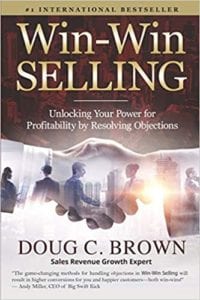
Win-Win Selling: Unlocking Your Power for Profitability by Resolving Objections
It was like, “You’re never good enough no matter what’s going on.” Even the top producers were producing top-wise weren’t rewarding them or showcasing their egos. Let’s face it, salespeople have egos. They wouldn’t be salespeople otherwise. We all have egos to a degree. Some good, some not. I went to him and he said, “No. I built a growth plan.” He was like, “I’ll take it from here.” Two months later, he called me. They have fallen from $50 million to $48 million. Sixty-two percent of his sales team quit in 60 days. He called me back and went, “Can you fix this?” I said, “Sure, I’ll give my best.” I got back in there. I started re-recruiting the people that had left. I got him to agree that this is how we should run the company going forward.
We got some of those back. We hired other new people. After I was doing this actively, I found out that almost 60% of his leads were never going from a lead stage to the first contact. I went back to him again and explained to him. He told me, “No, you’re crazy. This can’t be happening.” A lot of times companies manage numbers from top-line revenue or top-line numbers. They don’t look down below what’s going on and they go, “We’re making money. This is good.” Long story short, we fixed that one ratio. Within the first 30 days, it dropped by half. In the second 30 days, it dropped by another 25%. In the third month, it dropped by a little bit more. Installing that and a couple of other things because it’s usually only a few 3, 4, 5 things. They went from $48 million to $110 million over the next two years.
You get the right processes and systems in place, leads aren’t lost and you treat their people well. It’s not rocket science and yet companies are too inside their own bottle to read the outside of the label. That’s why they need people like you to come in. Almost like a child sometimes with a parent. The parent can say the same thing. Until a teacher says it, it doesn’t stick. Whether it’s a speaker like I am or an outside consultant like you are, sometimes having another perspective and voice helps people go, “That’s the sixth time I’ve heard that. I got to fix it. Let’s try it. What do we have to lose at this point,” especially when things are going down? Thank God he called you when they were only at $48 million and not $20 million and trying to turn that ship around as much harder.
In about six months, he would have been at $20 million.
What do you see the big problem is that salespeople have around rejection? Are they giving up after the first no? They take it personally. I have some ideas around that I’ve experienced being in sales myself for many decades. I’d love to know what you see that causes salespeople to not close sales and take rejection so personally that they are giving up quickly?
No person I’ve ever met loves rejection. I’ve had the opportunity to work with some big names and people. They don’t like rejection, behind every corporate objective is always personal or something. One of the reasons that people do not like rejection is because of how they grew up. All of this goes back to our roots. We grow up and we’re habituated to our behavior. We’re told what’s right and what’s not right by parents, preachers, teachers, classmates and all kinds of things.
What we don’t realize is we’re making agreements all the way through based on what we agree to, even if we don’t agree with it. That sneaks up on people as they become adults because adults are nothing more than grown children who have been taught how to navigate their way through society. However, if one grows up in an environment where it’s rude to interrupt the adults and they are admonished, punished and publicly humiliated going all the way through this, eventually, that starts to become a pattern that they go, “I cannot interrupt people because it’s rude. I won’t get mom and dad’s love.”
[bctt tweet=”Start with a truthful goal.” username=”John_Livesay”]
The core beliefs are founded right there.
They even value it because when they’re not doing that, they might get praise. “Look how well the children are behaving,” and all of that good stuff. That’s well-meant. Fast forward 30 years, they’re now 34 years old. They’re in a sales job. The goal is to make 100 cold calls a day, which is interrupting 100 people a day. What ends up happening is when they start getting rejected, it reminds them of the pain of their youth. There’s a set frame there that until they are aware of it, it’s on autopilot, too. That’s the whole thing. It’s the same thing with closing. It could be a myriad of different things that they learned growing up.
Let’s say that they were taught not to pressure people for whatever reason. No matter how their moral obligation says, “This person needs this. This person wants this.” They’re going to have that duality and that fight within them. I had one sales guy that I help with this. He grew up in an environment where everything was negotiated. “It doesn’t matter. You close the deal, negotiate. That was how we grew up.” I’m sitting there watching. He closed this deal and I was like, “That’s a good deal.” What did he do? He started negotiating right after the deal. Instead of pushing the paper forward and saying, “Can we have your endorsement on this?” He goes, “Well.” He started backing it up again and he undid the deal.
I’ve seen it happen so many times. I tell people, “When you get someone to say yes, stop talking. Don’t tell them ten more features.” It’s so bizarre to me that people feel the false belief that, “You got to get people to know, like, and trust you. I’ll push out a bunch of information. Do you know enough about me now or you still don’t? Even if you want to buy, I still need to give you more facts.” It’s fascinating to tie it all the way back to childhood beliefs that get formed of either the fear of rejection and/or pushy or “I need to negotiate in order to feel like I won.” You’re talking about getting people in the right roles. Some people love to nurture existing clients. Others only like to get the sale and then turn it over to somebody else. They hate the servicing of the clients. If you’ve got the people doing something they don’t like, that’s a big problem, too.
It’s a huge problem. I fully agree with you. Sometimes, that is the solution. I always talk to owners and a lot of times, they make this mistake. They take their top-producing salesperson and promote them to a manager. A top-producing salesperson loves to go out, be social, prospect and do all of those things. A manager loves to do spreadsheets and metrics. You try to take that and say to a top-producing salesperson, “I need you to create pivot tables and this and that.” Without question, it’s a problem. If you have people in the wrong role, they’re not happy and productive.
What I use is sales-specific assessments which will pinpoint, “Are they a farmer? Are they a hunter? Do they have the will to sell?” That’s another closing thing. Because if they don’t, then they’re not going to close well. Closing is not hard. In fact, closing could be a very simple question. “Would you like to move forward with this at this time?” Closing is so important. I’ve seen statistics out there that highly suggest all of them. About 92% of people won’t buy unless they’re asked to buy.
Let’s take a moment on that, 90% won’t buy unless asked. It’s like dating. You’re not going to get someone to knock on your door out of the blue unless you’ve asked them out. No one is sitting at home alone single going, “I don’t know why nobody’s asking me out, knocking on my door. I’m not putting myself out there, but yet I expect that I should not have to do that.” This premise of, “I’ve given you all the information. Please don’t make me ask the closing question because I hate it,” or whatever the belief is, yet I compare it to being a copilot with your buyer.

Win-Win Selling: Storytelling is even more important now than it used to be in the past. It’s telling the picture and getting motivation, inspiration, and a little bit of pain when needed throughout the story to get the clients to understand to move.
I tell the story when I give a talk. When I flew from LA to New York or wherever, the pilot comes on at the end and says, “We’re now landing in New York.” Nobody stands up and says, “What? We’re landing. I thought we’re going to fly around forever.” We see so many salespeople who are afraid to land the plane. The clients are like, “If you’re not going to ask, I’ll keep dragging this thing on forever. I’ll keep picking your brain or asking for more information. We’re doing this endless flight.” Someone is going to run a fuel one way or the other until you start from the get-go going, “This whole journey is expected to have a landing point at someplace. It’s not going to be a shock when I ask you. Does that sound like something you want to move forward with?” It’s like the plane ride. We have a destination in mind. Otherwise, we wouldn’t get on.
We all want that plane ride when it touches down to be smooth and effortless. For too many people in sales, because they’re afraid, they have a fear of rejection or they grew up in whatever environment, “You’re good, but never good enough,” they don’t ask the question or wait until they’re desperate to ask the question. It’s like the plane hitting the runway very hard. No one likes to be in a plane and feel kaboom when it hits the ground because you don’t know what’s going on. When they ask closing questions, a lot of objections will come up because they’ve asked the question in the wrong way. They haven’t made the flight, staying with the analogy, enjoyable all the way through, informative and value-based. Closing begins before you ever meet.
Sales aren’t lost at the end where most people think they’re lost. It’s lost, as you said, even before they meet because of the lack of preparation. Again, with the airplane analogy, pilots don’t just hop on. They go outside and do a whole preflight checklist. We should be doing the same kind of preparation.
If you think about it, the pilot is positioned as the expert because she or he has all of these people’s lives in their hands literally, holding onto the plane. They’re positioned in a place where we respect the pilot. The pilot is like the captain of the naval vessel. What kind of positioning are the salespeople coming in with? Are they positioned as experts, authorities, and advisors? Are they positioned as, “Two salespeople and a manager just came through the door? I bet there are two liars and maybe one honest guy.”
When the pilot comes on and says, “We’re going to be hitting turbulence. Put your seatbelt on.” Nobody says, “How does he know? I don’t believe that he knows we’re going to be hitting turbulence. No, I’m going to risk it. That’s where I’m going to choose to go to the bathroom.” I was like, “Nobody does that.” They went, “He must know coming up. He’s done this 100 times.” Let me ask you about the other big problem salespeople have that I’m sure you have a solution. They struggled to create a sense of urgency. I see that so often without being pushy. Urgency is not, “I need to make my quota.” Many people think that’s what makes this urgent. Can you speak to how you help companies create a sense of urgency for their potential clients?
Again, closing begins before you ever even talk to someone. All of the positioning, marketing and prospecting should be set up in order to have the expectation of what we want as an outcome in a win-win fashion for both parties. In the sales part of this, the conversation that’s going on, all of this urgency must be discovered prior to ever presenting. This is where a lot of salespeople make a mistake. They’re not going through what we would call the discovery process. They’re not asking questions on and around, “What time frame is this to be accomplished? Where are you at? If you made decisions like this in the past, how have you made these decisions?”
They’re not figuring out what the potential is for the close on that particular call. Whether this is a one-call, two-call, or three-call close, whatever it might be in a meeting. A larger sales generally take a little longer time. Not always, but generally. They’re not doing it in the early stages of this. What I see happen with salespeople is they get to this, present, do all this other stuff, and then, “I got to close.” The urgency comes in between the presentation, objections and close side or somewhere around there.
[bctt tweet=”Don’t be afraid to ask questions.” username=”John_Livesay”]
That’s like going up on a big slide and jumping on the slide. When you get toward the end, you figure out where you’re going. You’re going into the water or the sandpit, whatever’s below that slide. If the salesperson or the person selling asks these discovery questions in a non-threatening manner, they will elicit the response that they’re looking to find. Here’s the thing, not everybody is ready to close, no matter what. There’s a Law of Averages. There will be a certain percentage of people who are and a certain percentage of people who are not.
That leads to my next question, which is you have this whole process to help people with follow-up. Much like those leads that get lost, the follow-up and if the system is not in place, “I’ll call you in 30 days.” It’s not on my calendar or whatever and then I never do. Those people aren’t going to call you. Let’s talk about the importance of follow-up and having a system for that. You’re solving all these leaks, I call them, throughout the whole process.
Follow-up is a big leap for a lot of organizations or people, even if they’re solo entrepreneurs. I’ve worked with lots of coaches, consultants and solo entrepreneurs as well. I’ll illustrate it this way. This blew my mind a little bit. I was invited onto a sales consultants’ training call as a guest. I got onto this call and listened to these people. This woman said, “I blew it this time, guys.” They went, “What do you mean?” She went, “I lost 700 units at $500 a unit because they bought from someone else because I didn’t follow-up with them. I did all the work. I got all the way there. We had potential. I didn’t think they were that interested, so I moved on to something else.” That’s a $350,000 sale, if I remember correctly. John, her commission was 50%. Here’s this thing. The average client stays with that particular product or service for 5 to 10 years. She lost somewhere around $175,000 a year in commission for 5 to 10 years each year. The challenge is follow-up is not part of a sale that can be left out because follow-up is a common courtesy. If we think about it in terms of dating, we go out on a date and we have a great time. I have surveyed women for this.
If you don’t call, thank them within a certain period of time, and you try it later, it’s too late. They’re hurt and angry. They’ve made up a story in their head.
It’s 12 to 24 hours depending on the situation. If you don’t call within 12 to 24 hours, every single hour going past there, you’re becoming more in the dirt at that point with the relationship. We meet with somebody, let’s take the first meeting and nothing is recapped and sent. I had another client who went to a trade show. They called me and said, “We went to this trade show.” I said, “How many sales you got?” I think they said about $30,000 in sales. I said, “How many leads you got?” “175.” I said, “When did you get back from the trade show?” They went, “A week ago.” He went, “I called you for a reason.” I said, “I’m not talking to you until you get off this call and at least send all 175 an email or call all of them.”
He went, “I can’t call all of them now.” I said, “Get your team to.” He said, “Why?” I said, “Because you are losing money right now.” They sent an email. They picked up another $35,000 in sales off the email. They followed up with calls. They picked up almost $100,000 more on the calls. All this stuff was going to die. The worst part about follow-up when a person does this is they go through all of the work. They get the client right there and they’re ready to go. They should be calling their competitors, saying, “Give a call upon this client that I just went. They’re all warmed up and you are not going to get the sale.”
I love what you do and how scientific it is. It’s not just guessing. It’s based on data. You’re able to spot these leaks. People can find you at BusinessSuccessFactors.com to explore how you can help them scale their business and fix all these leaks as we described them. Any last thought or comment you want to leave us with, Doug?

Win-Win Selling: If you have people in the wrong role, they’re not happy and productive.
Can I promote my book?
Please.
As we’ve been talking about storytelling, frames, and all of this, I wrote this book called Win-Win Selling: Unlocking Your Power for Profitability by Resolving Objections. You can get it at WinWinSellingBook.com. It brings you right to Amazon. It’s $0.99 for the digital copy. I dropped the digital copy for your folks, John, or $24.95 for a hardcover. This book is written specifically on human-to-human communications. It goes into the psychology, philosophy, formulas and practicality to resolving objections in a win-win fashion. That means they win, you win. It’s not just about business. I’ve had a lot of people comment that they use this in their personal lives and their relationships are better. I go into a lot of what we were discussing on the show. I highly recommend people go do that.
That website again is WinWinSellingBook.com, where you unlock your power for profitability by resolving those objections. It’s a great offer. Thank you so much for that, Doug. Thanks for sharing your wisdom of what’s going on behind these behaviors. Once we identify those beliefs of where did I get so afraid to interrupt anybody and make a cold call, we can get unstuck.
That comes from Alcoholics Anonymous. The first step is awareness or something like that.
Business and personal indeed.
Important Links
Wanna Host Your Own Podcast?
Click here to see how my friends at Podetize can help
Purchase John’s new book
John Livesay, The Pitch Whisperer
Share The Show
Did you enjoy the show? I’d love it if you subscribed today and left us a 5-star review!
- Click this link
- Click on the ‘Subscribe’ button below the artwork
- Go to the ‘Ratings and Reviews’ section
- Click on ‘Write a Review’
Love the show? Subscribe, rate, review, and share!
Join The Successful Pitch community today:
- JohnLivesay.com
- John Livesay Facebook
- John Livesay Twitter
- John Livesay LinkedIn
- John Livesay YouTube