

The Power Of Playing Offense With Paul Epstein
Posted by John Livesay in podcast | 0 comments

How do you execute purpose-driven leadership? Today, organizations everywhere are struggling and looking for ways to thrive. When you’ve lost motivation, how do you spark the hope and light within you so you can continue making a difference? Learn about the power of playing offense with Paul Epstein. Paul became the go-to fixer for NBA teams, NFL franchises, and league executive offices because he mastered the come-from-behind win. He recognizes that victory comes from the inside. In this episode, he dives into his book The Power of Playing Offense and how you could use this to develop your leadership skills fully. Tune in to this episode to listen to his deep insights on leading with purpose and how to win big.
—
Listen to the podcast here
The Power Of Playing Offense With Paul Epstein
Our guest is Paul Epstein, the author of The Power of Playing Offense. He talks about how people can go from having a job to a career to even having a calling. The through-line of all of his work is helping people find their purpose and he shares his own story of how he discovered his purpose that will tug at your heartstrings. Enjoy the episode.
—
Our guest is Paul Epstein, who I met at a speakers boot camp. To understand how he has become a leading speaker and thought leader in the world of purpose-driven leadership, you have to begin with the path that brought him to finding his why. He has been in the sports industry since his career began, serving in the NFL League, a lot of national sales campaigns for Super Bowls and managing a record-setting sales organization at the San Francisco 49ers.
He’s also been very involved with saving New Orleans, which was once at the bottom of the league attendance and they were in danger of being relocated before he helped rally the city to save their now beloved team. Before all that, we’re going to hear about his own story of origin, where he was working in an entry-level sales position for the LA Clippers, making $7 an hour on a four-hour shift with no promise for growth.
He went on to lead the New Orleans Pelicans, named the Hornets. This development team as they struggled to stay relevant in a football focus region. He realized that sports are a lot more than just sports. It’s a civic pride thing but as big as a leap of faith was to come years later when he discovered his own personal why, which we’ll be certainly asking him about. Welcome to the show, Paul.
Hi, John. I’m fired up to be here. Thank you, my friend.
It’s always fun for me when some of my previous guests know each other and we were talking about Gary Sanchez, a previous guest on my show with the WHY Institute and you’re all about the why. Let’s go into your own story of origin. You can start with making $7 an hour, or you can go even further back on how you’ve been passionate about sports all the time? Do you get that from your dad or how’d that all come about?
[bctt tweet=”From a job to a career to a calling.” username=”John_Livesay”]
Why don’t we start at the $7 because maybe the more compelling part of how you land on $7 is to imagine leaving six figures to make $7? Not a lot of people do that, but in my case, I was one of the crazy ones. It was because prior to that, the six-figure opportunity fresh out of undergrad at USC, I was working for a Fortune 10 organization.
Everything was great. It was rolling and I still remember the story, where for those that are sports fans reading and maybe the name Mel Kiper rings a bell. He is known as the top NFL Draft Guru. He’s a very high-energy type of guy, a fiery personality like I’m talking right now. I’m driving around in my minivan, which was a company provided at 21 years old in ESPN Radio and Mel comes on. He says, “Have you ever wanted to work in sports? Have you ever wanted to work in the NFL, NBA, NHL?” I’m driving. I’m speeding down. “Yes.”
The call to action at the end of the commercial was call 1-877-SMWW-NOW. SMWW stands for Sports Management World Wide. I gave them a call and took their online course. Their promise was if you’re one of the top students, we will open up our Rolodex and network to you in the sports industry. Not only is there a happy ending to this story, it’s the biggest no-brainer in my life to go from six figures and comfortable, but having not feeling a purpose in what I was doing. It was just the paycheck to now. I would have done it for free.
When I think about the things that are best in life, I know we have a great sales audience reading in. What you do if there were no money on the line? Whether it’s a check someone is cutting to you, or it is you as an entrepreneur. Would you sell, whether it’s yourself, product or service, if there was no economic gain in it for you?
When you can answer, not only yes, but hell yes, that’s when there’s a deeper burn in a belief, passion and purpose because that’s how you matriculate from job to career to calling. I went through that journey and transformation. People always ask me, “How do you know?” I always bring it back to when you’re not chasing something. When it feels like, “I would do this for free every day.” I felt blessed that they even paid me $7.
I love what you said there, how to go from my job to a career to a calling. We’re going to tweak that out. That’s great. That’s the ultimate hero’s journey. Now you also wrote a wonderful book called the Power of Playing Offense, which is a playbook for leaders, not team transformation but personal transformation. Let’s dive into the story of origin around that. How’d you come up with the title? Let’s start there.
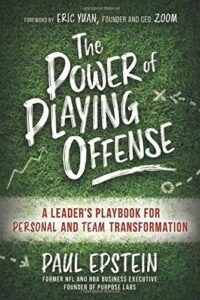
The Power of Playing Offense: A Leader’s Playbook for Personal and Team Transformation
Spending fifteen years in the NFL and NBA, the apple doesn’t fall far from the tree. When you think about the mentality, that in my words, I like to attack each day with a mentality of playing offense, that is this all gas, no brakes type of approach, where we all know there are two types of people in the world. As I spent fifteen years in a high-performance environment like sports, I clearly see the delineation and there are two groups.
I want to ask the readers, think of these people in your life. You know folks on both sides of the fence. One always seems to play on their toes. The other is seemingly always on their heels. One has a mindset where it’s always, “Let’s not lose.” They play not to lose. They’re never going to fail big but they’re never going to win big versus the other feels like, “I’m blessed to have this house money and I am playing to win every day.”
The first group, market, external circumstances always seem to dictate their terms, but the second group operates on their terms. I like to describe that as the first group plays defense, the second group plays on offense. When you play offense, you not only play with purpose and passion, you take control of your future. That is the spirit of how I landed on the Power of Playing Offense.
When you talk about leadership, this was the playbook that I never had because I did positional leadership has all called for a decade and a half. Everyone taught me how to hit goals, metrics, numbers and KPIs. Nobody taught me how to lead people. To me, that’s the secret sauce of business and life. I said, “What is the book that I needed a decade ago and it never came?” I had to fail, fall, pivot, reinvent and go through all of these things and I have no regrets. I’m happy that I didn’t have the book. I wanted to make sure that people in the future didn’t experience some of the same pain.
You’re tapping into a big struggle. I was working with the healthcare tech company and they’re not the market share leader. They want to be, but they’re not. One of the reps said, “We’ve got to stop playing defense because every sales pitch is us defending against the leader of, why aren’t you doing this? They are, whatever the issues are.”
This concept of offense or defense in terms of presenting your content, message or story against someone who has bigger leadership is your area of expertise because you told me before the show that you’ve been selling the underdog your entire career. Let’s transition from top playing defense and start playing offense even if you’re the underdog. How does someone do that?
For context and backstory, I did fifteen years in the industry and for those that are sports fans, if you root for any team for fifteen years, you’re going to make the playoffs, 5, 6 maybe 10 times, if you’re lucky. How about in fifteen years, I enjoyed the playoffs once. I sold a playoff team, 1 out of 15 years, whether I was directly in a sales seat or I was leading the entire sales enterprise.
Now you talk about an underdog. It was a joke in the industry that I was the black cat, wherever I went on the corner of the field of the Is. They’re saying they are going to be a lot of Ws. The first one was the LA Clippers. This is not the Clippers of nowadays, where now they are winning. They were in the shadow of Kobe and Shaq, Lakers. ESPN called us the worst brand in sports and Sports Illustrated said, “You are the worst franchise in sports history.” We had to sell that.
[bctt tweet=”Choice is when your fingerprints are on the blueprint.” username=”John_Livesay”]
I shared this story of the underdog to say that even from a recruiting perspective, if you want to talk about the pitch, what’s the pitch to get somebody to come work for the Clippers at that time. That’s the situation that I found myself in every single day. Over time, we couldn’t house enough people that wanted a bite at the apple because the pitch which came from the heart was, this is not for everybody. A tribe either needs to attract or repel you.
Imagine you’re in the boardroom right now and Paul is the hiring manager. I said to the group, “My job is to hire the best talent. Your job is to control the controllable. I’m not even putting pressure on you to sell.” It was the opposite of what everybody in the industry says, “Where it’s about metrics, goals, numbers and KPIs.” I said, “No. That’s my part. Let me remove that pressure from you, but here’s the hard hat and here’s the lunch pail. I need you to show up with every single day.”
There are three components, work ethic, positivity and coachability. You give me those three things. I’ll take care of you for the rest of your career. This was for a job that had a 6 to the 9-month runway, 10% usually made of the promotion to a senior role. I had what I called the constitution, which was on a whiteboard in my office and everybody could see it. I had them sign. I put the date of 6 to 9 months from their hire date.
I had them sign it and said, I made it sound like a constitution, “I will commit to the values of work ethic, positivity and coachability.” I would sign it right under them. I said, “You give me those three things and in that three-month span, 6 to 9 months from now, I got you and take care of you, not only for that first promotion but for the rest of your career.” That is how we pitched it, fulfilled it, delivered on it and I’m still fulfilling those promises to this day, years removed from the sports industry.
Instead of trying to get people to work at a place that might be seen as, “I’m working here because I didn’t get any other offers.” It became, “This is my first choice because the culture cares about me and it’s a fit with my mindset. I’ll feel proud of working here as opposed to embarrassed.” By taking the external judgments of what you decide, whether something’s good or not. Flipping it internally is what I’m hearing.
I’ll piggyback on that because years later, as I’m recruiting for the 49ers Academy, which I was the proud founder of. This is a decade gap in between stories to show you the matriculation of how this surfaces. At the time of my Clippers story, I didn’t know the difference between extrinsic and intrinsic motivation. Those terms had not entered my vocabulary.

Playing Offense: Anybody interested in more of the research, scienceofpurpose.org is a massive accumulation of how purpose connects to the bottom line and to individual performance.
For everybody reading, into a simple way of thinking about it is, carrots and sticks are the extrinsic motivators. If you do something, I will give you a bonus. If you don’t do something, I put you on a performance plan or you lose your job. That’s a carrot and stick. The intrinsic motivation is, are you motivated from the inside out? Is there a level of internal success, significance, happiness, fulfillment and purpose that you feel in work? Me, as your boss, don’t need to hold you accountable. You hold yourself accountable because you believe in the place, me as a leader, the team and the culture, all that.
I had four cornerstones at the 49ers Academy, the same type of pitch at a time where not a lot of folks were wanting to come to the organization. It was after the honeymoon period, the first 2 to 3 years of Levi’s Stadium. Here are the commitments we make to you. There are four cornerstones, purpose, choice, progress and impact.
Purpose, we will create an environment where the why is greater than the what. Crossed us that we can guide you on the how and as Nietzsche once said, “When your why is strong enough, the how will take care of itself.” We focused entirely on purpose as the foundation and then choice. Rather than saying, “Here’s the playbook, go execute.” It became, “What kind of plays do you want to run?”
Now I’m giving everybody a voice, even as a recruit to say, “What’s the environment that you thrive in? What leader do you love? Just because Paul is wired a certain way, maybe you want some tweaks to that and I’ve got to have some empathy. I’ve got to listen to that. Otherwise, I’m not going to have you maximize your potential.” That was choice. The way I describe choice was your fingerprints will be on the blueprint and people take more ownership when their fingerprints are on the blueprint.
The third cornerstone, progress, I’m a massive believer that if you can make a commitment that when somebody leaves the office, they are better than when they showed up that day. They will keep coming back. Whether you’re the underdog or the market leader, it is equally effective because now it’s not about the paycheck. It’s not even about the company, brand, product or service. It’s about me as a person.
When Paul feels that my company and my leader care about me enough, that they’re going to invest in my development and I’m going to be better when I left than when I showed up, I’m going to keep coming in and grinding. The blood, sweat and tears are going to be organic and authentic, and that’s the third one.
The fourth one is impact. My firm belief is that everybody in life wants to make a difference and feel they matter. They want to do what matters and make a contribution. That impact is the driver of all things good. Whether you’re the Clippers, the 49ers or anybody in between, I said, “Purpose, choice, progress, impact.” If that is you, this is your tribe. It wasn’t for everybody and thanked God it wasn’t, but the people that wanted it made leadership so easily.
[bctt tweet=”Every day is a pitch like life, life is a sale. If you’re not living and leading with purpose, then you’re building your house on quicksand.” username=”John_Livesay”]
They felt like they had found the water in the desert, I’m sure because most players aren’t that clear on what the culture is. You don’t know what you’re signing up for. This concept of intrinsic versus extrinsic motivation is worth double-clicking on. I first came upon that concept when I was selling advertising and Lexus was launching here in the states.
They said, “We compete with BMW and Mercedes. We have done all these studies that certain people buy the BMW like if you’re an agent in Hollywood, you have to wear the Armani suit and drive a BMW because that’s external motivation. I want to impress people with my labels and country club, whatever.”
There’s a whole group of people that buy BMW and Mercedes that are internally motivated. They aren’t trying to impress anybody. They want the car to be well-made and that’s who we have to target because we don’t have the history of branding. Once you have that awareness of it’s not a recruiting tool, it also becomes a marketing and branding tool.
I couldn’t have said it any better and case in point because I’m a big sucker for stats, especially when you’re talking about something like purpose, as much as I do. I think there are a lot of folks that feel like, “It’s a little up in the clouds and that doesn’t connect to performance or the bottom line.” Anybody interested in more of the research, ScienceOfPurpose.org is a massive accumulation of how purpose connects to the bottom line and individual performance.
One of my favorite stats and it ties to what you said is that we’re trying to switch consumers. You’re trying to take somebody that’s not participating or engaging with your brand, product or your service. You’re trying to get them on board with your team. Purposes, one of the greatest drivers, there is about a 73% clip of global consumers that will pivot and change brands based on connecting with the purpose of the brand.
That to me is that intrinsic piece because it’s not the bells and the whistles. I could watch a commercial and I got that. It’s why do you exist as a company, as a person? Are you communicating with your purpose? Are you communicating to the outside world? What your intrinsic motivation is because that will create a pull effect versus in sales. It’s often a push effect.

Playing Offense: If you’re trying to switch consumers, you’re trying to take somebody that’s not currently participating or engaging with your brand or your product or your service. You’re trying to get them on board with your team’s purposes.
As I think about pulling, that’s intrinsic and what’s fascinating about this when I saw the stat of 73% in purpose-driven brands. That’s how global consumers shift. I thought, “This is bigger than branding a company.” You are the brand. We are all our own brands. How we show up each day is how we represent our brand. If we’re not showing up with purpose, we’re going to miss the mark on 73% of the market.
Your book is talking about these five pillars of playing offense that we lead ourselves, others and then, of course, what the future can be as some legacy. The through-line that I see is it all has to start with purpose, especially in certain industries like sales or lawyers, known for being extremely competitive within the same company. That doesn’t work on a sports team and yet in business, you’ve got people who are supposed to be on the same team and yet there is so much infighting going on. Do you think part of that’s because there is no through-line of a bigger purpose?
I think there are two sides to the coin, transactional or transformational. The more that we walk through life and sift through life in a transactional mindset, that’s where the whole scarcity versus abundance piece came from. Here’s a real example. We’re both speakers and we both speak about sales. Do I view you as competition in the sense of is there only so much food to eat that I shouldn’t be coming out on your show? I share it with my audience and now more folks are going to say, “John is pretty awesome. We want to hire him as a speaker.” That’s a scarcity mindset. Versus abundance is there’s enough for all of us and not just enough. We can grow the size of the pie when we support each other. I think that’s the real win.
Here’s the piece on sports and I’ll go back to offense-defense. Everybody loves to be on a winning streak and when there are blue skies. The weather is perfect and I can do no wrong. In that case, the purpose is an inspirational thing. I think the purpose is more effective in a storm. It is more effective when the defense is pushing back.
Take the pandemic as an example, very unexpected and unanticipated. Depending on our age, it was something that most of us had never seen and experienced. The fear, risk, uncertainty and anxiety, defensive elements in life, a lot of them not only external but also in our mind, we housed a lot of those negative thoughts, emotions and feelings. My piece is how deeply do you believe in what you do and why you do it? That’s the purpose and the greater your purpose will be the fuel of your eventual resilience.
In other words, if I believe in what I’m doing, I’m going to continue to get up off the mat because it’s not about a single day, a moment or a transaction. It’s about this long game. The job career calling transformation, as I said earlier, that’s what this is all about. It works on the field, court or ice. It works in the boardroom or the sales trenches. Having that deeper belief and purpose can keep you on the treadmill, especially on the days you want to get off.
[bctt tweet=”One has a mindset where it’s always, let’s not lose. They play not to lose. So they’re never going to fail big, but they’re never going to win big. ” username=”John_Livesay”]
We can all relate to that. There are certain days you feel like exercising and certain days you don’t. You don’t feel like exercising even if you get yourself on the treadmill. You might go, “Just ten minutes. I’m not doing the full 30 or whatever it is.” There has to be some bigger purpose to get you to do something when it’s so easy to stop doing it.
The purpose is to hit a certain goal of your weight, body fat or whatever, like certain goals of hitting a certain sales quota. That’s not nearly as impactful or it doesn’t have the longevity as, “I’m doing this I can live to see my grandchildren.” If you’ve been diagnosed with something or it’s a bigger purpose to why you want to get healthy versus vanity. It suddenly becomes, “We’re speakers. We have to have some endurance on changing time zones and fleet. We got to show up fully present.”
Nobody expects a Broadway star or an athlete to show up on the field, not being in training, rested, ready to go and practice, yet a lot of us show up in our own lives going, “Swing it when I get there. I lost my voice.” Whatever the issue is. There are so many things that we take for granted when we see a professional perform, whether it’s an actor, athlete or a speaker.
I think that all of these things that you’re talking about explain what it is that makes you so successful as an expert on helping people find their purpose so that they can lead others to success, whether it’s in sales or any other endeavor. I want to ask you, as we wrap it up, to give us a story about your own purpose. How did you find your purpose?
I’ll explain what’s more important, which is the color and the background of it. The statement is my purpose is to inspire purpose in others so they can play offense in life and we’ve appreciated the context to this conversation of what those things mean. The Latin definition of inspire is to breathe life into. I’m here in this world to breathe purpose into others.
My purpose is to help you find your purpose. My mission is to help you not only have a mission statement but to be on a mission. My cause is to help you find your cause. That is how I breathe life into people, teams and organizations. I found it at an offsite leadership retreat with the 49ers and frankly, it’s what led to my eventual Jerry Maguire leap out of an industry that I never thought I would leave. I thought I would still be here decades later and be riding the sexy train of the sports business. It was an amazing ride.

Playing Offense: What your intrinsic motivation is because that will create a pull effect versus in sales, it’s often a push effect.
Once I tapped into purpose and I started to understand my core values and my biggest value is impacted. I asked myself a simple question, “Can I create more impact inside of the walls of this team, this industry or beyond those four walls?” When I evaluated the decision like that, I knew that I had to leave and take a leap, but the reason and part of the purpose discovery process is you have to do a lot of life reflection to tap into your authentic purpose.
The biggest memory for me comes from the biggest pain in my life and often, for those reading, your greatest pain can often be tied to your greatest purpose. For me, the greatest pain was losing my dad at nineteen. As an only child and I still remember picking up the call where I got the word that I picked up as a boy, and I hung up as a man. My mom went from a parent instantly to a partner.
What I got to appreciate over the years, because I don’t know if somebody is reading and maybe this will resonate, but I’ve learned more from my dad since the day he passed than when he was alive. It’s because of the stories that I’ve heard from his former students. By trade, my dad was an educator at a continuation high school. For those that are not familiar with continuation high schools, it’s typically a kid’s last chance. They’ve been kicked out of traditional schools. They landed a continuation and there is no next step. The next step is no school will take you.
In a lot of situations where you come from a broken home, you’ve been given up on, disadvantaged backgrounds, the hope and the prayer is that you don’t become a statistic on the street. That’s the environment that my dad chose teaching. Years after he passes, I’m at a barbershop, a few blocks away from the school that he taught at. I’m sitting in the barber’s seat and walks in a 7-foot-tall man, tattoos on every square inch of his body and his face. If you saw it in a dark alley, you are running the other way.
He and I locked eyes and he’s coming right at me. I saw his hand go up and I fully expected that a fist was about to impact but instead, I opened my eyes and I saw a finger that was pointing right at me. He says, “Are you Mr. Epstein’s son?” I said, “Yeah.” He said, “I wanted to come over to say thank you because your dad was the first person that ever believed in me. I’ve had a job for two consecutive months now, and that may not sound like much to you, but it means the world to me.”
John and everybody reading this next part is what got me. This gentleman said, “Your dad gave me a reason to think that tomorrow was worth it.” When I heard that, it changed my entire vision and meaning of life. I understood the impact that he made on people’s lives. That’s why impact is so important to me. It’s not a core value. You asked me what my whys and I gave you the marketing answer along to inspire purpose in others so they can play offense in life. You know what it is, the spirit under that because there’s always a why under the why? The deepest why that I have is to make my dad proud.
[bctt tweet=”The intrinsic motivation is, are you motivated from the inside out? Is there a level of internal success and significance and happiness and fulfillment and purpose that you feel in the work? ” username=”John_Livesay”]
It’s heartwarming. As I say, when we tug at heartstrings, that’s what gets people to open purse strings and gets us the emotional connection that we need because people buy emotionally. If people want to find out more about you, that your website is PaulEpsteinSpeaks.com. The book title again is the Power of Playing Offense. You have something relatively exciting and new to share with us in terms of a partnership you’re doing with the WHY Institute. Why don’t you tease that out a little bit for us?
It’s pretty hot off the press and I’m now as Senior Advisor for the WHY Institute. I know Gary Sanchez, who’s a dear friend. He’s also been a guest on your show. He’s an amazing human being and on a mission. It came from Simon Sinek’s old work and the Golden Circle why, how, what. The problem with the why are most people cannot directly explain it.
Imagine the magic that’s possible when you not only know your why but you know the why of every person on your team and in your organization. I see this tool being able to unlock all of our potentials because we have so much greater empathy when we understand how to speak the other person’s language. That’s what the WHY Institute and the assessment does.
From the heart, that once you can tap into your why, the world starts to become a lot clear, there’s a lot less burnout, fatigue, and you’ll start to feel alive. That’s the closing piece that I’ll share with everybody is a simple thing to share is when you’re living on purpose and life is no longer happening to you. It’s because you’ve activated and aligned your head, heart and hands. When your head and heart are on board, your hands will follow. That is the equation to living and leading on purpose. Align your head, heart and hands, game over, lights out.
Thank you so much for sharing your passion, your why, your stories. I think it’s going to be something that’s going to help a lot of people. Thanks again, Paul.
John, thank you so much.
Important Links
- The Power of Playing Offense
- Paul Epstein
- Gary Sanchez – Previous episode
- WHY Institute
- 49ers Academy
- ScienceOfPurpose.org
- Better Selling Through Storytelling Method Online Course
Wanna Host Your Own Podcast?
Click here to see how my friends at Podetize can help
Purchase John’s new book
John Livesay, The Pitch Whisperer
Share The Show
Did you enjoy the show? I’d love it if you subscribed today and left us a 5-star review!
- Click this link
- Click on the ‘Subscribe’ button below the artwork
- Go to the ‘Ratings and Reviews’ section
- Click on ‘Write a Review’
Love the show? Subscribe, rate, review, and share!
Join The Successful Pitch community today:
- JohnLivesay.com
- John Livesay Facebook
- John Livesay Twitter
- John Livesay LinkedIn
- John Livesay YouTube
ROAR Into The Second Half Of Your Life With Michael Clinton
Posted by John Livesay in podcast | 0 comments

Retirement doesn’t have to put an end to you living out your purpose and passion. Here to talk about how you can energetically dive into life post-retirement is Michael Clinton with his book, ROAR: Into the Second Half of Your Life (Before It’s Too Late). Michael is the special media advisor to the Hearst Corporation’s CEO. He is also an author and a photographer. He’s traveled to 124 countries, ran marathons on seven continents, and started a non-profit organization. And that’s just scratching the surface. In this episode, Michael joins John Livesay to advise his peers going through mid-life that you can pivot and do more after retirement. It’s just another layer to your cake. Tune in to learn more about Michael’s optimistic and proactive view on retirement and embracing the third act of life.
—
Listen to the podcast here
ROAR Into The Second Half Of Your Life With Michael Clinton
Our guest is Michael Clinton, the author of Roar: Into the Second Half of Your Life (Before It’s Too Late). He talks about a life lesson he learned early in his career that whatever job we’re doing is not who we are. He’s all about not retiring but instead rewiring and refiring. Find out how to energize and life-layer your life. Enjoy.
—
Our guest is Michael Clinton. He’s the Special Media Advisor to the Hearst Corporation CEO. He’s also an author and photographer, has traveled through 124 countries, run marathons on 7 continents and started a nonprofit foundation. If that’s not enough, he’s also a private pilot and the part-owner of a vineyard in Argentina. He holds two Master’s degrees and still has a long list of life experiences he plans to tackle. He is the author of a new book called Roar: Into the Second Half of Your Life (Before It’s Too Late). Michael, welcome to the show.
John, thank you for that great introduction. I didn’t realize that’s a lot.
To give the readers some context, I’ve known of you for decades. I also had a career in ad sales on the West Coast. You were a publisher of GQ when I first heard about you. What I respect and admire about someone like you is your reputation has always been stellar through time. That it is a rare commodity that someone is so beloved by so many people. There’s a reason behind that, which we’ll delve into. I want to ask you to bring us up to speed on your story of origin.
Your book, Roar, has been dedicated to your father, who influenced you. There must be some situation in your childhood when you went, “I’m going to live my life like an adventure.” The book opens up with you moving to New York with very little money in your pocket from Pittsburgh. It’s this wonderful story of like an actor almost moving to Hollywood and conquering the city. Take us back as far as you want. I’ll let you start the story wherever you want.
Thanks for those nice comments. I had a 40-year publishing career as a young publisher at GQ, ultimately becoming the President and Publishing Director of Hearst Magazines. Our team got to launch Oprah’s magazine, Food Network, HGTV and buy a couple of publishing companies. Throughout all of the 40 years, the one thing that I always did was have a sense of gratitude for what I was able to experience. I came from a poor working-class family in Pittsburgh. There was no education, role models, money or anything.
To your point, at a very young age, I’ve discussed this with my dad at nauseam. I had this spark that there was a whole other world out there. Part of it was influenced by my dad, my maternal grandmother, and by my high school English teacher, which I write about in the book, who is a very present way at a parent-teacher meeting said to my parents, “Michael would do well on the publishing business, the magazine business in New York. Go figure.” I had no idea what that meant.
I was the editor of the high school newspaper and ultimately became the publisher of my college newspaper. There was a little something in there that he identified. I’m still in touch with him. He’s a great influence. We still communicate. What happened was when I landed in New York with $60, no contacts and a young person, I was able to find my way and it was a combination of skills, luck, timing and all of that.
[bctt tweet=”Don’t retire but rewire and refire. ” username=”John_Livesay”]
What I learned was your reputation, integrity, character and all the ups and downs that you have in business are the stuff that is always remembered and stand out. You and I were long-time sales executives in various capacities. I remember your great reputation in terms of the various jobs that you held. What we learned is that our reputation is what preceded and followed us in any successful business relationship and business success. I learned that young.
I also learned in a young way that we all sit in a seat and the seat is not who we are. It’s what we do. I remember being a little full of myself up as a young 34-year-old publisher at GQ. It was a senior executive who said that to me and a light bulb went off in my head when I realized that I was sitting in a great seat but the reason I had access to so many things was because of the seat I sat in. At a very young age, I started cultivating this notion of what we do is not who we are. I started creating all of the personas of who I was as opposed to what I did. That served me well because I didn’t hang all my chips out of my professional seat.
There was a reason that I felt such a kinship to you because that’s going to be one of the tweets. What we do is not who we are. I also learned that life lesson when I got laid off from Conde Nast the first time. It’s the premise of if we get so identified with our job title and who we are in making reservations at a hotel or in your case, I’m sure going to all the fashion shows in Italy as the publisher of GQ. When that stops, your self-esteem can plummet. We need to realize that we’re bigger than any one thing happening to us. You talk about this in the Roar tips that who I am is bigger than winning a salesperson of the year or being laid off and all of those things that happen.
If you identify, “I had a good quarter and feel good about myself. I had a bad quarter and feel bad about myself,” or even shorter timeframes, you’re up and down all day long and that doesn’t serve anybody. I’m so grateful to have you say that, especially with your expertise and experience in the world. My first question with your background is and this explains why you’ve been so successful. When you are the publisher, you not only have to have expertise in managing and attracting a great sales team but you have to be the conduit to the editor.
Typically, they’ve been very much divided between church and state. You almost have to have empathy and understanding for what an editor feels is newsworthy and unique. Your background is in journalism. Sometimes people who like the writing part are not good at the selling part of it. You have this wonderful ability to do both. It’s almost like someone who’s an engineer is typically not good in marketing and vice versa. How did you get some sales experience as you were also this amazing journalist growing up?
That’s a very astute observation. The secret is that I did start as a journalist. I started as a journalist, a reporter and an editor at Fairchild Publications, which is a company that you worked for as well in its early days. I always had that skillset and identified as a words person and a writer. At the same time, I was a freelance writer. What happened was I was approached by the publisher of a new magazine that was being launched for the sports industry. It was a B2B magazine called Sportstyle. You may or may not remember it.
What was happening in the whole sports industry was going through a major disruption. Companies like Nike and Reebok were being born. The soft-goods side was beginning to overtake the traditional hard goods side. The publisher came to me and said, “You are so well known and established,” because I was writing for that industry, “Why don’t you come over to the sales side?” I thought, “That’s the last thing I realized.”
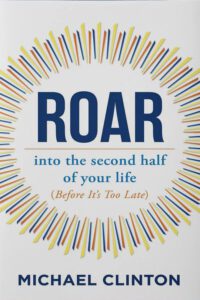
ROAR Into the Second Half of Your Life (Before It’s Too Late)
My agenda was jelling. I was in my twenties when I wanted to be a publisher, which I had to go into that lane. I jumped the fence, much to the chagrin of all my editorial friends. What I ultimately learned was that creating the affected sales pitch was like developing a story that you would write. When you’re writing a story, you’re going out and gathering the facts, interviewing and talking to different people. You sit down and write the story. In this instance, it was the same skillset but rather than write the story, you wrote the pitch.
The pitch was embedded in storytelling. That’s what you’ve always espoused and important to your message. Storytelling is critical for effective selling and results. I had that epiphany to end up loving what I was doing and being my trajectory into my career. That served me well because I always had a connection with writers and editors. I would always be talking with them, cultivating them and wanting to know what they were working on. They appreciated that from someone from the business side.
My whole premise is that whoever tells the best story is the one that gets the sale. The fact that you could write and tell good stories, it allowed you to do that. It goes back to the basics of journalism, the exposition of any story, the who, what, where and when. Many reps jumped right into the product without giving any framework of something.
I would have this discussion with many writers and editors who are also selling. They’re pitching their story ideas and that so-and-so should be on the cover of the magazine. I have evolved into this place where I do the whole world. You’re either a buyer or a seller, no matter what you’re doing. I’m very involved in the philanthropy world. I finished a Master’s degree at Columbia in Nonprofit Philanthropy.
It’s interesting going back to school in my 60s. I made this comment in class. There were a lot of young professionals. I said, “Effective development directors or CEOs of nonprofits are great sellers.” They were all appalled at the idea. I said, “You’re getting hung up on the fact that you raised millions of dollars for your nonprofit. That’s salesmanship and storytelling about your mission, purpose and recipients. That is effective storytelling and selling.” People sometimes get hung up on semantics. We’re either a buyer or a seller in all aspects of our lives. I’ve always liked being a seller as opposed to a buyer but someone’s always like, “I want to be on the other side.”
It was always a rude awakening if an ad director decided of a client that they wanted to get into sales and had all these salespeople calling them all the time. They couldn’t figure out why nobody was returning their appointment or calls as a salesperson versus every time they called us the client and got instant return. You’re not your title. What you do does not stay the same. The premise of the subtitle of your book, “Before It’s Too Late,” is so much a part of a good story. There’s got to be some sense of urgency. It’s part of good selling that we got to make a decision sooner than later.
You could have called the book Stroll into The Second Half Of Your Life but instead, you called it Roar. What hooked me was Before It’s Too Late. I thought, “Before I die and run out of opportunities, I’ll ask him because I know how much effort goes into a book name and title.” How did you come up with that hook Before It Was Too Late?
[bctt tweet=”Learn to life layer with different aspects of who you are.” username=”John_Livesay”]
Let me first say that the whole reason for the book was, as I was stepping out of the day to day, everything I read, learned and observed was all about the big wind down as opposed to the big wind up. What happens is if you’re 50 or 60 and you’re healthy, you’re going to live to be 90. The construct that you were given is based on something that was created back in the 1930s and ’40s when life expectancies were in the early 60s. You retired and died.
Retirement is an artificial construct that is about 80 years old in the history of the world. It was created by our government and policies in the ’30s. This awareness, all of a sudden, that you’re going to live another 30, 40 years, what are you going to do with that time to make it meaningful and engaging might mean something like starting a whole new second career, lifestyle or relationship. The punchline of Before It’s Too Late was to underscore a sense of urgency about it.
You can pivot in midlife and create a whole new second-half journey but you’ve got to do the groundwork and don’t want the opportunity of that to pass you by. What was ironic is the book was conceptualized and written before the pandemic. The book was bought by the publisher as the pandemic was happening.
Before It’s Too Late, you have this undercurrent of the pandemics here, stuff happens to the world at large and affects all of us. The last years have been an existential time for so many of introspection. Am I doing what I want to do? Am I living where I want to live? Am I the person I want to be with? All of those things gave it a sense of urgency. That punchline amplified the times that we’re in.
I have the image of Harrison Ford in Indiana Jones with that boulder chasing him. You talk about how important it is for us to re-imagine our life before someone re-imagines it for us. You can sit back and say, “I have a high chance of getting laid off. Print sales seemed to be down everywhere. Am I going to try to learn a new skill or am I going to wait and let that happen? If it does happen, am I going to let it take me down and never get back up? I can’t imagine doing anything else. I’ve been doing this for so long.”
Tell us a story, if you don’t mind, of either yourself or someone else. You have so many great examples in the book who said, “What I’m going to re-imagine?” You’re living your life like that. You got a new Master’s. You’re traveling. You probably have a whole list of places you still want to go and photograph, I’m imagining. The core thing I got from your book, Roar, is the people who are the most curious are the happiest and most successful. Would that be fair?
That’s very fair. One of the things that I wanted to do with the book is to identify people who were embracing this way of living. I call them the re-imaginers. I interviewed 40 people that I found who have done what I’m talking about in terms of this re-imagining process that should be with us for our entire lives. One example of this is a woman who was in our business. She was a journalist for a newspaper and saw what was going on around her.

Second Half Of Life: Retirement is an artificial construct that is about 80 years old in the history of the world.
She was a divorced single mother. In her 50s, she started thinking about the rest of her life. She decided that she wanted to go back to school and wanted to study a particular form of Psychology. She lived in New Mexico but the school was in California. It was part online and part in-person. She had to do the commute and all of that but she didn’t have the money. She decided to sell her house and move in with a roommate in her 50s to bring her costs down and did her Master’s degree.
There’s a lot of money out there for people in midlife, lots of resources like ScholarshipOwl and other sources if you want to do that. She ended up getting a degree in this form of Psychology and has become a counselor. She works primarily in the drug and rehab world. In her 60s, she said, “I can do this for the rest of my life. I’m passionate.” She did a complete 180 because she was a lifestyle reporter, had a degree in Journalism and then later in Psychology.
I found two things with common threads. One of them was curiosity, always curious about the future and the other was every single person I talked to put in the time. They spent a year plus dissecting what is it that they wanted to do in terms of not just making change. Some people say, “I’m happy with my life. I don’t need change.”
The world is constantly changing around you. You have to morph and adapt to that change. They spent a good year doing that, whether it was noticing that their job skills were waning, their company or industry was being disrupted or hit with a natural disaster in their community and making big decisions. The book has a lot of inspiration but also has a lot of tools and resources for people to use to figure out how to do it and get there.
What I love about what you’re saying and Roar is about is saying, “You’re the movie director of your life. If you don’t like what you’re seeing or doing, say cut, change the location, the cast and rewrite it.” They rewrite screenplays all the time. This whole concept of retire, your whole motto is, “Rewire and refire,” which is brilliant because it’s a great soundbite and also inspires us to take action, which is a big part of what Roar is about. Not just, “What if someday I could maybe become a photographer or help people?” Analyze it and take some action. Don’t stay in this “what if” mode where you don’t pull the trigger.
ROAR is an acronym. It’s a four-part process and the A is the Action plan. One of my favorite chapters is a chapter about life layering, which is how you can go about building these different personas, interests and directions in your life so that you’re building a multifaceted aspect of who you are and what you’re experiencing. The action plan is important but you have to step back and look at where do you think you want to go in some aspect of your life to do that.
Let’s give everybody the tease out of what that acronym is. The first R is Re-imagine, which we opened with. The second one is Own where you came from. We covered that in the sense of where you came from and where you are doesn’t define you because you’re bigger than all of that, whatever seat you’re in or title you have. We talked about A for Act.
[bctt tweet=”You can start a layer at any time in your life.” username=”John_Livesay”]
The final one is Reassess. It’s not something you’d go, “I’ve changed myself. I never have to look at it again.” No, it’s an ongoing process. I don’t know if you were the publisher of GQ at the time or not when Art Cooper retired from being the Editor-In-Chief for many years and died shortly thereafter. I thought to myself, “How tragic.”
All of that time, plans and saving money is a very common thing that we hear in men a little bit more than women. When I’ve lost my job, either through being laid off or retiring, I’ve lost my identity. That’s why your book is so valuable. If we’re all going to be Baby Boomers living longer, nobody wants that. That’s the worst possible outcome because you don’t have a reason, whatever that is. I’ve retired. I don’t know what to do with myself and I’m bored. I suddenly find myself getting sick because I’m depressed or who knows what all that is. I thought, “I cannot mention that with your connection to him and your new book about all this.”
I have great fond memories of Art. We worked together for ten years. I saw him at lunch the day that he did have the stroke later in the afternoon. It was very tragic. You raised a great point because oftentimes, people do go off the cliff when they lose that identity and seat. That’s what we need to do about being proactive, re-imagining ourselves and having things happen to us. I want to go back to life layering for a minute because it was the philosophy that I embraced when I was around 39.
I had a great job. I was at the time publisher of GQ and had my rhythm. I had a happy personal life, healthy and all that stuff. I thought I was the most boring human being on the planet because all I was doing was working. I thought, “I’ve got to, in the old vernacular, get a life.” I always had an adventure gene in me, so on my 40th birthday, I decided I was going to go climb Mount Kilimanjaro, take a flying lesson and go to Skip Barber Race Car Driving School. I was going to have a set of adventures.
I ultimately became a pilot and ended up climbing many mountains around the world. What I realized is that adventure and adventure travel were very much a part of who I am and how I self-identify. I proclaimed that my 40s were going to be my adventure years. That became my layer if you will. Many years later, I’ve had an enormous set of experiences around adventure. I took photography seriously and called that my creative years. In my 60s, I was much more interested in giving back as well. I called those my philanthropy years. One layer didn’t abandon the other.
It’s like a layered cake. You have your professional and personal layer. In my instance, I have my adventure, creative and philanthropy layer. When I stepped out of my seat, people said, “Who are you?” I didn’t say to myself, “Who am I?” I said, “I’m a photographer, an adventure traveler, a marathon runner, a student, this or this.” I had a whole host of self-identifiers. I was able to lean into my layers. You can start a layer at any time in your life, 25, 55, and 75. Life layering has become my go-to philosophy. I’ve got many friends who have been influenced by that. In the book, the chapter in the life layer gives more flavor to that.
It’s a wonderful visual, especially the cake part of it all and layering a cake. One is not siloed from the next. That’s another shout-out to another mutual friend of ours, Alison Levine, who is an amazing speaker about her adventures climbing all kinds of mountains, including Mount Everest. She’s been a guest on this show in a previous episode. When I think about it, I’m thinking, “I’ve layered without even knowing I was layering by becoming a host.” It’s so interesting how those layers add to who you are, what you know and learn and the conversations you get to have.

Second Half Of Life: Stop being obsessed about age and start being obsessed about person-appropriate versus age-appropriate.
One of the things that you have in Roar is this question, “Imagine you’re 90, what do you want your legacy to be?” That would be a great last question for you, Michael. You’re far from 90 but because you started layering in your 40s, you’re starting to imagine getting your decades labeled, adventure, creative and giving back. Have you thought about what you want your legacy to be?
I have. First of all, I’ll be working on all those layers and adding a few more to the cake. What I’ve come to learn and it was the accidental role model, is as we live longer, this is all new territory for the culture or the world. The longevity factor of people living well into their 70s, 80s and 90s and how they live is a whole new construct. Creating role models of people who are living life fully at those ages, what I’m saying is I want to be one of those people and the accidental role model with many other. The 40-year-old, the 35-year-old or a peer can say, “That’s the 75-year-old I want to be.”
I’m always looking for those 70, 75, 80-year-old people. I have a good friend, Alan Patricof, who you might know is a big hedge fund manager when he’s 87. I want to beat him when I’m 87. He’s an entrepreneur, started a new fund, training for his first marathon and dating because his long-time wife has passed away. He’s vibrant and dynamic. All of us creating role models for our peers and next generations is what I want my legacy to be.
The book again is called Roar: Into the Second Half of Your Life. It’s available on Amazon and wherever else you might like to buy books. RoarByMichaelClinton.com will give you everything you need to know about Michael and the book. We’ve scraped the surface of the tip of the iceberg. Hopefully, we’ve intrigued you enough to start thinking about your life layering, regardless of how old you are and how you need to have this book as your guide and roadmap to make your life all that it can be and become a role model for other people as well. Michael, any last thoughts you want to leave us with?
The last thought I would leave people, especially those who are in midlife, is we tend to put barriers around ourselves. Some of that is what I’ll call self-imposed ageism. “I can’t do that because I’m 50, 60.” Stop being obsessed about age and start being obsessed about person appropriate versus age-appropriate. Go back to school, start new careers and relationships, be an entrepreneur or get onto a new regimen. There is hopefully a long life ahead of you. Break the barriers of the self-imposed ageism and restrictions that we all tend to put around ourselves.
What a great inspirational thought that the only things stopping us are our own internal stories that we’re telling ourselves that we can’t do something. Thanks again, Michael.
Thank you, John. It’s great to be with you.
Important Links
- Roar: Into the Second Half of Your Life (Before It’s Too Late)
- Michael Clinton – LinkedIn
- Sportstyle
- ScholarshipOwl
- Alan Patricof
- Amazon – Roar: into the second half of your life (before it’s too late)
- Alison Levine – Previous episode
- Better Selling Through Storytelling Method Online Course
Wanna Host Your Own Podcast?
Click here to see how my friends at Podetize can help
Purchase John’s new book
John Livesay, The Pitch Whisperer
Share The Show
Did you enjoy the show? I’d love it if you subscribed today and left us a 5-star review!
- Click this link
- Click on the ‘Subscribe’ button below the artwork
- Go to the ‘Ratings and Reviews’ section
- Click on ‘Write a Review’
Love the show? Subscribe, rate, review, and share!
Join The Successful Pitch community today:
- JohnLivesay.com
- John Livesay Facebook
- John Livesay Twitter
- John Livesay LinkedIn
- John Livesay YouTube
Power To Create With Tim Redmond
Posted by John Livesay in podcast | 0 comments


What makes a successful organization great? What does every organization need to bring their labors to fruition? In this episode, we hear the answers to these questions as John Livesay interviews the CEO of Redmond Growth Initiatives, Tim Redmond. Tim discusses the values and culture necessary for organizational success and why respect is given, not earned. Tune in and learn more from this powerful discussion.
—
Listen to the podcast here
Power To Create With Tim Redmond
Our guest on the show is Tim Redmond, who is an expert in helping businesses grow. He’s the author of Power to Create. He has a great definition of wealth, “Creating value to serve.” He said, “Leadership starts with leading yourself.” Find out the one missing ingredient from teams when they are not performing at their best.
—
Our guest is Tim Redmond, who for many years has been growing highly successful businesses, including his work at PricewaterhouseCoopers, growing a software company from 2 to 400 employees, and selling it to Intuit. He helped thousands of business owners gain time and financial freedom. Tim is also the author of Power to Create and a speaker throughout the world on leadership maxims that have been featured in John Maxwell’s The 21 Irrefutable Laws of Leadership. Welcome to the show.
John, thanks so much for having me. I’m looking forward to this discussion.
We found out we have a mutual friend right off the get-go, Tim Sanders. He’s someone we respect and admire. I love to open the show with your story of origin. You can start from childhood, college, or wherever you want. Give us a sense of how you’ve got on your path.
I’m 1 of 11 kids. I’m one of the older ones. It’s learning cooperation in the toughest place on the Earth, which is in your own family. I have learned a lot of skills. I was very introverted as a child. I read a whole bunch of books, determined the person I wanted to be, and began to do it afraid. Even for me to get in front of anybody to speak, it was a miracle.
I had somebody in authority when I was a little baby, a cleft palate, and a number of challenges. I was not expected to live through the first week of my life. He said, “This boy will never be a public speaker.” Even being on the show is like defiance to what I consider somebody trying to curse my life. I did live under the power of that lie for many years. I’m living above that now.
I did go to college. I studied Accounting because I interviewed the seniors and the only ones that had a good-paying job were the Accounting and Marketing majors. They were applying for assistant manager at Payless Shoes and different things. If that’s what you do, that’s great. More power to you but I want to build something. I have more of an entrepreneur mindset. I put my time at Coopers & Lybrand. At that time, that’s PricewaterhouseCoopers. I started with a software company and we grew that. It was just the two of us CPAs. We wrote software for bookkeeping and taxes. You would find it fascinating.
[bctt tweet=”Learn how to lead yourself first.” username=”John_Livesay”]
When you start a company, has it been something that you know? If you would say, “My two CPAs started a company about marketing or car manufacturing.” I would be like, “That worked?” You are in your client’s shoes. That is probably why that was successful. You knew the pain points better than anyone else and exactly what to say to get people to want to even have a conversation around changing what they are doing.
We used some very innovative marketing at the time. We built this thing up to about 400 employees and sold it to Intuit QuickBooks. We had 117 employees and I affirm that these guys are the winners. We had a lot of great people here and it was a huge, successful story. I learned so many lessons on management, building out systems, and how to communicate, motivate, and create a leadership culture where the expectation from the get-go is for you to lead. The first aspect of leadership is learning to lead yourself. We had had a lot of, “Go inward before you go outward.” I’ve got tons of proverbs written about that.
After that, we sold our business. I was in a pretty good position. I started a nonprofit, traveled around, and did training on leadership and growth. I did it in a faith-based environment, a lot of churches, and business groups in South America, Central America, and all over the world. It kept coming back to me where I would do these seminars about how to grow your business, church and idea. People will say, “Can you coach me on this?” It was like, “Bite me in the butt.”
I finally turned around and realized I had been given all this advice for years, not realizing that people have a business where they charge money for this. I still remember somebody came after I did a seminar. I was up in Toronto and they said, “Do you do coaching?” I go, “I do.” “What are you charging us?” “I will give you 90 minutes a month. It’s one session for a $1,000.” I figured they would say no because I didn’t know that’s what I wanted to do. They said, “That sounds great.” I go, “Let’s do it.” That’s how I’ve got started in coaching.
How many people would have the confidence to charge that out of the get-go with no proven track record yet or proof of concept in the startup world? The key, for everyone reading, of what you said is you were not attached to the results.
I wasn’t coming from a place of desperation. In a roundabout way, I came from a place of abundance that I didn’t need that but I had a lot of value to throw out something and say, “$1,000 for 90 minutes. Am I worth that? Yes.”

Power To Create: You’ve got to have a vision for where you’re going, and it’s got to be compelling for somebody to say, “You know what? That would be so cool to be part of that.”
That’s based on your successful sale of that company. That’s the dream.
I figured they would say no but when they said yes, I go, “Let’s do it.” That honestly launched me into coaching.
We were talking about Tim Sanders earlier. When he wrote the foreword to my book, Better Selling Through Storytelling, he wrote about how there is either an abundance mindset or a scarcity mindset. Once you have a decision as to which one you are going to come from, that determines your behavior and experience in life.
The way I look at it is if you want to grow a company, you’ve got to improve your looks. It’s not how you look in the mirror but how you look at what you are looking at, and you are looking at it from a place of capability and incapability. There are only two ways, either you can do it and it’s possible or it’s impossible. Your brain is going to begin to see the way you are looking.
Let’s dive into some of your expertise. How does someone, especially in dealing with this “Great Resignation” after the pandemic, convince someone to come work for their company? You grew a company from 2 to 400 people. Maybe you didn’t have to do a lot of selling and recruiting at the time but maybe you did. You might have some tips for people who are saying, “We are competing against all these other bigger companies with better-known names to get people to come work for us.” What is it you think people are looking for over and above benefits and salaries?
The first thing you sell when you are selling a job is your vision and how compelling is your vision. Is there like a gravitational pull to say, “We are headed in this direction, do you have the guts to join us?” I am a growing coaching company and I hire a bunch of twenty-somethings. I use twenty-somethings to build a number of businesses because they are daring, almost reckless, and smart and most of them are moldable, got vision, and are fearless.
[bctt tweet=”Value differences versus just tolerating them.” username=”John_Livesay”]
I’ve got a vision to 10X our business from where we are at, which as a coaching company would be huge. On top of that, the main reason for our coaching is to train up people because I’m going to be buying the businesses I’m coaching instead of coaching these businesses. We’ve got a whole plan to do that. I said, “If you behave yourself, learn, get after it, and run a business, run one of these businesses and you will be very well rewarded. You’ve got to have a vision for where you are going and it’s got to be compelling for somebody to say, “That would be so cool to be part of that.”
It’s also true when you are trying to get a new client or customer to buy something from you. You have to be able to articulate what the vision is of what business you are in and why people would want to pick you over another competitor. Vision helps both sides of the equation or the coin of recruiting great people, which we know is key to success. Once everybody working there understands the vision and is part of it, they automatically communicate that in subtle ways, not just the marketing and salespeople but even the person answering the phone or customer service.
You are an expert on teamwork, being part of such a big family, and learning that at a young age. You seem to have identified that there’s a missing ingredient. If the team is performing mediocre, not killing it or their enthusiasm might be waning a little bit, what is this missing ingredient? If you bake a cake and you leave out yeast or something, the cake is not going to rise. We look at it and go, “What is missing?” You have heard people say that all the time, “Something is off. I don’t know what it is.” Enter Tim Redmond.
This is simple. People have paid me to hear me explain this. I like to define genius as going on the far side of complexity to make it simple that anybody can embrace it. The missing ingredient that I have seen in teams is the word respect. How do I define respect? Respect is normally thought about as, “I demand your respect.” It’s something that you want to get from somebody but in the hands and bosom of a leader, respect is more of a gift that you give.
I look at respect as valuing the differences rather than tolerating them. It’s finding that person’s unique wiring. You and I talked and I have said, “You have your whole show. You remind me of this one person.” You said, “We talk about the same thing but you have unique wiring to do your pitch in such a healthy way that I tend to embrace that.” It’s a non-salesy, consultative, and intelligent way of interacting. Respect is valuing the difference in people. There are many times when people are at war with themselves.
There’s authority, abuse, their interpretation of that, going through rough times, what they had to endure, and how they look at that. We look at respect as this powerful gift to say, “You are valuable. Your opinion counts and your contribution matters even when your skill level doesn’t measure up.” It’s a gift that you give that reciprocates some time. When you believe in somebody before, they may not even respect you.

Power To Create: If you want to grow a company, you’ve got to improve your looks—not how you look in the mirror, but how you look at what you’re looking at.
The old way of, “I’m the VP. You have to respect me because of my title,” no longer works.
When you empower somebody to say, “You are valuable.” I had a team meeting and it’s like, “When you come up with a question, I want you to have a recommendation of what you would do. I want the other coaches to coach you. If I need to weigh in, I will weigh in.” I sat back most of the meeting and didn’t have to do a whole lot because I’m hoping they felt respect from me because I respected them to come up with the answers.
You are competent. In other words, you are not giving them a fish. You are teaching them how to fish. That’s what it sounds like to me. I was giving a keynote and talking to an audience. I said, “When you are a kid, you jump in the pool, and you want your parents to watch you make a splash, that’s a need that as a child you can’t verbalize.” It’s the need to be seen, heard and appreciated.
What I hear you saying is that doesn’t go away just because we get to be adults. To the people we work and interact to possibly do business with, if you can make people feel seen, heard, and appreciated, not only do they want to work with you but they will stay loyal to you and not jump at the next offer they get because they feel like you see them as a person.
We have these interactions. The whirlwind of the business is going fast. We end up barking at people. They leave not because of a lack of benefits but because of a lack of respect and recognition. This is where you are giving that gift. It frees up and gives breath to the organization to begin to solve problems. It’s such a powerful process. It moves from a parent-child communication that people get defensive.
When the negative reaction comes along, they get this negative feeling called resentment and that leads to resistance, which leads to even revenge. To begin to stop that vicious cycle of parent and child ending up in revenge back, it’s giving them what they may not even be deserving of, which is respect. It’s a chisel that begins to work on people to bring out their best. I’ve got hundreds of people who have worked for me over the years. It’s like a life message because I have seen it work.
[bctt tweet=”We look at respect as a powerful gift that says, “You’re valuable. Your opinion counts. Your contribution matters,” even when your skill level doesn’t measure up.” username=”John_Livesay”]
I love this concept of giving people something they “don’t even deserve,” whether it’s respect or grace. Maybe that person is having a bad day and you don’t know what’s going on in their personal life. They say something insulting, rude, or something you would never do instead of jumping to the reactive mind because they are tense and angry all the time inside that they don’t have any buffer or tolerance. That’s what I see people struggling with sometimes.
It’s almost like they are looking for someone to insult them, ignore them or somehow make them angry as opposed to, “Is it that big of a deal? I don’t think so.” That’s why they say, “Someone has got a bad temper.” The slightest thing triggers them. They get cut off in traffic and you would think somebody smashed their car. It’s like, “I don’t think that was personal,” but their reaction is 0 to 100. Are you helping executives try to not be in such a fight or flight mode all the time?
It’s a huge thing. One of the most powerful leadership books I have ever read was written by the Arbinger Institute. It’s in a story or parable form and it’s called Leadership Deception. The second book they have in that is called the Anatomy of Peace. I’m wired tight, I want to win, and I have to take my own medicine. The whole premise of this book is instead of being at war with the world, you have peace. Choose the way of peace rather than war. It desensitizes that strain that’s ready to go off when people trigger it.
It’s exhausting. You wonder why you are tired at the end of the day. It’s because you are so wired tight all day long. You also have hinted at this but let’s do a deeper dive on this concept of leading from the heart. We want people to feel seen, heard and respected. We want to make sure that the things that we are saying to ourselves are kind and gentle because how can we give that out if we are not doing that to ourselves? I’m guessing you have some other insights there, too.
I’m always focused on taking action. If I don’t go off on this, I want to challenge the folks that are reading this to think about a person they may be resisting and look at that as an opportunity. Identify how you may be resisting them and drop the resistance. How can you hug and embrace them? Most people already got that person. Take action. Instead of resisting them, respect them. Respect is giving them some gift. Maybe it’s a physical gift, a hug or a powerful word.
In terms of leading from the heart, this is where our power is and where we change the outside world with our inside world. First of all, I don’t speak from a place of perfection. I speak as much out of need as out of mastery. I will own that myself. Leading from the heart is you are clearing your mind what your goal is and your relationship with people.

Power To Create: The first thing you sell when you’re selling a job is your vision.
There is no such thing as a neutral transaction, either you are tearing down or you are building up the relationship. Even the slightest little eye movement can mean a world of difference here like Daniel Goleman and his Primal Leadership. He talks about how the executives have little awareness of how they are added to or their responses, and how it sets the course for the entire organization.
It’s leading from the heart as you get clear what your goals are overall in your company and also with connecting people. The better you are able to connect with that person’s uniqueness, the more you are going to benefit from that person coming out and solving the problems they need to solve. Leading from the heart is leading with a mindset of, “I’ve got a goal of connecting so that 1 plus 1 is not 2 but it equals 11 or more.” That’s what that whole concept is about.
There’s no such thing as a neutral reaction. Many people think, “What? I didn’t say anything.” Your face did or, “All I said was no.” How many different ways are there to say no?
One guy told me I remember being in a conference down in Brazil. He and I were the only English speakers. He’s like, “Here’s my perspective. Women speak and hear in the language of emotion. Men speak and hear the language of logic.” How you say them is everything.
Let me ask your opinion on that. I am a firm believer that men and women buy emotionally and back at it with logic. Even the Tesla, the fanciest sports car or Lamborghini don’t usually talk about miles per gallon or how long you can drive the car without needing to recharge. They are going to talk about the environment or how fun it will be to drive this. It’s an emotional decision first, and then you will start doing the logic.
That’s where more my heart is. You put words to it, John. We are emotional creatures first and we back up or support our emotions with logic, which is good or bad because the power of justification can help us or hurt us. I love that thought and that’s accurate to understand that we are more felt than heard and we are going to project whatever is in our hearts. We can’t play poker so well.
[bctt tweet=”Get obsessed with the next thing for you to do and execute that with all of your heart. You’ll make more progress with a serial approach than a multitasking approach.” username=”John_Livesay”]
People see and perceive things thousands of times faster than they hear things. They pick up on things. You project how you feel. That’s why I thanked you. At the beginning of the day, I have a ritual of getting myself built up. I want to project positivity, “We can do it,” rather than being overwhelmed and beginning to conform to the challenges that I’m called to change.
I believe you might have a gift for the readers.
We work with businesses all over the country and we help the world’s growth companies. We have a full marketing service bureau that we offer and we do all this in-house like website, SEO, ad management, and all the things you need in digital marketing. Also, we help with the hiring, training, creating a cadence in the business, and the structure and how to run the meetings.
We help with all aspects of the business. To the people reading, we want to offer our Growth Plan. We bring them through their business and we analyze your local market, the regional market or whatever their reach is. We look at where they are effective and ineffective and we do an analysis. We also look at what does the next three years look like?
Based on what they give us on that, we give them at least eight concrete action steps that they can take immediately and do on their own. We will help them implement it but we give them eight concrete action items to begin moving towards that three-year revenue goal. It’s a powerful process. I normally charge $2,500 for that but give it to your folks if they want it. They’ve got to have a legitimate business.
How do they get that? Is there a website to go to?

The Anatomy of Peace: Resolving the Heart of Conflict
If they want to send me an email, it’s [email protected]. They can go out to our website, RedmondGrowth.com and there’s a form to fill out and say, “John was my hero. I read his blog.” If they identify with you and say, “I want to have that Growth Plan,” our team will follow up and we will bring them through that process. I would love to do that.
It has been a delight knowing your insights and wisdom. I love the concept of respect. Is there any last thought or quote want to leave us with?
In people, there’s a hesitancy to do the next thing. What we try to do as leaders, and this is your readers, leaders or people that run businesses, is we are trying to solve too many things at one time. Get obsessed with the next thing for you to do and execute that with all of your heart. You will make more progress with a serial approach rather than a multitasking approach.
Tim, thanks so much for joining us.
Thank you so much, John.
Important Links
- Power to Create
- PricewaterhouseCoopers
- Intuit
- The 21 Irrefutable Laws of Leadership
- Better Selling Through Storytelling
- Leadership Deception
- Anatomy of Peace
- Primal Leadership
- [email protected]
- RedmondGrowth.com
- Better Selling Through Storytelling Method Online Course
Wanna Host Your Own Podcast?
Click here to see how my friends at Podetize can help
Purchase John’s new book
John Livesay, The Pitch Whisperer
Share The Show
Did you enjoy the show? I’d love it if you subscribed today and left us a 5-star review!
- Click this link
- Click on the ‘Subscribe’ button below the artwork
- Go to the ‘Ratings and Reviews’ section
- Click on ‘Write a Review’
Love the show? Subscribe, rate, review, and share!
Join The Successful Pitch community today:
- JohnLivesay.com
- John Livesay Facebook
- John Livesay Twitter
- John Livesay LinkedIn
- John Livesay YouTube