

Where Imagination Meets Business With Christopher Kies
Posted by John Livesay in podcast | 0 comments

Mark Twain once said, “You can’t depend on your eyes when your imagination is out of focus.” The same applies to the world of business. If you don’t have an imagination, then your venture will be in for rough sailing. In this episode, John Livesay speaks with Christopher Kies, Executive Sponsor at Blue Sky Consulting. Christopher thinks of Blue Sky as the place where imagination meets business, and that is exactly what he focuses on, helping others tap their imagination to succeed. Be inspired to unleash your imagination by tuning in to Christopher and John.
—
Listen to the podcast here
Where Imagination Meets Business With Christopher Kies
Our guest is Christopher Kies. He has many years of successful corporate sales experience and enjoys using his insight to help others achieve their goals. Many of his clients need a second opinion on a sales opportunity or a specific strategy to enhance a deal. He works with CEOs, entrepreneurs and executives on a wide range of opportunities, all with the same focus in mind, understanding what stops may happen along the way and how to move beyond them. Christopher, welcome to the show.
Thanks, John. I appreciate you having me on.
We met through a mutual friend, Ken Rutkowski, with whom you went to grammar school if I remember correctly.
I met Ken in sixth grade and I don’t care to count how many years ago that was. It has been a long time.
I love to ask my guests to take us back as far as they want to their own story of origin since you have a sales background as I do. We both are from the Midwest. I was interested to hear similar influences, concepts, motivations and all that good stuff. You can start in sixth grade with Ken if you would like or wherever you want to start your story in terms of understanding that you had an interest in communications and connecting with people.
We could start back in my past because things for me have always been about long-term relationships. It’s one of those moments in time where we have a mutual friend and somebody I have known for many years. I kept my relationship with my wife from first grade. I moved at a point in time in our relationship and we stayed in touch. We reconnected when we were in our late twenties. We dated for a while and then decided to get married. We were in our mid-30s. When I talk about meaningful relationships, it does focus on how I help folks. I hope those two little vignettes of my life and the way I communicate with people helps you out with that.
We both had a background selling tech equipment. You were at HP. One of the things that I noticed in that world was an emphasis on that term speeds and feeds in terms of relationships, empathy or let alone storytelling, which is my passion. What was your experience in that world?
That’s a great question because it does boil down to what type of salesperson you are. Are you transactional or relationship-based? Those are the two worlds that I grew up in. Probably, like you, I call those the go-go ’90s. It was back between 1995 and 2000, right before the dot-com boom in 2001. It was when I was getting my foot in the sales world.
One of the things that I saw very early on in my career was there weren’t many older men or women in sales that caught my attention quickly. I was like, “Anybody that was over the age of 45 was either a manager or senior-level executive that I didn’t have a lot of connection with.” Even my direct managers were still in their 30s or barely over the age of 40.
That caught my attention because even some of the older guys that I did work with and I say older back then because I was in my late 20s and they were in their 40s, I saw them get pushed aside quickly when the numbers didn’t match up. How I took integrated information as a salesperson in my younger career was, “This is a short-lived world. I better make hay while I can and enjoy it.”
[bctt tweet=”You are not just enough; you are more than enough. ” username=”John_Livesay”]
I went to relationship-based sales because that’s what I enjoy. I know you like the storytelling aspect because it does create a binder for the person that you’re speaking and communicating with. I take that from a relationship side because I wanted to get to know my prospects and customers. That was my initial focus.
I remember going to see Death of a Salesman play, where the guy stayed in sales way past his prime. It painted such a bleak picture of what it’s like to not be in management and still be in sales at a certain age and carrying a briefcase, quota and rejection, yet I still wanted to be in sales. I did see that you need to reinvent yourself almost like an actor or athlete. There’s a special premium time.
When you’re first starting, you’re in your early twenties. You don’t have enough experience. You get some experience under your belt. In 27 to 35, you’re getting offers left and right. You think it’s going to last forever. You were smart enough to zoom out and go, “This doesn’t last forever. How can I either not just enjoy this but have that awareness?” You’re not so shocked.
I used to see that in the publishing world that even at the top, the publishers would hit a certain age. The magazine is still doing great, but once 50 something happened, they were like, “We’re going to bring in somebody younger. It’s less money.” Everyone thought it wasn’t going to happen to them, especially if they had been in the company for a long time. That awareness, especially at a young age, is quite fascinating.
You have been doing your own consulting, Blue Sky. Let’s start with that name. I have a sense of where the name came from, but I’m always big on asking people stories of origin, including the story of origin around a company name. You could have named your consulting company anything. What made you pick that?
Blue Sky was easy for me because that’s always been me. When I was a kid in grade school, high school and college, I would always look out the window in class. I could take in the information in one ear, listen to it, decipher it relatively well, but I was always dreaming. I was always in another space. I was like, “What would I like to be doing?” I would imagine myself in situations. Blue Sky was what I always looked at. It was wide open. That’s what I look at my organization and company as wide open.

Imagination Meets Business: What you think is what you create.
I have been in sales for many years. I even manage and run my wife’s business as well and do her P&L. I understand finance very well and also roadblocks. Roadblocks aren’t always about who is stopping you. I find that it is more or less people stopping themselves and not having the imagination triggered. They are focused on their quota, what their lack and limitations are.
I have had this company for years. I would go in and out of it. I would get other offers and opportunities and work with people. Years ago, I finally said, “I’m done. I’m going to dedicate 100% of my time to helping those that are interested.” If you’re interested in what your Blue Sky or dream is, this isn’t a transactional deal. This is you pay me hourly. I’m not a therapist or licensed in any state. I’m just a guy that has been through a lot. I have been through the highs and lows of sales.
I have insights. There are not a lot of men or women over the age of 50 carrying a bag anymore. The insights and relationships that we sometimes have can enable people in our age group that are looking for the next step. That’s what Blue Sky does. It opens up possibilities. To finish that, my tagline is, “Where imagination meets business.” If you don’t have the imagination, I want to help you reignite that, find it again or cultivate it. If you do, look out there because what you think is what you create.
It’s very metaphysical, which is also another reason you and I clicked so fast because I have that same concept of energy and mindset. There is a great Mark Twain quote about, “It’s hard to keep things in focus when your imagination isn’t working.” I think to myself, “Most people think of business as unless you’re hired to be a graphic designer or something, it’s not that creative of a career. It can be extremely creative if you look for solutions where they are not obvious or what else needs to happen to zig and zag.”
If you’re on the left side of your brain trying to analyze things like it’s a math problem, you’re not going to see those. The roadblock is the roadblock. It’s black and white. It’s like, “If you’re doing accounting, it either adds up or it doesn’t. This is a no and it’s a no forever. I’m never going to try again. I’m going to take rejection personally and go down this downward spiral of who I am. I’m not worth anything and anybody else could have done anything else.”
[bctt tweet=”What fun can you bring to your job? ” username=”John_Livesay”]
You’re summarizing what I will say. I’ll contend everybody thinks at the moment. We always go from 0 to 100 miles an hour in the negative. You get down to the space like, “I’m worthless. I’m just lucky to have this job. I’m going to figure out how long I can keep it before I find my next opportunity because my numbers are crap. I’m not selling anything.” I always want to tell people, “Let’s take a breath and pull back. Let’s acknowledge you’re not where you need to be with your numbers. Let’s say that that’s a real thing. Let’s say, ‘What do you want to do?'”
Quite honestly, you have people take a breath for a moment. You and I believe in breathing too. Breath exercises are super helpful. We take breathing for granted because we do it pretty well. Unless you’re on a ventilator, you need support. You don’t think about it. In your life, you must stop and take a breath. That’s where the imagination comes in because it’s asking yourself questions like, “First of all, what am I doing? Is this where I want to be?”
People are like, “I got bills to pay. In the Midwest, it’s ComEd and Nicor. I have got a mortgage to pay and kids to put through school.” I get all of that. You’re young and ambitious. You’re like, “I’m trying to make a name for myself.” Those are all real things. I want to get out of the reality for a second because you’re doing that 99% of the day. Why don’t you take 1% of your day and start to imagine what it would be like if you had fun doing the job you do? Nothing has to change except the idea of having fun.
That’s where I start my clients like, “What’s fun to you in your job?” I have had every person tell me, “There is no fun at all. There is always some fun,” even if it’s your coworkers. It’s anything like, “I like the coffee service.” If you work for Microsoft, you’ll get a great coffee service or somebody still pushes an ice cream cart. That’s one aspect of it. What kind of fun can you bring to your daily routine?
This isn’t rocket science, but we don’t talk about it in business. As you so eloquently pointed out, once you look at your forecast, start getting the numbers and start realizing how many noes you have gotten in 1 week, 1 month or 2 months, your focus is on the lack. It’s a simple redirection. It’s not a trick. It’s like, “Let’s redirect on what’s fun.”
I’ll give you a story. I remember this was years ago and I was working for a company. The guy that was running the company, he and I had a long-term relationship. I had known him for many years. He had asked me to come on board and help him out in the sales area. We had a lot of success early on and then there was a dip. I started realizing that I was taking on the pressures of always being the closer. I would get the award every year for the best closer. I had the highest win percentage and then it became this thing where I was like, “I had to compete against myself. I’m not doing that anymore.”

Imagination Meets Business: Roadblocks aren’t always about who’s stopping you. It is more or less people stopping themselves.
That is such a common thing with all of the sales organizations that hire me to speak to their sales teams. The number one thing I hear is, “I have had this great year. How am I ever going to top my number?” I have been in their shoes and had that exact experience, so they go, “You get us. We want to hear what you have to say.” You think of, “You do this great movie, The Godfather, or you’re Michael Phelps and you have won all these medals. Now what? How do you keep topping yourself? There’s nothing better than a gold medal. You have got eight of them or more.”
In corporate, they can slice and dice your territory. It’s impossible to beat that number even because they don’t want to have to keep paying those bonuses. It’s a fascinating thing. I want to go back to what you said because it’s so important. I want to underline this for everyone. Instead of looking for, “What is this job doing to be fun for me,” you flip the question to, “What can I bring to this job that will make it fun?” It’s a whole different mindset.
The responsibility is not on the individual to make the company fun but to bring what they believe is fun or what they enjoy to the company because it will only make the company better. You will realize that there is not a match energetically and you will move on with complete consciousness that you did everything you could. You feel good about where you’re at and you take that. You have no idea what opportunities open up when you are in the center of having fun.
It’s like when you were a kid. You’re not worried about the bills and your grades. You’re worried about, “Where am I going to have fun? Who am I going to play with?” It’s the same idea. We got trained out of it. There’s nothing wrong with responsibility and wanting to provide the best possible life for yourself, your family and your friends. The point is I took a day off. We have this little pool in the backyard. It was a beautiful July afternoon. I said, “I’m shutting everything down. I’m going to lay in the pool and meditate.”
I laid on this big raft. I had my headphones on. Of all people, I was listening to Tony Robbins and Tony said something very interesting. He said, “I feel bad for people making over $200,000 a year.” It intrigued me. I thought, “What is he talking about? It’s a lot of money for a lot of people.” He goes, “You feel stuck because there are not a lot of jobs out there where you’re going to get paid out of the shoe $200,000. You can’t explore and imagine.”
That’s where I went back to what I was trained in, which was having fun. They had given me a client called Batteries Plus Bulbs. They are a national chain all over the place. We had told them three times, “We don’t want to work with you.” They were looking for a new marketing partner for database, email and digital. The guy that was running the deal left and they gave it to me as a save. I thought, “This is great. We got nowhere else to go but up because we completely embarrassed ourselves. The sales guy that was working with us left.”
The traditional way of doing it was to get 6 to 7 people together in my organization, have a quick meeting, develop a PowerPoint presentation, get everybody online and go do the pitch. I did none of it. My idea of fun was I created a 5-slide deck and the first 2 questions were, “Why do you want to work with us? What aren’t you getting from your current provider that you think we’re going to offer you?”
That’s where I led with and I told the seven people that were coming with me, who are all smart people., “I’m not going to ask you a question you can’t answer. Don’t raise your hand if you don’t know the answer to something. I won’t call on you. Just trust me.” This flew in the face of everything we did. We had everything always planned. It’s always very surgical and strategic. We had success with it.
I walked into that meeting and the first question I asked was, “Why do you want to work with us? We have turned you down several times. We’re not very friendly to what you want to offer. One of the main things you’re asking for, we don’t offer. That was the reason why we turned you down.” The Chief Marketing Officer stood up. She was a tiny little lady. She looked at me and I thought, “This is going to go one of two ways.” She goes, “Nobody has ever talked to us like this.” I said, “That may be the case.” She said, “I like it. Here’s why we want to work with you.”
[bctt tweet=”Build trust through transparency.” username=”John_Livesay”]
They are selling you instead of you selling them.
She laid out why they wanted to work with us and I said, “Here are the things we can do well. Here are the pieces we can’t do well. We never did that as an organization.” I like pointing out what we can do well and what we don’t do well. This company, Batteries Plus Bulbs, had problems and they were going through vendors every year. When you do marketing, you want to have a partner for five years minimum because it takes a while to build up the relationship.
What you said is gold. It’s this concept that when you ask people a question and are completely transparent about what you do and what you don’t do, most people try to hide that. It’s like going on a date. “Do I need to tell them I snore?” If you are that transparent upfront, “Here’s what we do well and what we don’t do,” your credibility, authenticity and trust are off the charts. “They are showing us the whole thing. They are not trying to pretend they are perfect, have all the answers all the time or can do anything.”
It’s when you say, “No, I don’t do that. That’s not what we’re known for. We would do a horrible job at that.” It’s who this is for and who this is not for, including even in a job interview if you say, “That would not be a good job fit for me. If you asked me to sit in a cube and do numbers all day in an Excel sheet, I would go crazy.” People are so afraid of showing when it does the opposite. It makes you magnetic because if you don’t have trust, as you know in any relationship, you don’t have anything. We have to start with trust. That’s a great way to build trust that most people don’t think of.
Even to echo your point further, I always do a post-analysis with a client or somebody I lost the deal to. I like to get information from both because there’s something that wasn’t a fit. I always wanted to be educated. It’s not about, “We can offer you less money.” I’m like, “Tell me what we did wrong. I’m not going to bother you anymore. You would be helping me in the future if I didn’t bring something to the table that we currently do offer.”
When I gave that pitch to Batteries Plus Bulbs, I said, “We’re not a silver bullet. First of all, there is no such thing, but I’m going, to be honest with you.” That was my lead-in. They said, “We’re only going to do a one-year deal and only want email marketing.” Within a month of talking to them and working with them, their team and my team, we sold the marketing database, email, digital marketing campaigns and creative because they needed all of that with that trust that you’re talking about.

Imagination Meets Business: You don’t have any idea what opportunities open up when you are in the center of having fun.
I said, “Here is the silver bullet that I do have. These are the four areas we’re excellent in and we have many references you can speak to.” They did their due diligence. In that one-year contract, I said, “That’s not a possibility for us.” After I got and earned their trust, I didn’t sign one-year deals with anybody. Other people in my organization do.
I don’t because I was like, “I need three years of your time in investment. Things are going to go sideways. They always do. If we correctly layer this and have the right people working together, we can make it through three years. You’re going to get a better discount on a three-year plan because I can go to management and save you money.” They ended up doing the three-year deal with all of those additional add-ons that we had. That’s one example of many.
To your point, the trust piece is simply, when you have fun, you let go of the tribal BS that you have brought to the table with everybody whispering in your ear as a salesperson or manager. “You need to sell, do and push this.” You don’t need to do anything. You need to be yourself because they bought from my company and team at the end of all of that experience. I represented them, and I don’t want people to forget that.
If you are not in a state of mind before you get into that meeting where you like and trust yourself, good luck selling that. You may be able to fool some people initially, and I have done it. Trust me. I have been in those places where I was like, “I don’t even know what I’m selling them when I go in there.” You have to like yourself. What I do is more about getting you back to understanding who you are, your values, and what you like having fun with.
All of the little tricks and things I can teach you all day. There are nuggets that all good sales and marketing people have that they are willing to share because it’s exciting to see somebody win. You want people to win, but unless somebody is willing to do the work on the front end, all those tricks and tips aren’t going to amount to much because the magnetic part of your personality is the fact that you like who you are.
At the end of the day, what people are buying is our energy if you zoom out and think about that. An example of that was I was up for a speaking gig. It was between two other speakers and me. I got a call from the agent going, “Congrats. They picked you. They liked your energy.” I thought to myself, “Rarely is that clearly stated.” I did my post after they hired me. I said, “What was it about me?” She goes, “I felt so good talking to you that I felt like you would probably make the room feel that good too through the 400 people.”
If we remember that our money is energy and action, that we’re in the energy business as opposed to the pitching business, that will shift your outcomes big time because you approach that from, “The vibe isn’t right. What am I creating here? Am I tense? Are they tense? Can we make this at all fun? Otherwise, why are we doing it and not trying to force something?”
In one of my quotes, Abraham Maslow, the therapist, said, “The only tool in your toolbox is a hammer you tend to go around looking for nails to hit.” The old way of selling was, “If you want to buy, you hammer.” You and I are out in the world telling people, “There’s a whole other way to do this that’s fun and less pushy. We’ll make you proud to be doing it as opposed to, ‘I’m drained.'”
It’s rewarding. You reward yourself, your customers, clients and prospects however you go about it. Let me share something with you. On my website, MyBlue.org, Neil Bohr was a quantum physicist in the late 1800s and early 1900s. He was talking about energy. Going back to what you talked about, “If quantum mechanics hasn’t profoundly shocked you, you haven’t understood it yet. Everything we call real is made up of things that we cannot regard as real.”
I have that on my website because 99.9% of you, me, the room you’re sitting in and the microphone I’m speaking into is energy. 0.1% of that is mass. You don’t have to be a quantum physicist to get excited about the fact that everything is energy. Even the analogy of if we took out all of the space in between the nuclei and atoms that are in our bodies and then all the physical objects, you could shrink the entire globe, this world, into the size of a marble when you get rid of all the space.
[bctt tweet=”This is a short-lived world, and you better make hay while you can and enjoy it.” username=”John_Livesay”]
You’re very profound when you said magnetic, “The energy you put out is the energy you get back.” That’s true. Not everybody is going to want to buy from you. Get out of that mindset. Get into the mindset of, “Where am I aligning myself in terms of how I feel about myself?” The people that are aligned with themselves will come to you. The people who want and feel your energy come to you too. Through your kindness and grace, you help them.
It’s not your job, but your energy helps them and they are like, “I can do this too.” What I found when I was selling was that not everybody was aligned with the way I was thinking, but all of a sudden, all the other salespeople would ask to partner with me after that deal. The account managers that had accounts started coming to me and said, “We have an account going sideways. Would you come in?”
My senior VP at that time was like, “What do you want to create?” I said, “I want to create a hybrid salesperson. I don’t want to just have to carry the bag. I also want to take on challenging clients and opportunities because I thought that was more fun.” Plus, I’m a low-risk guy. The crappier the account, the more fun you can have because if it goes down, it goes down. If you save it, you look like a hero.
No stand-up comic ever goes and tries a new joke out without saying, “What if nobody laughs? Nobody laughs. It’s not the end of the world.” It’s the same thing with rejection. What a treat to get to know your insights and all your wisdom put to use. Any last thought you want to leave us with? People can find you at MyBlue.org for coaching and other potential ways to work together.
It’s a simple support, an hourly rate and nothing fancy. The one thing that I would like to leave folks with is, you’re more than enough. I hear this little statement, “I’m enough.” It’s like, “No, you’re more than enough. You were born perfect. There are elements in this world that will try and train you out of that thinking. It’s not their fault. Nothing is being done to you. These opportunities are being done for you on your behalf for you to create what it is that you want to create. Take responsibility for your situation, own it and say, ‘I can do more. There’s more out there for me.'” That’s what I want to share with people, a simple message that you have so much more. You are not even aware of all the things that you are going to create. You have to get into the mindset that you are capable. You are totally more than enough in terms of being prepared for that opportunity.
If we have that mindset, we won’t ever have the imposter syndrome. That’s great. It’s not just, “I’m enough for this,” but, “I’m more than enough for anything.” Thank you so much, Christopher. Everybody, go to MyBlue.org to find out more.
Thank you, John.
Important Links
Wanna Host Your Own Podcast?
Click here to see how my friends at Podetize can help
Purchase John’s new book
John Livesay, The Pitch Whisperer
Share The Show
Did you enjoy the show? I’d love it if you subscribed today and left us a 5-star review!
- Click this link
- Click on the ‘Subscribe’ button below the artwork
- Go to the ‘Ratings and Reviews’ section
- Click on ‘Write a Review’
Love the show? Subscribe, rate, review, and share!
Join The Successful Pitch community today:
- JohnLivesay.com
- John Livesay Facebook
- John Livesay Twitter
- John Livesay LinkedIn
- John Livesay YouTube
The Narrative Gym For Business With Park Howell
Posted by John Livesay in podcast | 0 comments

Storytelling is a universal way of getting others to understand us. If you want to take advantage of this for your business, then you want to create a narrative gym to practice in. John Livesay discusses marketing and crafting narratives with advertising expert Park Howell. Park is a veteran in the advertising game with over three decades of experience, and he’s prepared to show you the ropes. Learn how storytelling helps you grab attention and keep it and use it for business success. Everyone has a story and now is the time to use it.
—
Listen to the podcast here
The Narrative Gym For Business With Park Howell
Our guest is Park Howell, who is a storytelling expert. You can imagine how much I enjoyed interviewing him. We talked about why storytelling pulls at our heartstrings so much because there are high stakes. He says, “When you tell a story, it’s potential events. Events can kill us, but numbers can’t. Numbers make us numb when we listen to them.” You won’t read many numbers on this episode. Enjoy the storytelling.
—
Our guest is Park Howell, who is known as the world’s most industrious storyteller, having grown purpose-driven brands by as much as 600%. He’s a veteran of the advertising industry and consults, teaches, coaches, and speaks internationally to help businesses, sales, and marketing leaders excel through stories they tell. He is the host of the popular weekly Business of Story Podcast, which is ranked among the top 10% of downloaded podcasts in the world.
Park published Brand Bewitchery in 2020 to help you use his proven Story Cycle System to craft spellbinding stories for your brand. In 2001, he co-authored The Narrative Gym for Business, which is a short 75-page guide on how to use the foundational narrative framework of the ABT. It makes you confident, compelling, and persuasive. Park, welcome to the show.
John, thank you so much for having me. I appreciate it.
It’s great. We have to give a shout-out to your son, Parker, for introducing us. Your son lives here in Austin, where I do. We met through mutual friends. He said, “You’re like my dad. You’re both storytelling keynote speakers. You both have an advertising background.” I said, “Parker, your dad has the skills I don’t have, which is how to create the ads. I sold them.”
It is a brothers-from-another-mother feeling. I have loved your books. I’m interested to know all your tips and techniques on storytelling from an advertising standpoint. Let’s go back a little bit before you had your children and thought, “I might want to get into the world of advertising.” What was it that made you say, “This is something I’m going to pursue?”
I got to take you back to a show that I saw when I was a little kid. My mom and dad took my two younger brothers and me. There were seven of us in the family. We were known as the little guys. We were the youngest three. My brothers, Chris and Mike, and I went and sat right up front at The 5th Avenue Theater in Downtown Seattle. We went to see a musical, the first one I’ve ever seen in my life, called Yankee Doodle Dandy. The lead was David Cassidy from The Partridge Family.
[bctt tweet=”Without conflict there is no story.” username=”John_Livesay”]
I was a huge Partridge Family watcher because I played the piano and wrote songs. I wanted to be him. He showed up and did this marvelous musical. I was blown away, not only by the music, choreography, and all that, but the stage production and what was happening backstage because I could see over on the side. I was fascinated by that. When we left there that night, I thought to myself, “I want to do something like that, not be the performer or musician but to be in the business of bringing that entertainment to the world.”
I went to Washington State University and studied Music Composition and Theory. I got a degree in that one and also a degree in Communication, figuring I could make a living in communications but not as a composer. I tried my hand at the concert promotion, and I liked it. I wasn’t particularly great at it. I thought, “What’s the next thing that I could build a career around?” It was the advertising world, “How can I take the creativity that I love to do through music and writing?” I call it creative commerce. That’s what kicked me off into the advertising world and what finds me here with you.
Did you get to use your musical talent in any of the jingles that you worked on?
When I first got into the advertising world, I was a lowly writer. They threw me in a cubicle. I was writing press releases for the PR side of it. I wasn’t particularly inspired by that. One day, the ad department got overrun and didn’t have enough writers. I volunteered. I overheard this at lunch and said, “I’ll write that ad.” I wrote a print ad, and they liked it. I wrote another one, and they liked that. I got an agency job. It just so happened I lucked out, and they brought me in. It was a small agency and they were producing a whole ton of radio commercials. Nobody wanted to do them, so they threw them on my desk. I’ll go, “I’ll write them.”
I completely got into the theater of the mind. I would write some of the music in the background for it and bring in sound effects. I was always trying to find a story that I could tell to sell this crazy product, not even knowing that the story is the thing and I’m the story guy. It came naturally to me. I wrote and produced hundreds of those spots, and it was a blast. That’s where my Music Composition and Theory came in because I was finding the rhythm of that spot, tonality, taking an audience somewhere, and how you use sound effects and music to deliver and sell a product.
One of the questions that a lot of readers will have on how you were a creative director at an advertising agency is, “Do you ever have writer’s block? How do you keep yourself staying creative?” A lot of people want to be creative, and either has a mindset that they’re not and don’t even try, or they think, “I am sometimes but not all the time.” People come sometimes struggle about, “I don’t have a story to tell.” Are there any tips that relate to storytelling you can give people on how to find their story and stay creative?

Narrative Gym: How do you use sound effects? How do you use music to deliver and sell a product?
Stop worrying about forcing it. You would have a commercial like, “I got to write this down.” I would write 3 or 4 different treatments for it. They’re all stupid and didn’t work. I would go to bed at night and worry about it. I would find if I got up the next morning and exercised or hiked and stopped thinking about it, I would get an a-ha moment. It worked almost every single time. I started saying, “I’m not going to worry about it. This is the process.” You got to give your time. The more you write and produce, the shorter that process is, and the smaller blanks you have because you’ve worked through so much material in your life.
That’s why a lot of people get their good ideas in the shower or exercising because you’re not trying to force something. I don’t think creativity or a good story can be forced.
Can I tell you about the one that came to me in the shower? It’s a cliché that comes to you in the shower, but it does because you think about other things. I will never forget this. I was newly married. Parker, our son, was new to the world. We had zero money, and we were renting this little house out in Scottsdale, Arizona. I was having to write this commercial for Robinett Roofing. Warren House was one of my favorite clients because he had this big roofing company out there. He was like, “Do whatever you want, Park. I don’t care.” I could come up with all these harebrained things. I was stumped on this one.
I wrote a bunch of different treatments for it, and nothing was working. I was in the shower thinking of water. It was monsoon season in Phoenix, Arizona. If you’ve ever been here in the monsoon season, they can come in the afternoon, drench you and take a 115-degree day down to a 95-degree day just like that. It was a monsoon spot. Here I am in the shower, water is coming down, and I thought to myself, “What if we open with this guy?”
You’re hearing the sounds of clocks going on. He’s talking and commenting about that amazing monsoon that happened the day before. Every time he throws in an expletive, you hear cuckoo when you’re expecting to blink out the expletives. He’s talking to someone in his shop. What you come to find out at the end of the spot is it’s a clock shop, and he’s fixing the guy’s clock that was damaged because of the rain the night before. All those expletives weren’t expletives. It was him dialing in the cuckoo clock, “Had you bought Robinett Roofing, you wouldn’t have this clock problem.” I thought it was funny.
We put it up there, and then the real magic happened. That’s when people started calling in and complaining that we were swearing on the radio. We said, “We’re not swearing. We don’t even suggest an expletive. You are just hearing this cuckoo clock go off where one might be, but you don’t know what the guy said.” Warren loved it because we were told to take it off. We had to take it down. We said, “We’re not going to take it down. We’re going to keep running.” We got a little press out of it. It was quite fun. It came to me in the shower.
[bctt tweet=”Events can kill us but numbers can’t.” username=”John_Livesay”]
That’s clearly a wonderful example of breaking through the clutter, which is what good advertising and stories do. It’s all of that. In Hollywood, there’s a saying about certain actors. No matter how talented they are, it’s not worth it. They’re too hard to work with. There’s the same concept in books. If they’re too long, people go, “It’s too long. I didn’t read it.” That was the thought behind The Narrative Gym that you co-authored, making it a great analogy of, “We know we exercise at the gym, but what are our exercises going to be for storytelling?” We hinted at it. There’s A, B, and T. Why don’t you take us through one of those first? What’s the first one that people should be thinking about?
The And, But, and Therefore is what you’re referring to there. Fast forward after I’ve got my Music Composition and Theory and Communication degrees, I teach Story Composition and Theory and Communication. I started in the complex world of looking at the hero’s journey. Our son Parker is in film school at Chapman University. I’m like, “Send me your books when you’re done with them since I’m paying for them because I want to know what they are teaching you there.” I found the complex hero’s journey and said, “That’s a beautiful thing for business.” I tried to teach in the business world, and it’s too complex.
I jumped in the Blake Snyder’s 15 Story Beats. I tried to teach that. It’s too complex, but I knew it would work. There was the Pixar way. It’s too complex, but I also knew it would work. When I was talking to sales and marketing folks, what they’re looking for is that silver bullet in the story, “Where do I start without having to be a story theorist that I could apply right away?” That’s where I learned about the And, But, and Therefore. I learned about it in a surprising place. Dr. Randy Olson, back in 2013, introduced it to me.
Randy is a Harvard PhD evolutionary biologist and the co-author of the book with me, The Narrative Gym for Business. He went on to USC film school, graduated, and produced three documentaries on climate change and global warming. His most important work is the seven odd books he has written for the science world, teaching them how to communicate using the story frameworks he learned in Hollywood. He also knew that to make it work, he had to simplify it. His a-ha moment came through, from all places, South Park.
Matt Stone and Trey Parker’s Rule of Replacement says, “If you find a script that is boring or you’re sitting across hearing from somebody who is boring, they are and-ing you to death,” meaning they’re in exposition. They’re in act one, and they never move on. They said, “Whenever we can replace an and with a but or a therefore, we will take it out of the script and do it because it moves the story ahead.” That’s what led to the And, But, and Therefore. It uses the three forces of the story of agreements, contradiction with the buts, and the therefore consequence, which our cause and effect and pattern-seeking brain love.
We even have images of our brains responding differently to stories versus other things. That is great because we can back up with science that people buy emotionally and then back up with logic. Most people think they need more information or more exposition. Good stories have a journey and a little bit of conflict. The stakes have to be high. It’s this concept of you starting to describe something and then adding one more thing to pull them in, and little did they know.

Narrative Gym: Most executives communicate and care, but bore. Therefore, tell a story.
No conflict, no story. Without conflict, you’re boring.
It’s this concept of giving people this structure to allow them to craft a story. Let’s give an easy example of it in action.
I was doing some work at Home Depot, working with their inside sales and marketing team and teaching them the And, But, and Therefore. One of their various people there said, “What’s the shortest ABT you’ve ever written?” Here it is, “Most executives communicate and care but bore. Therefore, tell a story.” Let’s expand that and say you are a sales leader. You will kill to connect and convert your customers, but you’re not connecting because you’re boring them with logic and reason when what they want is the emotional pull of a story. Therefore, let me teach you about the And, But, and Therefore that will hack through the noise and hook your audience from the very start.
I love that there’s a short version and an expanded version. That’s the thing that I love about teaching people how to become storytellers. You need a concise one and a longer one. It depends on the time you were given and the audience you have. Most people don’t have that skill, especially in the sales world. I would go on so many sales calls, and they would say, “We’re giving you half an hour.” You walk in, and it’s like, “You only have twenty minutes.” A lot of people would completely freak out.
It has happened to me as a keynote speaker, “We want you for an hour.” You’re like, “I’ve got a great hour.” The CEO went on, “We got to keep this thing on time. We only have 45 minutes.” You got to figure out on the fly, “What slides and stories am I cutting to still come in on time?” That ABT framework can help you go, “I have a short version of that and a longer version of that. Which one am I going to tell here?” It’s ironic because we both work with a lot of salespeople. The old way of doing it was, “Always be closing.”
You remember ABC and the, “Coffee’s for closers,” from that movie. I framed it. You have ABT. I have ABK, which is Always Be Kind, because I teach people, “If you’re not saying kind things to yourself, there’s no way it can be kind to customers.” We should do a little marriage of those. ABT plus ABK is a nice little combo to take out into the world. It also impacts your personal life. I know you’re a great dad. I say, “Storytelling is not only going to help you in your career but also your personal life.” Can you give us the ABT of a parent to a child?
[bctt tweet=”The more you write, the more you produce, the shorter that process is, the smaller blanks you have because you’ve worked through so much material in your life.” username=”John_Livesay”]
“Little Johnny, you had a wonderful day on the mound in your Little League game. I know that you are so excited about one day pitching in the pros, but you’re not eating your piece. Therefore, every outstanding athlete I know places their peas at the top of their food list. If you want to be pitching in the pros, I ask that you eat your peas.”
It’s the old spinach making Popeye strong.
That’s one quick example of it.
Your other wonderful book is Brand Bewitchery. My story of origin in advertising was watching the TV show Bewitched. I thought Darrin Stephens had the coolest job in the world presenting different campaigns. First of all, I love alliterations. When I saw Brand Bewitchery, I went back to that show. I was like, “I’m in.”
Mine was The Dick Van Dyke Show. He was also in the advertising world. He was writing more for the TV show, but to me, there was always an advertising play. I loved Morey and Sally and where they could sit down, play the piano, and come up with these jingles and stuff. That was the one I loved.
It’s so much fun to think about these things. Judith Light talks about how women come up to her and say, “I decided to go into advertising because you were an advertising executive in Who’s the Boss?.” The influence of TV and how people are portrayed is quite impactful because it’s a story. When we see ourselves in stories, that’s the magic.
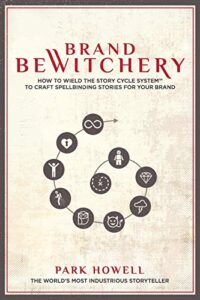
Brand Bewitchery: How to Wield the Story Cycle System to Craft Spellbinding Stories for Your Brand
It is what a story does. You know this from your sales background. I tried to get an ad sales job at KNIX Radio out here because I love writing radio so much. I thought, “I could sell radio and then write these commercials.” They wouldn’t hire me. I’m like, “What the heck?” It’s hard to get in your line of work, but you know this power of storytelling when you are trying to sell this printout or radio commercial.
It’s always about the emotional pole. You will show them the numbers like, “Condé Nast is who you worked for.” You have to show them the numbers, the reach, and all that stuff. Did you ever start with that? Didn’t you always start with getting another person and telling them some connection story to get them leaning into you?
When I was calling on Lexus’ agency, they specifically would say, “Do not come in here and talk about numbers. We have already analyzed that. We don’t need you to come in and tell us what we read about circulation, readers per copy, or income.” That’s where the a-ha for me was, “Whoever tells the best story about why they have come up with this marketing idea for this particular model and audience is the one that’s going to get the ads.” It was not necessarily that people needed you to regurgitate a bunch of numbers that they could look up for themselves to see if it’s a fit.
That’s table stakes. We are only going to consider magazines that have an audience that has a certain income that could even afford our car. Otherwise, we’re throwing money in the wind. We need to get them involved. What was so interesting working with Lexus, especially at the beginning of their launch, was that they explained that people are internally or externally motivated. I’m fascinated to know your thoughts on this as a creative person as well as a storyteller. People would buy a BMW or a Mercedes, which are their big competitors, and some would buy it to show off, “I’m an agent. I’ve got a BMW. I want to drive in front of my country club.”
Some people are like, “I bought this car because I liked the craftsmanship. I’m not trying to impress anybody. I bought it for me.” That’s who they had to target to buy a Lexus versus those who love the brand for the status. They didn’t have status when they first started. This is my question to you because you are such a brand expert. Have you ever had a situation where a brand was the challenger, and it didn’t have the rich history that somebody else did, yet they still had to tell their story and figure out a way to appeal to those who are more people internally motivated?
I’m working with a medical device manufacturer out of Chicago. I will keep their name out of this. As a brand, they’re very wise about stories only after they made the big mistake of leading with data. Turn your data into drama. All you have to think about is this. What is the first syllable in the word numbers?
[bctt tweet=”It’s not about what you make. It’s what you make happen.” username=”John_Livesay”]
It’s numb.
If you’re leading with numbers, our Homo sapiens brain was never created to make any context out of numbers unless we have already put the context in play, which means you have to tell a story that demonstrates the real ramifications of what you’re talking about. The best way to demonstrate that is to pull up your iPhone or digital device and look at the weather report.
What does it tell you? It tells you the data does 1 of 3 things. It is reporting what happened, monitoring the event that’s happening, or attempting to predict an event in the future. Our brain doesn’t necessarily care about numbers. It’s a trigger for the event. Why would we care way more about the event those numbers represent than the numbers themselves?
It determines whether we should take a trip, put a coat on, bring an umbrella, and all these behavioral things.
If you were to drill that down to the most basal thing, why do you think that is?
In terms of weather, it goes back to fight or flight, “Is it safe to go out?”

Narrative Gym: Our Homo sapiens brain was never created to really make any context out of numbers, unless we have already put the context in play, which means you have to tell a story that demonstrates the real ramifications of what you’re talking about.
It’s the survival of the fittest. Events can kill us, but numbers can’t. When you are talking as a brand, your stories are not about what you make. That is typically a product or service that’s already commoditized because we live in the land of abundance. You don’t talk about what you make. You talk about what you make happen in people’s lives, like the event and outcome. When you get boiled into the trenches of what you make, you are now defaulting to logic and reason backed up by data and numbers. Your audiences don’t give a crap about that.
Let me give you a quick example. It’s one of my favorites. André-Martin Hobbs started this company up in Canada called Prêt Auto Partez. It is a used car dealership for risk-credited subprime Canadian car buyers. When I say that to you, the first thing you’re thinking is, “We see them all over the place. They’re a bunch of sharks. They’re preying on the subprime people that are going to have to pay through the nose for the loan on this car. They will make 4 or 5 payments. We’re going to go and repo it and do the whole thing all over again.”
That’s the anti-story. We talked about this. André has this most amazing thing. He goes, “I’m not so much about selling cars as I am about repairing the credit of Canadians. In doing so, I can sell cars to them.” What he does is you may not even realize that he’s going to put you through this. You show up at Prêt Auto Partez and say, “I finally got my act together. My credit is coming back. I’m tired of riding the bus. I want the freedom of owning my own car. I don’t care what it costs. I’ll make the monthly payments. Put me in a car.”
He says, “Not so fast. You first have to sit down with our financial planner. It may take three hours, but we are going to teach you what car you can afford. If indeed you can’t afford a car, how are you going to make these payments over the course of the next two years without ever missing a single payment? In doing so in the Canadian system, you will have repaired your credit and moved up a notch 2 or 3.”
He was about not just selling this car but also the outcome of helping Canadians repair their credit. Here’s the ABT for his brand narrative. It’s speaking directly to the customer, “You want the freedom of owning your own car and how it represents your self-esteem.” He knows that because that’s exactly what their research told them, but you have crappy credit, “Therefore, at Prêt Auto Partez, we are going to put you in a car you can afford to get you back on the road to financial freedom.”
It all led to the tagline that his entire company is built on, “Prêt Auto Partez, your vehicle to financial freedom.” It’s not about what you make. He sells used cars. It’s what you make happen. It’s helping Canadians reclaim their creditworthiness. He became the fastest car dealership in Quebec with that and is now taking that whole concept and franchising it throughout North America precisely because he got his brand story dialed in.
[bctt tweet=”It’s madness being a human being and stories are the only way we can create meaning out of that madness.” username=”John_Livesay”]
That’s such a great visual that you’re getting on the road to your financial freedom. It’s an unspoken fear back to the survival thing, “If something happens, my car is going to get repossessed.” Imagine if a brokerage company didn’t let people get loans for homes they couldn’t afford. We would have eliminated a big part of the mortgage crisis in 2008. It’s wonderful.
In your book Brand Bewitchery, one of my favorite parts is where you talk about, “Life is chaotic. Storytelling is the remedy that we seek to create meaning out of the madness of being alive. There is a science and bewitchery of storytelling.” I don’t think I’ve ever read or heard anyone talk about storytelling being a remedy to create meaning. That is needed now with all the chaos going on. How did you come up with this concept? How can people use this to get some meaning when they’re feeling overwhelmed?
I wish I could say it’s all mine and I’m so brilliant, but I’m not. I’m good at connecting dots. I was at Robert McKee’s famous four-day Story Seminar at the LAX Sheraton with my son Parker. He went for the film world. I went for the marketing world back in 2009 or 2010. I wanted to know what I could use from a screenwriting perspective in the advertising, marketing, and sales world. He stood upon the stage the first day and said, “A story is the only way we can create meaning out of the madness of being a human being.” I lifted it directly from him and thought, “If that’s good enough for Hollywood and the multibillion-dollar industry in telling that story, then it would work for us.”
In that same workshop, I’m guessing he did the same for you. He breaks down why Casablanca is such a great story and all the different levels of it. If you think about the madness going on in the world in that particular movie with the war, trying to have friendships, death could be imminent. There’s so much chaos going on, but there’s also a love story and a friendship story going on. That somehow is the remedy to all that madness. That’s another example of it coming together.
It’s a fabulous example. Hollywood used to do it well. I’m not sure if they do it quite as well as they used to only because it seems like they don’t take the time, and audiences don’t necessarily have the attention span they used to. You think about the brands or sales teams that you work with. They are all working in this chaos of the pandemic.
Our primal limbic system is all about survival and fight or flight. It was built to fend off that, “There’s a saber-toothed tiger. What the heck should I do next?” We have this killer virus that has been going on for years. There seems to be no end in sight. Our limbic system is jumping all over like, “Do I fight or flight? Do I get back or not? Do I wear a mask or don’t?” We have all of these competing stories coming in, and it’s left to our own devices what we’re going to do about it. Our limbic system is like, “I need something definite and a story that I can believe in.”

Narrative Gym: We were never meant to create great relationships in this weird virtual world we’re in because we have a hard time reading the room when you someone on a one-dimensional screen.
We’re all selling and marketing in this chaos. Let’s add to that virtual world. We were never meant to create great relationships in this weird virtual world we’re in. We have a hard time reading the room when I’ve got you one-dimensional on a screen. Add that to the chaos of what’s going on. What we’re trying to do, like Casablanca, is built somewhat of a love story between that audience or person sitting across from us and say, “I’m here to help, providing I can help you.”
Don’t waste their time if you can’t. Leave them alone, for crying out loud. If you can help them, then that’s where the ABT comes in. There’s one last thing for your audience to think about. Here’s how you write it. The ABT makes you place your audience at the center of the story. They are the protagonist or the hero. You start that statement of agreement to validate their state and what it is that they want. You identify who they are, what they want, and why it is important to them. You’re raising the stakes.
Next is, you’re going to introduce the conflict of the contradiction, but they don’t have it because of this. Therefore, the resolution is what I have to offer you to help you overcome and get what you want out of life. When you do that, you have to understand your audience. Understand who they are, appreciate what they want and why they want it, and empathize with what they don’t have. That helps you get super focused on telling a message from their point of view. I’m here to help you get it.
What great marketing advertising copy does is put words to someone’s internal thoughts. They think, “Are you in my head? How did you know I was feeling that way? I haven’t even articulated it that clearly.” That’s when you don’t have to push anymore because they feel like, “If you understand my problem, then you must have my solution,” which is what I see going on. When you said that we’re not designed for this virtual world, it’s interesting. I had an experience with my godson. I’ve watched him since he was a baby. He’s in New York, and I’m in Austin. I didn’t get to see him for years. I was in Manhattan between Christmas and New Year. I had seen him on FaceTime many times.
After I left, he said to his mom, “Uncle John is more fun in person than he is on FaceTime.” He was surprised by that. I thought, “Thank God.” Young people talk about IRL or in real life versus digital, the metaverse, and all these other things coming. You’re like, “I still think you need to be more compelling, interesting, and connected in person.” If you don’t learn how to tell stories, it’s going to be hard for you to have conversations with people because you don’t know how to connect. That’s the best way for us to connect as humans. If people want to find out about hiring you as a sales keynote speaker or have you come in as a consultant, where should they go?
Come on over to my website, BusinessOfStory.com. I’m like you. I’ve got a show every week that comes out on Monday. You can check me out on iTunes and those places. If you want to shoot me an email, send it over to [email protected].
[bctt tweet=”You have to really understand your audience, understand who they are, appreciate what it is they want and why they want it, and then have empathy for why they don’t currently have. That helps you get really super focused from telling a message from their point of view.” username=”John_Livesay”]
Thanks, Park. It has been great having you. Is there any last thought or quote you want to leave us with?
As you are working through your storytelling and trying to grow as a more confident and compelling storyteller, I’ll leave you with how I close every one of my shows. That is this. The most potent story you will ever tell is the story you tell yourself. Make sure it’s a great one. Thanks for having me here, John.
Thank you, Park. That was great.
Important Links
- Park Howell
- Business of Story Podcast
- Brand Bewitchery
- The Narrative Gym for Business
- Prêt Auto Partez
- Story Seminar
- iTunes – Business of Story
- [email protected]
- Better Selling Through Storytelling Method Online Course
Wanna Host Your Own Podcast?
Click here to see how my friends at Podetize can help
Purchase John’s new book
John Livesay, The Pitch Whisperer
Share The Show
Did you enjoy the show? I’d love it if you subscribed today and left us a 5-star review!
- Click this link
- Click on the ‘Subscribe’ button below the artwork
- Go to the ‘Ratings and Reviews’ section
- Click on ‘Write a Review’
Love the show? Subscribe, rate, review, and share!
Join The Successful Pitch community today:
- JohnLivesay.com
- John Livesay Facebook
- John Livesay Twitter
- John Livesay LinkedIn
- John Livesay YouTube
The Mindful Marketer With Lisa Nirell
Posted by John Livesay in podcast | 0 comments


Mindfulness is not the first thing that comes to mind when talking about marketing. Zen and being one with nature is the opposite of the high-stress environment of marketing. But, Lisa Nirell makes it work! She is the mindful marketer and she’s here with your host John Livesay on how to practice mindfulness. Lisa is the founder and CMO of EnergizeGrowth LLC and is also the author of The Mindful Marketer. Join in as Lisa shares the secrets to innovative marketing, why she is the CMO whisperer, and more. Go out, practice mindfulness, and make friends with nature.
—
Listen to the podcast here
The Mindful Marketer With Lisa Nirell
Our guest is Lisa Nirell, author of The Mindful Marketer. She said, “Don’t let a good crisis go to waste.” She also talks about the key to success, especially as a CMO, is not about doing more. It’s about being more. Find out what she means. Enjoy the episode.
—
Our guest is Lisa Nirell, who helps marketing leaders build more sustainable companies and better lives. She’s known as the CMO Whisperer, a LinkedIn faculty member, live streamer, podcaster, executive coach, and award-winning author of The Mindful Marketer and EnergizeGrowth NOW. It’s so much fun to have her because I’m known as the Pitch Whisperer, and I get to talk to the CMO Whisperer. Lisa, welcome to the show.
It’s great to be here, John. Thanks for inviting me.
Let’s dive into your own story of origin. You can take us back to childhood, school, wherever you want, where you’ve got interested in marketing, in general.
I have been thinking a lot about my father. He passed away years ago. It has been fun to connect all the dots that he taught me that helped me get to where I am. I have been an entrepreneur for many years. I looked back and realized, “Dad was preparing me for this.” The first moment happened when I was about twelve. We used to live in this bucolic town in Connecticut at the top of a hill. This is in the ‘70s. You could open your front door and let your pets roam free. My mom, dad, and I had a dog named Buster who liked to hang out with another dog named Barney.

Mindful Marketing: Wake up, check the weather, and figure out what to do or what not to do. Sitting on your sofa and looking out the window is a perfectly fine exercise to do on the weekend.
One day they didn’t come home. Back then, there were no email and cell phones. We started calling all the neighbors until an elderly woman, miles away, said, “I think I hear dogs barking in the woods.” My dad and I embarked on this long hike. Lo and behold, we heard the dogs barking, found them on a 4×4-foot ledge, which had a 100-foot drop. Dad dropped me with his pants belt. He said, “I need to let you get down on the ledge and lift the dogs to safety.” At age twelve, that’s a feat.
That’s not very often that you get that opportunity. The dogs were emaciated because they had not drunk nor eaten in three days. This continues. I think about the time then I’ve got my driver’s license. I drove my mother’s Ford Pinto wagon back from high school up the big hill. I spun the car, and it was facing a ledge. I called dad and said, “Thank God, you are here. Here’s the car key.” He said, “No, get back in the car. I’m going to teach you and walk you through how to get your car out of the spin and away from the ledge.”
These little lessons have prepared me for my first pandemic of completely retooling my business virtually within three weeks, the courage to make some tough decisions, release some people from my team, hire new people that were prepared for the change and have the courage to fall in love again as well in the middle of a pandemic. It has been a roller coaster but I owe a lot of the courage muscles to my dad.
I also know from reading about you that your dad was an inventor and had a lot of patents for medical security devices. That must have been so inspiring to be brought up by somebody who not only teaches you how to fix problems for yourself, as opposed to rescuing you but you’ve got to see somebody not just creating one thing but multiple things. That spirit of creativity is where that got born in you.
That is true. He was an inventor, had several patents filed, and was in the security business. He invented all kinds of push-button security locks and added machines before the computing age. My mother also taught me creativity because she was a fashion consultant and worked in upscale women’s boutiques. She brought a different type of creativity to the family than my father did. He was the fixer and innovator but mom was the warm-hearted fashionista. They brought very different gifts and talents. Isn’t creativity a wonderful thing?
[bctt tweet=”It’s not about doing more. It is about being more.” via=”no”]
Yes. Especially, many people think if I’m not a painter or an inventor, I’m not creative but you talk about that boredom creates a space for creativity and self-reflection. I’m thinking your philosophy might be, “Don’t resist being bored, embrace it.” You have this great quote that I want to make as one of our tweets. “It’s not about doing more. It’s about being more.” Can you expound on that?
I will expound as little as possible and say when was the time any of us walked outside, turned off our phones, looked up at the sky, and allowed nature to be our friend? When I think back at how I named my company, EnergizeGrowth, how I started my business, every single moment when those a-ha moments came to me, I was outside and in nature. I wasn’t sitting at my desk with a 2×2 matrix or an Excel spreadsheet trying to do market research. I was out with an open heart and mind in the place I loved the most.
We hear so often that people get inspiration in the shower and all these other places. We don’t know why something is happening when we are not trying to force something to happen.
The other great place to get bored is when you are sleeping because that’s the time that our brains are refiling. They are taking all the stuff out of the filing cabinet, putting it back in where it belongs, and allowing us to process issues for the day. That’s also a wonderful place for boredom to happen. My friends always say, “Did you have a busy weekend?” I say, “I did not.” For the most part, I woke up, looked out, checked the weather, and then figured out what to do or what not to do. Sitting on the sofa and looking out the window is a perfectly good exercise.
You are also a speaker like I am. One of your talks, which has a very clever title, is From Order Taker To Innovator. I like anything that has a little rhyme to it. It makes it easy to remember. You cover five rules on how people can spend more time creating things that are innovative for marketing. Can you share one of those rules with us or is it what you described? Don’t be afraid to be bored.

Mindful Marketing: Communities that are aging gracefully have three cornerstones in common. One, they are focused on their wellness. Two, they have a purpose. And three, they have a robust community.
I look back at some of the research on aging. If you read what doctors say about people who age gracefully and look at communities around the globe that have very healthy aging people living together, they have three things in common. Number one, they are focused on their wellness. Number two, they have a purpose. Number three, they have a robust community. I believe that we have to have those foundations in place for any innovation to occur. COVID has put a sucker punch in all of those areas.
Many of us have had to revert to online communities. The quarantine messed with my mind a few times. We are coming out collectively out of a state of trauma and grief. Unfortunately, overdoses are at an all-time high in the United States, depression and treatment of depression and therapy are at all-time highs. They are going to be for a while.
I would recommend for anyone who’s reading this, if you don’t remember anything else from what I have to say, use this as a time to rebuild those three cornerstone pieces of your life and be gentle with yourself. Once those three are back to some form of stability, innovation can begin to occur and happen. As marketers, we can start to contribute in a more wholehearted way to the growth conversations in our organizations.
In your book, The Mindful Marketer, I love anything with an alliteration. We all know the concept of being in the moment and mindful being in nature. I’m not so sure that many marketers automatically think about taking that Zen quality of being aware of their thoughts and feelings to their marketing. How did you come up with the title?
I owe that to a brainstorming session or five with one of my favorite mentors named Mark Levy. He calls himself the big sexy idea guy. I called Mark when I was in negotiations with my publisher, and I said, “Mark, I have trouble coming up with the big sexy idea for my next book. Would you help me?” He said, “Lisa, it’s time for you to out yourself. You have been hiding and haven’t told people that you have been a mindfulness practitioner for the last years.”
[bctt tweet=”Find your purpose by asking yourself ‘what business are you in?'” via=”no”]
I said, “That is true.” Guilty as charged because I don’t like to proselytize. If people are interested in the various mindfulness practices that have helped me get through multiple moments of trauma, I will talk to them about it.” However, you will notice I don’t ever push them to try any form of mindfulness practice unless it calls to them.
Mark said, “You’ve got many years of marketing and sales experience, and marketed some of the most complex technology and professional services solutions, 6 and 7-figure solutions, to big businesses. You are also a mindfulness practitioner. What you are is you are the mindful marketer.” I said, “Mic drop moment for the mindful marketer.” That’s how that was born. This book, which I started writing years ago, still has legs more than ever.
When people like you share your story of looking at things that haven’t been connected, what it is about you that makes you unique, and then figuring out a way to package that in a way that makes it unique and memorable, it helps to hear those stories. Let’s do another one. How did you come up with being called the CMO Whisperer? What does that mean?
I was sitting across lunch one day in Tysons Corner, Virginia, with a 25-year marketing veteran named Sam. He said to me, “Lisa, I needed to meet with you. I have an existential crisis.” I said, “What’s going on?” He says, “The Board of Directors wants me to start having revenue responsibility. I have never sold anything. I’m a marketing leader. They want me to solve problems, understand and deploy customer experience initiatives. I don’t even know what that is yet but I’m not so sure I want to stay in the CMO profession. I’m overwhelmed and feeling alone in this.”
I said, “What do you think about helping me build a private community of CMOs who all work in non-competing industries? We can come together, innovate, solve problems, and share resources. Would that be of value?” He said, “Yes.” He helped me build the community years ago. Here we are working with some of the country’s top CMOs with that purpose in mind and helping them make that leap from that order taker mode to innovator mode. Our members get promoted faster than their competitors, and they enjoy a more enriching life.

Mindful Marketing: CMOs can go two paths. Either they exit a toxic work environment faster, or they build credibility faster because they are appreciated and given room to grow.
Let’s talk about the elephant in the room a little bit about the CMO world. Typically, people are not in those jobs for more than eighteen months. There are a lot of stress to perform quickly, keep the job, and a lot of pressure in Corporate America around that. I’m imagining having this group that you were describing, EnergizeGrowth, can help people tap into other people’s ideas as well as their network when they need it.
Being the contrarian that I am and I have been known to be not just the CMO Whisperer but also a provocateur, I challenge people to look at those turnover numbers. The people who are reporting the high turnover happen to be recruiting firms. I view that like the fox guarding the henhouse statistic. I would look at that and also challenge people to say, “Did you bring that upon yourself?” If you focus on output versus outcome, you have already started a job on the wrong foot.
People can find some of my posts at LisaNirell.com. I’ve got 110 articles and another 50 videos out on LinkedIn if you follow me there. It has been very interesting working with CMOs around this topic. We find that the members of our group either exit a toxic work environment faster or build credibility faster in the company they like, where they are appreciated and given room to grow. If I can help them in either path, I say, “I have had a good day at the office.”
It’s reframing that need for fear. No good ideas come out of fear. I was fortunate enough to be asked to be one of the speakers at the Coca-Cola CMO Summit. They had invited all the CMOs of all the quick service restaurants and movie theater chains that had sold their product versus another. I wanted to give them some storytelling tips. I remember asking the CMO of Domino’s Pizza. I said, “What’s one of your biggest marketing challenges?”
I normally would get answers around going after a certain customer or the niche. He said, “Our biggest marketing challenge is getting tech people to work here. We are in the Midwest, competing with Amazon.” His team was in charge of that wonderful app that tracks your pizza order and tells you who’s put it in the oven or the name of the person driving it to you and all that interactive connection.
[bctt tweet=”Don’t be afraid to be bored.” via=”no”]
He said, “We used to say that we are a pizza company that uses tech to get tech people to come work here. Now we say we are an eCommerce company that happens to sell pizzas.” I said, “That sounds a lot more like Amazon books.” I wanted to get your intake because a lot of people assume marketing is very outward-facing towards consumers buying a product but CMOs are also responsible for getting the right people, at least in their division, the branding of the company.
You bring up a point and a pattern that I started noticing right before the pandemic. The CMOs that I work with and advise are expected to focus generally on making sure that our demand gen, brand, and image with investors or stakeholders is the best it can be. Right before the pandemic, I sat down with the former head of employee engagement and recruiting at Kimberly-Clark.
He kicked off a phenomenally successful program to help apply marketing strategies to attract candidates to one of their Wisconsin plants. They were trying to attract high-quality corporate interns and younger professionals to Wisconsin. They are competing against brands that are based in big cities like New York, LA and Chicago. The level of engagement and gamification they use to attract good candidates to the Wisconsin plant paid off. Taking those marketing skills that he generally only used to bring in more customers could be equally applied to their recruiting and employee engagement programs. Klaus is a great guy and knows how to use storytelling to tell the Kimberly-Clark story.
I love that there’s a gamification element into the marketing because that says a lot about the culture right there. It’s a little playful, fun, even not quite so intense data-driven that they forget there’s a playfulness to that. There are so many nuances in how you market a company to attract top talent. Especially with the Great Resignation, brands have to not just attract but also figure out a way to keep them.
Another topic that I wanted your expertise on is a lot of companies are focusing on the environmental, social, and corporate governance of what a company stands for. Are they lead certified to be green? They have to measure and improve that, not just to stockholders but to the employees. It’s a recruiting tool. I’m guessing that also falls under marketing. They have to make sure that that’s part of their culture and why some people are investing in them for social impact or whatever the issue is or they are being environmentally correct. That also becomes another part of your marketing messaging. Do you have any thoughts on that or an example of someone you have seen doing that well?

Mindful Marketing: When your business is facing a financial crisis, you need to figure out why are you in business? Maybe you can’t go head-to-head with your competition. So differentiate yourselves and tell a different story.
One of the things I am not is, I am not an expert in ESG initiatives. The only thing I remember is years ago when the business round table worked hard to get those 140 CEOs to sign that pledge on sustainability. Sadly, the jury is still out as to whether there was ever any progress or improvement. A lot of people and journalists claim that it was nothing more than posturing. I tried to reach out to the business round table run by former GM CEO, Mary Barra. They haven’t responded to me yet.
I would love to see more movement there. I understand that many companies are still trying to figure out how to establish baseline data on what to measure and how to hold themselves accountable. It will be interesting to see what comes out of the G20 Summit and the Glasgow discussions, whether we see the government step forward and make the big moves or whether corporations step forward and make the big moves first. I feel like you, and I are in the middle of the maelstrom. We may not know for a few years how things play out or what you are seeing.
I gave a talk to a company called Measurabl that measures that data. That was my first awareness and introduction into how important it is for companies in the commercial real estate world, especially when they are building a building, that has to hit a lot of checkmarks. It ties into the recruiting part. A lot of people, Gen X, Millennials, whatever you want to call them, are a big factor for them. They don’t just want to have a job. They want to have a job where they feel like the company’s values are matching their concerns. That is a relatively new emphasis that I don’t think was around in the ‘80s and ‘90s. There was Earth Day and all things like that but that was an isolated thing.
Companies were like, “Let’s all recycle,” but this is a much more sophisticated in-depth look at what we believe. We want to have those people work here and even attract a certain investor who’s not just looking for a good ROI but wants to put their money into a company that has a social impact. I find that whole concept fascinating because the old school of the ends justified the means. As long as we are hitting our numbers, no one cares if we are polluting or whatever the issue is, making a car that’s not safe, or all the other things that come into play. It’s great. It makes the CMOs job much more challenging because there are so many different messages you have to communicate beyond selling a product or service.
I want people to shift their thinking away from a conversation around the planet and think a little higher around the purpose. What is the purpose of our organization? Follow the footsteps of the former CEO of Best Buy, Hubert Joly. Hubert and I are both members of Marshall Goldsmith 100 Coaches community. You can read more about us on 100Coaches.com. When he was hired to be CEO of Best Buy, they lost $1.2 billion in one quarter.
[bctt tweet=”If you’re focusing on output versus outcome, you’ve already started a job on the wrong foot. ” via=”no”]
The first thing they said to him is, “We need you to lay off people and close stores,” but he said, “No, we are essentially facing an existential crisis. We need to figure out why we are in business. Amazon is cleaning our clocks. We can’t go head-to-head with them. We have to differentiate ourselves and have to tell a different story.”
What they did is they came up with 4 or 5 key areas to focus on and came out with this beautiful and simple message, which is, “Our purpose is to enrich lives through technology.” If you haven’t followed Hubert Joly or read his book, The Heart of Business, it brings it all together. ESG initiatives fall underneath that purpose. There is a place for it but the higher-level question that we need to ask is, “What business are we in?”
I’m going to be leading several offsite planning sessions for my clients here as we embark on the new year. One of the exercises you can do, which also was popular at Airbnb is to set up pairings of people, dyads, have people sit across from each other, go through five rounds, ask each other and take turns, “What business are we in?” You have to do it five rounds. You can’t comment or judge what the other person says. You write it down and say, “Thank you.” You go through it five times. That’s how Airbnb came up with their purpose statement around, “We want people to belong and feel like they belong.” Not we rent outhouses.
That’s one of our mutual friends, who’s also been a guest on the show, Chip Conley, who’s one of the Founders of Airbnb and continues to help people, not just figure out their purpose and business but in their third act with the Modern Elder Academy, which I love.
He’s a great guy. I’ve got to get down to Baja. He got hired by the Cofounders of Airbnb to teach them about the hospitality industry. He was an employee for a while. He still advises them but he came in after they founded the company to get them to the next level. What are they valued at? It’s $120 billion.
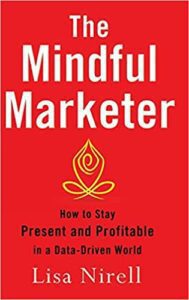
The Mindful Marketer: How to Stay Present and Profitable in a Data-Driven World By Lisa Nirell
Before I let you go, I wanted to have one more awareness of the amazing impact you are having. You also have a LinkedIn learning about helping people become an effective CMO. Can you tell people how they could find out about that or what that entails?
You can do a couple of things. You can go to LisaNirell.com and make sure you sign up to receive our insights and invites. I have a course that 11,000, almost 12,000 people have finished on LinkedIn Learning. It’s called The Effective CMO. When you launch a product, you come out with the best of intentions and say, “This is for directors of marketing and VPs of marketing who someday want to grow up and be a CMO.”
What has been fabulous is people who don’t understand CMOs or who work with a CMO but don’t get what it’s like to be a CMO are taking the course as well. You can go to LinkedIn Learning. I’m also hosting December 9th, 2021, a follow-on update to the course on LinkedIn Live called The Seven Secrets of Modern CMOs. The role of the CMO has changed since the course was launched pre-pandemic. People can follow me on LinkedIn or get my newsletter at LisaNirell.com. We will make sure you get some of our latest insights and lessons learned.
Inviting people to enroll and get your insights and invites. From a branding standpoint, that’s so memorable. It’s alliteration and not a typical opt-in to get emails from us. You have packaged even that in such a way that is cutting through the clutter, making it feel warm and personal. There are so many examples of what you are doing and the kind of people that you get to work with. If anybody is lucky enough to get to work with you or have you as their coach, I’m sure their business will certainly take off. Any last thoughts you want to leave us with? Any last quote or an insight you want to share before we say goodbye?
Everyone, don’t let a good crisis go to waste. That’s my advice for people. I don’t care what profession you are in. This is a time to revisit, who am I? What is my business’s purpose? How can marketing communicate that purpose to the world and make the new world a better place than pre-COVID? Please don’t sit back and wait for life to happen to you at this stage. The new world is emerging and let’s be part of it. I also want to honor you, John, because I love joining these shows. I get invited a lot to speak and be on live streams. You did your homework. You made this so easy for me.
That’s one of my favorite quotes, Arthur Andersen, the famous tennis pro, Arthur Ashe, “The key to success is confidence and key to confidence is preparation.” I treat these interviews like it’s an Olympic moment or a Super Bowl. It’s also a form of respect for the guest. I’m thrilled that you noticed. Thank you.
I appreciate you, John.
If you want to find out more about Lisa, her book, coaching program and courses, go to LisaNirell.com.
Important Links
- The Mindful Marketer
- EnergizeGrowth NOW
- EnergizeGrowth
- From Order Taker To Innovator
- LinkedIn – Lisa Nirell
- Measurabl
- Hubert Joly
- 100Coaches.com
- The Heart of Business
- Chip Conley – Past Episode
- The Effective CMO – LinkedIn
- LisaNirell.com
- Better Selling Through Storytelling Method Online Course
Wanna Host Your Own Podcast?
Click here to see how my friends at Podetize can help
Purchase John’s new book
John Livesay, The Pitch Whisperer
Share The Show
Did you enjoy the show? I’d love it if you subscribed today and left us a 5-star review!
- Click this link
- Click on the ‘Subscribe’ button below the artwork
- Go to the ‘Ratings and Reviews’ section
- Click on ‘Write a Review’
Love the show? Subscribe, rate, review, and share!
Join The Successful Pitch community today:
- JohnLivesay.com
- John Livesay Facebook
- John Livesay Twitter
- John Livesay LinkedIn
- John Livesay YouTube