
The Game Changer with Chicke Fitzgerald
Posted by John Livesay in podcast | 0 comments


Episode Summary
Many entrepreneurs who could be one step closer to the peak of their success hit the plateau for fear of taking risks. These daunting risks are often disguised as remarkable transitions, and Chicke Fitzgerald would totally agree. The author of The Game Changer, Chicke shares where she got the motivation to write her cathartic book and delves into the importance of investing yourself in making a massive difference in your life and career. The founder of Solutionz, a travel company involved in technology, Chicke reveals that building a company is not for the faint of heart. On top of that, she breaks down the board of directors in her life and why having women on boards are more profitable.
—
Listen To The Episode Here
The Game Changer with Chicke Fitzgerald
My guest is Chicke Fitzgerald and she says that she zigs when others zag. I love that. Chicke has spent the first half of her career working for an industry leading travel distribution technology and telecom companies. If you’ve ever made a travel booking online or checked in for a flight, chances are Chicke worked for or consulted to one of the companies that pioneered that technology. The second half of her life has been turning up, trip, tech and travel storytelling on its head. She formed a company in 1996 called Solutionz. It’s the smart trip technology leader behind TripProximity, which is a smart trip widget. She’s advised multibillion-dollar entities on strategies and was a subject matter expert on four global M&A transactions representing tens of billions of dollars. TripProximity is a B2B widget that integrates online trip planning to the next reason, motivating the trip. She’s going to tell us all about that. Chicke has a new book out, which is by the same publisher that mine is and it’s called The Game Changer: A Business Parable About Transformational Business Design. Welcome, Chicke.
That is an absolute mouthful.
It’s a little bit of a tongue twister. The big thing is I always am telling people to let go of perfection. If you let go of trying to be a perfectionist, you’re more authentic. You are more relatable and you are certainly someone I’ve had the pleasure of getting to work with and know. That is all of that, Chicke. Your personality and your warmth come through in everything you touch. Let’s talk about your own story of origin. Growing up as a young girl, did you dream of getting into the travel industry? How did all that happen?
[bctt tweet=”Invest in yourself.” username=”John_Livesay”]
I wanted to be married. I’ve got a daughter who’s twenty, I’m glad that it’s in her heart’s desire. I did finally get married when I was 33, but I have put a lot of miles under these feet in the meantime. I actually started working when I was sixteen. I went through a phase. I was the youngest of three girls and I was incredibly rebellious. My dad was a pastor that was fitting. It’s expected of a PK. I ended up not dropping out school but skipping out of school every day and going to work at a Christian bookstore, which I found hilarious. I have a very wry sense of humor. It was a friend of my dad’s, which is how I got the job, but it laid the foundation for a lot of things in my life. I’m the mother of an eighteen-year-old and a twenty-year-old. I love to see the work ethic that has been instilled in them. Part of that we know as parents come from seeing your kids enjoy the fruits of their labor, seeing that paycheck and the money in the bank and not having to ask for things.
I went off and tried college on for size. I was a straight A student. I wrote a paper during my first semester of school about the value of experience versus education and you can guess what comes next. I went home at Thanksgiving and told my parents that I believe I can do better out in the world of business than I can finishing college. They have always been incredibly supportive of me. They allowed me to quit. I came home from Oral Roberts University to Miller Brewing Company. My life has all of these odd twists along the way.
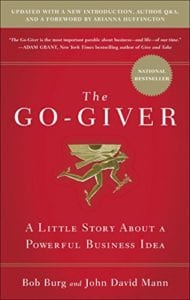
The Go-Giver: A Little Story About a Powerful Business Idea
While I was at Miller, I got great experience in accounting, corporate systems planning and a lot of wonderful things. One summer, I ended up going to Portugal with my parents. They had been missionaries there years ago. I wanted the chance to see the country. I quit before I left figuring I could get a job when I got back, not realizing that the college dropout thing might come out back to bite me but it didn’t. When I went to an employment agency, they came up with two jobs that would be perfect for my background, since I had accounting system background. One was with an attorney and one was with a travel agent.
I love two things. “I’m rebelling against my father and yet I’m going to go work at a Christian bookstore. I’m going to go to Oral Roberts University, which is very faith-based, and then I’m going to go work for Miller Brewery,” which I’m imagining it’s all about happy hour there.
We had a tap in the break room with a beer in the morning and the afternoon. There was beer served in the cafeteria. I ended up moving from that travel agency into working for one of the very first accounting system companies. First of all, they had filled a room at Miller Brewing Company, but they were down to about the size of a very large refrigerator by the time that I got involved with installing accounting systems. They were built by a company called Data General. They had these great flashing lights on them.
I went around and taught people how to use them and how to move their books quite often from a shoe box into an automated accounting system. I learned the travel industry from the back of the house to the front of the house, which I think was foundational for where I ended up, which was with the largest travel technology companies in the world. Sabre, Worldspan, which later became a company called Travelport, and then did a couple of M&A transactions. Most of those happened not to be successful, but not because of my efforts, with the largest travel technology companies in the world, Amadeus and Abacus.
[bctt tweet=”Who is in your Board of Directors for life?” username=”John_Livesay”]
You’re also the host of your own show, which is called The Game Changer as well.
I rebranded it. I figured out that I wanted to write this book, which actually started almost a decade ago. I read a book that you may know by Bob Burg and John David Mann, and that book is called The Go-Giver. I read it on a short flight from Atlanta to Tampa. By the time that we pulled into the jet bridge, I think I texted both men because it was like, “This book is so amazing.” It was the first business parable I had ever read. I had already started my radio show and it was done under the brand name of my company, which is Solutionz. The radio show was called Solutionz Live. For five or six years, I kept thinking, “I would love to write a business parable,” because I had already come to the conclusion that nobody was going to want to read my life story.
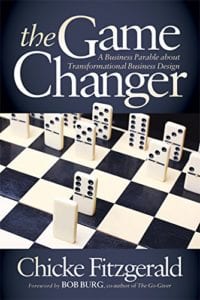
The Game Changer
Maybe your mom and a couple of close friends, but you might sell a case of books and what good is that? One day I went to the bookstore and I looked at all the business books and I was so overwhelmed. You know many there are, even in the category that you have written into. Every time I would do that, it was like I still want to do it but I was so discouraged. I kept doing my radio show where I was interviewing mostly authors, but sometimes experts on certain topics. One day, I went to the library with my kids. They were young, so they went over to the kids’ section and I went to the business section. This time, something was different. I started looking at the racks and racks of books and on every shelf there were two, three or four authors that I had interviewed.
It also inspired me to a different storyline. I hadn’t even laid out with the book what was going to be about, but that was really a moment and guided how the book actually poured out of me one weekend. Literally, I wrote it from a Saturday morning through Monday morning. It changed quite a bit after that. The funniest story about writing my first book was that when I sent it to someone to read, of course, I read it through myself again and I thought, “This entire book has no dialogue in it. Everything was inside of people’s heads.” I realized, “If anybody’s going to read this, I better learn how to write dialogue,” because in a parable, obviously it’s interaction between people and some thought, but that’s how it all came to be that it is.
It’s very much told in a Forrest Gump-like manner.
It was on purpose, but it was a way that I could interject things that had happened in real life into this fictional account of a small travel technology company in Tampa, Florida.
[bctt tweet=”Building a company is not for the faint of heart.” username=”John_Livesay”]
Who are the books for? I’m guessing it’s a much broader audience than just people who are entrepreneurs and people in the travel business. There are some life lessons in here.
The most obvious readers of this book are other founders and entrepreneurs who are working with founders on their idea. I think investors are a good audience for this book. Unless you can get into the head of the entrepreneur that you’re investing in and understand the dynamics, it’s hard to be successful even if you’re incredibly wise and are putting in smart money. The other thing is being an employee of a company that you can both lead and fund by devoting your time. I’ve been blessed to have on my current venture 22,000 hours’ worth of sweat equity put in by my team. Those people were also an audience for this book.
That obviously shows commitment. One of the big takeaways in The Game Changer is that building a company is not for the faint of heart. You talk about having this label, personal and professional dragons. Can you give us a story one of those?

Game Changer: Going after consumers one at a time is enormously expensive.
It’s funny because I had been working with you and I’d actually interviewed you about your book, The Successful Pitch and also your most recent book, Better Selling Through Storytelling. All of that is to help me get ready for my fundraising round. The real story there is that a lot of entrepreneurs see raising money as failure instead of success. It’s completely counterintuitive, especially if you have the investor hat on. I remember the whole time I was writing this book, I would have this recurring dream that I was going up a chair lift at a ski resort. I neither liked to be cold, nor do I like heights and I am not a good skier. This dream had all kinds of underlying stuff going on. Every single time I would be on this chairlift, I would look down and I would see all these men.
They were all dressed in business suits and they were skiing down effortlessly on moguls, which if you’ve watched the Olympics is one of the hardest kinds of skiing there is. That dream was a picture of how I felt about fundraising. For other people, it was completely effortless. Here I was, cold, afraid, and I had to get over that. The writing of this book was actually cathartic because it allowed me to get my fears out. It allowed me to get my hopes, my dreams and all of my aspirations out into a story that I wrote in such a way that it wouldn’t be about me, but I was able to weave myself into this fable.
Let’s double click on that concept. Everyone else has it easy. I’m the only one that struggles. That alone is enough to make you want to buy The Game Changer book and listen to your show. Being an entrepreneur can be a very lonely job and you need to surround yourself with other people who believe in what you’re doing, support you and not let yourself go into the trough of depression or despair that everyone goes to. Do you have any tips for people on how to be resilient?
[bctt tweet=”A lot of entrepreneurs see raising money as failure instead of success. ” username=”John_Livesay”]
There are a couple of key messages, one is learning the power of innovation. Not only innovation in product and service that you’re doing but innovating how you operate every day. That might be business models, it might be the tools that you use to interact with your team. One of my biggest challenges is I have been working from home for ten years. I am so tired of managing remotely. I know a lot of people aspire to that and would like to work from home. At the end of the day, your goal should be finding joy in every step of that journey as your company moves to the next level. You’re going to look back on it and believe it or not, you’re going to laugh. You’re going to be able to laugh at yourself, to laugh is not to cry sometimes. To come back to that comment on investment being a signal of failure, it is a new leg of the journey that is the beginning of that success journey. When you take a look at people who lose a large amount of weight, they continue to look in the mirror and see themselves as being very fat. I think that entrepreneurs, one of the other things that we have to guard against is we bootstrapped for so long.
We don’t always make the decisions that we would if we were well-funded. No investor wants to see you go out and splurge but there are things that you must actually do for the company when you do get funded. That’s not bringing the team on board, but you need to spend properly on the right systems and infrastructure. The other thing and this one was the most important thing in the book. It’s understanding that everybody who comes to the table, whether it’s your investor or your turnaround team, if they send in a team to try to help the company get to the next level or even your own team, that everybody has a backstory. You are good at mining this out, this show and in everything that you do. When you learn those backstories, you’re going to learn that even on the surface, it looks like everything is effortless. You’re going to hear about struggles and then you can say, “That happened to me, too.”
You talk about asking the question, who’s in your executive village? We all need a board of directors in our life. What a great visual that is. How does someone get a good board of directors for our life, and not just our job?
This happened with my venture. I was looking for a true board member. I happened to want another woman on the board. Companies that have women boards are more profitable than those that don’t have any women. I’ve got two wonderful men who are on my board. One of them has been a part of the board of directors of my life for a long time. He’s been there through thick and thin and helped me out through a lot of things. I actually posted a job on BoardProspects.com and an amazing thing happened. I’ve got 250 responses. That was completely daunting and burned up a lot of time that I didn’t have. What I ended up with is this amazing group of about fifteen people who I know that I can call on no matter what my challenge is.
Add to that, I have a group of women. I run a group called The Executive Girlfriends Group that again, women tend to be a little bit more transparent about their failures and about things that they face in their personal life that impacts their business life. We all know if you have a fight with your spouse and then go to try to pitch to an investor, that’s probably not a good way to end up in that meeting. The board of directors of my life are those people who I can talk about every aspect of my life and not just the business stuff. I think that’s why so many of my close friends are my business colleagues because they understand that you can’t compartmentalize yourself.
The, “I’m one person at work, another person at home and on the weekends,” is gone away. It goes back to what we were saying about authenticity. The other thing you talked about in The Game Changer is investing in yourself. You have some practical tips in that story. Can you share one of the tips there?
[bctt tweet=”Companies that have women on boards are more profitable than those that don’t have any women.” username=”John_Livesay”]
The whole book is laced with individuals that are each facing an individual challenge. Unbeknownst to one another is they each reach out and listen to one of my real radio shows. Each chapter of the book pulls out a story both about the person who’s listening and what the author shared with me on that real radio show. There’s one which is actually the story of Bob Burg and John David Mann and the story from their book, The Go-Giver. The person who’s listening to that realizes that they have been approaching sales all wrong and that they thought they had to be a go-getter.
By investing 30 or 45 minutes in listening to a podcast, this gets back to my faith roots. I believe that God speaks to us through podcasts. I know it sounds crazy to somebody who doesn’t have that dimension of your life, but nothing in my life happens by accident. Even meeting you through Judy Robinett and all of that is a part of the plan. The other thing is investing time in more than just working 80 hours a week, which is what we entrepreneurs do to keep from working 40 hours a week for somebody else.
It’s important to realize that even if you’re working so many hours, you must invest in your own health, your own network and your own energy mindset so you don’t burn out. You don’t burn out the people working for you. That’s a big takeaway of learning what that is. Let’s double click on what’s going on with Solutionz and how you’ve identified a huge part of the travel market that other people are ignoring. That’s always the key to successful founders, finding a problem that no one else has to solve it. Tell us about that, what’s the segment and what problems are you solving? In other words, give us some elevator pitch that had worked with you.
It’s very interesting. Most of us, and I would imagine the audience you have in this show, we all travel. We all have trips crop up where we need to be somewhere specific. We don’t need somebody to inspire us of where to travel to. When we need to travel to someplace specific, you very quickly find out that that’s not how the travel industry tools work. They will serve up a hotel that is near an airport or a city center. If where you need to be isn’t that, then it takes a lot of time. We address that. We call our product TripProximity for that very reason that proximity does matter. We also believe that giving back matters. That’s another tenet of the book, The Game Changer. You need to build giving back into your business, which is what we’ve done in Solutionz. I think the most important thing, about what we have done in our company is we’ve realized that it is foolish to come out with a great new idea that resonates with all travelers and then go try to compete with the 800 or 8,000-pound gorillas. Expedia, Priceline and TripAdvisor, because going after consumers one at a time is enormously expensive. We have found a very clever way to insert ourselves into the systems that people use every day in their lives.
You’re targeting people who have what you call life moments. Tell us what a life moment is?
The travel industry has focused almost entirely on managed corporate travel. You’re a big company and you have to use American Express, Expedia’s Egencia product or some corporate travel tool. You’re on vacation and you need somebody to motivate you as to whether you should go to the Yucatan or go to Vail. All that inspirational stuff is important. Every other trip falls into what we call life travel. That is 72% of the market. We are going after those individuals who they know precisely where they have to be. Usually, they know exactly when they have to be there. There are some trips that are a little bit more flexible than that, but if you’re going to go and visit the college, you have to set up a campus visit. That campus visit goes on the calendar. It is logical simply to have that calendar entry pop up and say, “Would you like to come in the night before to experience the community?” It’s good for the university, it’s good for the parent and at the end of the day, it’s what we’re all about. It is that integration into that life travel moment.
If a company is trying to book a trip, find the best hotel and restaurant to use. They don’t want to go to Expedia and they go to Solutionz’s platform, a percent of what they spend is being donated to charities.
It absolutely is, but I want to make one point that’s very important, is we’re not an alternative to the business to consumer online travel site. We’re a business to business tool that gets integrated into other systems. I don’t know if you’re familiar with AddThis and ShareThis who have social media bookmarking tools that you can configure and plug-in in minutes. We are the AddThis and ShareThis of travel. We’re a tool that gets plugged into CRM platforms, calendaring, contact management, ticketing and registration, other systems that are the systems that people use every day.
You have an example of a client, right?
Campus Management is our enterprise client. By plugging in once to three of their CRM and calendaring systems, we reach 1,200 customers overnight, 1,200 universities. All of the parents that are coming in for those campus visits, alumni coming into sporting events, homecoming, friends and family coming to graduation, all will then have access to our tool so that they don’t have to look up the address of the university. They’ll simply be able to plan their travel to that specific event.
Any last thoughts you want to leave us, either about The Game Changer book, your radio show or what you’re doing at Solutionz?
You asked what people can do to invest in themselves. One of the things that came out of building out the radio show and having all of that content is I wanted to provide a place for people to come. Without all of the clutter, noise and even the angst that we have seen certainly on Facebook and to a lesser degree, LinkedIn. It’s a quiet place that people could come to get support from others. Whether they’re corporate executives or they’re individuals, we built The Game Changer Community, which is a by invitation only, but still a free community where people can nominate others to join the community. We have all different contents that our members are sharing.
Thank you so much for sharing some of your blog material and even pointing over to other articles that you read that are relevant to the folks that we got there. TheGameChanger.network is where you can learn more about the book. You can learn more about the community. Thank you so much for mentioning the company because when you read The Game Changer’s story, it’s being able to see my hopes, dreams, my fears and getting some practical tools to help you identify the challenges in your own business. I talk about reaching your own summit, your own metaphorical mountain top, which in the book, I won’t spoil the end of the story, but a tremendous success that this team has.
Reach your own mountaintop. Chicke, thank you so much for sharing your enthusiasm, your knowledge and most of all how we can invest in ourselves.
Thank you so much, John. It’s been terrific.
Links Mentioned:
- Chicke Fitzgerald
- The Game Changer: A Business Parable About Transformational Business Design
- Solutionz
- TripProximity
- The Go-Giver
- Solutionz Live
- The Successful Pitch
- Better Selling Through Storytelling
- BoardProspects.com
- The Executive Girlfriends Group
- AddThis
- ShareThis
- Campus Management
- The Game Changer Community
- TheGameChanger.network
- www.Solutionz.com
Wanna Host Your Own Podcast?
Click here to see how my friends at Brandcasting You can help
Get your FREE Sneak Peek of John’s new book Better Selling Through Storytelling
John Livesay, The Pitch Whisperer
Share The Show
Did you enjoy the show? I’d love it if you subscribed today and left us a 5-star review!
-
- Click this link
- Click on the ‘Subscribe’ button below the artwork
- Go to the ‘Ratings and Reviews’ section
- Click on ‘Write a Review’
Business Elevation with Chris Cooper
Posted by John Livesay in podcast | 0 comments

Episode Summary:
It takes a brave leader to listen to feedback because often, leaders are scared to face the reality of the situation and forget how engagement must start with them. Chris Cooper, author, speaker, and host of the show Business Elevation, talks about an employee engagement program that allows employees to give anonymous feedback so they can be heard, moving the management to take action. In return, employees will become more engaged, productive, and loyal while the overall business becomes elevated. Furthermore, Chris gives us a peek into his book, The Power to Get Things Done: (Whether You Feel Like It or Not), which contains techniques and strategies focusing on what’s essential in getting things done.
—
Listen To The Episode Here
Business Elevation with Chris Cooper
Our guest is all the way from the UK. His name is Chris Cooper. He’s a business engagement and elevation specialist, a speaker, an author and a broadcaster himself. I’ve had the pleasure of being on his show called Business Elevation. His real specialty is helping big brands to small and medium enterprises for the last few years. He’s got an employee engagement program that helps you measure and achieve a higher rate on engagement. He helps people make sure that they’re getting good employees and keeping their stress levels down. He’s written a book called, The Power to Get Things Done. Chris, welcome to the show.
John, it’s a pleasure to meet you.
You’re in the UK. I always want to ask people their own story of origin and I know you used to work for a big company called Mars. Is there anything in your background before that that led you into this world of business elevation and engagement that you want to share?
[bctt tweet=”If people are happy and engaged, productivity soars. ” username=”John_Livesay”]
There are a lot really. I was brought up in a steel town in the North of England. I didn’t have an opportunity to travel. My father was a steelworker and my mom worked for the local newspaper. My dad used to go to the steelworks and he was an electrical engineer. Sometimes he would look after a very large steel plant when senior management was away and manage workers and schedules and people doing the right sorts of things. I remember he never seemed to be very engaged with it. I don’t think he’d found his passion. I remember one day, I was probably about thirteen years old and my father took me on an open evening to the steelworks. I got the opportunity to look around because where I lived, the natural thing because the steelworks was such a big employer, was people went from school and they went to work in steelworks.
We went around this plant. It was like hell on Earth. There were molten metals flying around and it was dark. It was noisy. It was smelly. We went afterwards into a little room and had a few sandwiches and a few crisps. I remember this very tall man walking in and my dad suddenly straightening up. He must have been the CEO. My dad had never actually ever met the CEO. We don’t ever see him in pictures. He walked straight over to me and he said to me, “Have you enjoyed yourself?” I said, “Yeah.” He said, “When you grow up, do you want to come and work for us?” I said, “You must be joking.” My dad was fuming. On the way home, he was really angry with me, “How could you do that? One day you want to go and work in the steelworks and you fancy say that to him. I’ve never even met him before.” I said, “Dad, you aren’t happy, why should I be? Why would I want to work there?”
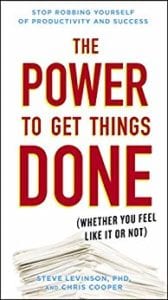
The Power to Get Things Done: (Whether You Feel Like It or Not)
At that point, I realized that I wanted more than to live in a steel town when I was older and I went through my career. Eventually, I worked in the motor industry and then I worked for companies like Mars. I saw how people really engaged in the work in some companies, less so in others. When I look back on my career and I ended up becoming the Director of a very big company, looking after logistics for 5,500 pubs. Then I set up a procurement consultancy which grew quite quick. Many years ago, I decided that my passion is people. Looking back through over that career and over the several years of working, I think one of the things I’ve realized is that when people are happy and where they’re engaged on in their work, you achieve so much more. Therefore, it makes every sense that every employee should give the best of themselves but want to because there’s an environment that supports them and cares for them and enables them to realize their full potential. In that way we all benefit, the company prospers and the individual prospers. Hopefully, having a good life at work leads to a good life at home and it leads to good health. It’s an important message, John.
Your childhood story is fascinating. It reminds me of some of those movies we’ve seen of the steelworkers and certainly here in America with a generation after generation working for the car companies and factories and finally people saying, “Either the job is not there anymore or I want to do something else with my life.” I can get that in a big way. What I love with what you just said is, “If people are happy and engaged, productivity soars.” That’s such a great soundbite for what you’re doing. Let’s go back to when you were working at Mars, you told me that you heard hundreds and hundreds of people pitching you to buy their marketing services because you worked for a big company that had the budget to do that. What are some of the tips you have from hearing all those pitches that people can take away of how to get good a pitch, so they get people to hire what you’re selling?
I had the opportunity with Mars. I went to a sales job. I was a salesman and business development manager. I spent in marketing and training of people. I thought from the salesperson, “Wouldn’t it be really helpful to understand what goes on when people buy and how does the mindset of the buyer work?” I moved on having had a sales and marketing background to look after the buying of marketing services. I literally arranged sales promotional pictures, big PR pictures and in one instance for over £1 million. I got United Biscuits and all the advertising spend. I had the opportunity to arrange these events with the marketeers who are the clients. I would facilitate those events and we would introduce some suppliers. I manage the rosters of suppliers.
To answer your question, you get to a short list of maybe three suppliers. On one occasion for big Mars or big Snickers, we launched Celebrations. I launched that with a big PR campaign with a train that was branded with different celebrities and different characters and people getting married there and TV shows being filmed and all things. The first thing I think people have to do is it’s not just about the pitch. It’s about that relationship that you established beforehand. I know there’s this process where people formally can be asked to come in. Marketing can be quite an expensive and creative process, but what goes on outside the room is important. If you can establish a really good relationship and rapport with people outside of that pitch, that will also help to influence the buyer.
[bctt tweet=”People buy emotionally and then back it up with logic.” username=”John_Livesay”]
I also noticed the marketeers that sometimes it wasn’t always the most rational decision they got through. It was the one that struck the emotions of the marketeer and they can do something. If you think about a marketeer or many people in roles where they’re buying, particularly in marketing, they’re often only in a job for a couple of years. Quite often they were motivated by doing something different and doing something creative, as opposed to maybe continuing something that had been successful before. They want to make their mark in their job.
They’re looking for that creativity. Where I worked, it wasn’t always about costs because they did have some quite big budgets. You could give some options with some different cost options. The thing is it’s got to be creative, it had to connect emotionally. The other thing is that with companies often, we’d see these amazing people who would be the lead of an agency and they’re full of engagement and enthusiasm. On one occasion, I saw one jump up on a table and stopped moving on the table when the PowerPoint suddenly broke. It was all captivating. However, what we knew was that we also had to see the people who work for those individuals because sometimes it was the sales pitch, but afterwards you get the real team. You need to make sure that the team who support the projects or the activity and the campaign is also of good quality. We’ll be measuring creativity, we measure the quality of accounting. We’ll be measuring how well it was thought through and planned and how it could execute. Also, somewhere in the next two would be the price.
My big takeaway there is that people buy emotionally and then they might back it up with some logic. Whoever comes in with an emotional hook is more likely to get a yes then the emphasis on selling the team. It’s not just the razzle-dazzle people who sell it and then you never see them again, but painting a picture, if you will, of what it would be like to work with these people and why they would want to work with them. I see that time and again myself when I work with clients who are pitching themselves whether it’s an architecture firm or any firm that it’s really, “Do we like you? Do we trust you? We’ve got to work with you for a while. Are you going to be easy to work with? Are you going to have our back? Are you good listeners?” Things that people tend to not mention in a pitch, but what I hear you saying is these are all big criteria that people should address.

Business Elevation: Employee voice is important. A lot of companies don’t give employees the opportunity to share how they feel.
If we’ve not worked with them before as well, knowing that they’ve got some good case studies and good testimonials. One example I had quite a significant pitch. I was actually asked to give no credential to talk and to turn up without a PowerPoint and facilitate the session which was quite interesting to understand the training and development needs of this organization. About ten people turn up, some quite senior ones. What I did was I broke the ice with some storytelling and I told a little bit of fun stories about my past rather than going into detailed credentials. Some of them really connected with them.
I noticed it was somebody’s birthday as well. I made something of that and then opened them up. There was great rapport in the room, and then I could start to facilitate this conversation around training needs and working a route forward. As I walked out, I remember getting an arm around my shoulder from the HR director who said, “That went so well.” I got in the car and I have to say, I actually had a few tears because I just felt I was in there on my own. It was almost like I was being supported by somebody guiding me through the process. It went so well and it probably did my confidence a lot of good as well. I won that and then I won another big piece of work with them almost immediately afterwards. Engaging with the storytelling with a heart that you support is important. I even talked about a girlfriend who dumped me, which moved them but that was perfect and they related.
A little vulnerability makes people feel connected to you and that they want to spend time with you. I love the title of your book, The Power to Get Things Done: Whether You Feel Like It or Not. That’s a big a-ha for a lot of people because they’re like, “If I could get motivated to get this project done or do my expenses, things I don’t really want to do and I keep procrastinating.” What is your secret sip there? How do we get things done if you don’t feel like you want to do it or motivated but somehow that’s still not working?
[bctt tweet=”Having a good life at work leads to a good life at home, and it leads to good health.” username=”John_Livesay”]
When I left the corporate world to set up my own business, I hadn’t realized that there was an important support network, line managers, board meetings, events and finger-pointing at times. There was a whole mechanism that held me to account, but when you set up your own business, that infrastructure doesn’t exist. You have to create it yourself. Therefore, what you tend to do in a corporate job often is a good system, the things that are important to getting that job done. You may forget about your health or people forget about the relationships. When you set up your own business, the whole lot has to have some structure around it. What I realized in the corporate world is that in good companies like Mars, there is an infrastructure that is actually, you might not like it but it’s your friend. It helps you perform.
When you’re out on your own, you’ve got to create your own structure, what you have to do, if something’s really important. It’s very important to ensure that you create situations that mean that you have to act whether you feel like it or not. It’s almost like you’re sitting on a seesaw and there’s a very heavy weight on the other side. If you’ve got on the top of that yourself, you wouldn’t be able to press it down. It’s an elephant sitting on the other side, you need to put weight on your side to be able to lift the elephant. It’s important to get very clear about what’s important in your life so you don’t get too many things and take them very seriously, but then create situations that mean that you act whether you feel like it or not. I’ve quite a lot of examples if you want me to share any.
Please share an example of how we could create a situation or maybe even talk about how you were detoxifying dreaded tasks. A specific story would be great.

Business Elevation: A lot of leaders think they must get all the people, troops, and employees engaged; what they forget is as a leader, they need to engage themselves.
With that particular story and the thought came through for that is the detoxifying, sometimes something might seem just too big a step. For me, I started off by asking some of my clients to come along and I did some book study groups. From the study groups, I started interviewing a few people and another audience came and with social media then. That stepping stone gave me the confidence to move to my radio show and hosting that. Where I really thought about this was I remember my children, I’ve got two boys, Matthew and Daniel. We went to a wildlife park on the South Coast of England while we were on holiday. They had this reptile and book show, but I don’t like snakes.
We walked into this place and there were lots of seats. There were quite a lot of people in there. My kids tried and went to the front row but I managed to carefully guide them to the back without them realizing I was a complete coward. We sat on the back row. This guy from the front said, “Is there anybody out there who’s scared of snakes?” I ducked down and my kids started pointing at me, “Him,” and my wife was looking at me and they all started pointing at me. This guy said, “That gentleman on the back row, would you like to overcome your fear of snakes?” I kept my head down and then people started joining in and there was a little bit of a clap that started. I had to get up and I went out to the front. It was me in front of about 60 people. I basically passed around this snake, which was quite a nice-looking thing actually. I passed it around a few people but I had to hold the snake.
He passed it over to me and my heart was pounding, but I held the snake and it moved around in my hands. I thought, “It’s not as bad as I thought it was.” I felt reasonably comfortable with it. I gave it back to him and I started to walk off. He said, “No, stop. I thought you wanted to overcome your fear of snakes.” Suddenly, two people walked out with this huge box with a rope handle on each side, and they gently placed it on the floor. He opened this lid and there was this enormous Boa constrictor in it. He picked the thing up and pulled it over his shoulders and said, “That wasn’t a snake. This is a snake.” He said, “Are you going to pick this up?” People were like, “Go on.” I put this snake around my neck and held it. I’ve got this photograph of it looking at me straight between the eyes. I’ve never been scared of snakes in that way since and that really helped me. Therefore, if you break up tasks into little sections, it becomes easier or you can do like a friend of mine did. She is a Tennis World Champion from Denmark. She’s a speaker and she wanted to add more comedy into her speaking. What would your strategy be if you maybe talk some small steps towards being able to add more comedy into your speaking, John?
[bctt tweet=”It takes a brave leader to listen to feedback.” username=”John_Livesay”]
I’d start to watch comedians and improv situations and maybe even try to get up and do a couple of minutes.
I think that’s a good strategy and it will be my natural strategy. Read about it, watch it on the TV or maybe do some improv, but what she did was she booked a 1,630-seat conference hall in Tivoli Gardens. She paid the money in advance which is about $18,000 and she advertised that she was going to do a one-woman stand-up comedy show because she’s a celebrity in Denmark. She sold it out entirely and then had five months to learn how to do stand-up comedy. That’s creating a situation that means you have to act.
Let’s go into your formula for success and Business Elevation, which is the name of your company. It’s also the name of your show. You talked about engaging leaders plus an engaged team, plus getting things done gives elevation to a business where absentee goes down, well-being and productivity go up and the turnover goes down. That’s a big problem out there especially with Millennials as a lot of them enter with a mindset of, “I’m only going to be here a couple of years.” The cost of turnover is so huge. You’ve got some solutions that you talked to me about that I got so excited that I want you to share with me what you are doing with something called an Engagement Multiplier.
I was referred to a gentleman called Stefan Wissenbach as a guest on my radio show. Being interested in this side of workforce engagement, we do programs around elevation which might be working with a leader to help them develop and grow their business and being a mentor to them, a coach to them. I may be doing team development with their team and helping them through that evolution. I’ve got many clients I’ve helped grow their businesses. In this area of engagement, what I wanted to do was have a methodology whereby we could actually survey and get some real data on the company. You could use a thermometer to take a test of the temperature of the company.
When I interviewed Stefan, I realized that he was onto something pretty amazing. He invested £11 million in terms of developing some software, which enables you to measure engagement. He created a great book and a great story around this book. It was heavily researched. He had a vision that he wanted to help eleven million people become more measurably engaged. In America, your engagement level is a bit higher than over in Europe. It may only be 30% tops of people who are really engaged in their business and then about 50% of people who are coaching and then the remainder would have had sabotaged your company or they’re definitely looking for a new job. If you could turn that around, what could you do?
This survey enables you to take a test for your company. What we’re able to do through the survey is to offer an entire survey for free. I know you love this as well. You could go to John and he will be able to help you do this but you can utilize this amazing online tool. There’s an anonymous dialog in there. Your staff will give their feedback and comments and share how they feel. Getting an employee voice is important. In a lot of companies, employees don’t get the opportunity to share how they feel. You can also respond anonymously. You’re looking at how engaged people are with your purpose, how engaged they are with your leaders, how engaged they are with the owners of the business if that’s different? How engaged the customers are and how engaged are they personally and sharing all sorts of wisdom and insight?
[bctt tweet=”Engagement starts with the leader.” username=”John_Livesay”]
You get this amazing report but you do this quarterly. What the company showed is that if you take this survey quarterly and you developed some action steps each quarter, someone like John or in the UK, someone like myself can help you by looking at that information and helping you with the action steps. Engagement shifts from maybe 60%, 70% in the company to 90% they found over a twelve-month period. In ten years, it’s the best survey tool I’ve come across. I love the principles behind it as well. I shared it with you and you felt passionate about it too.
One of the things that I think is really interesting about this concept is that the leaders have to have a level of courage to be able to hear anonymous feedback as opposed to just pretending that they think they know what people are thinking and feeling. Can you speak to that a little bit?
The company always talks about you want a business with brave, identifiable and caring leaders. Often, people are scared of what the reality of the situation is. They’d rather not know because we often don’t like getting feedback and knowing how people perceive us in case we come up in the survey. It takes a brave leader to be prepared and to listen to that feedback. I sat with the company as they went through their first survey. I was sitting with the CEO and the leadership team. I did say to him, “Remember, this is just a perception. Those people out there might not be relative but those people out there, that’s what they believe. Once we know that perception, then you’re in a situation to be able to do something about it.” Firstly, he was a little bit defensive and then he said, “Chris, you’re absolutely right. All that feedback is valid.” I’m not going to make it mean anything but now we’ve got that information we can act and he said, “This is the biggest no brainer. It’s amazing to have this. If we can do this quarterly and it’s not that inexpensive. It’s cheap as chips really for what it does for us. We understand some real data about our businesses.”
The problem of flying blind, if you will, is all the things like disgruntled employees and people feeling like they matter. The opposite is when they do feel like they have a voice and most importantly, I would imagine that the leaders take action from the survey. That’s when the real magic happens.
I’m thinking about the other company where we use the survey. Initially, there was a learning and development person and he said, “We need to go with something called best companies.” The board was about to go and they’ve got this new person on board and they changed their mind and went with this other survey and methodology. They just found it so unwieldy that within six months they came back to us with the learning and development person kicking and screaming and said, “We want to do one of those surveys that you talked about because it sounds more like it meets our needs.”
When they did the survey and within one hour of the results coming out, the CEO and this is quite a sizable business, he got the report. He scanned it and he immediately went to his PA and said, “I want every director in the company who’s available in my office in an hour.” They went through the report and started to put in place some actions actually. It was mind-blowing for them. This is astonishing. Very sadly, the L&D person lost their job as a result of refusing to budge and getting in the way rather than supporting what was really needed. That was a shame but they missed an opportunity because it’s proving so valuable for them.
It’s not enough anymore to just be dictatorial especially for the Millennials, which are the majority of the employees now. They want to be heard. They want to be acknowledged and they want to feel like they’re making a difference and that they understand the vision of the company. Clarifying any of those issues is going to help productivity, employee retention and engagement. I remember Starbucks starting out and Howard Schultz gave part-time employees health benefits when nobody else was doing that for part-time employees. Those people feel like they matter and so they go the extra mile. If you come in every day at the same time, they would say, “Chris, do you like the double whatever latte?” That person is so loyal to Starbucks. You can’t pay people to go that extra mile because their job is to take your order and serve it, but if they’re engaged and feel like you care, then that’s when you get extra service out of people. Would you agree with that?
I do agree with that. I think it was Starbucks where they used to have it. It’s one of those little cards and people would come in and you get a card and it gets stamped each time. You get a free latte or something once you bought seven. They decided to get rid of that and they just said to the staff, “You can give so much coffee, tea and whatever away for free to people when you think it’s most appropriate.” What they did is they gave the discretion to individuals to give the odd cup of coffee to somebody who may deserve it, who looked a bit harassed because they got the kids running around their feet or people who came in regularly. That autonomy and that discretion make a big difference. I know people about places like Zappos, they allow their customer service staff to send bunches of flowers and things like that to people if they think it’s important. That trust gives someone that ability to empower some of that and you feel more special when you can do that.
Besides hosting this successful show that you have, Business Elevation, helping people with their employee engagement, people hire you also to speak. Tell us about what speaking opportunities are best-fitted for you?
I speak about the power to get things done whether you feel like it or not. I do that fairly regularly and I’ve spoken at big companies like HSBC and various others. I also speak about engagement. One of the areas I like to talk about is Engagement Starts with You. A lot of people think we must get all the people, all the troops, all the employees engaged and what they forget as leaders are that they need to be engaged themselves. It starts before you get into the office. It starts with how you prepare your mind and prepare yourself mentally and physically so that when you step into the office, you are absolutely engaged. Therefore, you can spend your time in showing your team’s engagement is higher. Unless you’re walking the talk, then it’s not going to happen. That’s one of the keynotes that I love to share actually is engagement starts with you.
Time goes so fast with a guest like you, Chris. You’ve done so many interesting things and you have so many wonderful stories. Thank you so much for sharing. We all know a little bit more than we did on how we can get things done whether we want to or not.
Thanks, John. It’s been an absolute pleasure talking to you.
Links Mentioned:
- Chris Cooper
- John Livesay on Business Elevation
- The Power to Get Things Done: Whether You Feel Like It or Not
- Mars
- Engagement Multiplier
- Stefan Wissenbach on Business Elevation
- http://ChrisCooper.co.uk/
- https://www.EngagementMultiplier.com/partner/johnlivesay/
- https://www.Amazon.com/Power-Get-Things-Done-Whether/dp/0399175849/ref=sr_1_2?keywords=the+power+to+get+things+done&qid=1554137130&s=gateway&sr=8-2
- Quantmre.com
Wanna Host Your Own Podcast?
Click here to see how my friends at Brandcasting You can help
Get your FREE Sneak Peek of John’s new book Better Selling Through Storytelling
John Livesay, The Pitch Whisperer
Share The Show
Did you enjoy the show? I’d love it if you subscribed today and left us a 5-star review!
-
- Click this link
- Click on the ‘Subscribe’ button below the artwork
- Go to the ‘Ratings and Reviews’ section
- Click on ‘Write a Review’
Think It, Be It with John Mitchell
Posted by John Livesay in podcast | 0 comments

Episode Summary:
Everybody wants to raise their income and have success in their careers. However, even with so many things written about achieving that, it is still pretty difficult to find one that you can follow. Taking the legendary book, Think and Grow Rich, entrepreneur and success mentor John Mitchell has created a technique that practically applies its ideas through his 12-minute-a-day Think It, Be It. Debunking the idea that hard work makes you successful, John talks about working smarter instead by influencing your everyday actions and thoughts. He gives out the four categories that will change your programming so that you can see your life in a way that allows you to pull in the people and success that you want.
—
Listen To The Episode Here
Think It, Be It with John Mitchell
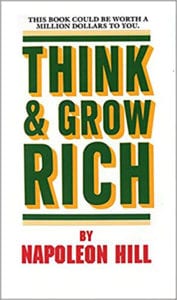
Think and Grow Rich
Our guest is John Mitchell. He has a 12-minute-a-day Think It, Be It technique that’s rated as the top practical application in the world of the legendary book Think and Grow Rich. When he applied his technique to his own life, he saw his income go up to over $5 million a year. Previously for twenty years as an entrepreneur, he earned low six figures and that twenty times difference happened because his daily technique significantly increased his control over himself by probably double. It made them laser-focused every day on the two or three things that move the needle in his business. It also allowed him to rapidly evolve his strategy for success. He was simply operating every day at a higher level than he ever had before and it showed up in his income.
The science behind his technique was profiled in a Time Magazine cover story. While John started out as a CPA, he became an entrepreneur at a very young age of 30. He’s owned companies in a wide variety of industries including real estate development, restaurants and publishing. Turning 50, he wasn’t as successful as he thought he should be. He found the top book of success written, Think and Grow Rich and he developed his own 12-minute-a-day technique. That what you envision in detail on a daily basis is what shows up in your life. John, welcome to the show.
Thank you. I’m glad to be here.
I always like to ask my guest to take that little intro that I gave and bring it to a life of your own story of origin, not so much about being a CPA. I want to hear the story of origin of turning 50 take us there and saying, “I thought I’d be more financially independent. I worked hard. I’ve been an entrepreneur and things aren’t what they need to be.” Tell us what the a-ha moment was for Think It, Be It book.
When I turned 50, I wondered if success looks what I thought I should be. I had a couple of goals in my life to make enough money, so I didn’t have to work and to find the woman of my dreams. As I assessed my life, I realized that I was falling short on both. As an entrepreneur, I’m always blessed to make well into six figures but never close to seven. On finding the girl at 50, I’d never been married. I can tell you, it was not from lack of interview. I did a lot of interviewing. The defining moment happened three days after I turned 50. I’m in my office, kick back and my feet are on the desk. I started thinking about my life and I do the math. I realized, “If I don’t make over $1 million a year, I’m never going to have that exceptional life that I’d always dreamed of.” The freedom, the lifestyle, the sense of accomplishment and that hit me like a ton of bricks. It was clear, I had to make things happen in my 50s. I made the decision that hard work doesn’t work.
While it works for making six figures a year but clearly it didn’t work for making seven. I knew there had to be something other than hard work. I made the decision to find out whatever that something else was. Three months after turning 50, as I’m puzzled about how to change this direction, a pearl of wisdom hits me. Why not find the top book in the world on success and achievement ever written and then apply it word for word to my life? The logic was so simple and compelling. After some research, I’ve found that there is one book that excels over all others and it’s Think and Grow Rich. Are you pretty familiar with Think and Grow Rich?
[bctt tweet=”‘Hard work doesn’t work for making seven figures.'” username=”John_Livesay”]
I am. It’s all about investing in real estate and letting that real estate grow for you.
It’s not quite, but I guess you’re in some of that.
That feels a little like Rich Dad, Poor Dad.
Here’s what’s significant about the book. First is the book has sold over 100 million copies whereas the next bestselling book on success and achievement has sold under ten million copies. Clearly, it’s a top book ever written on success by a factor of ten. The second thing is the book has created more millionaires and billionaires than any other book on the planet. It’s basically applying science to your life to up your success. I read the book and the central concept is what you envision in detail on a daily basis is what shows up in your life.
It’s very much along the lines of The Secret or Abraham Hicks, that whole mindset of The Science of Mind of Ernest Holmes or Your Thoughts Create Your Reality.

Think It, Be It: You got to work smarter by influencing the actual part of your brain that influences the thing that determines your success.
I read that and then I discovered there’s a problem that I and probably all of us have encountered 100 times. It’s a great idea but how to apply it in a practical way. I probably moped around for a couple of weeks not knowing how to apply it and then it hit me that maybe I had to come up with the practical application myself. I did and I applied it to a new business I was starting in the financial services industry. Over nine years, I continually tweak my 12-minute-a-day methodology. Over those nine years, my income went from low-six figures a year to $5 million a year. I felt so incredibly blessed. It’s quite a change from my twenty-year history. I could see why it was happening. By applying science to my life for the first time ever, I was influencing my daily actions and thoughts. Clearly, I was operating at a higher level than I ever could before. I could feel it. The best news was I also met the woman of my dream from applying this methodology.
It’s about pulling people in. Energetically, it’s almost like a metaphysical principle that the science is based on.
It really is. That sounds a little woo-woo, metaphysical.
Quantum physics does if you’re talking about energy for people who prefer that. Let’s go and dive right into this concept of a lot of people who go, “I don’t have time to meditate. I don’t have time to fill myself up with a bunch of positive thinking.” Give us an example of how the 12-minute-a-day methodology works.
This is essentially how it works. You’re going to feed yourself every day exactly the person you want to be, exactly what you want to accomplish and precisely how you’re going to achieve your clearly defined goals. When you feed that to yourself every day, after about 21 days, the science kicks in. That starts showing up in your thoughts and actions automatically without thinking. That’s the magic of it because when your thoughts and actions automatically start reflecting your programming, it immediately takes you to a higher level.
[bctt tweet=”Success is when your thoughts and actions match your programming.” username=”John_Livesay”]
What’s an example of somebody who did? Let’s focus on the career at the moment.
I’ll give you an example. Everybody wants to raise their income, their success and their career. To backtrack a little, the way this works is, you’ll take your life and compress it down to one sheet of paper, front and back. On the front is the ideal you and the five key areas of your life: yourself, your health, your romantic relationship, your spirituality and your career. That’s on the front. On the back are the improvements you want in each area of your life and your three goals for the quarter. That’s essentially it. One of the things in a career that we do is we articulate your succinct business plan, your strategy for success or the two or three things that move the needle. The linchpin issue that takes your business to the next level.
You feed that to yourself every day. I found that three things happen. First, your business plan is so easy to implement because it’s so top of mind. Secondly, you do become laser-focused on only what moves the needle. Everything else falls by the wayside. The third thing is that suddenly I had a way for evolving my strategy for success in the business plan in a way that moved it forward by like twenty times what I’d ever experienced before. That was happening because when you’re feeding your business plan or your strategies for success to your subconscious mind every day, it’s constantly challenging it and refining it. It had such an impact on me. I have that ability to continually refine my strategy and it made me more successful.
This is why I wanted to have you on the show, John, because I’m so fascinated by this premise. From my own speaking career, for example, when I had the courage to say out loud to people, “I want to give a TEDx Talk.” All your self-talk comes up, “Who am I to give a TEDx Talk? What a big goal? You’ll never achieve it. It’s never going to happen.” If you keep saying it to yourself and putting it out to people and let go of all the negative self-talk and worrying about whether the other people think you’re crazy to do it, then someone said, “I know someone who puts one on in San Diego. He might be able to help you figure out what you need to do to get a yes.”
The thought process of that laser-focused, keeping it top of mind, knowing that having a TEDx Talk would be one of those key drivers that you talked about moving the needle that gives you credibility as a keynote speaker. We got the laser-focused, then I get introduced to someone for saying it. It still took me a year and a half to get someone to say, “Yes.” It had nothing to do with my talk. It doesn’t fit our theme. You had to get used to those noes. This question that someone gave me that is what I hear you saying, which I want to tell everyone reading is if we plant in our seed this question of challenging that question, why is it that I’m a successful TEDx speaker? Why is it that my TEDx Talk has over a million views? That’s what I hear you saying is by having that laser-focus and then asking, “Why is it that I have my perfect soul mate in my life now?” Your brain starts matching that programming. Is that the gist of what you’re saying?

Think It, Be It: Just as you’re baking a cake where you can’t keep opening the oven, we have to give our goals and thoughts the full time to bake.
There are two parts to success. Using your example is probably a good idea. Your desire to do a TEDx Talk, that’s setting the goal. That’s being clear about what it is. Equally important, if not more important, are the action steps that you have to take to achieve that goal. You no doubt had a detailed vision of exactly what you needed to do to make that a reality. That’s the power of this 12-minute-a-day technique is that it takes those action steps that you’re going to need to take to achieve that goal. By feeding it to yourself every day that causes your thoughts and your actions to reflect your programming. That’s the game-changer. When people wonder about, “What makes me more successful or how do I become more successful?” Most people think, “I’ve got to work harder.” No, I don’t think so. You’ve got to work smarter. You work smarter by influencing the actual part of your brain that influences the thing that determines your success, which is your everyday actions and ongoing thoughts. Does that make sense?
It does. We talked about this a lot. I’ve interviewed investors to fund startups. They say, “Please tell your clients, don’t try to boil the ocean.” I tell people Amazon sold books first and have proof of concept that worked before they started selling everything. If you try to pitch Amazon now, it would be like, “That’s boiling the ocean.” I love this concept of laser-focus. People say, “I have top of mind what my goals are. I’ve figured out what I should be focusing on to take some action. Your secret sauce, from what I can gather, is this questioning your mind of visualizing it already happening where you’re saying, “Why is it that? This has already happened.” When you are fighting, in my case, when I finally did stand on that TEDx stage, on that red carpet, it seemed like, “I’m here,” or like you’re meeting the woman of your dreams for a date. It’s like, “She showed up.” It doesn’t seem like a surprise or magic. There’s the science of it because you’re doing this. The 12-minute-a-day, you mentioned the four categories: yourself, health, romance, spirituality and career. Do you spend a couple of minutes on each of these categories for the twelve minutes or do you spend twelve minutes on one?
No, it’s twelve minutes in total. Probably more of it is spent on your career because originally, I created this because I wanted to go to seven figures a year net. That was my big focus. It’s a little more towards the career, but it has all of those areas.
What is your life like? There are all these studies on happiness that we pass a certain Maslow’s Hierarchy of Needs, our basic needs are met in terms of food and shelter and what have you. In other words, the difference between making $100,000 and $1 million is not the same exponential increase in happiness as it is in money. Has that been the case for you?
When I was making six figures a year, in some ways, I was afraid to look at creating an exceptional life looked like because I wasn’t sure I’d ever get there. Once I got there and I started making $5 million a year, I was like, “This is way better than I thought it was.” Finally, I had enough money not to have to work. Because I was so fascinated by the stuff we’re talking about, I sold my company. I guess it was probably two or three months after I sold the company, I met the former chancellor and president at the University of Texas at Austin. I told him my story. He said, “You’ve got to teach this at the University of Texas and why don’t we teach it together?” I said, “That’s fine to teach at the high achievers.” My passion is to get those people that were like mad that struggle to go to that next level and teach it to them because I so relate to the pain that I had back then and so many people have.
[bctt tweet=”What you envision in detail on a daily basis is what shows up in your life.” username=”John_Livesay”]
You have empathy because you’ve been in their shoes is my big takeaway from what you said.
I had freedom was the feeling I’ve gotten as I crossed over and didn’t have to work. The best things were not material things. The lifestyle is great. That’s small potatoes compared to that sense of accomplishment, that pride of accomplishment, the level of control that this gave me over my life, that level of control was immensely great.
You’re the perfect person to ask this question to. In my observation of entrepreneurs and business people in general, a lot of people have the money thing down, but they don’t have the fitness thing down. They’re physically fit but not fiscal fit and then vice versa. There are a lot of fit people out there that have no money. You have both. You’re physically fit and you’ve got financial freedom. I tell people, “If you can get one area of your life, take the discipline you have, knowing how much your cashflow is, and what’s in your checking account and apply it to the calories and exercise you’re doing and vice versa.” Take the discipline from working out to your money. I don’t see many people talking about that. You seemed to be embracing all of this. Another reason why I wanted to have you on is you’re not talking about careers, you’re talking about all areas of our life. Can you speak to how this Think It, Be It applies? The concept of visualizing is discipline and focus from one area. Let’s say fitness can also be applied from your career.
I’m so glad you brought that up because here’s my definition of an exceptional life. You’re making seven figures a year. You’ve got a great romantic relationship and you’re fit and trim. To me, that’s the trifecta of an exceptional life. I see so often that to your point that people maybe are doing well financially. They got a lousy marriage or they’re overweight. They can’t control their weight. I particularly find this issue about having a great romantic relationship important. If you think about it, that relationship affects your happiness more than any other external factor there is. This affects all three areas at the same time. One of the things I think that you’d find interesting, this is something that we all have to overcome. We’re all using an antiquated operating system to run our lives. It’s like playing the game of life with one hand tied behind our back. The effect is that we’re all innately geared to daily survival. The effect of that is three things.
First of all, 90% of your thoughts are fear-based. Secondly, you have less than 20% control over yourself. Thirdly, you’re reactive rather than proactive on your report and agenda. All that is great if you’re running from a lion. It’s exactly the opposite of the way you need to be if you want to be productive, creative and happy. You have to overcome that. The part of your brain that controls your everyday actions and ongoing thoughts is your subconscious mind. That antiquated operating system is what’s running your subconscious mind. It’s gearing you exactly the opposite way you need to be. That’s what this 12-minute-a-day technique does. It overlays an operating system that gears you to productivity, creativity and happiness.
You have mentioned that there are two scientific discoveries that affect how much we achieve in life. Can you tell us what those are?
Over the last 30 years, there’s been a lot of scientific interest in what separates the mega achievers from the moderately successful. It comes down to two things: control of self and focus. Those are the two exact things that this affects. The principles that you’re referring to, it is that antiquated operating system. The other one is, you have a reticular activating system, which is a part of your brain that’s about the size of the tip of your little finger. It’s a filter for your brain. It determines what gets in and what doesn’t. It’s like the nightclub bouncer for your brain. When you’re feeding every day to yourself exactly the person you want to be, exactly what you want to accomplish and precisely how you’re going to achieve your clearly defined goals, then it knows what’s important to you. It brings in stuff that isn’t coming in. That’s what amazed me when I first started doing this, I saw my reticular activating system reacting to what I was doing for twelve minutes a day.
Is it the amount of time? Is there something special about twelve minutes versus ten versus fifteen?
The beauty of twelve is it’s doable. It’s not too much. I’ll give you an example of how it worked in my marriage. This illustrates how it works with everything. I didn’t get married until I was in my 50s. When I did, I discovered something that unfortunately my married friends had failed to share with me. Every once in a while, your spouse will say something irritating. I know that probably hadn’t have happened to you, has it?
It’s happened to everybody.
[bctt tweet=”Success is a necessity, not a preference.” username=”John_Livesay”]
When it happened to me, I didn’t like it. I didn’t like what would come out of my mouth. While it didn’t happen a lot, it did happen. I thought, “I’m going to put in my visualization that I’m going to be flexible, patient and thoughtful.” I’m reading that every day. Fifteen days in, I’m no more flexible, patient or thoughtful than I was at the start. About the 21st, the 22nd day, my precious wife, Ginger, said something irritating and in that moment, I was flexible, patient and thoughtful. I didn’t have to think about it. That’s who I had become.
It’s a tipping point. That 21-day thing of the brain getting reprogrammed.
I have done this with so many people. It is amazing about this 21-day mark. Some things the subconscious mind is going to accept at ten days in. I have consistently seen that around the 21st day, it then accepts everything.
I love stories. I always use the analogy of, if you’re planting a seed, you can’t keep digging it up going, “Is it growing?” If you’re baking a cake, you can’t keep opening the oven and be like, “Did it rise yet?” That’s what we tend to do with our goals and our thoughts. We don’t give it the full time to bake in this case, 21 days.
That brings up something else that’s interesting. This works on everyone, but it’s not for everyone. Maybe that’s even a negative about this. What I mean by that is it works on everyone because it’s pure science. It has to work. It cannot work. There’s one caveat to that. It’s not going to work if you don’t do it. It’s not going to work if you are trying not to do a habit or the other thing is if more success is just a preference, which is the case with most people as opposed to a necessity. It’s not going to work. More success has to be a necessity for you because if it’s not, you’re not going to spend twelve minutes a day.
Those twelve minutes a day, is it a journal that you’re writing in? Is it words you’re reading over and over? Is it making sure you’re top of mind on your action steps? What do the twelve minutes look like?
It’s pretty much all of the above. Keep in mind and picture this, you’ve compressed your life down to one sheet of paper, front and back. It’s sitting in a plastic stand that sits on your nightstand. The first thing in the morning before you get other things into your head, you spend twelve minutes a day to read it. You’re reading what’s moving the needle in your business. You’re reading the way you want to be with your spouse. You’re reading the things you want to make happen with your consistent exercise and how you eat. In the career, you’re feeding your succinct business plan, your strategy for success and your three things that move the needle. Also at the bottom of the visualization, you’re tracking every week on Sundays, the key behaviors associated with your goals. It’s that combination that has such a transformative effect on you.
The website is ThinkItBeIt.net. You have a five-day free email course that anybody who goes to the website can get. They can start to explore from that.
You can text me at 44222 and then the word, Genius, and that gets you the five-day email course.
John, I can’t thank you enough for sharing your success formula. You obviously are walking your own talk, which gives credibility. It’s been a pleasure having you on the show. Is there any last thought or quote or inspiration you want to leave us with?
I’ll share with you a story you might find interesting. When I created this a few years ago, I decided to go find the top expert in the world on success and achievement. I determined that the person is Darren Hardy. He is an amazing guy. I figured out a way to get to him. I’m able to sit down with him for three days and visit with him. Finally, we sat down and he looked at what I’ve created, this visualization. He studied it. He said, “This is good.” He looked a little closer and he said, “This is good. You’ve got a problem, though. Most people are not going to spend twelve minutes a day on anything to impact their success. That’s how it is.” I was like, “Darren, how can that be?” It’s twelve minutes a day. It’s based on the top book ever written on success and achievement. He goes, “I know, John. You’ll do it, I’ll do it. That’s a dirty little secret of the success in human achievement field is that most people won’t do anything to impact their success and achievement. The people that were a success is a necessity as opposed to a preference. They’re going to do this. It’s going to be their advantage in life for creating success.” I was like, “That’s what I experienced.” It was pretty gratifying to have him say that. Now, that we’ve done this with a lot of people and I get the inputs from how it’s changing their lives and how the template that we have makes it easy to do this, it’s gratifying.
Thanks again, John.
Links Mentioned:
- Think It, Be It
- Think and Grow Rich
- Rich Dad, Poor Dad
- The Secret
- The Science of Mind
- Your Thoughts Create Your Reality
- www.ThinkItBeIt.net
- Quantmre.com
Wanna Host Your Own Podcast?
Click here to see how my friends at Brandcasting You can help
Get your FREE Sneak Peek of John’s new book Better Selling Through Storytelling
John Livesay, The Pitch Whisperer
Share The Show
Did you enjoy the show? I’d love it if you subscribed today and left us a 5-star review!
-
- Click this link
- Click on the ‘Subscribe’ button below the artwork
- Go to the ‘Ratings and Reviews’ section
- Click on ‘Write a Review’