
Can You Sell? with Alex Rubalcava
Posted by John Livesay in podcast | 0 comments


Episode Summary
All startup companies want to develop their businesses effectively. However, funding can be a hindrance for some who want to scale. Alex Rubalcava, General Partner and co-Founder of Stage Venture Partners, gives more information about their company and shares their passion for investing in a startup, particularly in enterprise software. Alex shares why and how they filter companies that approach them for potential funding with their three “why” criteria and three “can” questions. Find out what those questions and how you can stand out from the crowd of startups out there.
—
Listen To The Episode Here
Can You Sell? with Alex Rubalcava
Our guest is Alex Rubalcava, who is a General Partner and Cofounder of Stage Venture Partners. With experience in both public equity and venture capital investing, Alex has been a professional investor since 2002. He started his career as an analyst at Anthem Venture Partners, which is a leading venture capital firm in Santa Monica. While Alex worked at Anthem, the firm backed startups such as TrueCar, Myspace and Android. After Anthem, Alex launched a long/short equity fund where he ran for nearly ten years. In addition to his investing work, Alex was an active board member at several nonprofit organizations in Los Angeles. He was appointed by Mayor James Hahn to the LA Animal Services Commission. Later, he served on the board of KIPP LA Schools and South Central Scholars. He serves on the board of stage portfolio companies Sightline Maps, Balto Software and WhiteFox Defense Technologies. He graduated from Harvard in 2002. Alex, welcome to the show.
John, it’s great to be here.
What I love to do is to ask you to take us as far back as you want. It could be childhood, high school, college, whatever it was that led you into this passion for investing in startups.
I did not know what a VC was or what startups were when I was growing up. All I knew was that I didn’t want to be a doctor or a lawyer. Those were two things that did not appeal to me. I tried a lot of things while I was in high school and college. I worked selling t-shirts by the side of a road in a motorcycle rally. I busted tables, worked at an advertising agency, in a real estate development firm and a couple of startups. This is all before I was 21. I discovered investing around that time when I got an internship at a venture capital firm. Ever since then, I’ve worked in finance. I think that the idea of helping to finance growth companies is tremendously exciting and I’ve been doing that for my career ever since.
When you were at Harvard, your focus was on government, was it not?
I did study government to college. It was a major that was somewhat relevant but not terribly so. I took a lot of classes in the History of Science, which was a unique major at Harvard that had I known about it when I started as a freshman, I probably should have majored in that.
You have three criteria that you ask someone who comes in to pitch you for potential funding. Would you walk us through those three why questions?
To give a little context, I’ll tell you a little bit about what we do at our firm. We are a seed venture capital firm investing in enterprise software startups. What that means is that we’re investing in companies that are very young, usually one to two years old. Often, they have fewer than ten employees. Sometimes they have a product in the market, sometimes they don’t have yet. Almost always, they are approaching us looking to raise their first institutional funding. They may have had funding from friends, family and Angel investors prior to approaching us but they have almost always raised less than a million dollars. They’re now looking to raise that first $1 million to $3 million of institutional capital.
That’s who they are when they get to us. When they do, we have to filter through the vast set of companies that are pitching on us. To give you a little bit of an idea of the volume, we had about 1,300 new companies approach us, we approached or that somehow got into our database. We met with 500 of them. We did serious work on about 75 and we wrote checks to seven companies in 2018. 1,300 down to seven. These questions that we’re going to go through are how we filter from 1,300 down to seven. The three whys: why you, why now and why us. Why you is a question about the founder. Why are you uniquely capable of building the company that you are building? Why are you uniquely credible? We use the word like credible or capable deliberately because those words are open-ended. You can earn credibility from prior work experience. Maybe you founded a startup before, maybe you are a senior executive at a high growth startup or maybe you earn that because you’re one of the best technologists in the world.
There’s evidence of the fact that you know more about a particular area than other people do. Maybe you have vertical expertise. Maybe you know more about drone defense than anybody else in the world. We try not to be prescriptive when it comes to the type of expertise that we are seeking out. Rather, we try to be open-minded and to recognize that world-class credibility comes in different forms but somebody on the founding team has to be world-class at something. We will then hire around that person’s skills. We don’t look for well-rounded individuals. We look for pointy individuals and we built a well-rounded team around them. We look for pointy people. People who if you graphed their capabilities, they would be no better than anybody else at large numbers of things but at something important for growing their company, they’re one of the best people in the world.
[bctt tweet=”Why you, why now, and why us? Can you hire, ship, and sell?” username=”John_Livesay”]
In terms of why now, we believe that time matters a tremendous amount when it comes to starting and growing in a company. If somebody comes to us and pitches a company, a product or an idea and it could have been built using the techniques and the tools that were available years ago, our interest fades very rapidly. It’s the kind of thing where our belief is there’s so much capital out there, there’s so much entrepreneurial energy that if something was possible years ago, it was tried years ago. Something meaningful has to have changed in order for it to be worth trying again. The why now question is all about where’s the world now? What are our customer’s demands and expectations? Where is the technology in the world now? Is there something recent and important that has changed that will enable customers’ expectations and the capability to build something to be met in the middle?
The example I always use is Airbnb. If the economy hadn’t been bad back in 2008, people wouldn’t have been opened to renting out a room or their entire home to strangers. There was a time that people were so hungry for a solution, if they were losing their jobs or fear of that. They were open to that idea. Had that happen before, the technology wouldn’t have been available anyway for people to be looking like that. The timing was key to their success. You’ve done over 23 of these investments and to go back to that math, I’m fascinated by that. The strategy is the investors invest in 1% of the pitches they hear. That resilience and tenacity that it takes to be a founder seeking funding.
I don’t think people understand the numbers. It’s not to dissuade anybody but if you want to be an actor, you can’t let those numbers dissuade you either. You talk to 1,300 companies, meet with 500, do due diligence in 75 and write checks for seven. That’s even less than 1%. These questions that you’re sharing are helping people, not just getting the 1% club but even the smaller club. If you wouldn’t mind, pick one of your favorites. If it’s possible, companies that are on your website. I’m particularly fascinated by the WhiteFox Drone Defense but anyone you want that you can give an example of the why now.
In the case of WhiteFox, no one needed drone defense years ago because there was not a large consumer market of drones. Nobody was flying around $800 unmanned aerial vehicles. You can go on Amazon and buy any number of consumer drones for $800, some of which can lift a fair amount of payload, fly over any fence and any wall in the world. For owners of sensitive property, whether that is a nuclear power plant, a military base, a stadium, an oil pipeline or anything like that, it used to be sufficient to put up a twenty-foot wall. Maybe put a few cameras along the wall to monitor your wall and your perimeter. If your perimeter extends from that twenty-foot wall up to 20,000 feet into the air and you now have to protect the air column above you, as much as you protected the ground access to your facility before.
A customer need was created there by the availability of these new drone technologies and the need for a solution was recognized immediately by a number of operators. We met with people who have guns that will shoot RF radiation at a drone to try to jam it. We met with people who will send other drones to intercept a hostile drone and throw nets at it. We’ve met with people who are training hawks and falcons to go intercept the drones. For a variety of reasons, we didn’t think any of those solutions were truly robust. When we met WhiteFox, which was founded by a 21-year old college dropout named Luke Fox, we found a company that had what we believe is the only truly scalable solution in the market.

Investing In Startup: Somebody’s always trying to do it cheaper and give somebody an alternative.
That also speaks to one of the key things I want to get your opinion on is what’s your secret sauce? Without competition, in my opinion, and what I’ve heard from other investors like you, it means there’s no market. Clearly, there are a lot of other alternatives out there but they have the best. Would you agree that that’s important that there has to be some competition for the market to be something that the why now could kick us in?
Some of our companies don’t have meaningful competition. We have a company called SPIDR Tech that developed software to help police departments communicate more effectively with their citizens. Imagine if you had vandalism at your home, the police department sent you a text message and an email immediately upon logging your case and said, “Here’s your case number.” Forty-eight hours later, they sent you another one with the contact info and the bio of the detective who was assigned to your case. A week or two later when a suspect had been identified, you got a notification and when that suspect was arrested, you got a further notification.
That chain of communication is almost identical to the chain of communications that you get when you order something from Amazon or a pizza. If you were not a cop yourself, you might not have seen that market opportunity. More importantly, you might not have the credibility to be able to go to a police chief and sell this product to them. The company that we invested in SPIDR Tech is founded by two former cops Elon Kaiserman and Rahul Sidhu. They recognized an opportunity that no one else had. We added their seed around 2017 alongside other investors, including Google and we have yet to encounter a competitor.
That’s very unique because usually if someone is the first to market and they’re growing, that spurs competition. Somebody’s always trying to do it cheaper and give somebody an alternative. That’s fascinating that it hasn’t spurred any competition. I’m sure they’re making the most of it because that’s pretty rare. The third question which goes to the due diligence on the part of the founder that’s coming to pitch you. A lot of people somehow don’t take the time to do this and it’s obviously a problem, especially when they’re going to get asked a certain question.
Why us and that’s one reason why our ratio of deals that we do to ones that we don’t is deceptively stringent. In the sense that we pass on a lot of investments that we’re pretty sure are going to get funded by other good investors, but we would not offer anything to the company besides capital. We also get a lot of proposals and requests for capital that are not well targeted for us. If you look on our website, you will see that we invest exclusively in enterprise software companies. It shouldn’t be a surprise that the number one category of new deals that approach us are enterprise software companies.
[bctt tweet=”Try to be open-minded and recognize that world-class credibility comes in different forms.” username=”John_Livesay”]
To me, it is still surprising that the number two category is companies doing all manner of things with cannabis. We have never funded a cannabis-related company. We are not going to. We are not the smart money there. There are plenty of other people who are the smart money there and yet for some reason, a lot of people doing cannabis deals reach out to us. If any of you are doing cannabis deals, please do not reach out to us. I know nothing about your market. I’m the wrong guy for you but there are plenty of people out there who are the right investor for you.
Let’s say somebody in emerging software technology specifically for B2B, not B2C, you’re very targeted. You have a portfolio that gives very specific examples. You’ve mentioned a few of them and they get to this level of the 75 where you’re doing the due diligence on. You also shared with me there’s another level within the why you that said, if you almost will, I call it double clicking on that with some more dropdown questions. Let’s talk about what those are.
When it comes to investing in a startup, the most important consideration for us at all times is our assessment of the quality of the founder and his or her team. In particular, there is an enormous number of things that can go wrong with the startup, almost all related to the founder. Those questions are often related to speed and execution. The way that we assess the founders when it comes to speed and execution is a set of three questions. Can you ship? Can you sell? Can you hire? Can you ship is about can you deliver a 1.0 product in a workable condition that is valuable to a customer? Ideally, a third party customer who is not your mother or a mother-in-law that’s willing to pay real money for. Can you do that earlier rather than later?
A lot of people come to us asking for money to build out their 1.0 product. Maybe they have no progress on that and assume that we are interested in funding companies that don’t even have a line of code written. Plenty of people get to us were for $50,000 or $100,000 worth of angel capital invested in the company. They’ve developed a product that beats all their competitors and has already been adopted by major companies. Obviously, it gets our attention when someone comes to us having already accomplished that.
It’s way beyond the minimal viable product if you’ve got someone paying you.
I’ll call the first few customers evidence of a minimal viable product but not much more than that. That’s all that’s needed at the stage at which we invest. When we see a company that has been able to ship a product on very little capital that gives us a degree of confidence that when we increase the amount of capital that the company has to work with, that product development will continue to happen on time, on budget. They’ll continue to innovate in an efficient and timely manner. The money will not be spent in endless revisions and refactoring of code bases. When it comes to the second question, can you sell? We are often investing in companies that are selling high ticket software. We tend to have two buckets of companies.
We have companies that are selling software over the phone and email, which means inside sales or something between $10,000 and $40,000 a year. We then have a group of companies that are selling software at much higher prices, around $100,000 a year and up where you have to put somebody on a plane to go sell that software. Regardless of which type of software you’re selling, there needs to be some evidence that the founders and/or some early members of the team are capable of selling the product and they have some idea about where customer leads come from. They have some idea as to what their conversion rates and their sales cycles look like and they have some idea as to what the payback period looks like on that customer acquisition. Not all of that needs to be figured out, when you’re a seed investor you are not necessarily a metrics-based investor in the way that a Series B investors would do, but we are looking for evidence that people are on the way to figuring that stuff out.
This is my world that I love talking about, which is selling and it all starts with a good elevator pitch to even get on the radar. You have to be able to sell yourself and your vision to potential clients but also to potential investors so that they can easily understand who you help and what problems you solve. That’s the first big hurdle that a lot of technical people in particular struggle with. They get into the technology and not the basics of who they help and what problem they solve. Do you ever look for the team to have some marketing plan in place of what their strategy is to generate the leads and all that?
If you don’t know where to acquire your customers, you’re going to play all around and spend money without discipline trying to figure that out.
If you’re selling expensive $40,000, $100,000 software, what kind of training is there going on for the salespeople? How you are teaching them to sell it in a way that they can handle objections that they’re going to get because every sale has an objection.
[bctt tweet=”Something meaningful has to have changed for it to be worth trying again.” username=”John_Livesay”]
One example that we see a lot of startups have an idea that they will be able to sell through a channel because they have seen large companies sell through a channel. If you’re IBM and you have documentation, products that are twenty years old, channels of value-added resellers and the like give me a good way of getting the product to the market. That does not work for a new product. That does not work for a new company.
They want proof of concept. I’m a Cofounder at QuantmRE. We’ve raised some money. We built some products and we are helping homeowners get cash for the equity in their home. We’ve had some initial conversations with, for example, Home Depot who we could send them clients to use that money to remodel but before they become a partner, they want to see thousands and thousands of people using this that they can interview before they would want to do anything big. If you’re only starting in one state, like Uber did before you grow and they’re national. You need to figure out how you’re going to do it without channel partners is what I took away from what you said.
The early good market is entirely the responsibility of the startup. Maybe when you’re at $10 million or $100 million in annual revenue, you can start to think about what a channel strategy would look like, what a platform would look like or any other ways of going to market.
It helps you scale but you need to know where that first hundred thousand customers are going to come from without it.
You need to know where those leads are coming from, how you identify them, how you qualify them, how you moved them through the process. Software for the most part, especially expensive software is sold, not bought. Low-cost software is often purchased and is adopted in a viral way. Things like Zoom is a great example of a company like that but higher ticket software is much more of a consultative sale.

Investing In Startup: If you don’t know where to acquire your customers, you’re going to play all around and spend money without discipline trying to figure that out.
You’ve asked the founder, the why you has been answered as well as the why now and why us but you’re into the weeds with them saying, “Can you ship? Can you sell?” The final question, which I think is key.
Can you hire? The hardest thing for any company is to assemble a great team. You have to convince people who are rock stars at their job, who are probably earning a lot of money, with highly secure jobs, are on track for promotions and are working for companies that their friends from college and their in-laws recognize prestigious jobs, to then come and join you at a startup that nobody has ever heard of. Working out of a random garage or a co-working space with no perks, with no prestige that typically comes from a career and to be in the weeds with you on a tough journey. That is not an easy sale, it’s not easy to convince people to do, especially in a market like California, where there are tons of great startups hiring. You have to stand out from the crowd of all the other startups out there. It is not an insignificant challenge.
Do you have a story of someone that your company has invested in that did make a great hire that made you feel, “They really have this down?”
There are so many to choose from. I don’t even know where I would start but of all the companies in our portfolio, WhiteFox Technologies, our drone defense company, has shown the most interesting ability to hire. They have multiple people who have been presidents and CEOs of companies before working on the team. Luke and his team have been able to recruit all of those people because everybody sees the size of the market, the urgency of the problem and the quality of WhiteFox’s solution.
It has to do with the vision being explained in such a way that people can see it, understand it and want to be a part of it. It’s an emotional decision as well as a logical one in my experience. You’ve certainly given us a lot of valuable content. The why you, why now, why us and if you’re in that next category, how do you get into that less than 1% club? You better have some good answers on can you ship, can you sell and can you hire? Are there any last thoughts you want to leave us with, Alex?
[bctt tweet=”The hardest thing for any company is to assemble a great team.” username=”John_Livesay”]
If any of you are pursuing highly technical enterprise software product and are looking for a seed investor to please reach out. We’re pretty easy to find. My email is [email protected] and we’d be happy to hear from people.
I can’t thank you enough for sharing your criteria and your wisdom. Congratulations on all your success.
Thanks, John. It’s great to be here with you.
Links Mentioned:
- Alex Rubalcava
- Stage Venture Partners
- Anthem Venture Partners
- Sightline Maps
- Balto Software
- WhiteFox Defense Technologies
- SPIDR Tech
- QuantmRE
- [email protected]
- http://www.StageVP.com/
Wanna Host Your Own Podcast?
Click here to see how my friends at Brandcasting You can help
Get your FREE Sneak Peek of John’s new book Better Selling Through Storytelling
John Livesay, The Pitch Whisperer
Share The Show
Did you enjoy the show? I’d love it if you subscribed today and left us a 5-star review!
-
- Click this link
- Click on the ‘Subscribe’ button below the artwork
- Go to the ‘Ratings and Reviews’ section
- Click on ‘Write a Review’
How To Beat The Odds
Posted by John Livesay in blog | 0 comments
Have you ever wondered what the winning formula to success is? Here it is: Mindset plus preparation plus resilience equals success. I developed this formula based on my experience in sales over the last 20 years and seeing what worked and didn’t work for me.
Imagine you’re trying to bake a cake and leave out a key ingredient. The cake might fail to rise, and you wouldn’t know why. Each of the steps in this formula is a key ingredient you can use to be successful — whether you’re a salesperson, a business owner who has to sell in order to grow your business or a leader who has to inspire your team to be resilient.
Mindset
As a keynote sales speaker, I have to sell myself to clients who are considering me versus other speakers. What I say to myself before the call is crucial. If I have the wrong mindset, then the self-talk sounds like, “I’m not good enough” or “Why would they pick me?” If I had this mindset, I’d never get hired. Instead, I get myself in the right mindset by remembering other talks I’ve given and the great outcomes that resulted and telling myself, “I am confident I can deliver a great keynote” and “I am the right person for this opportunity.”
The key to getting into the right mindset is to stack your moments of certainty. Write down three or four times you got a “yes.” It could be when you got hired, when you got a second date or when you won an award. Stack these up in your mind and remember how great you felt, and then put that in your head versus fearful thoughts. Try to see the outcome you want to happen before you even start.
Preparation
The famous tennis player Arthur Ashe once said, “One important key to success is self-confidence. An important key to self-confidence is preparation.”
The preparation that Emma Boettcher did to beat the Jeopardy! champion James Holzhauer was impressive. She wrote a paper in graduate school about whether certain clues could predict how hard the question was. After she’d been called to appear on the show, she prepared by watching it every day and pretending the pen in her hand was her clicker to buzz in. Then she decided that wasn’t realistic enough and used a toilet paper holder as her pretend buzzer. She had to beat the odds of winning against Holzhauer, and she did it by preparation.
The preparation I do before a call to get hired as a keynote speaker is a key to my success. Recently, I was being considered to be a speaker for a real estate company, so before the interview call, I called their customer service line, as well as a competitor’s, to see how I was treated. That preparation impressed the client, and they were very curious to see what I found out.
To prepare yourself for success at, say, a sales pitch, an interview or presentation, write down three questions you think you’ll be asked, and be prepared to answer them before they ask you. Another way to help you prepare is to take an improv class to get your confidence up and learn to think on your feet. Improv is all about saying, “Yes, and … ” When you practice taking what’s thrown at you and responding in a way that keeps the conversation going, you’ll be able to trust yourself to come up with a good answer on the spot.
Resilience
How fast do you get up when you fall down or get rejected? Boettcher used resilience in addition to preparation, as it took her four tries before she was accepted to be on Jeopardy!
One thing I’ve observed when speaking to real estate agents is that the number one difference between the top 1% of them and those who struggle to make a living is how fast they bounce back after getting a no. The top 1% let it go immediately. The others say they let it go, but many of them mope around in a bad mood for two weeks or more.
These examples show the power of bouncing back fast as the key to resilience. In business and in life, it’s not a question of whether you’ll get knocked down, but when you’ll get knocked down and how fast you’ll get back up.
My key to resilience is to never take rejection personally. When I was selling ads for a global media company, I didn’t always get the sale. Instead of beating myself up, I would just tell myself, “A ‘no’ now, doesn’t mean ‘no’ forever.”
To become more resilient, see how fast you can let rejection go. Stop talking about it with friends and co-workers. Stop complaining about how tough it is out there. Stop talking about the economy or other things beyond your control as the reason for your failure. Learn a new sport or anything where you’re not going to be great at it. I’m not a good bowler, but it’s fun for me to do with friends. When I let go of the last score or the last gutter ball and start fresh every time I get up to bowl again, I am retraining my brain to let go of past failures.
Summary
Think of yourself as the pilot of your life. Ask yourself the following questions — much like a checklist a pilot uses before they take off to fly — when you feel like giving up or need to beat the odds to be successful:
• Do I have the right mindset to keep going?
• Am I prepared enough?
• Am I resilient? Can I bounce back fast after getting knocked down?
If you can answer “yes” to all three, then you can beat the odds and make your dreams become your reality.
Estars – The Future of Esports with Jeff Liboon
Posted by John Livesay in podcast | 0 comments

Episode Summary
Estars as a platform is definitely the future of Esports. Jeff Liboon, the Co-Founder and President of Estars, talks about how he came up with his business idea, all the amazing things they have at their Las Vegas studio, and how to handle failure and to use frugality as a catalyst for creativity. Jeff explains how they are incorporating traditional to present esports concepts and how they get sponsorships on their games. He describes the kinds of sponsors they are attracting and why this is so much more engaging for them to put their money on versus simply running a commercial on a football game.
—
Listen To The Episode Here
Estars – The Future of Esports with Jeff Liboon
Our guest is Jeff Liboon who is the Cofounder and President for Estars. He’s responsible for product and business development, including the creation of the World Showdown of ESports, which is known as WSOE and managing white-label production growth and investments. Estars is an interactive eSports engagement platform that’s launching in Q3 2019. They’re going to provide a viewing experience for eSports fans around the world. He has several years of gaming experience, working with top-rated platforms like Amazon’s App Store, Xbox Live and several top mobile gaming developers in the eSports industry. Before that, he helped create the Amazon mobile eSports team and grew that to eight figures in one year. While at Amazon, he conceptualized and executed the very successful Mobile Masters and Champions of Fire eSports events. He’s been doing a lot of things in social media where he led product development and marketing for DoubleDown and Casino IGT. Jeff, welcome to the show.
Thanks for having me, John. I appreciate you.
I am fascinated to hear your own story of origin. Take us back to your childhood or your college days of your first initial interest in gaming or in anything to do with where you are.
My story around my career and professional growth are interesting. A lot of entrepreneurs can probably say the same thing. I was drawn to the entrepreneurial spirit. From a very early age, for some reason, I thought about business a little bit differently. We’re thinking about, for example, starting a lemonade stand. That interested me when I was a very young boy. I was always figuring out ways to, for all intents and purposes, make money. That was always something that I found fun and I was always drawn to. When you start to look at my career as I went to college and even in high school, I was always looking for ways to exercise that entrepreneurial spirit versus getting a normal 9 to 5 job that could make me money in a more traditional way. That meant starting small businesses in high school, whether that was selling basketball cards. All the way through college, we were always looking for ideas and ways with my friend group to figure out small businesses and little hustles here and there to avoid getting that normal 9 to 5 job. A lot of those failed and you learn some things.
I always ended up looking for ways to do that. From a learning and growth perspective, a lot of those lessons rolled over to what we’re doing now. In terms of being an entrepreneur, we hear that a lot. It’s being positive and being able to push forward. I’m dealing with frugality and building successful businesses through bootstrapping and things like that. All of that stuff had an infrastructure that was set when I was young. It’s a very interesting thing. When I was thinking about coming out of college and what I wanted to get into, gaming was something that was always super fun and super entertaining. When we’re sitting around taking the college example, I always knew that gaming was something that I wanted to get into. If you think about how I thought about things, being in my career, it was centered a lot on marketing specifically, but you could go and market anything. You can market cars. You can market used car lots and almost any product in the world, but gaming was always something that was fun. I looked at it as, “Why wouldn’t I do something and get into something that I found enjoyment out of?” That was my first step as to what why I wanted to jump headfirst in gaming way back to the late 2000s.

Estars: It’s interesting to see how the esports industry is developing over time and how big it’s getting.
All my friends that have young boys at home that want to play and spend all their free time gaming, there’s hope that it could be turned into a career.
There is a lot of hope. It’s a newer industry. I’m in my mid-30s but my parents don’t understand what I do on a daily basis. The industry is so young. When you look at like, “Mom, I make a living with producing eSports events or,” back when I was at Xbox on Amazon, “pushing game sales,” they don’t understand it. Traditionally, they think of it as a time-waster. I don’t blame them for that. It is a newer industry that people are starting to even come to understand now. In my core group, I grew up with Xbox and the first Nintendo. Most people, my age and younger, have grown up with that as a staple of popular culture and as an entertainment medium. Now, that’s completely normal that my son loves Fortnite. I don’t think of it as a time-waster. It’s like going to the movies and watching TV. My parents considered it as a normal way to entertain yourself.
In the eSports space, we start to look at if you told my parents that people were playing this playing games for high stakes and a lot of money as a skill-based activity almost like football, basketball or baseball, that would go so far with their heads. They wouldn’t understand a word I was saying. They would think it was ridiculous. I guarantee you with my son’s kids, my grandchildren are sitting in the largest stadiums in North America playing in front of hundreds of thousands of people, maybe millions of people watching around the world. That’s not necessarily going to be our generation. They’re not going to understand that. My son is going to think it’s a completely normal activity. It’s interesting to see how this industry is developing over time and how big it’s getting.
You mentioned two words that I’m fascinated with. One is working in startups and business at the beginning is dealing with failure and also frugality. Do you think there are any lessons learned in entrepreneurship that people can learn playing eSports games that are either around failure to teach a little bit of resilience? I know there are a lot of people who buy things for the games. Do they have to be smart on having a limited budget? Do they learn any frugality lessons playing these games?
I worked at Amazon for almost four years. It opened my eyes specifically around how to treat business. They think of it very differently. Even if you look at how people from traditional Fortune 500 companies looked at how Amazon was running their business in early 2010, I think the knock on Amazon on the street and everywhere else is they don’t make money. Nobody really understood that they were investing so much in infrastructure and into different verticals that would pay dividends now. At any point, they could have turned off the faucet and turn down the R&D and stopped investing in new industries. They were getting knocked on a lot by not turning huge profits immediately. Can anybody argue with their stuff? Probably not.
[bctt tweet=”When you don’t throw money at a problem, it causes creativity. ” via=”no”]
One of the core tenets that they love to build around is frugality. It’s where when you don’t throw money at the problem, you tend to find solutions and get much more creative in that respect to find a long-term solution. I believe that is a core principle of being a successful entrepreneur. Before you throw money at something, can you figure out a way to do it without that money? You wrap your brain and sit down and think about that. If you continually put yourself through that test as an entrepreneur, it seems like you will find a lot of solutions that you would never have thought of unless you were put in that situation and frugality right in front of your eyes.
When you don’t throw money at a problem, it causes creativity.
I try to use that in all my businesses. Let’s say, I had $0 to throw at this problem. What would I do? You start there as a baseline and you seem to come up with a lot of different solutions that you would have never thought of if you had a bunch of dollars. In terms of the frugality piece in gaming and gamers in the eSports world, it’s applying right now at a macro level at the industry where everything is so fragmented. In the industry itself, there are so many different moving parts to it. There are a lot of different fragmented ways, a lot of people who make money. Whether it’s meant to do this or not, but the industry is taking this frugal approach to each of these fragmented sectors and figuring out how to build a sustainable business, which is a cool thing to see.
At a high level, the developers have a lot of the power because they own the IPs to all these games. All of the services and the third parties around it is trying to figure out how to make a successful business around this fast-growing and cool entertainment medium. They‘re being frugal and smart in terms of how they can build a sustainable business, which is a cool thing to see. You’ll see creative ways in terms of how people are displaying data, for example. There are some companies out there that are taking in-game data and doing cool things with it, whether that’s with production or broadcast, betting or additional site content.
There are some cool things that are happening there. That’s one example. You even see ways in an industry like sponsorship and advertising. As traditional sports have decades of experience in how to provide value back to an advertiser, an industry like eSports is trying to figure that out right now. There’s a lot of ingenuity, creativity and things that are pulling from traditional sports, trying to apply them to eSports but it doesn’t quite fit all the way. It’s not Apple to Apple with a traditional sports community but people are trying to figure out how they make that work as well in terms of value, both on ROI for advertisers and also community and content. That’s sitting out there. The cool thing is there’s a lot of VC money coming into the eSports industry. I wouldn’t say it’s overloaded yet in terms of how fast the industry is growing already. A lot of companies are being frugal and trying to figure out new creative ways. They’re not just throwing money at the problem which is figuring out how to build a sustainable business.
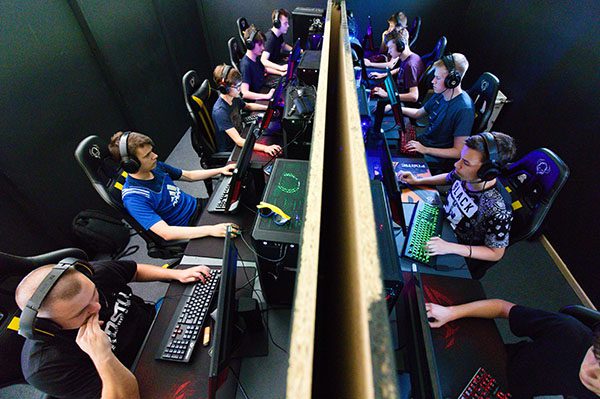
Estars: Gaming in general has some of the most passionate, rabid fan bases in any genre that you could possibly find.
Let’s talk about what your business is and how you make money. You’re the premier competitive gaming production company in the world. You not only provide the production, but you also offer people a chance to sponsor these events in person. It’s not, “This is just somebody playing a game. This is an actual event.” For those people who maybe haven’t been to an event, can you describe the sponsors you’re attracting and why this is so much more engaging for them to put their money here versus running a commercial on a football game or whatever?
I’ll quickly run through our core main business pillars that we have between Estars, the platform and Estars Studios, which is our production arm. What we have in our portfolio a white-label business. The world’s top game developers will write us a check. We’ll run their eSports events from A to Z. That can be everything from broadcasting, production, stage design, all the way through lead operations, talent management and player management and all of it. We have a large array of the top gaming companies and platforms in the world that we service multimillion-dollar business.
Give us a sense of how many people typically show up in an event like this. Is it like being in a football stadium?
It depends. We’ve done events at this point in LA that had over 3,000, 4,000 people to it. Our own studio holds about 200 people. It depends on what the developer is looking for, the look and the feel you want to do. Traditionally, when you turn on the TV and you see all the excitement around eSports, you’ll see shops from Korea, Asia, China and Europe where eSports is significantly further down the path and much more mature versus in North America. There are tens of thousands of people that show up to some of those events. North America is probably three to five years behind that in general but there are varying degrees of eSports competition and crowds that come in. It’s the beauty of it. There’s excitement that you can generate out at eSports online between two players playing a game online or two players in a room. You can take it to a stadium and have it in front of tens of thousands of people and feel the energy. That’s a pretty unique thing.
If I compare it to people watching chess champions, for example or people coming to watch live sports as they know. This is eSports. The passion is the same if not more from what I’ve seen for this. Would you agree that it’s the same or more? If so, what makes people so passionate about this?
[bctt tweet=”Failure and frugality have valuable lessons. ” via=”no”]
I would say that gaming in general has some of the most passionate and rabid fan bases in any genre that you could possibly find. It’s a function of how engaging some of the content is and how much fun people have in playing some of these games. If you turn it around, it’s almost like finding the most passionate football fans for example.
They wear the colors on their face and paint their face.
The thing about football is the games only run on one day of the week. Their outlet is one day of the week. ESports and gaming, in general, go 24/7. You can imagine having a rabid Seahawks fan have a game they can jump into 365 days out of the year 24/7.
With my background in advertising, the secret sauce is emotional engagement for advertisers, whether it’s the commercials emotionally engaging or there’s product placement that makes you part of a movie. You’re offering this at a whole new level, this emotional rabid fans as you describe them. Their emotions are already revved up. Is this particular target mostly male at this point?
Yeah. I think the last time, I saw it’s roughly 70% male, 18 to 24. However, I do think that what we’ve seen, the female audience is growing quickly. It’s a testament to a lot of big game developers making an effort to make gaming much more accessible. An environment for women to participate in the community is much more accessible, which is awesome. My assumption is as time goes on, it’s going to skew back towards probably a 50/50 type community in all of gaming. If you look at something like mobile games, which skews significantly towards women, I think that will cross over to PC and console as time goes on because it will normalize out based on population and accessibility and all of those things. Right now, it’s skewing towards the younger males.
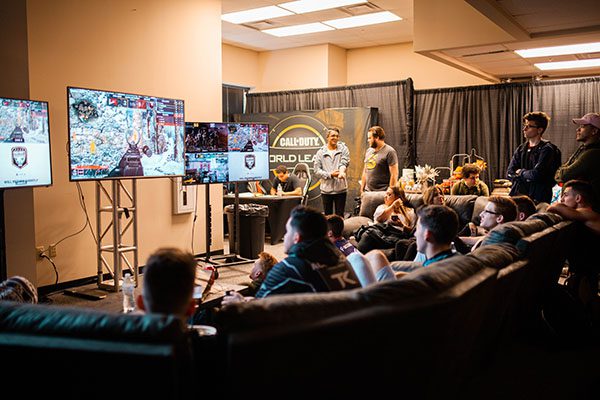
Estars: Interactive engagement is where basically the viewer is either actively engaging with content that we’re creating or accepting content that’s being created in real time.
That’s a very difficult audience for advertisers to reach because TV tends to skew female. You have a great niche for companies targeting automotive sales or electronics.
With the advertising background, you can appreciate it. You can even see the strategy. I saw a study that said of the four major sports, football, basketball, baseball and NHL, in North America, most of those ages, the median age, is 38, 39 or 40. When you look at what the NBA is trying to do with the eSports, look at it like, “I have this demographic that’s around 38, 39. I can use my eSports league.” There’s a lot of hoopla around the NBA 2K League, which is my assumption is that in the next few years, every NBA team will have a joining NBA eSports team. That’s an NBA 2K League. I can use that league as a way to tie the advertisers to buy the overall package of the NBA. Now, I broadcast digital. That skews older but now I have this group that I can sell for 18 to 24-year-old males. I can sell advertising on that with the eSports league.
That’s the dream audience for a lot of movies like Star Trek and Star Wars. That’s the target that goes to the movies multiple times and they love it. Have you done any sponsorships of particular movies yet?
Not yet, but we’re working hard on that. We’re working to solidify some partnerships there. We love trying to find the right movie-type trailer partner because of the evergreen nature of that content. There’s always a new movie coming out. They always want to reach a younger male audience. There’s always a piece of that marketing budget that’s going toward that in most instances. We love that. We’re looking for the right partner in that respect where it makes sense to integrate into our own offerings. It includes the WSOE in our owned and operated league.
You made the decision to rebrand ESP gaming into Estars. What was the genesis of that?
[bctt tweet=”The industry in general is taking this frugal approach to fragmented sectors and figuring out how to build a sustainable business. ” via=”no”]
We have a production business. In the background, we’ve been building an engagement platform. Estars is the actual platform. The idea of Estars as a platform, I call it as a second screen experience that takes a lot of what traditionally we would say are gambling mechanics or put it in a free to play space that’s unique to our content and our partner’s content. We always knew that we wanted to have a product that was out in the eSports that we felt added value to the viewing experience. If you look at eSports concept, the two main ways to monetize is sponsorships and distribution. What we’re trying to figure out and what a lot of people are trying to figure out are other ways to monetize all the millions of eyeballs that are tuning into this content outside of the traditional way to do it.
We feel that interactive engagement, which is the viewer either actively engaging with that content that we’re creating and/or accepting content that’s being created in real-time are two very distinct ways that eSports as an entertainment medium where it makes a lot of sense for us to take a look and see in terms of investments. If there’s anything unique and creative we can come up with, which we do feel we’ve done with Estars. That was always going to be our big bet. We kept that under wraps for a while. Now it’s out in the wild. With that, the genesis was we initially had launched our production company under the name of ESP Gaming. It made a lot more sense to align the companies, both on the production side and the platform side. We didn’t have to build two brands. We knew that all of our ESP stars studios content would try to encompass Estars as the platform as riding shotgun with all of that content anyway and then vice versa. It made a lot of sense to almost make the companies parallel and build one large brand that encompasses what we envisioned in terms of the viewing experience for eSports.
It reminds me a little bit of your previous employer. Amazon was known for selling books and now they’re known for producing content and selling all kinds of things. It’s an interesting thing. Your Estars Studio is based in Vegas and you have Emmy-winning producers there. To me that begs the question, “How, if at all, do you see this fitting into Apple and Google, competing with Netflix and all of these this huge demand for content?” It seems that you would be producing content that would either be on one of those platforms or have your own channel on one of those platforms. Is that in the future?
We’ve invested heavily in the talent on our production side. We do have fifteen Emmy’s on staff who have won in various live sports. They come from varying degrees of gaming companies as well as MMA companies, as well as live sports and production companies. We invested heavily on that. The main reason is we wanted to differentiate the view of our content on everybody else in eSports that we’re producing, which is hardcore traditional five-gamers or four-gamers type content. We are looking to expand who can consume our content and find it entertaining. Our strategy was like, “Let’s find that’s in the business who do see eSports as the next frontier and combine all of these genres and industries into one high-powered team and go from there.
What you’ll see from us over the next few months is that we’ll start to utilize the team we put into place. That means we’ll keep continuing to run our owned and operated league. The WSOE is what we feel is the best eSports content out in the wild. We’ll continue to do that. You’ll start to see us start creating content that is new and unique that nobody in gaming has done. That could be documentary in the vein of 30 for 30 on ESPN. That could be movies or content that is competitive but not the traditional eSports competitive. That could be talk shows or anything.

Estars: Always look to expand who can consume your content and find it fun and entertaining.
Do you have your own acronym? Instead of calling people broadcasters, you just call them casters. How do you get to be in the top ten? That’s a show waiting to happen. How does somebody become that in the competition? It’s almost like watching somebody at a live auction.
That’s all content that we would be in a very tough position to produce without the studio you referenced in Las Vegas. It’s located in Aria. We share it with our sister company Poker Central, which produces The World Series of Poker for ESPN. They also operate the PokerGO OTT app, which is the Netflix of poker that’s out there. We have this beautiful studio in the heart of this strip where we can produce this content 24/7. It’s a unique advantage that we have and we’re very lucky to have it versus any other sports company in the world.
Is it open to the public for tours?
It is open when we’re filming. You can come and check it out whenever we’re filming either poker or eSports. Whenever you’re down, I’d love to have you.
You’re in the right spot. I come to Vegas quite a bit, giving keynote talks. How can people participate? Everything from going to your website and playing the games to coming to Vegas to watch something being filmed and to if somebody says, “Can I invest in your company? Are you on the stock market?” Give us the whole range of all the opportunities that readers can say, “I want to get into this world. I want to be part of what Jeff’s vision is.”
The easiest way to see what we’re doing is to check out some of the content we created. You can see any of our content on Twitch.com/WSOE. You can see a lot of the stuff we’re doing there. We’ve also signed a bunch of linear television distribution deals. You start to see a lot of our stuff running on traditional broadcast television. What you also start to see in the back half of this year is us with a renewed focus around grassroots type community tournaments. We’re running an event at the end of July featuring the game of Tekken. The cool and unique thing around that is we’re having a lot of live qualifier in California. You can qualify in that specific tournament. If you qualify, you get a free trip to Vegas where you can compete in WFF7 and for the $30,000 prize pool that we’re offering for that live on Twitch. You get all of that cool recognition and experience. The other cool thing on what we’re doing with that is it’s a qualifier for the Olympics. We partnered with the United States eSports Federation and we’re offering that as a qualifier in. That’s a cool thing that we’re doing as well. You’re going to see a lot of online tournaments that we’re trying to put together that will be much more in volume. You can think about how the WSOE relates to the UFC. Our monthly WSOE are like the UFC Pay-Per-View. They’re really big.
This is global. The WSOE is the World Showdown of Esports.
It’s global with really large event series. These tournaments and these communities are operating 24/7. We’re trying to show up in the back half of the year with some of our content schedule is figure out how we service those communities. How we get those people who are playing for fun and are skilled to a stage like the WSOE in the center of the Strip at the Aria playing in front of millions of people online. How do we get them there? We’re trying to figure out programs to do that. It’s almost like in the vein of the UFC. It’s like Dana White’s Contender Series or Ultimate Fighter. How do we take those people who have the skill set? How do we get them into the bright lights and the main stage of Vegas? We’re working on some concepts there. They’ll start to see us develop all of that stuff in the backend and figure out the next phase of how the WSOE will grow.
You remind me of a young Richard Branson and what Elon Musk is doing. You have big visions and big global impacts and it’s been wonderful hearing your vision, expertise and uniquely qualified background to execute this vision. Congratulations on all your success. It’s going to be fun cheering you and Estars on.
Thanks, John. I appreciate the time.
Links Mentioned:
- Estars
- World Showdown of ESports
- Estars Studios
- Poker Central
- PokerGO
- United States eSports Federation
- https://www.Estars.com/
- https://www.Twitch.tv/wsoe
- https://www.EstarsStudios.com/
About Jeff Liboon
 Jeff Liboon, Co-Founder and President for Estars, is responsible for product and business development, including the creation of the World Showdown of Esports (WSOE) and managing white-label production growth and investments.
Estars is an interactive esports engagement platform set to launch in Q3 2019, which will provide a new viewing experience for esports fans around the world.
Jeff Liboon has more than 10 years of gaming experience working with top-rated platforms like Amazon App Store, Xbox Live and several top 10 mobile game developers in the esports industry. Prior to his current role, Liboon helped create the Amazon mobile esports team and grew attributed revenue to eight figures in one year. While at Amazon, he also conceptualized and executed the very successful Mobile Masters and Champions of Fire esports events.
Liboon also led product marketing for skill games at DoubleDown Casino/IGT Interactive, including Poker, Video Poker, Bingo and Blackjack, and managed the content management and advertising operations teams at Popcap Games (EA) for several top 25 Facebook and mobile games including Bejeweled Blitz, Zuma Blitz and Plants vs. Zombies.
Wanna Host Your Own Podcast?
Click here to see how my friends at Brandcasting You can help
Get your FREE Sneak Peek of John’s new book Better Selling Through Storytelling
John Livesay, The Pitch Whisperer
Share The Show
Did you enjoy the show? I’d love it if you subscribed today and left us a 5-star review!
-
- Click this link
- Click on the ‘Subscribe’ button below the artwork
- Go to the ‘Ratings and Reviews’ section
- Click on ‘Write a Review’