
Global Investing: An Entrepreneur’s Global Perspective With Sleem Hasan
Posted by John Livesay in podcast | 0 comments

As the years go by, it seems like the world has become significantly smaller. It has become easier by the day to reach other people and even set up your own business. In this episode, John Livesay interviews Sleem Hasan, the founder and CEO of Privity FZ LLE, to talk about global investing. He takes us through a global lens of his own journey that spans different countries and shares the different lessons and experiences he got. How can being globally competitive help you? What are the benefits of a global eye? Sleem answers these questions and more with John.
—
Listen to the podcast here
Global Investing: An Entrepreneur’s Global Perspective With Sleem Hasan
Our guest is Sleem Hasan who is an experienced owner with a demonstrated history of working in venture capital and the Japanese capital markets. He is skilled in investor relations, securities, asset management, investment advisory, and working with technology entrepreneurs. His strong entrepreneur professionalism is with a Part III Mathematical Tripos from Cambridge and a Mathematical degree from Oxford. He’s also the CEO and Founder of Privity, which is an independent Dubai-based advisory firm founded back in 2004. Sleem, welcome to the show.
Thank you, John, for having me.
I always like to ask my guests to take us on their own little journey, their own story of origin. You can go back to your days at Oxford or childhood when you first realized, “I’m interested in math,” or I’m guessing back when you were a child, the concept of entrepreneurship was not as well-known as it is now.
I usually share my background using six different flags. The first flag is that of Fiji island because that’s where I was born. The second flag is from Pakistan because that’s where my late parents hail from. The third flag is from Nigeria in West Africa because that’s where I grew up. The fourth flag is the United Kingdom because that’s where I went to study at university. The fifth flag is Japan because I spent 37 years of my life dealing with the Japanese markets, first at Nikko and then with Hasan Financial Corporation, my first startup. The last but not the least flag is the United Arab Emirates, which is where I reside in Dubai. That’s zero to date with six flags.
You would be the definition of a global citizen based on those six flags.
You could say that every part of it was not by choice where you’re born, where you grew up.
[bctt tweet=”You don’t need to get other people to believe in yourself when you believe in yourself.” username=”John_Livesay”]
After that, it becomes your journey. I’m sure a lot of people are as intrigued as I am to ask this next question, which is how many languages do you speak besides English?
Badly, probably about six. Fluently, probably 2 or 3 but I love languages. I speak my own language which is Urdu. Although, I grew up in the northern part of Nigeria. I’m comfortable in Hausa. I learned French at school, a bit of Arabic because of my religious background and a bit of Japanese I picked up working with Japanese. Having said that, I’ve picked up a bit of Italian along the way, a bit of Spanish.
There’s a real connection between music, math and languages, don’t you think? There’s a structure to all of it. There’s a rhythm to it. It’s a tuning your ear and formulas even about, “This is what pass perfectly is,” or those things. The Japanese language is extremely different than the Spanish, Italian, or even English and they write, I believe, with their hands as part of symbols.
It’s funny you say that because I go one step further and I draw parallels between actually Mathematics, which is what I studied at university and Entrepreneurship. What do mathematicians do for a living? They solve problems. What do entrepreneurs do? They solve problems too. In my humble mind, there must be some homeomorphic map in the mind of a mathematician and the mind of an entrepreneur.
I’ve never heard anybody else frame it like that and it’s brilliant because if you’ve ever had any kind of math and I did some calculus a little bit and things like that, or even basic geometry is all about solving for X or Y or whatever the answer is. If you think of yourself as a problem solver, when you create your company and I get into this is where our lives and our passions crisscross is my passion is helping founders be able to craft a story and show empathy for the people whose problems they’re solving. The better they can describe the problem to a potential investor. I think investors like you think, “This entrepreneur probably has the solution because they understand the problem well or they’ve experienced it.”
Whenever any two people meet, whether it’s entrepreneurial and investor, two friends meeting at university on open day or even a boy meeting a girl, what is the most important thing? You’ve got to catch them at hello. The minute you catch somebody at hello, the person gets engaged. That’s exactly what I tell entrepreneurs today. You’ve got to catch the investor at hello because it’s that first initial impression that we’re the chemistry exchange is pointed and very pertinent. If you can capture that and then they get engaged, they want to know more. If you’ve got a ten-minute pitch and you spend the first 5 or 6 minutes taking them down a cul-de-sac, the chances that they’re going to lose, you’re going to get lost in translation and they lose interest. That’s my two cents for whatever it’s worth.

Global Investing: It’s that first initial impression where the chemistry exchange is very pointed and very pertinent.
It’s worth way more than two cents. I tell a lot of investors when I’m working with them on their pitch, “You may have ten minutes in front of an Angel group or even more if you’re a venture level, but you only have 90 seconds.” Grab them at hello. I tell people, “The biggest mistake I see,” and I’d love to hear what yours are, “Is they waste those valuable opening seconds with cliché things like, ‘Thanks for this opportunity. I’m excited to be here.’ No one cares that you’re excited. It’s not about you. It’s about the investor.” I’m all about jumping right into a story that pulls people in.
It’s very important to outline the problem with the story. I think starting your pitch with a compelling story is important. I even say that on my website when I talk about Privity. I say, “I’m agnostic to geography as I am to industry vertical. I only care about the underlying compelling value proposition of the idea.” Straight up on my website for anybody interested. Literally, you go to the first landing page. That’s the first paragraph you’re going to meet. I want to capture you at hello. If you go to Privity, you’ll see I’m practicing what I’m preaching.
First of all, that’s unusual because a lot of investors are not geographically agnostic nor are they open to multiple industries. I always love going to the portfolio page when I prepare to meet an investor whether it’s interviewing them for my show or if I worked with a founder who’s going to pitch an investor. That to me is a sign of respect that you’ve taken the time to do it. The one company that’s on your portfolio page that I would love to hear about is Kiwi Wearable Tech because I have a fashion background. That one intrigued me to know more about that one.
I’ll tell you how it came about. For better or for worse, since I built the portfolio, three companies I’ve exited and three companies crashed. Kiwi is one of the latter, which did not do well, but I had an interesting journey learning about the wearable technology. A brilliant founder I met in my early days in Dubai, got to know him and then we relocated to Canada. He came up with this idea of what he was doing, building up this wearable technology business and the IoT. This was early days IoT. It’s morphed since I got involved with Kiwi, but there was a lot of learning there. They did get an offer early. It was from Intel or Google, I forget which one, but it was a serious offer on the table, but it was a low offer like a $10 million or $12 million exit.
As the shareholder, I told the guy, “It’s a result. You’ve done well,” but like a lot of founders or entrepreneurs, they’ve all got the big unicorn on their minds and they all have the dream. The founder had majority stake in it and whilst we all advised him as shareholders to take the money and start again. He chose to go a different path and then he ran out of money. The classic story. There was a lot of learning one can get out of the Kiwi story and I’m glad you picked that one. Not everything that one gets involved in turns out smelling of roses. It’s being in the trenches, working with these companies day in, day out, and then learning from the mistakes. I always tell people it’s not success or failure, you either succeed or you learn. You learn from the mistakes you make and that should then reinforce when you encounter the next one, you’ve now got that data point you did not have the day before and that is worth its weight in gold.
I would imagine part of your magnetism as an investor too because if someone’s got a great idea, maybe some traction and revenue, they’re looking at multiple investors, like you look at multiple founders. I’m always advising founders, “You don’t want any money, you want smart money,” and someone with your experience and having those data points and references because without a frame of reference whether it’s connections to help the company grow or knowing the right time to exit or not is crucial in who you decide to go with.
[bctt tweet=”No meeting in life is ever a waste of time.” username=”John_Livesay”]
Whilst I don’t make any claims to be a Sand Hill road type VC nor do I even have a fund. I have built up a business in my own way, but I work with entrepreneurs. I cut deals with entrepreneurs because I’m an entrepreneur myself and it’s a different model that I’ve built out here and I have mobilized a significant capital for early stage investing through a network that’s kind enough to share the good, bad and ugly with what I do. There’s one particular investor who’s comw in four times as recent as July 2020 and as early as 2012.
He’s followed me into stuff I do. He’s benefited from the pluses and at the same time, he’s experienced some of the negatives, but he’s backed me because he believes that there’s a method in my madness, which he appreciates. I’m grateful for that. We’re all looking for the ball you want to bat out of the park, but I’m happy to crawl before I walk, before I run and keep working hard and building up that value. Hopefully, your LPs, your investors, people who would like to be part of your journey will see that down the road.
What is the kind of business you’re in, if you don’t mind me asking, that allows you to create an enough income to invest in startups?
I had a separate business which sold in February this year. It was my first startup called Hasan Financial Corporation. That was my first taste of entrepreneurship when I made multiple returns of my capital in the first three years, which was reported at UK Companies House with the UK Regulators. It was a buy and sell side advisory firm focusing on the Japanese markets. I ran that business for 24 years and I sold it in February 2020 before COVID broke. That was one of the funding vehicles I used to finance my experiment I would call it here in Dubai when I started Privity. In fact, the first five years of Privity, it was a nonevent. I got involved in a couple of branches, which were not tech because I was too early here.
Dubai was in build mode back then. I don’t know if you know Dubai, but there were cranes, construction work, real estate. That was the order of the day. I call it Dubai 1.0 because that’s what I found. Nobody was interested in tech. Nobody’s interested in venture. The ecosystem was not what it is. It’s quite robust. There’s a lot of activity in this space, in the region as a whole. A lot of FinTech companies are coming out of the region. There have been interesting exits out of the region. Amazon bought a startup in this region at a huge valuation. It’s on the radar and like anything else in the world. That’s why I talked about the six flags, right at the get-go of our conversation, because that is ultimately who I am.
I don’t have a parochial view to life. I look at the view of the world in a 360 manner. It’s very important. Maybe a data point in China can actually affect what you’re doing here or a data point up in Russia could be moving the needle down here. The whole interplay between all these different data points builds a very interesting fabric around your portfolio. And so I’m open to opportunities wherever they come from and thanks to the six flags I keep referring to, it’s been the biggest blessing in disguise. Perhaps, one of my strengths, it’s like moving a mouse seamlessly through from Japan to Nigeria, to London, to Pakistan, and back to the United States in 0.6 seconds, I can do that because I know where the bodies rlies and who the people are in those different geographies.

Global Investing: No meeting in life is ever a waste. If somebody is kind enough to knock on your door wherever they are, never say no.
You’re the global Sherpa.
If you can move from Asia, Africa, Europe, US seamlessly, that’s a huge swathe of land. It’s a huge content you’re covering. The beautiful thing about sitting in Dubai is that it’s probably one of the few geographies I’ve ever lived in that you can cover the entire world on the same business day, without compromising on your sleep. You could be a one-man shop or a huge multinational sitting in Dubai, but you’ll have that advantage because of its geographic location.
The fact that you have such a success record in FinTech, that must give you a lot of expertise. For looking at FinTech companies, I read one of your articles, you posted on LinkedIn around FinTech. That’s why I was curious to see what your expertise was while you’re not locked into FinTech, you certainly have an ability to analyze it not just from one country in the world.
You flatter me John, I’m not the clever one. In fact, however much somebody on this side of the guy who was writing a check or who’s helping get the checks for the people who wanted, the clever ones are the entrepreneurs. Let’s be clear about that. To me, I bow my head to the guy who’s generating the idea, not the guy who’s writing the check. To me, those are my teachers. In fact, I jokingly refer to Privity as the cheapest MBA program in the world because I’m learning from very very smart minds about different businesses.
That leads me to the question about LF Technologies. That one fascinated me as well. I’m sure there’s a story there. The first time you heard their pitch, the LF is all about rapid creation of marketplaces through how they’ve reinvented two things, online commerce and search. A lot of people I think would say, “I think we’ve got that handled with Google and Amazon. How do you reinvent that?” That’s what fascinates me to hear that story about LF.
You must be either clairvoyant John or something because the two companies in the portfolio have very interesting stories that’s still there. In fact, while it’s a UK holding company base, the operations are out of your backyard sir in Austin.
[bctt tweet=”You’ve got to catch the entrepreneur or the investor at hello.” username=”John_Livesay”]
That is a little same energy. I’m a big believer in quantum physics, energy and trusting your gut a little bit.
And in fact I met the founder through another portfolio company of mine called Boloro whose chairman is a YPO. I helped Boloro in 1st, 2nd and 3rd run. In fact, that was my third small exit out of my portfolio in 2019. This is a company based out of New York. The chairman reached out to me, what I was doing and he said, “I want to introduce you to somebody.” It was word of mouth. When I found out what LF is doing and what they’re doing specifically in artificial intelligence, I rolled my sleeves up and told the founder, “I want to be part of your journey.” Now, he’s a dear friend and we’ve been on that journey.
One of the things that stands out on your portfolio page about LF is they have a paradigm shift called an intelligent marketplace and that alone, as someone who loves stories and good soundbites, is something that intrigues our brain to want to go, “Wow.” I know what intelligence of things are and I know what an intelligent shopper might be, but an intelligent marketplace, that to me is intriguing. Can you shortly give a little hint of what they mean by that phrase?
Nowadays, cars are going to drive themselves. Your fridge will be able to talk to the supermarket and tell it’s running out of milk. Things are going to be talking to one another, but the one thing that still is in the dark ages ever since Google and Amazon came along is searching the marketplaces. What is Amazon? If you think about it. You’ve got a search box, you’ve got some kind of engine at the back that generates searching for let’s say a 40-inch Sony TV. It’ll come up with suggestions and maybe what is it that John Livesay wants doesn’t come up on the first page so you spend more time, 2nd, 3rd, 4th, 5th, 6th, 7th, and maybe 9th page right at the bottom, you may find what you’re looking for.
What if that platform learns a bit more about John Livesay and says, “I’m not going to show you 40-inch TVs. Maybe there’s a 60-inch TV that is within your budget. It’s a good brand?” You would respond to it, “If I knew a bit more, I could find a way.” Instead of you searching, it’ll fetch it for you. Like in the old days, when you used to ring up a broken the marketplace and tell the broker, “Buy IBM for me at $40 if the price hits. I’m not going to spend all my time watching the screen and stuff and if it hits that price, either buy for me or come back and tell me the markets where I can can trade.” Think of it that way. That’s the automation that one can bring into the world of search and market place. I don’t know if that answered your question.
It does, because I went through an experience moving here to Austin. You’ve been here, it’s beautiful. There’s a 300-acre park and there are all kinds of bike trails along the lake. I thought, “I want to buy a bike.” Not realizing that bikes are in the same category as paper towels and toilet paper during a pandemic. There’s a shortage of bikes, but the fact that I was trying to figure out where to go to get the bike, asking friends and started looking at things, suddenly I’m finding things in my feed about, “Here’s a helmet you might like and here are all these other things.” I’m like, “I’m looking for a bike.”
[bctt tweet=”It’s not success or failure. You either succeed or you learn from the mistakes you make.” username=”John_Livesay”]
This particular intelligent agent, intelligent platform can be applied to just about every single vertical you can think of. It could be a real estate, hospitality, travel. It doesn’t matter what the vertical is because the principle, you’ve got two sides of the equation. You’ve got a buyer and a seller. It affects you’re creating intelligent stock exchanges where everybody in the world, anybody can be a buy and sell at the same time. That’s the ultimate vision of it.
It’s because you’re giving people information when they need it at the right time. Otherwise, you’re wasting your time and money at marketing to somebody who’s not in the mode of buying whatever it is.
Inadvertently, you’ve picked on something else which was always my dream at Privity sitting here in Dubai, and that is I want to be agnostic to geography industry, but at the same time, I want to be global. You picked up two portfolio companies. One that’s in the portfolio, one that didn’t work, the first one you picked on was out of Toronto in Canada. The second you picked on is in your backyard in Austin, what you’re hearing about for the first time and where am I sitting? In Dubai. That is my vision. I don’t care where. If I have the good fortune of meeting the founder, whether it’s offline, online, and because of COVID, a lot of us couldn’t meet face-to-face. Zoom and Microsoft Teams are the order of the day. That was my vision to do that. There are examples that you’ve picked and I can talk about sitting thousands of miles away in my little garage in Dubai.
Do you have any last tips or thoughts you want to leave with us? Either a quote or a book you like, or philosophy about resilience or grit?
One of my favorite quotes is that of the late Stephen Keshi who was the coach of the Nigerian Eagles, the Nigerian football team. He said, “I don’t need you to believe in me to succeed. I will work hard and when I succeed, you will believe.” I’ll leave you at that.
What a great way to end the show. I love it. Think of yourself almost like a stock is my takeaway from that. When you know what your work ethic is and your skillset, then you’re not trying to prove anything to other people and you find the courage to stay focused on making your own stock, your own brand if you work stronger.
I also have two simple sayings in life. No meeting in life is ever a waste. If somebody is kind enough to knock on my door wherever he is, I will never say no. That is a conversation for another day because one of my portfolio partners, which has got nothing to do with tech was one of the biggest lessons in my life. If you’re interested, you can learn about an artist who’s in my portfolio by the name of Ralph Heimans. You’ll see it in my portfolio. It’s not a technology, it’s an artist. The question you should be asking is, “What is an artist doing in a tech portfolio?” That’s a conversation for another day and I hope that creates some intrigue.
That’s a fantastic way to get people to go to Privity.com. You’re on LinkedIn. Is there any other way you want people?
PrivityLLE.com is the URL. I’m on LinkedIn under my name. Privity is also on Facebook. I’m on Twitter as well under my own name and I’m socially on Instagram, the usual suspects. Thank you very much for your time.
It was a joy getting to interview you and know you a little bit.
Important Links
- Privity LLE
- Privity.com
- LinkedIn – Sleem Hasan
- Facebook – Privity LLE
- Twitter – Sleem Hasan
- Instagram – Sleem Hasan
- Better Selling Through Storytelling Method Online Course
Wanna Host Your Own Podcast?
Click here to see how my friends at Podetize can help
Purchase John’s new book
John Livesay, The Pitch Whisperer
Share The Show
Did you enjoy the show? I’d love it if you subscribed today and left us a 5-star review!
- Click this link
- Click on the ‘Subscribe’ button below the artwork
- Go to the ‘Ratings and Reviews’ section
- Click on ‘Write a Review’
Love the show? Subscribe, rate, review, and share!
Join The Successful Pitch community today:
- JohnLivesay.com
- John Livesay Facebook
- John Livesay Twitter
- John Livesay LinkedIn
- John Livesay YouTube
How To Monetize Your Blog With Alex Nerney
Posted by John Livesay in podcast | 0 comments


Gone are the days when blogs are like their authors’ personal diaries. Today, blogging can be monetized just like any other business, if you know where to start. This is what health and wellness blogger, entrepreneur and adventure junkie, Alex Nerney, teaches to his community at Create and Go, a website that teaches people how to build a blogging business and make money from it. Alex also runs Avocadu, a health and wellness website that reaches over 3 million visitors yearly, as well as two YouTube channels that offer unique content in his two passions – blogging and wellness.
Joining John Livesay on the podcast, Alex shares his personal blog monetization philosophy, which puts emphasis on finding a niche and dominating the one platform where you can find the people who will get the most value from your content. He also talks about affiliate marketing and creating products and services based on what your community wants. With Alex at your side, you won’t have to burn bridges anymore to focus on your blog; he’s already done that for you!
—
Listen to the podcast here
How To Monetize Your Blog With Alex Nerney
Our guest on the show is Alex Nerney. Alex is an adventure junkie and he shares with us his passion for sports, performance, taking action and not just writing captions. He said, “Actions speak so loud that I can’t hear what you’re saying.” It’s one of his favorite quotes from Emerson, so much so that he has it tattooed on his arm. He said, “Building a community and dominating one platform are the key to success.” Enjoy the episode.
—
Our guest is Alex Nerney, who is a highly successful internet entrepreneur running two separates million-dollar websites. It all started when Alex and his business partners quit their jobs, sold almost everything they own and went all-in on that first website. Thus, Avocadu was born within a year reach six figures. That inspired the creation of Create and Go his online business, which teaches others how to start a blog and monetize their passions. With those successes under his belt making over a $100,000 per month online, he saw the potential and started Create A Pro Website, which is a YouTube channel teaching people how to start their own website from scratch. He’s grown that company to over $60,000 a month with over 100,000 subscribers. Now he is helping other people live their dream. Alex, welcome to the show.
I’m glad to be here, John. Let’s do this.
I’m going to ask your own little story of origin. You can go back as far as you want, childhood, high school, college, whatever it was, where you got the sense of who you were, that the normal 9 to 5 was probably not going to be your world.
The most relevant place to come back all the way to would be 2010, where I had a similar experience as many entrepreneurs and many people who start in this space. I was in college at the time when I read The 4-Hour Workweek. At that time, I wanted to do something different. I felt different. I knew I was different. I had no idea what that was or would be, but that book led to opening my brain up. Thinking of the possibilities of internet entrepreneurship, trying something new, and living an uncommon life, those are the things that interested and inspired me at the time. When I graduated, I was like, “I do not want to work a corporate job. I don’t want to work a corporate life. I want to work for myself and try things.” There was a ton of failure before success between 2012 and 2015. When I graduated in 2012, I was working as a personal trainer. I was a bouncer for periods of times. I did end up working corporate for three months at a time and hated it both times. I’m constantly trying to find my way. There are lots of dark days and weird times in there. It was a big struggle in the beginning to figure it all out.
That’s important to say. I appreciate you being that vulnerable because when people see the successes and they don’t hear about the struggle or the challenges, then they can’t relate to you. There are probably some similarities from your expertise as a fitness trainer and an adrenaline junkie to entrepreneurship. Can you connect the dots for us? Are there any metaphors or analogies you have about trying to get more muscle? You have a whole very successful video about how to lose belly fat. Are there any similarities about letting go of negative thinking or anything around that you’ve been able to observed?
One of them that makes a lot of sense to me was a couple. The first is if you wanted to relate to the physical fitness aspect, you’re trying to gain muscle naturally, it takes an enormous amount of time. Most people don’t make it through what I called the poop phase where everything you do in life isn’t working. When you’re starting on a new business, you don’t know what you’re doing. You don’t know anything yet. Everything you do sucks. You haven’t learned or gotten any of the skills necessary to make your work any good. You have to earn that. That’s earned through experiences, time and effort. When it comes to gaining muscle, most people gain it incredibly slowly. What happens is most people give up well before any change or any difference can happen, which is a common problem.
Another big one that I think of is when you’ve done some bungee jumping, skydiving and things like that, we can all get in our heads at times. The secrete isn’t think about it as much. The secret is to do things and to trust that you’re going to figure it out when you take that jump or take the leap. We circle back to our story in 2015 when I was struggling through all this stuff. I started a website that gained some traction. I had a serious decision to make where I was working as a personal trainer at the time and my business partner was working as a CPA.
[bctt tweet=”Find your space and dominate it.” username=”John_Livesay”]
We were deciding on, do we go all-in with this business or not? We had this moment of clarity. We’re hiking in Seattle. We are on this trail. I had this thought of, “What if we quit? What if we burn the bridges? What if we went all-in for it?” At the time, we weren’t making any money. We’re making $0 online. It was a moment of, “What if we burn the bridges and made it our only way out?” That’s what we did. We sold all our things. We sold everything. I remember I have a photo of five bags worth of stuff to our name. We quit our great paying jobs. We had some savings. I moved into my dad’s house in Seattle. We ate eggs and rice every day to save money. We blogged harder than anybody else because we had burned those bridges. We had given ourselves only one way out. It was easy to wake up and work 12, 14 hours a day while building the business and building the dream. Those are some analogies.
I’ve heard Tim Ferriss quote, The Daily Stoic and Gary Vaynerchuk about being willing to do things. When I got to meet Michael Phelps, I said to him, “Everyone says, you’re such a great swimmer because of your physique, but I’m guessing there’s something else.” He said, “My coach said to me, ‘Are you willing to work out on Sundays?’ I said, Yes. He said, ‘We got 52 more workouts in a year than the competition.’” This willingness to do something that other people are not willing to do or haven’t thought to do is a constant story I keep hearing over and over again. It’s a secret to success that a lot of people aren’t willing to do or haven’t thought that they need to do. This is a choice. Someone once said, “You could work for someone for eight hours or for yourself for twelve every day.” It’s that willingness because you’re passionate about it. If someone is thinking of starting a blog to make money, which is what your first real niche was.
Our first niche was health and wellness.
They should pick a topic they know a lot about. What are two tips you have for people like don’t start a blog on anything? Any mistakes you would tell people to avoid?
Starting any business, any blog or any website without passion, true desire and true interest in the topic, you’re going to fail. The big thing there is the hard times ahead of you, you can get through those a lot by self-motivation, watching Gary Vaynerchuk, and grind and hustle. There’s no substituting an actual, true and real passionate interest in a topic. My interest in health and wellness was something I always had carried with me. I played football in Arkansas. I’d worked out naturally on my own. I enjoy the topic. When it came down to blogging and talking about the topic, it wasn’t always in the exact same space.
Sometimes I was talking about things that weren’t as relevant to a guy like me that wanted to lift weights and get huge. It was enough of a relation and enough of an interest that kept me in it even when the times were tough. It’s important. I don’t want to scare people off into thinking that you can’t start about a topic you don’t know about. It’s not about your current state of knowledge, it’s your interest. When you build something new, you will learn as you go. I use the example, Creative Pro Website. Dale who’s the face of the channel and the videographer didn’t know much about building websites when we started out. We knew there was a great niche and a great market there. He was interested in the topic though. By building that business, he knows well better than 99.9% of people on the planet about building websites. Because he’s taught 60-plus hour-long videos on the topic, he learned it as he went.
Is there something that a common mistake you see people making when they create their own personal websites or websites to try and sell a product?

Blog Monetization: If you really want to make money, it doesn’t help to do things just to feed your ego. Always think about what other people want.
Focusing too much on themselves is the big one. I know that’s weird like a Spiderman meme where one guy’s pointing at the other guy. People come to your website, they might be interested in you, but they’re more interested in what you can do for them. The biggest business mistake most people make is they constantly are self-interested in doing things that feed their ego instead of concentrating. If you want to make money, you think about what other people want. That’s what I’d say.
What is your philosophy when you’re trying to scale a business to make a lot of money? Is it have a low price point and try to get a lot of clients? Have a high price point and try to get a few clients? How have you done it?
It’s either-or. I sell low-price products on Avocadu. I sell high priced products on Create and Go. We’ve sold $27 products to $650 products. That might not be a high price for some people reading this. You might think of $10,000 products is very high priced. The philosophy on the scale is simple for me. It is what I’m doing scalable. I constantly am asking myself, am I ever going to be able to outsource this one day to somebody so I can continue to leverage things and move forward? If I can’t, I don’t do that thing. There are lots of instances where we ignore something in order to focus on the scaling.
Let’s talk about scaling. There are a lot of people who’ve created online courses, myself included, and there are lots of different ways to scale that. You can either run ads on Facebook or you can create an affiliate program where people promote your course for you and share the revenue. What suggestions do you have for people who want to scale an online course?
The two big ones are going to be a dedicated traffic driver. You need to find your space, your world essentially and dominate that. I’m against the Gary Vee philosophy of, “Do everything, be everywhere constantly in Snapchat, Twitter, Tiktok.” I don’t do that. I don’t advise that. I don’t like that. My philosophy is different. When we’re starting Avocadu, it’s a health and wellness blog. I was trying to do Facebook ads and try to do everything. I saw that one source in particular that was doing well. That was Pinterest. I decided that we’re going to spend all of our time on Pinterest. We ended up getting 300,000 organic visitors per month from that one traffic source because we were dedicated to it. It was where our people were and we were focused on it. That’s a big one because you need the traffic in order to make the sales and the conversions. Affiliate marketing is the other big one, treating your affiliates well.
Do you have a story of how you’ve done that with one of your websites? Any affiliate marketing stories?
We’ve tried different affiliate programs and affiliate plans, and there are certain ones that don’t work like ClickBank. Back in the day, we tried putting our products on there and got all these spammy and shady characters trying to sell our products. I remember going and looking at some of these sites that were sending traffic and being like, “That’s not what I’m happy with.” Later on, we made our own through Teachable and have gotten people making a good $2,000, $3,000 a month selling our courses, which has been cool to see because that’s a full-time income for a lot of people.
[bctt tweet=”You don’t have to burn the bridges, but you do have to almost have that mindset in order to succeed.” username=”John_Livesay”]
What kind of courses do you sell?
The first course we made was this course called The Yoga Fat Loss Bible. Back in the day, we had a health and wellness website. We’re getting a lot of yoga content and we were selling a yoga product that we didn’t like. It’s an okay product, but we don’t particularly believe in it. We’re like, “We’ll make our own.” That started our journey into making these courses. We made that course. I remember that we immediately went from making $5 a sale on an affiliate program to making $37 a sale. If you’re doing things in volume like I am, that leads to $3,000, $4,000 a month. That’s all the money. We made The 21-Day Fat Loss Challenge, which did way more eventually for us, where Avocadu eventually scaled to doing $20,000 to $30,000 per month.
People are buying that course to learn how to lose weight in a short amount of time. There are videos. Any other support that goes with it that makes your course different than all the other weight-loss courses?
The most important part is the community. You build a Facebook group and Facebook community. My mom is our dedicated manager. We have people who have succeeded in the course. We pay them to stay in the course and to help people along in their journey as well. Because in that community, people buy weight-loss courses. It’s not a new original thought but it’s how you treat the customer, and the community ends up mattering the most. We have those two, but then we also have Launch Your Blog Business, which teaches people how to launch a blog and get started making their first $1,000 to $3,000 a month with Pinterest traffic avalanche.
Let’s talk about the blog for a minute before we jump into the other. There’s a lot of people out there that have an idea for a blog. I know somebody who wants to do a blog and created a blog on surviving cancer that would target cancer survivors. How would someone who has blogged about their journey join, inspire and help other people who want to make the decision whether to have chemo or not? What do they get from going to your course? Is create a blog a course that people buy and that’s how you’re making money?
It’s one of the ways. We make the primary amount through affiliate marketing. A large percentage does come through course sales.
For those people reading, affiliate marketing means people are paying to advertise on your blog because you have a certain number of viewers.

Blog Monetization: Create the products that your people want by asking them simple questions.
Essentially, we’re recommending products and services and we get a small percentage of what we recommend. We recommend hosting or a theme that we use to our readers. When they go purchase that theme, we get a small or large percentage from that.
Let’s stay with this example. Someone’s written a blog about surviving cancer. It’s a topic that a lot of people would be interested in, especially if you’re going through it or know someone. How do you scale that? How does anybody find that so that you could sell a course or an affiliate marketing for it? I know you train this, but I want to give people a little appetizer to want to go find out more. What is the first step someone takes besides going to your site and which I’m encouraging everyone to do? What would be your headline that would make me want to click to go find that out besides creating a blog?
We’ve had students go from $0 to $2,700 per month in mental health issues, helping people solve anxiety and depression, and tough topics. The how-to, the steps are a little more granular and things like you find your target audience. That would be a good blog for Pinterest. You create sales centered content that will eventually lead to a sale one day. You create the products that your people want by asking them simple questions. A big a-ha for us is at the time we were creating courses, we started to ask our audience. We’re like, “How much would you pay for this? What would you like to see? What do you need from us?” That helped a lot.
If a lot of people try to change their eating when they are dealing with cancer. They suddenly go vegan or vegetarian. Maybe the blog would say, “Would you buy a vegetarian cookbook?” That’s what I’m trying to give people a little insight into creating the blog, find your audience, dominate one platform, build a community. From there, you can start to make money with an online business because the biggest mistake people make is, they don’t know who their audience is or how to find them.
A big thing too on what helps people succeed a lot is that everything changes all the time. The internet is in a constant state of flux and evolution. What we do differently is we are focused on the community aspect because the community helps when it changes. Pinterest went under serious algorithmic changes. Lauren, my business partner, was absolutely on top of editing, changing our entire course to help modify for those changes. The whole community talks about, “Pinterest is doing this. This is working. This isn’t working anymore.” That community is what helps solve those problems. The course itself and I tell anybody that information is everywhere online. You don’t pay for the information. You pay for the structure. You pay for the organization. You pay for the philosophies and the mindsets that you need to come at this to be successful. As I said at the very beginning, you don’t have to burn the bridges to be successful, but you do have to have that mindset and that state in order to succeed. Those are the things we focus on. We focus on teaching people how to be successful humans as much as bloggers.
You have this wonderful bucket list of things you’re focused on and want to do. I see that you gave a talk in front of a thousand people. Is that something you want to do or is that something you’ve done?
It’s on the list of to-dos. Unfortunately, it has to be changed and updated.
[bctt tweet=”Don’t just write captions. Take action!” username=”John_Livesay”]
There’s not a lot of people gathering around anymore.
I am getting my skydiving license very soon and that is on the horizon.
That’s a license to jump without somebody strapped on you.
You can jump without somebody strap on you while you’re training, but the license means you can go up at any time without a coach or anybody around you and hop out of a plane.
People love to repeat experiences. Some people like the adrenaline rush, some people love swimming like I do, or some people love golf. What is the thrill? I’ve met some people who skydive and they talk about how many dives they’ve done, and they keep doing it over and over again. I’ve heard other people say, “Once is enough. It was fun but I don’t need to keep doing that.” What for you is the attraction to keep repeating it?
I only got this feeling whenever I would play football at a serious level. It was the intense adrenaline dump with fear. It’s a perverse thing, but I love the feeling of being afraid and conquering that fear. How we grow and evolve as humans is that we have to do things that terrify us. That can happen physically, emotionally, and mentally. Skydiving is a very obvious one. Most people would look at that and be like, “That terrifies me.”
Some people got terrified speaking in front of crowds.

Blog Monetization: Having a community helps you thrive in the constantly changing world of the internet.
My best friend is a base jumper. The end goal is I want to go base jumping in Norway. They have this popular spot called Heliboogie, where they take you up in a helicopter up these giant cliff faces and you jump into the fjords in Norway. My friend who’s a base jumper is terrified of doing karaoke. We all come with these internal fears and weird things. The goal in life is to continually look at those things and continually conquer those things. Because every single time you do, at least for myself, I feel like I grow and evolve as a person tremendously.
It’s getting out of our comfort zone a little bit. Even taking a cold shower every day. One of the benefits besides burning fat is you’re telling yourself, “I can tolerate discomfort for a few minutes.” Does it get any easier on your 10th or 100th jump to conquer that fear?
It does. It gets normalized. I have a motorcycle and the first few times riding that thing, I was like, “This is terrifying. I’m probably going to die.” Over time you learn to conquer the fear. You learn to love the skill that you’ve gained.
I remember, when I skydived, they have you waiting your turn to jump, you see somebody standing in the doorway and then they’re suddenly gone like a magic trick and they’ve literally disappeared. I don’t see them anymore. How did that happen? They did that and they’re gone. You don’t see them falling. Your mind is tripping because you’ve never seen somebody where they are there in one second and they’re gone the next. The smell and the G-force on your face. There are many sensations. You are fully alive. That’s what I would say Is what I love most about speaking as well. When I’m in front of a crowd talking about storytelling, I’m not thinking about what my grocery list is.
That’s the motorcycle. Motorcycle involves all four ligaments. Both hands and both feet are working. You are focused on the road because everybody’s had the experience of driving on the highway and there’s some crap in the highway, you go around it. You hit that on a motorcycle, you die. That makes me want to public speak hearing you say that.
That’s the liveliness. Doing that virtually you still have to become 100% and the energy you’re putting out is different because people are on mute many times, but you still have to be completely present and connect with them in a whole another way. Do you have a favorite book or a quote you want to leave us with?
Books are great depending on the place that you’re in. My favorite quote, I’ve got tattooed on my arm. It’s an old Emerson quote. It says, “Your actions speak so loud, I cannot hear what you say.” I’m big into that. Drake said it in a song, “You spend too much time on captions, not enough time on actions.” I am 100% all-in for the people who want to do things and take action. I’m not as much into the talking and theorizing about things. It’s like, “We’ll talk for a little bit.” I’m like, “Let’s go do it. Let’s go get it.” Because in those years, early on that I was struggling and suffering, I was spending a lot of time in my head. I was spending a lot of my time on like, “The wheels were running up there.”
It’s a great way to end because you started off with “Let’s do this.” Taking action, everything from deciding to lose weight and stopping, talking about all the excuses to trying something that gets us out of our comfort zone, whether that’s a blog or skydiving. Alex, thanks for sharing your passion and enthusiasm, not just for life but letting us all feel we have a shot at following our passion and making money doing it too.
We all do. I appreciate you, John.
Important Links
- Alex Nerney
- Avocadu
- Create and Go
- Create A Pro Website – YouTube
- The 4-Hour Workweek
- The Daily Stoic
- The Yoga Fat Loss Bible
- The 21-Day Fat Loss Challenge
- Launch Your Blog Business
- Better Selling Through Storytelling Method Online Course
Wanna Host Your Own Podcast?
Click here to see how my friends at Podetize can help
Purchase John’s new book
John Livesay, The Pitch Whisperer
Share The Show
Did you enjoy the show? I’d love it if you subscribed today and left us a 5-star review!
- Click this link
- Click on the ‘Subscribe’ button below the artwork
- Go to the ‘Ratings and Reviews’ section
- Click on ‘Write a Review’
Love the show? Subscribe, rate, review, and share!
Join The Successful Pitch community today:
- JohnLivesay.com
- John Livesay Facebook
- John Livesay Twitter
- John Livesay LinkedIn
- John Livesay YouTube
College Success Habits With Jesse Mogle
Posted by John Livesay in podcast | 0 comments

What do college and business have in common? In many ways, the very habits that bring you success in the former are the same habits that will help you succeed in the latter. Join John Livesay as he discusses some of these habits with professional speaker and lifestyle architect, Jesse Mogle, author of College Success Habits and host of From Sobriety to Recovery podcast. Jesse Mogle’s spent 12 years in college while battling addiction. Looking back at all those years, he reflected upon the things that he did that somehow got him through until graduation despite his condition and condensed all that learning into seven actionable principles that will help you succeed not only in college but even in your career and personal life. Listen in as he talks about the importance of a growth mindset, discipline, flexibility and the sheer tenacity to just show up, ready to receive success.
—
Listen to the podcast here
College Success Habits With Jesse Mogle
Our guest is Jesse Mogle, the author of College Success Habits. He said something in the episode, “I’m afraid of missing out on the best version of myself.” He wrote a book to help not only college students but all of us figure out some principles that we can live our best life starting with having a growth mindset and then the importance of embracing discipline and taking action. The one that we talk about is not arguing for your limitations and giving yourself excuses. Jesse is known as a lifestyle architect. I think you’re going to enjoy learning from him tell you how to brand yourself and make your own best life. Enjoy the episode.
—
Our guest is Jesse Mogle who spent twelve years attending college and is not a doctor. However, he is a good friend and an internationally-published journalist who has worked in Singapore, The Bahamas, and Western Europe. He’s been a radio DJ, a copy editor for many publications, and the lead news anchor for a television station in Los Angeles. He’s worked with companies like Universal Studios and Disney, plus working with schools like the University of Florida and USC. He’s an avid motorcycle rider. He once traveled from coast to coast over 12,000 miles in a summer spreading his mother’s ashes in over 100 locations in 29 states. In his free time, he hikes mountains, adds to his 700 and counting concert attending, takes pictures of street art around the world and drives hundreds of miles for sunrises and eggs Benedict. He was raised on the family farm in Indiana, on the beaches of Florida, and resides in LA. Jesse, welcome to the show.
It’s quite an intro right there. I feel like we could do conversations just off of that stuff.
We didn’t even get to your new book, which is called College Success Habits: 7 Powerful Principles to Help You Excel in College and Beyond. You’re someone who embraces life. That’s what I get out of reading about your adventures. You’d love to travel. You’re passionate about life in general. The fact that you were spreading your mom’s ashes, there’s a story there that’s begging to be told. I’m going to ask you to take us back as far back as you want to that family farm or when you started college or wherever you’d like to start the story.
Where to start the story? If I look back, my family and I moved away from Oklahoma when I was four years old. From there, my stepdad was constantly getting promoted and buying new businesses. He was an entrepreneur. About every year we would move into a new school system. I would get used to meeting new friends. At a young age, I got socially-compliant with the idea that we’re going to move in a year and constantly be on the go. A lot of people think I was a military brat, having a serial entrepreneur as a father who bought car dealerships and sold them at will is the same except your dad doesn’t go to battle. Because of this, I became adept by being able to travel, move around, pack light, and go places. The older I got, the more this bug got in me.
Unfortunately, my mom got sick when I was eight years old with Crohn’s disease. That changed the entire dynamic of the family. We were able to go on the adventures that we had always talked about. Once I got older and into my teens and twenties, this thirst for adventure became my responsibility to take on it and do with as I pleased. From there, I’ve been able to live in and visit over sixteen countries. I’ve worked abroad. I’ve visited or lived in the top twenty major cities in the United States. They say you only live once. You die once, you live every day. I have this fear of missing out on my best version of myself other than many other things. Mind you, a whole sidebar to this conversation could be my 22 years in alcohol and drug addiction. I do believe you have to seize those moments in life and make the best of things. Traveling is one of the best ways to do that.
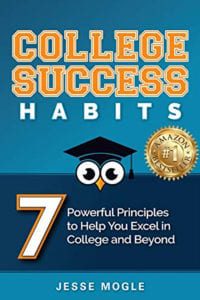
College Success Habits: 7 Powerful Principles to Help You Excel in College and Beyond
We’ve all heard that phrase, “Fear of missing out” before, but I’ve never heard anybody say, “I have fear of missing out on the best version of myself.” I think that’s key. We know there are a lot of jokes around, when people go to college, that’s when you get drunk a lot and you party a lot and all those things. You have talked about your own challenges with addiction and yet, you’re writing a book about college success. Connect the dots for us.
Twelve years in college and it wasn’t on accident. The easiest place for an addict to hide out is in college because alcohol and drugs are prevalent. No one is paying attention to the abuse that’s going on there. If you binge drink five days a week but you can still manage to get grades and stay in school, no one pays any mind to that. I believe that once I left school, I would get sober, meet a woman, get married, go straight into the American dream, which is not how it played out because my addiction graduated with me. There were those moments when I finally had to stop binge drinking, stop doing the drugs, buckle down, and get the As and Bs in order to pass and get onto the next semester, I was able to utilize a fluid mindset.
When I started to get into addiction recovery and think, “What is it that I could teach the future addicts of tomorrow in order to help them see the choices they’re making today become the habits they have to live with and contend with tomorrow?” I started diving into, “What were my behaviors when I straightened up to get the good grades? What were the principals? What were the drivers behind my behavior that allowed me to get a 3.0 after twelve years in school even though I was not the best student?” When I started making a list of all the principles and asserted to ween them out for the ones that had the most impact on me now and the ones I knew I was using then, the book came from that. That’s where the seven powerful principles manifested from was this whole thought process of what did I do then and what can I teach now?
I love this phrase, “My addiction graduated with me.” That’s powerful that we think we will outgrow our addictions or if we change status, change jobs, change cities that somehow magically that will come. I’m fascinated to talk to you about the connection between habits and addiction. Is it a habit that I tend to want to eat dessert? Is it a sugar addiction? Can you speak to those distinctions and how much of addiction is a habit if you think that is the case at all?
That’s a great question because if you like to have a dessert after every single dinner, if it’s not causing you any detrimental harm, if it’s not bringing about a negative consequence into your life, then generally I would say that you’re maintaining a well-balanced mindset around that dessert. If by eating that dessert you start to shame yourself, you go into a guilt spiral. You start to get jealous about somebody else who has a better body than you. If negative emotions come with the eating of the dessert, now you’re starting to talk about where it’s an addiction because you’re eating it and at the moment you’re enjoying it, but then you’re going to beat yourself up for the next six hours about it. That’s not healthy. When you find yourself doing that, then you can say, “Could I just not have the dessert tomorrow?” If tomorrow comes and you eat the dinner, you are craving it and then you start to shake, then you start to beat yourself up. “I only live once and I’m not going to miss out on life and seize the day.” You start to put that kind of thought process into it. Now you’re starting to create closer into the addiction.
[bctt tweet=”The choices you make today become the habits you will have to live with tomorrow.” username=”John_Livesay”]
It’s a really process. Nobody thinks, “I’m addicted to sugar.” They start to look at themselves and think, “I drink six Coca-Colas, I have two cheesecakes, and I have six cookies.” That’s a lot of sugar. If I told you that I used to drink a fifth of Jameson every day, you’d be like, “That’s a lot of Jameson.” Did you know that 250 grams of sugar a day is an awful lot of sugar? Go and measure that out. I can assure you, it looks like a big humongous pile. Now imagine that you’re consuming that every day, that is going to have detrimental effects on you long-term.
When you talk about the seven principles to help everybody excel, not just in college but beyond. Let’s tap into a few of those. What’s your favorite 1 out of the 7?
Hands down, it’s the first one, develop a growth mindset. Everything is built upon the growth mindset. When I started to write all of these out, it became the most obvious of them all. When I looked back on my history when I was going to college, I would have said I had a growth mindset because that wasn’t a trending term. When Carol Dweck, a professor from Stanford wrote the book called Mindset, she put into the lexicon this idea that there’s a growth versus fixed mindset. Once I heard that, it’s almost like somebody shone a light upon the Grand Canyon and a mountain at the same time. All of a sudden, I could see the depths at which a fixed mindset sends you. I could also see the heights at which a growth mindset could send you.
It is hands down the number one most important thing everybody needs to begin to procure within themselves. The shocking thing when people listen to me talk about mindset is, they think, “If I have a growth mindset around my education, physical fitness or my health and nutrition, that means I have a growth mindset everywhere,” and that is not the case. You think in the gym that you can accomplish anything and you approach that with a growth mindset, but then when it comes to your relationships, your partner or the way you take on new challenges at work, you could have a fixed mindset. Your growth in one area does not mean that your growth in all areas. This is something that I cannot stress enough.
I’m fascinated by that because I look at people and I say, “That person’s in great shape, but their finances are a mess or that person’s successful in business and they look like they’re going to have a heart attack any minute.” They’re stressed out, overweight, smoking and drinking and whatever. I totally concur that success in one area does not mean you’ve got everything handled. However, I am interested in your thoughts on if we are able to master let’s say the discipline we have in the gym, could we then take that to the discipline of keeping track of our calories and our exercise? Could we transfer that and say, “I’m going to be disciplined about looking at how much money is in my checking account and maybe even balancing it.” Do you think there are some transferable skills that one person can take from one area to the next?

College Success Habits: Everything is built upon the growth mindset.
The beautiful thing about a growth mindset is when you prove to yourself that you have it in one area, you can then take the skills that you learned. “Let’s go back to the gym. I’m good at the gym. I may not look like Arnold Schwarzenegger from Conan the Barbarian, but I’m good in the gym.” I’ve learned, you mentioned principle number five, is embraced discipline. If I was going to pick all of them again, how do you pick which 1 of your 7 children is your favorite? Being disciplined is one of the most important attributes to all of this because you have to turn it into a habit. You have to go in day by day if you are good and consistent going to the gym five days a week, sticking to the program, being flexible while you’re in there and learning to adapt.
You are then able to see, “I can do that there.” Let’s take that same skillset and now let’s transfer it over to my finances. There will be a learning curve, which is what everyone should expect. If your credit score is 450, but you can bench press 300 pounds, you’re not going to wake up tomorrow with an 800. It will take time and that’s where the discipline shows in. I think it’s integral that everybody sees where they’re growth-minded and then ask themselves, “Why do I have a growth mindset around my health and nutrition? What does that look like within my health and nutrition? How have I accomplished it there?” You then take that why, what, and how, you would slide it right over to your finances and be prepared for the learning curve, but also be prepared for the success that inevitably will come because you’ve already proven that you can do it in one area, you know you can do it at another. Everybody has at least one area. I don’t care if you’re doing crack and sleeping in an alley, you have figured something out and you are the expert at surviving in that alley. You can take that skill and you can transfer it anywhere you want.
The myth for people in college is once you get out of college, you don’t have to learn anything. You don’t have to read any more books. There are no more tests. You’re done. Certainly, in the business world, things are changing rapidly and new technologies, new books, and new social media platforms. You need to figure out, “Am I going to learn blockchain or not? Am I going to learn to go on Tiktok or not?” It doesn’t stop. I think your book about things that help you excel beyond college is relevant especially for a lot of entrepreneurs. I’m guessing, is one of the principles flexibility since you’ve spoken about that?
That is number six, embrace exercise flexibility.
Let’s keep the metaphor going a little bit. I remember once when I was speaking at a yoga convention and they wanted me to help the people there become better sellers of yoga mats and all the other things that they had at all the booths. I took a yoga class and I wanted to immerse myself a little bit in that world. The teacher said, “Most people either have strength or flexibility, but rarely both when they’re doing yoga.” I thought, “That’s interesting. I could relate that to the business world.” You either have a lot of ad dollars and strength to power your message, but maybe you’re not flexible on price changes in the market or a pandemic coming. You’re not flexible or nimble. What can people do to become more flexible in their life?
[bctt tweet=”Planning is priceless, but plans are worthless.” username=”John_Livesay”]
I love the metaphor that you pulled out there because you think about a company like Coca-Cola and how flexible can they be because they are this humongous Goliath in the industry versus some mom and po company that is going to be a much smaller market share. Flexibility comes from knowing that no matter what comes up in the future if you go into it with a growth mindset, you will figure out a solution. The rigidity that comes is when people say, “This is my plan. I must stick to my plan.” One of my favorite sayings is, “Planning is priceless, but plans are worthless.” You can plan all day long. You should.
You don’t go into the gym with just saying, “I’m going to work out biceps today and wing it,” and hope that you figured out. You go in with a plan. The planning is priceless, but the plans are worthless because, at any moment, some hurdles could get in the way. Now all of a sudden you have to shift because somebody’s on your machine and now you have to do another one. I can’t do this yoga pose because I have tight hamstrings, but I can do this other one that allows me to loosen up my hamstring. The rigidity comes from thinking, “I have a plan and the plan must work. If the plan doesn’t work, I’m going to freak out and shut it all down.” What are you going to do? Are you going to go home and sit in the dark?
Number four is take action in the book. If you’re taking action, then you’re going to be flexible because you’re going to realize that no matter what hurdle comes up, you’re going to be able to hop right over it and go around it. There’s always a way around a hurdle. You have to be willing to take one step. If you want to have flexibility in your life, pick an area now, I guarantee you that something will get in your way. Something will not go right. Driving to work, a light will turn red when it shouldn’t. How can you be flexible at that moment and allow everything to ripple away?
I know for myself and other friends of mine like you who are also speakers, you go to a lot of colleges and speak. They’re not in session, they’re all learning online now and companies aren’t usually having in-person sales meetings for me to speak at. What if we did a virtual sales meeting? What would that look like? Suddenly you’re like, “I have to get good sound and good lighting instead of a home studio with a good camera and make this much more interactive digitally than it would be in person.” Maybe call on somebody in a talk, which you normally don’t do to keep people’s attention going so that they don’t require a whole flexible thing.
In fact, one of my clients said, “Can you help us not only become better storytellers but can you help us train our sales team on how to sell on Zoom?” They’ve never had to be on camera before, unlike you as a former DJ and journalist. You’ve been on camera a lot, but many people haven’t. It’s a skill that we take for granted because we’ve worked on it and been trained on it. You can’t just ask 200 salespeople who’ve never had to present to potential clients on camera to start doing it without any training suddenly. While it’s changed one opportunity, it created a need for another, which is, “Can you help us be good on camera?” I’m like, “I happened to have been on television so yes I do know how to do that.” It’s a fascinating experience if you stay flexible that some other opportunities come out of something where we instantly judge it as though this is a disaster and this is horrible. As opposed to looking for, “How can I stay flexible and maybe figure out something that people would need that they didn’t before?”

College Success Habits: Flexibility comes from just knowing that no matter what comes up in the future, you will figure out a solution.
It’s a swift pivot. Knowing you as being friends with you for as long as I have, I’m not surprised that you were able to see twenty opportunities that came quickly. You don’t get to speak on a stage anymore, which is that one thing of speaking on stage. Now you’ve got twenty things people are asking of you because you have skillsets that go far beyond presenting on stage.
What’s interesting and I would love your insights on this. Oftentimes we get ideas of things we should do, want to do, and might do. There’s a moment in everyone’s life like when you decided you’re going to write this book. It’s not your first book, you’ve written other books, or started your podcast. There’s a moment when everyone has to take action. It’s one of the principles. I remember back in September of 2019, I thought, “I think I’m going to create an online course based on the principles in my book.” There’s an internal voice that can kick in and was like “Are you sure you want to do that? That’s a lot of work. How are you going to sell this? Is anyone going to buy it?”
I was able to quiet that voice down and say, “Let’s do it and we’ll figure out how you’re going to sell it after it’s created.” Don’t overwhelm yourself and stop yourself from doing something. Now you fast forward to February, March of 2020, the fact that the course took me six months to create. It’s like a book, you don’t just whip one out in 30 days if you want it to be good, is now in demand more than ever. As part of a virtual talk, “Do you have a course our people can go through to keep the storytelling skills alive?” I could never have predicted that being something that would help me get virtual speaking gigs. I’m sure you have a story of a time, whether it’s the book you wrote or a podcast you launched. When you had a lot of reasons, doubts or fears, you didn’t know all the details of how to do something, but you still went ahead and did it. Can you speak to that?
To mirror what you brought up with your online course, I’m doing that. For the College Success Habits book, I wanted to teach myself this software where you shoot the videos and you put it on one of these sites. I’m sure you’ve heard of all of them. I’m not going to plug them because they’re not paying me, but there are sites you can put the education stuff on and then people can go register for it. I’d never done any of that. I sat down one day and was like, “Let’s do a quick seven minutes on each one of the principals, 7 for 7 and let’s knock it out. Let’s make it super simple. I’ll shoot it via Zoom. I’ll put a front card, a back card.” That was it. I taught myself this software. I reacquainted myself with the Final Cut Pro editing software. I have all the mics, I had the lighting, and I had everything all ready to go.
I’m doing that with addiction recovery stuff because I also work within the addiction recovery field. Since the college speaking gigs have dried up, the people I would normally be interviewing for my podcast, College Success Habits, are no longer in the office therefore not available. Now I’ve pivoted over to my other podcast, From Sobriety to Recovery, and now I’m gearing everything I do towards that. Luckily for me, I’ve got two different brands going. I’m like, “Well let’s build a program for people in addiction recovery.” It’s like you said, “You don’t knock it out overnight,” but certainly it’s all about taking that first step.
[bctt tweet=”There will be hurdles along the way, but if you are tenacious, you will succeed.” username=”John_Livesay”]
If anyone out there is reading and they’re like, “I want to make a program or I want to start working out.” I call it future pacing but if you start trying to look too far off into the future about what step 27 is going to look like and you haven’t even taken step one, even if you were to plan all the way to step 27. What did we already discuss? Planning is priceless. Plans are worthless. There is a 0% chance that step 27 is going to look the same as it does now when you’re standing at step one. Why even do all that to yourself? Stop. What is something you can do now? Sometimes it’s writing the table of contents for the program.
That’s how I started my first book. I wrote chapter titles on a piece of paper and thought, “What would this look like?” I remember interviewing Rob Angel, another friend of ours who created Pictionary. He said he took out a dictionary and a pad of paper and said, “I want to create a word Aardvark down because now I’m no longer a waiter. I’m a game inventor.” That’s another example of taking that first step. I talked to young college students myself and sometimes they go like, “I don’t know what I want to do for sure.” I said, “You don’t have to know.” All these people want to be lawyers and engineers. I was always amazed when I was in college. I was like, “How do you know that’s what you want to do the rest of your life?” Back in the dark ages, that’s what people did. You did one thing your whole career.
Now I say, “The job you might end up doing doesn’t even exist yet if it’s AI or virtual reality, who knows?” Get skills and be curious. What I love about your takeaway is don’t put all your eggs in one basket. We’ve heard that 100 times. Don’t make all of your sources of revenue one thing. You have two things going on and during a pandemic, unfortunately, there are a lot of addiction issues. People feel out of control and abuse is up. Unfortunately, those things that get triggered and there’s a reason that a lot of liquor stores are considered essential businesses because of people’s addiction to it. I think I can’t even imagine if they know.
Those never got shut down. Even the corner little store that sells maybe fourteen-year-old M&Ms but a lot of booze never got shut down.
If you’re a borderline, you’re functionally, but suddenly you don’t have to be anywhere. It gets a lot easier to hide those addictions. The depression that comes and all that other stuff when things are disrupted. The fact that you’re able to help people do that, it’s a testament to who you are as a person, a man and as a friend. If anybody needs your help in that area or has a college student or is a college student that wants to figure out how can I have a good habit while I’m going to college online? This book could help you prepare because that’s been hugely disruptive. A mutual friend of ours has a son that’s nineteen years old. He was telling me how sad his son was that they had to spend his birthday without his friends. As adults, we hopefully develop some emotional intelligence, but at nineteen it’s not that keen on fair. “Why is this happening to me? Even though it’s happening to everybody.” It’s still your ability to deal with disappointment. Your skills aren’t as honed as they would be hopefully later. I think what you’re doing is amazing. Do you have any last thoughts, quotes or any last principle you want to share from College Success Habits?

College Success Habits: Embody tenaciousness every day.
Number seven, embodied tenaciousness. Every day, you got to show up, step up, and be the best version of yourself. If you want to sit there and you want to argue for your limitations, you want to argue and fight for how your past somehow created this version of yourself and you had no control of it because mommy or daddy didn’t love me enough or I didn’t have enough money like my friends had. If you want to continue fighting for those limitations, congratulations. You get to keep them. It’s all yours. You can sit there and you can complain about how your life is all somebody else’s fault and it’s not your own. You can realize that while the trauma, whatever that might look like that happened to you in the past, wasn’t necessarily your fault.
Trauma that happens to you isn’t your fault. Whatever happened as a child, it’s okay to admit that was not your fault, but it is your responsibility to heal it. It’s your responsibility to move through it. No one’s going to pull your ass out of bed in the morning and say, “Let’s go to the gym and I’ll lift the weights for you so it’s super easy.” No, you’ve got to do it on your own. It’s not that I’m trying to coddle anyone whenever it comes to my coaching. I am very much in your face. I’ll give people the space to complain and to be, “This is what happened to me.” That’s great. I’ll let you have your moment in the sun. We’re then going to snap you back and I’m going to be like a 1960s college football coach screaming in your face that you can do anything you want if you’re just willing to take that first step.
It reminds me of Miss Piggy from the Muppets saying, “I’m so rich, I pay somebody to exercise for me.” I thought that was hilarious because it was never something that I ever thought about. I was like, “I’m sure if somebody wishes they could pay someone to exercise for them and it would count for them.” This concept of no one’s going to come to rescue you. My whole TEDx Talk is called Be The Lifeguard of Your Own Life. I think why you and I are such good friends is we have that similar philosophy that we’re responsible for our own life, our own feelings, and our own healing. Jesse, if people want to follow you, hire you, where should they go?
First and foremost, if you go to JesseMogle.com and you go up to either College Success Habits if that’s where you find yourself or From Sobriety Recovery, there’s a little contact link you can click on, it’ll give you a registration form. You can answer a couple of questions. That goes directly to my inbox. By all means, the College Success Habits podcast is located anywhere you listen to podcasts as well as From Sobriety to Recovery. I was new and noteworthy for both of those shows on iTunes. It’s not hard to find me there. @FromSobrietyToRecovery on Instagram. I’m huge on there. I’m always there answering questions, also social media at @JesseMogle because I’m the only one on the planet.
It is not hard to find me. Google Jesse Mogle. I’ve been around the world. I have yet to find another Jesse Mogle. That is not permission to name your child Jesse Mogle. Do not take this from me. Please go to my website, click on College Success Habits or From Sobriety to Recovery, reach out, whatever it is. I call myself a lifestyle architect. I help you build the life and have the lifestyle you’ve always desired. It is one step away. It is one of my genius powers. Whatever you say you want to create, I can help you lay out the plan and be ready for some hurdles. I guarantee if you’re tenacious, you will succeed.
You’re the lifestyle architect. Thank you, Jesse, for showing us how to lay our plans out and congratulations on your wonderful book, College Success Habits. Thanks.
Important Links
- Jesse Mogle
- College Success Habits: 7 Powerful Principles to Help You Excel in College and Beyond
- Mindset
- Rob Angel – Previous episode
- Be The Lifeguard of Your Own Life – TEDx Talk
- College Success Habits
- From Sobriety to Recovery – Apple Podcasts
- @FromSobrietyToRecovery – Instagram
- @JesseMogle – Twitter
- Better Selling Through Storytelling Method Online Course
Wanna Host Your Own Podcast?
Click here to see how my friends at Podetize can help
Purchase John’s new book
John Livesay, The Pitch Whisperer
Share The Show
Did you enjoy the show? I’d love it if you subscribed today and left us a 5-star review!
- Click this link
- Click on the ‘Subscribe’ button below the artwork
- Go to the ‘Ratings and Reviews’ section
- Click on ‘Write a Review’
Love the show? Subscribe, rate, review, and share!
Join The Successful Pitch community today:
- JohnLivesay.com
- John Livesay Facebook
- John Livesay Twitter
- John Livesay LinkedIn
- John Livesay YouTube