
Influence PEOPLE With Brian Ahearn
Posted by John Livesay in podcast | 0 comments

Having influence over people without being manipulative is a skill in itself. This episode, Brian Ahearn, the Chief Influence Officer at Influence PEOPLE, joins John Livesay to talk about the fascinating story of how he began his journey to reimagine influence and persuasion. He touches on the importance of grasping the skill of influence and its effects, not only in business but also in your personal life and relationships. Learn the true meaning of persuasion and understand the principles behind effectively using this skill to affect change in your surroundings. Brian also gives his insight on looking at improving yourself from a different perspective. Plus, know why not everything a successful person does will have the same effect on you and how you can approach this scenario differently.
—
Listen to the podcast here
Influence PEOPLE With Brian Ahearn
Our guest is Brian Ahearn, the author of Influence PEOPLE: Powerful Everyday Opportunities to Persuade that are Lasting and Ethical. Brian said that the ability to be persuasive can all come from the acronym PEOPLE. The first P is being Powerful. When you get people to change how they see themselves, that’s what causes them to be willing to change their behavior. One of his favorite quotes is, “Nothing is high or low, but comparing it makes it so.” He gives an interesting look at how price points and value are created. Just because something is working for somebody else doesn’t mean it can work for you. Find out more about this episode.
—
Our guest is Brian Ahearn. He is the Chief Influence Officer at Influence PEOPLE and an international trainer, TEDx presenter, and consultant. He specializes in applying the science of influence in everyday business situations. Brian is one of only twenty individuals in the world who currently holds the Cialdini Method Certified Trainer Designation. You might remember a previous episode where I interviewed Dr. Robert Cialdini. This specialization was earned directly from Dr. Cialdini, the most cited living social psychologist on the science of ethical influence. Brian’s book, Influence PEOPLE: Powerful Everyday Opportunities to Persuade that are Lasting and Ethical was named one of the top 100 Influence Books of all time by Book Authority. Brian, welcome to the show.
It’s my pleasure to be here, John. I’m excited to speak with you.
You and I love what motivates people to change their behavior or take action. We also have love of stories. With that said, based on your introduction, I doubt you were a little boy growing up going, “Mom and Dad, I’m going to change the world and become an expert on influence.” You can take us back as far as you want as to when you first had an awareness that this topic was even of interest to you.
It’s a great story. I was working for an insurance company. A former coworker, somebody who’d been in my department came down one day and gave a videotape to my boss and I. It was Robert Cialdini presenting at Stanford University. This was in the 2000s. At that time, one of my responsibilities was sales training for our internal associates that were engaging with insurance agents. I watched this video and it was The Power of Persuasion and the light bulb came on. Immediately, I understood that the psychology that Robert Cialdini was talking about was the underpinning of all sales. The other thing that jumped out at me was that it was research-based. I love that. I felt like I could confidently get behind it.
The third thing that grabbed me was his stance on ethics. He was very clear about non-manipulative ways to get people to do things. I started to use that video in some training around the company and show it. We would talk about the concepts. In the meantime, I signed up for some of Stanford’s marketing because it was such a great resource. I knew they must have others. One day, one of their marketing flyers came across my desk, and in bold letters at the top, it said Best Seller. Right underneath it, Influence Persuasion or even Manipulation. I thought, “I cannot believe they use that word.” He was so clear in his talk about non-manipulative ways. The lady who introduced him said non-manipulative ways. I like to consider myself a good person, a moral person. I felt like I needed to address it.
[bctt tweet=”Getting people to change their self-identity helps them change their behavior.” username=”John_Livesay”]
I emailed Stanford and I said, “I don’t know anybody who wants to be manipulated. I don’t know anybody who wants to be known as a good manipulator. The word cannot be helping your sales, but it could be hurting.” I never heard from Stanford, but sometime later my phone rang and it was Robert Cialdini’s office. It was one of his representatives who called and said, “I’m calling to personally thank you on behalf of Dr. Cialdini. You sent an email to Stanford and because of that, they’re changing the marketing of all of our materials.” That’s what I said. It was like, “This is so cool.” We had a very nice conversation. She said, “If your company ever needs a guest speaker, Dr. Cialdini travels the world and speaks about this.” I said, “I sit next to the woman who books our events and speakers. Let me transfer you.” Fate in the summer of 2004, he was in Columbus, Ohio on several occasions to address the insurance agents that represented our company. That is what kickstarts my relationship with Robert Cialdini and his company, INFLUENCE AT WORK.
You know what you did there that those people who are reading might not have noticed is you’re an excellent speaker. You’ve done a TEDx Talk and written this book. For those of you who might not have noticed some of the techniques that Brian did, when he tells the story, he tells the exposition, which is the key part, the who, what, where and when. We are so in your story. We know it’s at Stanford. We know it’s summer. We know it’s 2004 and that little detail is a skill that few people use and when I hear a guest do it, it’s not that often I can see why you’re one of twenty people in the world. I want to underline it and circle it to encourage people to start putting those exposition details in because it pulls us into the story. Thanks for doing that automatically. Let’s continue the journey. You’ve been selling insurance for years and then suddenly you say, “This is going to be a turning point in my career and I’m going to double down on this.”
When I finally went through the certification process with Dr. Cialdini, and that was in January of 2008, I understood that I could take this depth of knowledge and everything that comes along with the certification. Help our company with the leadership to become more influential to get things done because everybody has to work through people. I also saw that we could morph it into a sales training opportunity for the agents that represented us so that they could do a better job conveying the value of the insurance that they sold. The third thing that I saw was an opportunity for me in the future. I started my business on the side, Influence PEOPLE. I had these three prongs that were going at the same time. I continued to build out the business, but I loved what I did and the people that I worked with.
My boss was a great friend. I had no desire to jump ship quickly. Then in the summer of 2018, a lot of things started changing. I realized it’s time for me to make a move. I was so thankful to John that I had built this infrastructure to step into because I didn’t have to worry about building the website. There were so many other things to focus on when you dive in fully. I was thankful that I did that, but I was very strategic and starting to think about the future and what I wanted to ultimately do. I truly believe at its core, if people grasp these concepts that we teach, they will enjoy more success at the office. They will have more happiness at home because especially at home when those that you’re around more willingly say yes to you, there’s a lot less friction. That tends to make for a more peaceful and happy home.
It’s fascinating that you said that, Brian, because after I’ve worked with clients and companies on helping their sales teams become storytellers, as opposed to pushing out information. Turning boring case studies into case stories, they think, “This storytelling skill you’ve taught us is now helping us interact with our family better.” For example, a lot of parents when their kids were coming home from school in September like, “How was school?” They get one-word answers, fine and okay. I said, “Let’s rephrase it and say, “Tell me a story about the best part of your day.”
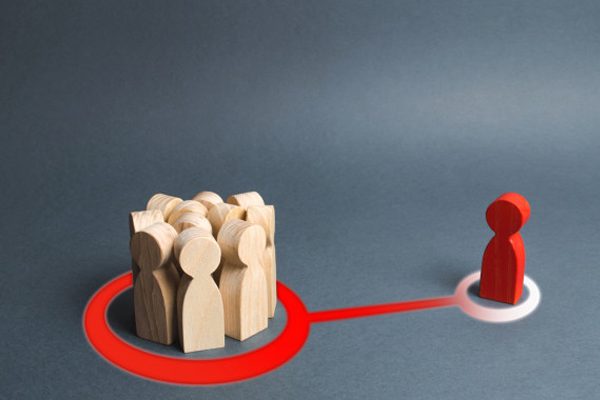
Influence People: Influence is a womb to tomb skill, that if people really grasped it, they would be able to have better conversations at work and at home.
Then the child can decide it’s going to school after school and if they jump into the story in the middle, they can say, “What time of day was this? Where were you?” I’d start teaching them some stuff. As the parent can share, “What was the best story about the best part of your day?” Now with people being at home more allows for conversation. This concept of learning to persuade as a fundamental skill is kissing cousins, if you will, to storytelling skills. I think the two go together and neither one is manipulative. How did you decide that there wasn’t a marriage between professional success and personal happiness?
I think that goes back to the mission statement that I wrote almost 30 years ago that I review almost daily. As I outlined, things about my faith, my family, my wellbeing, my career, I think that’s where I started to recognize I can help people that I work within a productive sense. I want them to be able to say, “I’m so thankful that you’re here because you’ve helped me accomplish this.” I also want it to impact them on a personal level. It became clear to me, the more I understood influence.
I saw that it is a 24/7, 365, womb to tomb skill that if people grasped it, they would be able to have better conversations at work and better conversations at home. The beauty of that with the people that I have coached, consulted with, and trained is they get it. Sometimes an insurance agent would apply more of what they were learning to their relationship at home. If they saw success, they started looking everywhere else they could apply it. Others might have gone the professional route, but when they saw the success, then they naturally leaned into the personal application.
Influence PEOPLE, the word ‘PEOPLE’ are capitalized because there’s an acronym and it stands for Powerful Everyday Opportunities to Persuade that are Lasting and Ethical. Let’s tap into some of these keywords so that people have the promise and a hint of how they can apply these. You talked about research being a big part of what this is all based on this. It isn’t a few people thinking, “I think this will work.” This is actual hardcore data that says, “We need to look at what it is that it’s doing.” You were a competitive bodybuilder at one time. I love the metaphor there of lifting weights and power and strength. Tell us that story of how you were trying these killer workouts and what kind of mind game that can do to you.
The analogy I used in the book was when we talk about this being powerful, it’s because its research-based. When I leaned back on my personal experiences, for example, working out quite often, you’re just looking at somebody else in the gym and maybe that guy is big and strong. “What are you doing?” That doesn’t mean that it’s going to work for you. It may. There are some core principles, but what I would tell people is if you want to get fit, you’re going to be much better off going to a trainer who has studied physiology and biology, and they know how things are going to work. They understand muscle recovery.
[bctt tweet=”Just because something works for someone else does not mean it works for you.” username=”John_Livesay”]
You then go to a nutritionist who understands what are the optimal foods and when do you want to eat those, and all of those things, instead of relying on the biggest guy in the gym. Too often, what we do is we rely on that guy or that lady who is the most successful. Certainly, they’ve done things to be successful, but it does not mean that what they’re doing will make us successful. What we can say about this research and social psychology is it applies across the world that these principles that Robert Cialdini synthesize, they impact all human beings to one degree or another. If you get good at bringing these principles into your communication, you will improve your ability to influence people.
I was a competitive swimmer in my youth and I was a lifeguard. I remember once I beat somebody who was always ahead of me. When you’re swimming, they measure your time to the thousands of a second when you touch the touchpad. I said, “How did I beat him?” They said, “You stayed focused on the wall and he turned to see if he was ahead of you and in that half a second of looking, it caused him to lose.” I think we’re saying something similar. Your way was, just because something works for one person doesn’t mean it’s going to work for you. My whole takeaway from that winning that swimming race was when I focus on my progress and don’t get distracted by what other people are doing, that’s when I win. I love the synergies of those two stories.
This concept of every day, ironically, you wrote this book before the pandemic. You talk about when was the last time you spent a whole day where you had no interactions with anybody. We’re on Zoom calls and text messages and things, but people are more isolated now than ever. I thought you might have some advice for people on the importance of connection, even if we’re not physically seeing people in the norm that we did in the past.
As social creatures, we all need people. Every one of us, even people who don’t maybe have strong relationships with others. We’re still dependent on other people. You see in my office books, people wrote those books, people own businesses where I went and bought those books. We are a society and we need people. I think when it comes to the isolation that we’ve had, we have to make some new conscious choices to do things that we hadn’t done in the past. One of them was Zoom.
As a personal example, I was dabbling with Zoom before the pandemic. Now I use it all the time. It’s going to be something I continue to use even when the pandemic passes. If I can’t be there to sit across the table from somebody and have a beer or have dinner or something like that, if I can at least look at them and do a Zoom cocktail hour, that satisfies a little bit. What we do miss is what happens when you have a human touch. I’m fortunate that my wife and daughter live with me and I get that human interaction. That is tough where you don’t realize how much you need it until you start missing it.

Influence People: As social creatures, we all need people. Every one of us. Even people who don’t have strong relationships with others are still dependent on other people.
We’re supposed to get like 8 to 10, 12 hugs a day. That’s a lot of hugging with the two people you’re living with because you normally can get it from coworkers. The next one is this concept of opportunities. When you get hired as a consultant or you’re speaking in front of audiences, you asked this question. The last time you bought a car, did you notice how suddenly you start seeing more of those cars? I think that’s fascinating and you’re going to be able to explain why that happens to us. For me, from a sales perspective, a lot of people have buyer’s remorse going, “Did I make the right decision on the sweater, on this car?” or whatever it is we bought. I think there’s some subconscious thing going on trying to reinforce that you did make the right decision. Let’s hear your insights as to how these opportunities can create a potential brand ambassador that they start seeing.
I think any time you raise awareness of something as human beings, we have a limited ability to focus on things. When something is raised to awareness, we tend to have an ability to spot it elsewhere. For example, you complimented me on my speaking. Thank you. I appreciate that. I spent a lot of time in Toastmasters. I’m a part of the National Speakers Association. It is a skill that I work on all the time. I am hypersensitive to somebody saying the word ‘um’ because when I was in Toastmasters, they counted them. For me, that now is a focal point. For a lot of other people, they would never think about it until you pointed out. If they ever said, “Did you hear how many times had the speaker said um?” All of a sudden, they feel like that’s every word that he or she is saying.
We have this ability to take something and bring it to the forefront and then we begin to notice it everywhere. What I try to do with influence is when I teach people what these principles are, I want people to start recognizing how advertisers and marketers are trying to get them to make decisions. How politicians are using them to try to get them to vote for him or her. Most importantly, I want them to start seeing the opportunities that are there for them to begin to implement them so that they have more people saying yes, more often.
Now, we come to the other P which is Persuade, which is a hot button. I’ve had clients ask me as a speaker, “Can you teach my sales team to be persuasive instead of pushy?” My go-to solution to that is stories. When you tell stories, you’re persuading and you’re pulling as opposed to pushing. You have this wonderful definition of persuasion of it has to do with art and science. Can you explain that?
When I ask people, “Give me your layman’s definition of persuasion.” What I hear most often is to convince somebody of something or to change somebody’s thinking. That’s a good first start, but it’s not enough. For example, John, if you and I talked about the dangers of texting and driving and you nodded your head and said, “I didn’t realize it was that big of a problem.” I’ve changed their thinking. If you get in your car and you pull your phone up, I haven’t changed your behavior and the problem persists. When I talk about persuasion, I always default to Aristotle’s definition, which was persuasion is the art of getting someone to do something that they wouldn’t ordinarily do if you didn’t ask. To get someone to do something that they’re not going to do if you don’t ask. If they’re already doing it, great, but if they’re not, it comes down to how you communicate with them. That’s where these principles come in.
[bctt tweet=”When something is raised to awareness, we tend to have an ability to spot it elsewhere. ” username=”John_Livesay”]
Anytime you’re selling something, you’re asking people to change their behavior. Stop using this vendor or this process and do this a different way. There’s so much resistance to it. The next letter in PEOPLE is Lasting, which completely transitions well into what you’re saying about, it’s not enough just to change your behavior once. Stop texting once. As keynote speakers, we want our message to be lasting. What are some of the things that you do when a company will hire you to make sure that your message does last?
When you get someone to internalize something so that they believe it for themselves, that’s usually where lasting impact begins. As an example, when I transitioned from weightlifting to running, at first, I didn’t like running at all. Once I started running and I fell in love with it, my friend who is a fitness trainer never had to persuade me to run again. My self-identity had changed. I said, “I like this. I’m going to keep doing this.” If I can have a persuasive conversation with somebody that doesn’t just get them to take action but gets them to think through why they’re taking that action. They internalize it and they believe it. They are more likely to continue or persist in that behavior. That should always be our goal. It’s not enough for a parent to get their child to study tonight. You want them to understand the benefits of studying. It may not come through rational explanation, but maybe once that kid gets that first A and they feel good, they like how it feels to be smart. They start studying on their own because they see themselves as smart. That’s where you begin to have this lasting change on people.
I remember a dentist saying once, “You only have to brush the teeth you want to keep it.” You can’t just do it once or just a few. The tweet I’m thinking that would be good would be self-identity is the key to lasting, changing behavior.
I would say changing someone’s self-identity, getting them to change their self-identity would be a key to lasting change in behavior.
Ethical is the final E in PEOPLE. This is where we opened the story. We talk about how you made a lasting change and this concept between persuasion and manipulation, and things. What I love about what you write, Brian, is this concept of things are not good or bad. It’s Shakespearian. Most people think, “No.” We don’t realize that we’re the ones that assign semantics to things. Let’s talk about another wonderful quote from Aristotle that character may almost be called the most effective means of persuasion. You have this connection here between an ethical persuasion and influence. Give us a little story around it or a further explanation.
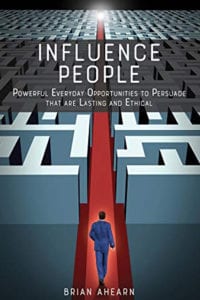
Influence PEOPLE: Powerful Everyday Opportunities to Persuade that are Lasting and Ethical
People, unfortunately, conflate manipulation and persuasion or influence. For some, they don’t think about it much. They hear those terms and they put them all together but they are different. When you talk about influence and persuasion, you’re talking about the ethical side. When you talk about manipulation, you’re talking about the unethical side. When we talk about what it means to be an ethical persuader, there are three keys. First is you’ve got to be truthful. You tell the truth and you don’t hide the truth. You don’t hide something that could impact someone’s decision making.
Second, you use these principles that we teach that are naturally available in a situation. You don’t falsely claim scarcity or social proof or anything else if it’s not genuinely available. Third and most important would be, you are looking to create a situation that’s beneficial for the other person as well as for yourself. If you and I are engaged in conversation and what I am trying to persuade you of John, I know is in your best interest. You see that it’s in your best interest as well, then we can feel good about this transaction because I’ve been honest, I’ve only used psychology, natural to the situation. We’re going to both walk away better off.
Manipulative people will quite often say, “I don’t care about you. I just want to make the sale. I don’t care about my team. I just want them to do what I say.” What they will do then is they’ll pervert the truth or they’ll use false psychology because they say the only thing that matters is getting the sale or getting the team to do something. If you learn this stuff, you will realize you don’t have to resort to that because you’ll be so much more skilled at your ability to get those people to take the right actions.
To sum up, what you said, the key to being more persuasive is to be truthful, authentic, and make sure it’s a win-win for everyone. You’re an expert in insurance. I know you’ve spoken in front of a lot of insurance companies on helping insurance people be persuasive because you know better than anybody. That’s a product that a lot of people don’t differentiate themselves. It’s like insurance is insurance. I’m like, “What’s the difference?”
I’ll buy homeowner’s insurance from you versus somebody else’s, “I didn’t want to think about life insurance, I want to live forever.” There’s a lot of psychology, but you’ve also spoken to a lot of other companies beyond insurance companies. I wanted to get a sense of you have this amazing testimonial that the last time somebody heard, got such high marks after hearing a speaker was when they had Colin Powell as a keynote. Give people a sampling of in addition to buying your book, maybe they want to engage you as a speaker. What is your ideal audience?
[bctt tweet=”Persuasion is the art of getting someone to do something that they wouldn’t ordinarily do if you didn’t ask.” username=”John_Livesay”]
My ideal audience is any company, any group of individuals that recognize that their success and happiness depend on their ability to influence people in an ethical manner. They may specifically see it because for example, in insurance, settling a claim is a persuasive conversation. Just like making a sale is a persuasive conversation. If you are a physician, getting somebody to change their lifestyle so that they can live long after maybe a heart attack. That is a persuasive conversation.
If you’re a fitness trainer, getting people to do their at-home exercises as they are rehabbing is key to how you have that conversation. This may sound broad, but any person would benefit from what it is that I have to offer them. The ideal client I would say is somebody who says, “We want the ethical influence to be a pillar of how we do business that we ethically move people to action by using influence. We don’t use coercion. We don’t use our hierarchical authority. We ethically influence people.”
What I do then is I’ll go in and I’ll do deep-dive training with key people so that they understand this deeply and more front-line training so that everybody in the organization is speaking the same language. When somebody says, “John, we’re going to implement a new policy and we’re going to do it because it engages reciprocity.” You understand what that is. You’re like, “I remember that.” That can make a huge difference in how people respond.” For me, that would be my ideal client.
I love the example of a doctor having to persuade a patient to be compliant. Doctors don’t think of themselves as having to sell anything, but they’re certainly selling their advice. Brian, I can’t thank you enough for sharing the key concepts from your wonderful book Influence PEOPLE. We know what that stands for now, Powerful Everyday Opportunities. Any last thoughts or quotes that you want to leave us with?
You mentioned Shakespeare and I took my inspiration for this quote from Shakespeare. When I work with salespeople and as you know, the number one, the objection is always the price. People will reflexively say that your price is too high. Based on a concept that we call the contrast phenomenon, I came up with a quote and it’s this, “There’s nothing high or low, but comparing makes it so.” If somebody says he’s tall. He might be the tallest kid in your high school, but he might be the shortest guy in the basketball team. That car is expensive. It may be more than you paid for your last car. It might be a fraction of what your boss paid for his or her car. We are always comparing to other things. A fact is he’s 6’5″ or the car is $30,000. Those are facts. Whether that’s tall or that’s expensive, it’s always based on comparing to something else. That quote helps salespeople remember.
What a great quote and a great way to end the interview. Thanks again, Brian.
You’re welcome. Thank you for having me on, John.
Important Links
- Influence PEOPLE: Powerful Everyday Opportunities to Persuade that are Lasting and Ethical
- Influence PEOPLE
- Dr. Robert Cialdini – Previous episode
- INFLUENCE AT WORK
- https://www.InfluenceAtWork.com/about/trainers/brian-ahearn/
- Better Selling Through Storytelling Method Online Course
Wanna Host Your Own Podcast?
Click here to see how my friends at Podetize can help
Purchase John’s new book
John Livesay, The Pitch Whisperer
Share The Show
Did you enjoy the show? I’d love it if you subscribed today and left us a 5-star review!
- Click this link
- Click on the ‘Subscribe’ button below the artwork
- Go to the ‘Ratings and Reviews’ section
- Click on ‘Write a Review’
Love the show? Subscribe, rate, review, and share!
Join The Successful Pitch community today:
- JohnLivesay.com
- John Livesay Facebook
- John Livesay Twitter
- John Livesay LinkedIn
- John Livesay YouTube
LinkedIn Sales Playbook With Brynne Tillman
Posted by John Livesay in podcast | 0 comments
How can you effectively use LinkedIn as a tool to widen your connections, increase your sales and grow your business? Get ready to take notes as the Pitch Whisperer, John Livesay, joins forces with the LinkedIn Whisperer, Brynne Tillman, to talk about the most important things that you have to remember when selling on the platform. Brynne is the CEO of Social Selling Link and author of the LinkedIn Sales Playbook. Having been in this niche since people barely knew what LinkedIn was, Brynne redefines social selling as something that is beyond pitch-spamming. She teaches her clients how they can earn the likes and the right to connect with people on LinkedIn using strategies that put more emphasis on relationship building rather than sales pitching. Listen in as they discuss the importance of building connections and engaging in conversations and building a profile that reflects your brand message, as well as a number of real-life examples that illustrate these powerful principles.
—
Listen to the podcast here
LinkedIn Sales Playbook With Brynne Tillman
Tactical Guide To Social Selling
Our guest on the show is Brynne Tillman, the Founder of Social Sales. She talks about how we have to earn the likes and earn the right to connect with people on LinkedIn and the big mistakes that she sees people making on a connect and then they try to pitch, or they don’t have a picture on their profile or worse they connect and then forget. She’s going to show you how to avoid all these mistakes and some great tips to make your LinkedIn experience and connections grow your business. Enjoy the episode.
—
Our guest is Brynne Tillman and she is the LinkedIn Whisperer. The LinkedIn Whisperer and Pitch Whisperer have joined forces. She’s also the CEO of Social Sales Link. For over a decade, she’s been teaching entrepreneurs, sales teams, and business leaders how to leverage LinkedIn for social selling. As a former sales trainer and personal producer, Brynne adopted all of the traditional sales techniques and adapted them to the new digital world. She guides professionals to establish a thought leader and a subject matter expert brand, find an exchange, the right target market, leverage clients and networking partners for warm introductions into qualified buyers. She’s also the author of The LinkedIn Sales Playbook: A Tactical Guide to Social Selling. Brynne, welcome to the show.
Thank you. I’m happy to be here, John.
The premise of getting to have you on the show is the timing we were talking about before the show started. I got to see you and your amazing team in action with your clients, helping them go from pushing out content and wondering why they’re not getting engagements on their posts to creating value and building relationships, which is completely in sync with what I’m all about and what this show is all about. You are the perfect guest. One of the things I like to ask my guests is to tell us your own story of origin. You can take us back to childhood, school or wherever you were that you feel like you’ve got this burning desire to want to learn how to connect or sell or whatever you think has led you to become the success you are.
I’ve been in sales since I was a waitress at Friendly’s. I loved being in a server, upselling, tips, the competition. I was a cocktail waitress in college and the fattest of all the girls that made the most money. It didn’t matter. I was competitive and I was going to do it. That’s the way it was. I love sales. Even though my degree is in Culinary Arts and Hospitality Management, I went into a sales career. I ended up in the sales training path versus the sales management path because everyone rode with me.
Every new person sat with me when I was in inside sales and when I was in the field. That was great and I love to train. I started a sales training company and we were teaching LinkedIn as a loss leader, initially. It was like nobody even knew what the heck this thing was when we started teaching it and then I’d have to go back and train traditional sales training. It wasn’t feeling right. I’m like, “I want this LinkedIn thing.” Many years ago, I went off on my own and launched Social Sales Link to train LinkedIn, to help salespeople start more conversations.
[bctt tweet=”The worst thing you can do in LinkedIn is to connect and pitch, because it just makes you sound like every other seller out there.” username=”John_Livesay”]
That’s such a fascinating journey that when you know that something doesn’t feel right anymore and having been in the media ad sales world for so long and I realized that when an ad agency would call us in, they called it media day. We looked at 100 magazines and we’ve narrowed it down to 10. We’re going to run in three and you get to come in one after another, like an actor almost auditioning and you each have half-an-hour. For God’s sake, do not tell us how many readers you have. We know that already. Tell us an idea or have a conversation with us about who your reader is that most people weren’t on that script. They completely flipped out. That was my a-ha moment of, “I’ve got to start learning how to tell stories.”
Whoever my premise is, whoever tells the best story is the one that gets the sale or the new client and all of that because when we tell great stories of which you were the expert at doing, especially on LinkedIn, whether it’s a post or starting a conversation, it allows other people to remember our stories and then you’ve got brand ambassadors without having to pay for them influencers or whatever. It’s more organic. That’s what I saw you doing with your team. I saw you in action, creating authentic connections and not selling. What are the things that made me laugh? Thank goodness I was on mute is one of your clients was reading what his response was to someone and he went, “You spammed him.” I thought to myself being on that Nickelodeon show when you would get all gooey with that green spray, you got slimed. The digital version of, “You got slimed,” is, “You got spammed.” That could be a funny tweet for the show. Tell us what mistakes you see people making on their LinkedIn. Where do you begin?
Number one, absolute most terrible is connect and pitch. It’s awful. All get it. In a new environment, we’re getting them 3 and 5 times a day, “We help companies like you.” It’s connected and disconnect is what it is. It’s terrible. Stop doing that because most of the people reading are doing that because that’s what salespeople do. We want to tell everybody about, “We can help companies like you.” We think it’s going to work and it doesn’t. People say, “If I send a few more, it’ll be a few more, that doesn’t work.” We need to stop.
Number two, you are going out and engaging with a very bad profile. No picture, no banner, a headline that says you’re a sales rep, which makes them go, “I’m not having a conversation with that person or sales rep.” You’ve got to move your profile from your resume to a resource in order to be effective. Another mistake is to connect and forget and we’ve all done this. We connect to that engaging. To me, that’s like going to a networking meeting with a whole bunch of business cards and I walk up and I go, “John, take my card.” I walk away and we have no conversation. That’s what we’re doing on LinkedIn. We’re handing people our business cards and walking away. Let’s start a conversation. Let’s bring value.
If you go back to when you were able to go in person and do your pitch. I can feel the days like people invite you to come to their office and that still happens when the pandemic ends. Now, it’s a virtual invitation, but you fill out a proposal, you get a final 2 or 3, and you’re able to go in and then people think, “I’m going to tell you everything about me.” It’s vomiting of information and then you leave and their competitors come and basically do the same thing. The client turns to each other and says, “That all sounds the same. We should go with whoever has the lowest price.” You’re following up and you’re getting ghosted and like, “What’d I do wrong.”
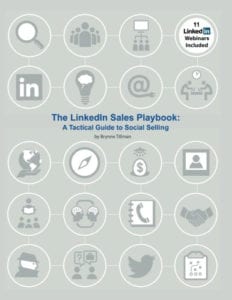
The LinkedIn Sales Playbook: A Tactical Guide to Social Selling
I love connecting with you because our belief systems and the teachings are in sync because my whole premise is, “If you want to be memorable, tell a story.” Your whole premise is, “If you want not to connect and be forgotten, have a conversation.” Most people are like, “If I’m socially awkward or an introvert in real life, I’m equally awkward and introverted in that situation.” That’s where you come in as the LinkedIn Whisperer says to them, “Take a breath, people. I’ve seen you do it. Be human. Tell me something real about yourself for me.” To me, “What’s your story of origin?” I work with a lot of healthcare professionals and they’re like, “You’re pastoring these doctors. Don’t you want to be seen as a welcome guest?” That’s my favorite soundbite with what we’re doing.
We’re taking people from being seen as an annoying pest to a welcome guest. How do you do that? What you’re teaching people to do is give them some content. One of the things that you said to your clients that were gold. I don’t know if they realized it, because sometimes when people are working with an expert like you, they don’t have any comparison, but I do. I was like, “They are getting incredible value one after another.” You said to them, “Instead of spamming somebody with your pitch, how about if you respond to their issue and say, ‘I might know someone else who could help you, would you like an introduction?’” That giving mindset and that extra effort to give instead of picked to, “What can I get?” is how you start a conversation and a relationship. I want you to speak a little bit about how did you learn to do that well?
Trial and error, AB testing, being hyper-aware of human beings in what they need and want, being a conscious person, not just awake, but try to be conscious of what’s happening, empathetic a little. I want to get in the shoes of the other person and a lot of self-reflection about how do I want to show up? What do I want to be? What’s my legacy? I do this to make a living, but what motivates me is when a client comes back to me and said, “I implemented what you taught me and closed a $1.5 million deal.” I go, “That’s my legacy.” We touched about this quote that I’m playing out with which I’m jumping ahead, “It isn’t about you hitting your goals. It’s about you helping your clients hit theirs.”
It’s like a new one. It’s the second time I’m saying it out loud. You’ve got to get a core philosophy. What do you want to achieve? Quarantine had everyone pivoting and making a shift and we recognized we had to redefine social selling because it was a different time. We redefined it as social selling is about showing empathy, building real relationships and being a resource. The sale will come when the time is right. If you can continue to help them achieve their goals when it’s time for them to need what you have you are it.
You’re memorable again because you better resource, you’ve developed a relationship and you’ve shown empathy. I talk about that based on a book I read years ago by Tim Sanders called The Likeability Factor. He did all this research around empathy and doctors spend more time with patients they like, teachers spend more time with students they like. It’s all about how do we up our likability factor? It’s about empathy. When we can show that we understand someone’s problem better than someone else can, the assumption becomes, “You must have then my solution if you’re able to phrase my inner feelings and thoughts in such a way that I haven’t been able to express it, you must have my solution because you’re ‘in my head.’” Part of what makes good headlines or content for LinkedIn is listening to the pain points your clients describe to you, what more of this client and your avatar, but then listen to how they say things. That becomes your headline or the title of a post where I have found works well. Do you have an example of that someone you’ve worked with or where you’ve heard someone say something and then you use that and you get more of your ideal clients from it?
[bctt tweet=”Social selling is about showing empathy, building real relationships and being a resource. The sale will come when the time is right.” username=”John_Livesay”]
All my content comes from conversations I have with clients. That line came from a conversation I had with a client that it’s not exactly like that, but there’s some gravitas here and I played with it until it came out and flowed. Everything that I am now is because a client had a question that needed an answer.
I’ve got a couple of examples myself because I think the more examples you and I toss out on this episode, the more this episode will be read to over again and they’re like, “Did you read that one? I hadn’t even thought of that one.” Working with the tech healthcare company, they were not numbered one in their market and one of the sales reps said, “We’ve got to stop playing defense.” I went, “That’s a headline.” A lot of people feel they’re constantly playing defense against the market leader and never getting to talk about their strengths and only being compared to the other. That was one. Another one, we are tired of coming in second place when we go pitch and then I have a whole thing around, “Unlike the Olympics in business, there’s no medal for 2nd or 3rd place.” Those things help our clients.
My biggest one is when people ask me about, “Is sales navigator worth it? Should I invest the money?” I had a client once, a prospect at the time we turned into a client who came to me and said, “I send it for sales navigator six months ago. I haven’t gotten one sale from it, but it’s because I haven’t logged in.” I said, “It’s like your gym membership.” He laughed. When people say to me and I’ve said this now 100 times publicly, sales navigator was like a gym membership. If you sign up for it and you’ve got a plan, you know when it’s leg day and when it’s arm day and when you’re doing your aerobics, you’re going to get in great shape. If you don’t show up, you’re going to pay your membership every single month and you’re going to look the same and feel exactly the same six months from now. You have to go to the gym three times a week in order to make use of it.
The other thing I heard you stated with your clients is, “Don’t connect and then ask someone to buy from you. It’s like going on a coffee date and asking somebody to marry you.”
This is dating. Take it slow.

LinkedIn Sales: Don’t just connect and be forgotten. Start a conversation.
“I’m not ready to go home with you yet.” I have done the same thing about how to go from invisible to irresistible. I constantly toggled back and forth between a dating scenario and a business scenario because it’s all relationship. In the middle of invisible to irresistible is the interesting rung. I said, “This is where most people get stuck.” In a dating scenario, maybe you say something at a cocktail party that like, “Maybe I wrote you off to pass, but I’m still not going out with you or going home with you, but I’m at least interested to keep talking.”
I see many salespeople and I can’t wait to hear your thoughts on this, get excited and even do a projection to their boss, “I’m going to get a sale. They said they were interested. They wanted some information.” I said, “It’s like being stuck at the friend zone at work.” That concept of going, “Interesting, is not a sale.” I’m stuck at the interesting rung of the ladder. I’ve gotten them into interested enough, but they’re certainly not buying yet and you must have seen that many times and still see it where someone may be interested enough to connect and you can’t get past that framework because you aren’t showing enough empathy or whatever it is.
There is a short game and long game on LinkedIn. I’m going to balance the two. The long game on LinkedIn is we’re connecting with people when they start to engage like, “They’re showing some interest.” We have a responsibility to earn the right for every next step. We put out a piece of content. They like it. We earned that like. We connect with them and thank them for liking our content and because our content was good enough, we’ve earned the right to have the connection. What’s our next step? How do we start a conversation without pitching? “John, thanks for liking the article that I posted out there. Not sure if this is a subject that’s top of mind for you, but I do have another post I’d love to share with you. Let me know. I’ll send you a link.”
Asking for permission. No spamming.
A lot more people are going to say yes, then would click on it If you sent the link.
[bctt tweet=”Don’t spam your clients with your pitches. Interact with them.” username=”John_Livesay”]
They’re engaged. They feel like, “I’m in control.”
It could be a white paper or download. You let them know. When they say yes, if you give them a gated piece of content, you ask permission. They’re not going to feel spam and now we see, did they download it? It’s a conversation and it could be a lot of things, but what level are you exploring? Where are you in exploring this? I’ve got lots of other insights that I’d be happy to share with you. Where are you in this journey? I’d be happy to share insights with you, even if we never worked together. “I’m in this industry. I’ve got lots of ideas. I’m happy to share them with you. Let me know. I’ll send you a link to my calendar. We can set up a time to talk.”
I see you have that on your About Page. It’s inviting. Let’s go back to one of the mistakes you said at the beginning, which is no picture. That’s obviously a square one. Square two is the wrong picture that still is not appropriate. Someone goes to my LinkedIn profile you see a picture of me in front of hundreds of people at a ballroom giving a talk. You know I’m a speaker from that picture, before you even read it in my profile. Make sure the picture you tell the story you want to be telling. I can’t emphasize enough the importance of someone working with someone like you ran because LinkedIn caused me to get my highest speaking engagement. Most people think, speakers spend a lot of money on SEO to get people to come to our website and look at our speaker video demo reels and all that good stuff and all that happened.
It was between me and another speaker, which is often the case. Sometimes it’s between me and multiple speakers. After I got hired, I heard the story because you and I are the same. We were like, “Can you tell me how you found me?” “It just pops in.” The marketing department picked the theme of storytelling, found me and another speaker and presented this to eight different regional vice presidents. One of those regional vice presidents was looking at the two profiles in addition to the video demo reels and the books. On my profile is very clear that I had a career at Conde Nast and I won Sales Person of the Year. It’s a big part of the profile. The other speaker, from what I can see, if I read the fine print was also in sales, but it doesn’t say what company, it’s obscure. That regional vice president said, “I think I prefer a speaker who’s been in sales and has been in my team’s shoes, has quotas, deadlines and pressures.” Here’s the secret sauce, which is when I saw you teaching.
As they were still debating after they had their meeting, it’s almost every sale. Even with hiring the speaker for the meeting, lots of decision-makers. That’s the norm. He reached out to me and I’m like, “I know that client name.” That’s not the person that I’ve been interacting with, but, “He’s in one region.” He asked to connect. I went on his profile, liked and commented on a couple of the articles that he had posted. I responded to the connection and I said, “Your company’s considering me. Would you like me to mail you a copy of my book?” He said, “That’d be great.” He sends me his address. Now, I have an inside brand ambassador salesperson cheering for me. I found out later, he said, “This is what I’m trying to teach my team to do is interact with the doctor’s posts and the fact that you did it, it will be organic for you to teach them how to do it.” There are many things with my LinkedIn that I think a lot of people think, “I’m not looking for a job. I don’t need to have a LinkedIn profile.” You can emphasize how many people you’ve helped like that.
LinkedIn Sales: Using Sales Navigator is like a gym membership. You need to show up for what you paid for.
The first story, I got into Aramark when I was a teeny tiny one person, starting locally still selling sales training, but doing this little LinkedIn thing. Aramark was looking for sale for a LinkedIn trainer. They had gone through the challenger sale training. This was the next thing. I raised my hand, I reached out to the person and she said, “I’m sorry, we’re Aramark. We need a bigger company than you.” I looked at our shared connections and I saw my friend Professor Richardson who taught at Rutgers at that time was connected to her. I taught for free a LinkedIn class one semester for her at Rutgers. I reached out to him and I’m like, “How do you know Nicole Bradley at Aramark?” who is not there anymore. She said, “She was my student.” I said, “Can you throw in my name? Here’s the situation.” She took her to lunch and said, “I’m not going to tell you Aramark who to hire, but you need to talk to Brynne.” Needless to say, I got the gig, they handed me the book and they said, “The way you got in here is the way we want our reps to get into.”
Walk your talk. That’s what you do. That’s what I pride myself on doing too. That’s why the LinkedIn whisperer and then the bitch whisperer is we’re giving people lots of context and content on how to go from invisible to irresistible. SocialSalesLink.com that’s the best place to connect with you. Go to your LinkedIn profile and connect, reach on your company team site if anybody’s looking forward. Here’s the big problem I keep hearing you with companies hire me, especially now during a pandemic, we’re having trouble starting conversations with clients that we normally could either cold call or catch in the hospital where we’re not allowed anymore and all the normal ways of connecting and meeting people is gone. We’re struggling with that first reconnection whether it’s a subject line in an email or what to say when you’re asking someone to connect. We’ve skipped put as might be obvious, but I would be remiss if I didn’t ask you, how important is it when you’re inviting someone to connect, to do it from your laptop and not your phone so you can put a note with it?
You can put a note on your phone. If you’re on your mobile device and you click on the More Button, you can go personal invite. I prefer connecting on the phone because on the desktop, it sends an invite without a message. It says, “If you’d like to add a message, you still can.” You want to hit the More Button and then hit Personalized Message from the phone.
That’s when people can tell that it’s not spam, especially, if you customize it and say how you know them or something you read. The more specific, the feedback or why you like someone’s work or what you like about it whether it’s a poster or an invitation, the better.
Look at their profile, engage on their content before you connect so there’s more con.
I can’t thank you enough for sharing these valuable tips. It’s interesting how certain situations create a need for something that existed before, but now is needed. You’re at the right place at the right time. All that preparation and long game playing have paid off for you and I’m cheering you on every step of the way.
I appreciate it. Thanks for having me, John.
Important Links
- Social Sales Link
- The LinkedIn Sales Playbook: A Tactical Guide to Social Selling
- The Likeability Factor
- LinkedIn – Brynne Tillman
- https://SocialSalesLink.com/brynne-tillman-headshot/
- Better Selling Through Storytelling Method Online Course
Wanna Host Your Own Podcast?
Click here to see how my friends at Podetize can help
Purchase John’s new book
John Livesay, The Pitch Whisperer
Share The Show
Did you enjoy the show? I’d love it if you subscribed today and left us a 5-star review!
- Click this link
- Click on the ‘Subscribe’ button below the artwork
- Go to the ‘Ratings and Reviews’ section
- Click on ‘Write a Review’
Love the show? Subscribe, rate, review, and share!
Join The Successful Pitch community today:
- JohnLivesay.com
- John Livesay Facebook
- John Livesay Twitter
- John Livesay LinkedIn
- John Livesay YouTube
5 Things Salespeople Can’t Do Now
Posted by John Livesay in blog | 0 comments
As a salesperson, are you COVID-ready? Salespeople today have to be like Neo from The Matrix and learn to be a Shape-Shifter Salesperson during COVID through storytelling. This is a new reality that is not going away anytime soon.
Storytelling is more important than ever right now because salespeople have to work even harder to get in the virtual door and build rapport.
5 things salespeople can’t do:
- Face-to-face meetings
- Read body language
- Hear laughs (People on Zoom mute themselves!)
- Social time with clients at tradeshow and events
- Meals with clients
Salespeople used to have to work to get in the right room — or, as Hamilton says, “The Room where it happens.”
Now they have to get in the “Zoom where it happens!”
Salespeople need to craft a compelling story, starting with the subject line of their email, to get people to see them virtually.
Plus, Zoom burn-out makes it even harder to get in the virtual door.
Salespeople have to learn how to look and sound good on Zoom.
Here are 5 tips:
- Stand up and dress up (Most people sit on Zoom and lose energy)
- Lighting must be good so people see your face to build trust
- Gesture on camera, not at the waist
- Good mic, even more important to hear subtle nuances in your voice
- Frame Yourself! Like a picture, you need a good frame.
Not only do salespeople need new ways to get a virtual meeting, but they also need a new way to sell on Zoom once they look and sound good.
They need to turn boring case studies into compelling case stories! People expect to be entertained on a computer screen vs. in person. They are used to watching Netflix on a computer screen, so you have that as competition to grab and hold people’s attention.
How can you improve?
John Livesay, speaker and author of Better Selling Through Storytelling, has been working with clients like Olympus Medical to craft case stories that make their sales team memorable and irresistible. They have created a repository interactive map of all the stories to help break down the silos between divisions. Now all the salespeople can access the successful case stories to share with clients.
Keith Griffis, Executive Director of Marketing, Olympus, said, “John is part artist, philosopher, and sales crushing storyteller. He pulls on your heart, opens your mind, and makes you better with every conversation.We have had the good fortune to virtually teach 200+ sales people, marketers, and leaders using John’s Better Selling Through Storytelling. If he is this effective during a pandemic virtually, I can’t wait to bring him back for a keynote in person. Highly recommend John for any organization looking to change their selling style to be relevant, impactful, and to rise above the noise. #GameChanger”
Times like this call for everyone to embrace a new shape and a new way of doing sales. Crafting stories on Zoom is the crucial step to adapting and getting the jump start on the new virtual way of connecting. Check out John’s Better Selling Through Storytelling course, and contact him to see if and how he can help you and your salesteam.