
How Badly Do You Want It?
Posted by John Livesay in blog | 0 comments
This is a question we have to ask ourselves in all areas of our life.
The new year is often a time when people want to get in better shape. All the nutritionists and trainers will ask people the same thing, “How bad do you want this improvement?”
If you want to launch or grow your own business, people typically set goals for the new year. Again, the question is “How badly do you want it?” If you give up at the first sign of struggle or rejection, you will probably not achieve your goals.
For me, seeing live theatre is food for my soul. When Broadway shows shut down during the pandemic, I missed them. When vaccines became available in Spring 2021, Broadway shows started to slowly reopen that summer, and I started to plan my trip to New York City to see shows at the end of December.
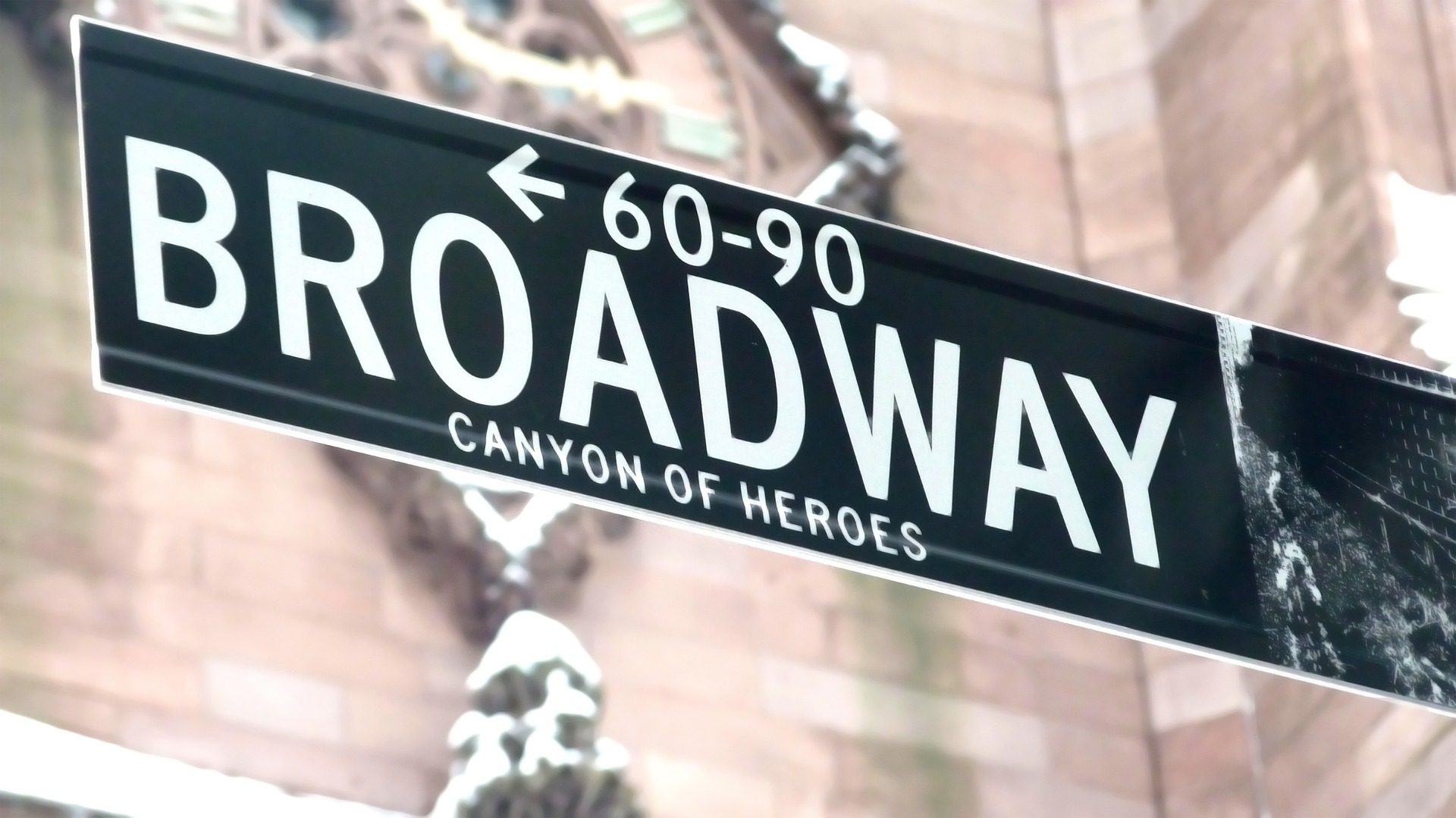
If there is one thing life constantly teaches us, it is that just because we make plans or think, “Surely by that time things will be ‘back to normal,’” that is not always the case.
With the outbreak of the Omicron variant hitting New York City especially hard, some people thought I was crazy to still go. I thought often about the question: “How badly do I want to see shows and feel alive and moved?”
Then my decision to still go was put to the test even more. Right before I was scheduled to fly non-stop from Austin to New York, flights started getting canceled because crews were sick. The night before my non-stop flight, I received the news that my flight was no longer running.
I was luckily able to rebook through St. Louis with an hour and a half layover. I thought to myself “If everything goes well, I should still get to NY in time to see my first show about the life of Tina Turner.”
While both flights were slightly delayed, I still got to NY in time, only to find out that the Tina Turner show was canceled because the cast was sick, so I decided to see if there were tickets to another show. It was two hours before the curtain, and I was able to get tickets to see Caroline or Change.
The show was emotionally moving and visually creative with the costumes.
My theatre pal Phillip Sherman had flown in from LA was there, too, and we were both up for the last-minute change. We both decided to be happy regardless of the outcome and enjoy being in New York during the holidays.
Next up was Music Man with Hugh Jackman. This is the hot ticket of the season, and I am a big fan after I saw him perform live at the Hollywood Bowl.
That night we went to see the show with Hugh Jackman who radiates charisma and charm while also dancing up a storm. It was a great show full of energy, and I was impressed by all the performers. The next morning it was announced Hugh had Covid, and the show would be dark until early January.
Music Man has had its own journey of being ready to open before the pandemic, canceling, and then now reopening. Live theatre is always about capturing a unique experience, but seeing this show after what it went through to get on Broadway gave me a whole new sense of appreciation.
Next up, we saw Patti Lupone in Company. The creator Stephen Sondheim recently passed away shortly after he attended opening night, and as a result, the show’s message of “being alive” took on new meaning. It might well be the last musical Patti Lupone does as she was “retired” before being talked into coming back to do this show.
At intermission, I talked with a mom and her 20-something daughter who flew in from Chicago. She said they, too, decided to come to New York now because their mental health was just as important as their physical health. They needed to get out of the house and felt safe enough with their vaccinations and masks. Everyone at all the shows really wanted to be there and showed their enthusiasm with intense applause.
We were then supposed to see Moulin Rouge, but that was canceled, so we decided instead to go to the Whitney Museum to see the Jasper John exhibit as another way to feed our souls. There is nothing like seeing art in person, rather than virtually. Having lunch on the penthouse floor while looking out at city views was exhilarating.
Next up, we saw To Kill A Mockingbird, starring Jeff Daniels who had only recently returned in the drama. He left the show shortly after we saw it, and it was another stellar performance by a seasoned actor.
After the matinee, we came out and found ourselves directly across the street from Sardi’s. I said, “Let’s go in and see if we can get a table.” They normally require a 3-month reservation, but it was early, and the restaurant had been closed for over 600 days. We got in! What a special treat.
We finished the visit by watching the fun Mrs. Doubtfire which had recently been closed for 10 days. It was the perfect light-hearted way to end the visit. After I got back to Austin, they announced they would be dark for 90 days.
The future is always unknown, and we are all making choices based on what we value. Seeing artists and performers at the top of their game, who give their all, inspire me to do the same. In a way, we are all artists even if we don’t act, sing, or dance. We tell our stories in the way we live our lives and support what we treasure.
Exceptional Stories For Exceptional People With Karl Pontau
Posted by John Livesay in podcast | 0 comments

Imagine listening to a bunch of technical jargon and you have no clue what he or she is talking about. It’s because, as humans, we react to things on an emotional level. This is why Pixar movies work so well, it’s all because of their exceptional stories. Join your host John Livesay and his guest Karl Pontau as they unravel the power of storytelling and how you can sell products with it. Karl is the founder of Squash and Stretch Productions. He helps companies attract and maintain clients by the use of storytelling. Listen to the conversation to know how our brains work and why we resonate with personal stories. Learn how to catch your market’s interest with animation and storytelling today.
—
Listen to the podcast here
Exceptional Stories For Exceptional People With Karl Pontau
Our guest on the show is Karl Pontau, who says, “Exceptional stories create exceptional connections with people.” He has a company, Squash & Stretch, that creates animation for people to take complex concepts, and turn them into stories that target those heartstrings. Enjoy the episode.
—
Our guest is Karl Pontau, who is the Owner of Squash & Stretch Productions. When companies need to explain complex concepts, generate more revenue or strengthen their brand presence online, Karl and his team help them by telling exceptional stories using high-quality, custom animated content. The key to explaining complex concepts is not to throw information at your audience, but rather tell a story that provides context and structure. You can see why he’s on the show because we’re singing from the same songbook. Karl, welcome to the show.
Thank you. I’m glad to be here.
Our mutual friend, Caroline, who edited my book, is someone that recommended you. One of the things I love about that is I talk about how trust is transferred. That is an example of that in action. Let’s hear your story of origin of how you got into this.
I’ve been an artist my entire life. I grew up drawing, painting, sculpting big Legos kid. I got my passion for storytelling from my dad. He’s a good storyteller. I knew I wanted to study animation when I saw the first Toy Story film. I was like, “I’ve got to do that. That’s cool.” Beginning of 2002, I started to feel like something wasn’t quite right with me physically. I’ve been a competitive swimmer my whole life. I knew what that was supposed to feel like. It wasn’t like my shoulder hurts. It’s like a general blah feeling, but by August, they still hadn’t figured out what was wrong with me. I had lost 50 pounds and had sunken cheeks. I was pale. I started to get bad headaches.
My parents took me for an MRI up in Walnut Creek. We were waiting around for another appointment when my pediatrician called and said he’s going to drive up from Pleasanton to come to talk with us. We saw him walking up with this big envelope in his hands. You could tell he had been crying. He brought us into a little side meeting room. I remember I was sitting knee-to-knee with him in this big U-shaped chair with high armrests leaning forward towards him. He pulled out the results of the MRI and showed me I had two brain tumors. It felt like I got punched in the chest. I moved backward in my chair.
[bctt tweet=”When someone who has more experience than you gives you advice, take it and apply it.” username=”John_Livesay”]
For the next two weeks, everything sounded like the adults from Peanuts. I never had the flu, never broke any major bones, never been stung by a bee. I’m pretty sure I’ve never been bitten by a mosquito, so to get a brain tumor diagnosis at fifteen is a complete sucker punch out of nowhere. I got so much help from friends and family. My high school adjusted my schedule and got me a tutor so I can still graduate on time. People I barely knew were giving food, gifts and other supports. That inspired me to want to give back and help as many people as I could because I’d probably be dead if it wasn’t for all the help that I got.
In undergraduate school as I was studying Animation, there was a big student Digital and Design competition I participated in. There was a big screening at the end of 1,000 people in this big auditorium. It may be ten people in the room. When everyone laughed at the joke in my animation, I was like, “It’s so cool. I can connect with people and have a bigger impact with animation and storytelling.”
After grad school, I started my company. We tell exceptional stories for exceptional people helping tech, biotech, health and wellness companies explain complex concepts, answer common questions, increase revenue and strengthen their brand presence online. A lot of people think they can explain something to us by throwing information at their audience. We use that story that puts information in context and structure by helping these companies that are working on huge problems facing the world like reversing climate change, renewable energy, battling cancer and preventing Alzheimer’s.
If we can help accelerate those processes by improving the company storytelling abilities, more people in the world get their problems solved and their lives improved. Our client’s business does better, we get a happy client, everyone wins. It’s a way for me to have a bigger, positive impact on the world around me. That’s why I do what I do.
There’s a lot to unpack there. Let’s start with the competitive swimmer. I was also a competitive swimmer. I talk about that in my TEDx Talks, “Be the lifeguard of your own life.” Unlike in a hurricane, no one is going to come to rescue us. We have to rescue ourselves. The lessons we learned from being a competitive swimmer are incredible. I want to hear what your big takeaway was from being a competitive swimmer. Mine was when I was racing against somebody in breaststroke, he always beat me. In this one race, I beat him by a few tenths of a second. They said, “You stayed focused on the wall. He turned his head to see if he was ahead of you.” By turning his head, I was like, “When I focus on my own progress and stay focused on my own goals, I win.” That’s true in business as well. We’re not comparing ourselves. Do you have a story of what you learned from being a competitive swimmer?
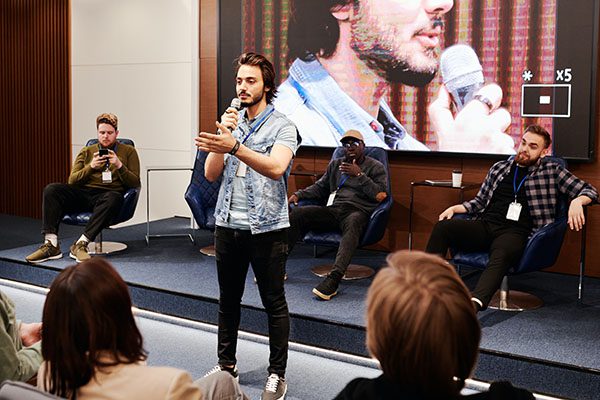
Exceptional Stories: The key to explaining complex concepts is not to throw information at your audience but to tell a story that provides context and structure.
One of the biggest things I learned from that was the importance of having a coach, listening to a coach and following the advice of someone who’s been there before, plays that trunk and knows how you can move forward. Something I’ve carried over into my business and in work life is that when someone who has more experience than the expert says, “Here’s what I recommend you do,” I don’t assume I know better than them. I’ll take that advice in him and apply it. It’s been a huge help.
I also think about racing someone else. I performed better, pushed to do more and achieve more. There is a sense of competition between someone else, not necessarily looking at them but you know they’re in the lane next to you. You’re both going for that wall and trying to get their first competitor in practice assuming against yourself. It’s hard to be super motivated when you can tell that someone is going for the same goal.
When you interact with that person, there’s a level of a relationship there. It makes an effort easier to find than dig deep and trying to achieve that goal first because there was a competition there. One of the things I’m trying to do with my company is going to build a community of people that are all going for the same goal, what I’m calling Collabetition. They know each other exist and they can share some ideas. I don’t want to say patent. They are not going to be giving away treats.
By knowing they’re going after the same goal and being in the same space, they’ll be pushed to do even greater things because they are not competing as each other. Instead of being super siloed and swimming in their own pools at their own pace, it’s getting in a race against someone else where you’re a little more aware of where they are and stuff. That way, everyone achieves the goals quicker.
The tweet for that is when competition and collaboration meet, everybody wins. You’re telling that story of a coach. When I was selling advertising for a fashion magazine called Speedo down in Southern California, I convinced them to advertise with me because I came up with a solution that they had not thought of with a fashion show around a hotel swimming pool of the sportswear and treating it like fashion.
They brought Michael Phelps in since he was on the payroll during the Olympics. I went up to him and I said, “Everyone says you’re so successful, Michael, because your feet are like fins and your lung is bigger than most. I’m guessing there’s something else.” He said, “Yes, John. When I was younger, my coach said to me, ‘Michael, are you willing to work out on Sundays?’ ‘Yes, coach.’ We got 52 more workouts in a year.” I thought, “If we want to be at the Olympic level of what we’re doing, the question becomes, “What are we willing to do that other people aren’t?” I’m imagining you have a story around something like that in what you do that other people in animation aren’t doing. Do you have something that you can share with us on that?
[bctt tweet=”When competition and collaboration meet, everybody wins.” username=”John_Livesay”]
What amazed me when Phelps is winning all the medals and breaking the records in the Olympics season where he kept racking up gold after gold was there’s a behind-the-scenes documentary style video they did showing what his routine was, his training regimen, and how much he had to sacrifice and give up to be that good at swimming. His life was wake up, eat, swim, eat, sleep, wake up, eat. He would eat thousands of calories because he’d burn them all off in the next three hours of the swimming session. Seeing that story behind what made him be able to achieve all those medals in the Olympics is what humanized him and made the difference between the person and the icon. The icon is standing on the podium with the gold medals or is on promoting Speedo. You can’t relate to him until you see the story and see what allowed him to get to that point.
One thing that makes my company different is that we focus on the story, not just the animation. The animation does have the icons, the logos and the graphics, but if it’s not telling a powerful story, no one’s going to relate to it. It’s the story that makes people resonate with the message, the animation, and follow the call to action. People have an animation about this on my homepage. People don’t invest in animation because it’s an animation. They invest in something because it gives them the desired result.
Animation is a tool to tell a great story. The story is a great tool to inspire people, to follow a call to action or to respond a certain way. When we’re making animations for a client, the first thing we start with is, “What are you trying to achieve? Who is your target audience? What story is going to inspire them to do the thing you want them to do? How can we connect you from where you are to where you want to be through those key points?” Creating any content and throwing it up online doesn’t work anymore. You have to have that high-quality story and custom content to get the results.
You’ll agree with me that good stories show the hero having some vulnerability. Michael Phelps did a documentary called The Weight of Gold, where he talks about his battle and another Olympic athlete’s battle with depression after the Olympics is over. Who are you after the parades are done, all the adoration is over and you’re not an Olympic athlete anymore, especially if you’ve been doing it for ten or more years like he was? It is a crisis of identity. That made me connect to him even more that he was vulnerable enough to share that. I love to hear the story of origin. You’ve got a great one of the purpose of Squash & Stretch. Can you explain a little bit about what that is and how that became the name of your company?
I’ll touch on Michael Phelps, the crisis of identity and depression. I see him as a spokesperson for an online mental health service, which is perfect. The times ruin the importance of mental health and people being so aware of it. It’s perfect because you have that whole pressure. Your life is the one thing that you stopped doing and then you’re like, “What do I do?” I agree there. The Squash & Stretch name is homage to Disney because when we were starting the company, that’s Disney Studios, which is his second studio. His first business failed, which is a testament to not giving up for any entrepreneurs out there.
Back then, there wasn’t a best practice for animation that had been established. If you look at the content made around then, it’s pretty bad by standards. He sat down with his animation team and they came up with twelve animation principles that if their work is going to be considered good, complete, done and have these twelve aspects to it. Number one on that list is Squash & Stretch. If you take any one-on-one animation class, the first thing you learn on day one is the same twelve principles. The tools have changed a lot since Disney’s day, but what makes animation work is still based on the same twelve principles. It’s homage to the giants who shoulders anyone who animates standing on. Whenever other animators see my business name, they’re amazed and everyone else goes, “What?”

Exceptional Stories: Focus on the story, not just the animation. It’s a story that really makes people resonate with the message and the animation.
Let’s talk about how you use this in healthcare. Give us a story of a healthcare company that’s very detailed if you’re talking about bloodstream or something. Sometimes, they have a product to sell. It’s complex, and yet they want to get it across quickly and ideally in a story. Do you have an example of a healthcare company that you’ve helped?
We’ve done some work for a company that helps place people in clinical trials that can qualify participants. We made up some animations explaining the clinical trial process for a few of their trials. One of them had to deal with premature babies with respiratory issues. You’re trying to explain to people. The new parents are freaking out because their kid has breathing problems. They’re going to try and see this type of test, if there is a nebulizer and this system to help improve the lung function of these premature babies. It’s trying to explain the risks and everything going on to people that are already emotionally stressed and beyond the normal amount of stress and lack of sleep of a new parent. These are the ones with the kid who has some health issues. Being able to clearly explain what’s going on with the study and get the information clearly is valuable.
Let’s talk about that because I haven’t heard anybody describe it quite like that. You did such a good job of painting the picture of you’re a new parent, you’re stressed out from your child not being well on top, the lack of sleep that new parents have anyway. Imagine that you, as a new parent, are trying to process information. That’s fairly complex about clinical trials in this case. You’re emotional and you’re exhausted. I know myself when my sister was diagnosed with ovarian cancer, she had to record what the doctor was saying because you are in a state of shock that you can’t even hear what they’re saying, let alone remember it or understand it. You’re solving that problem by being able to show people. We’re wired differently to hear information versus watch an animation and absorb a story like we do Pixar.
Part of our brain devoted to a sensory input analysis, 80% of that goes to vision. Also with animation, you get the audio and the visuals. The brain can engage and helps with recognition or memory and all that stuff.
You’ve also worked with tech companies. That’s a whole other very left-brain kind of thing, not necessarily related to technology and healthcare. My whole premise is that people buy emotionally and then back it up with logic, even for the most technical thing.
You might not be surprised to hear after the first story I told that I’m very interested in how the brain works. Reading a number of books on the subject, on the topic, we make decisions on the lower brain, which controls emotion and decision-making. Unless we’re presented with something that challenges our preconceived worldview or the way we see things. Our brains are lazy and designed to conserve energy as a survival mechanism. Unless we’re challenged by our worldview challenges information, you have a brain that isn’t even engaged when it comes to decision-making.
[bctt tweet=”Can you solve my problems?” username=”John_Livesay”]
The lower brain would take in something and think, “They’re not going to clash on what I think the world is.” We bounce it up to the upper brain, have the ratio and logic. Analyze this stuff and see if I can figure out how this will fit with my worldview. The brain kicks in, figures some stuff out and passes it back down to the lower brain when you make a decision. If you’re presented with something that doesn’t, can I call it to clash with how you see things? It doesn’t even kick in when it comes to decision-making.
When people are making decisions about all things, it’s 100% based on emotion and rationalized later if needed. That’s the reason why telling the stories is powerful and important, even for industries that are considering very left-brain and technical. Engineers often speak engineers. They don’t speak layman’s English. There’s one example of how we help a tech company. Early in 2021, we worked with a company called Enovix. They make next-generation lithium-ion battery technology.
They were spending about 45-minutes to 1 hour-long sales meeting trying to explain to other battery engineers how their technology can produce about twice as much energy and lasts about 30% longer than existing batteries. It’s about the same production process with a few drops in tweaks. We made this two-minute animation concisely explained the differences between their technology and the current technology and how they want to use this stuff. They loved it and they put it on their website for a while.
A couple of weeks after they posted it, they announced they’re acquiring a publicly-traded company and the valuation after the merger is $1.13 billion. Early in July 2021, they were awarded a $350 million contract with the US Army to make batteries for all the wearable tech soldiers wear. It saved them a ton of time and helped make their ability to explain the value of what their product does. It was two minutes instead of 45 minutes.
I have a premise that a good story should be clear, concise and compelling. With the steps that you’re using in your animation, it does all of that and more. When it’s compelling or you tug at heartstrings and people open the purse strings, people see themselves in the story and then they want to go on the journey with you. You talk about this in the steps about the appeal of a cartoon character has to correspond to what we would call charisma in an actor. Part of what people don’t realize is, “How am I being moved by a cartoon character? Why am I feeling something here?” Whether it’s Pixar or even something about the battery lasting longer than you would normally expect. If it’s helping save a life of a soldier, we’re involved emotionally. It’s no longer just, “That would be nice to have.”
It doesn’t have to be super cartoony either. There’s a ton of different styles in animation that are possible. When we’re picking a visual style for a client, we look at their existing brand, their target audience and figuring out what’s going to appeal to that audience and fit their brand. It’s popular and trending. It’s not all super cartoony. Things that are aimed at kids can be very sophisticated, more believable, realistic than other people would expect. You want to have the right characters because people empathize with characters on screen, empathize with people more than objects or concepts. You don’t even have to have a super detailed character, but as long as you’re talking about someone, you explain how they’re feeling and what they’re struggling with, what the conflict is and how they’re feeling about that, those situations or things that people can empathize with.

Exceptional Stories: Part of our brain is devoted to sensory input analysis. Around 80% of that goes to vision. Animation has audio and visuals, so the brain can engage at once.
If you’re trying to hook an audience, sorting your story with, meet this character, here’s what they care about, feeling, struggling with, people who share those feelings in situations are going to go, “I get this person. I want to see what happens to them.” If that’s your target audience of who you’re trying to reach, then showing them going through the experience of working with your business and how they’re going to feel during that experience and at the end, showing the results and how they feel afterward, how much their life is better because they hired your business for whatever you do, bought whatever product or whatever you’re trying to get them to do, showing that journey and that experience get people to be like, “I want that response.”
Once they have that and you share your call to action, that’s what inspires people to get off their butts and do something else. I’ll click on the computers because no one is going anywhere much. That story is powerful. A lot of people make the mistakes of not setting up the character right and not setting up the conflict right. Jumping right to what they do. Unless you establish why people should care in that first eight seconds or so, no one is going to watch the rest. All they talk about themselves too much is huge, companies talking about themselves too much on their websites and other content is about them. People only care about two things, which is to share my values, “Are you here to help me?” The weird thing our brains do when we’re presented with something new is subconsciously ask, “Is this going to kill me?”
It’s the leftover survival mechanism from back on the Savannah days if there’s a rustling bush in the distance. If you weren’t afraid there was a lion and when there was a lion, you got eaten. All the people that survived ran away when it rustled, even if it wasn’t a lion. You still have to provide enough information about your business that makes sure people know they can trust you and that you share their values. If they show, “Can you share my values? Can you solve my problem?” Then go right back to talking about the clients that they’re experiencing, how you’re going to help them improve the quality of life that they’re looking for. Most people talk about themselves too much, and people don’t care.
You gave us some real value bombs there. Let me highlight a few of them. What I heard you say was the better we describe a problem someone’s having before we jump into what our solution is, the more people are involved in this story. The other key element that I teach everyone when I’m teaching them how to tell stories as a sales tool is you must have a resolution to the story. The story doesn’t end when you say what your solution is. We fix the problem. We need to know what life is like after the problem has been fixed. We see it in classic stories like the Wizard of Oz. Imagine if that movie ended when she got in the balloon to go back to Kansas. There wasn’t that great scene of her with all those insights about no place like home and all that stuff.
This concept of once we feel safe and that people share our values is, “Can you solve my problem?” The big unspoken question everybody has when they watch a video, listen to someone present or pitch is, “Will this work for me?” They might trust you and like you but if they don’t think it’s what you have to offer will work for them, then they’re not going to buy.
[bctt tweet=”Exceptional stories can change the world. ” username=”John_Livesay”]
The magic of storytelling is you pull someone into the story enough where they are in the journey with the character and they go, “This person is like me. If it worked for them, I guess it will work for me.” Until that journey and that embodiment of who you’re taking on the journey unless you’re in the story is left-brain analytical, “Nice for them that that happened, but I don’t think it’s going to happen for me.” There’s where the big gap is between why people aren’t closing more sales or getting more people to understand what they’re doing. It’s because they’re not seeing themselves in the story.
They’re talking about themselves too much. When you’re telling a story like that, the clients are the hero, the company is the guide and helping them along the way. It’s not about you. When you show the results, it’s about the results for the other clients and how much better their lives are. I love that example of the balloon. It’d be funny to see a compilation of famous endings of films to cut them all off before that’s a complete entity. Triggered people get anxious or annoyed if they didn’t see the entire resolution.
That open loop is very annoying. It’s big to have explainer videos on websites. People don’t want to read. They want a short little video. It’s much more impactful if there’s some animation, music and all that versus just a talking head. What is the best way for someone to reach out to you?
They can visit www.SquashAndStretch.net. We also offer a free story assessment service on the website. There’s a five-point assessment we go through for their website and give them a report that shows where they can improve. We offer them some next steps that will help them close the gap themselves, or they can do a gap assessment and figure out how we could work together to make sure that their storytelling on their website and their other media is as optimized as possible. They can check me out on LinkedIn. Search for Karl Pontau and reach out that way.
Karl, thank you so much. Many people are drowning in the sea of sameness. There are many other people that do what we do, whether it’s insurance, coaching or whatever it is. With your skillset of animating and bringing your story to life that’s going to cut through the clutter and make people stand out and become memorable, a lot of people are going to be interested in exploring how you can help them do that.
Thank you.
Important Links
Get more business storytelling tips and exclusive deals directly to your inbox. Join the Squash and Stretch Productions Community!
https://www.bit.ly/SnSP-JoinCommunity
Wanna Host Your Own Podcast?
Click here to see how my friends at Podetize can help
Purchase John’s new book
John Livesay, The Pitch Whisperer
Share The Show
Did you enjoy the show? I’d love it if you subscribed today and left us a 5-star review!
- Click this link
- Click on the ‘Subscribe’ button below the artwork
- Go to the ‘Ratings and Reviews’ section
- Click on ‘Write a Review’
Love the show? Subscribe, rate, review, and share!
Join The Successful Pitch community today:
- JohnLivesay.com
- John Livesay Facebook
- John Livesay Twitter
- John Livesay LinkedIn
- John Livesay YouTube
Referral Diva With Virginia Muzquiz
Posted by John Livesay in podcast | 0 comments


There is an art and science to being a magnetic human. John Livesay’s guest in this episode is Virginia Muzquiz, known as the “Referral Diva” and the Founder of Master Connector. Virginia talks with John about how you can influence without being manipulative. The key is empathy, which is the secret to quality referral partnerships and friendships. The sustainable method of referrals and connection is creating a team. You’ll need affiliates, ambassadors, and advocates who work on your behalf because they like who you are. If you want more tips on how to be magnetic, this episode’s for you. Tune in!
—
Listen to the podcast here
Referral Diva With Virginia Muzquiz
Are you looking for a way to improve the number of quality referrals you get? Our guest, Virginia Muzquiz, is the Referral Diva who’s going to give you a plan on how to get referrals, execute the plan, track it, evaluate and repeat. Enjoy the episode.
—
Our guest is Virginia Muzquiz, who is the Founder of Master Connectors and the creator of Referrals On Demand, which teaches solo entrepreneurs how to turn their network into a referral generating machine. With more than two decades of experiencing, developing and leveraging social capital to build a business, she has been teaching entrepreneurs and small business owners the art and science of filling their sales funnels with high-quality referrals.
She is passionate about increasing prosperity across the globe and uses her business to further the efforts of Ten by Three, an international nonprofit, creating economies of scale in third world countries by turning artisans into entrepreneurs. Her IMPACT FIRST philosophy inspires her clients to make different skills that inspire others to promote, connect and refer them to perfect ideal clients. Virginia, welcome to the show.

Referral Diva: There is an art and science to being a magnetic human and using influence without being manipulative.
Thanks so much, John. It’s great to be here.
Let’s go back as far as you want, your childhood, college, wherever you want to go and give us a little sense of when you start getting passionate about the value of relationships.
Every time someone says, “Tell me your story,” it makes me want to break into song and be like, “When I was a young warthog.” It’s from the lion king, I don’t know why that always cracks me up. I discovered the value of relationships because, as a kid, I grew up without them. I grew pretty independent. My brother is seven years older than I am.
He was off riding his bike when I was cutting my teeth on a tricycle. I didn’t have a playmate or anything. My mom was a woman who took great physical care for me but she was a victim of domestic violence and was deeply abused by her father. She was emotionally unavailable. My dad’s a grumpy old geezer and workaholic.
I grew up alone with Nancy Drew books in trees. I was a Betty Bossypants. I didn’t have a lot of friends. I didn’t have social skills, because where do you learn social skills as a kid? You learn them in your family. We didn’t do that. I grew up feeling lonely, disconnected and constantly seeking relationships and approval. What has happened is over time, I’ve realized that there is an art and science to being a magnetic human. Being able to use influence without being manipulative.
I work with people a lot when they say, “We want to be persuasive without being pushy when we’re selling something.” You have a different distinction around that as far as connecting in general, which is great.
I believe that there is a bit of a science to persuasion and influence but the difference between a narcissistic sociopath and a CEO is empathy. There are a lot of CEOs that are pretty narcissistic. I’m not being critical about that if you don’t understand what you do, what you say and how you walk in the world inspires or alienates people and you’re running around being the victim of your own bad behavior. I did one of those TTI assessments where they’re like, “Here’s your DISC and motivators.” There’s this like skill-based thing and it comes back. I have a 10 for influence and I have a 0 for empathy. I burst into tears years ago. I was like, “I am a sociopath. This is horrible.”
[bctt tweet=”Curiosity is the key to being more empathetic. ” username=”John_Livesay”]
The guy who did the testing said, “The simple fact that you can understand that influence untempered with empathy is a problem. It means you’re probably not a narcissist. You just don’t have a skillset.” I started coaching. Believe it or not, there are coaches who teach you empathy. It’s a vocabulary. I started realizing that understanding empathy was the key to quality selling, quality referral partnerships and, quality friendships. It’s that ability to understand, listen for and have some curiosity about, “What is John feeling in this moment and can I name it?”
I love that you said curiosity. That is one of the most underrated characteristics in a leader and people because it requires you to get the focus off yourself. You need to be interested in what’s going on in the world and learning a new skill. “I’m curious to learn about you. How did you get to where you are?” Any of those things lead to people saying, “You’re taking an interest in me. That makes me feel connected to you.” Ideally, the situation is reciprocal. There’s one thing you wrote in your LinkedIn profile. I’m a fanatic about reading those. It’s a great opportunity for people to tell their stories in a way that either pulls people in or pushes them away. How did the Referral Diva come up?
I was starting out in my coaching practice. It was 2010, 2011. I had purchased the Referral Institute Franchise, which doesn’t even exist anymore. It’s not a thing. The franchise rebranded and then got sold off. I realized the need for differentiation. You get behind a brand but you also need your edge. A friend of mine who was a mentor and an investor in my early coaching practice took me to this agency and said, “We’re going to take you to this agency. We’re going to brand you personally.” It’s going to be great. They’re way ahead of their time. They’re trying to give me a QR code and they’re like, “You need to be on Twitter.” I’m like, “I don’t do social media. It’s a time suck. I don’t want to do it. I’m not interested. I’m not going to Twitter.”
The owner of the agency walks through and goes, “Could you stop being such a diva?” The branding person that was assigned to my thing goes, “That’s it. Referral Diva, that’s you.” I was so incorrigible at the time. The definition of a diva is a woman of extraordinary talent. Not to brag but I’m extraordinary. I’m talented at the things I’m talented at, not much at the stuff I’m not but I’m talented at what I do. I started trying to embrace that side of the Diva brand. We are going forward and officially rebranding to the Referral Alchemist.
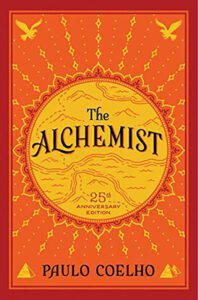
The Alchemist
I love the book The Alchemist. That’s the name of your process, the Referral Alchemy. This concept that you talk about, we’re lucky sometimes we meet a couple of referral archeologists who keep us in mind, referrals and take the time to think about who’s a smart connection. Most of us don’t know how to hang out with those kinds of people, let alone how to be one. It seems to me that you’re solving both problems. You teach people how to become an alchemist in terms of being able to tap into the network in a meaningful way and then how to find others so that you’re spending time with the right people. That helps your own network, which makes you a better referral.
If you look at the Master Connectors logo that I have, it’s a Buckminster Fuller Geodesic like the Epcot globe. The idea here is, first of all, the triangle is the strongest geometric shape. Geodesics are built out of triangles and the best relationships are three-way. I gain influence when I introduce you to a third party. You’re connected to me. They’re connected to me. You’re connected to them. That strengthens our relationships all the way around. The other thing about a geodesic that is unique is that it is the only geometrical structure that gains strength and durability as it gets taller. That has to do with the fact that it’s round and dome-shaped. The taller it gets, the wider base gets. It makes it more stable.
The key to the whole alchemy piece is being able to hub enough connections that you can get anywhere around the geodesic because you have a point of connection somewhere. I’ve got an alchemy epic fail and then an alchemy epic success. The success story is Rob Goyette was on my show and I asked him, “Who do you want to know?” I make it my business to introduce the people I meet to the people they want to know who do you want to know. He said he wanted to meet John Lee Dumas.
It happened that somebody in my network had coached with him and had presented me to John to have him on my show. It was a brand new show, so I was terrified to have this conversation with John Lee Dumas. I didn’t schedule him. If somebody hands you, John Lee Dumas, on a platter, I don’t care how unprepared you are. He’ll make you look good, just say yes but I didn’t have the confidence to say yes.
I ended up calling Zach, telling him, “I’ve got this guy, Rob. Do you still have a connection?” He said, “I don’t but my friend does because my friend lives in Puerto Rico.” Zach introduced Rob to the friend, the friend introduced Rob to John Lee Dumas, John Lee Dumas introduced Rob to someone at this party and those two inked a massive deal.
It’s like the Kevin Bacon, Six Degrees of Separation in a way.
They say everyone is Six Degrees of Separation and that’s not the case. Dr. Ivan Misner and Michelle Donovan did the research. What they found was that only 29% of people are capable of doing it. It’s based on a study that was done where you had to get a letter to a destination and mail it to someone you knew, then they had to mail it to someone else they knew. Only 29% of the letters arrived at their destination. I imagine that there were letters along the way that could have gotten to the destination but for the apathy of the individual who got the letter. I got the letter but I was apathetic about sending it on to the next person.
Most people are weak in the follow-up. That’s a big distinction I see in particular.
It can be fun for me. It’s an adventure. It takes on this LARPing quality, Live-Action Role Play like, “How can I get to the next step? Who else could I ask? Where could I push? Where could I find it?” For me, it’s going on an epic quest. I won’t work that hard for everybody but I’ll work that hard for people who I think are merit that much activity.
[bctt tweet=”Get a referral engine by planning and tracking. ” username=”John_Livesay”]
It’s like the hero’s journey in a way. There are obstacles along the way but then the stakes are high. Let’s get into what problem you’re solving. What happens to someone’s business if they’re only relying on advertising and they maybe get the occasional a lot of the blue referral but they don’t have a system in place to create that or support that coming?
Generally, they’re stuck not getting any clients. That’s the challenge. Here’s the real truth, John. I’m not against paid traffic, print advertising, television advertising or sponsorship but they all take money because if you’re going to do it, you need to be ubiquitous. In order to do that, there’s this frequency element. It used to be people saw you 3 to 5 times and that was enough. Now it’s 12 to 17.
Somebody needs to see your Facebook ad twelve times before they’re going to click on it. How much money do you need to put behind that? You’ve got to know how to beat the algorithms, know your SEO words, have the right message and AB split test. It’s so overwhelming. I’m a $75,000 a year coach. You don’t have a choice but to use referrals. I have this Referrals On Demand system but it’s the most simple form. I use PETE, it’s an acronym. Meet my friend PETE, Plan, Execute, Track, Evaluate. Without it, you won’t have a consistent revenue stream.
Do you find some people are hesitant to make referrals? Let’s say you’re coach and you got a great client. Maybe they’re embarrassed that they’re even using a coach that they don’t want to tell their friends. I see a lot of people who are financial advisors like, “Any referrals you have?” Let’s say you’re doing a good job, whether you’re somebody’s empathy coach or financial advisor and you want them to send you referrals.
You ask, “Should they be giving referral fees?” What’s the process that you teach because I know you have an upcoming course we want to talk about? I’m trying to identify some problems that you’re helping people solve. Most people are afraid to ask, then they ask and they still don’t get it. They don’t know why. That’s what I see.
There are a couple of things here. Number one, referral fees don’t work, so don’t do it. I’ll give you $25 if you send me your mother. That’s not happening. The only place that it works is in joint venture marketing but that’s a whole other ball of wax. We can talk about that but that involves paying people high dollar cost of client acquisition and the average solo entrepreneur doesn’t even know what client acquisition costs are, let alone how much their cost of client acquisition is. There’s that element of that. What I teach is very relevant to joint venture marketing and it is an essential skillset because if I want you to promote for me, I need to build this relationship with you that has some reciprocal value. Referral fees, in general, don’t work. They will not inspire your clients to refer you.
Second thing, your clients are not going to refer you because you do a bang-up job for them. The idea is like, “If you go to a movie, you tell everybody about it. If you go to a great restaurant, you tell everybody about it.” I’m sorry. No, one’s talking about what a great coach you are on an intentional basis. If someone says, “John, you’re killing it. What happened while I was working with Virginia?” Only if someone notices and asks, “Will your clients do it?” Your clients rarely are going to put their neck on the line, mostly because they often don’t know what to say, how to do it or what to work?
The real money and sustainability are in creating a team of affiliates, ambassadors and advocates that willingly work, out of goodwill, on your behalf because they like who you are. They believe in your worldview, what you’re up to and want to further your cause because they think you’re the man and they want to proliferate that.

Referral Diva: The real sustainability is creating a team of affiliates, ambassadors, and advocates who willingly work on your behalf because they like who you are.
People can tell that when they’re hearing or even reading an email, they can tell whether it’s an authentic connection or not. I believe everything’s energy from a quantum physics standpoint, money’s energy, relationships are energy and trust gets transferred. That’s the thing that most people do not realize. “I got to get you to trust me. Let me show you all the social proof,” look you in the eye and all that other stuff that you need. What you’re offering people is the roadmap to how to get trust transferred. That’s how I would sum you up to somebody.
I would say that to be true and a lot of it has to do with clarity, clarity about who I am, what I want, what I’m up to in the world and my purpose. Why am I here on the planet? What am I here to do? What change am I here to affect? It’s the ability to communicate it clearly.
Clear, concise and compelling are my three Cs. I’m constantly teaching people with their storytelling skills. Let’s double click on the concept of you working with solo entrepreneurs. Can you give us 2 or 3 industries? Are they coaches? If so, what kind of coaches? Are they the guy who owns the dry cleaning business? I don’t think that’s who it is. Who’s your ideal client? Who’s this for?
I’m working with midlife expert entrepreneurs is where that’s coming in. Coaches, consultants and I consider a financial advisor, accountant and attorney. They’re all consultants of some sort. People that are using their expertise to solve problems for others. They’re selling something intangible. It’s easy to be like, “I’m selling magic markers. Do you need a magic marker? A magic marker will suit your needs.”
That’s fine but when you’re talking about things like money, deep dark secrets, transformational journey or whatever that is, you start getting into stuff that people are going to hold tight to the vest in the trust level for that. It’s not just I can buy it at Walmart, think this is crap, throw it in the garbage and buy something at Target. That’s not that easy.
Tell us a little bit about what you have coming up with this program, Referral Engine. Is it an online course?
It’s delivered live. It’s a hybrid coaching program. There’s video support. I’ve got the video modules for the support and then we’ll be meeting once a week for Q&A. We’ll be covering things like how do you align your business with your lifestyle? Most people are building a business and then trying to fit life in. My clients decide on life and then they align their business with that.
It reminds me of some people who have kids and then once the kid arrives, everything revolves around the kid. The parents suddenly lose the time to work out. They don’t see their friends anymore and everything’s about the kid’s life. There are other people who have kids like, “The kid is joining our life. The kid is not our life.” I was like, “What a great distinction.” It doesn’t mean you don’t take your kids to birthday parties but that’s what I hear you saying. Is that a great analogy?
It is. By the way, my two girls are capable of sitting on a bench for four hours and entertaining themselves with their thoughts.
No electronics needed?
[bctt tweet=”Align your business with your lifestyle.” username=”John_Livesay”]
No. My kids grew up in the Game Boy era. It boils down to, “What is it that you want to be doing? What kind of life do you want to be?” It’s, “I know what life I want to be living. With whom do I want to take the journey?” I call it defining your tribe. It’s getting in touch with your values, mission, vision, passion, purpose, the impact that you want to have and who do you want to invite in. Dr. Ivan Misner and Stewart Emery wrote a book called Who’s in Your Room.
It’s up to us to decide who we let in. If we let somebody in by mistake, get them out. It’s so good.
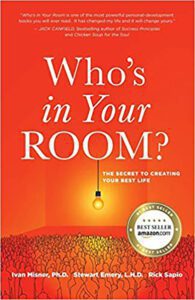
Who’s in Your Room: The Secret to Creating Your Best Life
You can never get them out. Did you know that? Ivan Misner does this. He’s like, “Think of somebody that you kicked out your room.” You said, “Get out of my room.” Did you think of somebody? They’re still in your room. They are still living because they have taken up space in your neural network. Unless you have a frontal lobotomy and you have a cut-out, it’s not going anywhere.
The notion of defining your tribe is, “Who do I psychographically want to take my life’s journey with?” It’s number one. Number two, “How will they know that I get them?” How do we communicate? I’m communicating to you how I see you. What you need to be thinking when I’m talking to you is like, “How did she get in my head?”
That goes back full circle about the importance of listening, being curious and having empathy. When you hear someone express a challenge or a problem they’re having, you can then say, “If you’re having this, I bet there are 100 or 1,000 other people like you.” That becomes part of the concept for your marketing. This whole concept is fascinating of how we communicate and what trust is. Virginia, where can people go to find out more about you and your wonderful program about building this Referral Engine?
You can locate information about the Referral Engine at MasterConnectors.com/ReferralEngine. On the forms there, it says like, “How’d you hear from us?” If you found out about it here, make sure you fill that out and let us know so that John gets brownie points and kisses.
Thank you so much. What a treasure. I love that you’re so passionate. Your daughters are lucky to have you.
Thank you so much, John. I appreciate it.
Important Links
- Virginia Muzquiz
- Ten by Three
- The Alchemist
- Rob Goyette – Previous episode on Business by Referral Podcast
- Referral Engine
- Who’s in Your Room
- Better Selling Through Storytelling Method Online Course
Wanna Host Your Own Podcast?
Click here to see how my friends at Podetize can help
Purchase John’s new book
John Livesay, The Pitch Whisperer
Share The Show
Did you enjoy the show? I’d love it if you subscribed today and left us a 5-star review!
- Click this link
- Click on the ‘Subscribe’ button below the artwork
- Go to the ‘Ratings and Reviews’ section
- Click on ‘Write a Review’
Love the show? Subscribe, rate, review, and share!
Join The Successful Pitch community today:
- JohnLivesay.com
- John Livesay Facebook
- John Livesay Twitter
- John Livesay LinkedIn
- John Livesay YouTube