
Unbias With Stacey Gordon
Posted by John Livesay in podcast | 0 comments

Unconscious bias stops you from seeing someone qualified enough to do the job. John Livesay’s guest in this episode is Stacey Gordon, author of UNBIAS: Addressing Unconscious Bias at Work. Stacey discusses with John how experiencing exclusion as a black female herself inspired her to write this book. People often hire people who look like them. We have a misguided notion that whatever we have done is the best way to do it. We dislike difference and change. Listen to this episode to discover how we can work our way to diversity and inclusion. Tune in and be unbiased!
—
Listen to the podcast here
Unbias With Stacey Gordon
Our guest on the show is Stacey Gordon, the author of UNBIAS. She said people recruit for differences but hire for sameness. Find out what she means. She also said a coworker is not a relationship, it’s a label and that real leaders do, in fact, see color. Enjoy the episode.
—
Our guest is Stacey Gordon, who is leading the intersection of diversity, inclusion and workplace culture. In her role as an Executive Advisor and Diversity Strategist, Stacey coaches and counsels executive leaders on these strategies while offering a no-nonsense approach to education for the broader employee population. She’s the creator of the number one resume course at LinkedIn Learning and an Unconscious Bias course which has consistently been the second-highest viewed course on the platform. It is translated into at least four languages and featured by LinkedIn, Microsoft, and Virgin America, which is now Alaska Airlines. Stacey, welcome to the show.
Thank you, John.
I see that you also teach at Pepperdine, where you got your MBA. My friend, Claudio Ludovisi, has been in the Marketing Department attracting people like you to come to take their MBA. It’s certainly a beautiful campus and a beautiful place. You have a book out called UNBIAS: Addressing Unconscious Bias at Work.
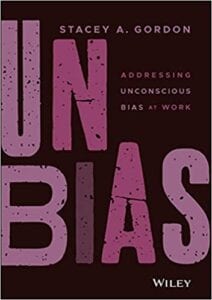
UNBIAS: Addressing Unconscious Bias at Work
It was released, and we are still promoting and talking about it and spending a lot of time focusing on the tenets of the book.
Before we dive into the book, let’s do a little background on your story of origin. You can take us back to childhood, school or wherever you want to start your story.
I always say, “Where do I start on this journey?” There are so many places I could go with it. I’d like to talk a little bit about the fact that the work that I do, I think my background, my childhood helped me prepare for this, which I did not know. Because I have always been the odd person out and it makes it very easy for me to relate to others, to be comfortable talking to different types of people and inserting myself in things even when I probably wasn’t invited or I wasn’t expected to show up. It’s like, “I’m here.”
Did you grow up in Southern California?
No. I grew up in London and then my family moved to Brooklyn, New York.
What was it about that place that made you feel like you didn’t fit in?
I did not fit in London because I was always one of the only black kids in my school. It was pretty tough for a little while there. I had friends that stopped talking to me because their parents told them that they couldn’t play with me anymore because I was black. I had kids that would hurl stuff at me and also, I remember being in that era too, where there’s a lot of very large Indian and Pakistani population. A lot of the cornerstones over there are owned by individuals who were Indian or Pakistani. There was a lot of hate crime, stores being burned down, swastikas being put up on the walls and a lot of riots and things going on. I was a kid and I don’t remember exactly what was happening, but I remember being scared.
One of the whole premises of childhood is to try and feel safe and I’m sure that was hard on your parents if they felt like you didn’t feel safe.
It was probably why we moved to Brooklyn. My mom’s family lives in Brooklyn and everyone there was black, so we’ll all get along. It’s like, “Not really,” because now I’m a black kid with a British accent in Brooklyn.
You still stand out. How did you decide you wanted to come to the West Coast, go to Pepperdine and focus on this particular niche? Obviously, you have lots of choices of what to do with your degree.
I spent a lot of time in New York City. It was expensive and again, being a person of color, it was like, “Do I want to stay in Brooklyn? At the time, we had a lot of crime and a lot of things going on. Is this where I want to grow up and raise a family eventually?” I lived in Manhattan for a couple of years. We couldn’t afford to continue to do that and realized that we had to leave in order to try to be able to make our dollars stretch, which is how we ended up on the West Coast and eventually in the LA area. We have been here longer than I’ve lived anywhere else.
That’s funny when you cross that mark. I grew up in the suburbs of Chicago for the first 21 years and then I remember passing 21 years in California before moving here to Austin and I was like, “I’ve been in California longer than I was in my childhood.” Let’s dive into the book and your website is Rework Work. That’s intriguing to me. Tell me how did you come up with that story.
[bctt tweet=”Coworker is not a relationship; it is a label. People recruit for difference but hire for sameness. ” username=”John_Livesay”]
I love the title and the name of our company. It came out of frustration as a lot of things sometimes do. I was working as a recruiter. I was running a recruiting company and at the time, I was operating under the Gordon Group. That was the name of my company. I was talking about that the usual, client work and the things that were going on. I was so frustrated. I said, “We need to rework recruiting, onboarding, training, advancement, and everything. We need to rework work.” I thought, “I like that. I wonder if anyone’s using that.” No one was using it. I did a trademark search and did the whole thing. It was like, “Wow.”
I’ve spoken to a lot of recruitment firms for their annual meetings, whether they’re Korn Ferry or another company, they all have to compete to sell themselves to get hired by a big company to find their next C-Suite level people. That was an interesting journey to look at their business model and how similar it is to other companies like architects. They have practice areas where people specialize in a special kind of thing.
A lot of recruitment firms are trying to get diversity within their own company, as well as offer diverse choices to companies that are hiring. The thing I keep hearing, and I want to get your opinion on this, is there’s not a lot of choices out there that fit that criteria. Has that always been the case? Do you see it changing if that is the case? For example, in the venture capital world, there are very few women, let alone women of color. If they want to fix it but don’t have people that have the skills to hire to fix it, how do you advise them?
They have the skills. There are very few women in the venture capital world because we won’t hire women in the venture capital world. They exist. I have to keep telling people like, “We’re not tooth fairies or the unicorns. We do exist.” The problem is that unconscious bias stops you from seeing me as somebody who was qualified enough to do the job when honestly, I’m probably twice as qualified as half the people there to do the job and I’m being real. There are people who are absolutely positively qualified to do it, but they are not seen as qualified as such. If we use the example of one of the women who is now going to be representing America in track, a black woman. She got blue hair. I’ve seen different pictures with different-colored hair. She’s got tattoos all over her. She is queer and got long nails. Here we are. We’re celebrating her. She’s going to represent the United States.

Unbias: Unconscious bias stops you from seeing someone qualified enough to do the job.
If that woman showed up at your job and said that she wanted to be hired, you would usher her out. She wouldn’t even get her foot in the front door. Here we are celebrating this person for being able to do the job she’s tasked to do regardless of how she looks. We have to realize that always we have been able to do the job, but because of how we look, we have not been seen as able to do the job. We have been turned away. We have been discriminated against, ignored and passed over. It is time for that to change.
One of the things you talk about is unconscious bias. It’s one thing if someone says, “I want to work with people that look and sound like me.” That’s obviously conscious bias.
Conscious bias is discrimination.
It’s one thing for people to know they’re doing it and maybe own up to it internally or whatever, but the problem from my perspective is there’s a lot of people who are unaware. That’s what your expertise is that it’s not biased, it’s unconscious bias. I’ve seen this when I was selling advertising at Condé Nast and I had worked at different magazines. I’m like, “All the women here are brunettes,” or at another place, “All the women here are blonde.” It was on some weird level, people are hiring people who looked like them and that’s within the same race. I can only imagine and I think that was an unconscious choice. The blondes wanted to hire blondes and vice versa.
We have a misguided notion that whatever we have done is the best way to do it. Others who do it the way that we do it, we like them. We don’t like difference and change. We recruit for difference, and then we onboard for sameness.
People hire for difference, is that what you’re saying?
We recruit for difference and we onboard for sameness or hire for sameness.
You’re saying, “I want to look at a lot of different kinds of people,” but at the end of the day, you hire someone who’s like everybody else in the company.
The thing is though, we go out there and we say, “We want diversity and difference,” but when you hire that person and you bring them in, you then say, “Do it the way it’s always been done.”
You need to fit into our culture. Don’t be yourself basically.
It’s like, “Why did you bother to go out and look for diversity in the first place?” When they don’t fit in the box that you want them to fit in, then you fire them or you say, “They weren’t a good fit. It didn’t work out.” The other thing is this notion that because there are fewer people that they’re not as qualified and that is so far from the truth. Every time I hear someone say, “I’d love to hire a woman in tech, but I don’t want to lower the bar.” I’m going to be honest. I want to punch them in the nose because that is so insulting. There are so many people who have not been given the opportunity and I get it all the time.
People say, “I treat everyone fairly. We hire people for skills.” That’s absolute BS because when you have your friend, Mark, who you’ve been hanging out with for months or years, that person gets the benefit of information and mentoring from you and learning the ropes informally. When it is time to promote, he’s ready because you’ve been grooming this person, but everyone else, you don’t talk to them. You don’t invite them to lunch, hang out with them on the weekends, golf with them and provide them with the same level of access.
One of the things you talk about is you help employee resource groups. Can you tell us a little bit about what that is and how that works?
[bctt tweet=”Conscious bias is discrimination.” username=”John_Livesay”]
Employee resource groups, you have an employee business group, business resource group, they used to be called affinity groups. A lot of companies now are creating them if they don’t already have them. There has been some controversy with that, too. It’s like, “Why are we separating? Why do we need to have a women’s group, black group, LGBTQ group, and Asian group?” The reason is that we have to focus on what are the systemic problems within the company that are affecting that so that we can all work towards fixing them. It’s not a group that is only for black people to join, it is a group that is focused on what is preventing black people from being promoted within your company. It’s not a group for only the gay people to join. It’s a group that everyone gets to participate in to look at what might be some of the barriers and some of the obstacles that we have created that would be problematic in this workplace.
It wasn’t that long ago. I would say even in the ’80s, they were looking for people who had families to promote because they’re like, “We like to have a guy who’s got a wife and maybe a kid or two, so they’ve got all this responsibility, mortgage, and child support to pay that they’re not going to take any risk and leave the company or start their own thing.” That’s our world. If you were single regardless of your gender preference or race, that alone used to ixnay you if you weren’t married. The list was so long of what was expected. Now that we’ve identified it clearly, I don’t think it’s a surprise to anyone reading, except maybe the depth of it might be a little eye-opening hopefully, but how do you help companies solve this problem?
The way that we do it is by exactly what you said. There’s a laundry list. There’s no point looking at the laundry list of things that we need to fix. It’s not about the individual laundry list of demographics and issues. If you’re single, you get discriminated against for this reason. If you have a baby, you’re discriminated against for that reason. You’re tall, short, blonde, fat, ugly, white, or whatever. As humans, we are always going to find reasons to exclude people. It is in our DNA.
The job is to know that and to counteract it. We have to be aware. That is the first step in the book. It’s awareness. We’ve got to be aware. We have to open ourselves up, be educated, and realize that this is a problem. We all do it and be open to realizing that this is what we all do, so then when we make decisions, we can remind ourselves that, “I need to make this decision and not make one that is going to be based on my gut feel, fit, or anything that I can’t quantify. Instead, I’m not only about to make a decision. I need to make sure that I’m going to make this decision based on facts and actual data that I have at my fingertips.”
So many people pride themselves on making gut decisions on the hiring and you’re saying, that’s probably going to tap into some unconscious bias. The other thing you talk about is leaders lead teams who trust and I’d love to hear how you help leaders build trust.
One of the ways that leaders build trust is by being open and being authentic, even getting to know people. We show up to work every day and we believe that we have a relationship with somebody because they’re a coworker. A coworker is not a relationship status, it is a label. We think that it’s okay. I’ll use this example because this used to drive me nuts. When I was pregnant, people would walk up to me and they would touch my belly without my permission. We’ve now come to realize that’s probably a little skeevy. We probably shouldn’t be touching people regardless of the fact that they’re pregnant. I used to complain about it and people would say, but they want to participate in the joy of you bringing a child into the world. “You, sir, are a stranger. I don’t care.”
It’s not about you. It’s not about what you want.
It’s the same thing. We want to get into these tough conversations. We want to have difficult conversations about race, sex, politics, etc., but I don’t know you. We haven’t created a relationship. Before you can dive in, we have to create a relationship. I need to get to know a little bit about you. I don’t need to know your intimate, deepest, darkest secrets, but I do need to know who you are as a person. I do need to know that you give a crap about me as a person. Once I know that, then we can start to develop some trust, then we can start to have some of these difficult conversations. Instead, we want to pull together a bunch of strangers, throw them in a room, and say, “Let’s have this conversation.” It’s like, “Whoa, Nelly! I’m not ready.”

Unbias: We have to focus on the systemic problems within the company affecting that group so we can fix them.
Until trust is built, then it’s someone’s sense of entitlement that allows them to touch a stranger’s belly without their permission. There are actual statistics taking females alone, let alone any other diversity, that female CEOs tend to outproduce men in the roles and yet, excuse predominantly male. There’s actual data, if I’m correct, that backs up that companies that have more diverse people working there have more diverse ideas and therefore, it can even be a competitive advantage than a company that does not. Is that accurate?
The statistics they are out there. If you look at Deloitte, McKinsey, and Catalyst, there are tons of statistics around the benefits of having a diverse workforce. The piece that’s missing though, is we also have to remember that we have to be inclusive because when you have a diverse workforce without inclusion, you have tokenism. We’re got putting people of color into positions strictly for window dressing.
We had a client and their job was to go out and do the sales pitch to get the work. They would make sure that they brought a woman and/or a person of color on that pitching team, but then those two people didn’t get to participate in the actual work. They didn’t get the opportunity to work on the project. Their face got to be on the project, on the documents and everything that went out. They got to be part of the pitching team, but they didn’t get to actually have the benefit of working on that project. That is tokenism. That is using somebody’s likeness to get ahead and that is not something that we want to be doing. That’s diversity with no inclusion.
You also talk about leaders’ need to not build trust, but listen. Obviously, if someone has, “I don’t like strangers touching my belly when I’m pregnant or anytime,” I’ve experienced this as an openly gay man where people say insensitive jokes and you feel like, “Should I say something? Who do I say it to?” If I say something, they’re like, “For God’s sake. Just get a sense of humor. Don’t be so sensitive.” Do you see that happening a lot around all kinds of things?
There are two things about that. One is, there is the sense that, “No one’s got a sense of humor anymore. We can’t joke anymore. Everyone’s so sensitive.” My response to that is we’ve always had to watch our mouths. We have parents. There are people in our lives who we respect and when we respect those people, we take into account their sensitivities and we pay attention to that. If my mother does not want me to curse, but I happen to curse like a sailor when I’m with my friends, when I get home, I find a way to somehow stop the F-bombs from coming out of my mouth. If I go to church and I talk to my pastor, I’m going to find a way to talk to that person and be respectful. Why is it that if you know that somebody doesn’t want to hear this specific joke or doesn’t think that’s funny that you want to be able to say, “No, it’s my right to be able to be an a-hole,” which is fully what it boils down to? You don’t respect that person enough to be sensitive to how they would like to be treated.
The final thing I want to talk to you about and you talk about it in your book, UNBIAS, is leaders see color. I think, again, an unconscious comment that white people can say to people of color is, “I don’t see color.” They think it’s a good thing to say and it sounds like you’re saying it’s not.
It’s absolutely not because it’s a lie. When we talk about building trust, how can I trust anything that comes out of your mouth when you start with something that is false on its face? You see color. You see that I’m black. This is not something that you do not see. You are not blind. It’s the first thing you see about me. You may even notice that before you notice that I’m female. When you say that, it puts everything else that you say into question because you start with something that is an absolute lie. What you should say is what you were trying to say instead, which is that I treat people the same regardless of color, ethnicity, or gender and then my question to that would be, “Do you? Let’s look into that.” The reason you won’t say that is because I can counter with that question and you would have to answer it, and that will be tough for you to have to do.
[bctt tweet=”When we respect people, we take into account their sensitivities, and we pay attention to that. ” username=”John_Livesay”]
Or even look at. It’s easier to gloss over it. I’ve never heard anyone frame it that way that it’s a lie and therefore, everything else is not based on truth. No relationship, work or personal without that foundation of truth is a house of cards. Any last thoughts or quotes you want to leave us with before we tell people how to reach you? Obviously, the book again, UNBIAS: Addressing Unconscious Bias at Work.
I want to say thank you. Our goal is to reach as many people as possible. However, we can do that, whether it’s purchasing the book, for your companies, for your company leaders, sending it to a friend, watching the Unconscious Bias course on LinkedIn Online Learning and all of those different things. What I’m seeing is that people are impacted positively and are realizing that they need to make a change. That honestly is the beginning and that’s what we need. We’ve got to start somewhere.
Let’s start with increasing our awareness. Stacey, thank you so much. Congratulations on all your success and I’m going to be cheering you on every step of the way as I watch you continue to grow.
Thank you.
Important Links
- Stacey Gordon
- UNBIAS: Addressing Unconscious Bias at Work
- Unconscious Bias – LinkedIn Learning
- Better Selling Through Storytelling Method Online Course
Wanna Host Your Own Podcast?
Click here to see how my friends at Podetize can help
Purchase John’s new book
John Livesay, The Pitch Whisperer
Share The Show
Did you enjoy the show? I’d love it if you subscribed today and left us a 5-star review!
- Click this link
- Click on the ‘Subscribe’ button below the artwork
- Go to the ‘Ratings and Reviews’ section
- Click on ‘Write a Review’
Love the show? Subscribe, rate, review, and share!
Join The Successful Pitch community today:
- JohnLivesay.com
- John Livesay Facebook
- John Livesay Twitter
- John Livesay LinkedIn
- John Livesay YouTube
Bend The Healthcare Trend With Mark Gaunya
Posted by John Livesay in podcast | 0 comments


No matter who you are or where you are in life, you should give kindness freely because leaders know how to adapt and blend with people. Learn and grow your business by being the right kind of leader. Join your host John Livesay as he talks with Mark Gaunya about the healthcare system, his passion for health and well-being, and its exponentially positive cultural and financial impact on businesses and organizations. Mark develops innovative solutions to complex challenges to save clients time and money. He is the Co-author of Bend the Healthcare Trend, a book written to demystify consumer-driven health and wellness plans with client case studies to share theory and show application. He discusses gratitude, learning, insurance and much more. As a leader, we need the inspiration to grow personally and professionally, and this episode boosts that and your leadership mindset.
—
Listen to the podcast here
Bend The Healthcare Trend With Mark Gaunya
Our guest is Mark Gaunya who is an entrepreneur on a lifelong mission to make healthcare easier and more affordable for everyone. He’s been recognized by the Benefits Pro as a Top 5 Broker of the Year finalist, and the Benefits Adviser as a Top 30 Thought Leader nationally. He develops innovative solutions to complex challenges to save clients time and money.
He’s passionate about consumerism, health and wellbeing, the exponentially positive cultural and financial impact on like-minded businesses. He’s the co-author of Bend the Healthcare Trend, which is a book that helps to demystify consumer-driven health and wellness plans. He is also the co-author of Inspire to Act and Inspire to Act For Kids, which are two books about living with an attitude of gratitude with 100 short stories about paying it forward. I can’t wait to know more about that. Mark, welcome to the show.
[bctt tweet=”Kindness has no age restriction. ” username=”John_Livesay”]
Thank you, John. I appreciate the opportunity to be with you.
Would you take us back to your own story of origin? You can go back to your days when you were at the University of Rhode Island or before that. How did you get interested in wanting to be involved in the healthcare world and insurance in particular?
My story of origin goes back all the way to my parents. My mom and dad were healthcare people. My mom was a nurse and my dad was a physical therapist by training. They were both very passionate about helping people and they are entrepreneurs. They built a company from the ground up. It was outpatient physical therapy. They had six facilities in three different states. After I graduated from the University of Rhode Island, I went to work with them for the first five years of my career. As a kid growing up, I learned all about the health care system, how it works, and how it was designed to help people. I learned how healthcare is delivered to people from the provider side of healthcare.
When I helped my parents sell their company and retire, I decided I wanted to learn how the insurance side of the business works. To be honest, the story was I want to go where the checks are written rather than where you wait to receive income. I went to go work for Blue Cross Blue Shield in Washington DC. That’s where I cut my teeth in the insurance business. I had a guy, my first mentor in the business, who put me into a leadership role with no sales management experience. He saw something in me and gave me an opportunity. Fortunately, I parlayed that into a career in insurance. I did a couple of what I call tours of duty in the insurance business.
I lived in Chicago for a period of time. I worked for Cigna Healthcare out there. I then left Cigna to be part of a startup health insurance company called Destiny Health, which is the expansion of an international organization firm that was based in Johannesburg, South Africa. They’re the ones who were pioneers in the whole notion of consumer-driven healthcare. It’s what we now know as health savings accounts. I moved away from Chicago back to the New England area where I’m originally from and met my now business partner, Jennifer. Through that journey, she and I became business partners in 2005. We run an employee benefits brokerage, consulting firm, and also a regional and national program called Captivated Health for a middle-market organization. The net of it is I’ve worked on the provider side, the consumer and the employer side. I have a 360-degree view of how healthcare works.
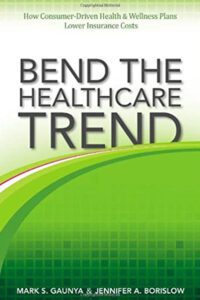
Bend The Healthcare Trend: How Consumer-Driven Health and Wellness Plans Lower Insurance Costs
That’s a fascinating perspective. As a child, you had a front-row seat as to how it all worked and what was wrong, and then you decided to get experience in every area of everyone who’s at the table. That’s the way I would describe that.
That’s an accurate way to state that. I’m not a clinician. I never have science in me. I appreciate it. I was not clinically gifted but I am business gifted. The business of health care and decided to learn the business of healthcare from every angle so that I could do something about it in my future years.
Don’t you think that gives you empathy and credibility? When you’ve been in someone’s shoes, it gives you both empathy and credibility. That’s the case for me when I get up in front of sales organizations and speak. I know what it feels like to have quotas, deadlines and to not take rejection personally, and all those things that everyone is struggling with on a day-to-day basis. Suddenly, I know you also speak to the industry. You have so much empathy and credibility because you’ve been there. Before we started the pre-chat, we talked about your friendship starting before your business relationship with Jennifer at Borislow Insurance. Can you tell us a little bit about how that evolved?
Jennifer was on the broker advisory council for an insurance carrier who was looking to do a joint venture with that company, Destiny Health. That council had to approve the transaction and I was the sales leader for that insurance company. The two of us hit it off instantly. The transaction went through and they asked me to head back to New England to head up the strategic partnership. My parents were retired and they were living in Cape Cod. This would give me a chance to be close to them which was a great decision because my mom passed away. I wouldn’t have had that time with her hadn’t I done that.
I met Jennifer and we became very good friends with each other. When I landed here in the Boston area, she was the person I would call and say, “What’s the market saying about my product and service?” She would tell me things that I didn’t necessarily want to hear but I needed to hear them. Truth be told, if I’m being honest about it, she and I are both passionate golfers. We spent a six-hour round in the golf course which is long, in the same cart together. That’s where our friendship was formed. She then tried to recruit me to go work for her. I didn’t have any desire to be employee number fourteen for her. At the time, it was a small benefit firm. We talked about becoming business partners and came together. As I always say to everybody, our business partnership was born out of friendship as opposed to the other way around, which makes it special.
You have a second edition. You told me that you were quite innovative and mailed that out. I’m going to ask you about that in a second. This concept of, “Why is health insurance expensive?” It’s basic because healthcare is expensive. There is a way to give people some power and knowledge. That seems to be the intent of the book. Who’s this book for?
[bctt tweet=”Empathy and credibility are a winning combination.” username=”John_Livesay”]
The book is for employers who are sponsoring health insurance and health benefits for their employees. It’s written for CEOs, CFOs and leaders of HR who are looking for a practical guide to transform their culture into one that educates people. If you look at the healthcare literacy rate in this country, according to the Kaiser Family Foundation, it’s 14%. That’s not okay that people are walking around not even understanding the language of healthcare. How are we going to expect them to be educated about making decisions if they can’t even understand the language?
We created this as a practical guide for employers to understand and demystify or debunk a lot of the myths that are promoted in the media or in the healthcare space by the players who designed the healthcare system. When you look at that, you say, “How do we navigate that?” What we did through this book is we created a practical guide that was ten chapters. It shared the theory in each chapter and then it would share a practical case story of a client who benefited and deployed that theory into practical application and what the impact was to their plan.
One of the things you have in your book that I love is this culture of health and wellness. Certain companies will give credit to help encourage people to join a gym and things like that. I’m guessing there are some other things that people can do when they have a company, big or small, to have a better culture for health and wellness.
We believe in the five-element construct of creating a culture of health and wellbeing. It even transcends wellness into overall health and wellbeing. Our five elements are physical, financial, workplace, community, mind and spirit. We look through those elements at any client we work with, and any business can do this and meet your people where they are. You can make progress in each one of those and we call that the whole person concept.
If we think about it, everybody wants to be physically and financially well. They want to understand the purpose of the work they’re doing and are tied to a bigger vision than that of themselves. They want to give back to the community and they need to spend some time taking a breath, meditating, doing yoga or whatever the case might be because life is still very busy. When you wrap all those five things together, you can transform the culture of any organization or elevate a company that’s already focused in those areas, but help their employees and family members ascend to an even higher level of wellbeing.
One of my favorite phrases is, “If it’s not measured, it doesn’t get done. If it’s not scheduled, it doesn’t get done.” We have something in chapter eleven called The Report Card. What is that about?

Healthcare Trend: A manager is somebody you have to follow, and a leader is somebody you choose to follow.
The report card essentially is our way of coming back to measuring the data, so taking a baseline assessment. When we work with a client, the first thing we’ll do is get any data analytics we can get our hands-on. It depends on the size of the employer, but demographic information, claims information, and we’ll do an environmental survey. We’ll go and look at the environment that the employers are working in. Especially with COVID, you see a lot of people are working at home. That environment has been somewhat challenged, but understanding the environment. The third is interests. What are the employees interested in? It’s those three data elements. Financial and data metrics, environment metrics and employee interests that you can then use as your raw material to measure, “What areas do we want to focus on and improve? What does the data tell us? What are the areas where we need to focus and improve?”
You and Jennifer went on to co-author Inspire to Act. You talk about how important a simple act of kindness is. When I speak to sales teams, the old way of selling is ABC, Always Be Closing and coffee is only for closers. I did that with ABK instead of ABC, which is Always Be Kind, starting with the way you talk to yourself. We can’t possibly be kind to our coworkers, let alone clients, if we’re not starting with some kind of internal thoughts ourselves. You collected this wonderful book of which all these stories of how positive connections with people have a direct impact on how we feel about ourselves. Is there a story in Inspired to Act that you want to share?
This idea or this book is born out of our culture of living an attitude of gratitude. We held a holiday party every year for our employees and we decided to shake things up a little bit. What we did was two weeks before our holiday party, we gave everybody $100 with a letter of instruction. At the time, we had twenty employees roughly. We had them go out into the community and do random act or acts of kindness. The only requirement was they had to come back to the holiday party and tell everybody what they did with the money.
The stories, many of them made you tear. One story, in particular, I can remember is one of our employees who went into the hospital emergency room. There was a family, they had a $100 copay at the emergency room and this person was fighting for his life. They didn’t have the money to pay the copay and the hospital was giving them a hard time. Our employee walked in and paid the $100 copay so that the family member could get the care. At that moment in time, he happened to be in the emergency room when something like that happened. It made a real big difference in that person’s life.
I always say when you tug at people’s heartstrings, they open the purse strings. That’s the power of storytelling. You start to imagine yourself in that story and what it would feel like that $100 could cause someone you love to not get the care they need to live. How would you feel if you were in that situation? On the flip side, how great would you feel if you had the money to help them? That’s a great example of that story. Many people say, “I don’t know if I’m a leader.” You have got this great quote in your book from John Quincy Adams, “If your actions inspire others to dream more, learn more, do more and become more, you’re a leader.” I love that so much because you and Jennifer didn’t have thousands of people working with you when you first started, but yet you were both leaders. Can you speak to aspiring people who want to become leaders?
First of all, Jennifer was one of the kindest people I know on the planet. She shared with me a quote that I’ll never forget when we first started working together, “No one cared about how much you know until they know how much you care.” When she shared that with me, I stopped and looked at her. I’m like, “What makes the two of us a great partner is that’s what we both not only believe but how we behave.” Leaders are somebody that people follow even when they don’t have to. A manager is not that. A manager is somebody you have to follow and listen to. A leader is who you choose to follow and listen to.
Jumping back to your other book, I want to close that open-loop I created. You sent copies at your own expense of that book to whom and to help them understand what they were dealing with because they weren’t healthcare experts. Can you tell that story?
[bctt tweet=”Creating a culture of health and well-being is a must. ” username=”John_Livesay”]
This was back in 2009. I co-authored the book and we were debating the Affordable Care Act, otherwise known as Obamacare at that point in time. I wanted our senators to stop, think and understand how the healthcare system works and from a prescriptive standpoint, how they could understand the principles that would set the foundation to change things for the better for people. I authored a letter and sent it out to all 100 US senators.
Sadly, I only received three thank you notes. Not even one from my home state of Massachusetts. That’s the sad part of the story. I did get three. One from Senator Collins up in Maine. She’s a wonderful human being. She’s become a friend of mine because I do a lot of work in the public policy area. I’m the Legislative Chair for the National Association of Health Underwriters. I get a chance to work with her and other people like that. I got a thank you note from Senator Hatch in Utah who was a very big believer in health savings accounts and consumerism. I also got a thank you note from Senator Inouye in Hawaii. A pretty good geographic dispersion but nobody from my own home state. I’m pretty sure most of them did not take a look at the book. Nonetheless, we made an effort to make a difference there.
We got to acknowledge the people who did send you a thank you, which is great. One of the reasons we’re aligned is the power of kindness and storytelling. I was working with an orthopedic surgeon who has created some new products for his industry and wanted some help on crafting stories to explain that to potential investors and other doctors. He said, “One of the benefits of learning how to become a better storyteller is with my child.” He has a seven-year-old daughter who used to say, “Daddy, tell me a story. Don’t just read me one.” He said, “Honestly, I was a deer in the headlights. I didn’t know how to tell a story until I started working with you. Now, I cannot just use storytelling from my career but with my child.” You and Jennifer took this Inspired to Act and have a new edition for children with the line, “Kindness has no age restriction,” which has got to be one of my all-time favorite quotes. How are people using this with children?
If you think about the whole notion of gratitude, it’s not something you’re born with. You have to be taught how to demonstrate gratitude. We believe that starts at a very young age. I have three children and I had them contribute stories to this but the idea would be, you don’t have to have $100. It doesn’t even have to be about money. How about you opened the door for somebody, or you say please and thank you when you want and get something, or you offer to be there for somebody as a shoulder to cry on when things are not going well? That book was written for kids 6 to 16 so that they can develop that habit of gratitude.
When you develop the habit of gratitude, it then becomes something ingrained in you. As an adult, I still write handwritten thank you notes and I do it every week. I do it because no one receives mail now. Most people don’t or a text. That’s a part of that person. In my case, it’s me. I’m putting a part of me on paper with my handwriting, telling you that you impacted my life in some magical way, or I’m amazed at how you conduct your life or whatever the case might be. That practice gets you out of yourself and focused on other things, which I think many of us get trapped in our heads. I know I do from time to time. That’s why the act of gratitude or meditation has been a huge gift.
That leads to helping children and what you’re doing as a Founding Principal and CEO of Captivated Health with helping schools. Can you tell us how you’re helping schools get control of their health care future?
We created Captivated Health in 2014. We do a lot of work with private schools where you might send your child to what you would be called a prep school. You pay for your child to attend the school. It could be a boarding or day school. We work with over 100 of them all across the country and growing in that space. We had three risk consortiums, three groups of schools that were buying together in their state but not buying together on a national basis. What we did is when Obamacare came into existence, it was going to make it very challenging for those schools to continue to purchase together.
Yours truly had to go and figure out, “How are we going to keep these guys together and help them overcome some of these challenges?” That’s how Captivated Health was born. Ten of our schools decided to be the founders of this program with us. We didn’t build this on our own. We collaborated with our school clients to create a community that was focused on four principles. Those four principles are members first, consumerism, health and wellbeing, and self-governance. If you look at those four principles, it’s table stakes.
The first principle of members first, I ask our team all the time, always ask yourself this question before you come in and advance an idea, “If you are a member of this health plan, would you want whatever it is you’re about to tell me?” If the answer is no, then please don’t bring it forward even if you know it will save us money. Principals and consumers, and everybody in the program, the employers offer a health savings account, which these plans have been beaten up by the media that they’re high deductible. Who wants to buy a high deductible plan? Nobody does. Who wants to buy a lower premium plan? Everyone will raise their hand. The idea of using words to help people understand healthcare.

Healthcare Trend: If we step back from the healthcare system and understand that it wasn’t a system built for the people, we could be aware that we can take control of our future by first acknowledging that.
As I mentioned to you, the literacy rate is 14%. Making sure people understand the language of healthcare is how you help liberate them to make better choices in the future because they understand the language. We use the slogan, “Knowledge is in power,” but if you look at the reflection, “Knowledge is me power.” The third element is creating a culture of health and wellbeing, which you and I already talked about in terms of the five elements. The fourth and final principle is self-governance. These groups and schools are taking the risk of what we call self-insuring the medical expenses of their people. They reinsurance to protect them from any person who might have a bad year or bad illness. They use other protection to give them a little bit of their financial liability but there’s risk involved based on how their plan performs from one year to the next.
What the self-governance principle does is created a set of bylaws. Those bylaws mirror our own US Senate, where it doesn’t matter the size of the school. They have one vote. Our Northern New England schools, their original ten pioneers, were very passionate about this because they said, “As this grows in scope and scale over time and larger schools come into the next, we don’t want our voices to be lost.” They created a structure with a chair and a vice-chair, and then they created four committees. Governance, membership, finance and engagement.
Those committees are staffed with HR and CFO executives who collaborate together in areas of concentration and represent their members. They have an annual meeting of the membership every year we hold in October, where they get together. They share stories of the programs that they’re running and the differences they’re making in the lives of their people. Is saving money and creating margin cuts for all non for profit important? Yes, but it’s not the driving force. The driving force is to make healthcare easier and more affordable for their people and schools.
At the end of the day, everybody wants to feel, be seen, heard and appreciated. Whether you’re managing people, your children or in this case, schools, everyone’s voice is equal regardless of the size. Mark, if people want to reach out to you in any of these areas, whether it’s learning more about gratitude, about how you can help them with their insurance or other schools, what’s the best way?
[bctt tweet=”No one cares about how much you know until they know how much you care.” username=”John_Livesay”]
My personal email address is [email protected], or they could go to our website, www.Borislow.com or in the example I shared with you about our program Captivated Health if they wanted to learn more about that. It’s spelled exactly as it sounds, www.CaptivatedHealth.com.
Any last thought or quote you want to leave us with?
If we step back from the healthcare system and understand that it wasn’t a system built for the people, understand that we can take control of our future by first, acknowledging that. Secondarily, understanding that the key to unlocking our future is to educate our people. We can find the interest of the people in the organization so everybody can get the same or higher quality healthcare at a fraction of the cost. They can reinvest those dollars in other areas to make whatever value proposition they’re providing their area a lot more powerful.
Thanks again, Mark.
Thank you, John.
Important Links
- Bend the Healthcare Trend
- Inspire to Act
- Inspire to Act For Kids
- Borislow Insurance
- Captivated Health
- [email protected]
- Better Selling Through Storytelling Method Online Course
Wanna Host Your Own Podcast?
Click here to see how my friends at Podetize can help
Purchase John’s new book
John Livesay, The Pitch Whisperer
Share The Show
Did you enjoy the show? I’d love it if you subscribed today and left us a 5-star review!
- Click this link
- Click on the ‘Subscribe’ button below the artwork
- Go to the ‘Ratings and Reviews’ section
- Click on ‘Write a Review’
Love the show? Subscribe, rate, review, and share!
Join The Successful Pitch community today:
- JohnLivesay.com
- John Livesay Facebook
- John Livesay Twitter
- John Livesay LinkedIn
- John Livesay YouTube
Lighthearted Leadership With Lizette Warner
Posted by John Livesay in podcast | 0 comments

The world we live in can sometimes be really depressing. We turn on the TV, watch the news and all we see is pain and suffering. Learn how to convert those depressing thoughts into something more lighthearted. Transform your stress into positive energy. Join your host, John Livesay and his guest Lizette Warner as they discuss lighthearted leadership. Lizette is the Head of Clinical Science Global, MR Therapy of Philips and the Executive Coach of Optimum Vobis. Join in the conversation to learn how to take things slower. To take a break and just let things be more lighthearted. We don’t need to be stressed out for eternity, join in to find happiness today.
—
Listen to the podcast here
Lighthearted Leadership With Lizette Warner
Our guest on the show is Lizette Warner, who has a whole program about how to be a lighthearted leader. Whatever things are, start your meetings off with music. She has some wisdom from sixth grade about, “The news is depressing. I don’t want to be.”
—
Our guest is Dr. Lizette Warner, a wife, mother, Executive Coach, Podcast Host of Lighthearted Leadership and a busy global leader in healthcare. She’s passionate about helping people reach their best and unleash their inner superheroes in a fun way. She started her Lighthearted Leadership podcast as a way to shed optimism and lightheartedness on the pile of heavy topics bringing down her busy healthcare leaders. She’s got an Electrical Engineering background and has worked in telecom and pursued her PhD at the Mayo Clinic. She was then snatched right up by a healthcare company and has worked there ever since. Welcome to the show.
John, thanks for having me.
I always like to ask my guests to take us back to their own story of origin. You can start in childhood or school, wherever you want to start this story of how did you get to be you.
I feel like you’ve already given the readers a good overview here. I could go all the way back to the beginning like when I was a little kid. I was pretty much like the butt of everybody’s jokes. I was the youngest too, which always makes that difficult. The thing with that is that I grew up very super serious and always expecting people poking fun at me. I was also super gifted, only I didn’t know it. I assumed everybody else did math problems without having to write them down. I assumed everybody could read and remember everything about all the homework and things.
[bctt tweet=”In coaching, you learn to love that feeling of bringing out the best in people.” via=”no”]
It was surprising to me like, “You can’t?” I just assumed that. As a result, I went for my Electrical Engineering degree. I graduated and went into work in telecom. That was fun. I lived in different countries and meeting a bunch of different people. It was exotic from that perspective. My mom graduated from third grade. That was as far as she made it. The thing is my mom is one of the smartest people I know. She can do like geometry because she’s a seamstress. She was always good at these math things.
Growing up, I didn’t know this. I picked this up later in life. I never knew she didn’t have this concept of being able to do the math. It was something assuming everybody else can do stuff and know stuff. I remember going to her with this intractable problem that I had in high school. I went up and I don’t know I’m explaining the whole problem, telling her what’s going on in class and she’s sitting there essentially coaching me through this whole thing. What can you do? What is possible? All of a sudden, I walked away thinking my mom is the smartest person on the planet because she helped me solve this problem.
As I went through school, I didn’t even know what a coach was. I went to school and work. I was living in all these different countries. I wanted to get my PhD and for some reason, the Mayo Clinic accepted me. I ended up studying there still with this mindset of everybody knows more than I do. When I finished, I was snatched up by a healthcare company. I was exposed to a certain extent before that to coaching but that’s where I got a picture of coaching. As I climbed through, I had a team of my own and I started coaching them.
I fell in love with being able to bring out the best in these really bright people and bringing able to bring out the best in them to unleash great stuff. What I discovered through all of that, I started laughing with my clients. That’s why I do this whole Lighthearted Leadership is because in working with my clients and trying to curate topics, content and articles for them, I was looking up lighthearted content. The whole thing about being lighthearted is people think that you can be lighthearted or you can have fun but not at work. That’s for that after-work stuff. Being lighthearted doesn’t mean that you can’t have fun.
Also, that you’re not smart. You’ve got your PhD. Let’s talk about some of the work you do at Philips and then we’ll talk about some of the work you do with coaches. Your head of clinical science globally, not the US around oncology, which is not normally a topic people think, “Cancer, let’s have a blast.” You’re working with scientists. Your job is to manage these studies and see what is possible in terms of fixing things, I’m imagining or improving things. Do you have a story of a particular research study that you’ve worked on that you were able to put some humor in?

Lighthearted Leadership: People think that you can be lighthearted only after work, that it’s reserved only for after-work. But being lighthearted means you can have fun wherever, whenever.
That’s the thing. We’ve worked with a number of collaborators globally. The thing about putting, let’s say, a lighthearted spin to it is even starting off the meetings. Because some of the topics that we get into are very heavy or they’re very physics loaded. It means there’s a whole lot of thinking but there’s also this aspect of let’s back off and see what’s the ramification, the global outlook for this. There’s not a specific story that comes to mind. It’s more the aspect of when we launch in, checking in. There’s sometimes where I have like music going at the beginning of a call. It can be people globally. I ended up speaking to a lot of lawyers and regulatory people. They’ll log onto the call and there’s music going. It’s a thing that’s like, “Where am I?” People start grooving a little bit and it breaks the ice so that we can start talking about these deeper topics that can be legal, regulatory or a clinical study that’s ongoing but that habit tends to bring people a little bit closer together. Bringing people together and telling a story that people can be a part of. With that music, that tells us sometimes. This is not a specific humorous story.
You also talk about on your show this concept of long working hours killing us. Certainly, people can be workaholics. Now with the pandemic, a lot of people that found that blur between work and home, that they’re working more hours than when they went to an office. What are your thoughts on that? What can leaders do to prevent people from burning out?
You’ve seen a lot of this with working with a lot of the people that you talked to as well and the space that you work with but that is the thing. There is that blurred boundary of having all your work now at home. Instead of being chained to a desk, you’re now chained to your home office or your kitchen table or whatever and not being able to step away. One of the things that we did as a leadership team when the whole pandemic first started, my organization, at least my team, we have always been remote-based. We were able to tap into the wisdom from my team on, “How do you guys do this?” That was the thing. At the very beginning, people were able to appreciate that, “You guys do this all the time.” Now people are starting to appreciate that, “This is tough.” Some of the takeaways that we had shared as a leadership team were this concept of putting things in your calendar including a break time where you work for a chunk of time and then stop, pause, step away, go outside, take a breath of fresh air, go walk the dog or do something away from the workpiece.
I’ve heard of this in terms of changing your state. If you’re sitting, stand up. If you’re standing, sit down. When you physically change your state, it also helps mentally hit a reset button.
It does and even doing different things like having that music break. One of the things that I talked about on the podcast were these back-to-back meetings that people schedule and I think that is an energy suck. It’s like that vampire at work. It pulls all the life out of you. There are ways to deal with that too. If it’s a case of like making that mental commitment to yourself that, “I’ve got another meeting following this one.” For my sanity and everybody else’s, I’m going to have to bail 5, 10 minutes early so I can prep.
You have something on here about your sixth-grade wisdom, “The news is depressing and I don’t want to be.” Tell me a little bit about that. That’s hilarious.
[bctt tweet=”Start off your meetings with music, schedule breaks to prevent burnout.” via=”no”]
It was funny. I was having this conversation with a client. When I was in sixth grade, that was the first thing that was weighing heavy on my mind is the news. Every day I would come into school and I’m like, “This is so depressing.” I was in sixth grade and I don’t even know what was going on but I knew it was heavy. Psychologists recommend to people read, do not watch the news. We have these mirror neurons. I don’t know if you’re familiar with this. It’s a finding from neuroscience. This concept that what you see, what you envision, what you pick up from others, you take that on yourself physiologically. If you’re watching a stressful, scary movie, your body is picking up on those stressors as if you were there.
It’s not good to watch the fire or when 9/11 happened. People were constantly watching that happening over and over again and reliving it every time you watch it.
That is exactly what’s happening. Your body is releasing all of these neurohormones, neurotransmitters and you can be having a stress reaction. My sixth-grade wisdom somehow picked up on this. I’m like, “This stinks. I am not watching the news ever again.” Since then, every once in a while I’ll go back to watching the news. It’s about since sixth grade. I started watching the late shows and comedy. I started reading comedy things. That’s where the whole lightheartedness came from this Lighthearted Leadership Podcast. It was something simple. I was trying to curate lighthearted articles to send to my leaders and I was coming up empty.
I found an article from a few years ago. I found another article from over here. I found a book here but when you’re trying to curate stuff, to give it to your leaders so that they can have something to read, I was like, “This stinks.” I was reminded of my sixth-grade wisdom. I’m like, “That’s going to change.” That’s why I started Lighthearted Leadership. With all these heavy news topics but I could bring a lightheartedness to it. I do take on topics like, “Are Long Working Hours Killing You? Let’s talk about it.”
You were coaching some executives and what I love about what you do there is it’s very niche and you’ve also been in their shoes. Can you tell us about that?

Lighthearted Leadership: People need to have a calendar and put a break time where you work for a chunk of time and then stop. They need to go outside, take a breath of fresh air, and do something away from work.
It is intriguing. Being able to bring in the native knowledge, having worked in the field and knowing what it’s like to have back-to-back meetings, to have them yourselves at the same time as I’m coaching certain clients. Having that, there’s an ability to be able to relate. It goes back to your story of giving that story that people can feel that they’re a part of is them being able to relate that, “I know exactly what that’s like.” I’ve managed a household with little kids moving across the country and trying to go to school. I remember when I was trying to get my PhD, I already had little kids at that time and everyone else who was going for their PhD did not.
They came straight from college into the PhD track and maybe they got married during that timeframe but we already had little kids. They all looked at me like, “How are you doing this with kids?” I’m like, “They are the great equalizer. They’re the ones who keep me on track. At home, I’m doing my thing and I have a time limit. I get all my stuff done. Somebody is taking a nap so I have this much time to work on this. My colleagues were more of the aspect of like, “Let’s go to the bar. Let’s go do this.“ I was always very focused again a little bit of the serious and bringing in that balancing with the kids, that whole life parted aspect of somebody drew on the walls of the house with a permanent marker. That’s fun.
I remember talking to a colleague once. She said, “Do you know how much energy it takes to come to work and be fully present in the meetings and sales calls? That’s how much energy it takes when I go home. That’s my second job.” What do you think about that? Is that your experience as well?
Maybe a little bit different. I didn’t take that tactic with the kids. With them, it was stressful but also fun in a certain way because here you are helping someone else grow and get that wisdom and learn. It’s almost like coaching. There’s always a discovery moment for the coach, as well as for the client in any conversation. It’s the same with parenting. In parenting, it was always the same. I was constantly learning something else about myself. Whether it’s, “What are my limits? I’m going to murder this child if he does not get out of his pajamas and get some clothes on so we can go to school.”
What are some of the big struggles you see with the clients that you’re coaching? Are there unique stresses or challenges if someone’s in healthcare that they’re seeing people sick and die that typical people, let’s say, maybe in accounting don’t deal with?
The issues may be different but the overarching is there’s a lot of similarity between different areas whether you’re talking finance or physics. Especially now, some of those things are being so busy and having to do so much more with less. That’s something that pervades both healthcare in the industry as well. Even some of the entrepreneur clients that I have, happens as well. I have some non-profit clients that I work with and that’s a thing. Along with a work-life balance, it’s the multiplicity of things whether those things are personalities, conflicts and different tasks. It’s the weight of all that compounded and then one person to deal with all those complexities.
[bctt tweet=”The intuitive mind is a sacred gift and the rational mind is a faithful servant.” via=”no”]
That’s the piece that intrigues me because for my day job, for the work that I do, that’s my role. That’s what I’ve been doing for the past several years and that is what clinical science is essentially. You sit in between all these different stakeholders. Everyone’s pulling or pushing you or knocking you down in a certain direction and you have to stay upright and keep your sales going and keep somehow moving forward with this delicate balance of all these different pieces.
What advice would you have for people who want to make their leadership more lighthearted besides music and maybe sending articles that are lighthearted? Is there something they can do to get people who are overwhelmed and stressed out to find the humor in something?
Ordinarily, I would say, “Tap into your unique wit and wisdom. You don’t have to be anyone other than who you are. Everyone has their own unique wit, wisdom, humor.”
A lot of people go around going, “I’m not funny. I’m not a comedian. I don’t have wit. I’m not witty.” You’re saying we all have some level of it.
Absolutely because to be lighthearted doesn’t mean you’re a comedian. A comedian is their own profession. Nobody’s asking you to be a comedian. For me, it’s bringing some music in. It may be asking, “What fun thing did you do this week or where did we fail this week as a team?” It doesn’t have to be funny all the time. You don’t have to have a marching band running through whatever the not office, which sometimes it is the kids or the dog or whatever but it doesn’t have to be those things. It can be what is unique to you and bring that out because there’s beauty in that.

Lighthearted Leadership: Do not watch the news. Read the news because what you see is what you take on to yourself physiologically.
Is there a favorite quote or a book you’d like to recommend before we sign off?
There are many good books. Some of the quotes that come to mind are there’s one from Albert Einstein, “The intuitive mind is a sacred gift and the rational mind is a faithful servant.” We live in a society that honors the servant and has forgotten the gift so tap into that intuitiveness.
It doesn’t get better than that. If people want to reach out to you, follow your podcast or hire you as a coach, where should they go?
They should check me out at LightheartedLeadership.com or send me an email at [email protected]. It’s either/or.
Thanks for that wonderful closing quote. It’s a perfect fit for who you are and what you’re bringing to the world. Thanks for being you.
Thank you so much for having me, John.
Important Links
- Lighthearted Leadership
- Are Long Working Hours Killing You? – Episode on Lighthearted Leadership Podcast
- [email protected]
- Better Selling Through Storytelling Method Online Course
Wanna Host Your Own Podcast?
Click here to see how my friends at Podetize can help
Purchase John’s new book
John Livesay, The Pitch Whisperer
Share The Show
Did you enjoy the show? I’d love it if you subscribed today and left us a 5-star review!
- Click this link
- Click on the ‘Subscribe’ button below the artwork
- Go to the ‘Ratings and Reviews’ section
- Click on ‘Write a Review’
Love the show? Subscribe, rate, review, and share!
Join The Successful Pitch community today:
- JohnLivesay.com
- John Livesay Facebook
- John Livesay Twitter
- John Livesay LinkedIn
- John Livesay YouTube