
The Influencer: Secrets To Success And Happiness With Brian Ahearn
Posted by John Livesay in podcast | 0 comments

Developing your ability to influence people is crucial to success and happiness. Your business needs to have a solid foundation, and you also have to know how to widen your network. Join John Livesay as he talks with Brian Ahearn on the science behind the influence process. Brian is a dynamic international keynote speaker, author, coach, and consultant. He specializes in applying the science of influence in everyday situations. Tune in to discover how to recognize powerful opportunities and influence people!
—
Listen to the podcast here
The Influencer: Secrets To Success And Happiness With Brian Ahearn
Our guest is Brian Ahearn, a return guest from October of 2020. When he reached out to me and said that he has a new book called The Influencer: Secrets to Success and Happiness, that is a business parable and follows the life of John Andrews, who’s an ordinary person who becomes an extraordinary influencer as he learns from coaches, mentors, and clients. I thought to myself, “I need to have Brian back on.” I, myself, have written a fable. What he is doing is using the storytelling format to reach a new set of readers. It is about applying what is in The Influencer book on the impact that influence can have both professionally and personally.
—
Brian, welcome back to the show.
John, I appreciate you having me on. It’s good to talk to you again.
I know that one of the things that excited you about this book is that nearly every character is based on a real person that you have learned something from. What a great combination of your life’s work? I know what that feels like. You think I couldn’t have written this book several years ago, and I couldn’t have done it.
Absolutely. I didn’t start out writing the book with that in mind, but I started to quickly realize, “This character is based on Loring, Ben or Dwayne.” I started utilizing those first names so I could clearly visualize them, but it was an honor to share with the world the things that these people taught me that were so helpful on a professional and a personal level.
For those who haven’t read your episode from October 2020, give us a little snippet of your own story of origin. You can parallel that with the book as well. You do an amazing analysis and research to give some exposition on who this lead character is. I wonder if any of those things mirror your own story of origin.
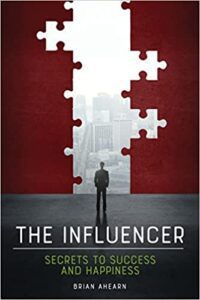
The Influencer: Secrets to Success and Happiness
They do mirror my story. I had people ask me, “Is this your story?” Its bits and pieces are. For example, when John goes off to college, he takes a Psychology class as a freshman, which has a big impact on him. That happened to me. I didn’t come across influence, but I do clearly remember that class. It obviously had a big impact, but John is a lot smarter than I was. The things that he learns, he lays hold of and puts into practice so that he starts reaping the benefits.
It took me a lot longer to figure that part of the game. Certain things do parallel. Many of the things that he learns throughout the book are things that I learned from significant people, coaches, clients and mentors throughout the course of my life. To go back to that episode in 2020 and let people know my area of expertise is the science of influence. I look at the decades of research from Social Psychology and Behavioral Economics. I look at ways to put that into practice to help clients get to yes more often. That usually means, on a personal level, a lot more success when you are in the office and usually a lot more happiness at home when people are more willingly saying yes to you.
As a storytelling keynote speaker, what I have found is that when people learn how to tell better stories, it not only helps them in their sales career, it helps them in their personal life. You do such a great job in this book of showing how the two things work in this character’s life. Can you give us a little snippet of when you fix, learn, or improve one area of your life? It is not in a siloed, “This only helps me in my career.”
I think it takes creativity to figure out how to take some of the silos and combine them. As a personal example, I’m a disciplined individual. It came from sports at a young age, football, weightlifting, running marathons, and things like that. It took me a while to figure out how do I take that silo and put it into my career to have more success. Once I figured it out, all of a sudden, especially as I stepped out on my own a few years ago, it has never been hard for me to get up early, put my head down, and put in 8 or 10 hours a day towards the business where a lot of people might say, “I would not have that self-motivation.”
That is a personal thing for me. In the book, I tried to help the character as he learns these bits and pieces. He has got this vision of what he is trying to put together in this puzzle. He doesn’t know what the picture is going to be ultimately, but he knows that these snippets of ideas that are helping him somehow have to come together to form a philosophy of life. At the end of the book, he completes the puzzle and knows what that picture is.
One of the intersections of what your work and my work is people inevitably get this objection, which is, “I don’t feel like I’m ready to make a decision right now. I need to think it over.” You have helped people come up with some things to either avoid that from happening or what to say when it does happen. Can you give us some insight on that?
I think a great way of avoiding that is very early in the sales process. John, the lead character, is a medical supply sales rep. When you understand the principle of consistency, it tells us that we feel an internal psychological pressure and external social pressure to be consistent in what we say and what we do. The bottom line, we feel better about ourselves when our words and deeds line up.
[bctt tweet=”Don’t say ‘no problem’ after someone thanks you. Give people everything they need upfront to make saying yes easier.” username=”John_Livesay”]
If a salesperson learns to ask the right questions early on, when you get to the point where you are trying to close the sale, it becomes much easier because you can reference back to. For example, “John, when we initially talked, you told me that you needed this particular price, timing, and these terms in the contract. It looks like we have done all of that and a little bit more. Go ahead and start working on the paperwork and consummate this deal.”
It becomes much harder for you to say, “Let me think about it.” It is not that you want to remove yourself from the situation. There is always a little bit of fear when you are making a change and a purchase. Learning how to ask those questions to trigger this principle of consistency allows somebody to feel good about themselves by saying yes because they are only responding that you have done everything you said you would.
The other thing that almost all of us have happened to us at one time or another, especially if there is some emotion involved in it, like if someone is breaking up with you, for example. They said, “It was never my intention to hurt you.” I know this happened to me exactly. At that time, I found that so unsatisfying of an answer and I thought, “Why is that not landing as a sincere apology or making me feel any better?”
Someone said later, “Wouldn’t it have been great if you could have said back? I’m sure it wasn’t your intention to make me feel loved by that behavior either.” I didn’t have that in my repertoire to say when it happened to me. You talk about almost all of us having that situation where we go, “I should have said this instead of that or not saying anything.” What do you show in the book that helps us with these situations?
This guy, John, is a smart and good person, down to the poor, which most people are. We want to do the right thing. He does run into situations where he ends up hurting his wife because he is making some decisions without consulting her. She was looking at this like, “This is a partnership, and you may not think this is important, but I’m not even in on the decision-making.”
He does feel bad about it, but he continues to make this mistake at times. It is never to hurt. He sometimes feels boxed into a decision, and all of a sudden, he is responding. I will say that he begins to learn his lesson, and that makes things better, having to sit down with somebody in a situation like that and not try to defend why you did what you did because we all have reasons to be able to say, “I am so sorry. It was never my intention. Here is what went on with me. I hope you can forgive me.”
That is an integral part of having relationships being able to say you are sorry and asking for forgiveness. I think asking for forgiveness is important. We could think that everything is okay because we apologize and have not gotten confirmation from the other person that they are okay. I think it is important to admit the mistake and then say, “Can you forgive me?” If that person says yes, you are in harmony. If they say, “This is going to take some time,” then you have got to be patient.

Influencing People: It takes creativity to figure out how to take some of the silos and combine them as a personal example.
I think what the frustration was, at least, for me, and I see it in other situations where it is not that big of a dramatic moment, but it is when someone doesn’t want to own responsibility for what they did or the outcome. The fact that it wasn’t my intention to hurt you means I’m off the hook. There is nothing to even ask for forgiveness for because it wasn’t my intention. I think in a business situation, it is the same thing because I have worked with clients that have lost clients and tried to win them back. We have to do the same thing as we do in our personal relationships and own that we made a mistake, explain what we are going to do, that it doesn’t happen again and have some empathy for what that other person is feeling.
The other part of what you do so well is when someone is looking for a sales keynote speaker. They typically do a Google search. Oftentimes, I have come up against a couple of other speakers. They had a meeting and interviewed the final three candidates and looked at our videos and our books. Sometimes, as many as 8 or 10 people have to agree on who is going to be the speaker. You hoped you had created somebody in there that is going to be your internal champion to rally for you. No matter what the decision is, getting a consensus can be challenging with a team. What kinds of tips are we going to learn from your Influencer book?
When you are going into a situation like that, try to discern, first of all, is this person the decision-maker, or there going to be other individuals who are part of it? Can you get some of those other individuals on the call? For example, I had the second call with a client. The first there was the lead-in, but we had a call with that lead-in’s boss and a peer of the boss. There are still other people that are going to make the decision. I know that now having a positive influence on three different decision-makers and being able to speak their language in the middle of that sales conversation gives them confidence that this guy knows what he is talking about and he can relate to us.
Three people will be a lot better for ultimately making that decision than if I had that single individual. Discerning who the decision-maker is and doing what you can to bring in other people also asking, if you and I were having the conversation and I might say, “John, it is a great conversation. I’m excited about the potential opportunity to work. Who else will you be talking with? What can I give you beyond the conversation to support your recommendation for me as a speaker?”
If it is that bio, the customer list, the videos, and all of that stuff are usually out there for any speaker. My goal is to make your life a little easier and directly give you that information so that you are ready at that moment to say, “I talked to the person, look at the list. Let’s watch this five-minute video and get that traction.”
I think that is so valuable. Sometimes you get hired because you are easy to work with, given everything else is the same. The simplest things of, “You are connecting the dots for me. I don’t have to go searching for something, or you have some empathy and are trying to put yourself in my shoes going, “You might need this. I’m happy to send it to you. You don’t have to spend five minutes looking for it,” or whatever it might be. Those little things do add up.
I had a client in 2021. I’m very diligent about staying on top of the email. When I would email that person, they are like, “Thank you so much for getting back to me quickly.” I said, “Part of my job is to make your job easy.” She was like, “You would not believe how many people don’t do that or hard to get ahold of. They don’t get me information.”
[bctt tweet=”An integral part of having relationships is being able to say you’re sorry and ask for forgiveness.” username=”John_Livesay”]
I also know this when I get something. If she had said, “Give me the bio, the customer lists, and a link to a video,” I almost always would put in the beginning, “Name as promised to make what you need.” It is only highlighting that, “Brian is a guy who does what he says he will do.” Those little bits continually work on somebody. That is when they look for a speaker again, and they say, “This person was great on stage. They were so easy to work with.” They want you back.
It is that whole thing of pre-suasion that you are such an expert at. You are reinforcing, as promised, is a subtle subconscious thing of almost edifying yourself that you keep your promises.
If you go into a store, you may have a wonderful experience, but it can be reinforced when that person says something about, “We hope you had a great experience shopping here now,” or the server who comes up. The server, like in a restaurant, should never, ever, come up and say, “Is the food okay?” Nobody goes to a restaurant for okayed food.
That is all we are aiming for.
Is the food delicious? If you come back and say, “Delicious,” you have convinced yourself that this is pretty good. I should probably come back. If it is not, they have an opportunity to say, “I am so sorry. What can I do to change this? Can you bring it back and have it warmed up or something like that?” That act becomes viewed as reciprocity, “That server was nice.” He or she went out of their way to make sure this was warmed up. I’m going to tip them a little more and come back here. Those little interactions back to that customer mean a lot.
I had an experience of this personally. I was in New York to go see some Broadway shows. You now have to stand in line to show your ID and vaccination and then another line to show your tickets. You are standing outside. It is cold and winter. They have those people saying, “Welcome back to Broadway.” Suddenly, everyone is happy in the line. You don’t mind the cold. You are excited to see a show that you have seen for many months. That one phrase said by the people who are running the line made a whole energy shift for everyone to remember why they are there. You have a great story in here about a major insurance company that was able to recover from a $700,000 mistake with post-it notes. Please share what that is.
The first book that I wrote, Influence PEOPLE: The Powerful Everyday Opportunities to Persuade that are Lasting and Ethical, looks at a lot of business case studies. There was a piece of research that intrigued me. It was around a company trying to increase the response rate for a survey they sent out. When they sent the survey out with a cover letter, I think 36% of the people responded. When they put a little handwritten note on the cover letter, it bumped it up to 48%. Taking a little extra time to sign that personally and put a little note on there increased the response rate, but in a third variation, they put a yellow sticky note. They had the same handwritten note that had been on the cover letter before.

Influencing People: There’s always a little bit of fear when you’re making a change and you’re making a purchase.
The response rate was 75%. They more than doubled it. When people hear that, they are fascinated, but they don’t always know how to put it into practice. At the company that I used to work for several years, I would come back from an extended Christmas break, and almost immediately, I was called into a room with half a dozen people. “Here is the situation we face, John. We had overpaid insurance agents in one of our operating states, $700,000 in total, 150 agents had their commission for the month of December doubled. We needed to get the money back because, at the end of January, we were going to be paying year-end bonuses to those agents. It would be nice to have an extra $700,000.”
As we strategized about it, we didn’t have the ability to go in electronically and take the money out. We were going to have to inform them that there had been a mistake and ask them to write a check. That is no easy task. If you get a letter that says, “John, I’m so sorry, but we overpaid you $5,000 last month, would you sit down and write us a check right away?”
That is where cold calling becomes more appealing than writing the $5,000. The head of accounting had been through some of my training, and I turned to him and said, “Steve, remember what I taught you guys about the sticky notes?” He said, “Yeah.” I said, “When you send out that letter that talks about the mistake and asks for the money back, make sure you put a sticky note on every one of those, personally sign it or put a little note.” He said, “I will do it.”
It was a couple of weeks later, I called them up, and I asked, “How was the collection going?” His exact words were, “John, I’m floored.” I said, “Why?” He goes, “We have already gotten money back from 130 of the 150.” The optimist in me said, “You mean we didn’t get it all back?” He laughed at me and went, “We are talking about money because I get them to say, ‘Take it out of next month’s commission, put me on a payment plan’ or anything, but ‘Sit down and write the check.’”
When we had lunch a few months later, we had collected in full from 147 of the 150. This is a hardcore accounting, black and white numbers guy, and your sales staff is BS. I don’t believe in that. He believed in the use of yellow sticky notes. He was a believer after that because he knew that was a radical change in behavior from these people to pay us that money back.
When you go, the extra effort to other people is a great way to end the episode. The book itself again is Influence PEOPLE: The Powerful Everyday Opportunities to Persuade that are Lasting and Ethical. It is on Amazon, but this concept of the unrecognized power of saying thanks and responding properly to thanks, there are two questions in that. One is, saying thanks, how is that unrecognized as a good thing to do? The second part of it is, when someone thanks you, there is a proper way to respond as opposed to maybe, “You’re welcome,” not saying anything or a smile. Let’s take the first part of that question. Are most people not aware that there is power in saying thanks, and that is why they don’t do it?
[bctt tweet=”Having positive influence on different decision makers and being able to speak their language in the middle of that sales conversation is important.” username=”John_Livesay”]
I think what you or I might have called good manners as we were growing up had gone by the wayside. I have always found that, for example, if somebody asks me something and I say, “Yes, please or no, thank you,” I have a lot of people go, “It is so nice to interact with somebody who has manners.” I will say, “My mom raised me right.” The story that I put in the book was about a man named Lieutenant Murphy who was a Navy SEAL and was killed in action.
He had to make a call back to base and expose himself on a rock. He knew he was going to die and be shot. In the middle of that, he called for airstrikes and said, “Thank you,” at the end of the call. The individual who relayed the story, a commanding officer, said, “That is the man that he was,” in the middle of a firefight and he did lose his life. My point with sharing the story is if he can find the time, life and death situation, to say, “Thank you,” then we all should.
It acknowledges that other person like, “I appreciate what you have done.” On the flip side, the other story and that you asked about how we respond to that, we never wanted to dismiss somebody’s thanks to you. When somebody says, “No problem. No big deal. No worries,” you are de-valuing what somebody felt like was valuable. The proper way when somebody says “thank you” is to say something like, “John, that is what partners do for each other. You helped me. I will help you. I’m happy to do this.”
If you want to be funny, sometimes I have said this, “It would have killed an ordinary man, but you were worth it.” Something that acknowledges you heard them. You had put forth an effort and I appreciate what they did. It is the grease of the wheels that make our relationships better. Little things like that make customers want to come back because they feel good about the transaction.
I want to thank you publicly, but most people won’t be able to see what I see, which is you did something very personalized and customized as you have a monitor with my show’s image logo. It says, “Hello, John,” on it. I have done over 350 episodes. It also shows pictures of your wonderful books. I have never had a guest do that ever.
I appreciate you saying that. I joke with people, I say, “Everybody should have their name in lights once a day,” but I’m a fast learner like John was in the book, The Influencer. Once I see that something means something to people, I make it a point to go out and make sure that I recognize and prepare for the time that we are going to spend together. It is a wonderful selling tool, too, because then people ask questions. I can stand up and talk about the virtual studio that I put in because of the pandemic. It creates a win for everybody.
Any last thought? Obviously, if people want to reach out to you, they can go where?

Influencing People: Learning how to ask questions to trigger the principle of consistency allows somebody to feel good about themselves by saying yes.
The best place to go to start is LinkedIn because I post a lot of content. If you reach out to me and don’t tell me how you found me, guaranteed, I will come back and say, “How did you find me?” I like to know why people reach out. It allows us to have a little bit of interaction. It makes social media social. If you let me know how you found me, I will still say “thank you,” and we will have a little interaction. You are going to get some one-on-one.
The other place would be my website, which is InfluencePeople.biz. There you find links to the books. You can see previews of my LinkedIn learning courses and all kinds of other information. I have been blogging weekly for several years. There are a ton of free resources available if you are a reader, and I have been on well over 100 podcasts. If you want to listen to podcasts, there are lots that are listed there.
Thanks for sharing your wonderful wisdom and fable. It is a fun way to improve our skills in becoming better influencers and having better connections with people.
Thank you, John. I appreciate you having me on the show. It was great to chat with you, and hopefully, as we get out of the pandemic, we might find each other at the same venues speaking to some audiences.
That would be terrific. I look forward to that day. Thanks again, Brian.
Important Links
- Brian Ahearn – Previous Episode
- The Influencer: Secrets to Success and Happiness
- Influence PEOPLE: The Powerful Everyday Opportunities to Persuade that are Lasting and Ethical
- LinkedIn – Brian Ahearn
- InfluencePeople.biz
- Better Selling Through Storytelling Method Online Course
Wanna Host Your Own Podcast?
Click here to see how my friends at Podetize can help
Purchase John’s new book
John Livesay, The Pitch Whisperer
Share The Show
Did you enjoy the show? I’d love it if you subscribed today and left us a 5-star review!
- Click this link
- Click on the ‘Subscribe’ button below the artwork
- Go to the ‘Ratings and Reviews’ section
- Click on ‘Write a Review’
Love the show? Subscribe, rate, review, and share!
Join The Successful Pitch community today:
- JohnLivesay.com
- John Livesay Facebook
- John Livesay Twitter
- John Livesay LinkedIn
- John Livesay YouTube
The People Whisperer With Ken Sterling
Posted by John Livesay in podcast | 0 comments

Public speaking isn’t easy. Sometimes, to maximize success, you need a people whisperer like today’s guest on your side. In this episode, John Livesay and Ken Sterling, Executive Vice President of BigSpeak dive deep into what you need to succeed in the public speaking space. Ken talks about being authentic, reacting to feedback, accountability, and choosing the right speaker for the job. Tune in for more great insights and learn from one of the best in the business.
—
Listen to the podcast here
The People Whisperer With Ken Sterling
Our guest is Ken Sterling, the Executive Vice President at BigSpeak Speakers Bureau. He talks about how they go from gurus to go-tos. Find out what he means in terms of speakers and the kinds of questions he asks to keep people coming back time and again and getting repeat referrals. He has an acronym called ACE for Anticipate, Communicate, and Execute. Enjoy the episode.
—
Our guest is Ken Sterling, who is based in Santa Barbara and the Executive Vice President at BigSpeak, the leading keynote, and business speaking bureau. He is a columnist for Inc. Magazine with a column called Talk Business to Me. He holds a PhD from UC Santa Barbara and an MBA from Babson College. He also teaches entrepreneurship, marketing, and strategy at USC Santa Barbara. In his spare time, believe it or not, he has some, Ken is a serial entrepreneur, a keynote speaker, and coaches executives for high-performance results. Ken, welcome to the show.
John, thank you for having me. It is an honor.
I am the one that is honored. You certainly are someone who does not dabble at life. You go all-in. You are able to be successful at so many things at the same time. Before we get into how you do that, I would love to know your story of origin. You can go back to childhood where you realized, “I gave a little talk and I’ve got a laugh. Maybe that is something I want to get into. I am interested in how organizations run.” Whenever you want to start the story from childhood or college because those stories are never linear, although I have done over 450 interviews now, no one has this, “I am going to get my PhD.” Few people have that in their heads when they first start their journey. Tell us how yours started.
I do not get asked this question often. I reflect on this a lot because I am so happy doing what I do in this blessed life and career that some people would call a job. It does not feel like a job. It feels like everything I did, including my origin, set me up to be successful doing what I do on what BigSpeak does. Going back over the waves of time back in the dinosaur days, I was born in a women’s college in Upstate New York. My mother was at a women’s college there. She is Sicilian.
Thanks to things like Roe v. Wade or whatever it is, I am a living being here. Thanks to my mom and the doctors at the little hospital there. I lived in a dorm for two years. My mom still has a picture of a drawer where they swaddled me in a blanket where I slept. We grew up very humble, not with a lot of money. My dad was not around. There was a lot of controversy around him and my mother. I grew up with a distant connection with my mother and no connection with my dad.
I have to make friends to survive and later to thrive. The first part of my origin story is about a kid that needs to connect and curate this tribe of a network. That is a lot of what we do in the agency world. We are networking, connecting, and being of service. We do good work. We have a reputation that we need to uphold. What I would do on my vacations is I would go live with my grandparents. My Nonno was an old-school Italian guy. He had a saying, motto, and value for everything. That rubbed off on me.
I was this poor street kid in New York then having these idyllic times with my Nonno. We came out to California when I was a teenager, which was interesting because back in those days, California was the big glitz and glamor of Hollywood. Elvis Presley was still the King. There was a lot going on. I was impacted a lot by Los Angeles, the energy, and the entertainment industry.
[bctt tweet=”Anticipate, Communicate and Execute.” username=”John_Livesay”]
I thought I wanted to be an actor. I auditioned. I was in a commercial with Sylvester Stallone for the Boys Club of America. I then tried out for a couple of being in movies. I’ve never got the parts. I did some theater arts and was in a couple of plays. I am still connected to performance, theater, and things like that. It is funny because I do have a PhD now. I am a high school dropout. I got kicked out and dropped out about two months before graduation.
Things did not go well. I had a run-in with a teacher and did not go back to school for many years. I’ve got my Bachelor’s, Master’s, and PhD much later in life. All the things that I did and the different businesses that I’ve got involved in were very much about building the community, connecting with people, feeding the family, and creating a family. Hopefully, good background of what makes me good at what I do is that I know how to keep people together and take care of people.
What a fascinating story from your crib being a drawer to dropping out of high school. With the predictions that you would go on to get a PhD and be at the level of success and contribution that you are making now, most people would not have bet on a story turning out like that. Was there a mentor involved that got you back into school? We are talking about your hero’s journey. Usually, there is some inciting incident or in a speaker’s career, there is a flashpoint, whether it is a book or a talk that changes things for that person’s career. Is there something you can point to now, looking back, that you said, “This is this person or this event got me on another path?”
Yes. It is interesting because there have been a few different mentors over the years. The mentor that helped me realize it was time to get back into education is the CEO and Founder of BigSpeak, Jonathan Wygant. We have known each other for years. Ever since I was a teenager, he has been a real mentor in my life and helped me a lot with getting me on good paths. What happened was interesting.
I was applying for a great job. Jonathan was one of my references. I ended up not getting the job because I did not have a college degree. I had some accomplishments and started some companies. I made some money, had some houses, and all the stuff. I was upset candidly that I did not get this job. I remember saying to the CEO of that company, “Mark Zuckerberg did not have a college degree.”
To her credit, she said, “With all due respect, you are not Mark Zuckerberg.” I said, “Thank you.” Jonathan invited me to go to lunch. We were having lunch and he shared with me at his company such as BigSpeak that he had a requirement for people to have a college degree and that to him and a lot of people, it demonstrates someone’s ability to follow through on a commitment and analytical thinking.
That was a barrier or a ticket of entry into a different world. I got out of that lunch meeting with him, drove up to the local community college, and went to the transfer center. I remember I waited in line, read a magazine, and got in front of this woman. Christine was her name and I said, “How fast can you get me to UC Santa Barbara” She put a plan together and I stuck to it, hustled, and made it happen.
Let’s talk a little bit about BigSpeak and the story of origin around BigSpeak. It is based in Santa Barbara where you live as well. What is it that BigSpeak does that makes clients want to keep working with you?

People Whisperer: I know how to keep people together and take care of people.
It is a great question to answer externally. It is a great question that we ask ourselves internally all the time, and because we ask ourselves that question, it sets us up for success. At BigSpeak, we are averaging about a 75% repeat referral rate, which is pretty phenomenal. We also run what’s called an NPS survey or a Net Promoter Score survey. To set the table for that, if anyone has ever gotten an email that says, “John, thank you for shopping at XYZ Widget Company. On a scale of 1 to 10, how likely would you be to recommend XYZ Widget Company’s services to a friend or colleague?”
There is a lot of science between why they asked the question the way they do and in the waiting for the answers. For example, on a scale of 1 to 10, most people think that a 7 or an 8 is pretty good when 7 and 8 are not good, so you want 10s, “How likely are you to promote us? How likely are you to tell a friend to do work with u?” We have for years sent the survey out to every client that we work with. We send it out on the company event planner side, to speakers, and to the speaker’s bureaus. The number is important. Our number is phenomenal.
Our NPS is 82, which shows a very high level of satisfaction. Back in the day, when Nordstrom had a great reputation, their NPS was in the 80s. Zappos back in the day was up in the 80s. Banks are notoriously down in the 30s and 40s. That is terrible. It is worse than an F’s. I will use the word obsessed because we are engaged with customer satisfaction and with Net Promoter Score, we always improve our systems. The number is one piece of it. The other thing is we ask the question, “If you did not give us a 10, what would it take to earn a 10?” We ask another question, “What’s something you think we do not want to hear?”
It is very vulnerable. With the stuff we have picked up on that over the years, we have revamped the way that we send out bills, collection notices, set up contracts, and do handoffs between our sales team, the events team, and other operations team. It has helped us understand those comments. We learn a lot more from them than the numbers, for example. We love the number and it is great for the ego. What we love are those comments where we learn from those.
Circling back to your original question here, “What is it that has made us successful?” 1) We are obsessed and concerned with customer satisfaction. 2) We work hard to do clean, effective, and good work. What that means is that we try to remove the turbulence and friction. We try to get everything cleaned ahead of time. Some folks in different roles, bureaus, and industries might half-communicate upfront. We like to get it all out on the table upfront. There are no surprises.
That tends to be important in terms of taking good care and setting good expectations. It is also great because when the speaker meets the buyer during the pre-call, onsite or virtually in the virtual green room, there are no surprises. You are in the speaking industry and we were talking about this before we came on. Sometimes, things happen. Anticipating those things and doing good, clean, thoughtful, and considerate work for all the parties helps.
I love a couple of things you have said that I want to double-click on. One, from your TEDx Talk, you talk about how leaders own turbulence. They do not try to avoid it. It is your process at BigSpeak of being transparent. I talk about, as a sales keynote speaker, the need to be a copilot with your buyers. Therefore, you are both agreeing, “This is where we are landing. It is not a surprise when we land the plane.” This concept of removing friction up front is so important because you have this wonderful acronym that I wanted to get into.
This is the perfect place for it because what BigSpeak is doing is putting the acronym into action. It is Anticipate something, Communicate it, and then Execute it. Let’s take the ACE. Let’s take each letter. Anticipating is what could go wrong and not shying away from it, both at the beginning and this is what is so smart about what you are doing but also at the end. What is it you think we do not want to hear? You are anticipating even the worst-case scenario. We still want to hear it so we can learn from it and this clear communication of, “This is what the speaker or the event requires.”
[bctt tweet=”From gurus, to go tos, leaders own turbulence.” username=”John_Livesay”]
Also, let me ask you this. How important is it that people are flexible enough like when a pilot hits unexpected turbulence? If something might go wrong at the event, that speaker has some flexibility in everything from how long they are going to speak to incorporating what happened so that it does not seem like a canned presentation. Do you have some examples of how you as a bureau have communicated some things that have allowed the clients to say, “We feel like you had our back”
Those moments happen when there is turbulence. We did about 1,600 events in 2021 and in 1,575, I will make that number up, we do not hear much. We get the smile sheet on the NPS and the 9 or the 10, “Amy was great to work with. Marc Randolph was an excellent speaker.” Those are great. In less than 1% of what we do, there is going to be some turbulence and the way that we show up, meaning BigSpeak, the leadership team, the operations team who might be interfacing. Also, the advisor on the sales team, when we get that feedback or know there is a problem, the first thing is to remain calm.
We talked about this as a group when we were all together. When a challenge comes up, embrace it as an opportunity to shine. A lot of folks, me included, would tend to sometimes feel a little triggered, anxious, and almost like we need to get defensive about something. What I mean by that is that even if let’s say it is not BigSpeak’s fault, we are still part of it. We still help create, promote or allow whatever the situation happens. Having ownership and accountability around that, realizing we are here to help, and this is why we exist. Otherwise, people could use Expedia for speakers.
We are here to solve challenges. That is a big part of the first step, “We are in a situation. I am here to help. I am a professional. I’ve got the expertise, knowledge, and experience. We have a team here to help.” That helps internally with the process. As we do hit those, let’s say 25 out of 1,600 events a year where there is a stumble and we hit the guard rails. Any number of situations may be created from those 25 challenges. What have we learned from those? That is where we can help with the A of the Anticipate.
We have been seeing more of this going on. It’s because of COVID, airlines have been canceling flights. We have got a speaker stuck in Dallas who was supposed to be in Orlando tomorrow. It is not going to work. Even if we could get a private plane, it is still not going to work, so we are going to have to scramble. Scrambling could mean lots of things. Scramble could be, “Who do we have in Orlando? Who do we have within three hours of driving to Orlando? Could we do a virtual? Could we get that speaker who is stranded in Dallas to a studio?” Those are the things that sometimes we are ahead of.
As we are putting that event together, speaking with the event planner and the speaker on that pre-call, what is our contingency plan? Gosh, forbid, everything is going to go great, and if it doesn’t, what is our backup plan? That is interesting because it hasn’t scared anybody away. It has helped the companies and the speakers feel, “BigSpeak knows what’s going on there. They are thinking of this stuff.” We have changed some of our discovery intake processes and agreements around what happened to COVID. It’s funny because A could be a lot of things. A is Anticipate, Accountability, and Adapting. As long as we are coming at it from those points of view, it is very helpful.
It reminds me of Captain Sully flying for years. When those birds flew into the engine, he needed to be able to land the plane in the Hudson. That is the kind of thing an event planner, management, and big clients want to know that BigSpeak has the skills. For everyone reading, when you start to collect worst-case scenarios, then you are not having to create them on the spot like, “This reminds me of another time somebody got stuck. Here are six choices we had.”
You offered them a virtual and a studio. Who lives there? You are not trying to come up with solutions under stress because you already have that template ready to go. I do the same thing with clients and stories. You have given so many great talks on what makes a good salesperson. We are in sync on the concept of having the ability to tell the right story to the right person at the right time so that you stand out against all the competitors.

People Whisperer: We learn a lot more from them than the numbers, for example. We love the number and it’s great for the ego. What we love are those comments where we learn from those.
It allows you to have this predictable revenue that you were focused on, giving people the sense of if you know your ideal client, in my case, it happens to be tech companies and healthcare companies, in that niche, when that offer or request comes up, then people go, “That is John’s niche.” They do not have to think about it. What if you could speak to them? I can speak to a lot of other kinds of sales organizations but that is my niche.
A lot of people are afraid to niche down but I feel and would love your opinion, that when you do have a niche, A) It makes you more memorable and, B) It makes you easier to refer and you get momentum. You are like, “You have got all these healthcare and tech companies under your belt.” You can speak to a real estate group, too, and they might even want to hear what’s going on in healthcare. That is what’s interesting but there is this ability to not try to be everything to everybody. Do you find that those are the speakers that are the most successful?
This comes up in conversations. This question comes up in my daily practice at least once a day, especially with newer speakers that we have been introduced to who are hungry for the work and may or may not be as passionate and do not have their niche, “What is popular? What are your top five topics? I can change my presentation and talk about something different.” That is a hard conversation because I am also empathetic to what their needs are and a few different things.
What I share with them and that I hope the impact is good with them is it is best to stay with your true north and your niche. Here’s why. First, you know it, you own it, and you are comfortable with it. To your point, when you get asked to shorten your presentation by ten minutes, the reason you can do that other than you being a wonderful speaker and you are very professional is that you know this content so well. You can take a couple of those Lego blocks out and it is not a problem.
If it is not you, if it is not authentic, and if it is this whole house of cards that you have built that isn’t true, then you are going to have a challenge with that. When things or a monkey wrench has happened, as you have seen on stage, sometimes, the confidence monitors go down or the lights go down. Who knows what’s going to happen? The more it is you and the more it is what you are an expert on, the better you are going to do, and the better the audience is going to feel.
They also can feel if it is not authentic and it is not what you are passionate about. I loathe sometimes to say, “Follow your passion,” because that is what a lot of parents say to their kids. I do believe in that as a speaker. Get up on stage and share your story that resonates and bangs so deeply in your heart that you have got to get it out there and share it.
I talk about it in terms of being an artist. An artist needs to create. There is this wonderful story of Picasso and other artists painting over their masterpieces in the ’40s because there was a shortage of canvases. If we were salespeople, speakers or whatever we are doing in the world, we would have that same urge, we will figure out how to compensate for a shortage of anything, whether it is a startup or not. The other thing is there are so many similarities between acting and speaking in terms of positioning and branding.
When they are casting a movie or sending out a request for a speaker, oftentimes, everybody wants Meryl Streep and a lot of people would love to have Simon Sinek because he is a wonderful speaker. They go, “We can’t afford either of them. Who else can we talk to?” I’ve got a gig that way because they knew they couldn’t afford Simon. They were looking for not a competitor but who can at least somehow connect the dots from why we like him to what we do when it fits our budget.
[bctt tweet=”If it’s not you, if it’s not authentic, and if it’s this whole house of cards that you’ve built that isn’t true, then you’re going to have a challenge with that.” username=”John_Livesay”]
I do not think a lot of people think of themselves like that. It helps bureaus like you and the salespeople go, “It is not the poor man’s whatever. It is just an alternative.” If you are looking for this kind of storytelling to explain your why, Simon is the man or the speaker. If that budget does not fit, there are also some other people that might be able to get you where you want to go within the budget that you have. You need to have that position for them to be able to think of you in those situations. That is the secret of it all.
I do not know if we can trademark this or not. We call it internally and when we are speaking with companies, the gurus, and the go-tos. I like that because it is not the plusser or the lesser situation. The gurus are Tony Robbins, Simon, Brené, and those kinds of folks. They are great. If that is not going to work out for a variety of reasons, then we have got the go-tos. These are amazing thought leaders who are professional speakers and knock it out of the park. They get 10 out of 10 reviews every time.
Sometimes, I will share candidly, and there is truth to this. I will say, “If you get a celebrity on your stage, it is great. Maybe you’ve got a photograph. I do not know if you or your audience is going to learn much from them. If you bring John in, he is going to get into how to help your sales team achieve their goals, be better storytellers, wrap storytelling into their pitch, and develop a better rapport with their clients. Isn’t that what is going to help move the needle at ABC Widget Company?” I believe that firmly. That is not a spin or a sales thing. I have written a couple of articles, “Do not Book a Headliner for Your Next Event,” and this is why.
It is that counterintuitive thing. I am sure you have got a lot of clicks on that.
I understand that a lot of big companies want that celebrity to sell the tickets, especially if it is an internal event and it is a sales team, you do not have to sell tickets. Their participation is mandatory. Why don’t you save yourself $100,000 and move the needle with someone like John and a thought leader in one of these go-tos who will get in, learn about your organization, and help make some change?
What’s fascinating is at one point, almost every guru was a go-to. They did not start with guru status, whether it is an actor or a speaker, everybody had their first break and went from there. What an enjoyable conversation wrapping around your expertise and BigSpeak’s expertise. Is there any last thought or a quote that you would like to leave us with?
A quote that I love applies to the speaking industry in general. We are in this area of information meets education meets entertainment. Sometimes I call it edutainment. At BigSpeak, our goal or mission is awakening greatness within. Where we go with that is that we believe that we want to help people learn, help them discover, and awaken things within them. I remember a quote by Ben Franklin. It had something to do with, “Teach me and I remember.”
I have got it here, “Tell me and I forget. Teach me and I remember. Involve me and I learn.”

People Whisperer: Get up on stage and share your story that resonates and bangs so deeply in your heart that you’ve got to get it out there and share it.
If you are a speaker, in the industry, and an event planner, as we build these experiences for audiences and have people up on stage or in a Zoom meeting, involve the audience, get them engaged, and make it inspirational, engaging, and interactive as much as you can because that is how you are going to get people and how they are going to remember in 30 days and 60 days. It is not that you had a blue shirt on or that there was a life preserver in the back. They are going to remember some content.
They are like, “There is a life preserver. We are drowning in a sea of sameness unless we tell a story. I’ve got it.” It is even a little visual cues. I have little life preserver chips that I can give people. It is a tangible thing for them to keep in their pocket or purse. They go, “I do not want to go back to my old habits.” There are all kinds of hooks. I love the involvement of using all of our senses. If people want to find out more about you, they can go to BigSpeak and follow you on Inc. The column is Talk Business To Me.
It is one of my favorites. It covers not only current topics but it makes us think in a way that brings your thought process, “I hadn’t thought about that,” or something like that. Here’s one of my favorite titles, “The Best Piece of Investment Advice I Got From a Billionaire Didn’t Involve Money.” That is how you hook an audience, whether it is a soundbite on a talk or a headline. That is part of what makes you and BigSpeak so successful as you cut through the clutter. Ken, thank you so much for being on the show.
Thank you, John. It is great to be here.
Important Links
- BigSpeak
- Talk Business to Me
- TEDx Talk – Managing Turbulence YouTube
- Do not Book a Headliner for Your Next Event – Article
- The Best Piece of Investment Advice I Got From a Billionaire Did not Involve Money – Article
- Better Selling Through Storytelling Method Online Course
Wanna Host Your Own Podcast?
Click here to see how my friends at Podetize can help
Purchase John’s new book
John Livesay, The Pitch Whisperer
Share The Show
Did you enjoy the show? I’d love it if you subscribed today and left us a 5-star review!
- Click this link
- Click on the ‘Subscribe’ button below the artwork
- Go to the ‘Ratings and Reviews’ section
- Click on ‘Write a Review’
Love the show? Subscribe, rate, review, and share!
Join The Successful Pitch community today:
- JohnLivesay.com
- John Livesay Facebook
- John Livesay Twitter
- John Livesay LinkedIn
- John Livesay YouTube
Easier: 60 Ways To Make Your Life Work For You With Chris Westfall
Posted by John Livesay in podcast | 0 comments


Chris Westfall is a sought-after speaker, consultant and author who has helped hundreds of clients achieve transformational results. Chris knows that there is an easier way to make things work for you. This is what John Livesay and Chris get into as they look into how you can transform your business. Chris looks at leadership, storytelling and connecting with people as ways of transforming your business. Tune in and learn more from Chris as he delves into storytelling and sales.
—
Listen to the podcast here
Easier: 60 Ways To Make Your Life Work For You With Chris Westfall
Our guest is Chris Westfall, the author of Easier. He talks about the best way to make things easy is to realize you always have a choice. Just because the train goes by does not mean you have to ride that train. We talk about storytelling and how important it is to make sure that you are not the hero of all the stories you tell. Make people want to see themselves in your stories and go on the journey with you. Enjoy the episode.
—
Our guest is Chris Westfall, who’s one of the most sought-after business coaches and sales keynote speakers in the world. He has helped launch over five dozen businesses and has appeared on every network out there. He’s a regular contributor to Forbes, and worked with thousands of leaders at Fortune 500 companies, nonprofits, and high-tech startups. A coach to entrepreneurs and executives around the world, his clients have appeared on Shark Tank, Dragons’ Den, and Shark Tank Australia. He regularly consults with top-tier universities, and is the author of three other books, but the one we are here to talk about is Easier. Welcome to the show, Chris.
John, thank you so much for that introduction. It’s great to be here.
You and I both share a passion for storytelling. You were all about whoever tells the best story wins, and I have a modern version of whoever tells the best story gets the sale, depending on what yours is a broader concept of what winning is. As storytelling keynote speakers, we love to help people tell better stories.
You would find this true too that it not just helps people’s careers but helps them in their personal life. With that said, let’s go into your personal life a little bit and tell us your story of origin. How did you get to be who you are? You can go back to high school or even earlier if you want, wherever you want to start.
[bctt tweet=”Things become easier when you realize you don’t have to hop on every train that passes.” username=”John_Livesay”]
I’m going to start in junior high. I’m in eighth grade, and my English teacher approaches me. She says, “I want you to give the speech at eighth-grade graduation.” I was not valedictorian and anything special. I was just a guy that got approached about giving a speech. I said what I have been saying my entire career, which is, “Yes.” I agreed to do it. That was the very first time that I stepped in front of a group and gave a presentation. There were probably 1,000 people in the audience. It’s a pretty large class of mine in junior high.
That was at age fourteen where I started as a speaker. I went on and lived my life, graduated from various schools, had a career, and all these things. I would always be pulled in front of audiences during my career to speak. I always fought it. I was always like, “This isn’t who I am.” It was a quest to come back to that place of realizing who I am, realizing the person that stepped on that stage at age fourteen is still inside of me.
To recognize that identity and step into it has been something that I have come to realize in my later life has been the most fulfilling part of my career. When you talk about storytelling and particularly storytelling in sales, it’s not just a part of my career. It’s part of my history. It’s something that I grew up with.
Look how far you have come in several years. You have been running a very successful consulting firm, and you speak at these different things. Who is your favorite client to give a talk to?
My client is typically frustrated. They are successful but they want more. My client asks themselves this question, “Is this all there is?” When organizations are looking for more and trying to access a greater market share, sales opportunities, places to make an impact in their careers, and employee engagement, these are a number of things that I touch on but ultimately, there’s a frustration. We know we can be better. We just need to understand how to get there.

Easier Life: Personal or general data protection, privacy law concept
It sounds like you give them a roadmap of how to get there no matter where they are on the frustration line.
A big part of the work that I do is to show people that while I may have a roadmap, they have an internal GPS. I’m going to speak about human nature. We all have inside of us that internal GPS. We have the ability to reroute when our thinking settles down. Even in the midst of very difficult circumstances, if we allow ourselves to see things in a new way, we can take new action.
From my point of view, that new perspective is always available. There’s always a new perspective, no matter what you are going through. It doesn’t matter whether you are going through a divorce or trying to hit a quota that is impossible. There’s always a fresh way of going about whatever it is that you are up against. That’s the premise behind Easier. There is always an easier way, even when life isn’t necessarily easy.
One of the things that stood out to me when I was reading it was not giving up on the concept that there’s an easier way to do something when it seems completely not easy. You feel stuck, and you don’t even ask yourself the question because it seems impossible. The first takeaway I’ve got from the book was, “I need to open my mind up to the possibility that there might be an easier way to get this sale, this funding for the startup, whatever it is I’m doing.”
Part of your background is that you have been helping people get funding and judging at Southwest some pitch contests. The show is called The Successful Pitch. I would certainly be remiss if I didn’t ask you some tips or thoughts on what makes a good pitch. Let’s talk about it in the framework of Shark Tank, where you are pitching investors since that’s part of your expertise.
[bctt tweet=”An Olympic swimming coach is out of the water to gain perspective.” username=”John_Livesay”]
You and I line up on one particular aspect of what makes an effective pitch. Your pitch is not a superhero story, where you stand up and beat on your chest and talk about your experiences. Not only is that insufferable but nobody wants to hear that. The story that people want to engage with is the story where the audience is the hero. Maybe you can’t make your investor or customer your hero, but it’s a good idea to start trying now, and taking your attention off of yourself will help you to create a greater connection in the sales conversation, investor conversation and in every conversation.
When you take that attention off of yourself, you are not going to forget your product knowledge and lose your ability to sell, compel or be engaging. That’s never going to be taken. Like the song says, “They can’t take that away from me.” The point is when we take our attention off of ourselves, what shows up? Here’s what I know from speaking on thousands of stages. You tell me if you see this too.
There are two questions you never want to ask yourself when you are in the middle of a high-stakes presentation. That’s a sales presentation or a presentation in front of 500 salespeople. The first one is, “Who am I?” The second one is, “How am I doing?” It’s a self-awareness that points towards self-consciousness. When you are focused on yourself, do you know what you are not focused on? It’s the sale and everything that matters.
I fell into that trap a few years back when I was hired by Coca-Cola to speak at their CMO Summit. The night before, they gave us a little program of all the speakers for the next 2 or 3 days. I’m like, “Harvard graduate, New York Times bestseller. What am I doing here? How did I get on the stage? The person who hired me is going to get fired.”
I had to talk myself off the ledge of, “Do I care how many books the speaker has sold?” No. “Do I care where they went to school?” No. I care about how they make me feel. If you don’t trust yourself at the moment, maybe you trust the person who has been at Coca-Cola for over twenty years that she knows what she’s doing and saw something.

Easier Life: You got to keep your eye on the ball. It means keeping your eye on the customer, on the client and focusing intently on how you can serve them more deeply, more fully.
I think for myself that I had to focus on, “How do I not fall into that trap,” because that’s the worst mindset in the world before you get on stage the next morning. For me, the minute I start comparing myself to other people, I say, “Cut. Stop.” It’s like a movie. The gateway drug to Imposter syndrome is comparing yourself to other people, “He’s more handsome, taller, leaner, and smarter.” It’s endless. That’s in the dating world, let alone the speaking world. I would love to know if you have any tips for people on how to avoid that horrible Imposter syndrome besides not comparing yourself.
I will tell you a story that a coach of mine shared with me. It starts with a weird question, “Do you have to be an Olympic-level swimmer to coach someone who is swimming in the pool?” In other words, do you have to be an Olympic-level swimmer to be of service to someone who is swimming in the pool? The answer is no.
As a former lifeguard, I would say no.
How do we all know that it is True, not where it’s a matter of belief for a faith that someone on the side of the pool can coach someone in the pool? It is not because of their experience, height or color of their swimsuit. It is because of their perspective. The thing that you bring that is powerful is your perspective. That guidance and wisdom for your audience is a function of your experience but there’s more to it than what you have done over the course of your career. The experience that is so valuable when you speak to sales audiences is the experience you create for the audience.
It’s the same thing for salespeople. If you think, “I don’t carry enough quota to be in this room. I have not sold enough to be in this room,” that’s the wrong question to be asking yourself. The question is, “How is your client doing? How is the person in the pool?” Look at them. That’s where your attention needs to be. It’s because of your perspective, not because of your quota, experience or where you went to school, but because of your perspective. You can share and serve, and if you get out of your own way, you can sell.
[bctt tweet=”We know we can be better. We just need to understand how to get there.” username=”John_Livesay”]
What a great solution to that because I have taught everyone from infants how to swim. You are in the water, and we are having them blow bubbles and stuff to being coached in competitive swimming. If the coach is in the water, he can’t see if your elbows are at the right height. He’s eye level with you, not above. I love this concept of zooming out and getting a perspective.
The second problem you said or question we should never ask ourselves is, “How am I doing?” Whether it’s a talk or sales pitch because it takes you out of the moment. You are not listening anymore. You are worrying about whether people like you or not, which is always the kiss of death. We start making up stories in our heads. If someone gets distracted, “I lost them. They are on their phone,” or they went to the bathroom, or whatever is going on. It may not even be true but we are making it up, and we are not in the moment.
It’s like a field goal kicker in a football game. The reason I think of it like this is that my dad kicked field goals. He was a field kicker in college. He used to say to me, “When I’m kicking a field goal, where do you think my attention should be? Should it be on how I am doing? Should it be on what the coach told me last week? Should it be on the fans and the crowd? Should I be thinking about how I’m going to be the hero of this game if I make it through the uprights or how I’m going to be the absolute bomb if I don’t?”
He would say, “Chris, none of those things matter. You’ve got to keep your eye on the ball.” In this case, keeping your eye on the ball means keeping your eye on the client and focusing intently on how you can serve them more deeply and fully. If you think you can do that by putting your attention on yourself and worrying about your likability factor, you are looking at the wrong place.
I imagined a professional baseball player at home plate, getting ready to swing. As the ball is coming, he suddenly looks up at the crowd and goes, “Do you all like me?” He misses the ball. It’s like, “Strike.” That analogy holds up. I see that you’ve got this great testimonial from a mutual friend of ours, Brant Pinvidic, who wrote The 3-Minute rule. He has been on the show. I have been on some adventures with him. He’s quite the cool guy.

Easier Life: It’s not about controlling your mind. It’s not about controlling your thoughts.
He said that your book, Easier, is unlike any other coaching guide he has ever read. What is it that makes this book so unique? What’s an outcome someone can get? I can share mine, and Brant can share his but I love to ask the author. What was your intent? This book is for people who are frustrated and somewhat stuck and know they can do better but after reading Easier, they are not only going to ask themselves, “Is there an easy way to do this?” but fill in the blank.
The power behind Easier is the power of storytelling. Whatever people take from this book and the uniqueness that Brant is talking about, I would like to think that it comes from the story that unfolds. There are two ways to share information. One is to come down like Moses off a mountaintop and say, “Here are the Ten Commandments. Do these ten things, and the right results will follow.” The other way to tell it is via a story. What people will take away from Easier, whatever it is that they gleaned, the subtitle promises 60 ways.
I was going to get to that. It’s the old Kenny Rogers song, 50 Ways to Leave Your Lover. You came up with 60 ways to make your life easier.
The way that those discoveries are made is through a story. If you find the story engaging and see yourself in the characters represented and the challenges that they have to overcome, that is where the lessons are learned. It’s not so many lessons learned. That sounds like school. It’s more like the discoveries are made if you are looking for a way to blow your quota out of the water to create a deeper market share and an impact on your customers.
I’m not going to say that training is not valuable but those discoveries you make when you are in front of your customer, when you are looking in the mirror and considering the ability to serve, that’s inside of you are much more powerful than these Ten Commandment-type lessons. Training is valuable. You have to understand how things work. You have to be onboard. You have to understand how you create connections, ask intelligent questions, and all those things. My question for the folks reading, and it’s a question in the book is, who are you when you aren’t on your mind?
[bctt tweet=”When you’re focused on yourself, you’re not focused on sales, on everything that matters. ” username=”John_Livesay”]
It’s very much like screenwriting. I took a course that years ago, and they said, “If you want to show a particular character is honest, don’t say it in dialogue. Show it in a situation where they could steal something and not get caught, and they still don’t do it.” You tap into this. It’s Chapter 4 where we are talking about, “Am I the person that eats all the Oreo cookies or am I the person that saved someone’s life? Which self do I put on the shelf? How can I integrate all the different parts of my personality that I’m judging? One aspect of my personality where I am decisive and able to not be afraid, why doesn’t that show up consistently?”
That’s an example of why this fable is so engaging because you start to think of yourself that rare is not the same all the time. Wayne Dyer, back in the day, who was a motivational speaker, used to say, “When you squeeze an orange, you always get orange juice. It doesn’t matter what time of day, in the middle of the room and the corner. What happens when somebody squeezes you, and you get stressed out? Do you get orange juice or do you get anger and fear?” That metaphysical question is my sweet spot of, “Who are we? How can we be more authentic? Why are we, at our best, not at others?” If you could speak to that a little bit and how easy it takes people on that journey of self-acceptance.
It is a journey of self-acceptance. You are right. One of the things that I have accepted in my career once upon a time, which I now reject, is this idea that peak performance comes from mindset and the idea that our minds are set is false. I anticipate that on any given day, we have between 6,000 and 60,000 thoughts running through our brains. Our minds are not set. If we try to set our minds, we are trying to stop the wind or waves from hitting the shore.
What makes things easier is when we realize that we’ve got some thinking going on at all times around a particular subject, and here’s the realization that has shown up for me that has been so powerful. Just because a train of thought shows up, you do not have to ride that train. It’s not about controlling your mind and thoughts and thinking about one thing all day long. That’s not sustainable. That’s not how thought and minds work.
When we get in concert with the way we work, we show up differently. We stop burning cycles trying to rope the wind or stop the waves. Instead of trying to stop the waves, we get on a board, get out in the waves, and start surfing. We start writing and understanding that there is a power inside of these thoughts that can lead us to new realizations and perspectives but we have to step back and stop spending our energy trying to grit and grind things out when there is an easier way.

Easier Life: Storytelling is always selective and sales is selective, and selecting the words that are going to help you most is the key to creating that compelling conversation.
I can relate to that because this concept of not having to respond immediately to something that somebody says or sends you in an email, sometimes, no response is an answer. A lot of people get all triggered. The front of our brain gets hijacked, and we are in fight or flight mode. We are like in that concept of sleeping on it. Get back to perspective, “Is this going to bug me five years from now? Probably not. Why am I letting myself get so upset?” All of that is a key lesson to learn about. Just because somebody says, “Let’s play tug of war,” doesn’t mean you have to pick up your end of the rope.
Many times, we zoom in on things, and it activates the front part of our brain. All of a sudden, we create these stories that don’t serve us, stories around our obligations and duties. The deadline is the deadline but isn’t there a way for you to relate to those deadlines, obligations, that email that you’ve got that can shift your perspective? That’s what you are talking about.
One of the things that I share in the book is a simple strategy. I call it the YAHOO strategy, which is not about the search engine but YAHOO stands for, You Always Have Other Options. If you are struggling in sales and wondering, “Why can’t I crack this customer? Why can’t I get in front of the people I need to get in front of?” You always have other options. What are those options? Thomas Edison said it best, “There is a way to do it better. Find it.”
Keep looking until you find it. As someone who writes books as we do, usually, our first idea is not the best. We go, “Is there another way I could say that? Is there a better way to say that? Is there a way to say that it’s easier for people to understand?” That’s where I see so many people in sales going down the rabbit hole of, “Let me prove how smart I am with all these acronyms and get into the complexity of everything as opposed to.” The simpler you make it to understand, the more likely you are to get someone to say yes. Just because you are making something easy to understand doesn’t mean you are not smart. That, to me, is a big takeaway from your book. It’s the reverse. The smarter you are, the easier you make things.
If sales is about proving how smart you are, that doesn’t sound very smart to me. Do you want to be smarter or do you want to be richer? Do you want to instruct or do you want to inspire? Do you want to describe or do you want to compel? Are you just there to relay information about the product or are you there to relay information so that your customer can take action, step toward you, and say, “Tell me more,” and continue the dialogue that leads to the exchange that is the transaction you are looking for? That’s so important, John.
[bctt tweet=”Training is valuable. You have to understand how things work. You have to be on board and you have to understand how to create connections and how to ask intelligent questions.” username=”John_Livesay”]
Otherwise, we are trying to impress other people as opposed to making that emotional connection that you understand their problems. That’s why you and I both decided to write fables because, through the lens of storytelling, people are not so analytical in a story like they are a movie or any other fiction that they are learning without realizing they are learning, and that sometimes sticks a little bit better.
I know you are interviewing me but I have to ask you a question. Why did you choose to write a fable? What was it that appealed to you about creating a story around The Sale Is In The Tale?
The thing that motivated me to write The Sale Is In The Tale was I kept thinking to myself, “I have given people the steps on how to tell a good story, and with my coaching, they are able to get better.” Having taken the screenwriting class years ago, they are always about show and don’t tell. I thought, “What if I did create a fable where I showed somebody going through this frustration of not making their quota, losing a big sale, not getting a promotion, and all the things that happened to people in their lives but made somebody see themselves in the story?”
You and I talked before the show that the gold standard of whether somebody takes action is if I see myself in your story, I’m going to buy, say yes or change my behavior. That’s what the motivation of, “Let me see if I can do it.” It was a stretch. I have never written a screenplay or anything that had characters in it, distinguishing that, and painting the picture and setting it here in Austin using real places that I enjoy going to and making that come to life. Having moved here years ago, the book is a love letter to Austin too.
We both set books in Austin. That is so fascinating to me. It’s Austin and Dallas for mine. What I take away from your story, and hopefully people take it away from mine as well, is that there’s an emphasis on relatability. That relatability is what makes stories compelling and engaging. Maybe not necessarily that you see yourself in the story but you see the circumstances and identify with what people are going through. That is certainly my hope, and it sounds like it’s yours as well.
[bctt tweet=”It’s no secret that sales is a people business. It’s where business gets personal.” username=”John_Livesay”]
That is the power of storytelling. Bringing that storytelling aspect back to the sales conversation and focusing on the sales folks who are reading this that are looking in the direction of relatability and receptivity. In other words, how open is the customer? Relatability and receptivity are not there. You are never going to get to slide 47 or if you do, they are looking at their phone.
One of the outcomes for us as sales keynote speakers is that people who have read the book are going to want to have us come speak because they are going to want to ask questions about the story like, “How did you come up with this idea? How did you decide to set this? I related to what you wrote in this book, which is different than other books you have written, which are some instructional tips on how to be better at sales, leadership or whatever it is.”
I heard Elizabeth Gilbert speak about her book around creativity, Big Magic. I was completely into the stories that she was talking about her own journey of creativity. It was very different than reading a book on how to be more creative because there were stories in there. The other outcome is it will get us engaged with the audiences before we even show up if they have discovered our fables.
The questions they may want to appear into the discoveries they might want to make on a personal level because it’s no secret that sales are people’s business. It is where business gets personal. To be able to share that perspective with an audience and give them an opportunity to ask you questions and gain the insights of the author, that level of personalization, from my perspective, I certainly welcome it. I’m early in this process. The feedback that I’m getting and the way people respond to this book are fascinating to me.
For us as sales keynote speakers, the key thing to remember is that aspect of connection with the customers, audience, and in a story that goes from point A, point B, to point C that takes you through on a journey that is realistic. That is not to say that it’s completely chronological like, “Let me tell you my life story from birth up until yesterday.” Nobody wants to hear that. Storytelling is always selective, and sales is selective. Selecting the words that are going to help you most is the key to creating that compelling conversation that doesn’t just describe or inform, it’s the conversation that compels. That’s the conversation that I’m here for, and you are too.
You have so many great quotes in your book. Everything in the past, from anonymous to a quote about being lazy from Bill Gates. Can you end this wonderful interview you gave us with a favorite quote of yours, either 1 of those 2 or something else that you like?
Here’s what I’m going to share with you, “Never confuse a single defeat with a final defeat.” That’s from F Scott Fitzgerald. Those are the words to live by. I don’t know about you but I have gone up in my head. This customer called it and went, “The way that I wanted it in is the end of the world. I’m going to get fired.” That’s a little extreme but we go there because we want to win and do well. I can relate. Me too, but never confuse a single defeat with a final defeat because, YAHOO, You Always Have Other Options. The battle is not over. As long as we live to fight another day, the story goes on.
If people want to find you to hire you as a speaker or as a coach, where should they go?
First of all, if they want to hire me as a speaker, I want to say they have excellent taste. My website is WestfallOnline.com. If you head to that website, you will see in the lower right-hand corner a little Contact button. You can send me an email or you can also set up a time to talk and chat for 30 minutes. If you’ve got objectives that you are trying to achieve, sometimes it’s better to parse that out in a conversation. I’m always happy to create that conversation, whatever that might look like. You can also find me on YouTube, Instagram and Twitter, @WestfallOnline. That’s where you can find me at all of those places. You can also find me on Facebook as well.
Thanks, Chris. It has been a delight. What a joy to share a passion for storytelling, fables, and connection with people.
I’m grateful for the connection with you, John. Thank you so much for having me.
It’s my pleasure.
Important Links
- Easier
- The 3-Minute rule
- Big Magic
- WestfallOnline.com
- YouTube – Chris Westfall
- Instagram – WestfallOnline
- @WestfallOnline – Twitter
- Facebook – Chris Westfall
- Better Selling Through Storytelling Method Online Course
Wanna Host Your Own Podcast?
Click here to see how my friends at Podetize can help
Purchase John’s new book
John Livesay, The Pitch Whisperer
Share The Show
Did you enjoy the show? I’d love it if you subscribed today and left us a 5-star review!
- Click this link
- Click on the ‘Subscribe’ button below the artwork
- Go to the ‘Ratings and Reviews’ section
- Click on ‘Write a Review’
Love the show? Subscribe, rate, review, and share!
Join The Successful Pitch community today:
- JohnLivesay.com
- John Livesay Facebook
- John Livesay Twitter
- John Livesay LinkedIn
- John Livesay YouTube