
Evolve Your Success With Samuel Adeyinka
Posted by John Livesay in podcast | 0 comments

Personal development can affect, boost, and evolve your success to any aspect of your life. It is something one should focus on because you can have the opportunity to make a difference. When he was young, Samuel Adeyinka wanted to be a physician but realized that he could do other things related to medicine. That led him to pursue a career in medical sales. He experienced a lot of setbacks and challenges, which enabled him to give importance to personal development. Now, Samuel started his podcast to let people hear and have more information about the medical sales industry. Join him in this episode as he shares more about his inspiring journey to success.
—
Listen to the podcast here
Evolve Your Success With Samuel Adeyinka
Our guest is Samuel Adeyinka, who after graduating from the University of California in Riverside with a Bachelor of Science Degree in Biology, started his medical sales career. Over the next several years, he worked for a variety of biotech and pharmaceutical companies. He then went on to work in various roles, including medical sales development trainer, International Coaching Federation, and a certified coach. He has now started his podcast and Evolve Your Success, which is an organization that delivers digital marketing strategy and training programs to corporations and individuals.
—
Welcome to the show.
Thank you for having me. I’m glad to be here.
Let’s talk about your own story of origin. Did you know from a young age that you wanted to get into medical sales, or how did that road start for you? Do you have some great Biology teachers in high school or someone in your family?
I think everyone can say this. When it comes to medical sales, you did not know at a young age. This was new to a lot of us, probably for the last several years. I wanted to be a physician when I was younger. I was all about bones rise. I memorized every bone at a young age. I used to go around telling people what bones they had. At least I identify that all the time.
I want to be a physician. I thought I wanted that. That’s what led me to UC Riverside. I enrolled in the Biomed program. I got into that program. In that program, you got to spend some time with some physicians. I got to get a couple of mentors and I got to see what goes on at hospitals. I realized that, as much as I like this field, I want to look into other things related to it. I was not sure I wanted to practice medicine with patients.
I said, “Let me look into something else.” I spent some time working in the lab. Through that experience, I learned about this industry called Medical Sales. I worked with a PhD there, he was working on a diuretic, and he would say, “Sammy, you have a great personality. You understand the medicine. I see you have a big interest in the business. You should look into what manufacturers do for drugs and devices. Check it out and see if you like it.”
[bctt tweet=”Be a resource to your client. ” username=”John_Livesay”]
I looked into that. I looked into high-performance liquid chromatography devices and some pharmaceutical companies. With the pharmaceutical companies, I got my first role, moved out to the desert, and loved it. It was an awesome experience. I performed very well. Right going into it my first year, I had at a time in my life, loving what I was doing, and the rest is history.
When do you say desert, is it Phoenix or Palm Springs?
The desert is in the desert of California. Palm Springs, Palm Desert, Indio, those were my stomping grounds, and that is where I originated. That introduced me to the field.
A lot of people who understand science and like to study science are known as a little bit of introverts perhaps. They don’t like to even think of rejection personally, not the personality at all that sales require. When you do find a hybrid of someone who understands science and willing to put themselves out there in a sales environment, it is a magical find.
Usually, there are a lot of personalities like sales. They don’t know the science. I’m sure that combination was, in fact, a huge success. I’m fascinated to see how somebody did suggest it to you. It is amazing how one person in our life can be a major character in our own story of, “Had I not thought about that, I would never have even explored it. I didn’t know it existed.”
When you find something that fits, it is like, “This is what I meant to do.” It is not you are forcing yourself to do it, hate it, and find it awkward or whatever. Let’s talk about it because a lot of people think of pharmaceutical sales. Don’t you have to be a model to do that job because everyone is attractive? It’s crazy. The impressions that people have of the glamour of that job because it is the smartest, the best, and the most attractive, it’s like getting into Harvard or something.
Everyone has this perception that it is a difficult field to get into. You have now taken your expertise in doing it and helping people get into it, which we will talk about for sure later, but I want to get your impressions of it. Were you surprised at how competitive or challenging it was to get into when you first started?

Evolve Your Success: No matter what level of success you’ve reached in your life, you can always evolve it to the next level of success.
I’m going to be honest with you. I wasn’t even thinking about that. It’s funny. I didn’t even realize what I was getting into. When I first started, I was trying to develop my sales acumen. I had never been in sales before. I was working in the lab, and it was a high-performance liquid chromatography. We were studying these graphs and preparing liquid chromatography while running the experiments for this diuretic on live testing. That was what I knew and everything I studied in school, which was Biology.
When it came to sales, I didn’t know. I thought I needed to go develop my sales skills. I looked into T-Mobile, and there was a sales position there. A friend of mine said, “These guys teach you how to sell, you make good money, and they can help you with your first career move.” At the same time, I learned about this pharmaceutical opportunity. There was a company that wanted to work with me and I wanted to work there.
I said, “Do I develop my sales acumen at T-Mobile or even out here at a pharmaceutical company?” When anybody hears this, they’re like, “That’s an obvious choice.” At that time, it was not that obvious to me. I went ahead and went into it. I was excited to be in a role that offered that, doing things, selling, being a part of the business with them, and that excited me. Even before that role, I had this little nutraceutical company where I worked with a few providers. We were trying to have this diet nutraceutical product that we were trying to sell, market, and get out there.
It seemed like a sensible position to take on it. I felt I would learn more about what I was doing and get experienced in this new industry. I was not thinking about the challenge of getting in. Honestly, this was several years ago. It was competitive back then, but it was also not as well known. Now everybody knows about medical sales, medical device sales reps, and pharmaceutical sales reps. The average person knows what a drug rep or a medical device rep does. Now all these people want to get into it, and ever since COVID hit, even more so. It has become this very competitive and aggressive industry where you got to be a certain person and put in the work to get a foot in the door.
[bctt tweet=”Be someone your client can rely on.” username=”John_Livesay”]
The need for companies to train people has changed. When you and I were getting into sales, I got into high tech sales and they would put us through a training program, not only on the products but on the actual selling. I remember being videotaped and you should be giving someone your business card within many seconds of meeting them, in case they forget your name.
All those little tips that you don’t think about, emotional intelligence or social skills, especially if you are selling something expensive, there are a lot of people that get involved in the decision, and you are not going to walk out with a yes. You have to call on, in my case, financial people for leasing, a multimillion-dollar piece of equipment, or the tech people had to speak to the tech people and solve a problem.
It was a lot of training that was great because once you have an understanding of where things are in the pipeline, as well as where somebody is in their buying decision, you are able to make projections on a much more accurate basis. Without all that experience with somebody guiding you, you are making it up as you go along.
We have seen, without the proper training, how frustrating it can be for someone who does not have that training. How did you come up with the name of Evolve Your Success, which you’ve created now a full-service media and training company for both companies and individuals? I love it because it assumes someone’s already got a level of access, and you’re helping them evolve it.
That has always been important to me. No matter what level of success you have reached in your life, you can always evolve it to the next level of success, and human nature initiates that. If the money is great, you want to work on a personal relationship. If the relationship is great, you want to work on the finances. If all these different parts are great, you want to work on the family.
There is always an aspect of your life that you want to improve, you are either going to step toward that on your own, or something is going to pull you into wanting to develop it. That’s something that I’ve recognized pretty early on in my career. One thing that I loved was personal development. I became a fan of that early on because I had my own personal setbacks that let me see.
There is a way people can experience a personal setback and still get back to performing at a high level. I didn’t understand what that meant. I didn’t know what that meant until I started looking into the work of what personal coaches and personal development coaches do. That’s when I got to learn that no matter what you’re experiencing in life, whether it be a divorce, death, job loss, or whatever’s happening.
There’s a way where you can recalibrate, reevaluate yourself and develop from that place and evolve to even greater success than you have ever experienced. Me going through that developed a passion for me wanting to do that with my own career and help people do it as well. Several years ago, I worked with some personal development companies. I got to see what they do and how they work with people. It was completely inspiring to me. I said, “No matter what I do in this life, I have to remain connected to this work.” I started working with sales reps in all kinds of different industries.
This was passion coaching where I can help someone say, “Let’s look at what you are doing. Let’s look at your opportunities, and let’s help you ramp up your sales.” Honestly, what often happens is we end up working on their personal life. Not directly, but to show up a certain way professionally, you got to have certain things in your pocket personally. That is what would always come out when working with all these people.

Evolve Your Success: Whatever’s happening, there’s a way where you can really recalibrate, reevaluate yourself and develop from that place and evolve to even greater success.
This became a habit. What I noticed through that is a lot of these people also want it to be in the medical sales industry. I’m like, “You have all these people that want to improve their sales, their careers, and realize the value of developing personally. It carried over professionally. You have all these people that want to get into the medical sales space.” I said, “There should be something out there that gives them the opportunity to do so.” That is where Evolve Your Success was birthed, we started helping people create those opportunities, and we have been doing that ever since.
As a story keynote speaker, what I have found is how important it is that we are resilient and how fast we get back up after we get rejected, lose a job or a loved one, divorce, or whatever it is. They were all going to have experiences like that knocked us down. The trick is, how fast do we get back up. A lot of people shake it off fairly quickly, and then you see people two weeks, sometimes, even two months still talking about it. You are like, “You are not in the right mindset to move on. That’s why you’re in a slump.”
The other thing I love about what you do that I’ve noticed myself was when I got hired by a healthcare med-tech company, they wanted a sales keynote speaker to come in and teach their people how to tell stories. One of them had reached out to me during the interview process on LinkedIn. I liked and commented on a couple of his posts. He became my inside salesperson because he was trying to get his team to like and comment on doctors’ posts on LinkedIn.
The fact that I did it, he said, “I knew you were the person that would not try to squeeze that concept in, but you were doing it to sell yourself. I knew that wasn’t a good fit for our company.” The fact that you have used selling based on the science of social media to help people connect with people is important whether you’re selling yourself as we do as speakers or you’re in the medical tech world. A lot of them think, “I have to use social media to develop relationships. I’m going to keep hammering away like everybody else and send a bunch of emails going, can I have an appointment?” Tell us about what you’re doing and what makes your experience unique in this science in social media?
[bctt tweet=”There’s always an aspect of your life that you want to improve. You’re either going to step towards that on your own, or something’s going to pull you into wanting to develop it.” username=”John_Livesay”]
It’s the age we live in right now. Right now, we live in the age of social proof. Any influencers, celebrities, anybody you know the first name of that you don’t directly know, you can probably go online and find some social proof about that person. Anybody you know, you can go online and find some social proof about that person.
In this day and age, it is important to build a brand around yourself because the opportunities to provide value for people are endless. When it comes to social media or online technology, healthcare is the last space to realize the value, and healthcare has finally said, “There is a lot of value here to develop a brand for myself.” Surgeons and specialty providers are realizing that.
If I build a brand on TikTok, Instagram or LinkedIn, I am going to get more patients and get noticed. The good work that I’m putting out there in the world is going to be seen. Whether it’s intentional or not, there is going to be a level of credibility to what I do that people will believe in before they meet me. That applies to everyone, and everyone has the opportunity to do that. It makes you more marketable in the marketplace. If you work for a company and you’re ready to take your skillset to a different level, other companies can easily see the good work you’ve done at that organization and say, “Come work for us. You’re doing excellent.” Even within your own organization.
A lot of times, you’re doing all this good work in your role, and outside of your manager, the leadership has no idea all of the good work you’re doing well, but now you have the opportunity to let that be seen with your brand. The people within your organization are saying, “I didn’t know you were working on that. We want to consider you for this role over here. Let’s have a conversation.” There are so many opportunities.
Personal branding is very important. It’s more important it has ever been. I believe that we’re going to continue to go in that direction. I wanted to help in that transition. My whole thing is about developing other people. That’s what I’m big on. In every role that I’ve had, I’ve tried to focus on doing that, providing value for the customers and colleagues. Anybody I’m working with, I want to train them and help them reach their highest potential. Social branding is a great way to do that as well.
You offer this as a service. You help people optimize their profile, which people don’t even think about how important that is. They go, “I only need to be on LinkedIn if I’m looking for another job.” Wrong. You need to brand yourself on LinkedIn, which could even help you get a promotion. You take that another step further, which is, “Now we’ve got your branding done, but let’s get you to be perceived as a thought leader.” Maybe create some good content.
Think about it this way. You’re someone that understands a lot about your product or service. Let’s be honest. A good sales professional, he or she, understands their disease state, condition, and problem that their customers have better than anyone, even better than their customers. Let’s talk about it. You would have a doctor and he says, “I went to med school. I know more than you.”
It is granted, but I spent all this time, my whole livelihood is built on me, understanding this very specific detail of your breadth of knowledge to help you be even better and provide better quality for your patients. There’s got to be something there. On top of that, I spent all this time talking to your peers that do things differently than you do to give insight on how you practice what you do.

Evolve Your Success: In this day and age, it’s important to build a brand around yourself because the opportunities to provide value for people are endless.
I have friends that are providers, and a lot of them say, “A good representative is someone that I can rely on. It’s someone that I can look to them and depend on their knowledge to help me show up better for my patients.” If you are doing that, why not be seen by the right provider so that they can tap on you to be a resource to them. That is where social branding or being out there also does. It gives your customers another way for them to know that you are this person that can give them all this value and potentially lead to an in-person meeting. You become their real customer, doing business, and they are happy about it.
I talk to people all the time that we have worked with that say, “I met this account through LinkedIn. They saw what I posted about so-and-so and they contacted me. Now we were doing business, and their patients are doing better.” That’s awesome. That’s the beauty of what is happening in this day and age. That is something that I like being a part of.
I was interviewing an optometrist for an upcoming talk I’m giving to an eye care company. He said, “The reps used to be able to bring lunch in, and we would have lunch. They could present and pitch. Now they have to catch us between patients. We give them ten minutes.” Everyone is saying the same thing, “Our products are the best. Here are all our stats,” and then it is forgotten.
He goes, “I’m looking for a sales rep that I can rely on, that’s going to bring their expertise.” They’re looking at hundreds of other optometrist offices, and maybe they see a best practice going on there, or maybe I’m short-staffed. They know someone that is looking for a job. When those reps do more than give me stats, I want to do business with them. Most reps don’t think about that. They think, “My job is to pitch you what my knowledge.” That’s not it. That’s why I’m like, “You need to be a consultant and tell stories of a patient using your product, not just the stats, because we know people forget the information.”
You teach storytelling how to communicate your value to a provider. At the end of the day, what I’m all about is being a resource to your customers. When your customer can say, “When I have an issue and it comes to this space, I want to call on John. John will know how to help me in some way, shape, or form.” Your job is to be a resource to him and utilize your product as you do. That is the opportunity that every sales rep can take advantage of and truly be valued in the space that they’re working in.
Your show is called The Medical Sales Podcast. Let’s talk about picking a niche. I love it that you are interviewing all these people, and I was fortunate enough to be one of them that has expertise in this. One of the things you say here is you’ll laugh, you’ll learn, and you’ll be inspired. We need to be like that in person as well. We can’t be a robot putting out information.
[bctt tweet=”We live in the age of social proof.” username=”John_Livesay”]
There is a relationship. You are a person talking to another person, and people want to not only be informed but inspired. I maybe even entertained a little bit. That is a part that people get so focused on, “I’m only myself when I’m at home, and I’m a whole different person at work.” What you are saying that I love is, “No, when you have integrated it all together, you show up.” That is what makes you stand out in the hiring and the selling process.
One of the goals with the Medical Sales Podcast was there is this whole world that everybody hears about. The medical sales world, pharmaceutical sales, biotech sales, medical device sales, medical equipment sales, and I’ve heard patients say, “You drug reps come in, and you take up the doctor’s time.” No one understands what is going on outside of the people doing it.
I said, “There should be a resource anyone can tap into and find out not what the industry is about, the good that’s being done, and the value that every sales rep puts into medicine, but the lives these people are living, doing, care about, moves them, inspires them, and they are beautiful stories.” You were a guest, John. You have heard the episodes. You got some fascinating people doing some amazing things.
When you find that out, you will say, “Thank God they are in this space, and they’re committed to wanting to improve the quality of life through the patient and helping their providers do the best work their providers know how to do.” That’s a beautiful thing and that’s something that should be known by everyone.
I love how you evolved your career, and now you are the expert in getting other people to live the dream that you were living, and you offer many multiple ways to work with you, whether it’s branding on LinkedIn, tips on a podcast or getting coaching. What thought or quote do you have for us about life in general or medical staff?
One thing that we can all take home is no matter where you are, there is a place you can evolve to. We are in the age where if there’s something out there that you want, there’s an opportunity to go for it. You should not feel limited in this day and age. If you’re someone that’s saying, “I want to be in medical sales. I want to be the best medical sales rep ever. This year I want to be number one.” There is a way to make that happen, and you can make that happen. Nothing should make you think any differently.
When it comes to medical sales specifically, it’s a great field, and if anyone is interested, they should look into it and the beautiful careers that can recreate out of it. At the end of the day, you’re doing great work because it’s all geared to the patient. That’s the most important thing. The patient’s quality of life, regardless of what it is you’re selling. If it’s in medical sales, it’s geared to helping a patient live a better quality of life. If that’s what you’re about, that’s a field you should look into.
The best way to find you is EvolveYourSuccess.com. Samuel, thanks for doing what you do in the world. I can’t think of a number of people you have impacted in the ripple effect. That must make you feel good. Thanks for sharing your wisdom with us and your stories.
Thanks for having me, John.
Important Links
- International Coaching Federation
- Evolve Your Success
- The Medical Sales Podcast
- Better Selling Through Storytelling Method Online Course
Wanna Host Your Own Podcast?
Click here to see how my friends at Podetize can help
Purchase John’s new book
John Livesay, The Pitch Whisperer
Share The Show
Did you enjoy the show? I’d love it if you subscribed today and left us a 5-star review!
- Click this link
- Click on the ‘Subscribe’ button below the artwork
- Go to the ‘Ratings and Reviews’ section
- Click on ‘Write a Review’
Love the show? Subscribe, rate, review, and share!
Join The Successful Pitch community today:
- JohnLivesay.com
- John Livesay Facebook
- John Livesay Twitter
- John Livesay LinkedIn
- John Livesay YouTube
Don’t Be Afraid To Be Replaceable: Preparing Yourself For The Next Growth Level With Michael Van De Ven
Posted by John Livesay in podcast | 0 comments

Are you afraid to be replaceable? Don’t be. John Livesay sits down with Michael Van de Ven, the National Sales Director for Vision Care at Bausch + Lomb Canada. Michael shares that being replaceable means, you’re a good leader and manager. Why? Because you succeeded in honing top talent that can take your role. When that happens, you’re ready for a promotion! Join in the conversation to discover valuable wisdom on passionate leadership.
—
Listen to the podcast here
Don’t Be Afraid To Be Replaceable: Preparing Yourself For The Next Growth Level With Michael Van De Ven
Our guest is Michael Van De Ven, the National Sales Director at Bausch + Lomb Canada. He talks about how important it is to make fewer promises so you can make sure you keep those promises and without a story, you are just a commodity. Find out what he means. Enjoy the episode.
—
Our guest is Michael Van De Ven, who was originally from London, Ontario. Michael graduated from Western University in 2011 and quickly developed his experience in the different fields of marketing and sales with the hospitality and consumer packaged goods industries. In 2016, he joined Bausch + Lomb as a Territory Manager, working closely with optometrists and opticians across the channels to build strong relationships and educate on new technology contact lenses.
In late 2017, he transferred to the position of regional sales manager for English-speaking Canada and developed the Bausch + Lomb Vision Care Canadian Program, which has played an instrumental role in developing the knowledge of the field sales team across the country. Throughout his time as a regional sales manager, he has continuously led and supported various projects within marketing, national accounts, development, and the education of student eyecare practitioners. Now he is the National Sales Director. Michael, welcome to the show.
Thank you for having me. It is a great honor to be on here.
You and I met because you honored me by selecting me as your sales keynote speaker for your annual sales meeting. From there, we realized that we share a passion for helping people tell better stories and how that led to us wanting to have you on the show to share your unique vision on what it takes to be successful in sales and sales and management. Why don’t you tell us about your own story of origin? You have a unique family background and then we will lead into how that led to you getting into the healthcare space.
It starts back with my parents. Growing up, I had a father. He worked 7 days a week, 12 hours a day. He made it a point with my mom to pay for the education of myself, my brother and sister, so we graduated from university. He said, “You will not have to work in the same environment that I did. I want you to be successful.” That is something that we all keep top of mind as we have continued to push ourselves and develop in our own careers.
When I think about where my career started, I graduated from university. I started in the hospitality industry as the marketing manager for a bar and restaurant in London, Ontario. Looking back at it, I have had different people say, “It was not that a waste of the first couple of years of your career.” It was interesting because the bar was owned by two very business-savvy gentlemen who had MBAs and owned different restaurants in London. They forced me to work at forecasting, come up with a marketing plan and learn all the different social media platforms, which was great. They were skills that I carried over into different businesses.
What was cool was I dealt with a lot of different people. I dealt with business school students, the average bar patron, corporate events, you name it. It allowed me to diversify my social skills, which has played a key role in sales moving forward for myself. After I took those skills, I left the bar and hospitality industry. I went into consumer packaged goods with PepsiCo. I sold on the beverage side and there was where I started taking some of those skills and integrating them more into a corporate environment. PepsiCo is a fantastic company for training, learning, culture, and everything like that. There are so many great relationships that I still have there. I was able to elevate myself into three different positions in a short period of time.
[bctt tweet=”Be curious and prepared.” username=”John_Livesay”]
Within that time, I was looking to break into the medical industry. My brother, at the time, had worked for Bausch + Lomb on the pharmaceutical side of our business. My sister is an optometrist. It was lots of eyecare already in my family. I have been trying for a while and I had interviewed a couple of different times, but I was unsuccessful mostly because I did not have medical experience. Finally, a role opened up with Bausch + Lomb in London for a new product that they were launching.
At first, there was some hesitation because I did not have experience, but I was able to make my way through the interview based on some of the values I brought to the table. In my very first year, I was able to win top performer in Canada. It was a pivotal point in my career where not only had I gone through the process and picked up other skills, but I have proven to myself that I could be successful in this medical environment, but also show the company that you can take chances on people if they have the right skillsets and develop them to success.
After about a year and a half as a territory manager, I was promoted to a regional sales manager for English-speaking Canada. I was 28 at the time. It was my first time being a manager. I had only been in medical device for a year and a half. I took the leap of faith. I wanted to build my foundation for success off of three things. The three things were always making sure that I am willing to lead my team into the fire with anything. I wanted to make sure that I could do everything well. I have done it myself so that I could teach them properly as I trained them.
The second thing was to make a few promises and keep them all. I only make a promise if I could make sure that I could follow through on it. The third thing was I always tried to fill the gaps that I faced for previous managers, which included investing more in development and coaching and everybody more than employee number but making sure that they had the opportunity to grow within our team. That is how I was able to develop and attract so much talent within our organization.
As I went to that position over various years, we had multiple product launches, revamped the sales team, and developed a lot of talent. Eventually, I moved into the role I am in, which is National Sales Director. As a National Sales Director, as someone that owns the strategy, it is important for me to maintain the culture that we have been able to build over the years, but further back from the front lines.

Be Replaceable: Learning all the different social media platforms is a great skill.
This has been a learning experience, but also it is cool to see that if I had been in this position earlier, the company would be feeling it a bit more from a personnel standpoint. I truly believe that we have developed top talent to a point where I am more replaceable. Some people say, “Never tell someone you are replaceable, so you can protect your job.” For me, if I am replaceable, that means that I am a good leader and I am a good manager. That is fantastic.
That is a good tweet. Do not be afraid to be replaceable as a leader. That shows that you are ready for the next level of promotion. Let’s take a dive into each of these three key things. The first one is about leading your team into the fire and not asking them to do anything you are not willing to do or have not done yourself. That builds a lot of trust with people, as well as you know it is possible because you have done it.
If I am asking someone to make X number of calls, for example, or start using storytelling in their presentations, you have seen it, done it, and seen it work. If someone is coachable, you say, “I know this is a new skill. It is like anything else. It is awkward at first, like riding a bike for the first time or driving a stick shift, but you will master this and the outcome will be worth it.”
This other thing is so valuable because whether you are a sales manager or a politician or anybody who has got to lead people, keep the promises you make. Therefore, to keep the promises you make, keep the number of promises to a manageable number. In other words, do not promise the world. I always tell people, “If you think you can be everything to everybody, you are nothing to anybody.” In your line of work, you are calling on optometrists. If you promise the optometrists 10 things and you deliver on 8, they are still going to be frustrated.
If you only say, “Working with us, we are going to promise you three things. We are going to help you find staff if you need it or we are going to help you be more profitable.” Those are some things that I learned of why the optometrists are using you from my interviews before I gave the keynote talk. The promises have value to them as opposed to, “The product will show up on time.” That is the minimum table stakes. I wanted to ask you more about that. If you agree with how important it is to keep the promises to a short, small number, but also that those promises have value to the people you are making them to. What do you think about that?
[bctt tweet=”Make promises that you can keep.” username=”John_Livesay”]
It works both ways, internally and externally. As a leader, everybody is always watching. Your margin for error is very small. With customers, especially a new prospects, your margin for error is extremely small as well. You want to make sure that if you are going to commit to something, you can follow through, and that is how you build the foundation for trust with your customers and your team.
When you have that foundation for trust, the business does not always go perfect in any world. When things are not going perfect, if you can show your team that there is a way forward and a light at the end of the tunnel and they have that trust that is already developed, that is how you are going to keep your horses riding versus seeing people deter to leaving the company or exploring other options.
Your third point about as a manager, a director, filling in these gaps, not everybody arrives with the same training, whether it is sales training or product knowledge training and how important it is to keep learning. Many people think, “Now I am out of university, I do not have to read another book. Maybe I have to learn a few new things about a product, but as far as my presentation skills, storytelling skills, or listening skills, I am done.” You are like, “No.” We talked about how you pride yourself and walking your talk on continuing to learn. Can you speak about that? You said before the show that you keep challenging yourself to bring some new, innovative ways of doing things that are resulting in people being successful.
I have a good story that can help us. When I first became a regional sales manager, I had six vacancies to fill. We already talked about how I was a 28-year-old first-time manager. Typically, we relied on our US counterparts for training and they did not have a training session scheduled anytime soon. I had to step up as a new manager and collect content and put together a training session in a short time. I always reflect back to that first session and it was perceived as great, but I knew it was not great compared to where we are because it was put together so quickly. Over time, it has quickly developed and we have changed the process. We have seen how different reps have learned. We have engaged with online learning versus virtual versus role plays. We diversified things to make it less didactic and more engaging.
We are going through a training process with a couple of new hires. What they are going through, I see some of the other leaders on the team be like, “I remember my training process and thinking it was great, but it has evolved so much now.” You can see that everyone is getting more comfortable and they appreciate that when you join a new company.

Be Replaceable: Commit to something you can follow through to build the foundation of trust with your customers.
When someone joins a new company, that is your first chance to create that feeling of culture and wantedness within the company and put yourself in a good spot. It is going to make them want to be with the company for a long period of time. That evolution of the training program is a great example of innovation within our team and for myself personally.
I have some marketing background, but I have never worked marketing in terms of medical device. I reached out to our company. I said, “I want to take some brand management courses with Cornell University.” I decided to do that. I would wake up at 5:00 AM, go for a run, and work on my certification for a couple of hours three times a week. That was me trying to fill some of the gaps I had because I knew as I grew further and further in terms of my leadership positions. It is great for me to understand the different functions of the business. I can lead in a way where I understand all the different aspects of the business and make decisions that are going to best support every single function.
This concept of your own personal story, how other people see themselves in that story, and this ability to break into a new industry, whether it is healthcare or anything. The skills you develop as a salesperson, storytelling, listening, empathy, and problem-solving are in fact, transferable so that you won top performer your first year out.
It sets a precedent of, “The ideal candidate does not necessarily have to check off ten of these boxes if they have these characteristics in place.” When you are now in the place of giving someone a chance or a break, what characteristics are you looking for? That you say, “I can teach them the product knowledge, but I cannot teach them this,” and because they already bring that to it, the odds are they will be successful.
I look for the talent. I always hire the most talented person. There is a difference between talent and skills. Skills can be bought. Talent is something that you have inherently. Personable skills, from a personality standpoint, are you going to be able to succeed in the social environment in a very heavy relationship-driven industry? How is your curiosity? What kind of questions are you asking me? How much preparation did you do for the interview?
[bctt tweet=”Use your most positive face and bring the right energy because there are people out there who are living their best life. ” username=”John_Livesay”]
Your capacity to learn and develop, where do you want to go with your career? Are you asking me what the training program looks like and the expectations? For me, that is great. I want someone that is coming in and has all those different things. Having additional experience is always a plus, but it is never something that I particularly hone in on unless it is a rockstar candidate.
I have three quick examples. Sometimes I tear up talking about this because they are such great stories. One gentleman interviewed with one of our competitors and they told him that he did not have sales experience and did not give them a chance. I hired him as a maternity leave cover near Toronto. He did extremely well. He took a full-time job with us in Edmonton all the way across the country. He picked up and moved during the pandemic.
He proceeded to be a top performer in our business and then has been elevated to a team lead position with Ontario. I love that because that is somebody that had no experience. He had a degree, was curious, asked the questions, had the work ethic, and was so personable. I knew within five minutes that I was going to hire him. It is awesome to see how he has developed.
Another great example is that there was a rep that I took a chance on. She also had no experience, but she told me in her interview that she had sent twenty messages on LinkedIn to people in the medical device industry to make a connection every single day. She told me that story and I was like, “This person is hungry. She wants to win.” She showed that same curiosity. She has been extremely successful with us as well.
The last story is one of my favorites. This story was told at our national sales meeting. Different people on our team were in tears. The first person I mentioned who got promoted and moved to Edmonton, we still had to cover the remainder of that maternity leave. We hired somebody without an experience. She came in and was very curious, and then she finished her maternity leave cover.

Be Replaceable: Even if you think you’ll not hire the candidate, always give them the full 45 minutes of your time.
We ended up finding her a job virtually covering another maternity leave, even though she lived in a different area of the country. After that finished, we hired her for another maternity leave cover virtually. She continued to cover. She loves our company so much and was so passionate about what she did. Eventually, a position opened up where she lived, which was in Vancouver. She got a full-time job with us. She told us her story about how she wanted to break into sales so badly and she wanted to learn and how we have taken a chance on her.
Sometimes in business, not everything goes your way and you can get caught in a rut. Her name is Krista. I think about how passionate she is to be here and have the opportunity. Sometimes it helps you reset yourself and be like, “Today, I need to put on my most positive face and make sure that I am bringing the right energy because there are people out there that are living their best life, working this job.” It is something that they want to develop further with their careers.
We have to hit our own reset button sometimes. We can focus on the problems or the challenges or the frustrations. We can focus on, “Look how many things I have to be grateful for, including being in this industry, working for this company, and the team I have surrounded myself with.” Once you start to have that, and then you get into interacting with a potential client or touching base with someone who is a client, they pick up on your energy.
My whole premise that we talked about when I was the sales keynote speaker for your team is that people buy your energy. It is up to us to keep that energy and our mindset at the right level of coming from a place of, “You are not another doctor to me. I care about you and I am looking for ways to make you successful and make your patient experience successful. I realize you got your own set of challenges that we might be able to help you with.” I love this.
One of the things I talk about is once you have your own personal story that people can resonate with and helps you attract top talent, it also helps clients feel like this is not something you happened to fall into. This is something you care about and the company’s story. The point is that Bausch + Lomb has a fascinating history of innovation that people may or may not know about and the culture it creates. Can you speak about how you use the Bausch + Lomb story to get the right talent and get the optometrists and doctors you are calling on to see the value of co-branding with you?
[bctt tweet=”Without a good story, you’re just a commodity. ” username=”John_Livesay”]
We are fortunate enough to work for a company that has been around for over 160 years. We have provided a lot of innovation across various different channels over the years. Most of our candidates who interview with our company have already heard of us in some way, shape or form. It brings that value.
When you talk about that history, it gives you that recognition right away where someone can feel proud that they are even interviewing for the company. Within the interview, I got great advice from a previous mentor. Even if you think you are not going to hire the candidate, you always give them the full 45 minutes of your time.
That interview, they might have stayed up all night excited or that this might have been their big break. To me, that is a human respect aspect that I took seriously. They are going to interview for Bausch + Lomb. They probably know the company and had done the research like, “This could be my big opportunity.” The brand does help create that environment. When we think about the progression where we are moving with our company, we are moving in a way where the company has growing pains at times. We are almost on this comeback. Everybody loves a comeback.
It is such a well-known brand. When you are putting a fantastic talent into your team and your system, and then you are launching new products, you have this great brand, it creates an amazing vibe. It allows the reps to passionately tell their story about why they work for Bausch + Lomb and talk about our products passionately or be proud in general. They work for a great company with such great people.
That culture is integrity, flexibility, and going above and beyond the minimum. Even if it is not your job, you still do it. Those kinds of characteristics create a culture of, “This is a fit for me or this is not a fit for me.” The final part of all this is when you are in those sales presentations, instead of talking about numbers and case studies, turning them into case stories that tug at heartstrings to get people to want to open the purse strings of, “This is something I want to buy. You are the rep I want to work with versus a competitor.” Since the talk I gave, have you seen people starting to use stories more? Do you have any stories to share on how it is making a difference?

Be Replaceable: Be understanding of different people’s personal and professional goals, and do your best to support them as a leader. If you do that, that is the difference between people turning around at 4:30 to go home or doing that last call before 5:00.
The reason I originally had engaged you to be our keynote speaker at our national sales meeting was because storytelling has always been a foundational piece of how I have sold myself. I have taught the reps in our business to sell. When you came in and gave your presentation, it gives a structured approach to how you can integrate it and show it a lot of value.
Telling our story is a pivotal part to our business when we think about our strategy overall. When we think contact lenses, they are very commoditized and typically, an optometrist or an eye care professional is doing the contact lens fit. The patient is potentially purchasing from a different channel, and mail-in rebates are used to help keep patients into practice with optometrists doing the fits.
At Bausch + Lomb, we do not do mail-in rebates. Our story is we know there is low redemption and a hassle for the patient. We created a unique strategy. We are the only contact lens company to go this route to give patients instant value and differentiate. That independent eyecare professional who is spending the time to do the contact lens can see the fruits of their labor. As we tell that story to support independent optometry, so many great things get layered in. If you do not tell the story correctly, one of our customers might look at us and say, “You guys do not have rebates.”
If I see the reps expand the story and have seen it expand even further after the presentation you gave, they tell that story to the why. Why do we do this? We do this to support you because we want your patients to buy from you. We know that they take your brand recommendation. This is how we are going to support independent optometry to make sure they are also purchasing from your practice. It allows us to show our agility as a smaller company with a team that is passionate about what they do and everybody is behind the strategy. The storytelling part is key because without a good story, then you are a commodity.
That is true in every business. What I love about you embracing the storytelling concepts and structure for your team is it now can become an onboarding tool for the new site. That can not only start learning other people’s case stories to share, but the story of origin of each individual person is a great way for people to start to feel part of the culture of, “Your brother works here. Your sister is an optometrist, and your father taught you this.” They start telling their personal stories of what their childhood was like or their first experience wearing contacts. Whatever it is that makes them so passionate about this. Stories bond the team when people feel seen and heard and acknowledged.
[bctt tweet=”Stay open to learning and make sure that you stay passionate. If you’re not, you might have to check what you’re doing.” username=”John_Livesay”]
You do a stellar job of making your team feel that way. I see how well you work with the marketing department when you were putting on this sales meeting together in our preparation call. Marketing and sales, when they work in sync and everyone is singing from the same song and books, telling the same stories, expressing the vision in a similar way that, “This is what our brand is,” and what that means to you as an optometrist, it is no surprise you have got the success you have.
It does not come accidentally. It is you going, “Let me fill a gap and take a course in what this marketing stuff’s objectives are, and how that can make me and my sales team better, and that everything is working in conjunction,” that is part of the secret to your success. Do you have any last thoughts or a quote you want to leave us with?
One great thing with everything I have talked about is I talked about developing people and this training program. You mentioned how I worked so well with our marketing team. One thing that we are very proud of is we do a lot of promoting internally. Our marketing team is a team of two. Both of them were people that I took a chance on as reps. They have been promoted through the system.
Our managers and team leads have also been reps in national accounts. It shows the culture of developing from within and building up, which is a key reason why people also are enticed to work for our company. It is fantastic from a cultural standpoint, but also we get amazing support from our HR department.
My last quote is, “Stay open to learning.” Even with my experience, with everything that happens, I was at a training and I overheard it. Someone had been at the company for one week and said the line. I liked the way it sounded. I am going to integrate it into my presentation. I am the National Sales Director.
Make sure that you stay passionate, and if you are not passionate, then you might have to check what you are doing because you should always be passionate about what you are doing. People can tell when you are not. Stay passionate and stay focused. The last thing is always be understanding of different people’s personal and professional goals, and do your best to support it as a leader. If you do that, that is the difference of people turning around at 4:30 PM to go home or doing that last call before 5:00 PM.
That passion and openness are what drive the behavior to go the extra mile for your career and the clients. Thank you so much for sharing your wisdom. I cannot wait to see where the future takes you and your team. You can be sure that I am going to be watching and cheering you all on.
Thanks so much. I appreciate you having me on the show.
Important Links
- Bausch + Lomb
- https://www.LinkedIn.com/in/michael-van-de-ven-45788545/
- Better Selling Through Storytelling Method Online Course
Wanna Host Your Own Podcast?
Click here to see how my friends at Podetize can help
Purchase John’s new book
John Livesay, The Pitch Whisperer
Share The Show
Did you enjoy the show? I’d love it if you subscribed today and left us a 5-star review!
- Click this link
- Click on the ‘Subscribe’ button below the artwork
- Go to the ‘Ratings and Reviews’ section
- Click on ‘Write a Review’
Love the show? Subscribe, rate, review, and share!
Join The Successful Pitch community today:
- JohnLivesay.com
- John Livesay Facebook
- John Livesay Twitter
- John Livesay LinkedIn
- John Livesay YouTube
What Are The Success Secrets You Need To Know? With Chip Helm
Posted by John Livesay in podcast | 0 comments

The success secrets for career and life are more straightforward than you think. John Livesay sits with Chip Helm, a #1 National Bestselling Author & Speaker. Chip talks about how it all comes down to treating people right. When you do what you said when you said you would, money will come. Join in the conversation to discover more success secrets you’ll need. Remember, mentors don’t find you. You find mentors. So don’t miss out on this episode!
—
Listen to the podcast here
What Are The Success Secrets You Need To Know? With Chip Helm
Our guest on the show is Chip Helm who has expertise in sales in the med-tech world. He’s also the author of two books. We get into a big discussion about how mentors don’t find you, you find mentors. We talk about what soft skills are, not just storytelling, listening, and empathy but also humility. He puts a nice twist on the concept of treating people like they want to be treated. Enjoy the episode.
—
Our guest is Chip Helm, an author, a speaker, a sales leader, and a consultant. He has more than 36 years of experience in sales leadership in the med-tech and life science industries. As a National Sales Manager for a multimillion-dollar medical device company, Chip helped seed and grow a standalone business unit from $0 to $50 million. Chip has honed his expertise and sales skills from the ground up starting as a District Manager who consistently ranked number 1 or 2 on the team and delivered $1 million in revenue year-over-year.
He’s worked alongside clinicians practicing medicine in fourteen different specialties and has established a robust network of genuine relationships across disciplines, physicians, associates, and academic institutions. He supported physicians with the development and launch of medical devices that advanced patient care and improved outcomes. He’s a national bestselling author of two books, Everyday Sales Wisdom for Your Life & Career and Bigger than Sales: How Humility and Relationships Build Career Success. Welcome to the show, Chip.
Thank you. It’s an honor, John. We just met and it is quite an honor to be on your show.
I’m glad to have you. You certainly have an impressive career, an MBA from South Florida. You have a quote that I love, which is, “No matter the career you have chosen, you are in sales.” Let’s talk about that as we tap into your own story of origin. Take us back to your childhood or when you decided to major in Biology. When did you come to that realization that we are all in sales?
It’s funny. I started early on that all I wanted to do growing up was be a dentist and orthodontist like my father. I strived on it. I worked hard in high school and college. That’s all I wanted to do. I want to be like my dad. I’ve got lucky. I’ve got accepted to Indiana University School of Dentistry, and the world turned upside down on me. It wasn’t the academic part of dental school.

Success Secrets: It doesn’t matter what you do in your career; you are in sales.
Three years into my dental school training, I found out that I didn’t have good small motor skills. I remember the day. It was June 15th. It was my dad’s birthday. I came home and bought him a card. We sat down together and he opened up the car. He and I cried because I said, “Dad, I’m sorry, I have let you down. I don’t think I can become a good dentist and I’m probably not going to be able to continue in dental school.” He goes, “I never knew.” I said, “I couldn’t tell you because I tried so hard and wanted it badly.”
What was interesting was there was a mentor and I believe that mentors. Like a quote for me in one of my Chipisms, “They don’t find you but you find mentors.” A guy named Bill Armstrong from Indiana University was a mentor and he said, “Chip, you’ve got great communication skills. I remember stories of people telling me that they would come to your dental clinic. The mothers and fathers with these kids, all the way down the hallway around the corner, outside waiting to come into your dental clinic because of your communication skills in a way that you connected with people.” I said, “Really?” He says, “There’s a medical company that would be good.”
I went through the interviewing process. Many years later, I have worked for the same medical company. He made a statement and he goes, “You would be good in sales.” “Into sales? What sales?” Back when I was growing up, there was no sales education. There was no diploma for sales like there is now. There’s nothing like that. What I have learned is it doesn’t matter what you do for your career. I don’t care if you are an IT or in marketing. I don’t care if you’re an entrepreneur. I don’t care if you wash dishes or a bartender. You are always communicating. Everyone is in sales.
You are either selling yourself every day, selling a widget or a concept. For me, I’m trying to sell my wife half the time. That doesn’t work well, so there you go. In a nutshell, bringing that together, I have always believed that no matter what you are doing in your career, you are in sales. The problem is, that is a myth to a lot of people. Most people in this country believe that if you don’t have sales in your title, then you are not in sales. I have been going around for the last few years trying to provide that message to everyone I can talk to. It doesn’t matter what you do in your career, you are in sales.
The irony from your bio is that one of your children became a dentist, is that correct?
It’s interesting to say that. My oldest is an orthopedic surgery resident at UT Houston. My daughter is a veterinarian. Last but not least, my football player, Sam, is in dental school at Indiana University and wants to become an orthodontist like his grandfather.
[bctt tweet=”Do everything humanly possible to help people.” username=”John_Livesay”]
I love that it still runs in the family. We discussed before the show that I also thought I wanted to be a dentist when I was ten years old. I liked my dentist. As a kid, I thought that was a great job and my parents gave me a model tooth. I went into pre-dentistry and didn’t get as far as you did. I thought, “I don’t think I’m good with my hands either.”
I took a Sculpting class. That’s where I first was introduced to the concept of negative space. Between that and the Biochemistry, I went, “I’m out.” It is devastating when you are young because you don’t have a frame of reference. You make a decision, “I’m going to do this,” and you put your nose to the grindstone, and years later, you go, “I have to reinvent myself.”
Little did I know that I would have to reinvent myself much later in my career when I’ve got laid off from a sales job. This concept of reinvention and resilience is something I wanted to ask you about, especially now that you are a parent of grown children and you see this as a sales keynote speaker yourself. How do you help people become resilient? Sales, as we know, is a lot of rejection.
When you become resilient, it’s all in your heart. When you do things with the right intent and in the right heart, most of the time, you will go down the right path. You may not get to where you are going, may not become a CEO, may not be exactly where, God willing, you want to go but if you do things with the right heart and intent, then you will find that resilience. Most people in this country don’t have passions. If you can discover and uncover your passion, I have three and I’m lucky, then you never will have a job.
To this day, my wife’s like, “My husband wakes up with a huge smile on his face and it cracks me up. He wants to get up in the morning and wants to go to work.” It’s not work for me. I haven’t had a job in over 37 years. It’s a combination of uncovering and discovering your passions. It’s also a combination of being genuine, heartfelt, and doing things with the right intent and heart. Hopefully, you come across with that humility, that sincerity to people. You will reach your goal of where you want to go.
In your book, Everyday Sales Wisdom for Your Life Career, I resonated with the concept of how important it is to communicate soft skills. As a storytelling keynote speaker myself, I’m constantly talking to people about how soft skills make you strong. For me, soft skills are storytelling, listening, and empathy. I would love to know if there’s anything else you put into that list. If so, what other soft skills do you see people need?
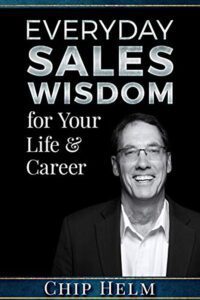
Everyday Sales Wisdom for Your Life & Career
First of all, it’s not what you say to people. It’s how you say things to people. People don’t understand that you don’t have to have a firm fist. You can talk with kindness and it’s your voice, you raise your tone. It’s not what you say to someone. I like to repeat things because if you repeat things, that means it stays with you. It’s important and you will take adherence to it. You are right in that list of empathy and sympathy. The Golden Rule says, “Treat people like you want to be treated.” Chip’s Golden Rule is, “Treat people how they want to be treated.”
I have a great friend of mine who’s a president of a big car dealership here in Bloomington, Indiana. Here’s how you put it. He goes, “Treat your employees like you want your employees to treat your customers.” You can’t say it better than that. It starts at the top and moves down for any kind of corporation, company or whatever you do for your career. We don’t have enough of what I call humility in this country.
How we look at things and put other people’s thoughts first is the old servant leadership but it’s more than that. Do you care about the other person? Do you want that person to be successful? Do you want to mentor that person? I’m big in mentoring. That’s part of what you are talking about as far as soft skills. I like the word soft skills. There are a lot of people who don’t like to use that word but I believe it’s right and spot on to use soft skills in how you talk to people, what you say to people, how you listen to someone, and how you put them first.
Always think about the other person and learn about that other person. I will leave you one thing and you can continue. One of the greatest leaders that you could ever be is the one that from day one, always wants you to get you from A to Z. If you want to become a vice president or whatever you want to do in your company, that person, that leader is more worried about getting you into that position than they are worried about their own career.
Would you say that soft skills are those three things I mentioned, empathy, listening, and storytelling?
Yes. I would say that as well. You can say sympathy. You can add on whether or not you are storytelling or listening but it’s how you speak to someone. How do you tell someone that there’s a difficult situation? How do you tell someone that you have to fire them or maybe they are not getting promoted this year? Can you do that with kindness, humility, and caring about them in your voice? How do you do it versus using a hard fist on the table with raising your voice or being quick with them?
I have always said, “If they walk into your office on Tuesday and ask you a question and you give me an answer, if I walk back in in your office on Thursday and ask you the same question, you better give me the same answer.” What I mean is being consistent with your colleagues, friends, and employees. Be consistent in how you react to things. That is correct communication.
[bctt tweet=”Treat people the way they want to be treated.” username=”John_Livesay”]
In your other book, Bigger than Sales: How Humility and Relationships Build Career Success, you alluded to humility earlier, we could probably put that under the category of soft skills. There’s so much belief that nice people finish last. I interviewed Tim Sanders who said, “Nice smart people are successful. Nice doesn’t mean you are weak, not prepared or all that stuff.”
What is your thought around people who need to change their beliefs to be a little humble? It’s like, “If I’m humble, it’s a sign of weakness. Buyers are going to take advantage of me and I will be walked over in my career.” There’s so much fear around that you have shown that’s not the case. What advice do you give people on that?
First of all, if I’m dating someone and a girl tells another friend that I’m nice, that’s not a good thing. In dating someone, if a woman told that you are too nice, means I probably won’t end up having a relationship and spending too much time with that person again. When it concerns how you treat people, building relationships, networking, and caring about what you do, the humble part needs to be there, whether you call it being nice. I call it being true to yourself and honest, as a day as long.
I always said two things that I would pray and talk about when I went to bed at nighttime. One is I would say to myself, “Did I not screw someone over today?” In my years in this industry, I have never screwed anybody over. The second thing is I would say to myself, “Did I do everything humanly possible to help the people, my company or the patients today?” Whatever business I’m in. I was in the medical business, so it’s like, “Did I help more patients get back to the community and get back to people?” That’s how I treat it.
It’s funny, what you said is some of the nice guys finish last, smart guys finish last or however you put it. The problem is when you are true to yourself and you are totally honest, you care. You take things a lot more personally than most people. The bottom line is you may not get to where you are going. You may not become what you want to become or what you think you need to become but only the man upstairs knows that. My opinion is, do it right.
A CEO of a company says to me, “Do things the right way and you will be fine.” I have always led my life that way personally and professionally. Maybe that’s why people always ask me about how I came out with the three kids, how they ended up where they were, etc. I don’t know if I answered your question per se but I’m a firm believer in honesty, sincerity, gentleness, and doing things the right way, not screwing people over. I have been screwed over my career and my life, so I do understand both sides.
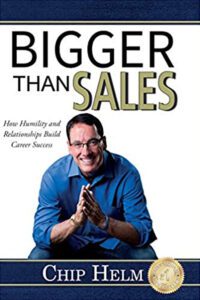
Bigger Than Sales: How Humility and Relationships Build Career Success
You have also managed salespeople in your career. What similarities do you see in doing that versus raising children?
It’s a great thing to be patient, put yourself in their shoes, be kind, and listen more than you probably would ever listen. Also, sometimes you have to be truthfully honest. I always say this, “You may not like or agree with what I’m going to say but if you want my true and honest opinion, I will give it to you. Let’s leave it at that.”
Meaning, it doesn’t mean we have to agree. We can agree to disagree or you may not like it but I’m not going to tell you something that I haven’t been there, done there, and had taken the test. I’m going to tell you because I have been there, done there, and had taken the test. I’m not trying to tell you something I haven’t gone through already. I’m trying to minimize and lessen your pain to help you.
The old way of selling was always be closing and pushing. I created a new acronym called ABK, which is Always Be Kind. Since you mentioned kindness, you and I are simpatico on so many levels because we approach selling in life in general from that standpoint. It has to start with what we say to ourselves, that negative self-talk. You must have seen some salespeople or even your own children start beating themselves up with some self-talk. Have you been able to notice it and help them not keep doing it?
I have worn a positive blue band for years from Butler University in Indiana cancer patient. A lot of times, even Chip who’s usually mostly happy, a go-getter, and smiling all the time, struggled too with always being positive. I utilize this band a lot and we look down and say, “Stay positive, Chip.” When things get tough, the tough get going. Positivity breeds positivity. Negativity breeds negativity. One solution is you hope that you try not to hang out with negative people. Stay away from it as much as you can. It doesn’t do any good for yourself.
Number two, look at the glass half full and not glass half empty. There was a study done a while ago that most people look at the glass as half empty. That means they are pessimistic. If it rains on Tuesday, they believe it’s going to rain the following Tuesday. I hate to tell the story about my sister-in-law. I love her to death but she had come to visit me, John. By the time I was done, she took me to drink. I had to go upstairs and start drinking. I had to go downstairs and start drinking because I had to get away from the negativity. She was negative. I don’t want to spend too much time around negative people when I don’t have to, at least I’m trying.
There’s this great line about, “We are the sum total of the five people we spend the most time with.” You must have seen that as a parent. If your children tend to get with the wrong peers, that can be a danger for their future.
They drove their goals. There’s never a plan B. I like that in life. I never had a plan B. It doesn’t mean that I didn’t have to change course and go down a different path when I didn’t get dental school but I didn’t have a plan B. They never had a plan B. My older son wouldn’t know what to do if he didn’t become a doctor. It’s the same with a veterinarian. They never talked about a plan B. I believe in going for your goals. I don’t have a plan B but if it doesn’t work in Plan A, something will come up.
[bctt tweet=”Humility is a skill. ” username=”John_Livesay”]
Both of us, our plan A was to be a dentist and it didn’t work out for us but it didn’t mean we weren’t committed. It brings up something that is crucial for everyone reading, whether you want to say you are in sales or not. When you decide to do something, interview for a job, write a book or whatever it is, go for it 100%. Give it your best.
I was doing all this work and effort to get a job and they are like, “You are putting yourself out there. What if you don’t get it? You are going to feel so disappointed.” I would rather do a medium effort. If I don’t get it, I don’t feel bad because I didn’t try so hard. I thought, “What a bizarre way to go through life.” They explained to me that they can’t tolerate the pain of getting a no if they have tried their hardest but they don’t end up winning because they are not giving heart. It’s this vicious cycle.
I told my kids, “If you want to get to medical school or vet school, this job, or you want to get there, there are a lot of things in between that you are not going to like. It’s a means to an end.” It doesn’t matter that everything in between, you are going to like it at all but that’s okay. If you know what the game is and how to get over there to that end result, there are lots of things you are going to do in your life that you are not going to like that much. If you want to get to the end where you are going to like it, sometimes you have to go do it, realizing that you are not going to enjoy and like it but if you get through it, you will get the carrot at the end. It will become your rainbow there at the end.
Any last thought or quote that you want to leave us with, Chip?
I’m big on this. It doesn’t seem to happen across the industry. I’m big about following up. Following through is equal to success. Most people don’t set an urgency behavior because user behavior changes to get back to people by email, text, and phone. People want to be acknowledged. You don’t have to have any answers. They want to be acknowledged and it starts from the top down in any culture.
What I would end with is, do what you say you are going to do and do it when you say you are going to do it. You will count all the money you couldn’t accumulate. The money is going to come rolling in, and you can sit in the Bahamas and count it. If you do what you say that you are going to do and do it when you say you are going to do it, then you are going to win it. It doesn’t matter what you do for your life, your career, what business, and what direction you go.

Success Secrets: Positivity breeds positivity, while negativity breeds negativity.
You helped us reframe what winning is. I love it. If people want to reach out to you as a consultant or a speaker, where should they go?
I have a website, ChipHelm.com. A sneak preview, I am bringing out a new book. It’s going to be more of a business book. We probably talked about a couple of things on the show because some of the things that we accomplished with our kids will be part of that business book, as I think it applies to any business. I’m also accessible by email, [email protected]. People call me all the time at (812) 947-3588. My books are up on Amazon.
I hope they make a difference even if it’s for one person. They are short and easy reads. It sounds like John did his homework or something, and before I came on, I was impressed, on understanding. Probably my biggest thing that connected me to it is what I call KISS, Keep It Simple and Sweet. That’s how I lead personally and professionally. That’s it for me. It’s simple. Sales and careers are not rocket science but we all are in that game of sales. I’m sorry for anyone reading who disagrees.
You remind me of that Einstein quote that said, “If you can’t explain it, you simply don’t understand it.” It’s important. It shows your mastery at something when you can keep it simple and sweet. Thank you so much for joining us, Chip. It has been a pleasure.
Thank you, John. I appreciate you, too.
Important Links
- Chip Helm
- Everyday Sales Wisdom for Your Life & Career
- Bigger than Sales: How Humility and Relationships Build Career Success
- Tim Sanders – Past episode
- [email protected]
- Better Selling Through Storytelling Method Online Course
Wanna Host Your Own Podcast?
Click here to see how my friends at Podetize can help
Purchase John’s new book
John Livesay, The Pitch Whisperer
Share The Show
Did you enjoy the show? I’d love it if you subscribed today and left us a 5-star review!
- Click this link
- Click on the ‘Subscribe’ button below the artwork
- Go to the ‘Ratings and Reviews’ section
- Click on ‘Write a Review’
Love the show? Subscribe, rate, review, and share!
Join The Successful Pitch community today:
- JohnLivesay.com
- John Livesay Facebook
- John Livesay Twitter
- John Livesay LinkedIn
- John Livesay YouTube