
Company Branding and Storytelling – Interview with Eitan Chitayat
Posted by John Livesay in podcast | 0 comments
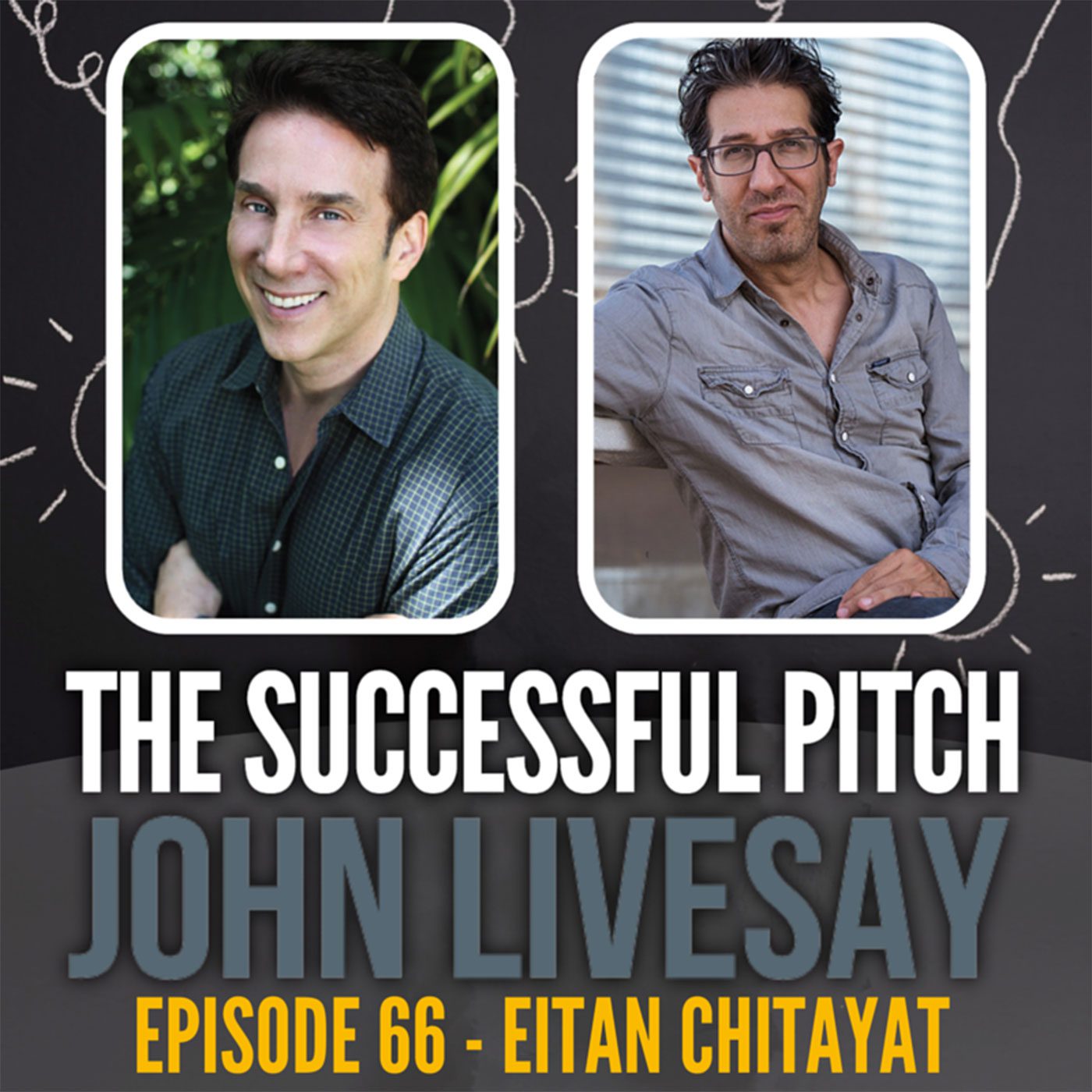
Listen To The Episode Here
Episode Summary
Eitan Chitayat is a creative director, copywriter, brand-builder, and founder of Natie. Eitan has overseen and played a part in award-winning work on integrated campaigns across all mediums, most notably for Google, Apple, Facebook, YouTube, and more. Eitan discusses the power of storytelling and how to hone in on these skills by finding who you are and what your brand represents.
Storytelling and Company Branding – Interview with Eitan Chitayat
Hi, and welcome to The Successful Pitch Podcast. Today’s guest is Eitan Chitayat, who is the founder of a brilliant creative agency called Natie.com. He’s worked for amazing companies and has clients that anybody would kill to have, including American Express. He’s going to talk to us about one of his clients, Valtech, that was just recently bought for over $900 million. Clearly, he is an expert in company branding and positioning. Welcome to the show.
Hey, it’s nice to be here. Thank you.
I always like to ask my guests about their background. In other words, what were you like in college? Did you know that you wanted to get in and be in the creative world? Did you want to do something else or was it always about company branding and advertising?

I sat in the computer library for six months and I put pictures with city headlines together and shopped a portfolio around
I was totally confused when I did my first degree. I actually started in political science as a major, and I minored in English lit. Then I flipped it, majoring in English lit and minoring in political science. I just really enjoyed that. Then I moved to Boston to do my master’s degree and that was in integrated communication marketing at Emerson College. I’ve always kind of liked the communications field, but even that degree was more marketing. It was only in my last semester that I actually, totally by accident, did a creative course in advertising. I got the bug.
As all of my friends were leaving college to get these high-paying jobs in marketing, I sat in the computer library for six months and I put pictures with city headlines together and shopped a portfolio around and landed a job in advertising and company branding as a copywriter. It wasn’t the plan but it just happened and it was good that it did.
It’s your own creative process. You’ve worked with some of the major agencies: OgilvyOne, BBDO, TBWA, which used to be Chiat, and even working at Google’s creative lab. What was it like? What’d you learn at Google?
Google was interesting. I was there as a freelancer. They brought me over when I was in Israel and I worked there for a few months. The talent there is extraordinary and the amazing thing about the lab is … I also worked with a creative lab in London, but the amazing thing about the New York lab when I was there was that you have direct access to everything that Google is working on that they want to promote.

Google found a way how to translate over that crazy technical stuff into things that people can actually feel.
They found a way under great creative leadership in the form of Andy Berndt and Robert Wong how to translate over that crazy technical stuff into things that people can actually feel. It really is crazy technical, some of the things that they’re doing there. To be able to translate it so simply in their communications and in their company branding was eye-opening. The teams that we worked with, some of them were really senior and some of them were really young. That mix and just being around it was great. I got to work on some incredible things. I’m just very lucky to have been there.
That’s one of the reasons, there are many, why we’re so excited to have you as a guest on the show. Because most of the listeners are somehow involved in technology and they have to somehow figure out a way to take all that tech speak and turn it into a very simple pitch for investors. That starts with figuring out a good tagline and figuring out a good logo and a good brand, which is what you’re an expert at.
Now, I also want to ask you about what made you decide to say, “I’ve worked for all these big agencies but I’m going to go out on my own now?” I’m always fascinated by that decision and some of the challenges that you’ve faced that you weren’t expecting.
I think that I’ve always been a little bit of a troublemaker even when I was working at the bigger agencies. I’ve always had a pretty strong opinion. Even when I was working for some of the bigger agencies, I always had a little independent something going on the side. When I got back to Israel, I was the executive creative director of TBWA Digital here for around a year. Within that year, I realized this isn’t working for me. I’m not able to do the things that I want to do and to be able to deliver the standard that I’m used to delivering. Not because there was anything wrong with TBWA Digital. They were amazing.
It’s more that I came from a different culture and an international background and it was more for the Israeli local market. I decided to just quit and do my own thing. It wasn’t some type of revolution for me because I’ve always been entrepreneurially inclined. But working on projects that really allowed me to do what I wanted to do and work with the people that I really wanted to work with without all the bureaucracy and ulterior motives, which were very fair and fine, but they weren’t mine.

That is super important when you’re creatively driven, to be able to have the freedom.
My team and the people that I worked with who are in my team now are ultimately people that I just connect with strategically, creatively, and who get what I want to bring out of whoever I work with in the form of a client. That is super important when you’re creatively driven, to be able to have the freedom and to work with the people that you can also give them freedom but they also give you back what would you want as well, and what you need.
Of course, working with the right clients too. The long answer is what I just said. The short answer is I wanted to do what I wanted to do. That little nugget has always gotten me in trouble and now it’s working for me, which is great.
It is. I want you to speak a little bit more if you will, because all of the founders, whether they’re just starting out and they only have a co-founder and maybe two or three people on their team, eventually want to get funded and grow their company. You are an expert in finding the right people that fit your culture and your strategy. Can you speak a little bit about how you find the right people that are going to be a corporate fit for what your culture is?
I can answer that, minus one word, which is corporate, because that’s the least thing I am. I think that you have to find people that you instinctively trust. I think that’s the most important thing. I can tell you that the best relationships I’ve had and the ones that I still have are the ones where you just connect at the gut level. Then, of course, there are the strategic partnerships. The ones where you might not be good at something and the other person fills that gap for you and you do the same thing for them. There’s that yin and yang thing going there.
[Tweet “You have to find people that you instinctively trust.”]
Networking is huge. I think that one of the things that you really need to do, if some of your audience is younger, is to always stay in touch with everyone that you’ve ever met in some way, shape, or form because you never know. There are people that I worked with 15 years ago who I’m still in touch with. You never know where they’re going to be. If you have a relationship with them and the stars align, then magic might happen. I think those type of relationships, just staying in touch is a very, very important thing.
Do you have a process for how you stay in touch with people? Is it through social media or something else?
In the last 3 years, because I was in New York for a while and then when I left to come back to Israel, actually, Facebook allowed me to stay on the map, professionally speaking. You write a status and, “Oh, he’s still around. He’s still on the radar.” That’s not the way that I stay in touch but, in the last few years, it’s definitely helped. I think I’ve always just stayed in touch with people. I think being in communications outside of the profession, I’m just a communicative type of guy. Just stay in touch with people.
[Tweet “Stay in touch for potential magic.”]
It’s part of your tagline for Natie, so that makes complete sense. Since you’ve mentioned Facebook, you’ve actually had Facebook as a client. Can you talk to us about what you learned there, about that culture and company branding?
The stuff that I worked on with Facebook, which was out of the London Office, was more … Facebook has their own clients. They do advertising in-house for banks or food companies or what have you. We basically delivered a couple of ideas for Facebook for some of their clients to try and help them with presenting social media ideas for these clients on Facebook has a platform.
That in itself was interesting because when we did it, which was a couple of years ago, that was new. That’s a new way of thinking. They’ve always said Facebook is not hiring an advertising agency, a corporate advertising agency. We brainstormed for them and we just partnered with them. It wasn’t a huge project, and then we did another thing or two. It’s great to be able to worked with Facebook or Apple or Google, who we’ve worked with extensively as well.
I also want to ask you about one of the things on your website, which is Valtech. What an amazing case study and the story. If you could, tell us about the importance of company branding. I love what you talk about in one of your interviews, is your strategy is only as good as the first step. The strategy that you had with Valtech and what you were able to do them and matching their design of their product to their complete logo is completely fascinating. Of course, what an amazing exit.

They didn’t have much of a story. They had incredible mind-blowing technology and you couldn’t get a sense of that.
Yeah, that’s an amazing company. Valtech, they’re doing some amazing things with heart surgery, basically. When they came to us they had, I think it was around eight or nine months ago, they had a logo and they had a website which was, by their own admission, stuck in the ’80s. That’s why they came to us. They didn’t have much of a story. They had incredible mind-blowing technology and you couldn’t get a sense of that from what you’re looking at in their presentation materials, and their websites, and animations that they’ve done. The first thing that we did was we said, “Let’s find out what your story is.”
We had extensive, strategic, methodological meetings where we uncovered their truth. We found out, basically, what makes them tick and what is the product that they provide to the world, and how they intend to change the world, and who else is out there doing not the same thing, because no one was doing the same thing, but similar things and how they differentiated from them. We’ve uncovered the truth and then we were able to translate that truth into a story that separated them from the rest, was authentic and was relevant to their audience.
[Tweet “Be authentic and relevant.”]
After that strategy, we developed a consumer-facing or B2B facing or, medical industry facing narrative. Different verticals. We didn’t do much with logo, actually. That was the one thing that they kept. We evolved the whole brand visually, from conference materials to brochures to a website.
The funny thing is, it’s a funny story, their exit was done when … We were meant to have a website up for them around 6 weeks later. They called us up and they said “Listen”, without giving us any information, they said, “We can’t tell you why but we need to have this website ready in 10 days,” and it was a pretty big website.
We delivered, and then around a week later, of course, something that we guessed that we hadn’t discussed, of course. They made a phenomenal exit of almost a billion dollars, which is the largest medical exit for an Israeli company ever. We were just really happy to have done everything for them. We’re still working with them on a pretty ongoing basis with all sorts of little things and big things. They’re doing amazing things.
[Tweet “Startups: a lot of them have the potential to change the world.”]
It’s really nice to work with clients or companies that are doing things that really are changing the world. Their non-invasive heart surgery to be able to repair someone’s heart as it’s still beating is just incredible to work on. I get to work on great, great, great stuff and it’s so many different things. If you’re talking about startups, startups basically, everyone has an idea and every one of these ideas has a potential to change … Not everyone, but a lot of them have the potential to change the world. Those are the things that we want to work on.
Things that can inspire you and your creativity but then, you’re focusing on something creatively, that’s helping save lives. In this case, I love the fact you’re talking about Valtech being in heart surgery and that you found the truth of their story and what makes them tick. I don’t know if you consciously did that or not, but I thought, “Oh, what a clever play on words about how our heart makes us tick.” It’s great.
Complete accident.
This whole concept of storytelling is something I’m constantly working with my clients on when they pitch to get funded. In this case, you were able to craft the stories so well that it allowed Valtech to have an amazing exit.
I don’t know about that. I don’t think our story helped them but I think maybe we helped them in some way. It’s not the brand that does it, you know what I mean? It’s the product and it’s the people. The brand can help. I don’t want to take anything away from them. We were just lucky to be there.
When I look at Apple buying Beats, I think a lot of the reason they bought Beats was the brand, what that stood for and how it fit their culture.
Yeah. Yes, it’s true.
What you did for Valtech was you made their brand distinct and you told a story that was authentic and relevant, you said. That, to me, is what makes people want to invest, whether it’s an exit or giving initial funding. That’s what’s so fantastic about what you do. Let’s talk about what you do with Entrepreneur Organization in Israel, EO Israel, since that’s another whole world of startups. You actually helped them with telling stories of, I saw, eight people that you picked out of all their members. That is so important, I think, is when people hear one or two stories that they can relate to, then they can expand it beyond that.
With Entrepreneur’s Organization Israel, I’m actually a founding chapter member and I was the communication chair for the first two years of the organization. I just took it upon myself to do all of the company branding and the website and the video and social media and all that good stuff. I think that it was important to allow our audience, who are other potential entrepreneurs in Israel, to understand that being an entrepreneur, and I’m sure that you guys can relate to this and your audience and I certainly can because I’m an entrepreneur. It’s the loneliest job on the planet.
[Tweet “Being a startup is the loneliest job on the planet.”]
You don’t have that big team. If you’re lucky, you do have someone to talk to. But usually it’s just at the end of the day and at the beginning of the day, and then in the middle of the day, it’s just you. The organization allows you to get some support on a professional level, on a personal level sometimes. As an entrepreneur, I’ve been working 14 hour days for 6 weeks now and haven’t seen my kids. That’s not a professional problem. That becomes a personal problem, a family problem. You have people that you can talk to about that. Or, I need to hire someone and I just have been trying for six months and I can’t find the right person.
You can get shared experiences. That’s the whole point. We did the company branding but it came from within because I’m a chapter member. Again, it just was nice to hit on the truth, knowing the truth. The entrepreneurs there are ultimately friends as well. I don’t know if that’s answering your question.
No. It totally is. The fact that you’re a founding member and an entrepreneur and you can relate to it so well allows you to tell stories, again, that are completely authentic. It’s changing the world because as you said, that being an entrepreneur is the loneliest job on the planet. I love that quote. That’s a problem you’re solving with EO, correct?

Entrepreneur Organization Israel, what they’ve done is they put entrepreneurs together to support each other.
Yeah. It’s a global organization of almost, I think it’s around 11,000 members. Again, I’m a member. What they’ve done is they put entrepreneurs together to support each other. It’s not like a support group. You support each other just because you’re like-minded people. I think that’s really important. My agency is a core team of 4 or 5 people, and a couple of remote teams. That’s our structure. If I want to make a big decision for my business, I can find and I know obviously a few people within the Israel chapter alone, who also have small teams but work with very, very, very big businesses.
You can reach out to people in different countries who are part of the organization. When you fly to London, if you want, you can reach out to chapter members there and just say, “Hey, I’m an EO global member. What’s going on in London?” Nine times out of 10, people reach out to you and say, “Hey, come and meet me.” It’s also a networking organization too. They do some great things also. They have big events that people from all around the world go to. Universities, programs, seminars. It’s interesting and it’s all about entrepreneurship.
It almost reminds me of American Express with global offices. You can always have a place, almost like a second embassy, if you’re traveling, and need a soft place to land, as I like to describe it. That’s a soft place to land for entrepreneurs who might be visiting other countries.
I think I’ve heard really nice stories about people who have been there for complete strangers just because of this organization, this connection, this platform, whatever you want to call it. At the end of the day, it’s all about people. Yeah, it’s cool. If we’re talking about entrepreneurs and startups, and you’ve brought up storytelling, I think one of the most important things really is to get your story right.
When it comes to company branding, getting your story right has nothing to do, really, with creativity at its core. It’s about understanding who you are and what you’re doing, and then translating that into a narrative and translating that into visuals and different mediums, like animations and websites and stuff. But, the brand story is uncovering the truth of who you are. It’s really knowing who you are and I like that.
[Tweet “Tell the truth of who you are.”]
I do, too. You’ve gone from using storytelling to help Valtech save lives with heart surgery, to helping EO Israel help entrepreneurs with a place for shared resources, to this amazing viral video that you’ve created to also help not only yourself, but you’re telling a story and it’s certainly timely with all the terrorism going on, which is, I’m sure people have probably seen it, is “I’m that Jew”. Can you talk to us about, by now, how many people have watched this? Everyone’s always looking for, “How do I make something go viral?” I don’t think that was your intent when you started.
Wow. First of all, I’m shocked that you’re asking about it. That’s great. I’m happy to talk about it. “I’m that Jew” I think, right now, with combined YouTube and Facebook and all the different channels, we’re at around the 3 million view marks.
Congrats.
Thanks, man. It’s been out like around 4 or 5 weeks. It’s not the number, it’s the comments that have been the most moving. There’s like tens of thousands of comments and stuff like that. It started off as a blog post that I put out there, as a written narrative. After the Charlie Hebdo Massacres, some terrorists killed some Jewish shoppers at a kosher supermarket, I wrote this down. In time, I just realized I want to present it as a visual story and it’s meant to be a celebration of who we are.
It was written by me, a Jew, to my Jewish brothers and sisters. But also to anyone who shouldn’t be afraid, whether you’re black, or gay, or a woman, whatever, a man. Be who you are and be proud of it. You should just be able to say it and hope that the people out there who are listening will embrace it. It’s okay to be different. We can embrace our differences. I was saying it directly to the Jewish people for me.
Actually, I was saying it to a woman who was living in France right after the time of those massacres and who was just afraid to say that she was Jewish. She’s a friend of mine. I basically wrote it for her. I produced it with some just really close-knit group of friends and colleagues, put it out there one night. I knew that people would spread it. I didn’t think that it would have this kind of impact. The response has been nothing short of … I’ve cried several times because some of the things that people write is just really moving.
I think it’s totally relevant to what we’re talking about, which is storytelling is understanding the truth of who you are. You were brave enough to put that story out there. You remind me of Liz Gilbert who wrote Eat, Pray, Love. She talks about how she wrote that book for one specific friend of hers who couldn’t travel because she had a husband and children. She filtered everything. You created “I’m that Jew” for your one friend that was afraid to say she was Jewish. From that real specific audience and that intention, I think that is why things are so successful, whether it’s “I’m that Jew” or Eat, Pray, Love.
The other thing that you touched on is really encouraging people not to be afraid. I read that that’s one of your key criterias of who you like to hire creatively, is that they’re not afraid to take chances and risks. I think it’s full circle.
Yeah, that’s funny. Not being afraid gets me into trouble a lot of the time. I’m not talking about like putting stuff like “I’m that Jew” out there. I’m talking about just, you can butt heads with clients and partners and colleagues, but I think you have to be who you are. You have to not be afraid and to have faith in who you are and to trust your instincts and to put yourself out there.
[Tweet “You have to not be afraid and to have faith in who you are.”]
Because the right person who is opposite you, if it is the right person, will somehow be able to embrace that or take what you’re saying or be able to take you in another direction and take on your not being afraid and wrestle with it a bit and bring you over to their side too. I think that it can get you in trouble, but it’s a quality that I look for.
I have a designer that I worked with in Italy. He challenges me all the time. We are constantly butting heads but in the most respectful way. The same thing with writers. My strategist, today, called me up after meeting with the client. We were disagreeing openly, in front of the client, but it was all in the pursuit of what we think the client needs the most. It’s not easy to be honest in this world. Do you know what I mean?
[Tweet “It’s not easy to be honest in this world.”]
Yes, I do.
I hate this politically correct world.
That leads me into my last question for you, which is tell us about this 5 Percent Club.
The 5 Percent Club is an initiative that allows … It’s a platform, a social media platform. It allows people to express what they’re really feeling. 95% of your life is on autopilot. You go to work, you take the kids to school, you go and you have your standard lunch. You catch yourself thinking about something that you really wanted to say, that you really want to do one day, an experience that you went through that you haven’t really maybe talked about before. That’s the 5%. “I’m that Jew”, that’s just one of my many 5%s.
[Tweet “95% of life is on autopilot. Things that affect you and move you is the 5%.”]
Someone recently wrote an article, that we haven’t put out there yet, about finding the time in her life to reminisce on a beautiful year that has gone by with her family. She takes the time, once a year, to go through her photo albums and put together an album. In doing that, she connects with that year that she had. Or someone will write about a custody battle that he had with his ex-wife where the judge stood up in front of him and said, “Because you’re a male, because you’re a father …” he favored the mother and that really pissed the writer off and he wrote about it. He actually won custody.
Things that really affect you and move you, the idea of the 5% Club is to be able to share that and pay that experience forward. It’s a small initiative. It’s a project that I hope will gain traction and we’re trying to gain subscribers and reach new writers. You have to put meaningful shit down.
We’re certainly going to put the 5% Club and all the other things, Natie, in the show notes for people to check out your agency’s great branding site.
Thank you, sir.
“I’m that Jew”, we’ll put the link for that. Certainly The 5 Percent Club, so that people can really get a sense of if they want to contribute and spread the word. I think anytime you encourage people to tap into something that’s meaningful and pay it forward, we’re making the world a better place. We might not be saving lives like Valtech is, but we’re doing it in our own way. Because we want to make our hearts strong physically, but also emotionally and spiritually. You do that 360 better than almost anyone I’ve ever had the pleasure of talking to.
Wow. Thank you. I appreciate it.
It’s been an honor. It’s been great having you on the show. I can’t thank you enough.
Wow. Thank you. Honor’s been mine. Thank you so much. I really enjoyed it. Thank you so much.
Links Mentioned
J Robinett Enterprises
John Livesay Funding Strategist
Eitan Chitayat Website
I’m That Jew on YouTube
Eat, Pray, Love by Elizabeth Gilbert
Crack The Funding Code!
Register now for the free webinar
Fox 11 News Los Angeles John Livesay The Successful Pitch book
Share The Show
Did you enjoy the show? I’d love it if you subscribed today and left us a 5-star review!
-
- Click this link
- Click on the ‘Subscribe’ button below the artwork
- Go to the ‘Ratings and Reviews’ section
- Click on ‘Write a Review’
Crafting the Perfect Pitch with John Livesay
Posted by John Livesay in blog | 0 comments
[vc_row row_type=”row” use_row_as_full_screen_section=”no” type=”full_width” angled_section=”no” text_align=”left” background_image_as_pattern=”without_pattern”][vc_column][vc_column_text]John Livesay is guest on Startup Madness Podcast
DescriptionThe StartUp Madness Podcast is an audio program created for new and soon-to-be entrepreneurs. Joel Lutfiyya interviews successful business founders to dive deep into their journey of launching their business from the ground up focusing on the success and pitfalls they encountered. Each episode brings you sage and actionable advice including the catalyst that made them decide to dive into business ownership, how they developed their product or service by finding pain points with their audience as well as resources and steps you can take in the next 24 hours to start your business. Join Joel and StartUp Nation as we take on the challenge of entrepreneurship and make business startup less terrifying!
[/vc_column_text][/vc_column][/vc_row][vc_row row_type=”row” use_row_as_full_screen_section=”no” type=”full_width” angled_section=”no” text_align=”left” background_image_as_pattern=”without_pattern”][vc_column][vc_empty_space][vc_column_text]Listen Now![/vc_column_text][/vc_column][/vc_row]
BTSP | Michael Parrish DuDell – Transcription
Posted by John Livesay in Uncategorized | 0 comments
John Livesay:
Today’s guest on The Successful Pitch is Michael Parrish DuDell. He is the author of two Shark Tank books. The first one, “Shark Tank Jump Start Your Business” and “Shark Tank Secrets to Success”. He only had 30 days to write that first book. You can only imagine how much pressure that was. He was on the set. He knows all kinds of insights about what each shark is looking for when they hear a pitch. He really says, “The key is just be a human talking to another human. Be authentic, be transparent, and of course, know your numbers.” He said, “Really, your nerves get very high because it’s a high stakes game, but you’ve got to be prepared and you’ve got to be confident in order to get a shark or anyone else to invest in you.” He said, “Do as much research as you can, on what’s important to the investor, how they like to be approached, and whatever you do, don’t argue with a shark or any investor when you get asked a question.” Enjoy the episode.
Are you a founder struggling with your investor pitch? Do you need warm introductions to the right investors to get your startup funded? Do you need a funding road map to get you there fast? All of this and more can be found in Crack the Funding Code. Join host, John Livesay and Judy Robinett, bestselling author of How to Be a Power Connector and board member of Illuminate Ventures, on their free Crack the Funding Code webinar. Simply go to judyrobinett.com – that’s J-U-D-Y-R-O-B-I-N-E-T-T dot com – and click on the webinar tab to see how to tap into their network of investors from around the world. There’s a link in the show notes as well. You’re only one click away from getting funded fast.
Hi and welcome to The Successful Pitch Podcast. Today’s guest is Michael Parrish DuDell. He’s an entrepreneur, a speaker, and the author of Shark Tank Jump Start your Business. He’s been called one of the top 3 most popular Amazon authors for a reason. He’s also a Millennial generation expert. He’s been on a lot of media from CNBC to CNN to New York Times. He’s worked with Seth Godin, he was involved with GE’s relaunch of Ecomagination, so he has a very interesting background. So, I can’t wait to dive in. Michael, welcome to the show.
Michael: Hey.
Thanks so much for having me.
John:
I’m sure a lot of people would love to talk about Shark Tank the whole time, and we will definitely get there. But, I am always curious to see how did you become a Millennial generation expert?
Michael:
Well, you know, it helps that I’m a Millennial myself. There are a lot of people out there that talk about the generation and that, maybe, speak on the generation, but in fact, don’t have that firsthand experience of being part of the generation. We know a lot about Millennials, but one of the things that we know, numerous studies suggest, is that Millennials learn best from other Millennials, and that Millennials prefer to be around Millennials. So, it just sort of helps that I’m of that generation.
So, that’s the short answer to a much longer answer, which is that in 2007, I became the Senior Editor of a site that’s now been sold and changed a lot. But, back in 2007, when digital media was first becoming sort of a force to be reckoned with, the conversation that we were having was a conversation with Millennials for Millennials, and that led to a lot of different kinds of work, to speaking, to writing, to consulting, and it was quite on accident that, over the years, I sort of turned into this Millennial expert and positioned right in sort of the future of work small business space.
So, there’s actually a lot of overlapping between some of the things we talk about in the book, some of the topics that I generally speak about, and this idea of the next generation who’s sort of going to be carrying the torch and taking over the future of business and entrepreneurship.
John:
I don’t think a lot of people realize that the Millennials are even bigger than the baby boomers and the baby boomers have all these reputation of being so huge and changing everything, but there’s more Millennials, am I right?
Michael:
Yeah, that’s exactly right. So, as it turns out, Millennials are the largest generation in the history of the world. It was the baby boomers, but we have beat them. We’re about 80 million members strong, and that means a lot. That means that we have an overwhelming ability to make purchasing decisions that affect numerous businesses. That means that when it comes to voting and when it comes to a lot of other activities that majority makes a difference. We’re going to be leading the way. So, the conversation around Millennials and how Millennials grow and evolve into leaders and into adults, I think that’s a fascinating conversation. I’m really honored to be a part of it.
John:
I love it. Can you tell us about how you came across Seth Godin and what you did with him on the Domino Project?
Michael:
Yeah. So, Seth Godin is one of my all-time favorite people. I worked for him, as you just said, in 2011 as part of the Domino Project, which is a publishing company that was started with Seth, by Seth, and powered by Amazon.com. It’s funny how we met, my literary agent is the same literary agent as someone named Josh Kaufman, who wrote the book, “Personal MBA”, and it’s also Seth’s literary agent. So, gosh, I guess it would’ve been 2009, maybe. I was 25, I pitched a book to her, and she said, “Listen, there’s no way I can sell this book but I think you’re interesting. Stay in touch,” and I did, and over the course of the years, we got to know each other very casually as acquaintances and this opportunity happened. I saw her on Facebook page that Seth was looking for somebody. I applied just like the thousand other people that did, and the rest is history.
John:
Do you have any sense, Michael, what it was about your application or your interview that made him pick you out of all the people that wanted to work for him?
Michael:
No. I don’t. That’s a really good question. Seth, over the years, has really been able to fine-tune through — it wasn’t a traditional “Submit your resume”, it was an essay question-based Google form that really required a lot of examination and a lot of personality in order to stand out. Like anybody who has sort of cultivated their ability to lead and to manage and to run businesses, I think he probably has a good sense of the kind of people that he works really well with and he can see that through that sort of thing. Of course, it didn’t hurt that I knew somebody that knew him.
But, yeah, I think he just sort of knew. It wasn’t just like you submitted and you get accepted. There was a whole interview process. It was sort of a process but I think there were close to a thousand people that applied, about 13 of us were brought in for a group interview, and of the 13, I believe 6 were chosen to work on the project.
John:
Wow. Well, there’s so many similarities there, Michael, to pitching to get funded, to pitching to get on Shark Tank, the same kind of numbers and what you said, two things: one, a warm introduction is always a great way to get in front of an investor, and number two, showing some personality. That’s what people respond to, whether you’re pitching to get hired, pitching to get funded, pitching to get on Shark Tank, would you agree with that?
Michael:
Oh, absolutely. Listen, there’s a million people that have a million different ideas and it all comes down to differentiation, and the way that you differentiate yourself is by leading with your personality, by leading with that competitive advantage, which for a lot of people, it’s who they are.
John:. Nice, nice, nice. We’ll tweet that out. Differentiate with your personality. Most people think it has to be — and that’s part of who your personal brand is. So, how did you get from the Seth Godin connection and then you’ve mentioned Amazon, to getting selected to write the book for the Shark Tank show. I’m sure that was equally competitive.
Michael:
Sure, yeah. So there’s a little bit of a gap between those years. So, in 2011, I worked for Seth then I went over to work as the editor of ecomagination.com right as GE was relaunching that property. It was a really great sort of combination of all the things that I’d done in my career. I’d worked, sort of in the environmental movement in the editorial capacity, I’d worked in the business sector, I’d had this conversation with Millennials, and this sort of combined it all. Ecomagination was all about sort of talking about the solutions to some of the rather large challenges we’re facing from an environmental standpoint through the lens of business and how business can make a difference and I’m a big believer that business, probably even more than any other entity, is the one thing that can make a tremendous difference in this world. So, I was very proud to sort of help lead that up.
Then, from there, I started my own firm, consulting and doing a lot of trainings and workshops all about things like media, content, Millennials, that sort of world. And, through that, actually, it was a very random story, the same literary agent, who I’d known, who connected me with Seth, she and I had met a few days before, I’d been looking for a book project, and randomly, she got a call from the editor at Hyperion, which has since been sold now. That’s part of Disney. They said, “Listen, we’re writing this book for Shark Tank. We’re looking for sort of an up-and-coming entrepreneur and author who’s familiar with the brand, who has experience in branded content to come in and write the book. It wouldn’t be ghostwritten names on the cover, work with the sharks, do you have anyone that’s interested?” Now, there was a caveat. The caveat was that the entire book, from start to finish, had to be completed in 30 days.
John:
Oh, my gosh.
Michael:
Right. So, if anybody who’s out there who’s listening to this, and is a writer or has written, they know that 30 days is an incredibly short amount of time to write a book. If you’re doing the numbers on a 60,000 word book equals about 1950 words a day, every day without a break. So, there was a few writers submitted. I don’t know how many different agencies submitted. We had to do a few — basically, they’d give us these assignments and we turned it in about 2 weeks later. They chose me and I went off to Florida to lock myself in a room and write a book in 30 days, and now we just finished the second one. So it did well.
John:
Fantastic. What’s the second one called?
Michael:
So the second one is Shark Tank Secrets to Success. The first one is Shark Tank Jump Start Your Business. The first one is very much a 101, how do you start tapping into some of the knowledge of the sharks and entrepreneurs. The second book sort of picked up where the last one left off, and I traveled around the country with 9 of some the most successful entrepreneurs from the show, and told their story from childhood all the way to where they are now, how they built their business, the trials and tribulations, and how, ultimately, they succeeded as entrepreneurs.
John:
Fascinating. I know that you were actually on the set a lot, is that correct?
Michael:
Yeah. I wasn’t on a lot but I was on a few times and got to be there during the filming of the fifth season, some of those episodes. So, that was really cool.
John:
What did you see is the biggest challenge people have when they make a pitch?
Michael:
Well, you know, in that context, the biggest challenge, and perhaps it is the biggest challenge in general, but definitely in that context, it’s the nerves, it’s the fear of being — it’s a very high stakes situation and if you’re not used to being in front of the camera, that makes it even more terrifying. So, it’s getting out there and really being afraid that, A, you’re going to be eaten alive by the sharks and, B, maybe that camera thing is scary and the world could possibly see it and you could mess up and all of that. I think that gets in the way most of the time. I think if you’ve made it all the way to the show, you have all the answers. You’ve done the research into what they’re going to ask and you know about your business, hopefully. I think, most of the time, it’s the fear that stands on the way.
John:
Well, let’s talk about that because it’s a high stakes game whether you’re on Shark Tank or in front of an angel group or a VC to deal with nerves. Do the people on Shark Tank, the producers require them to practice a lot before they start rolling the cameras to try and make sure they don’t make a total fool of themselves?
Michael:
Yeah. They do get a practice around the day before and they’ve been up there. Never in front of the sharks. They don’t get a chance to do it in front of the sharks. What you see on television is the real deal. But, they have practiced it and over the course of the few months, usually, before they get there, via remote, they’re working with the producers and folks from the show to really nail down their pitch and make it something that is really enticing to the sharks. So, there is a good amount of coaching before they get up there.
John:
Right, and I’ve also read and heard that they have to stand there in front of the sharks for a few minutes while they set the lights and the sharks automatically start judging them of how comfortable are they in their skin before they even open their mouth.
Michael:
Yeah. It’s pretty funny. It’s the nature of television. You have to get the shots and that there has to be some sort of production quality on top of all of that. So, there are some little things like that that, maybe, make it a less organic experience than one might think. I’ve read a lot, even from the sharks, about how long they’re standing up there. I’ve read some people say, “Oh, they were up there for 5 minutes,” and some people say, “Oh, 10 seconds.” When I was there, I would say, the average was about 30 to 45 seconds, which is an awkward amount of time but it’s a part of the process and they know it’s going to happen.
John:
Well, I just think that’s still valuable for our listeners because whether you’re on Shark Tank or in front of an angel group, the minute you enter the building, leave your home, even, you are on. You’ve got to have your game face on. You can’t just say, “I’m going to turn it on when I start speaking. You can’t wait until you open your mouth.” People start looking at you, how comfortable you are, how confident you are just from the moment you walk into the room.
Michael:
Yeah, absolutely. It’s crucial that you’re prepared and ready to go from the second you leave the house, honestly.
John:
And the other question I have for you, is I’m constantly telling clients, “Don’t get defensive.” When you get a question from an investor or a shark, don’t get defensive. Because the minute you get defensive, you’re not coachable and they don’t want to work with you.
Michael:
Yeah, exactly. Look, when somebody is deciding whether to invest in a company, they’re not just looking at what the business does, they’re not just looking at the product or service, they’re looking at the person and they’re looking at the potential. Depending on the investor and their strategy and what’s worked for them, they’re probably putting weight on one of those categories more than the other.
So, if you looked at the sharks on television, I can tell you right now, Barbara Corcoran, it’s all about the person. She said this in the book and she says it time and time again. She will happily take a business that she doesn’t think can make, yet, a product that’s not going anywhere, turn it around, as long as the person is someone that she feels she can invest in. The person is honest, the person has integrity, the person’s fun, and that she wants to spend considerable time and energy with. You look at someone like Lori and, yes, she cares about the person, but she’s a product investor. She really is looking at the potential of that product and how that product fits in the portfolio of what she does and of her other investments.
So, it depends on the investor. The best piece of advice is to do as much research. Whether you’re on Shark Tank, or pitching at some sort of pitch competition, or even just having a meeting with an angel to do as much research into who this person is, and into how they like to be approached, spoken to, and position your product that way.
John:
Yes. Oh, I’m so glad you said that, Michael. It’s all about the due diligence that you do on the investor as much as they’re going to do on you.
Michael:
Yeah, absolutely. Well, I mean, we’re getting into business with these people, so there is this idea that when somebody’s approaching somebody for money, the power dynamic is I’m asking you for something. That’s totally wrong. You have to approach it as you’re giving somebody an opportunity to be a part of something that’s going to make them money. This is with equal partnership. So, when I think about pitching, I don’t like the idea of this subservient mindset where I really hope they give me a deal. Well it’s 50-50. If you’ve done your job right, you’re walking in with a business that has the potential to make these people a lot of money. You’re offering them an opportunity.
John:
Well that leads right into this fear of missing out that happens. I’ve had Charles Michael Yim on the podcast and he got all five sharks, pre-revenue, to put money in because they liked him and his idea so much, and they had this fear of missing out, “I want in. I want in.” Do you see that often?
Michael:
Yeah. I think that’s a valuable tactic, not just in pitching but across the boarding business. We’re taking risks all day. Nobody knows what’s going to work and what’s not going to work. We can make some assumptions about things based on previous situations, but at the end of the day, there’s no proof that this formula or this plan is going to work. So, when you can position it in the right way and you can get people interested in what the potential could be, you can certainly help them with the idea that, if they miss out, this is going to be sort of a once in a lifetime thing.
John:
Yes, and when you did the second book, the Shark Tank Secrets to Success, did you have more than 30 days to do the second one, I hope?
Michael:
Yeah, I had about 90 days but that required a lot of flying and a lot of interviews. So, that was all packed into those 90 days. It was a very intense process.
John:
Equally intense. Well that’s just —
Michael:
Equally intense. Absolutely.
John:
Anything with the word shark in it is intense. That’s just a given, I guess.
Michael:
Yeah, and I think it works for the show because I was put under a very tight timeline and very tough rules and regulations around writing this book, and doing it and turning it on deadline, and I think that makes sense for the nature of the show because, really, the show is all about being an entrepreneur, and when you’re an entrepreneur there’s one thing that all — you don’t even need to be an entrepreneur. You can be entrepreneurial. The one thing that all entrepreneurial people have in common is that they get it done no matter what. A professional shows up, a professional does the work, and a professional doesn’t miss deadlines. So, the books are very much an embodiment of that philosophy and an embodiment of the brand.
John:
Now, can you tell us a story from Secrets to Success? I always love storytelling. I think that’s the best way to communicate your message and if you’re talking about someone’s childhood all the way through, it’s always the why behind the why this particular idea to make their business, right?
Michael:
Yeah. Well, there’s so many great stories in there. I mean, I talked to some incredible founders and they all have — I mean, anyone that’s gone through sort of the process of starting a business probably has started more than one and always has a lot of great stories.
One that sticks out immediately is I spent some time with the two co-founders, the brother and sister pair that put together the company, Pipsnacks, which is famous for Pipcorn, which is the little mini-popcorn. One of the stories I really love from their experience is that when they were a kid, actually, they – I think they’re two years apart – and they wanted to make some extra money. I think they were like maybe, 8 and 10. So, their parents gave them — they had an air popper to make popcorn. They never had any idea that, 20 years from that day, they would be back in the popcorn business. But, as kids, they would make their own popcorn and they would go out in the street and they would sell it, and I just thought that’s always really neat because when you see something like that, again, at that time, as a kid, you have no idea you’re going to, one day, build a multi-million dollar popcorn company. But, you see that the seeds are planted early and I just thought that was a really fascinating part of their adventure. But, there’s a lot of great stories like that in the book, so you got to check it out.
John:
No pun intended, the seeds were planted early, right?
Michael:
I know, I was avoiding that.
John:
No, I love it. The popcorn seed. The kernel — the idea planted in their childhood developed into something really, really wonderful. What is next for you, Michael? Are you going to be going on a speaking toward to promote Secrets to Success for the Shark Tank or write another book?
Michael:
Yeah. That’s a great question. So, I’m all around speaking. Speaking is probably the biggest part of my business right now. I’m on the road, sometimes every week, sometimes every other week but I’m doing a lot of speaking, a lot of training around this idea of sort of helping business and leaders, figure out what is the next generation? What are some of the ways that they can really move forward and enter the future of work in a way that’s going to work in the environment, that’s going to attract the best people, the best consumers, the best employees? And a part of that is telling the story of Shark Tank and the story of the entrepreneurs that I spoke with.
John:
Well. One of the key factors that investors look for, whether they’re Barbara or anybody, I think, is who’s on your team besides you? So, if people can learn, from you, how to assemble a great team to execute their vision, that really is a big, big factor to, not only whether they get funded, but whether you’re successful or not. Are there any tips that you have for the listeners on how to assemble a great team and not only get them but keep them?
Michael:
Yeah. Well you mentioned Barbara and I have to bring up that Barbara and I have a really disagreement on this one subject.
John:
Okay.
Michael:
We’ve talked about it 2 or 3 times, this one issue is the role of self-awareness in an entrepreneur’s life. I happen to believe that the more self-aware you are, the more successful you are. Barbara believes the exact opposite. She believes that good entrepreneurs lack self-awareness because they have to be crazy to continue to go forward. If they’re crazy then they’re not self-aware.
So, we’ve debated a little bit about this. She hasn’t convinced me and I haven’t convinced her, but I happen to believe that that is where self-awareness is probably the most important. Because, when you’re building a team, a lot of people want to work with their friends or their family, and that’s great. However, the key to a good team is understanding your strengths and your weaknesses and building a team around that. I can’t tell you how many times I’ve met co-founders that really, honestly, have the same skill set and I’m a little unsure when I meet these people why they partner together, because they’re both bringing the same thing to the table, right?
So, for me, a good team, is – like Seth, what we talked about Seth – knowing who you work with, but also understanding the depth of experience required, the various facets you need to pull from, and that starts with knowing what you bring to the table and what you do not because we all have a lot of strengths but we also have those weaknesses.
John:
We’ve talked about two of the judges, Lori and Barbara. Let’s just touch base on your impressions of Mark Cuban.
Michael:
Yeah. So, Mark Cuban, I will say, is the busiest guy I’ve ever met. That’s what I always say. When I need to get interviews with Mark, I have to walk back and forth to the bathroom with him, follow him to the lunch table. He’s a really, really passionate investor. He is really great about — I don’t know, he’s always engaged. He’s always involved and he has a lot of strong opinions, and whether you agree with the opinions or not, I think that’s really admirable for somebody whose business is so diversified and he’s in so many different areas.
John:
Of course, there’s Kevin, Mr. Wonderful. How did he come up with Mr. Wonderful, do you think?
Michael:
Yeah. Actually, I did know that story at one point and I don’t remember it now. Somebody had — it was when he was doing Dragons’ Den, the Shark Tank Canadian version. In Canada, he was on that show for the, I think, almost first 5 or 6 years. He’s not on it anymore. But, somebody in the tank called him that and it sort of stuck there and that he continued to use it and it works for him. I think one of the things about Kevin is he’s one of my favorite sharks. He’s just like you see on TV and that he is very disciplined, firm businessman.
But, every time, and I’ve spent time with him, he’s a super nice guy. I’m not trying to get after his money, so that’s another — but he’s the first one to follow me back on social. He’s the first one to email me. I think he’s a really good guy and, frankly, I feel more comfortable when I understand an investor’s motivation and it’s not hidden under pretense and guise. It’s just an actual — like we know who Kevin is, we know what matters to him, and I think there’s something admirable, even if it’s not popular, being able to say the hard truth and being able to be that person so that people know what they’re getting in bed with.
John:
Yes. Well, some people, you have to have a great story, a great pitch, but part of that pitch has to be you have to know your numbers. If Shark Tank has taught us anything, I think it’s you can’t just have a great idea, you have to know your numbers, right?
Michael:
Yeah. I mean obviously, you have to — if you’re in business, you have to know your numbers. You have to understand where you’re heading and where you came from.
John:
The issue of valuation, how much your company’s worth, especially if it’s pre-revenue, and your growth projections, that seems to be the biggest thing that trips people up on TV and in real life, actually.
Michael:
Yeah, because it’s impossible to account for. It really is impossible because there isn’t any way to judge a company’s success before they’ve been successful. I mean, there’s a lot of ways to make smarter guesses, but it’s all guessing.
John:
If you’ve had successful exits, if you will. You’re going public or another company buying your company, both in real life and on TV, that really reinforces the shark’s confidence in investing you and maybe even gives you a little bump in your valuation, don’t you think?
Michael:
Oh, yeah. Listen, there’s many proof points that you can show that whatever you’re doing is working in the market is going to help you ultimately. There’s no doubt about it. So, if you can come in with some great deals, some great partners, and some great proof, it helps strengthen your valuation and, ultimately, your position in the tank or in front of any investor. But, the actual number, that’s always hard because it’s pretty difficult to know, for sure, how a business is going to do. I mean, that’s part of the risk involved.
John:
So, what I’ve heard you say about pitching is, deal with your nerves, make sure you’re practiced, know your numbers, do your due diligence on the investors, and finally, be likeable. Have a unique personality it makes it come through. There’s some really great tips here, Michael. I can’t thank you enough.
Michael:
Well, let me clarify the last really quickly.
John:
Sure.
Michael:
I think this is the most important thing, actually, on how to pitch anything at anytime, anywhere, and it’s just this. Ready? If someone says, “What’s the one thing?”
John:
Yes.
Michael:
The one thing is this, “Just be a human.” I cannot tell you how many times I’ve watched so many pitches in my life that I see somebody who is charming, smart, magnanimous, great, standup in front of a group of people and turn into the most boring person in the world. Turn into somebody who, honestly, I wouldn’t invest in and I know the person and it is that fear. It is the nerves that kick in, but the fact is is that you just have to remember and I think this is the key in business, in general. You’re talking to a human, and you are a human. Yeah, what you’re talking about is a business. Sure, fine. But, you have to lead by being someone that is relatable, and honest, and authentic, and transparent, and whatever that looks like for you, that’s how you lead. You got to go up there and show your personality.
John:
I love it. That’s great, great advice. I couldn’t agree more. One of the things you said earlier was the more self-aware you are, the more successful you are, and I agree with you 100%. Is there a book, besides your two wonderful books, that you would recommend people reading to become more self-aware?
Michael:
Oh, a book on self-awareness? I don’t know if I have a book recommendation on self-awareness. What I can tell you is a great book recommendation, as far as learning how to face the fear and how to improve your relationship with doing good work, one of my favorite books of all time is the War of Art by Steven Pressfield, and this is the book I read four times a year. It’s all about this idea of moving beyond that voice in your head that says, “I can’t do this. I’m not fit to do this. There’s someone else that could do it better,” learning to recognize that voice, to manage that voice, and to move ahead in spite of that voice. So I think that’s a book that I really enjoy and, I think, could help people as they move forward. As far as self-awareness, for me, it’s practice makes perfect. Every month, we try to get a little better. Every year, we try to get a little better, and really knowing yourself, I happen to think, is the best way to be a good leader and to run a good business.
John:
We’ll put your two books, Shark Tank Jump Start your Business and Shark Tank Secrets to Success, as well as the one you just recommended, War of Art, in the show notes for everybody and this whole concept of practice, focus on your progress, let go of having to be perfectionist, I think, is really another great tip. Michael, how can people follow you? What’s your Twitter handle and all that good stuff?
Michael:
Yeah, people can find me on Twitter, @notoriousMPD, those are my initials, Michael Parrish DuDell. You’ll see, if you go on Twitter, that I have not been active for almost a month, maybe even a little longer. I took a month break from social media, in that way. So, I’ll be back later in the summer with some more stuff on Twitter. Until then, you can find me on my website, and that is MPD, again my initials, Michael Parrish DuDell, HQ, MPDHQ – headquarter dot com. So, MPDHQ.com.
John:
Fantastic, Michael. Thanks for being a terrific guest and I can’t wait to see what else you’re going to do next because these books are gold for everybody.
Michael:
Well thanks for having me. I really appreciate it.
John:
Thanks for listening to The Successful Pitch Podcast. If you liked the show, please go to iTunes and write a review, and encourage your friends to write reviews too. It really helps get the word out. You know, people say that the longest distance is between someone’s mouth and their wallet. People can tell you they’re going to invest but when it comes time to write the check, they don’t do it. So, how do you get people to say yes and then follow through? Visualize yourself on the left side of a riverbank and you have to cross the river, and on the other side of the river is where the funding happens.
So, first, you make up your idea, then you make it real, then you make it reoccur. Once you start dipping your toe into the water to get to funding, that’s where I can help. I get you across that river faster than you would on your own with a lot less frustration than you will get when you hear a bunch of no’s and you don’t know why. So, if you want some help getting funded faster with less frustration, go to my free funding webinar, sellingsecretsforfunding.com/webinar and sign up and get in depth information on how you can get funded fast. Thanks.