
Shark Tank: Secrets To Success – Interview with Michael Parrish DuDell
Posted by John Livesay in podcast | 0 comments
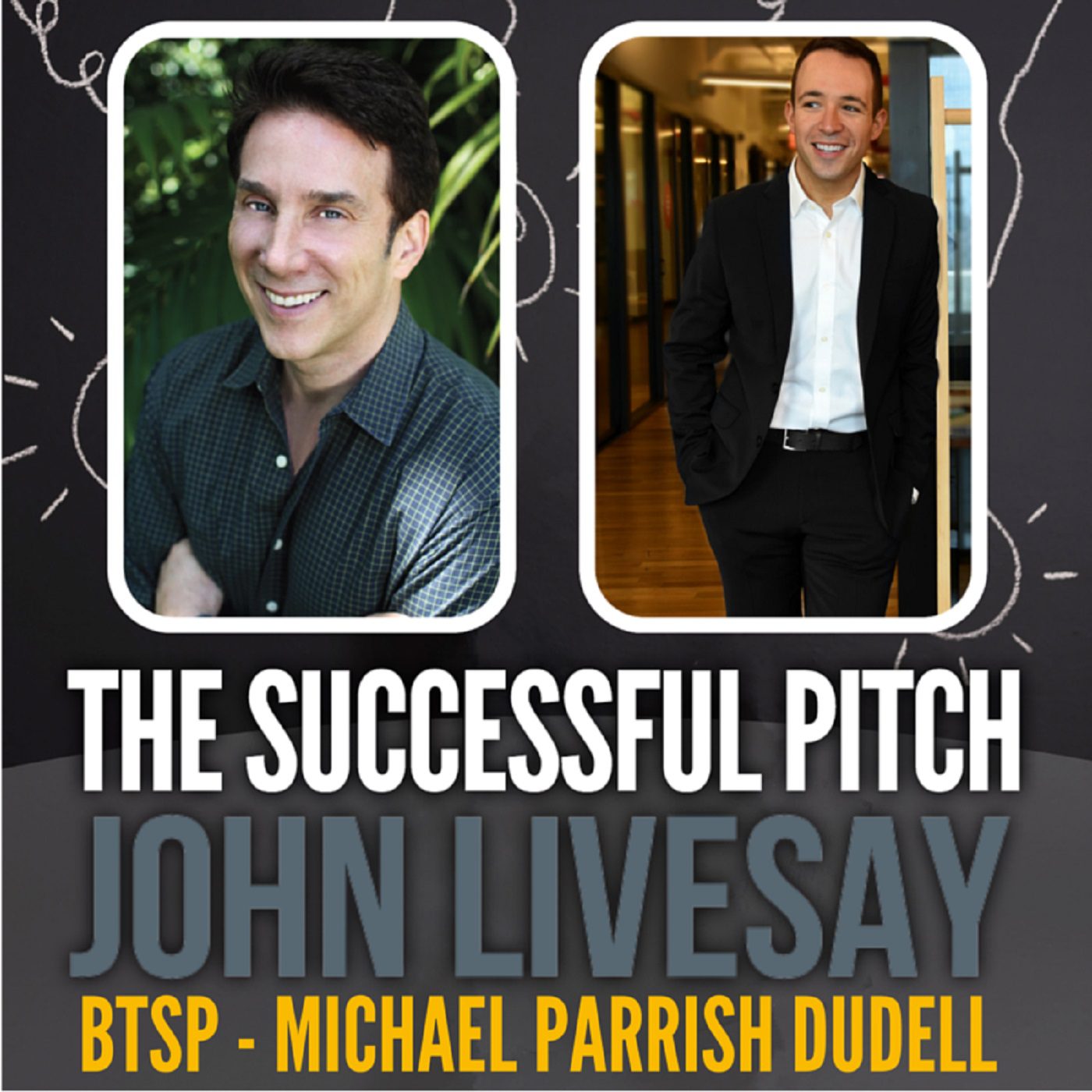
Listen To The Episode Here
Episode Summary
Michael Parrish DuDell is an entrepreneur, keynote speaker, and the bestselling author of Shark Tank Jump Start Your Business, the official book from ABC’s hit show Shark Tank. Michael was given a 30-day deadline to finish the book and was on the set of Shark Tank frequently getting to know the investors. Listen in for some key Shark Tank insights and get a behind-the-scenes look at how to pitch the Sharks.
Shark Tank: Secrets To Success – Interview with Michael Parrish DuDell

Shark Tank, Jump Start Your Business
Hi and welcome to The Successful Pitch Podcast. Today’s guest is Michael Parrish DuDell. He’s an entrepreneur, a speaker, and the author of Shark Tank, Jump Start your Business. He’s been called one of the top 3 most popular Amazon authors for a reason. He’s also a Millennial generation expert. He’s been on a lot of media from CNBC to CNN to New York Times. He’s worked with Seth Godin. He was involved with GE’s relaunch of Ecomagination. He has a very interesting background. I can’t wait to dive in. Michael, welcome to the show.
Thanks so much for having me.
I’m sure a lot of people would love to talk about Shark Tank the whole time, and we will definitely get there. But I am always curious to see, how did you become a Millennial generation expert?
It helps that I’m a Millennial myself. There are a lot of people out there that talk about the generation and that maybe speak on the generation, but in fact don’t have that firsthand experience of being part of the generation. We know a lot about Millennials, but one of the things that we know, numerous studies suggest, is that Millennials learn best from other Millennials and that Millennials prefer to be around Millennials. It just sort of helps that I’m of that generation.
[Tweet “Millennials learn best from Millennials and prefer to be around Millennials.”]
That’s the short answer to a much longer answer, which is that in 2007, I became the Senior Editor of a site that’s now been sold and changed a lot. Back in 2007, when digital media was first becoming a force to be reckoned with, the conversation that we were having was a conversation with Millennials for Millennials. That led to a lot of different kinds of work, to speaking, to writing, to consulting.
It was quite on accident that over the years, I turned into this Millennial expert and positioned right in the future of work in the small business space. There’s actually a lot of overlapping between some of the things we talk about in the book, some of the topics that I generally speak about and this idea of the next generation who’s going to be carrying the torch and taking over the future of business and entrepreneurship.
I don’t think a lot of people realize that the Millennials are even bigger than the Baby Boomers. The Baby Boomers have all this reputation of being so huge and changing everything, but there’s more Millennials, am I right?
Yeah, that’s exactly right. As it turns out, Millennials are the largest generation in the history of the world. It was the Baby Boomers, but we have beat them. We’re about 80 million members strong. That means a lot. That means that we have an overwhelming ability to make purchasing decisions that affect numerous businesses. That means that when it comes to voting and when it comes to a lot of other activities that majority makes a difference, we’re going to be leading the way.
The conversation around Millennials and how Millennials grow and evolve into leaders and into adults, I think that’s a fascinating conversation. I’m really honored to be a part of it.
I love it. Can you tell us about how you came across Seth Godin and what you did with him on the Domino Project?

Michael was chosen by Seth Godin to work on The Domino Project with him.
Seth Godin is one of my all-time favorite people. I worked for him, as you just said, in 2011 as part of the Domino Project, which is a publishing company that was started with Seth, by Seth, and powered by Amazon.com.
It’s funny how we met. My literary agent is the same literary agent as someone named Josh Kaufman who wrote the book, Personal MBA. It’s also Seth’s literary agent. Gosh, I guess it would’ve been 2009, maybe. I was 25, I pitched a book to her. She said, “Listen, there’s no way I can sell this book, but I think you’re interesting. Stay in touch.”
I did, and over the course of the years, we got to know each other very casually as acquaintances, and this opportunity happened. I saw her on Facebook page that Seth was looking for somebody. I applied just like the thousand other people that did, and the rest is history.
Do you have any sense, Michael, what it was about your application or your interview that made him pick you out of all the people that wanted to work for him?
No. I don’t. That’s a really good question. I think Seth, over the years, has really been able to fine-tune through. It wasn’t a traditional, “Submit your resume.” It was an essay question-based Google form that really required a lot of examination and a lot of personality in order to stand out.

Seth Godin has cultivated his ability to lead and he has a good sense of the kind of people that he works really well with.
Like anybody who has cultivated their ability to lead and to manage and to run businesses, I think he probably has a good sense of the kind of people that he works really well with and he can see that through that sort of thing. Of course, it didn’t hurt that I knew somebody that knew him.
But, yeah, I think he just sort of knew. It wasn’t just like you submitted and you get accepted. There was a whole interview process. It was a process. I think there were close to a thousand people that applied, about 13 of us were brought in for a group interview. Of the 13, I believe 6 were chosen to work on the project.
Wow. There’s so many similarities there, Michael, to pitching to get funded, to pitching to get on Shark Tank, the same kind of numbers. What you said, two things: one, a warm introduction is always a great way to get in front of an investor. Number two, showing some personality. That’s what people respond to, whether you’re pitching to get hired, pitching to get funded, pitching to get on Shark Tank, would you agree with that?
Absolutely. Listen, there’s a million people that have a million different ideas and it all comes down to differentiation. The way you differentiate yourself is by leading with your personality, by leading with that competitive advantage, which for a lot of people, it’s who they are.
Nice. Differentiate with your personality. That’s part of who your personal brand is. How did you get from the Seth Godin connection, and you’ve mentioned Amazon, to getting selected to write the book for the Shark Tank show? I’m sure that was equally competitive.
[Tweet “Differentiate with your personality.”]
Yeah. There’s a little bit of a gap between those years. In 2011, I worked for Seth. Then I went over to work as the editor of ecomagination.com right as GE was relaunching that property. It was a really great culmination of all the things that I’d done in my career. I’d worked in the environmental movement in the editorial capacity. I’d worked in the business sector. I’d had this conversation with Millennials. This combined it all.
Ecomagination was all about talking about the solutions to some of the rather large challenges we’re facing from an environmental standpoint through the lens of business and how business can make a difference. I’m a big believer that business, probably even more than any other entity, is the one thing that can make a tremendous difference in this world. I was very proud to sort of help lead that up.

I’m a big believer that business, probably even more than any other entity, is the one thing that can make a tremendous difference in this world.
From there, I started my own firm, consulting and doing a lot of trainings and workshops all about things like media, content, Millennials, that sort of world. Through that actually, it was a very random story, the same literary agent who I’d known, who connected me with Seth, she and I had met a few days before, I’d been looking for a book project. Randomly, she got a call from the editor at Hyperion, which has since been sold now. It’s part of Disney.
They said, “Listen, we’re writing this book for Shark Tank. We’re looking for an up-and-coming entrepreneur and author who’s familiar with the brand, who has experience in branded content to come in and write the book. It wouldn’t be ghostwritten. Name is on the cover, work with the sharks. Do you have anyone that’s interested?” There was a caveat. The caveat was that the entire book, from start to finish, had to be completed in 30 days.
Oh my gosh.
Right. If anybody who’s out there who’s listening to this, and is a writer or has written, they know that 30 days is an incredibly short amount of time to write a book. If you’re doing the numbers on a 60,000 word book equals about 1950 words a day, every day, without a break. There was a few writers submitted. I don’t know how many different agencies submitted.
Basically, they’d give us these assignments and we turned it in about 2 weeks later. They chose me. I went off to Florida to lock myself in a room and write a book in 30 days. Now we just finished the second one, so it did well.
Fantastic. What’s the second one called?

Shark Tank; Secrets to Success
The second one is Shark Tank; Secrets to Success. The first one is Shark Tank, Jump Start Your Business. The first one is very much a 101, how do you start tapping into some of the knowledge of the sharks and entrepreneurs.
The second book picked up where the last one left off. I traveled around the country and met with nine of some the most successful entrepreneurs from the show, and told their story. From childhood all the way to where they are now, how they built their business, the trials and tribulations, and how, ultimately, they succeeded as entrepreneurs.
Fascinating. I know that you were actually on the set a lot, is that correct?
Yeah. I wasn’t on a lot but I was on a few times and got to be there during the filming of the fifth season, some of those episodes. That was really cool.
What did you see is the biggest challenge people have when they make a pitch?
In that context, the biggest challenge, and perhaps it is the biggest challenge in general but definitely in that context, it’s the nerves. It’s the fear of being in the spotlight. It’s a very high stakes situation. If you’re not used to being in front of the camera, that makes it even more terrifying. It’s getting out there and really being afraid that, A, you’re going to be eaten alive by the sharks. B, maybe that camera thing is scary and the world could possibly see it and you could mess up and all of that.
I think that gets in the way most of the time. I think if you’ve made it all the way to the show, you have all the answers, you’ve done the research into what they’re going to ask and you know about your business, hopefully. I think, most of the time, it’s the fear that stands in the way.
[Tweet “I think the biggest challenge is the fear that stands in the way.”]
Well, let’s talk about that, because it’s a high stakes game whether you’re on Shark Tank or in front of an Angel group or a VC to deal with nerves. Do the people on Shark Tank, the producers require them to practice a lot before they start rolling the cameras, to try and make sure they don’t make a total fool of themselves?
Yeah. They do get a practice round the day before. They’ve been up there. Never in front of the sharks, they don’t get a chance to do it in front of the sharks. What you see on television is the real deal. They have practiced it. Over the course of the few months, usually, before they get there, via remote, they’re working with the producers and folks from the show to really nail down their pitch and make it something that is really enticing to the sharks. There is a good amount of coaching before they get up there.
I’ve also read and heard that they have to stand there in front of the sharks for a few minutes while they set the lights and the sharks automatically start judging them, of how comfortable are they in their skin before they even open their mouth.
Yeah. It’s pretty funny. It’s the nature of television. You have to get the shots and that there has to be some sort of production quality on top of all of that. There are some little things like that that maybe make it a less organic experience than one might think.
I’ve read a lot, even from the sharks, about how long they’re standing up there. I’ve read some people say, “Oh, they were up there for 5 minutes,” and some people say, “Oh, 10 seconds.” When I was there, I would say, the average was about 30 to 45 seconds. Which is an awkward amount of time but it’s a part of the process, and they know it’s going to happen.
I just think that’s so valuable for our listeners because whether you’re on Shark Tank or in front of an Angel group, the minute you enter the building, leave your home even, you are on. You’ve got to have your game face on. You can’t just say, “I’m going to turn it on when I start speaking.” You can’t wait until you open your mouth. People start looking at you, how comfortable you are, how confident you are just from the moment you walk into the room.
Absolutely. It’s crucial that you’re prepared and ready to go from the second you leave the house, honestly.
[Tweet “Be prepared and ready to go from the second you leave the house.”]
The other question I have for you is, I’m constantly telling clients, “Don’t get defensive.” When you get a question from an investor or a shark, don’t get defensive. Because the minute you get defensive, you’re not coachable and they don’t want to work with you.
Exactly. Look, when somebody is deciding whether to invest in a company, they’re not just looking at what the business does. They’re not just looking at the product or service. They’re looking at the person and they’re looking at the potential. Depending on the investor and their strategy and what’s worked for them, they’re probably putting weight on one of those categories more than the other.
If you look at the sharks on television, I can tell you right now, Barbara Corcoran, it’s all about the person. She said this in the book and she says it time and time again. She will happily take a business that she doesn’t think can make it, a product that’s not going anywhere, turn it around. As long as the person is someone that she feels she can invest in. The person is honest, the person has integrity, the person’s fun, and that she wants to spend considerable time and energy with.
[Tweet “Do research on what the investors care about before you pitch.”]
You look at someone like Lori and, yes, she cares about the person, but she’s a product investor. She really is looking at the potential of that product and how that product fits in the portfolio of what she does and of her other investments.
It depends on the investor. The best piece of advice is to do as much research. Whether you’re on Shark Tank or pitching at some sort of pitch competition, or even just having a meeting with an Angel, to do as much research into who this person is and into how they like to be approached, spoken to, and position your product that way.
Yes. I’m so glad you said that, Michael. It’s all about the due diligence that you do on the investor as much as they’re going to do on you.
Absolutely. We’re getting into business with these people, so there is this idea that when somebody’s approaching somebody for money, the power dynamic is, “I’m asking you for something.” That’s totally wrong. You have to approach it as you’re giving somebody an opportunity to be a part of something that’s going to make them money. This is an equal partnership.
[Tweet “Approach it as giving somebody an opportunity to make money.”]
When I think about pitching, I don’t like the idea of this subservient mindset where, “I really hope they give me a deal.” It’s 50-50. If you’ve done your job right, you’re walking in with a business that has the potential to make these people a lot of money. You’re offering them an opportunity.
That leads right into this fear of missing out that happens. I’ve had Charles Michael Yim on the podcast and he got all five sharks, pre-revenue, to put money in because they liked him and his idea so much. They had this fear of missing out, “I want in. I want in.” Do you see that often?

Charles Michael Yim got all five sharks, pre-revenue, to put money in because they liked him and his idea so much.
Yeah. I think that’s a valuable tactic, not just in pitching but across the board in business. We’re taking risks all day. Nobody knows what’s going to work and what’s not going to work. We can make some assumptions about things based on previous situations. But at the end of the day, there’s no proof that this formula or this plan is going to work.
When you can position it in the right way and you can get people interested in what the potential could be, you can certainly help them with the idea that if they miss out, this is going to be a once in a lifetime thing.
When you did the second book, the Shark Tank; Secrets to Success, did you have more than 30 days to do the second one, I hope?
Yeah, I had about 90 days, but that required a lot of flying and a lot of interviews. That was all packed into those 90 days. It was a very intense process.
Equally intense.
Equally intense. Absolutely.
Anything with the word shark in it is intense. That’s just a given, I guess.
Yeah, and I think it works for the show because I was put under a very tight timeline and very tough rules and regulations around writing this book, and doing it and turning it on deadline. I think that makes sense for the nature of the show because really, the show is all about being an entrepreneur.
When you’re an entrepreneur, the one thing that all entrepreneurial people have in common is that they get it done no matter what. A professional shows up, a professional does the work, and a professional doesn’t miss deadlines. The books are very much an embodiment of that philosophy and an embodiment of the brand.
Now, can you tell us a story from Secrets to Success? I always love storytelling. I think that’s the best way to communicate your message. If you’re talking about someone’s childhood all the way through, it’s always the why behind the why this particular idea to make their business, right?
Yeah. There’s so many great stories in there. I talked to some incredible founders. Anyone that’s gone through the process of starting a business probably has started more than one and always has a lot of great stories.

Their parents gave them an air popper to make popcorn. They never had any idea that 20 years from that day, they would be back in the popcorn business.
One that sticks out immediately is I spent some time with the two cofounders, the brother and sister pair that put together the company Pipsnacks, which is famous for Pipcorn, which is the little mini-popcorn. One of the stories I really love from their experience is that when they were a kid actually, I think they’re two years apart, and they wanted to make some extra money. I think they were like maybe, 8 and 10. Their parents gave them, they had an air popper to make popcorn. They never had any idea that 20 years from that day, they would be back in the popcorn business.
As kids, they would make their own popcorn and they would go out on the street and they would sell it. I just thought that’s always really neat because when you see something like that, again, at that time, as a kid, you have no idea you’re going to, one day, build a multi-million dollar popcorn company. But you see that the seeds are planted early. I just thought that was a really fascinating part of their adventure. There’s a lot of great stories like that in the book, so you got to check it out.
No pun intended, the seeds were planted early, right?
I know, I was avoiding that.

Even when you watch on Shark Tank people are like, “We like the grand idea that you have there. But what’s the real performance? Tell me the numbers.”
No, I love it. The popcorn seed. The kernel, the idea planted in their childhood developed into something really, really wonderful. What is next for you, Michael? Are you going to be going on a speaking toward to promote Secrets to Success with the Shark Tank or write another book?
Yeah. That’s a great question. I’m all around speaking. Speaking is probably the biggest part of my business right now. I’m on the road, sometimes every week, sometimes every other week. I’m doing a lot of speaking, a lot of training around this idea of helping business and leaders figure out, what is the next generation? What are some of the ways that they can really move forward and enter the future of work in a way that’s going to work in the environment and that’s going to attract the best people, the best consumers, the best employees? A part of that is telling the story of Shark Tank and the story of the entrepreneurs that I spoke with.
One of the key factors that investors look for, whether they’re Barbara or anybody I think, is who’s on your team besides you? If people can learn from you how to assemble a great team to execute their vision, that really is a big, big factor to, not only whether they get funded, but whether you’re successful or not. Are there any tips that you have for the listeners on how to assemble a great team and not only get them but keep them?
You mentioned Barbara and I have to bring up that Barbara and I have a real disagreement on this one subject. We’ve talked about it two or three times. This one issue is the role of self-awareness in an entrepreneur’s life. I happen to believe that the more self-aware you are, the more successful you are. Barbara believes the exact opposite. She believes that good entrepreneurs lack self-awareness because they have to be crazy to continue to go forward. If they’re crazy then they’re not self-aware.
[Tweet “Self-awareness is the secret to success.”]
We’ve debated a little bit about this. She hasn’t convinced me and I haven’t convinced her, but I happen to believe that that is where self-awareness is probably the most important. Because when you’re building a team, a lot of people want to work with their friends or their family, and that’s great.
However, the key to a good team is understanding your strengths and your weaknesses and building a team around that. I can’t tell you how many times I’ve met cofounders that really, honestly, have the same skill set. I’m a little unsure when I meet these people, why they partnered together, because they’re both bringing the same thing to the table.
For me, a good team is, like Seth, what we talked about with Seth, knowing who you work with. But also understanding the depth of experience required, the various facets you need to pull from. That starts with knowing what you bring to the table and what you do not, because we all have a lot of strengths but we also have those weaknesses.
[Tweet “Build a team that has different skill sets.”]
We’ve talked about two of the judges, Lori and Barbara. Let’s just touch base on your impressions of Mark Cuban.
Mark Cuban, I will say, is the busiest guy I’ve ever met. That’s what I always say. When I need to get interviews with Mark, I have to walk back and forth to the bathroom with him, follow him to the lunch table. He’s a really, really passionate investor. He’s always engaged. He’s always involved. He has a lot of strong opinions. Whether you agree with the opinions or not, I think that’s really admirable for somebody whose business is so diversified and he’s in so many different areas.
Of course, there’s Kevin, Mr. Wonderful. How did he come up with Mr. Wonderful, do you think?
Actually, I did know that story at one point and I don’t remember it now. It was when he was doing Dragons’ Den, the Shark Tank Canadian version. In Canada, he was on that show for I think almost first five or six years. He’s not on it anymore. Somebody in the Tank called him that and it stuck there and that he continued to use it and it works for him.

Dragons’ Den
I think one of the things about Kevin is, he’s one of my favorite sharks. He’s just like you see on TV in that he is a very disciplined, firm businessman. But every time, and I’ve spent time with him, he’s a super nice guy. I’m not trying to get after his money, so that’s another piece of it. But he’s the first one to follow me back on social. He’s the first one to email me. I think he’s a really good guy.
Frankly, I feel more comfortable when I understand an investor’s motivation and it’s not hidden under pretense and guise. We know who Kevin is, we know what matters to him. I think there’s something admirable, even if it’s not popular, being able to say the hard truth and being able to be that person so that people know what they’re getting in bed with.
Yes. Some people, you have to have a great story, a great pitch, but part of that pitch has to be, you have to know your numbers. If Shark Tank has taught us anything, I think it’s you can’t just have a great idea. You have to know your numbers.
Yeah. Obviously. If you’re in business, you have to know your numbers. You have to understand where you’re heading and where you came from.
[Tweet “You have to understand where you’re heading and where you came from.”]
The issue of valuation, how much your company’s worth, especially if it’s pre-revenue, and your growth projections, that seems to be the biggest thing that trips people up on TV and in real life, actually.
Yeah, because it’s impossible to account for. It really is impossible because there isn’t any way to judge a company’s success before they’ve been successful. There’s a lot of ways to make smarter guesses, but it’s all guessing.
If you’ve had successful exits, if you will, either going public or another company buying your company, both in real life and on TV, that really reinforces the shark’s confidence in investing you and maybe even gives you a little bump in your valuation, don’t you think?
Yeah. Listen, as many proof points as you can show that whatever you’re doing is working in the market, is going to help you ultimately. There’s no doubt about it. If you can come in with some great deals, some great partners, and some great proof, it helps strengthen your valuation and, ultimately, your position in the tank or in front of any investor.
The actual number, that’s always hard because it’s pretty difficult to know for sure how a business is going to do. That’s part of the risk involved.
[Tweet “As many proof points that what you’re doing is working in the market is going to help.”]
What I’ve heard you say about pitching is deal with your nerves, make sure you’re practiced, know your numbers, do your due diligence on the investors, and finally, be likeable. Have a unique personality it makes it come through. There’s some really great tips here, Michael. I can’t thank you enough.
Let me clarify the last one really quick because I think this is the most important thing actually, on how to pitch anything at anytime, anywhere, and it’s just this. Ready? If someone says, “What’s the one thing?” The one thing is this, just be a human. I cannot tell you how many times, I’ve watched so many pitches in my life, that I see somebody who is charming, smart, magnanimous, great, stand up in front of a group of people and turn into the most boring person in the world. Turn into somebody who, honestly, I wouldn’t invest in, and I know the person. It is that fear. It is the nerves that kick in.
[Tweet “Be A Human When You Pitch. Don’t be Boring.”]
The fact is that you just have to remember, and I think this is the key in business, in general. You’re talking to a human, and you are a human. What you’re talking about is a business. Sure, fine. But, you have to lead by being someone that is relatable, and honest, and authentic, and transparent, and whatever that looks like for you, that’s how you lead. You got to go up there and show your personality.
I love it. That’s great, great advice. I couldn’t agree more. One of the things you said earlier was the more self-aware you are, the more successful you are. I agree with you 100%. Is there a book, besides your two wonderful books, that you would recommend people reading to become more self-aware?

The War of Art: Break Through the Blocks and Win Your Inner Creative Battles
A book on self-awareness? I don’t know if I have a book recommendation on self-awareness. What I can tell you is a great book recommendation as far as learning how to face the fear and how to improve your relationship with doing good work. One of my favorite books of all time is the War of Art by Steven Pressfield. This is a book I read four times a year. It’s all about this idea of moving beyond that voice in your head that says, “I can’t do this. I’m not fit to do this. There’s someone else that could do it better.” learning to recognize that voice, to manage that voice, and to move ahead in spite of that voice.
I think that’s a book that I really enjoy and that I think could help people as they move forward. As far as self-awareness, for me, it’s practice makes perfect. Every month, we try to get a little better. Every year, we try to get a little better. Really knowing yourself, I happen to think, is the best way to be a good leader and to run a good business.
We’ll put your two books, Shark Tank; Jump Start your Business and Shark Tank; Secrets to Success, as well as the one you just recommended, War of Art, in the show notes for everybody. This whole concept of practice, focus on your progress, let go of having to be a perfectionist, I think is really another great tip. Michael, how can people follow you? What’s your Twitter handle and all that good stuff?
People can find me on Twitter @notoriousMPD, those are my initials, Michael Parrish DuDell. You’ll see, if you go on Twitter, that I have not been active for almost a month, maybe even a little longer. I took a month break from social media, in that way. I’ll be back later in the summer with some more stuff on Twitter. Until then, you can find me on my website, and that is MPDHQ.com.
Fantastic, Michael. Thanks, you’ve been a terrific guest. I can’t wait to see what else you’re going to do next, because these books are gold for everybody.
Thanks for having me. I really appreciate it.
Links Mentioned
jRobinett Website
Selling Secrets For Funding
Michael Parrish DuDell Website
Michael Parrish DuDell Twitter
The Domino Project
Personal MBA
Shark Tank Jump Start Your Business by Michael Parrish DuDell.
Shark Tank Secrets to Success by Michael Parrish DuDell.
The War of Art by Steven Pressfield
Michael Parrish DuDell Broadcast Reel
Crack The Funding Code!
Register now for the free webinar
Author John Livesay at NewsChannel 5
Share The Show
Did you enjoy the show? I’d love it if you subscribed today and left us a 5-star review!
-
- Click this link
- Click on the ‘Subscribe’ button below the artwork
- Go to the ‘Ratings and Reviews’ section
- Click on ‘Write a Review’
TSP065 | Stephen Hall – Transcription
Posted by John Livesay in Uncategorized | 0 comments
John Livesay:
Welcome to The Successful Pitch Podcast. Today’s guest is Stephen Hall. Stephen works with the Department of Defense that has a half-a-trillion dollar budget. Imagine solving a problem that big that you could tap into that kind of budget. He said, “Imagine it’s basically 10 to 15 Walmarts,” as far as the size of it. He also is very involved with the Pasadena Angels and shares with us what they’re looking for in founders. Someone who’s passionate, someone who has a big problem they’re solving and a recurring business model. But, most of all, it’s all about the team and it’s all about those warm introductions. He said, “A great team can prevent burnout.” Enjoy the episode.
Are you a founder struggling with your investor pitch? Do you need warm introductions to the right investors to get your startup funded? Do you need a funding road map to get you there fast? All of this and more can be found in Crack the Funding Code. Join host, John Livesay, and Judy Robinett, bestselling author of How to Be a Power Connector and board member of Illuminate Ventures, on their free Crack the Funding Code webinar. Simply go to judyrobinett.com – that’s J-U-D-Y-R-O-B-I-N-E-T-T dot com – and click on the webinar tab to see how to tap into their network of investors from around the world. There’s a link in the show notes as well. You’re only one click away from getting funded fast.
Welcome to The Successful Pitch Podcast. Today’s guest is Stephen Hall. Stephen is in Los Angeles, like I am, and we were referred to each other by mutual friends, which is always the best way to meet people. Those warm introductions are everything. Stephen is the co-founder of ORockCloud, which is a data security company. He’s also a member of Pasadena Angels. Stephen, welcome to the show.
Stephen:
Thank you John. Thanks for having me on the show.
John:
It’s a pleasure. I always like to find out from people — you have some interesting background here with the Department of Treasury and the IRS, and all these things. You went to USC — tell us when you were at USC. Did you always know that this is the direction you wanted to get into? Being an investor and doing startup stuff in the world of security?
Stephen:
Yes. When I was at USC I had several mentors, one of them is Mr. Ellis which is now the dean of the USC Marshall School of Business, and he comes from an entrepreneurial family. So, I learned early on that I would love to invest in startups or invest in projects that can solve big problems. And that’s what I’m here today to do is I’m passionate about solving big problems and taking an idea from literally an idea on a napkin to artilization, whether it’s through the federal government or through the private sector.
John:
I love that. Do you have any examples, right off the get go, Stephen, of something that was a napkin that became a reality?
Stephen:
Sure. So, from an investment perspective, building a real estate portfolio in my career — we built a portfolio of properties, whether it’s rental properties, industrial properties, stores facilities, townhomes, things in that nature. So, to enter that process, it’s just a mechanism of finance and organization with local municipalities to take your vision and execute the vision, and obviously in order to execute it, you also need the private sector to be able to participate and support the infrastructure.
So that’s an example, and also through my career I’ve been an accountant and enrolled agent advising literally thousands of small business owners on how to take their ideas from an idea out of the garage all the way to commercialization, whether it’s products that’s on the home shopping network or chocolates that are in Costco, t-shirts that are sold in Walmart. I mean, you name it I’ve experienced the processes of taking it from idea all the way through — whether it’s a big box, whether it’s Amazon.com distribution, or if it’s a DoD distribution.
John:
I love that image of from a garage to shelf, whether it’s Hewlett Packard or Steven Jobs at Apple. It’s such a great American analogy and I think sort of unique to our culture in a way. What things would you say are the number one or two common pieces of advice you find yourself giving startups at the beginning regardless of what it is they’re trying to do from a financial standpoint?
Stephen:
Number one is making sure you’re passionate about the problem you’re solving. That’s one because it’s a long road to get you the liquidity event of more positive cashflow. Number two is making sure you’re solving a big enough problem to whether there’s a huge need for it.
John:
Yes. So that there’s some scale and ROI for the investors, right?
Stephen:
At both, scale, ROI for the investor, and more importantly you can afford, as an entrepreneur, to staff up, to hire people, just to take some of the burden off your shoulders as you grow, because the biggest challenge is for entrepreneurs or founders is the burnout phase.
John:
Yes. Talk to us a little bit about what that burnout phase is. Does it start from day 1 or does it get — like the trough of despair, I’ve had people talk about that, I’d love to hear your thoughts on the burnout phase and how to avoid it.
Stephen:
I think it’s personality-driven, but I think it all comes down to support. As long as you have good positive support of people around you and a team that are experts in their area, so that what you’ll have to carry the burden, it makes it a lot easier to go from point A to point B.
John:
You know, I’ve heard many people talk about the importance of a team but I’ve never heard anybody connect the dots like you just did, so we’re going to tweet that out, “A great team helps prevent the burnout,” which is so true and something probably investors are looking at in the back of their head is “Is this team going to work together?” Not only to be productive but help each other from burning out right?
Stephen:
Absolutely.
John:
Tell us about the Pasadena Angels. I see you joined that back in 2013. What makes Pasadena Angels different from other angel investment groups and what kinds of things do the Pasadena Angels like to invest in?
Stephen:
Great question. Pasadena Angels are — it’s an amazing network of brilliant people that are risk takers. More importantly, they’re calculated risk takers that are literally experts in every field that you can imagine.
For example, I’ve worked with some angels that are retired patent attorneys that used to do medical device patents, all the way to biochemist from Caltech that can tell you when there’s a new startup talking about Biology. They need them to explain it in Layman’s terms of what the founder is trying to convey to us investors.
So it’s a brilliant group of people that they’re from every skill set imaginable that really collaborate and work together to help underwrite the potential investment sect come through or pitches that we review.
Pasadena Angels has a variety of appetite as far as what you want to invest in. So, what we mean about that is every investor comes in through a different set of lens. So, we’re a voluntary organization, and what I mean by that is every angel has the right to participate or elect out of participating in a specific team.
John:
Got it.
Stephen:
Personally, I’ve been more focused on recurring revenue technology models.
John:
SaaS, kind of stuff?
Stephen:
Yes. SaaS, absolutely. SaaS driven models or a model that solves the problem that orders a need in an industry niche.
John:
Do you find yourself investing in people within a 150 miles of Pasadena? Would you like to invest in those kinds of companies that are in the semi-California area? Is that a criteria?
Stephen:
No, it’s not a criteria.
John:
Oh, great!
Stephen:
It’s not a criteria. Criteria really comes down to the idea itself. I mean the team the entrepreneur has behind them, and that’s really a criteria. Where we live geographically is not a criteria.
John:
Nice. Some angels feel that they only like or comfortable with getting to see the people on a regular basis and I’m glad to hear that that’s not an issue. What is the average range of investment that the Pasadena Angels make and is it important if you guys to be the first? Or do you care?
Stephen:
That’s a good question but I’m going to give you a very broad answer.
John:
Sure.
Stephen:
So, in some cases we’ll be the seed investor, and in other cases, we’ll co-invest with other angel groups on models that are late seed series A opportunities. When I say series A opportunities, what I’m referring to is that the valuations are treated like a seed round, which is always a positive point for the angels to mitigate the risk/reward scenario.
John:
So you guys can be anywhere from, I don’t know, a couple of hundred thousand dollars up to a million depending on what the idea is and where the company is?
Stephen:
Correct. So, for example, there’s one offering right now to where I believe there’s going to be a $600,000 in funding but we’re going to be co-funding with some other angel groups through the distribution channel.
What’s unique about the Pasadena Angels, specifically, is that some of the members of the angels have their own incubation funds as well.
John:
Oh, interesting. Okay.
Stephen:
So they’ll co-invest themselves and eventually plus their funds.
John:
Right. Nice. Oh, that’s great. I’ve never heard of that before. I love that. So, obviously, this show is called The Successful Pitch. So, Stephen, what do you look for when someone comes to pitch at you at the Pasadena Angels? What are the key things that make a good pitch for you?
Stephen:
The key items are: One, is the problem a big problem to solve? Two, based one the problem that we’re solving what’s the size of the marketplace? And three, is the revenue model supporting the problem — is it a recurring revenue model? And finally, four is the team. Who’s behind the team to solve this problem and what are their backgrounds that make this problem exciting to solve? So, that way, the team, when they carry this torch from day one, they’re able to finish the race.
John:
Got it. Finish the race. It is a race. And the best way, I sort of eluded to at the way you and I met through warm introductions. Time and time again I can’t emphasize this enough, for me personally and just everything I see is the importance of your network. I’m guessing that warm introductions are you and the other angels’ favorite way to have people approach you, is that accurate?
Stephen:
Yes absolutely. Absolutely, and also as an angel, sometimes when we see a model of that’s not ready whether or not solving for big enough problem where the revenue model is not in place, we maybe turn down the investment opportunity through the angel network. However, we’ll end up mentoring the entrepreneurs to help them get to the next phase of their evolutionary process with their model. Because so many as entrepreneurs will come back a second or third time and pitch the same model, but then by the third time, they’re seasoned and their experience with what we’re looking for. Then, at that point in time, we may, potentially, invest in their model.
So, just because we say no to some entrepreneurs, doesn’t necessarily mean that we would disengage, it just means that you might want to reinvent what you’re referring to. Potentially, if some of the angels are passionate about the problem you’re trying to solve, they’ll mentor you.
John:
Wow, how great. What is the other project that you’re working on that’s equally exciting? Tell us about what’s going on with Orange Rock and the Cloud platform in particular.
Stephen:
Yeah. What’s exciting is this project is called ORock Cloud, and what we have done is we’ve commercialized a very secure cyber security system, and their main target audience is the Department of Defense.
John:
It doesn’t get bigger than that, does it, Stephen?
Stephen:
It does not, but the Defense’s budget is literally a half-a-trillion dollars.
John:
Oh, my God! Let me wrap my head around that for a second. Okay. Nice, okay.
Stephen:
And we’re by far the largest notary budget globally and by far — The way to look at it is, the Department of Defense is literally 10 to 15 Walmart’s inside of one.
John:
Oh, my God! What you just did there is a great example for all the listeners. If you’re going to talk about something, a problem, a size, I’m always about becoming a storyteller, and you just gave us a reference.
Imagine 10 to 15 Walmarts, to get a sense of how big the DoD is. Boom! Suddenly I get that, but without that it’s hard for me to imagine how big the DoD is, so thank you for that analogy and thank for that example of great storytelling.
Stephen:
You’re welcome. So, what’s nice and exciting about this problem — well, not very exciting, it’s exciting for us to solve the problem but it’s not exciting for us citizens that are all experiencing breaches. For example, locally, at the UCLA breach of some medical records for citizens of Los Angeles have been breached, or your credit card information through Target or Home Depot have been breached, and we’re excited to be able to create a system to minimize the breaches. We can’t guarantee that no one will hack you, but we could definitely minimize the breaches.
In fact, our goal with this system is to be able to protect the highest level of systems of defense, and we’re currently going through the validation phase called FedRAMP, and FedRAMP is the equivalent of the FDA for healthcare. So when you have a drug in healthcare, in order to distribute to a Rite Aid or a Walgreens, you need to get approved by the Federal Drug Administration to be able to distribute to the public. Well, Congress created another department called FedRAMP, and FedRAMP is basically the FDA for cyber security.
John:
Nice.
Stephen:
And we’re in the final phases of validation, we’re in processes we speak and we’re about 60 days away from validation from this agency to be approved to redistribute, to resell our product to every agency in this side of government.
John:
Holy cow! Can you give us a timeline? When did you come up with this concept? Did you get funding to get this far? And when do you hope to get this completed by?
Stephen:
Good question. So, we started the process about 36 months ago, and we self-funded. Us three co-founders have self-funded this opportunity through the seed round of $600,000. In fact, we took down the product twice. We were comfortable with the third version of this Cloud product to distribute to the federal government.
We’re currently in a series A round right now raising $4.5 million, and I have $4 million in commitments and capital raise, and I’m now having a remaining $500,000 to complete in this series A round of financing.
John:
I would imagine that because of your track record and because you’re an investor, and you put your own money in, that the people who are giving you money for the series A are so much more comfortable because everybody has got lots of choices of what to invest in, right? Should I invest in, Stephen and this big problem, who is an investor himself? Because one of the things I love to talk to the listeners about is if you’re a founder, and you can show empathy for the investors, that sets you apart from 90% of the pitches they’re going to hear, don’t you think?
Stephen:
Absolutely. Take it a step further. With the Department of Defense, we’re considered a small business and, more importantly, we have a team of resellers. So we’re choosing the channel resell model so, that way, we can minimize our cost of general and administrative expense.
We have procured some amazing resellers that have 3rd year real Rolodexes within the federal government. A typical contract in this arena is $6 million. So the goal is to achieve through the small business procurement division to achieve at least $7 to $15 million worth of revenue in 2016 strictly from the federal government.
John:
That’s an amazing recoup on your investment. Really, really fast. Obviously that’s a great ROI, right to off the bat. Mostly, people talk about, “Well, it’s going to take me 12 months, 18 months to break even, and then I’ll start making –” you’re off the gate running with those kind of big contracts.
I would imagine that there’s some applications outside of the government. For example, the Sony email hack, right? I think companies like that would be desperate for the solution.
Stephen:
Absolutely. In fact, in London we have three locations. We have a location in Los Angeles, a location in New York. Secaucus, New Jersey, and we also have a third location that’s opening in the next 30, 45 days in London. We have a team of 200 resellers on the ground in London that are ready to go live to distribute our cyber security product throughout the European region.
We forecast our revenues between a — it’s a wide range right now between a million and 10 million. Depending upon the distribution, and the domino effect of the resell network throughout the European region.
John:
One of the things when someone pitches in an angel or series A is talking about your competition, and what makes you unique and the barrier to entry. Can you give us a sense of your competition in this very huge market, but a very niche solution?
Stephen:
Absolutely. The number one competitor would be the Amazon web services, AWS and the Amazon GovCloud. Amazon is a massive company with massive resources. They’ve done a great job being the first to market about seven years ago. As marketplace, they were, in fact, the number one — the first Cloud company to go to scale in the marketplace.
However, Amazon is also a conglomerate. They’re focused in retail, as we all know, life there on entertainment, they’re on pretty much every sector we can think of. They’re not bespoke like we are. They’re laser-focused on solving security at the highest levels of government and that’s our main focus. That’s our main differentiator, is that the way set ourselves. We’re not all things, all people. We’re very focused on just a highest level of security that’s needed.
So, think of it. The best way to think of us is when you store items, you store your kid’s crafts and things to that nature in a box in a garage. But, if you had your grandmother’s picture from 1820 when she was a child, or great grandparents, you may want to put that in your safe deposit box that’s fireproof, that’s irreplaceable items. That’s what you want to think of a safe deposit box of your digital needs.
John:
See, you did it again there. It’s so fantastic for the listeners. I have to make sure that everybody heard what you just did. You gave us a competitive advantage, we’re going to tweet that out, “A laser-focus is a competitive advantage,” and then secondly you took that concept and gave us another story. Imagine if you’re in your garage and you’ve got places to put your kid’s stuff but then you have these family heirlooms, you don’t want them all in the same place, you need to differentiate them, and that’s what having a laser-focus does. And you make a full circle. I see the competitive advantage and I’m thinking, “Okay, why is that important?” and before I can even be wondering about that question, you answer it with a story. When people do that, what you just did Stephen, is the way to get people to say yes to your pitch.
I don’t know if you’ve been trained to do it or if it’s just natural, but since I train people to do it, when somebody does it, it’s like watching Meryl Streep act. If you’ve been an acting teacher you can say, “Oh my God! Look at what she did there and there and there.” That’s what it’s like talking to you. It’s boom, boom, boom. It’s just so great. I love it.
Stephen:
Thank you. It comes from the 20 years of experience and many mentors. I always recommend all the listeners to try to find somebody that you can identify with and get some mentorship, because the mentorship is priceless to get you from point A to point B.
John:
Right. So, that goes right into the whole concept of how important it is to be coachable as a founder, especially, we’re going back to the Pasadena Angels example, if someone comes and pitches you, and they’re not quite ready to problem’s not big enough, they don’t have a good enough story. You like them but not the idea. You’re willing to mentor them but only if they’re coachable, am I right?
Stephen:
Absolutely. In fact, coachability is a key item for my personal underwriting. If an individual is not coachable, I more than likely will pass on the deal just because there’s so many opportunities out there that life’s too short and I want to be able to enjoy the conversation I’m having with some folks versus having to have an adversarial conversation just to get a deal done.
John:
Right. I mean, you can’t emphasize that enough. Your likability, your flexibility, and yet you have to come across confident but coachable at the same time. For so many people, it’s one extreme or the other, and even learning how to be coachable is something you can be mentored on, right?
Stephen:
Absolutely.
John:
It’s amazing how that all ends. Stephen, is there a book that you like to recommend to people either about life or business before we wrap this up?
Stephen:
A book? I was not prepared to answer that question.
John:
That’s okay.
Stephen:
One great book, I mean it’s a simple book, it’s Rich Dad Poor Dad, talking about changing your thought process from working to saving and solving problems. I love that book. It’s a basic book but it really sets a foundation in your mindset of what you’re dealing as far as your day-to-day life, as well as influencing your peers and your relatives and friends and family and neighbors, et cetera.
John:
What’s the title of it again?
Stephen:
It’s called Rich Dad Poor Dad.
John:
Oh yes. Sure.
Stephen:
By Robert Kiyosaki.
John:
Yep. I knew it well. Fantastic. We’ll be sure to put that in the show notes, and Stephen, how can people follow you on social media? What’s your Twitter all that good stuff?
Stephen:
I guess I should set up a Twitter account. The easiest way to follow me would be to shoot me an email.
John:
Okay. Got it.
Stephen:
That will be the easiest way to get a hold of me.
John:
Nice. Alright. Is there any last piece of advice or insight that you want to share with people? I love how you opened with being passionate about what you’re doing is the number one thing and solving it big enough problem, those are obviously key things and it’s so exciting to hear the inside scoop on what’s going on with the DoD and security. Any last thoughts that you want to leave our listeners with?
Stephen:
The last thought would be, again, having a great team. If you’re going into a scenario that you’re passionate about and there are experts in the field, don’t hesitate to pick up the phone and talk to those experts. Never think that any expert’s too busy.
What I’ve learned over the years is every expert that there are — many experts have passion in their field and they’ll always make time for you. All you have to do is ask.
John:
Nice. Great. We’ll definitely inspire everybody with that last one. Thank you so much for being on the show.
Stephen:
Thank you John. Thanks for having us.
John:
Thanks for listening to The Successful Pitch Podcast. If you liked the show, please go to iTunes and write a review, and encourage your friends to write reviews too. It really helps get the word out.
You know, people say that the longest distance is between someone’s mouth and their wallet. People can tell you they’re going to invest, but when it comes time to write the check, they don’t do it. So, how do you get people to say yes and then follow through? Visualize yourself on the left side of a riverbank and you have to cross the river, and on the other side of the river is where the funding happens.
So, first, you make up your idea, then you make it real, then you make it reoccur. Once you start dipping your toe into the water to get to funding, that’s where I can help. I get you across that river faster than you would on your own with a lot less frustration than you will get when you hear a bunch of no’s, and you don’t know why. So, if you want some help getting funded faster with less frustration, go to my free funding webinar, sellingsecretsforfunding.com/webinar, and sign up and get in depth information on how you can get funded fast. Thanks.
Pasadena Angels Secrets – Interview with Stephen Hall
Posted by John Livesay in podcast | 0 comments

Listen To The Episode Here
Episode Summary
Stephen Hall is the co-founder of ORock Cloud, an industry leader in cloud computing security. His main target audience is the Department of Defense and he discusses what it takes to pitch to that caliber. He is also a member of the Pasadena Angels and talks on why this particular angel group is different from the rest.
Pasadena Angels Secrets – Interview with Stephen Hall
Welcome to The Successful Pitch Podcast. Today’s guest is Stephen Hall. Stephen is in Los Angeles, like I am. We were referred to each other by mutual friends, which is always the best way to meet people. Those warm introductions are everything. Stephen is the co-founder of ORock Cloud, which is a data security company. He’s also a member of Pasadena Angels. Stephen, welcome to the show.
Thank you, John. Thanks for having me on the show.
It’s a pleasure. I always like to find out from people, you have some interesting background here with the Department of Treasury and the IRS and all these things. You went to USC. Tell us when you were at USC, did you always know that this is the direction you wanted to get into, being an investor and doing startup stuff in the world of security?
[Tweet “How to help Department of Defense with security.”]
Yes. When I was at USC I had several mentors. One of them is Mr. Ellis, which is now the dean of the USC Marshall School of Business. He comes from an entrepreneurial family. I learned early on that I would love to invest in startups or invest in projects that can solve big problems. That’s what I’m here today to do. I’m passionate about solving big problems and taking an idea from literally an idea on a napkin to commercialization, whether it’s through the federal government or through the private sector.
I love that. Do you have any examples, right off the get go Stephen, of something that was a napkin that became a reality?
From an investment perspective, building a real estate portfolio in my career, we built a portfolio of properties, whether it’s rental properties, industrial properties, storage facilities, town homes, things that nature. Through that process, it’s just a mechanism of finance and organization with the local municipalities to take your vision and execute the vision. Obviously in order to execute it, you also need the private sector to be able to participate and support the infrastructure. That’s an example. Also through my career, I’ve been an accountant advising literally thousands of small business owners on how to take their ideas from an idea out of their garage all the way to commercialization, whether it’s products that’s on the Home Shopping Network or chocolates that are in Costco, t-shirts that are sold in Walmart, you name it. I’ve experienced the processes of taking it from idea all the way through, whether it’s a Big Box, whether it’s Amazon.com distribution or if it’s a DoD distribution.
I love that image of from a garage to shelf, whether it’s Hewlett Packard or Steve Jobs at Apple. It’s such a great American analogy and I think unique to our culture in a way. What things would you say are the number one or two common pieces of advice you find yourself giving startups at the beginning, regardless of what it is they’re trying to do from a financial standpoint?
Number one is making sure you’re passionate about the problem you’re solving. That’s number one because it’s a long road to get you the liquidity event of more positive cashflow. Number two is making sure you’re solving a big enough problem, there’s a huge need for it.
There’s some scale and ROI for the investors.
Both, scale, ROI for the investor. More importantly, you can afford, as an entrepreneur, to staff up, to hire people, just to take some of the burden off your shoulders as you grow. Because the biggest challenge is, for entrepreneurs or founders, is the burnout phase.
Talk to us a little bit about what that burnout phase is. Does it start from day one or does it get, like at the trough of despair. I’ve had people talk about that. I’d love to hear your thoughts on the burnout phase and how to avoid it.

Pasadena Angels Secrets: Have good positive support of people around you so that way you don’t have to carry the burden.
I think it’s personality driven. I think it all comes down to support. As long as you have good positive support of people around you and a team that are experts in their area so that way you don’t have to carry the burden, it makes it a lot easier to go from point A to point B.
I’ve heard many people talk about the importance of a team but I’ve never heard anybody connect the dots like you just did. We’re going to tweet that out, “A great team helps prevent the burnout,” which is so true and something probably investors are looking at in the back of their head is, “Is this team going to work together?” Not only to be productive, but help each other from burning out.
[Tweet “Pasadena Angels Secrets: A great team helps prevent burnout.”]
Absolutely.
Tell us about the Pasadena Angels. I see you joined that back in 2013. What makes Pasadena Angels different from other Angel investment groups? What kinds of things do the Pasadena Angels like to invest in?
Great question. Pasadena Angels, it’s an amazing network of brilliant people that are risk takers. More importantly, they’re calculated risk takers that are literally experts in every field that you can imagine. For example, I’ve worked with some Angels that are retired patent attorneys that used to do medical device patents, all the way to biochemists from Caltech that can tell you when there’s a new startup talking about Biology, to explain it in the layman’s terms of what the founder’s trying to convey to us investors. It’s a brilliant group of people that are from every skill set imaginable that really collaborate and work together to help underwrite the potential investments that come through or pitches that we review. Pasadena Angels has a variety of appetite as far as what you want to invest in. What’s really neat about that is every investor comes in through a different set of lens. We’re a voluntary organization. What I mean by that is every Angel has the right to participate or elect out of participating a specific deal.
Got it.
Personally, I’ve been more focused on recurring revenue technology models.
SaaS, kind of stuff?
SaaS, absolutely. SaaS driven models or a model that solves a problem that orders a need in an industry niche.
Do you find yourself investing in people within a 150 miles of Pasadena? Would you like to invest in those kinds of companies that are in the semi-California area? Is that a criteria?
No, it’s not a criteria.
Oh, great.
It’s not a criteria. Criteria really comes down to the idea itself. The team the entrepreneur has behind them. That’s really a criteria. Where we live geographically is not a criteria.
Nice. Some Angels feel that they only are comfortable with getting to see the people on a regular basis. I’m glad to hear that that’s not an issue. What is the average range of investment that the Pasadena Angels make? Is it important for you guys to be the first or do you care?
That’s a good question. I’m going to give you a very broad answer.
Sure.
In some cases, we’ll be the seed investor. In other cases, we’ll co-invest with other Angel groups on models that are late seed, series A opportunities. When I say series A opportunities, what I’m referring to is that the valuations are treated like a seed round, which is always a positive point for the Angels, to mitigate the risk-reward scenario.
You guys can be anywhere from, I don’t know, a couple of hundred thousand dollars up to a million, depending on what the idea is and where the company is?
Correct. For example, there’s one offering right now to where I believe there’s going to be $600,000 in funding but we’re going to be co-funding with some other Angel groups through the distribution channel. What’s unique about the Pasadena Angels specifically is that some of the members of the Angels have their own incubation funds as well.
Oh, interesting.
They’ll co-invest themselves individually, plus their funds.
Nice. Oh, that’s great. I’ve never heard of that before. I love that. Obviously, the show is called The Successful Pitch. Stephen, what do you look for when someone comes to pitch at you and at the Pasadena Angels? What are the key things that make a good pitch for you?
The key items are, one, is the problem a big problem to solve? Two, based on the problem that we’re solving, what’s the size in the marketplace? Three, is the revenue model supporting the problem, is it a recurring revenue model? Finally, four is the team. Who’s behind the team to solve this problem? What are their backgrounds that make this problem exciting to solve? That way, the team, when they carry this torch from day one, they’re able to finish the race.
[Tweet “Pasadena Angels Secrets: Is the problem a big problem to solve?”]
Got it. Finish the race. It is a race. I alluded to it, the way you and I met, through warm introductions. Time and time again, I can’t emphasize this enough, for me personally and just everything I see, is the importance of your network. I’m guessing that warm introductions are you and the other Angels’ favorite way to have people approach you, is that accurate?
Absolutely. Also as an Angel, sometimes when we see a model that’s not ready, where they’re not solving a big enough problem, where the revenue model is not in place, we may turn down the investment opportunity through the Angel network. However, we’ll end up mentoring the entrepreneurs to help them get to the next phase of their evolutionary process with their model. Because so many of these entrepreneurs will come back a second or third time and pitch the same model, but then by the third time, they’re seasoned and they’re experienced with what we’re looking for. Then, at that point in time, we may potentially invest in their model. Just because we say no to some entrepreneurs doesn’t necessarily mean that we will disengage. It just means that you might want to reinvent what you’re referring to. Potentially, if some of the Angels are passionate about the problem you’re trying to solve, they’ll mentor you.
Wow, how great? What is the other projects that you’re working on that’s equally exciting? Tell us about what’s going on with Orange Rock and the cloud platform in particular.
What’s exciting is this project is called ORock Cloud. What we have done is we’ve commercialized a very secure cyber security system and their main target audience is the Department of Defense.
It doesn’t get bigger than that, does it, Stephen?
It does not. The Defense’s budget is literally a half a trillion dollars.
Oh my God. Let me wrap my head around that for a second. Nice.
We’re by far the largest military budget globally. The way to look at it is, the Department of Defense is literally ten to fifteen Walmarts inside of one.
Oh my God. What you just did there is a great example for all the listeners. If you’re going to talk about something, a problem, a size, I’m always about becoming a storyteller. You just gave us a reference. Imagine ten to fifteen Walmarts, to get a sense of how big the DoD is. Boom. Suddenly I get that. But without that, it’s hard for me to imagine how big the DoD is. Thank you for that analogy and thank you for that example of great storytelling.
You’re welcome. What’s nice and exciting about this problem, not very exciting, it’s exciting for us to solve the problem but it’s not exciting for us citizens that are all experiencing breaches. For example, locally, at the UCLA breach, some medical records for citizens of Los Angeles have been breached or your credit card information through Target or Home Depot have been breached. We’re excited to be able to create a system to minimize the breaches. We can’t guarantee that no one will hack you, but we could definitely minimize the breaches. In fact, our goal with this system is to be able to protect the highest level of systems of defense. We’re currently going through the validation phase called FedRAMP. FedRAMP is the equivalent of the FDA for healthcare. When you have a drug in healthcare, in order to distribute to a Rite Aid or a Walgreens, you need to get approved by the Federal Drug Administration to be able to distribute to the public. Congress had created another department called FedRAMP. FedRAMP is basically the FDA for cyber security.
Nice.
We’re in the final phases of validation. We’re in process as we speak and we’re about 60 days away from validation from this agency to be approved to redistribute, to resell our product to every agency in the federal government.
Holy cow. Can you give us a timeline? When did you come up with this concept? Did you get funding to get this far? When do you hope to get this completed by?

Pasadena Angels Secrets: In fact, we took down the product twice. We were comfortable with the third version.
Good question. We started the process about 36 months ago. We self-funded, us, three co-founders, have self-funded this opportunity through the seed round of $600,000. In fact, we took down the product twice. We were comfortable with the third version of this cloud product to distribute to the federal government. We’re currently in a series A round right now raising $4.5 million. I have $4 million in commitments and capital raised. I’m now having a remaining $500,000 to complete in this series A round of financing.
I would imagine that because of your track record and because you’re an investor and you put your own money in, that the people who are giving you money for the series A are so much more comfortable, because everybody has got lots of choices of what to invest in. They’re going, “Should I invest in Stephen in this big problem, who is an investor himself?” Because one of the things I love to talk to the listeners about is if you’re a founder and you can show empathy for the investors, that sets you apart from 90% of the pitches they’re going to hear, don’t you think?
Absolutely. Take it a step further. With the Department of Defense, we’re considered a small business and more importantly, we have a team of resellers. We’re choosing the channel resell model so that way we can minimize our cost of general and administrative expense. We have procured some amazing resellers that have third year real Rolodexes within the federal government. A typical contract in this arena is $6 million. The goal is to achieve through the small business procurement division, to achieve at least $7 to $15 million worth of revenue in 2016 strictly from the federal government.
That’s an amazing recoup on your investment. Really, really fast. Obviously that’s a great ROI, right off the bat. Mostly, people talk about, “It’s going to take me twelve months, eighteen months to breakeven and then I’ll start making …” You’re off the gate running with those kind of big contracts. I would imagine that there’s some applications outside of the government. For example, the Sony email hack. I think companies like that would be desperate for this solution.
Absolutely. In fact, in London, we have three locations. We have a location in Los Angeles, a location in New York, Secaucus, New Jersey and we also have a third location that’s opening in the next 30 to 45 days in London. We have a team of 200 resellers on the ground in London that are ready to go live to distribute our cyber security product throughout the European region. We forecast our revenues could be between a … It’s a wide range right now, between a million and ten million. Depending upon the distribution and the domino effect of the resell network throughout the European region.
One of the things when someone pitches an Angel or series A is talking about your competition. What makes you unique and the barrier to entry. Can you give us a sense of your competition in this very huge market, but a very niche solution?

Pasadena Angels Secrets: We’re laser-focused on solving security at the highest levels of government.
Absolutely. The number one competitor would be the Amazon Web Services, AWS, and the Amazon GovCloud. Amazon is a massive company with massive resources. They’ve done a great job being the first to market about seven years ago. As marketplace, they were, in fact, the number one, the first Cloud company to go to scale in the marketplace. However, Amazon is also a conglomerate. They’re focused in retail, as we all know, they’re on entertainment, they’re on pretty much every sector we can think of. They’re not bespoke like we are. We’re laser-focused on solving security at the highest levels of government and that’s our main focus. That’s our main differentiator, is the way set ourselves.
We’re not all things to all people. We’re very focused on just the highest level of security that’s needed. The best way to think of us is when you store items, you store your kid’s crafts and things of that nature in a box in a garage. But if you have your grandmother’s picture from 1820 when she was a child, or great grandparents, you may want to put that in your safe deposit box. That’s fireproof, that’s irreplaceable items. That’s what you want to think of, a safe deposit box of your digital needs.
See, you did it again there. It’s so fantastic for the listeners. I have to make sure that everybody heard what you just did. You gave us a competitive advantage, we’re going to tweet that out, “A laser-focus is a competitive advantage,” and then secondly, you took that concept and gave us another story. Imagine if you’re in your garage and you’ve got places to put your kid’s stuff but then you have these family heirlooms, you don’t want them all in the same place, you need to differentiate them. That’s what having a laser-focus does. You make it full circle. I see the competitive advantage and I’m thinking, “Okay, why is that important?”
[Tweet “Pasadena Angels Secrets: Laser focus is a competitive advantage.”]
Before I can even be wondering about that question, you answer it with a story. When people do that, what you just did Stephen, is the way to get people to say yes to your pitch. I don’t know if you’ve been trained to do it or if it’s just natural. Since I train people to do it, when somebody does it, it’s like watching Meryl Streep act. If you’ve been an acting teacher you can say, “Oh my God. Look what she did there and there and there.” That’s what it’s like talking to you. It’s boom, boom, boom. It’s just so great. I love it.
Thank you. It comes from the 20 years of experience and many mentors. I always recommend all the listeners to try to find somebody that you can identify with and get some mentorship. Because the mentorship is priceless to get you from point A to point B.
That goes right into the whole concept of how important it is to be coachable as a founder, especially, going back to the Pasadena Angels example, if someone comes and pitches you and they’re not quite ready, the problem’s not big enough, they don’t have a good enough story. You like them but not the idea. You’re willing to mentor them but only if they’re coachable, am I right?
Absolutely. In fact, coachability is a key item for my personal underwriting. If an individual is not coachable, I more than likely will pass on the deal just because there’s so many opportunities out there. Life’s too short. I want to be able to enjoy the conversation I’m having with some folks versus having to have an adversarial conversation just to get a deal done.
[Tweet “Pasadena Angels Secrets: If you are not coachable you will not get funded.”]
You can’t emphasize that enough. Your likability, your flexibility and yet you have to come across confident but coachable at the same time. For so many people, it’s one extreme or the other. Even learning how to be coachable is something you can be mentored on.
Absolutely.
It’s amazing how that all ends. Stephen, is there a book that you like to recommend to people either about life or business before we wrap this up?
One great book, it’s a simple book, it’s Rich Dad, Poor Dad, talking about changing your thought process from working to saving and solving problems. I love that book. It’s a basic book but it really sets a foundation in your mindset of what you’re doing as far as your day to day life, as well as influencing your peers and your relatives and friends and family and neighbors, etc.
What’s the title of it again?
It’s called Rich Dad, Poor Dad by Robert Kiyosaki.
I know it well. Fantastic. We’ll be sure to put that in the show notes. Stephen, how can people follow you on social media? What’s your Twitter, all that good stuff?
I guess I should set up a Twitter account. The easiest way to follow me would be to shoot me an email.
Got it.
That will be the easiest way to get a hold of me.
Nice. All right. Is there any last piece of advice or insight that you want to share with people? I love how you opened with being passionate about what you’re doing is the number one thing and solving a big enough problem. Those are obviously key things. It’s so exciting to hear the inside scoop on what’s going on with the DoD and security. Any last thoughts that you want to leave our listeners with?

Pasadena Angels Secrets: Many experts are passionate in their field and they’ll always make time for you.
The last thought would be, again, having a great team. If you’re going into an area that you’re passionate about and there are experts in the field, don’t hesitate to pick up the phone and talk to those experts. Never think that any expert’s too busy. What I’ve learned over the years is every expert that there are, many experts are passionate in their field and they’ll always make time for you. All you have to do is ask.
Nice. Great. We’ll definitely inspire everybody with that last one. Thank you so much for being on the show.
Thank you, John. Thanks for having us.
Links Mentioned
J Robinett Enterprises
John Livesay Funding Strategist
ORock Cloud Website
Rich Dad Poor Dad by Robert Kiyosaki
Crack The Funding Code!
Register now for the free webinar
Fox 11 News Los Angeles John Livesay The Successful Pitch book
Share The Show
Did you enjoy the show? I’d love it if you subscribed today and left us a 5-star review!
-
- Click this link
- Click on the ‘Subscribe’ button below the artwork
- Go to the ‘Ratings and Reviews’ section
- Click on ‘Write a Review’