

Good Enough Now with Jessica Pettitt
Posted by John Livesay in podcast | 0 comments

Episode Summary:
Instead of sitting around pointing fingers and waiting for change to somehow magically appear, which never happens, a lot of people are looking for, “What can I do to make myself have better relationships and stronger teamwork?” Jessica Pettitt, author of Good Enough Now, provides some great insights on how to be a better leader and how to have difficult conversations with your team. Jessica compares Martin Luther King to Gandhi and to Mother Theresa, looking at what they have and don’t have in common. Discover lessons we can learn from how they led their life in getting us to a place where we’re more collaborative and diverse.
—
Listen To The Episode Here
Good Enough Now with Jessica Pettitt
Our guest is Jess Pettitt. She pulls together her standup comedy with over fifteen years of diversity training in a wide range of organizations that serves groups to move from abstract fears to actionable habits that lead teams to want to work together. With a sense of belonging and understanding, colleagues take on more risks and they conserve resources through collaboration and maintain those all-important connections with clients over time.
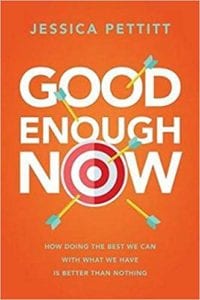
Good Enough Now: How Doing the Best We Can With What We Have is Better Than Nothing
She’s got a great book out called Good Enough Now, which I love. Instead of sitting around pointing fingers and waiting for change to somehow magically appear, which never happens, a lot of people are looking for, “What can I do to make myself have better relationships and stronger teamwork?” She’s got this nailed. We’re in for a big treat. Jess, welcome to the show.
Thank you.
Jess, I always love to ask my guests their own story of origins. You can go back as far as you want, a little girl, high school or college, whenever it was that you had your first insights as to, “I want to solve a problem of not feeling good enough, self-doubt, help others do it,” however you want to start. How did you come up with this concept and how did you come up with who you are today?
Two pieces converged and ended up in the book. I would say it was a cold fall football night in September of 1974. As a kid growing up in Texas, I was very aware at a very early age and lucky enough to have parents who were very supportive that there is a certain script that I was supposed to conform to. No one could tell me who wrote the script, why I was supposed to be doing these things or did I have any input in what I was supposed to be doing, which largely made me question authority and think it was stupid. If you can’t tell me where it comes from, I’m not doing it. I was fortunate that I was raised by parents where any question I had, they would show me the section in the library of what to read, how to do research and discover my own answers.
The most positive memories I have of my parents is when I would be doing research on something difficult and realize that either things that supposedly were very diabolically opposite each other were saying very similar things or that people who were trying to support each other were motivated by very different things. Those are fundamental learnings and I’ve taken them through my professional life, through high school, college, serving in the Peace Corps as a college administrator and then when I started my own business as a speaker or consultant years ago. I notice inconsistencies, I notice unfairness, I notice injustice and I notice the patterns of those things, which has led me very much to the work that I do around diversity and inclusion. There’s a pattern of our excuses, there’s a pattern of our engagement and there’s a pattern of paralysis that most of us find ourselves when it comes to contentious topics. That’s where I dive in.
[bctt tweet=”What is your intent versus your impact? Are you more like Mother Teresa or Gandhi?” username=”John_Livesay”]
You go where other people are afraid to go, it sounds like.
That’s where I live. It’s not even a summer home. It’s my home.
You were in the Peace Corps and then you had a standup comedy career. Are you still doing that and keynote speaking or are you just doing keynotes?
I do probably about 75% keynotes and maybe about 25% annual or year-long retainer-consultant work.
I’m assuming because you have a comedy background, that your talks, while they’re an intense topic, there’s still some humor you bring to it.
I use a lot of humor because it’s the greatest equalizer and if everybody can laugh, no matter how different someone’s opinions are, then I get to go one level even deeper and I keep it going.
I love how you say on your website, Good Enough Now, “I struggle being called a thought leader, I like to think that I make leaders think.” What’s the one thing that you find that leaders are not thinking about that they should be thinking about?

Good Enough Now: There’s a pattern of paralysis that most of us find ourselves when it comes to contentious topics.
I don’t know that there’s one thing. The concept of being a thought leader is irresponsible. Maybe irresponsible is too strong of a word. In our business, to be a solopreneur who is an expert, there are two horses you have to ride at the same time. One of them is the ego to have the audacity to call yourself an expert on something anyway, when in reality most of us are working in topic areas that are the exact topic area we have the most to learn about. How can I be an expert if the more I know about my topic area, the more I know I don’t know everything? I’m going to call that an expert or a thought leader. The second horse is the horse of humility where I need to be constantly learning, I need to be listening to my audiences and I need to be adjusting, growing, learning and getting better. I’m certainly not done. When someone says, “You’re a thought leader,” at least for me, it’s more congruent with my mission to say, “I’m not a thought leader, I make leaders think about the things that they don’t even realize they are thinking about as well as the things they’re not thinking about.”
Can you give me an example of what they’re not thinking about?
If we take a typical diversity and inclusion conversation, part of the reason why diversity trainings don’t work is that the approach is all about adding new things in. If you’re adding new things into a broken system or something that’s not inclusive, then you’re just decorating, which is making you spend time, money and resources pretending that you’re doing something when you’re just making it worse. The first step in having a diversity and inclusion conversation or initiative is to have a conversation and be intentional and thoughtful about what are you excluding. Once you know what you’re excluding, you get to pick and choose what you want to keep excluding and where you need to work. When you know where you need to do some work, then you can start doing some outreach in those areas, but that’s not where most people start. They start at wall hangings and murals.
One of the things that you talk about in your book is how we can be more curious and authentic without feeling the pressure to cover up who we are, so we fit in with the rest. Can you expand on that?
The idea of authenticity is there is a way that it’s being approached that it’s yet another veneer you’re supposed to have so that you appear that you are being real, which is the least authentic thing you can possibly do. There is a difference between being authentic and being able to also be a private person. I’m a pretty authentic person and there’s a lot of my personal life that is not available for public consumption. I can be honest about that. I don’t have to shift back and forth between being secretive and inauthentic or private and authentic.
You have this great freebie you’re offering our audience and it’s all about having conversations that matter. Everyone is so sick of having these cocktail conversations about sports and the weather and never talking about anything that matters, yet afraid to talk about politics or #MeToo or whatever else is going on in the world that makes everybody not even know how to even start to have a conversation that matters. You’ve got some pros and cons of having that. Can you start there with us when you’re talking about the difference between something that’s attentive and focused versus something that’s overconfident and resistant?
What you’re pulling from is a handout and anybody’s welcome to go there. GoodEnoughNow.com/Freebies is the collection of all the handouts and activities in my book. I’m one of those people that don’t like to write in books. It’s very strange when people ask me to sign their books. Those are all the handouts. The one that you’re referencing is a chart that I’ve pulled together from multiple years of participants of the pros and cons that fit into a model I have of how people tend to show up. I believe one of the big tenets that I have is that you are responsible for who and how you are when you show up in all of your relationships, whether they are someone you will never see again or someone you have a long-term relationship with. They’re all moments of connection and you’re either heady, hardy or action-oriented in how your lived experiences have taught you to be.
Once you know where you fit in, there are pros and cons to all of those ways. Everybody is a frustrating person. If we spend time only focusing on, “How do I make Todd less frustrating?” You’ve already learned you can’t control Todd, so why don’t you figure out how you’re frustrating and do something about that? That particular chart pulls together the common pros and cons of probably 40 to 50 different participants that have done the interactive activity. I see patterns, they’re very similar answers that come up to what’s annoying about all different kinds of people. Once you can identify yourself, then you can know what’s annoying about you. If people are interested, you can either download the app, which is free. It’s Jessica Pettitt. You can go to GoodEnoughNow.com/Survey and take a baker’s dozen quiz and it’ll help you identify if you tend to lean more head, hearty or action. That’s free too.
[bctt tweet=”Humor is the greatest equalizer.” username=”John_Livesay”]
On the same handout, you’re talking about Martin Luther King, Mother Teresa and Gandhi. I would tend to think that Mother Teresa and Gandhi, in particular, would have a lot of things in common as it relates to head, heart and action, but you’ve identified that they are slightly different. Let’s talk about the two of them so we can bring this head, heart, action stuff to life for people.
All three of them are the archetypes. I’ve discussed in the book that you typically show up using two of the variables leaving the third to dangle. Those three people are where I’ve done all of my research about what was frustrating about them, why they were annoying to work with and yet they were still able to do good work. Martin Luther King, I would say his strongest variable is the heart, which doesn’t necessarily mean emotions or like paternalism or something. It means a connection to something larger than yourself.
Certainly, his speech is an example of that.
He had a dream, not a plan. He was super charismatic but was completely dependent on other people to do the stuff. Most leaders that are the face of movements or nonprofits or even corporations often are a heart-action person like Martin Luther King and are grateful for the people scurrying around behind them. Most politicians, even though their political views may differ, the way they respond to things in the world are very similar, which is why Bernie Sanders and Donald Trump are very similar in how they grasped toward systems to connect within the model.
You have Mother Theresa, who is very heady, which is very detail oriented. Because she’s a head-heart person, she can get very stuck in a spin cycle, questioning everything, never landing on an answer, not sure what to do, that inaction-action response. Until in her work, she eventually realized that she could build a school. Once she knew what to do, then she was able to show up in her trifecta, which I talk about is where you’re the most powerful. Gandhi, I would say, is very action oriented first, which is why he had an ego big enough to think that his own, individual hunger strike would be effective enough to overthrow a government. It wasn’t until I identify very similar as a head-action person like Gandhi. It’s when we stumble into our heart parts, Gandhi had a sense of compassion that his work would impact people who weren’t even born yet. When he was able to stumble into that kind of third place, then his work became much more impactful. It’s the same thing with me.
Tell your story a little bit. What did you do? What was your discovery there?
For me, as a head-action person, I tend to be detail-oriented and I get hung up on details. I tend to act and ask questions later, which can make working with me annoying because someone always has to come up behind me and clean up. Usually, personal relationships are the first things that I damage or wreck. When I’m coming from a place of excuses, I often feel like a fraud or that someone’s going to find out that I am not supposed to be here. Every time I feel like I’m going to quit or not do something again, I get one email or one phone call or one participant who tells me that what I did mattered. That’s more motivating to me than cashing a check or closing a deal or something like that. That’s my third place.
[bctt tweet=”If you’re adding new things into a broken system or something that’s not inclusive, then you’re just decorating.” username=”John_Livesay”]
I can relate to this imposter syndrome that you’re alluding to where you feel like, “I’m not good enough.” I have had this challenge my whole career myself. I was fortunate enough to be part of the Coca-Cola CMO Summit and I was looking at the bios of all the other speakers, Harvard, New York Times bestsellers, all these credentials. I thought to myself, “I did not go to an Ivy League school. I have a book but it’s not a New York Times bestseller. What am I doing here? Is the person who invited me going to get in trouble?” Then I realized I have to trust that she knows what she’s doing. She must have seen something in my sizzle video demo reel that she liked. I got very quiet and I thought to myself, “What do I care about when I’m listening to somebody talk? Do I care where they went to school?” No. “Do they care how many books they sold?” Not really. I care about how they make me feel and maybe how I might want to learn to do something differently after I hear them speak. That’s what got me re-centered. I wondered if you have your own little journey of what you do when any of those self-doubts come up.
What you’re talking about ultimately is practicing an exercise of self-reflection. It’s noticing those patterns like, “That thing is happening again. Let’s review. What happened the last time I did that thing? Did that work out the way I like? No. Do I want to try it again? Sure, why not? It’s a habit. It turns out exactly the same way. Do I want to try something different? I don’t know. That’s scary. I’ve never done something different.” That conversation you can have with yourself burdens you with your own growth, not the person that you’re trying to engage with.
We’ve got this wonderful flowchart about if we have better conversations, we have better connections and then that turns out to allow us to reclaim the responsibility of what kind of impact we’re having. Can you expand on that?
It’s a chart that’s also at the freebies thing to download and it’s at the end of the book the, “Now what?” When you know that you’re about to have a challenging conversation or send a hard email or have a hard phone call, what I recommend is practicing. Ideally if you can practice this before you need it, then you could practice it at the dry cleaner’s or the barista or with your dog. If you decide you’re going to have a better connection, that’s more important to have a first step than even having an intentional conversation. You decide, “I’m going to try and connect with this human.” You’re not entitled to them also playing along and you don’t need them to play along. You can practice this as one person. If you decide you’re going to try and have a better connection, it’ll either work or it won’t, then you can have an intentional conversation and the first step is to listen, not speak. Listen. See where they’re coming from, what kind of space are they in, what’s happening for the other person. Then you form your message. You deliver your message, you take responsibility for if it worked or it didn’t work, and then you decide what kind of meaning that impact has or doesn’t have on the connection that you’re trying to make with that human being, then you repeat the process.

Good Enough Now: When you know that you’re about to have a challenging conversation or send a hard email or have a hard phone call, practice.
Let’s double-click on the difference between our intention and the impact we have. You’re a comedian. Sometimes you tell a funny joke about divorce and it doesn’t land. The impact is because somebody just got divorce papers. As they say in comedy sometimes, “It’s too soon.” People talk about intention all the time, “It wasn’t my intention to hurt you,” and I’m like, “Yes but that doesn’t get you off the hook the fact that you did something that wasn’t kind or considerate. That’s not the excuse that you can have.” I want to have you talk about how you came up with this. Was it just noticing behavior? What’s the big takeaway for our audience and how can they be more cognizant of the impact they’re having?
In diversity work, we talk about intention and impact a lot. We only set it up with well-meaning intentions and not meaning a certain impact like, “Oops, sorry.” The worksheet that you’re referencing, it can be congruent or incongruent and it can be positive or negative. The example that you used about divorce is when I see a friend I haven’t seen in a while, I haven’t talked to in a while, I might crack a joke about something and I don’t know that they were just handed divorce papers so it’s bad timing. Last week they would have thought it was funny, but you don’t know everything. Does that mean you should never crack a joke again? No. It means sometimes you’re going to get it wrong, but there are other times where you could mean something negatively and it lands positively.
I think of parents a lot with this. I know parents are stressed out about how to discipline a kid for doing something. They haven’t ever done it before. They don’t know what to do and they’re comparing it to what their parents would do. They either do or don’t want to continue the patterns of the kids’ grandparents even though that relationship is very different. As someone who doesn’t have children, I process this with parents all the time so they eventually come up with what they’re going to do and it turns out that the kid loves it. They wanted it to be a punishment and the kid’s like, “Awesome.” That’s exactly the same situation. It’s an unintended impact, so what do you do? Sometimes it’s congruent. The key is to notice your own patterns and figure out what you’re going to do because it’s the connection that matters, not the consistency of you being able to have the impact you’re looking for.
[bctt tweet=”You are responsible for who and how you are when you show up in all of your relationships.” username=”John_Livesay”]
One of the things that people have to deal with all the time, especially if you’re in the management of any kind, is making the decision to fire or let someone go. Let’s say firing for cause or not being a good fit or someone’s on a 90-day probationary period. You didn’t give them a lot of training, you hope that they would figure it out but they haven’t. They don’t have critical thinking skills and no amount of training can fix it. What advice do you have for people when they have to let people go?
Before doing it, figure out why you’re letting them go. Is it about you or is it about them? The next thing I would say is if it is about them, do they know this and see it coming? If you can answer that question, then you’ve done the preparation you need in order to have what might be a challenging conversation. You can turn the challenging conversation into coaching someone into an awesome next opportunity, letting someone go who doesn’t want to be there in the first place, standing up for the rest of the people in the office so that there’s a bigger positive that comes from addressing a problem and listening to the other people in the space, and/or providing the space to have a conversation where that person gets to break the news that they want to quit.
This concept of, “Do people see it coming?” My experience is more than half of the people don’t see it coming. You give them warnings and then when it comes to having that tough conversation of, “We’ve made the decision. We’re going to let you go today,” most people go into shock. Have you found that?
I don’t think I know what you mean.
By shock, I mean they act like it’s completely unexpected even though you’ve been giving them warnings that say, “You’re going to get fired if you don’t come into work on time or get your sales numbers up.”
That’s a different form of communication. If you don’t have the kind of relationship with someone to know what is or isn’t going to happen, you can’t make anybody else do anything else so that goes back to you. If your employee is shocked about anything that you’re doing, it’s because they didn’t see it coming. Why would you do something with someone who you work with intimately or you collaborate with intimately that would be shocking? If it is shocking, you have work to do far bigger than the person who is shocked by whatever you’re doing.
As a leader, you’re not communicating your expectations clearly enough for them to realize, “If I don’t make them, there are going to be consequences,” is what I hear you saying. You are also an expert on building better teams. Can you leave us with an upbeat tip on how we can build better teams?
Let’s go back to Martin Luther King, Gandhi and Mother Teresa. First off, Gandhi’s work inspired Mother Teresa and Martin Luther King. Gandhi and Martin Luther King were both assassinated. Martin Luther King was assassinated by someone outside of his work. Gandhi was assassinated by one of his own group members because that’s how you know you’re that frustrating to work with. From what we can tell, Mother Teresa died of natural causes. All three were horrifically annoying, frustrating people that the more you know about them, the more you’re like, “This could be a despicable human being,” and they were able to do good work or at least take credit for really good work that groups of people did that made a lasting change that surpassed their life and impacted their legacy.

Good Enough Now: The team that is usually perceived as not high functioning usually are widely diverse and have all kinds of ideas and inspiration.
In any given team, often when I come in, one of the first things that I do is doing an assessment of where people fit into the model. Usually the leadership will tell me, “This team is high-functioning but this team isn’t.” It turns out that what they think is the high-functioning teams are all very similarly placed in the model. They are bored, they’re in a routine, they are not creative, they are not innovative and if you were to hire a new person and put them into that group, they would completely fall apart and have no idea what to do. The teams that are usually perceived as not high-functioning usually are widely diverse, have all kinds of ideas and inspiration and if rewarded or able to have the kind of space, would be the most creative and most innovative with the current budget freezing of who or what resources they can use. Whatever underwhelming situation in particular organization is in, what is often described as the least functioning group are the most diverse within the model therefore whatever decisions they make will actually have better long-lasting outcomes.
If I take a search committee, if you have all head-action people, which are usually the people who are voluntold to be on search committees, the group of head-action people is all going to hire another head-action person. They like them. They fit in. “I could go have a beer with them,” whatever that means. This is subjective stuff. That makes it even worse because they’re all exactly the same. What you need is to get rid of all that, have three really strong people from each of the three different places on the model. If they can agree on someone to hire, that’s going to be a better hire that can navigate and fit in with more people at work. Therefore, they’re going to feel more connected like they belonged there, which is a retention tool. You’re not going to have to hire a new person for a while.
That’s a great takeaway that the better you are at building a great team and keeping those people happy, it impacts your bottom line without having to have all the turnover costs that people don’t even begin to realize how expensive that is in terms of time, training and productivity. It’s been a pleasure having you on the show, Jess. Again, the book is called?
Good Enough Now.
How can people follow you on social media and all that good stuff?
I’ve got an Instagram account. It’s called @GoodEnoughNow. Otherwise, it’s Jess Pettitt on Facebook, LinkedIn, Twitter. Anything I can ever do to help any of your audience, my main mission in life is not the idea of Good Enough Now, it is how to do the best you can with what you’ve got some of the time. That is how to have better teams and do better work.
You’re the right person to take it out into the world. Thanks again for sharing your wisdom and passion.
Thank you.
Links Mentioned:
- Good Enough Now
- Jess Pettitt
- Good Enough Now
- GoodEnoughNow.com/Freebies
- Jessica Pettitt on iTunes
- GoodEnoughNow.com/Survey
- @GoodEnoughNow on Instagram
- Jess Pettitt on Facebook
- Jess Pettitt on LinkedIn
- Jess Pettitt on Twitter
- www.GoodEnoughNow.com
- Quantmre.com
Wanna Host Your Own Podcast?
Click here to see how my friends at Brandcasting You can help
Get your FREE copy of John’s latest eBook Getting To Yes now!
John Livesay, The Pitch Whisperer
Share The Show
Did you enjoy the show? I’d love it if you subscribed today and left us a 5-star review!
-
- Click this link
- Click on the ‘Subscribe’ button below the artwork
- Go to the ‘Ratings and Reviews’ section
- Click on ‘Write a Review’
Courage, Compassion And Rescue with Marty Brounstein
Posted by John Livesay in podcast | 0 comments

Episode Summary:
Urging leaders to make a positive difference wherever they are, Marty Brounstein talks about doing the right thing when you find yourself in a situation where it’s fear-based. As a master storyteller, he discusses the power of using stories as a way to teach people, not only engaging them but getting themselves imagine being in it. He shares his book, Two Among the Righteous Few: A Story of Courage in the Holocaust, about a young Christian couple out of Netherlands who saved the lives of over two dozen Jews during World War I. Highlighting the three key takeaways of courage, compassion, and rescue, he relates all that into the present day and ties them into how to be a better leader.
—
Listen To The Episode Here
Courage, Compassion And Rescue with Marty Brounstein
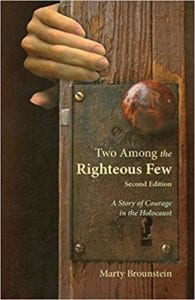
Two Among the Righteous Few: A Story of Courage in the Holocaust
Our guest is Marty Brounstein, who is a master storyteller. He’s the author of Two Among the Righteous Few: A Story of Courage in the Holocaust. It’s a true story of courage, compassion and rescue involving a young Christian couple out of the Netherlands who saved the lives of over two dozen Jews during World War II. Marty has been on an unexpected journey himself and sharing the story of how non-Jews and Jews involved in the resistance and rescue during the Holocaust. Delivering storytelling presentations that audiences have found educational and inspirational as any good story does. This is in the eighth year where he’s been speaking about this. He’s based in San Francisco. It’s great to have you on the show. We love storytelling experts. Welcome, Marty.
Thank you very much.
I always ask my guests to tell their own story of origin. Can you go back and tell us a little bit about your own childhood, high school or college? However far back you want to go where you started becoming enthralled with storytelling.
I grew up in the Chicago area, which is why now I live in California. The winter’s got me. Early on, I always had an interest and fascination with history. In my early professional life, I was a history teacher. Part of what made history come alive for students is the ability to tell stories. As my career evolved as a Human Resources Executive over 25 years, I ran a management consulting business dealing with leadership development and performance effectiveness. We deliver seminars and even executive coaching. Stories are always part of how you teach. It’s a great way to make examples come alive. In essence, it hit me early on and now I realize it more. The journey with this story is all about storytelling at its best.
Let’s double-click on what you did as the leadership development consulting. What lessons did you learn that the audience could take away so that they can become better leaders?
One of the biggest things was engage your audience in whatever you’re teaching them, whenever you’re talking to them rather than talking at them. Part of even now when I do storytelling, but even when I did training, I’m often throwing questions to the audience to get them to be thinking about what’s going on. How would they handle it? What do they know about these kinds of situations or this history? Often as much as when I did the training, having them get involved hands on to practice what we were teaching. All of that engagement, the interactive nature of it is what gets, especially adult learners, but even children, far more involved and far more learning than if they’re just sitting back and receiving.
[bctt tweet=”Help can be as simple as asking, What can I do for you?” username=”John_Livesay”]
When you’re engaging an audience, telling a good story is one way. Getting people to imagine themselves in the story is what I found is the key, especially when you’re giving a case study of someone else you’ve helped and you’re trying to paint a picture as opposed to just presenting a bunch of stats of what you’ve done for somebody else. Can you describe what you have done in your leadership consulting around storytelling as a sales tool?
Quite often in the sales side of it is where I’m meeting a prospective client, as I did many times, I would share stories of what I had done with other clients. It wasn’t just telling him, “This is what I can do for you, but here’s an example of it of how this client took this service and made something good happen.” Those always resonated for people. In teaching of the activities, the skills and the lessons that are a form of sales because you’re trying to get people to sync, open up and learn new behaviors, the power of stories is very helpful to get people to relate. Often, I would tell people, “Do you know where I get the stories from that I’m sharing with you? They came from other managers and executives just like you, who put into practice these skills.” You’d get some nods around the room going, “This is real.” Part of the power of stories is that these aren’t fictional stories. These are always real stories that I’ve told and still tell now with this one on Two Among the Righteous Few.
The phrase that you said there, “Leaders just like you,” is a real great takeaway for the audience to start incorporating into their storytelling so that people can see themselves in the story. One of the questions people have when they listen to a story is, “That’s great for that person, but would that work for me?” If you can paint that picture that they were just like you, they were struggling, they had some challenges, then they overcame those struggles. I was their mentor or Sherpa up a mountain and together, we were able to get them to a place now and that things are great. Do you have some thoughts on the structure of what makes a good story?
This journey with the special story I’m doing, Two Among the Righteous Few, I had a public storytelling presentation event. I had some audience members come up afterwards and going, “I don’t know if I could have done it with Frans and Mien Wijnakker, but I was thinking about it.” It’s the whole idea of putting people inside the story. I’m so excited when I hear that, and I often say it’s not whether you would have, hopefully you never face with the life and death risk they were, but the idea that you were thinking about that, wonderful. Then you’re showing that you have an awareness and an openness. That’s the real key.
To your question about the structure of a story. A story is similar to any good presentation. There’s an opening to get the audience attention. Then you relay, “Here’s what happened,” and then you’re doing some wrap-up. Especially with stories, whether it’s in a sales situation, a teaching situation, as you do that wrap-up, you’re connecting it back to the people right there. How do you apply this? What does it mean to you? It’s relevant. Stories are somewhat like jokes in the same way. When you tell it and it doesn’t fit into the context of what we’re talking about, it falls flat. Nice story, but big deal versus there’s a point to it at the end that connects to people and that’s always the key part.
Otherwise, it’s interesting information but it didn’t emotionally connect with them.
It has to make sense to them that it’s relevant to what we’re dealing with here.
How did you come up with the idea to write this book? What inspired you to write it?
I often tell people, this is a story I stumbled into by accident on a trip to the Netherlands with my wife in May of 2009. The story is about this young Dutch Christian couple named Frans and Mien Wijnakker. During World War II when their country was under the brutal occupation of Nazi Germany, they got involved but most did not. In the end, they saved the lives of over two dozen Jews from a certain death. It’s a story of courage, compassion and rescue. I had heard of their name and the keyword in the book title is the word, righteous. They received a heroic honor called Righteous Among the Nations, which is the honor from the Holocaust museum in Yad Vashem, Israel for the non-Jews like Oskar Schindler. For those Jews who risked their lives to save the lives of Jews in the Holocaust. Not many did it that’s why the title is Two Among the Righteous Few and not Two Among the Righteous Many. Out of curiosity of my wife who has an element into this story, I got to meet the five Wijnakker children. Frans and Mien are not alive, but their five children are.
In that meeting by accident creates the sparks as once I knew of that honor, when I found out that that’s what their parents had received, I was blown away. I understood what that meant. You don’t get that for showing up, something heroic happened. One thing led to another and eventually, not only did I write a book. Early in my eighth year, was my event number 646. It’s taken over our lives but in a very positive way.
Let’s talk about each one of these three words: courage, compassion and rescue. Let’s take each one and describe your definition of it and then pull something from the story that showed unexpected courage.
[bctt tweet=”Listen without judgement” username=”John_Livesay”]
Courage, bravery are in simple terms, the ability to stand up for what you believe or they see the need for help when it may not always be easy. It certainly may not always be popular and there may be risk involved. Certainly, for Frans and Mien Wijnakker, if you’re going to get involved because the consequences were dangerous to deadly. The Nazis didn’t kid. If you got involved to try to help the people they are most after, Jews, you had the same consequences, “We’re going to send you to the concentration camps,” or in some cases, executes you. Compassion, that’s the ability to care for others beyond yourself. I do workshops out of this story in workplaces under the title, The Courage and Compassion to Do the Right Thing: A Lesson in Making a Positive Difference. We have people apply the lessons from the story in their jobs and compassion is one of those things that we look at to what you’re asking.
I often say, “If you could sprinkle the powder of compassion on everybody you come into now and it would forever be their behavior, what a wonderful country we have.” It’s so easy to think about yourself or maybe those near to you, but to be able to show that you care about others beyond yourself is powerful. Frans and Mien did that to the highest degree. All these people that they helped, they knew none of them. They had never met a Jewish person in their lives before they were Catholic and yet they thought that you should care for people in dire need. That teaches a wonderful lesson. The word rescue, and this is to the highest degree, was helping people to be safe, helping people to escape danger. At the height of this, they often had ten Jewish refugees in their own home with their four little children. They created a rescue network in the little towns of their countryside area where they would place Jews with people there. Over two dozen got saved because of their courage, compassion and rescue efforts.
Since you’re doing workshops on this, do you have an example or a story on an actual company where they’ve learned these lessons of courage and compassion? How does it relate? Does it relate to the culture of the company or does it relate to how they treat their clients and customers?
What’s neat about the workshop is I’m going to give you an example that happened with a company. The theme of making a positive difference is I let them take that theme that’s relevant to them. For some of them it’s their core values they want to reinforce. For some, it’s the client service they want to reinforce. In other cases, their leadership. It’s a diversity and inclusion. Sometimes, it’s all those aspects that are important to them. I did a company as an example. They had a management retreat, so I was there working with the management team of 25 or so that they had there and often we have bigger groups. After the storytelling, which they certainly were very inspired, “How do you apply the lessons of the story into your leadership practices on the job?” then we let them draw those conclusions and apply it. In the end, they have to put down a commitment to go forward. The discussion was so rich. It was neat to see the things that came out and we even took it a little deeper because they wanted to do more than that.

Better Leader: We know it’s not easy, so recognize that but don’t let it eat at you.
We looked into leadership behavior that makes a positive difference. We examined some things with them about that that you could just see people in their comments and in their discussions in the small groups, very reflective. Including as we were closing to share some reflections, the general manager, so the top executive in this group speaks up. It was so neat to see and talk about some of her own behaviors, the things that she does, and the things that she has to be more aware of to make her leadership even more have a positive difference. I couldn’t have paid somebody better than that comment at that time as we were getting ready to close. You could see what the power of this was doing for them, and so it was wonderful to see the reception we got from it all.
A lot of people in the business world think that the only way they can motivate, let’s say their sales team is fear-based, if you don’t make your numbers, you’re going to get fired. It is pressure. The opposite of fear is courage. What lessons or advice do you have for people that might find themselves in a fear-based results only driven place of employment to find the courage to not let fear overtake their life in their career?
If you’re in that environment, now you probably have more choices if you have those skills and experience. If you’re sticking it out, it’s not to lose focus on what you’re here to do your job for. If it’s sales, sure you’re there but sales is more than just driving numbers. It’s about giving the clients and customers that quality service. If you say that’s your focus, more than likely the numbers will come with it anyway. Sometimes you have to block that out. One of the strategies when I was doing my management consulting business that still comes up in this workshop too as advice is nod and smile, which is the whole idea. Let them rant and rave, nod and smile. Go back and do what you know is the right thing to do, but stay focused on doing the right thing. Don’t use it as a de-motivator to say, “What’s it going to matter anyway?” You have to do it for yourself because sometimes you’re not getting the positive reinforcement you wish. Don’t let it stop you.
I want to ask you about compassion for yourself when you’ve had a bad day or you’re getting discouraged and then compassion for other people, whether it’s your coworkers or clients. Tell us what tips you have on how we can be more compassionate with ourselves as a starting point.
[bctt tweet=”Let go of negative self-talk, turn the corner” username=”John_Livesay”]
There’s the, “Be kind to yourself.” Sometimes in our heads, we can get all that negative self-talk going if we’re running through some rough patch or people are frustrating. Then you’re browbeating yourself and that doesn’t get you up. There’s that recognition, “What’s going on?” Sometimes a phrase I use is, “Turning the corner.” Put those things aside, go around the corner, stay positive, stay patient. We know it’s not easy, so recognize that but don’t let it eat at you and get you down because that will show. The other part is compassion with their team members. To me, it starts with if you’re a professional as you do your job and it’s also recognizing these people I work with, some I’m going to like more than others. I don’t have to bring any of them home. I need to have good working relationships. If I’m taking steps to consistently treat people with respect, to listen to where people are coming from and not be quick to pass judgment and I’m there when we have challenges to focus on problem-solving. You show that you have compassion then. You show that you can care for people. You show that you can work with people of all types. That’s when you’re performing at your highest level as well.
The third one is rescue. I gave a TEDx Talk called Be the Lifeguard of Your Own Life. Unlike in a hurricane, no one’s going to come and rescue you if you don’t evacuate. What are your thoughts on rescue in the corporate world?
In essence, we don’t have life and death situations in terms of the rescue people may think of. I look at it more of the willingness to help. If you see others in need, whether they’re asking for it or not, it doesn’t mean you go and pose it. If you can do things to cooperate, to lend an extra hand, sometimes help is very simple. You responded to somebody’s email rather than leaving them wondering did you even get it. You can say, “I can introduce you to such and such source who could be the best one to help you with your situation or thank you for opening that door.” Help can be often done in simple ways. When you ask that question, people often say, “How can I help you?” Mean it. Sometimes people say it and it’s like, “Yes,” because you were trained to say the words, but you have no meaning. There’s no sincerity and you don’t want to be bothered. If I need to put something down to come over to help you and do something to get it done, it makes it easier if I need to ask you for helping me. It’s all about building that win-win relationship.
Help can be as simple as asking, “What can I do for you?” It’s so profound yet simple and yet often overlooked unless it’s this grand lifesaving rescue we don’t think any little bit of help makes a difference, but it seems to me you’re saying it does and that it’s cumulative.
I find one of the most simple and powerful forms of help is their willingness to listen to others without judgment. Sometimes what people most need is somebody who’s supportive. Somebody that I can bounce ideas off to vent a few frustrations and it doesn’t come back to haunt me. That’s very helpful when you can do that for people.
I’ve seen it in action myself when I’ve helped clients win that clients they’ve lost because the client feels like, “They didn’t listen to me and things went off track. Now, this project isn’t done on time. I’m mad. I’m not going to work with you anymore.” The ability to listen without judgment, to let them vent, understand, put your empathy hat on as I call it from their perspective of how frustrating it was to not feel like anybody was listening to the warning signs before it was too late, it allows you to be compassionate, rescue the account and save it from being lost. The other big takeaway that you’re talking about here is emotional IQ. Do you have any thoughts around this whole courage, compassion and rescue as it relates to having emotional intelligence?
It does relate as you’re getting it very well there because there’s the intellectual intelligence. You have a good knowledge but do you have, in simple terms, people’s skills? Do you have the skills to get along? Can you understand where other people are coming from? Can you accept the differences and not see them as flaws or things that run from? All of that shows the emotional intelligence. The big part of that is the self-awareness of your own behavior to put yourself in check, to tune in to cues that are happening, both verbal and nonverbal, so that you’re consistently respectful with people. When we listen in the news, the political things happening and the #MeToo Movement, you get that emotional IQ was very low, but the thirst for power was very high to take advantage of people. We don’t need any of that and certainly not in workplaces. We need professional positive environments and emotional IQ was key for making those kinds of environments become real.
What I love about what you did there was take something that happened in World War II and you brought it out into present-day situations of courage and rescue, and the courage it takes to say something to someone who’s powerful. Then it becomes cumulative again. Where there’s one, there are usually many. You’re not the only one, but at the time you think you’re the only one. In your book, were they aware that other non-Jews were helping the Jewish people stay safe or do they think they were the only ones taking that risk?
[bctt tweet=”To be able to show that you care about others beyond yourself is powerful.” username=”John_Livesay”]
Initially, Frans and Mien Wijnakker got involved in this rescue effort by accident, not by design. Frans was doing his black-market business. He’s a risk-taker already because if you get caught, you’re thrown in jail. This is under the Nazi occupation in World War II. This doctor, acquaintance who was a customer he had done business with before, before he leaves the meeting, the doctor says, “Would you be willing to help?” In the end, as the doctor explains, “This young girl, could you take her home to where you live in the countryside for three weeks? She happens to be Jewish. Would you be willing to help?”
Frans was that helpful kind of guy. He always viewed himself that way. He acted that way and here’s the call for help. He doesn’t quite recognize the dangers he’s just taken on and his wife, Mien, when he brought her home right with him, was saying, “Then let’s help.” Then one thing led to another and it built over time. As things built and they got involved with a resistance group that helped them build this rescue network, then they realized there were others doing it but not a lot. They didn’t have awareness of what’s going on in the country. If anything, their awareness grew of how dangerous this was and how careful they had to be because those stories were coming. The Nazis were brutal to any form or resistance, but even more so to those helping hide Jews and yet they didn’t turn away.`
That simple question, “Would you be willing to help?” I also find that when you ask people, “Would you be willing to give me your opinion on something or your advice on something?” It’s amazing how that opens the door to have a conversation that’s collaborative and productive.
The power of questions, which fits well into stories. I start my storytelling presentation on this story, by asking my audience three questions to get them thinking, and that puts them into the story. If they want to go into it, it starts. I have people at the very end as they come up to visit afterwards often say, “Those three questions made me keep thinking through your whole presentation.” I’m like, “I’m glad you were thinking. I’m glad it sparked that awareness.” Luckily, we don’t have to make those kinds of decisions about life and death. You make those decisions and translate it into your behavior.

Better Leader: Do not turn a blind eye to misconduct. If one could get away with it, more will do it.
That’s what I’m doing inside school classrooms to when I take these workshops to organizations and professional conferences. We get past the storytelling and apply the lessons. Especially when I’m dealing with a management group and we talked about applying the lessons, I emphasize if it hasn’t come up, do not turn a blind eye to misconduct. We hear that always in the news. The managers would look at the other way and then here’s this problem manager, the executive that everyone knew about, but nobody ever said or did anything about it. You cannot afford that. That’s what creates these toxic environments. If one could get away with it, more will do it. The idea of when you have a very professional environment, you have far more ability to be a productive one. Sometimes it takes the courage to step up and say, “That’s wrong. We’re going to get it addressed.”
What are those three questions? You’ve got us all intrigued with an open book?
Question one, would you be willing to help others whose lives are in great danger? I pause and say, “Think about that,” because that’s a tough question. Question two, would you be willing to help others whose lives are in great danger knowing if you got involved, you would probably put your life in great danger? Would you still help? Question three, would you be willing to help others whose lives are in great danger knowing if you’ve got involved you’d probably put your life in great danger, when these people who most need the help, everybody else wants to hate them or be indifferent to their plight, would you still get involved and help? I pull it together. Two Among the Righteous Few: A Story of Courage in the Holocaust is a true story of a Christian couple that answered their definite yes to three of those questions in a time period when most said, “No.” They are true heroes.
[bctt tweet=”The opposite of fear is courage.” username=”John_Livesay”]
What I find fascinating about the third part of that question is when other people are either hating them or at best indifferent to them, there’s no obvious social acceptance of, “We have to help them.” It reminds me a lot of what’s going on with certain refugees and things, “I don’t necessarily hate them, but I’m indifferent to their plight. It’s not my world.”
During one of my presentations, that comes up from the audience sometimes. They relate these things to the present day.
It’s a fascinating way for us to take lessons from history, apply it to how we’re reacting to what we see in the news and decide which side of the right thing to do we are on and what we can do to take action. Any last thoughts you want to leave us with, Marty, about your book or how we can be more courageous or compassionate?
If you take all of that seriously and we’ll talk in the context of wanting to do your job, especially if you’re a leader in your role, managed positions are viewed as leadership roles, although not all people in those roles act as leaders. Every day, if I approach my job, I’m here to make a positive difference whether I’m in sales, service, whatever role you’re tearing, you then have the right focus. Then you’re going to be always thinking about how do I best work with people? How do I best treat people? How do I best get my job done to get the results that I need? It’s all about making a positive difference and that’s what this story has all been about.
How can people follow you on social media?
I have a website, www.MartyABrounstein.com and there’s a Facebook page for the book under my name as well. When you put the link in my email, I don’t mind people contacting me directly, so I welcome that. I hope to see them at some of my presentations or maybe these are the people who will invite me to come to their organization to share this special story. At the very end of the story, I have a very meaningful personal connection to this story and its heroes as well. I always reveal that at the very end. When they read the book, they will find out. I always close every presentation with, “Thank, God, for the courage and compassion of Frans and Mien Wijnakker.”
Thank, God, for your inspiration, courage and compassion to take this message out into the world. Thanks, Marty, for being on the show.
Thank you so much for having me, John.
Thank you, John.
Links Mentioned:
- Marty Brounstein
- Two Among the Righteous Few: A Story of Courage in the Holocaust
- The Courage and Compassion to Do the Right Thing: A Lesson in Making a Positive Difference
- Be the Lifeguard of Your Own Life – John Livesay’s TEDx Talk
- #MeToo Movement
- www.MartyABrounstein.com
- Marty Brounstein Facebook page
- https://www.Amazon.com/Two-Among-Righteous-Few-Holocaust/dp/B005XHMX96/ref=sr_1_1?ie=UTF8&qid=1538155403&sr=8-1&keywords=marty+brounstein
- Quantmre.com
Wanna Host Your Own Podcast?
Click here to see how my friends at Brandcasting You can help
Get your FREE copy of John’s latest eBook Getting To Yes now!
John Livesay, The Pitch Whisperer
Share The Show
Did you enjoy the show? I’d love it if you subscribed today and left us a 5-star review!
-
- Click this link
- Click on the ‘Subscribe’ button below the artwork
- Go to the ‘Ratings and Reviews’ section
- Click on ‘Write a Review’
Happily Ever Always with Michael Rosenblum
Posted by John Livesay in podcast | 0 comments

 Episode Summary:
We often look for happiness in different places and people. But no matter how much we look, we can’t seem to find it. Michael Rosenblum believes we all deserve to live Happily Ever Always and for him, that is about looking within oneself. He is a self-made man and one of America’s most successful real estate brokers—deemed even as the broker’s broker. He talks about how much of his success comes from loving what he does and in serving other people. Shedding some life into real estate, he gives light and comforting advices on going to listings, selling, buying, and marketing. Ultimately, he believes that money can’t buy you happiness but happiness can make you rich.
—
Listen To The Episode Here
Happily Ever Always with Michael Rosenblum
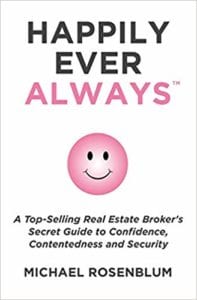
Happily Ever Always: A Top-Selling Real Estate Broker’s Secret Guide to Confidence, Contentedness and Security
My guest is Michael Rosenblum, who has written a wonderful book called Happily Ever Always. He reveals the winning philosophy by his amazing route to becoming one of America’s most successful real estate brokers. He has this amazing story where he takes you on a journey where you go through all these exercises to get in touch with what your thoughts are about happiness. He tells us that good business isn’t good enough. As someone who passionately believes his joy is measured in the equal proportion to the happiness of those around him, you could imagine that he makes everybody feel happier. He said, “We’re intentionally seeking this spiritual connection because it triggers greatness and we all want that. When you realize why you always deserve to live happily ever always, you have the secret to not only a happy life but a happy business life.” Michael, welcome to the show.
Thank you, John. I’m delighted to be here, certainly humbled, to say the least.
I always like to ask my guest to tell us your story of origin. You can go back as far as you want. You can be a little boy dreaming of being rich. You can be high school, college, wherever you want to start that had, “I want to be happier than the people I see around me.” Whatever you think would be relevant to give us a sense of how you all started on your journey.
I should probably begin by saying I was one of those children who never felt as if he fit in with other kids. I was a little different. In being different as we all maybe have experienced at one time or another in our life, you get bullied when you’re different by people who sometimes are not happy themselves. As I began to grow and learn to like myself, I decided through my trials and tribulations of life that I wanted to find out if there was some formula for being happy. As a young person, I thought happy was being rich, having a lot of money, all material possessions. I came to learn over time of a successful business that I wasn’t happy.
[bctt tweet=”Don’t wish your villains away” username=”John_Livesay”]
I remember having a job one time. I was paid so much money and it was blocks from my home here in Chicago. I would wake up every morning and I would cringe to go to the office because I wasn’t enjoying myself. I was able to go to dinners and buy different things and yet I wasn’t happy. I thought maybe happiness is when you meet the love of your life, when you meet that right person and you have that connection. I was blessed to have that experience and it didn’t work because you fall in and out of relationships.
That’s a lot of pressure to put on one person, “You have to be responsible for my happiness, now go.”
Together, being with someone, I was thinking that was the epitome of happiness and it wasn’t. In short, what I realized was that happiness came from within me. I had to figure out who I was and what was going to make me happy. What I found that was going to make me happy was having a sense of security of my own personal truth. Accepting me for who I am, growing with that and accepting the flaws, the favorable aspects and the gifts that are buried within me.
It’s an interesting way of looking at life because a lot of us, especially in the business world and sales, are looking for people to like us, accept us, typically in the form of hiring us. This whole podcast is about the successful pitch. If you’re constantly pitching to get hired or to sell a product or a service and your big concern is like Sally Field, “Do they like me?” You’re never going to ever feel completely happy because not everyone’s going to like you or what you’re selling.
That is the truth to heart. Furthermore, what’s interesting is that when you find that you like who you are, you have the ability to present yourself in an authentic way. You’re not concerned what other people think and you’re not concerned that the product you might be selling isn’t going to be favorable to somebody else. You can sell yourself best when you like yourself. When you find your own sense of happiness, then you have the world by the tail and you can do everything and anything that you ever wanted to.
You certainly have the world by the tail when it comes to business as one of the most successful brokers in Chicago. You’ve generated sales of over $400 million and then inducted into Berkshire Hathaway’s Hall of Fame. You’re constantly in the top 1% of 46,000 real estate brokers. There must be something to that success that has allowed you to stay consistently at the top. Yet if people think that that’s going to make them happy, they’re still not getting the message.
It falls back on the fact that you have to be happy with yourself. You have to like yourself. You also have to be authentic to who you are. By understanding who you are, then you present yourself in a real way. When you present yourself in that real, authentic way, you will find that people will gravitate towards you and you can do anything. My success in real estate is probably driven by the fact that I just want to do a great job for people because that’s what I would want to be done for me. I often call myself the broker’s broker. The reason why I call myself the broker’s broker is because I treat my clients in the same manner that I would expect my broker to treat me.
[bctt tweet=”Reincarnation: Do you want to come back as you?” username=”John_Livesay”]
It’s almost like a doctor saying, “I’m going to treat this patient like it’s a family member and not just another job.” I love this concept of when we are our authentic selves because in the marketing world if you try to be all things to everybody, you’re nothing to everybody. As opposed to picking a lane, picking a niche, who this is for and who this is not for. Therefore, when you go out to pitch to get someone to hire you, to give you a listing, what is it that you do or say that makes people want to work with you versus someone else? Separate from all the bells and whistles of, “This is our marketing strategy.” I want to hear, if I can, what’s the mindset you go in with? What’s the energy? What is it that somebody could say that would cause you to say, “This isn’t a fit?” Anything you can share in that arena?
I believe the driving force when I go into a listing appointment that separates me from other brokers is number one, my enthusiasm for the work that I do. Number two, being able to give a clear, concise presentation and of course not to forget the word compelling. We all suffer a little bit from not having the most robust attention spans because we’re busy. You need to have your presentation done in a succinct way where for me, one of the things that I do is I like to cover four points. I bring a wonderful presentation book of real estate comps and all the marketing we do. It’s a wonderfully thick book that we leave behind with our clients. What I do is number one, talk about who I am and a little bit about my background. Number two, I get into the comps. Number three, I talk about the marketing that we are going to implement in order to drive traffic to a particular property. Number four, we talk about how we’re going to service you, the client, so that we’re answering your questions before you ask them.
I would imagine that other brokers do a similar process in terms of the research and a little bit about their bio. What I’m looking for is your secret sauce. Do you paint a picture of what life is going to be like? Do you paint a picture of the process which can be stressful being less stressful because of your happiness focus?
It’s probably the oodles of enthusiasm that I seem to generate when speaking to somebody. I’m asking them questions about why they’re moving and why they’re contemplating this sale. If I’m working with a buyer, in going through an assessment program with the buyer, it’s trying to find out what’s the motivating force and then talk around that. I think it’s probably coming in and having an enormous amount of enthusiasm for what I’m doing. The other thing is just having the knowledge. You would be surprised at how many people don’t have a lot of knowledge about their industry. Fake it to make it.
What I hear then is if our audience wants to be more successful and happier, bring your enthusiasm, which has to be authentic. Ask questions that are specific to that particular person’s reason for making a change. Most importantly, prepare and don’t underestimate that can separate you from the competition. If someone is also saying, “I’d like to overcome some self-doubt. Maybe I don’t have the years of experience and this amazing track record that you have, Michael.” What would you recommend people do?
[bctt tweet=”When you find your own sense of happiness, then you have the world by the tail.” username=”John_Livesay”]
I believe everyone has certain gifts that are a little different than someone else’s. When you don’t have an experience in selling a lot of real estates, you might have a skill set that you can comport from a prior profession you were involved in. For instance, maybe somebody was in party planning. What they can talk about is the fact that when they get a listing, they build a marketing plan around that particular listing to figure out how to get the optimum amount of traffic. They’re taking their skill set from planning parties, which involves understanding menus and understanding possibly how to get press, depending upon the type of party it is. It’s taking a skillset from a prior profession, going ahead and comporting that to real estate and implementing it. Your enthusiasm can drive a contagious and infectious road path to get people to do exactly what you might like.
One of the things you talk about in the book, Happily Ever Always, is listen to your gut, not your wallet. That goes back to that earlier question I had about when do you say no to a potential client? Your gut’s saying, “I’d love the commission on this listing.” You’re listening to your gut and not your wallet. Do you have a story around that you can share?
First and foremost, you have to trust yourself. You have to believe that others are going to do the same. When you’re genuine, you win. If you have an agenda only for money, you won’t. Sometimes I’ll go into an appointment and I’ll sit down with a potential seller. They’re telling me that this is where their property should be priced and that they know exactly how it should be sold. It begins to make me feel as if, “What am I here for?” I should probably back up and say when I meet somebody who tells me that they’ve sold a lot of properties and this is where it should be priced despite the comps. I’ve cued them on different reasons as to why they believe that and I don’t feel that it is genuine or it makes sense. I step back and I’ll say, “I don’t think I can meet your expectations. I’m not the person for you.”
I realized that if someone’s telling me that they’ve sold six properties and I’ve sold over 1,000 properties, I have a better track record in deciding whether or not something’s going to go. Therefore, if I feel the person’s contentious, I realize it’s only going to be blood money. It’s not going to be harmonious. When you are in business with someone and when you’re selling something for someone, you’re married to them and you want to have that harmonious relationship. If it’s not there, then you’ve got to listen to your gut, not your wallet. You could end up spending a lot more in the long run.
[bctt tweet=”You get bullied when you’re different by people who sometimes are not happy themselves.” username=”John_Livesay”]
You also said you called it blood money, which leads me to my other question. You talk about, “Don’t wish your villains away.” Tell us what that means.
That’s an excerpt from my book and you should never want to wish your villains away. For lack of better word, I’ll use the word dreadful. Sometimes the dreadful people we think that come into our lives we wish weren’t there are the very people that can teach us lessons, not only about our self but also be a springboard to take us to a greater place. You might say, “Michael, why would you make that statement?” John, I would make that statement because sometimes mean people do things to us. It irritates us to the point where we say, “I’m not going to be your doormat. I’m not going to let you walk all over me. I am going to rise to the occasion and I’m going to be better.” That villain motivated you.
Even Cruella de Vil is someone that could motivate us if you look at it the right way is what you’re saying.
Another thing that I’d like to touch on is the point that is there anything bad in life? I guess we could say there are things that are bad in life, but sometimes from the tragedy comes the victory. We don’t see that necessarily when we’re settled in a situation that is terrible and that is painful. Sometimes if we step out of it, which takes a lot of courage and a lot of strength, we end up finding that we are strong and we can endure and we end up winning.
Is there a time in your business life when things fell apart and you still were able to find happiness?
There was a time in my twenties, I remember specifically where I wasn’t getting paid worth my salt. I felt in all the times that I kept asking my boss for a raise, which was over a two-year period that she wasn’t interested in doing that. I had looked for another job but hadn’t found one yet. I believed that until I took a hold of my life, believed in myself, quit my job and didn’t worry about the fact that I didn’t have another job. I knew that I would get a job or I could wait tables or do something rather than work for somebody and not get paid worth my salt, I went ahead and I quit.

Happily Ever Always: When you find that you like who you are, you have the ability to present yourself in an authentic way.
The next day in making phone calls, I had two job opportunities. What was interesting to me here was the fact that I probably needed to do what I did. I wasn’t going to find the security of getting one job and leaving another job. Perhaps I believe what the universe was saying, “Stand up for yourself. Don’t be a doormat. Believe in yourself. Believe you have great talent and things might not work in that alphabetical order that you want, but if you take the risk, you will find the reward.”
Is that what motivated you to want to write Happily Ever Always?
What motivated me to want to write Happily Ever Always was going through life’s trials and tribulations and realizing that we all deserve to be happy. Therefore, I found myself in my 30s and 40s starting to write different things. By the time I got to 52, I figured it’s a do or die situation. It’s time to write and put it together.
A lot of people have a dream of writing a book and they never make it happen. What was it that made you say, “I’m going to do this now,” besides time is running out?
I feel I am a fortunate person. I’m not the smartest person, I’m not the wealthiest person, I’m not the best-looking person, but I love being me. If I was asked to be anybody in this world, who would I want to be? I would want to be me. To be honest with you, it’s because I can say that with great conviction that I would not want to be anybody but me. I hope in my next life, if we believe in past lives, that I can come back as me. I felt that happiness needs to go in a book and needs to be shared with other people so that they can feel the same way. In writing the book, I felt rather than give my philosophies, pontificate and narrate, I needed to invite the reader to answer questions. As I narrate the story of my road to happiness, I prompt the reader to answer specific questions at the end of each chapter. That when they’re done with the 150-page read, they might have found their personal truth, which will always allow them to live happily ever.
[bctt tweet=”You can sell yourself best when you like yourself.” username=”John_Livesay”]
We’re not going to wish our villains away. We’re going to listen to our gut and not our wallet. We are going to keep our commitments no matter what. Those are the real things that you say will help us be happier in our personal and our business life and that they are in fact connected. Can you speak to the connection between personal and business?
The connection to personal and business is believing in yourself. When you believe in yourself, everyone else will too. In the business world, your colleagues will believe in you and they’ll trust you. In your personal, the people who love you and you love and the people who haven’t come into your life will also find that halo of happiness that seems to surround you as a person.
The book is Happily Ever Always. Congratulations on having a mission and a purpose to help other people get happier and want to be happy with whom they are that they wouldn’t want to be anybody else. The outcomes of that are all the trappings of success, but it’s coming from a completely different place from the inside out instead of from the outside in. If people want to follow you or certainly if people want to hire you to find them a place to live in Chicago or hire you to help sell their place in Chicago, how can they reach you?
They can reach me at HappilyEverAlways.com.
Thanks for being a guest on our show, Michael. It’s been a real pleasure and a happy experience for me and I’m sure the audience.
Thank you, John.
Links Mentioned:
Wanna Host Your Own Podcast?
Click here to see how my friends at Brandcasting You can help
Get your FREE copy of John’s latest eBook Getting To Yes now!
John Livesay, The Pitch Whisperer
Share The Show
Did you enjoy the show? I’d love it if you subscribed today and left us a 5-star review!
-
- Click this link
- Click on the ‘Subscribe’ button below the artwork
- Go to the ‘Ratings and Reviews’ section
- Click on ‘Write a Review’