

Big Questions with Cal Fussman
Posted by John Livesay in podcast | 0 comments

Episode Summary:
Podcaster, in-demand speaker, writer, and expert at asking the best questions, Cal Fussman believes that a good question could get you to the most powerful person on earth. Sharing a story that is not short of that, he takes us into the time where he landed an interview with Mikhail Gorbachev and how he managed to extend their conversation beyond what was allotted for. He then transitions to the power of asking the right questions, one that strikes at the heart. Equally important as well is the ability to listen, and Cal shares how it can ultimately improve your relationships with people. He shares the three things that a question is part of what allows for a successful pitch to happen while also giving us a look into his experience of being the sommelier at Windows on the World at the top of the World Trade Center.
—
Listen To The Episode Here
Big Questions with Cal Fussman
Our guest is Cal Fussman who is an expert on asking questions. Cal says the questions have guided his life ever since he was seven years old and he sent one to the president of the US and he got a reply. The key is how do you ask a question that gets you an answer that’s useful and unique? Cal is somebody who has a podcast himself called Big Questions. He’s an in-demand speaker for huge companies around the world talking about the power of questions. Magazine lovers may recognize Cal as the writer who spent a week with Muhammad Ali for Esquire magazine’s cover story. He’s interviewed everyone from Mikhail Gorbachev to Jeff Bezos, Richard Branson, De Niro and hundreds of others who have shaped the last 50 years. Wine lovers know him as the sommelier at Windows on the World at the top of the World Center before it was taken down on 9/11. Before that, he’s won a James Beard medal. Cal, welcome to the show.
Thank you. That was quite a pitch.
It’s easy to do with someone like you who has such a rich background in journalism and you have breakfast with Larry King every day. You’ve got a family life going on. You’re consulting for companies on how to improve their sales through listening and storytelling and the power of questions. The first question I want to ask you is about your own story of the origin. You can go back as far as you want because people are always interested. Cal was not always a journalist. Questions have been a big part of your life since you were seven. Let’s start with that story as kicking off place.
[bctt tweet=”A good question can get you to the most powerful people. ” username=”John_Livesay”]
It goes back to a very specific day at the end of November 1963. I’m in second grade. Right in the middle of the class, I’m the shortest guy in the room and Miss Jaffe leaves the classroom for a moment. She returns completely different wearing the same clothes but everything about her was different. She was pale and she started to speak in a voice that was so overly calm, it was scary. She tells us that President Kennedy has just been shot. It’s a Friday afternoon. Everybody is let out of school. We all run home to turn on the television and see Walter Cronkite the CBS broadcaster who everybody looked upon as the person who could give them the truth. Very different days than we have where everything is segmented and people turn in to hear the one voice that they’re looking for. Back then, it was this guy telling us the truth. He tells us that President Kennedy has been assassinated in Dallas. That set the whole nation into a busy state.
My dad when he got home talked to my mom and they realized it was the first time in my life that I was confronting death. I was seven years old the week before. They called me over to the kitchen table and they explained, “Cal, you’ve been watching the news and you know what’s happening. We’re here to tell you that this has happened in our country’s history before. The country has a plan in place to deal with it.” That’s as you now know Lyndon B. Johnson, the Vice President, has stepped up and assumed the presidency. “We want you to know when you go to bed tonight, everything’s going to be fine. When you wake up tomorrow, you’re going to have breakfast just like you did. You’ll go out and play just like you did so you can get a good night’s sleep.” I’m sitting at the table and I’m thinking, “This guy Lyndon B. Johnson the new President, I’ll bet you he wanted to be the president and now he is. Is he happy to be the president? Is he sad to be the president because he’s only the president because John F. Kennedy was assassinated? Then I think maybe he’s scared to be the president because they may try and kill him too.”
I’ve got these thoughts rolling around my head and I can’t figure out what Lyndon B. Johnson is feeling. Is he happy? Is he sad? Is he scared? Are there other emotions? I picked up a pencil and a piece of paper and I started writing, “Dear, President Johnson. How does it feel?” I asked him if he was happy, sad or scared or all the emotions and I wished him well. I had just been taught how to officially write a letter, so I was able to drop it in an envelope put my address in the top left-hand corner, lick a stamp, put it in the top right-hand corner and I’d put President Lyndon B. Johnson, the White House. I didn’t tell anybody about this. It’s not like there was any ambition in this letter. I wasn’t thinking of being Secretary of States. I just wanted to know what this guy was thinking so I didn’t tell anybody. The next day I took it outside with me to play dropped it in a mailbox and my parents were halfway right. The things did not return to normal. The next day the suspect in that shooting, Lee Harvey Oswald, was shot in the police station by a nightclub owner named Jack Ruby and then there was the President’s funeral.

Big Questions: A great storyteller pulls us into the situation where we feel like we’re there.
I still have vivid memories of John-John, the three-year-old son of the president saluting as the coffin passed him. It was John-John’s birthday. Life didn’t return to normal so quickly but after a time it did. I forgot about the letter until about six months later, my mom comes racing up the steps of the apartment holding this envelope in her right hand. The letter was addressed to me from the White House. It was the president through his personal secretary, Juanita D. Roberts, answering my questions. What was very cool about it was the way it was written because it was not written down to a second grader. It was written with great respect and I knew that when I reached the second sentence started, “In answer to your query.” I had no idea what a query was. The thing about it was the apartment filled up with people. Everybody wanted to hold the letter from the president and the principal at the school wanted to see the letter. When I went back to school, suddenly the shortest guy in his class was a very big man. The lesson that I took out of that was that a good question could get you to the most powerful person on Earth. It would guide me for the rest of my life and get me to many of the most powerful people, from Nelson Mandela to presidents like Jimmy Carter. I interviewed Donald Trump. You mentioned some of the actors like De Niro and Pacino that I’ve spoken with. It all started on that one day.
The thing that resonates if you are looking for tips on not just how to ask a great question but storytelling in general as part of a good pitch is you paint a picture so vividly. The year, the name of your teacher. She looks different even though she didn’t change clothes. You pull us into the situation where we feel like we’re there and that’s what a great storyteller like you does. The thing that resonates with me is you asked the president how he feels not just what he thinks or plans to do. That is what caused him to give you a response because you had empathy and could put yourself in his shoes. I’m happy and sad at the same time because of the way I got this job from a very young age. It’s quite insightful. Let’s double-click on the story you have of interviewing Gorbachev, which got cut down from what you originally thought it was going to be in terms of the amount of time you’d have of somebody. Can you paint that picture for us?
Let me take you back to February 2008. Mikhail Gorbachev is coming into town to give a speech about abolishing nuclear weapons. This is years after he was the leader of the Soviet Union. I’m sitting in a hotel lobby waiting to meet him. I’ve got an hour and a half to ask him any questions I want in order to fill up Esquire’s What I’ve Learned column. I’ve done all the research well-prepared and ready to go. The phone rings and it’s a publicist. She says, “Sorry to tell you this but your interview with Mikhail Gorbachev is going to be cut short.” I’m nervous and I have good reason to be nervous because this column that I write is not written in my own words. It’s written in the subject words and those words just can’t be any words. They’ve got to be wise words.
[bctt tweet=”Aim your first question for the heart. ” username=”John_Livesay”]
This situation happens time and time again to people in the business. You’re told you have an hour to present and it comes down to 30 minutes. You’re told you have 30 minutes and I only have ten minutes so tell me what you’ve got or you’re meeting somebody in the elevator and literally have an elevator ride. What you’re about to share of what you do in a situation should have everyone on the edge of their seats because it applies to business.
When I talk to salespeople I could see on their faces when they hear this how attached they are to that situation because it must be happening to them every day. Here I am, I got the phone in my hand and I know that there’s no way for me to fluff this column up or fill it out. I need Gorbachev’s words and I need at least an hour in order to reach into his soul and extract the wisdom to fill up that column. I leaned into the telephone and I asked the publicist’s, “How much time have I got?” She says, “Ten minutes.” I go crazy, “This is impossible. I can’t do this in ten minutes.” She was like, “Cal, a lot of very important people have been added to the list to see Mr. Gorbachev. There’s nothing I can do about it. Do you want that time or not?” Of course, I take the time but as I hang up the phone, I’m feeling worse about this. I know I’m going to walk in that room and we’re going to shake hands. We’re going to exchange pleasantries, we’re going to be seated and there are two minutes right there. Plus, my questions are going to have to be translated into Russian and his answers back into English. It’s another two minutes right there. This interview is down to six minutes before it even starts but you can only do your best.
The point of time arrives. The publicist escorts me into the conference room and I look in there and a smile comes over my face because there he is. I walk up to him and I know I’ve got to do something to get the time back. I know that doing things in a normal conventional way is not going to work. I’m looking at him and I get this feeling that he’s expecting my first question to be about nuclear arms or Ronald Reagan or world events. I quickly jump in and say, “What’s the best lesson your father ever taught you?” He was surprised in a pleasant way. He looks up and doesn’t say anything. He’s looking at the ceiling as if he’s seeing a movie of his childhood on it then he starts to tell me a story. It’s a story that goes back to when he was a boy and his dad got called up to fight in World War II. The Gorbachev’s lived on a farm. He was describing the trip that the family took from the farm to the town in order to see the dad off. He was doing it in nice details and I’m sitting there wondering, “This is amazing. I didn’t see this in research.” Another part of my brain is screaming, “Wrong question. This interview is going to be over before Gorbachev’s even get to town.” They don’t get to town. When they get to town, Mr. Gorbachev takes everybody in the family into a little shop and he buys them all ice cream.

Big Questions: It’s not going to help you even if you have the best question if you’re not listening to an answer.
Gorbachev is remembering this ice cream. He’s remembering the aluminum cup that it was served in. He’s talking about this aluminum cup of ice cream as if it’s sitting in the palm of its hands. The more he talks about this ice cream, the more we both have this realization. This cup of ice cream is the reason he was able to make peace with Ronald Reagan and end the Cold War. This cup of ice cream contains the moment that he could just imagine might be the last moment that he’d ever see his dad. It was a dread of not knowing what was going to happen from this point on. He’s looking at the ice cream, I’m looking at the ice cream, we both look up at each other and we’re thinking, “This is deep.” Just then there’s a knock on the door and it’s the publicist, “Mr. Gorbachev time for the interview to conclude.” Gorbachev looks, the publicist looks at the translator, looks over at me and he says, “No. I want to talk to this guy.” The publicist is surprised but she backs out the room. The conversation continues and goes deeper. About ten minutes later another knock on the door. This time the publicist comes in a little more sheepishly, “Mr. Gorbachev, Cal.” Mr. Gorbachev’s says, “No. I want to talk to him.” The publicist backs out the room.
Ten minutes later, the conversations got deeper and deeper and another knock on the door. This time the publicist is in an all-out panic, “Mr. Gorbachev, Cal, please. I get a long line of people outside the door to see Mr. Gorbachev. I don’t know what we’re going to do. The day is way off balance already. We’re never going to have time to do everything that we’ve set out to do. Please.” Gorbachev looks at her translator and looks back at me and then he gives me this shrug that says, “What can I do?” The interview ends but at that point, I had enough to write the What I’ve Learned column and it turned into a huge success. When I thought back on why, I realized that if I hadn’t aimed my first question for his heart, never would I have gotten that insight. If I got him with a canned question, I would have got a canned answer. The interview would have been over in six minutes and I’ll never know what was possible. That’s what I always recommend to people that when they’re in that situation, they always aim their first question at the heart.
The reason I love that is it automatically paints a picture again of drawing an arrow and aiming it. It’s vivid. Before the show started, we were talking about you have three things that a question is part of that allows for a successful pitch to happen. Would you take us on that journey and describe a little bit? If you’ve got a good question then what comes after that and then what does that lead to?
[bctt tweet=”I never learned anything while I was talking.” username=”John_Livesay”]
You start with the question but it’s not going to help you even if you have the best question if you’re not listening to an answer. Here’s your next tweet, John. It comes straight from Larry King the broadcaster and a legend. Larry likes to say, “I never learned anything while I was talking.” It’s so crucial to be an active listener. Once your sincere question is out there to be taking in the information because people will know how much you care by the way you’re listening. They can often look at your face and understand whether you’re standing there thinking of what you’re going to say next or listening to them. That leads to the story because now you’ve asked the question and you’ve got some information. Once you can frame that information in terms of a story, you can then make a pitch or try to compel somebody with something that may have happened in your past or that you know about. It is within you at the start but you need the question and you need the listening in order to know exactly the story to put forth in order to craft it in the right way and with the right timing.
I would be remiss as a host if I didn’t ask you to tell us a little bit about the story you wrote when you won the James Beard medal for your experience of being the sommelier at Windows on the World at the top of the World Trade Center.
That goes back to a moment where a new editor was taking control of Esquire magazine. This went back to late 1997. David Granger came in one day with a group of his writers passed magazine experience and he needed stories. You just suddenly have to fill magazines for a few months all of a sudden. I came up with this idea called The Perfect Man. The only reason I could have that idea was that I had so many flaws to correct. The idea was to look at my flaws and then go to experts to find out how to correct them and to be better than I was before. I did this across a variety of subjects. I learned to eat with etiquette and to manage my time. I learned to do things as simple as walking with the right posture, even how to shave in the best way. I was following all of these areas of my life that I wanted to be better at. One of the things about wine is if you don’t know anything about it, you can be humbled. When you are the host at a dinner table and the wine list comes around people will look at you to select the wine and you don’t know how to match it with people’s foods. You don’t know what’s good and you don’t know whether wines are worth the money. You never know if the waiter or the sommelier is trying to jump you.
Big Questions: The best questions are questions that make the person just as curious about the answer as you are.
What happened is we arranged for the folks at Windows on the World at the top of the World Trade Center to take me in. At one point, Windows sold more wine than any other restaurant on the planet. It was a huge restaurant. It was so beautiful because you’d have the windows that allow you to see the panorama of New York. It became the ideal spot for a man to take the woman of his dreams to dinner and then get down on a knee and propose and everyone in the dining room would start applauding. It gets more romantic than that in a lot of eyes.
Something you just said that I hadn’t thought about before was clearly that restaurant was all windows from floor to ceiling. When you’re sampling wine, you’re looking at the windows that the wine creates in the wine glass. I love that double meaning there.
I don’t know anything, John. They took me in on a two to three-year adventure. I wasn’t working at the restaurant every day but when I could, I would stop in and they taught me all about wine service. I had to go out and learn all about wines and the differences between all of the different types of grapes and where they came from. You had to be able to describe the sense and the taste. It is a long process. I don’t know if you’ve ever seen the documentary, SOMM. I recommend this to everybody. It doesn’t matter if you like wine or not. It’s a documentary about excellence and it shows a few guys going through a test to be a master sommelier and what they have to do in order to achieve that grand status. Hardly anybody passes this test because you have to be able to pick up a glass without knowing anything but what you’ve just tasted you’ll say, “This is the country that is from. This is the region in the country where it’s from. These are the grapes that were used and this is the year that the wine was made.”
[bctt tweet=”If you give people a canned question, then you would have a canned answer.” username=”John_Livesay”]
The amount of information that you have to accumulate is stunning. I didn’t do anything near that but for me to understand where all the wines on the Windows wine list came from and what they tasted like and to know enough about the grapes to talk about them. It took more than two years. Whenever I was traveling around the world, I would stop in the wine regions. It was beautiful the way the wine world opened up to me. Everybody embraced me and poured their wines for me and allowed me to taste. One night in 2001 shortly before the planes came in and took the World Trade Center down, I was the sommelier there. It was a glorious night. The beauty of it was there were many people who had no idea I was just doing this to write an Esquire magazine story. They thought I was the sommelier.
Very few people have the time and the luxury of being funded for two years to learn the job so well that you can write a story about it.
That was the great thing about my experience with David Granger and Esquire. If you had a great idea, he’ll go with it.
It’s almost like being undercover for the police and your identity starts to blur a little bit because you’ve become such an expert in that that you think, “This is my new career. Who needs journalism?” When the planes crashed into the towers and Windows on the World no longer existed, did you feel as if you lost part of your identity?
I had many feelings going through me. I felt odd because I didn’t know any of the people who were on those floors at the top of the World Trade Center because I was working at night. There was a whole different group of people working in the morning but there were certain people like General Manager Glen Vogt and the Head Chef Michael Lomonaco that I knew they were there all the time. Miraculously, Michael was coming into work at that time and he stopped to pick up a pair of glasses. Because he did, he was not at the top of the World Trade Center when the plane hit and is alive and Glen survived as well. I felt so close to this place. I remember having dreams of all the bottles and the wine cellar just tumbling into the abyss. You feel so connected to all the beautiful moments that that place had provided and all the beautiful moments that it had given me. The reaction I had was it was hard for me to drink wine for a while after that. I don’t think I’ve ever returned to the place I was at when I was a sommelier and the wine was that integral in my life. It was something that I was thinking about for hours in a day. It’s hard to answer the question because so many emotions ran through me.
They had a fundraiser to help out all of the wait staff and restaurant folks who lost their jobs. It was a beautiful dinner. Wines from around the world donated some of their best wines to be auctioned off so that the money could go to help support the restaurant staff and waiters. We’re in the middle of this beautiful evening and they start announcing the different people who would help put this fundraiser together and they were announcing the sommeliers of various restaurants. They announced like, “Sommelier from Windows on the World.” They mentioned my name and the place wraps with a roar and applause. I felt odd like, “I’m not the sommelier. I’m an impostor. I’m a writer who’s just doing a story and here is everybody jumping to their feet in support.” There were so many feelings that came out of this that moved me and almost crippled me because it was my job at that point to write a story about the experience and I couldn’t write it. I’ve heard of people having writer’s block. I never had that experience but it was too close. It took me ten years to get the distance to be able to look back and understand what I’ve been through. I did write the story at that time and it won a James Beard Award. That’s the best thing I’ve ever written.
[bctt tweet=”People will know how much you care by the way you’re listening.” username=”John_Livesay”]
You’re not only a great writer and interviewer but you’re also a great keynote speaker. I want to touch on some of the places you’ve spoken up and your fundamental idea that changing your questions can change your life. That allowed you to speak to Facebook, Twitter, Apple Music and UCLA. In fact, Facebook Marketing said that your technique has become a staple in the department. They have people using the term Cal question, “What Cal question are we going to use to get the understanding we need?” You changed their culture. Cal, can you leave us with what is a Cal question?
On my podcast, I ran a contest with a Cal question. The question is, “Why is your best friend your best friend?” The reason that I like that question is it does many things. One, it’s not threatening at all. It allows somebody to speak intimately about themselves without feeling that you’re prying into a dangerous place. Two, it brings the person who has the question coming at them their best friend. It makes them warm and it makes them happy to think about their best friend. Three, it’s not a typical question. It forces them to think about something that they know in a deeper way. The best questions are questions that make the person asked just as curious about the answer as you are or maybe they’re even more curious than you are to get to an answer. Here they are with their friend in mind and now they want to look into themselves in a deeper way to find out, “Why is my best friend my best friend?” When they do come to that answer, they’re going to be happy that they’ve got that question and they’re going to look forward to the next question.
Cal, I can’t thank you enough for sharing with us your journey and your insights about what it takes to get a good question that strikes at the heart and how we can learn to listen better and become storytellers so that every pitch we are on is framed in a whole new way. If people want to find you, they can go to your website, CalFussman.com. They can listen to your podcast, Big Questions. Do you have any last thoughts you want to leave us with?
I must say I’ve known you for a very short time, John, but I feel very close to you. We are almost mirror images of each other in terms of where our careers were. You were on the advertising side and I was on the editorial side but we’re seeing that it’s all much bigger than this fragmented way of looking at things. What I’m discovering through the time I’m spending with you is that it’s the questions, the listening and the storytelling that work across the board.
Thanks. It’s been a pleasure having you on. There are so many more things people could ask you. I just added my own questions because I feel you on the other side of the things. I could talk to you for hours. I appreciate you sharing your wisdom with us and I’m looking forward to watching what your next question is going to be.
The best is yet to come, John. I look forward to seeing you down the tracks.
Thanks.
Links Mentioned:
Wanna Host Your Own Podcast?
Click here to see how my friends at Brandcasting You can help
Get your FREE Sneak Peek of John’s new book Better Selling Through Storytelling
John Livesay, The Pitch Whisperer
Share The Show
Did you enjoy the show? I’d love it if you subscribed today and left us a 5-star review!
-
- Click this link
- Click on the ‘Subscribe’ button below the artwork
- Go to the ‘Ratings and Reviews’ section
- Click on ‘Write a Review’
Creating Experiences That Are Memorable with Gail Davis
Posted by John Livesay in podcast | 0 comments

 Episode Summary:
It was in the early ‘90s when event budgets were big and the stages were filled with former heads of states and retired Olympians that Gail Davis was leading events at one of the world’s largest corporations, EDS. It’s now DXC. After watching the movie Alive, decided to search for Nando Parrado, the main subject of the movie. After research and phone calls throughout South America, Gail convinced Nando to come to speak for the first time about his experiences. The event was unbelievable. People were more than moved; they were inspired by his story. Two years later, Gail took a bold step and left a successful twenty-year career and launched Gail Davis and Associates with only one speaker on a roster, Nando Parrado. Gail shares how creating experiences that are memorable has helped her build GDA and provide service and a trusted partnership with their clients.
—
Listen To The Episode Here
Creating Experiences That Are Memorable with Gail Davis
I’m honored to meet someone that I’ve met in person. Her name is Gail Davis of the GDA Speakers Bureau. It was in the early ‘90s when event budgets were big and the stages were filled with former heads of states and retired Olympians that she was leading events at one of the world’s largest corporations, EDS. It’s now DXC. After a hugely successful event, she was sitting with the CEO. The keynote had been a former president and he said, “That’s good, but next year find somebody that no one’s ever heard of but no one would forget hearing from.” One evening she was watching the movie, Alive. She decided to search for Nando Parrado, the main subject of the movie. After calling the bureaus on her Rolodex, she was told that he was either dead or spoke no English, “Wouldn’t head of state or an Olympian, be better?” They wondered.
Fast forward through research and phone calls throughout South America, Gail convinced an Uruguayan named Nando Parrado to come to speak for the first time about his experiences. His story at the time had been made famous by the movie, Alive. The event was unbelievable. People were more than moved. They were inspired by his story. It was a home run. Then two years later, Gail took a bold step. She left a successful twenty-year career and launched Gail Davis and Associates. She only had one speaker on a roster, Nando Parrado. She wasn’t sure if he wanted to continue managing events, just manage him or grow a large company. One thing she knew for sure was her experience as a corporate event planner led her to create a new model of serving clients and selecting speakers. GDA speakers are more than a speaker’s bureau. It’s a service and a trusted partnership with their clients. After almost two decades, they built a database of world-renowned thought leaders and they vetted those speakers and curated highly qualified speakers who they trust and deliver with confidence to their clients. Gail, what a thrill to welcome you.
Thank you, John. I’m looking forward to this conversation.
[bctt tweet=”Clarity and simplicity are great guideposts.” username=”John_Livesay”]
We always talk about the importance of branding yourself and being memorable and a sea of similarity and you have that in spades. People mention your name. It clicks energy for everybody. I love the details of this story of the origin and trying to find something a little off the beaten path. One of the qualities that I see in you is tenacity. The fact that you did go, “He doesn’t speak English.” You did what it took calling South America to find this guy. That would be some of the things that would be interesting to hear. Is that, in fact, one of the core assets that you’re bringing to the party and does that allow you to stand out?
You’re probably born with a determination or tenacity, but also it can be fostered in your environment. You mentioned that you were familiar with EDS. I know some listeners may or may not recognize that acronym, but it was a company that was founded by one of the most tenacious people, Ross Perot. The culture at EDS is if you want something done that no one else can do, just ask us to do it because that’s who we are. We know how to get things done. Working in that environment at the time that the story with Nando took place, that environment fostered tenacity. If you’re told no, there’s another way. That played into this. I’ve worked with lots of speakers and coaches who talk about vision and how important having a vision is. From the moment I saw the movie, Alive, and then subsequently saw Nando interviewed, I detected his warmth. I was brought into the story and I had the clearest vision of him on that stage. Everyone in that audience mesmerized by this incredible story which at times is a story of leadership and other times it’s a story about teamwork. Ultimately, it’s about the power of the human spirit but I always had that vision. I didn’t know how it was going to get there, but I had it so clear.
Having the vision, being born with a certain amount of tenacity and cultivating it in that EDS environment, all those things together played a big role and eventually Nando showing up in the alley and knocking it out of the ballpark. That was 1994. There was no Google. The story is dramatic when you consider that because at that time if you wanted a speaker, you were dependent. You used the word Rolodex. I remember a Rolodex. I’m calling someone who could flip through the Rolodex and have the number. The fact that none of the speaker’s bureaus have it and the fact that there was no Google made it a challenging situation, which I’m so glad it worked out. Nando, to this day, remains one of my dearest and closest friends. He is the number one go-to speaker of our almost twenty-year history. I’m so acutely aware of how many lives he has profoundly changed or encouraged. When someone has a good story that I’m able to retail in an effort to make the client aware of who they are, that’s just magic for me.

Creating Memorable Experiences: When someone has a good story that you’re able to retail in an effort to make the client aware of who they are, that’s magic.
One of the benefits of great stories is it becomes a memorable and people can then pass on the story and it’s in our DNA. We used to sit around the campfire and tell stories in caveman days and now we tell stories around PowerPoint glow.
I want to add an event where I was talking to a group of people who hire speakers and I was telling them about our industry. As an icebreaker at the beginning, the organizer was playing the game two truths and a lie. They said, “Gail, we want you to play and do this quick.” I said something like, “I am from Ohio, I can do the splits, I don’t watch speaker videos.” Everyone immediately raises their hand. First, they probably think I can do the split, but it seemed too obvious that they said, “Surely, it’s the fact that you don’t watch speaker videos.” I’m like, “I rarely do.” What I have built this career off of is exactly what you just said. Listening to speakers, being inspired by their story, having it be so memorable but I get on the phone and retell the story. Nando often laughs and says, “Gail, if anything ever happens to me, I have no doubt the story will live on because you’ll start going out and tell the story.”
Our stories can become our legacy. That’s where the social impact is because you as a business owner and the risk that you took leaving this secure job to start out on your own and grow something is what a lot of the audiences are going to be inspired by. What I see as a key, one of the investors who fund startups said to me, “Please tell your clients, don’t boil the ocean.” I love that visualization of too many things at once and you have done this. Can you tell us about how you had a goal of growing your company from just Nando to now 500 and then eventually 5,000? You said, “I need to put these things into three categories.” These three categories can be helpful for any business owner or even one-person speaker or entrepreneur. Share with us how you came up with those and what those are.
[bctt tweet=”Get focused into high radar and low categories.” username=”John_Livesay”]
I started with one speaker that my business model was a little shaky. I had one speaker and a guy that didn’t want to be on the circuit. His original direction was, “I don’t want it to be more than six times a year.” As I’ve started off, I was on fire about his story but I had an ad. On some subconscious level, I was measuring a metric that I use. A metric that I was hung up on is how many speakers do I have in my database because anything is better than one. I remember reaching out, making calls, working my network, getting 100, getting 400, I’m sure 500 was significant, I’m sure 1,000 was significant. For the early years to update the website and say, “GDA speakers have a database of over 1,500 speakers,” I started to feel I was getting some traction. I was getting some credibility and then I didn’t revisit that metric for a while. The next thing you know, it’s saying, “2,000, 2,500, 3,000, 3,500,” and the landscape of our industry was changing. I one day started to read my own press release and it said something along the lines of, “GDA speakers have access to and can help you with over 5,500 speakers.” It just stopped me in my tracks and I thought, is that a thing to be boasting about? Where’s the value add there? Can I honestly storytell with you about each of those 5,500 speakers? I don’t think so. Where’s my value?
I often compare our industry or what I do something very similar to a travel agent. There are people out there, especially younger people that probably don’t even know what a travel agent is. They are completely capable of going, searching and finding their own speakers. I also know people who wouldn’t dream of taking a trip because they value their time and they value the expertise of their travel agent partner so they wouldn’t dream of doing it without. I started to think a little bit about that and I thought, “If I’m a partner and I have a seat at the table and I’m supposed to be bringing value, I’ve got to revisit this 5,500 because I cannot bring value for 5,500 speakers.” I came in and I triaged those massive speakers. I like to keep things very simple, so clarity and simplicity are good guideposts for running a business. I said, “We’re going to first create a category called High Priority Speakers.” What are my criteria going to be? It’s going to be that we’ve booked the person, that we’ve gotten positive feedback from our clients and that they meet our economic model because as I grew as a business owner, so did my expenses. I now have real estate that I’m releasing. I’ve got employees that I’m paying for. I have health benefits that I’m paying for and 401(k) matching and profiteering.
Maybe in the early days, I could make $500 profit and it made sense, but when you do something with passion, you put the same effort into booking a $5,000 speaker as you do a $50,000. Through the help of a fabulous CPA, I realized that we had a threshold. We needed to make X or we shouldn’t be doing the deal. That helped me identify my high priority speakers and honestly if I could, I would just tell my team, “Let’s only book those.” It’s because we know them, they know us. They’re a proven commodity. We’ll probably not going to run into a hiccup and it’s a win-win for sure, but you can’t scale if you don’t constantly have something new. I realized my second category had to be radar and it’s exactly what the name implies. These are people that have been vetted through an existing client, through speaker relationship. We’ve lost business to them. They’ve got a New York Times bestselling author book on the charts. This is somebody that should be on our radar. We just haven’t yet had the chance to book them. If they’re going to meet our economic model, they’re highly recommended.

Creating Memorable Experiences: Anybody can book a speaker. We like to create an experience.
Then the truth of the reality is a whole bunch of others probably somewhere between 2020 400 speakers had to go into a category that’s called low. Low might be they don’t make the economic model. They were a dear friend back when I was booking speakers for this elementary school, kindergarten graduation but today we don’t do that. Occasionally we’ve made a conscious decision. We don’t want to work with a particular speaker. There was a bad experience with the client, they weren’t open to the feedback, they’re not willing to change. It’s small because this is the greatest industry on the planet. There might be a couple of those or maybe there’s someone that everybody wants but they’re simply not on the circuit. We try not to put our energy into that and try to keep our clarity, focus and drive on high and always looking at the radar to make sure we’re not overlooking someone that should be in that high priority category.
I’ve heard it broken out in those three categories that anybody in sales has to do, which is 20% of my clients give me 80% of my revenue. It sounds like that model is somewhat in your wheelhouse as well yet you can’t just focus on the 20% of the clients. This ability for speakers to move up from low to being on your radar, to getting into the coveted high category is very similar to the journey that everybody in sales has to go to. I talk about going from invisible to irresistible. There are all kinds of similarities to dating too. You’re invisible. Nobody knows you exist. The next rung up is only even significant and then we finally get to at least interesting. I’m willing to have a conversation with you. I’m not going out with you. I’m not hiring you as a speaker yet and then you get to intriguing and then finally irresistible. For any speakers that are listening to this, just realize that you don’t jump from low to high, you’d probably have to get on the radar first. This is the process. The other part of that, building a successful business besides this laser being focused, is your ability to have loyalty and trust built with clients like Barbara Lane. Can you tell us the importance of that and how you get those kinds of relationships?
Barbara runs a meeting planning company that supports associations in the Houston area. One of her clients is Houston HR, which does a large human resource conference, which is called the Gulf Coast Symposium. I was introduced to her by another client and we’ve only been in business and the first year there wasn’t that much of a budget. It was a smaller regional conference. I helped her in every single year since that first year. I had booked her speakers and sometimes it’s two, some years we’ve had three and it’s just such a rock, solid, loyal relationship. When we had our ten-year anniversary, she and one of her employees flew to Dallas and celebrated with us. I hope that she is also going to be here when we celebrate twenty because we would love to recognize her for all of that loyalty. She truly defines a partner. She knows her business and she trusts that we know ours and we collaborate. I would not dream to tell you that we haven’t had a misstep or two along the way, but in true partner fashion, she’ll call me and she’ll say, “We’ve got a new person in such position. You probably need to visit. I’ll
give a little bit of timing. This is what went down and I know you would want to know because I know what your values are and so that’s why I’m calling you to tell you.”
[bctt tweet=”What can I do to make it better?” username=”John_Livesay”]
When you have that collaborative relationship with your clients and you can hear feedback without getting defensive and realize that it is a safe environment, that’s the highest compliment I can ever give or get. It’s to say, “I feel safe to be myself with you,” and vice versa. As many people as possible feel safe to be a guest on my podcast or be safe to hire me as a speaker. That’s the highest compliment. This ability to create loyalty is what you just said right there because when you have an open collaborative conversation where you can get feedback, you build up a sense of trust that allows for the bumps in the road to just be bumps and not derail you.
I remember once I was presenting to a group of people that hire speakers. One person around the table had already booked his speakers and the other people around the table were potential clients. I remember he said, “Gail, I have a question.” I thought, “What are you doing asking a question? We’ve already got your stuff booked.” He goes, “I booked everything I’m going to do next year with you. What are you going to do now? Are you done? Is it here for me to figure out? What do you do now?” I’m so glad he asked that question because that’s another way I’ve tried to distinguish myself and also set myself apart. I heard him loud and clear. I don’t want someone just to book the experience. I want someone with me all the way, from the start all the way to the standing ovation. I put a tremendous amount of energy into customer service support, the event management, navigating obstacles that pop up, all the way through following through how did it go. That’s so important. I like to say that anybody can book a speaker. We like to create an experience so getting to know that client and maybe even suggesting something to them that we’ve learned from another client. They’re getting the benefit of all the various experiences that we have.
That’s the importance of having a strong network. I’ve seen this happen time and again. One of the clients that hire me is Gensler, which is the world’s largest architecture firm. They build skyscrapers in Dubai and redo the law offices in DC and they have a wide variety of different types of clients. One of their secret sauce is to bring in a Mercedes and a Facebook that they’ve done the offices or the build for together in a place where they can share best practices that they would never be able to get access to these top decision makers. Gensler is the conduit which creates brand loyalty. It sounds like that’s what you’re doing since you’re involved with so many different events is sharing what you see worked to make another event successful. That’s an incredible value-add. You take it one step further.

Creating Memorable Experiences: Podcast conversations are very different than a produced video. In listening to a podcast, you can pick up the story that you can retail.
One of the things I know that is a core problem that all businesses need to solve is attracting and retaining top talent. You need to attract and retain top clients. I’ve been brought in several times to help people win back a big client they’ve lost, but now you’re also taking your skill set of creating loyalty with the Barbara Lanes of the world into your employees. You’ve got someone named Julie O’Keefe that’s been with you the longest. What is it about your relationship with Julie that causes her to not jump ship and go someplace else that other people could learn from?
Loyalty is a huge thing to me and we talked about it with clients. It’s a great thing with employees too and Julie shares that. She is somebody that loyalty matters to a lot. We’re friends. We’ve been through many things together and lots of other employees who did their stent here and went on. Julie and I had the same core values. Julie also loves her clients. One time ago someone told me, “Do what you love and the money will follow,” and Julie does what she loves. She was just in town and we had lunch with a couple of her clients and we had dinner with a couple of her clients. It was so rewarding for me just to sit there and listen to the complete and total love buzz. One of them has used GDA ten years in a row, but they’ve worked with Julie for the last eight. When you try to scale a business, sometimes it’s hard to replicate the magic that you can have with the client, with another employee and the clients that they have.
Julie has certainly done that for sure. There’s a lot of loyalty there. She and I are wired the same. I spent the last two years trying to work on my leadership skills, understanding today’s employee base, understanding what they value and trying to become a better leader. Tweak some of my skills because as much as I can give you many things they taught me, it was a little bit of a command and control environment. I know that my leadership skills or lack thereof but greatly shaped by that environment. One thing in today’s world with Millennials and other generations, that command and control don’t fly. I have come a long way and the thing I appreciate about Julie is she and I call it like it is. We’re in this thing until the end, that’s for sure.
What I find fascinating is there’s that same trust factor again, whether it’s a Barbara Lane client or an employee like Julie that you can each say, “That doesn’t feel right, that doesn’t look right.” There’s that trust built up, so it works both ways. We’ve got all that energy going between clients and now we’ve got all that energy going between keeping great talent and that is your two-legged of a three-legged stool.
The speakers are the third. I love speakers that I can call and go, “I just talked to the client, we’ve got a couple of things we need to work on.” I love someone that will be like, “Thank you for calling. I had no idea. I was coming off that way. I had no idea that was an issue. What can I do to make that right?” The biggest majority of the time that I’ve ever called the speaker to say, “We’ve got a little bit we need to tweak here,” you will find on the other end that speaker that just wants to make it right and on the rare occasion are you greeted with some an inflexibility and defensiveness that they don’t want to hear.
“What can I do to make that right?” If you just had that in your toolbox ready to go at any moment as opposed to defensiveness, it would help. What you’re doing with this third leg of success that you have built is your new GDA Podcast that your son, Kyle, is the producer and cohost of. I love a podcast as much as anybody. I’ve been doing over 200 episodes now and I helped Gensler launched their podcast as a way to develop relationships with clients before they go into a pitch. It becomes a sales relationship tool as opposed to just waiting for a proposal request where they would bring me in to help them with the pitch. I’ve helped them figure out a way to get relationships with these people so it’s not a cold, “Hi, nice to meet you,” relationship. How are you using the GDA Podcast to help your own branding, help the speakers that are such a key part of your world?
We started off very aggressive. My son, Kyle, only knows one speed and that’s, “Go.” We were launching three a week and we did it for a year. We took a little hiatus and I am trying to figure out how I want to reinvent it and do that in conjunction with our twenty-year anniversary. I have some cool ideas. The benefit that I believe we got from the podcast was it’s just great to get back to basics. We did podcasts with so many of the speakers that we’ve worked with for years. For me to unplug and get away from the screen and get on the podcast and visit with these speakers that I’ve worked with for years and be reminded how they’ve changed or tweaked over the years. That was a phenomenal benefit for me as a business owner. It is also a terrific way to train internally. I would tell all of my employees, “While you’re commuting, while you’re running, listen to these because it’s different.” The podcast conversations are very different than a produced video. In listening to a podcast, you can pick up the story you’re there that you can retail. It was very helpful for that.
The storytelling becomes a sales tool for your team by listening to what the speakers saying on the podcast.
For clients on our proposals, if we had done a podcast, we just link it. They’re reading the bio, they can click here and watch the pre-produced videos or click on this. It comes up and while you’re scrolling, it’s playing in the background
There are so many different outcomes and ways to get a return on the investment for your time doing it. It also reminds me of the story of whenever a founder or CEO of a company goes into the factory and walks up down the aisles or Howard Schultz serving coffee at an actual Starbucks to get back to what their customer is saying and where they see problems. You’re reconnecting with those people in your high-end radar list and make it onto the podcast. It’s just another point of distinction. If you’re the first bureau that I’ve heard of that has her own podcast, then it becomes another staying cutting edge. Is there one thing you would like to leave the listeners with as to what you recommend in storytelling?
We talked about a great story is a memorable story. If you’ve thought a story that you can tell that people leave and retell that story, to me, that’s the magic. The connection doesn’t have to be literal. Nando Parrado survived a plane crash for 72 days in the Andes mountains. I’m sure that every single time he gives a speech, there’s no one in the audience that has survived a plane crash in cruising altitude. There might be someone that survived a plane crash, that takeoff and there might be someone who survived a plane crash on landing but there’s no one there that just survived a plane crash at cruising altitude. There’s no one that’s ever been stranded for 72 days in the Andes mountains, but every single person relates to his story. I’ve heard so many people come up to me afterward and say, “Thank you, I’m going through this. Thank you. I just had this experience.” Nando will listen and then he will write, “We all have our own Andes.” When you have a story, don’t try to make it fit. Just tell your story, be authentic. People will connect the dots. Give people credit. Inspire them and let them connect the dots.
I can’t thank you enough for your energy, enthusiasm, insights on focus and loyalty both in and outside of your company. Everyone has their own Andes. Be authentic. Terrific stuff, Gail. What a pleasure. Thanks again for being you. It makes the whole industry light up. It makes me thrilled to be part of your world, whether I’m on the radar or wherever.
Thank you.
Links Mentioned:
Wanna Host Your Own Podcast?
Click here to see how my friends at Brandcasting You can help
Get your FREE Sneak Peek of John’s new book Better Selling Through Storytelling
John Livesay, The Pitch Whisperer
Share The Show
Did you enjoy the show? I’d love it if you subscribed today and left us a 5-star review!
-
- Click this link
- Click on the ‘Subscribe’ button below the artwork
- Go to the ‘Ratings and Reviews’ section
- Click on ‘Write a Review’
Build Your Tribe with Philip Folsom
Posted by John Livesay in podcast | 0 comments
Episode Summary:
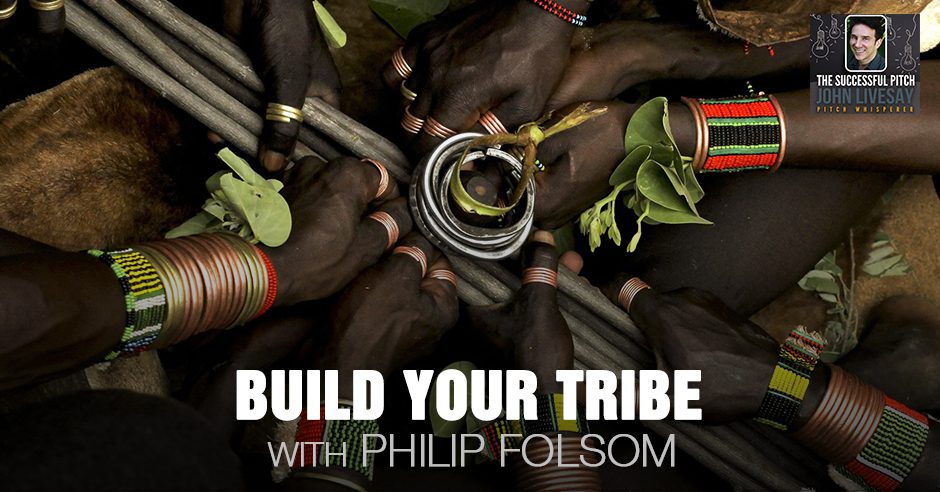
It is not anymore about the team, it is now about the tribe. Industry leader in team building and leadership Philip Folsom shares how to build your tribe in business and in life. Moving away from the concept of a team, a tribe has become the people who are beyond acquaintances or transactional business partners. Philip talks about how to build a legitimate relationship-based collaborative connection. He gives great insights into creating an environment where people feel safe and healthy, which ultimately increases productivity and loyalty. Making a play on words, he also puts forward the notion that to decide is connected to suicide and homicide where you are literally killing off other ideas. Philip goes deep into all of this as he lays down in metaphors on why we need better relationships in our businesses.
—
Listen To The Episode Here
Build Your Tribe with Philip Folsom
My guest is Philip Folsom. He’s gone into the dark woods. What he learned there is that individuals and organizations can do and be anything if two things are in place. One, a model of success and two, the tools to reach it. He’s got game-changing tools that have improved over 500,000 people’s lives in the last many years through his work. He’s acknowledged he’s an industry leader in team building and leadership, especially the Los Angeles High Ropes Challenge courses where he has a Professional Development Adventure Program. He came from Washington State. He has a great story he’s going to share about being raised by a single mom and joining the Army at seventeen. His own hero’s journey of hitting rock bottom and coming back up and helping everyone who works with him and encounters him heal. Philip, welcome to the show.
Thank you, John. It’s a pleasure and an honor being here.
I like to ask my guests to take us back as far as they want to the story of origin. Did you always know you loved animals? Tell us about your journey. You can you can start when you joined the Army or you can start earlier than that. I want to give people a timeline of what happened to you that caused you to become an expert in this.
Part of the theme when we talk about the hero’s journey or any type of narrative related to that is that it’s only by going into the shadow that we are able to excavate our gold. That’s a vital component of my story and all of ours. I grew up in classic pre-trauma environments of some neglect and some poverty. It was pretty abject challenges when I was growing up. My dad left early. I went into the Army at seventeen. Like a lot of us, I didn’t go in out of patriotism. I went in there as a means of escaping the situation I was in. In the Army, I had some acute trauma piled on top of chronic trauma. When I got out it was brought to my attention that I had some challenges that I had to deal with. I dropped out of grad school and went on to as a contemporary Vision Quest experience where I studied meditation. I studied equestrian therapy and Outward Bound adventure programming and archery.
What I discovered about myself was that there was healing to be done. It was a choice that became available to me. One of the big themes is the choices of the function of awareness. A lot of people simply aren’t realizing that they have the opportunity to heal and expand and grow and connect and claim the title of hero of their own story. I was always a minor character. In fact, inside of me, there still is a little kid who is marginalized, unsuccessful and terrified of being revealed. I have to acknowledge him. I keep him right next to me. I don’t let him get behind me. I don’t let him blindside me and undermine me. I want to have that little rat sitting right next to me so I can keep an eye on him. I can choose to have him sit down. I get to be the full king of my kingdom now instead of the minor Prince character.
[bctt tweet=”Going beyond team building is tribe building. ” username=”John_Livesay”]
Let’s talk a little bit about the equestrian therapy and how that tie into also what you’re doing with the SPARTA Project?
Equestrian therapy is incredibly powerful. My horse guru is Cheyenne Price. She’s an amazing six-foot blonde horse guru. She has the ability to utilize her animals and tap directly into whatever secret stuff is going on. Horses are prey, which is different than us. We are predators. We have eyes in the front and we are designed for acquisition. One of the secrets of success is to be able to turn whatever it is that we want to have a shift in our life into an acquisition story instead of an avoidant story. Predators don’t like to lose anything including weight. Instead of losing weight, I want to gain fitness. All of a sudden, this reticulate activating system gets triggered and we look for opportunities to gain fitness. The horses are the opposite. They are prey animals, so they move away from energy. It’s a different dynamic. If you can learn how that communication system works, all of a sudden it allows us this tremendous desktop experience of being able to manage our emotions and connect with those things. They see right through you.
The moment you walk into the round pen, here’s a big naked 2,000-pound animal that knows exactly what’s going on with us energetically. We’ve stuffed down our animal nature to the point where we are in our head a lot of the time. Horses can’t afford to do that and they don’t have that available. They know if you’re a bully. They know if you’re an impostor. When I trump in with all of my masculinity and my boots and whatnot, they call me immediately on it like, “You’re not all that.” Come down to your real level and then we can engage with a conversation and a relationship that’s healthy. Once you’ve earned that respect and trust, now we can engage with some different forms of more robust conflict. The horses are one of the animals I use. The other one are wolves. That’s probably not been my favorite thing over the last couple of years.
In fact, your tagline is, “The time of the lone wolf is over.” If you wouldn’t mind sharing why does a lone wolf cry? How does that relate to wolves never biting each other as dogs do? That’s a fascinating insight you have.
We have to start with the reality that we are pack animals. In addition to being predators, we’re pack animal. We have things called mirror neurons, which is this synaptic, legitimate neuron-type that we have that gets triggered when we are connected with another member of our tribe. It releases serotonin. It also is the source of empathy and compassion. We need each other. We need it at a cellular level if we’re going to feel good about ourselves. Wolves are the same. Wolves are also a pack animal. They’re predators. They have mirror neurons and so do horses. What’s happened in our society is that instead of being in our kinship-based tribal systems, we have gotten successful that we’re living in these giant mega tribes. We have moved out of that sweet spot of about 50 to 75 people that we can maintain deep relationships with. We’ve shifted from being personal, connected and collaborative, vision, mission, value-sharing partners to these impersonal relationships we move around with and it’s anxiety-producing for us.

Build Your Tribe: One of the secrets of success is to be able to turn whatever it is that we want to have a shift in our life into an acquisition story instead of an avoidant story.
What happens is when we’re looking at the big drivers of wellness, health and success, it comes down to relationships. This has been studied scientifically from not only longevity but in your specific field of sales and business success. It’s all about relationships and getting those skills. The wolves, why I use them are that they are designed to hunt big game. We are also designed to hunt big game. Except for our big game now and we start looking at our lives is the game of doing something that provides meaning, purpose, service and something bigger than us. If we are going to be able to move towards those big goals in our life, we need other people. We need them beyond an acquaintance or a transactional business partner, but a legitimate relationship-based collaborative connection.
It always comes down to the team and over and over. No matter how big or small the company is, it’s how well does that team get along and respect each other.
Beyond team is a tribe. The tribe is people who are not only connected at a mission or accomplishment level and a visual level which is here’s our job. Beyond the job is what’s the why? What’s the meaning? Why does this exist? Why am I being willing to share and donate eight hours of my day to this cause? It needs to be that important. That’s a tribe.
Part of the way the wolves operate as a pack in their particular tribe is they may fight, but they don’t ever bite each other. Can you explain the difference of how dogs fight versus wolves and how that impacts us in our business life?
When we need somebody, if you have a partner that you need to be able to show up and deliver for you to sell a house or in the case of SpaceX to be able to get to Mars. You’re talking big game stuff. You need those people to do their job. You can’t afford to have them be compromised in any way, which means instead of vague, undermining, politicking gossip, competing with those people. You want to now be reciprocal and be the best cheerleader those people you can because they are an extension of yourself. When we’re talking about tribal or partnership relationships, you want that partner to be absolutely at their sharpest, their most powerful and they’re most resilient. You can’t afford to undermine them. In the case of wolves, they can’t afford to bite each other. It takes ten wolves to pull down an elk.
[bctt tweet=”Choice is a function of awareness.” username=”John_Livesay”]
If they compromise the strength of the pack by infighting, they all starve. This is a hard-wired behavior amongst the wolves because they have that taboo against biting each other. It’s a survival mechanism. All of a sudden, they have the opportunity to express and discharge conflict almost nonstop. They squabble. They talk. They snarl. They posture. They also play because once they have discharged any of that immediate conflict that they’re having, then they get to be completely clean with each other. They run off and play and engage with whatever they’re doing without having that weird, toxic, stuffed down experience that we have when we can’t express our feelings. Sigmund Freud calls that the Theory of Hydraulics, “Whatever we shove down, it’s coming out somewhere else.”
I’ve heard the term that it’s leaking out the anxiety or the stress. What you’re doing with the SPARTA Project, it’s a non-profit for veterans and emergency first responders who are dealing with post-traumatic stress. How does your work with the wolves if at all impact that? What are you doing to help people overcome that?
We are running a cohort. It’s a five-day residential free program for veterans and first responders. This is an all-female cohort starting. We’re proud to be running this program. We run off donations. If you or somebody else you know is interested in giving back to a lean, non-profit, TheSPARTAProject.org is the name of that. We use what’s called a parallel process, which means we are going through this journey along with the veterans because all the good facilitators, all the good storytellers, yourself included. You’ve come from a place where you had to go on that journey. You had to go into the woods and you discovered that the only way out is through. We have to get all the way through the story. We have to resolve.
It’s different than the medical model where there’s a smart person telling you how you should live your life or how you should refill your strategic objectives at work. Good people are co-creators. You mentioned that even when you’re talking about engaging with your clients in a co-creation process. It’s the difference between a doctor and a midwife. The doctor gets to deliver the baby. The mothers who are reading this blog, you know the doctor didn’t deliver the baby. You delivered the baby. The truth is that we’re here to facilitate the creation of whatever that project or healing is for our clients and where they are to be. Sometimes a cheerleader, sometimes its support, sometimes it’s an accountability partner.
That’s what we’re doing with the veterans and first responders are we’re going through this journey with them because we’ve been through the dark woods. We know what’s in there. We know the road that will get us out. The wolves heal each other. Here’s another shout out to a great lean nonprofit, ApexProtectionProject.org. They rescue and rehabilitate wolves and wolf dogs that have been abused, mistreated and neglected. They bring them out to their sanctuary. They slowly integrate them into their healthy pack and the pack heals the wolves. This is how we as humans are going to heal each other are that we need to build the relationships. We need to be able to discharge our shame. We need to be able to go through and feel the pain and get honest with each other. This is true at a relationship level and also at an organizational level. When you’re looking at all the big societal challenges that are happening in our industries, at some point we’re going to have to go all the way through this piece and get the healing done.
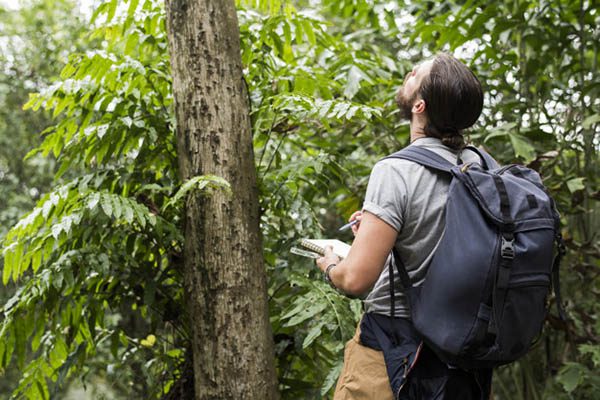
Build Your Tribe: In our own journeys, we had to go into the woods and discover that the only way out is through.
The other thing that is surprising about you because you present an extremely alpha male. The way you dress and the fact that you’re outdoors with animals and wolves and horses. You’ve got the hat. You’ve got the whole Indiana Jones vibe going on. Yet you also spent several years as a professional ballet dancer. I’m fascinated to hear that story. How did you go from being in the Army and hitting rock bottom? Ballet is traditionally something that people start very young or something that typically only wealthy people are involved with. It’s a cultural artsy niche. How did that come about?
If I have received any divine blessings, one of them is the ability to go on weird journeys that for some reason people are not allowed to do. I can thank my strange parents for that. I grew up on a commune. I grew up pretty alternative and maybe that little chunk of experience allowed me to go on some weird journeys that are different than other people. Thanks, mom, thanks dad for that. One of them was I got out of the military and I had to take a PE class in community college. I was going through all of my challenges and trying to reintegrate. I was trying to do things as far off of the military as I could. I was looking for balance. The military is highly structured. It’s hyper-masculine. Here was an opportunity to get a PE credit and do something that was much more expressive and much softer. I took a ballet class in a community college. I enjoyed it. It was fun. The teacher said, “I’d be willing to give you some free classes if you come down and do some of the partnering work.”
I was out of the Army. I was twenty years old and strong. It sounded like fun to me. I was taking classes one evening and a bunch of strangers showed up in the class that I hadn’t seen before. I was taking classes with kids. It turned out it was an audition class for the Spokane Ballet Company. There weren’t any tall guys and the prima ballerina of the Spokane Ballet at the time was Rachel Ferrelli, a big six-foot Italian lady. The ballet director said, “Have you ever wanted to be a dancer?” I said, “What does that mean?” “I’m looking for a partner for Rachel Ferrelli and all you got to do is learn how to partner well and look good in tights.” I said, “Let’s do that.” It led me down to Los Angeles. I danced at the Los Angeles Ballet and I danced with a bunch of companies down here. I was never a good dancer. I had done enough martial arts and I looked good in tights.
I know a lot of professional athletes, football players, in particular, do a lot of ballet work to be agile and things. It all fits into your work because you’re working with companies like Sony, DreamWorks and Apple helping them as a high-performance tribe culture coach. Can you tell us what that looks like? Who would hire you? What problem are you solving typically? Give us an example or story of an outcome of someone after working with you.
Stepping back from that, I spent many years doing team building at a local company in Los Angeles. What I was noticing is that it wasn’t changing anybody. I was seeing the same clients that would show up year after year. They were having the same challenges. I realized something that our industry is doing is not creating sustainable results. I’m in my 50s right now. We start looking at legacy. You start thinking about the purpose. What impact did I leave with this? Did I move the conversation forward? I would define that as the transition from passion, which is kindling, it burned hot, fast and easy. It’s me-centric and then transitioning from that passion into purpose, which is like a big log. It’s something that carries a tremendous amount of energy, but it’s hard to get it lit. We get to into this point in our career where we’ve got a lot of skills and we’ve done our 10,000 hours to achieve mastery. We start looking at those bigger purpose conversations of, “What I want to do in the world?” Usually, it’s not about us anymore. It’s about what’s the service component. I eventually started realizing that I had to do a couple of things in my career if I was going to achieve organizational transformation with my clients.
[bctt tweet=”It’s only by going into the shadow that we are able to excavate our gold.” username=”John_Livesay”]
I needed to start understanding strategy. I also needed to start understanding the culture of the organization because it’s easy to change people short-term. If we go out and do something together, there’s going to be an immediate boost in morale, trust and some other fast-burn drivers of energy. We immediately are going to revert back to our baseline of behavior and that baseline is culture. We need to be able to go into a culture and we need to fix that. What is culture? What are the components of it? That was when I got to start growing in my true passion, which beyond healing people is understanding humanity. I studied Paleoanthropology at UCLA. How does our species work? It turns out that journey is a perfect dovetail to upgrading the culture of organizations because the reality is we’re no longer kinship-based animals. We are career-based. Our work teams are the new tribes. That is the anthropological reality.
I’ve studied with the Maasai in Africa and all over the world. When we go in to study these people, there are certain formats about looking at how a culture works. That’s the same thing that business consultants are doing. They’re going in and going, “How was your alignment with vision? Does everybody understand exactly what the mission parameters are? Your strategy? Your tactics? How is morale? How are your values operating?” This is straight anthropology work, but it also allows people to co-create and participate in their culture. This is that time where we get to now have access to all of this tremendous information of humanity and be able to create the cultures that we want to have at work, which is hopefully they’re going to be healthy. More importantly, they’re going to be high-performing. That means we’re going to be able to be competitive, innovative, resilient and have high retention. These are all things that from a business standpoint are the primary profit drivers of the business. Culture does that for them. I work at SpaceX. I do a lot of work with Red Bull. I work at Universal and other industries.
What you’re helping them do is create a safe environment where people can express concerns or confusion or even new ideas without being heavily ridiculed or criticized. That healthy feedback loop from working with you on adjusting their culture allows companies to attract and retain top employees and to even be more productive with those that are there.
One of the unique things that myself and some other people are doing is that you cannot decrease safety. It doesn’t work. Creating safe spaces at universities where there’s no hate talking, it’s not ever going to work. At some point, you have to shape an environment where people are either resilient enough to handle pushback or they’re treating each other as extensions of themselves. At which point they can give feedback, but they’re not biting each other. You cannot write trust and safety up on the break room wall and go, “Now we have a safe environment.” It doesn’t change anything. You have to shape the environment so that it’s changing behavior.
You do that by taking people out into nature and doing all these group activities together that build trust and bonds as opposed to being an intellectual concept.

Build Your Tribe: When we make a decision, we’re killing other ideas.
Those big challenging activities, which are my adventure Vision Quest stuff. I do ropes courses and other big epic things. Those are not creating character, they are only revealing it. The creation process happens during reflection and process. This is one of the things that we don’t do well and most organizations don’t because we are over-programmed and we don’t have time to reflect. A lot of the time we are simply jumping right into, “What’s happening in Q2? We need to get those numbers.” There needs to be that moment of breath where we go, “Are we in alignment? Are we creating the outcomes and the experience that we want to have?” This is something that is on a micro level with us and also on the macro level with big industries is there should be at least some breath in between Q1 and Q2 where you go, “Are we in alignment with our vision and values? Are those things correct?”
When we make a decision, we’re killing other ideas. In the business world, if you’re in sales, in particular, you’re asking people to buy what you’re offering. Therefore, you have to have some empathy that if they buy what you’re selling, they’re going to be making some changes and other options or ideas are therefore being killed off. Can you elaborate on that? It also helps people with addictions, which was mind-boggling to me with food. Anything you can talk about around that would be interesting?
When we look at the word decide, it contains the same entomological root as a homicide, suicide. It means in Latin to cut or kill. When I decide something, I’m killing off my other options. In economics, that will be your opportunity cost. If I want to find out how I’m making decisions, I need to pop the hood and take a look at what are my priorities. Even the word ‘priorities’ is a new term. Usually, that’s only a priority. It’s singular. What is the one priority of all those hundreds of things that I want to experience more of in my life? What’s the one that bubbled to the top and I made that decision and killed off all the rest of those things? That one top priority would be my highest operating value. When we’re looking at either individual or organizational decision making, change management. If we want to ever get in the driver’s seat of being able to make intentional directional courses as we move through our world, I need to at some point take a look at what are my values? Those values are driving the decisions of the things that I’m killing off. Organizational values are not simply a fun thing to put on your website in the break room. If they’re correctly implemented, then they are guiding the navigation of your organization.
Philip, you’ve been a great guest. Your website is PhilipFolsom.com. They can sign up for a newsletter. What’s the best place to follow you on social media might be?
I’m Philip Folsom at LinkedIn, Instagram and Facebook. That’s my website as well. Please jump on my newsletter because there is more of this strange esoteric but hopefully relevant and powerful information coming. In addition, there’s a monthly open program for people who want to spend a day with the wolves and me. There are cool change agents and seekers. I encourage you to stay involved. Keep changing the world and that starts with ourselves. It’s been an absolute honor, John.
[bctt tweet=”People don’t realize that they have the opportunity to heal, expand, grow, connect, and claim the title of the hero of their own story.” username=”John_Livesay”]
Thanks, Philip. It’s been insightful, entertaining and inspiring. I can’t wait to keep up with new ways you are impacting the world with animals and tribes.
Links Mentioned:
- Philip Folsom
- Outward Bound
- SPARTA Project
- SpaceXApexProtectionProject.org
- LinkedIn – Philip Folsom
- Instagram – Philip Folsom
- Facebook – Philip Folsom
- www.wolftribe.life
Wanna Host Your Own Podcast?
Click here to see how my friends at Brandcasting You can help
Get your FREE Sneak Peek of John’s new book Better Selling Through Storytelling
John Livesay, The Pitch Whisperer
Share The Show
Did you enjoy the show? I’d love it if you subscribed today and left us a 5-star review!
-
- Click this link
- Click on the ‘Subscribe’ button below the artwork
- Go to the ‘Ratings and Reviews’ section
- Click on ‘Write a Review’