

Martial Arts Leadership Skills with Aslak de Silva
Posted by John Livesay in podcast | 0 comments

Episode Summary:
Leadership skills can be honed from any discipline, especially martial arts. Aslak de Silva, the CEO of Nordic Business Forum, has successfully used his background in martial arts in being a word-class experience leader. Aslak who now speaks about sales, digital marketing, and leadership in general credits this to his early days in martial arts and the lessons he learned from becoming better every day and letting go of perfectionism. In this episode, he shares how he started achieving success and how he learned the value of learning principles. He also illustrates what happens behind the scenes in the Nordic Business Forum and how the audience can also benefit from the immense value that these conferences generate.
—
Listen To The Episode Here:
Martial Arts Leadership Skills with Aslak de Silva
My guest is all the way from Finland. His name is Aslak de Silva. He’s the CEO of the Nordic Business Forum. He’s also a keynote speaker. He feels that personal and team development are what makes him thrive. He is a world-class experience leader at C-levels. He has the Nordic Business Forum where he tracks over 10,000 executives a year to visit the conference and more than 20,000 people watched the live stream. He’s an international speaker doing 30 to 40 events a year. He speaks about sales and digital marketing, leadership in general. He also happens to have a background in martial arts. He gets people like George Clooney to attend his events. He’s great on knowing what makes a good talk and how to make a good pitch. Welcome to the show.
Thanks for having me here.
I want to ask you to take us back. You can go back as far as you’d like. You’ve got your degrees in business. You went on to get your Master’s in International Management, but how do you go from that to being the CEO of something as big and exciting as the Nordic Business Forum?
My first big career step was in martial arts. I started to train when I was twelve. I had a Korean master who was a very old school of martial arts. Even if you entered competitions and it didn’t matter who won the medals, it was more than you develop every day. You become better every day that way. The training wasn’t only about doing a particular technique or winning a tournament, it was more than every day you need to be better. It’s a harsh school because you can’t celebrate anything, that you see your mistakes. That got into me and I started to understand that, “How can I make every day better?” It means don’t make the same mistakes today as you did yesterday. Do something a bit better. In the end, it comes down a lot and you start realizing that you can learn a lot every day from anybody you meet or you can decide the way you want to go. If you want to go do yes or no or right or wrong, then life becomes quite simple. Long story short, I trained intensely for fifteen years. I was competing, I won a championship in one particular martial arts. I had about twenty clubs. I was teaching in the Nordic and in different countries: Norway, Sweden, Finland and Denmark. I had a couple of injuries.
I knew at the same time that you can’t play only one card. You need to have a backup plan. At the same time, I was studying, so I thought studying is a good thing to do because it’s about development. You learn new things and you want to focus on something. I thought in martial arts, you look people in the eyes all the time and you learn how to develop yourself. To me in the end, that was leadership. That’s dealing with people. That directed me to study also International Management. I felt already the international background living in different countries. I was intrigued by learning leadership and international management a lot.
[bctt tweet=”Meet your audience where they are now. ” via=”no”]
Let me ask you a couple of questions there. This concept of becoming better every day, does that help you let go of being a perfectionist and not beating yourself up when you do make mistakes?
Yes, I’ve been reading your book, John. You are a fan of that too. It is true. In the beginning, it’s hard because you do see mistakes and you get frustrated. I remember when I went to the competition, you felt that you could do better, but something is pulling you back in a way that somehow you’re stressful or nervous or you’re afraid of something. Those were the worst feelings. You control yourself and your mind. What I learned was how to prepare myself for the fight in a way that I could do my best. That felt good. If you do your best, you’re happy. It’s not about you’re perfect because you’re going to put yourself down on saying, “I made a mistake.” If you did your best at that time, you learn from the mistakes. You know that next time you will not do the same thing again. That’s a relief for you when you understand that perfection is something that you will never get into, but also sometimes you don’t know what that is, but you can always become a bit better. That’s very motivating for your development, that you know how to become better every day. You’ll know that you’ll be better. Even if now you didn’t win, you know that tomorrow you might win again.
As far as that mindset, because it is how I’m anxious, I’m stressed, I have some fear. I’m big on putting faces on the fear. Is it fear of rejection, fear of failure, fear of the unknown and figuring out how to deal with it? A lot of people are afraid of failure, especially when it comes to leadership. If you are a leader, you are like, “I can’t let my team ever see me fail or my team is so afraid of failing, they’re not taking chances.” What are your thoughts on that?
I do remember the times when you say, “Fake it until you make it.” You want to be something that you are not because you put it up in a way that you pep talk yourself that you can do it. You can get far with that and that’s totally fine. It also collapses the moment that you realized that, “I’m not that person.” As long as you’re honest to yourself, mistakes happen all the time. I was talking to my daughter and I was laughing, whatever I do, she says sometimes that I do a mistake. As a father, what do you do? When you realize that she’s unhappy about it or there’s something wrong, it’s just happened. Sometimes she thinks a different way. The same way in leadership also, I strongly believe that because it’s a human attraction that we’re talking about. We are not the same. If you can feel yourself doing your best and truly believe in yourself that you are doing the best you can with the right attitude, right spirits in all way and helping people. The outcome will be good. You’re not perfect. You’ll still make mistakes. If you worry about them too much, you cannot control yourself either and collapse there.
Take us on this journey that you’ve been on. You graduate with this International Management degree. You get involved in selling media. Talk about what that experience taught you. What are some of your secrets on selling?
When I was training martial arts, we did demos to people showing and going through what the martial arts is about. I did about 500 of those in different countries. I performed on TV. You can show physical sometimes, but you need to be explaining something. I learned how to explain. Even if I was exhausted, I’m always talking. People were asking, “How does this differ from other martial arts? What do you learn there?” I’m talking about these things and nuances. I always started in a way that, “What do you know about martial arts?” If the person said, “It’s not too much. Maybe karate or judo,” then I explain with that level that, “This is a bit similar to karate or judo, but maybe train more on your physical side as well.” If somebody was a super expert talking about nuances, “I’m going to mix martial arts training and I know these things there,” then I would talk on that level. I noticed that when I talk with people, you need to be able to talk the same language that they understand. Whereas I noticed that many people and I also, in the beginning, was super excited about what I’m doing. I try to teach everybody everything that I knew. I was talking about this is something that I learned. They’re looking at people in the eyes and seeing that they don’t understand me.

Martial Arts Leadership Skills: If you did your best at that time, you learn from the mistakes.
We have an expression here that’s like drinking out of a fire hydrant. It’s too much, too soon.
I realized that is sales in a way. That’s a conversation with people that you’re trying to teach something there that you love and you know about. You need to level up with the other one that you’re talking with the same language. You clarify for them. I could see that I could sell martial arts class to beginners or even the advanced one. That makes them intrigued about what I know and what we are training. I noticed how to talk with people. The other thing is in martial arts, when you go into a fight, you look at the person in the eye all the time. You’re reacting to what they are doing. You sense the feelings that they have. Are they confident or are they nervous? You can see when are they moving forward, what happened?
I was focused on observing what the other one is doing based on how I move, how they move. The fight in total to me, in the end, was observations of things that are happening. I graduated in International Management. I also thought that I have no technical skills or anything. The only thing I can do is to be with people. I thought that sales is something that you can also have the same attitude as with martial arts that you start somewhere, but you can develop yourself to become better. The results are quite easy to measure. I thought that this is something that I would love. That’s how I ended up in sales.
Sales is a conversation. Meet your audience where they are now. From there, you know exactly how to customize what you’re talking about, not too high, not too complicated. You went into media sales. You got some experience with selling using your martial arts experience. How did you get involved with the Business Forum?
Basically, in sales what happened was that in the beginning, I was not that good. I started with telesales. I remember picking up the calls and selling magazines. That was the first one, subscriptions for magazines and I didn’t like it. I knew that if I get credited in somehow, I can move forward and get a better place to work for. I had no experience of working. I was training and teaching. I thought that it had no value. For summer, I was working on a magazine subscription. I was the sixth-best in the month of July in selling magazines in Finland for a particular company. There were 500 salespeople. I took that diploma and said that the telesales is not going to be a problem. I was going for companies that have a better product that they were talking about content marketing or most solution-based. That’s what I loved.
Being able to talk with people and understand what they want and pitch it back, “If I have something to offer, this is how you work.” I got lucky in sales. There are a lot of books there. I started reading them and taking classes. I got promoted to be a country manager in a company called Mediaplanet in Finland. They’re running twenty people there. I realized that I want to develop my leadership skills as well because when you’re leading people, there you go. A few days later, I run with Nordic Business Forum. It was from the same town that I was born. I had heard about the story and they were bringing these world-class speakers to Finland. They had that time, Al Gore, Jack Welch and Brian Tracy and so on.
[bctt tweet=”Become better every day versus striving for perfection. ” via=”no”]
I was like, “They are coming here. This may be something that I would go for.” I was used to learning from the master. I’m used to listening to people on stage, observing everything that they are saying and I was writing notes. I managed to get into one of those events. I remembered the first speaker was Jim Collins. I have read the book, Good to Great. When he was speaking, I was like, “This is it for me.” I can listen to him live, make my notes and I can even ask questions there if I have some. I noticed that there were people around who were doing the same and I felt that group spirit that this is now the right group to be. Ever since I’ve been a customer of Nordic Business Forum, all the events they had in Helsinki, Sweden and Oslo, also as a sponsor there with my company that I was working before. I thought that was the best place to be.
Now you’re an international speaker yourself. What’s the name of some of your favorite keynotes that you give?
I’m not that good a speaker as you are. I’m not that recognized. I talk about depending on what people want to talk. I talk about sales and marketing alignment like how to work together and how to learn from each other. Lately, people have been more interested in knowing what you can take from martial arts to sales and leadership. I take those learnings that I’ll get in other principles of the old style of martial arts and the principles of lifelong learning, and what does that mean in real life when you work?
I could see that being a TEDx Talk for you, the secrets from martial arts applied to leadership. That’s fantastic. I love the journey of going from selling something on the phone to now you’re the Chief Executive Officer of the Nordic Business Forum. Tell us a little bit about what that is and why people should make the effort to come and experience it, the leadership experience they get. Tell us what it is that people can understand and why people from all around the world are coming?
To start, what Nordic Business Forum is we need to have to go for the founding story because that explains the spirit of how everything is happening. The two founders: Hans-Peter Siefen and Jyri Linden, they met at college when they were studying. Their friends introduced them to themselves. They were both doing some sales stuff in different companies. They had been to seminars and thought that might be something that they want to go for, arranging seminars themselves or conferences. They had their first seminar in 2009 and about 80 people attending $10 per ticket. Already they said, “This is going so well. Why don’t we go for international scope?” They changed the name in 2011 to be Nordic Business Forum.
Hans-Peter had a skiing accident and he was in the hospital. They had to come up with a theme of responsibility. He used that time in thinking the concept where you have one question. He had a question of, “Who would be the best speaker of responsibility?” He was writing down all the answers that come to his head. He came up with Al Gore. He was excited that 2011 that Al Gore was a big thing and talking about these things. He went back to Jyri and said, “Now I know who we will get as a keynote speaker, Al Gore.” Jyri said, “That’s a nice idea, but that’s next to impossible because Al Gore doesn’t come to Jyväskylä to Central Finland. They Googled the name and tried to get his number and find Al Gore’s office number. That was Hans-Peter’s first international call and they got to talk to the team.
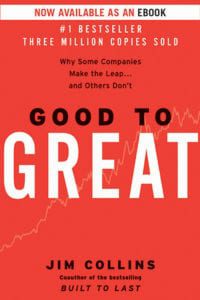
Good to Great: Why Some Companies Make the Leap…And Others Don’t
A few months later, they got the yes from Al Gore. The problem was that Al Gore wants an upfront fee for the speaker to be paid because it’s in Jyväskylä, Finland that nobody knows. They don’t know if they can trust the arranger and the organization as well. They had to sell their apartments and cars to be able to pay the upfront fee. The next problem was when they had Al Gore coming, they were trying to call people and say that Al Gore is coming to Jyväskylä but nobody believed that’s true. Luckily, people started to believe that this happened. They had other speakers. They were building up and selling tickets.
When Al Gore came to Jyväskylä, they were thinking about how to make the experience as good as possible. They called the mayor of Jyväskylä and said, “Since you have such a nice car, could you pick up Al Gore from the airport and bring him to the venue?” The mayor said, “Yes.” That says the attitude that you are willing to put everything because you believe that you can make it happen. For them, Al Gore was the best speaker at that subject field so they wanted to get him there. That gave him the best possible experience also to be there is something. This is what we do in Nordic Business Forum, we want every day to become better and make everything the best possible we know. We have learned lots of things. We made lots of mistakes and the experience passes on. We go through the things we have learned, the things we did well and then say, “What can we do better?” This is how it has grown a lot.
I like the lessons you’ve learned from martial arts, every day getting better so that you get better and better. Much so that you’ve got George Clooney coming to your event this October. How did that happen? I’ve never heard of George Clooney speaking at an event in the States, let alone in Finland? Was that difficult to get him to come?
You have to do some pitching skills as well. The same way we’re thinking that the theme for the 2019 event, which is going to be on the 9th and 10th of October in Helsinki, is growth. We were thinking of different themes of growth and how we can actually teach business owners and see them execute. One part is storytelling because that’s part of growth. You also know a lot about that. We were thinking who made the best stories that made a huge business. George Clooney happened to be in a tequila company that was sold for $700 million or $800 million. That’s a good storytelling skill to build up the company brand.
People don’t realize that besides being a political activist and being an Academy Award winner, he’s quite an entrepreneur. He’s in business with Cindy Crawford’s husband, Rande Gerber and gets paid very well for doing a lot of commercials overseas. He’s very connected to the pulse of entrepreneurship. I don’t care where you are in the world. That is one of those where they call in the business a great get. It sets the stage for why people would come and what they would learn. You have other locations as well that are coming up. Obviously, if people can’t make it this October 2019 to Helsinki, there are some other opportunities coming up both in Stockholm and Oslo. Would you tell us about those?
The Oslo Business Forum is going to be at the end of September. It’s quite close to Helsinki. The 2020 dates will be launched a bit later on. Stockholm is going to be on the 21st of September, 2020. The focus of these events is a bit different on the size and the length. In Helsinki, the main event is two days and a full set up with twelve to fifteen speakers. We only have one stage. Everybody’s looking and listening to one stage. Where in Stockholm, we go a bit longer than a half-day, a shorter term, fewer speakers but a concise package. It can be marketing and leadership in that sense. Whereas in Helsinki, we go broad where we will have some economists or professors also building the big picture. The same way in martial arts, my master used to say the technique is just techniques. The understanding of what you do comes from a bigger picture understanding first. You need to learn the principles.
[bctt tweet=”Sales is a conversation. ” via=”no”]
For instance, in 2018, we were having a couple of lessons on the blockchain. For business leaders, it shouldn’t be technical, what do you do in your business with blockchain? First, you need to understand what the concept means and what it means in the big picture of how it’s going to change the business field in general. Not your industry, not your company but those things. Then you’ll start understanding, “What does it mean to me?” This is the focus of our conferences in general. We were talking about George Clooney. When you learn how he perceives storytelling and what tips does he give? Many will think, “I will never get George Clooney to work with me.” That’s not the point there. You’re lucky if you get, but the point is to understand what he is thinking and you see the best in the world, the big picture. Then you can start thinking about, “What does this mean for my company, my business?”
Let’s give the audience an example of that. I talk about storytelling genres, give examples of a movie and a brand using that storytelling genre to communicate their stories. If people are thinking, “I’m going to come here, George Clooney talks about stories.” Obviously, he’s at the point in his career where he can produce, direct and even decide which one he’s going to star in. He must be able to look at a script and figure out what’s the story genre? Does it resonate with me? From a business standpoint, we can start to look at these genres and say, “Is this what my company is telling the story of?” Stories are what resonate with people and make them memorable. One storytelling genre is a rebirth.
There’s a classic Christmas movie, It’s a Wonderful Life with Jimmy Stewart, of what would have happened if had he killed himself versus staying alive. The impact that we all have. Prudential is a company that uses that storytelling genre. They say, “Your retirement is your rebirth. It’s your third act. It’s not just a continuation of middle age.” There’s a genre, there’s a movie and now I see a brand using it. Another example of that would be leave home, have an adventure and come back and tell about it. If you think of a movie that does that, that’s The Wizard of Oz. If Dorothy had listened to her aunt and went in the cellar, she wouldn’t have gone on that adventure. Expedia, that’s exactly their genre. They encourage people to go book a trip, go to Helsinki, go to Sweden or go to Stockholm. Go have an adventure and go to the NB Forum. Use Expedia to book your trip, come home and tell all your friends about what it was like to hear George Clooney or Seth Godin or anybody else that you’ve got. That brings it to life a little bit about storytelling, genres, movies and how having George Clooney as a storyteller in the movie business can be applied to business.
That was way more interesting to hear than having like a copy text of an advertising campaign. People resonate a lot on that. I truly believe that storytelling in that sense is a skill that every one of us would have to learn.
This has been fascinating. I’ve had the good fortune to get to meet and spend some time with you in person. I was so excited to bring your story to the audience that I am fortunate enough to have around the world in 60 countries. My intent is that people reading this are going to go to NBForum.com. Are there any last thoughts or insights that you want to say about either leadership or having you as a speaker or some encouraging words to get people to consider coming?
The focus of our event is on customers. What we want to do is to be the best in the world in arranging these conferences. Our mission by 2021 is to be the most significant business conference in the world. How that also happens is that the customer experience that people get when they are out there is something different. We have over 100 different places for what can happen. If the audience feels cold, how do we see that you are feeling colder? If you feel thirsty or if you look lost or you’re looking for toilets or if coffee spills on your pants, what do we do? If you lose your Apple pen, what do we do? To experience that because for leaders, especially if you’re talking about growth companies and you want to make it big. You need to understand how you can do that for customers. That’s the best place to see because there are lots of things happening, there are a lot of people at the same place and all that.

Martial Arts Leadership Skills: Storytelling is a skill that every one of us would have to learn.
Often people might feel bad or feel that they are not that special. 7,500 people in one place, there comes lines where you’re waiting. How do we deal with that? That is something also to learn because if you get that as a leader, you know how to be treated as a customer well-enough so that you can take that as well. That is one of the pitches that we use a lot. That’s what we’re famous for. We get even more tweets about great customer service that we offer at the events than when we had President Obama on stage. That tells a lot that even though that was a huge thing for us and for the audience, still people value even more the experience that they get there.
That is fascinating because when I was working with the Banana Republic and Neiman Marcus, they were always talking about the definition of luxury as anticipating a need before you know you even need it. The Banana Republic said, “We can’t compete with Neiman Marcus but we can try.” They offered a place to charge your phones when you were shopping at some of their places, Rockefeller Center or big stores so that you go, “That’s a need I didn’t know. I need to have my phone charged while I’m shopping.” The irony is their sales went up because people kept shopping while waiting for their phone to fully charge. Lexus did the same thing. They said, “We’re going to connect your phone to your sound system so that when you’re blaring your music loud and the phone rings, we’re going to turn the volume down so you can hear your phone ring.”
You didn’t know you needed that but it sure is a luxury. When you’re describing you’re lost, you’re cold, you’re confused, coffee spilled, it’s almost like a top-level Concierge Hotel being willing to anticipate. For that kind of volume, it’s not just intellectually hear somebody talk about it, but to come and experience it, they can take those lessons back to their own life and business and make themselves even more productive. That’s such a great takeaway. What a joy to get to know you. I am excited to read about and watch some of the live streaming for the upcoming events. I’m looking forward to attending one myself again.
Thank you, John.
It’s NBForum.com to find out more about you. Are there any other links you want us to mention?
No, that’s fine.
Thanks again. We’ll look forward to hearing all about the exciting lessons learned from your wonderful events.
Thanks, John, for having me here.
Links Mentioned:
- Nordic Business Forum
- Good to Great
- Mediaplanet
- Hans-Peter Siefen
- Jyri Linden
- https://www.NBForum.com/
Wanna Host Your Own Podcast?
Click here to see how my friends at Brandcasting You can help
Get your FREE Sneak Peek of John’s new book Better Selling Through Storytelling
John Livesay, The Pitch Whisperer
Share The Show
Did you enjoy the show? I’d love it if you subscribed today and left us a 5-star review!
-
- Click this link
- Click on the ‘Subscribe’ button below the artwork
- Go to the ‘Ratings and Reviews’ section
- Click on ‘Write a Review’
Close The Sales Gap Through Stories with Dr. Mark Goulston
Posted by John Livesay in podcast | 0 comments

Episode Summary
—
Listen To The Episode Here
Close The Sales Gap Through Stories with Dr. Mark Goulston
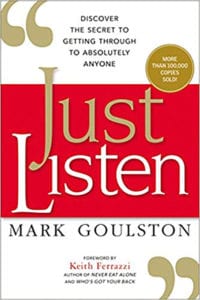
Just Listen: Discover the Secret to Getting Through to Absolutely Anyone
I am thrilled to welcome back, Dr. Mark Goulston, who is my mentor and a close personal friend. I’m honored to say that. I’m going to tell you a little bit about Dr. Mark. He was originally a UCLA professor of psychiatry for over 25 years and a former FBI and police hostage negotiation trainer. Imagine being qualified to do that. His expertise has been forged and proven in the crucible of real life, high stakes situations. If you’re in sales, there are high stakes situations all the time, whether you’re going to get the sale or not. That’s why we brought Mark on. He’s an influencer who helps influencers become more influential. His background from speaking in Russia on empathy, which is a key skill that any person in sales or pitching needs to have, as well as the author of several successful bestselling books such as Just Listen. He’s an expert on so many things, but he’s going to talk to us about how we can become better sellers and the science behind it. Mark, welcome.
Thanks for having me on again, John. I’m proud to call myself your mentor. That’s really been special.
Mark, you and I were having a conversation that generated the concept of multitasking. People are like, “I’m going to be on my phone. I’m going to be listening to you and writing an email at the same time and maybe checking a text message that pops in.” There’s a big myth around that. I think you’re an expert who can talk about that as a topical opener because you can’t sell and tell a story at the same time. It triggered so many thoughts about multitasking and the ability to be present with people. Can you talk about what inspired you to have that insight?
I have an anecdote because people remember stories. I think you may have taught me about that. Here’s a story. We live in Los Angeles and they say it’s better to show than tell. Within a month after 9/11, I was called in by a number of groups to say, “Can you call the group down?” I was a member of a professional services networking group and these were lawyers, accountants, insurance people, very transactional people, but the whole world was shaken. I did an exercise with one of the groups which had about 25 attendees. I said, “I want each of you to talk about a dark time in your life that you never thought you’d get out of but you did and that life was never the same again after you got through it.” What was fascinating is they all went around. I think it can show you the power of a story. There was a very civil, demure female attorney. It was very easy back then, hopefully, it’s changed, to see people who had manners, who are attorneys not having the killer instinct, not having what it took to be able to handle your case. She was seen in that way. She was highly competent.
Here was her story, and she said it with no scintilla of being impressed with what she said. She said, “One of those times in my life was on the day that I graduated law school and I was about to be given a chance to start paying back all the debt I had. On that same day, I was given total custody of my two younger siblings.” You could feel in the audience, she’s no lightweight. What was fascinating is I would say it was 90% recall of people’s stories. Whereas this group, we’ve been meeting for years and a lot of times you hear the elevator pitch and you still don’t know, “Is this a banker? Is this an accountant? Is this a lawyer or what do they do?” They say the same old spiel.
I think what happened is as people shared stories that they were connected to, everybody lowered their guard. That’s what you and I spoke about. When you share a story that you’re emotionally connected to, it causes the other person to feel he or she is emotionally connected to that story so I can lower my guard and lean in without worrying that they’re going to do a bait and switch. That said, and you’re a master at this, you need to teach people that when they share a story, it just can’t be a memorized one where they raise the inflection at the proper time to demonstrate how I am so emotional and then do a bait and switch. It’s a challenge because when you tell the same story many times because it touches a nerve, you need to be able to still be present in the story as opposed to knowing this is instrumental to my getting them to connect with me and then I’m going to start selling them.
Actors on Broadway get the same script every time, and yet the really good ones make it fresh and respond to how the audience is responding and they’re in the moment, which I think is the big takeaway. If I’m someone who is in sales and we all have to sell ourselves, we’re pitching ourselves to get hired, we’re pitching ourselves to get a new client, we’re pitching ourselves to get hired as a speaker, we’re pitching ourselves to get our start up funded. Whatever it is, you’re selling yourself and your ideas to get implemented all the time. People say, “It’s time to sell. Push.” My whole premise is to tell a story that people see themselves in and you become magnetic. Instead of pushing, you’re going to pull people in. When you’re telling a good story, you’re so present as you just described, that you’re not selling. What happens to us from a scientific standpoint? You obviously have a medical degree, so you understand mirror neurons and how that all works. Why is it that when we’re telling a story where accessing, if you will, a different part of someone’s brain and the defenses go down?
I’m glad you mentioned mirror neurons. I have several books and I have a book called Just Listen and the subtitle is Discover the Secret to Getting Through to Absolutely Anyone by Listening. What I talked about in there were mirror neurons. For people who don’t know much about neuroscience, mirror neurons were discovered in the late 1980s actually in macaque monkeys. They were called “Monkey see, monkey do” neurons because people noted that monkeys would imitate each other. They would even imitate you. There are pictures where you’ll see someone sticking their tongue out and one of the monkeys and the monkey sticking his tongue out backwards, back at that person. Mirror neurons mirror what’s coming to them. I introduced the concept in Just Listen, which I’ve spoken to in many occasions, called the mirror neuron gap. Imagine that we’re often trying to mirror others. We’re trying to conform to their needs. We’re trying to please them. We’re trying to not tick them off. The more that we do that consciously or unconsciously, the more it develops a hunger in us for the world to mirror us in return. The greater the mirror neuron gap, meaning the more we feel we’ve confirmed everybody else’s emotional, psychological needs, the greater the gap and the greater the gap, the higher our cortisol is. It is stressful when there’s a big gap. Some of the things that widen the gap are sarcasm, ridicule, abuse and sullenness.
Define that word for us just in case it’s not a word that everybody says in their everyday language.
Sullenness means if you have ever talked to a teenager or a spouse and they’re really upset and you think they’d feel better if they spoke about it, they just say, “Leave me alone. I’m fine. I’m okay.” Clearly, they’re not a happy camper but they’re just sullen. They’re withdrawn and they’re moody.
[bctt tweet=”You can’t sell and tell stories at the same time.” username=”John_Livesay”]
Let’s double click on that because for people reading, you can transfer this, not just to your personal life but your business life. If you’re managing people and you’re trying to motivate them or you’re a speaker, like you and I are, and we’re trying to motivate an audience or just not getting through, sometimes it has nothing to do with us. If you’re selling something to someone and you don’t have any idea what the story was, what phone call they got. Maybe they got chewed up by their boss, who knows what happened and they are just not in the mood to hear what you have to say? The awareness that not everybody’s always just as excited as you are to be talking about what you’re talking about is a huge tool in our toolbox.
It reminds me of a 60 Minutes segment that Oprah Winfrey did. It was about a program I think in Wisconsin that treats childhood trauma. In the 60 Minutes Overtime, someone interviewed Oprah because Oprah said that was the most life-changing story she’s done in her entire career. That’s a pretty big claim, so the person interviewing her in 60 Minutes Overtime was like, “What do you mean?” She said, “There’s a reason they’re so successful in treating these traumatized children who are not just passive, they’re acting out, they’re doing destructive things, they’re hitting, they’re kicking. Their whole approach is they believe that most people are good inside, but it gets distorted. Their whole approach when they approach people is to say, ‘What happened to you that this is what’s going on now?’” They always believe that something happened, a prior story, a prior incident to cause what’s happening as opposed to just jumping down their throat and saying, “Stop doing that. Why are you doing it? Why are you acting up?”
It was fascinating because the reporter asked Oprah, “Did that change your life?” She said it changed everything. I think what she was really admitting is that between the lines that you can be judgmental if someone acted up instead of realizing something had happened to them to cause them to act up. I think what she was admitting is before realizing this, I would react to the behavior and said, “Why are you doing that? Stop doing that,” as opposed to, “What happened to you?” Here’s the power of going behind things and it’s in my book, Just Listen. There’s an anecdote and this is the power. If you’re reading and you want to influence people, what’s more powerful than what you tell others is what you enable them to tell you that matters to them. The more you can get them to tell a foundational story or a story behind what’s going on. To your point, I was meeting with a CEO and it took a while for me to get an appointment with him. I’m seated with him and it is clear he’s not there. He’s not making eye contact. It’s clear that he had made the appointment and he probably wanted to cancel it.
I work for myself. I can say things that if I had a sales manager and I told him I said this, they tell you “How did you dare say that?” To this fellow who was clearly preoccupied, I said, “How much time do you got from me?” He goes, “What?” I said, “Your time’s up.” “What do you mean?” I said, “How much time do you got for me? Look at your calendar.” He ruffled around. He was ticked off and he said, “Twenty minutes.” I said to him, “We’re into minute three and it’s clear that there’s something more important in your mind than meeting with me. I’m guessing it’s more important than a lot of the things you’re going to do now. Here’s the deal. Let’s stop our appointment now at minute four, but take the remaining sixteen minutes and take care of whatever is on your mind because I think what we would talk about would be worth your undivided attention, but you can’t give that to me. It’s not fair to this conversation, but it’s not going to be fair to other people. Take care of that other thing. If I’ve been too rude, just tell your assistant, ‘Don’t ever let him back.’”
He was a big footballer and he looked at me and he paused and then his eyes watered up. I say to myself, “Mark, you can’t be the shrink out in the business world. Stop making people cry.” He looks at me and he says, “You’ve known me for four minutes and you know something that people 30 yards from us don’t know because I’m very private.” I said, “What’s that?” He looked at me and he said, “My wife’s having a biopsy and it doesn’t look good.” His voice is emotional. I said, “Go be with her. You shouldn’t be here. Make a call. I’m sorry. Take care of it.” It was fascinating because he looked at me and he felt the relief of being able to tell his story that was behind his behavior. He was like one of these big Newfoundland dogs coming in from the rain. He shook his shoulders, he looked at me and he said, “I’m not as strong as my wife, but I’m pretty strong. I did two tours of duty in Vietnam. You’ve got my undivided attention and you’ve got your full twenty minutes.”

Storytelling And Selling: A lot of people have trouble with their close, pitch or sales because they’re so nakedly about themselves.
I think if you’re reading this, what happened is I mirrored him by knowing something was going on that was causing him not to be present. By then having him tell the story of what was going on, and again I didn’t race to put it aside. If I was really a jerk, I would have said, “Do you think you’ll be able to compartmentalize that so we can get onto the pitch?” It shouldn’t surprise you. I know this person since then. That’s the power of not only storytelling but getting other people to tell their story. There’s something I’ve come up with, and you might want to try this if you’re doing a pitch. What I notice is a lot of people have trouble with their close, pitch or sales. The reason for that is because you’re so nakedly about yourself. Even if you’ve had this conversation, when you have to come in and ask for the sale, a lot of salespeople are awkward because what you’re doing is you’re stepping out of it being about a win-win into, “Am I going to get my number?” That’s I think what fuels the awkwardness.
Something I’ve been coaching sales teams about is what I call starting with the close. Somewhere early on in the conversation and you have to modify to fit the situation and whatever you’re selling and you say to the other person, “Can I tell you what I think our conversation is about? It’s not about me selling you anything or you buying anything,” which would intrigue people to go, “Can I tell you what I think is going on?” You’re doing this early on, you could say, “The purpose of this conversation is that I get a yes from you. If not now, in the near future. If I get a yes from you, there’s a possibility, I’ll not only meet my numbers but I’ll exceed my numbers. I’ll get a raise. I’ll get paid more. I’ll get a bonus. I put myself in your shoes. What I realize is it’s about for you as what I call 1116 squared.” I’m putting that together in an article and possibly a book and they’re going to say, “What is that?” You could say, “What you’re listening for as the buyer of products and services for your company is if you say yes, whether you will regret it one day, one week or one month from now. That’s the 1, 1, 1.”
You’re listening for that because if you regret it and it turns out badly, your boss is going to say, “What did you buy this thing for? We can’t use it. We can’t implement it. I have to tell my boss why we brought it into the company.” My guess is you’re listening to make sure that you won’t have the 1, 1, 1 regret, but the six squared is what you’re really listening for unconsciously. I this going to be the purchase where your boss’s boss says to your boss, “I’m giving you a raise because you and your group just brought something into the company that helped us be so much more successful than the CEO singled me out to say, ‘That was pretty neat, what you brought into the company.’” The 6 squared is what you’re hoping is that your boss’ boss will be so pleased with they’re getting a raise that they’re going to do the same for your boss. If your boss is someone who’s not totally self-absorbed, they’re going to know that not only did your bosses group to achieve that sale, but you’re the one who was the key person.
I do this when I’m being hired as a keynote speaker. I future pace the event planner and I’ll say, “What would it look like a week after this event for you to look really great to your boss? What feedback would you be getting?” They think to themselves, “I guess at the event I would see people engaged and not on their phones and then people will come up to me and say, “That’s the best speaker we’ve had in years. My boss would say, ‘You really nailed it. The people are actually using what John talked about in telling better stories now and we’re winning more pitches,’ and all of that would start happening.”
If they get stuck and they can’t visualize what good feedback sounds like, I will reference other keynotes I’ve given and say, “Here’s what happened last time, the feedback they got,” and then they see themselves in that story and they go, “That’s the journey I want to go on.” I think there are lots of applications to what you just shared there of future pacing people of when you make the right decision, because everyone’s afraid of making the wrong one. There’s fear to pull the trigger. If you can tell a story and paint the picture of what it looks like when you make the right decision, then they can take a breath, as you said, and the storytelling is happening versus the selling. They’re like, “That’s for me.”
[bctt tweet=”Show, don’t tell, how people can see themselves working with you.” username=”John_Livesay”]
What I loved about what you just said and what I hope readers will pick up is it goes to the word relevant. When you future pace it, it needs to be relevant. You outlined it perfectly that a week or two weeks later, whatever the timeframe is it’s exactly that. The speaker was engaging, people didn’t look at their phones, plus you gave them information that was doable by them. I think that’s a key component, doable by them. One of the problems that experts have is they’re so passionate about their expertise that they often want to infuse people with all kinds of insight, how it works and why it works. That can sometimes be helpful. A lot of the audiences in business, what they’re listening for is the bottom line. The bottom line is, is this something that is relevant to me that I can use immediately without having to become an expert?
What I like about what you do is you give people actual tips and a roadmap for telling a great story. They don’t have to be natural born storytellers. If they follow those steps, the result will be people saying, “You tell an amazing story.” I know that when you work with people, initially they learn the skill and it may not be authentic, but as they start to attract an influence and attention, they begin to say, “I like this. I like that telling the story was not just affective and selling more, but more people came up to me.” When people learn what you have to teach them and they give presentations, people are going to come up to them and some of these people will say, “No one’s ever come up to me after a presentation.”
I remember when we met years ago when you came up to me and you said, that’s one of the best presentations I’ve ever heard because you spoke with us or above us. I think I will always remember that my whole life because it was one of the highest compliments I’ve ever received. I didn’t know who you were, so it even took on more meaning. That’s the goal, whether it’s a keynote presentation or a one-on-one conversation where you’re trying to get someone to take some action. I think the real takeaway from what you said there is everyone has this unspoken question in their head when they’re listening to you talk, especially if you’re telling a story about someone else you helped, and that question is, “Will it work for me?” It’s great that that person went from this to that or that other event planner got rave reviews, but these people are not that. They have to see themselves in your story and you are the master with this. It’s the mirror neurons. The more we get those mirror neurons to match, the more they see themselves in the story, you’re closing that stress gap and then they think, “Yes, this will work for me too because I’m matching. The more I’d match myself in that story if I understand your whole strategy there.”
The compliment that you took from that about you talking with an audience, when you talk with an audience, you’re mirroring them. When you talk over or at them, you’re pushing them away, you’re increasing the gap. If their minds are overwhelmed, and most people’s minds are, and you’re talking to them, they will nod from the neck up, but they won’t execute because it’s just more information and they can’t hold on to everything they have. When you talk with people, people lean into it because sadly, this is an interesting awareness that you could share with your audiences. You could say, “Raise your hand if you feel talked with less than 10% of your conversations.” I think a lot of them are going to raise their hand. “Raise your hand if you feel being talked with would almost exponentially increase the other person’s influence with you.” They’re going to raise their hands. You can say, “Raise your hands if what I’ve presented so far, not just stories I’ve shared, but hopefully my enthusiasm for you. I want to make you more successful and I want to introduce a way that you haven’t recognized. It’s yours for the having, for the taking.” It’s not rocket science. It might be neuroscience and because I think storytelling, especially stories that you’re connected with and that are relevant to them, people lean in to that and they feel talked with.
You’ve been interviewed by everyone from Oprah to Larry King. You understand the value of being present in those moments when the stakes are high. It’s not hostage negotiation, but your adrenaline is kicked up a notch or two when you’re being interviewed by people like that and the cameras are rolling and it’s live TV. The preparation that goes that, that you can depend on your skills when you need them is something so valuable. I wanted to give an example of the preparation I did and then get your take on what you do. It was invited to be on a show called Talk of the Town and talk about storytelling and selling. They said, “A lot of our viewers are in the morning and they’re stay-at-home moms. Is there anything in your book better selling through storytelling that’s at all relevant to them?” I said, “Yes.” A mutual friend of ours said to me she’s got some twelve-year-old boys that she’ll say to them, “How was your day?” She gets one-word answers, “Fine. Good.” Every parent has had that experience.

Storytelling And Selling: What people respect is when you have values that you don’t stray from and that are being of service to them.
I said, “Instead of asking your kid that question, ‘How was your day?’ you could say, “Tell me a story about the best part of your day.” It causes them to think about it, learn some storytelling skills and get a dialogue going.” The producer liked that and so did the host of the show. Customizing your audience, when you talk about being relevant, the ability to shift and say, for these people who are going to possibly hire me as a speaker, it’s a very different messaging and story I’m going to tell when I’m on camera talking about my book. You have done that so many times and I wanted to get your thoughts on the ability to be prepared and what is it that we can all do and learn from you so that we can be more flexible and in the moment.
There’s something that’s helped me get prepared and at the same time, lessen my anxiety because I’m an introvert and so I have to pump myself up to be present. Something I’ve been focusing on, and I’m coaching other people to do, is if you can imagine that whoever you’re speaking to or with, if you think to yourself, they are looking and listening for what? If you imagine what they’re looking for and listening for, I’ve actually identified several key elements that they’re unconsciously looking for and listening for. If you can deliver on them, you’ll have an amazing influence. The first thing that they’re looking or listening for is can they trust me? I’m this foreign entity. I’m obviously presenting something, until proven otherwise I’m selling them on something, which is basically I want you to hire me for more. The first thing is can they trust me to not hurt them or take advantage of them? Unconsciously they’re comparing me to all the people who did hurt them, took advantage of them, especially the ones who initially they thought were their friends.
The next thing that they are listening for is confidence. The confidence is, “What’s his track record?” Confidence comes not from what I say I can do. Confidence in me comes from them hearing what have I already done that helps someone exactly like them that produced hopefully measurable results. When they hear a track record of something, I was able to do with other people just like them, that makes it relevant. They have confidence. Here’s the extra thing and this is really underneath the trust and confidence. They’re actually listening for whether they can respect and admire me. Why? When they can respect and admire me, I become someone they want more of, not for my service as a product. They want my esteem. I had seven mentors, they all passed away.
One of the most important things to me about all of them was their esteem. These influential and powerful people gave me the gift of their most precious thing, which was their time. It was interesting because I so wanted their esteem and never wanted to disappoint them, I would never tell them something I was intending to do unless I was 150% sure I would do it. I want to be in integrity and I wouldn’t want them to think, “He’s flaky.” They were so forgiving and they liked me and I think we loved each other for more than what I was doing that they would have cut me more slack than I did. People are listing for, “Can I trust you? Can I have confidence in you?” Because of their experience of really not necessarily interacting with people that they respect or admire a lot, they’re not consciously listening for that. When you can deliver on that, people want more of you. What I’ve discovered that people respect is when you have values that you don’t stray from and the values are always focused on other people being of service to them.
That taps right into why companies hire you to become a keynote speaker. They’re trying to make sure that they have a culture that attracts and keeps the right talent there so that they can be more competitive. If there’s dissonance between departments, they can bring you in to get people to start cooperating and listening and working together in a new way that’s never been possible before. Those are some of the takeaways that I’ve seen from watching your reel of you in front of Russia and seeing some of the companies that have hired you to speak before. Are there any last thoughts you want to leave this with, Mark, about what takeaways the audience has when they hear you give a keynote?
[bctt tweet=”Talk with people, not at or above them.” username=”John_Livesay”]
Here’s an anecdote. People look up Goulston Moscow on YouTube. They made a three-minute highlight reel to say this is what our events look like and our speakers look like. I actually wrote a blog called the Three Da Formula. Da is yes in Russia. It was a way of easing my own anxiety. I spoke for six hours. It was just me one day for a one-and-a-half hour module and questions. People said, “Were you exhausted?” I said, “When you have adrenaline going through every pore in your body, you only get exhausted afterwards and you can’t move after.” What I did at the beginning was what you want to do to be successful as you want to get into the other person thinking. What I did at the beginning, and I try to do this now in most presentations, I said, “Wouldn’t you agree that it’s important for the speaker to get where you’re coming from?”
I did a little research on new Russians. My first slide was a slide of a Russian audience with their arms crossed and all of them looking pissed. I showed that slide and I said, “What people told me is when you go to Russia, don’t smile.” I showed the slide and they laughed and I said, “What I realized is you’re not smiling, not because you’re upset but you’re looking for whether you can trust me to not take advantage of you or hurt you because historically, every time some foreign entity came into Russia, it was to hurt it. You have hundreds of years of people trying to hurt Russia, trying to kill off Mother Russia. You’re listening for what my intentions are. Let me see if I get where you’re coming from.”
I’ll give you an example, but other people have to modify it. I said, “Most of you are managers. You don’t get anything done yourself. You get stuff done through people. You don’t do this stuff. You let people do it. Is that true?” “Da.” “Is it also true that you’re coming here because your way of getting things done is sometimes to be pushy, which gets short-term results but it’s stressful on them, stressful on you, causes them and you to drink a little bit too much vodka, not eat that well? If there’s another way to get the same results or better results, it’s less stressful. Is that what you’re listening for?” They go, “Da.”
The third thing I said, “Finally, what you’re listening for is can you get from our six hours together tactics and tips that are doable by you and there is no upsell? I’m not selling you a course. The Russian edition of my books are out there in front if you want it. You don’t have to buy it, but you’re looking if you can get things that are doable and implementable by you in your life, and you don’t have to like psychology. You don’t even have to like thinking. If I could give you those, would this have been worth your time and money?” They go, “Da.” The idea is if you can get into people’s thinking, it’s pretty easy like what we talked about earlier.
It’s easy for you because you’ve done it so long and you’ve been used to getting in people’s heads as a therapist. I think it’s the lessons that we can all take away of empathy, listening and storytelling. Those are the three key secrets to becoming or compelling and less pushing, Mark. I can’t thank you enough. The book again is called Just Listen. I can’t thank you again for giving us such great insights into the ability that if you’re telling a story, you can’t be selling and people love stories. Thanks, Mark.
You make me want to be a better person. I feel like this is that Jack Nicholson movie.
Thank you. That’s very kind.
Links Mentioned:
- Dr. Mark Goulston
- Show – Previous episode
- Just Listen
- YouTube – Dr. Mark Goulston in Moscow
- https://MarkGoulston.com/
Wanna Host Your Own Podcast?
Click here to see how my friends at Brandcasting You can help
Get your FREE Sneak Peek of John’s new book Better Selling Through Storytelling
John Livesay, The Pitch Whisperer
Share The Show
Did you enjoy the show? I’d love it if you subscribed today and left us a 5-star review!
-
- Click this link
- Click on the ‘Subscribe’ button below the artwork
- Go to the ‘Ratings and Reviews’ section
- Click on ‘Write a Review’
The Game Changer with Chicke Fitzgerald
Posted by John Livesay in podcast | 0 comments


Episode Summary
Many entrepreneurs who could be one step closer to the peak of their success hit the plateau for fear of taking risks. These daunting risks are often disguised as remarkable transitions, and Chicke Fitzgerald would totally agree. The author of The Game Changer, Chicke shares where she got the motivation to write her cathartic book and delves into the importance of investing yourself in making a massive difference in your life and career. The founder of Solutionz, a travel company involved in technology, Chicke reveals that building a company is not for the faint of heart. On top of that, she breaks down the board of directors in her life and why having women on boards are more profitable.
—
Listen To The Episode Here
The Game Changer with Chicke Fitzgerald
My guest is Chicke Fitzgerald and she says that she zigs when others zag. I love that. Chicke has spent the first half of her career working for an industry leading travel distribution technology and telecom companies. If you’ve ever made a travel booking online or checked in for a flight, chances are Chicke worked for or consulted to one of the companies that pioneered that technology. The second half of her life has been turning up, trip, tech and travel storytelling on its head. She formed a company in 1996 called Solutionz. It’s the smart trip technology leader behind TripProximity, which is a smart trip widget. She’s advised multibillion-dollar entities on strategies and was a subject matter expert on four global M&A transactions representing tens of billions of dollars. TripProximity is a B2B widget that integrates online trip planning to the next reason, motivating the trip. She’s going to tell us all about that. Chicke has a new book out, which is by the same publisher that mine is and it’s called The Game Changer: A Business Parable About Transformational Business Design. Welcome, Chicke.
That is an absolute mouthful.
It’s a little bit of a tongue twister. The big thing is I always am telling people to let go of perfection. If you let go of trying to be a perfectionist, you’re more authentic. You are more relatable and you are certainly someone I’ve had the pleasure of getting to work with and know. That is all of that, Chicke. Your personality and your warmth come through in everything you touch. Let’s talk about your own story of origin. Growing up as a young girl, did you dream of getting into the travel industry? How did all that happen?
[bctt tweet=”Invest in yourself.” username=”John_Livesay”]
I wanted to be married. I’ve got a daughter who’s twenty, I’m glad that it’s in her heart’s desire. I did finally get married when I was 33, but I have put a lot of miles under these feet in the meantime. I actually started working when I was sixteen. I went through a phase. I was the youngest of three girls and I was incredibly rebellious. My dad was a pastor that was fitting. It’s expected of a PK. I ended up not dropping out school but skipping out of school every day and going to work at a Christian bookstore, which I found hilarious. I have a very wry sense of humor. It was a friend of my dad’s, which is how I got the job, but it laid the foundation for a lot of things in my life. I’m the mother of an eighteen-year-old and a twenty-year-old. I love to see the work ethic that has been instilled in them. Part of that we know as parents come from seeing your kids enjoy the fruits of their labor, seeing that paycheck and the money in the bank and not having to ask for things.
I went off and tried college on for size. I was a straight A student. I wrote a paper during my first semester of school about the value of experience versus education and you can guess what comes next. I went home at Thanksgiving and told my parents that I believe I can do better out in the world of business than I can finishing college. They have always been incredibly supportive of me. They allowed me to quit. I came home from Oral Roberts University to Miller Brewing Company. My life has all of these odd twists along the way.
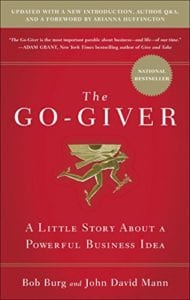
The Go-Giver: A Little Story About a Powerful Business Idea
While I was at Miller, I got great experience in accounting, corporate systems planning and a lot of wonderful things. One summer, I ended up going to Portugal with my parents. They had been missionaries there years ago. I wanted the chance to see the country. I quit before I left figuring I could get a job when I got back, not realizing that the college dropout thing might come out back to bite me but it didn’t. When I went to an employment agency, they came up with two jobs that would be perfect for my background, since I had accounting system background. One was with an attorney and one was with a travel agent.
I love two things. “I’m rebelling against my father and yet I’m going to go work at a Christian bookstore. I’m going to go to Oral Roberts University, which is very faith-based, and then I’m going to go work for Miller Brewery,” which I’m imagining it’s all about happy hour there.
We had a tap in the break room with a beer in the morning and the afternoon. There was beer served in the cafeteria. I ended up moving from that travel agency into working for one of the very first accounting system companies. First of all, they had filled a room at Miller Brewing Company, but they were down to about the size of a very large refrigerator by the time that I got involved with installing accounting systems. They were built by a company called Data General. They had these great flashing lights on them.
I went around and taught people how to use them and how to move their books quite often from a shoe box into an automated accounting system. I learned the travel industry from the back of the house to the front of the house, which I think was foundational for where I ended up, which was with the largest travel technology companies in the world. Sabre, Worldspan, which later became a company called Travelport, and then did a couple of M&A transactions. Most of those happened not to be successful, but not because of my efforts, with the largest travel technology companies in the world, Amadeus and Abacus.
[bctt tweet=”Who is in your Board of Directors for life?” username=”John_Livesay”]
You’re also the host of your own show, which is called The Game Changer as well.
I rebranded it. I figured out that I wanted to write this book, which actually started almost a decade ago. I read a book that you may know by Bob Burg and John David Mann, and that book is called The Go-Giver. I read it on a short flight from Atlanta to Tampa. By the time that we pulled into the jet bridge, I think I texted both men because it was like, “This book is so amazing.” It was the first business parable I had ever read. I had already started my radio show and it was done under the brand name of my company, which is Solutionz. The radio show was called Solutionz Live. For five or six years, I kept thinking, “I would love to write a business parable,” because I had already come to the conclusion that nobody was going to want to read my life story.
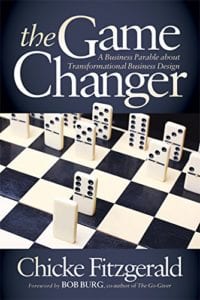
The Game Changer
Maybe your mom and a couple of close friends, but you might sell a case of books and what good is that? One day I went to the bookstore and I looked at all the business books and I was so overwhelmed. You know many there are, even in the category that you have written into. Every time I would do that, it was like I still want to do it but I was so discouraged. I kept doing my radio show where I was interviewing mostly authors, but sometimes experts on certain topics. One day, I went to the library with my kids. They were young, so they went over to the kids’ section and I went to the business section. This time, something was different. I started looking at the racks and racks of books and on every shelf there were two, three or four authors that I had interviewed.
It also inspired me to a different storyline. I hadn’t even laid out with the book what was going to be about, but that was really a moment and guided how the book actually poured out of me one weekend. Literally, I wrote it from a Saturday morning through Monday morning. It changed quite a bit after that. The funniest story about writing my first book was that when I sent it to someone to read, of course, I read it through myself again and I thought, “This entire book has no dialogue in it. Everything was inside of people’s heads.” I realized, “If anybody’s going to read this, I better learn how to write dialogue,” because in a parable, obviously it’s interaction between people and some thought, but that’s how it all came to be that it is.
It’s very much told in a Forrest Gump-like manner.
It was on purpose, but it was a way that I could interject things that had happened in real life into this fictional account of a small travel technology company in Tampa, Florida.
[bctt tweet=”Building a company is not for the faint of heart.” username=”John_Livesay”]
Who are the books for? I’m guessing it’s a much broader audience than just people who are entrepreneurs and people in the travel business. There are some life lessons in here.
The most obvious readers of this book are other founders and entrepreneurs who are working with founders on their idea. I think investors are a good audience for this book. Unless you can get into the head of the entrepreneur that you’re investing in and understand the dynamics, it’s hard to be successful even if you’re incredibly wise and are putting in smart money. The other thing is being an employee of a company that you can both lead and fund by devoting your time. I’ve been blessed to have on my current venture 22,000 hours’ worth of sweat equity put in by my team. Those people were also an audience for this book.
That obviously shows commitment. One of the big takeaways in The Game Changer is that building a company is not for the faint of heart. You talk about having this label, personal and professional dragons. Can you give us a story one of those?

Game Changer: Going after consumers one at a time is enormously expensive.
It’s funny because I had been working with you and I’d actually interviewed you about your book, The Successful Pitch and also your most recent book, Better Selling Through Storytelling. All of that is to help me get ready for my fundraising round. The real story there is that a lot of entrepreneurs see raising money as failure instead of success. It’s completely counterintuitive, especially if you have the investor hat on. I remember the whole time I was writing this book, I would have this recurring dream that I was going up a chair lift at a ski resort. I neither liked to be cold, nor do I like heights and I am not a good skier. This dream had all kinds of underlying stuff going on. Every single time I would be on this chairlift, I would look down and I would see all these men.
They were all dressed in business suits and they were skiing down effortlessly on moguls, which if you’ve watched the Olympics is one of the hardest kinds of skiing there is. That dream was a picture of how I felt about fundraising. For other people, it was completely effortless. Here I was, cold, afraid, and I had to get over that. The writing of this book was actually cathartic because it allowed me to get my fears out. It allowed me to get my hopes, my dreams and all of my aspirations out into a story that I wrote in such a way that it wouldn’t be about me, but I was able to weave myself into this fable.
Let’s double click on that concept. Everyone else has it easy. I’m the only one that struggles. That alone is enough to make you want to buy The Game Changer book and listen to your show. Being an entrepreneur can be a very lonely job and you need to surround yourself with other people who believe in what you’re doing, support you and not let yourself go into the trough of depression or despair that everyone goes to. Do you have any tips for people on how to be resilient?
[bctt tweet=”A lot of entrepreneurs see raising money as failure instead of success. ” username=”John_Livesay”]
There are a couple of key messages, one is learning the power of innovation. Not only innovation in product and service that you’re doing but innovating how you operate every day. That might be business models, it might be the tools that you use to interact with your team. One of my biggest challenges is I have been working from home for ten years. I am so tired of managing remotely. I know a lot of people aspire to that and would like to work from home. At the end of the day, your goal should be finding joy in every step of that journey as your company moves to the next level. You’re going to look back on it and believe it or not, you’re going to laugh. You’re going to be able to laugh at yourself, to laugh is not to cry sometimes. To come back to that comment on investment being a signal of failure, it is a new leg of the journey that is the beginning of that success journey. When you take a look at people who lose a large amount of weight, they continue to look in the mirror and see themselves as being very fat. I think that entrepreneurs, one of the other things that we have to guard against is we bootstrapped for so long.
We don’t always make the decisions that we would if we were well-funded. No investor wants to see you go out and splurge but there are things that you must actually do for the company when you do get funded. That’s not bringing the team on board, but you need to spend properly on the right systems and infrastructure. The other thing and this one was the most important thing in the book. It’s understanding that everybody who comes to the table, whether it’s your investor or your turnaround team, if they send in a team to try to help the company get to the next level or even your own team, that everybody has a backstory. You are good at mining this out, this show and in everything that you do. When you learn those backstories, you’re going to learn that even on the surface, it looks like everything is effortless. You’re going to hear about struggles and then you can say, “That happened to me, too.”
You talk about asking the question, who’s in your executive village? We all need a board of directors in our life. What a great visual that is. How does someone get a good board of directors for our life, and not just our job?
This happened with my venture. I was looking for a true board member. I happened to want another woman on the board. Companies that have women boards are more profitable than those that don’t have any women. I’ve got two wonderful men who are on my board. One of them has been a part of the board of directors of my life for a long time. He’s been there through thick and thin and helped me out through a lot of things. I actually posted a job on BoardProspects.com and an amazing thing happened. I’ve got 250 responses. That was completely daunting and burned up a lot of time that I didn’t have. What I ended up with is this amazing group of about fifteen people who I know that I can call on no matter what my challenge is.
Add to that, I have a group of women. I run a group called The Executive Girlfriends Group that again, women tend to be a little bit more transparent about their failures and about things that they face in their personal life that impacts their business life. We all know if you have a fight with your spouse and then go to try to pitch to an investor, that’s probably not a good way to end up in that meeting. The board of directors of my life are those people who I can talk about every aspect of my life and not just the business stuff. I think that’s why so many of my close friends are my business colleagues because they understand that you can’t compartmentalize yourself.
The, “I’m one person at work, another person at home and on the weekends,” is gone away. It goes back to what we were saying about authenticity. The other thing you talked about in The Game Changer is investing in yourself. You have some practical tips in that story. Can you share one of the tips there?
[bctt tweet=”Companies that have women on boards are more profitable than those that don’t have any women.” username=”John_Livesay”]
The whole book is laced with individuals that are each facing an individual challenge. Unbeknownst to one another is they each reach out and listen to one of my real radio shows. Each chapter of the book pulls out a story both about the person who’s listening and what the author shared with me on that real radio show. There’s one which is actually the story of Bob Burg and John David Mann and the story from their book, The Go-Giver. The person who’s listening to that realizes that they have been approaching sales all wrong and that they thought they had to be a go-getter.
By investing 30 or 45 minutes in listening to a podcast, this gets back to my faith roots. I believe that God speaks to us through podcasts. I know it sounds crazy to somebody who doesn’t have that dimension of your life, but nothing in my life happens by accident. Even meeting you through Judy Robinett and all of that is a part of the plan. The other thing is investing time in more than just working 80 hours a week, which is what we entrepreneurs do to keep from working 40 hours a week for somebody else.
It’s important to realize that even if you’re working so many hours, you must invest in your own health, your own network and your own energy mindset so you don’t burn out. You don’t burn out the people working for you. That’s a big takeaway of learning what that is. Let’s double click on what’s going on with Solutionz and how you’ve identified a huge part of the travel market that other people are ignoring. That’s always the key to successful founders, finding a problem that no one else has to solve it. Tell us about that, what’s the segment and what problems are you solving? In other words, give us some elevator pitch that had worked with you.
It’s very interesting. Most of us, and I would imagine the audience you have in this show, we all travel. We all have trips crop up where we need to be somewhere specific. We don’t need somebody to inspire us of where to travel to. When we need to travel to someplace specific, you very quickly find out that that’s not how the travel industry tools work. They will serve up a hotel that is near an airport or a city center. If where you need to be isn’t that, then it takes a lot of time. We address that. We call our product TripProximity for that very reason that proximity does matter. We also believe that giving back matters. That’s another tenet of the book, The Game Changer. You need to build giving back into your business, which is what we’ve done in Solutionz. I think the most important thing, about what we have done in our company is we’ve realized that it is foolish to come out with a great new idea that resonates with all travelers and then go try to compete with the 800 or 8,000-pound gorillas. Expedia, Priceline and TripAdvisor, because going after consumers one at a time is enormously expensive. We have found a very clever way to insert ourselves into the systems that people use every day in their lives.
You’re targeting people who have what you call life moments. Tell us what a life moment is?
The travel industry has focused almost entirely on managed corporate travel. You’re a big company and you have to use American Express, Expedia’s Egencia product or some corporate travel tool. You’re on vacation and you need somebody to motivate you as to whether you should go to the Yucatan or go to Vail. All that inspirational stuff is important. Every other trip falls into what we call life travel. That is 72% of the market. We are going after those individuals who they know precisely where they have to be. Usually, they know exactly when they have to be there. There are some trips that are a little bit more flexible than that, but if you’re going to go and visit the college, you have to set up a campus visit. That campus visit goes on the calendar. It is logical simply to have that calendar entry pop up and say, “Would you like to come in the night before to experience the community?” It’s good for the university, it’s good for the parent and at the end of the day, it’s what we’re all about. It is that integration into that life travel moment.
If a company is trying to book a trip, find the best hotel and restaurant to use. They don’t want to go to Expedia and they go to Solutionz’s platform, a percent of what they spend is being donated to charities.
It absolutely is, but I want to make one point that’s very important, is we’re not an alternative to the business to consumer online travel site. We’re a business to business tool that gets integrated into other systems. I don’t know if you’re familiar with AddThis and ShareThis who have social media bookmarking tools that you can configure and plug-in in minutes. We are the AddThis and ShareThis of travel. We’re a tool that gets plugged into CRM platforms, calendaring, contact management, ticketing and registration, other systems that are the systems that people use every day.
You have an example of a client, right?
Campus Management is our enterprise client. By plugging in once to three of their CRM and calendaring systems, we reach 1,200 customers overnight, 1,200 universities. All of the parents that are coming in for those campus visits, alumni coming into sporting events, homecoming, friends and family coming to graduation, all will then have access to our tool so that they don’t have to look up the address of the university. They’ll simply be able to plan their travel to that specific event.
Any last thoughts you want to leave us, either about The Game Changer book, your radio show or what you’re doing at Solutionz?
You asked what people can do to invest in themselves. One of the things that came out of building out the radio show and having all of that content is I wanted to provide a place for people to come. Without all of the clutter, noise and even the angst that we have seen certainly on Facebook and to a lesser degree, LinkedIn. It’s a quiet place that people could come to get support from others. Whether they’re corporate executives or they’re individuals, we built The Game Changer Community, which is a by invitation only, but still a free community where people can nominate others to join the community. We have all different contents that our members are sharing.
Thank you so much for sharing some of your blog material and even pointing over to other articles that you read that are relevant to the folks that we got there. TheGameChanger.network is where you can learn more about the book. You can learn more about the community. Thank you so much for mentioning the company because when you read The Game Changer’s story, it’s being able to see my hopes, dreams, my fears and getting some practical tools to help you identify the challenges in your own business. I talk about reaching your own summit, your own metaphorical mountain top, which in the book, I won’t spoil the end of the story, but a tremendous success that this team has.
Reach your own mountaintop. Chicke, thank you so much for sharing your enthusiasm, your knowledge and most of all how we can invest in ourselves.
Thank you so much, John. It’s been terrific.
Links Mentioned:
- Chicke Fitzgerald
- The Game Changer: A Business Parable About Transformational Business Design
- Solutionz
- TripProximity
- The Go-Giver
- Solutionz Live
- The Successful Pitch
- Better Selling Through Storytelling
- BoardProspects.com
- The Executive Girlfriends Group
- AddThis
- ShareThis
- Campus Management
- The Game Changer Community
- TheGameChanger.network
- www.Solutionz.com
Wanna Host Your Own Podcast?
Click here to see how my friends at Brandcasting You can help
Get your FREE Sneak Peek of John’s new book Better Selling Through Storytelling
John Livesay, The Pitch Whisperer
Share The Show
Did you enjoy the show? I’d love it if you subscribed today and left us a 5-star review!
-
- Click this link
- Click on the ‘Subscribe’ button below the artwork
- Go to the ‘Ratings and Reviews’ section
- Click on ‘Write a Review’