

How To Beat The Odds
Posted by John Livesay in blog | 0 comments
Have you ever wondered what the winning formula to success is? Here it is: Mindset plus preparation plus resilience equals success. I developed this formula based on my experience in sales over the last 20 years and seeing what worked and didn’t work for me.
Imagine you’re trying to bake a cake and leave out a key ingredient. The cake might fail to rise, and you wouldn’t know why. Each of the steps in this formula is a key ingredient you can use to be successful — whether you’re a salesperson, a business owner who has to sell in order to grow your business or a leader who has to inspire your team to be resilient.
Mindset
As a keynote sales speaker, I have to sell myself to clients who are considering me versus other speakers. What I say to myself before the call is crucial. If I have the wrong mindset, then the self-talk sounds like, “I’m not good enough” or “Why would they pick me?” If I had this mindset, I’d never get hired. Instead, I get myself in the right mindset by remembering other talks I’ve given and the great outcomes that resulted and telling myself, “I am confident I can deliver a great keynote” and “I am the right person for this opportunity.”
The key to getting into the right mindset is to stack your moments of certainty. Write down three or four times you got a “yes.” It could be when you got hired, when you got a second date or when you won an award. Stack these up in your mind and remember how great you felt, and then put that in your head versus fearful thoughts. Try to see the outcome you want to happen before you even start.
Preparation
The famous tennis player Arthur Ashe once said, “One important key to success is self-confidence. An important key to self-confidence is preparation.”
The preparation that Emma Boettcher did to beat the Jeopardy! champion James Holzhauer was impressive. She wrote a paper in graduate school about whether certain clues could predict how hard the question was. After she’d been called to appear on the show, she prepared by watching it every day and pretending the pen in her hand was her clicker to buzz in. Then she decided that wasn’t realistic enough and used a toilet paper holder as her pretend buzzer. She had to beat the odds of winning against Holzhauer, and she did it by preparation.
The preparation I do before a call to get hired as a keynote speaker is a key to my success. Recently, I was being considered to be a speaker for a real estate company, so before the interview call, I called their customer service line, as well as a competitor’s, to see how I was treated. That preparation impressed the client, and they were very curious to see what I found out.
To prepare yourself for success at, say, a sales pitch, an interview or presentation, write down three questions you think you’ll be asked, and be prepared to answer them before they ask you. Another way to help you prepare is to take an improv class to get your confidence up and learn to think on your feet. Improv is all about saying, “Yes, and … ” When you practice taking what’s thrown at you and responding in a way that keeps the conversation going, you’ll be able to trust yourself to come up with a good answer on the spot.
Resilience
How fast do you get up when you fall down or get rejected? Boettcher used resilience in addition to preparation, as it took her four tries before she was accepted to be on Jeopardy!
One thing I’ve observed when speaking to real estate agents is that the number one difference between the top 1% of them and those who struggle to make a living is how fast they bounce back after getting a no. The top 1% let it go immediately. The others say they let it go, but many of them mope around in a bad mood for two weeks or more.
These examples show the power of bouncing back fast as the key to resilience. In business and in life, it’s not a question of whether you’ll get knocked down, but when you’ll get knocked down and how fast you’ll get back up.
My key to resilience is to never take rejection personally. When I was selling ads for a global media company, I didn’t always get the sale. Instead of beating myself up, I would just tell myself, “A ‘no’ now, doesn’t mean ‘no’ forever.”
To become more resilient, see how fast you can let rejection go. Stop talking about it with friends and co-workers. Stop complaining about how tough it is out there. Stop talking about the economy or other things beyond your control as the reason for your failure. Learn a new sport or anything where you’re not going to be great at it. I’m not a good bowler, but it’s fun for me to do with friends. When I let go of the last score or the last gutter ball and start fresh every time I get up to bowl again, I am retraining my brain to let go of past failures.
Summary
Think of yourself as the pilot of your life. Ask yourself the following questions — much like a checklist a pilot uses before they take off to fly — when you feel like giving up or need to beat the odds to be successful:
• Do I have the right mindset to keep going?
• Am I prepared enough?
• Am I resilient? Can I bounce back fast after getting knocked down?
If you can answer “yes” to all three, then you can beat the odds and make your dreams become your reality.
Estars – The Future of Esports with Jeff Liboon
Posted by John Livesay in podcast | 0 comments

Episode Summary
Estars as a platform is definitely the future of Esports. Jeff Liboon, the Co-Founder and President of Estars, talks about how he came up with his business idea, all the amazing things they have at their Las Vegas studio, and how to handle failure and to use frugality as a catalyst for creativity. Jeff explains how they are incorporating traditional to present esports concepts and how they get sponsorships on their games. He describes the kinds of sponsors they are attracting and why this is so much more engaging for them to put their money on versus simply running a commercial on a football game.
—
Listen To The Episode Here
Estars – The Future of Esports with Jeff Liboon
Our guest is Jeff Liboon who is the Cofounder and President for Estars. He’s responsible for product and business development, including the creation of the World Showdown of ESports, which is known as WSOE and managing white-label production growth and investments. Estars is an interactive eSports engagement platform that’s launching in Q3 2019. They’re going to provide a viewing experience for eSports fans around the world. He has several years of gaming experience, working with top-rated platforms like Amazon’s App Store, Xbox Live and several top mobile gaming developers in the eSports industry. Before that, he helped create the Amazon mobile eSports team and grew that to eight figures in one year. While at Amazon, he conceptualized and executed the very successful Mobile Masters and Champions of Fire eSports events. He’s been doing a lot of things in social media where he led product development and marketing for DoubleDown and Casino IGT. Jeff, welcome to the show.
Thanks for having me, John. I appreciate you.
I am fascinated to hear your own story of origin. Take us back to your childhood or your college days of your first initial interest in gaming or in anything to do with where you are.
My story around my career and professional growth are interesting. A lot of entrepreneurs can probably say the same thing. I was drawn to the entrepreneurial spirit. From a very early age, for some reason, I thought about business a little bit differently. We’re thinking about, for example, starting a lemonade stand. That interested me when I was a very young boy. I was always figuring out ways to, for all intents and purposes, make money. That was always something that I found fun and I was always drawn to. When you start to look at my career as I went to college and even in high school, I was always looking for ways to exercise that entrepreneurial spirit versus getting a normal 9 to 5 job that could make me money in a more traditional way. That meant starting small businesses in high school, whether that was selling basketball cards. All the way through college, we were always looking for ideas and ways with my friend group to figure out small businesses and little hustles here and there to avoid getting that normal 9 to 5 job. A lot of those failed and you learn some things.
I always ended up looking for ways to do that. From a learning and growth perspective, a lot of those lessons rolled over to what we’re doing now. In terms of being an entrepreneur, we hear that a lot. It’s being positive and being able to push forward. I’m dealing with frugality and building successful businesses through bootstrapping and things like that. All of that stuff had an infrastructure that was set when I was young. It’s a very interesting thing. When I was thinking about coming out of college and what I wanted to get into, gaming was something that was always super fun and super entertaining. When we’re sitting around taking the college example, I always knew that gaming was something that I wanted to get into. If you think about how I thought about things, being in my career, it was centered a lot on marketing specifically, but you could go and market anything. You can market cars. You can market used car lots and almost any product in the world, but gaming was always something that was fun. I looked at it as, “Why wouldn’t I do something and get into something that I found enjoyment out of?” That was my first step as to what why I wanted to jump headfirst in gaming way back to the late 2000s.

Estars: It’s interesting to see how the esports industry is developing over time and how big it’s getting.
All my friends that have young boys at home that want to play and spend all their free time gaming, there’s hope that it could be turned into a career.
There is a lot of hope. It’s a newer industry. I’m in my mid-30s but my parents don’t understand what I do on a daily basis. The industry is so young. When you look at like, “Mom, I make a living with producing eSports events or,” back when I was at Xbox on Amazon, “pushing game sales,” they don’t understand it. Traditionally, they think of it as a time-waster. I don’t blame them for that. It is a newer industry that people are starting to even come to understand now. In my core group, I grew up with Xbox and the first Nintendo. Most people, my age and younger, have grown up with that as a staple of popular culture and as an entertainment medium. Now, that’s completely normal that my son loves Fortnite. I don’t think of it as a time-waster. It’s like going to the movies and watching TV. My parents considered it as a normal way to entertain yourself.
In the eSports space, we start to look at if you told my parents that people were playing this playing games for high stakes and a lot of money as a skill-based activity almost like football, basketball or baseball, that would go so far with their heads. They wouldn’t understand a word I was saying. They would think it was ridiculous. I guarantee you with my son’s kids, my grandchildren are sitting in the largest stadiums in North America playing in front of hundreds of thousands of people, maybe millions of people watching around the world. That’s not necessarily going to be our generation. They’re not going to understand that. My son is going to think it’s a completely normal activity. It’s interesting to see how this industry is developing over time and how big it’s getting.
You mentioned two words that I’m fascinated with. One is working in startups and business at the beginning is dealing with failure and also frugality. Do you think there are any lessons learned in entrepreneurship that people can learn playing eSports games that are either around failure to teach a little bit of resilience? I know there are a lot of people who buy things for the games. Do they have to be smart on having a limited budget? Do they learn any frugality lessons playing these games?
I worked at Amazon for almost four years. It opened my eyes specifically around how to treat business. They think of it very differently. Even if you look at how people from traditional Fortune 500 companies looked at how Amazon was running their business in early 2010, I think the knock on Amazon on the street and everywhere else is they don’t make money. Nobody really understood that they were investing so much in infrastructure and into different verticals that would pay dividends now. At any point, they could have turned off the faucet and turn down the R&D and stopped investing in new industries. They were getting knocked on a lot by not turning huge profits immediately. Can anybody argue with their stuff? Probably not.
[bctt tweet=”When you don’t throw money at a problem, it causes creativity. ” via=”no”]
One of the core tenets that they love to build around is frugality. It’s where when you don’t throw money at the problem, you tend to find solutions and get much more creative in that respect to find a long-term solution. I believe that is a core principle of being a successful entrepreneur. Before you throw money at something, can you figure out a way to do it without that money? You wrap your brain and sit down and think about that. If you continually put yourself through that test as an entrepreneur, it seems like you will find a lot of solutions that you would never have thought of unless you were put in that situation and frugality right in front of your eyes.
When you don’t throw money at a problem, it causes creativity.
I try to use that in all my businesses. Let’s say, I had $0 to throw at this problem. What would I do? You start there as a baseline and you seem to come up with a lot of different solutions that you would have never thought of if you had a bunch of dollars. In terms of the frugality piece in gaming and gamers in the eSports world, it’s applying right now at a macro level at the industry where everything is so fragmented. In the industry itself, there are so many different moving parts to it. There are a lot of different fragmented ways, a lot of people who make money. Whether it’s meant to do this or not, but the industry is taking this frugal approach to each of these fragmented sectors and figuring out how to build a sustainable business, which is a cool thing to see.
At a high level, the developers have a lot of the power because they own the IPs to all these games. All of the services and the third parties around it is trying to figure out how to make a successful business around this fast-growing and cool entertainment medium. They‘re being frugal and smart in terms of how they can build a sustainable business, which is a cool thing to see. You’ll see creative ways in terms of how people are displaying data, for example. There are some companies out there that are taking in-game data and doing cool things with it, whether that’s with production or broadcast, betting or additional site content.
There are some cool things that are happening there. That’s one example. You even see ways in an industry like sponsorship and advertising. As traditional sports have decades of experience in how to provide value back to an advertiser, an industry like eSports is trying to figure that out right now. There’s a lot of ingenuity, creativity and things that are pulling from traditional sports, trying to apply them to eSports but it doesn’t quite fit all the way. It’s not Apple to Apple with a traditional sports community but people are trying to figure out how they make that work as well in terms of value, both on ROI for advertisers and also community and content. That’s sitting out there. The cool thing is there’s a lot of VC money coming into the eSports industry. I wouldn’t say it’s overloaded yet in terms of how fast the industry is growing already. A lot of companies are being frugal and trying to figure out new creative ways. They’re not just throwing money at the problem which is figuring out how to build a sustainable business.
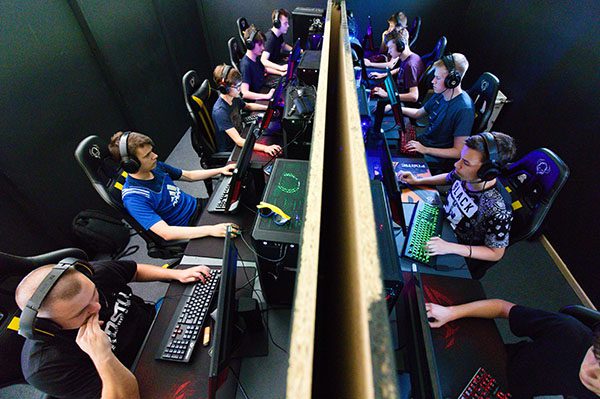
Estars: Gaming in general has some of the most passionate, rabid fan bases in any genre that you could possibly find.
Let’s talk about what your business is and how you make money. You’re the premier competitive gaming production company in the world. You not only provide the production, but you also offer people a chance to sponsor these events in person. It’s not, “This is just somebody playing a game. This is an actual event.” For those people who maybe haven’t been to an event, can you describe the sponsors you’re attracting and why this is so much more engaging for them to put their money here versus running a commercial on a football game or whatever?
I’ll quickly run through our core main business pillars that we have between Estars, the platform and Estars Studios, which is our production arm. What we have in our portfolio a white-label business. The world’s top game developers will write us a check. We’ll run their eSports events from A to Z. That can be everything from broadcasting, production, stage design, all the way through lead operations, talent management and player management and all of it. We have a large array of the top gaming companies and platforms in the world that we service multimillion-dollar business.
Give us a sense of how many people typically show up in an event like this. Is it like being in a football stadium?
It depends. We’ve done events at this point in LA that had over 3,000, 4,000 people to it. Our own studio holds about 200 people. It depends on what the developer is looking for, the look and the feel you want to do. Traditionally, when you turn on the TV and you see all the excitement around eSports, you’ll see shops from Korea, Asia, China and Europe where eSports is significantly further down the path and much more mature versus in North America. There are tens of thousands of people that show up to some of those events. North America is probably three to five years behind that in general but there are varying degrees of eSports competition and crowds that come in. It’s the beauty of it. There’s excitement that you can generate out at eSports online between two players playing a game online or two players in a room. You can take it to a stadium and have it in front of tens of thousands of people and feel the energy. That’s a pretty unique thing.
If I compare it to people watching chess champions, for example or people coming to watch live sports as they know. This is eSports. The passion is the same if not more from what I’ve seen for this. Would you agree that it’s the same or more? If so, what makes people so passionate about this?
[bctt tweet=”Failure and frugality have valuable lessons. ” via=”no”]
I would say that gaming in general has some of the most passionate and rabid fan bases in any genre that you could possibly find. It’s a function of how engaging some of the content is and how much fun people have in playing some of these games. If you turn it around, it’s almost like finding the most passionate football fans for example.
They wear the colors on their face and paint their face.
The thing about football is the games only run on one day of the week. Their outlet is one day of the week. ESports and gaming, in general, go 24/7. You can imagine having a rabid Seahawks fan have a game they can jump into 365 days out of the year 24/7.
With my background in advertising, the secret sauce is emotional engagement for advertisers, whether it’s the commercials emotionally engaging or there’s product placement that makes you part of a movie. You’re offering this at a whole new level, this emotional rabid fans as you describe them. Their emotions are already revved up. Is this particular target mostly male at this point?
Yeah. I think the last time, I saw it’s roughly 70% male, 18 to 24. However, I do think that what we’ve seen, the female audience is growing quickly. It’s a testament to a lot of big game developers making an effort to make gaming much more accessible. An environment for women to participate in the community is much more accessible, which is awesome. My assumption is as time goes on, it’s going to skew back towards probably a 50/50 type community in all of gaming. If you look at something like mobile games, which skews significantly towards women, I think that will cross over to PC and console as time goes on because it will normalize out based on population and accessibility and all of those things. Right now, it’s skewing towards the younger males.
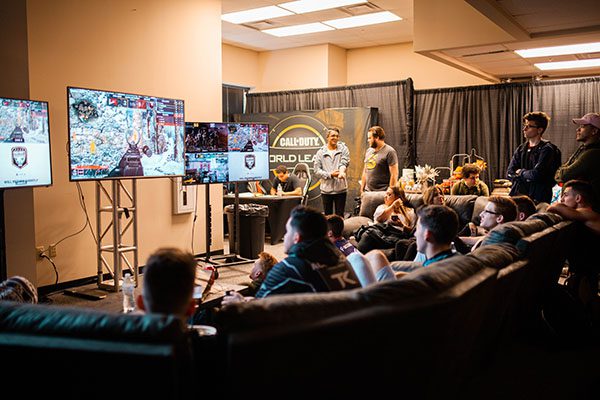
Estars: Interactive engagement is where basically the viewer is either actively engaging with content that we’re creating or accepting content that’s being created in real time.
That’s a very difficult audience for advertisers to reach because TV tends to skew female. You have a great niche for companies targeting automotive sales or electronics.
With the advertising background, you can appreciate it. You can even see the strategy. I saw a study that said of the four major sports, football, basketball, baseball and NHL, in North America, most of those ages, the median age, is 38, 39 or 40. When you look at what the NBA is trying to do with the eSports, look at it like, “I have this demographic that’s around 38, 39. I can use my eSports league.” There’s a lot of hoopla around the NBA 2K League, which is my assumption is that in the next few years, every NBA team will have a joining NBA eSports team. That’s an NBA 2K League. I can use that league as a way to tie the advertisers to buy the overall package of the NBA. Now, I broadcast digital. That skews older but now I have this group that I can sell for 18 to 24-year-old males. I can sell advertising on that with the eSports league.
That’s the dream audience for a lot of movies like Star Trek and Star Wars. That’s the target that goes to the movies multiple times and they love it. Have you done any sponsorships of particular movies yet?
Not yet, but we’re working hard on that. We’re working to solidify some partnerships there. We love trying to find the right movie-type trailer partner because of the evergreen nature of that content. There’s always a new movie coming out. They always want to reach a younger male audience. There’s always a piece of that marketing budget that’s going toward that in most instances. We love that. We’re looking for the right partner in that respect where it makes sense to integrate into our own offerings. It includes the WSOE in our owned and operated league.
You made the decision to rebrand ESP gaming into Estars. What was the genesis of that?
[bctt tweet=”The industry in general is taking this frugal approach to fragmented sectors and figuring out how to build a sustainable business. ” via=”no”]
We have a production business. In the background, we’ve been building an engagement platform. Estars is the actual platform. The idea of Estars as a platform, I call it as a second screen experience that takes a lot of what traditionally we would say are gambling mechanics or put it in a free to play space that’s unique to our content and our partner’s content. We always knew that we wanted to have a product that was out in the eSports that we felt added value to the viewing experience. If you look at eSports concept, the two main ways to monetize is sponsorships and distribution. What we’re trying to figure out and what a lot of people are trying to figure out are other ways to monetize all the millions of eyeballs that are tuning into this content outside of the traditional way to do it.
We feel that interactive engagement, which is the viewer either actively engaging with that content that we’re creating and/or accepting content that’s being created in real-time are two very distinct ways that eSports as an entertainment medium where it makes a lot of sense for us to take a look and see in terms of investments. If there’s anything unique and creative we can come up with, which we do feel we’ve done with Estars. That was always going to be our big bet. We kept that under wraps for a while. Now it’s out in the wild. With that, the genesis was we initially had launched our production company under the name of ESP Gaming. It made a lot more sense to align the companies, both on the production side and the platform side. We didn’t have to build two brands. We knew that all of our ESP stars studios content would try to encompass Estars as the platform as riding shotgun with all of that content anyway and then vice versa. It made a lot of sense to almost make the companies parallel and build one large brand that encompasses what we envisioned in terms of the viewing experience for eSports.
It reminds me a little bit of your previous employer. Amazon was known for selling books and now they’re known for producing content and selling all kinds of things. It’s an interesting thing. Your Estars Studio is based in Vegas and you have Emmy-winning producers there. To me that begs the question, “How, if at all, do you see this fitting into Apple and Google, competing with Netflix and all of these this huge demand for content?” It seems that you would be producing content that would either be on one of those platforms or have your own channel on one of those platforms. Is that in the future?
We’ve invested heavily in the talent on our production side. We do have fifteen Emmy’s on staff who have won in various live sports. They come from varying degrees of gaming companies as well as MMA companies, as well as live sports and production companies. We invested heavily on that. The main reason is we wanted to differentiate the view of our content on everybody else in eSports that we’re producing, which is hardcore traditional five-gamers or four-gamers type content. We are looking to expand who can consume our content and find it entertaining. Our strategy was like, “Let’s find that’s in the business who do see eSports as the next frontier and combine all of these genres and industries into one high-powered team and go from there.
What you’ll see from us over the next few months is that we’ll start to utilize the team we put into place. That means we’ll keep continuing to run our owned and operated league. The WSOE is what we feel is the best eSports content out in the wild. We’ll continue to do that. You’ll start to see us start creating content that is new and unique that nobody in gaming has done. That could be documentary in the vein of 30 for 30 on ESPN. That could be movies or content that is competitive but not the traditional eSports competitive. That could be talk shows or anything.

Estars: Always look to expand who can consume your content and find it fun and entertaining.
Do you have your own acronym? Instead of calling people broadcasters, you just call them casters. How do you get to be in the top ten? That’s a show waiting to happen. How does somebody become that in the competition? It’s almost like watching somebody at a live auction.
That’s all content that we would be in a very tough position to produce without the studio you referenced in Las Vegas. It’s located in Aria. We share it with our sister company Poker Central, which produces The World Series of Poker for ESPN. They also operate the PokerGO OTT app, which is the Netflix of poker that’s out there. We have this beautiful studio in the heart of this strip where we can produce this content 24/7. It’s a unique advantage that we have and we’re very lucky to have it versus any other sports company in the world.
Is it open to the public for tours?
It is open when we’re filming. You can come and check it out whenever we’re filming either poker or eSports. Whenever you’re down, I’d love to have you.
You’re in the right spot. I come to Vegas quite a bit, giving keynote talks. How can people participate? Everything from going to your website and playing the games to coming to Vegas to watch something being filmed and to if somebody says, “Can I invest in your company? Are you on the stock market?” Give us the whole range of all the opportunities that readers can say, “I want to get into this world. I want to be part of what Jeff’s vision is.”
The easiest way to see what we’re doing is to check out some of the content we created. You can see any of our content on Twitch.com/WSOE. You can see a lot of the stuff we’re doing there. We’ve also signed a bunch of linear television distribution deals. You start to see a lot of our stuff running on traditional broadcast television. What you also start to see in the back half of this year is us with a renewed focus around grassroots type community tournaments. We’re running an event at the end of July featuring the game of Tekken. The cool and unique thing around that is we’re having a lot of live qualifier in California. You can qualify in that specific tournament. If you qualify, you get a free trip to Vegas where you can compete in WFF7 and for the $30,000 prize pool that we’re offering for that live on Twitch. You get all of that cool recognition and experience. The other cool thing on what we’re doing with that is it’s a qualifier for the Olympics. We partnered with the United States eSports Federation and we’re offering that as a qualifier in. That’s a cool thing that we’re doing as well. You’re going to see a lot of online tournaments that we’re trying to put together that will be much more in volume. You can think about how the WSOE relates to the UFC. Our monthly WSOE are like the UFC Pay-Per-View. They’re really big.
This is global. The WSOE is the World Showdown of Esports.
It’s global with really large event series. These tournaments and these communities are operating 24/7. We’re trying to show up in the back half of the year with some of our content schedule is figure out how we service those communities. How we get those people who are playing for fun and are skilled to a stage like the WSOE in the center of the Strip at the Aria playing in front of millions of people online. How do we get them there? We’re trying to figure out programs to do that. It’s almost like in the vein of the UFC. It’s like Dana White’s Contender Series or Ultimate Fighter. How do we take those people who have the skill set? How do we get them into the bright lights and the main stage of Vegas? We’re working on some concepts there. They’ll start to see us develop all of that stuff in the backend and figure out the next phase of how the WSOE will grow.
You remind me of a young Richard Branson and what Elon Musk is doing. You have big visions and big global impacts and it’s been wonderful hearing your vision, expertise and uniquely qualified background to execute this vision. Congratulations on all your success. It’s going to be fun cheering you and Estars on.
Thanks, John. I appreciate the time.
Links Mentioned:
- Estars
- World Showdown of ESports
- Estars Studios
- Poker Central
- PokerGO
- United States eSports Federation
- https://www.Estars.com/
- https://www.Twitch.tv/wsoe
- https://www.EstarsStudios.com/
About Jeff Liboon
 Jeff Liboon, Co-Founder and President for Estars, is responsible for product and business development, including the creation of the World Showdown of Esports (WSOE) and managing white-label production growth and investments.
Estars is an interactive esports engagement platform set to launch in Q3 2019, which will provide a new viewing experience for esports fans around the world.
Jeff Liboon has more than 10 years of gaming experience working with top-rated platforms like Amazon App Store, Xbox Live and several top 10 mobile game developers in the esports industry. Prior to his current role, Liboon helped create the Amazon mobile esports team and grew attributed revenue to eight figures in one year. While at Amazon, he also conceptualized and executed the very successful Mobile Masters and Champions of Fire esports events.
Liboon also led product marketing for skill games at DoubleDown Casino/IGT Interactive, including Poker, Video Poker, Bingo and Blackjack, and managed the content management and advertising operations teams at Popcap Games (EA) for several top 25 Facebook and mobile games including Bejeweled Blitz, Zuma Blitz and Plants vs. Zombies.
Wanna Host Your Own Podcast?
Click here to see how my friends at Brandcasting You can help
Get your FREE Sneak Peek of John’s new book Better Selling Through Storytelling
John Livesay, The Pitch Whisperer
Share The Show
Did you enjoy the show? I’d love it if you subscribed today and left us a 5-star review!
-
- Click this link
- Click on the ‘Subscribe’ button below the artwork
- Go to the ‘Ratings and Reviews’ section
- Click on ‘Write a Review’
The Way Of The Quiet Warrior with Tom Dutta
Posted by John Livesay in podcast | 0 comments


Episode Summary
Joe Campbell once said that we hear this call to adventure. Many of us ignore it, but some of us answer the call. That’s exactly what Tom Dutta did. He answered the call and went through an eight to ten-year journey going through lot of things in his career and in personal life, and came back transformed. He is now a senior business leader, speaker, and international number one bestselling author with more than 30 years of experience helping build and grow companies in Canada and the USA. Tom shares the catalyst behind writing his book, The Way Of The Quiet Warrior. Explaining in detail each of the four different personalities, he tackles how each salesperson can discover greatness and shares his insight on how you can develop your strength and eliminate things that destroy your relationship with people.
—
Listen To The Episode Here
The Way Of The Quiet Warrior with Tom Dutta
Our guest is Tom Dutta, who is the Founder and CEO of his own company. He’s a senior business leader, speaker, and the international number one best-selling author of a book called The Way of the Quiet Warrior. He brings all kinds of leadership experience from financial services and not-for-profit and health sectors and his career includes senior roles in many of Canada’s prestigious companies. He has also been the host of his own Quiet Warrior internet radio show. He received the William Shatner Moving America Forward Awards for his TV show and the 2018 Courage to Come Back Certificate of Nomination for his incredible story. His purpose is, “To Unleash the Greatness in Others.” Tom, welcome to the show.
John, it’s a pleasure to be here.
I always like to ask my guests to take us back to their own story of origin. You can go back to childhood, high school, college or whatever was your big a-ha moments of I want to become a quiet warrior. What was the catalyst for that?
I’ve written about this in my book, The Way of the Quiet Warrior. It was an eight to ten-year journey behind that to figure out my story. Let me take you back. Let me, first of all, say that when I was asked in the past to talk about myself, I would say, “I’m a corporate executive. I build and grow companies. You can call me a hired gun. I’ve worked in five sectors across both sides of the border.” I talk like that. We finally did some self-development and started realizing I had a BS story that I was telling. Now I say this. Let me take you back. I was born and raised on a military base and in the United Kingdom. My father was a commanding officer in the military and then we immigrated to Canada. My parents are both from the Fiji Islands. My grandparents are from India. I didn’t have a childhood life maybe you or many others did. My home was full of violence. My father was a sloppy drunk. He became a violent man and a command and control style person.
[bctt tweet=”Get a check-up from the neck up.” username=”John_Livesay”]
He never hid many adulterous affairs in the home. The things I saw and learned when I was a kid, I don’t talk about much because most people couldn’t handle it. The good news is right above my teen years, I decided to leave when the home fell apart and my parents divorced. I lost touch with the family. I went out to Corporate America and there I was. I had mentors at the time and said, “Tom, you should be in business.” I did. I climbed the corporate ladder. I was a manager at the age of 21, a CEO by 31 and I did many things. I took the rules that I learned in my childhood and started applying that into the leadership of other people and into my sales work. I started falling into what I called the leadership graveyard. I had difficulty relating and communicating with people, destroying relationships, sometimes maybe losing the odd job.
It was that moment there were three major things that happened in my life in 2007. One was the loss of my wife’s mom, which is a bigger story. Two was we were victims of a Ponzi scheme. We woke up one day, my wife, Anna and I, we lost everything, our home and all the assets we had worked hard for many years. The third thing was the loss of my job. I was a CEO in a corporate company that was international and they reorganized. I knew it was recombining and my job was eliminated. We woke up in July in 2007 with this desperation and I had so much anxiety and pain inside. As Joe Campbell says, “You’ve got to feel that pain, get angry and decide it’s time to do something different.” In 2007, I went on a journey. I didn’t know where I was going and where I was headed. What do I do with this story and the backstory? That’s what led to creating my company and the book and all the things.
Most people see someone successful and they don’t realize the challenges they had at a young age to supersede that. What was the catalyst for wanting to write the book? Firsthand, writing a book is a big endeavor and it requires a lot of commitment and focus. What made you want to write The Way of the Quiet Warrior?
This might sound odd as an author and a fellow author, but I never read books. When I grew up as a kid, my eyes would bounce on a page. I couldn’t get past it. Now I’m an audiobook listener. I wanted to write a book, but what got in the way was fear. I didn’t know how to do it. I had heard horror stories. When all those things happened in my life, I went on this ten-year journey as a seeker. As Joe Campbell says, “We hear this call to adventure. Many of us ignore it. Some of us answer the call.” I answered it. I probably should have answered that call to go seeking when I was a kid but I didn’t. Through that, I did many crazy things in my career and my personal life, including learning. I came back transformed as somebody different. I was the hired gun, “Tommy Gun,” they used to call me and I came back as a quiet warrior. I’ll tell you how the book came together and try to tell this succinctly.
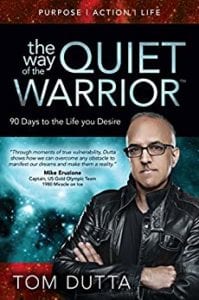
The Way of the Quiet Warrior: 90 Days to the Life You Desire
I went to Holland, Michigan. I got on an airplane. I was flat broke. This was in 2012. I traveled to see a fellow named John. He said, “I’m going to spend the day with you.” He put me in a room with a whiteboard and he took every ounce of wisdom out of my head. Before that session, which was to figure out what my business model might look like, we had dinner. He said, “What are you doing?” I said, “I’m a leader, a trainer and I’ve built companies.” He said, “What do you really do?” I said, “My mom used to say that people want to be around me. They tell me things. They want to talk to me. I quietly go on my way as a warrior and I help people. I help them see the limitations and greatness in themselves through my experiences.” He snapped his finger. He says, “I don’t know if that’s the title of your first book, but Quiet Warrior might be something.” I left that session going, “What do I do next?”
One of the things you talked about in The Way of the Quiet Warrior is that vulnerability is an undervalued virtue. Can you talk about that?
In my world, I teach some science around personalities. I know what you might be from listening to you, but there are two out of four personalities that don’t usually show vulnerability. Vulnerability isn’t throwing up or getting Kleenex and crying. Vulnerability is a strength. In the high-powered world of business, what I’ve learned through working with others and being a top leader and also being a salesperson, is that some people are wired not to show vulnerability. In other words, there’s no emotion in what they do. I listened to your talk and had you help me understand that the path to getting people to trust and follow you and maybe do something different comes through the heart, comes through emotion.
The last thing I’ll say on that is I’m a big fan of a thought leader named Brené Brown. She did a TED Talk on vulnerability and shame and this is where I learned this. She said, “When you tell your story, you need to tell it to the tribe of people that are worthy of hearing it.” Not everybody is and when you tell them, you get to write the next chapter your way. Being vulnerable can be as simple as posting a picture on Facebook hugging your dogs. Where standing up as a CEO, talking about your vision and talking about when you started the company, your partner stole money from you and you almost went bankrupt. You have to overcome this bout of depression and infuse what you’re doing with your passion for being able to come back and create what you’ve got.
[bctt tweet=”Vulnerability is an underrated virtue.” username=”John_Livesay”]
You alluded there are four different kinds of personalities. Can you tell us what those four are? I think people would find that interesting.
Let me ask you a question to help me out. I ask this in my workshops. What are the three things you can think of that you need to have great relationships with other people? Can you come up with one?
The first one is trust.
This is what I want you to know and I tell people, “I don’t want you to believe what I’m saying. I want to stretch you out of your comfort zone.” I teach and I believe that there are three things you need. Number one is to have an intact personality. In other words, understand your strengths and limitations. In that first one, comes trust. Number two is passion. Find out what your passion is. There’s a great TED Talk done on passion that I watched and it says that most people when they discovered their passion, which comes from the early roots in your life when you’re a child usually, they don’t follow it because sometimes it doesn’t pay the bill. The third one is character. Character is big and I believe that salespeople will be rated more on your character versus your skills.

The Quiet Warrior: Vulnerability is a strength. Some people are wired to show vulnerability.
There are four types of personalities in understanding who you are. I’m going to add colors to these because that’s the way I teach it. The first type is 25% of the world is what we call red people. The second type is 37% are blue, 25% are white and 25% are yellow. Let me build this out a bit. I’m not going to talk about behavior because most of the personality science in the world teach the behavior. If you have an iceberg, you look above the water 20%, that’s what most psychologists teach us is what are you based on your behavior. I found a model based on Dr. Taylor Hartman, and he’s a friend of mine that talks about what’s below the waterline or the why behind the behavior. Wouldn’t it be powerful as a salesperson to understand why your prospect is doing what they’re doing or as a salesperson to understand maybe why you’re doing what you’re doing in your pitch?
The last thing I’ll say on this piece about the four personality types is I’ll tell you the motive. The red personality has a motive of power. They wake up to get from A to B and that’s what drives them. They’re visionary and natural leaders. The blue personality, the 37%, the motive is intimacy. Why I live is to create trusting relationships with other people. My top two natural talents might be quality and service, but here’s the thing. When I communicate, I’m verbose because I infuse my language with emotions. When I write my wife a text message, I can’t fit it on one screen but when she replies to me, it’s usually like, “Okay,” because she’s a red. The third one is white, the motive is peace. The white would be my daughter in this case. It would be lawyers and accountants and maybe doctors or engineers. The motive of peace is nothing fancy. It’s like, “Can we all get along?” If you close your eyes and you visualize puffy white clouds.
I visualize a white dove. That’s easy to remember for peace.
The two top gifts that I know about whites are their clarity and voice of reason. The last one is what I’ll call the yellow people and their motive is fun. The easiest way to explain that is yellows live in the moment. Asking a yellow, “What are you going to do tomorrow?” is painful.
[bctt tweet=”You got to feel that pain, get angry, and decide that it’s time to do something different.” username=”John_Livesay”]
What percentage of people is yellow?
It’s about 25%. Their natural talents, the top two are optimism and enthusiasm. I’m going to make a bold statement here to finish on these four types and I can delve into more as we go along. What if I was to say to you that when you’re making a pitch, whether it’s face-to-face or a small group of whatever you’re presenting as a salesperson, those chances are you’re addressing only 25% of the room? Mainly when we’re born, we only speak what I call one language. We have our own motive. Personality, I’m blue, I think you might be red or blue. That’s what we come into the world with. It never changes, but my mom and dad taught us. I have two brothers, an older brother and younger. They talked to us all the same way and we learned as kids to talk to everybody the same way. I believe sales training doesn’t always address the differences. We go out and we sell to people as if they’re all the same color.
It’s almost for me the visual of all that is you need to talk to all the colors of the rainbow in a way. When you described it that way, if you’re a red and you’re talking to red all day long, you’re missing 75% of the rest of the population. If I heard you correctly, the four colors are evenly distributed across the population. Is that correct? Did you say there are more blues than others?
I’ll give you the numbers again. Red 25%, blue 37% and then white and yellow are usually split. The thing I wanted to say is when I do my training workshops to an executive team, which is a CEO and their VPs. In all the experience I’ve done with hundreds of workshops, if you have ten of these people in a room, you’ll usually find a sea of reds in a leadership team at that level. You’ll find some blue. It’s rare to find a yellow, but you might find the odd one. You have a couple of whites in there, but that’s the distribution. I’ve gone in and talked to sales teams that are completely structured wrong because they’ve got the wrong personalities in the sales roles.

The Quiet Warrior: A lot of sales teams are completely structured wrong because they’ve got the wrong personalities in the sales roles.
If you find yourself being a blue personality, you’re in verbal and you like connection and intimacy, and you have to call on someone who’s red, what are your tips?
I’ll give you the quick dos and don’ts of reds. In developing a positive connection with red, let’s say you’re Mr. Red. What I want to do is I want to be prepared with facts and figures. I want to present the material in a logical fashion. I want to be direct, brief and specific in the conversation. What I don’t want to do is I don’t want to expect you to be emotional and vulnerable. I also don’t want to be slow and indecisive. Here’s the thing and I’d make this statement boldly that I believe 50% on the sales are left on the table with reds because we don’t get that fact that they’re ready to make a decision in a day. You don’t go in with a PowerPoint that’s twenty slides with all the detail. They’re bottom-line driven. They are selfish people, “What’s in it for me? How’s this going to make my company better? Is there a better one out there?” If you say to a red, “Were you prepared to make a decision?” They are.
I remember coaching salespeople and I said, “It’s about taking people on a journey,” and in this particular case, they were showing all the different bells and whistles of something. The client said, “I’ll do it.” He said, “I have two other features to show you.” I’m like, “When they say yes, stop talking.”
I always like to say that if you try to be too emotional with a red, it’s like sticking an ice pick in your eye. When I went back to becoming a character, you mentioned that I believe all salespeople are going to be successful more on their character than skills. To become a character, there are two things I believe that I teach that you need to do. Number one is to develop a strength that’s not innate in your personality. In other words, if you are blue, I’m a blue and I’m not always able to be assertive. In order to be assertive, which maybe means going for the close in a deal, I become character. People notice I should sing from the treetops and celebrate because becoming character is extremely hard.
[bctt tweet=”Have an intact personality. Understand your strengths and limitations.” username=”John_Livesay”]
The second part though is eliminating. I’m not talking about just eliminate, I’m talking about, “Knock it off.” The things that are showing up in the second part of your personality, eliminate things that are destroying relationships with people. For example, going back to reds. One of the limitations of a red personality might be arrogance and insensitivity. If I’m in a sales presentation and that ugly limitation comes out, I’m breaking rapport right away and I’m destroying a relationship. I may never get to the top of Everest. I might sit at a base camp wishing I could get to the top. We need to understand our strengths and limitations. That’s what I mean by an intact personality. We need to develop character at salespeople or as people who are pitching others. That’s where I believe most of the salespeople fail because they don’t understand themselves or how to communicate with the other colors.
One of the things you talk about in your book is 90 days to get a better life. What does that look like?
Here’s the interesting thing. If you can take ten years of a journey like I went on and turn it into 90 days and get to that same place, wouldn’t it be cool? What I did is I developed The Way of The Quiet Warrior. I own the IP and it’s a six-phase process that is the journey I went on to go from wondering why I’m not happy? Why am I not overly successful anymore to that life I desire? I’ll tell you the quick phases. They’re on my website, they’re in the book. Phase one is called the self. I start where nobody else generally wants to start, which is understanding your strengths and limitations. Going inside and looking at your subconscious mind, looking at what’s inside you and how you’re wired.
Once you’ve discovered the self, strengths, limitations, natural talents and all of that, then phase two is the vision. There are lots of thought leaders and teachers, but developing a vision of what the future looks like, what you want to get to and infusing that with passion and with a desire of something you want. Most people don’t know what that is because they haven’t done the self-work. I call phase three, the path. That’s a combination of three things: body, mind, and soul. It needs some work on getting the body physically into shape and understanding to get a checkup from the neck up. I’ve been an advocate of mental health for decades and I can tell you that every salesperson at a higher level, every senior leader will experience a mental health issue in their lifetime. It happens.

The Quiet Warrior: Every senior leader will experience a mental health issue in their lifetime.
Let’s double click on that because we’ve seen suicide and depression. All those things are what people think of when they say mental health issues, but there are other kinds of mental health issues as well. It’s not quite that extreme.
Basically, our brains are an organ of the body. I’m going to tell you that I went in and got myself assessed to look at how unhealthy my brain was working. There’s so much to the brain. There’s the conscious mind, which you know about, which is our current reality or five senses. There’s the subconscious hard drive which stores everything that we take in through all our senses. It’s got billions of bits of data and for a salesperson, you might be in interaction with somebody talking to them or pitching and they appear to be your abusive father. The brain says that thing looks like my dad who used to hit me and beat me. Even understanding in psychology what’s wired into our hard drive, that’s all part of mental health. We also talk about the ability to understand that you can’t create success with a negative thought. Understanding how to control our thoughts and stay focused on the part of the brain that’s positive, that’s part of a mental health picture. The biggest thing is that people think that you have suicide and depression. There are all sorts of parts of mental health.
I’ve spent several years as a volunteer, chair of a board for a mental health organization. I’ve learned that there are many things within that umbrella, personalities, and disorders, in the colors that I teach. We come across sometimes people who are what I call unhealthy personalities. If you’re in a relationship with somebody and you’re always living in the limitations of your personality, then we call you unhealthy or I call you a sick personality. That’s part of mental health. I couldn’t figure all that out.
Anxiety is one of the ones I struggle with. I’ve had generalized anxiety since I was a kid. The thing I want you to know is that everybody has some connection to mental health. I should call it mental wellness. Mental wellness is a nicer way to put it, but you have a responsibility and everybody reading this to understand that why don’t we go to a doctor and get blood tests to look at our lipids or our blood levels, blood pressure. Why don’t we go in and get a checkup from the neck up to look at the health of our brain and how we’re functioning?
Tom, the time goes fast with someone like you who’s got many colors to share with us and textures. What’s one thing you want to leave the audience with?
I want to tell you about a survey that was done in Canada. It’s a Canadian survey of 90-year-olds. They asked those 90-year-olds, “At this point in your life, what are your three biggest regrets?” These were the top three after all the data comes in. The number one was they didn’t leave a big enough legacy. Number two was they didn’t take enough risk and number three was they didn’t reflect enough. I want to encourage everyone to take the time to reflect, what’s the legacy that you’re creating and what’s your passion in life? What are you risking to be better, to go down the rabbit hole and do something different to be a better person? How are you giving back? As you reflect on what you’ve done in your life so far, how does that challenge you as you go forward to do something different for the world?
I love it especially the concept of not taking enough time to reflect so you can have a legacy and not being afraid of risk. The book is The Way of the Quiet Warrior. Tom, how else can people reach you?
My website is Kreat.ca. You can find the media page, the book page and about my services. Even the workshop I was talking about. There is a link to emailing me directly. I’ll give my private phone out, (604) 764-1990. I’m always happy to connect with people directly. The last part of the website on the book page is my media kit. In that media kit is all about my bodywork, my radio show, my TV show and the work I’m doing with the book. Thank you, John.
Thank you, Tom.
Links Mentioned:
- Tom Dutta
- The Way of the Quiet Warrior
- Quiet Warrior – internet radio show
- Brené Brown
- Dr. Taylor Hartman
- Media page
- Book page
- Media Kit
- https://Kreat.ca/
- https://www.Amazon.com/Way-Quiet-Warrior-Desire-Purpose/DP/1683502655
Wanna Host Your Own Podcast?
Click here to see how my friends at Brandcasting You can help
Get your FREE Sneak Peek of John’s new book Better Selling Through Storytelling
John Livesay, The Pitch Whisperer
Share The Show
Did you enjoy the show? I’d love it if you subscribed today and left us a 5-star review!
-
- Click this link
- Click on the ‘Subscribe’ button below the artwork
- Go to the ‘Ratings and Reviews’ section
- Click on ‘Write a Review’