

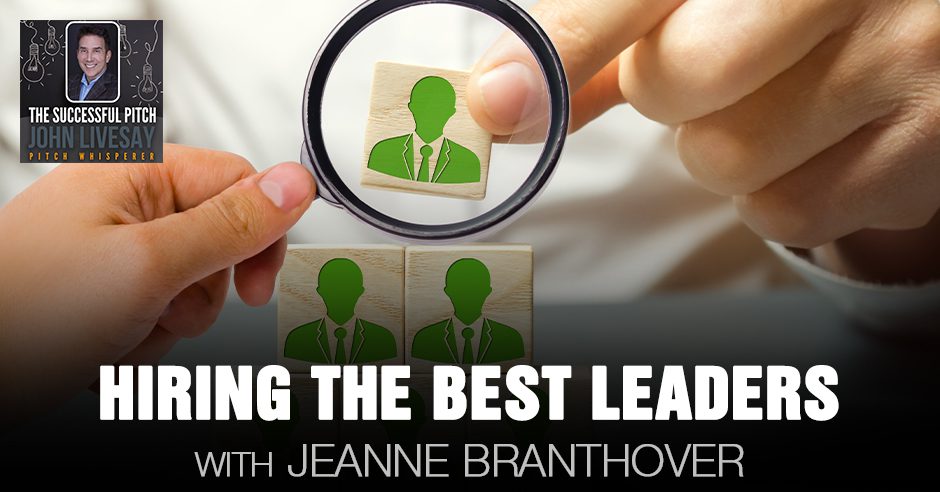
Hiring The Best Leaders with Jeanne Branthover
Posted by John Livesay in podcast | 0 comments

Episode Summary
A company of effective leaders is an effective company. Jeanne Branthover, one of the most influential people in the world when it comes to executive search, talks about hiring the best leaders to run your organization or company. Shes opens up about her unique background of how she was taught the importance of relationships and how women can do anything, including making a difference in the world. As she reveals the four secrets to winning a new job, she also highlights the importance of patience and having genuine empathy and transparency to success.
—
Listen To The Episode Here
Hiring The Best Leaders with Jeanne Branthover
I’m honored to have Jeanne Branthover with me. I’ve had the pleasure of meeting her in person when I was speaking to her company, DHR International. She is a cohead and managing partner for the New York office. She works closely with the partners and her global clients on senior-level searches, personally managing assignments. She is known for her hands-on approach where she consults with clients on succession planning, organizational change, precision hiring and talent management. She’s recruited across industries and functions, identifying boards and C-Suites and senior-level decision-makers. She is a leader in the firm’s CEO and Board Advanced Technology and Financial Services Practices. She specializes in placing women on boards and in senior leadership positions, as well as ensuring representation of diversity on every assignment and in all industries. She frequently appears on television to offer her expertise on current trends and human capital. She’s regularly quoted in The Wall Street Journal, The New York Times and Forbes. You can see why I’m so honored to have her with us. She’s been named one of the world’s Top 50 Most Influential Headhunters by Business Week. Jeanne, welcome.
Thank you so much. That is one entry into the program. Thank you.
It’s all true. I’ve seen you in action. I’ve seen your energy and your dynamo force. One of the things I like to ask my guests is can you tell us your own story of origin? You can go back to childhood, high school, college or whatever it was when you started to get a sense of, “This is what I want to do with my life,” or “This is what matters to me.”
My story is unique because there are a couple of things that are important. First of all, did I grow up knowing I was going to be an executive search? The answer is absolutely not. I didn’t even know what executive search was. Growing up, I had a very unique and special childhood having parents that were pretty awesome. My father was the first person in his family to graduate from law school, even get a college education. He was at the right time, right place. He met Morita, who started Sony. They became close friends. That’s where I learned for the first time about relationships. Morita asked my father to open up his own law firm and my father was Sony’s lawyer for my entire life. My mom was a fiercely prominent woman of her time. She was the first woman on the Board of Ed in the town that I grew up in Manhasset, Long Island. She was the person that made sure that segregation ended. I had a bodyguard somewhat during school because things were changing so rapidly and my mother was the person making it happen.
I had the woman leadership from my mom’s, looking at her and watching her, and then my dad was this big lawyer who believed that a woman could do anything. I was taught from a very young age that, “Whatever you want to do, Jeanne, you’re going to be able to do, just put your mind to it and you’ll be able to do it.” That combined with I’m very lucky that I’m naturally athletic. I played every sport. I was the captain of different things. I always wanted to be in charge. That combination became who I am. I was going to be a teacher. I love kids. I love teaching. I love educating. I love making people the best that they can be. I went to school for elementary ed, which seems odd with what I’ve become. If you can believe it, elementary ed probably taught me more than many things. It taught me how to hold hands. It taught me how to build relationships. It taught me patience. It taught me lesson planning down to the second and it made me the most organized person in the entire world.
I love what you’ve already said. It reminds me of that book, All I Really Need to Know I Learned in Kindergarten. This concept of your dad teaching you the value of relationships, which I know is a key success to your career. Your mom teaching you the impact of making a difference in the world, social impact, combined with your athletic background, teaching you teamwork. That is a recipe for success. For everyone who’s reading, even if you weren’t fortunate enough to have a background like that, you can still take a look at those three elements, relationships, social impact and teamwork. You can say to yourself, “What do I need to parent myself in? What do I need to teach my coworkers about one of these three areas?” I may not have had this great foundation in, but I need to study it or become friends with somebody or model that behavior. There’s been this concept of patience. I want to double click on that as you continue your story. I don’t know about you, Jeanne, but as a person with a sales background and a career, we are so challenged on being patient with, “Why isn’t this happening? Why isn’t the sales closed? Why hasn’t this person made a decision yet?” I’m fascinated that you learned patience with elementary children, please continue. What did you end up doing after getting your focus with elementary education?
I graduated in elementary ed and had every intention of teaching for the rest of my life. I graduated from the University of Maryland, which I loved Maryland. I loved my experience. I was a sorority girl, which was fabulous. I graduated and started teaching right away. I taught third and fourth grade. I taught back then in something called a POD System, which was all the classes together. It was chaotic but fun. I actually loved it. I was probably the only teacher that still had braces on, so kids loved me and it was an incredible experience. My husband wanted to move to New York and felt strongly that he wanted to live in the city. He thought that teaching was not utilizing the best of my skills other than that I loved it.
I was very lucky where my sister, who had been a headhunter, had fallen into executive search and said, “Jeanne, this is perfect for us.” Growing up with a dad who exposed us to high-level clients from a very young age. My mother would have Sony men to our house and I had to serve them. I learned that the word maybe means no. It was an incredible experience and it did teach us that we’re fearless as far as level of people, cultures and trying something new from a very young age. I then fell into head-hunting, which now people go to school for this and it’s much more of a focus of HR. Back then, I fell into it and loved it. This is a job that you know in a very short period of time if you’re going to be able to do it and also that it’s your passion.
[bctt tweet=”Don’t give up a long term relationship for a short term profit.” username=”John_Livesay”]
I found out in three months that this was my thing. Building relationships, meeting new people and working hard to make them happy. It was just me. I am the luckiest person in the world that I found at 22 something that I love. After doing it for six months, the company that I was working for was a very large company and the head of the office sat me down and said, “Jeanne, you’re so good at this. We’re going to give your clients over to these other people and you get more clients.” I may be blonde, but I am not dumb. I sat down with my dad and I said, “Dad, I think that this is not a good thing for me. I think I should open up my own company.” I was 22 years old. I’ve been doing this for six months.
That’s the definition of fearless, Jeanne.
I borrowed $6,000. My mother was my secretary. My first space was at 49th in Madison in New York City. It had a card table, two phones, my mother and myself. My mother had her jewelry on. She was in the office. She didn’t know how to type. It was hysterical. She answered the phone and she was awesome. That’s how I started at the time Branthover Associates. I have to tell you a funny story that tells you as the years go by. During the ‘80s, partly the ‘80s and the ‘90s, it was very cool to have big parties for your clients. As I became more successful, my mother was my secretary for the first year. She’s happy that I replaced her with a real secretary and then she became my mother again. Years later, I was having one of these parties. I would have a holiday party at the King Cole Bar in New York City. My mom was at the party. The party was about 250 people and it was my clients and my candidates and it was a wonderful way to celebrate our relationship.
One of my clients from way back then said to my mother, “Weren’t you Jeanne’s first secretary? It’s amazing you stayed in touch.” My mother said, “I’m her mother.” That always brings a smile to my face because my mother was good at helping me. The client, the fact he remembered her was awesome. That’s where I began and started the roots of my company. With clients and things, I learned very quickly that I was good at what I do and I’m very blessed that it is me. I formed my own process. I had never worked for someone else truly doing the search from beginning to end as if it was retained search.

Hiring Leaders: Screening is necessary when you meet and talk to someone about being leaders in their field.
One of my first clients was GE and I became very close to the head of human resources. He resonated with me. He saw that I loved what I did. He taught me the GE culture, what GE looked for and we worked very well together. One of my first incredible opportunities as a businesswoman and as an entrepreneur is I was called in to meet with Jack Welch at a very young age. I was asked to meet with him because Jack was starting a division called CIG, which was Corporate Initiatives Group. That group he wanted to form where I was to recruit from Booz, Bain, McKinsey, the top consulting firms to find exceptional young leaders, dynamic leaders who would be forming this group. They would be shadowing the presidents of the divisions and then eventually moving into that division to be the successor to the president.
I met with Jack Welch and this is what I learned from him. Whether you liked him or not, he was an incredible man in person, charismatic, a leader and a force. The people that I put into GE totally looked him up too as an incredible leader, driving the business and driving the company. One of the things he was exceptional at was finding incredible talent and leadership and recognizing what a leader was. What he taught me with this. He said, “Jeanne, you’re going to find me exceptional leaders. How you do it is this. When you meet with someone and you talk to someone, I want you to screen them that they are from the right firm and they do the right things. More importantly, I need you to recognize that they’re leaders and this is how you do that. I want you to find out from the person, from a very young age, what did they do that was them leading? What did they do? Did they start a lemonade stand? Did they do something that was for charity? Were they an Eagle Scout? Were they captain of their cheerleading squad? What was it that made them what I call a natural leader?”
He taught me and this is what I do to this day. I go back to the person’s very young time and I say to them, “Tell me about yourself. Tell me what did you lead? What did you head? What did you start that made you maybe a little bit different than someone else?” It’s incredible. When you do that, you can differentiate someone who is trying to lead and learn how to lead and someone who is a natural leader. Management is different. You can learn how to manage, but you can’t learn how to lead unless it’s natural. That to me was a gift.
That’s a huge gift. Let’s explore that a little bit. I want to take a pause and let that sink in because first of all, you got it from someone who clearly has a lot of success. I love the way you described him as charismatic. That alone is a quality in a leader and valuing the importance of attracting good talent. One of the things we mentioned in your introduction is the importance of creating a succession plan. He’s looking for young people to take over and the values of things like that. You and I are very similar in our appreciation and love of these stories. That’s why I asked you to tell me your personal story of origin. We now have such a much better sense of who you are and what your values are, your chutzpah if you will, to start your own company at such a young age because of the background that you had that allowed you to be fearless and not be afraid of failure.
[bctt tweet=”Be fearless when you try something new.” username=”John_Livesay”]
This concept of anyone who’s reading this who maybe has an interview coming up. Be prepared to tell your story of something you did in your childhood that made you unique or showed some natural leadership or some entrepreneurialship. That kind of thing resonates because as we talked about at your event, when you’re going up to compete against other people, whether it’s for a job, to get hired, to find people for the company’s talent pool, those stories are what make you memorable, not what order you happen to be interviewed in or presenting. The better storytelling you can become and clearly that’s one of the reasons I’m so honored to have you on is you’re such a great storyteller.
This concept of tell me something from your childhood. I talk about in my own little childhood of being a paperboy and how I had to knock on doors and convince people to subscribe. I had to get up early, deliver it, and then I had to go at the end of the month and collect the money. That’s a great lesson as an entrepreneur. Being on a swim team and the lessons learned there about teamwork and the discipline that’s required. All those skills are what you’re talking about is a natural leader. The willingness to do what other people aren’t thinking of doing. I also hear you saying the discipline that you learned as an athlete, applying that to your career and being so organized and focused. Let’s talk about a story in your own successful career and I’m sure you have so many to choose from. What did you do that got Business Week’s attention that said, “She’s one of the most 50 influential headhunters in the world, not just in New York.”
That’s fully something I don’t even know. I do know as a young entrepreneur back then, remember women didn’t have a lot of opportunities to open their own businesses. I was very lucky and fortunate that my dad gave me the seed money to do it. I was also lucky that it was executive search. If you were good at that job, you were accepted whether you were a man or a woman. For me, it’s about my life and what my success has been built upon is having relationships. It’s not hard to build a relationship and keep a relationship. That can be a very natural thing. When I look at people and I judged them on how good they are with relationships, I look at, “Did you stay in touch with your friends from high school? Did you keep in touch with your friends from college?”
This is very corny and it’s something that people laugh at. My team that I built a long time ago, my core team, one of the women has worked for me for 29 years and one of the women’s father was my first boyfriend in life. My father mentored him and now his daughter has worked for me for thirteen years and I mentor her. Another person was my son’s best friend and he’s known me since he was very young and he’s worked for me for twelve years. Relationships are, in my opinion, what makes your life successful.

Hiring Leaders: The most important thing is that the candidate researches where they’re interviewing.
If you can form relationships in personal and in business and you’re the same person whether you’re doing work or whether you are dealing with friends, it means that you’re genuine. It means that you’re transparent. It means that you care. It means that you have empathy. It means that you have the ability to have trusting, loyal, deep relationships that lasts for a very long time. That truly is what a relationship is to me. I believe that clients understand me seeing this team. People will say to me, “You still have Lisa with you?” Without Lisa, I don’t even know if I’d have my right hand. I always say the Lisa lasted longer than my marriage or my mom or anybody. The reality of it is if you can have relationships, you can have much more in life than other people have and you have trusting relationships and then people want to help you because you’re helping them.
People want to help you when you’re helping them and the best way to build a relationship is through empathy, being authentic and being transparent. That consistency of who you are, whether you are talking career or personal stuff. When you’re talking to someone at the level of the executives that you’re placing at the C-Suite, these people need to know you have their best interests in heart. “Will my family like this if I move to another city to take this job?” You care about them being happy in the job, that their whole family is involved as opposed to, “I don’t care. You are qualified for this job and it’s more money, take it.” That’s a very different relationship than, “Let me express some of my fears and concerns about this.” You’re the great person, a trusted friend, the empathy. I’m sure that would be scary for everybody in your family. Your kids have to change school, whatever. That’s what I see is your secret sauce.
Not only are you right, but it’s funny because when you’re doing it and you’re someone like myself, you don’t even think that you’re doing it. I look at myself not as a headhunter or someone moving somebody into a job. I look at myself as a career consultant. When I am talking to someone about uprooting their family, I’ll give you an example. I had a candidate that moved from Seattle to New York City. That is a huge move for the family emotionally. A big difference between hiking on the weekends. Even the grocery store, they freaked out. At the end of the day, I have to understand that I’m not just moving this person. I’m not just changing this person’s career. I’m changing this person’s entire family and what the future is going to be for them. It’s critically important to me that they’re happy because my client is not going to be happy if my candidate and the family is not happy.
I know this sounds very strange, but I have told clients even if they love someone that it’s not going to work because I know for a fact that the spouse cannot move from their mother living next door. There are things that I find out that I cannot make the person move because it’s not right for them. It’s so important in my role and in the role that I do that I know we have empathy, but I’m also realistic to what can be done and what can’t be done and what’s better for everybody. At the end of the day, it’s going to haunt us all if it’s not the right thing. That candidate comes back to me eventually when they’re hiring and they use me. My client is thankful because we always find the right person, but the wrong person would be a nightmare.
[bctt tweet=”Confident people are good listeners.” username=”John_Livesay”]
It seems like you put long-term relationship value ahead of short-term profit.
Short-term profit is never going to help you in the long run if you stay in a business that you need your relationships to work.
Let me ask you two questions about what advice do you give a candidate so that they have a successful interview or a successful pitch if you will? Is there anything you tell people who might get nervous or they don’t interview that often, it’s a different experience for them? Because you’re such a career expert, is there a tip that people can listen to whether they’re looking for a job now or their next interview that you would say, “When you’re interviewing, you need to do,” what would you say?
First of all, you know my list is long.
Give us your top two or three.
First of all, the most important thing is that the candidate researches where they’re interviewing. I once had a candidate, the client said to the candidate, “Why are you here?” This was a very senior level person and the person said, “Because Jeanne told me it’s a good job.” That is not the reason to go into an interview. It’s critical that the candidate does their research. What is the company? What are their earnings? Know what you’re walking into and who you’re interviewing. The candidate should also find out as best to their ability who are they interviewing with, the background and the experience of that person.
Research the company and the person you’re talking to.
That means that you’re prepared. I’ll give you an example. I’m going to meet a CEO. When I researched that CEO, that CEO had gone to the University of Maryland. That CEO was in a fraternity that I hung out with all the time. This was a long time ago. It still gave us a common denominator of something that I could bring up and also he then knew I understood his background and where he came from. Researching and having a common denominator or at least educating yourself so that you know what you’re dealing with when you walk in is critically important. It also gives the candidate a comfort level that they’re going to be more ready than not ready. Number one is doing the research on the person or the people you’re meeting with as well as the company. The next thing is what are you there for? Understand what are you interviewing for and what makes you qualified to interview for that.
[bctt tweet=”If you can have relationships, you can have much more in life than other people have.” username=”John_Livesay”]
In advance understanding, what you are exactly teaching. What’s your story? What’s the story that brings you here? It’s not just, “I’m good at this and this.” Tell stories of why I got into this field. I’ll give you an example of even my own son. Unfortunately, one of my sons became very sick and he’s fine now, knock on wood, but he went to a major operation. His brother at a young age saw all this. It impacted him greatly. He decided that he wanted to do something that was going to help the world and was going to help people physically. When he was interviewed at Vanderbilt with the dean, the dean said to him, “Why do you want to go into mechanical engineering?” My son told the story of his brother and that he then walked through the hospital talking to all the other kids and he came back to me and said, “Mom, who invents all this equipment?” I said, “Engineers.” My son said, “I want to be one.” That story so resonated with the dean that he said to my son, “I don’t care if you qualify grade-wise. You’re going to be in this school.”
There is a great example of the power of storytelling. The emotional connection that explains your why and your passion for something brings you to life in an interview and separates you from all the other candidates who may have more experience. I’m guessing, Jeanne, that you take your own advice. You walk your own talk. In other words, you’re competing against another firm or maybe two other firms for, “Why should we hire Jeanne in DHR to find our next CEO and your specialty?” You do the research on the company. You do the research on the person you’re interviewing. You have a story of what makes you memorable and unique. You paint a picture so that those people can get experience through your storytelling of what it’s like to work for you.
What you said is critical for every person that’s making any interview or pitch. What differentiates me from the next person that’s walking in or the last person that just left? What is it that when I leave, they’re going to remember me? That’s critical for everybody to think about. Whether it’s an anecdote, whether it’s a leadership story, whatever it is, there has to be something that you leave them with that somebody else doesn’t have. It doesn’t necessarily have to be a skillset. It can be a personal thing. You have to find it for yourself so that you can utilize it. There are two other things that are incredibly important when you are presenting in an interview or in a presentation. One is don’t talk too much. People get nervous and when people are nervous they chatter and they go off into tangents. You have to make sure that you’re answering the question, you’re staying on track, you are succinct, you are concise, you are answering the question and having a personality but you are not going on and on. My clients will say to me, “They are great person, Jeanne. They’re perfect for the job, but they will drive us crazy here if they talk that much.”
I have a statement that I would love your input on if you agree with this or not, “Confident people are comfortable with silence.”

Hiring Leaders: It’s imperative to have a diverse pool of employees of leaders.
Talking a lot is a nervous person who’s not confident and people know that. People that listen and are able to explain themselves in a way that is clear and done and then you move onto the next thing are much more highly regarded and come across as confident but not arrogant.
You’ve got to research, know why you’re uniquely qualified, and don’t talk too much. What’s the fourth insight, that wisdom of nugget?
This is going to sound corny, but what do you wear, how do you look and what is your personal presentation? One of the things that you know and I know and I’ve done and you’ve done, but many people don’t understand, you want to have your own personal brand. Part of that personal brand is who walks into the room that this person that you’re meeting with, whether it be a presentation, whether it be an interview, and what are they seeing? The minute they see you, they form an opinion of you before your mouth opens. Are you put together? Are you fitting into their culture and their environment? Are you wearing something you feel good at?
That is so important. If we feel something is too tight or we haven’t put the suit on in a while and it’s a little out of style, just that confidence and how you fit. Here’s a little analogy because you inspired me to think of it. If you’re interviewing a company and they’re interviewing you and you’re also interviewing them, what you’re looking for is to see if there’s a fit here. If your clothes don’t fit properly and you’re not comfortable in your own skin, that comes across too. I love what you said there.
[bctt tweet=”Diversity brings on brainstorming and creativity.” username=”John_Livesay”]
I’ll give you a story. One of my clients is a very big Fintech firm. It’s very well known and it’s a techie company. One of my candidates who was a techie guy from California said to me, “Jeanne, what am I supposed to wear? I don’t wear suits anymore, but I had got out my best suit, I got out my tie.” I said, “Before you go crazy, let me talk to the CTO who’s going to be interviewing you.” I called up my client and I said, “Candidates are asking me what they should wear, give me advice.” This is what he said and this is the advice that I give every single candidate now. My client said, “Jeanne, tell the candidate to wear what they are comfortable in, what they wear regularly to work and where they feel they’re going to be at their best.”
What that means is if somebody is in a techie company and they were t-shirts or golf shirts to work, the chances are they’re going to be interviewing at a similar company. If they walk in with the suit and tie on and nobody else in the company wears a suit and tie, they’re going to stand out and look weird and culturally make a huge mistake. That also shows that the client is saying to me and to the candidate, “You have to feel good about you.” That’s what we’re saying. At the end of the day, it’s imperative that you take the time well before the presentation, well before the interview, what am I going to wear? What is my hair going to look like? Do I need a haircut? Do I feel better when my hair is pulled back than when my hair is down?
All those things are being prepared no different than when I did my research on the company or that I reviewed my resume in advance. Making sure that you look the way you want and are calm when you walk out that door, that you do not rush, that you gave yourself enough time to get ready in the morning, that you ate your breakfast. Whatever your mood is, make sure of it. The sad thing is I’m the one that gets the feedback from the client on how the candidate was interviewed. There are candidates that I believe are so right for the job. I have gotten to know this candidate so well and they bomb.
The reason they bomb is they had a bad morning. They didn’t get themselves to the train on time. Their spouse didn’t make sure that the kids were ready. There are many reasons in our lives that things fall apart on an important morning, but it’s imperative to try your best to prepare for it so that if your daughter has to go to daycare, that’s planned in advance and it’s not dropped on you five minutes before. There are so many things that you’ve got to think about to make sure that it all goes as well as it can go. These are the things that a lot of people think maybe five minutes before or think, “No problem, I can do it tomorrow.” Take presentations and interviews as seriously as possible and be sure that you do it the best you can.
How can you be calm and confident if you’re frenetically running out the door and you were going to wear something and you realize it’s at the cleaners because you haven’t planned?
That’s a perfect example. It happens all the time.
I want to talk about one final topic, which is diversity and inclusion in the workplace because I know that’s near and dear to your heart. You told us your story at the beginning of this interview about your mom’s impact on segregation ending, it’s no surprise to me that you’re continuing the legacy of that. Tell us what do you think needs to happen and what people can do besides awareness? Is it setting certain goals like, “By this year, this percent of people will be hired?” What’s your philosophy on this?
First of all, especially with the #MeToo Movement, companies are waking up to how backward we are when it comes to diversity. Personally for me, I opened up my own company a long time ago, but where some women are now, it’s not anywhere near as far as it should. The things that I am excited about, the laws that are changing, that we can ask anyone anymore what they’re making and that it’s coming much more equal. If you’re at a certain level, you should be making a certain amount of money. These are things that are all, in my opinion, going in the right direction. What I do believe and I work at the board level and at the C-Suite level, one of the things that I’m trying to get across, but I’m seeing happily that the CEOs and the boards are starting to understand. It’s imperative to have a diverse pool of employees and leaders because diversity brings on brainstorming. It brings on creativity.
[bctt tweet=”It’s our responsibility to make sure we do what’s in our power to get diversity and inclusion across when we can.” username=”John_Livesay”]
People think differently, so when they speak to each other, when they bring their ideas together, differences are coming up that are good. Therefore, when the end solution comes up, it’s from a lot of ideas and a lot of different viewpoints. Everybody is the same, they grew up the same, they went to the same college, they did the same things. You need diversity to be the best that you can be. I think we’re getting there. I know this sounds crazy, but one of my clients, he is an incredible person. He’s the CTO of Bloomberg. He gave the commencement speech at Columbia where he went to school and he addressed the technology, the engineering school.
In that speech, it gave me chills and you should all watch it. He addressed the audience and he said to the audience, “Look around you and all the women that are graduating as engineers. Look at how many of them there are, but there should be many more. Every man here should make it their goal to make sure that when they’re in a position of hiring, they made sure that there was an equal number of women surrounding them as men.” Our leaders are recognizing the imperative message that they need to give out and to give to the world. All of us should believe it. The good news about, in my opinion, diversity and inclusion, many companies now have a human resource person that this is their focus. Every search that I do, we make sure that it’s a diverse slate of candidates.
I get asked when there are no women on boards that they now want women on boards. The most important thing is it’s hard to educate everyone, but I do believe that if you believe in diversity, if you believe in inclusion, then it’s our responsibility to make sure we do what’s in our power to get it across when we can. For instance, I’m part of the University of Maryland’s advisory board. I make sure that women are spoken to. I talk at colleges. I make sure that there are entry-level positions that we’re looking at equally men and women. I look at the pay that I’m getting for the candidates. It’s up to each one of us and make sure we move the needle, but the needle has to move more than it did from when I was 22 to where I am now. That is a personal goal of mine, but it can become a personal goal of many more people.
You’ve certainly inspired us with a reason to do it about creativity and innovation. Listening to you, as busy as you are, doing other things outside of your work and your personal life to make your own personal passion of wanting this to happen, from speaking and even being here as a form of doing that as well. I can’t thank you enough. Is there one final thought you want to leave us with or a book you like or a quote you like?
This is what I’ve told my children all their life. Be the best you can be. No one else can do it for you. You have to do it for yourself. That to me makes you better. It pushes you daily to be your best and it also helps you to want to learn to improve. That to me is what makes us different, makes us better and makes us always looking to be the best we can be in life. That’s what I’ll leave you with.
Be a lifetime learner so you continually grow and be your own best because nobody else can do you. Thanks again, Jeanne.
Thank you for having me. You’re awesome.
Links Mentioned:
- Jeanne Branthover
- DHR International
- All I Really Need to Know I Learned in Kindergarten
- #MeToo Movement
- https://www.DHRInternational.com/consultants/about-global-executive-search-consultants/jeanne-branthover/
- Quantmre.com
Wanna Host Your Own Podcast?
Click here to see how my friends at Brandcasting You can help
Get your FREE Sneak Peek of John’s new book Better Selling Through Storytelling
John Livesay, The Pitch Whisperer
Share The Show
Did you enjoy the show? I’d love it if you subscribed today and left us a 5-star review!
-
- Click this link
- Click on the ‘Subscribe’ button below the artwork
- Go to the ‘Ratings and Reviews’ section
- Click on ‘Write a Review’
What Is Your What? with Steve Olsher
Posted by John Livesay in podcast | 0 comments

Episode Summary:
—
Listen To The Episode Here
What Is Your What? with Steve Olsher
Our guest is Steve Olsher who’s known as the world’s foremost reinvention expert. He’s famous for helping individuals and corporations become exceptionally clear on their what. That is the one thing they were created to do. His practical no-holds-barred approach to life and business compels his clients towards achieving massive profitability while cultivating a life of purpose, conviction and contribution. He’s a 25-year plus entrepreneur. He is the Chairman and Founder of Liquor.com, which is an online pioneer that launched on CompuServe’s Electronic Mall in 1993. He is the New York Times bestselling author of What Is Your WHAT: Discover The One Amazing Thing You Were Born To Do and also the author of Business Technology Book of The Year, Internet Prophets: The World’s Leading Experts Reveal How to Profit Online. Steve, welcome to the show.
I appreciate you having me.
I’m always interested to hear my guest’s story of origin. You can take us back as far in childhood, high school or college or wherever you want. Did you always know you wanted to be an entrepreneur? How did you come up with these concepts for figuring out our purpose? What was it that got you where you are now?
Here’s what I believe, and I believe that entrepreneurs are not made. I do believe that they are born. I think it’s either on your DNA or it’s not. For me, I’ve always been wired as an entrepreneur pretty much from the time I was old enough to pick up a rake to move leaves around or grab a shovel and shoveling sidewalks and driveways. It’s always going back to some of my rap roots trying to rub a couple of dimes together to make a quarter, trying to make $1 out of $0.15. I’ve always been naturally wired in that way of trying to figure out where the opportunity is and can I create a product, program or service to solve that problem. I ended up opening my own nightclub when I was nineteen. That was my first real entrepreneur endeavor. I’ve been DJ-ing in clubs for a number of years and built a decent following so I thought maybe there’s an opportunity here for me to have my own club but I was young. I couldn’t even legally drink.
It was interesting because I think that’s where my true entrepreneurial roots were born because I saw the opportunity. You create a club that would be a non-alcoholic club which would be in the middle of all these alcohol lane environments, in that same central district. Because we wouldn’t serve alcohol, we would be able to care for the teenagers, those eighteen and under for a number of hours. We could close down, clean up, reopen and then cater to those eighteen and over and stay open as long as we wanted because we weren’t serving booze. We won’t subject to those liquor laws. When you’re young, the bar closes at 1:30, it’s a little early. There are some folks who still want to stay and do their thing. That was the basic idea and I thought there was a good opportunity there to create a non-alcoholic club. That’s what I ended up doing. I ended up writing a plan, raising some money and open up the club when I was nineteen. That was my first real entrepreneurial endeavor. Right off, there were some of the other things since. I think it’s in the blood. We’re naturally-wired to excel in specific ways and it’s up to us to figure out what that is.
[bctt tweet=”Entrepreneurs are born not made. ” username=”John_Livesay”]
The irony to me is you’re young and starting a nightclub not serving liquor and then you somehow from that get to launch to be the Founder of Liquor.com. What was that journey?
My family has actually been in the liquor business for a couple of generations. My grandfather started Foremost Liquor Stores out at Chicago back in 1939. My mom went to work for him, my grandfather, in 1977. It was a family business. After the club thing ran its course, I was sitting there trying to figure out what to do and mom said, “Maybe you want to come and join the family business and see if there’s a way that you can help here.” I didn’t want to be involved with stores necessarily. I don’t want to be in the retail environment. This wasn’t my bag, but then this very small piece of the company which was called Foremost Liquor by Wire, which basically did the same for wine, champagne and spirits as FTD did for flowers. If you’re in LA and you want to send a bottle of wine to your friend in New York, you call our 1-800 what’s line way back in the day and we would take care of that delivery through a local retailer. I saw that piece was interesting. They were maybe doing a couple of thousand dollars a month so it was a very small piece.
I thought there was an interesting opportunity there so I said, “Let me dig in here to this,” and ended up launching a catalog in ‘91. In ‘93, when AOL, CompuServe, Prodigy and some of those hit the map, it’s like, “Let me see what we can do here in this online space. I think this is going to be pretty big.” We launched one of the first stores on CompuServe’s Electronic Mall in ‘93. All the while, we were called Liquor by Wire. In ‘95, we launched one of the internet’s first fully-functional eCommerce sites. In ‘98, we had an opportunity to pick up the domain Liquor.com. It was a monetary stretch. It was certainly a financial stretch to do it, but I thought I could really change the phase of the business and so we made that leap.
Have you ever had to raise money for this company?
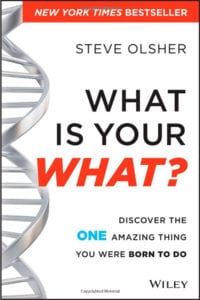
What Is Your WHAT?: Discover The One Amazing Thing You Were Born To Do
Several times.
Talk about that first because everyone’s always interested in what you learned pitching-wise.
We actually have a couple of iterations on it. In ‘98, after we got the domain, that’s when things started to pick up on the online space in a pretty big way that was internet 1.0 if you will. It was crazy. If you remember ‘99, those years, nearly ideas on the napkin were being funded. It didn’t matter. If you had a decent idea, you wrote it down, you had somebody like, “Let me give you a check.” We were an anomaly in the space because we were profitable. We were doing millions of dollars in revenue at the time we started heading down that path of fundraising. We were already doing about $3.5 million in sales which in nowadays’ dollars, that’s in $28 billion or something like that. Using the terms of the day, all the heavy lifting was done. We just needed money for marketing. We really just needed money to let people know that we existed.
Any infrastructure was in place, we can handle the load that was a niche. ‘99 we went out and brought in someone to help us get to the Promise Land, raise initial friends and family around. Call it maybe a series A, but just a very low-price round to give us additional capital to be able to hire an official investment bank to take us public. That was the ultimate goal. Part of that capital that we raised, I think we raised about $500,000 in the first round and ended up raising about another $4 million in total before the S1 was filed and we were ready to go public. That was the roadshow, the whole nine with the S1, and trying to get investors to sign on once obviously to commit to participating in the IPO. Did the roadshow and we were slated to go public in March of 2000. That’s when everything imploded.
Did your investors still get a good ROI?
They got zero. They got nothing. Everything imploded. As a matter of fact, part of the money that we brought in, we brought in because Wall Street wanted to see more of these lettered saviors. The CEOs, the CMOs, the CTOs, the CFOs, the WTFs, all these people that you don’t really need. We bought into it hook, line and sinker so much that I actually signed away my management rights to the company. We were completely blinded by the dot com light. We found ourselves in March of 2000 being unable to go public and by August of 2000 I had walked away from everything. I had built the company for nine-plus years. I literally walked away from everything. My mom walked away in December. Grandpa had passed many years before that. She walked away in December and I put it out of sight, out of mind for years. Mind you, I had never signed away my rights to the domain, just to the company. I washed my hands off it and I was like, “I’m out of here. I didn’t get along with the CEO.” That story is for another day.
[bctt tweet=”You are the solution to someone else’s problem.” username=”John_Livesay”]
In 2006, I won’t go into too much detail here because I know we’ve got other ground to cover, but I was finally able to reclaim the domain and subsequently put it up for sale. I had a couple of very interesting offers. The highest offer was $4.25 million just for the domain. Needless to say, I accepted. The guy made the first few payments and then bailed on the rest. I kept the money and I kept the domain. In 2009, I ended up teaming up with some folks out of San Francisco who now run the business. I’m the chairman but they actually run it on the day-to-day. I’ve got no day-to-day with it at all and we’ve raised about $12 million to date or so in this current iteration.
What a fascinating story of it go away. It comes back because you had one piece that could allow you to rebirth it, which is one of the big storytelling genres I’m always talking about. It’s also the not giving up and now the people who have invested in this iteration must be happy.
Not yet. It’s interesting. It’s like, “Screw me once, fool me twice.” You would think I would win but no. When I brought in this team out of San Francisco, the deal was I would contribute the domain and they would build the business. Once again, I signed away my management rights to it because I just didn’t have an interest in building the business at that point. In hindsight it was dumb, but it is what it is. I love those guys to death. They’ve done great on a lot of different levels. We’ve got millions of people who subscribed to the newsletter. We’re number one or number two in any SEO search you can think of. We work with all the biggest brands in the world but revenue has been limited to ads and those brand-related relationships. Revenue has been suffering. They’ve been operating in the red for God knows how long. We ended up striking a deal with a pretty big conglomerate to put a big chunk of change in and it’s needed at this point because the thing is bleeding. We’ll see what happens. That will be an eCommerce initiative and we’ll see how things go.
Amazon lost money for quite a while too. It shows the importance in investors going, “I still see the big picture.” The fact that you have relationships, revenue, the search, something that all that equity is worth a lot. You now seem to be the kind of entrepreneur, Steve, that has the ability, some people call it their gut, some people have described it as having their pulse on the Zeitgeist. It’s a little bit ahead of everyone else of, “I see this could be an opportunity,” which you did with this. It starts off as a little thing. You have a gut instinct. You look at something and you go, “This is something that’s a seed of an idea.” You have a seed of an idea that you feel now is going to be your next big thing. Can you share with us a little bit about what that concept is and what you’re doing?
I take that as a compliment because what you’re saying is that I’m able to see to Wayne Gretzky saying, “I see where the puck is going.” That hasn’t worked to my benefit, to be honest, because I’ve actually been too early in most cases. If you look at Liquor.com as a whole, it’s a perfect example of just being too early. There are other things that I’ve done where it’s been too early. In this case, I hope the timing is spot on. I think the timing is spot on but long story short is the endeavor that I’m undertaking is called Latatud. For those of you who are familiar with Software as a Service, you pay a monthly fee, you get access to a particular software, membership-driven recurring revenue, etc. This is built around the same general principles except that it is housing as a service.

What Is Your What: No guy ever wants to hear anything that he’s associated with being associated with the little thing.
It’s a membership opportunity for people who live the laptop lifestyle or as they’re commonly known as digital nomads to be able to pay a set membership fee and have access to housing that we own. That’s the biggest difference between Airbnb and us or any of those types of people. Our company owns that housing and it gives these digital nomads the flexibility to move from location-to-location as often as every 30 days and they have the ability to have privacy. It’s not like one of those co-living type environments that you see for so many of those types of folks. One of the more unique elements of what we’re doing here is they build equity as if they’re a homeowner without the headaches of homeownership. It combines flexibility, equity and privacy in ways that frankly isn’t being done right now. We would actually own the real estate which gives us the opportunity to provide equity for not obviously dollar-for-dollar but it’s certainly a lot better than renting. That’s what it is.
There are two things I want the readers to take away here. One of the things investors look for is why you and then why now. In Steve’s case, he’s got this experience of launching a company with huge revenue and brand. He knows what to do. They’re putting their money on the jockey and if you’ve already been through some of the pain points, that lets them feel like you’re not going to give up and you’re going to figure out how to make something work. The second part is why now. In other words, if Uber tried to launch or even Airbnb which is a more relevant example, Uber without people having smartphones in urban areas, that wouldn’t work. Airbnb, if 2008 hadn’t happened with people being open to new ways of making money, the concept was so revolutionary. This is yet another example of why now. The growth of all the digital nomads is one thing and the only options they have now is we work, we sharing, co-living or Airbnb and there’s some downside.
If you can boil down to your pitch like you just did to three keywords: privacy, flexibility and equity, then that lets people lock in three key things that you’re offering, the solutions to the problems you’re solving. That is what allows people to go, “I get it. I can explain it. I don’t have to work so hard in 30 seconds to understand digital nomads are going to get a place to live that gives them privacy, flexibility and equity.” That’s your one-sentence pitch right there and so that is the secret sauce to then having people double click on each of those different topics and how it’s different than what’s out there. It’s great stuff.
I appreciate that and the piece that we didn’t talk about and the reason why I think this combines so much of my particular skill sets is that I actually have done real estate development for the better part of several years.
The why you is very strong there.
[bctt tweet=”We’re just naturally wired to excel in specific ways. It’s up to us to figure out what that is.” username=”John_Livesay”]
There have been big huge hits and there have been big huge misses and the learning experiences with both I think does make me uniquely qualified to be able to lead this charge. I often say that this is a real estate play disguised as a tech play. The reality is that real estate and tech is where I’ve cut my teeth for the better part of many years.
I want to get to your book, What Is Your WHAT? because my first question to you is there are a lot of people reading that have a dream of a book or have a book but you were able to get yours to be a New York Times bestseller. Can you tell us that story?
2013 is when What Is Your WHAT?: Discover The One Amazing Thing You Were Born To Do was released. I knew that it not only had the ability to help people in ways that Myers-Briggs and What Color Is Your Parachute? and StrengthsFinder and some of those types of modalities couldn’t. I also knew that from a personal branding standpoint, if I wanted to build this career and the expert space, which I started pursuing in 2010 when I had this wake-up moment. I realized that my life was focused on the money and it was great for me and those closest to me but really no one else, which of course was short-sighted because money is awesome and that is a whole discussion for another day. There’s that, we come to that come-to-Jesus moment and that’s what it was for me in 2010. All these real estate developments all we were good but it’s just money. What am I going to do to serve humanity? That’s when expert-type space came about. I knew that if I wanted to build a personal brand, that more of the Steve Olsher brand, there were some things that you need to be able to check some boxes on. Having major media, having a book hit the list, have a live event, all these things that go hand-in-hand with being seen as one of those top folks. It was always the plan.
What Is Your WHAT? was my third book but it was always my plan to put that one on one of the lists, ideally the New York Times list. Back in 2012, 2013, even a few years after, there was a company called ResultSource. ResultSource’s claim to fame was if you can put enough pre-orders together for your book, we will then place orders throughout the country so that it shows up on BookScan or whatever it’s called nowadays. It looks like all of these people are buying all of these books across the entire country at the same time. If you have a certain number of books that are sold in a finite period of time, that then gets you on the radar of the list. Back in those days, if you’ve got to 10,000 books, the odds were good that you would hit the New York Times list. It was 10,000 books in a week.
You get to 20,000, you probably hit the top five and if you could get to 30,000 or so, you’d probably be top one or top two. The plan was that I’m going to work with ResultSource. We’re going to blow this thing out of the water. We’re going to focus really hard on providing incentives for people to buy the book, to buy more than one book. You buy ten books, you get this. You buy twenty books, you get this. You buy 50 books, you get that. Let’s shoot for 13,000 as our goal because that’s the number that we had said, “If we can get to 13,000, we should have a pretty good shot at hitting the list.” When all was said and done, we ended up right around 13,800 in terms of the number of copies that were pre-sold. On release date, they were then distributed out through all these various points of entry to the book system there across the country and that’s how we ended up hitting the list.

What Is Your What: You can achieve your desired results if you focus on what it is that you’re doing.
It reminds me of the way movies are launched. A lot of money spent on marketing to get watching trailers so that opening weekend is a killer because if it’s not, then the movie will not be a hit. All the buzz that has to go on is very similar. That skill set alone is completely transferable to so many other things and I know you’re doing a lot of other kinds of launches as well. There’s a chapter in your book, What Is Your WHAT? that I want to get you to talk about, which is The Vortex of Invincibility. You certainly have that. What is it that we can all learn from your book and you to become more invincible when things knock us down?
The Vortex of Invincibility is built around the framework of the conscious competence learning stages model. Basically, we have these four stages of the conscious competence learning stages model. We have what’s known as unconscious incompetence where you literally don’t know what’s going on, you don’t know what you don’t know. We have the stage of what’s known as conscious incompetence where you become familiar with what it is, where you’re weak or where you need improvement, etc. Those two are obviously very important as you move through this process of getting to a state of invincibility because if you don’t know what you don’t know, you don’t know it. If you’re out of luck, you’ve got to figure it out. Getting to step two of turning the light switch on is huge in terms of your own personal growth, your business growth, whatever it is.
Step three is then all about achieving what they call conscious competence which means that you can achieve your desired results but you’ve got to focus on what it is that you’re doing. Maybe you’re learning a new language. You’re sitting there, you’re reading a book and it’s in Spanish. You have the ability to read Spanish but you have to think about what that sentence meant, every word, etc. Ultimately, the last stage of the conscious competence learning stages model is unconscious competence and an unconscious competence basically things come naturally to you as breathing. You don’t have to think about your process.
To get to that point of invincibility, even if you can just master one area of life or business, the world stands up and generously applauds and compensates those who have achieved unconscious competence in any area of life or business. It’s so hard to do. Few people will ever achieve that state of invincibility outside of things that come naturally to them like breathing, walking or talking. I’m not talking about 10,000 hours or anything of that nature. I’m talking about truly becoming a master of whatever that craft is that the world handsomely rewards those people for whatever that one thing is. The tag on the book, Discover The One Amazing Thing You Were Born To Do, that’s the interesting part about all of this is it doesn’t take more than one thing to have a monumental impact. Not only of course on your life and on the lives of those closest to you, but on the world at large.
I remember this process learning how to drive stick shift and it’s like, “I don’t know anything about this.” I didn’t have any energy on it like, “I don’t know how this works,” but once I started the stop, the jolting part of it, it’s such a great metaphor I think if you’ve ever tried to learn stick shift on the hills of San Francisco. Now I’m aware of how incompetent I am at this and sweat’s pouring down my face as I’m almost going back down the hill because I can’t get the car in gear.
[bctt tweet=”A single thing can have a monumental impact not only on your life and on the lives of those closest to you but on the world at large.” username=”John_Livesay”]
The first stage honestly is you didn’t even know there was a stick shift.
When I don’t know it, I don’t have any judgment on myself yet. I just go.
You just get a car, put it in drive and go.
Someone’s going to teach me how to drive stick. I haven’t a clue what it does or how it works or clutch or any of that. For me, the challenge that I’ve seen myself face and I think other people do too is when you get to this conscious incompetence stage, the negative self-talk really amps up. “You’re never going to learn this. You were stupid even to try to learn this.” That’s where the invincibility is probably at its most fragile. Once we get to the place where it’s like, “I have to concentrate. I can’t be listening to the radio or talking to anybody when I’m driving stick.” That’s fine and we know we’ve got it at least. We’re not going to crash or go down the hill. This part, you can use this for everything in your life, anything you’re trying something new, in your business, to getting a new client, whatever it is. This conscious incompetence stage, do you have any insights that you personally have said to yourself or any tips for people who don’t realize that you will get it but it might take a little longer than you think? Try to talk down or turn down the volume on all that negative self-talk?
Yeah and I’m not going to sit here and say that negative self-talk isn’t helpful. There are things that you are not meant to do. I could sit here and I’m 5’8” on a good day and the reality is there used to be a time where I could touch the rim in basketball. If I can slap at the net, I’m doing pretty good. The bottom line being I never could dunk. I’m not going to dunk. For me to continually sit here and try to get to the stage of unconscious competence, dunking isn’t going to happen. It is a fine line of recognizing where reality intersects with dreams, hopes, wishes and what actually is possible. What I know to be true is that for me, if I’m banging my head up against the wall on a consistent basis, let’s use the analogy of trying to jam a square peg into a round hole.

What Is Your What: Once you understand what your core gift is, the question is then what is the primary vehicle that you’re going to use to share that gift?
There are times where you can continually do that and you will whittle that thing down and break it away and eventually you can jam it in, most of the time it just results in pain. When you find yourself in that state of conscious incompetence and you’re continually trying to jam that square peg into the round hole, it may be time to go outside of yourself and ask someone for feedback. That’s the beauty of having a mentor, coach, guidance or accountability partner. Go outside of your own head to say, “Am I an idiot here? Is this something that I should continue to press through?” I’ve been doing Brazilian jiu-jitsu for the better part of many years. For me, it’s still conscious incompetence. I have some conscious competence but I have yet to reach the stage of unconscious competence. I’m still in phase two and I’ve been doing the thing for many years.
You obviously like it so you keep doing it.
I do like it but I also know that with enough time, with enough practice and with enough consistency, I can achieve that level of unconscious competence with one move at a time. It won’t necessarily be the entire sport because it’s endless and there are a number of things that you can do and the number of things that happen. There are so many variables in it. You’ll never get to that stage. Even the grandmasters find themselves like, “I didn’t even know this was possible,” because the sport is always evolving but you can certainly move beyond that stage of conscious incompetence to at least achieve some conscious competence with it. It’s an interesting discussion because at some point though, you do have to cut the rope and say, “This is not something that I can do or I no longer want to do it.”
At the end of your book, let’s say you found your one thing, your what. Now what? Obviously, the one thing you talk about is helping people in corporations figure out what their one thing is that they were created to do. Once people have identified that, what do you recommend they do with it in the book and in life?
It probably requires to talk just briefly about the What is Your WHAT? framework so that people understand what we’re saying here. What I’m talking about what your what is, in author land they say that you write the book that you most need. For me, this has always been a struggle trying to figure out as a grown man what it is that I’m good at and should be doing with my life. I did the Myers-Briggs, What Color is Your Parachute? and all those. They all left with more questions than answers. There’s got to be a better way. There’s got to be an easier way to get to an answer in terms of how I can hit the ground running to make a meaningful impact on the world. What I realized in having taught a class called The Reinvention Workshop, this is something that I had started doing back in 2009 where I was helping people to reinvent their lives and just try to move powerfully forward. I started doing workshops that I call The Reinvention Workshop and kept teaching The Reinvention Workshop, I became clear that there are three important pieces of the puzzle. If you can solve these three pieces, everything else falls into place.
[bctt tweet=”Bend your time or invest your time to start pursuing your what.” username=”John_Livesay”]
It all begins with understanding what your core gift is. Your gift could be something like teaching, healing, communicating, enrolling, protecting or entertaining, something like that. We all have a core gift. John, your core gift is probably either communicating or teaching, I would think something like that, maybe but we could get into. Once you have an understanding of what your core gift is and if you look at the cover of What is Your WHAT? you’ll see that the only graphic element on there is the DNA strand. What I honestly believe is that what really has chosen you is not that what you chose is truly a part of who you are. You can spend a lifetime in denial about what it is but ultimately, it’s a part of who you are. Your gift I believe is in your DNA. It’s there. It’s static throughout your entire life.
The other two pieces are more organic. They can evolve over time based on new experiences or based on things that come out of you. Either things come into your life and it opens your mind to something new or something new comes out of you. The second piece is the vehicle. Once you understand what your core gift is, the question is then what the primary vehicle that you’re going to use to share that gift is? For example, your core gift could be let’s say healing. The primary vehicle that you use might be a massage or might be acupuncture or something of that nature. Core gift, primary vehicle.
The third piece of the puzzle and this is the What is Your WHAT? framework. When I talk about your what, it’s the combination of these three elements. The third element is the people and understanding the people that you are most compelled to serve. Let’s say hypothetically you’ve got a tripod and you’ve got all three pieces here. You’ve got your gift, your vehicle and your people. You’re going to have a stable place to sit, it’s going to work, whatever. If you take away any one piece, if you’re clear on the people that you’re most compelled to serve but you’re not clear on the vehicle that you’re going to use to serve them, obviously that doesn’t work. If you’re clear on what your gift is and you’re clear on what your vehicle is but you’re unclear on who the people are that you’re most compelled to serve, you’re just going to end up serving anyone. That’s going to be a tough thing to take to six, seven or eight figures depending on how far you want to go with it. You can run it six ways from Sunday and you’ll see how that all comes together.
I love this so much because figuring out what you’re good at or gifted at, figuring out how you’re going to deliver it and then this is the biggest mistake I see people make so many times is trying to be all things to all people. Who do you help? What problem do you solve? Why are you uniquely qualified to execute it? It’s all answered in these three structured. It’s great.
The question that I asked people then is, “Who are you most compelled to serve?” The God-honest truth is you found your what, now what? That can evolve over time but then you found your what, now what? The first thing you do is you get started and you don’t quit your day job. If you’ve got a day job that’s paying you money, don’t quit that day job. Think about it like a recipe mixture. I know what my what is but right now 100% of my income is derived from my what isn’t. 0% is derived from what I think it is. Use those hours in the day. You can either spend your time or you can invest your time. That’s all you can do. Use those off-hours meaning before work, after work, the weekends to start pursuing your what.
As soon as those dollars start coming in, then that recipe mixture starts to shift. 100% of your income becomes 99% of your income and now 1% is derived from your what. It starts to shift 70/30, 60/40, 50/50 whatever and it’s the point you’ll understand when it’s time to cut the rope. You’ll also understand once you get in motion, what are the things that you need to be doing to make this work for you in a way that not only reflects something that you love doing but it also reflects something that you’re really good at. It reflects something that people will pay you handsomely for.
I can apply this personally to my own speaking career. I discovered I loved speaking and was good at it but I realized I needed to have some training to make it even better. The vehicle of communicating, in my case helping salespeople who struggle, but pushing out a bunch of information learn to become storytellers. I was very clear in who I helped and then specific industries, not just all salespeople but tech people, executive recruiters, healthcare people, design people. I knew exactly who I could help in that niche and the vehicle was being hired as a keynote speaker but then I was like, “I need to get more talks to be from 10% of my income to 50% to 80%. How do I grow that and all the steps to do that?” I think that example for people who go, “You don’t start out being Brené Brown with the Netflix Special. First, she did a TEDx Talk. She was a researcher but she found that she was gifted at taking information and turning it into stories. Anyone can take a real look at that. Are there any last thoughts or pieces of advice you want to leave our audience with?
As you relay the What Is Your WHAT? conversation which we’re having here now is the end, I have to simply say that the bottom line is that you are the solution to someone else’s problem. There are people who are literally praying for you to show up in their life. The God-honest truth is I believe that you do not have to succumb to life as a starving artist simply because you are compelled to draw. Why shouldn’t you be paid extraordinarily well for what it is that comes naturally to you as what comes as naturally to those who make millions of dollars a year doing what comes naturally to them? For me, I’m wholeheartedly on the mindset that once you show up in these people’s lives, those people who are praying for you to show up. They can get up off of their knees and stop praying because they have now found you and found your solutions, that they should start paying. We embrace the notion that you are the solution to someone else’s problem and that people should pay you for your talents and pay you handsomely for any gifts that you bring to the table.
Steve, thanks so much for sharing your story, your incredible journey. This new Latatud is going to be a huge hit, I’m sure. Of course, all the insights on what makes this book a New York Times Bestseller.
You’re welcome.
Links Mentioned:
- Liquor.com
- What Is Your WHAT: Discover The One Amazing Thing You Were Born To Do
- Internet Prophets: The World’s Leading Experts Reveal How to Profit Online
- What Color Is Your Parachute?
- The Reinvention Workshop
- https://SteveOlsher.com/
- WhatIsYourWhat.com
Wanna Host Your Own Podcast?
Click here to see how my friends at Brandcasting You can help
Get your FREE Sneak Peek of John’s new book Better Selling Through Storytelling
John Livesay, The Pitch Whisperer
Share The Show
Did you enjoy the show? I’d love it if you subscribed today and left us a 5-star review!
-
- Click this link
- Click on the ‘Subscribe’ button below the artwork
- Go to the ‘Ratings and Reviews’ section
- Click on ‘Write a Review’
Life Lessons From The Oldest And Wisest with David Romanelli
Posted by John Livesay in podcast | 0 comments
Episode Summary
There’s always a pearl of wisdom to learn from the elders. This is something that most of us tend to discount, but not for David Romanelli. Best-selling author of Life Lessons from the Oldest and Wisest, David talks about combining meditation and storytelling as the key to finding joy in your life. Creator of an ongoing series of events called Drinks With Your Elders, he uncovers what’s inside his book as he shares the healing power of a great story, how to find more time, what cures loneliness, and how to screw, laugh, and celebrate at funerals – all of which he learned from interviewing elderly people. On the side, discover how David combines meditation and storytelling, the conditions we attach to our happiness, and the reality behind social comparison.
—
Listen To The Episode Here
Life Lessons From The Oldest And Wisest with David Romanelli
Our guest is David Romanelli, who’s a best-selling author and international speaker. He’s your guide to bringing old wisdom and ancient healing practices to your modern life. David initiates connection and conversation between the old and the young. Our elders in their 80s, 90s and 100s fought in World War II, survived the Holocaust and marched for civil rights. He believes they are our most precious resource of wisdom and history. Most elders lack a voice in popular culture and live out their final years in isolation. He believes we can and have to do better. He’s created an ongoing series of events called Drinks with Your Elders, bringing the old together with the young. This inspired his third book, Life Lessons from the Oldest & Wisest, which shares elders’ advice on parenting, marriage, loyalty, the all-important resilience, and having a sense of humor through all the ups and downs. David, welcome to the show.
Thank you so much, John. It’s great to be here.
I’m always curious to know how did someone get into what they’re doing, your own story of origin. You can go back as far as childhood, high school and college. How did you get into this whole mindset of, “There’s some wisdom to be learned here from the elders?”
I was deep in the yoga world. Some friends and I opened the first chain of boutique yoga studios in the ’90s. We were deep in yoga, the wisdom of the yoga tradition and studying with the yoga gurus. My last surviving grandparent was in a senior living facility in Los Angeles. It was a nice senior living facility. I saw how depressed she was and how it felt like everybody in that senior living facility was put out to pasture, not connected or integrated into the surrounding community. It wasn’t right because here you have these 37-year-old yoga gurus spouting wisdom on Instagram and the 89-year-old Holocaust survivor in the old age who’s dying a lonely death. Something seems out of whack. I shifted from yoga into the wisdom of the elders. I’ve been embracing that for several years.
[bctt tweet=”Let the joy in.” username=”John_Livesay”]
Tell us a little bit about what caused you to want to write this book.
I was finding that older people were not even on people’s radar. Nobody considers that they might have the wisdom or the missing piece to their puzzle. They weren’t relevant to business and growing their business. What could they possibly have to learn from an old person? You can find it on the internet. I found that when you engage with them, the wisdom is so profound. It’s deeply healing and incredibly relevant to every part of your life. I was like, “I’ve got to spread this.” I figured a book was one of many ways to get this message out there.
Do you have a story from your book or your research on the book of some wisdom you learned from a senior person that people could apply for their business?
First of all, the greatest story was from my previous book called Happy Is the New Healthy, which is a lady I met. I was working with this charity in New York City that helps old people in need. Their oldest client was 111. They call that a supercentenarian. There are about seven billion people on the planet. There are only about 60 people we know about who are 110 or older. A part of that is genetics. The part of that is the attitude. When you get to be well over a hundred, chances are you’ve lost it. You’ve probably lost a child at that point. You’ve outlived your own children. There’s a lot of pain. It takes certain strength for somebody to turn the corner on 100, even 105 and keep going. A lot of people are cashing their chips and they’re done. To live to be that old, you have to be able to have a certain strength.
[bctt tweet=”Stories allow us to pass on wisdom.” username=”John_Livesay”]
This 111-year-old lady, I asked her like, “What are your tips on health and longevity? How are you managing to get to be this old?” Her three tips were sex, vodka and spicy food. She had this joie de vivre that I have found is common amongst the oldest and wisest. Through the pain and the madness of life, we all have to take a moment to push back from our computer and loosen our grip and let the joy in, let the magic in. Everybody in business is grinding so hard. There are so much stress and such an excess of stimulation and information. The entire days go by where we don’t remember a single thing that happened. Do you want to live like that? Push back, take a breath, loosen your grip. Live in this moment.
Many of us are either rehashing the past or worried about the future. There’s no joy there. It’s anxiety or fear happening for the most part. One of the chapters in your book is The Healing Power of a Great Story. Can you tell us about that?
My guru’s name is Dr. Carl Hammerschlag. He was a medical doctor on the Indian Reservation for many years. He thought he was this highly certified and educated doctor. He would go into the hospitals to work with the Native Americans. Healing for them was much than art. I asked him questions like, “You know how to give me medicines, but do you know how to dance?” At first, it didn’t register. You have to be in touch with the rhythm of life to be a healer. It’s not just about the mind and the medicines. It’s how do you touch the spirit. Dr. H has these sweat lodges, which I’ve gotten a bad rap on the news because people have had dangerous experiences.
When they’re done correctly in Native American tradition, the idea of a sweat lodge is to go into this hot teepee. It’s so hot that you have to stop thinking and breathe. It’s almost like you remove your head from your body and let your spirit breathe. He says that the thing that’s missing from our culture is that we have to be telling better stories. You can’t pass along wisdom and teach our children how to live a good life if we’re not telling them good stories. He said, “We have to be telling better stories.” Whenever I learn from Dr. H something about heartbreak, resilience and what it means to heal my own anxiety, he always wraps it in a story and in a ceremony. He doesn’t just give me the information. That’s missing from our culture.

Life Lessons: Through the pain and the madness of life, we all have to take a moment to push back from our computer, loosen our grip, and let the joy and the magic in.
Another chapter in this great book, Life Lessons from the Oldest & Wisest, is How to Find More Time. Everybody of every age is looking for that, except maybe if you’re a kid and you want to get older faster. Most of us are looking for ways to find more time. What’s the story there?
There was a lady who’s 93 years old. At the end of our conversation, I asked if she could send me a picture. She said she’d put it in the mail. I said, “That’ll take a week. Can you just email it to me?” She didn’t have an email. She had to write down my email address to give it to her granddaughter to send me the email of the picture. It took five minutes for me to spell out my email and for her to write it down. At first, I was so frustrated. Who has five minutes in their day to give your email? Who wouldn’t get frustrated? At a certain point, I started realizing, “This is ridiculous, that I don’t have five minutes in my day for this lady to have this conversation. What better am I going to do those five minutes?” I started laughing. We had this great moment. She said she was an old fart. I realized that she had this spirit of a much younger person. The joke was on me, not on her. It’s ridiculous that we’re so efficient with our time that you give up a minute or two in your day that you didn’t expect. That should be a chance to laugh and loosen your day.
One of the other chapters that stand out for me is A Cure for Loneliness. We might assume that people get lonely as they get older and isolated, but there’s a lot of research that a lot of entrepreneurs feel isolated and can feel lonely at the top. What cures for loneliness did you learn in interviewing these elderly people?
Everybody’s lonely. We spend ten hours a day looking at screens. Everything is on a screen. Everybody’s longing for human experiences. We call it the matrix. You get sucked into. You can look at screens all day. You can go from your tablet to your television, laptop, iPhone and to your desktop. There’s no shortage of screens. I found this lady in New York City, who was the guest at one of my intergenerational events. She lives in a high rise in New York City. She said people don’t even see her. Her neighbors don’t even see her. She feels invisible. She’s had horrible health problems. She was bankrupted by the medical system. She’s got a bleak existence.
[bctt tweet=”You have to be in touch with the rhythm of life to be a healer.” username=”John_Livesay”]
She came and she spoke. People in the audience were crying because everybody realizes that they would probably not have seen this lady. We walk right by her on the street. We’re looking at our phone. If you have an elderly neighbor, a lot of people would not take the time to engage with them or are too busy. You come together and it felt so good to hear her story, hear her pain and give her a chance to share. People are living lives of quiet desperation. That’s true for everybody. To come to an experience where you can sit in a circle and say, “Here’s what hurts,” and listen to one another is an incredible experience. It’s not something that can happen on technology.
That’s the secret. Don’t be looking in the wrong place for your answers to feel connected. You would think, “I’ll hop on social media and feel better.” Research has shown that the more time you spend on social media, the more likely you are to be depressed because you keep comparing yourself to the best moments in everyone else’s life and thinking, “I do not have that much fun.” You also talk about how to feel instantly successful. I’m curious to know how to do that.
This guy in the book said he was a 90. He didn’t make more than $27,000 his whole life, but he found the value in being engaged, purposeful in his work and passionate about living and his faith. He is a widower, but he goes to old age homes and plays country music. He has a little country music band. There are a lot of people who’d be like, “I didn’t make any money my whole life. It’s been hard. It’s been a grind. I worked my ass off. What do I have to show for it?” Here’s a guy who put his emphasis on the intangibles. He was working in the fields on the tractors in the blazing heat. He cranks the country music, loved, found a way to his heart first and love what he did. He has lived a great life. Your accomplishments in older age are not what you have to show for yourself, but who are showing up for you. The investments that you make in people, love and relationships.
Nobody wants to hold up their plaques or awards at a memorial service. In fact, you talk about how to screw, laugh and celebrate at funerals. Everyone fantasizes, “What will people say about me at my funeral?” What’s going on in that chapter?

Life Lessons: Laugh about your challenges; don’t take life so seriously.
There’s this lady Lorena who is in her 80s. She spoke at one of my intergenerational events in Dallas. She told a story. Her first husband died of ALS. It was brutal. She got married again and had this incredibly blissful life. Her second husband died of a heart attack. She’d been through so much pain and loss. She was at the funeral for her second husband. She tripped, fell over one of the grandkids and broke her femur bones. Everybody was listening to her story. People stopped drinking their wines. You could pierce the silence in the room, which is sadness. She had to get rod and screws inserted in her leg to heal the break. She says to everyone, “I got screwed by Rod and I did not like it.” It was so funny. It was such comic relief that this lady could come to the pain in her life and find some humor. If she can do it, then so can you and so can I. Find a way to loosen our grip and laugh about our challenges, not take life so seriously.
You are combining meditation and storytelling together. Can you explain how that works?
I like to tell stories about the elders that I speak with. They are a great resource for great stories and life lessons. I lead these guided meditations and have these meditation programs. Meditation is something that we silo, that separates us from life so that we can find our peace, quiet, go off in a corner and listen to a guided meditation. I found that meditation is better in my experience when it integrates everything that’s going on in life, instead of separates from everything going on in my life. I lead these meditation programs. I share stories from the elders and stories about what’s going on in the pop culture. Every moment offers us an opportunity to meditate. Every moment throughout our today, stuck in traffic, screaming kids, running into someone that stole your fiancé. Every moment if we can resist and push back against it, life becomes exhausting or we can embrace, find the lessons and move deeply into the emotional experience of life moment by moment. I try to make my meditations integrating, everything that’s going on around us and within us so it feels more whole.
You have gotten some interest from Netflix on what you’re doing, and possibly turning that into a show. How did that come about? How are you pitching what you’re doing?
[bctt tweet=”Everything is on a screen and everybody’s longing for human experiences. ” username=”John_Livesay”]
The work I’m doing with the elders is interesting because 10,000 people are turning 65 every single day. We’re segregated by age. I don’t think businesses are recognizing how important it is that we learn to engage the aging population. There was this article I saw in Fast Company Magazine. The headline was, “It’s time to pay attention to the $15 trillion business of growing old.” It said it’s the most significant demographic shift in recent history. America has always been about being sexy, young and glamorous. We’re getting older. There’re going to be more old people than young people. It’s going to be much more about being seasoned and wise as much as it is about youthful and glamorous. I’m coming up with different ideas on how you can show the relevance of the elder population. How you can take them out of social isolation and bring them back into the mix. That’s an idea that I’m working on.
Congratulations on that. Tell us a little bit about the keynote talks you’ve given. Who hires you to give them?
I’ve been giving a lot of talks. My second book was called Happy Is the New Healthy. It shares the message of joie de vivre and the ways that we can loosen our grip. My new book, Life Lessons from the Oldest & Wisest takes the joie de vivre and the message of happiness. It also talks in depth about how it’s hard to see the future and the future trends if we’re not rooted in the past. It’s important for companies to be able to honor and share everything that they’ve learned from their past. The mistakes that they’ve made. When you talk to somebody who’s 80, 90, 100 years old, they weigh in on their regrets and the things that they didn’t do right, that’s almost as meaningful as the things that they did do right.
You don’t have to make the same mistakes over and over through every generation. We can learn from people. For instance, this one guy told me his wife passed away from Alzheimer’s. He was married to her for many years. He sat by her bedside and held her hand as she lay dying. He relived with her all the moments that he enjoyed in their life. He was grieving. He was sad. Hearing him tell a story was like a wake-up call because we all take our partner for granted. You wake up next to the same person every day and the same stories, issues and challenges. One day, we’re going to have to say goodbye or they’re going to have to say goodbye to us. There comes the point where you wake up and wish that you appreciated them more than we do, especially in the prime of our life when we can go places, travel and we’re not old yet.

Life Lessons: There comes the point where you wake up and wish that you appreciated your loved ones more than you do, especially in the prime of your life.
It’s important for people to hear that message. You don’t want to look back and wish that you were more grateful for somebody you love deeply. It’s not a pleasant regret to have. That’s why it’s important to recognize and listen to the regrets that people have, and for companies to realize, “These are the mistakes that we’ve made. Let’s honor these mistakes and grow from these mistakes.” When you have a lot of history, you’ve been around for a while and you’re able to share from that place of vulnerability that speaks highly to our ability to nurture great relationships.
You talk about people being so focused in the future that, “As soon as I fall in love, as soon as I have this much money, as soon as my career takes off, whatever it is, then I’ll be happy,” as opposed to, “I can’t possibly be happy now because I don’t have everything I need in order to be happy.” You have a lot to say on that.
There are all these conditions that we attach to our happiness. I had a great trip to Alaska with a friend. We were in rural Alaska. We had to get a taxi to take us back to our car. It was such an awesome trip. My friend said, “I bet you this taxi driver has a message for us.” Sure enough, we got in the car and the taxi driver tells us he just left hospice and his father passed away. We said, “I’m so sorry to hear that.” He said, “Don’t be sorry. I got to spend every day with my dad for the last six months of his life.” We caught up on so much. We did so many deep, rich conversations. He said, “What was I thinking? Why did I wait for the last six months in my dad’s life to get this close to him? What was I waiting for?” When he says goodbye, he always tells people, “Enjoy your journey.”
That was so true. We’re always waiting for something in order for us to allow ourselves to be happy. Most old people that I meet, they’re not like that in 111 years old. There are a lot of old people who are worried. There are a lot of old people who are resentful. Those conditions follow them into old age. If you’re a little bit worried when you’re 42, you’ll be a lot more worried when you’re 52. You’ll be really worried when you’re 82. If you’re a little bit resentful when you’re 37, you’ll be quite resentful when you’re 47 and resentful when you’re 67. There comes a point where you have to make a decision to set yourself loose from these conditions that we place upon our lives and free ourselves. There’s something you can do to be happy. I talk about in my books, especially in my speeches, the simple things that you can do right this second to turn up the volume on your level of joy, presence and quality of life.
[bctt tweet=”There comes a point where you have to make a decision to set yourself loose from the conditions we place upon our lives and free ourselves.” username=”John_Livesay”]
That is what meditation is all about, being in the moment, letting go of everything else, being comfortable with the silence, and not comparing yourself to other people is a key path for being happy. Whatever the journey is, you’re in it, as opposed to being so frustrated, especially in the entrepreneur world or business in general, “We have to hit this milestone.” There’s always another milestone to hit. Nobody ever gets to be in the joy and celebrate what they’ve accomplished. What you’re doing is so important to everyone of all ages, but also to remind us of the importance of spending time with people who aren’t going to be here forever.
I appreciate you saying that.
Is there any last thought you want to leave us with, David?
One more story about what you said about comparing ourselves. I interviewed this lady, Linda Jones, an elder. She’s in her 80s. Her dad was this iconic Chuck Jones, who created the Looney Tunes, Bugs Bunny, etc. Linda told a great story. When she was young, she felt bad that she wasn’t living up to her dad’s legend. She wasn’t as successful as she thought her father was. She felt bad about herself. We’ve all been there in some way. She wrote her dad a letter. Back then, people wrote letters. They didn’t type. They didn’t email. She said, “Dad, I want to share with you that I feel lousy about myself. You’re so successful and I’m not. I’m in the dumps.” Her dad wrote back. He said, “Linda, get off my mountain. You have your mountain to climb. I have mine.” She said it snapped her in a place. She recognized that she does have a lot to be proud of. Her dad wasn’t looking to her to compare and to hold up to his height. She has her own life to live.
[bctt tweet=”You got to be proud of the mountain that you’re climbing and the life that you’re living.” username=”John_Livesay”]
How can you avoid looking through social media and feeling bad about all the likes this guy gets? 100,000 downloads that my friend said she posted about her podcast or the place that this couple is traveling. It inherently makes you feel bad. At a certain point, the whole thing with social media, it’s not sustainable. Nobody feels good using social media and something’s not in the long run is going to give there. You’ve got to be proud of the mountain that you’re climbing and the life that you’re living. I saw this great quote that I want to end with. It’s a quote by Lao Tzu. He says, “Because one believes in oneself, one does not try to convince others. Because one is content with oneself, one does not need others’ approval. Because one accepts oneself, the whole world accepts her.”
I can’t thank you enough for being a guest on the show. If people want to find out more about you, what’s the best website?
David, thanks so much for being with us and sharing your joy and wisdom.
Thank you so much, John.
Links Mentioned:
- David Romanelli
- Drinks with Your Elders
- Life Lessons from the Oldest & Wisest
- Happy Is the New Healthy
- Dr. Carl Hammerschlag
- It’s time to pay attention to the $15 trillion business of growing old – article on Fast Company Magazine
- http://DavidRomanelli.com
Wanna Host Your Own Podcast?
Click here to see how my friends at Brandcasting You can help
Get your FREE Sneak Peek of John’s new book Better Selling Through Storytelling
John Livesay, The Pitch Whisperer
Share The Show
Did you enjoy the show? I’d love it if you subscribed today and left us a 5-star review!
-
- Click this link
- Click on the ‘Subscribe’ button below the artwork
- Go to the ‘Ratings and Reviews’ section
- Click on ‘Write a Review’