

Turning Browsers Into Buyers With Billy Bross
Posted by John Livesay in podcast | 0 comments

Have you ever wondered how to turn a browser into a buyer on your website or your ad? Marketing consultant Billy Bross is here to tell you how to do it. Billy specializes in helping experts scale their online education businesses. In this episode, he joins host John Livesay tackle salesmanship, online marketing, and copywriting, and how copywriting made all the difference in Billy’s business. Whether you’re a solopreneur or an online entrepreneur, you don’t want to miss this episode.
—
Listen to the podcast here
Turning Browsers Into Buyers With Billy Bross
Our guest is Billy Bross. He’s an MBA turned independent marketing consultant. He specializes in helping experts scale their online education businesses. So far, Billy has helped experts in more than 30 different niches ranging everything from 3D printing to German language learning. He has such a great personality. We’ve become friends over the years. He’s mentioned in my book Better Selling Through Storytelling because he has the ability to analyze something and decide if something’s a smart business move. His laser focus is one of the many things that I’ve learned from being friends with Billy. Without any further intro, Billy, welcome to the show.
John, thank you so much. It’s great to be here.
I always want to ask my guests to take us back to their story of origin. I know some of yours. I’m completely fascinated that your dad was a dentist, you have a lot of brothers and everyone in your family has perfect teeth. That’s only me. I want to hear your own journey of what lessons did you learn? Many medical professionals, dentists included, are entrepreneurs in a way but you went a different way and decided to get your MBA. Tell us your own little story of origin. You can go back as far as you want.
It’s cool that you brought up my dad. You’re right about the teeth. It’s funny, in his office, he has a picture of the four kids. We’re all tan because it was the summertime and we’re smiling and we all have good teeth because my dad got us free braces. Everyone always comments on the photo. It’s hilarious. I’m definitely a hybrid of my dad and my grandfather. I’m actually the third. My dad is junior and my grandfather is Billy senior and I’m the third. My dad is more of a craftsman, whereas my grandfather is more of an entrepreneur. He started his own company. I am split down the middle and I’m not the typical entrepreneur. I always say I’m more entrepreneurial than I am a pureblood entrepreneur if you want to call it that.
I’m like Gary Vaynerchuk. He is a pureblood entrepreneur. He always tells a story about when he was ten years old and he was selling baseball cards on the weekend. He was hustling and making money. That wasn’t me at all. I was playing baseball on the weekends when I was ten years old with my buddies and goofing off. I didn’t follow that typical path of the entrepreneur where they usually drop out of high school or don’t go to college and start something right away. I took the traditional path. I love school and learning. That’s why I love working with online courses. Even when I got my MBA, I had no intention of using it the way people usually use MBAs, which is to go to a top school, go to some big management consulting firm and rise up the corporate ranks. I got it more so because, one, I wanted to stay in college and I was able to do that and get my MBA in my fifth year. I wasn’t quite ready to leave yet. It’s also for the learning, the education and my company paid for it too, which helps. That wasn’t bad.
I did that and I had a great and interesting career working in renewable energy. I was working on these big projects. If you think of those big solar installations out in the desert near Las Vegas or the big wind farms in Kansas, it’s that kind of a thing. I was doing finance and financial modeling for those projects. I like it and I loved the people who I worked with. It was interesting work. I’m entrepreneurial and the first day that I sat down at my desk for that job, I knew that I wasn’t going to be there forever. I said, “This is cool for a while but I’ve got to start a side hustle. I’ve got to get something going here. What can I do? I’ve got to have a project.”
I thought about what I could do and I was thinking, “What am I into? If I leave this, I want to make sure it’s something that I’m passionate about.” What came to mind was brewing beer, of all things. Back in college, my buddy and I got into brewing beer because we were drinking a whole lot of beer. We thought, “Maybe there’s a cheaper way to do this.” Which by the way, it turns out, it doesn’t save you a whole lot of money to brew your own beer when you factor in all the gear you’ve got to buy. As I tend to do it, I geeked out on it and went deep into it. I started learning the science behind it, entering competitions, creating my own recipes and winning awards for those. I studied for a year to become a beer judge, which most people don’t believe is actually a thing, but it is.
[bctt tweet=”80% of copywriting is research.” username=”John_Livesay”]
That was the obvious choice for me. After that corporate job, I would go home, fire up the beer website, start writing reviews about what I was drinking and posting tutorials. The next thing I know, fast forward a few years and I’m doing as well financially from that website as I was from my MBA job. It got to the point where I was ready to jump ship. I was ready to leave and strike out on my own. That’s when I put in my two weeks, said goodbye to everyone and became self-employed. I haven’t looked back since.
Was that a transition, because it seems like that’s a logical thought out and a non-risky way to do it. It’s like, “I’ve made as much money in my side hustle as I did. I’m not going to suddenly not have a lot of money. In fact, I’ve been able to save since I’ve got two sources of income.” You’ve told me in the past that there was a little bit of sticker shock trough of despair that we talk about sometimes on this show. It’s something that entrepreneurs go through where the newness is exciting, fun and you’ve got proof of concept. Was there something that was unexpectedly difficult when you made that decision to go full-time that you learned?
Absolutely. It was not all smooth sailing. There were a lot of failures along the way. I’m still failing all the time but I try to fail forward. The toughest thing for me was, I had this great business background, but the thing that they don’t teach you when you get your MBA is how to sell that you know you are a master at. I was not. What they teach you is how to manage the money once it already comes in but they don’t tell you how to make the money come in. I’m running my beer brewing course and selling these courses over my website. I had to figure this part out.
I had to figure out how to sell the courses. When you’re selling things online, I wasn’t selling things in person. I wasn’t doing face to face. I wasn’t doing things over the phone. It was, “Go to my website. Go to the sales page. Click buy now and check out.” Through reading about online marketing, I discovered direct response marketing and specifically copywriting. Copywriting has been the most valuable tool that I’ve learned in my whole life, to be honest with you. It teaches you how to communicate, how to sell things, and it teaches you a whole lot about psychology, which is something I’ve always been interested in.
Copywriting is essentially salesmanship in print. If you want to sell someone through the written word, copywriting is what you want to study. I got some advice a long time ago that if you want to learn something, go hire the best person because amateurs are expensive. I went out and I found the best copywriting coach in the world. This guy named David Garfinkel, who’s a legend. I paid him a whole lot of money to mentor underneath him for a year. He’s the one that taught me copywriting. It was the best investment I ever made and made all the difference in my business.
Let’s look at that. The willingness to invest in learning from someone is crucial. I had to do that launching my podcast, finding someone to edit it and promote it for me so I didn’t have to try to spend time doing something that’s not in my expertise. You can either hire someone to train you or you can hire someone to do it for you. You made the decision of, “I’m going to invest in myself to learn how to be a better copywriter because I’m going to need that skill for my own course.” Ultimately deciding that your real niche is to help others. What gives you such credibility and expertise is you have been in the shoes of the people who hire you.
I see this time and again from people I interview. Whether it’s an entrepreneur pitching an investor to fund them, when I’ve worked with clients, when I give keynote talks to big organizations, whether they’re an architecture firm or an executive search firm. When they go in and they have some time to pitch on why they should be hired, when they can tell a story where someone says, “You’ve been in my shoes,” or “You’ve helped someone who’s been in my shoes.” It transforms the concept of selling into, “Thank God you’re here.” My question to you is, did you know when you were going through this beer brewing business and developing an online course that your ultimate end game was going to teach other people how to sell their courses? Was that a nice a-ha moment after you decided you weren’t going to keep doing your own course?

Turning Browsers Into Buyers: Copywriting is essentially salesmanship in print.
I didn’t have any intention of doing that. I didn’t know when my next move was going to be. I knew that I wouldn’t be running the beer websites my entire life. I’ll put it that way. I knew that it was the best next step for me but knowing myself, I knew that I would eventually move on to other things. I love learning new things. I’m ambitious and I need new things to keep my interest. What happened was, as I tend to do, I geeked out on online marketing and copywriting and went deep into that. I love being around people, especially people in a similar field with a similar mindset like yourself, John. That’s why I like hanging out with you.
I started going to these marketing conferences and other people and other online course creators started to take notice of what I was doing. They reached out to me and said, “Billy, I noticed that your marketing is good. You have these great emails, great ads and you’re doing well with your site. Would you mind helping me out?” I said, “This has been cool. You have a cool site and niche.” To be honest, what I was doing got a little bit lonely. I liked what I was doing but I didn’t have anyone to talk to. I went from being in this career and a company that I like and being surrounded by smart people to sitting in my spare bedroom, which became my home office and it was lonely. That’s something that a lot of people don’t talk about when they talk about being a solopreneur and an online entrepreneur.
It’s important for us to talk about that. That is an unexpected emotion that comes up. In fact, there is a great quote, “The loneliest job in the world is being a solo entrepreneur.” Especially if you come from a place of being surrounded by a lot of other people who are creative, stimulating, sharing ideas and collaborating. How did you figure out a way to come back from that? Do you schedule lunches three times a week to make sure you get out and see people? What is your solution to that?
That’s certainly part of it. I would say it’s a multipronged solution with the in-person meetups. I still work from home and it’s still only me. What I discovered was, we have this amazing technology where we can do video chats and hop on the phone with someone from across the world. I didn’t think about that ahead of time. I realized that when I started consulting with these other businesses and I said, “I like this. This is fun. I want more of this.” That became my new passion. Eventually, it got to the point where I was more passionate about that and I saw how many more people I was impacting working with multiple businesses than only my own. I saw that as the next step. After running the beer site for about seven years, I got that feeling. The same feeling that I got when I was in my 9:00 to 5:00 job. It was saying, “It’s time to move on and take things to the next level.” Fortunately, I was able to sell the website and that went pretty cleanly. I was able to move on and now I love what I’m doing working with these people who are in the same position that I was in. They are experts at what they do. They’re top of their field. They have this amazing content that the world needs and they need help getting it out there to the people who need it.
Let’s describe your ideal avatar because it will be a great case study for everyone reading the transcript to figure out how important is it? In your introduction, I said you have such a wide range of people who are selling all kinds of things. It’s not like you only help people who sell 3D printing courses or learning a new language or something. There has to be some consistent problem that they’re having that they need you to solve. Within that problem that you’re solving for them, it’s important to identify where they are in their own journey. In other words, is it only an idea and they come to you? Do they already have a course and it’s making a certain amount of revenue and now you come in and get it to scale? Having that understanding of your ideal avatar and the criteria of what that is with you, telling your story of that will help everybody reading as they determine their own ideal avatars.
It’s people who have existing businesses and they want to scale. That’s where my skillset lies. I’m good at pouring fuel on the fire and this is why I have such respect for entrepreneurs. It’s such a tough thing to validate your product. It’s also the most important thing to create something that people want to buy. If you do that, the rest is easy. I’m not so much the launch your online course guy but if you have something that’s working and there is market demand, I love that. Usually, the people that I work with, they’re almost a little bit surprised by their success. It was like me with mine. I was like, “People are actually buying this?” There was a demand for it. That’s the thing, you can’t manufacture demand. It’s either there or it’s not.
I want to stop and let that sink in for people, “It’s either there or it’s not.” Let’s talk about product-market fit and how important it is. One investor said to me, “If you’re selling dog food, I want to see the dogs eating the food.” That’s my favorite way to describe what that is without being all MBA and for everybody to instantly get what that is. Someone has to figure out, “I have an idea for a course. What problem is it solving? Would people pay for it? What are they doing without this course? Is there proof that taking the course solves the problem or have they wasted money on something that didn’t work?” All of those things and objections that people have going on in their heads. What I see your expertise with your copywriting skills is, first of all, it’s clean and crisp. It’s not these long paragraphs but the question I have is, how important is it to get inside the head of the person reading the ad to see if they want to buy that course that makes them feel, “You got me. Therefore, this course would probably get me?”
[bctt tweet=”Let your customers write your copy.” username=”John_Livesay”]
It’s absolutely everything. The big secret that I learned from paying that copywriting coach all that money was, 80% of copywriting is research. I learned that the best copywriters spend, if you’re looking at a log of their time, you would see that they have 80% of their time on research but research is boring. Some people hear that and they’re like, “No, I don’t want to do research. I want to sell.” Fortunately for me, I like that. I’m curious about topics and I’m even more curious about people. I love the research and I tend to love these things that other people hate, research and getting on the phone with customers. That’s one of my favorite things to do. That was my hack when I was running my beer website.
There’s another marketer I respect a lot who said, “One phone call is worth 200 survey responses.” It’s true because you can dig. Someone can get a response and you can say, “Why is that? Why did you make that decision? Why is that important to you?” That is the trick, if you want to call it that, to copywriting, which is let your customers write your copy. They’ll tell you. They’ll spill the beans and they’ll ask you. I literally take a transcript of those calls. I highlight the important phrases and they become subject lines, Facebook ad copy or headlines on the sales pages. It writes itself that is everything.
Let’s give a couple of examples for people. Conceptually, they get it. For example, when I was being interviewed to give a keynote talk to a food company up in Seattle, the CEO said, “I want to hire a speaker who will teach my salespeople to be more persuasive.” I got it. What do they need to persuade people to do? It was A, B and C. I can customize my talk to that. I created a tab on my website under speaking, that’s a persuasion tab. I know that’s what people search for. If you search persuasion keynote speaker, there’s content that I created, a video on that one specific topic for one minute was created.
It’s all because I knew if there was one customer and I could get 100 of those people and that’s a problem I know how to solve through storytelling and makes people persuasive. That’s what he was searching for. That’s the problem he wanted to be solved and that’s how the metrics were. Your keynote will be successful if my people are more confident in being persuasive. I’m sure you have an example of an online course that you’ve done some research and found out from their existing customers why something is important to them. Tell us what that was and how you turn that into a subject line in an email or an ad.
Let me give an example from a beer brewing site. This was one of the courses that I created, one of quite a few. It was going to be a course on recipe creation. That was a skill of mine, how to come up with your own recipes. Let’s say I wasn’t a copywriter and I would’ve hired a copywriter but more a low-level one who doesn’t do the research. A lot of copywriters actually don’t know that and they go right to writing the copy. They probably would have written a headline that was something like, “How to create a recipe that tastes amazing,” or “How to create a recipe that is delicious,” with all these adjectives, “It’s so good. Everyone loves it.” To be honest, if I hadn’t done the customer research myself, that’s a headline that I would have written. I knew that I had to trust the process even though I wasn’t a marketer and I was a homebrewer. I’m like, “You’re too close to it though. You need to talk to people.” I did about a dozen or so customer interviews and what I discovered was that they didn’t so much want to create a recipe because they want something that tastes good. They wanted to create a recipe that they could call their own.
It’s almost like bragging rights.
What a homebrewer hates is when they have a friend over and they’re sharing a beer with a friend. They go to their kegerator, take their beer glass, pour the beer and hand it to their friend. The friend drinks the beer and says, “That is amazing. Where did you get the recipe?” What a homebrewer hates in that scenario is to go, “I got it from this guy Billy online.” What they love is when that person says, “This is amazing. Where did you get the recipe?” The homebrewer goes, “I created it on my own.” That’s what they love.

Turning Browsers Into Buyers: It’s the most important thing to create something that people want to buy. If you do that, the rest is easy.
It’s the pride, bragging rights and status. Also, everyone has different tastes. I’ve created a lot of beers that are actually good but their esoteric styles are weird and not everyone’s going to like them. It’s not all about that. It is about the pride and the craftsmanship that goes into it. This is a good tip for the readers. The way you know that you’re done doing customer interviews is when you start hearing the same thing and the same phrase over and over. That’s when you know that you’ve got something there. The phrase that I kept hearing over and over again was, “I want something I can call my own.” Guess what the name of the course became? It’s called Call it Your Own.
I love that because you’re tapping into the subconscious need. If you could say to somebody, “Would you ever buy a course on making your own beer?” They go, “Maybe.” You said to them, “Would you buy it because it tastes good?” They go, “Yeah, probably.” They wouldn’t even be able to verbally say they want to make it their own without you asking a series of questions to dig in a little bit. It’s important to not only stop at one question and go, “Done,” or do the bias confirmation, “Would you buy this or that?” Leave it. Let them tell you what they want to buy as opposed to giving them pick A or B.
Don’t say the word “would.” That’s a no-no on customer interviews. I’m glad you brought that up because they’ll tell you what you want to hear.
That’s why voting predictions aren’t necessarily accurate. All kind of things works the same research that goes into that. Is it easy for you to learn all kinds of different topics that people are selling on online courses? Is that part of your own curiosity and you love that?
I’m blessed with that natural skillset to learn and pick up on things. That’s also my background too. I took this unique major in college. My college, James Madison University in Virginia, go Dukes, is the only college in the country that offers it. It’s called Integrated Science and Technology. It’s a blend of a bunch of different scientific fields from energy, power production, biotechnology, manufacturing and computer science. I’ve been trained on how to learn things from different fields and pick up on them quickly and I’m naturally curious. That’s why I’m a good fit for what I do. I found my happy place.
When do you decide this business is best for Facebook ads versus LinkedIn or some other social media platform?
The way that I look at online courses and the goal is to get people onto your email list. When I go behind the scenes of these successful companies and a lot of people are surprised. There are riches in niches, as they say. A lot of them are doing 6 or 7 figures a year. When you look at the stats, most of those sales are still coming from good old email, believe it or not. You mentioned a couple of social media platforms, a big mistake people make is they try to sell on those social media platforms.
[bctt tweet=”One phone call is worth more than 200 surveys.” username=”John_Livesay”]
As opposed to that platform of the funnel where you opt-in and give them something free to get the email and continue the relationship. Is that what you’re going for?
Exactly. You have to use the right tool for the job. Going on Facebook with an ad and putting that in front of someone who’s never heard of you before and saying, “Buy now.” It’s like a party and walking up to someone and saying, “Want to buy my stuff? I’ve got some watches in my coat,” versus asking them some questions and delivering some value, maybe pointing them towards a resource. It’s important to lead with value and save the pitch for later.
Billy, I had this exact experience that happened to me and I want to share it with everyone reading and have you give an example, either from your beer business or one of your other clients. When I was a guest on a podcast about selling and talking about my book, in the end, he said, “How can people buy your book?” I said, “Before they buy the book, if they want to get a free sneak peek of it, they can text the word, PITCH to 66866 and I’ll send it to them on their phone. In order to get the free sneak peek, they have to opt-in.” The ability to do that with a text on your phone, for some reason, people find that less of a friction point than going to the website and entering their email for the free PDF.
Someone did that, liked what they saw, bought the book, reached out to me and put me in touch with someone who might want to hire me as a speaker. He literally told me, “Had you not offered that free PDF via text, as much as I like all the content on the podcast, I would not have jumped to buying the book on Amazon or going to your site to get the free PDF. It was the fact that it was texting and the PDF was well done. It had great graphics, good content and it made me hungry enough to want to know more and get the whole book.”
It was validating to hear that because you think, “I hope this works,” but to literally hear it from someone who became a fan. I talk about going from invisible to irresistible. He’s telling people to buy this book. When you get those brand ambassadors for an online course, I’m assuming as well, it’s all because you’ve nurtured that relationship and made it easy. My question to you is, do you have a story of someone you’ve helped create an easy next step versus buying the course?
Absolutely. It was my first consulting client when I was running my beer website. He’s still a friend to this day. He runs an excellent website called No Meat Athlete. It’s a website for people who are plant-based, vegans and vegetarians who are also into fitness. A big question that people in his market have is, “Where do I get my protein from?” That’s a big objection. They’re not eating meat anymore, which is cool, but the meat did provide a big source of protein. Where do I get it from? He had these blog posts that has a bunch of information on different foods and protein content. It was good.
I said, “We’re getting tons of traffic to this blog post. It’s one of the top-ranking posts on Google. Why don’t we offer something? Why don’t we put a free PDF on that page that they have to opt-in for?” What we did was we created a grocery list. We said, “We’ve got this long blog post and there’s a lot of background info, science, contexts and all this. Let’s give them something valuable.” That’s the key, John. It’s like how your PDF is valuable. You want to make sure that this thing is tangibly valuable to them. I said, “How are they using this?”

Turning Browsers Into Buyers: The goal of online courses is to get people onto your email list.
This is going to come into play when they’re shopping for groceries. Let’s create a grocery list. Let’s make it a one-page PDF. They can opt-in and take this thing to the grocery store with them. When they’re browsing the aisles, they have this easy reference. That thing generated about 800 new opt-ins in the first week. It crushed it from then on out. What we did was, we followed up. That’s where a lot of people make a mistake is that they dropped the ball on the follow-up. That was a great lead into the course, which was a meal planning course. There’s a key lesson there too. You want to make sure that the thing you give away is aligned with your main product.
It’s not jolting and going, “I thought I was heading this way and now you’re turning a sharp right.” It should be one straight long line that’s an expansion of what you’ve already done. I’ve learned that from what the headline in the ad is to the landing page, if that’s a disconnect, then you won’t get results as well.
We call that the ad scent. It’s like a beagle who picks up the scent on the trail. I’m making sure that the beagle doesn’t lose the scent. If they do, they get frustrated. You want to make sure that your reader doesn’t lose the scent. If you change colors and headlines and the promise changes, if you’re running an ad for a stereo and they land on the landing page and it’s for a TV, then it’s going to be jilted. They’re going to lose the scent.
Especially when you’re talking about the food guy, I love the scent. We’re keeping the metaphor going. How important is the pricing? Is that also part of the testing and if so, how?
Pricing is an interesting one. That’s one of the biggest levers that you can pull in your business and it doesn’t get enough attention. A couple of things with pricing is, one, you want to test it. Why I love testing pricing is because it doesn’t take a whole lot of work. You change the price. You don’t have to launch and create anything new. What you’ll find is that oftentimes raising your price increases conversions.
That’s counterintuitive. Explain that please.
Let’s imagine I go into a wine store. Let’s say I’ve got a hot date and I want to impress her. I want to get a great bottle of wine. Am I going to buy the $5 bottle of wine? Probably not. I’m not going with the Two-Buck Chuck. That’s only one I’m hanging out at the beach or something. I’m going to go with a higher-priced bottle of wine because we look for shortcuts. We’re distracted. We have all this sensory input coming at us and we need mental shortcuts. For the most part, a higher price is an indicator of quality. That’s what we use.
[bctt tweet=”Instead of lowering the price, increase the value. A higher price is an indicator of quality.” username=”John_Livesay”]
We see the $50 bottle of wine next to the $5 bottle of wine and we say, “That must be better. I’m in a rush. I’m going to grab that one. That’s going to get the job done.” What you’ll find is a lot of people are looking for that higher-priced option. I’ve had people and clients come to me and say, “I went with you because you’re more expensive than the next guy. We’re a legit company. We’re looking to do big things here. We don’t want Walmart. We want whoever the high-end retailer is.” I’m sure you’ve experienced the same thing.
Yes. If you’re calling on Fortune 500 companies to come to speak, they want to feel they’re getting value. They don’t want someone who hasn’t done it before or isn’t comfortable with being in front of a big ballroom full of people. They want to feel like they’re in the hands of someone that they can trust. If you’re going in to buy a Lamborghini, your expectations of who’s going to help you are different than going to buy a Kia.
The key thing is you’ve got to deliver the goods.
From the packaging to everything.
Otherwise, you might get by for a while but words are going to get around especially with what we do, which is based on our personalities and personal brand. If you don’t deliver and don’t get results, you’re going to be sabotaging yourself. Don’t get caught up in the race to the bottom. It’s lonely at the top. There are people who want the high-priced option.
Do you work with your clients on saying, “You’re selling an online course on selling. Let’s look at the top five other courses that are out there. Let’s see what they’re offering for the price point, see what the value is and see what your point of difference is?” Is that part of your research?
Yes, that’s a big part of it. It’s the competitor research. The second part at which I didn’t get to was you want to test your pricing. Instead of lowering your price, increase the value. Ask yourself, “How can I charge this much? What is the additional value that I can add?” You might be tempted to add more stuff. We tend to think that the more stuff in a box, the more bonuses and whatever. What I’ve found is that’s often the opposite. If someone can get the same results by taking a six-module course versus a twelve-module course, they’re going to do it. They want the results. If you can also save them time, that’s a huge score. That’s one thing that allows you to raise your prices.

Turning Browsers Into Buyers: Pricing is one of the biggest levers that you can pull in your business, but it doesn’t get enough attention.
Saving someone’s time on an online course creates value because if I only have to watch seven video modules versus twenty to learn how to be a better storyteller, then I’m in.
One of my favorite stories is Winston Churchill wrote a letter to a friend and said, “Sorry, I would’ve written a shorter letter, but I didn’t have enough time.”
I get it. That’s a great line because like a good pitch, it has to be clear, concise and compelling and that’s what makes you such a good copywriter. If you haven’t experienced Billy’s work, there are so many ways to do it. Your personality is coming through as well as great tips on Instagram @BillyBross. I want to encourage everyone to check out your company’s website, which is Linchpin.media. Is there any last thing you want to leave us with, Billy? A tip or an idea on how to best work with you, anything at all?
If you’re interested in working with me, I’m always interested in helping out experts who have a great course and need more people to hear about it. Also, if you’re on Facebook and I understand if you’re not but if you are on there, we have a free Facebook group called The 20-Minute Email Challenge. Check that out. There’s a lot of great marketing strategy, copywriting and email marketing tips in there.
Thanks for sharing your expertise. Your wisdom on 80% of copywriting is research, I loved that and how to do it. I can’t wait to see how you continue to scale your expertise and what you’re going to be doing helping all these other people. It’s the ripple effect. If you help someone who’s selling an online course and that person scales that business and they wouldn’t have done it without you, it must feel good. I hope it does because I can see it from the outside looking in at you. I hope you can go outside the fishbowl and see your impact because it’s huge.
I appreciate that, John. It is all about the impact on me. Thank you for having me on and thank you for being such a great friend and mentor. I value our relationship.
So, do I.
Important Links
- Billy Bross
- Better Selling Through Storytelling
- David Garfinkel
- No Meat Athlete
- @BillyBross – Instagram
- Linchpin.media
- The 20-Minute Email Challenge – Facebook Group
- Better Selling Through Storytelling Method Online Course
Wanna Host Your Own Podcast?
Click here to see how my friends at Podetize can help
Purchase John’s new book
John Livesay, The Pitch Whisperer
Share The Show
Did you enjoy the show? I’d love it if you subscribed today and left us a 5-star review!
- Click this link
- Click on the ‘Subscribe’ button below the artwork
- Go to the ‘Ratings and Reviews’ section
- Click on ‘Write a Review’
Love the show? Subscribe, rate, review, and share!
Join The Successful Pitch community today:
- JohnLivesay.com
- John Livesay Facebook
- John Livesay Twitter
- John Livesay LinkedIn
- John Livesay YouTube
Gratitude As A Sales Tool With David Reed
Posted by John Livesay in podcast | 0 comments

Whenever we are faced with rejection, the automatic reaction is sometimes to give up. In this episode, David Reed shares his origin story and the roadblocks he needed to overcome. David has a passion for entrepreneurship and wanting to control the outcomes in small businesses. After getting his MBA from UCLA, he ended up working for Pierre Landscape. Together with the owner, Harold Young, they grew the four-employee company to an $8 million-dollar enterprise. Interestingly enough, the company grew to $33 million after he left the management position to go back to being an employee. David talks about the importance of gratitude as a sales tool and celebrating wins with the entire team, not just a select group of people.
—
Listen to the podcast here
Gratitude As A Sales Tool With David Reed
Our guest is David Reed, who’s known as a pre-construction guru. David has quite an impressive background starting from his education days. He went to the University of California in Berkeley and went on to get his UCLA Master’s MBA Program. He has been in the field of construction and working for Pierre Landscape for many years. He’s going to tell us that story of origin what it’s like to grow a company and his own personal passion for what he’s doing and also how he overcomes roadblocks. David, welcome to the show.
Thank you, John. I’m super happy to be here.
I wanted to ask most of my guests is the story of origin. Let’s talk about your days in college. Did you know when you were back getting your MBA and all that landscaping was for you?
Everything has been serendipitous to that degree. At UCLA, when I got my Master’s in Business, there were a number of people that went to interviews for accounting and consulting and finance projects. I felt at the time that small business and entrepreneurship was something that was going to be what I have more of a passion for. It came down to wanting to control the outcomes of things. Prior to going to UCLA, I’d work for manufacturers Hannibal Trust Company in their Latin America division. International banking was a great way to start my career. It felt like it’s a big organization. I wanted to feel like I could have an impact. Small business and entrepreneurship were what I was drawn to at UCLA. Landscaping was something I’ve been doing since I’ve been thirteen. Serendipitously, I ended up after business school doing a home remodel in the Palisades with a friend of mine. Harold Young, who’s the owner Pierre Landscape came in to put a bid on the sprinklers. That’s how he and I met in 1990. The company had four employees and after the house was built, we started Pierre Landscape. From 1990 to 2004, over those fourteen years we grew from four employees to an $8 million company.
[bctt tweet=”Being busy is a sales killer. ” username=”John_Livesay”]
What are some of those growing pains to go from small to $8 million?
It was certainly bootstrapping. We didn’t have any credit lines. It was all internally funded. It was getting new clients, getting new landscape architects and general contractors that would partner with us. I remember getting on the phone and going through the phone book and reaching out to landscape architects and introducing ourselves. Starting out in that way and spent a lot of time sort of driving through our core markets which were in Brentwood and Pacific Palisades and Santa Monica and Hancock Park. Stopping off on job sites and literally walking into the job trailer and introducing Pierre landscape to see what we could do.
It was feet on the ground kind of marketing where you would cold call in person as opposed to an email or phone call.
It was. You’ve talked about areas of genius, things that are walking on the job site with something that I do and did. It’s only in retrospect that I realized that a lot of people don’t have would never do that.
It’s the willingness to be rejected. An in-person person sometimes that fear of rejection is even stronger. Did you have any insights now that you’re looking back or any thoughts to yourself? For every person you would sort of drop in on and say, “Would you like to work with us?” How many of you have to talk to before one would say, “Yes?” One out of ten, one out of 100?
I wish it was as easy as yes or no. It ended up most of the time it was, “We’re in framing,” or, “We’re coming out of the ground,” or, “We’re about to stucco.” Landscaping is the last trade, it was a lot of, “Happy to talk with you but before we’re going to make a decision, it’s going to be something that’s going to be two, three, four or five months down the road.” Persistence was another one of those skills that honed that good follow-up. Having a sense of decadence in the sales process when it was time to follow-up. Making sure that we were there at the right time when they were ready to finally give us a set of drawings to get a proposal or proposals. I’ve been sitting out there and force the cadence of the process to when they’re going to make a decision. Not being afraid to walk on the job sites was definitely one of the big drivers. It is having the team organized and being persistent in following these projects. The sales cycle wasn’t a short one. In some cases, it would be a year or longer when it was finally time.

Gratitude As Sales Tool: Who we are is bigger than our professions. Sometimes it gets mixed together in a beautiful way that we don’t necessarily realize that.
That’s where a lot of people give up. They’re like, “I don’t have the patience to wait a year. I’ve got cash flow problems now.” They don’t have a system in place to follow up on those leads. I know from my own sales career that organized follow-up at the right time. Doing what you say you’re going to do, “I’ll call you in a month,” and you do. That automatically builds some trust which is so important. They think to themselves, “If this guy, David says he’s going to call me a month and he does. When he tells me he’s going to have this landscaping done in three months, if we give him the bid, he probably will keep that word as well.” That’s how it sounds to me. You were building trust. My question for you is, were there any tools you used or recommended using to have this cadence you refer to so that things don’t fall between the cracks?
There are lots of great CRM programs out there. Over the years we’ve used Excel, we used Outlook. We’re settled in on Salesforce. There are other CRM tools out there. Having something that allows me to organize myself and to look at which opportunities are in need to be nudged along. That’s one of the strengths of the top performer in sales is being organized. There are the art and science of selling. The artful part is knowing when to push a deal along and reach out to somebody. As you were commenting on how to make and keep commitments on a small level, over time builds up to a sense of somebody having the confidence that you’re going to be able to perform at the end of the day. A lot of our clients now with Pierre landscape use it, these are people who have been with us for many years. These are people that we’ve got long relationships with. That’s different than working with somebody new. Especially when we started, we didn’t have that kind of history. Those are some thoughts. Having a good CRM and being organized is key to be successful as a relationship.
One of the keys to being successful when you’re launching any business is no matter what its size or growing it. You not only have to be organized to how often you’re reaching out to new clients, existing clients, keeping your word. How do you organize your own day, your own week and month? Especially as a startup, you’re wearing a lot of different hats. You’re selling it. You’re implementing it. You got to attract clients. You’ve got to work on the bids, the invoicing and then deliver it. How did you figure out, “From this hour to this hour I’m dropping in update these people. I’m following up on these people. I’m putting stuff into the CRM?” Did you have a cadence in your head of how you scheduled your day? Did you sort of find yourself reacting and saying, “I have to respond to this proposal and forget cold calling right now. I don’t have time?” How does that all work for you?
My planning process is to plan the week in its entirety either on a Saturday or Sunday before the week starts. Lockout the major things that need to get done and don’t get distracted by things that might come flying at the last minute. There’s always a little bit of margin that I try to leave for work. Great clients have urgent needs for them. For the most part, I feel best about my week in and week out when I got my priority goals the things that are going to move the needle that the things that are going to make my number. If I’m checking those boxes, that’s a good week.
If it doesn’t get scheduled, it doesn’t get done.
We were we’re talking a little bit about the busyness of life and being busy in some ways is a sales killer. Busy means running around. I’m focused and methodical. I’m not a person that likes a lot of drama. Being focused and methodical has generated stronger results than then being reactive.
[bctt tweet=”Don’t be distracted by last minute requests. ” username=”John_Livesay”]
Let’s talk about your own story during this 28, 29-year journey. You, at one point, can tell us when that happened, you decide you’re going to sell your interest back to your partner. Tell us what motivated that? How did it go? What does that look like now?
I’ve been with Pierre Landscape for many years. When I go back to my business school reunions, I talked with my friends who may have had five, six or seven different companies that they’ve worked for since business school. I think to myself, “Are you the smartest guy in the world or the dumbest guy in the world?” I’m one of the two. Part of what your readers might find interesting about my journey is getting to a point in 2004. This is several years after the start of the company, after I partnered up with Harold. We went from four employees to about $8 million in sales. I sold my interest in the company back to Harold to become an employee. For several years, I’ve been an employee of PR Landscape. The company’s gone from $8 million to $33 million. There’s been a huge transformation over that time. Over that several years, I’ve been a salaried employee working as a business developer and pre-construction.
What I found out about myself over those first several years as the company went from four employees to $8 was that running and managing a business and the passion that it takes to run and manage a business. This sense of being consumed in a beautiful way of running and building the business wasn’t something that I had. I could do it but putting on a suit of clothes and arms were too short. If I pulled my arms up the sleeves would get down and sort of fit but at the end of the day, it wasn’t something that was making me happy. We have been working with a business consultant for many years. We had our consultant with us at the time as we were discussing what it would look like for Harold to buy me out. When our consultant first suggested, “Maybe this is the solution that you guys might want to think about.” We both shook our heads and said, “That isn’t that.” A few months later, a year later, we worked through the process of getting to a place where I could become an employee. The management side and the goal setting and vision setting and then driving to the vision, those weren’t my areas of genius. I’m a relationship builder, a business developer. I’m a technical reconstruction person, but vision and driving a vision are different.
Was there already difficulty in letting go of being involved with all the decision making? Did they have trouble stopping asking you to work all these incredible hours?
On one level it was hard, on another level it was easy. One level for me, it was a burden that wasn’t serving me to put that aside was refreshing. On the other side, not being looked to for leadership and guidance because I said, “You know what? That’s not what I want to be bringing to the table.” There’s a sense that there, “I’m not an owner anymore.”
It’s a separation of who I am is bigger than what I do for a living. Letting go of outside labels defining our self-worth. That’s my big takeaway from your story.

Gratitude As Sales Tool: The sales team is the tip of the iceberg, and everybody else is doing the heavy lifting.
It’s accurate and you talked about it in your book. When you lost your job at Condé Nast and then got it back and won the salesman of the year. You’re sitting up there and you’re like, “I’m the same guy.” There is a sense of who we are is bigger than our professions. Sometimes it gets mixed together in a beautiful way that we don’t necessarily realize that. As I look back, I don’t know if it was me being the smartest guy in the room or the dumbest guy in the room. That was what we decided to do the best for both of us.
David, what do you do to keep your team morale up? How do you celebrate wins?
One of the things that I’ve taken on consciously is being a cheerleader inside PR Landscaping, how a good, “Atta boy,” goes such a long way. I think of it as internal salesmanship. I’ve got an internal client and an external client. Typically when I’m listening to a sales podcast or reading a book on sales, it tends to be about the external client who was selling too. Selling internally and making sure that the people on my team from estimating to our production people to our maintenance team. I make it a point of being the person that says, “Thank you,” more than anybody else to my team internally. The internal salesmanship in my mind is key to building a wonderful team and it’s key to being able to bring the best of what our company can offer to the client. When I say, “Thank you,” it makes me feel good too. I walk into somebody’s office and say, “You know what? The way that you handled that maintenance issue with them or the way you handled that warranty issue. Thank you, means a lot to me.”
Do you double back when you win a bid? Do you go back to the people who put the estimate together to let them know that in fact, it came into fruition and to thank them for their part?
We do. It’s always an email to the estimator, the chief estimator, the sales manager and the president. It’s like the chief cheerleader for Pierre Landscape. In those moments, bringing a sense of celebration to a sales big or small is important.
Let everybody feel part of the wind as opposed to the sales team getting all the credit.
[bctt tweet=”There’s an art and science in selling. The artful part is knowing when to push a deal along and reach out to somebody. ” username=”John_Livesay”]
It’s hardly about the sales team. It’s about our estimating team to put together a good estimate. It’s about our production team that does a good job in the field so that we’re able to go out and get repeat business from people. In a lot of ways as we celebrate, it’s the sales team is the tip of the iceberg and everybody else is doing the heavy lifting.
What do you do to keep morale up when you don’t win a sale?
I was going to comment that we’re happy if we’re closing 20% of what we put out. For every ten bids, eight bids we are not going to get. People are going to either go with another company or maybe the job won’t go at all. As an internal salesperson, I try and be super candid with everybody on what I see with certain deals, if they’re going well if they aren’t going well. I’ll be candid about things that are positive about a certain opportunity.
It sounds like you keep people informed so they’re not shocked when it doesn’t happen.
The Reed family gave out Christmas cards to our friends and family. I brought Christmas cards into the estimating team. I wrote down on for each estimator that deals that I wanted to close in 2019. What’s been fantastic is that the Christmas card has been up on their bulletin board.
They have a shared goal and vision.
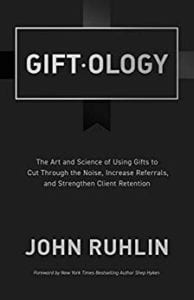
Giftology: The Art and Science of Using Gifts to Cut Through the Noise, Increase Referrals, and Strengthen Client Retention
We go through it and we’ll highlight the ones we got and go, “We didn’t get that one. We didn’t get that one.” The communication piece is, “Good, bad, beautiful or ugly.” That’s been a good recipe for building trust. I’m going to be honest. I’m not going to tell somebody that this deal is for sure win. I’ve got some signs that know it’s heading the wrong way.
I had John Ruhlin who’s the author of Giftology on the show and he’s an expert at coming up with unique thoughtful gifts both for big clients and internally. Is there anything that you do internally or to your big clients to celebrate or thank them for their business? That’s a little out of the norm.
I am not a creative gift giver. My wife Susan Reed has that beautiful creative side to her. I have started deals over $1 million. I have started bringing in either a bottle of whiskey or a bottle of tequila when we do our turnover meeting making a big deal of presenting it to our estimator. At one point we went out and did a craft brew we called it the Pierre Pale Ale.
You’re onto something there because that’s what I learned from John Ruhlin. When you customize a gift and give people an experience. As well as something that they can remember that experience by. You have the wow factor because for people reading, “If my goals are to close 20% of the bids I put out. What else can I do to increase that?” In my experience, it’s creative gift-giving to grow current business. The second part is, what are we doing in our proposals or in the conversations that we could improve to get to 22% or 25%? I’m a big proponent of telling the story. I have had conversations about what’s the story of your personal passion. What’s the story of Pierre Landscaping? How did it start? What’s the culture that it stands for? If gratitude and appreciation are part of your culture that might attract some people. If you’re not telling that story out externally then people don’t know it. If you can find other companies that have that same value suddenly people have a connection to you. If it’s between you and someone else and everything else is fairly even, then they might go that way.
You’ve prompted me to remember something that I use in most of my conversations with my clients. It’s thanking them in some way the phrase that I use is, “Thank you so much for all the heavy lifting. All the heavy lifting that you’re doing out there as general contractors to get these projects to a place where Pierre Landscape is one of your subcontractors.
It’s a little more customized, “Thank you.” That has a little tongue in cheek there. David, is there something you want to leave the audience with? Maybe a book you like, a quote, a philosophy, advice, anything you want to leave people with?
[bctt tweet=”Bringing a sense of celebration to a sale, big or small, is important. ” username=”John_Livesay”]
The main thing is how powerful it is to say, “Thank you,” for things that others might take for granted. Be a big cheerleader out there. This abundance mentality is something that has served me well when I’m thanking people. There’s a sense of coming in at this whole thing from a better place. Sales is a game. Sales has its ups and downs. Some days are wonderful. When it is wonderful to be sure to celebrate and not on your own. Be sure to celebrate with the team. A team win is more gratifying than an individual win.
If people want to reach out to you? How else can people follow you or reach out to you?
Through LinkedIn. I’m happy to share any insights. I’ve been taken with better selling through storytelling and you are using good open-ended questions and storytelling to engage with my clients. In that way, I’ve connected a lot more people and that’s been a joy to connect with clients in a deeper way over the course of a sales process.
Thanks for sharing your wisdom and your fascinating story of making sure that you’re happy. In turn how that allows you to come from a place of happiness and gratitude and how that continues to create a place of abundance for your company and your life.
Thanks.
Important Links
- Salesforce
- John Ruhlin – Past episode
- Giftology
- LinkedIn – David Reed
- http://www.PierreLandscape.com/
- Better Selling Through Storytelling Method Online Course
Wanna Host Your Own Podcast?
Click here to see how my friends at Podetize can help
Purchase John’s new book
John Livesay, The Pitch Whisperer
Share The Show
Did you enjoy the show? I’d love it if you subscribed today and left us a 5-star review!
- Click this link
- Click on the ‘Subscribe’ button below the artwork
- Go to the ‘Ratings and Reviews’ section
- Click on ‘Write a Review’
Love the show? Subscribe, rate, review, and share!
Join The Successful Pitch community today:
- JohnLivesay.com
- John Livesay Facebook
- John Livesay Twitter
- John Livesay LinkedIn
- John Livesay YouTube
The SLAM – Startup Launch Assistance Map With Jon Warner
Posted by John Livesay in podcast | 0 comments

Everyone dreams big, no matter how simple it is. When building a startup business, you already have success in mind. The question is do you know how to bring that success from your head into reality? Jon Warner, the CEO of Silver Moonshots and author of more than 40 books, talks about how to increase the chances of launching a successful startup business. He shares in detail the steps in how to build a strong foundation in the early stages of your business as mentioned in his book SLAM. He conveys the importance of narrowing your niche and understanding the needs of your target audience as one of the first steps you should be doing.
—
Listen to the podcast here
The SLAM – Startup Launch Assistance Map With Jon Warner
Our guest is a five-time company CEO, Jon Warner. He’s a widely respected entrepreneur, expert, and mentor. He’s founded and led three startups, one was a failure, one that did not trouble the score, and one successful exit. He’s got the gamut of experiences. Jon’s career started in the corporate world with air products, working in the US and across Europe before joining ExxonMobil. At Exxon, Jon worked in the UK, Australia, Nigeria, and he ended his career there as a deputy CEO.
Following his several years in the corporate world, Jon founded and grew a management consulting business called the Worldwide Center for Organizational Development, which has had over twenty people carrying out a wide range of strategy assignments for all kinds of companies. He was also a founder and CEO of two other startups, a digital publishing company and a bill pay and payments software platform that operated globally. Since his exit from the latter, he’s been working California-based to mentor and invest in disruptive startup companies, especially in the area of technology, deployment, healthcare and aging tech in particular.
He’s now the CEO of Silver Moonshots, a research organization and virtual incubator for startups focused on a 50-plus population which is growing. Jon is a noted speaker around the world. He lectures on entrepreneurship. He’s a prolific author. He has a book called SLAM. There are also a lot of things about GRAND SLAM in there with all kinds of fun, clever things. He’s a graduate of the UK’s top Warwick University. Jon, welcome to the show.
Thank you, John. It’s good to be here.
Let’s start at your own personal story of origin. You can go back as far as you want to university or even as a kid. Did you always know you wanted to be an entrepreneur?
I did. I quickly got into doing anything I could to get out of the house and then earn an extra buck. Early on, that was delivering the newspapers in the days when that was possible to wash other people’s cars and various other things. I liked earning money that I’d generated through my effort. It got a little light switched on pretty early for me.
[bctt tweet=”Do you have a side hustle? Who should be on your team? What is the unmet need you solve?” username=”John_Livesay”]
We have this image of going to school. You have a PhD in Psychology of Neuroscience. Were any of the people walking around in the capes as we see on Harry Potter?
Not quite. That might get a bit of fictionalizing going on there.
You’ve written this great book called SLAM. Who do you think is going to benefit from reading this?
There are a number of people. The broad category is entrepreneurship. It’s anyone who’s interested in becoming an entrepreneur, is an entrepreneur. That’s the broad category. The reason I wrote it however is there’s a subcategory within it I particularly liked. That is people who’ve got side hustles, people who aren’t necessarily working full-time on entrepreneurship or their idea but would like to go and get that bigger, faster, stronger if they could, and maybe they didn’t have the roadmap for that to happen. That was who was in my mind when I was putting that book together.
Everyone’s clear that the word SLAM is a fun acronym. Do you want to tell everybody what that stands for?
The whole process which the book revolves around is the Startup Launch Assistance Map and that spells the word SLAM. What it is there to do is to support that whole process of exploration as you try and validate your startup idea. It encompasses a second acronym in terms of the way the process works, and you have to do them sequentially. Once you’ve gone through the validation phases, there are eight steps in there, you flip it over and you start thinking about execution. It’s an acronym called GRAND. On that basis, you are going to another eight steps to make sure that you get to where you need to go, which is growth and traction fundamentally.

Launching Successful Startups: It’s important to create the right team, the people that do the bits of the work and make you stand out and shine.
The interesting thing about the concept of a GRAND SLAM is you say start with SLAM and then go to GRAND. I thought that was a clever positioning there. Let’s apply some of these steps from SLAM since we start with SLAM into a side hustle of so many people want to be a speaker. I know a lot of people that have their own consulting agency or they’re running a digital marketing company, or they’ve had experiences as entrepreneurs and founders of themselves, or they’re maybe professors. There are lots of different people who have expertise. They have a main job, but they also want to be a speaker and maybe become a full-time speaker. In order to do that, you have to have speaking as a side hustle.
I know when I was working full-time at Condé Nast, I’ve started my speaking career several years ago where I would speak to some of the advertisers that I was responsible for getting as an added value perk. I would speak to their sales teams, whether it was a car company or a fashion or jewelry company that was advertising with my brand. I would say, “I’m going to train your salespeople on how to be better salespeople. There was run the ad to get the traffic and the dealership and then let me come speak to your salespeople about how to close more sales.” That’s how I started it as a side hustle. I love to use that lens. The first thing you talk about in SLAM and this is important for anybody who wants to be a speaker as well is, “What’s the unmet need? What’s my unique message that somebody would even want to have me come speak about?” Can you address that, Jon, on your experience of how important that is?
It’s crucial and it’s probably the most important step to get right and take your time doing so. Step one, any entrepreneurship venture would be to go and uncover that unmet need with the target audience that you’re aiming at. What I see a lot of entrepreneurs do is thinking, “I’m going to be selling ultimately to the whole world, so who cares? I’m going to be like Facebook. This is going to be huge. Everyone’s going to be the path to my door.” That’s not how it happens.
Even Facebook started in one university with first years in that university. You need to establish a beachhead of customers who have a need that you can solve for. In the speaking realm, that’s about thinking about what people want to hear about, what do they hear from me about, my topic, and how much it’s going to resonate with that beachhead market is something you want to dig into. The best way to go and do that is going and talk to a few people and find out who is likely to be that audience who’s got their hair on fire about an issue and expertise on.
I always like to remind everybody that Amazon just sold books first before selling everything under the planet and got a good concept there. If you personally had experienced the problem, whether you’re a speaker or not and you have this is the problem I know, I always like to say, “The better you understand the problem, the better you have the solution both for your customers and investors.” As a speaker, if you’ve been in the shoes of your audience, not only does that establish credibility and rapport, but it goes to this first point of SLAM which is the unmet need. One of the things that might be helpful for the readers is an example of that. I’ll give people mine and then I’d love for you to contribute one that you might have thought of that’s not necessarily in the speaker world but something you’ve dealt with your broad base of experience. The way I position what I talk about is that the old way doesn’t work anymore of selling and the new way is this. That framework can work for almost anything and it pulls people in.
I say, “The old way of selling of just pushing out a bunch of information or throwing up a bunch of stuff against the wall and hoping something sticks isn’t going to be successful anymore. The new way is instead of pushing, you become a storyteller who pulls people in and makes you become magnetic.” People instantly go, “This is something I might want to know about and have a speaker come to talk about, because it’s so clear of what the problem is.” I love your feedback on when you paint that picture if the old way doesn’t work anymore, as you said hair on fire, so what are you going to do?
[bctt tweet=”Anyone who’s interested in becoming an entrepreneur is an entrepreneur.” username=”John_Livesay”]
What I’d like to do, John, is unpack that because you, as The Pitch Whisperer, are doing something even cleverer than the way you’ve described it. Let me tell you how clever you were. What you did is you recognize that the entire market of getting out there and speaking was enormous. You immediately narrowed it down and said, “People need to pitch the things. They need to pitch for something. It might be pitching for a promotion. It might be pitching for a pay rise.” In your case, you went fairly all-in on pitching for investments and saying, “In that room, there are people who need to get money and it’s a special relationship.” You need to tell the story to investors as a beachhead market so that they will listen and the product that you are supplying is going to be exciting to the people listening to that pitch.
What you’re doing is daring them to make that presentation in a story-oriented way. What you did was gone cleverly in my opinion into the unmet need by slicing the marketplace into a specific audience. A customer persona people could imagine and say, “I’m going to go out and talk in that area, write books in that area, talk about it on my podcast.” In so doing, you allowed yourself to dominate that segment. That’s the key. What you’ve then described is the way you now delivered on the product side of that, which is step three, because you are now adding unique value in terms of giving people a way of making that happen so you’ve become top of line as a guy who can help you while I’m pitching for investment.
What’s interesting referencing the Amazon example again is once I had that beachhead of investors and founders that I’ve helped get funding, I’ve now broadened it to companies like Honeywell or Coca-Cola. Even Redfin, which is a tech company disrupting real estate bringing me in as the sales keynote speaker to show them a new way of selling, because of my experience selling media for Condé Nast. I’ve been in their shoes. I know what it’s like to have a quota. I know what it’s like to be seen as a commodity. I know what it’s like to feel burnt out. Here’s the solution that works for me and it can work for you if you become a storyteller, X, Y and Z.
Those double-click of unmet needs for one market and then expanding it beyond others. What’s interesting for people to hear because whether you’re reading this and you’re a startup pitching an investor to get your startup funded or are equally important if not more so. As you know, Jon, startups love to see customers paying for something you’ve created to make sure there’s some proof of concept that you talk about, is one of the key value propositions in SLAM. You need to be able not just to sell your product to investors but sell it to a customer who’s going to pay for it.
When I was being interviewed and this will happen to everybody, it’s typically between you and in my case, two other speakers or if you’re the founder pitching an investor, it’s between you and all the other investors or the other founders pitching that one investor. They said, “I was up to speak to an executive search firm.” They said, “Have you spoken to other people in our industry before?” That’s a lot of people, especially if you’re trying to grow your business, so that objection comes up a lot. There’s some real value here of how to handle that that you talked about in SLAM.
The way I handled it was I said, “I haven’t spoken exactly to the executive search firm industry which has to pitch themselves to get new clients to find their next CEO.” I have spoken to another industry that has a similar business model to what you have which in my case was Gensler, an architecture firm and they have people who specialize in practice areas like you do. They have to go up against two other firms for an hour and pitch. They weren’t telling stories. They were presenting the designs and you are going in there. When you double-click, I said, “What’s the biggest challenge you have when you have that one-hour pitch?” This is so important to take away from what you said on this unmet need. Sometimes, people don’t even know what it is, but if you can identify it for them and then show your solution, Jon, that’s when your magic kicks in.

Launching Successful Startups: Once you’ve determined your value proposition is unique and different, you need to corroborate all of that.
One of the other things to add John to that is that the secret here is and it’s counterintuitive by having at least initially a narrow beachhead so you go out and maybe you help people to go and pitch to seed investors for example. That’s an incredibly narrow niche. You credential yourself as being able to deliver your value proposition so your ability to go and tell a story, to go and get people to cross the river as you often like to say, get to the other side. When you do that, people recognize you can jump to other segments because you’ve already proven you can dominate that one segment. They then buy it. You can add segment after segment and before you know it, you are the person who does pitching well in whatever circumstance. That’s what’s happened to you for several years.
We had an example of talking to the CEO of DHR International, this executive search firm. He said, “When it’s between two other firms and us, we always ask if we can be the last.” Research has shown that whoever goes last typically is more memorable. However, here’s the unmet need that you talked about, Jon. You can’t control that. It’s up to them what order you go in. When I identified that as an unmet need, we might ask to go last. We can’t control it. We hope we do so it increases our chances of being memorable. The real problem is you need to be memorable and you can’t depend on what order you go in. What you can control is telling a story that makes you memorable and when you do that, no matter what you’re pitching, you could be first and you set the bar. That’s why they ended up hiring me when he understood how I was solving that for his audience. The book SLAM says, “That’s your core foundation to getting a yes, whether it’s funding clients or pulling in people on your team,” which is the second part of SLAM.
Let’s talk about the importance of team and if you don’t mind, I’d also like to add in the importance of culture that goes with it which I know is a little bit of what you talked about in the second part of the GRAND elements. I want your opinion here, Jon, on how important is it for you to create a team even at the very early stages that understand the culture you’re creating so that they know if it’s a fit for them or not.
The keyword here for me is the right team. Once you’ve uncovered the unmet need and the beachhead market that’s got their hair on fire about that need, your job is to think who it that consoled for those problems is. Clearly, the founder is the main person if you’re a speaker. If it’s a one-person band, it’s you, but you’ve got to think about what else that sector needs for me by way of expertise, by way of production values, by way of the way communications occur, distribution of information before and afterward. Even a speaker will have a fractional team around them, an army of people that might do bits of the work. They make you stand out and shine. In a company, you’re going to be recruiting people progressively and what you want to do early on is shape that team so that its culture is completely consistent with what you’re trying to deliver by way of value.
The team is the old adage that a lot of people on the investment side invest in the jockey and not the horse. The jockey is always the team and the quality of that team and it’s not a single founder or the person who had the idea. It’s the people they surround themselves with, both advisory and direct, fractional, full-time, part-time, and all the rest of it. That’s why it’s step two on the SLAM map. It is almost as important as covering that unmet need.
Even as a speaker, I’ve had to find people that I feel are the best team to be my speaking agents or to create the website and the design of what my brand is, even down to the color choices. If I don’t have a clear sense of who I am, what I stand for, what I want my brand to stand for, how can I possibly explain it to the people on my team? That’s what its visionary skills, painting that picture keeps going back to SLAM number one. Here’s who I helped, here’s the problem myself, and because of this, here’s the feeling I want when people go to my website or when you’re looking for an agent.
[bctt tweet=”Entrepreneurship is a venture where you uncover the unmet needs of your target audience.” username=”John_Livesay”]
What’s your beachhead as you say, Jon? I get very specific with them. I’m like, “Here are my five specialties, technology, healthcare, real estate, automotive, and design.” Anything as a sales team in those areas that’s who you pitch me to. Think how much easier I made it for the speaking agent to know exactly what to put me up against, and who to recommend. Otherwise, it’s like you’re a sales keynote speaker. Do you know how many there are? What’s your hook? What’s your niche? All those things are blurry until you can define it that short and crisp. That’s what SLAM helps people do.
What you’re wrapping around that is having a clear vision in terms of what you’re doing, in terms of meeting that unmet need with the product you want to supply. I like Peter Thiel’s statement in his book Zero to One because you also want to get people who can take a step to change the difference in terms of that beachhead market issue. They do get a result. If you’re pitching for investment, what’s a great result? I got investment or at least I shortened the time it took me to get the investment I needed. If you’re delivering that, people beat a path to your door so your cost of acquisition of new clients goes down as a result of that.
For example, to have those stories ready to go at a moment’s notice, whether it’s your elevator pitch or you’re in the call and it’s between you and two other speakers or you and some other investors, or you and two other clients that you’re pitching. I will say, “That’s the value of storytelling. Would you like to hear the story of how I helped this architecture firm win a billion-dollar airport renovation?” That’s the value proposition. You already know the outcome. Here’s the story that you can then use to win your next big pitch for the business. We’ve got the unmet needs, the team, and now the value prop then we want to test this out and the social proof is great for that.
What you’ve got in steps one, two, and three which is on the diagram of the SLAM map and the book elucidates is the rock on which you’re going to go and build your speaker career or your startup or whatever it might be, a side hustle. Your value proposition is unique and different, but you do want to corroborate all of that. Step four is the corroboration step and it’s a pivot point. It’s almost a fulcrum around which the rest of the map operates. You’re constantly testing with your audience whoever they may be that the assumptions and the beliefs that you have about what can be successful are true in their words and their eyes, not you guessing. It’s corroborated by the target customer you’re aiming at, that they are doing the corroboration. The more you do that, the more you do risk your startup and the more attractive you become to new customers and indeed investors you want to come and invest in you.
Here’s an example of that. The irony of me having to sell myself to get hired, to be the speaker, to DHR International, the executive search firm, was that after I was giving my keynote, I also did a workshop for them. They would say, “There are competitors, other search firms that have placed more executives in our particular niche.” How do we handle that objection? I tell them the exact same story of how I connected the dots from an architecture firm using the same business model to their business model and what other companies have you worked with that you could do that front to answer that objection. They went, “Oh.” The test was that’s how I’m in front of you. I know this works and you can use this too so that’s where it becomes great.
The next part of what you talked about in SLAM is the market size. I’m always talking to people about putting their own roadmap together in terms of invisible to irresistible and all the steps along that ladder. You can’t keep working with your core clients because things happen. People leave. Businesses get disruptive like Disney buying Fox. Suddenly, Fox is not hiring a lot of people and if you’re in charge of finding executives for Fox and you haven’t been growing your market in other areas, you’re in trouble. Speak a little bit about what somebody should be looking at in terms of market size. What can I do to see how big this could get or how do I scale something?

Launching Successful Startups: Podcast is an excellent example of content strategy where you can leave a legacy and people can access it through time.
It’s all about scale trajectory and velocity in this section. What you’re doing is saying, “How big is the pond I’m fishing in and is it going to be big enough to give me the velocity, the growth, or the traction that I need?” Your beachhead market might take you quite a long way, but it might not stay the same. Things change in the world of log so what’s going to be your approach and how big is that market? In some cases, the pond is not going to be big enough and it’s not going to grow fast enough.
You might have to look beyond this, and your job is to measure this. Your ambition might be different. You might want to say, “I’m in a lifestyle business. I’m a lifestyle speaker. I’m more than happy doing twenty gigs around the country may be and that’s enough for me.” If you want to go and be Anthony Robbins and you want to go and do a multimillion-dollar business out of all of this in books and promos and everything else, you’re going to have to think about the market in a different way. The key is to have metrics around that that are rigorous so you know where you’re heading, and you can do risk at that side of it as well in terms of that whole analogy of fishing in the pond.
You talk about in SLAM the next thing is how to reach these people. Are you going to use Instagram or Facebook or something else completely different? One of the things is this concept of lateral thinking and not doing what everybody else is doing to reach your target.
You can perhaps get the clue that even in the price that you’ve taken, you should have started forming a view of where beachhead mark you’re aiming at, at least initially, hang out. What do they pay attention to? Are they reading blogs? Are they reading emails? Can you reach them by email? Is it social media or which platform within it? Do they hang out at trade shows? There are a number of channels. You can’t be in all of them. You don’t have the bandwidth in time and you don’t have the money usually on the tip to do all of them. You’ve got to be careful about the channels and make sure they’re consistent with where people pay attention and then you want to go and put your budget together so that you can test those channels on an agile basis. Go to market is a practical way of saying, “How am I going to get the message to the particular audience that I found in the unmet need section right back at step one?”
One of the things I’ve done that I want to give as an example for people to start putting their thinking caps on is using a podcast as a marketing tool. One of the things I’ve done is there are quite a few speaking bureaus out there. Some you have to be exclusive with but a lot of them you do not. In other words, as a speaker you can be represented by multiple bureaus and they each have the different clients that they pitch different speakers to. However, you can imagine how many speakers are pitching them to represent them all the time.
I was fortunate enough to get a gentleman named Bernie Swain who wrote a book on entrepreneurship and started the Washington Speakers Bureau which represents almost all the former presidents including going back as far as Reagan. He reached out to me because I had created a podcast that had value and he wanted to be on it. He didn’t even know I was interested in the speaking business. I did him a favor by having him promote his book on the show which then gave me that first leverage so I could go to other speaking bureaus, many of whom based their business model on his and say, “Would you like to be on my podcast to tell your story of how you started your entrepreneurial bureau? By the way, one of the leaders in your field, Bernie Swain, has been on my show.”
[bctt tweet=”Always think of how to add value to your customer because their pain is costing them.” username=”John_Livesay”]
That was relatively easy. Suddenly I have something of value to offer them. During that interview, they get to like and know me and then many of them, almost all of them I believe have said, “We want to represent you now.” If I call them cold and said, “Let me tell you about me,” without giving anything, it’s not the easiest thing to do like an actor getting represented by an agent. I wanted to throw that out there as an example of lateral thinking of what is that I can do that I don’t see other speakers doing well. Many speakers that have a podcast, some do like Tim Ferriss, but are they using it to get bureau agents to represent them? He doesn’t need to but somebody at my level, like looking at the landscapers you talk about in SLAM and figuring out what is it I could do with the resources I have and the way that no one else is doing and then that comes to life.
It’s an excellent example. In fact, it’s an example of a content strategy but not traditionally most people would think about blogging or going out on social media platforms but a podcast is a wonderful way of leaving legacy content that people can access throughout time and you can put these things up on other platforms as well at the same time so that people can listen to, other than credential you as someone that can help them. It’s a very good example.
One bureau was celebrating its 20th anniversary so they use being on my show as part of the promotion for that. It all worked out and then the final element of SLAM is the actual business model. How am I going to make money?
This is crucial and it’s the step before the last because you do want to enter the ecosystem in step eight on the SLAM map, but it’s probably the one that matters the most from an investor perspective because if you can’t make money in terms of what you’re doing, you’re going to be in trouble. There are many ways to do this and it’s not about pricing. It’s not about slapping a price and saying, “I’m going to charge something similar,” or any startup that thinks that way. The key here is thinking about how do I add value to that beachhead customer and their needs because their pain is costing them something emotionally or actual money or resources or sheer frustration and friction.
What you’re doing is come along and say, “I’ll take that pain away. What’s that worth to you?” If you can do that, you are demonstrating value-added and sometimes it’s like 2x, 3x, 5x. If you’re doing that, you have a monetization model that’s working and again, you become investable because people can see that the face for those of you that are high so it needs a lot of care and attention to craft the business model well whatever it may be.
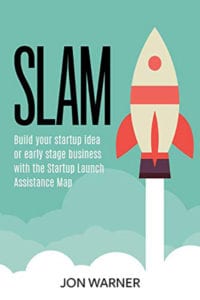
SLAM: Build your startup idea or early stager business with the Startup Launch Assistance Map
What you’ve created here, Jon, I believe is almost like a Sherpa helping someone climb Mt. Everest. Without a map, without someone like you with all your expertise and guidance saying, “Do this then do this. Don’t do this out of order.” It’s like you’re trying to help somebody bake the cake who’s never baked a cake before. They forget to preheat the oven or they don’t put all the ingredients in them or whatever it is and then they wonder why it doesn’t rise. You have given a proven step-by-step process that’s so valuable. I’m sure there are many people who wish they’ve had this earlier in their career, but the good news is it’s available now. You’re sharing your wisdom, your expertise. The book is called SLAM. Tell us how else people can work with you?
I spend my time mentoring startup organizations of all types. My passion space is healthcare and within that, I particularly like the 50-plus population and companies that are solving for all the unmet needs for people who are 50 and more. They tend to get marginalized by society. There are many needs and not in healthcare. It’s in many other realms at the same time. Anybody who’s got a side hustle ideating around this or a small company that’s thinking about the older adult community I’m particularly interested in working with. I run a virtual incubator every quarter. Eight companies come into that virtual environment. We make a six-week sprint to go and go through the SLAM process.
That’s something they can look upon the SilverMoonshots.org website. It’s listed right there. I’m happy to engage. I’m happy to explain the SLAM process. Some of the resources, the actual map itself, both front and back, are on the website at SlamProcess.com. Those are free resources for people to download all of the questions and all of the eight steps on the SLAM slide are there. You can turn it over when you’ve got product-market fit and validation and go to the execution side, the GRAND side, and hopefully get a GRAND SLAM over time.
It does become your Bible what you’ve created for people because it’s done with so much thought and visual. It is so well done and so well executed. Congratulations on that. There’s a whole video that goes with it, a map. You’re like the GPS for businesses.
I hope it’s a good tool to help people explore. I hope people don’t think of it as a cage. It’s an enabling tool I hope to explore your idea.
Thanks for being with us, Jon.
I appreciate it.
Important Links
- SLAM
- Jon Warner
- Silver Moonshots
- Zero to One
- Bernie Swain – Past episode
- SlamProcess.com
- Better Selling Through Storytelling Method Online Course
Wanna Host Your Own Podcast?
Click here to see how my friends at Podetize can help
Purchase John’s new book
John Livesay, The Pitch Whisperer
Share The Show
Did you enjoy the show? I’d love it if you subscribed today and left us a 5-star review!
- Click this link
- Click on the ‘Subscribe’ button below the artwork
- Go to the ‘Ratings and Reviews’ section
- Click on ‘Write a Review’
Love the show? Subscribe, rate, review, and share!
Join The Successful Pitch community today:
- JohnLivesay.com
- John Livesay Facebook
- John Livesay Twitter
- John Livesay LinkedIn
- John Livesay YouTube