

Ask! : The Bridge from Your Dreams to Your Destiny With Mark Victor Hansen and Crystal Dwyer Hansen
Posted by John Livesay in podcast | 0 comments


There is only an answer when there is a question. In life, there are times where we are held back from the things we want because we are just so scared of asking. In this great episode, John Livesay talks to not one but two amazing guests. He is with Mark Victor Hansen—the co-author of Chicken Soup for the Soul—and his wife, Crystal Dwyer Hansen—entrepreneur, certified life coach, and wellness nutrition expert. Together, they share about the power that is in asking through their new book called Ask!: The Bridge from Your Dreams to Your Destiny. Mark and Crystal tell us the seven roadblocks we have to overcome before we can start asking ourselves and other people and even God for help. We are literally made to be each other’s resources, and that whoever asks the most questions becomes more likable. They share the essential questions that will make you masters of asking and lead you out of just dreaming into your destiny. Tune in to today’s show!
—
Listen to the podcast here
Ask! : The Bridge from Your Dreams to Your Destiny With Mark Victor Hansen and Crystal Dwyer Hansen
I have not one, but two amazing guests: Mark Victor Hansen and his wife, Crystal Dwyer Hansen. They are the co-authors of a new book called Ask!: The Bridge from Your Dreams to Your Destiny. Mark, you might know as that Chicken Soup for the Soul guy, which started back in the 1990s. He and his business partner, Jack Canfield, created what Time Magazine called the Publishing Phenomena of the Decade with over 110 million Chicken Soup for the Soul books sold worldwide. Crystal is an entrepreneur and certified life coach and a wellness nutrition expert whose personal coaching, speaking, CD and video programs have helped people all around the world. Her expertise is in the field of human potential. People who have worked with her have a profound and lasting transformation in all areas, relationships, careers, health and wellness. Her book, Skinny Life: The Real Secret to Being Physically, Emotionally, and Spiritually Fit is also available. Mark and Crystal, what an honor. Thank you both for coming. Welcome to the show.
It’s our delight. We’re excited because we know the secret that will make everybody infinitely better off if we go through this talk with you.
Let’s know what the secret is and then we’ll get into your own backgrounds a little bit more. You’ve teased us so much. What is the secret? Everyone’s on the edge of their seats.
[bctt tweet=”The most important questions we ask are the ones we ask ourselves. ” username=”John_Livesay”]
What happens is we travel so much that we meet people that are wonderful, fabulous, successful, professional, intelligent, but they don’t quite fulfill their potential. We said, “What would it be that they need to do to fulfill their potential?” What they’ve got to do in our impression is to become masters of asking. You say masters of irresistible storytelling and pitching.
I’m sure the audience is very interested to know a little bit about your own personal stories of origin and then how you two met. Crystal, tell us a little bit about how you became such an expert in all of these areas of nutrition and relationships. Go back as far as you want like childhood, school or whatever.
I was raised in an unusual situation where my mother was way ahead of her time, organic gardening, naturopathic medicine and those types of things. I was raised that way. Later on in life, I was in the business world. I was in real estate and loving what I was doing, but I’ve always found that whatever I was doing, whether it was modeling or selling real estate, I would connect with people very easily and people would open up to me. I seem to find an easy way to help them with their issues. My sister came to visit me. She has been a smoker since she was fifteen years old. My cabinet-maker was there that day. He was redoing one of the cabinets in a house that I was doing and he lost weight. I said, “Tony, you were great. Why do you look so good?” He goes, “I stopped smoking, I lost weight. I got hypnotized. I went to a hypnotherapist in 30 days. I’m back. I’m better than ever.” I was so intrigued. I said, “Stephanie, we need to get this. I’m going to take you over to this hypnotherapist and let’s do this.” I was astounded that she could break this impossible addiction, lifetime habit in that much time.
I became obsessed. I enrolled in the largest holistic college in the country. I became certified in American Board of Hypnotherapy. I became certified in life coaching and I started helping people. I opened a practice in Scottsdale, Arizona. I was almost astounded at the results people were getting. People were coming to me who had been depressed their entire lives. I got a note from a woman one time. She said, “I am so thankful I heard you that day on the radio. You were my last hope. I’ve been depressed my entire life. After five appointments with you, I can honestly say I am entirely free of the crushing depression I’ve experienced my entire life. I can wake up and have a bad day. It’s not the end of my world.” I became addicted to helping people. I love it. I connect with people and that’s the work I was doing.
When Mark and I had met, I had written my first book, Pure Thoughts for Pure Results, and I went to an event he’s speaking at called Author 101. He saw me, I saw him. We ended up in the VIP room together at the reception. A woman spilled a glass of red wine on my white pants and Mark came over to my rescue and said, “I know where the club soda is.” It was that kind of moment because I was talking to a speaking coach and he was surrounded by an entourage. I wasn’t bothering him. He must’ve been looking because he saw this happen. He came scooting over to me, held my hand, pulled me out of the room and said, “I’m sorry this happened. Let me help you find some club soda.” We started talking and we haven’t stopped talking.

Dreams to Your Destiny: There are two kinds of people in the world, those of us that ask and those who don’t.
Mark, I know that Chicken Soup for the Soul has been a huge success. You have a lot of other books, The One Minute Millionaire, Cracking the Millionaire Code, How to Make the Rest of Your Life the Best of Your Life. You have had so much success in so many areas. What is it that caused you and Crystal to say, “There’s still something out there that the two of us combined can put out into the world,” which is the secret of ask?
She tells me that I’m the master asker of all time. I’m the ninja of asking, maybe even a triple ninja. My parents were Danish immigrants and didn’t have any money. I started buying my clothes at nine years old and learning how to do stuff. I was a Boy Scout and I read the Boy Scout Life Magazine. You could sell greeting cards on consignment. I looked up in my little dictionary what consignment meant. It means I didn’t have to put up any money so I could afford that. I started learning to ask. I asked more neighbors than anyone else. I sold more greeting cards than anyone else. I became the number one ingredient card salesman in America at nine years old. Forty years later, I’m back with the same company, Gibson greeting cards. We sold 897,000 boxes of Christmas cards a year through grocery stores. It’s an amazing full cycle thing. There are two kinds of people in the world, those of us that ask and those who don’t. Most people are afraid and they get stifled and stop toward asking.
It’s an energetic thing that you talk about, that there are three different channels. Let’s talk about the three channels and then let’s talk about those roadblocks to asking. Because if people can walk away from those three tools that the two of you have given, everyone’s going to be making a mad dash to buy the book because it’s just the tip of the iceberg. Would one of you share with us the three channels through which we can ask?
Each one of these is important in and of itself. The three channels are: ask yourself, ask others and ask God. Some of the most important questions you’ll ever ask are the ones you’ll ask herself. When you’re sitting there depressed or have anxiety that’s shutting you down every day or you’ve through a divorce or you’ve lost your job. All of these places, times where we need to start over and often, we don’t see the way to do it. You start with the question and it’s that question you ask yourself that causes an answer. We did a lot of research for this book. There is research done that it ignites the critical thinking part of your brain. When you ask a question of yourself, your brain has to engage in a different way. All of a sudden, you have a new illumination, you have a new solution, you have a new insight, you have a new breakthrough, a different understanding of something. Those self-questions, asking yourself, that is one of the most important parts of the asking journey.
[bctt tweet=”Ask more questions if you want people to like you. ” username=”John_Livesay”]
One of the things I work with people on is if you’re in sales selling yourself or a product, you have to feel that you’re worthy and believe what you’re doing. I tell people, “Start a question off with, “What if?” I believe it taps into our imagination. Do you have an example or a story of someone of a good question we should all be asking ourselves?
We have a friend who we think the world of, Jim Stovall. He was slated to be an NFL player. He had the size and speed. They’d recruited him, he was ready to go. They send them to the medical and they say, “You’re going to go blind.” He’s going blind and can’t do it what his heart’s desire was, and he is in a little 9×12 room with three things. A radio, a television and a telephone and he’s going stir crazy. He goes to the first blind meeting recommended by his parents and he sits next to a woman and he said, “I watched TV in the old days. I love action movies, thrillers but I can’t see something, and now I can’t see the action. I wish somebody would do something about it.” That’s the pivotal question because the lady next to him, also blind, leaned over and said, “Jim, you and I are somebody. Why don’t we do something about it?” They created a business that you and I wouldn’t know as sighted people, but they have fourteen million people watching narrative TV that shows a guy throw a right hook or whatever it is, tire squealing away.
He’s becoming an enormous business guy and very successful because of one question she asked. “We’re somebody, why don’t we do something about it?” He says, “I now write books,” and he wrote a great book that I did the foreword to. He says, “I know write books that I can’t read and I make movies that I can’t watch because Mark told me to make that book a movie.” He wrote three books entitled The Ultimate Gift, The Ultimate Journey and The Ultimate Life. He’s amazing, but he’s a big football player size, blind. He says, “I write books that I can’t read and I make movies that I can’t see.”
We get the power of asking ourselves these potential questions of what could be possible, and then we have to somehow find the courage to ask others to help us, to brainstorm with us to see the best in us. What do you think, Crystal, would be an example or a story of asking other people and overcoming some fears we have of coming across maybe as too pushy or something?
The research shows that people are more than willing to step up and help you, but they don’t help unless you ask. People are wired to connect. We’re wired to help each other. We’re wired to jump in, but people often feel they’re nosy or they don’t want to intrude unless you ask them.

Dreams to Your Destiny: Couples that stay together pray out loud at night and in the morning before they go and do whatever they can do together.
Do you have a story of a time that somebody asked others for either help or insight or support that they had to overcome their own fears of being rejected or feeling pushy?
One of the stories that we tell is, and it’s one of those amazing lessons, one of our friends, Rita Davenport, she’s a journalist. She was a superstar in the network marketing industry. She had created this amazing concept where it was a cooking show. She had this idea to scale it up and she knew what she needed to do. She had the answer. She knew it was successful at a small level. She went to ask the person who would make the decision ultimately and he said no. She lost out on a $3 billion enterprise by not stepping up because somebody else went forward and did the business.
It’s one of those lessons where she found out later, all she had to do was keep going through the channels and keep asking to get her dream. It was heartbreaking for her because there was no way around it. She went to the gentleman later who ended up taking her idea and running with it. She said, “The very least you could have done was shared this with me.” He admitted that it was her dream and her idea, but she was too polite. She was too worried. She thought she had to take no for an answer. The thing about asking is you have to be a fearless asker and keep asking.
What I’m getting is not take rejection personally or be so afraid of rejection that you can’t even ask.
[bctt tweet=”People are more than willing to step up and help you, but they don’t help unless you ask. ” username=”John_Livesay”]
One of the greatest examples of that is our friend, Bob Proctor. We use him as an example of completely transforming from being a very unworthy person. He was raised in poverty and had nothing. Mark probably knows the story better than I do.
He’s told that he’s not good enough. He comes out of the Navy, goes in and becomes a fireman. As a fireman, he was making $4,000 a month. He was married and had three kids. He owed $6,000 a month. Every night after going to the fire department, they went in sat and drink. He looks around the bar and says, “These guys aren’t going anywhere. I need to ask some new questions.” He goes to the richest guy he knows and asked him, “How do you do that?” He says, “If you wanted to be rich, healthy, and successful, you’ve got to ask yourself better questions because better questions are going to get better results.” Fast forward, Bob Proctor, his wife asked him a question because he is in the self-improvement business and one of the giants. I’ve owned two companies with him and I love this guy. I have no idea how wise Socrates and Plato looked, but Bob looks wise when I look at him and listen to him. His wife said, “Bob, what would you do to make $1 billion?” He said, “I never thought of it. I will start sketching on a yellow pad.” He came up with it and he said, “I think we’re going to do it.” He’s 85 years old young.
We ask ourselves, ask others and then we ask God. Whatever that means to people, I think this concept of asking God, people go, “That’s what a prayer is maybe.” I bet the two of you have an opinion and a belief system that we need to ask God, the universe, whatever you want to call it for assistance, guidance or insights, not just at times of crisis or emergencies. I would love either one of you to give me your insights.
When Crystal and I are commencing our dating, we lived in Newport Beach, California. We’d go to a restaurant called Mother’s Market at Costa Mesa. We’re having this great meal and deep, wonderful conversation because we start everything by asking. We inundate each other with questions. The guy sitting at the next table was a white-haired gentleman of some renown, which we didn’t know at the time. He leans over and says, “You guys look like such a delightful a couple. Can I tell you, if you’re going to get married, which I hear you talking about, how to make sure your marriage works forever?” I said, “Yes. Let me ask you, how do you make a marriage work perfectly?” He says, “My whole life I’ve spent with the Billy Graham Organization and we did all the research. Here’s what we discovered. One thing and one thing only. Couples that stay together pray out loud at night and in the morning before they go and do whatever they can do together. They pray for each other. They pray for their family, they pray for their city, their county, their business and then the world.”
I was like, “I don’t know if I can do that.” It seems crazy because I prayed for my whole life. I prayed alone and I prayed in groups at church, but I thought, “I’ve never prayed with my significant other.” I thought, “Can I do this? It seemed awkward,” but it was amazing when we started doing it because it allowed us to come to the same place and put it on all on the line spiritually together. One of the most beautiful things about our relationship is that we do have a deep spiritual belief and practice that we share. We meditate and pray every day. It’s our morning meeting. We start off the day that way. We asked each other what are the most important things that we think we’re going to do with our day will be. We ask each other if there’s anything that’s bothering either of us, things that we need to work on together and work on with our business. We decide together what’s important to us spiritually. We ask for guidance because you can have all the tools and techniques in the world and they’re all wonderful, but sometimes you get to that place where you feel small and alone.
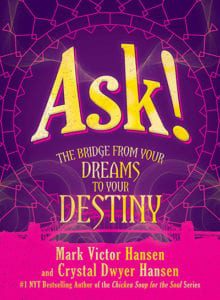
Ask! The Bridge from Your Dreams to Your Destiny
Everyone feels this way. I don’t care how successful you are. You’re stuck, you don’t have another place to go. Doesn’t it make sense to go to the Creator of the universe? Whatever your spiritual belief is, there is a Creator of everything beautiful. The same being the creative eyelids, eyelashes, flowers and every color, trees, plants and all the planets in the universe. There’s so much intelligence and wisdom. When you start tapping into that and asking, you feel things changing in your life. Part of that is believing in your question and believing that you deserve an answer, and that’s the faith part. They talk about faith, but you have to have that belief that I am a part of creation and I deserve to ask this question. I deserve the answer and it’s out there for me. Be open to it.
What I know you say, Mark, was it’s not just praying together with your significant other about what you two need and what’s going on in your life, but then the community and the world. It keeps zooming out bigger and bigger. Anyone I’ve ever met who’s had any level of success, every time, it’s consistent. They care about more than what’s going on within their world. You certainly do that. You’re both very involved in a lot of charitable organizations, trying to solve world problems with pollution and all kinds of other things. Thank you, Crystal, for sharing your own hesitation to do that because you’re being true and vulnerable. You let other people think, “I’m not alone in my internal thoughts. This is something I do privately. This is a whole other level of intimacy that I hadn’t even realized.” We’ve touched on some of the roadblocks to asking questions and one of them is the fear of rejection is one. You want to quickly go through what some of those roadblocks are that we might not have talked about yet?
One of the most interesting ones that we found is naiveté. Sometimes we don’t ask because we don’t conceive of what is available to us. We don’t know what’s out there for us. That’s why we encourage everybody to be very curious about the environment around them and about everyone you meet. We all make judgments about everything. We do it because of the efficiency of our brain, we’re trying to get through our day sometimes. Sometimes if we stopped doing that and be intentional about being curious, about things we’re not aware of, other things, other people. The real magic happens and opportunities open up for you that otherwise wouldn’t. I tell a little story about mangoes. It seems like a silly thing, but when my children were young, I hired this lovely Filipino woman to help me. She loved cooking these delightful meals for our family and it was so much fun to have her there with us. One day she’d show up with these fun little groceries and she cut it up and it was this juicy fruit and orangey colored. I was like, “What is this?” She said, “It’s a mango.” I tasted it. I thought it was worldly, but I had never tasted a mango.
I was like, “This is amazing.” I probably wouldn’t have tasted that if she hadn’t brought it to our family. That’s such a little thing, but it’s a small example of a greater principle. That is when we get stuck in our own track and we stop looking, being curious about others, what they do, some of their traditions, what’s out there for us? We cut ourselves off from the resources because we are one another’s resources. That’s why asking is important. It’s funny because there are several studies that show that asking makes you more likable. It seems counterintuitive because we think you don’t ask or be nosy.
[bctt tweet=”Whatever your spiritual belief is, there is a creator of everything beautiful. ” username=”John_Livesay”]
Some people are afraid to ask because they think they’ll be perceived as stupid, uninformed or that they don’t know enough. That’s the opposite. It shows that you have humility, being able to ask a question. Being willing to ask a question shows that you’re humble enough to do so. The other part of that is people feel like they’re honored. They’re honored sometimes that you’ll ask them. They’re honored you’re even asking them to do a favor. People feel honored that you would want their opinion. Another study showed that by asking, you’re more likely to get asked out on another date in a dating scenario.
I asked her to marry me a lot of times before she did. At our wedding, one of our dear friends, Matt Ferry, wrote a great song for us.
It was called Say Yes Again. It was the funniest thing because when he interviewed us because he wanted to write this song about our wedding and he said, “How did you ask her?” Mark said, “I’ve asked her a whole bunch of times.” He’s like, “Why do you keep asking her if she already said yes?” He said, “I want to hear her say yes again.”
He’s not a famous singer because he does another business. He spontaneously offered it and it was wonderful. When Crystal and I met, she gets done with the wine on her white pants. I said, “Have you eaten yet?” She said, “No.” I said, “Me either.” It’s 9:00, I said, “I can’t stay here because there are 1,000 people that all want two minutes with me at least. That’s not going to work. We’re at a dysfunctional get-together. Can I drive you off the property?” We go to the top restaurant in Hollywood, which you would know, and the line was still long and I thought, “$100 wouldn’t get us in.” We walk up and Crystal is ravishingly beautiful. The guy says, “I give up. Who is she?” Being a good butt-crusher, “You don’t recognize her?” He says, “No. Who is she?” I said, “She’s the queen of Denmark.” He said, “She’s the queen of Denmark? She is. Who are you?” I said, “Who travels with the queen.” That fast, we had the best table in the house.
The book is called Ask!: The Bridge from Your Dreams to Your Destiny, written by two powerful loving people that have put their energy into this book to make an impact in the world. I want to encourage everyone to get it. Thank you both for being a guest.
[bctt tweet=”Sometimes, we don’t ask because we don’t conceive of what is available to us. ” username=”John_Livesay”]
Thank you. If they want, we’d like to give them a free gift of an audiotape I did, which is the most listened audiotape in the world. Originally by Earl Nightingale, updated 50 years by me called The Strangest Secret. If they go to MarkVictorHansen.com, it just says, “Click here,” and you’ll have it. We’d like everyone to have it.
What a great generous gift. You keep giving. That’s in MarkVictorHansen.com. Get your free gift right there. Go to Amazon and order, Ask! by Mark and Crystal Hansen.
John, we thank you for asking us to be here.
We appreciate it.
It was a big ask and you said yes. Thank you both.
Important Links
- Ask!: The Bridge from Your Dreams to Your Destiny
- Mark Victor Hansen
- Crystal Dwyer Hansen
- Skinny Life: The Real Secret to Being Physically, Emotionally, and Spiritually Fit
- Pure Thoughts for Pure Results
- The One Minute Millionaire
- Cracking the Millionaire Code
- How to Make the Rest of Your Life the Best of Your Life
- The Ultimate Gift
- The Ultimate Journey
- The Ultimate Life
- Rita Davenport
- Bob Proctor
- Better Selling Through Storytelling Method Online Course
Wanna Host Your Own Podcast?
Click here to see how my friends at Podetize can help
Purchase John’s new book
John Livesay, The Pitch Whisperer
Share The Show
Did you enjoy the show? I’d love it if you subscribed today and left us a 5-star review!
- Click this link
- Click on the ‘Subscribe’ button below the artwork
- Go to the ‘Ratings and Reviews’ section
- Click on ‘Write a Review’
Love the show? Subscribe, rate, review, and share!
Join The Successful Pitch community today:
- JohnLivesay.com
- John Livesay Facebook
- John Livesay Twitter
- John Livesay LinkedIn
- John Livesay YouTube
The Successful Speaker With Grant Baldwin
Posted by John Livesay in podcast | 0 comments

In this increasingly competitive global environment, it is so tempting to become everything to everyone. However, the guest for this episode, Grant Baldwin, begs to disagree. He believes that you should be known for one thing, that you should be a steak house and not the buffet. This is one of the great reasons why Grant is the success that he is. He is the Founder of The Speaker Lab and the author of a new book called The Successful Speaker. Grant takes us inside the contents of his book and shares with us some great tips on how you can become one. Extending that not only to becoming a speaker but to growing your existing business as well, he then highlights the importance of working with what you got and improving as you go.
—
Listen to the podcast here
The Successful Speaker With Grant Baldwin
Our guest is Grant Baldwin, who is the Founder of The Speaker Lab, which is a training company that helps public speakers learn how to find and book speaking gigs. Through his popular podcast, The Speaker Lab, and flagship coaching program booked and paid to speak, he has coached and worked with thousands of speakers as a keynote speaker himself. He has delivered nearly 1,000 presentations to over 500,000 people in 47 states. He’s keynoted for events ranging as large as 13,000 people. Grant has also been featured in national media including Forbes, Entrepreneur and has composed his book, which we’re going to be talking about, The Successful Speaker: Five Steps for Booking Gigs, Getting Paid and Building Your Platform. Grant, welcome to the show.
Thanks, John. I appreciate you letting me hang out with you.
You and I have known each other for a while. I’ve always been impressed with your branding and your messaging. I don’t know if most people will get this right away, but I want to say authenticity. You are somebody that cares about the people that you work with. I would love you to take us back. You can go back to childhood. You could go back to school, wherever you want. Did you grow up with a microphone in your hand saying, “I want to be a speaker?” How did that all start?
I was involved in my local church in high school and my youth pastor had a big impact on my life. He was a great speaker and that resonated with me. That was a path I wanted to pursue. I went to college. In fact, in college, I worked for a guy who was a full-time speaker. I got to see a little bit behind the scenes of travel, booking, logistics, details and contracts helping him. I worked at a local church as a youth pastor. I had a lot of opportunities to speak there. I was speaking on a weekly basis to students, but also I’d speak on the weekends from time to time and had some at-bats, some reps there.
Speaking is one of those things that I felt I was decent at. There was something there I wanted to do more of and ultimately decided I want to pursue a career as a speaker. I found myself in a spot where a lot of people maybe who are reading, who are going like, “I like speaking. I felt like I had the potential, but I needed the plan.” Meaning like I was a decent speaker. I wanted to do more. I have no idea what to do. How do you find gigs? How much do you charge? Who hires speakers? How does that world work?
[bctt tweet=”Be the steakhouse, not the buffet. ” username=”John_Livesay”]
At the time, there weren’t a lot of resources teaching that. I was stalking every possible speaker I could, trying to understand the ins and outs of the speaking world. Eventually, I figured out a few things. I was able to book a few gigs and got to the point where over the next several years, I was doing 60 to 70 gigs per year. I loved it. It was awesome. I had a great experience. I had a lot of people who were asking me, “Grant, I want to be a speaker. I want to do that. How do I do what you have done?”
I felt like we had built some good systems and processes. We’re able to teach what we had known and learned from being out on the road and learning that world. That’s what we started doing more and more. That’s what we do within The Speaker Lab is we teach people how do you find and book speaking gigs. That’s what the book is all about. That’s the core of what we do. We’ve been in the speaking industry for several years. It’s a phenomenal industry, an opportunity to make an income and to make an impact on people.
Income and impact, who doesn’t want that? What is great about what you’re doing and sharing with us is even if you happen to be reading this thinking, “I’d love to be a speaker. This is going to be great,” or “I don’t think I want to be a speaker. Is there something here for me?” I want to let anybody know there is and it’s the systems in place. Whether you’re building a business as a speaker or wanting to figure out a system to help grow your existing business, you’re the man when it comes to dialing in a way to figure out what’s working, what’s not working and how to grow and without stress, frustration. This is for everyone who is in any entrepreneurial business, in my opinion.
One of the nice things about speaking as you all know is there’s no right or wrong amount to do it. There are speakers who, like me, do 70-some gigs, 100-plus gigs a year, and that’s what they want. 99% of their business is about speaking, which is fine. Other speakers who would say, “I’m a coach. I’m a consultant or I have a full-time job or I have other things happening. I don’t want to speak 100 times a year. That’s crazy. I wouldn’t mind speaking five times a year or ten times a year and I still don’t know. How do you find those gigs? How much do you charge? How does that world work? How does speaking fit into my business?” Whether you want to speak a ton or little, in addition, as entrepreneurs, I know you have a lot of entrepreneurs reading that we’ll talk through the importance of positioning and making sure that you are finding the right people and positioned properly, which isn’t applicable to speakers. It’s true for anybody in any business. I’m sure there will be a lot that we’ll dig into. They’ll be relevant to anybody.
In the book, The Successful Speaker, you open up with my sweet spot, which is figuring out what problem you’re solving, who do you help and what problem do you solve. You have to have that focus and an interest in the industry for people to go, “You’re my go-to speaker on this.” One of the things I say, and I would love your opinion on this, is the better you can describe a problem, the better the potential client that might be hiring you for a speaker’s product or service. You have their solution because you understand their problems. What are your thoughts on that?
That’s true. This is the challenge that a lot of speakers have is that we enjoy speaking. John, for you and I, speaking is fun. We enjoy it. We want to do a lot of it. We are not biased whenever it comes to speaking opportunities. “Who do you speak to?” “I speak to humans. I speak to anybody. Whoever wants me to talk, I’m in. What do you want me to speak about? I can speak about anything. I can speak about teamwork, motivation, leadership, culture, change, marriage, parenting, family or finances.” I was like, “No, you can’t. You cannot do all those things.”
One of the most important things that a speaker can do is be narrow, clear, focused and say, “I do this. I serve this type of audience and I help them in this particular way versus trying to be all things for all people.” One of these we talk about in the book is that you want to be positioned as the steakhouse and not the buffet. What do we mean by that? If we were going to grab a steak, we have a choice. We could go to a buffet where steak is 1 of 100 different things that they offer or we could go to a steak house where they do that one thing well and they are the go-to place for that.
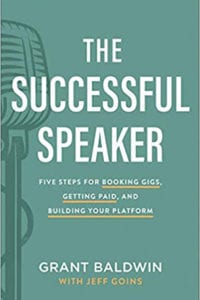
The Successful Speaker: Five Steps for Booking Gigs, Getting Paid and Building Your Platform
By making a decision, by choosing we do steak, we don’t do tacos, lasagna, pizza. By doing that, by making that decision, it makes it easier for the right customers to find them and also to repel the wrong customers versus trying to be all things for all people. The narrower, the clearer, the more focused you are, we think it’s the opposite. We think that the more things I can talk about, the more audiences I can speak to, the more people I can relate to, the more opportunities I can have. The truth is the narrower, the clearer, the more focused you are, it’s counter-intuitive. The more focused you are, the easier it is to find gigs.
What you’re doing there is breaking through the clutter, be the steak house and not the buffet. When you and I worked together a couple of years ago, you have this background where you’ve had to pitch at agencies, which represent big clients like Lexus to figure out how to get them to put an ad on your website or your magazine. That’s your niche. As I kept thinking and hearing your words in my head, I found out that an architecture firm has a similar situation. It’s a final three. They have to go in and pitch against their competitors.
It’s the same thing for lawyers, executive search firms, real estate, tech, anybody who has to pitch against two final competitors in a face-to-face, you get a chance to pitch your story. That’s my niche, an audience of that. Now that I figured that out, it’s helped so much that storytelling is the new way to win new business when you have to compete against your competitors. They get that. I’m sure you have a story of focus. Before we go into the other chapters, which are valuable, I want to hear a story of another speaker you’ve helped find their niche or your own niche.
I’ll give you an example of a speaker we worked with in a similar spot to you a few years ago. They came to us and said, “I’m later in my career. I’m interested in speaking. I want to do a lot of speaking. I’m trying to figure out who I speak to, what I speak about.” I said, “Let’s talk about your background. Let’s talk about some low-hanging fruit. What’s a world that you already know?” This guy lived in Colorado. He was a successful realtor. He said he’d been a realtor for 30-some years. He had been on the board for the Colorado Realtors Association. He had served in various capacities in that way.
I said, “Here’s an idea. Let’s start with realtors because that’s a world you already know,” versus saying like, “I’m speaking in this world, but I want to speak to some unrelated field that I know nothing about or that I’m not connected to them.” In that space, it makes it easier for him to find gigs because he knows the Colorado Realtors Association. There are 49 other associations in other states with the same group of people. He knows how they work, how they operate, and how decisions are made. He knows how their events are planned. He knows who’s making those decisions on speakers. He already knows that world so start there. You don’t have to stay there forever but start there because that’s the low-hanging fruit. There are a lot of people like that. “I don’t want to limit myself to realtors.” Focusing on limiting yourself does make it easier so that you’re not trying to do all things for all people.
You have the credibility to the audience. You’ve been in their shoes as I like to say. Let’s jump into step two that you have. I want to ask two of the questions in here. What should people do before they step on stage? What should they do after they’re done?
Before you step on stage, you need to make sure you’re prepared. That means that the best speakers on the planet, they don’t scribble a couple of thoughts in a napkin, hop up there and hope it magically works out. They have spent hours and hours practicing, rehearsing, going over their material. By the point that they get on stage, they are ready, set to go, prepared, comfortable and confident. That’s one of the best things you can do. That is low-hanging fruit for any speaker to be able to do is to practice, to go over it over and over. That’s one of the things that you want to make sure you do before you get up on stage.
After you finish a talk, there are a couple of things that you can do. One is to take a deep breath. You did it and you finished. It’s tiring. It can be mentally and emotionally exhausting. You finished, take a deep breath. You also want to make sure that you connect with the event planner, the client and talk to them. Make sure that you tell them, “Thank you.” I always like to write a handwritten thank you card that I give to the client. I have that in my bag that I make sure I give to them right away. I try to connect with them. I asked them how it went, any feedback that they’ve got. I also want to make myself available to talk with other attendees. A lot of times after you get off stage, people want to talk to you.
[bctt tweet=”One of the most important things that a speaker can do is be narrow, clear, and focus. ” username=”John_Livesay”]
Either they want to meet you, they want to shake your hand, they want to tell you a quick story. They want to say, “Ask your question.” Any number of things can happen at that moment. You want to make yourself available because one, depending on your business model, that’s also the type of thing that can lead to additional business. People say, “I loved your talk. Can you come to my company? Can you come to my event? I’m a part of a committee that we’re starting to look for speakers on this and I want to talk more about you. Are you available on this date? What do you charge?” It’s good opportunities for you to connect with attendees off the stage. It’s a casual environment. Those are a few ideas of what you would want to do, make sure you do, before and after a talk.
Certainly, I’m a big supporter of everything you said. For example, even if you’ve been hired to speak to one company, we spoke to a law firm back east and afterward, one of the lawyers came up to me. He goes, “Now I realize I don’t have to be a pushy salesperson. I can start telling stories. My wife works at a tech company. They’d love to have you come talk to them.” You never know where the referrals are going to come from.
It’s not like something I say a lot is you have no idea who’s in the audience. I’ll give you two stories about this. One of my first big breaks as a speaker, I was doing any possible gigs I could. A friend of mine referred me a gig and this was something that was a couple of hours away. It was a small little state conference and they had $500. I was like, “Let’s do it.” It’s not bad. I went and I did that. It went fine. I probably broke even financially on it, but there was a lady that was there who was the wife of the national director of that entire association and organization. She came up to me right after and she said, “You are phenomenal. I’m going to tell my husband about you. I’m going to tell him he needs to hire you.”
I had zero clue she was going to be there. I had zero clue until even afterward, she came and introduced herself. Sure enough, the guy followed up with me a week or two later and said, “We want to book you.” He booked me for several events that worked out well. When I got started as a former youth pastor, I did a lot of speaking with high school students and colleges. I was speaking at a high school in North Dakota. It went well. One of the students came up to me afterward and she said, “My grandpa runs this conference. I already texted him and told him during your talk that you are doing a great job and he needs to have you come to speak.” I had zero clue who’s in the audience, zero clue what that will lead to. Those are opportunities where you show up, you do a good job, you connect with the audience and that leads to other opportunities in the marketplace.
The next step is establishing your expertise by developing a speaker brand. That’s my songbook from my years of advertising. Part of having a great brand, whether you’re a speaker or anything, for people to say, “You’re the X, Y, Z person.” For example, people say to me, “Have a tagline.” I help people turn case studies into case stories and that allows them to become revenue rock stars. There are a lot of soundbites that even if they don’t 100% understand it, they’re at least intrigued to want to know more. What are your tips on developing a speaker brand?
I totally agree that this goes back to being clear that I do this one thing well. For example, I heard this analogy, if you went into the kitchen and you had let’s say ten cans of beans, you went to your utensil drawer, what would you be looking for? You’d be looking for a can opener. One thing that solves one specific problem versus, “Here’s a measuring tool. Here’s a spatula,” those things are great, but they serve different purposes. Be known for this one thing. For example, for me within The Speaker Lab, what we do for speakers, a lot of people who come to us who are interested in speakers are also interested in writing a book, publishing, podcasting, coaching or consulting.

The Successful Speaker: Making the decision to narrow down makes it easier for the right customers to find you and also to repel the wrong customers.
I had someone literally message me and said, “You run The Speaker Lab. Have you ever thought about creating The Author Lab?” There are plenty of opportunities for other things that we could do. What we’ve done is say, “No, we do this for speakers and that’s it.” We don’t do anything else. By being focused, hopefully when people think of Grant or they think of The Speaker Lab or they’re saying, “I want to be a speaker. You need to talk to Grant. You need to talk to The Speaker Lab because they do this one thing that solves a problem you’re looking for,” versus, “I think they do this. I’m not entirely sure. It’s a flavor of the month thing. They may be on something totally different now.” You don’t want to be positioned like that as a speaker or as an entrepreneur. Be focused on solving one specific problem for one specific person.
You also talk about it’s part of the expertise, getting a great demo video. I’ve heard if you want to get paid $10,000 to speak, you should be investing $10,000 in a demo video. You’ve spoken in front of such large audiences that typically require two cameras and making sure your sound is good. What are your tips on how people can get a great demo video? What do you think a great demo video consists of?
Let’s describe what the demo video is. Think of it as a movie trailer. You think about a movie in general. A movie is let’s say 90 minutes, 2 hours, and they condense it down to 2 or 3 minutes to give someone a taste of what the movie is about. The point of the movie trailer and the point of the demo video is to make people want to see more. When my wife and I go to the movies and we’re watching a movie trailer before the movie starts, immediately we’re turning to each other like, “That looks good. We’ve got to see that,” or within the first 30 seconds we’re like, “That’s not for me.” Not that it’s a bad movie, but it’s not what we’re looking for.
You’re trying to do the same type of thing with your demo video. Most event planners, they don’t need to see your entire talk to determine whether or not you’re a good speaker or whether or not you’re a good fit. They want to see a couple of minutes. Take your talk and boil it down to 2 or 3 minutes. That gives people a sense of what it’s like for you to speak on stage, to interact with the audience of what you talk about. That’s what people want to see before they’re willing to hire you.
The other thing that you want to remember is that event planners are in the risk mitigation business. When they put you on stage, you are representing them. They don’t want to put you on stage if you’re going to do or say something that’s going to be embarrassing or it’s going to be inappropriate or it’s going to be wrong or factually incorrect. You want to make sure that you give them something so that whenever they decide, “Yes, I trust this person. I know this person. They’re going to do a good job. We feel comfortable putting them on stage and paying them money to talk to our audience or people.”
You want to make sure that they have something there that they can go off of. When you’re creating a demo video, if you have amazing footage and high-quality footage from all these events, that’s awesome. A lot of people don’t have that. What I would remind you is to work with what you’ve got and improve as you go. At this point in my career, I’ve had probably 6 or 7 different demo videos. The new version is much better than the first version. I didn’t have that footage initially. You work with what you’ve got. You improve as you go.
[bctt tweet=”The more focused you are in what you do, the easier it is to find gigs. ” username=”John_Livesay”]
Remember that and realize that whatever video you’re creating, do it with excellence, but it’s not your permanent video. You may do a gig in a few months and get better footage out of that. You can parlay into a newer demo video that’s more reflective of who you are as a speaker, which you speak about higher quality footage, but you don’t have that footage yet. Don’t worry about that. You’ll get that footage at some point. Work with what you’ve got and improve as you go.
That’s a great line as well as reduce the risk for the people who hire you. I love both of those as great soundbites for people to take away. I talk about the concept of letting go, being a perfectionist and become a progressionist, which is someone who celebrates their progress. If you’re a speaker, you have to have that mindset and you’ll drive yourself crazy if you think everything has to be perfect right off the get-go. I know this is step four that everyone has been waiting, salivating to know about. It’s like, “Grant, I get it, but how do I get a paid speaking gig? What should I charge?”
Let’s talk about both of those. One, let’s make up the point here. You mentioned this is the fourth step in the process that we teach, but this is the core of what people are interested in. It’s like, “I want to know how to book gigs.” It’s important to reiterate that you have to have these other foundational pieces in place first. If someone says, “I want to book gigs. That’s cool. Who do you speak to? What’s the problem that you solve? I can speak whatever. I want to book gigs. Do you have a website or video? No, I don’t need those things. I just want to book gigs.” It’s like you have to have these other pieces in place first before you get there.
There are a couple of ideas anybody can do for booking gigs. One is to make sure you let everyone in your sphere of influence know that you’re a speaker and what it is that you speak about. You may be thinking like, “Nobody in my sphere of influence. My family, friends, colleagues, none of them hire speakers.” That’s fine. That’s not the point. The point is that they may know someone who is looking for a speaker. They may be aware of someone or someone in the next few months may ask, “This is random, but do you know anyone who’s a speaker on this topic?” “I do.” If people don’t know that you’re a speaker, they won’t think to recommend you. You’ll need to get it on top of mind and get it on people’s radars.
Another thing that you can do is that you can spend some time googling and looking for events. When you’re looking for events, most of them are already planning on hiring a speaker. You don’t have to convince them to hire a speaker. Most conferences and events are planning on hiring a speaker, whether it’s you or someone else. You can begin to reach out to them though and show them why you are a good fit. Inside the book, we walk through systematically what you want to do, how you want to go about doing this. Creating a website and a video and saying, “I’m going to put my video up, sit back and wait for the phone to ring or an email to come in.” It doesn’t work like that. Speaking is a momentum business. You have to be proactive in building some of that momentum.

The Successful Speaker: Work with what you’ve got and improve as you go.
Another thing you could do is to build relationships with other speakers. Whenever I went back my first year, full-time as a speaker, I looked up like, “I booked all these gigs. Where do they come from?” I’m trying to reverse engineer so how can I do more of that?” My largest source of gigs came from other speakers. By doing that, when you’re connecting with other speakers, what happens is, let’s say I show up and do a great job at an event. Most of the time they don’t want to have me back for a couple of years. Even if I do a great job, they want some new speakers. They want some new faces.
They want the audience to turn over. If I can say, “I would love to work with you again in a few years. In the meantime, let me introduce you to John. John would be a great fit for your event,” or let’s say that I get an inquiry for an event that I wasn’t interested in. If I’m able to say, “I’m not a good fit for it, let me introduce you to Tom. Tom would be a great fit.” Let’s say I’m not available on a date or the budget isn’t right. If I’m able to say, “Here, you need to talk to this person or this person,” it creates a win both for the client and for the other speakers and for myself.
I recommend that you also network with other speakers. Also, be aware that most other speakers aren’t going to recommend you unless they have seen you or know you personally. Remember, if they recommend you, their reputation is on the line. If you show up and you do a great job, whoever recommended you or referred to you, looks like the hero. If you showed up and sucked, it reflects poorly on them. If someone were to message me and say, “Can you recommend me?” I’d be like, “I’m not going to do that.” If I know you, I know you’re speaking actively, I’ve seen your video and I know you and trust you, I’m going to be a lot more confident and say, “You need to talk to this person. They would be great for that event.”
This concept of letting everyone in your sphere know that you’re a speaker. I have done that and using social media. I have a short little story about people who may not think about using social media as a way to let everybody know they have a speaker. Every time I give a talk or I post it, I post a picture of me speaking. I love doing this. Here’s what I learned or here’s the takeaway. I had a client that was at the Cosmopolitan Hotel when I was selling ads a few years ago and she went to work at The Venetian. We’ve kept in touch on social media, not like a regular basis, but she reached out to me. She said, “We want to hire you to speak to The Venetian sales team. I’ve been watching your transition from selling ads to being a keynote speaker for the last few years. We think you’re the right person for us.” You never know unless you’re getting tons of likes and comments, if anybody even sees your social media posts. I thought what you said there and having an example of getting a booking from that underlines the value of what you’re talking about.
Here’s the way to think about it is if you’re a realtor, for example, you are trying to catch people at a moment when they don’t experience that often. What I mean by that is most people only buy or sell a home a few times in their lifetime. As a realtor, you’re trying to be top of mind when someone’s like, “We’ve been thinking about talking to a realtor. Let’s see what our home would be worth,” or “We’re considering moving. Let’s see if we can get a couple of ideas of what houses are available in that neighborhood.” You’re trying to be top of mind. All of the social proof that you’re showing there like you’re talking about, I’m posting pictures of me speaking, of me traveling to speak, of me on stage, of me interacting with an audience or sitting backstage or working on my talk. Hopefully, when someone decides that one small period of a year where they’re looking for speakers and considering speakers that they think, “This guy, John, he is a friend of mine. I’ve known him for a few years in the past. He seems like he’s doing a lot of speaking.” You’ve planted some seeds there that have kept you top of mind with them whenever they’re ready to look for a speaker.
[bctt tweet=”People do business with people they know, like, and trust. ” username=”John_Livesay”]
The same thing is true for a car. The car companies have to advertise all the time because you’re not in the market for a new car every day. It’s the same thing as a speaker. In the book, The Successful Speaker, you talk about closing the deal. This is a huge takeaway for anyone whether they’re in the speaking business or not. Typically, I’m sure you’ve experienced this, an event planner will say, “We’ve looked at your website. We watched your demo reel. We’ve read your book even. We want to have a conversation with you. It’s between you and two other speakers,” which ironically for me is what I ended up doing to help them win new business. I said to a client, “You realize I had to sell myself to get in front of you. I’m helping you be the one that gets picked.” What are your tips on closing the deal? Let’s start as a speaker.
A few things come to mind. One is typically the initial interactions that are going to happen over email. Either they reach out or you reach out, “Are you available on this date? What do you speak about? I came across your video. It looks cool,” that type of thing. As soon as possible, you want to get someone on the phone. You want to remember that that business happens over the phone and people do business with people they know, like, and trust. You cannot build that in time of rapport and connection than you can over email. I want to get that person on the phone as quickly as possible.
The other thing I want to make sure that I do is I want to give them a precursor of what it’s like to work with me as a speaker and here’s what I mean by that. Whenever they email, I don’t want them to have to wait a couple of days for me to email back. I want to email back immediately. When they have a question, I’m picking up and calling right away. Whenever they are needing something, I’m responding, “Can you send us this?” Right away, I’m sending it to them. One of the things that they are hiring you to do is to stand on stage and deliver a talk.
The other thing that they are hiring you to do is to be good to work with because if you’re great on stage, but you’re a pain in the butt to work with. By pain in the butt, I don’t mean prima donna or diva and, “I need this European imported water at a certain temperature or a jar of red Skittles.” What I mean is you’re unorganized. You’re sloppy, you lack professionalism, you dropped the ball on areas. They ask you to be at a soundcheck at 8:00 AM and you come stumbling in at 8:15, late and unapologetic. You don’t want to be that speaker.
You want to make their life simple. When someone is planning an event or working on an event, a speaker is 1 of 1,000 moving pieces and balls that they are trying to juggle. The easier you can be to work with, the easier you can make their life, the more likely they’re going to want to be to work with you. I’ll give you an example. When I was doing a lot of speaking, I would always ask for these recommendation letters and these testimonials. Oftentimes, we would give these recommendation letters and testimonials from clients and they would say something like, “Grant was awesome to work with on stage. He did a great job. Our audience loved him, but we loved Lisa. Lisa was amazing.” They’d go on and on about Lisa. Who’s Lisa? Lisa was the administrator who helped me behind the scenes.
She was all the details, the contracts, the travel and logistics. They went on and on about Lisa. They never met with Lisa. Lisa wasn’t on stage speaking. Lisa would be answering emails and working with them. Lisa was important to what we did though because it was the experience more than the speaker. That’s one thing that an event planner, all things being equal, if they’re like, “We found that this speaker got back to us quickly. They were easier to work with and quick to respond to things. They were nice, polite, courteous and professional. All things being equal. My hat tips to that speaker because they are on top of things.” I’ll give you another example.
We were updating some insurance. I got three different quotes. As I’m getting quotes, one is you’re comparing the pricing but you’re also comparing like how are each of these people to work with? One of them who had an okay price corresponded through email, they had some generic answers and questions. It didn’t seem like they were that engaged. The other two, they did calls with me. They followed up. They were consistent about it. Those are things on my mind as a buyer that I’m thinking about before I make that decision. One thing I would say is understanding the buying cycle and the sales cycle for speakers. Most event planners aren’t going to reach out and say, “We’re looking for a speaker on this date. Are you available? Yes, you are? Great, let’s book it.”
You said, “A lot of times, it’s a committee.” We’re reviewing other speakers or considering a few things. You always want to figure out what their next step is and follow-up based on that. I never want to say, “When does your committee meet?” “Our committee meets in two weeks and we’ll get back with you.” “I hope you think of me.” Don’t do that. I always ask them, “Do you mind if I follow-up with you two weeks before and after your committee meeting?” “Sure. That’s fine.” They don’t think you’re going to do it. Whenever you do, it gives them another example of this is what it’s like to work with me. I want to figure out if they say we’re going to meet two weeks from this day, I’m going to make a note to follow-up before the committee meeting.

The Successful Speaker: You can do all the things, but you can’t do all the things at once.
“I know that your committee meeting is tomorrow. I want to touch base and make sure you had everything you needed from me.” I want to touch base with them afterward. “I know that your committee met yesterday. I wanted to circle back and see if there’s anything else that you needed or how it went. If you guys were able to make a decision on anything.” I care. I’m prepared. I’m professional, but it’s also like I’m asking them for a decision versus saying like, “I hope you think of me.” Finalizing this insurance thing is important, but it’s not urgent. It’s on my list, but it’s not super important. If the guy that I decided on emailed me, it’d be a lot simpler for me to be like, “Let’s go with you,” versus me like, “I’ve got to find his email. I’ve got to follow-up with him.” Be proactive and follow-up makes a huge difference.
Proactive is my big takeaway. Talk about being easy to work with, sometimes that happens minutes before you go on stage. The event planner can come up to you and say, “John, I know we asked you to speak for an hour, but we’re running far behind. Can you cut your talk down to 45 minutes?” You can’t be a diva and go, “No. Every moment of my talk is precious,” or “I don’t know what I’ll cut.” “No problem,” is the correct answer there. Let’s talk about fees. How does a speaker go from let’s say $10,000 to $15,000 to even higher fees? You talk about scaling. When do you know it’s time to go for a higher fee?
There are a lot of variables that go into this and this is much more of an art than a science. A couple of thoughts, one is a shortcut answer for the speaker. If you’re in that above $10,000 range, this doesn’t work as well. It starts to break down a little bit. We do have a free speaker fee calculator that people can mess around with. If you go to MySpeakerFee.com, you answer 7 or 8 different questions and it will tell you what you should be charging as a speaker. Let me give you a couple of the variables that go into that may help you understand the thought process behind it. One is going to be your industry. You can charge more in some industries versus others.
You can charge more speaking to corporations versus nonprofits. You can charge more speaking to colleges versus elementary schools. Not that one is better or worse than the other. There are different budgets available for different industries. Recognize that there’s going to be ceilings in certain industries. For example, for me, I originally did a lot of speaking to high school students and high school conferences. No matter how much I would want to be a $20,000 speaker in that market, it’s not happening. They don’t pay speakers. They pay speakers well but not $20,000 well.
I have to recognize some industries are going to pay more than others. Another factor in the variable is going to be your experience. If you are a brand-new speaker getting started, you typically won’t be able to charge as much as someone who’s been doing this for a long time because most likely they have more at-bats, they have more reps and they’re a better speaker. Another variable you touched on is your marketing materials, your website and your video. If someone is looking at your stuff versus two other speakers and you’re all charging the same amount, your stuff better looks on par because whether we like it or not, people judge books by their covers. You need to make sure that your stuff looks professional, that it looks sharp, that people look at it and they’re like, “This is a quality speaker based on the website and the video.”
The other variable and factor that you want to consider about when you should raise fees are thinking about supply and demand. What kind of speaker that you want to be? Are you a speaker who says, “I want to do 100 gigs a year,” or someone that says, “I want to do 5 or 10 gigs a year?” A way to think about this is if you were to book a hotel room in Times Square on New Year’s Eve, December 31st, you are going to pay an astronomical amount of money for that because of supply and demand. You can book the exact same room on January 5th and you’re going to pay a fraction of the price because of supply and demand. You have to recognize for yourself if you say, “My goal is to do twenty gigs a year and I’m having a hard time hitting those twenty,” it’s probably not the right time to increase your fees.” Versus if you say, “I’m hitting those twenty and I have to turn down stuff and every time I quote this fee, nobody is budging at all.” Everyone’s like, “Yeah, that’s not a problem at all.” You probably have more room in the market.
Another thing you can do is also to compare notes with other speakers, speakers that I’m consistently speaking with at other events. It’s not uncommon for speakers to compare notes of, “What are you charging now? What are you getting for most events?” To get a sense of like, “I’m way undercharging or way overcharging.” You’re trying to get a feel of the landscape, not just across the board but for your market, for your audience, for your type of event. Those are a couple of variables to go into, but again, most speakers I’d recommend that you start with MySpeakerFee.com. Go to that speaker fee calculator and that’ll help you out.
The last thing I want to ask you about is this concept of diversifying your income stream. A lot of speakers have a book. Sometimes the clients like to buy copies of my book and I sign them after the talk. I’d even come out with an online course based on the book that the more options you give a client to say, “We can buy your book. We can buy the online course,” that keeps it going after your talk. The more value you’re creating for people. I wanted to talk about your ideas for all of that.
The reality is this message that I’m sharing from the stage and helping people, speaking is one methodology for that, but there are certainly others. A lot of people who are interested in speaking are also interested in writing a book, doing a blog, a podcast, a course, coaching, or consulting. One of the things we talk about in the book is you can do all the things, but you can’t do all the things at once. Something is going to come first, something is going to come last. One of the best things that you can do is to be focused and say, “I help people in this way and this way.” That’s it. I look at our business within The Speaker Lab.
There are a lot of things we could do that we don’t do or we leave money on the table. It’s an intentional choice if we’re going to focus on this and this but nothing else versus trying to do all of these shiny objects because other people do them. We don’t do live events. We don’t do much one-on-one coaching. We don’t do any masterminds. There’s nothing wrong with all those things. They are all great. We choose not to do them. We’re intentional about it. The same thing is true for you as a speaker. You have to say, “I’m going to do speaking and I’m also going to do a book maybe and that’s it.” That’s fine, but I’m not trying to do everything for everyone. It’d be clear on this is how I’m going to serve people and this is the best way for me to do that.
Thank you for sharing your wisdom and your knowledge. The book again is called The Successful Speaker. Thanks, Grant.
Thanks, John. I appreciate it.
Important Links
- The Speaker Lab
- The Speaker Lab – Podcast
- The Successful Speaker: Five Steps for Booking Gigs, Getting Paid and Building Your Platform
- MySpeakerFee.com
- http://GrantBaldwin.com/
- Better Selling Through Storytelling Method Online Course
Wanna Host Your Own Podcast?
Click here to see how my friends at Podetize can help
Purchase John’s new book
John Livesay, The Pitch Whisperer
Share The Show
Did you enjoy the show? I’d love it if you subscribed today and left us a 5-star review!
- Click this link
- Click on the ‘Subscribe’ button below the artwork
- Go to the ‘Ratings and Reviews’ section
- Click on ‘Write a Review’
Love the show? Subscribe, rate, review, and share!
Join The Successful Pitch community today:
- JohnLivesay.com
- John Livesay Facebook
- John Livesay Twitter
- John Livesay LinkedIn
- John Livesay YouTube
(C)lean Messaging With Scott Brown
Posted by John Livesay in podcast | 0 comments

We all think that people make decisions based on rational numbers, but that’s not how humans work. How can you find a way to tap into the emotional side and deliver clean messaging that is memorable? In this episode, John Livesay, aka The Pitch Whisperer, talks to actor-turned-experienced startup founder, investor, and speaker Scott Brown. Scott reveals how he helps founders sound human and effectively deliver their message to their audience, may it be investors, employees, or customers. He touches on the challenges of building a company and how the founder of a startup is not the hero. Scott also discusses how trying to solve a problem and being able to communicate your solution is at the core of the game.
—
Listen to the podcast here
(C)lean Messaging With Scott Brown
Our guest is Scott Brown. Scott Brown is a former actor turned entrepreneur, having started eight companies over the past years. From topical analgesics to bounced emails, Scott’s background is diverse, to say the least. Scott is the Executive Director of UpRamp, which leads ventures and startup engagement for the global connectivity industry in Boulder. He has the dubious honor of spending $2.5 million on the 21st worst Super Bowl ad in history. As an active advisor, investor and author, Scott shares his unique blend of startup, grit, technology and clean messages with startups around the world. He’s also credited with inventing the world’s first bacon-wrapped tot. Scott, welcome to the show.
John, thanks so much. This is going to be a lot of fun.
It is indeed. I like to ask my guests to take us back to their own story of origin. For you, it can be childhood or college, whatever it was. You were a former actor, that might be an interesting place to start, then we want to know how that pivot became an entrepreneur experience.
It’s a funny story. I was in beautiful Milwaukee, Wisconsin in the early ‘90s. I had come in to do I think Henry V. I’m there and I got invited to this fabulous dinner party. I’m hanging out and we’re drinking and talking and I met this guy who had invented a new topical analgesic, this pain-relieving gel made out of red peppers. I’m talking to this guy and we’re drinking, laughing and having a great time. About 2:00 in the morning, he says, “Scott, I think you could help me sell this.” I’m like, “Yeah.” Lo and behold, the next day he calls me and says, “I was serious.” I’m like, “All right.” We wrote this little deal on the back of a napkin and it turned out the previous summer, I did a season at another Shakespeare festival and one of the board members happened to be the CEO of a large pharmaceutical company. Six months later, we sold the patent rights and now this thing is in every Walgreens in the world. I went from being an actor to an entrepreneur through dumb luck and happenstance.

Clean Messaging: When talking to your customers, share experiences other people have after using your product rather than talking about yourself.
It’s fascinating to me because I love to double click on this concept that following our passions will lead to success, even if we don’t have an exact step-by-step roadmap of how it’s going to happen. Being in the right place at the right time is something we’ve been taught as kids but there’s something besides dumb luck involved. It has to do with energy, purpose and alignment. Can you speak about that?
There’s something about the magic of happenstance, those happy accidents that happen in your life. When I look back, all of the amazing and great things that have happened to me are all attributed to leaning into those happy accidents. When that happens, great things can come about. That’s how I met my beautiful bride. It’s how I started my companies. Everything falls from moving into those opportunities as they appear.
I have to ask about creating a bacon-wrapped tot. I know what a tater tot is. I’ve seen bacon wrapped around little hotdogs sometimes in the Midwest where I’m from as well. That was considered fancy appetizers in my day. Tell us how you created this.
The bacon-wrapped tot is the culmination of human cuisine. Bacon and a tater tot, it’s the most perfect thing ever. It happened at a random restaurant here in Colorado. I was out with a number of startup founders. We were trying to come up with the best food ever and I stumbled on the bacon-wrapped tot. I convinced the restaurant to make it right there, they did and it’s on their menu as The Scott.
Going back a little bit to the Shakespeare launching you into the entrepreneur thing, you’ve got some food named after you. You’ve also been called Hamlet, the entrepreneur, I’m assuming that ties in somehow to your Shakespeare background?
There are amazing stories in Hamlet. It’s probably one of the greatest works of art ever written in the English language. I probably go back and read it once a year. One of the things that I found in that, is that most of the lessons we need as entrepreneurs as startup founders, as business people, it’s all buried inside that text. We could do an hour on Hamlet as entrepreneur.
Let’s talk about this whole concept, especially for people in the tech world, I love this phrase, “What if your message was as clean as your code?” You created something called (C)lean Messaging, but you put the letter C in parentheses. You’re trying to separate the word clean and lean, I’m guessing. Tell us how you came up with (C)lean Messaging while also using that double play on words.
I’ve spent the last years building my own company, as an advisor, investor and mentor to a number of startup founders around the world and one of the things we found is that the tools we have developed to figure out what to build, have changed the dynamic. The Lean Startup methodology that Eric Ries put out, build, measure, iterate, all of that stuff. It helped us figure out the what, then we had great tools to figure out who the value prop canvas to help us figure out who we’re building this thing for.
What I found in talking to these entrepreneurs is that they would get through that phase and then stop. They would have this brilliant idea, they knew what they were building, who they were building for. They’d go out to the market and try to sell it or try to find investors and then complain twelve months later that there was no market for their product. 42% of founders after the fact, say they shut down their company because there was no market but how could that be true? Nobody starts a business knowing there are no customers. We all do the work, we do that customer discovery.
What I figured out was that these founders were taking all of the information they gathered in those amazing customer discovery conversations and interviews. Repeating it back to random people, to customers or potential customers and all of that great data they got about the what, ends up hurting them when it comes to the why. That’s why I built (C)lean Messaging, it’s a framework that helps startup founders talk to humans. It’s the next evolution of that lean startup methodology, the what, the who, and now this is the why.
Can you give us a little story of how someone you worked with has used (C)lean Messaging?
I’ve been lucky to work with a lot of interesting founders but there’s a group in New York City, a young startup company called Mutable. These guys have the most incredible technology, some of the smartest people I’ve ever met. They’ve done good work to figure out how to take all of these data centers that exist around the world and put little computers inside of them to run hyperlocal low latency edge compute and when they sat down and told me that, I thought, “That’s cool.” Except, nobody understands what that means.
We got together with the founders of Mutable and worked through their product to try to figure out how to talk about this to real people. What we found is that first, I had an amazing origin story about the way the company was founded and how their team grew. Origin stories are great when you’re talking to investors who want to join your journey, but they start to fall down a little bit when you’re talking to customers. When these guys talk to customers, they talk about the experience that other people have after using their product, rather than talking about themselves. They talk about how webpages load 30% faster when they’re running on the system. They talk about how large service providers are generating hundreds of millions of dollars in revenue, rather than paying the taxes and the rent on the data centers they own.
[bctt tweet=”What if your message was as clean as your code? The goal of a pitch is to be memorable. It is about the listener not about you.” username=”John_Livesay”]
One of the mistakes that I see founders make when they make a pitch is treating an investor like a customer and they’re pitching them as if they want them to buy the service or start using it, thinking somehow that’s going to make them want to invest. Do you see that often? If so, how do you help them change that?
It’s subtle. Because an investor and I’m one, we want to understand how the product works and we want to see that founder as if they’re talking to a real human being, contrary to popular belief, most investors are also human beings. There is something cool about seeing a great pitch from a great founder talking as if they’re talking to a real customer and observing that in process. At the same time, an investor, they’re looking for slightly different things but they’re going to make that decision the same way that a customer makes the decision. We’ve got to move that elephant first, we’ve got to hit them in the gut, change their intuition first and let that lead to judgment. Eventually, lead them to the data or the words to help them describe why they’ve made that decision.
A lot of people say, “You get ten minutes to pitch an Angel group or an investor.” I tell people, “You have 90 seconds. You need to grab them at the beginning.” Do you have a favorite pitch that you’ve heard that said, “The minute that founder opened their mouth, I was in?”
There are so many good ones out there.
You only have ten minutes, and every word has to earn its spot. Do not waste time with cliché openings like, “Thanks for this opportunity. I’m excited to be here.”
Anytime I see a pitch that starts with, “Hi, I’m Bill. I’m the CEO and Founder of X.” Shoot me in the head. You’ve wasted the first 30 seconds of the conversation and that was the most critical. What I tell people is that the best way to start, the best way to lead in is to lead with the listener. Start with the person that you’re talking to and then follow up with how you can change their life rather than saying, “I’m Scott and this is what I do.” You could start with, “There are people like you who have this big problem and I’ve invented a way to fix it.”
Do you specialize in a particular industry that you’d like to invest in? I’ve had a lot of investors like, “I want to do mobile. I only do artificial intelligence.”
Most of the work that I do as an investor is around B2B. I’ve figured out after failing miserably at Super Bowl ads that I’m good at enterprise deals and how to talk to businesses and how to find solutions that solve big problems for companies. There’s something that I look for in a business like that, it’s a little different, and it’s not just about a product that you’re going to sell to other businesses. What I like to invest in companies that have figured out something about humans that nobody else knows, it could be in the buying process, it could be a problem or a challenge that a human has that nobody else has identified yet. I look for that human element in a B2B business.
You referenced the Super Bowl commercial. Everyone watches those commercials. Tell us the story there, I’m sure it’s a good one and any lessons learned?
That was my first venture-backed company and at that time, I believed what all of our venture investors said. This was 1999, in those heavy times, we believed that it was all about getting users and we could worry about revenue later.
Facebook was like that, right?
There are businesses that do work that way. Most companies are a lemonade stand, build something that people want and sell it for more than it cost to make and then do that over and over, that’s how it should work. At the time in ‘99, we thought if we get a lot of eyeballs, we get a lot of users, then money will come later or we’ll IPO before there’s a real revenue. We went hard at it and built a large company, 150 people, raised a bunch of venture capital. We had a tough decision to make in that winter of ‘99. We had an opportunity to do a Super Bowl ad and we pulled together the ad and the money. We had a big board meeting and all agreed that we were going to do it.

Clean Messaging: The goal of a great pitch is not only to deliver great content but about being remembered. Find a short, easy, clean, memorable way of communicating your message; then, you’ve won.
In the fourth quarter of that Super Bowl, February of 2000, if you recall, that was the Titans and the St. Louis Rams at the time. The game was close and they’re in that fourth quarter. There were still people watching the game and therefore watching the commercials. Our commercial hit and you had a huge spike of users and people signed up. It was successful by those standards, but of course nobody gave us a dime. Within a couple of months, we had to shut the business down and had to move on. I am on a list now. It is known as the 21st worst Super Bowl ad in history, and at least I got that going for me.
You made the top 30. You also travel the country speaking. Who is your ideal audience and what takeaways do you give them?
There are two groups that I talk to a lot, the first obviously are startup founders. For those founders out there could be around an accelerator or offense targeting startup founders, it’s about how do you find that message? How do you talk about what you’ve built in a way that will help people understand it and buy? It’s tactical, oftentimes about the (C)lean Messaging framework that we bring out there. I’ve been doing a lot more talking to innovation experts and government, strangely enough.
I happened to do a presentation in the beautiful Sunshine Coast in Australia. I was doing a whole session on messaging and afterward, this lovely gentleman came up to me and he said, “I’m the local representative on the council here in the Sunshine Coast.” This messaging idea, this idea of (C)lean Messaging, not only applies to startup founders and entrepreneurship but I bet we could use this to help figure out how to talk about the new initiatives we’re trying to help our region with.
I’m thinking you would be ideal in front of anybody caring about green messaging. If you’re talking about a clean environment and green, clean messaging and the problems because many people feel like, “That’s going to be expensive and you want me to get rid of all these products under my kitchen sink that might be toxic.” If anybody needs help with clean messaging about a clean product, it’s that industry. I know you like to play with words as I do with lean and clean. To me, that seems like a nice fit to help.
I’m all in, ScottBrown.co.
We’ve talked about what makes a good opening. Closing your pitch is as important as a good opening. I can’t tell you how many people will end their pitch with, “That’s all we got. Any questions?” I want to cry. What do you recommend people say at the end of their pitch?
It varies for every single pitch. For me, it’s important to remember that the goal of a great pitch, at least in my mind, obviously you have content you need to deliver but more importantly, it’s about being remembered. Somehow a decision is going to be made. If you’re talking to an investor, that investor has a partner meeting seven days from now, on a Monday afternoon partner meeting. If they don’t remember what it is you were talking about or what your business does, then it doesn’t matter. It’s the same thing with a customer. They’re going to have all of this great stuff and take all of your printouts and your pieces of paper, set them on their desk and they will not read them. Your job, in those meetings, conversations and opportunities, is to help that person remember you. If you can find short, easy, clean ways of communicating your message that are accurate also memorable, then you’ve won.
I tell people if you tug at people’s heartstrings, you can get them to open their purse strings.
It’s like, “What if your message was as clean as your code?” For a technical founder, they strive every day to polish that rock and make their code as perfect as possible. They don’t think about how they message or talk about their company. Something like that, message is clean as your code, goes right into that long-term memory for a startup founder.
The other thing is sense of urgency. I feel that when people are pitching, they have to answer two questions which are, why are they uniquely qualified to execute the idea and why is now the perfect time to do it? Do you have any thoughts around that?
[bctt tweet=”Nobody starts a business knowing there are no customers. ” username=”John_Livesay”]
That’s right on but you’ve got to lead with that. Too often, people put that stuff at the end, “Here’s all of the stuff. Here’s the history of the internet. Here’s the thing I’ve built,” then after they get through a bunch of other stuff, “Here’s a little bit about the team.” Especially in a seed stage funding opportunity, it’s about the team first and then the problem or the market that you’re trying to solve for and then about the product. As founders, we spent so much time building the product that we want to talk about and we forget that the decision is going to be based on, are you the right people to fill a need in this big market and do you have something interesting to do? That something interesting is further down the road.
What’s the one takeaway you want people to get from reading your book, (C)lean Messaging?
The thing I tell people often is that building a company is hard. It’s difficult and we have to invest a lot of time, energy, blood, sweat and tears to figure out what to build, but once you go out into the world, sadly, nobody cares. You have to remember as a startup founder that when you are talking to other people, it’s about them and not about you. Your message, the story that you tell, the big interesting clean messages that you build have to be focused on the listener. They will then imagine what their life is like after using your product.
I’m constantly telling people, “When you tell a story, you’re not the hero of the story, your client is.” You might be a Sherpa and someone climbing on a mountain or Yoda in Star Wars, but it’s not all about you, which is why we’re on the same page, from the same mom.
Brothers from another mother. There is something cool about this, this idea that you’re not the hero. That is absolutely true, especially when you’re talking to customers. There is an opportunity where you are the hero and that’s when you start to get into a deeper conversation with investors or potential employees. There, you want those listeners to join your journey, to join the journey of your company. You’ve got to be mindful of the duality of this.
Scott, how can people follow you? ScottBrown.co, standing for Colorado, which is where you live. Is that right?
That’s right, John. Beautiful Boulder, Colorado.
Any last thoughts? A book to recommend, a quote you like that you want to share with us?
If nothing else, if we remember that it’s about the listener and not about you. That’s going to be a big thing. I would love to chat with anybody about how to help build that clean message. There’s an opportunity here to help startup founders take all of the great work they’ve done and figuring out the what and now help communicate the why. John, I bet between you and I, we can solve this problem of all of these startups that only last eighteen months. Let’s do that together.
I would love that, Scott. Thanks for being such a great guest and sharing your passion, your humor and your wisdom.
Thank you.
Important Links
- UpRamp
- (C)lean Messaging: A Framework to Help Startup Founders Talk to Humans
- (C)lean Messaging
- The Lean Startup
- Mutable
- Better Selling Through Storytelling Method Online Course
Wanna Host Your Own Podcast?
Click here to see how my friends at Podetize can help
Purchase John’s new book
John Livesay, The Pitch Whisperer
Share The Show
Did you enjoy the show? I’d love it if you subscribed today and left us a 5-star review!
- Click this link
- Click on the ‘Subscribe’ button below the artwork
- Go to the ‘Ratings and Reviews’ section
- Click on ‘Write a Review’
Love the show? Subscribe, rate, review, and share!
Join The Successful Pitch community today:
- JohnLivesay.com
- John Livesay Facebook
- John Livesay Twitter
- John Livesay LinkedIn
- John Livesay YouTube