

The Blueprint – Lift Your Leadership To New Heights With Doug Conant
Posted by John Livesay in podcast | 0 comments


Being an effective leader isn’t always about being a tough leader—there’s a distinction. What distinguishes an effective leader from a tough leader is knowing when to be tough, and when to be a kind ear, a sensitive ear, for the people who work with you. Doug Conant has been a high-ranking executive at multiple world-class global companies, and is the founder of Conant Leadership. Doug sits down with John Livesay to discuss what makes an effective leader, and how to bring out those qualities in every leader. Feel like you’ve hit a wall in terms of the way you’re leading people? Let Doug help you navigate through the process the best way you can.
—
Listen to the podcast here
The Blueprint – Lift Your Leadership To New Heights With Doug Conant
Our guest is Doug Conant. He’s an internationally renowned business leader, the New York Times best-selling author, a keynote speaker, and a social media influencer with over 40 years of leadership experience at world-class global companies. For many years of his leadership journey, he’s honed his leadership craft at the most senior levels. First as President of Nabisco Food Company, then as CEO of Campbell Soup Company, and finally, as Chairman of Avon Products. In 2011, he founded ConantLeadership, a mission-driven community of leaders and learners who are championing leadership that works in the 21st century. Doug, welcome to the show.
It’s great to be here.
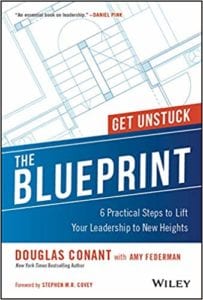
The Blueprint: 6 Practical Steps to Lift Your Leadership to New Heights
We have a lot of friends in common and share a publicist. You have this new wonderful book that I’m excited to have an early galley of called The Blueprint: 6 Practical Steps to Lift Your Leadership to New Heights. We’re going to do a deep dive, I’m sure people are going to want to get a copy of that. Before that, I would love to take us back to your own story of origin. Did you always know as a young person that you wanted to become a big leader in all these companies? You can go back as far as you want, childhood, high school or college, whatever you think that sparked the fire that became Doug Conant.
I grew up in a small town outside of Chicago, in the distant suburbs of Chicago. No, I did not have any grand plan. It turned out, I was an introverted kid. Surprisingly, I’m still a bit introverted. I took to the game of playing tennis where I could hit the ball against the wall by myself and not talk to anyone. I loved doing that for hours and hours. Ultimately, I became a good tennis player. I attended Northwestern University on a tennis scholarship that paid for my education. I stayed on to help coach at Northwestern and went straight through to graduate school. I got my MBA at Kellogg in 1975. I then went into the world of business.
A story about that, my advisor at the Kellogg’s school was the father of the marketing book of the twentieth century, Philip Kotler. He wrote Introduction to Marketing and he talked about the five Ps. He was the marketing godfather of a whole generation of leaders. I don’t know if you remember the scene from The Graduate with Dustin Hoffman, where he’s at a pool. He’s just graduated college and these older men are putting their arms around him and asking him what he’s going to do. This one fellow comes up, puts his arm around him and says, “I’ve got one word for you, plastics.” Dustin Hoffman looked at him rather quizzically and never went into the world of plastics. That scene always stuck with me.
[bctt tweet=”Get Rid Of Your Mask” username=”John_Livesay”]
Not knowing which way was up in my life at the time, I’m with professor Kotler. He metaphorically puts his arm around me and says, “Doug, I have two words for you, brand management.” That was the hot button in the last quarter of the last century. I followed his advice and I went into brand management. I was recruited up to General Mills, which was one of the three companies that were leading the way in terms of the practice of brand management. It’s a marketing discipline. It’s a way of marketing your brand to consumers through the consumer’s eyes, not through the manufacturer’s eyes. I went and did that.
I had my first performance review there, five months into my job. My boss wrote up my evaluation and his boss had to write one line that said I read the report and signed it. My boss’s boss one line was, “You should be looking for another job,” and then he signed his name. Meanwhile, I had moved up to Minneapolis, Minnesota, where I did not know a soul, from Chicago. I’m thinking, “My life is exploding and I haven’t even started it yet.” I persevered through that and that was healthy for me because I had a challenge and I rose through the challenge.
I went through there and ultimately transferred out to Boston, which was another risky move. They were the world’s largest toy manufacturer at the time, General Mills, and they owned Parker Brothers. I went out to work for Parker Brothers Choice and Games. I had a great run for three years. They spun the company off, one day, I went into work, the receptionist said, “Doug, the senior vice president would like to see you.” I went up to his office and he said, “Doug, your position has been eliminated. You need to be out of here by noon today.” Nine years of my career with General Mills was over in a snap. I went home to my wife, my two small children, and my one large mortgage, feeling every bit of the victim. That was the illustrious start to my career. I’ve been told that I should look for another job, and ultimately I was being fired.

Being An Effective Leader: Getting in touch with yourself is absolutely essential to every leader.
That alone, there’s so much to unpack and then we want to continue this story. I also grew up in the suburbs of Chicago. I grew up in Elk Grove Village outside of O’Hare Airport and we used to wave at the planes. I used to swim competitively and that is also an individual sport for the most part. You’re in the water by yourself, you might be part of the team but were doing your thing. Do you think you learned any leadership lessons subconsciously hitting that tennis ball over and over against the wall? Whether it be discipline or focus, any takeaways from that, now looking back?
I wrote a blog on life lessons learned from the game of tennis. I had a baker’s dozen life lessons and absolutely, I did learn a lot. First of all, I got more in touch with myself, which is essential for every leader. I learned how to compete, how to perform under pressure. Also, through tennis and in teaching tennis, I learned how to engage with people who were hungry to get some help. Tennis was foundational to the start of my life in business. Competitive sports help that, you have to move beyond it. It proved to be a great foundation. When I was working, I would see people, when we were starting our careers, wilting under the pressure because they were so anxious. I was more comfortable. I was still an introvert, not quite comfortable, but I was good enough to be able to hold my own under pressure. In the fullness of time, I became comfortable.
I talk about that all the time, people get butterflies in their stomach especially when they have to present in front of their peers. I tell people that the goal is not to get rid of the butterflies but to get them to fly in formation. You talked about the five Ps, one of them is not plastic, just for the readers. It’s price, packaging, promotion, and all that good stuff. You said something about your lessons learned at General Mills, which is important no matter what the industry is. That is, “Market through the consumer’s eyes and not the manufacturer’s eyes.” That I saw happening in the computer industry, in the dot-com boom. They would make some hardware then assume that somebody was going to figure out how to use it. If you start from the consumer’s perspective, that’s valuable. What was happening that made that boss write, “You should look for another job?” Was that a shock or did you anticipate that?
I came off the tennis tour. I had taken three months off. My first day of work at General Mills, I had a khaki suit, a yellow shirt, a big wide tie. I had something that most of your followers wouldn’t know, brown Earth shoes on. I had an afro, a full man shoe, and a tan line from where my headband had been. I went to work at a place where everybody was wearing white shirts and blue pinstripe suits. It was a rude awakening and I had never worked in an office before. I had a slow start and I worked hard. I was bright enough to do it, but I had to get acculturated. The first three months were tough, the next few months, I started to hit stride. My boss saw that, but his boss didn’t see beyond first impressions. His boss was not particularly sensitive to my situation. He didn’t care. He got my attention.
The other thing you and I share is I had a career at Condé Nast and got laid off after years back in 2008. You were at GM. I actually did a whole TEDx Talk on being a lifeguard of your own life. This concept of resilience, how do we bounce back when we get our identity so tied up with our career? I’m fascinated to let you continue the story of you coming home, you have this big mortgage and children to support. You’ve got to lick your wounds and not stay a victim.
What we covered triggers one more thought around looking at the world through the eyes of the consumer. That’s also how I believe you have to lead. Looking through the eyes of the people you’re leading. You have a clear sense of direction, and you have a sense of purpose. You have a philosophy about leadership, but you do have to look through the eyes of the people you’re leading because leaders need followers. You need to be viewing the world through the eyes of your followers so that you can adjust your leadership accordingly. The consumer marketing perspective has helped me with a leadership perspective. In terms of when I lost my job, the best thing that happened to me is that they sent me to an outplacement counselor that afternoon.
I called him and he answered the phone. “My name is Neil McKenna. How can I help?” Neil McKenna became a mentor in my life. That one day had the lowest moment in my career when I was fired, and one of the highlights of my career was meeting Neil McKenna on the same day. I’m old, this is before caller ID or cellphone. When I called Neil, every time he answered the phone, he would say, “Hello, this is Neil McKenna. How can I help?” You could have been the plumber and he would be saying that. What he did by just saying that is, it welcomed you in. He created a platform for conversation where he was listening to where you were coming from. I went over there and he guided me through an outplacement process which was difficult for an introvert.
He led me through a process that strongly influences the thinking in our book The Blueprint. He helped me get in touch with the real me. I was struggling just like most of us, there was the work me and me beyond work. They were two different people. I posted a small little piece from Warren Buffett on LinkedIn and Twitter. Basically, I said, “Get rid of the mask.” You need to be one with who you are personally and professionally. It needs to be one. I believe that and Neil helped me get to a place where I could show up authentically and also continue to grow and contribute in an increasing way, because authenticity alone, I find is not enough.
You need to know what you’re doing too. You need to keep growing into your leadership. You’re getting a little better tomorrow than you are today. With Neil’s help, I found that when you marry this notion of authenticity with the concept of growth, you can lift your leadership to new heights in a very practical way. That strongly influenced the book. The only other thing I’m just touching on Neil McKenna. Since I worked with Neil, I have brought a how I can help mentality to every day I go to work. Every time I’m at home, I’m at church it’s, how can I help? That’s the lens that I choose to look through life at, and it’s been life-changing for me.
In the introduction to The Blueprint book, you talk about the raw materials of change that are already within you. You quote Arthur Ashe, of course, the famous American tennis player, “Start where you are, use what you have, do what you can.” The irony for me reading that, Doug, was that I quote, Arthur Ashe in my keynotes about confidence. He is also known to say, “The key to success is confidence, and the key to confidence is preparation.” We both admire him and use his philosophy in different ways. Yours is about leadership. Mine is about selling. When I opened your book, and I saw that quote, I thought, “I am so excited to read this and so excited to interview you.” When you click with certain people, you don’t always know why. When you have all these signals, and that was one question I wanted to ask you. Did you notice similarities between Nabisco, Campbell Soup and Avon, that those skillsets that you could apply across all those different companies of what it takes in addition to this authenticity, and the power of can I help mindset?
First of all, Arthur Ashe, I was on his foundation, and I worked with his wife. He’s a member of what I call my entourage, people I carry with me, who even though they may not be with us, they are with me in spirit. Arthur is one of those people because he achieved excellence in my sport, but he also transcended that sport with his civility and his desire to be a social change agent. He showed that all things are possible. I strongly believe that as well. You can’t go wrong if you walk in Arthur Ashe’s shoes if only for a moment in time. The key I found, in terms of across all of my work experiences and we talked about three companies, but every day is a new adventure. With a new meeting, a new group, a new stakeholder, and different boards I was on. I found that the key to having an impact was being tuned in to the here and now with a clear sense of where we were trying to go long-term.
I’ve written about this need to be a leadership time traveler. We actually have to perform. To be effective leaders, we’ve got to be brilliant in three time zones at the same time. We have to remember and honor the past. We have to perform in the present in such a way that we don’t compromise the future. Every effective leader has got to be thinking three time zones, across everything they do. I thought Arthur did that, he was effective in the present, but he saw a need to do things better in the future. He championed that while saying, “The present isn’t good enough, but it’s where we are, and we can make it better tomorrow.” He kept putting one foot in front of the other in an inspiring way. That was true at Nabisco, at Campbell Soup Company, and at Avon.
The other thing I would say, which will connect to the book, you’ve got to be incredibly connected to who you are. Stuff is coming at you seventeen ways from Sunday. We all feel as if we’re trying to get a sip of water from the fire hydrant of life every day. Think of a fire hydrant cap coming off, and this water is just washing over you. That’s life in nowadays world. You don’t have time to think about, “How am I supposed to respond to this with my professional self?” You don’t have time to play the game. In my opinion, you have to be incredibly in tune with who you are. You have to be able to respond to these challenges authentically. Most people, I have found, are not in touch with who they are. They’re not in touch with their many gifts, they haven’t done the self-exploration required to be able to show up on demand in a way that’s highly authentic.
[bctt tweet=”Be A Leader That Time Travels” username=”John_Livesay”]
What I have found is one of the first steps to becoming a better leader is to envision where you want to go but then to reflect deeply on your life experiences and harvest those to show, “How do I want to walk in the world? What cues from my past have influenced me in my life?” I’ve talked about two of them. I’ve talked about Neil McKenna, and how can I help. We just talked about Arthur Ashe and do what you can with where you are. I carry those lessons with me personally. They resonate with me being who I am. It makes it much easier to show up with people because I know where I’m coming from. I’ve spent the time reflecting and getting in touch with the leader I want to be as opposed to trying to be the leader I think I’m supposed to be every minute of the day.

Being An Effective Leader: If the present isn’t good enough, you have to realize that that’s where you are, and you have to make it better tomorrow.
You have a boot camp every quarter on leadership where you talk about being authentic, which we’ve covered, as well as this integrated approach that lets you lead. You have something called the ConantLeadership Flywheel. Can you touch on that? Give us a little sample of what people would get if they took the boot camp and this Flywheel?
What’s cool about boot camp and the flywheel is tangential to that conversation, but I’ll connect it. With the boot camp, it takes about nine hours of pre-work to do this, you’ve got to invest time because I’m only with them for two days. We have a lot to cover. They do nine hours of pre-work reflecting on their past and drawing out highlights, trying to get in touch with their life story. They come and work with me. We try and pick that life story apart to a point where they can draw conclusions about, “Here’s the leader I would like to be based on all the positive life experiences I’ve had.” The grandfather listened to me when nobody else would. The outplacement counselor who said, “How can I help?” The good boss who said, “I’ve got your back.”
We harvest those lessons and we help them create their own leadership model. I believe in this concept of authenticity so powerfully that each one of us has our leadership philosophy, our own leadership model. In two days, we help them harvest all these learning, do a little studying and create their own leadership model. The one on the ConantLeadership Flywheel happens to be my model. It doesn’t work for a lot of people, but it works for me and that’s all that matters. I can go into any situation, looking at the world through that lens, which is my lens, diagnose any situation and come up with, “Here’s how I want to approach it.” In my case, I have eight components, three are at the heart of my model and that’ll be captured in The Blueprint. It’s not up on the website yet.
I have three core components. The first one is, honor people. The second ring is, inspire trust. The third ring is, clarify a higher purpose. Every time I go into an engagement anywhere, I’m focused on honoring people, building trust, and being clear about why I’m there. I then have five pieces that operate around those three rings. One starts by creating direction, getting organizational alignment, building vitality, executing with excellence, and producing extraordinary results. I can go into any leadership challenge, diagnose a situation, figure out where it fits on my model, and come up with a way to approach the challenge.
It gives people a roadmap, especially if they recently got promoted or they’re leading a different group of people than they’ve ever led before. Having this flywheel allows them to say, “What do I need to dial in here to respond to this new challenge?”
Yeah, but they don’t design their flywheel. I have a flywheel. I had a fellow who worked with me, who had a son who could do a Rubik’s Cube in under two minutes. He decided that his model was going to be a Rubik’s Cube, he was trying to solve a puzzle with every challenge. That cube has six sides and those six sides were the six things that he thought about when he was trying to lead. That’s how he managed it in a way that spoke to him in a special way. All my students have to send me a video of them presenting their model. They have to be able to present their model in two minutes so they can demonstrate that they’re fluent with it and get to the high points of it.
He sent me his video and in the lower part of the screen, he had his son doing the Rubik’s Cube. It was a bit distracting but it communicated clearly. Everybody has their own way of looking at this. I’ve had people who are gardeners. I’ve had some women who are gifted. Gifted gardeners who think about preparing the earth, trying to take care of the garden, pruning it back, making sure all the elements are coming in so the plants can flourish, taking care of the roots before they can get the fruits. Those models speak to them in a deep and personal way. The way we construct their models, they leverage all their life learnings so that those learnings support the language they’re using to talk about. All of a sudden, they have a story, and they have a metaphor for leadership that’s uniquely theirs.
One of my former boss, Nina Lawrence, she was a publisher at Condé Nast. She’s an avid gardener and is constantly posting pictures of getting the last fresh flowers of the season. She lives up in Connecticut. All of that, I had never thought of before, in terms of tending the team she managed and getting the most out of all of us like she got the most out of her garden. It’s fascinating to hear you mention that analogy.
It’s incredibly powerful in a busy world where you’re always on and you have to be able to respond in a way you can feel good about on-demand. The other piece of this is, it’s great that I have my leadership model, but that’s not good enough. The people I work with need to know where I’m coming from. They’re not mind readers. The reason I have these people do these two-minute videos is, we encourage them to find a way to share their philosophy with the people with whom they live and work. Everybody who works with me knows that I’m all about honoring people and inspiring trust because I’ve told them. You cannot assume they’re going to know. Most of us, as leaders, are assumptive.
We forget that these people have busier lives than we do. They’re not sitting waiting on the edge of their seat to read our minds, to know where we’re coming from as leaders. It’s our obligation to create clarity in the relationship and to tell them. I also have our folks invite the people they work with to tell them how they think. It’s not a one-way street. It’s a two-way street. All of a sudden, we have this higher understanding of where we’re each coming from, with more clarity around our leadership, we become more effective, more efficient. We’re able to act with integrity with everything we do because we’re doing what we said we’d do.
You talked about bringing courage down to earth in The Blueprint book. Using courage that we have to lead with integrity, authenticity, and a tough mind on standards, and yet with a tender heart towards people. My question is, how does someone toggle between the tough mind on standards and still being tender-hearted towards people?
I grew up a big Chicago Bears fan. I grew up in Glencoe. When I was growing up, George Halas was the coach of the Chicago Bears and Vince Lombardi was the coach of the Green Bay Packers. The predominant mindset was you’ve got to be tough. It wasn’t okay to be tender at all, I was never comfortable with that. I found I always connected better with people and was more effective when I was sensitive to where they were coming from. It just didn’t make any sense to be tough and intimidating all the time, especially knowing that I’d be polluting that relationship when I wasn’t in the room. I started this language about being tough-minded on standards and tender-hearted with people years ago. I found that the key to this whole thing is having what Stephen Covey, one of my mentors would say is an abundance mentality.
To be a leader, you do have to be tough-minded on standards and you need to be tender-hearted with people so they’ll engage in the journey with you. It’s not either/or, it’s both. Jim Collins, another friend used to say, “Doug, you’ve got to embrace the genius of the end, and you’ve got to reject the tyranny of the or.” I’m listening to this and it makes so much sense to me. As a leader, you don’t have a choice, you have to maintain high standards. I would also assert that if you want to be a leader that has an enduring impact with an organization, you don’t have a choice, you also have to be sensitive to the needs of people. I’ve spent a whole career doing both. It’s hard sometimes, but it’s what’s demanded.
You also talked about in the book, The Blueprint, the anatomy of leadership competence. There are three cues of competence. There’s intellectual, IQ, we all are familiar with that, and taking the test. Then there’s the big buzzword that’s been around for a while, emotional intelligence, which is all of this importance with your ability to show empathy and not just react. The one you talk about is FQ, which I’m less familiar with, which is functional intelligence. I would love you to describe it a little bit. If you wouldn’t mind, the second part of my question is, how did the IQ, EQ and FQ all work together?
First of all, if we go back to tough-minded on standards and tender-hearted with people, the IQ piece has to do with assessing a situation and looking at the cold, hard facts and processing information quickly and clearly, thinking through an issue. The emotional intelligence requires thoughtfulness but also feeling your way through the issue. That’s more of the tender-hearted with the people side of the equation. The third piece that we’re talking about, FQ, is something that I made up. I call it the functional quotient. You also have to know what you’re doing with your discipline.
If you wanted to be brilliant at a podcast, you have to have good IQ because you’ve got to process a lot of stuff quickly. You have to have good EQ because you have to connect with whoever you’re interviewing and your audience. You have to have good FQ, you have to know how to run a fine podcast. You need to know the discipline of a podcast. I was put in a sales role once, which was hilarious because I was an introvert and couldn’t play golf. I didn’t know the sales discipline well, but I had good IQ. I could think through things.
I had good EQ, I could feel my way through things. That’s enough initially, I have found to be able to go into any situation. Ultimately, if you’re in charge of discipline, whatever discipline it is, you have to be a student of that discipline in order to reach full proficiency. I found that FQ is essential if you want to start to contribute fully to whatever discipline you’re working in. It’s not good enough just to be a generalist, to be smart and to be feeling. You need to know what you’re talking about too, unlike our friends in Congress these days.

Being An Effective Leader: Every time you go into an engagement anywhere, you have to focus on honoring people, building trust, and being clear about why you’re there.
There are many ways people can interact with you. If you go to ConantLeadership.com, you can find the book, The Blueprint, so people can buy the book. They can also explore on the website whether the boot camp is something for their team. You’re a keynote speaker, you’re the only former Fortune 500 CEO who has a New York Times best-selling book, a Top 50 Leadership Innovator, and a Top 100 Leadership Speaker. As if that’s not enough, you’re also the Top 100 Most Influential Authors in the world. A lot of companies are bringing you in to talk to them on a variety of topics. The one that I resonate with is championing engagement to win in the workplace, that the soft stuff is the hard stuff. Doug, is there anything, one last thought you want to leave us with on any one or all three of those areas?
In nowadays world, I’ve been doing this a long time and it’s an old buzzword now, but the key to success is to create a high-engagement culture. I have found, if as a leader you get engaged in the lives of the people with whom you work, they will become engaged in the agenda of the enterprise. Quite frankly, it doesn’t work any other way. If you want them fully engaged, they’ve got to know you have their back and they’ve got to know you’re paying attention and that you care, but that you also have high standards. It’s not just, let’s hold hands and sing Kumbaya. They want to know they’re associated with an enterprise that has high standards, that performs but cares about its people, too. You can do that.
[bctt tweet=”Inspire Trust In Order To Lead” username=”John_Livesay”]
The key to success is to become well-anchored as a leader in who you want to be and how you want to show up. Commit to bringing more authenticity to the workplace, and commit to growing in your ability to contribute, and then contributing in ways that help the enterprise move forward. That is a winning proposition. I would say, each one of us, as individuals, owes it to ourselves and the people with whom we work, to be the best version of ourselves we can be. These people are counting on us. I treat this whole leadership conversation and leadership in total as a craft. We are walking on sacred ground, we are affecting people’s lives every day. We owe it to them to be the best version of ourselves. Everything in The Blueprint is leading us to a place where we can become the best versions of ourselves.
I’ll close on one last thought related to it is, what’s different about The Blueprint and my philosophy is, it’s anchored in the real world. I’m not someone who talks about leadership but has never led anything. It’s written by someone who’s been there and done that for over 40 years. Started out at the lowest level you could at an organization and worked his way up through a variety of trying circumstances. What I brought to it is a degree of pragmatism that the change process we talked about is actually designed to fit in the middle of your cockamamie life without changing a thing.
If you think about all the people that go on diets after the holidays, “I’m going to get my diet under control, and I’m going to lose twenty pounds.” About one month into it, they say, “I can’t sustain this, it doesn’t fit into my life.” We’ve taken that into account. This is the first process I know that has taken into account the crazy life we lead and is designed to help you become a leader in a way that fits in the middle of your cockamamie life. That’s what I’m most proud of. It’s a practitioner’s eye towards the evolution of you as a leader.
If you want to get unstuck and get a blueprint book that’s going to show you how to be the best version of yourself, this is a book for you. Thanks again, Doug.
Good luck to you.
Important Links
- The Blueprint: 6 Practical Steps to Lift Your Leadership to New Heights
- Boot camp – ConantLeadership
- ConantLeadership
- Introduction to Marketing
- Blog – 13 Life Lessons from the Game of Tennis
- ConantLeadership Flywheel
- Better Selling Through Storytelling Method Online Course
Wanna Host Your Own Podcast?
Click here to see how my friends at Podetize can help
Purchase John’s new book
John Livesay, The Pitch Whisperer
Share The Show
Did you enjoy the show? I’d love it if you subscribed today and left us a 5-star review!
- Click this link
- Click on the ‘Subscribe’ button below the artwork
- Go to the ‘Ratings and Reviews’ section
- Click on ‘Write a Review’
Love the show? Subscribe, rate, review, and share!
Join The Successful Pitch community today:
- JohnLivesay.com
- John Livesay Facebook
- John Livesay Twitter
- John Livesay LinkedIn
- John Livesay YouTube
Lingo – Discover Your Ideal Customer’s Secret Language With Jeffrey Shaw
Posted by John Livesay in podcast | 0 comments

Understanding your audience is at the core of creating a successful business in today’s fast-paced world. It’s become easier and easier for audiences to move on if they feel that a brand doesn’t really try to understand what they need. Jeffrey Shaw, the author of LINGO: Discover Your Ideal Customer’s Secret Language and Make Your Business Irresistible, joins John Livesay about this essential element of catering to your audience. Businesses can’t grow if they don’t find ways to keep up with their audience. Let Jeffrey take you through how you can best work towards creating a full-fledged understanding of what your audience wants from you.
—
Listen to the podcast here
Lingo – Discover Your Ideal Customer’s Secret Language With Jeffrey Shaw
Our guest is Jeffrey Shaw. One of the reasons I’m excited to have Jeffrey on the show is he’s going to help us figure out how to stop wasting time on customers that will never appreciate us. For more than three decades, Jeffrey’s been one of the most sought-after portrait photographers in the US. His portraits have appeared on The Oprah Show, People Magazine, and have been even seen at Harvard University. Jeffrey’s going to share with us about how to make your customers feel seen, heard and understood like a photographer sees their subject. When that happens, you’ll attract and retain your ideal customers by learning to speak their LINGO, which happens to be the name of his book. When he’s not hosting waffle Sundays at his home in Miami, then he is a Brand Consultant, the host of the Creative Warriors podcast and a TEDx speaker. His book is called LINGO: Discover Your Ideal Customer’s Secret Language and Make Your Business Irresistible. Welcome, Jeffrey.
John, I’m thrilled to be here with you.
You are a keynote speaker, photographer and author. There are many great things about you that the readers are going to love knowing about. Let’s start with your own story of origin. I’d like to know the story of how you became interested in becoming a photographer.
My original interest was it seemed like the ideal thing to do as a young kid that I’m afraid of the world. I was a shy child until my twenties. In my teen years, that seemed like the ideal hobby because there’s a thing. There’s this box between you and the world. Of course, back in the day, a lot of the activity involved a darkroom, which I loved because you could isolate yourself in the dark. The darkroom was my survival technique through high school. I was fortunate that my father enjoyed photography as a hobby. We had a darkroom in the house, so that introduced me initially to the chemistry. Up to this day, I’d love to bake and I love to landscape. A common denominator with all these things that I am passionate about is the chemical interaction between art and science. That’s the root of the passion. That’s something I picked up as a teen and have been doing ever since.

Understanding Your Audience: You have to believe there’s an audience of people out there who will value what you do. It’s your job to find them.
An interesting hook that I wasn’t anticipating as part of your answer is the chemistry, this whole combination of a catalyst that triggers the reaction. I vividly remember that in school and being fascinated by something being a catalyst. Of course, in the business world, whether you have chemistry or not with your team or with your customers, it’s that vibe of, “Does something click or not?” In the dating world, I remember reading that when you kiss somebody, you’re smelling them. The chemistry between two people in a romantic situation has to do with pheromones and there is actual science to it. Let’s talk about chemistry as far as what you’ve learned being a portrait photographer and how important it is to have chemistry with the people you’re photographing.
It’s such an intimate experience photographing. On my job, I did all portraits on location. I was going to their homes, beach or second homes. Most of my clients have multiple homes. It’s such an intimate experience, not just being photographed, but also gaining the trust of our customers in a way of having them open up their lives and their homes to prepare for a portrait session. It’s almost more intimate than the actual act of being photographed because people are going to ask you, “What do you think I look best in? How do you think I should dress?” People are opening themselves up in a vulnerable way asking for your input into what’s going to bring out the best in them. I always appreciated that. I loved being a photographer.
There were things that I loved about it, but at the end of the day, the camera was my vehicle to have amazing relationships with people. I have found that to be a common denominator for one amongst successful photographers, we used to call it the dirty little secret in the industry, which is those of us that were the most successful in the industry tended to see what we did as a vehicle for something bigger. It wasn’t that we were photography nuts. We weren’t the people that were going to conferences with cameras on our neck. We were the ones that were there to allow the people we are interacting with to help us grow and be bigger at what we were doing. At the end of the day, the camera was just a vehicle. I find that to be true of some of our most purpose-driven entrepreneurs.
[bctt tweet=”You need to speak the same lingo as your customers in order to be successful.” username=”John_Livesay”]
How did you go from having a special place in your home to develop photography, to becoming known for getting relatively successful, even sometimes famous people to agree to hire you? There are some lessons here in a landscape full of photographers and especially now, everyone thinks they’re a photographer because of the iPhones. What did you do to get yourself to stand out as a place where people can trust your taste level and take the best picture of them?
I grew up in a small country town. It’s a couple of hours in North of New York City in New York State. I grew up lower to the middle class. That’s the reality of it. I had no expectations. I would ultimately be a family photographer for the most affluent families in my country. What changed everything for me was going back to my hometown after I went to a photography school. Quite honestly, I went to photography school because I had no guidance from my parents. Some people have helicopter parents. I had parents that forgot that I lived at home from the age of fourteen and on. I was the youngest, which is okay. I was the youngest of three boys and I was easy. I was the kid that nobody ever had to worry about. I never got in trouble. I was quiet.
I was left on my own and I didn’t have any guidance. University College wasn’t something I thought about. I went off to photography school. It was during that one year, I gained the confidence that this is potentially a career, although I couldn’t imagine what it could be. I returned to my hometown and that was the pivotal moment. I went back to this hometown with big aspirations, not that I was going to be super successful, but big aspirations that I felt being a photographer was important. Therefore, I commanded what I felt was a high price, certainly for that area.
The problem was three years in, it was a complete failure. I go through all the things like, “Am I not good enough?” My biggest fear was this is all I knew. I’ve been into this business for years and the only education I have is being a photographer. The real reason it wasn’t working is why I wrote my book LINGO. The turning point moment when I realized that the reason my business wasn’t working is I was not speaking the same lingo of the people that I was trying to serve. It was such a big division. The reason photography is valuable and important is because it’s something we hand down from generation to generation.
Being the youngest of three boys to this day, I have found one photograph of my childhood. I know that it emotionally drove me to feel it was important to have the moments of our lives preserved. These are the ideas I was promoting to these potential clients in my hometown that they should invest in photographs to hand down from generation to generation. They should invest in preserving their children’s memories. The problem was this is a community that’s struggling to get by a month every month, so investing isn’t part of their lingo. Responsibility for their children’s future is not part of their lingo. That was when I realized why I was failing.
It sounds like you were a little too high up on the Maslow hierarchy about self-actualization and legacy for someone who was still at the bottom rung of getting basic needs met.
I don’t know if you feel this way, but sometimes I wonder, “How does that happen?” This is where I was born into the world in that place to this family. To your point, I came into the world at a higher level of that pyramid. I had a completely different value system than my family because they said it was a lower-middle-class economic scale. Why did I have such value? I don’t know and I find that compelling and interesting, but I find that to be true because I work with creatives. I’ve taken surveys and I’ve asked people, “How many amongst us feel like we were the black sheep of our family?” Every hand goes up.
Surely, these cannot be my parents. It must have been some mistake at the hospital.
We prayed to find out that we were adopted, but to me that is a universal truth. The world needs that because we need people born into those situations to take everyone to the next level.
In LINGO, you talked about that your understanding of the affluent market came from watching Bing Crosby’s Christmas specials, so you weren’t in-sync. Did you change your language to the people in your town? Did you move to a town that cared about legacy and investing?
At the moment that my business was failing, I realized that it was the big question. Do I change everything about who I am, what I value and believe in to adapt to the market or do I fundamentally believe? I almost had no reason to believe this except in my absolute soul of soul and my gut. There’s an audience of people out there that will value what I do. They’re already out there and it’s my job to find them. The most tweeted moment on any of my keynotes is when I put up a slide that says, “It is not your job to prove your value to anyone. It is your job to find the people who already value what you do.” That shifts everything from a world of selling and convincing to taking on the higher-level responsibility of marketing and branding so that we put ourselves out in the world.
Also, the way that the people that we’re meant to serve to see us. That’s what I chose to do. I chose to say, “Instead of changing who I was, there must be people whose values were aligned with mine.” Ultimately, I realized that in order for their values to be aligned with mine, they had to have discretionary income. That’s how I led my way into the affluent market. Believe me, I had no experience or knowledge of what it meant to be affluent at that point in my life, but their value system was more closely related to mine. If you have the money, you can plan for the future. You invest. It’s part of your lingo.
Let’s talk about one of the stories that you shared with me about one of your clients, Stephanie Seymour, and why she wanted to have you photograph her family.
She’s definitely one of my most treasured clients and experience. Stephanie Seymour was one of the original supermodels with Christie Brinkley and Cindy Crawford. There’s even a portrait of them altogether. They were the models that even coined the term supermodel when models became a household name. She was Victoria’s Secret’s first breakout model. Everybody back in the ‘80s knew who she was. She was a recognizable and absolutely beautiful woman and inside as well. What most people don’t realize, she went on to have four kids in her life. She would hire me annually for many years to photograph her family.

Understanding Your Audience: Businesses that take the time to get the audience they want to reach will achieve their goals.
She’s been photographed by the world’s most famous photographers in the world. To have someone like you instead of Bruce Weber, Richard Avedon or whoever she’d been photographed by, is a huge deal. It completely ties into, “You spoke her lingo.”
I would walk into her bedroom helping her choose what to wear and there’s a nude portrait of herself by Richard Avedon in the bedroom and she’s hiring me. I asked her once, “Why me?” She said, “You have a way of seeing my family.” I had a way of seeing herself as a mom that these other photographers didn’t. Think about your experience as a well-known model. You must’ve come to wonder if anybody sees you for who you are because everybody’s just seeing the exterior. That was the difference. She was used to having been a model from her teen years. She was used to being seen for what the world saw on the outside. I saw something more. I saw a mom of four kids. I saw the relationship between her and her kids. I saw the relationship between the siblings and her husband. I saw all the relationships and I captured them. That’s why she felt that I saw her in a way that no other photographer had. That’s what she wanted to be portrayed in her family, photographs that she would share with her family and friends.
[bctt tweet=”You need to stand out to the right people.” username=”John_Livesay”]
What makes you special? What makes you picked to be the portrait photographer when people at her level have a lot of other relationships and choices? The takeaway here is that you have a way of seeing her that others don’t. As an entrepreneur, people hire you to come in to help them be better at attracting their ideal customers or clients. How are those lessons from a portrait photographer of helping people feel seen transferable to the entrepreneurial world? How does that lead to people hiring you as a speaker?
I love this part of the conversation because honestly, I’ve been spending years trying to unpack that. Sometimes, we don’t see the through-line where we come from and how it serves us today. For me, there are many layers to it. One is as a photographer, I’m used to not only seeing people and making them feel seen, but I’m also helping them see something in themselves. When you see someone gained confidence, it’s usually that they’re finding something in themselves that they didn’t see before. If I could be the facilitator of that, that’s an amazing thing. That applies as a photographer, brand consultant and speaker. As a speaker, there’s hardly anything more satisfying than seeing attendees of an audience in front of you get something you’re saying. You can see the visceral change in their expression and it’s more than just a nod of the head. You know when you’ve helped them see something in themselves that they didn’t see before.
Tell us about one of your ideal audiences where they had that a-ha moment that you’re referring to.
My ideal audience is a combination. My heart will always be with entrepreneurs because I love the entrepreneurial journey and how much heart entrepreneurs put into their businesses. At this stage of my career in business development and branding, I’m excited about working with companies and leaders because I like to see them have that same reaction. I’m beginning to see these walls being broken down between the whole B2B and the B2C world. I don’t even get it anymore. I’m embedded as an entrepreneur and has been a B2C type of business. What I’m seeing is the B2B world opening up to learning the entrepreneurial spirit and mind. Somehow, B2B has thought they are different. With the leaders that I speak in front of and I do workshops with, I’m seeing their eyes opening up to realizing that they’re B2B customers are just like B2C because, at the end of the day, we’re all humans.
Instead of thinking it’s all artificial intelligence talking to artificial intelligence. Jeffery, you have this wonderful coffee creamer story as part of your keynotes. It ties into making someone feel seen. Can you share a little bit about that story with us?
I love that you relate so much of your work to dating because I’ve always found that to be a useful tool as well. I was on a date and I observed that he took cream in his coffee and I drink my coffee black. At a later date, we had a casual diner. The waitress brought over the metal creamer and set it down in the middle, but almost a little bit more towards me. I immediately slid the creamer across the table and it was much an expression of, “This is for you,” because I had already observed that he took the cream and I did not. It was such an interesting reaction as his eyes were watching the motion of the creamer, but then he looked up with this look in his eyes like, “You get me.” It was the smallest gesture, but those are the ones that are always the most meaningful.
That’s what happens. We take that behavior into the business world where if you are having trouble standing out against a sea of competitors, the one that people are going to use and more importantly, stay loyal to are people who feel like, “You get us. That brand gets me. Therefore, I’m staying loyal to that brand,” whether it’s a hotel, a particular department store or whatever product or service you might be using. You have so many choices of stories to go to, whether it’s the Venice water taxi or Bergdorf Goodman. Tell us one of those, if you would.
Making your customers feel like you get them is the differentiator today. It’s only going to become more so because, with today’s technology-driven way of doing business, we’re often going to feel more distant. With my own concerns about businesses and how they use technology, which can be an incredibly useful tool, but the question I like to pose businesses is, “Using technology, will you make your customers feel like one in a million or one of a million?” The choice is yours and it’s going to make a difference as to whether you succeed or not.
Hopefully, it’ll only be the businesses that make their customers feel like one in a million that succeed. To understand the lingo of your ideal customers is to understand not just their values, behavior, and lifestyle, but these intimate ways in which they function. At the end of the day, if I looked at all my affluent clients, my photography clients, there are certain traits. We don’t want to judge people, stereotype people or put people in big buckets. However, there are certain behaviors that one can attribute to certain places of how they see themselves in the world.
Most affluent people are particular and detailed. They’re surrounded by a lot of staff and supportive people that can help them live their lives in a certain way. What I realized is that at the end of the day, the thing that was most important to them was being responsible because if you have money, money’s not an excuse. They can’t put two of their kids to Ivy League schools and the third one to community college. They can’t answer that. They can’t address that. I realized that their main lingo was the lingo of responsibility. Everything I did in my business spoke to the lingo of responsibility.
For example, one thing we did is we would produce these beautiful high-end holiday greeting cards. We’re talking about cards that were $10 apiece, and these are clients that are sending out 600, 700 or 1,000 of these cards. Big investment in holiday cards and my photographs would be on the front. Back in the old days, there were photographs mounted on the front and then when digital printing came along, the photographs were printed on the outside and maybe multiple photographs on the inside, all custom done. The smallest detail like the creamer of coffee would include in the box of cards and a pen that was a soft calligraphy nib, which the ink of the pen was as close as we could get to the recolor of the return address ink on the back of the envelope.
What I know of their lingo is that perfection is a big part of it and there’s no way they’re going to address or have someone else address the envelopes in black ink if the return addresses red, blue or green, which doesn’t match. We would give them that pen, it was a $2.50 pen and their faces, especially the first time they experienced it, would light up because of the amount of attention to detail. What I knew I was doing is helpful. I was saving them time from having to run around town to find that pen that I know that would be important to them. More than anything, it was the saving of time that I gave them. It was way more valuable than the pen. It saved them time and that meant the world to them.
Let’s share the story about the Venice water taxi because when you speak to someone’s lingo, that causes you to stand out.
At the time, it was funny how it stood out to me as an event in my life, but I wasn’t doing what I do in branding. It didn’t have the correlation, but it was one of those life moments that stood out. I was in Venice with my three kids and my kids were young at the time. It was our first European trip as a single dad and it was a big undertaking. I’m alone with three kids going to Europe and I don’t speak Italian, but this was the country you wanted to go to. We’re in Venice and we’re cruising down the Grand Canal in a crowded water taxi. If you’ve ever been in that experience, they’re packed and not all Europeans believe in deodorant.
[bctt tweet=”It’s your job to find the people who already value what you do.” username=”John_Livesay”]
It’s an intense environment and everyone around us is speaking Italian, which to my American ears sounds like white noise, a buzz. All of a sudden, someone on the taxi spoke English and my head whipped around. We made eye contact with that person with a smile. John, to this day, I would swear that the person’s voice was louder than everyone else. It was crystal clear to my English-speaking ears and I realized this is often how I even demonstrate what it means to speak someone’s lingo in the world. Because that person spoke my lingo, my native language, they stood out crystal clear. In today’s business world, standing out is not enough. We’ve been hearing that as an objective because we can stand out as being louder.
We can stand out by being dramatically different, but what’s the point of standing out if you haven’t taken the time to make sure it’s standing out to the right people and your ideal customers? That person could have stood out by speaking Italian louder, but they spoke out to me because they spoke my lingo. That is what makes lingo the most important strategy today because it’s a big world full of a lot of noise and a lot of messaging. Businesses will experience exponential growth in their businesses if they know who their ideal customers are. Who they’re meant to serve, who will love what they have to offer and learn to speak their lingo. That’s what cuts through the noise and raises a louder volume.
You have a lot of different keynote topics and I want to touch on a little bit on two. One is Life is an Everything Bagel: How to stop choosing between things and choose to have everything. What does this concept of having it all versus failure mean? Give us a little snapshot of who would want to hear that and one of the takeaways.
It’s a fun keynote for me. I was originally hired to give that keynote by an organization that wanted me to do to be the closing keynote. What they were looking for was how to inspire an audience to take action on what they had learned. I’d love it as both an opening and closing keynote because it’s one of the humorous because life is an everything bagel. The reason I use everything bagel as the metaphor is I envisioned what it must have been like when someone was in a kitchen and decided they didn’t want to choose between poppy seed, sesame seeds, raisins, garlic, and onion instead of saying, “I’m going to put everything in me in the batter.”
The creation of this talk came from when I was moving from New York to Miami because I was going through such trauma about not being a New Yorker and I realized, “Why do I feel like I’m being forced to choose? Why can’t I have everything? Why can’t I still be in New York or living in Miami? Why can’t I consider New York home and visit it often?” I don’t love how I tested this theory. I went to a burger joint once, a casual burger place like a lot of burger places, they had an endless number of different kinds of fries.
The waitress came over and I ordered my cheeseburger and she said, “What fries would you like with that?” I said, “What kinds do you have?” She said, “We have waffle fries, steak fries, curly fries, spicy fries, regular fries and sweet potato fries.” I said to her, “I’d like a little bit of all of them.” She goes, “You can’t do that.” I said, “I’m not asking for more fries. I just want a sampling of each of them.” She nervously responds like, “No, you can’t do that.” I was like, “Ask the chef. Maybe it’s possible. I bet you can do it.”
I wanted to pump her up a little bit. I wanted her to get this philosophy in life like, “Why am I being forced to choose? Why can’t I have everything?” Sure enough, a little while later, she came back and she was grinning from ear to ear giving me this burger with a little bit of a sample of all the fries. Let’s face it. They’re all premade. That is what this talk is about. It’s about learning to realize that in this black and white world, constantly forcing us to make a choice between things, when we stopped choosing between things is when we choose everything.
That’s important in business because many entrepreneurs have this experience as a roller coaster that we’re on. Often, the root of that roller coaster is because they’re unknowingly deciding, “Right now, I’m choosing to put all my attention and money towards my business. I’m neglecting my personal life and then I’m going to put all my attention towards my personal life, but my business is taking a slide. I’m putting all my attention towards the volume and not the price of services. I’m going to put all my attention to the price of services.” This is the route of why we experience this roller coaster and my philosophy is, “Why not choose to have everything instead of limiting your own thoughts?”
We understand now that speaking the right lingo is going to attract the right people and to help us stand out, but you have another keynote about how to attract and retain dream employees, not just customers and clients. That’s such a challenge for a lot of companies, especially the Millennials and younger. What is it that someone can do to speak the lingo of a Millennial versus someone else?
One of the key lessons in businesses today is about pivoting, but there’s a deeper level to pivoting. It’s paying attention to what needs you. When I wrote LINGO as a branding strategy, I joke about it in my HR keynotes that I have never had a job and I’ve never received a paycheck. Here I am speaking to HR, but I’m bringing this branding perspective into HR, which they desperately need. Every generation has had its differences and has misunderstood the generation following them. Honestly, I don’t know that there’s ever been such a dissonance between the generation that is typically doing the hiring and the generation of today’s workforce, which are the Millennials.
There are such huge misperceptions of Millennials and I have to have three of them as well. I’m a little more sensitive to this. It’s a key problem in HR because they’re not speaking of lingo. I’ll give you one example and it’s the recruiting process. Many companies recruit in such an old-fashioned way. It’s a lack of communication and this formal interview process. Even if a candidate gets in front of HR, there’s a lack of communication. There’s this old style of doing it. I go into companies and I refer to it as creating a frictionless recruiting process because the generation you’re speaking to, their lingo is frictionless.
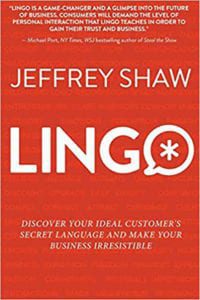
LINGO: Discover Your Ideal Customer’s Secret Language and Make Your Business Irresistible
We turn to Uber and Lyft, and the whole business model of technology is to create a frictionless experience. HR is like the fax machines of business practices and it’s a big problem in HR. If they want to get their dream employees, they need to develop the process itself to be more frictionless or more technology-driven. If they want the dream employees of today’s workforce, they need to think like them. They need to speak their lingo.
The takeaway I have is if you’re trying to target a tech Millennial and your application process, your whole interaction with them is a pleasant user experience as they call it in the tech world. It’s seamless and there’s not a lot of bumps. It’s easy to use and it’s intuitive. They think, “They’re speaking my language. They want me to do this, but they already arrived. I’m going to come here. These people already understand the importance of what is important and therefore, I’m intrigued to possibly pick them versus another company trying to woo me.”
You will stand out competitively. If you were that candidate or potential employee, wouldn’t that also mean to you what the experience of working for that company was likely to be like?
I was speaking at a Coca-Cola Summit for CMOs who carry Coke instead of the other brand. One of them was the CMO of Domino’s Pizza and I said to him, “What’s your biggest marketing challenge?” He said, “Attracting tech people.” I said, “Really?” He said, “Yes. We’re competing against a lot of other tech companies because we’re promoting this app that tracks your pizza from the time you ordered it online, how fast it’s getting there and who’s doing it. We used to say we’re a pizza company that uses tech to try to attract this top tech talent. Now we say we’re an eCommerce company that happens to sell pizza.” I thought, “You’re speaking their language because eCommerce company happens to sell insert books. It sounds a lot like Amazon, but you’re just inserting pizza.” That’s another example of what you’re talking about speaking the right lingo to recruit the right people.
I’m working with a company that layout offices. They get the furniture and they design it. It’s an integrated system that they offer and they’re big on what they refer to as resimercial design, which is this blend between residential and commercial design. In redoing their branding where you’re leveraging that as one of the key distinguishable properties that they want to promote to potential customers as to how they can attract their ideal employees. Many companies are having a problem attracting a good workforce. Designing their offices in resimercial styles are attractive to today’s workforce because it’s a cooler atmosphere. I even dig deeper and I was like, “There’s also an added psychological benefit here. In all our lives, the lines are blurred between work and in our personal lives. There are almost no lines.” Therefore, in the workplace when you soften those lines, it’ll feel like that. You increased productivity because it’s not like you’re going to take the hour and go down to the cafeteria. You’re going to sit in a café and keep working while you’re having your sandwich.
At least have a casual conversation with people you work with and collaborate on brainstorming ideas in a new space. I’m a big believer in that as well. Any last thoughts or a quote you want to leave us with?
Philosophically, I believe that businesses, whether they’re businesses seeking their ideal customers or their dream employees, those that take the time to get the audience, get them. They get the audience they want to reach and achieve their goals. Companies that are willing to get their customers will get better customers and companies that are willing to get today’s workforce will get their dream employees. It starts with having a willingness to understand the lingo of the people that you want to attract. I look at lingo as the evolution beyond buyer personas and avatars, which at best scratches the surface. It’s an attempt. Buyer personas and avatars is an attempt to understand that you have to go further than that today because all the companies that are producing buyer personas and avatars are all going to compete with one another. If you want to stand out, go beyond the buyer persona and avatar and find out what emotionally moves the audience that you’re trying to attract.
People can find you if they want to hire you and have a conversation about having you as a speaker at JeffreyShaw.com. Jeffrey, thanks for being such a great guest and sharing your secrets on lingo.
John, thank you for having me. I appreciate it.
Important Links
- LINGO: Discover Your Ideal Customer’s Secret Language and Make Your Business Irresistible
- Creative Warriors
- JeffreyShaw.com
- Better Selling Through Storytelling Method Online Course
Wanna Host Your Own Podcast?
Click here to see how my friends at Podetize can help
Purchase John’s new book
John Livesay, The Pitch Whisperer
Share The Show
Did you enjoy the show? I’d love it if you subscribed today and left us a 5-star review!
- Click this link
- Click on the ‘Subscribe’ button below the artwork
- Go to the ‘Ratings and Reviews’ section
- Click on ‘Write a Review’
Love the show? Subscribe, rate, review, and share!
Join The Successful Pitch community today:
- JohnLivesay.com
- John Livesay Facebook
- John Livesay Twitter
- John Livesay LinkedIn
- John Livesay YouTube
Humor That Works: The Value Of Humor In The Workplace With Andrew Tarvin
Posted by John Livesay in podcast | 0 comments

How do you manage the stress of working 90,000 hours in a lifetime? In this episode, Pitch Whisperer, John Livesay, shares more than a few laughs with Humor That Works author, Humor Engineer, speaker, and facilitator, Andrew Tarvin. Andrew reveals how being forced to join an improv comedy group started it all. He teaches us the value of humor in the workplace to increase satisfaction, engagement, and manage stress. Andrew also lets you in on the secret of humor MAP, how you can be a humor curator, and how you can communicate in a way that people will listen and respond to, and have fun with at work.
—
Listen to the podcast here
Humor That Works: The Value Of Humor In The Workplace With Andrew Tarvin
Our guest is Drew Tarvin who is the world’s first humor engineer, teaching people how to get better results while having more fun. As a speaker, he’s delivered more than 500 talks in front of 35,000 plus people with organizations like Procter & Gamble, GE, Microsoft, PepsiCo, and many others. As an author, he’s written three bestselling books, including Humor That Works: The Missing Skill for Success and Happiness at Work. He is also the primary contributor to the Humor That Works blog and has written more than 400 posts on business topics such as humor, leadership and decision-making garnering over one million page views every year. As a thought leader, Drew has been featured in The Wall Street Journal and Forbes best company and had been a guest for more than 40 podcasts. He has a social reach of more than 25,000 followers. The most impressive to me is his TEDx Talk that has been viewed over four million times. Drew, welcome to the show.
Thank you for having me.
[bctt tweet=”Get a humor habit-one smile per hour. ” username=”John_Livesay”]
Would you take us back to your childhood? Were you always somebody who is funny or were you more the engineer?
I’ve always been an engineer. I was born in engineers to the standpoint that I was born three weeks early. Even in the womb, I was ready for efficiency. I was like, “We don’t need a full nine months. We can go right now.” I went to my high school reunion not too long ago and people found out that I did comedy and I talked about humor. They’re like, “You’re not funny.” I was not the life of the party or the class clown. In my senior year, in my Senior Superlatives, I was voted the teacher’s pet. I’m much more engineering-minded, academic-minded and socially awkward a little bit. It wasn’t until college that I discovered improv and stand-up.
I’ve seen some of your improvs. It’s hilarious and it’s funny. How did you marry the two? You talk about dating a lot in your improv that I saw.
I talk about all the topics. When you do improv and stand-up a little bit more, you start to develop a persona or a point of view. I’ve realized that my point of view is an engineer’s point of view on the world. Not only think of things like productivity and communication but also things like dating or emotions. For me, as an engineer, emotions are just data, which I have learned is the wrong thing to say when someone is crying. You find that perspective and persona. I went to Ohio State University and got a degree in computer science and engineering. While I was there, my best friend wanted to start an improv comedy group. He needed people and forced me to join. That started my journey of improvisation.
A year later, a bunch of us in the improv group started doing stand-up comedy as well. That began the journey of learning about humor. What was interesting to me is by the time I graduated, I was working at Procter & Gamble as an IT project manager. I was drawing a lot from what I learned from improv and stand-up as a way to be more effective in the workplace. I was communicating in a way that people listen and I was sending emails that people read and responded to. I had fun in my own work. That’s where that discovery started to happen a little bit.
What motivated you to write your book?
People ask me, “How long did it take you to write the Humor That Works?” In some ways, it’s like, “About six months of sitting down and writing,” but the real answer is about ten years. I have been filling in the corporate humor space for the last several years while I was still working at P&G. It was really to say, “How can we provide one cohesive guide for the people that are out there that are like, ‘I do want to enjoy my work a little bit more. I am interested in getting a little bit better results. I want to look forward to going into the workplace or going into this meeting of this pitch that I have. I want to be excited about it instead of dreading it.’” I wanted to create a resource for people to be able to do that.
[bctt tweet=”Be a humor curator versus a humor creator. ” username=”John_Livesay”]
You talk about in your book, Humor That Works, that there are three ways that humor helps. The first one is it helps us beat stress. Can you talk about that?
There are 30 benefits backed by research case studies and real-world examples in terms of how humor helps in the workplace. One of the primary ones is beating stress. As I’m sure many of your readers know and you know that stress by itself isn’t a bad thing. The stress of a pitch coming up or the stress of a meeting that you have with a client that you’ve been working with or the stress of additional roles overall improves your capacity. It forces you to get better as a presenter, as a speaker and as an employee. You’re getting more efficient and all of that. Stress by itself isn’t a bad thing. It’s how we grow. Chronic stress, when we don’t relieve that stress, that’s when we see an increase in muscle tension and blood pressure and a decrease in the immune system, all the negative effects of stress.
It’s much like when you’re working out. When you grow, it’s not when you’re working out, it’s when you rest. It’s when you refuel and recharge your body and that’s something that we don’t do as well when it comes to our work capacity stress. Humor is a great way to relieve stress and all the negative effects of stress. If you start laughing or if you’re smiling and you have the release of endorphins that comes with appreciating humor, you see an increase in blood flow and an increase in the immune system. You see a decrease in blood pressure and muscle tension. Laughter and humor can be a great counterbalance to the stress that we deal with every day.
They’ve done the research that can even help people heal who are dealing with illnesses in the hospital and stuff watching comedies and things like that. You talk about how humor can help engage employees and it unites us in a way. What if the person who’s managing a team says, “I would love to be funny with my team. I’d love to use humor to beat some stress, but I am not funny or I can’t tell a joke to save my life.” How can you help them with your book and your talks?
It’s a great question because a lot of people have this worry. A lot of people think that the ability to use humor is innate. That it’s something that you’re born and able to do. The reality is that it’s much more of a skill. It’s much more of cooking where you grew up in a household where one of your parents cook and you learn from there, you picked it up. You might feel like you have a little bit of natural talent. There are certainly some things that come into play, but you probably got better over time. If you’re like me and you start cooking a little bit later in life, which I’m still not good at, I can at least follow a recipe. I can follow a guideline and I do get better over time. I’m an engineer, so when you’re like, “Add a pinch of salt,” I’m like, “How much is a pinch?” I don’t want to just wing it. I need to know.
Humor is a similar skill that can be learned. It’s something that you can learn some of the general techniques and improve. What we say in our programs is that we can make anyone funnier, not necessarily across the board funny where you’re going to get a Netflix comedy special as soon as you’re done with a workshop. We can take you from wherever you are and improve. That improvement comes from a couple of key things. Maybe one of the most important things for people to recognize listening is to use humor effectively in the workplace. You don’t have to be a humor creator, instead, you can be a humor curator. You can find interesting humor that you like.
If there’s a Ted Talk that you like, you want to share that out. If there is an image that you come across online that you find funny or a gift that you want to respond to in a text, you can share those things. You didn’t have to be the one that created it, but instead, you can curate it and put it into a context that makes sense. Not only does it make people laugh, but it also gets a result that you’re going for. It makes people pay attention because you have an interesting image at the beginning of your presentation that makes people laugh and draws them in a little bit more.
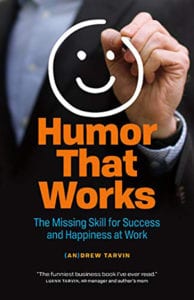
Humor That Works: The Missing Skill for Success and Happiness at Work
I like that because it takes off some of the unknown fear of, “Is this going to land?” If it’s somebody else’s content that’s been proven time and again, a cartoon or whatever it is from the New Yorker, odds are it’s going to get a smile. We’re going to tweak that out as a quote from you, “Be a humor curator, not a humor creator.”
That’s a great starting point for other people or after you get more comfortable with that, you might move to like, “I do want to create some. I want to tell my own story. I want to come up with an image myself.” Do you want to craft a joke? Those are all things that you can learn as well and it takes a little bit of time. It takes practice like any skill but it is something that people can learn for sure.
Besides being a humor curator, is there something else that you were going to give as a tip for getting people funnier?
One key is recognizing, “I can be a humor curator. The other thing to recognize is that the goal of using humor in the workplace is not to be funnier. It’s not to be funny and it’s not to be seen as the class clown or to get people to be like, “You’re hilarious. You should do stand-up comedy.” The goal is to be more effective and to get better results. When you look at the broader definition of humor, it is defined as a comic, absurd or incongruous quality causing amusement. One of the keys is to think less about, “How do I be as funny as possible?” and more about, “How do I make things a little bit more fun?” It goes back to that point that you said that humor can be helpful to engage a team or engage an audience. I’ll ask you a dumb question, but I still want an answer to this dumb question. The dumb question is, “Would you rather do something that is fun or not fun?”
Fun, please.
It’s a dumb question, but that stands to reason that if you were to make your pitch a little bit more fun, do you think people are more likely to pay? If you were to make your own work a little bit more fun, would you be more likely to stay engaged with it longer? If you were to make your commute even a little bit more fun, would you be a little bit less stressed about it happening?
Is there an easy step that someone can make to make something more fun like a commute or just a presentation?
That brings us to the third big tip that helps people. It’s understanding what we call a humor map. Your humor map stands for your medium, your audience and your purpose. Your medium is, “How are you going to execute the humor?” Is it to yourself sitting in a car? Is it to a potential client in a pitch meeting? Who is the audience? Is it just yourself? Is it people that you’ve worked with for years? Is it members on your team that you’re trying to engage more? The final piece is your purpose and this is the most important one. Why do you want to use humor? It’s not about just to be seen as funny. This is why some people were like, “Didn’t Michael Scott in The Office try to use a lot of humor and wasn’t even more of a client?” It’s like, “His reason for using humor was more about seeking validation,” which is not a great reason.” Your reason might be, “I want to use humor. Maybe I’m going to start this presentation with a story that has some humorous moments to it. Not only do I get people paying attention because it’s not a boring presentation, but rather get them interested in the story and that story sets up the thesis of what I’m going to talk about.”
[bctt tweet=”Keep a humor diary creator. ” username=”John_Livesay”]
What you said that I love is that humor is a skill like cooking because often, I give talks on how to be a better storyteller. People often say to me that I’m not a good storyteller and I said, “It’s a skill you can learn.” I want to get into your expertise as a keynote speaker because a lot of people think, “If I had to give a talk, I have to open up with something funny or show a funny cartoon.” I was giving a talk and I was more concerned with telling a story. I was running that story by a friend and I said something that made the friend laugh. I wasn’t consciously trying to be funny. I was just being myself and I thought, “I wonder if I said that in front of a crowd if it would work,” and it did.
Let me tell you what I said and you, as the humor expert, might be able to say why that works. I was opening the talk and I said, “The first thing I do every morning is taking a freezing cold shower. Research has shown that it helps fight depression, burns fat and trains your brain to tolerate discomfort and get out of your comfort zone. The research had me at burns fat,” and that got a laugh. I was saying the three steps of what the research said and then I said it to my friend as an aside because he’s fit. “That’s why we need that thing to get me doing it.” What makes that funny without consciously knowing what I did that made that funny?
There are a couple of things that make it compelling. One, it started a talk with something interesting rather than jumping into content right away, you’re talking about starting this. Immediately upon sharing this story, you’re putting people in their head of taking a cold shower, “Would I do that?” There are some people that are going to be for it and some people that are against it. You’re giving reasons and justifications, which are great. What are the three reasons again?
It fights depression, burns fat and teaches your brain to tolerate discomfort.
[bctt tweet=”Stress by itself isn’t a bad thing. It forces you to get better as a presenter, speaker, or employee. ” username=”John_Livesay”]
You think about like you hear that and you think about, “It burns fat. It’s interesting.” Maybe the more of teaching your brain to go against discomfort or being used to it. That’s the best benefit. That’s the primary one. Burns fat seems like the least important one of those three qualities that it provides. The fact that you then come back to it and say, “You had me at burns fat.” Whether it helps you be more comfortable in discomfort, I don’t care about it, but this applies and there’s this interesting skill that you have. Part of the skill of humor is your ability to create humor. Part of it is your sense of humor. It starts with their sense of humor on what do you find interesting. Part of it is your ability to create and there’s this concept that comes from UCB, which is an improv school in New York and LA that says, “If this is true, what else is true?”
You can even extend that joke a little bit further where you can say, “You had me at burns fat. If this is true, what else is true? If standing and taking a cold shower burns fat, what else could be true?” It could be like, “I have stopped working out. Now I just take three cold showers a day and that’s my workout.” You can extend that, but it can be a surprise. This is where humor is interesting and why I love it as a problem solver and as an engineer is you never know what’s going to work. One, when you make other people laugh as you said, this started in a conversation and you make them laugh, that’s a great thing to take note of. What most comedians would do is they’ll have a humor notebook and the humor notebook is simply a repository where they write down funny things, interesting thoughts or anything that they’re curious about.
You put that in a humor notebook and that way, later when you want to add humor intentionally to something rather than starting from scratch. Rather than be like, “Something funny happened a few weeks ago. What was it that could work?” You just go to the notebook and then copy that down. The fact that that trigger of someone laughing got you to think about it. You could put that in a notebook and then you’re like, “If it made someone laugh in conversation, maybe it will laugh in the stage.” From that, there are things that you can iterate and you could play with like, “Is it funnier for burns fat to be first, second or third in that list?” Maybe it’s funnier for it to be first because it’s a little bit more of a surprise when you bring it back. That way, you don’t care about the two other ones or maybe it’s funnier if that’s the third thing and it creates what we call a comic triple.
There are certain devices within comedy. One of the most common they made that is the simplest explanation is a comic triple where you give a list of something. In that list, the first two things are normal expected things in that list and then the third thing is something that’s a bit unexpected and that will create a laugh. It might be like, “Maybe burns fat and the comment about burns. That’s the most important one to me. Maybe that comes last.” I can’t say for sure, but that’s where the practice and iteration come from of like, “The next time you do it, you might tweak it.”

Humor That Works: The goal of using humor in the workplace is not to be funnier. It is to be more effective and to get better results.
What we’re giving everybody are real-life examples of how they can start to play around with starting a humor map and starting a humor journal. The other reason I was excited to have you on, Drew, is because we’re both speakers. When I was hired by Anthem Insurance to give a keynote to their audience on how to be better storytellers to sell, they said, “In the end, we’re going to have an improv session and the audience is going to shout out objections. Some of the people are going to pretend to be doctors and some are going to pretend to be Anthem people.” I offered to stay, be on stage and whisper in people’s ears if they got stuck. I would say some things from the keynote to keep the conversations going because for those who don’t know, improv is all about “yes, and.” I’m sure you have some stories of how you have taken some of your lessons and expertise in improv and applied it to the business world.
A large part of the way that we train, less so in the keynote setting, although every single one of my keynotes almost always incorporates some applied improv. Applied improv is simply taking concepts, ideas or exercises from the world of improv and applying them to something else like communication skills, leadership skills, problem-solving and innovation. Our workshops are often heavily steeped in applied improv and that’s because it’s an effective way to train. Rather than me talking about communication. If I get you doing an activity about it, you’re going to have the a-ha moment yourself. There’s going to be some team building that goes along with that and you’re going to remember it a little bit longer while you’re practicing this skill. We use a lot of it.
You mentioned the core fundamental principle of improvisation of “yes, and,” even that explains the humor in the workplace because the average person will work 90,000 hours in their lifetime. That’s a long time. That’s longer than everything that’s on Netflix as far as I know. “Yes, and” is a mentality. It is not about being a yes person. It’s not about blindly saying yes to everything and being Pollyanna optimistic about all of that. It’s about seeing a situation and deciding to build on it as opposed to talking about all the things that are wrong. It is about picking one thing that you do like and building on it. The “yes, and” mentality of using humor is, “Yes, I’m going to work 90,000 hours and I might as well enjoy them. I might as well find ways to make the work that I do a little bit more fun.”
Even that mentality is fundamental to how we do things. There are principles to applications from improv that you apply. One of the things that I like about improv is the idea of not present with an apology face. I’m sure you talk about what storytelling you’re with. Pitching is where you present an idea and you discount the idea yourself before you’ve ever even heard it. You’re like, “I’m thinking of this and it’s dumb. It’s probably not good at all.” When you see it, you’re like, “Is this okay maybe?”
[bctt tweet=”Rather than being innate, humor is much more a skill. It can be learned. ” username=”John_Livesay”]
The other thing I work with people on is don’t open your presentation to win a new client with, “I’m excited to be here now.” Nobody cares that you’re excited. It’s not about you. What you are also doing that I have not seen anyone else do and this is valuable is humor reducing turnover. People don’t realize how expensive it is to leave a job open, the time required to interview and check references. I spoke to an executive search firm and they’re constantly talking about, “We don’t even get our commissions if the person doesn’t stay in the job for two years.” If humor can help solve that problem, it’s going to be a huge takeaway for you. I keep thinking to myself, “If I have a job to do and I’m having fun with the people I work with, even if the job may not be exactly glamorous or fun. I get another offer for slightly more money, but no one there looks like you’re having fun, I might just stay where I’m having fun. The time will go faster if nothing else.”
They’ve done studies to show this. Once you get to a certain salary level and I think at least in the US, as of a couple of years ago, it was $75,000. The increase in pay from $75,000 does not move employee satisfaction. If people similar to you and other jobs at other companies are making $500,000 and you’re making $75,000, there might be a difference there. In general terms, money isn’t going to have a huge change in terms of your satisfaction score if it’s somewhat comfortable. An increase of say $5,000 a year may not move the needle, but enjoying your work absolutely will. One of the things that they have found is that 31% of employees leave their company because of their manager. They like what they do, they like the project that they work on and the company, but if they don’t like their manager, it’s not that they’re like, “It’s just a manager. Let me find someone else.” They’re like, “I’m just going to leave.” If you can, as a manager, find ways to not only make work more fun for yourself but make it a little bit more fun for your direct reports, that’s where you see an increase in engagement and retention and a decrease in turnover because it’s a cultural thing.
One of the things that people say about P&G all the time is the reason why they stayed or the thing that they miss the most if they did leave was the caliber of people. It’s partially the culture that exists. I’m one of those people that agree with that although it’s not seen as a funny culture, it’s not like seeing Southwest, Zappos or anything like that, it was a culture of empowerment. I proclaimed myself the corporate humorist at P&G and no one stopped me from doing that. They embraced it and they allow me to be who I was and leverage my own strength. Those types of benefits certainly helped to reduce turnover.
[bctt tweet=”Laughter and humor can be a great counterbalance to the stress that we deal with every day. ” username=”John_Livesay”]
You have many great tips on your website, Humor That Works. One of them is this concept of giving a pirate name to people. Did you do that at P&G?
Yeah. We had all types of fun with our project, simple things. We did prior names early on, but then we switched to one of the things that I liked doing. It was giving personality assessments to my team rather than Myers-Briggs or other ones we would do like, “Which Disney princess are you?” “I am a Pocahontas.” We would have nicknames based on Disney princesses, Star Wars characters and that stuff, any fun thing where you can create camaraderie for sure.
Let’s talk about your TEDx Talk. How did you come up with the name? How long did it take you to prepare for that?
I’ve had the fortune of doing two TEDx Talks. The first one, I did at Ohio State and was all about humor in the workplace, the general idea and the concept of it. I was approached by TEDxTAMU because I’ve done some guest lectures there. They were looking for speakers and they reached out. I shared with them a couple of different things that I was working on. I had wrapped up being a nomad and traveling all 50 states in a year, speaking and performing at all 50. I was like, “I can talk about that or I can talk about this other thing.” What I’m realizing is that one of the things holding people back from using humor in the workplace is that they do believe it’s this innate thing. My thing was like, “No, humor is a skill and it can be learned.” They’re like, “That’s new to us. We thought that it was natural. If we weren’t funny, then we were just out of luck.”
That’s where the premise of this skill of humor came. As far as prep goes, as the engineer in me, I wrote up a blog post all about it. I have a personal blog that went into it, but I did a ton of work for it. I knew that it had the opportunity to potentially get in front of a number of eyes and to help a lot of people. I did a ton of stand-up shows to prep for the talk. I did a number of speaking engagements where I rearrange the outline of the talks that I could do the full eighteen minutes of the talk nonstop just to learn because I iterate. That’s how I learn what’s funny, what doesn’t work and what does work. I did a tremendous amount of additional research for it, so I don’t remember the exact numbers, but I have a blog post detailing the whole thing. It was quite a bit of research to get it to that point that I was like, “This is something that I’m proud of.”
It’s important to share that behind the scenes preparation with people because a lot of people will say, “You’re a natural speaker. You’re a naturally funny person.” You don’t realize that it comes across naturally because I prepare. If you try to get up and give a talk, be funny or do anything in your career without the preparation, odds are it’s not going to land the way you think it will. Many people are not a big fan of preparation, but it sounds like you and I are on the same page with that.

Humor That Works: ‘Yes, and’ mentality is not about being a yes person. It’s not about blindly saying yes to everything, but it’s about seeing a situation and deciding to build on it.
There’s something that tends to resonate with a lot of the engineering groups and IT people that I speak with. There is a big difference between being efficient and being effective. It might be more efficient for you to wait until the last minute to plan your presentation to throw into. It might be more efficient to add a bunch of texts to your slides so that you don’t have to memorize what you’re going to say. It might be a little bit more efficient to not memorize it and read from notes, but it’s not going to be long-term more effective. You put in the hours for that rehearsal and that practice. Over time, one, it doesn’t take nearly as long. If you have a Patriot presentation skill and you’re building those skills over time, there might be things that you can reuse. If they talk with you and work on a story, it’s not like that story can only be used once. They can use it multiple times as they go through and every time they answer the question, “What do you do?” Every time they start a presentation by giving the background of why they started and whatever it is that they started. It becomes efficient in the long-term because it is effective in the long-term.
This has been fascinating to learn that humor is a skill that can be learned like cooking and that we can be a humor curator versus just a humor creator. The concept of efficiency and effectiveness is fascinating to me. Are there any last thoughts you want to leave us with including how people can hire you as a speaker, buy your book and all that good stuff?
If people are interested in learning more about humor in the workplace, we have a ton of resources on HumorThatWorks.com. It’s free blog articles and a free newsletter. There’s a link to the book there. There’s information about our workshops and our coaching. If they’re interested more in using humor, that website is a great place to go. If they want to connect with me personally or have specific questions, they can find me at Drew Tarvin on all social media. Whether that’s LinkedIn, Instagram, Twitter and Facebook, they’re all under that same handle.
The thing that I would say for the readers if you’re thinking like you’re an engineer, “What do I do differently after having read this?” The one thing that we encourage is simply to start thinking one smile per hour. Think about what’s one thing that you can do each hour of the day that brings a smile to your face or the face of someone else. What that does is it starts to develop a humor habit. You’ll start to notice small, subtle ways, “I’m on this commute. How can I make it a little bit more fun?” I’m saying, “Maybe I’ll bring up John’s podcast and listen to a couple more episodes as I’m driving. Maybe I’ll have a concert and rock out to some Hamilton in the car.” If you start to do that, you’ll develop a humor habit. You can build your skill, whether as a curator or a creator as you go. Hopefully, each day you’ll get a little bit funnier and have a little bit more fun.
Thanks again, Drew.
Thanks for having me.
Important Links
- Drew Tarvin
- Humor That Works: The Missing Skill for Success and Happiness at Work
- Humor That Works blog
- First one – Drew Tarvin’s TEDx Talk
- TEDxTAMU – Drew Tarvin’s TEDx Talk
- Drew Tarvin – LinkedIn
- Instagram – Drew Tarvin
- Twitter – Drew Tarvin
- Facebook – Drew Tarvin
- HumorThatWorks.com
- Better Selling Through Storytelling Method Online Course
Wanna Host Your Own Podcast?
Click here to see how my friends at Podetize can help
Purchase John’s new book
John Livesay, The Pitch Whisperer
Share The Show
Did you enjoy the show? I’d love it if you subscribed today and left us a 5-star review!
- Click this link
- Click on the ‘Subscribe’ button below the artwork
- Go to the ‘Ratings and Reviews’ section
- Click on ‘Write a Review’
Love the show? Subscribe, rate, review, and share!
Join The Successful Pitch community today:
- JohnLivesay.com
- John Livesay Facebook
- John Livesay Twitter
- John Livesay LinkedIn
- John Livesay YouTube