

Game Changer With Rob Angel
Posted by John Livesay in podcast | 0 comments

From a simple idea to a bestselling board game, Rob Angel is a success story. On today’s show, John Livesay chats with Rob who is the creator of the iconic board game Pictionary and the author of Game Changer. Using a few simple tools, a Webster’s paperback dictionary, a No.2 pencil, and a yellow legal pad, Rob created the phenomenally successful and iconic board game. Today, John and Rob talk about aligning with your goals and the importance of valuing your vision over money. They break down the components of Rob’s motto with the acronym OPEN (opportunities, possibilities, energy, and now) and discuss how this brings you to achieving your goals.
—
Listen to the podcast here
Game Changer With Rob Angel
Our guest is Rob Angel who happens to be a personal friend of mine as well. In 1985, Rob was a 26-year-old waiter from Seattle. Using a few simple tools of Webster’s paperback dictionary, a number two pencil, and a yellow legal pad, he created the phenomenally successful and iconic board game, Pictionary. He had no manual to turn to. He relied on his intuition, hard work, and that unwavering entrepreneurial spirit that we love so much here at The Successful Pitch to turn Pictionary into a global powerhouse. He put together the first 1,000 games by hand in his tiny apartment. He mastered all the needed business components including sales, marketing, and distribution. For the next seventeen years, he shepherded the distribution in 60 countries and 45 languages with over 38 million Pictionary games being enjoyed by people from all around the world before he sold it to Mattel in 2001. Rob has all kinds of insights to share on what he realized about resilience, persistence, and focus. Rob, welcome to the show.
Thanks for having me.
I love this story of origin. Usually, I ask my guests to start but your introduction gives us and paints that great picture of you with your dictionary, a piece of paper, and a pencil. You think, “To start a company, I need all this money and resources.” You figured out a way to do it without all that. Can you take us back to when you first had the idea? I know it wasn’t this straight linear, “I’ve got this idea. Where’s the paper?” and off you’re running. There were a few challenges in there that would be helpful for people to know about, a little procrastination perhaps or maybe some other things.
Nothing is in a straight line as you say. When I was a young man who graduated from college, I’d seen my dad as this businessman. He ran this company and I thought, “That’s what I want to be when I grow up.” I wanted to be with my dad, and he got fired. All of a sudden, my worldview of who I was and what I wanted to be was gone. I decided at that moment that I was going to work for myself. I was going to be my own boss and in charge of myself. That was the backdrop. A couple of years later, I moved in with three roommates. One of them said one night, “Do you want to play this game?” We played it in college called charades on paper. We get words out of a dictionary. I was always looking for an opportunity. At this moment, the opportunity was to have fun. I didn’t see it as a job or anything. We stayed up all night long playing this game. There’s my a-ha moment. “I’m going to turn this into a board game.” That was it. It was a simple activity. That was the genesis. It didn’t go quite so smoothly, but that’s how it all got started.
Clearly, it was your friends or other people who were playing this game. What do you think it is about you that made you think this could be an actual thing? A game that people would play and grow that other people didn’t see. They just thought, “We’re just having fun.”
[bctt tweet=”When overwhelmed, take a time out. What is an easy first step you can take? ” username=”John_Livesay”]
It was my mindset. I’ve always been looking for an opportunity. I was always looking to create. I’m always looking for something. I wasn’t sitting back and waiting. When it came, it was put out to four different guys. I latched on to it. I said, “This is in my wheelhouse. This fits what I’m looking for.”
This concept of you having the best opportunity in the world presented to you and if you don’t have the mindset of, “I’m looking for something,” versus “I’m just going to keep floating along, see what happens, and not figure out how to make my own way in the world,” is the key. Did you ever feel a little bit of what’s known as the imposter syndrome? You’re a 26-year-old waiter, how are you going to take this and make this such a big success? Did you always know you could do it?
I had no confidence that I could do it. I had the idea for Pictionary. I’m going to work on it but then I panic. The negative self-talk. The “I can’t do it. I’m just a waiter” talk. “I don’t have a plan. I don’t have the skills,” all these negative things got into my head and I bought into them. I bought into these silly ideas. I shut down. I did not start making Pictionary. I didn’t have the mindset to continue forward. I had to get it so I took a time-out. I took time away from Pictionary. I went to the movies. I did whatever except for thinking of it. When I came back to it a couple of weeks later, I broke it down. The big picture scared me with all the marketing plans in the business. I go, “What is the simplest and easiest first step that I can take?” That was the word list. The words drove the game. I thought, “I can open up a dictionary. Everything I need is right there in front of me.”
I got a pad of paper, a pen, and a dictionary. I went to the backyard. I opened up the dictionary and scanned it. The first word that came to me was aardvark. That was it. I got excited about the word aardvark because in that one shiny moment, I was no longer a waiter. I’d become a game inventor. That’s all it took. I’m sweating and going, “This is great.” I’ve taken my first step in creating Pictionary. I still didn’t have a plan, dream or goal. I wrote a 2nd word, and a 3rd, and a 4th, and it built from there. That’s how Pictionary got started. Not with this plan of selling 38 million games. It started with writing down one simple word, aardvark.
You said a couple of things here that is important for the readers, which is to ask yourself, “What is the easy first step I can take?” Also, this concept of a time-out to get a fresh perspective is something that’s important. There’s been all this research that our brain can only function for 45 to 50 minutes. We’re supposed to take ten-minute breaks and set a timer. That makes us much more productive. You gave yourself permission to take a time-out so you could re-approach that. What I love most about your story so far is, “At that moment, I was no longer a waiter, I was a game inventor.” It’s our identity that we get to define at any moment. We don’t need someone else to say you’re a game inventor. When we own it, it becomes our reality.

Pictionary: Being in the same vision with your partners makes it easier to come up with decisions.
People should stop waiting for acknowledgment or a certain amount of success or, “As soon as this happens, then I could call myself this.” You said, “I wrote my first word, I’m a game inventor.” I love it. It’s valuable for people to wrap their heads around your advice because it’s not advice in a vacuum. It’s advice that works. There are a lot of people that are entrepreneurs. Oftentimes, getting a business off the ground does not have the same skillset to grow a business. Can you talk a little bit about what skills you developed or that you didn’t even know you needed when you first started in order to get the game to be so big that companies would want to eventually buy it?
I like to say that I’m the smartest guy you know because I know I’m not the smartest guy. I know this. I know my limitations. I know what I’m good at but I also acknowledge what I’m not good at. I have this idea for the game but I don’t know graphics well. Even though I have a business degree and I could, but I don’t want to run a business. It’s not my forte. It’s not something that interests me. I got a couple of partners to fill in the blanks. We got together to keep Pictionary going. I have to say something about that. They weren’t just partners to fill in the blanks. The key component was that we had the same vision. We were aligned, not just with the vision but with our hearts, spirit, and with who we were as humans. The decisions became easier. When something came up, we didn’t argue over personalities. We argued over the product, “What was best for Pictionary?” That was the most liberating thing you can imagine. You’re not covering yourself when you’re having an idea.
You’re not wasting time worrying about backstabbing, gossip or any of that.
When we had a lot of decisions to make, we were on the same page, not always but for the most part.
Let’s fast forward to when it’s gotten bigger. A little company by the name of Milton Bradley comes along and says, “We’d like to give you a lot of money for this.” What happened there?
[bctt tweet=”Value vision over money.” username=”John_Livesay”]
That’s the whole alignment thing I talked about. Here I am at 26, 27 years old and Pictionary became so big so fast that to scale it, we had to license it. We just couldn’t get the capital to take it to where it needed to be. Milton Bradley came to us and said, “We are going to do some things for you.” They showed us this box. It was this piece of something and we were not sure what it was. We said, “What’s this?” They said, “We’re going to change the graphics, words and rules. We’re going to make it better. We’re going to sell more games.” No, they’re not. We come to an agreement though financially. They give us the biggest royalty they’ve ever given any game inventors before. I’m making $500 an hour. I’m driving a beat-up car. I don’t have any furniture. All I have to do is sign that piece of paper and I’m a millionaire. I wouldn’t sign it. Milton Bradley’s ideas and vision were not the same as ours. They did not align with ours. I was willing to say no. As Simon Sinek calls it, a just cause. We were willing to sacrifice everything for our just cause. That was the integrity of the game that we developed. We said no with no plan B. It was the right decision.
The story gets even more interesting. We’re reading about this story where you’re the hero. We’re saying, “You’re too young. You don’t realize how hard it is to get these offers. You’re not going to have other chances. That’s it. You blew it.” What happens? Is it just a few weeks or a few months after that, unbeknownst to you?
Things happen for a reason. About three weeks later, unbeknownst to us, there were two companies that wanted to license Pictionary. They formed a joint venture and came to us with an offer which included a bigger royalty rate and all the controls we wanted. They couldn’t touch Pictionary unless we approved. If we had not said no, if we had not stood up to what we believe is right and stayed true to our vision, I would not be here talking to you. It wouldn’t have turned out that way.
Staying true to your vision and that’s what artists do. There are examples of this. People forget Mark Zuckerberg turned down $1 billion from Yahoo when they wanted to buy Facebook. Dolly Parton was offered by Elvis Presley’s manager to have Elvis sing the song if she would sell him 50% of the rights. She said, “I don’t do that.” Elvis didn’t sing the song. Decades later, Kevin Costner comes knocking and buys the rights for Whitney Houston to sing it in The Bodyguard. She makes way more money than she would have had she given away 50% to Elvis Presley’s estate. It’s important for people reading this to realize, “Rob is Rob. He’s got more guts. He’s more fearless than I am.”
Whether it’s Mark Zuckerberg or Dolly Parton, what all three of you have in common besides incredible success is this commitment to your vision and belief in yourself. When that is your guiding light as opposed to money, in the long run, even if you can’t see it, it will more likely than not pay off. From this experience is where you were able to come up with your own motto which has this great acronym. That acronym is OPEN. Let’s open each one of those letters. The first one, O, is opportunity. What do you mean by that? You partly touched on it about when you had the right mindset to find this opportunity when it first came. There’s probably something else here.

Pictionary: OPEN means opportunity, possibility, energy, and now.
That is part of it. The world is filled with opportunities, big and small. They’re not all Shark Tank moments. When my roommate said, “Do you want to play a game?” “Sure.” The opportunity was fun. It wasn’t a business. The more opportunities you have, the more things you’re going to learn and the more opportunities you’re going to have to be successful. I say yes to a lot of things. That’s my opportunity to meet people, start businesses or do whatever.
We go to the letter P.
That’s possibility. Don’t judge the opportunities. We have proclivities to like this and not like that, which keeps us in our boxes. When my roommate asked if I wanted to play a game, I didn’t say, “I like games,” or “I don’t like games.” I didn’t judge it. When somebody has an opinion of something, you don’t know what’s going to come with that. Don’t judge and block things from coming in. You don’t have to like it. You don’t have to agree with it. It doesn’t have to become your mantra but don’t judge. The more that comes in, the more opportunities you’ll have.
We go to E.
That one is for energy. That’s your intuition and gut feeling. We all have our intuition and gut feelings. Your a-ha moment says, “Yes, this is it. I’m going to work on Pictionary. I’m going to try that new book. I’m going to talk to that person. I’m going to start that business.” It’s that feeling where it’s overwhelming and you say, “I’m going to do this.”
[bctt tweet=”The more opportunities you have, the more things you’re going to learn.” username=”John_Livesay”]
When you were describing writing down aardvark and how excited and energized you got, you even started breaking into a little bit of a sweat, that’s energy in action. That’s a little physical response. If we’re open to paying attention to what our body is telling us, at the same time things are coming in that we’re not judging, and you’re like, “I’m energized by this, I might be onto something,” that has enough passion to keep us all going. Of course, the last letter in OPEN is Now.
That’s the hardest and that’s the most important. That is taking action based on the first three. If you don’t, you’ve just got this idea rattling around in your head. You’ve got to take action. For me, the action was simply writing a word. It’s not like you have to change the world in a moment. You don’t have to build the house in a moment, find a brick to build the house, write down one word. Start small but you’ve got to take action and don’t be overwhelmed. You have to have a goal, plan, and dream, but if you think too far in the future, you may not take that first step.
Wise advice for all of us in any situation in our life. We can get so overwhelmed by, “What’s the future going to be? How long is this going to take before this or that happens?” We’re not enjoying the present time. Do you have a favorite story of someone playing Pictionary where they don’t know that you were the creator of it? They happened to be telling a story about how much fun they had playing it.
It’s not necessarily the funniest story but it’s one of those poignant ones for me. When I invented Pictionary, my vision was to create a game and replicate the excitement, fun, and joy I had with my roommates. That was it. That was the vision. It wasn’t overly complicated. When all these people started telling me these stories and I heard these things, it’s overwhelming. I was in a restaurant and the waitress came up. She finds out I invented Pictionary and she starts to cry. She said that she was a foster child. She came into the house and the three kids wouldn’t accept her. Mom and dad tried all these things but they would not accept her into the family. One day, they brought out Pictionary. She can draw. Mom and dad against the kids, guess who won? All of a sudden, the kids go, “I want to be on your team.” They’re all fighting to be on her team. Pictionary created this family. Because of that, she had the family she never knew over a game of Pictionary.
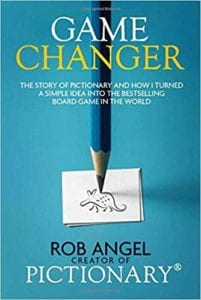
Game Changer: The Story of Pictionary and How I Turned a Simple Idea into the Bestselling Board Game in the World
One thing can be your key to getting in. Your book is called Game Changer. How did you come up with the title?
It’s a little bit of a double entendre but it was an obvious choice for me. I not only changed my life with Pictionary but we changed the game industry as well. What we did, how we marketed it, and what we did early on changed a lot in the industry. It was a good fit.
You have this great quote from a senior executive at Mattel that if Tom Hanks in the movie Big had been an inventor, he would have been you with your fun-loving, boundary-pushing, and creativity. How important was that? The second part of that question is, how are you able to keep that fun-loving creativity alive?
I just keep going. I have fun, whatever that looks like. It keeps my creativity going when new experiences are being open. I have these new things that are coming in all the time and it keeps me creative. Not every idea is great, let’s be honest. That’s okay. I go down a lot of paths to get to the ones that work. I enjoy life and what I’m doing. If I’m not enjoying it, I’ll go somewhere else and do something else. It sounds simple but it’s not. In reality, it works. If I keep up the mindset that I’m having fun, people are having fun, I’m enjoying my life, I’ve taken care of responsibilities, and I’m doing good things in the world, but I like having fun.
It’s certainly been fun interviewing you. Is there any last thought or quote you’d like to leave us with?
Don’t be afraid to try new things. In this current environment and with everything that’s going on, I don’t know what’s going to happen from one day to the next. We’re all in that boat. Try new things. See what resonates and what doesn’t. See what can happen in your life.
That’s great advice. The book is called Game Changer by Rob Angel, the inventor of Pictionary. Thanks again, Rob.
Thank you, John. Take care.
Important Links
Wanna Host Your Own Podcast?
Click here to see how my friends at Podetize can help
Purchase John’s new book
John Livesay, The Pitch Whisperer
Share The Show
Did you enjoy the show? I’d love it if you subscribed today and left us a 5-star review!
- Click this link
- Click on the ‘Subscribe’ button below the artwork
- Go to the ‘Ratings and Reviews’ section
- Click on ‘Write a Review’
Love the show? Subscribe, rate, review, and share!
Join The Successful Pitch community today:
- JohnLivesay.com
- John Livesay Facebook
- John Livesay Twitter
- John Livesay LinkedIn
- John Livesay YouTube
The Productivity Zone With Penny Zenker
Posted by John Livesay in podcast | 0 comments

Throughout our lives, our relationships with many important concepts shift. While all of these relationships are important, our relationship with time determines a lot of what our lives will be like down the line. Our relationship with time informs the way we work and if, ultimately, we can put ourselves in the right zone for productivity at the right times. John Livesay is joined by Penny Zenker, an international keynote speaker and the author of The Productivity Zone: Stop the Tug of War with Time. Penny and John delve into how our relationship with time also affects the way we live our lives and the way we work. Take your first step to rethinking your relationship with time and reaching the productivity zone today!
—
Listen to the podcast here
The Productivity Zone With Penny Zenker
Penny has high energy and interactive keynote presentation and workshops that inspire and challenge you to think differently, be more purposeful, and more strategic, which allows you to be your best. She’s an international female keynote speaker, business strategy and executive coach, and the best-selling author of The Productivity Zone: Stop the Tug of War with Time. As a Master NLP Practitioner, she integrates the elements of thought, communication, and behavior to provide strategies that allow us to make positive changes in our life. Penny, welcome to the show.
Thanks for having me.
[bctt tweet=”What are three words that describe your relationship with time? ” username=”John_Livesay”]
I always like to ask my guests to take us on their own stories of origin. You can go back to childhood, high school, call it wherever you want. How did you become fascinated with helping people stop this tug of war with time?
Part of it is that we teach what we have challenges with. I’ve always been a little bit here and there, excited about new things, and easily taken off track. At the same time, I’ve always been somebody who loves to take something that exists and make it better. Interestingly enough, my first job was as an auditor. Everybody hates the auditor. I was the least favorite person who would go in and people would not talk to me. They would do everything they could to avoid having a conversation or telling me anything. It was like pulling teeth. What it did for me was it made me naturally curious. I was always interested in mindset strategies and other types of skills of looking at how to make things better and smarter in the way that we approach something. When I was growing up, I felt like I wasn’t smart enough. My brothers were always smarter than me. I never thought about this so you’re bringing this out in me.
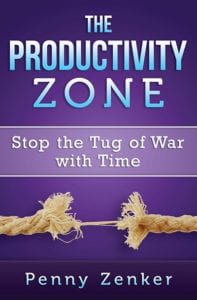
The Productivity Zone: Stop the Tug of War with Time
Working smarter came from, “I’ll show them. I can do this.” I wasn’t book smart. That could be where that came from, combining the idea of being easily distracted and involved in new things, but also looking to make things smarter. As that auditor, I’d be curious. I’m wanting to see how they could do it smarter and finding where things were distracting them or causing errors. I’m not judging it but seeing what could be done to make it better. Everybody thought that I was judging them because they think that that’s the role of an auditor but it’s for the ultimate productivity of the company. I love that aspect of the role of being able to look at things and stepping back. You see it from a different perspective because I’m not in it. There are a lot of other stories going forward but originally, that’s where my story began of me constantly stepping back, looking at the big picture, and looking at how to work smarter.
How did you come up with this great concept of having a tug of war with time? It’s the name of your podcast. It’s part of your book title. I love the consistency, branding-wise, by the way. Congrats on that. Did you say something? Was it a personal experience that said, “I feel like I’m in a tug of war with time?”
It was a personal experience. It’s looking for how we feel because that’s what connects with people. It’s what connected with me the minute that that came up. I had my first technology business that I started and built up from just me to a multimillion-dollar business and I sold it to a public company. From the outside, it looked amazing. It was killing me from the inside, from that tug of war with time, and from my own expectations that I piled on myself. The difficulty of delegating as you grow a business, I’m sure many entrepreneurs can appreciate that. It’s hard to let go of control. I didn’t have kids at that time. Now that I have kids, I understand another level of tug of war with time. That’s what we feel. That’s what I felt and that’s where that came from.
You talk about ten drivers of productivity that impact us. One is the mindset. Can you talk a little bit about how we can learn to improve our mindset around time?
What I like to do is challenge people. Here’s a little thing that they can do to see what their current relationship with time is. Say, “Time is,” and then give three words that come to mind what time is for you.
Let’s play with that. That’d be fun. Time is limited, I would say. Time is precious. Time is valuable.
Think about it. How you live your life and how you interact with time is based on those words. We label everything. Even though it’s unconscious, we have this label for how we perceive and interact with time, just the same as we do with money. These are interesting relationships because we never think about them but they’re some of the most important relationships that we have. That gets you thinking about it and then you think about it if you are utilizing time in the best way. Precious is good in the context that it can create productivity. You’re going to look at your time and look to do what’s most important if it’s precious to you. You said valuable so if you value your time and know the value of your time, you’re going to interact with it differently than if you’re not conscious and purposeful with that. What about limited? For most people, all three are unproductive. One is limited, scarce, or farce. The question is, having limited as one of those aspects, how does that hold you back psychologically in your relationship with time?
That’s fascinating. I’ve had this done. There are a lot of subconscious things that are going on that come out when you say those three words. In your book, The Productivity Zone, you’re talking about this concept of where your arrow will fall and how overwhelmed and stressed out you were as a businessperson. As you said, entrepreneurs are notorious for never stopping work. There’s always something to do. How do you help people who are overwhelmed with feeling like they can never get enough done?
One of the things that I do is to get people more conscious of their relationship with time and where they are operationally spending their time. I don’t go into this in the book because some of the content was developed later and that I use in events. If we think of the Pareto Principle, and that’s the 80/20 Rule. Part of that is understanding that 20% of the tasks and activities that we do are going to get us 80% of the results. I like to help people get clear because it’s freeing when you find out that, “If I spend time on this 20%, the rest of it doesn’t matter as much.” I’m not saying it doesn’t matter at all. It doesn’t matter as much. If we know that we’re focusing our efforts on the most important things, then there’s a sense of satisfaction with that. In that aspect, I have a number of different things that I do with them to help them get clear on that 20%.
I’m fascinated by this concept because from a personal standpoint, I launched an online course on storytelling and sales. There are many details and you can get bogged down in one. Someone said, “The sound is not perfect on your recording.” I said, “You’re a sound engineer. You care about that stuff.” For 99% of the people that buy the course, it was professionally recorded. It’s just not perfect.
That last 20% is what costs us the most time and money. We have to decide what the cost is. You’re going to piss off two people and they’re not going to continue with the course.
[bctt tweet=”Stop having a tug of war with time.” username=”John_Livesay”]
I should be spending my time more on promoting it. The other challenge that I have been told from time to time, and I’ve heard other people say it, is you’re overthinking something. You also talk about perfectionism in your book. I’m big on trying to help people let go of being a perfectionist and become a progressionist and celebrate progress. For a lot of people, myself included, we have such a fear of not getting it perfect. It causes us to overthink something. We’re afraid of, “Should I do it this way or this way? Now, I’m completely overwhelmed. I’m not doing anything.”
We go to the other side and we procrastinate. They’re connected. That is a big issue and through the pandemic that we’re going through, one of my challenges or learning that’s going to come out of this is something that I’ve been challenged with. Part of this tug of war with time is the expectations that I have on myself. If we’re functioning on the expectations that we had before the pandemic, we have to change our expectations as situations and circumstances change. Otherwise, it’s not going to work. We’re either going to cause stress for ourselves because they’re unrealistic expectations or we’re going to remove the flexibility that we need in order to get to our solution more optimally. That’s where expectations can be quite a limiting factor. I know that I have that a lot because I want to deliver value. When I go on stage, I go, “Is this going to deliver value for that audience?” I am looking at their expectations and the expectations of myself. Sometimes, we want to curl up into a little ball with all those expectations and binge for the weekend and not think about it.
When the quarantine started, I saw people saying, “You should be learning a foreign language.” I’m like, “The pressure. Can’t I take a minute and process what happened? I have to come out of this knowing another language.” That seems crazy to me, the expectations of what we should be doing with our time.
It’s an assumption that everybody’s sitting around with nothing to do. I had more to do. I’ve now placed upon myself, in terms of expectations, where I need to be, should be, and all the things we do to ourselves. They’re coming from where they are, where they might feel that they don’t have a lot to do so they could feel that. It’s great but we’re all in a different place. Greg Reid has this great saying. I don’t know where he got it from. Whenever people give us advice, and even maybe in their expectations, we can consider it sand in our hands. Whatever doesn’t fit, we can allow the granules to slip through our fingers that don’t make sense for us. It’s not a fit. It causes stress for us. If it makes sense and it’s something for us to think about, it’s a good question to ask ourselves, then we can do that. Don’t get too caught up in things that aren’t a fit for us. Let them go.
I had a live event scheduled to be a keynote speaker at a tech healthcare company. They said, “We’re going to shift to virtual.” That required a lot of new learning. Upgrade your Zoom so you can accommodate 300 people and figure out how to do breakout rooms. “By the way, we’d like you to train some of our salespeople on how to become better storytellers. Could you call on them to make it interactive?” The amount of time that it took to do a virtual keynote and workshop was much more than it did showing up. They still do a lot of time in preparation but this was probably at least double the amount of time preparing for something. We weren’t sure if it’s going to work. There are new technologies to learn.
It’s different being in a room with people versus how to hold someone’s attention for 1 hour, 1.5 hours on Zoom calls. You have to rethink what you’re doing and this concept of time, especially when you’re trying to keep people’s attention via the camera versus in person. It takes on a whole new meaning. The interesting thing that I think was fascinating, Penny, is they also asked me to train their outside salespeople on how to sell better on camera. That’s how they’re interacting with the doctors now. You think, “This is a bad thing. It’s taken away my precious fascination. I travel for many hours to have that hour with the group. Now, there’s another need that came up because of this.” We need to pause as opposed to judging something right away. Some people are like, “I’m not willing to put in the time to do a virtual talk.” I’m like, “Okay.”
I’m surprised. I’m also primarily a public speaker and now we’re doing this online. It’s a huge opportunity that’s not going to go away in the future. It will come back eventually, whatever it is 3, 6, or 9 months. Why not have both? Why not have the flexibility of being able to do it from your home?
This particular person was such a perfectionist that he couldn’t control everything. I have to admit, you’re on and everyone’s on mute. You’re putting all this energy out and nothing’s coming back until you wait for that feedback when you’re done and people start talking and putting in the chat. All through the lens of our time and how that comes back. What I love about what you’re talking about on this championship psychology in your book is, “What is our purpose?” If we keep going back, our purpose as speakers is to inform, inspire, engage people, motivate them, and give them some new tools that we can be a little flexible on the platform. You talk about language. It’s an interesting conversation, “Do I change my language? Do I have more or less pauses virtually versus in person?”
It’s telling a good story. The basis is the words that people are going to connect with, that are going to convey the energy of what you’re trying to talk about. I find that the language piece is huge. The words we say to ourselves and how it impacts our productivity, but relating it back to storytelling paints a picture. That’s what gets people engaged in your story, those little details that you’re able to bring across.

Productivity Zone: We have labels for how we perceive and interact with time, just like we do with money.
That’s what makes us memorable. The worst thing in the world is to give a talk and then people don’t remember what you said. The opposite is true with stories. The third element of championship psychology is physiology. Can you talk about what that is? I’m not sure a lot of people think about that.
When I talk about it, I put it in terms of self-care. For a lot of people, physiology is about our body, the physical element. The mind and the body are connected. It’s about how we eat, sleep, and move. We need to sleep. There are a lot of studies that Arianna Huffington and more are talking about how important sleep is. A champion athlete sleeps a large number of hours. Martina Hingis sleeps ten hours a day when she’s performing because it’s important as part of their performance. We need to make sure we’re getting enough sleep. Most people don’t get enough sleep. Because we’re stressed, we breathe more shallowly. We need to put a more conscious focus on taking those deep breaths. Perhaps meditation isn’t for everybody. If you get your heart moving, like doing some quick walking, it’s almost like a meditation. I find exercise is like meditation. I used to mountain bike. I used to live in Zurich, Switzerland. There were serious mountains. I felt like I was meditating because I was focused on my breath to get up the hill.
It gets out of your head, doesn’t it?
It makes you present and at the moment. Everything else washes away. I do some great exercises when I’m live with people. I’m figuring out how to do them online. If you’re standing there and you’re thinking of something that’s stressful, you’re off-center. Somebody could push you over. As you take a couple of deep breaths, it grounds you. You see the people can put twice, three times the pressure on that spot that used to push you over but you’re completely grounded. That affects everything that we do. When we can take care of ourselves or self-care physically, we’re going to be in a much better mental position to handle stuff like we’re dealing with. For example, the pandemic and the stresses that we had as entrepreneurs, wearing all the hats and doing all the things that we do.
The fourth area is the focus. What is your tip on how we can allow ourselves to be more focused?
A great mentor of mine once told me that sometimes when you want to be focused or make a decision, look at what’s in the way first. We want to be more focused and we know that. Let’s take something totally different. You want to eat healthier. You know what to do, we just don’t do what we know. I could give you ten tips on how to focus but maybe we still don’t do it. First, identify what’s in the way. What’s distracting us, and getting clear on that. I have some exercises that I do around that. We can take in those strategies once we break all those other habits or patterns of thinking or things that are in our way. We can then put these new strategies into place.
[bctt tweet=”We teach what we’ve had challenges with.” username=”John_Livesay”]
Is there something that’s common that distracts us like being obsessed with our phone and not turning it off?
What do you think?
I’m guessing that’s probably one of the big ones.
It’s the number one thing. We all know it. Many people still have notifications coming on their phones or computers. I call them gatekeepers. Sometimes we need to put gatekeepers in place in order for us to be purposeful. For instance, I want to make sure that I have a great relationship with my boyfriend or husband. Why do you think the date night came up? Date night came up because it’s a gatekeeper. It’s a structure or process. It’s something that we can put in place that reminds us and makes us follow the intention and the purpose that we want. If we’re not purposeful and put those things into place, then day after day we’re in this automatic mode. We never connect. We’re just running around dropping kids in different places and all the day-to-day stuff. It’s the same in every area of our life. We have to not only have an intention for something, a goal, and a purpose but then we have to put accountability measures or these gatekeepers in place to help us to be accountable to what’s important to us.
Who’s your favorite kind of audience to speak to? What kind of company?
It’s hard because I speak to many different companies. I’ve spoken across from logistics which I thought I didn’t know that I’d be welcomed with high energy. It’s a different type of atmosphere. That was great. I deal with a lot of sales teams and leadership groups because I talk about innovation and communication. I don’t have a specific group that I love to talk to.
I can see the need. In sales, I remember when I lived in Southern California. My territory was everywhere from Los Angeles all the way down to San Diego, which is a 2.5-hour drive. There’s Orange County, which is in the middle. I remember someone else selling another product and having the same territory. He was getting yelled at by his boss when he drove all the way to San Diego in the morning, came all the way back to LA, and then drove back to Orange County. He was like, “Why didn’t you make that appointment on your way back up?” There’s a lack of time management of planning out your day. It’s like, “Whenever they see me, that’s where I go.”
It’s not being purposeful. All of us do that. We go from thing to thing without sitting down and taking ten minutes to plan it out. One of the things that I do with sales teams, which makes that show-up and pop out is time studies. For two weeks, we’ll have them track their time in specific tasks and categories that are set up for them. That’s one of the ways to see where we’re operationally showing up. We have to measure it. We have to track it, even though I know most people would rather have a root canal than track their time.
A nutritionist asks you to write down everything you eat, but I get it.
It works because it makes us hyperfocused and attentive so that we recognize and we get the lessons. At a high level, you step back and see, “On direct sales, I should be spending at least 30% of my time and I’m only spending 9% of my time. Something is off.”

Productivity Zone: When we take care of our physical wellbeing, we’re in a much better mental position to handle all the stuff we’re dealing with.
The thing that sucks up many salespeople’s time is paperwork. They’re using the prime time to be in front of the client to do their expense report, for example. The reports of where they’ve been that the boss wants to see. It gets overwhelming and they’re staying up all night to get it done. That causes a lack of sleep problems. It’s all because they’re not managing their time and they’re not productive. The whole point is to be productive. You are offering a valuable solution and help for people’s mindset. Not to burn out is where I see the big a-ha moment, not to mention productivity.
There are things that the employee can do for better time management but there are also things that the employer can do to help their people to be more productive. I don’t think that there’s enough of that going on. There’s not enough responsibility from the corporate perspective of saying, “I could set these things in place to make it easier for people.”
Your book is called The Productivity Zone. If people want to hire you as a speaker, where can they find you on social media?
They can go to my website, first of all. It’s PennysKeynote.com. There, they can find all the links. I started a YouTube channel as one of my pandemic projects. I’m getting some videos and things up on YouTube so they can find me there. Also, I’m on Facebook, PennyZPerspective, or just look for Penny Zenker. Twitter and all those kinds of places but I’m not a big tweeter.
Any last thoughts or quotes you want to leave us with?
Dwayne Johnson has a quote about focus and effort in being successful, that those are the two keys. He’s saying that both of them are within our control. In any situation that causes stress for us is because we try to control something that we can’t control. If we focus on the things that we can control, we will move the needle, be more fulfilled, create more meaning in our life, be happier, reach that goal, and whatever it is we do. We do have a lot more control than we think we do on certain things and to focus on those.
[bctt tweet=”Employers have to help make their employees more productive.” username=”John_Livesay”]
Thank you, Penny, for sharing your wisdom, kindness, and insights on how we can be better managers of our own time and start to take a look at our relationship.
Thank you, John.
Important Links
- The Productivity Zone: Stop the Tug of War with Time
- Podcast – Take Back Time
- YouTube – Penny Zenker
- PennyZPerspective – Penny Zenker’s Facebook
- Twitter – Penny Zenker
- https://PennyZenker360.com/presskit/
- Better Selling Through Storytelling Method Online Course
Wanna Host Your Own Podcast?
Click here to see how my friends at Podetize can help
Purchase John’s new book
John Livesay, The Pitch Whisperer
Share The Show
Did you enjoy the show? I’d love it if you subscribed today and left us a 5-star review!
- Click this link
- Click on the ‘Subscribe’ button below the artwork
- Go to the ‘Ratings and Reviews’ section
- Click on ‘Write a Review’
Love the show? Subscribe, rate, review, and share!
Join The Successful Pitch community today:
- JohnLivesay.com
- John Livesay Facebook
- John Livesay Twitter
- John Livesay LinkedIn
- John Livesay YouTube
Forged In The Fires With Rob Verhelst
Posted by John Livesay in podcast | 0 comments

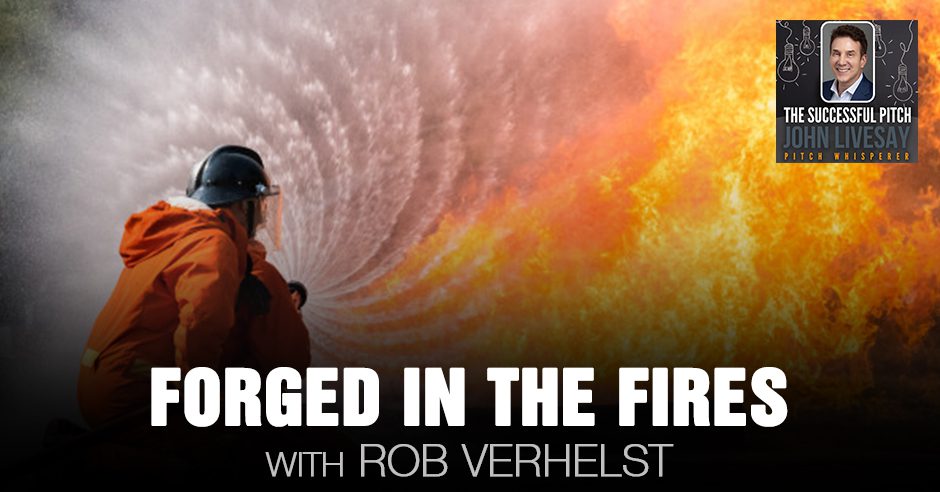
The mental strength that is required to be an athlete or a fireman is just as important as physical strength. In this episode, John Livesay interviews “Fireman Rob” Verhelst who has a book out called Forged In The Fires. Fireman Rob goes over the seven catalysts that are going to allow everyone to ignite their life in a big way. He also takes a deep dive into the emotional control that’s needed and he had to learn while being a fireman as well as being in the Air Force. Learn his heroic stories of being part of the rescue efforts at 9/11 and how he believes there is no such thing as balance. You just have to prioritize your values. Enjoy the episode.
—
Listen to the podcast here
Forged In The Fires With Rob Verhelst
My guest is Rob Verhelst, not just Rob, but Fireman Rob. He’s a dynamic storyteller with a unique iconic story that brings audiences to life when he’s a keynote speaker. He inspires the global community through his work as a fireman, but he also competes in Ironman races with 50-pounds of firefighter gear on him. He breaks world records like it’s people having breakfast and as if that’s not enough, he also delivers bears to children in hospitals throughout the globe. I’m not making this up. This is a real person. He is an impact leader and a speaker trainer. He impacts lives by showing how to believe that there are no challenges or fears that cannot be overcome with the power of purpose and a strong mindset. His clients have ranged from Fortune companies like 3M, Southwest Airlines, Timex and Kraft. The stories that connect him to audiences, they are always looking for a unique, genuine and down-to-earth presentation. That’s driven by his desire to have a positive impact on lives. He has a book coming out that I’m excited to talk about. It is all about Forged In The Fires: The Seven Catalysts to Ignite your Life. Rob, welcome to the show.
That was a lot. I’m already tired. Thank you for having me.
You have endless energy because you run with gear on. If anybody can handle that intro, it’s you because you’re living it.
It’s a great thing to be able to have a purpose and that’s what drives me forward every day. If you don’t wake up, if you don’t have the alarm clock telling you’ve got to do something.
You have such a strong purpose. You don’t even need an alarm clock. You’re excited to get into the day. That’s a whole other story. Tell us your own story of origin. Were you a little boy saying, “What’s that? I want a fire truck for Christmas,” or “I to want to be a fireman?” When did that journey start?
I’ve been in sports my entire life. I played basketball. My dad was my coach in high school. I played water polo and basketball in college. I’ve always been around those dynamic, physical activities as well as the mental side of the game. It wasn’t until I was in college, playing basketball and water polo that I was like, “I like education. I like learning, but this may not be for me.” I finished my degree, but I also went to the Fire Academy and got my firefighters certification. I was like, “This is what I want to do.” It’s the ever-changing environment that makes me excited to be able to do that.
You were a fireman. Are you not a fireman anymore?
No, I am.
[bctt tweet=”Hold on tight, everything’s going to be all right.” username=”John_Livesay”]
You’re juggling at this job, speaking and writing.
Like you always say, I have to get a better story. The more experience you have in life, the more stories you’re able to tell and correlate to what you’re talking about.
Let’s talk about you being the 9/11 rescue worker. I’m sure there’s a story there. Take us back to that day.
When I was 23 years old, I had gotten on the fire department. I was about a year in the fire department. I was working a shift in the morning. We had gotten back from a fire. This was back when radios were in the shower rooms. You had the old radios, not the XM radios. I was listening and I heard that the Trade Tower had been hit. I went down to the kitchen and we were watching on the TV. The second Trade Tower had been hit. Immediately after shift, I called on my rescue team and drove out there. We got there two days after the towers had fell because I’m driving from Wisconsin in my purple Saturn, it was a long drive. I didn’t know what to expect.
I’m 23 years old. I’d only been in the fire service for one year. You get out there and it’s a surreal experience. The best way I can say is it looked like a Hollywood set because they had these huge lights up. You couldn’t understand the vastness of it and the number of people that were on the pile that we were searching for. The amount of emotion that went into that part of my life is immense. It changed my life forever and it continues to change my life from the little things that I remember that I had to change into positives to be able to continue to go. I didn’t know that I had developed PTSD from that and from my time in the military and the fire service.
There are a lot of things in my past and I wouldn’t change a single thing. I have medical problems from 9/11, but at the same time, I have a lot of positives that I took away. Everybody that day was working towards a common goal. It didn’t matter whether they were the welders that were crawling into holes that had never done it before, but they were cutting off the rebar, firefighters that were working together from all different counties on bucket brigades to clear out areas to be able to search for people. It was a commonality that I don’t think we’ve seen. You could go back to even D-Day when many different people came together from many different venues of life and didn’t matter what the differences were. All they saw was the objective and they worked together to find a positive of it.
Let’s complete that picture a little bit. Were you in the military before you became a fireman?
I sold the correlation so I went into the military after 9/11. It’s a lot of twists and turns. It’s choosing your own ending.
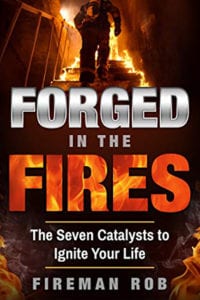
Forged In The Fires: The Seven Catalysts to Ignite your Possible, Accelerate your Potential & Extricate your Best Life
Normally people would go out of college or instead of college, go in the military, and you became a fireman. That’s the normal storyline we are used to. You became a fireman and 9/11 happened. You were involved in that you decided to join the military so you gave up being a fireman while you were in the service?
That’s correct. I came back to the fire service that I was in. It’s not a straight path. What people can relate to in my story is that I don’t have clear objectives. I’ve been married three times. There’s been a lot of failures in my life. At the same time, there are a lot of directional changes that have impacted it. You can’t always go back and say, “I wish I didn’t do that,” or “I wish it didn’t do that,” because if you didn’t do that, it wouldn’t lead you to where you are now.
You had mentioned PTSD, Post-Traumatic Stress Disorder, from both 9/11 and the military. Did you start at 9/11 and what branch of the military were you in and for how long?
I was in the United States Air Force. I was in for a couple of years. There’s a common misconception with Post-Traumatic Stress Disorder that it’s not like a cold. You get it and then it accentuates. You can get numerous different things that’ll trigger your PTSD. That’ll trigger it, but at the same time can add to it. That’s the hard thing is in the fire service, we see a lot of individuals that are seeing traumatic situations and it’s compiling it. We always say it’s like putting boxes in your closet. You have round boxes, square boxes and oblong boxes.
Initially, when you start off in the service, you’re putting every box in the closet. You’re not caring which one’s on top of the other to make sure that it stays in there. Eventually, that closet gets so stacked with boxes that every time you open it, it collapses on you and that tears you down. You have to repack that closet and try to continue to move on with life. For myself, it’s continuing to make sure that the boxes are being stacked properly. That’s a daily process. It doesn’t go away. There’s no miracle cure. I always will have this within me. It’s part of my character.
What made you decide that you wanted to wear all this weight while doing all of these marathons? Usually, the marathon is more than enough of a challenge for most people. You’re like, “I want to carry 50 pounds of gear around me.” Was it a visual thing, a mental thing?
It’s a crazy thing partially. On top of it, I had been struggling for several years. I was not finding my purpose, not finding who I was. I was lost. On the tenth anniversary of 9/11, it landed on Ironman Wisconsin, and I’m from Wisconsin. I was like, “I want to do something that through my actions I can show people how powerful that day was to me and continues to be for me.” At that time, I wasn’t speaking about it. I wasn’t talking about the emotions of it. The best idea I came up with was to wear 50 pounds of fire gear after doing a 2.4-mile swim and a 112-mile bike.
The first time I did it, I did a trial run at Racine, Wisconsin. It was 110 degrees with the heat index that day that I did the trial run. I got onto the run portion. It was so hot that I kept questioning myself. I was going, “This is dumb. Who would ever do this?” I got out on about 3 miles in and I had a gentleman come over and gave me a hug. He said, “I’m an FDNY firefighter who retired. I want to thank you for being out here.” It’s moments like that when you put yourself out there and have other people show you that your purpose or your passion that you’re going after is valid. It’s something that you should keep going after even if you don’t see the finish line.
[bctt tweet=”Your strength is in your passion.” username=”John_Livesay”]
You’re all about resilience and that certainly is an example of that. What lessons do you have in your book from being a firefighter, being a 9/11 rescuer, and being in the Air Force? There must be some big a-ha that all of those experiences have taught you about resilience. Not giving up when it’s hot in this race, but is there an overall arching takeaway for the audience and people who read your book?
I always say your strength is in your passion. A lot of people look at passion as a soft topic. Realistically in the last few years, it’s become a hard topic because passion is what drives people and it’s personal. It’s what drives people to own up to their decisions or actions. It’s what drives people to make decisions. On top of it, you can be resilient if you have that budding goal of being passionate. I would say if your strength is in your passion, you have to go out there and live it. You can’t wait for somebody else to tell you this is what you should do. That’s the overarching message. I talk about seven different catalysts. It’s not like I created something brand new. I tell you about the stories of why these are important because I lived this message and it wasn’t something that I researched or anything like that. It was something that I lived. That’s more personal to people.
The audience is going, “John, ask him what the seven catalysts are.” Why don’t you tell us what they are? We might double-click on one and hear a story that goes with it.
The seven catalysts start with passion and purpose. That’s the beginning. It goes to ownership. It goes to decisions, emotional control, resilience, faith over fear and you end with mental strength.
Let’s talk about mental strength. Tell me a story about mental strength since you clearly have physical strength. How do the two relate?
When people say 110%, that’s when you have that mental strength. Your physical strength can only go so far because your body will tell you no. The story I was telling mental strength, my dad passed from cancer in June 2019 and he was my role model. He was my rock.
In fact, you have a quote from your dad. Let’s hear what your dad’s quote was to honor his legacy.
My dad said, “Control the controllables.” I live by that. It’s hard to live by that. It’s something we always try to control things outside of us because they stress us out or they make us not focused on what our angle is. Control the controllables, I used the year that I went for the world record of 23 Half Ironmans in one year. My dad was there for most of them. It was in the moment when pain is there and it’s always there and the dark moments. I’m out on those courses for eight hours on the Half Ironman. That’s a long time to be by yourself especially when you have demons in your head.

Forged In The Fires: Passion is what drives people to make decisions and to own up to their decisions or actions.
Remembering my dad’s quote to control the controllables, I was able to take a perspective. I had my wife do this when she did her first Ironman. I said, “Instead of focusing on what hurts, think about what doesn’t hurt.” Sometimes it’s only like your right eyelash or my left big pinky toe. It takes your mind off and makes you laugh for a second. You’re controlling what you can control. You can’t control the pain, but you control where your mind is going to go and the positivity that your mind can bring.
This quote you have in your book that your dad would always say you can’t control what someone else does, control what you do. Now you’re getting to be that. You have three children. What are you passing on to them?
The greatest thing to pass on to your kids is what you do through your actions. That’s one of the great stories. I help this charity called myTEAM TRIUMPH. What they do is they help disabled individuals to do endurance races because nobody has said that they were able to do it. You push them through the races. They’re called the captains. The people that help are called the angels. I had done a few races. My wife and I had done a few races where we were angels for a captain. My kids came up one time and they said, “We want to do one. We want to push.” I was like, “What?” They’re like, “Yeah, we want to push.” I found a race that we were able to do and all five of us helped push a little eight-year-old boy with MS through this race. It was then and there that I realized as parents we’ll say a lot of things to our kids. It’s truly what you do, your actions that will translate to their character, to what they do in the future and to how they act to other individuals.
One of the questions that come up for me that people might be wondering is you must have some time management skills. To be a fireman full-time, write a book, have a podcast, speak, run these amazing races and do charity work plus being a dad and husband, how does one do all of that?
It comes down to support. I have good time management skills. I’m a good calendar maker. A lot of the guys in the firehouse laugh at me because I do to-do lists and calendars all the time. It’s also the support system. I won’t be able to do this without my parents, without my wife and without my kids being okay with me finding myself by doing these races or helping others by going to speak and do seminars. The biggest thing for time management is life prioritization. A lot of people talk about balance. There’s no such thing as balance. You can’t do 100% of one thing and do 100% of another thing at the same time. It’s not tangible. You are making sure that in your life you have priorities and that you stick with those priorities. That’s the key to making sure that your present.
When you’re with your kids, you’re fully present. When you’re fighting fires, I’m assuming you’re fully present. Certainly, when you’re wearing a lot of gear, you probably are completely present when you’re doing a triathlon or whatever.
The hardest part with the triathlons, it’s interesting because it’s hard enough to do the triathlons and I add in the extra component. I realize why I’m out there. I’m out there to inspire and impact people. When somebody says that they want to tell me a story, it doesn’t matter if I’m tired. It doesn’t matter if I’m in pain or I don’t feel like hearing it. It’s one of those things where I have to be engaged at that moment. I have to be that person that’s bigger than the moment.
One of the other catalysts that I’m fascinated to ask you about is emotional control. We all get triggered from time to time. Somebody says or does something we think is unfair, unreasonable, or you name it and we get angry. What lessons have you learned that other people can learn about this emotional control?
[bctt tweet=”Life does not get easier, we have to get stronger.” username=”John_Livesay”]
One of the big things is that people have to understand those negative thoughts are inevitable. They’re going to happen. You’re going to feel those. What’s manageable is your reaction to those. Being present in the situation, understanding what the emotion is that you need is critical. I’ll tell you a story about a race that we did for myTEAM TRIUMPH. I was doing it in full firefighter gear and I was pushing an individual. It was in Green Bay, Wisconsin. It’s a marathon. It’s a great race. We got about halfway through. There are some police officers doing in full gear. It’s not as impressive because it’s lighter.
One of them was slower and so I said, “Why don’t you come with me? We’ll make it to the end.” Here it is. Picture this, a police officer, full uniform, firefighter, full uniform. He’s about thirteen years old in a stroller. We’re going down this street and this lady comes running down the street. She goes, “Where have you been?” I’m thinking, “Are you kidding me?” This is where I talk about emotional control because, at the time, I could have yelled at her and said, “Are you serious? It’s 90 degrees out. I’m in full gear. It’s going to take me a while.” I didn’t because you’ve got to be present at the moment. This lady continues to run up to us and says, “Where have you been? I called you an hour ago.”
If she has a fire emergency, she’s not criticizing you for running slow.
She called 911. She continued and says, “A squirrel fell out of a tree and broke his leg. We have them in a shoebox by the tree.” I don’t know where the disconnect of, “We don’t go in trucks and police cars anymore. We push people and run to the emergency.” At that moment, I had to have the emotional control to pun her off on the officer behind us so that Jacob could finish his first marathon ever being pushed. I talk about emotional control and the fact that you have to gauge a situation. What is your end goal? Is your end goal to argue? Is your end goal to be right? Is your end goal to listen?
Do we want to be right or do we want to be happy? I see many times in social media post, someone will say, “John, you’re moving to Austin. How come?” I said, “One of the reasons is there’s no state tax on income like there is in California.” That starts a whole conversation on social media, “The property tax is high.” Somebody says, “You should rent then.” I was like, “Why does everyone feel the need to be right? Who cares?” I’m not getting into a debate over state income tax. You see the backend of that. What’s crazy is two friends of mine who don’t even know each other are arguing about who’s right. It’s the theory of what’s a good place to invest in or live in. I’m like, “What is up with this need to be right?” That our egos are sensitive that we can’t say, “That’s your opinion, whatever,” and move on. Clearly, there’s self-esteem stuff going on. When you’ve got a life of purpose and you’re exercising and you’re getting out of your head, which exercise does for us, even if we’re not doing it at this extreme level you are. It allows us to be more present and to listen versus needing to be right. Who is the ideal audience you hope reads your book?
I would say the ideal audience is the individual. The perfect audience would be individuals who want to lead their own life. That’s a broad spectrum, but at the same point, it’s speaking to those people that go, “I haven’t found that path or I’ve found a path, but it doesn’t seem like the right one.” Reading this book, it’s one of those things that offer you reflection points and offers you action steps at the end of things. It’s short. I’m a fireman, I’m not a novel reader. I made it short. It’s short segments. There are stories that tangibly put it to understand what I’m talking about when I talk about passion, when I talk about ownership, and so you can put yourself in there. I tell people to write in my books. You’ve got to write in them because if you have ideas or things like that, this is your manifest to be able to figure out how to lead your life.
What’s the one takeaway you want an audience to have after they hear you give a keynote talk?
When I give a keynote talk, the one takeaway that I want people to understand is that their life doesn’t get easier. They have the opportunity to get stronger by following their passion and purpose.

Forged In The Fires: Negative thoughts are inevitable. What’s manageable is your reaction to those.
Our life doesn’t get easier. We have to get stronger through passion and purpose. The concept of our comfort zone, it’s one that’s like, “I’ll get to this level and then I don’t want to grow anymore,” and “Things aren’t easy. The plane is delayed,” or “I’m stuck in traffic,” and all the little things that happen. If you have the mindset that, “This is too hard. This is not easy,” then you’re never going to be happy, first of all, at the moment, let alone live your passion. You’re living an example of how we can all take these lessons without necessarily needing to be forged in the fires as you have, but we can learn from them. When we do face our own version of a fire, we’re now more equipped with these seven wonderful catalysts that you’ve given us so that we can ignite our best life.
I love that you said the fires in which we live in because when I put Forged In The Fires, I always say to sales groups, a salesperson is in a fire environment every single day when they go out to sell because it’s economics. You’re in a fire sale. You’re trying to get somebody to buy something.
Any last thoughts you want to leave us with either from your own book, your own talks or something else from your wonderful dad?
I’ll leave you with one more quote from my dad. I had it made into a tattoo. I also have a picture of him on that tattoo of him and me embracing at the end of Ironman Arizona. He usually was the guy that didn’t want to go to the finish line. He would be the guy that would be three miles from the finish, take me to a mile from the finish and that was his happy point. You take from that is that we can all boost somebody else up and let them have that great finish. This finish was with my dad and his quote is, “Hold on tight and everything will be alright.” If you hold on tight to your passion, if you hold on tight to your support crew, if you hold on tight to who you are as a person, everything’s going to be all right.
We’re holding onto our values, our passion and our focus. Rob, thank you for being you and serving the country in both a fireman and in the Air Force and now writing this wonderful book, Forged In The Fires. People can follow you on social media. Give us your social media handles.
It’s Robert “Fireman Rob” Verhelst on Facebook and also find me on LinkedIn, it’s Robert Verhelst. @FiremanRobStrong is on Instagram and @TeamFiremanRob is on Twitter.
Thanks, Rob. You’ve been a great guest.
Thanks for having me on. It’s been a pleasure.
Important Links
- Forged In The Fires: The Seven Catalysts to Ignite your Life
- myTEAM TRIUMPH
- Robert “Fireman Rob” Verhelst – Facebook
- Robert Verhelst – LinkedIn
- @FiremanRobStrong – Instagram
- @TeamFiremanRob – Twitter
- https://www.FiremanRob.com/
- https://www.Amazon.com/Forged-Fires-Catalysts-Accelerate-Potential-ebook/dp/B082RF3Y5M/ref=sr_1_fkmr0_1?keywords=forged+in+the+fires+robert+verhelst&qid=1579725511&s=books&sr=1-1-fkmr0
- Better Selling Through Storytelling Method Online Course
Wanna Host Your Own Podcast?
Click here to see how my friends at Podetize can help
Purchase John’s new book
John Livesay, The Pitch Whisperer
Share The Show
Did you enjoy the show? I’d love it if you subscribed today and left us a 5-star review!
- Click this link
- Click on the ‘Subscribe’ button below the artwork
- Go to the ‘Ratings and Reviews’ section
- Click on ‘Write a Review’
Love the show? Subscribe, rate, review, and share!
Join The Successful Pitch community today:
- JohnLivesay.com
- John Livesay Facebook
- John Livesay Twitter
- John Livesay LinkedIn
- John Livesay YouTube