

How To Make Informed Decisions With Pate G. Smith
Posted by John Livesay in podcast | 0 comments
Just because you have covering footage for your insurance policy doesn’t mean you have the right coverage. You need to sit down and look over the terms of the policy to make informed decisions. John Livesay’s guest in this episode is Pate G. Smith, Vice President of Marketing and Attorney at McClenny, Moseley & Associates. Pate advises you to get an attorney to help you understand the policy. They can also help you make a cost-benefit analysis of the different types of coverage available. Tune in to make better, informed decisions!
—
Listen to the podcast here
How To Make Informed Decisions With Pate G. Smith
My guest is Pate Smith. We’ll talk about the importance of networking, getting over your fear of asking for what you want and not taking rejection personally, and how important that marketing be everywhere. Finally, it’s crucial that when you make a decision, it’s an informed one. Enjoy the episode.
—
My guest is Pate Smith, who was born and raised in Ozark, Alabama, a place where hometown values and relationships are at the heart of the community. He’s thrived on building relationships and helping others his entire life. He feels those connections give him a purpose within himself. After he graduated high school, he finished his secondary education by graduating from the University of Alabama with a Political Science degree. He felt going to law school was a natural path to better understanding business and gave him a chance to help others. Now, he has his degree from the Birmingham School of Law. During his last year, he had a realization that he could help people through professional development coaching. He started Positive Change USA, his travel speaking at various events, coaching businesses and professionals alike. Pate, welcome to the show.

Informed Decisions: You can sell yourself through communication and connectivity with individuals.
Thanks, John. How are you doing?
I’m good. I gave a little tip of the iceberg there of your background but give us a little flavor, tell your story wherever you want, the a-ha moment in law school or even earlier. It’s your choice where you want to start.
I grew up in Southeast Alabama. It’s a rural area. Ozark, Alabama to be exact, 90 miles or so, maybe 70 miles above Panama City of Florida. That’s how people know the area. I knew that networking was important. My parents always made me attend events, do speaking engagements, do public speaking and connect with others. I don’t think that connected on the professional and personal development side until maybe I was in college or late high school. I got into, at that point in time, various professional, personal and relationship development literature, whether you’re trying to date somebody or make a sale, connect with an individual on the opposing side. You’ll be able to sell yourself through communication and connectivity with individuals and by providing a consumable narrative based on facts and truths. That’s what I do. I ran a professional development company for a little while that was fun. I miss it at times. I have grown a public adjusting firm and now, I’m here on the law side and I enjoy that.
Was it your parents that taught you the importance of connecting and networking, or how did you realize that was a skill that you wanted to develop separately from the hard skills of law?
[bctt tweet=”You never lose when you give your best effort.” username=”John_Livesay”]
I can remember when I was in probably third grade and there was an opportunity to sell candy to raise money for the school. I don’t know what we were raising money for. My parents were like, “This is great.” They would drive me around and have me go up and knock on people’s doors that we knew. I wasn’t cold knocking but knocking on people’s doors that I knew and go in. I had to introduce myself, explain what we’re doing and sell them the candy. I can remember after it was all said and done, I was talking to my friends and I was like, “It was hard talking to those people,” and they’re like, “I didn’t do that.” I was like, “What did you do?” They’re like, “Mom and dad called people and did it for them.” My parents made me go through those exercises. I was like, “Mom and Dad, why did everybody else’s parents call it for them?” and they’re like, “No, you’ve got to do that.”
When I was growing up, I can remember in sixth grade, I had this thing called The Sock Hop, which was a dance where you would go. I was like, “I’ll go with somebody at The Sock Hop.” I can remember mom and dad were like, “You’ve got to ask them.” I was like, “What do you mean?” I had this realization early on where they would constantly force me or encourage me to do this self-selling or approaches. I think that was huge for my development because, at that point in time, I wasn’t good at pitching. I was like, “I’m Pate. Do you want to buy some candy?” The fact that I broke that emotional barrier, went through the process, and learned early on that it’s not about yeses and noes because you can never make a person purchase.
You can never make a person come to your side. You can present in the best manner and the outcomes are there. You’re either going to have positive outcomes or outcomes where you learn, but you’re never losing when you’re giving your best in that effort. I was from a very rural small area and to be able to date people was hard. I didn’t want to date people in that area. I had to expound wider. To be able to do that, early on read a lot of male personal development forums and business networking, etc., because that is what was available to an 8th, 9th or 10th grader. It was huge for me. I’ve learned how to meet people, network with people, become their friends, and found fun value in relationships. That was a huge epiphany for me, whether it’s professional development, speaking here at the firm, connecting with other law firms, with commercial property owners or contractors, these are great skills that I’ve learned, some purposefully and some I’ve learned naturally through experience. That’s me in a nutshell.
It sounds like you learned how to not be afraid of asking for what you want. After that, it became, “How do I let go of any fear of rejection?” Is that correct?

Informed Decisions: We are invested in our client’s success.
Yes. I don’t believe that noes are bad. When I was a professional development coach, I would tell my clients like, “Don’t concentrate on yeses. Yeses come. I want to see you to fifteen noes in a day.” If you’re going out and trying to meet people or find somebody that you want to go on a date with, what’s your volume looking like on people that you’re interacting with? If your volume is low, your success is going to be low. There are opportunities where you meet somebody, hit it off one and they’re not great. In this day and age, I think you have to be incredibly high in person-to-person interaction if you want to be purposeful and dictate your outcomes.
You brought up a topic that’s near and dear to my heart, which is this concept of comparing dating with selling. I got interviewed by Fortune and Inc. Magazine around the topic of, “Are you stuck at the friendzone at work?” We all know what the friend zone feels like in the dating world, where we like somebody more than they like us. I think in sales and business development, marketing, where someone’s interested but they never get out of that, “Send me info,” and then it’s crickets. Almost everyone I’ve ever talked to says, “I’ve been in the friend zone at work. I didn’t know that was what it was.” Where I’m like, “I’m interested but I’m not going out with you. I’m not buying.” Maybe they click on something and get to download something but they never take the next step to close the sale or buy from you after the presentation is done. Let’s talk about what that looks like in the world of law firms. You’re in charge of the marketing for your firms. Tell us a little bit about what makes your firm unique, and what is it that compels clients to want to hire you and your firm?
[bctt tweet=”It is not about a yes or no when you sell.” username=”John_Livesay”]
We only do insurance claim dispute resolution for policyholders. We strictly work on the plaintiff’s side. I think we’re 22-something attorneys now. We’re working in a considerable number of states. We’re known for working large commercial insurance claim losses. That’s our day-to-day but what makes us special is the people we have here. Everybody is very invested here in the firm and our client’s success. That makes a difference because it’s not 9:00 to 5:00. If it’s a person’s business, their home or something in experiences, a catastrophe, a hurricane, a hailstorm, a tornado, a fire, vandalism, whatever, they’re not getting adequate indemnification or maybe it’s a complex loss that needs management from us from the beginning. I have a connection to that because I have a home. I want my home to be my place of sanctity. I like coming to work. I like having a structure around me that supports me in that work. For us, it’s very positive.
Let’s paint a scenario. For those of us who live in Texas, in February 2021, there was a freak snowstorm, electricity and water was out. Pipes burst. In those kinds of scenarios, do people depend on their insurance company to help them get repairs done?
We did many of those losses.
I’d love to hear a story without giving any names away of a situation where an insurance company was saying to a homeowner, “Sorry, that’s an act of God. It doesn’t count or your deductible is not met yet.” Anything that you would give an example of where they need your firm’s expertise?
We typically see insurance claims underpaid significantly when they come to us or they’re very complex. A great example is in Hurricane Laura and Charles, a religious structure that the community got around. We represented that structure from the beginning. We dealt with the carriers, engineers, their attempts at underpayment saying, “No, asbestos-lined material is okay to repair,” and there’s a daycare there. That’s semi-concerning. Numerous hotels in that. You mentioned the pipe burst and the winter storm that happened in Texas. We had a lot of commercial structures that were completely flooded that we’re handling. Some of those we see were underpaid massively. Maybe they were offered $15,000 or $20,000.
The indemnification model may be upwards of $500,000 or more. We have some that had 7 and 8-figure indemnification models here at the firm. Anytime you see a number and you’re like, “I’m not sure if that’s going to represent the full restoration,” shoot me a call. We don’t charge any time for consults, “This is good. This is bad. Consider this, talk to these people.” Our goal is to be there when you need us or the management of an intense commercial claim. Those are examples of when hail on metal buildings or flat roof buildings are almost always underpaid. That’s something that we do a considerable amount of. It can sometimes be tens of millions of dollars in difference.
A lot of people think of insurance as something they need to do. They may be shopping around a little bit, I’ll gamble maybe, not get the most coverage I need, forget about it, and then something happens. Since you’re in charge of marketing for the firm, how do you get the message out to people to know how to find you? Is it an SEO kind of thing? How do most people find you?

Informed Decisions: Our goal is to be there for you when you need us.
I believe marketing should be done land, air and the sea is what I always say. If you can do it, you probably should do it. I speak constantly. I’m here on this show, so hopefully, that does the marketing. I do as many speaking engagements a year as I can with my family. I can remember one time where I was sitting on my bed, I prayed and said, “God, I want to be able to do 30 speaking engagements in a year where people ask me to come in.” That is now a haunting thing because I get asked constantly to do podcasts. There are conventions I’ll go and sometimes speak 2 and 3 times a day. The most I’ve ever done is 5 panels or 5 breakout sessions in a day. It can be exhausting.
What’s the most common question you get asked when you’re on a panel?
That’s tough. It’s probably how is the best way they can initiate a claim, set it up at the beginning for success? It’s the one that I get the most that are across the board and all industries. That’s a good one. It’s issue-specific.
That brings up a point that someone should engage or could engage your firm before they have a claim to make sure that they’re doing everything properly so they won’t be running into problems of not getting the money they need?
We can have a conversation before an issue ever happens and make sure you have the right coverage. The biggest heartbreak in the world is someone calling me and saying like, “We’re owed this money.” They send the information over. We get that policy and because of the specific terms and the policy, they’re not able to get coverage because they haven’t been paying for it. The policy dictates the outcome of the claim. Is it even possible? If it is possible, then we’re there to assist.
That’s where a lot of people don’t even think they go, “I only go to the doctor if I’m sick. I only go to the lawyer if I needed to make a claim,” but you’re like, “You should go to the doctor for a physical, stay in shape and eat healthily so you don’t find yourself sick.” You’re saying the same thing is true legally. Check with a law firm like yours to ensure the policy you’re buying is getting you what you need and don’t take the word of the person selling you the policy. Is that accurate?
[bctt tweet=”Marketing should be everywhere.” username=”John_Livesay”]
Correct. Just because you have coverage doesn’t mean you have the right coverage. Do you have exclusions in there? Do you have endorsements that limit the ability for coverages to kick in? If you want to keep those endorsements, that’s fine but you need to know what they mean. I don’t care what decision you make. I want you to make an informed decision.
It’s because you’re not selling insurance, you don’t have any skin in that game so people can trust that your advice is in their best interest. You’re giving them the information that lets them make an informed decision according to their risk ratio and whatever else is going on. It’s an unknown problem that can be fixed or much like the analogy of health. You may not go to an orthopedic surgeon until you’ve broken a bone or something but imagine if an orthopedic surgeon was giving a talk on, “Here’s how to be involved with contact sports so you don’t get injured.” How valuable that information might be? Is that another analogy?
Yes. Particularly, with commercial structures if you have a property manager on it, property managers do great at managing. If a large-scale catastrophe happens and let’s say you have fifteen structures within an area and you’re fifteen appear okay but they haven’t had a forensic look, they haven’t had their coverages looked at and had someone go in, make a determination, and discuss with you, a lot of times, your property managers are going to say, “This building isn’t leaking. It’s fine.” Maybe it is fine but let’s go a step further and find that information, get that data and have you make a cost-benefit analysis of, “We want to do this. We don’t want to do this,” and make an informed decision.
Let’s talk about what happened in Florida with that complex. From a storytelling standpoint, which is where I live, in reading those stories of hearing a noise that sounded like an explosion, you open up your door, look down the hallway, and there’s no hallway, you realize how close you came to death? All those warning signs were there that something needed to be done, water leaking, this and that. Obviously, it was made for them. They had everybody had to get out because they took the whole building down. I think that news should be like an anomaly. That’s a rare thing that happens. I’m guessing in your line of work, you say, “John, this goes on more than most people know. It doesn’t make the headlines.”
I know one of the engineers that are working on that. I spent some time with them in Fort Lauderdale. He was telling them stuff that they were going through with that. I believe I know one of the attorneys that are working on the wall side of that as well. That’s a very interesting loss, and I’m interested to see how that’s going to play out.
Does your homeowner’s insurance for your condo cover, you bring in a hotel until you find a place to live? There are so many thoughts.
That would depend on the policy.

Informed Decisions: Every time you renew the policy, sit down and look over the terms.
It’s like if you’ve damaged your car, do you opt-in to get the rental car coverage while your car is being repaired? That’s a box you check off and pay a few bucks more. It’s that same thing. I think why I was so fascinated to talk to you is the pandemic has not happened in over 100 years since 1912. People and I included as a speaker like you, we’d be like, “What do you mean I have to plan for a time I can’t give a talk in person?” That’s not even in my frame of reference. I never had that as a contingency plan of, “Live events will be canceled. There’ll be no conferences in Vegas,” or whatever. The same thing is true with what you’re doing here with, “Your condo building might collapse.” I’ve never heard of it. I’ve never seen it.
Here’s the better question. What could have been prevented to prevent that condo from collapsing? What had happened through the lifespan of that structure, water, treated, allowed micro-fractures and then settling, etc.? That’s a better question. Some of this could have been prevented had adequate data been given there. Maybe adequate data was given and bad decisions were made. As an owner, if they weren’t given adequate data, that’s a tragic scenario.
What about all the fires that are happening not just in California but in other places on the West Coast and this perfect storm of things? You own a business and it’s not your home you’re worried about and that structure, do you get involved with advising business and property owners who maybe haven’t looked at their insurance coverage lately and you say, “We need to check up on your coverage just like you go for a checkup with the doctor?”
Yes. I encourage people every time they renew their policy to sit down, look over the terms of that policy and get an attorney to spend time looking, negotiating, and doing a cost-benefit analysis of what type of coverages are there. Let’s say you have warehouses or storage facilities that are metal. “I’ve got full coverage. Coverage is adequate for my commercial lender.” “Question though, sir, do you have a cosmetic endorsement in there?” “A cosmetic endorsement, that sounds fine. I’m not worried about cosmetic damage. However, though, if my building gets scratched, hail minorly dense my building?” What if hail majorly dents your building? What if hail has the potential of decreasing the lifespan of the structure and causing rust over time?
Are the terms in that cosmetic endorsement in a manner, which it’s not going to let you recover, and then you have a structure that’s going to rest out in a portion in somewhere between 5 to 15 years, depending upon where you are in the country? If the answer is yes, that’s something we need to do a cost-benefit analysis of, maybe it’s $8,000 more a year to have a large warehouse insured adequately. You say, “I’m good with the $700 more a month. Let’s go ahead and do that. Let’s get the right coverage. Maybe we have to talk to a different broker.” I’m not sure but this is something that we do. All of this is free of charge. No cost up until the point where we have to negotiate the insurance claim for you. We do this pro bono because we want people to have the right coverage.
What you’re doing from a marketing standpoint is creating incredible brand awareness and value so that people see you as someone who cares and not coming in at the last minute when money is involved?
Correct. One of my favorite sayings, and I wish I could say I came up with it but I can’t, “We don’t like to shake hands over the rubble.” It changed my mindset.
[bctt tweet=”Always make an informed decision. ” username=”John_Livesay”]
Pate, thank you on behalf of so many people who you’ve helped and will help. If people want to reach out to you, I know they can find you on LinkedIn and Instagram. Would you share the details and that special middle initial that everybody has to remember to find you?
For Instagram, it’s @PateGSmith. If you add me, I like to send everybody that adds me a, “Thanks for adding me,” and I try to get to know you. That’s sometimes a daunting task but don’t think it’s weird. It’s me messaging every single person on there because I’m proud that people message me. It’s the same on LinkedIn. Find me on there, Pate G Smith for McClenny, Moseley and Associates and say, “I heard you on John’s show. I do this.” Even if you’re not in my industry, I want to be able to connect with you. I love networking. I’m across the country constantly. If you ever want to hop on a call and maybe it’s something that’s an idea and kicks around some stuff, say, “I’m stuck somewhere,” I’m here. I love connecting with people and sharing values. Reach out. I appreciate you having me on, John. This is a powerful show.
Thank you. It’s been an honor to have someone of your caliber and kindness on. Thanks so much, Pate.
Thanks, John. Everybody, have a great week.
Important Links
- https://www.MMA-PLLC.com/who-we-are/pate-smith/
- Positive Change USA
- @PateGSmith – Instagram
- Pate G Smith – LinkedIn
- Better Selling Through Storytelling Method Online Course
Wanna Host Your Own Podcast?
Click here to see how my friends at Podetize can help
Purchase John’s new book
John Livesay, The Pitch Whisperer
Share The Show
Did you enjoy the show? I’d love it if you subscribed today and left us a 5-star review!
- Click this link
- Click on the ‘Subscribe’ button below the artwork
- Go to the ‘Ratings and Reviews’ section
- Click on ‘Write a Review’
Love the show? Subscribe, rate, review, and share!
Join The Successful Pitch community today:
- JohnLivesay.com
- John Livesay Facebook
- John Livesay Twitter
- John Livesay LinkedIn
- John Livesay YouTube
The Long Game With Dorie Clark
Posted by John Livesay in podcast | 0 comments

Think long-term. Plan for the long game and learn to reinvent yourself. Just how important is it to do this when it comes to your career? You are about to find out. Join John Livesay as he sits down with author and executive education professor at Duke University’s Fuqua School of Business, Dorie Clark as they discuss long-term strategic planning and how to reinvent yourself for success. Pay close attention and learn the ins and outs of self-assessment and self-improvement.
—
Listen to the podcast here
The Long Game With Dorie Clark
Our guest is Dorie Clark, the author of the book The Long Game: How to Be a Long-Term Thinker in a Short-Term World. She said, “Just because something is long, it doesn’t mean it’s slow. The effort we put into something compounds over time as interest does with the money.” Enjoy the episode.
—
I welcome back a guest, Dorie Clark. She’s been named one of the Top 50 Business Thinkers in the world by Thinkers50 and was recognized as the number one communications coach in the world by Marshall Goldsmith Leading Global Coaches Awards. Dorie is a consultant, a keynote speaker and an author. She teaches executive education at Duke and she’s the author of a book called The Long Game: How to Be a Long-Term Thinker in a Short-Term World. She’s also been a former presidential campaign spokesperson. The New York Times described her as an expert at self-reinvention and helping others make changes in their lives. She speaks for companies like Google and Microsoft. Dorie, welcome back to the show.
[bctt tweet=”Effort compounds the same way interest does with money.” username=”John_Livesay”]
John, thank you. It’s so good to be here.
Let’s tap back in to do a quick refresh for anyone who didn’t get to read your other episode as to your roots. I know you grew up in a small town in North Carolina. We start to get a sense of how you didn’t grow up in Silicon Valley. I’m always interested to hear those stories of people who are in a situation where they go, “This is not the end for me. I’m going to figure out a way to do something else.”
I was thinking about this because there are some interesting accidents of birth. I used to work in politics. I worked at Howard Dean’s presidential race as a spokesperson. Our campaign manager for that race was known for being one of the first people to harness the power of the internet during a presidential campaign. His name was Joe Trippi. Part of his origin story was that he had grown up in California and he went to San Jose State. It’s almost through that accident that he became turned early on into the world of the internet and its possibilities. Even though he went on to be in politics, he had that Silicon Valley orientation and was able to cross-pollinate it. For me, I grew up in a small town in North Carolina, which was most famous as a golf resort. I have not yet found a way to cross-pollinate my work with golf so I fled instead.
I was reading a newsletter from Chip Conley who was talking about that within the word flee if you rearrange it, you can turn it into feel. I’m like, “That’s clever. I hadn’t thought of moving that L around like that.” Sometimes we don’t want to flee something and we want to feel what it is. Sometimes we feel it and go, “It’s still time to leave.” Let’s talk about your book. The reason I was trying to be clever with the pronunciation there is you’ve turned the word Long on the cover into “XOXOXO.” I’m assuming the X is silent. Maybe there’s another way to pronounce that but I thought, “That’s so clever in terms of hugs and kisses.” How did you come up with that long game with all those Xs and Os?
I published the book through a commercial publisher, Harvard Business School Press. As a result, I didn’t have too much control over the initial design. I can’t speak to what the designer was thinking. However, what I think it’s about is sort of bingo’s Xs and Os. It’s about the strategy of the long game. I’m so happy that you liked the cover because one of the challenges that authors with commercial publishing houses often face was a battle royale over the cover. Unfortunately, I tried to be generally a very agreeable person but I made the publishers hate me because this was the fifth cover concept that they gave me. The other ones felt like we’re not doing it. They were not speaking to what the book was. As the author, you want as best as you can for the cover to help add to the message and to convey it. For me, the idea of the strategy of Xs and Os and how you win the game is part of it. When I finally saw this design I was like, “This is the one.”
I’m sure you’re going to be able to give a talk on this and show all the covers that were rejected as part of the process of getting to the right story and right message as a brand since that’s one of your areas of expertise. A lot of people, when they see a finished product or finished talk they assumed that was your first stab at it. I have found that when people take you behind the Wizard of Oz curtain a little bit and you go, “No, this was a journey,” it inspires other people to think, “Maybe I’ll be on a journey and it won’t be my favorite thing right out of the get-go whether it’s something I write or something that I say or even the name of a talk that I give.”
One of the other reasons I love your title so much is the juxtaposition. Anytime there’s something like, “Long-term thinker but this is the short-term world,” that’s an interesting premise for our brain to try and put those two opposites together. If it is a short-term world and people are worried about the next quarter’s results, does it still make sense to be a long-term thinker? Let’s start with that open-ended obvious question of what we know the answer is. I’m curious to know not only what the answer is but what makes it the answer.

The Long Game: One of the best ways to differentiate yourself from the competition is to share your ideas publicly.
Ultimately, most of us can probably agree that the world has been getting more and more short-term oriented. We see it in businesses where many corporations are focused sometimes excessively to bad ends on short-term results and choosing stock market returns, in consequence making some poor decisions. We also see it in a lot of people’s lives. As we get more and more inundated with the internet culture, social media, constant comparisons and looking around, a lot of people are driven to distraction by what other people are doing and accomplishing. It does create pressure about, “Why are they succeeding? Why am I not succeeding? What do they know that I don’t? What am I doing wrong?” That leads to a frenzied rumination that is not the optimal way of being.
We know intellectually the things that are worthwhile in our careers and also in our personal lives are usually things that you have to work out for a long time but it can be hard. The biggest thing that I wanted to address in the book is that we all know intellectually that success does not come overnight but in practical terms, we don’t know what not overnight is. Maybe it’s a week. Shouldn’t it be a week? Often, it takes a lot more than that. This is a book about how to gird yourself for that uncomfortable period of time where you’re working hard towards something meaningful but you are not yet seeing outward signs of success. In order to get to that success, you have to persevere, which is not an easy thing to do. This book wants to give you the ammunition to be able to do it.
Let’s talk about creating online courses because I know you’ve done that and I went through that whole process as well. I remember, when I first started it, it seems so daunting. I thought, “Was anyone going to want this or buy this?” Don’t worry about that now, worry about creating something that you think is valuable and that you see as needed. As opposed to well, “When’s the payoff on this investment?” That is a great example of you’re not only an author and a speaker. You’ve decided, “Let’s create another source of revenue but more importantly, another source or way for people to consume our content that can be packaged with a talk.” When that happens, then you’re not just waiting for that once-a-year meeting that they need a speaker for.
I am a big fan of trying to think strategically about these questions and about building up multiple revenue streams. This was the topic of my book Entrepreneurial You, which was about how you create passive income. How do you create multiple revenue streams in your business? COVID showed us all pretty vividly that if we only have one income stream, certainly if you have a day job, but even if you’re an entrepreneur, but you only do one thing or one type of thing, COVID or any disruption like that, you don’t see it coming. It can be swift and dramatic. The more legs you can have on the table, the more different things, ventures or things that you have your hands in, the better because it provides you with a lot more stability and solidity if something changes in the marketplace. It also enables you to capture more upside.
It’s ironic because you’re talking about taking the long view or the long game of something, yet you have this wonderful marriage of saying, “There is a way to create rapid content for a masterclass because so many people get so overwhelmed with writing anything.” In one of your courses about that, you say, “I’m going to show you how to quickly come up with some ideas to get your message starting to flow. There is a happy medium and you are straddling both sides of it to keep the big picture and still take action.” Would that be a fair assessment?
[bctt tweet=”Be a long-term thinker in a short-term world.” username=”John_Livesay”]
Absolutely. In terms of the long game and the big picture, one of the drums that I like to beat is if you want to become a recognized expert in your field if you want to differentiate yourself from the competition. One of the best ways to do this, and this applies across industries, is to share your ideas publicly. If you don’t do that self-evidently, people don’t know what your ideas are unless they’ve worked with you directly. That is always going to be a small number of people.
It inhibits the virality of you as a person if the only people who know you are the people who personally know you and have worked with you directly. Whereas if you’re creating content, writing articles, doing podcasts like this or what have you, it enables a ton more people to see who you are and what you’re about. It’s shareable content so the word can spread and that enables you to grow much faster and make a big impact. That is an essential component of playing the long game in your career. With that being said, long doesn’t mean slow.
One of the covers that were proposed to me by my publisher that I was vehemently opposed to was they wanted to put a snail on the cover. I said, “First of all, snails are ugly. Second of all, the long game means strategic. It does not mean inherently that things have to be pokey or take a long time. You can be swift. You can move with alacrity. It’s about choosing the right things to do.” Similarly, that’s why I created a course, the Rapid Content Creation Masterclass. It is in your long-term interest to create great content and share your ideas but that doesn’t mean it has to be a painstaking process.
We know success takes a while. We start getting impatient and comparing ourselves to other people. That’s such a rabbit hole. First of all, imposter syndrome and resentment can kick up. Your resilience can go down. Much like the pandemic when it started, we didn’t know when it was going to end. For many of us, myself included, that was one of the hardest parts of it. More than eighteen months, let me try to wrap my head around that. It’s the same thing, “When is this success coming? Is it coming?”
I would love to hear what you do but what I’ve done is I think of myself as a stock. If I invest money in this stock called Me, I know my work ethic. I know a sense of some talent and some previous successes that I could say, “If that was a stock, I would invest in it. It might have some dips and not get profitable right off the get-go but it’s going to get there.” Do you use a metaphor like that for yourself? Do you have other ways of looking at things and helping other people see themselves in a way where they don’t get so impatient?
I love that metaphor, John. You’re exactly right. There are a couple that I would use. The first is your effort compounds the same way that money compounds over time. I’m a big fan. To go back to our previous example about writing articles for instance, which is something that I’ve done a lot in my business and in working to get my ideas better known. It is a process where you can’t just write one article and assume, “I’m done.” It doesn’t have to be onerous. You start where you start. Maybe it’s an article a month. If you can, maybe it’s an article a week. If you do that over enough time, eventually, you have built a body of work that is substantial. People do begin to know who you are because of those small efforts. It’s deploying an hour a week towards something meaningful.
Another financial metaphor that I like a lot, which I share in The Long Game comes from a gentleman that I interviewed. He’s a friend of mine named Jonathan Brill and I wrote a piece with him in Harvard Business Review. He talks about the way that he thinks about structuring his career portfolio. He says that his first goal is to create what he calls Heartbeat Income. It’s like, “What is the amount of money you need to cover the basics, pay the mortgage, pay the health insurance, get your food and whatever?” He always says, “That’s the first part.” After that, you can afford to be a little bit riskier. He said, “You need to take 20% of your effort and ask yourself, ‘What’s a bond and what is SpaceX stock?’” It’s good to have things that are secure to take care of the needs that you need to be met. It’s also good to have a little bit of something risky in the portfolio in a small way that could pay off exponentially. It’s true in our stock portfolios but it’s also true in terms of our career bets and where we’re investing our time.
Everyone’s aware that technology is changing at a rapid rate that no one’s experienced before in their careers, which requires people to stay in a learning mode. You can’t go, “I know how to be an engineer. I know how to be an accountant now. I don’t need to learn anything new.” With artificial intelligence coming along and a lot of professional services industries and things like and even computers doing radiology and reading X-rays. There are many things now that you would think you know what you know and you’re good now. You can coast for 40 years. What you’re saying is no matter what you’re doing, you need to be this long-term thinker and say, “What else could I be doing with my career to keep myself relevant or ahead of the curve?”

The Long Game: It is in your long-term interest to create great content and share your ideas. But that doesn’t mean it has to be a painstaking process.
All of us can probably think of examples. I have a person I know whose father has been long-term unemployed. This is an educated guy who had a great career but he was an architect that refused to learn AutoCAD. That’s what architecture is now. It’s using this software and not drawing things by hand. For years, he hasn’t been able to get a job because of his unwillingness to do this. You can say, “He’s pursuing other things,” which is great but he doesn’t have a job. It is incumbent upon all of us to be thoughtful. If we decide, “This is intolerable. I don’t want to do this.” Fine. Pick something else. Reinvent your weight into it but the problem comes when there’s not a goal and a thing that we’re reinventing ourselves into. Instead, “I’m not doing that thing anymore,” and there’s a void.
I remember when I was selling advertising for magazines back in 2008. It was the first time I got laid off. Someone said to me, “This reminds me of what happened to the silent movie stars. Some made it to talkies and some didn’t.” You’ve got to figure out if you’re willing to learn how to sell digital ads instead of print. Yes, it’s a whole other language and a whole other set of things but it is an ongoing choice we are continually making. It’s like, do I want to understand blockchain and what an NFT is? Do I want to say, “This is where I check out. I’m not going to learn anymore?”
I don’t necessarily think I’m going to run and invest in one but at least I’m going to understand the language. I think what you’re saying is to stay relevant, you have to speak the language. I remember listening to Lisa Gibbons being interviewed. She said, “I agreed to appear on Dancing with the Stars because that’s the language that a lot of people are speaking these days for actors or hosts to stay relevant.” She’s not a professional dancer but you’ve got to be willing to stretch out of your comfort zone and go, “If this is what people are talking about and I get invited to play the game, I’m going to learn how to dance enough to do the Mamba for two minutes.” Those were a couple of examples in addition to that architect that you said.
At a certain point, it’s like someone said, “I have a flip phone so I don’t text.” You’re like, “What?” Maybe if you’re a grandparent and you have checked out and you’re like, “I stopped with the flip phone. I’m not going to use Dropbox. I don’t know how to get this to you then.” We don’t realize that we’re constantly saying yes and learning and adapting to new things, including Zoom versus Skype and Blackberry versus iPhone.
This is what I want your opinion on. I see so many companies thinking, “We’re at the top. We’re going to stay here forever,” Kodak, Blackberry, Blockbuster, on and on. The irony was there’s a documentary on Netflix about the demise of Blockbuster. What advice do you have because you work with such big companies? They hire you to come in as a speaker and consultant on making sure that they are not just chasing after every new shiny thing but are having some long-term thinking when it’s hard with all the demands on them.
Some of the best advice about corporate strategy comes from my friend, Rita McGrath, who I profiled in one of my earlier books, Stand Out. I talked a bit about Rita and her ideas. Her book is called Seeing Around Corners. She shares a lot of interesting information about how companies can begin to see inflection points as they’re happening or before they’re happening so that they have time to pivot if needed. To a certain extent, it’s asking yourself simple questions like, “If you work for a company, are you noticing that you don’t buy its product anymore? If you are working at a company, are headhunters trying to poach your talent?” It’s a good thing that headhunters are trying to poach your talent because it means that you are seen as a leader in your industry. If they are not circling, that’s ominous. It’s looking for little things like that.
I love the concept of if your family is not using film and everyone’s taking digital pictures or your family’s not going to Blockbuster every weekend anymore and renting these little red things from Netflix or starting to stream. That process is fascinating to me to watch. Eventually, it’s going to be every studio and network. We now have NBC streaming. That whole demise of cable in a weird way. Do you remember when people were talking about, “I’ve cut the cord to cable?” I thought to myself, “Is that a few people doing that? How would you figure out how to watch what you want?” I don’t know many people who are still paying for all that.
[bctt tweet=”We all know intellectually that success does not come overnight, but in practical terms, we don’t really know what not overnight is.” username=”John_Livesay”]
I remember my mother coming to visit me at my house and being upset that I didn’t have cable because she’s like, “I’m turning on the television and what do I watch?” She was upset by this whole situation. She demanded that I order a cable subscription for when she came to my house. I’m like, “This is dumb, mom.”
We can get Jeopardy on YouTube. It’s pretty funny. I sold my place in LA before I moved here to Austin. I was talking to one particular real estate person that I’d worked with for a while. I said, “There’s a competitor that’s a lot more digital than what you’re doing. I’m interested to hear what your strategy is to sell the house now that it’s been ten years since I bought it.” They’re like, “We run an ad in the LA Times on Saturday and a magazine.” I’m like, “If there’s anybody I know that still gets the LA Times, it’s on a Sunday only not a Saturday. You’re putting a magazine in a Saturday thing and someone’s got to flip through that magazine to see an ad for my house and I’m paying you for that? That doesn’t make any sense at all.” That’s horse and buggy time.
Here, they also deploy some pigeons.
It is fascinating to watch the resistance of industries like real estate, which has been so much the same for decades of how people get paid and how things are marketed. They do a virtual tour of the house and they even have a thing where you can measure to see if your sofa will fit. I’m like, “Do you guys do anything like that besides pictures?” They’re like, “No. We can’t do everything.” How our brain justifies not evolving. I wasn’t in complete shock that I got laid off because you could see print was dying but it is a death of anything. There’s that denial like, “Did it really happen? I thought it might, but it did?” That’s the psychology of what you’re doing that I find fascinating. You’re encouraging people to get out of this frenetic of putting out flyers every day. I’m sure the people at Blockbuster were busy up until the point where they realized, “This isn’t going to work anymore.”
You do need to zoom out and by the time they did, it was too late because they didn’t have the money to go after the subscribers the way Netflix did. It’s a fascinating little nuance in that documentary I watched. You watch all these other people try to join the party. He has an advantage and they bought Fox on top of it. Isn’t that interesting? Talk about a long-term view of something. Disney doesn’t have enough content that they have to buy those premises. Looking at that can help us look at our career. That’s what you’re saying in the book as well.
Something that I’ve striven to do in all of my books is essentially take the way that we think about corporate strategy and apply it to our personal lives. I got my start doing consulting for organizations in enterprise-level consulting. All of my books have been aimed at individual professionals. It’s fundamentally the same analysis. It’s the same way that we ought to be thinking about these questions.

The Long Game: Long game means strategic. It does not mean that things have to be pokey or take a long time.
That’s why I kept toggling back and forth because I knew that was your specific area of expertise. You have your niche and that’s a great place to wrap up this wonderful interview. When you have a brand like Dorie Clark, people know you, all of the books have a thread, all the talks and courses are all connected, then we know we’re in Dorie’s world. What a wonderful place to be in. It makes the momentum and the energy pull in because you know where you’re going. Any last thoughts or quotes you want to leave us with? We can get the book, The Long Game on Amazon and your website DorieClark.com.
Thank you so much, John. I appreciate it. I’ll also mention that for people that are interested in doing more of a deep dive on strategic thinking. I do have a free resource that people can download, which is The Long Game Strategic Thinking Self-Assessment, which is at DorieClark.com/thelonggame.
I saw that. It even pops up for me when I went there. What a great tool that is and what a great person you are sharing your warmth and wisdom, which is a wonderful combination. Thanks, Dorie.
John, thank you so much.
Important Links
- Dorie Clark
- The Long Game: How to Be a Long-Term Thinker in a Short-Term World
- Episode – Dorie Clark Past Episode
- Entrepreneurial You
- Rapid Content Creation Masterclass
- Harvard Business Review – Jonathan Brill and Dorie Clark Article
- Stand Out
- Seeing Around Corners
- Amazon – The Long Game
- DorieClark.com/thelonggame
- Better Selling Through Storytelling Method Online Course
Wanna Host Your Own Podcast?
Click here to see how my friends at Podetize can help
Purchase John’s new book
John Livesay, The Pitch Whisperer
Share The Show
Did you enjoy the show? I’d love it if you subscribed today and left us a 5-star review!
- Click this link
- Click on the ‘Subscribe’ button below the artwork
- Go to the ‘Ratings and Reviews’ section
- Click on ‘Write a Review’
Love the show? Subscribe, rate, review, and share!
Join The Successful Pitch community today:
- JohnLivesay.com
- John Livesay Facebook
- John Livesay Twitter
- John Livesay LinkedIn
- John Livesay YouTube
How To Focus In An Unfocused World With Erik Qualman
Posted by John Livesay in podcast | 0 comments

Are you easily distracted? Do you wish you know how to focus and get more work done? Erik Qualman, a keynote speaker and the author of The Focus Project, joins John Livesay as he discusses the principal components of staying focused. Erik notes that staying focused is a powerful thing that stretches the possibilities of what you can do at the moment that will also help you in the future. Learning the ways on how you can stay focused gives your mind the power to take control of what’s important and is the key to success.
—
Listen to the podcast here
How To Focus In An Unfocused World With Erik Qualman
Our guest is Erik Qualman, the author of The Focus Project. He talks about there are three key things we need to do in order to stay focused. We need to know our purpose. We need to have a process and finally, we need to focus on the progress of what we’re doing. He said, “When you make the right decision, money follows. Success is two sides of the same coin, getting focused and staying focused.” Enjoy the episode.
—
We have a returning guest, Erik Qualman who is a five-time bestselling author and a keynote speaker. Erik has performed in over 55 countries and reached 50 million people. He was voted the second most likable author in the world behind Harry Potter’s JK Rowling. His Socialnomics work has been on 60 Minutes, the Wall Street Journal, and used by the National Guard to NASA. Over 500 universities use his materials. His animation studio wrote and produced the world’s most-watched social media video, Social Media Revolution. He is a former sitting professor at MIT and Harvard’s edX labs, and he received an honorary doctorate for his groundbreaking work. Most importantly, he’s still trying to live up to “The world’s greatest dad” coffee mug he received from his wife and two daughters. I had the joy of meeting Ana Maria, his wife. I’m sure that he’s given her “The world’s greatest mom” mug. His book is called The Focus Project. It’s about how we can stay focused in an unfocused world. Welcome back to the show.
It’s great to be back. I’m glad you’ve met my better half. Ana Maria does have a much larger mug than I do for two reasons because she’s great and also, she needs a little more coffee to get going.
Let’s go back. For most people, it might be the first time that they’re reading an interview about you. Take us back to your childhood. I know you’re from Michigan. How did you get into this world of digital? I know you had a background at Yahoo. Was there anything in your childhood that led you to go, “This is where I’m going?”
I would say no on the childhood. I was always a curious kid. The first thing I sold was marigold seeds. This is a yellow and orange flower that most of you see if you don’t know what a marigold is. If you break those apart, they break in hundreds of seeds that you can put as a kid into a paper Dixie cup and then go door-to-door and sell them. It’s beneficial to those people because you can plant them and water them, and they’ll grow. That’s the only piece from an entrepreneur standpoint. I was fortunate to grow up in Michigan with two brothers and a great family that’s very active.
I graduated from Michigan State University. During my time in Michigan State, I was an intern at an ad agency that worked with Cadillac. I remember I was an intern when I did this. I had to write down the meeting notes. Think about writing all the meeting notes for the meetings because you’re meeting with the client. What was said, he said, she said. It takes quite a bit of time. I typed them and print them. I have to put them physically on everyone’s chair and then mail it to the client or put it in an interoffice mail. Some of you might not know what that is. When I talk about interoffice mail, it’s surprising that it still exists. People are still looking for these envelopes that are all used. You cross out the name. It’s bringing back memories, probably not good ones for a lot of people.
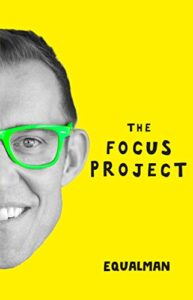
The Focus Project: The Not So Simple Art of Doing Less
One day, I go, “This new thing called email is new for businesses. Can you send an attachment?” There’s no Google, so I had to figure it out. I’m like, “You can.” Instead of printing it and sending it, I did the unthinkable and saved two hours of my time and emailed it. Within a minute, the head of the agency is in my cube. He’s like, “What are you doing?” I go, “It’s better for the environment because I’m printing on paper.” He’s like, “No one cares about the environment at this point.” I go, “It saved an hour of my time. I can tell as an intern that he doesn’t care how I spent an hour of my time. Finally, I go, “I can track this because a lot of times, the client says they didn’t get it. I can track that shows they opened it.” That saved my internship. That was a precursor to me getting into digital items. Later, when I took the full-time position, they go, “There are these things called websites that came out of nowhere. We need Cadillac.com. Can you figure it out?” I loved it and away we go, as they say, and the rest is history.
What a great story of origin of solving a pain point. Instead of the client saying, “I didn’t get it.” Not only did you get it, but you also opened it at this time and you spent this much time reading it. That’s fascinating. Earth Day was from the ‘70s. I remember that was a big deal in school and yet, the actual focus and implementation on it. That’s the thing that stands out for me in that story. It’s like, “I don’t care that you’re saving paper.” Of course, no one would typically say that now but interestingly, that was on everyone’s radar and yet, not being put into use.
This is Michigan. Keep in mind, Michigan still to this day has $0.10 per can, which is shocking to me. If you ever watched Seinfeld, they’re doing a whole episode on it. Most days, they don’t have a return policy to return your aluminum cans for money. You pay for it upfront, then you return them to get the cash. If you happen to be a lucky kid and find some cans, then that’s free money. It was very progressive. It’s funny to see how some things have progressed. Still, Michigan’s the only one that has $0.10, and not every state has a return policy on aluminum.
You’re also the only speaker and author who, to my knowledge, has an animation studio. Can you tell us how that evolved?
We’re working on a cool project. It’s one of those deals to where when I wrote Socialnomics, that’s my first book for a lot of your readers out there, I go, “I’m talking about social media.” Socialnomics was the four-phase book. MySpace was the biggest thing of the day. The book is about, “This is why social media is not for teenagers. This is why it’s going to change the world and how we communicate because governments are going to use it. Businesses are going to use it. It’s not just for teenagers.” At the time when I wrote it, everyone’s like, “Social media is for teenagers.” I’m screaming from the mountaintops, “No. It’s going to be massive.”
[bctt tweet=”When you make the right decisions, money follows.” username=”John_Livesay”]
I talked to CEOs for an hour and they’re like, “That sounds good. I agree with you,” then they wouldn’t do anything. I’m like, “I got to hit these people over the head.” I did Social Media Revolution which is a lot longer. Now, they’re a lot shorter. It’s a four-minute animated film with all these crazy statistics. They’re like, “If Facebook was a country, it’d be bigger than whatever.” I’m giving context to these data points and it went massively viral. Companies would reach out and say, “Can you do that for us? We want to do this initiative.” I go, “No, I just did that for the book to help explain it.” By the third knock, I’m like, “Wake up.” I’m like, “Yeah, we can do that. We have a whole studio. We will make it happen.” That’s how it all started and that’s what we do. We do only a couple a year because we want them to be super high quality, but we work with the best brands in the world. We’ve done some for Disney, Cartier, Mont Blanc, IBM and Chase. It’s been a fun ride.
A couple of takeaways there for people reading. When someone needs something that you can do and is willing to pay for it, perhaps that’s worth exploring as a business. Sometimes, we think it’s an outlier or one-off request. If you get enough of them, then you start to go, “This might be something.” Of course, that doubles down your brand credibility, uniqueness and memorability, which you have in spades. If you have a relationship with Mont Blanc and they’re looking for a keynote speaker, it’s such an easy introduction from the people who hired you to do the animation studio to say, “Let me put you in touch with so and so who’s hiring our speaker for the annual meeting.” Breaking through the clutter and being memorable and unique.
Speaking of clutter, in your book, The Focus Project, I don’t know if you were able to predict the future. Coming out of this pandemic, many people are complaining about how hard it is for them to focus. There’s an article about there’s something between thriving and depressed, and they’re calling it languishing. People are more tired than normal or Zoom burnout or all these other things. Even the children experienced school remotely. It has been a difficult challenge. What I liked about The Focus Project is this is a broader book than just execs. This is could be for moms, teachers and entrepreneurs. Anybody who feels that they’re overwhelmed and their me-time has gone out the window. My first question around this is, what inspired you to write it?
It happened before the pandemic. The book was complete right when the pandemic hits. What inspired me was that I was wrestling with it. I was sitting here going, “I’m the owner of my destiny supposedly but why is my hair on fire every day?” I’m like, “I’m not going to do that again tomorrow.” It was rinse, wash and repeat. I’m like, “This is crazy. If I’m struggling with this, let me go ask around.” I started asking school teachers, entrepreneurs, nonprofits, CEOs and small businesses. You got it. Everyone’s wresting with focus and how to focus in this unfocused world. The pandemic hit and it’s also throwing gasoline on it. Ironically enough, once the pandemic came out, the world’s first thought is, “Oh my gosh for the world,” then the second thought is, “I’ve got this new book. This is terrible. How am I going to launch a new book during a pandemic?” You’ve seen a lot of the movies. They’ve moved an entire year to launch Despicable Me 4. I started getting DMs and emails, “I need this book now. Don’t set due in the fall. We need it now.”
We did the unthinkable and moved it forward. We pretty much just published the book. It’s almost impossible to move a publishing date for a lot of reasons. I won’t bore you guys with that. Fortunately, we got to help these people. I don’t care if it impacts the sales negatively. If people are physically okay but mentally struggling, let’s get it out the door. It’s been rewarding for me to see that it’s helped people during these difficult times. It was the gasoline on the fire and it’s allowing people to focus in this unfocused world.

How To Focus: Focus is really hard but it can be learned and it can become a habit, but you need a purpose to help you drive that.
That’s such a great example. We might have heard the concept of, “If you have a problem, maybe other people have a problem,” as a source of creating something, whether it’s a book or a product or even a topic for a talk. What you do that I also want to underline for everybody reading is make sure it is a problem. Don’t just think, “If I have, then everybody does.” You did some research to confirm in the startup world that product-market fit was there. Ironically, it’s another great story that it was needed more than ever as opposed to being pushed back. The word unprecedented is a little overused with a pandemic, but your story about a book being moved up as opposed to being pushed back like movies and other things is unprecedented. I’ve never heard of a book even being able to get pushed forward, let alone because of a need. That must feel great.
That goes to a bigger picture about a certain point in our lives and in our career where we’re doing something way beyond, “This is going to make me a lot of money.” If you’re being hired as a speaker, people are looking to you for some leadership and some thoughts that they can implement. One of the subheads of your book that you talk about is The Not So Simple Art of Doing Less. You even have something in there about pretend like you’re in school again and go on recess. Can you talk a little bit about that?
It’s crazy. To dovetail on your point there, there are a lot of conversations about if we move the book forward, it might make less money because books are generally launched in the fall. I go, “Let’s do what’s right for the reader. If it loses us money, I’m okay with that.” Ironically enough, everyone knows that when you do that, you make more money more times than not. It’s not always rainbows and unicorns as my daughters would say but it’s true. When you make the right decision, it’s ironic how much the money follows after you do that. That’s been the case.
I can’t thank them enough for reading the book, all the positive reviews, and making it a commercial success. It’s been great to see that it’s helping people on an individual level. It’s a book that I wrote. It’s called a project because I undertook it. I was struggling with it. John, I also started to ask in one of the last events I did. It was funny as I opened the book. I’m at a cocktail reception. I was one of the keynote speakers. I’m in this VIP room and I’m like, “I can’t believe I was in this room.” Businesses have been in place for hundreds of years in America. They’ve got last names like Mars, and they live on streets like Hershey and Cadbury.
I’m like, “What an advantage. I can just sit here and listen.” I’m asking these icons, “How are you so successful?” They’re like, “We’re a little better at focusing the most.” I go, “What do you struggle with on a day-to-day level as the leader?” They go, “Staying focused.” I’m like, “It’s the same coin. Just two different sides.” That’s when I go, “They’re doing it.” That’s why I started asking everyone that I’d run into, “If I could have more time,” then I realized, “You don’t need more time.” If you woke up two hours early, that doesn’t mean you get more done. You might get less done. If I gave you six more hours in the week, we’d all be super excited like, “You should give me a bonus of six hours.” You wouldn’t get everything done that’s on your to-do list. There’s more to do. That’s the fallacy we tell ourselves or I told myself. That was one of the biggest a-ha moments from the book.
[bctt tweet=”Success is both getting focused and staying focused.” username=”John_Livesay”]
I was glad I went through the project marrying the institutional research looking, “What does the brain do? What does the body do? What does sleep do? What does the food do?” Also, “Here are some tips and tricks when you’re in an office,” and then testing it myself to see what worked and didn’t work to tell the story. Everyone’s different. I say, “This didn’t work for me but it works for a lot of people,” or “Even if it doesn’t work for most people, this worked for me.” I want to make sure everyone took it at a personal level. I’ve never written a book on a personal level before. We almost pulled that as well. I was at a book club meeting and they said, “That’s our favorite part. That’s why we write it.” It’s a larger female audience. Most readers are females, 30% are female. It’s been amazing. We’ve been lucky.
Two big things there again. You are constantly full of nuggets. I love it. The first one is getting focused is a competitive advantage. The other one is talking to somebody who’s at the peak of their career, whether they’re an actor or a director or executive. How do you get to the top? The next challenge is how do you stay at the top. How does somebody have a relevant career? The same thing is true about, “I’m more focused on somebody else but I also stay more focused on someone else.” The second part of what you said that I’ve learned also is when we speak, write and talk to people, the more vulnerable we are and the more they connect with us. As opposed to pretending that we always have it all together all the time in terms of confidence or whatever the topic is. People like to hear our struggles and journeys. That shocked me because you shared that you played basketball in school because you happen to be tall and it’s the law.
I happen to be super-fast and quick. I’m kidding.
When someone sees somebody that’s tall, fit and in shape, they assume they’ve been like that their whole life. They don’t have to worry about it or think about it like us mere mortals.” You talk about you’re in Sweden and suddenly, you’re getting this little funny jab from your dad saying, “Those pants look a little tight there.” You reframed something about, “Instead of indulging in all this wonderful chocolate, when I’m in this country, I’m going to do something differently.” Can you share that shift?
It relates to neuroscience. For all your readers out there, you have sets of friends to where you’re a certain character, for lack of a better term. You have different subsets of friends. For some subsets, you’re the healthy person. When you’re around those people, since they are deeming you the healthy person mentally in your mind, you’re like, “A healthy person doesn’t eat this.” You would have peer pressure in a good way. You wouldn’t eat something unhealthy because then people say, “I’ve never seen you eat something like that,” or conversely, it could be, “You’re the one that’s always out there doing the crazy thing. You’re the one that’s willing to go talk and get this figured out.” We can’t get a table at the restaurant. Jill is the one that always gets it done. Jill’s the one that doesn’t matter. She can go. She’s not afraid to go talk to that stranger at the hostess stand. She’s going to make it happen.
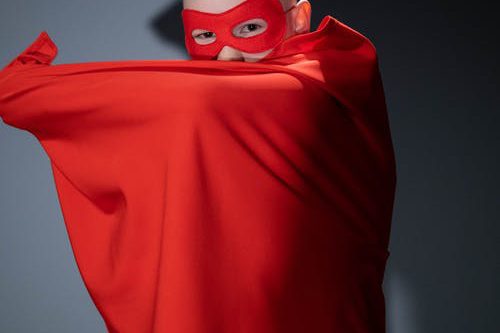
How To Focus: There is a superhero in all of us; we just need the courage to put on the cape.
We have different personas depending on the subset of friends that were with, so you got to take advantage of that. If you want to quit smoking, for example. It’s not like, “I’m going to quit smoking.” Neuroscience shows that if you say, “I’m not a smoker,” that changes everything. A smoker wouldn’t do that or a healthy person wouldn’t eat that. I told you that story because we do that with our friends. That’s how it works. There’s that peer pressure and also your mind takes on the persona. It’s interesting. When I went to Sweden, I was getting fitted in Boston, which is a progressive city. It’s European. I kept going to the guy, “No, this suit needs to be tighter. I’m going to Europe. They wear everything super tight, especially in Sweden.” They go, “This is crazy tight.” I go, “It needs to be tighter. This is frumpy.” Fortunately, there’s a lady. He was the boss but she had the guts to come around and she goes, “He’s right. It needs to be tighter. That’s how they wear it because I was just in Europe.”
That whole trip was funny because I didn’t consider myself in shape. I was backstage and I said to the group that I was with, “How do you stay in such good shape?” I was about to grab that jelly doughnut back there in the green room. I’ve stayed out of like, “I like to do this,” and all sudden I go, “I got to stay out.” The suit was ridiculously tight. Getting out of cars, I had to be careful. That was the most dangerous. Be slow and lean in, especially since I’m so tall. I’m trying to lean in without ripping the pants. Funny enough, I’m thinking these are trained professionals. The Swedish guys that I’m with, their suits are just as tight, and both of them split their pants during the week. I’m like, “I thought you guys knew how to do this but apparently not.”
That’s a risk they’re willing to take. Another big part of your brand is your name and this embodiment of a superhero. You have this quote from Superman and I love it. It’s like, “There is a superhero in all of us. We just need the courage to put on the cape.” When we’re talking about clothes and pants, I thought that would be a good transition into, “Is there a superhero in all of us?” Certainly, women I know feel like that’s true with Wonder Woman movies. Children are big on that for Halloween and tapping into that. I don’t think you usually have to convince children that they can put on this persona. They don’t have to feel like, “I’m not good enough.” We don’t have that ingrained in us quite yet. Would you share a little bit about your name, email and all that stuff, and then what you’re talking about with being a superhero?
I won’t go into the full length of the story because we did that last time. My name is Erik Qualman, so my first initial and last name is EQualman. For many years, especially the first fifteen years, I did not like it because there’s some good-natured ribbing, whether it was at Yahoo back in the ‘90s or Travelzoo. It’s like, “We need a coffee. Equalman, super-fast, so go get the coffee.” It’s like, “We need to crunch these numbers over the weekend because we’re going public. Equalman is super strong. He can crunch the numbers over the weekend.” I thought all this time that is happening to me, and then the story I told last time is I realized, “This is happening for me. What a blessing. I can’t believe I’m Equalman. Let’s step into it.”
That Superman quote resonates. I have the courage to wear the cape. For those that have ever seen me, I wear these crazy bright green glasses. Being from the Midwest, it’s uncomfortable for me to wear these and step into it, to put on these glasses and put on that cape, but I know that it gets the brand out there and it’s good financially. I had a tough time wearing them at first before I went all in because I felt like, “Look at me,” and then people are looking at you. I know that sounds weird because I’m on stage a lot, but a lot of us are introverted-extroverted. It depends on the moment.
[bctt tweet=”It is up to you to unleash your superpower.” username=”John_Livesay”]
I realized that the glasses could help one person. I’ve seen people come up to me because they can recognize me. It’s great because if I was taking them off, no one’s going to recognize me. When people come up, I realized that if I can help one kid out there, just one other person, it can be a kid at heart even 18 or 80, it doesn’t matter, then it’s worth stepping in that discomfort. It’s worth putting on the cape or in my instance, it’s worth putting on these green glasses. That’s why our podcast is called Super U. It’s all designed to give you tips to unlock and unleash the inner superpower that’s in all of us. That’s what we’re trying to do. Give you that moment that we can unlock it, but you need to unleash it. We can give you the key to help you unlock it, but you’re the one that needs to unleash it. That’s what we always try to do. Entertain, educate and empower people to achieve their best life. That’s our whole mantra and that’s what we’re trying to do.
The willingness to be a little different and pull a little attention gives other people the willingness to realize, “I don’t have to be someone who fits in. I can maybe take a risk and be myself.” That’s the real gift and why I wanted to bring it up again because there are so many layers to it. The other thing you talk about especially as it relates to focus and making it a project is this concept of selective attention. We’ve experienced it but I would love to have you define what it is and how we can use it to be more focused.
One example of selective attention would be if you’re in the market and you need a new car. There are three cars you’ve figured out you want out there. All of a sudden, you start looking at them, you see them everywhere. Let’s say you decide, “I want this GMC SUV because I got two kids.” All of a sudden, you’re trying to figure out the color, and all you see are these GMC SUVs. That’s selective attention. That’s one example. The way you can use that is trying to write down what are you focused on and then use that selective attention to your advantage because then you put that in your brain. A lot of times, it got to go across your lips, so verbalize it out loud to people, and then to the pencil tips, so write it down. Lips and pencil tips, and then that helps to train your brain, and then that increases your selective attention around those things.
What a great soundbite, lips and pencil tips. I love that. That’s visual. It’s clever. Any last thoughts you want to leave us with on how we can be more comfortable doing less or realize that we need to give ourselves a little recess?
There are three things I learned from the entire project. Number one, focus is really hard but focus can be learned and it can become a habit. You need to have a purpose to help you drive that. There are three things that I learned that I call the three Ps. The first one’s purpose. For example, let’s say you want to eat healthier or stop smoking. If you rely on willpower, that’s not a purpose. The purpose is, “I want to live longer.” That’s okay but what’s better is, “I want to live longer because I want to spend more time with my grandkids. I want 5 or 6 more years with my grandkids.” It’s getting to that purpose. It helps you form that habit of focus on that certain thing.

How To Focus: We need to know our purpose. We need to have a process and we need to focus on the progress of what we’re doing.
The second thing is the process. The great people that we interviewed are not born with the DNA that allows them to focus better. What they’ve learned is they need systems and processes in place, not willpower. Willpower will fail you almost every time. Most of those systems or processes are around saying no. If it’s not an emphatic yes, it should be an emphatic no. If someone asks you, “Do you want to do this?” In your mind, you’re like, “I should probably do that for XYZ reason. I should probably do that because I’m a good friend. I should probably do that because maybe it’s okay for my career.” That’s a no.
The reason you’re saying no is that you can say yes to the big things in the future. You think you have unlimited inventory the further out it is. Your inventory is set to respect the capacity. Put those systems and processes in place. Most of us are people pleasers, including myself. Having a system where I can just copy and paste an email and tailor it for that person. That makes it easier. Understanding that a quick no is better for that person as well than a long-drawn-out no. It’s not an emphatic yes. It should be an emphatic no. We don’t have time to get into all the processes you can set up but that’s one.
Last but not least, this is the most important. It’s about progress, not perfection. If you’re like me, January 1st, if I’ve set up a New Year’s resolution or name your favorite time you set your goals. Also, you’re like, “New me tomorrow. I’m going to get up at 5:00. I’m going to meditate for ten minutes. I’m going to journal for ten minutes. I’m not going to eat any sugar. I’m not going to eat any gluten. I’m not doing this.” You’re going for perfection, so you’ve doomed yourself for failure. When if you just said, “From now on, I’m cutting out processed sugar.” Start small and then stack it from there. It’s about progress, not perfection.
I talk to people all the time about letting go of being a perfectionist and replacing it with the word I created, progressionist, because we’re wired for progress.
That’s great.
Thank you. You have to tell people, “Don’t think of yourself as a perfectionist.” I’m always like, “What should I think of myself then?” I made up this word progressionist. I’m a progressionist. I celebrate my progress, and I start my meetings with my team like that. What progress did we make? Let’s celebrate that. As you know, the brain is wired to celebrate it. Fitbit, video games, you’re at the new level. Purpose, process and progress. I love it.
I love what you brought up about languishing, John. My kids are in elementary school, so I’m going to give the school principal credit for this. Whatever you’re doing, put a comma during the pandemic like, “I did a podcast, during a pandemic.” “I did a virtual keynote, during a pandemic.” Give yourself a break. I love your term there. It’s awesome.
Thanks. If people want to reach out to you, they can go to Equalman.com to find out more about your book or hire you as a speaker. Erik, thanks again for coming back on. Thanks again for writing this important book. It’s a perfect time.
Big hugs, John and thanks for everything that you’re doing to make the world better. It’s so good. It’s such a blessing to have you in my orbit.
Likewise. I’m so grateful we’re living in the same wonderful city at the same time in Austin. Thanks for sharing your passion with the world. Everyone always feels better after interacting with you. I’m certainly on that team.
Right back at you.
Important Links
- Erik Qualman
- The Focus Project
- Erik Qualman – Past episode
- Socialnomics
- Social Media Revolution – YouTube video
- Cadillac.com
- Super U – Podcast
- Better Selling Through Storytelling Method Online Course
Wanna Host Your Own Podcast?
Click here to see how my friends at Podetize can help
Purchase John’s new book
John Livesay, The Pitch Whisperer
Share The Show
Did you enjoy the show? I’d love it if you subscribed today and left us a 5-star review!
- Click this link
- Click on the ‘Subscribe’ button below the artwork
- Go to the ‘Ratings and Reviews’ section
- Click on ‘Write a Review’
Love the show? Subscribe, rate, review, and share!
Join The Successful Pitch community today:
- JohnLivesay.com
- John Livesay Facebook
- John Livesay Twitter
- John Livesay LinkedIn
- John Livesay YouTube