

Bust Your Limiting Beliefs With Christopher Burns
Posted by John Livesay in podcast | 0 comments

Most people have been thought to believe in one thing their whole life without really understanding why. Some of these beliefs would be limiting beliefs. They would stop you from reaching your full potential. Find a new identity for yourself so that you can improve in whatever business you’re doing. This is how Christopher Burns became the person he is today. Christopher is the founder of Men Mastermind. He dedicated his life to coaching men to activate their purpose, power, and prosperity. John Livesay brings him in to the show to teach you how to remove your limiting beliefs and activate your purpose today.
—
Listen to the podcast here
Bust Your Limiting Beliefs With Christopher Burns
Our guest is Christopher Burns. He dedicated his life to coaching men to activate their purpose, power and prosperity. He teaches people how to go within to master themselves, which allows them to create their dreams. He’s been coaching men, entrepreneur and leaders for several years and works with these clients one-on-one, group coaching and home study courses. Welcome to the show, Christopher.
Thank you, John. It’s great to be here. I’m grateful to be on the journey together. Thanks for having me.
I love to ask my guests their own story of origin. You can go back to childhood or school, wherever you want to start your story. I have a friend that I’m a godfather to his son and I say, “What do you want to be when you grow up?” There are lots of obvious choices like a fireman or whatever. In his case, a security guard came out. I was like, “We might want to aim a little higher but okay. Is it the uniform you like? What’s going on?” Most people don’t have a childhood dream of doing what you’re doing. That’s why I’m fascinated to hear when did that start.
I dreamed of riding dirt bikes and motocross races when I was younger. That was something my dad and I did as a bonding time. We would go out to the desert and ride dirt bikes in Southern California. I was a curious kid. I saw opportunities and I was questioning, “How does the world work?” Here’s an example. When we were driving up to Northern California where our family has a cabin, I asked, “If someone throws a baseball in one car going one way and another person throws a baseball in another car going towards us, at what speed do the baseballs hit each other?”
[bctt tweet=”Accountability partner keeps your revenue consistent.” username=”John_Livesay”]
It was funny because that’s how my mind worked. At the same time, I was so curious that it started to aggravate my dad a little bit. He had a little shorter of a temper and he said, “Don’t you ever stop asking questions? Don’t you ever just enjoy?” That was that moment where I was like, “It’s not okay for me to self-express, to be curious and to be me.” That was one of the first memories of having that. Over the next decade or so I proceeded to close myself up and shut myself off from being self-expressed.
You might see me now communicating fairly effectively on podcasts, interviews and speaking. Throughout high school, I was so shy. I didn’t know how to communicate. I didn’t know how to self-express. I was introverted and afraid of what people thought about me and the world in general. I didn’t want to pick up the phone and schedule a dentist or a doctor appointment. I’ll say, “I don’t want to deal with that, mom, you deal with that. Dad, you deal with it.” It was a scary time for me in being a young man and then trying to figure out life. As children, I believe we get to figure out what is our journey in life and what are we meant to do.
I went to school for Electrical Engineering. I got my degree but I was also not seeing myself in that traditional route and hired a life coach. I was going to Toastmasters and things like that. Lee Adams owned a successful radio electronics store in Southern California. At the time, he was dying of cancer and he was attempting to overcome that. I was so inspired by him that he was giving his last breaths being of service, contributing to me and other people who we believed in to live their dream life that I was moved by, “This guy is living for something.” That stuck with me and planted a seed that I love to serve people. I love to help people make their dreams come true, especially men in this vehicle of the Men Mastermind, mastering men within. That’s a brief overview of a couple of those key points that made me so passionate about coaching.
I want to double click on “I’m too shy to even call a dentist” to now go where you’re running men’s groups and speaking. That’s quite the hero’s journey, as we say in the world of storytelling. It’s quite an arc. Most people don’t start quite that shy. It’s interesting when my mom was visiting me when I was living in LA and I said, “Let’s go into the Beverly Hills Hotel. They have lots of movies there and there are all kinds of history.” She’s like, “No, I’ve not dressed appropriately.” It never occurred to me to not feel okay enough to go into a hotel lobby. My mom is from a different generation. It’s not like she was wearing cutoffs or something, but she didn’t have the proper jewelry on or whatever her mindset was about that.

Limiting Beliefs: Look for your limiting beliefs and remove what you got programmed into believing. Identify the beliefs that are sabotaging you.
That was my first a-ha of on some level, my self-esteem is higher than hers. That’s always a little trivial even as a young adult. You’re like, “I got other issues but that’s not one of them.” Do you think it stems from a fear of what other people are going to think about you? You’ve insinuated that. I’m not a therapist here so we don’t need to even figure out where that came from. How does somebody might have a small dose of that? I teach people all the time when I talk to sales teams that the fear of rejection is the number one thing that keeps people from going into sales. It causes burnout and we all have to sell ourselves whether we have that as a title or not. How did you get to the place where you’re like, “What somebody thinks of me is not going to keep me up at night?” What did you do to get over that?
I’ll be the first person to say that I’m still a work in progress. I’m still a recovering people pleaser, but I would do whatever I could to put myself in the fire. How do I put myself in the fire? I did nine months of door-to-door sales for Verizon phone lines and business in Southern California heat. It wasn’t the most pleasant experience but I got a lot of experience there. Even before that, I was in a network marketing company trying that out for about one year and quickly learned how much I had to grow in my leadership, self-esteem and confidence. I said, “What’s something I can do to challenge myself to break through this lack of self-confidence or self-esteem several years ago? Let’s go to Southern California, Cal State Fullerton College and go up to 50 random women and ask them for their phone number.” It doesn’t matter if I get it or not. I don’t even stick around long enough to get it. I just ask the question because it’s the question that I’m afraid of asking or was afraid of asking. I did that and it was so exhilarating. It’s such an adrenaline rush and so activating for me that it changed me forever.
The takeaway here is when you confront your fears and repeatedly do the thing that scares you, you start to realize that after a while, it’s no longer triggering and you’re not attached to the outcome. That was the real secret. “I have to do it,” and then after you have your 10th or 20th no, a yes is almost a surprise, “Here’s my phone number,” or maybe you change the way you’re asking to play around with it. The key and what I’m getting is not being attached to the outcome allows us to let go of some of our fears. Would that be a good tweak for the episode?
Yes. It’s a commitment to the growth mindset versus a fixed mindset.
[bctt tweet=”Have a growth mindset instead of a fixed mindset.” username=”John_Livesay”]
That’s the old comfort zone again, isn’t it? Tim Sanders was kind enough to write the foreword to my book and he talked about it in terms of you either have an abundance mindset or a scarcity mindset. Einstein said, “The biggest decision you’ll ever make is, do I think the world is a friendly and safe place or not?” This growth mindset or fixed mindset is in that same genre of me growing, “Does that take away from someone else?” You do have a mindset that there’s a fixed amount of abundance and joy in the world or do you feel like it’s fixed? That leads to the next question which is you also help people become more prosperous whether they’re working with you one-on-one or in one of your masterminds. Let’s talk about your mindset and your beliefs around money and any growth you had to do on that.
I’m always a work in progress personally. I believe that we’ll keep working until we’re in the grave on becoming a better version of ourselves. For my upbringing, we were comfortable, upper-middle-class. In that next step up, the truly wealthy elite thing. My family had a negative view towards that like, “Power is bad. Power corrupts. Greed is bad.” All these things that I had to work through. I had the opportunity of excavating these limiting beliefs. That would be the very first thing if someone’s not where they want to be with prosperity with either the amount of money that they have or feeling and experiencing the prosperity that’s all around them because truly, we live in an infinitely abundant universe.
It’s all about our recognition and awareness of it. The first thing that I did was start writing down those limiting beliefs so I could get it out of my automatic monkey mind and the machine that keeps replaying the same tapes over and over again because that’s what I got programmed into believing. I got that down on paper and went through various reprogramming techniques but a simple one is crossing out the limiting belief and replacing it with a more positive statement. That’s something that anyone can do at any time.
The first commitment is I’m going to identify and inventory when these beliefs are sabotaging you when they come up. When I think about money, successful people or what it means to have a big business, does that mean I’m a slave to my business or does it mean freedom? It’s going through that process of re-choosing what is the reality that I want to create. I fully believe that we are the creators of our reality. Life is a game. It doesn’t mean it’s trivial but it is a game that I believe that we make up the rules. That’s a powerful place to stand in.

Limiting Beliefs: When you shift your identity, there’s an old identity that someone might have and you get to let go of that person. If you don’t have a new identity to step into, someone doesn’t have that new identity.
I tell people, “You’re the movie director of your own life. You can yell ‘cut’ at any time if you start playing out a horror movie of what the future might be.” That gives us the power. You can change locations as I did moving to Austin. That gives you a lot of freedom. It’s so important to write down because so many people in a digital age don’t write things down anymore. If you write it down, there’s that limiting belief again.” It’s so subtle and almost insidious. I remember growing up and I’d say something about, “Can we do this? Can we get that?” “Money doesn’t grow on trees.” That’s now implanted. I didn’t say it did but you’re implying that it’s not abundant. You’re not even aware that you’re implying that.
Excavating all that old stuff, writing it down and going, “Where did that come from? Does it really matter? Do I believe it true or false? Got it.” That’s a great starting point for getting people to go, “How do I replace it?” What I want to ask you about is and I want to see if you are doing something along these same lines. When I ask someone to stop thinking a certain way or let go of an old way of doing something, let’s say pushing out information to get people to buy. I say, “I want you to start telling stories and pull them in.” It’s crucial to give somebody something to replace something with. You can’t just say, “Don’t do this anymore,” and not give them what they should do as an alternative. Writing down the limiting beliefs and putting an X and throwing away doesn’t help unless you’ve got a whole new set to go in there. That’s what I’m getting at. I want to hear your thoughts on that.
Charles Duhigg’s The Power of Habit is a great start of that like nature abhors a vacuum if you don’t have a positive habit to replace the negative habit. You can do all the work that you want to replace the negative thing but chances are, you’re going to find the path of least resistance. Someone’s going to do that and it’s probably not going to be the best habit that could fill that space and slot. Another thing is the identity level, which is more in Atomic Habits with James Clear. It’s another habit formation stuff study. When you shift your identity, there’s an old identity that someone might have and you get to let go of that person. You get to kill off that person. If you don’t have a new identity to step into or if someone doesn’t have that new identity, then it will be very difficult for them to progress in a meaningful way. They will be leaving it up to chance. They will be a boat adrift at sea rather than a plane that is chartering a course to a specific destination.
Somebody’s got to take control of it. I talk about it in terms of being a copilot with your buyer and you’re both in the cockpit. You’re not flying the plane alone and they’re not flying the plane. It’s this concept of when you ask someone to buy or hire you or whatever it is, it’s not a shock. I said, “When we go on an airplane ride and they go without landing at LAX, no one ever stands up and goes, what?” I’m never going to fly around forever and yet, if you’re just adrift and your life is reacting to things and you’re like, “I have a flight plan and I have a destination in mind and a path to get there.” I might have to change the path like an airplane does with weather or what have you, but at least there’s a plan and we know where we’re going or where we plan to go as opposed to, “We’re going to get up and fly around and see what happens to the wind.” That’s a kite. That’s not an airplane ride.
[bctt tweet=”The fear of rejection is the number one thing that keeps people from going into sales.” username=”John_Livesay”]
This relates for me to the masculine energy and a healthy masculine because we might hear a lot about toxic masculinity these days. I believe that healthy masculine energy sets a container, sets a context, holds the frame and says, “This is what’s going to happen. I’m going to lead us to where we want to go. Together, we are going to go here. Does that work for you?” They check-in and they have this boldness, confidence and knowingness that, “Where I’m going matters. It’s meaningful and valuable. I wouldn’t be here unless I was planning on getting us to something that’s going to make a difference for someone’s life.” That’s key in the masculine aspect and especially with people not having a lot of great masculine role models growing up that we get to step back into that and trust that that masculine is valuable when it’s done in a healthy, not overly aggressive, overly controlling or overly manipulative way but rather purely, “Do you want to go on this journey? Here’s where we’re going.” It’s that open invitation which I believe is key in sales.
I tell people, “Once you tell a good story, the question is do you want to go on that journey with me?” It’s not about pushing them to do something. You’ve told a story that they see themselves in. One of the challenges I faced and I know that you helped a lot of men deal with is feast and famine. When I had a corporate job, you know what your paycheck is and you hit your bonus, you get some more money. It’s not so much a roller coaster. When you’re an entrepreneur, that stability is gone. Sometimes you have a great month and then sometimes a slow month. A pandemic or all kinds of things can happen. Especially as a speaker you’re like, “I need to learn how to do virtual talks now, not just in-person.” What tips do you give in your coaching and masterminds around breaking through these cycles? Does it keep going back to mindset or is some systems not in place?
I know you would have a great mindset around resilience and adaptability because of your TED Talk. For me, the thing that I focus on is if you can have someone outside of you like you said with that copilot, whether it’s a coach, an accountability partner, a business partner, a colleague, whatever it is, but someone who is able to be there to check you and check the person, check one of our readers on their growth, on their metrics, on the statistics that matter and are vital to them in their business, then I find that accountability is essential, especially for people who start up their own venture, their own vehicle.
For me, it was difficult to go from listening to teachers and bosses for most of my life and then transition into I get to generate myself. I get to generate my own activity, energy levels, intention, focus and activity. I find that having someone by to you who is able to be that copilot and consistently hold us accountable is key. For me, coaching is one of those things. Even masterminds is a great thing. If you could share about where you’re at, what your numbers are in the group. I think that’s super important but ultimately, what are those processes every week that we look at? We’ve probably all heard of KPIs, Key Performance Indicators. How do we know if we’re on track or off track? The real key is, do I know the vitals of my business? Do I track those on a daily, weekly and monthly business? Am I in tune with those? Do I know what those are so that I can course-correct them if need be?

Limiting Beliefs: You need to have someone outside of you, whether it be a coach or a colleague, who is able to be there and to check on you.
Am I in tune with those? That’s the magic source there because everything is energy, money is energy, relationships are energy. I remember when I was being interviewed for a speaking engagement and it was between me and two other speakers and then I get the email from the agent go, “Congrats, they picked you. They liked your energy.” Literally, that’s what they said. I thought, “Is it that obvious?” That’s what people are buying. It’s not the book, the content, the tours, the video or all the things that we think are going to get them to say yes. Later the event planner said, “I felt so good talking to you. I figured that if I feel this good, you’ll make the whole audience feel that great.”
This accountability partner keeps revenue consistent. That’s a nice little tweet for the episode as well because that sums up what you said in a way. This course-correct part is so crucial because if you’re flying solo and you don’t have anybody, you might not save yourself time to pull up on the airplane. If you’re thinking of it in terms of eating during the pandemic, “I gained some weight.” It’s like, “What are you going to do to fix it?” The next thing you know, “I haven’t done anything,” then you’re like, “Pull up already.” If there’s no one there going, “I see you’re eating more and exercising less, you know that’s not a recipe for what you want. How much longer you think that suits going to fit?” That’s probably the biggest challenge in why a mastermind that you offer is so valuable. It’s the isolation. In prison that’s the worst punishment, solitary confinement. We can’t go it alone in our lives or in our business. You have three pillars that you have in your curriculum. I’d love to hear what those are.
The three pillars of the mastered man curriculum are purpose, power and prosperity. Going back to what you were saying about isolation, I believe that when someone is alone, the confinement, they’re in prison by themselves, they get to sit with the shame and what they’ve done. There’s no human connection, openness, realness, transparency and vulnerability. Starting with that power pillar is out of order but the power pillar relates to this because if someone doesn’t feel powerful and able to express themselves like I know I didn’t when I was growing up and when I was super shy and introverted.
I know that when one of my clients launched his podcast, he didn’t feel powerful to be able to do that. He didn’t feel like he had the confidence to know-how. He was stuck in his head trying to figure things out. It was this block for him so when he reconnected with his self-esteem, self-worth and power, he was able to step into that and launch something that now is impacting a lot of people’s lives. That would be the power of prosperity and freeing ourselves of shame, limiting beliefs and things like that. The purpose pillar is where we start, typically. That’s because of identifying what is the vision for our life, the dream, the desire, where we want to get to, the destination so that we can course correct, so that we can start making different choices, putting in different habits, putting in different routines, activities and systems to be able to get there. We first got to know where do we want to get to and then also come to a humble acceptance of where we are now. That’s a big challenge for a lot of men especially. It’s the ego of, “I’m supposed to have it all together. I’m supposed to have it all figured out.” When we can be humble about that, we get so much freedom.
[bctt tweet=”In order to confront your fears, you need to do whatever you could to put yourself in the fire. ” username=”John_Livesay”]
I remember on a family vacation, we would drive and this is way before GPS and my dad would get lost. You could not get that man to pull over and ask for directions. I’m like, “Can we please pull up? Ask someone. We’ve gone too far.” “No.” “Why?” He’s like, “I’m a guy. I should be able to figure this out. I don’t want to bother.” Whatever the belief system is. It’s not just about money. It’s this concept of going it alone. Therefore, if I make a mistake, you don’t have any compassion for yourself and you’re judging yourself so harshly.
I remember hearing someone talk about the whole process of driving is error correct. On the freeway, you start to get a little too far to the lane. The movements are so subtle. I love that concept of driving is an ongoing series of error correct. It’s all unconscious competence, so why would we suddenly fear that we can’t make mistakes because we’re always making mistakes. They’re not huge. Luckily, we don’t crash the car but it’s always that. I love it. Christopher, do you have any last thought or a quote you want to leave us with?
I’d love to breathe, John. I believe breath has gone backseat in a lot of people’s lives and their personal presence and power in that aspect. For me, getting in touch with our breathing and activating our bodies, getting reconnected with our bodies, there’s so much wisdom within our bodies. If we want to be better salespeople, leaders, fathers, wives, whatever it is, if we are striving to be a better version of ourselves, then I believe we get to tap into the power within us. There are all kinds of different routines and things that you can do. A simple one is to reconnect with your breathing and that can start with 1, 2 or 3 minutes of being mindful and present. The mentor of mine, Jeremy, calls it having a mind break. If you take a three-minute mind break and you do this a couple of times throughout the day, it can drastically improve your performance because you’re able to be centered, grounded and ready to go versus all spun up and in reaction mode.
If people want to reach out to you to find out about your programs, your masterminds, where should they go?
Go to MenMastermind.com. You can also shoot me a DM on Facebook or Instagram. Facebook is @Th3Burns. Instagram is @IAmMillionaireChris. You can also email me, [email protected].
Thank you so much, Christopher. It’s been great hearing your insights. I’m going to be fascinated to watch you continue to grow. If you’re this far along in your life and your career at the ripe young age of 30, it’s going to be fun to cheer you on from the sidelines even if you don’t know I’m doing it.
I feel the support. Thank you so much, John. Thank you to everyone who tuned in. Stay connected to this show because when you pitched successfully, when you are an effective pitch master, learning from the Pitch Whisperer, all areas of life get better for you. John, thank you.
Thank you, Christopher.
Important Links
- Christopher Burns
- The Power of Habit
- Atomic Habits
- @Th3Burns – Facebook
- @IAmMillionaireChris – Instagram
- [email protected]
- Better Selling Through Storytelling Method Online Course
Wanna Host Your Own Podcast?
Click here to see how my friends at Podetize can help
Purchase John’s new book
John Livesay, The Pitch Whisperer
Share The Show
Did you enjoy the show? I’d love it if you subscribed today and left us a 5-star review!
- Click this link
- Click on the ‘Subscribe’ button below the artwork
- Go to the ‘Ratings and Reviews’ section
- Click on ‘Write a Review’
Love the show? Subscribe, rate, review, and share!
Join The Successful Pitch community today:
- JohnLivesay.com
- John Livesay Facebook
- John Livesay Twitter
- John Livesay LinkedIn
- John Livesay YouTube
Online Courses Create Freedom By Teaching Your Gifts With Danny Iny
Posted by John Livesay in podcast | 0 comments


Online courses are becoming more common today. These courses have become a way to share your gifts with others. John Livesay is joined by Mirasee CEO and bestselling author Danny Iny as they discuss sharing your gift and the freedom provided by online courses. Danny talks about the art of telling a story and using it to engage people and committing to learning. Learn how to be known for that one thing with which you can give the most value to the world.
—
Listen to the podcast here
Online Courses Create Freedom By Teaching Your Gifts With Danny Iny
Danny Iny is the guest on The Successful Pitch. He’s known for being an expert at online courses but as you’ll find out he’s an expert in many other things as well. He talks about what you want people to be able to do after they’ve taken your course. How well do you want them to do it and under what circumstances are they going to be able to perform? He says, “The other key is learning about something is different than living it.” Find out why he says that a quality course is like a fine piece of art. Enjoy the episode.
—
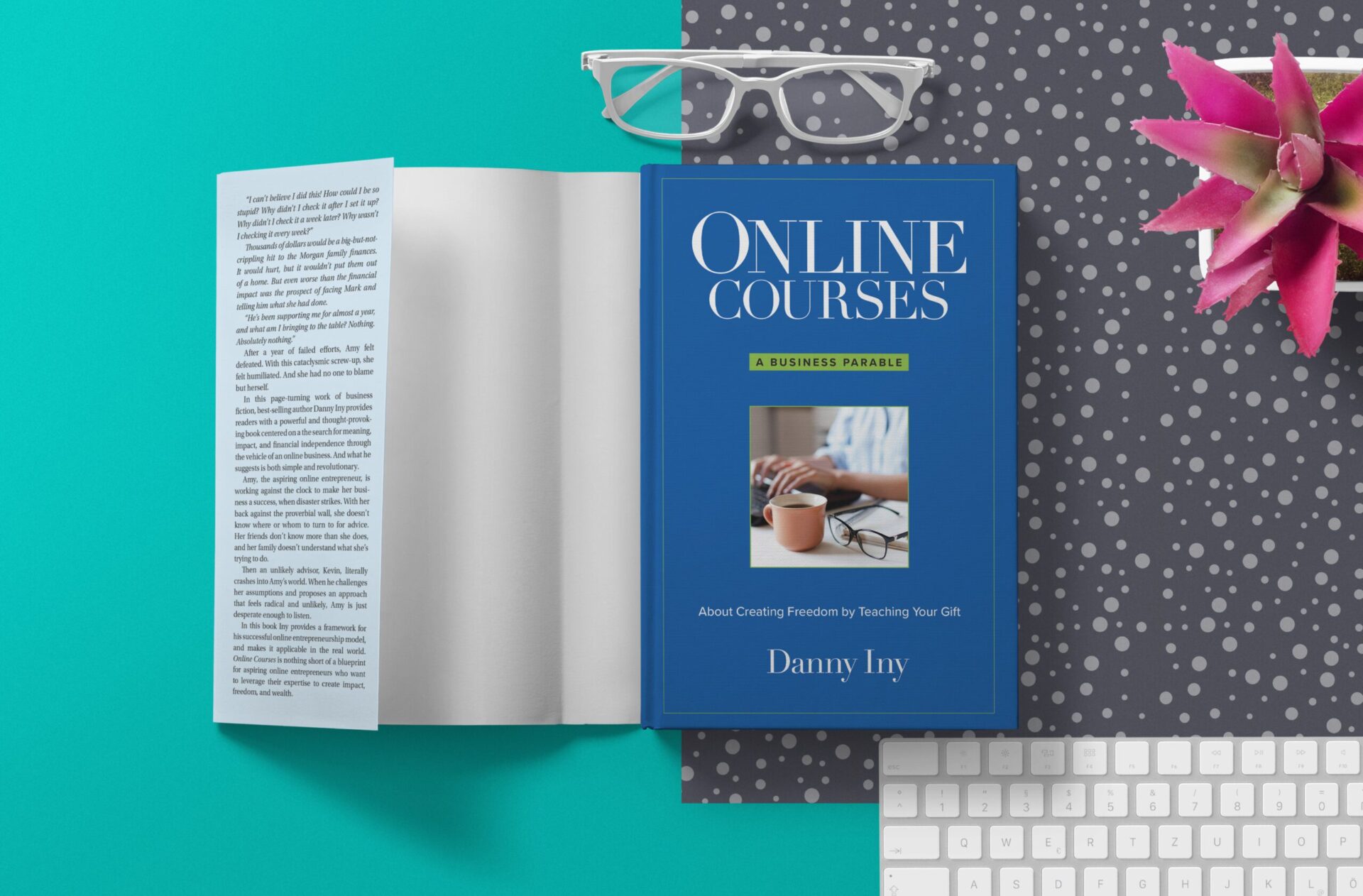
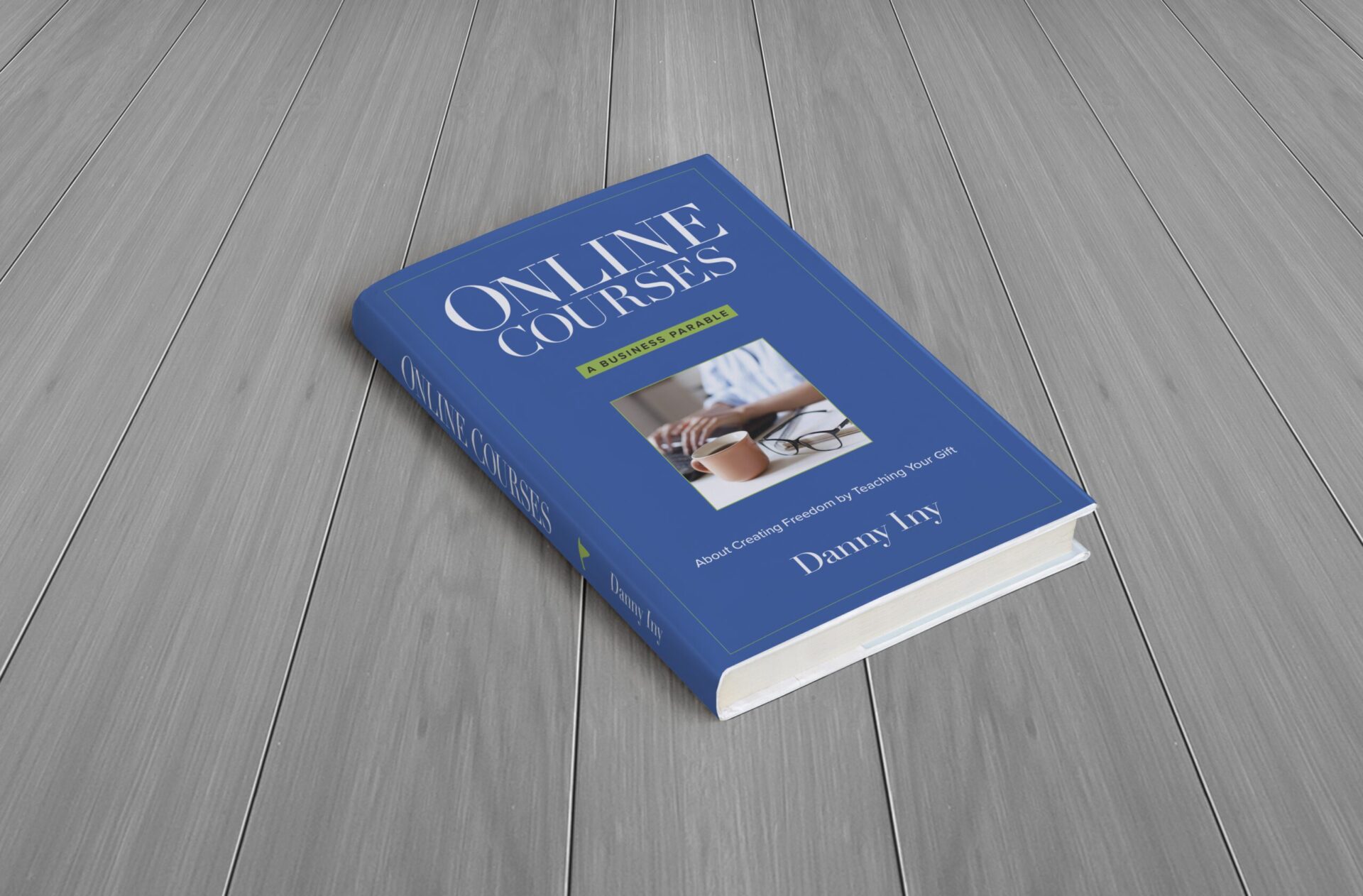
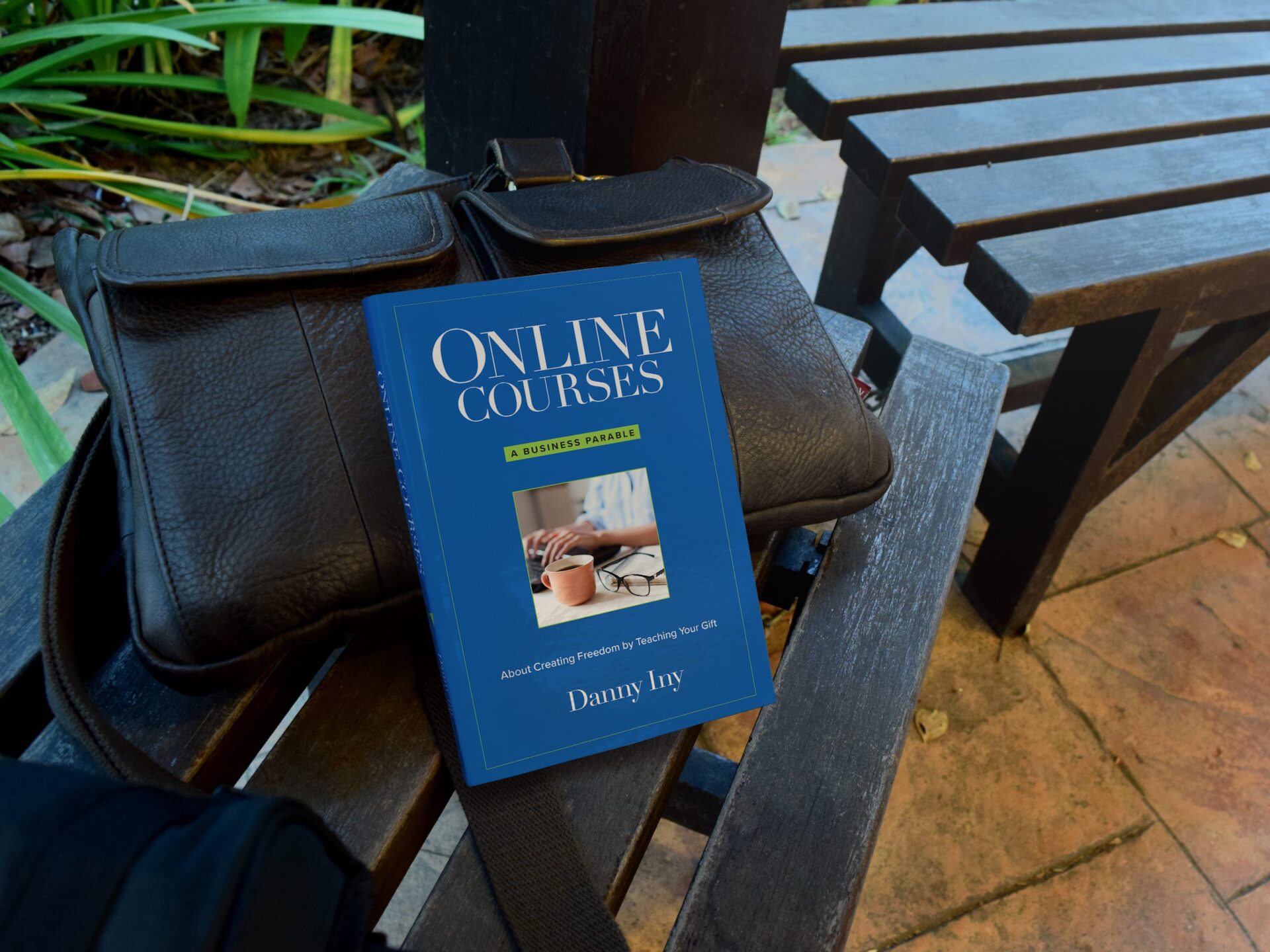
Our guest is Danny Iny, the Founder and CEO of Mirasee, which is a leading voice in the world of online courses. He’s been featured in the Harvard Business Review, Entrepreneur and contributes regularly to publications including Inc., Forbes and Business Insider. He’s spoken at institutions like Yale University and organizations like Google. His work on strategy training won special recognition from Fast Company as a world-changing idea. He’s also the author of Online Courses: How to Create Freedom by Teaching Your Gift. Welcome to the show, Danny.
[bctt tweet=”A quality course is like a piece of art.” username=”John_Livesay”]
John, thank you so much for having me. I’m super excited to be here.
I love that enthusiasm and energy. One of my favorite questions for my guests is to tell us your own story of origin. You can go back to childhood, school or wherever you want but was this process something that your parents said or did. Have you always loved learning? I’m fascinated to hear how this journey began.
I only started thinking of myself as an entrepreneur in the mid-twenties, which is funny because I dropped out of school at fifteen to start my first business. I’ve been an entrepreneur for longer than my adult life. Here’s the first entrepreneurial experience that I can remember. I was in the seventh grade. I was twelve years old and there was a cafeteria at my school and they had different lunch options. My parents would give me $2 to get lunch for the day, which got you the typical option but I like the $3 option.
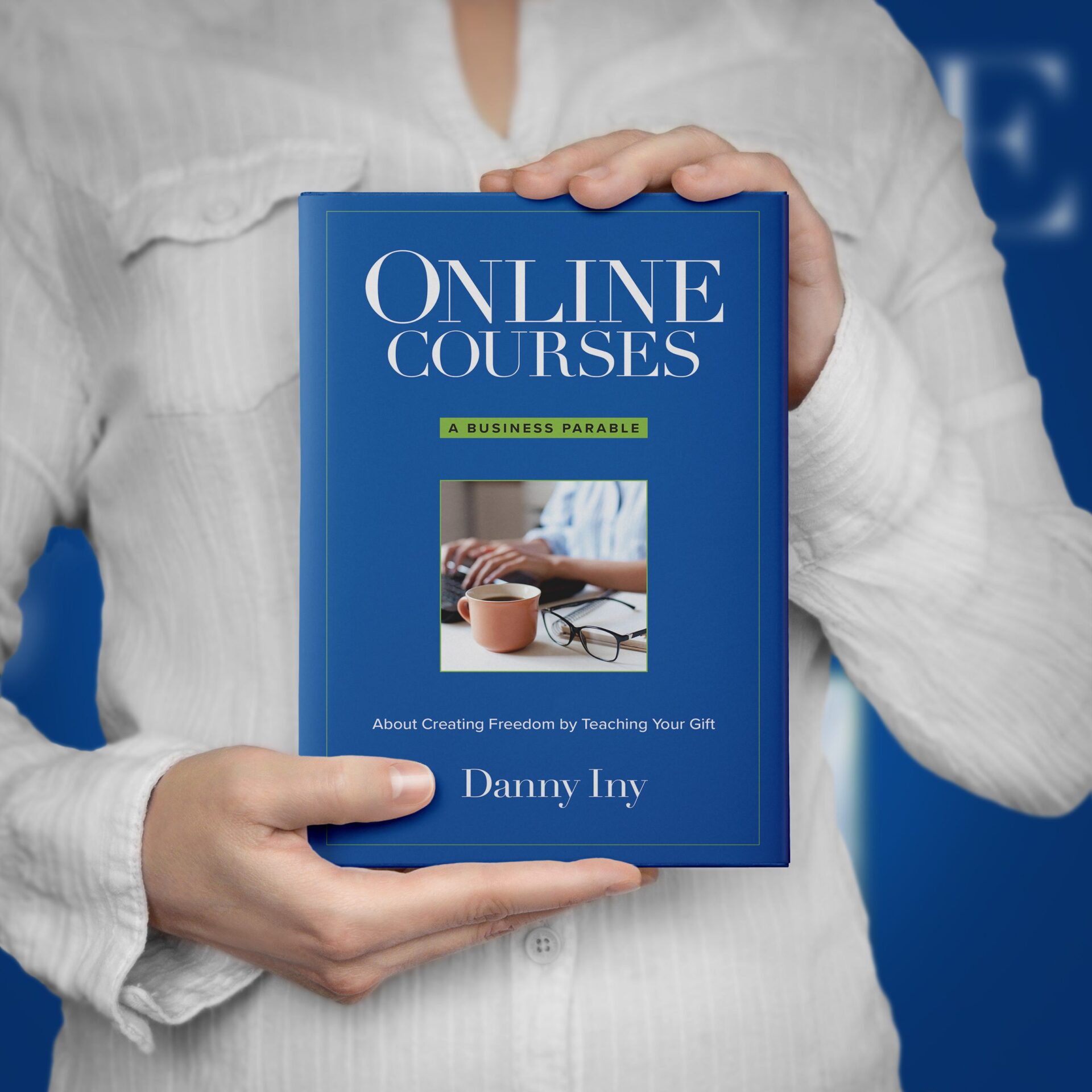
Online Courses: The only people who are perpetually starting a business are the ones who are not very good entrepreneurs.
It shows us how back in time this is because I don’t think kids can get anything for $3 now.
I’m sure it was subsidized but this was a little while ago. I wanted the $3 option and I noticed that my friend would get his lunch and he would get a soda, which was $1. He would get usually a Coke or Sprite but he was a good friend. I knew that he didn’t especially like Coke or Sprite. He liked cream soda, which they didn’t sell at the cafeteria. I figured out that I could get a rack of those cans of cream soda from Costco and it would cost me $0.15 or whatever and I could sell a soda to my friend for $1. He gets what he wants to drink for the same price and now I can afford my $3 lunch. At the time, people would be like, “You’re charging your friend for a drink?” I’m like, “He’s paying the money anyway. This way, he’s getting what he wants.” This is how I’ve always thought of entrepreneurship. I didn’t see myself as an entrepreneur. I was looking for opportunities and solving problems.
[bctt tweet=”What do I want people to be able to do after working with me?” username=”John_Livesay”]
That word wasn’t anything I heard in school. Everyone I knew, even if they did have their own business, they owned a dry cleaner or an air conditioning company. It was nothing in tech or online because that wasn’t happening then. It was either you go work for a company or your family business. The entrepreneurial part of it was not solving a problem. It was a business that an individual owned. It’s a fascinating thing to think of.
It makes sense if you think about it. Let’s presume you’re good at this entrepreneurship thing. The starting of the business takes a small amount of time and the running of the business takes a long amount of time. The only people who are perpetually starting businesses are the ones who are not good at it. Any entrepreneur who’s any good that you know, you’re most likely to know them in the stage where they’re running the business because that’s most of the time that they spend in that interaction.
Teach and Grow Rich: Share Your Knowledge to Create Global Impact, Freedom and Wealth
Let’s go from that in your journey of Mirasee, which is about reimagining business in general. You have seven core values. Many people may have values. They don’t post them. They don’t think about them. They don’t put them into action. You and I were chatting before the show about how impressed I am that you do put your values into action. Openness, transparency, respect, appreciation, humility and empowering other people, I wanted to see if there was a story behind how these values came about. Do they all come at once? Was it something that continued to evolve?
There is a story. In the fairly early days of this business, we had a different name at the time because we rebranded a few years into it when we realized the original name sucked. We had a team of 7 or 13. We were small at the time. We were doing a company retreat. I was going to say people flew in. At the time, everyone’s local. This was a long time ago. We’re in the chalet up north and we’re codifying our values. The way we did that and this is learned from a gentleman named Patrick Lencioni. We start by asking everyone, “Take a piece of paper and write down the name of 1 or 2 people on the team who exemplify what it is to work here. This is private. You’re not sharing this with anyone. This is for you as a reference point.” You’re going to write down for yourself what are the things about these people that make them exemplify what it is to be here.
We took that list, put it up on the board and we have 111 things. You collapse the list because the same thing shows up seven times with different languages and you start sorting it. You cross off the aspirational things. It’s like, “It’s not so much that this is who we are. This is who we wish we were.” That’s not a core value. You cross off the things that are hygiene factors like, “Showering won’t make you happy but not showering will make you miserable.” There are things that don’t exemplify who you are. It’s a pay-to-play in the industry. We promptly respond to our customer service emails. Any decent company has to do that. That’s not a special unique thing so we cross off the hygiene factors.
[bctt tweet=”A quality course is like a piece of art. It’s only good in the eye of the beholder. There’s no such thing as an objectively good course. ” username=”John_Livesay”]
We cross off the accidental stuff. For example, at the time, almost everyone who worked at the company was into board games. That wasn’t a core value. That happened to be the case. It was a happy accident. We cross all those out and what’s left is a candidate for a core value and we haggle, negotiate and we’re like, “What is most important to us to codify?” We arrived at six core values. Those were our values for a long time and they are real and substantive. We talk about them all the time. We acknowledge each other for them. It’s not a poster on the wall, although it is a poster on the wall behind me.
Over several years, we started noticing that there were a few ways in which our values were being misunderstood by people who were newer to the organization because they didn’t have all the context to understand it. That’s when we looked at those values and we’re like, “Let’s clarify the language here. Let’s pick this up there. This one has to split in two.” That’s how we arrived at the seven values that we have now and this has been the case for a couple of years now. It’s ever-present in running our business.
Let’s go to what made you write this latest book. This is not your first book by any means. I’m always interested in the story of origin as a fellow author. I know that coming up with a title can be challenging. There are usually many versions of it before you land on it. Because you’ve written other books, there has to be a creative urge to express something that hasn’t been said before. The subtitle grabs it.
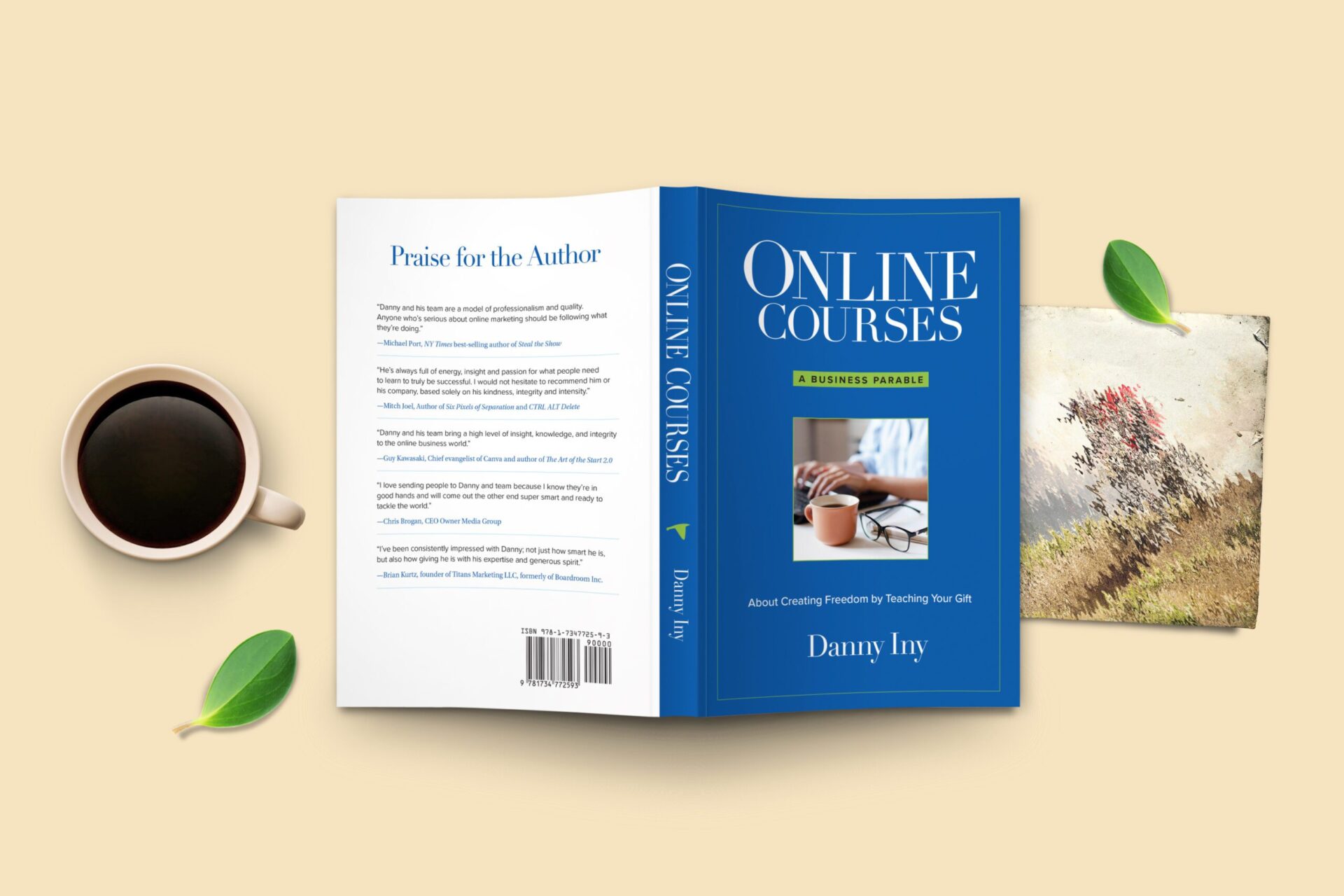
Online Courses: Reading a book about parenting is very different from sitting across from a three-year-old who’s screaming and throwing spaghetti all over the place.
In some ways, I don’t know that a lot of people think that an online course is a roadmap to creating freedom by teaching their gifts. Let’s break down those words, freedom, a gift and an online course. If you put those things together, I don’t know that a lot of people will go, “That’s a book title.” A lot of people will be like, “What does one have to do with the other?” A part of the way that you break through the clutter is giving people and bringing something new to look at going, “What?”
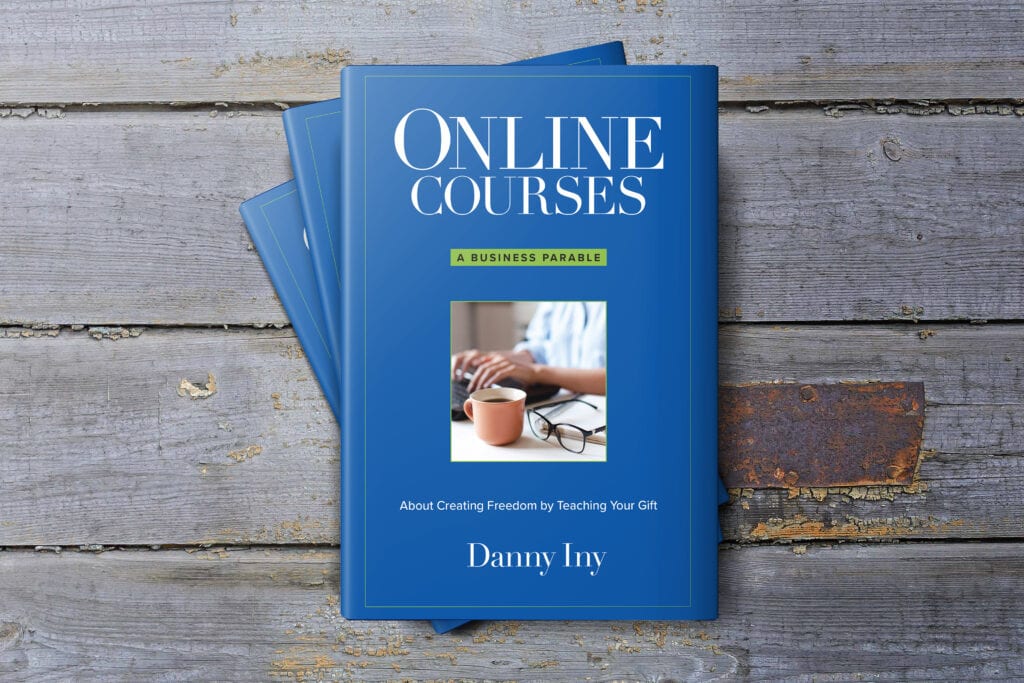
The title was pretty easy. The substance was hard. I’ve written several books about online courses. At some point, I’m searching for a reference to what’s out there. I noticed there is no book called Online Courses and yet that’s what people are going to be looking for. It was pretty clear that the next book is going to be called Online Courses and teaching your gift and creating freedom. This is what our business is all about. That was obvious so that’s what the subtitle is going to be. In terms of the content and style of the book, this was a different book than other books I’ve written. I’ve written several books about online courses. I wrote Teach and Grow Rich in 2015 and it came out with a second edition in 2017. Leverage Learning in 2018. Teach Your Gift in 2020. Effortless in 2021.
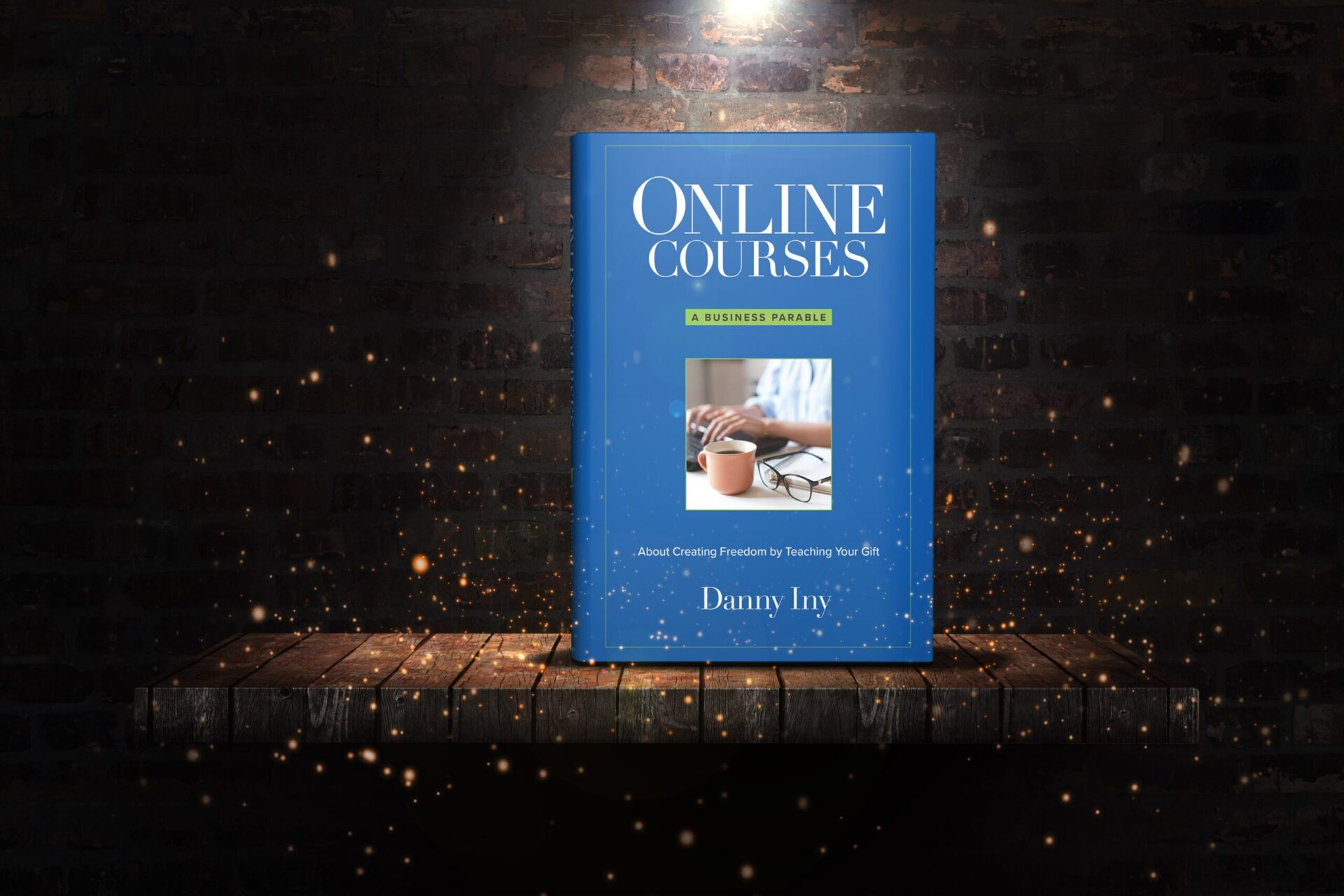
I’ve written about this a lot and based on the reviews that are out there, people seem to like it. In aggregate, they have close to 1,000 five-star reviews. I found that despite people liking the book, often there was a disconnect between what they’re learning in the book and being able to go and do stuff with it. That disconnect is about the fact that there’s a difference between learning about something and the lived experience of doing it. Hearing someone telling you about their ski journey is different from being at the top of the hill looking down and it’s terrifying. Reading a book about parenting is different from sitting across from a three-year-old who’s screaming and throwing spaghetti all over the place. They’re different experiences.
I wrote this book as a business parable. It tells the story of this fictional character. She is modeled after the thousands of people that we’ve trained in this process to show what are the steps in the journey of figuring out what you want to do. What are the demons that you have to struggle with? What are the places where people stumble and need to overcome? What are the challenges that get in their way? It’s meant to be an opportunity for getting the information and learn about all the steps. It’s also an opportunity to ride shotgun on that journey and see what it feels like experientially. That’s what I was trying to do with the book.
I’m going to go out on a limb and predict that it’s going to be as successful as Who Moved My Cheese? back in the day because it’s a parable. Parables are what I’m all about, which is storytelling. When you craft a story that people see themselves in as opposed to listing, “Here are the pain points you might be suffering,” and it goes to, “Here’s a story of Amy.” Suddenly you’re seeing yourself in the book and you’re like, “My name is not Amy but I feel the frustrations that she feels. I went and did something that was a big waste of time as opposed to spending time with my family and feeling guilty for trying to be in two places at once.”
Suddenly the neck gets wider and wider and it’s not even gender-specific but entrepreneur-specific. That’s where you go, “I know ten people that would love this. What a great gift.” That’s where the magic happens in a story as well. When you tell a great story, people remember it and share it. That’s where your brand ambassadors start happening and that’s what makes you memorable. Instead of creating yet another manual on how to launch and create an online course, which you’re certainly an expert at that. If you have a roadmap, you’ve done it.
Part of the reason people join your courses, masterminds and hire you for private coaching. I’m glad that you said it was a little bit harder than even the title because anything that breaks through the clutter is a little bit harder. Do we need another manual? Maybe not. You’re not doing that. You’re giving us the experience of living it as opposed to learning about, “Here are the six steps to figure out what your gift is. You might get frustrated,” whatever the journey is. It’s the classic hero’s journey that there are going to be days that you think, “Why did I even try this?” It’s the trough of despair that entrepreneurs go through so often. If you wanted people to think of this book, what would be one of the main things you would hope they would get out of reading it besides realizing that they have a gift that if they figure out how to monetize it, it’ll give them some freedom?
The number one thing that I’d want people to take away from that, beyond the subject matter and the opportunity of online courses is that if this book does well, it will be because people feel seen when they read it. They’ll be like, “Someone gets it. It’s not just me.” That is something that is so important and necessary for all of us as human beings to not feel isolated and yet it’s such a disconnect for a lot of entrepreneurs.
The reality is that most of the people in our lives, as supportive as they might want to be, don’t understand. They don’t have any frame of reference for what it is that we’re undertaking for the ambiguity, uncertainty, unpredictability and the amount of our identity that we’ve put into what we’re trying to do for the hopes, dreams, ups and downs and the highs and lows. Everything else will be a byproduct. If this book does well, it’ll be because people feel seen and able to relate when they read.
What good parents do is make their children feel seen, heard and acknowledged. What a lot of entrepreneurs or people in big companies forget is their employees have the same needs. It doesn’t go away, “Watch me jump in the pool.” Mom or dad doesn’t go away because you get into Corporate America and the recognition program of all of that. For me, I’ve helped companies make their employees feel seen by asking them what their story of origin is. What made you get into healthcare, for example? Whatever it is that people go, “No one’s ever asked me that before.” It bonds people together.
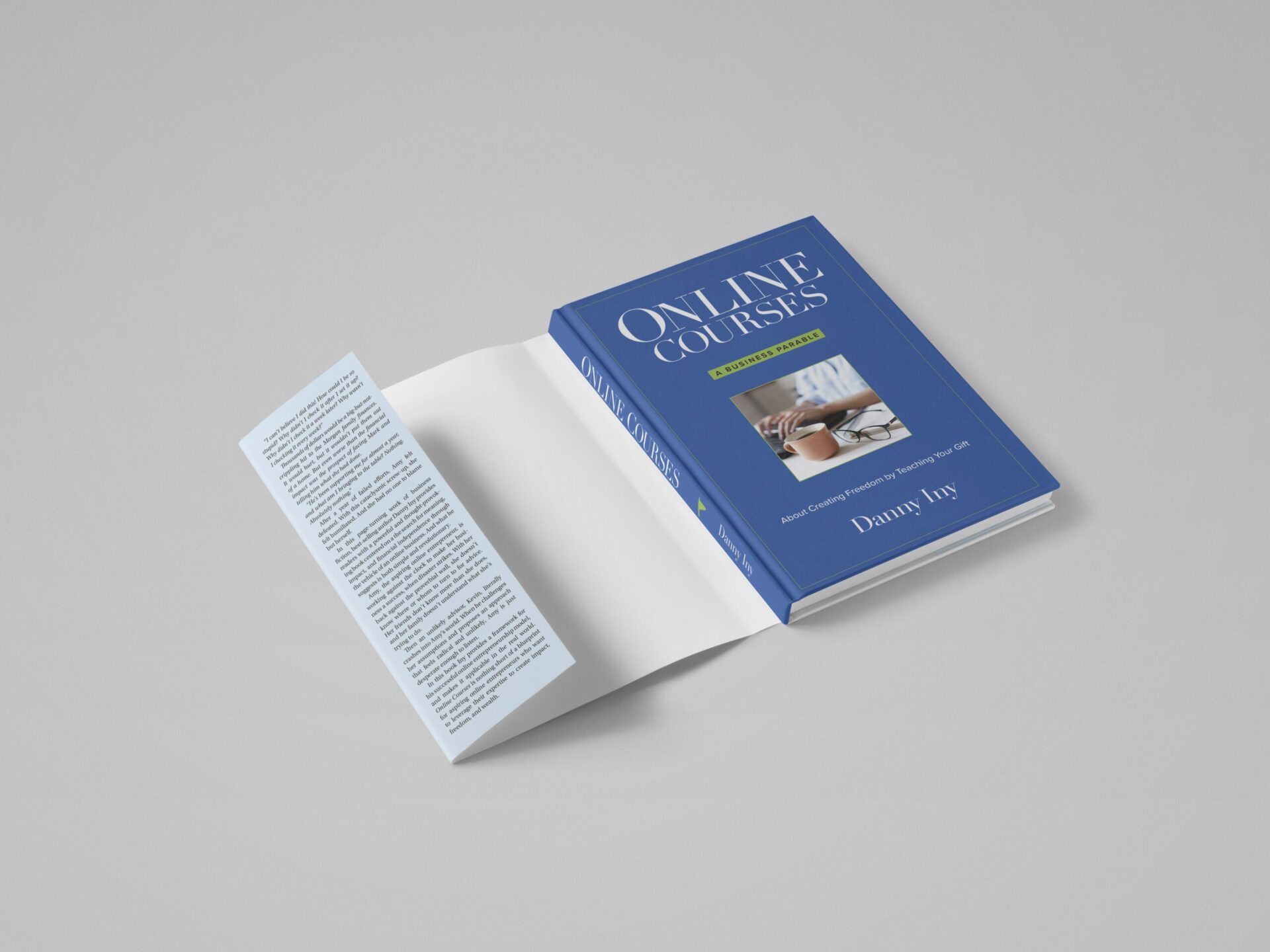
One of the things that I like about your writing, Danny, is the specificity, how specific you are. For example, there’s one line here, “Amy noticed a milk-colored stain on his left shoulder, the sort that a baby would make spitting up on you.” If you are the person that notices those details and you, as a writer, can get that specific because you probably know that people put their baby on that left shoulder, there are 101 details that go into that then we’re in the story. Part of the secret to becoming a good storyteller and a good writer is the exposition, the who, what, where, when. You have such a gift of pulling us into this parable that we’re no longer feeling we’re learning something but we’re in a story. We would be in a movie theater or Netflix. That taps into a different side of our brain, doesn’t it?
It does and it’s gratifying to hear you say that. This is my 11th or 12th book. As I sat down to write this, my first thought was, “I have no idea how to do this.” It’s like I’m completely starting from scratch. What I kept in mind a lot because I’ve been listening to a lot of audio content and audiobooks is I thought a lot about what this is going to sound like. We’re getting it produced. That content isn’t ready yet but we’re getting it produced. I’ve got a team of actors. It’s going to be amazing. I say that while knocking on wood. It’s the famous last words, “I hope it will be amazing.”.
There are people who love this whether it’s a podcast or an audiobook especially if it’s a story and you hear the sound effects like the knocking at the door and you start imagining it coming to life. The other thing that you did that is going to make that Audible so successful and I always teach people that when you tell a story, tell it as if it’s in the present tense that the dialogue is happening now. For example, when I give a keynote talk to sales teams, I talk about the time I got to meet Michael Phelps. I went up to him and I said, “You’re so successful because your physique is crazy, fins and lung capacity. I’m guessing there’s something else.” He said, “Yes, John. When I was young, my coach said to me, ‘Michael, are you willing to work out on Sundays?’ ‘Yes, coach.’ ‘Great. We got 52 more workouts than the competitors.’” I then say to the audience, “What can you do? What are you willing to do?”
That story is connected to an outcome that people can see themselves in but I tell the audience, “If I told you that story in the past tense, I met Michael Phelps. I asked him what his secret is. He told me he worked out on Sundays.” It’s not nearly as interesting. You don’t feel like you’re in the story. You probably wouldn’t remember it as much. I act out with the coach’s voice, what his young voice is. You feel like you’re eavesdropping in on the coach and Michael having a conversation, which is eavesdropping in on the conversation that I had with Michael.
That’s the sophisticated level of storytelling. I’m telling you a story about somebody who then told me a story. The way to keep that all relevant that you do so well in this book is I feel like I’m in the story and listening to the dialogue. That is not something that a lot of authors or storytellers know how to do. We always need some details of interstates left. It’s half an hour later now. We need to know where we are. You also do a great job of expressing internal thoughts and feelings that then get expressed into dialogue. That’s the other thing I wanted to ask you about. When you work with people on helping them create a course, how important is it that they’re identifying the challenges, the pain points that they’re solving in the course by having some specific empathy and ability to describe it?
It’s critical. Here’s the thing, a quality course is like a piece of art. It’s only good in the eye of the beholder. There’s no such thing as an objectively good course or an objectively beautiful piece of art. There is an art that is liked by people. There are courses that are valuable to people. Creating any good course starts with, “Who is this for?” A technique borrowed from the world of instructional design is called Backward Integrated Design. You ask yourself at the end of the day when they’re through with the course, “What do I want them to be able to do?”
You go a level or two deeper. You say, “Not what do I want them to be able to.” You want to ask yourself, “How well do I want them to be able to do it and under what circumstances?” It’s like an active listening course. I’m teaching active listening. It’s like, “Do I want them to be able to go through the motions with their partner in this little exercise? Do I want them to be able to do it in the heat of the moment during an argument with their spouse?” That’s a different level of skill in adopting the techniques. Do you start with who is this for? What will they value? What is the end goal? You work backward in terms of what you’re looking to build. Otherwise, it’s all pointless.
It’s reverse engineering in a clever way. Who do I want this to be for? What do I want them to be able to do after they take the course? What do I want them to be doing in specific circumstances? Was there something else? Was that the gist of it?
What do I want them to be able to do, how well and under what circumstances?

The how well is fascinating because my online course, The Sale is in the Tale, is all about teaching people how to become better storytellers as a sales tool. I will say sometimes that even if you think you’re a good storyteller, this is going to get you to the black belt level. People go, “Oh.” I’ll have students who go, “I always thought I was a pretty good storyteller but now I realized that there is a lot more I can learn to become a great one. Asking these kinds of questions is valuable.” I’m glad you shared it.
When I hired a coach who was a specialist in helping people give a TEDx Talk, we did a similar series of questions where he said, “Let’s pretend it’s at the end of your talk. What do you want the audience to feel, think and do?” That will determine the end of your talk. We’re starting to work on what’s your ending going to be with those three outcomes. That process whether you’re creating a piece of art that’s known as an online course or a piece of art that hopefully is your talk or whatever story you’re telling and whatever format, Audible in your case, we’re coming up next. It’s all about having an emotional impact.
Emotional and tangible. Whatever we do is meant to accomplish an objective so let’s not leave it to happenstance. Let’s not do this and hope it leads to that outcome. Let’s be strategic about making sure that’s where it goes.
You offer such a wide range of ways to interact with you. You’re also a speaker and you get called in major places. Are companies like Google interested in learning how to create an online course for their employees? This is one of my favorite topics that you’re talking about, not just how to get to be the best but how to stay the best. If you look at certain actors, they stay at the top of their game. The other ones, you’ll never hear of again or like a Blockbuster or Kodak. This ability to get to the top and stay at the top, my first question around that is what’s harder, staying at the top or getting to the top?
Staying at the top. I don’t know if you remember the movie Dangerous Minds in the ‘90s with Michelle Pfeiffer. She does this exercise with the kids. She says, “Everyone has an A as of now. You just have to work to keep it.” In the end, she’s got all these kids with A’s and they’re like, “It doesn’t count because you gave us the A to start.” She’s like, “Anyone can earn an A once. You kept the A for the whole year.” That’s the hard part.
The other part of what you do is very niched, which is the unspoken problem that a lot of companies don’t like to talk about, the cost of turnover. You’ve got to spend time interviewing, training, onboarding. Are they going to fit and become family? Meanwhile, there’s this gap of talent and productivity that’s not happening because you’ve got a gap that somebody left. The joke is nobody leaves a job, they leave a bad boss. You’ve been able to figure out how to take your skills and training. Is it because part of the problem is people aren’t onboarding properly and that’s why people aren’t able to attract and keep the best talent?
There’s a flywheel that goes in either direction. It can be a vicious spiral of not onboarding people well and you don’t have good support or infrastructure. You don’t have a good culture. You don’t have good values as an organization. It’s not a good place to work so you don’t attract customers. You don’t make much money so you can’t support people well. It’s a downward spiral. They can also go the other way. You invest all of your relationships. You invest in relationships with your customers and the people that you work with. You constantly look to get a little bit better. You have values that both attract and repel. Clear and articulated values should attract the right people and repel the wrong people. Does that mean you never make a bad hire? No, but the frequency goes down. You catch it sooner and you keep getting better. That’s what it is.

It’s almost testing ads online. You get to test. You iterate and let’s change that headline or image so now it gets better. Is it always giving us the best potential buyers? No, but the leads and the frequency get better. It’s the same thing with the hiring process using your structure and your insights on how to attract the best and repel. That’s the old concept that a lot of people have forgotten. If you try to be everything to everybody, you’re nothing. A big mistake I see a lot of entrepreneurs are making and I would love your insight on this because it keeps coming up, “What I do is complicated. I do ten things.” Even Amazon sold books first and got proof of concept. Trying to do more than one thing before you get some traction is a mistake that I see a lot. Do you see that? If you do, what advice do you have for people that make that mistake?
I do see that a lot and I made that mistake earlier. What I’ve come to understand is there is a difference between all the things you could do, all the things you should do but even beyond that, what you are known for. I am the online courses guy. That is what I do. I teach people how to take their expertise and turn it into online courses. Do I know other things? Can I do other things? Do I even help my students with some other things? Yes but that’s not ever what I lead with. I teach people how to build and sell online courses. Once they know, like and trust me and they’re in my world, we can talk about other things if appropriate. To the world, to the people who are not yet my customers, I teach people how to build and sell online courses.
It’s hard to top that. That’s brilliant. “Be known for one thing,” that’s going to be a tweet for sure. Amazon was known for selling online books for a long time. Imagine if they tried to launch selling everything they sell now and have TV shows. People are like, “What?” That ability to enter your world is my favorite description of that. What else have you got and what else can you help me with becomes a natural journey that you take us all on. Any last thoughts or quotes you want to leave us with?
In the spirit of the story, something that I tell my students often is the journey of online courses, the journey of business will involve ups and downs and setbacks and challenges along the way. What I often tell my students is that failure is only failure if it happens in the last chapter. Otherwise, it’s a plot twist and the spirit of the story.
That’s a great description. That’s a plot twist. The story’s not over yet. I love it. Thanks, Danny.
Thank you so much.
Important Links
- Mirasee
- Online Courses: How to Create Freedom by Teaching Your Gift
- Teach and Grow Rich
- Leverage Learning
- Teach Your Gift
- Effortless
- Who Moved My Cheese?
- The Sale is in the Tale
Wanna Host Your Own Podcast?
Click here to see how my friends at Podetize can help
Purchase John’s new book
John Livesay, The Pitch Whisperer
Share The Show
Did you enjoy the show? I’d love it if you subscribed today and left us a 5-star review!
- Click this link
- Click on the ‘Subscribe’ button below the artwork
- Go to the ‘Ratings and Reviews’ section
- Click on ‘Write a Review’
Love the show? Subscribe, rate, review, and share!
Join The Successful Pitch community today:
- JohnLivesay.com
- John Livesay Facebook
- John Livesay Twitter
- John Livesay LinkedIn
- John Livesay YouTube
Total Acuity With Shlomi Ron
Posted by John Livesay in podcast | 0 comments


Have you ever seen an ad campaign that just grips you right from the start and won’t let go? It touches on your emotions and it makes you feel special and you relate to the product. It’s almost as if the product isn’t trying to sell to you but instead it’s telling a story. This is what the CEO of Visual Storytelling Institute and author of the book Total Acuity, Shlomi Ron does for a living. Join your host, John Livesay, as he sits down with Shlomi Ron to talk about how he takes full advantage of visual storytelling in order to market a product. Learn how Shlomi’s clients make more sales by making the customer the main character of the story.
—
Listen to the podcast here
Total Acuity With Shlomi Ron
Our guest is Shlomi Ron who’s the Founder of the Visual Storytelling Institute and the author of Total Acuity. We talk about how important it is to place your customer at the heart of a story and that when you hit people’s emotions, it allows them to see themselves in the story. When your brand story becomes a customer story then you’ve hit the secret sauce. Enjoy the episode.
—
Our guest is Shlomi Ron who’s the CEO of the Visual Storytelling Institute that’s based in Miami, Florida. He helps brands connect better with their audiences through visual storytelling, consulting, training, production and thought leadership. He’s also the author of Total Acuity. Over the years, he’s worked in various digital marketing roles on the agency and brand side with Fortune 100 and 500 companies like IBM, Nokia and American Express.
He was also nourishing his side passion for visual stories because he has a huge interest that we both share in classic Italian cinema and video art. He kept wondering, “How can businesses rise above this growing information overload and break through the clutter?” He has created the Visual Storytelling Institute, which is primarily a think tank that brings the gospel of visual storytelling from the world of art into marketing. Welcome to the show.
Thank you, John, for a nice introduction.
I am such a fan of your work and some of these great quotes about the magic that happens the moment your brand story mirrors your customer’s personal story. The alliteration of the three M’s, Magic, Moment and Mirror. I’m always talking about how important it is to tell a story that people see themselves in and then they want to go on the journey with you so you’re not a pushy salesperson. Before we get into all your expertise with storytelling, visuals and the combination of them, can you take us back to your own story of origin? You can go back to childhood. Did someone give you a camera and you were hooked? Did you say, “This is for me.” How did you start your journey? Was it your parents?
I grew up in Tel Aviv by the beach, fun Mediterranean climate and great food. I’ve been interested in advertising and marketing. I’ve worked for a few publications, newspapers, agencies in Israel and then the internet started. I needed to get the proper training. I started grad school at the University of Florida in the communications department. I got myself into my first startup and helping the largest Israeli newspaper get their paper online, which was a novelty back then. Since then, I have spent many years of digital marketing experience in Corporate America with major brands like Nokia, American Express and others.
Throughout my journey, I was always fascinated by visual stories. I’m a great believer that in this day and age, sometimes you need to put different cultural lenses and see the world differently. I chose to do it by taking the town language classes for fun every Saturday. It happened when I lived in New York then in San Diego and back in New York. It was my fun experience on Saturday. I did this for a few years.
[bctt tweet=”Place your customer at the heart of the story.” username=”John_Livesay”]
As I moved up the levels with digital textbooks and start watching these black and white films in the ‘40s and ‘50s, that pushed me to Italian classic cinema. I started my own, CafePellicola.com. I would write film reviews around festivals. That was a lot of fun. The other aspect of my interest in digital stories was video art. My father-in-law is Buky Schwartz, one of the early pioneers of video art. He started in the mid-‘70s. His video installations are collected in major museums like Guggenheim, Whitney and the Smithsonian. Since then, we’ve been managing his estate working with different galleries and museums to preserve his legacy.
What a story that is. It’s in your genes and now you’re continuing the legacy, which is the ultimate impact of a story in your life.
When you think about it, classic Italian cinema and video arts are two different ways of telling a story visually in different artistic expressions. That’s what got me interested. I had another experience working on a serious decision, it’s a research advisory firm that got acquired by Forrester. Every year, they have this annual summit. I was responsible for the digital strategy. We did something peculiar there. We mounted this giant interactive social media wall that I was curating and the effect it had on people, almost like a digital altar experience, made me realize there’s something going on with visuals that you need to pay attention to. That is another trigger. It’s what we call an inciting incident in my story. That spiked it a little bit. Years ago, when I moved to Miami, I felt like I paid my corporate dues and I wanted to do something on my own. I connected my interest in visual stories with marketing and started the Visual Storytelling Institute.
You have a wonderful little formula that the story with the visuals leads to the emotion which leads to the experience that creates those wow moments that people see themselves mirrored in it. Do you have a story of a client you did with this whole journey from story to visual to the emotion and the experience that you could share with us?
Yes. To preface what I do is I operate in three areas and one is training. I developed my Visual Storytelling training framework. I also teach in the business school at the University of Miami Brand Storytelling course. I do consulting, which could be on the brand strategy side or clients looking for the high polish visual storytelling experience like a presentation or animated video and so forth. The last part is thought leadership like yourself, spreading the gospel of visual storytelling to the audience through my podcast, book, webinars, blog and other formats.
To answer your question, I had a client, Cable & Wireless, for example. It’s a major telecom carrier like Verizon that operates in the Caribbean and South America. The VP of customers and the CEO of the company along with the customer experience leadership wanted to bring to life their business strategy vision for the following year. They needed our help in creating a wow effect presentation. I had a collaboration with a production studio in Colombia for many years. We created this visual storytelling presentation that positions their CEO as a captain of a cruise ship that’s hopping from island to island, conquering different challenges and their plans on how to remedy that in the following year.

Visual Storytelling: One reason that 70% of startups fail is because they don’t have a vetted story.
We used a group of amazingly talented illustrators that could create this original work from scratch including characters that looks like the presenters on the stage. It was another emotional affinity with the audience. It was super successful. That’s an example of one client that was focused on the consulting part. There are other clients that are looking to train their teams and get them to the next level. In this case, I used my visual story framework, which is a three-phase framework that I go through them.
The problem you’re solving is huge. Statistics and researches show that 70% of startups are failing because there’s no need in the marketplace and they don’t have a vetted story. First of all, let’s describe for people how do you decide or define what a vetted story is so that you can break through the clutter, which is what stories are doing. It’s bypassing all the logical analytical stuff and going to the emotional center. You probably agree with me that people buy emotionally and then back it up with logic.
Exactly. People get all the galore of startups. I don’t think everybody has an exit strategy the next day. Thirty percent of them, according to CB Insights, are failing. The reason for that is they got maybe a bunch of engineers, a founding team that fell in love with their widget. They went to market without varying and making sure that the solution to bring it to the market is a must-have and not a nice to have. What I do in my training especially in the first phase which is story making, the goal is to create your brand narrative statement. We go through a thorough validation process that can dig deeper into what your customer wants or the hero of your story because the customer is positioned as the hero of your story. You need to get into this character deeply. Pick any product, John, that we can use for this example.
Let’s pick lawyers that defend people who have been arrested for drunk driving. That’s a product. They have to figure out a way to stand out against all that clutter.
If I had a client base who’s a lawyer that needs to sell the products and services, they have to realize that what happens here is an interesting dance. Your client or potential prospect comes already with a brand narrative about a story they tell themselves about lawyers. This narrative is comprised of a whole bag of past experiences they carry. Those past experiences are individual stories that either they experience directly or they inherit through a third-party through the news or a friend.
Over time, all these little stories accumulated into a narrative and that narrative about their stand about that law firm services could be either good, neutral or bad. Your job as the law firm’s marketing director is to rewrite that narrative to align with the narrative that the law firm is trying to communicate. The magic happens when you are able to tell a story that can address both what the law firm wants and what your customer wants. That sweet spot that overlaps, I call it the total eclipse area.
[bctt tweet=”Get the brand story to become the customer’s story.” username=”John_Livesay”]
The customer can see themselves mirrored in the message of the brand and that’s where the magic happens. At that point, when your customer can see themselves in your story, your story starts becoming a brand story and becomes their story. That’s the genius of it. If you present a customer story that shows the drinking problem that a lawyer was able to solve and you tell it in a storytelling format, it doesn’t feel salesy. The most important thing is to get rid of all the patterns of the advertising component. You need to tell it as if you’re telling a Netflix short film. It’s neat to feel like you’re tailoring it to your best-trusted friend. That’s the level of communication it needs to be.
Once you communicate a well-thought-out story, in it are meaningful details. That goes back to the title of my book, Total Acuity, the importance of the meaningful details in your story. They’re going to trigger that emotional effects and empathy with your audience because they already lived that experience. Those details you’re talking about happened in their lives or means a lot to them. You can elevate all this to them and then they can say, “You’re talking about my life. This is me you’re talking about.” It then becomes powerful.
What I get you saying is the details paint the picture and the exposition and then you dig deep into the emotions. In the case of being arrested for drunk driving, there’s a lot of stress, shame and guilt. The more you can describe those details then it’s no longer, “We’re pitching you why our law firm is better than another one.” It’s more about, “We understand your pain. We know you.” As opposed to pushing out a bunch of facts and figures about how long you’ve been in business or something like that, that people may not connect to or even realize why that matters to them. “What makes us unique is we understand you better than anyone else,” as opposed to, “We’ve been in business longer than anyone else.” That’s a big shift for most people when they’re thinking of what makes us unique.
You also talked about an origin story, a point of view story and a higher purpose story. Let’s stay in the same genre of an example. There’s an origin story of the founder of the firm and what made them get into this specific niche. The point of view story is what I call the case story, which is where you’re showing that you understand someone’s experience. What I love about what you have here is the higher-purpose story. This is when we tug at the heartstrings and say, “You’re not just another client to us. We want to help you with more than a transactional experience.”
I have a perfect example of this. If you think about the Dove Sketches commercial from 2013, it was the police illustrator that took the profiles of the women. The genius of this commercial or visual story I call it is because there was no product mentioned or anything. The Ogilvy Toronto team did an amazing job researching before they did it. They found that 98% of the target audience for this product had low self-esteem. Meaning, only 2% thought they’re looking great. They came up with this whole story but the big message out of it was that you’re much more beautiful than you think you are. This is a high-purpose message to bring in this context and a lot of people were able to relate to it, “Maybe I’m too hard on me.”
There was no brand mentioned. It’s all only focusing on that high-end, high-purpose message. Before they did their research with focus groups, they found out that this is the most dominant pattern they came across and they use that in that story and that’s why it worked not only in terms of exposure but also in terms of doubling their sales in the following year. This is a classic example I always use in my programs.

Visual Storytelling: Sometimes you’re sitting on a gold mine by just the fact that you are creating original content.
I’ve seen that amazing campaign where the women are looking in the mirror and they’re not pushing the product of Dove at all but more about self-esteem, love yourself at any size and age. You emotionally connect to the brand in that way. Let’s take a little deep dive in here about Total Acuity. It’s filled with tales of marketing morals to help you create richer visual brand stories. You talked a little bit about how important it is to have meaningful details and get people to see themselves in there. The thing I want to ask you about is you have actionable lessons from the stories. Can you pick one of the lessons from a story that we could learn about and get us incentivized to want to do a deeper dive into the book?
A little background about this book, I chose a different approach from the typical business book that has interviews with the experts and tons of stats. What I tried to do is walk the walk of the original storytelling. The format of this book is a collection of short stories and personal stories that happened to me in real life. Anybody can relate to them. Every short story had a clear visual storytelling principle. It was supported by a photo and a visual. It’s digestible and easy to read. If you look at the book cover, it’s following the tradition of the medieval illuminated scripts that are known and famed for their attention to detail. That’s another aspect to complete the theme of the Total Acuity, the importance of details.
You got the foreword written by the head of Brand Studio at Microsoft. That’s great social proof. A big company like Microsoft using and endorsing this mindset certainly says a lot about the importance of what you’re doing.
I appreciate that. The origin of this book came from my weekly newsletter where I would share stories and things that happened to me with the connecting the principal. Over time, I accumulated lots of stories like that. I figured, “Why not create a book out of it?” That’s how it came about. Also, the lesson here for the readers is sometimes you’re sitting on a goldmine by the fact that you are creating original content. If you can repackage it in a new format, you can create a whole different audience for it.
The takeaway here is repurposing your content allows you to reach a different audience who prefers to consume content in a different format. Within the book, you have these actionable things that people can do. Is crafting the story one of the takeaways?
It’s a variety of things, things that you want to pay attention to, dialogues with different characters on mundane things. “I had to replicate my key for my house.” I’m telling that story. It’s mundane and ordinary stories that anybody can relate to but each one has this trigger that you can apply to the marketing company.
[bctt tweet=”In marketing, your customer is the hero of the story.” username=”John_Livesay”]
One of your latest blogs that is important to take a look at is the importance of regional marketing and dialing into the local nuances. For example, even within the state of California, different lifestyles, types of personalities, even attire between Northern and Southern California. Your company may not have a huge budget to adapt a campaign and be running the same radio campaign across the whole state. Is there anything you would recommend that they maybe do tweak?
In this particular podcast with the Regional Marketing Director of Alshaya Group based in Dubai, they are bringing major brands into different markets in the Middle East. They needed to adapt the brand positioning at each market because each market has its own sensibilities. It makes sense if you’re a global company with multiple markets that are completely different from each other. The golden rule still stands here. You got to do your own research about that particular community and understand what is going to surface up to the top as the main dominant trends.
In terms of concerns, doubts and culture, there’s more you need to take into account. Once you have that screening done, you can take your brand that has a global message and then find how you can adapt it to the new market while factoring in all the different things that you’ve heard from your research. It then becomes easier to comprehend. Sometimes you could have conflicting messages. In one market, you’re not allowed to say this or the other. You need to do your research and find out the differences so you’re not going to burn any brand equity by not considering these aspects.
A quick recap of all the different ways people can work with you, you’ve got your wonderful book, Total Acuity. You’ve got a course on visual storytelling. They can listen to your podcast, which is Visual Storytelling Today. The website is VisualStoryTell.com. The consulting is where you come in and do a deep dive with companies on how do we get your visuals to tell a story that matches the overall brand and make those visuals unique.
The speaking engagement is another fun part of my practice. I enjoy speaking about these and educating a new generation of marketers and mentoring them.
Especially when you’re speaking, you have all those fun visuals to show.

Visual Storytelling: The magic happens when you are able to tell a story that can address both what the client wants and what your customer wants. It’s called sweet spot the total eclipse.
I also show my original visuals that I had created. Now, we have such friendly visualization tools that anybody can pick up like Canva and others. There’s no reason why you shouldn’t try things yourself. There’s more authenticity value if you create your original work versus outsourcing it to something that looks super polished and impersonal. Here’s a simple example. I started using the Notes app on my iPad to do some simple sketching, colors, text, all with the stylists. I use that sometimes as real content to communicate principles. It’s me creating this. It’s not a graphic designer. It’s not high-end artists. Sometimes the personal voice that you can communicate through your creations has a much more powerful authenticity and humanity to it.
Going back to the law firm example, oftentimes we see sketches of people in a courtroom because they can’t take their picture. Giving people a sense of an illustration of what the experience might be if they’ve never been to court before can also pull them in a little bit going, “I’ve seen some of this on TV. Here’s their version of it.” Even maybe positioning yourself as the Sherpa for the clients.
It’s personalizing the experience. It also has an artistic value. To me, it looks like original work.
Any last thoughts you want to leave us with Shlomi?
When you think about your visual storytelling strategy, always do your homework first and the proper research. You’re a storytelling curator so you need to know how to craft your characters especially your hero, your customer. Get to know them and live in their world. Once you have that, start using a strong brand narrative that you vetted with the audience. There is confusion a lot in the market between the narrative and the story. The narrative is a short statement that spells out your brand promise and why people should care in the first place. It works like a GPS to guide all your supporting stories that you are going to communicate and to bring to life your brand narrative in essence.
Focus on stories that make sense to the specific platform you’re publishing, Facebook versus the webinar. Also, to your buyer persona but also the stage in the buyer’s journey. There are different stories at the top of the funnel on the first touch versus the mid-funnel. These are few basic tips that you might want to think about when you’re creating your visual storytelling strategy. If you have any other questions, feel free to reach out at [email protected]. I’m also on LinkedIn. I’ll be more than happy to chat.
You’ve got many gems here and it generates one last question, which is different stories depending on where you are in the funnel. If you’re starting your story with some humor, let’s say a commercial or an ad to pull people in, I would think that person would expect that to be part of the culture, the conversation and the visuals so that it’s all one cohesive vibe. Otherwise, it seems like a big disconnect if you don’t have consistency across all of the messaging.
Part of the exercise is when you are reaching what I call the second phase in my framework story visualizing where you are developing your content strategy. You also want to think about what are the themes. What is the brand voice that you want to communicate to the outside world? That goes back to your comment about humor and about this type of vibe that people should feel. When you think about Nike or GoPro, for example, these are brands that no matter where you see their stories, you know this is them. It’s a recognizable experience. That type of overall content theme, you want to also instigate into your strategy.
Thanks. The book is Total Acuity. Visual Storytelling Institute, be sure to check it out and learn how to enhance your stories with visuals.
Thank you, John. It’s been great.
Important Links
- Shlomi Ron
- Visual Storytelling Institute
- Total Acuity
- CafePellicola.com
- Buky Schwartz
- Dove Sketches – Dove commercial
- Visual Storytelling Today
- Canva
- [email protected]
- LinkedIn – Shlomi Rom
- Better Selling Through Storytelling Method Online Course
Wanna Host Your Own Podcast?
Click here to see how my friends at Podetize can help
Purchase John’s new book
John Livesay, The Pitch Whisperer
Share The Show
Did you enjoy the show? I’d love it if you subscribed today and left us a 5-star review!
- Click this link
- Click on the ‘Subscribe’ button below the artwork
- Go to the ‘Ratings and Reviews’ section
- Click on ‘Write a Review’
Love the show? Subscribe, rate, review, and share!
Join The Successful Pitch community today:
- JohnLivesay.com
- John Livesay Facebook
- John Livesay Twitter
- John Livesay LinkedIn
- John Livesay YouTube