

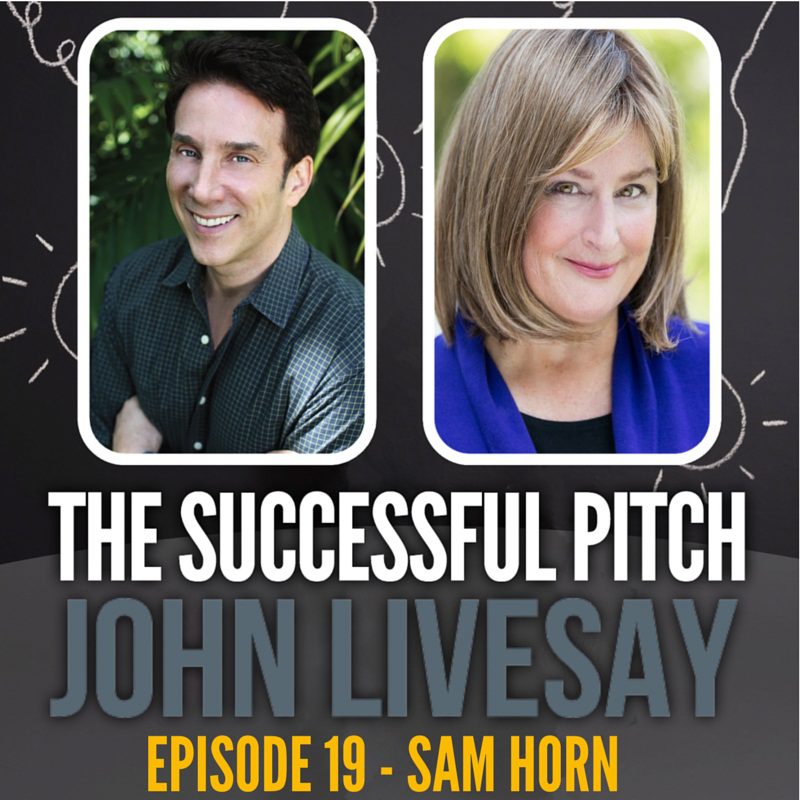
TSP019 | Sam Horn – Intrigue Expert Teaches How To Get Investors’ Attention
Posted by John Livesay in podcast | 0 comments
Listen To The Podcast Here
Episode Summary
Sam Horn is an Intrigue Expert, author, and TEDx speaker. Sam has written six books with her new book entitled, Got Your Attention? Sam has helped hundreds of clients prepare for high-stakes key notes, fund-raising pitches, investor decks, and TED talks. She shares one success story where her client was able to capture the attention of investors within the first minute of her pitch. She even walks John through the 70/10/10/10 method live on the show and teaches him how to create a captivating and intriguing blog post.
Key Takeaways
- 03:20 – When you’re first to the market, you own the market.
- 05:00 – People often times talk themselves out of a deal.
- 05:30 – What’s the eyebrow test?
- 07:00 – How did Sam help Kathleen Callender make her pitch pop and get the investor’s attention within 60 seconds?
- 09:40 – Don’t become a bore, chore, or snore.
- 12:00 – Using the word ‘imagine’ in your pitch is so powerful. Get the investor to visually see what you’re trying to solve.
- 15:30 – How did Sam become an Intrigue Expert?
- 17:50 – Big decision makers are used to being in control. So, put a sock in it and let them ask you questions.
- 19:05 – Welcome the ‘no’. The sign of a true leader welcomes objections.
- 20:00 – Sam explains the 70/10/10/10 method.
- 24:45 – Sam coaches John on how to use the 70/10/10/10 method in real-time.
- 26:55 – Sam breaks down the WWWAVE acronym and what it means.
- 32:45 – In your blog post or story, what went wrong? A is for Adversity.
- 33:25 – V is for Victory, the happy phrase in your story.
- 34:55 – E is for Emotional context.
- 37:40 – Sam talks about her books.
- 41:05 – Feel free to follow Sam on Twitter and check out her blog posts on her website.
- 41:15 – What to prepare for a pitch, TED talk, speech? Get in touch with Cheri(at)IntrigueAgency.com
Tweetables
[Tweet “When you’re first to market, you own the market.”]
[Tweet “We just got our ideas in your mental door.”]
[Tweet “So, let’s not bore, chore, or snore.”]
[Tweet “You just GTS. Now, if you’re a boomer, that’s Google That Stuff.”]
[Tweet “Objections are the answer to the test.”]
[Tweet “Turn infobesity on its head.”]
Links Mentioned
Intrigue Agency
Sam Horn Website
Sam Horn LinkedIn
Sam Horn Twitter
Sam’s Email Address
How To Become The Picasso of Pitches
Want the Transcription?
Share The Show
Did you enjoy the show? I’d love it if you subscribed today and left us a 5-star review!
- Click this link
- Click on the ‘Subscribe’ button below the artwork
- Go to the ‘Ratings and Reviews’ section
- Click on ‘Write a Review’
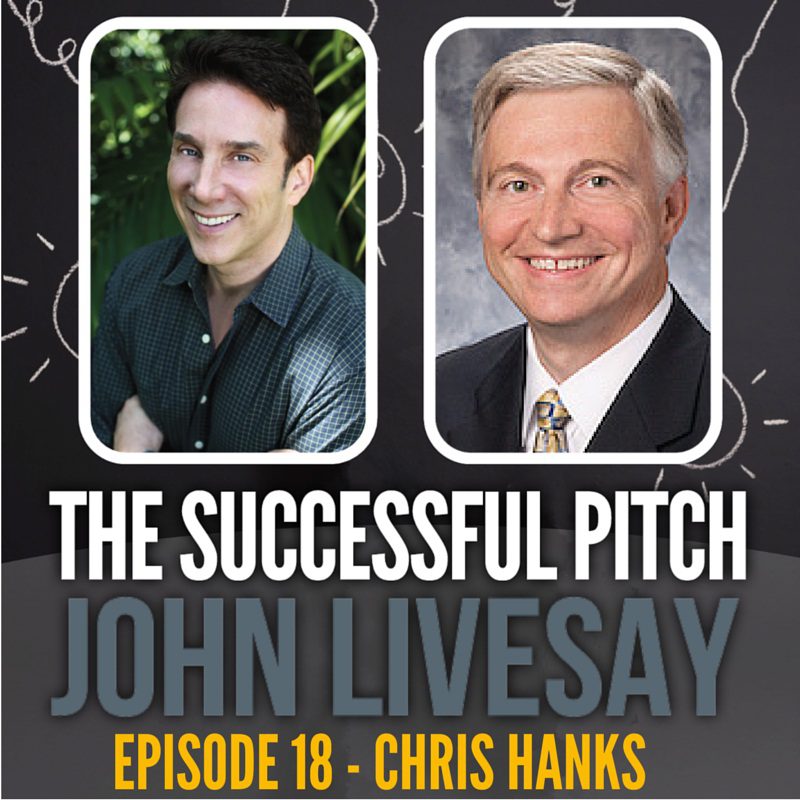
TSP018 | Chris Hanks – 3 Steps To Maximum Valuation For Your Start Up
Posted by John Livesay in podcast | 0 comments
Listen To The Podcast Here
Episode Summary
Chris Hanks has owned multiple businesses in the music, ecommerce, publishing, and export industry. He is the co-author of the bestselling book, School for Startups and currently runs the KSU Entrepreneurship Center at Kennesaw State University. Chris is a big advocate for getting out of your comfort zone and tells the audience, ‘when in doubt, go do’. He talks on why it’s so important for leaders to have clarity in their business and if you want to grab an investor’s attention, you have to give them goosebumps when they hear your pitch.
Key Takeaways
- 02:25 – Why does Chris teach entrepreneurship?
- 04:10 – When in doubt, go do. We learn through actions and things that scare us.
- 05:00 – When did Chris decide he wanted to be an entrepreneur?
- 07:30 – What does a business appraiser do?
- 09:20 – Ask yourself, ‘How do I reduce risk in the mind of the investor?’
- 11:15 – You have to be very clear in your milestones with your startup business.
- 14:15 – Chris talks on how he got to know Jim Beach.
- 17:00 – You don’t have to wait for passion or creativity to start a business. Just go out and do it.
- 19:15 – With clarity comes power. Be super clear on what you want for your business.
- 19:55 – What makes you CEO worthy?
- 21:20 – Ask yourself, ‘So what’?
- 22:15 – About 20% of Chris’s students are female.
- 23:45 – Goosebumps always sell. Give your investors goosebumps.
- 26:15 – Chris names all of his pitch approaches after musicians. His pitches can range from the Kayne West approach to the John Lennon approach.
- 27:55 – Instead of telling an investor what you do, tell them what you believe.
- 29:00 – Chris recommends a couple of books every entrepreneur should read.
- 30:15 – You can reach Chris on LinkedIn and through Kennesay State University.
Tweetables
[Tweet “When in doubt, go do.”]
[Tweet “Anytime risk goes down, value goes up.”]
[Tweet “Articulate the future, that’s what a leader does.”]
[Tweet “Clarity equals power.”]
[Tweet “47.9% of all privately held businesses are owned by women.”]
[Tweet “Goosebumps always sell.”]
Links Mentioned
School for Startups by Jim Beach and Chris Hanks.
The Lean Startup by Eric Ries
The Art of the Start by Guy Kawasaki
Made to Stick by Chip & Dan Heath
Want the Transcription?
Share The Show
Did you enjoy the show? I’d love it if you subscribed today and left us a 5-star review!
- Click this link
- Click on the ‘Subscribe’ button below the artwork
- Go to the ‘Ratings and Reviews’ section
- Click on ‘Write a Review’
TSP018 | Chris Hanks – Transcription
Posted by John Livesay in Uncategorized | 0 comments
John Livesay:
Today’s guest on The Successful Pitch podcast is Chris Hanks. Chris has an amazing background from being an entrepreneur himself to co-authoring the book, School for Startups with Jim Beach and now he started not one, but two entrepreneurship centers at different universities in Georgia. Chris talks to us about how to take action over just thinking you have to have the perfect idea and how important that is. He said, “when in doubt, just go do.”
He said, one of the things he teaches in making a great pitch is come up with something that’s going to give investors goosebumps and he gives examples on two or three ways to get people to get goosebumps when they hear your pitch so that they’re inspired to want to invest in you and it’s all about articulating the future. That’s what makes you CEO worthy. Enjoy the interview.
Hi and welcome back to The Successful Pitch podcast. Today’s guest is Chris Hanks who is the founder and executive director of Kennesaw State University, which is just a few miles north of Atlanta, Entrepreneur Center. Before this, Chris was the founder and director of the University of Georgia’s Entrepreneur Program.
He’s own multiple businesses including music, ecommerce, publishing, and export ventures. He’s the co-author of the bestselling book with Jim Beach on low risk entrepreneurs called School for Startups. He leads the International Entrepreneur Institute and is certified in business valuation, providing expert witness testimony. We’re certainty going to want to ask him about that. Chris, welcome to the show.
Chris Hanks:
Thank you so much for having me.
John:
Chris, you have such an interesting background. I don’t know where to begin, but I’m just going to ask you to start with how did you come up with the idea of founding an entrepreneurship center at these universities based on your own entrepreneur experience?
Chris:
Well, basically, I think it just came out of a passion and a nerdiness about entrepreneurship. I came to University of Georgia as a teacher just to teach entrepreneurship, but there’s so much about entrepreneurship that happens outside of a classroom environment and I have not found a better tool to affect change in people’s lives than entrepreneurship.
So, start off with literally buying pizzas for students and meeting in a class room after class and from there was a start of a, hey, let’s build a program and a center that’s known for transforming student and I did that for eight years at University of Georgia and now I’m in my first year at Kennesaw State University doing it all over again.
John:
Starting from the ground up just like another startup in a way, right?
Chris:
Absolutely.
John:
I really want to have you expand on that concept of using entrepreneurship as a way to transform students. That is so interesting to me, because people buy transformation, not information. I am constantly telling my clients that when they’re pitching investors and so if you’re literally helping people transform their confidence level, their perseverance skills, tell us what you mean by that. What is it that you see the students transforming into?
Chris:
Well, it’s really fascinating to me to like literally see people become a better version of themselves. There’s so much about, like, entrepreneurship is – there’s so much information out there, but it’s not information that changes us. I would rather students take my classes or come to my programs and they learn nothing, but they’re motivated to act on what they already know, because in entrepreneurship, action trumps everything and it’s through the actions that we learn about ourselves and we change and so forcing students to do rather than yes, we’ll study and analyze, there’s an appropriate piece to that, but hey, when in doubt go do.
Having that and watching people, you know, we learn how to become better by pitching, doing things that scare us. Even small things that lead to the transformation, for example, one silly thing that students make fun of me about is I never allow the students to sit in the same seat twice, never, because we have to get outside our comfort zone. We have to engage, we have to and by doing those, even small things can lead to big results.
John:
Well, if nothing else it gives you a different perspective, right, and you might have to lean in a little bit further to hear if they’re not at the front row. When in doubt, go do. We’re going to tweet that out. It’s one of the takeaways already. That’s a great line. I love it. Can you back us up a little bit Chris about what your own experience was in music and ecommerce as an entrepreneur and what made you decide, were you a college student when you said, I’m not doing the corporate route, I’m going to be an entrepreneur from day one?
Chris:
No, well, I did start two businesses in college, but I didn’t know I was an entrepreneur, I just knew I didn’t have enough money for tuition, so it was entrepreneurship by necessity, but I didn’t know that word. I didn’t know that was what I was. I just started a small delivery service and I sold t-shirts, but it wasn’t until – I left college and had a brief corporate career, but for some reason I was in my late 20s that I just, you know, like, I [cuts out] Saturday, because the next day was Sunday, which the next day was Monday. From Friday at five or Saturday at three I was happy.
So, I was basically just living for the weekend, right. I just wanted excited to get up on Mondays, so again, I didn’t know I was an entrepreneur, I just knew, gosh, I just want to be happy. I want to do something that I feel like it matters, so I started a small music store, just on the side. I thought, well, maybe this will be a fun thing to do on the side while I still continue my corporate job. I started as a very small music store, but that’s when I caught the bug. That’s when I knew.
For some reason, I know this is just 1,600 sq ft of nothing to the outside world, but when I walked in, I was happy, you know? So, I started a music store and then I got a small recording studio and then I got a very small entertainment business and this is all pre dot com and then the dot com thing happened and that’s what got me more sophisticated as far how do you raise money, how do you solicit investment, how do you pitch, how do you structure deals.
So, the dot com thing happen, which got me a little bit more sophisticated and then I got really into it because I started buying and selling small businesses. Buying a business for five million – sorry, five million in sales and saying, gosh, I could probably get that to ten million in sales and then realizing I was wrong, a lot, so that’s what lead to me becoming really understanding evaluation and getting certified as a business appraiser, because I really was, all the wealth that I have is trapped in the small businesses that I own and I don’t know what that means and so that lead to me doing expert witness testimony, which lead to the guest speaking in college, which lead to me teaching.
John:
Wow. What a journey. I love it. I really want to dig in a little bit on this business, getting certified as a business appraiser. We all know about real estate appraisals, right, how much is your house really worth to get the loan, how is that, if any, if at all, applicable to being a business appraiser. Is it similar to real estate or is it completely different?
Chris:
It’s conceptually similar, but it’s certainly a much more in depth process, because, you know, in real estate, we can look at like how is this in your community, but you know, as a proxy and business valuation is hard, because we can both own a Subway restaurant and maybe mine is zero dollars and yours is worth a million dollars and you couldn’t tell that from the outside.
So, there’s an intense analysis that goes with it and basically what you’re trying to assess at it’s core essence is how much cash will this business generate me in the future divided by the risk of me actually getting that cash, so conceptually it’s a little bit similar conceptually to how real estate appraisals are done from a financial perspective, but much more in depth and it’s a much more – a combination of like art and a science.
John;
Yes. I can’t ask enough questions about this, because this is one of the key areas that a lot of startups need help on when they’re putting their pitchdeck together, you know, we don’t want to undervalue our company, but we certainty don’t want to come across as naive and over value it, especially if we’re going to ask for a a million dollars for 20% of our company and that sets XYZ valuation, is that realistic. A lot of it has to do with this art versus science thing that you said, which is the risk factor and whether that entrepreneur has a really great track record or if this is their first startup, correct?
Chris:
Oh, absolutely, because, like, especially with a startup, you know, it’s all based on the future. So, one of my goals, if I want to increase my valuation is, how do I de-risk this in the mind of the investor. You know, so, you know, basic things that come to mind. I want a clear path to customers. If I have a clearest and directest path to customer will make this less risky in the mind of the investor so that increases my valuation, because anytime risk goes down, value goes up.
John:
Right, that’s a great tweet right there. Risk goes down, valuation goes up.
Chris:
Absolutely. So, management team, right. So that, okay, what tangible evidence do I have or what hard evidence exists of their accomplishments. That’ll de-risk it, right, that’ll keep the risk. So, a lot of folks, at least a lot of my students will think, well, you know, investors, they like risk, they’re suppose to take risk. Nobody likes risks, right, so to the extent that I can de-risk it and make the risk of this venture less and less, the more value, the higher the valuation of my startup.
John:
Great. So in addition to obviously having a great track record and a great team that lowers the risk and a clear path to customers, is there any other big thing that a startup can do to de-risk their startup to get a higher valuation?
Chris:
Yeah, there’s a whole host of things. So, certainty a team and revenue, right, come to mind, because those tend to be big deals. A clear path to revenue, any tangible customers, that kind of thing. As far as, anything I can do to, because one thing that’s hard about a startup valuation in the beginning is there’s not tangibility to the deal. Meaning, I can’t touch it and feel it, I can’t see your employees and all that, so one thing that de-risks it is being too articulate. Very clear milestones. In 18 months here’s the pitch of what my business would look like. If I could paint a compelling picture.
Now, a lot of times, we know we’re forecasting the future and that’s difficult, but if I could say, look, at 18 months, here’s where my business will be, even if it’s not there at 18 months, the point is I can clearly articulate the future and that’s what a leader has to do. I am taking you to a place that doesn’t exist now, you know, to a place that exists later and the better I can do that, that tends to de-risk it. It’s like look, this person has vision and resources always follow vision.
John:
I love that. Articulate the future, that’s what a leader does. That’s a great tweet as well. My goodness, that’s such a great line. Thank you. Incredible. Now, tell us a little bit about what’s it like to be an expert witness and when do you get called in?
Chris:
Oh boy, I thought being an expert witness would be a really fun and amazing thing and maybe because I watch too much television, it’s not as cool as it sounds. It is not. I definitely did not enjoy that to the extent that I thought I would, you know, the idea of being called in as an expert, I thought what a wonderful teaching moment that will be, it’s all about the facts, I’ve got a very well researched valuation that I’ve done and it doesn’t really work like that, because lawyers are trained to rip apart guys like me on the stand, so it’s not quite as enjoyable as I thought it would be. If they can destroy a medical expert, they can certainty destroy a valuation expert if your valuation is destroying their case.
So, not quite as enjoyable as a process as I thought, but I get called in and I don’t do them much anymore, because I don’t live in that world as often as I used to, but divorces are a big reason why people need valuation, you know, because you have to divide the assets. Partnership disputes, right, you’re going different ways, and eminent domain where the business is being disrupted. The state gift tax situation, an unfortunate death, and there’s taxes that have to be paid on the value the business created, so things like that. Because valuation is a very in depth process, it’s expensive, so a lot of business owners only do it when they’re forced to, like these kinds of circumstances.
John:
Right, how fascinating that it’s not just for the investors that there are so many other things that come into place of when you need an expert to give an valuation on that.
Chris:
Yeah.
John:
Well, I have to ask you about your friendship and relationship with Jim Beach, A) because he’s such a great guy and has this amazing radio show that you guys co-founded called School for Startups. In fact, that’s the name of the book you co-authored and the fact that team is such a key thing in whether somebody invests with you, as you said, it’s one of the key factors to lower the risk. How did you two guys meet. How did you come up with the idea for a book, what are some of the book’s takeaways, tell us that whole story.
Chris:
Well, basically we met at – we were both teaching at Georgia State University, that’s where we both fell into teaching. We’re both entrepreneurs who fell into teaching and I was doing a lot of guest speaking at Georgia State and they gave me a class and so we met there and we did, I kept hearing about him, because his classes were really popular and then he heard about me, because my classes were popular. So, we decided to do this seminar together on a weekend.
John:
Lucky students.
Chris:
Well, I’ll always remember the email that was sent. I saw an email that a student sent out and it said, “Finally! The Batman and Robin of entrepreneurship are together.” I thought that was the coolest thing in the world until I realized..
John:
You were Robin..
Chris:
Exactly, right.
John:
No one wants to be Robin, right?
Chris:
Exactly. Jim will be very nice and gracious and say things positive about me, but I’m clearly the Robin in that relationship and he’s the one, School for Startups was really sort of his vision, his efforts, he was the one who lead it, I just added my two cents here and then, but really, it’s Jim who is really the visionary and really the mind behind all of that. I just kind of rode his coattails a little bit.
John:
Which came first, the book or the radio show?
Chris:
The book. We were contacted by McGraw-Hill to write the book and they wanted us to write a book and so that title was actually their thinking, because they thought, hey, that would be a great name for a book and it will sell some copies and so from there came the radio show and the other things.
John:
For those that don’t know, the radio show is hugely successful. Jim interviews multiple people per week and I believe it’s carried in a 11 different syndicated stations across the country and I highly recommend it. School for Startups Radio and the kinds of guests that he has and the kind of information is quite valuable and intense. I love that a book spawned the birth of this really wonderful radio show and the two of you being Batman and Robin in the entrepreneur is quite great.
Chris:
Yeah.
John:
What was your favorite part of writing the book and what would you say is a big takeaway from the book for people?
Chris:
My favorite thing is the message, right. I mean, the overall theme, I guess, it’s basically a book about low risk entrepreneurship, meaning like, look, okay, it doesn’t, you don’t have to be the most creative person in the world to start a business. You don’t have to wait for passion, for, you don’t have to, you know, you can just desire something and actually start acting on it.
This idea that we have to sort of wait until we’re struck with a bolt of lighting before we do anything great is something that we’re both very passionate about de-mystifying that idea and so, you know, entrepreneurship is not for a select few. Entrepreneurship can be for anyone and so that is my favorite part of the book. Inviting all people into this tentative entrepreneurship rather than, okay, just the people with a business degree or just the people who have an idea that’s never, ever been done, which is a misnomer, because all ideas are, you know, most of all ideas are mostly copies and there’s just one small piece of it that’s a little bit of an original, have a little bit of originality to it.
So, I love the fact that it invites all people, people who say, you know what? I see an opportunity and I want to do something about it. I want to make my life better. I believe in the possibility of something better and I want that. I get excited about the message of it.
John:
I love it. Making my life better and then in turn, I make the world better, because it all starts with if you’re happier and you’re making a difference and that’s your focus, if you had to come up with three characteristics that you think investors are really looking for when they fun a startup, what comes to mind?
Chris:
I wish it was more of an original thought, because you think that you already sort of talked about and talk about a lot, but you know, obviously team, right. I mean, you always hear that over and over again., bet on the jockey, not the horse. So, you know, the people matter and what makes you CEO worthy. Why are you worthy of that? So, certainty team, right, and then obviously is there a business model that makes sense. How do you make money at what you do and when will you make money at what you do and very clearly, not just vague answers, with clarity builds power, right? So, I can’t just say, well, you know, I’m going to do this app and I’m going to have advertisers, that’s not a business model. Very clearly articulate your marketing system that guarantees you revenue by when. Really hard at doing that, but there’s a process and a method to that.
John:
Clarity equals power, is that what you said?
Chris:
Yeah, absolutely.
John:
That’s what I heard. Yeah, I love that. That’s a great little formula that makes it the clearer you are, the more power you have, the more compelling your proposal is, your pitch is to investors. Let’s dig in a little bit into some of the words that would make somebody CEO worthy. Is it integrity, is it perseverance, is it passion? How do you define CEO worthy?
Chris:
Yeah, it’s kind of a vauge thing, you know, like CEO worthy, but I certainty look at track record and that doesn’t mean you have to have 20 years of business experience or have lead companies, but you know, even if you delivered pizzas for Pizzahut, well, that’s great, what about that makes you a better you? Hey, you know what, I’m great at working under stress circumstances and I’m great at logistics, that’s what I took away from that.
So, I helped a woman who was a single mother of three raise capital and she was saying, you know, I don’t have anything in my background that makes me CEO worthy and I was like, wait a minute, you’ve raised three kids all on your own, what does that tell me about your ability to deal with a lack of resources. You know, your ability to deal with adversity, your ability to show perseverance.
So, you know, it’s translating our experiences in a way that’s meaningful. It’s like, what have I learned from my past that’s going to make me better in the future and being able to show that. So, CEO worthy is not necessarily here’s my list of MBA and ivy league school that I went to and all the courses I’ve attended. It’s know what – show me the evidence that makes you, what’s going to make you a leader that guest you great results for me.
John:
What I hear you saying, Chris, is what are your life lessons that make you CEO worthy versus what are your degrees?
Chris:
Yeah, absolutely, because everybody you’re pitching to has degrees. I mean, the degrees aren’t necessarily going to impress people. It’s like, okay, but so what? So, I like answering the so what behind it, like, okay, I have a degree, so what? And answer the so what. I had this job, well, so what? Answer so what? That brings a lot of value proposition. It’s not the differentiator itself, it’s the so what behind it.
John:
Right. Since you mentioned helping get a single woman with children funded for her startup, let’s talk a minute about women in the world of startups and you know, there’s a very small percentage of women in VCs and there’s a small percentage when you look at it of women getting funded in general. Do you see the classroom shifting from a demographic standpoint? Are there more women coming to these entrepreneur centers and classes?
Chris:
No is the short answer. If you look into my class and you say, okay, well, if you know, assuming there’s 50/50 women to man ratio, then I should see 50/50 in the classes and you just don’t. Women as far as – who gravitate towards entrepreneurship, it’s not as high as a percentage. I may have like a 20% women in my class. So, we don’t see that, but I don’t think that means women aren’t gravitating towards entrepreneurship, they just don’t necessarily see themselves in that light, a lot of times right at the beginning of their college where as you extrapolate the data later, 47.9% of all privately held businesses are owned by women.
Now, a lot of people argue that state, because they’ll say, what if we took out the Mary Kay or the daycare home, but a lot of times women run businesses, they’ll see it as an opportunity to okay, you know what, I’m tired of this corporate career. I’m going to do my own thing so I can stay home with my child or, you know, I never saw myself as an entrepreneur, but my spouse was laid off so now I need to do something, so we all, like as far as youth entrepreneurship, you tend to see more men than women, but later on in life, you see almost as many, just as many woman as men.
John:
Great. If you had some words of advice for someone going into pitch about how they could best articulate the future vision that they have for their company besides tell us a story, do you have any other words of wisdom or what is it that you teach in your entrepreneur class that people may not know from reading a book?
Chris:
Boy, there’s a whole bunch, because we spend a lot of time on this art of pitching, but one of the things, I mean, I got some saying that I say over and over again, but one of them is, goosebumps always sell.
John;
Great! We’ll include that up, for sure.
Chris:
So, what can you say during the pitch that will give them goosebumps, because if I can do that, I will get their money. So, what can I do, because that’s what we’re going for. It’s not the data, yeah, investors are smart, but it’s gut first, you know, mind second. I want to go with our gut. I want to connect with them on a gut level. I want to get them so excited that they’re going to tackle me before I walk out the door. Like, what can I do to say that or get as close to the bar as possible.
Also, another one that I’m big on is, a lot of times when we’re pitching we feel like we have to download all this information, you know, even right now during this interview, it’s hard for me because I’ve got all these things in my head that I feel like I should say, but you gotta remember, the investor is not listening to every – every time we pitch, they remember tone more than words, they remember body language more than words, and they’re not going to hang on every single word and be able to sort of remember that, so it’s not what sort of information I have to cover, it’s what do I want them to remember and I gotta stay focused on that.
Okay, they have got to explain this to their spouse two weeks from today what I want them to explain. So, it cuts through a lot of the jargon and a lot of the complexities. It’s like, okay, let me boil down what I’m pitching into a very simple language, because simple language is remembered better and it connects us more on a gut level better, even though I’m tempted to use big words, because I want you to think I’m smart. You know, it’s okay to say, dude, you know what, I’m going to make you more freaking money than you know what to do with. That’s a better thing than saying, you know, we have a sophisticated aggressive growth business model that will have revenue, you know, shut up.
John:
Yeah, it’s not conversational, yeah.
Chris:
That’s not connecting with me.
John:
Do you have a story that you heard and gave you goosebumps or do you have something that a student said that the class went wow, that gave us goosebumps.
Chris:
Well, there’s several, yeah, there are several things and several examples like, I actually won an elevator pitch competition using an approach that I like to sort of, I’ve named all of my pitch approaches after musicians, because I used to be in the music business and it’s easy for me to say, hey, put this sentence here and put that sentence there, just say, hey man, I want you to do a Kanye West strategy, you know, it’s just easier that way, so there’s a John Lennon strategy based on the song Imagine, but that’s a beautiful way and I’ve had several students use that where right away I talk about what’s possible.
So, like, you know what, imagine, and then you paint the picture in one or two sentences, right, imagine if you didn’t have to deal with this problem anymore or if this social issue was no longer a challenge and you’re painting a very beautiful picture for about no more than, sorry, no more than two sentences, then you go into how you solve that, how you create that. So, imagine approach works wonderfully well as far as creating goosebumps.
John:
Nice, yes. I’m just so hungry for on more example if I could. Give me another, like you said, Kanye West, what would be another example of a song transitioning into a goosebump moment.
Chris:
Let’s see, well, goosebump, I tend to – being from Athens, Georgia for so long, you have to have an approach named after REM. Being a REM fan, but there’s an REM song that many people don’t know unless you’re a big fan. It’s called I Believe. It was written in the late 80’s, but belief is a wonderful way to create goosebumps, so instead of telling you what I do, I’m going to start with what I believe and if I can really talk to you about what I believe and if you believe what I believe, we’re going to connect and that’s more likely to give you goosebumps than the data I show you after that. So, instead of starting with what you do, talk about what you believe in a way that connects the audience and you’re more likely to get goosebumps.
John:
I’ll say. That’s so great. Oh my gosh. That’s really wonderful. So, we’re coming to the end already. IT goes so fast and you’ve given us so many great takeaways. I love that. If you believe what I believe, we’re going to have a goosebump moment and connect and people are going to say, I’m the right investor for you and vice versa. Is there something else that you recommend to your students to read or that you’d recommend to our audience, our listeners, to read around entrepreneurship or any kind of help book that you think would be useful on getting to be a better version of yourself as you said in the beginnig.
Chris:
Oh, boy, there’s so many. There’s, obviously, I really – Jim Beach with School for Startups, I gotta plug that.
John:
Absolutely.
Chris:
That would be one. There’s also, you know, I mean, again, it’s a classic, Lean Start I like, because I like that, there’s a lot of images in that book that I like. Art of the Start by Guy Kawasaki. There’s one part in there, for example, every time I’m pitching, remember there’s a little man whispering in my ear, ‘so what?’ I’ve always liked that image. I would recommend that. There’s also a book by Chip & Dan Heath that I’ve liked called Made to Stick and basically, you know, why do ideas sort of stick in certain urban legends stick and others don’t and what makes things remembered.
John:
Great. Chris, I can’t thank you enough for being on the show today. What is the best way for someone to follow you on social media and keep update to on your words of wisdom. Is it best to follow you on LinkedIn or Twitter.
Chris:
Yeah, I’m certainty on LinkedIn. So, that’s certainty a way. I’m not as active on Twitter as I should be, but certainty through Kennesaw State University, if you Google that and our Entrepreneurship Center, that’s how you can keep a prize of sort of our events and what we’re doing, because we are very, very aggressive about transforming entrepreneurs and doing some neat things, so anybody who wants to get involved, they’re more than welcome.
John:
Fantastic. Thanks again, Chris.
Chris:
No, thank you.