

FARGO-Exceeding Low Expectations with Greg Tehven
Posted by John Livesay in podcast | 0 comments
Episode Summary
Collaborating with people and exceeding low expectations is a bigger win any entrepreneur can ask for. Greg Tehven isn’t an exception to this notion.When all he saw in front of him was just metrics and checklists, he knew he had to make a shift and invest in time and experiences instead. Now a Co-Founder and Executive Officer of Emerging Prairie, Greg is dedicated to give value to the community and use his skills to serve others and make a difference.
My guest on The Successful Pitch is Greg Tehven, who has a fascinating story about growing up in Fargo, North Dakota, couldn’t wait to get out, travel the world and then decided to move back after all and make a difference in his own city. He said he’s all about hustle and not desperation. He has a great description of the difference and how that changed how he looked at the world. He said, “When you have limitations and you share them, you create compassion. If you start bragging about all your successes, you create competition.” His big focus is on creating moments and he wants to be time-rich so that he can spend his time with interesting and wacky new people and look at his life as an adventure as opposed to goal after goal to achieve. He has some great insights on how he discovered himself at a young age and now is living in the moment. Enjoy the episode.
Listen To The Episode Here
FARGO-Exceeding Low Expectations with Greg Tehven
Our guest is Greg Tehven who is living and from Fargo, North Dakota. I had the pleasure of meeting Greg when I was on the North Dakota Today Show and he has so much insights as to what it takes to become a successful entrepreneur and make an impact in the world. He is known as a thought leader, a storyteller, and that really resonates with me. He literally is an advocate for people who are creative. He loves to put out a message on how you can build a community that you want to live in. Greg believes that if you think creatively and act boldly, you can overcome any obstacle. He has literally done that. He’s proud to be from Fargo, North Dakota. I love his passion for that. He has literally traveled around the world and now he’s back in Fargo and he’s now taking action to make Fargo be known as its own special place with a good message out there. That pride takes on a lot of forms where he takes on big projects not only within his community, but inspiring other people to do it as well. He is the Executive Director of Emerging Prairie where he’s done so many things such as starting the TEDxFargo, 1 Million Cups Fargo, Startup Weekend and a lot of other great things. He’s really well-connected and generous with those contacts. I love his sense of humor and relaxed style. Greg, welcome to the podcast.
Thanks, John. It’s an honor to be here.
I always like to ask my guests to take us back to their own story of origin. You were growing up in Fargo. You can take us back as far as you want, whether it’s high school or earlier or college or earlier. What made you decide that you were going to leave Fargo? Did you always know you wanted to be an entrepreneur?
I don’t think I understood the word entrepreneur as a kid but I had a really, really healthy disrespect for the status quo at a very early age. I would challenge my coaches that there was a better way to do things. I would challenge my parents that there was a more efficient way to mow the lawn or shovel the snow. Believe it or not, John, as a young person, it’s not very appreciated. I don’t know if I was always appreciated for that perspective.
Will you call it precocious?
I would just describe to somebody that, “It was Greg’s world and everyone just lived in it.” I wasn’t always proud of that. I was this kid that lived on a farm and I would see things being done inefficiently. As a kid, when you live on the farm on a gravel road and you don’t get to go to town very often or if you forget something at home, you can’t just run home and get it. There was a resourcefulness that came from that. There was really, as a young person, awareness of waste: wasted time, wasted resources, wasted energy. I brought that through my entire journey.
One thing that’s interesting that I wanted to bring is in 1987, North Dakota was the only state in the union with a declining population. The politicians were talking about the brain drain. The best and brightest were leaving the state. The community conversation from when I was three years old until ten was that the best and brightest were leaving. They went to some researchers and they said, “What do we do in North Dakota?” They went to some Princeton PhDs and they came back with a proposal to return the prairies of North Dakota back to the buffalo and create buffalo commons. As a young person, the media was shaping my identity, that we weren’t smart. That if I was smart, then I had to leave. As a young person, I couldn’t wait to get out of Fargo.
I think a lot of us have that quest urge inside to go see the world and leave. The Midwest, coming from Chicago suburbs myself, those roots are usually pretty deep. You decided to go to Minneapolis and then you even dabbled in Stanford, I believe. Tell us a little bit about that journey.
I just knew that there was no school I was going to go to in North Dakota. I didn’t consider any of them. The University of Minnesota had a great business school at the time, and so I enrolled there. I had an incredible experience. I’ve got to live on a campus with 50,000 students, to experience an urban environment. I loved it. I started my first social enterprise when I was ten years into my freshman career with my college roommate and a couple of friends where over the course of the next seven years, we brought close to 30,000 students on Pay It Forward Tours where they would travel around the country and do service on their spring breaks; a fantastic learning experience of building a social enterprise, that transformative time of my life. I learned a lot about community and I learned that those things that my parents taught me when I was a kid about taking care of your neighbor, about serving others made a big impact, not just in Minneapolis but across the country. It really, really was helpful.
I also noticed you have a big philanthropic part of your personality. Can you talk to us about where that comes from?

Exceeding Low Expectations: Helping your neighbor makes a big impact. It’s small things and it’s big things. I gain a tremendous amount of joy from that.
I think that comes from growing up in a rural community in North Dakota. My parents role modeled for me taking care of your neighbors. When somebody’s house would burn down or somebody got cancer, all of a sudden my parents would be organizing folks around the coffee table on Sunday nights and they’d come over week after week, and I didn’t know what they were doing. Then I’d go to a big fundraiser that they were part of hosting or I would see them do that work. I think growing up in a rural community, that’s all we had, were our neighbors. That’s the spirit of generosity that for generations in my family has been instilled in me and that I believe resonates everywhere. Whether I’m doing work in India or in a small town in Pennsylvania, helping your neighbor makes a big impact. It’s small things and it’s big things. I gain a tremendous amount of joy from that.
How did you go from, “I can’t wait to get out of Fargo,” to being its biggest advocate and fan?
Part of that comes from when I burned out. I was 25 years old. Students Today Leaders Forever was hosting the Pay It Forward Tours. It was growing. I got a little self-absorbed. I looked in the mirror and realized I was more interested in the numbers, how much money we had raised or how many people were on our trips, versus the impact. I lost myself. I decided that I needed to take a break. I didn’t like who I was becoming. I didn’t have any hobbies. I didn’t have any friends outside of work. I decided to take a year and wander around the world. It was during those eleven months of walking across Spain on the Camino de Santiago or being in a village in West Africa with Peace Corps volunteers for six weeks that I saw the value of a small community. Because each place I went, I missed the small interactions. I missed knowing my barista. I missed knowing the person that I bumped into every Saturday morning at the market.
It was on that trip, I was in New Zealand on the last leg and I said, “I want to make a difference at home. I want to make a difference on my street.” I had been thinking I was going to be this big global world-changer and then I was like, “Maybe I’ll just try to add a little bit of value in my own backyard.” Unexpectedly, I started working in Fargo. It was the last place I ever, ever thought I would live again. The first project we did was TEDx. It was about sharing ideas. I had given a TEDx Talk in Minneapolis a few months before that and I was like, “I should look for ideas in my home community.” That’s when I fell in love with Fargo. I met a farmer that had brilliant ideas on nourishing the world, a doctor that thought about beauty differently, an artist that thought about their art as a tool to build a community, an entrepreneur that thought about curiosity as the success principle to change the world. These were all people that lived in my hometown.
It’s fascinating to me you took that year off. I did something similar after I graduated from college and traveled a year. I had a fascinating insight. I didn’t stay in any one place longer than six weeks and normally it was way less than that. I noticed, and I don’t know if you’ve experienced this, but you miss people knowing you. Every time you go to a new country and start a new conversation with somebody on a train or whatever, “My name is John, I’m from Chicago. I just graduated. I’m taking a year off.” You have to start your story over and over and over and there’s a lack of intimacy because you’re starting from scratch, as opposed to people who’ve known you your whole life and you can say, “I’m feeling frustrated. I’m feeling sad. I’m feeling overwhelmed.” You can’t really start those conversations with strangers. It wasn’t until I left the country and traveled that I started to really appreciate the relationships I had at home.
I think that’s so true, John. I’m guessing you’re similar to me and similar to folks like Steve Jobs or Sargent Shriver that their global experiences shaped their local actions. For me, I finally came to the conclusion that it wasn’t a year off, it was actually a year on. I discovered that I’m not a human doing, I’m a human being. Those were some discoveries that were really helpful for me. Some discoveries that weren’t helpful is I realized I wasn’t humble. Because back home, I would describe my work, “I’m part of this cool project.” When I was walking across Spain meeting strangers, they asked me what I did and I took all the credit for my co-founders. I was just disgusted by what was coming out of my mouth. It was a real shaping experience when I just had to show up as me. People are evaluating based on me, on who I am, not what I could do for them. I learned a lot about myself.
That lesson is so fantastic and important because I’ve interviewed a lot of investors and they’re looking for someone who’s confident and humble, confident but not arrogant. Also being a keynote speaker, one of the big lessons I’ve learned is that while the audience wants you to have confidence when you’re on stage, they’re still interested in you telling some vulnerabilities about yourself so that they can relate to you. I think that it takes a lot of self-esteem and work on yourself to be willing to not have to overcompensate and try to impress everybody all the time.
That really resonates with me, John. One of my teachers, if you will, on my year around the world was Steve Lacy, who was from a small town in Australia. This is a young guy, small town, had one of those fast track careers. He shared with me this idea that when we share our success, we create competition. When we share our limitations, we create compassion. It’s a fine line. For my work, I speak around the country, I work in big communities and small communities. It’s a fine line of helping people trust that we’re going to get some work done, but also let them know that we’re human. I’m lucky that I’m very human. In my keynotes, I’m often telling jokes of how pathetic I am.

Exceeding Low Expectations: When we share our success, we create competition. When we share our limitations, we create compassion.
Before I met my amazing wife, I was pretty pathetic at dating. I missed some cues from time to time. I was a guest of our US senator out at the State of the Union a couple of years ago. I thought the State of the Union was in Bismarck. Turns out it’s in Washington, DC. I thought that they brought a bunch of people to it. Turns out only one person can be a guest of each US senator. I forgot my suit on the way out there. I’m at the State of the Union wearing one of the staff members’ suits because I just miss some cues from time to time. I find that just being imperfect actually helps me. The fact that I can share that with folks, I just get to build better relationships and get to know people.
There are very few people your young age that get to do a TEDx talk in Minneapolis. I don’t think I’ve ever met anyone who’s taken that and then said, “I’m going to do one in my hometown,” especially in such so early in your career. How did TEDxFargo come about?
It was back in 2012. I was working for one of the great entrepreneurs of North Dakota’s history, Doug Burgum, who built Great Plains Software. He ended up selling it to Microsoft for $1 billion. He’s now our governor. I was working for Doug, working with him and trying to build out the energy, the creativity, the ideation in our community when he said, “Let’s do a TEDxFargo.” We threw an event. It cost us $5,000. We got four speakers. We did it at a beautiful art gallery in the heart of our city. We got 100 people there, and people loved it. It was February 2012. I got excited and I was like, “I’m probably going to go to grad school soon. Why don’t I just get another one in before I go to grad school?”
On summer solstice, we did another TEDx. I brought friends from across the Midwest to come speak. We did some adult fieldtrips that we called adventures beforehand, so folks were going to different businesses, doing some interactive work with chefs. We brought in Brian Murphy who wrote See Mix Drink, the world’s best cocktail book in 2011. People were learning how to mix cocktails before our event. It turns out that’s a really bad idea because then some people had to leave a few hours in and had to get a nap. We sold out three events in 2012. One of them we sold out in nine minutes. People were just excited. That was back in 2012. Since then, we’ve now done eight TEDxFargo events. We have one of the largest events in the country. We bring in speakers from all over the world. It’s made a really big impact in Fargo, North Dakota.
Let’s talk about the one that’s coming up in July of 2018. What’s the theme and what would make people want to come either hear this in person or certainly listen to those talks after they’ve aired?
[Tweet “Use your limitations as your strength. “]
Believe it or not, John, there are not a lot of people that are just stopping into Fargo on a regular basis for no particular reason. We use our limitation as our strength. How are we going to get people to come to Fargo on Thursday, July 26th? We look for world-class content. A couple of years ago, we had Richard Wiese, the producer and face of ABC’s Born to Explore. We had Steve Rohr, the publicist for The Oscars. We bring these folks back. What we’re trying to specialize in is the audience doesn’t just get to meet them on stage. We curate small events beforehand with the speakers. We have adventures. Our mainstay content is strong but we create experiences. We have 2,000 people that get to eat lunch together on the street in the heart of downtown Fargo. We hire musical performers, artists. We spend a lot of time thinking about moments, how do we create moments for our guests, for our sponsors. For our sponsors, we have a private backstage red room where the sponsors can interact with the speakers when they come off the stage. We have custom cocktails, fresh juices. We try to create these micro experiences.
For this upcoming event, the theme is ‘Forth’. It’s the activation of ideas. Some of the folks that we have coming, the President of Microsoft, Brad Smith, will be coming to give a talk on engaging technology in rural America. The University of Minnesota Women’s Volleyball coach, who has won a gold medal in both the Men’s Volleyball Olympics as the coach, and the Women’s Volleyball Olympics as the coach, is going to give a talk on his research that he’s doing with one of Malcolm Gladwell’s context. We look for world-class ideas but we’re trying to create an experience. We also do something which I believe is special in Fargo, where all of our past speakers get invited to dinner the night before. The current speakers and the past speakers get invited. In two years, we’re going to have our tenth event and we’re going to invite all 200 past TEDxFargo speakers for a big reunion weekend. Our past speakers are the governor, the artists and doctors and TV show folks. We’re going to bring them all together because we believe in creating community.
What’s fascinating to me, Greg, is that your lessons learned from the farm of not wasting time and wasting resources has propelled you to take that mindset into creating TEDxFargo by not wasting a moment and creating moments for not only your guests but for the speakers and using your limitations as your strength. I think that’s really a key to success in entrepreneurship and anything you do in your life. Because this is The Successful Pitch, let me ask you, how do you convince or pitch some of these big names to come to Fargo TEDx when they probably have other options of where they could go?
That’s my favorite part of it, John. What I need is I need to get them on the phone. I can’t sell them over email. I get them on the phone and I say, “Come to TEDxFargo. Here’s why you need to do it. No TEDx events can pay you, but what we can give you is world-class production. We give you a great video and great photography. Every single one of our speakers has fantastic images and videos from their talks.” They like that, but they can probably get that elsewhere. Then I say, “Come a day early. We’re going to have rehearsal, we’re going to have a speaker dinner and tell me who you want to meet. We want to activate your ideas in the community.” We had Todd Bol, the Founder of Little Free Library out of Wisconsin, come. Little Free Libraries have popped up all around the world. They’re just a little library on people’s yards or in the community where people can grab a book, take a book, leave a book, whatever they want to do. We had Todd come in a day early and we worked with our local community foundation in the city of Fargo and we had a community build. We built 30 Little Free Libraries the day before, he gives a talk, they go out the next week and all of a sudden, they pop up around the community.
We try to activate those ideas. We try to connect our speakers. Our community has become a laboratory to turn ideas into impact. It’s happened time and time again. We also have a concierge team where we book all their travel, we manage their schedules. We make the speakers feel like rock stars. Sometimes it’s famous people that people have heard of. Sometimes it’s high school students. We had two high school students speak and they both got standing ovations. It was so incredible. My wife and I had them over for dinner a couple of weeks later and I said, “Ladies, do we treat you like rock stars?” They both looked at me and they said, “No.” In my head, I’m pissed. I’m like, “What the heck? You’re in high school. How could you want us to treat you?” They shared with me and they go, “We felt better than rock stars. Our families felt like rock stars. Our community felt like rock stars.” We have these high school kids sneak all their friends in backstage. One of the women is from Somalia. She had all her friends there. The governor was taking photos with them, not the other way around. This young woman, Nastesho, she works at Target at the tail, she’s a cashier. She shared with me that the next day, she was back to work and people were stopping her and they wanted to talk to her about her talk. She just felt so good that she gave a powerful talk on radical inclusivity in communities and the community responded.
That’s making a big, big impact, clearly. Somewhere along the line, you decided to become the Executive Director of Emerging Prairie. Tell us about what that does to the community.
[Tweet “Fargo exceeding incredibly low expectations. “]
For you, John, who’s been to Fargo I believe one time and for others that maybe have been there zero times, growing up there, we go back to that idea of the brain drain. What’s going on in North Dakota? What’s going on in Fargo? When I do a lot of my talks around the country, I open up with the thought of Fargo exceeding incredibly low expectations. I’m with some buddies, all from North Dakota. One is an intellectual property attorney out of Harvard, one is a venture capitalist, one is an entrepreneur. We just said, “People locally are terrible at telling their own stories. We don’t want to be prideful. We don’t want to be boastful. We, as a group of friends, need to be better at telling the people in our community’s story.” We created Emerging Prairie with the idea that we should celebrate and connect our entrepreneurial ecosystem.
Now, here we are six years later. We’ve got a team of five, great folks. We’ve got a bunch of events in the drone industry, in emerging technology in agriculture and we’re building platforms to celebrate entrepreneurs. We’re connecting entrepreneurs to the ecosystem, so the corporations, the legal community, the finance community. Emerging Prairie is making a big impact. We had our third annual Drone Focus Conference and US Secretary of Transportation, Elaine Chao, came out and gave a talk. That talk has made a big impact on policy and partnerships across the country. It happened in little old Fargo.
I want to talk about that because I watched that as part of your talk about the impact that drones had and why Fargo was uniquely the right place for drones to be tested because there was a problem you were solving and you have all this open space. Can you double click on that a little bit on that for us?

Exceeding Low Expectations: Sometimes our limitations are our strength.
Let’s go back to sometimes our limitations are our strength. North Dakota is a state of 700,000 people. If our state was a city, we would be not in the top 50 of biggest cities in the country. We got scarce population. When you have scarce population, you have opportunity. Drones can be tested. We have one of the five test sites in Grand Forks, North Dakota. These folks are world-class. You look at the intersection of a technology community, of a university system that cares and then you add on that low unemployment. North Dakota has really low unemployment. One of our drivers for innovation is lack of talent. We got folks building world-class technologies with drones to monitor construction sites, to test out bridges to see how they’re doing, to fly the drones along electric lines during blizzards so we’re not sending humans out but we’re sending the drones out to make sure that our power is on in rural North Dakota. There is an ecosystem in the unmanned aircraft system that is growing. It’s collaboration. It’s the university. It’s the economic development folks. It’s the private sector. It really is a spirit of possibility. A lot of that has been championed by our elected officials from both sides of the aisle that see this technology as making an impact to improve the human condition.
Greg, do you have a vision for your life of where you want to be a year from now or three years from now?
I used to be really goal-oriented, John. I used to have metrics, goals, checklists. When I was on that year around the world, I shifted my perspective as I just want to be time-rich, meaning I get to choose to spend time with interesting, weird and wonderful people. Then I can use my skills and abilities to make a difference. I’ve thought about life more as a videogame such as Zelda, which is an adventure of multiple things you can do, versus the old school Mario where you passed levels and moved up. I don’t really see where I’m going to be in three years but I hope I’m loving my community, I hope I’m adding value, I hope there are twists and turns, and I hope it’s an adventure. I’m not focused on big numbers anymore. I’m not focused on certain accomplishments. I just want to have an interesting, wild and wonderful life that hopefully leads to other people benefiting from it.
[Tweet “Be TIME rich “]
When you have that clear of an intention, you are literally free from what I call the self-esteem rollercoaster, which is only feeling good about yourself if your numbers are up, and you feel bad about yourself if your numbers are down. That’s where you and I really align, Greg, is that’s one of my biggest goals is to get people off that self-esteem rollercoaster who are always looking outside of themselves for validation. There’s a whole new way to live your life. The irony is when you let go of that fear of not being good enough based on your results, the results typically come in because people want to help you. I’ve seen it time and again in my own life and I see it happening with you and what you’re doing not just for yourself but for all of Fargo.
Let me piggyback that one, John, for a second because what you said just resonated with me. There are a couple of thoughts I want to share. If this is helpful for everybody, great; if not, disregard it as fast as possible. Our organization, we need to raise money. I was on a pitch for $200,000 because in the nonprofit space, we still have to raise money too. I’ve thought of our work as a laboratory versus an outcome. I think the beauty that science gives us is the spirit of exploration. There’s an Einstein quote that said, “If we knew what was going to happen, we wouldn’t be able to call it research.” In my world, in my team’s world, we try to focus on having a great setup to our experiment versus predicting the outcomes. We think of our work as a lab and it takes the pressure away from certain outcomes and deliverables. That’s helped us.

Exceeding Low Expectations: If we knew what was going to happen, we wouldn’t be able to call it research.
The second thing is there’s a huge difference between hustle and desperation. Hustle is busting your tail. It’s achieving results, making an impact. Desperation is fear. Desperation has anxiety in it. We try to hustle and try to remove that desperation behavior. The last thing that we’ve learned is that we need to collaborate. In everything we do, we have to have collaboration. The projects that our team takes on, we can’t do alone. We fundamentally cannot do it alone. It forces us to collaborate. It turns out, when you collaborate and you have clear mission and intention and you bring people along for the journey, great things happen. In our organization, we struggle to put our name on our events. We struggle to put our name into the “branding world.” It turns out, when we shine through others and we collaborate and we let other people be the hero, or our mantra is “Give the wins away,” we just get way more wins. It’s a lot more fun. That’s been a principle that has percolated into the organization of, “Pass the microphone. Give other people the opportunity to be the hero,” and it’s working.
Greg, how can people follow you on social media both for TEDxFargo as well as Emerging Prairie?
Nothing that we do is all really unique. Our handles on social media for Emerging Prairie are just @EmergingPrairie, for TEDxFargo, @TEDxFargo. Personally, my Twitter handle is @GregFromFargo. My email is [email protected]. We’d love for folks to follow along. John, you asked, “What’s the why behind this?” For me, it’s to show off my community, to show off my neighbors, my friends, my family that I believe are doing world-class work. You came to visit Fargo and we went to Young Blood Coffee shop. That’s been around for a year and a half. I’ll put their toast up against anyone. They make great toasts. It’s $6 for a loaf and $5.50 for a slice, but it’s damn good toast. The biggest honor anyone here would do is come visit, come check us out, let us know. We’d love to buy you coffee. We’d love to show folks around. Fargo is a special place right now and we’d love for people to come explore it.
I personally can attest to the warmth and the hospitality of everyone I met there, including you. Thank you so much for being a guest on The Successful Pitch and sharing your passion and insights on how to make a difference in the world.
Thank you.
Links Mentioned
- Greg Tehven
- Emerging Prairie
- TEDxFargo
- 1 Million Cups Fargo
- Startup Weekend
- Pay It Forward Tours
- Students Today Leaders Forever
- TEDxFargo
- Doug Burgum
- See Mix Drink
- Richard Wiese
- Steve Rohr
- Little Free Library
- Drone Focus Conference
- Emerging Prairie Facebook
- TEDxFargo Facebook
- Greg’s Facebook
- [email protected]
Wanna Host Your Own Podcast?
Click here to see how my friends at Brandcasting You can help
The Successful Pitch – Book Trailer
Share The Show
Did you enjoy the show? I’d love it if you subscribed today and left us a 5-star review!
-
- Click this link
- Click on the ‘Subscribe’ button below the artwork
- Go to the ‘Ratings and Reviews’ section
- Click on ‘Write a Review’
Giftology: Make People Feel That They Matter with John Ruhlin
Posted by John Livesay in podcast | 0 comments

Episode Summary
Making people feel that you care and think about them through personalized gifts is the best way to make a connection. Not just because it is your obligation but because you feel it is the right thing to do to show your gratitude. Learn how to give great gives with Giftologoy author John Ruhlin. The gift-giving bar may have been set low by the advancements of technology, but this is the best time to go against the flow and make people feel one-in-a-million.
Today’s guest on The Successful Pitch is John Ruhlin who is the author of Giftology. Do you know what the ten worst gifts are to give? John does, and he has ideas on how to give great gifts that are thoughtful and consistent. One of the secrets is personalizing the gift and making it so memorable. He also has a secret about the best time to give a gift and the best time not to give a gift so they’re not lost in the clutter. He really is the master of storytelling, and he says give when it’s unexpected, and more importantly, make what you give something that people are going to talk about. It’s really worth the investment in coming up with a thoughtful gift. I can’t recommend his book and this episode enough. Enjoy it.
Listen To The Episode Here
Giftology: Make People Feel That They Matter with John Ruhlin
If I could show you how to cut through the noise, increase referrals and strengthen the retention of your clients, would you want to learn how to do that? I don’t know about you but I do, that’s why I’ve invited John Ruhlin who is the founder of the Ruhlin Group. He’s the author of the book called Giftology, which I have given out as gifts. His company is trusted by leaders of fast-growing companies to develop relationships, building strategies and VIP gifting programs that do all these important things about getting more referrals, getting the most important clients and employees, and even prospects to be personally engaged. He writes regularly for Entrepreneur, Forbes, Success. He’s literally spoken all over the world for big clients like Google and EO and countless others. John, welcome to the show.
John, thanks for having me.
I always love to ask my guests to tell their own story of origin, and you do that in Giftology, your great book. Would you give us an abbreviated version of how did you become such an expert in gifts and what you did with knives?
Giftology
That’s how most people would assume when they hear that we have the Cubs or Google as a client, they assume that I grew up either in Silicon Valley or New York or some place that’s hip and cool. The exact opposite would be true. I grew up on a farm in the middle of Ohio, one of six kids, doing the sexiest thing on the planet, milking goats every day. I learned very quickly what I did not want to do the rest of my life. I was splitting wood to heat our house. Literally our whole house or our whole farm house was heated with wood. I worked really hard, got great grades because I wanted to get out of dodge. I thought I’d go be a doctor because you’re poor and you’re trying to make a lot of money. You think, “I’m going to be a lawyer, a doctor.” I went to school to go make mom proud. She was in the health and wellness even back 30 to 40 years ago.
My life changed when I interned with a company that you referenced, the knives. I was desperate to make money and I knew enough to not graduate from school, I went to a private university with a bunch of debt. My goal was zero debt when I got out of school, which is very difficult to do because school’s expensive and how do you do that? I started interning with Cutco, the knife company, and they’ve worked with like 1.5 million college kids. They literally have some of the best sales training on the planet. I was just desperate to make money, and so I started the process. I was scared to death because I didn’t really know sales at all. My life changed because I was dating a girl at that time. Her dad was an attorney. Even though he’s an attorney, he seemed to be involved in every business deal in town. He never seemed rushed. He had more referrals than he could possibly handle. He was always giving things away, super generous, radically generous.
He’d find deals on silly stuff like noodles and he’d buy like a semi-loaded noodles and everybody at church the next Sunday, 200 people would end up with a year’s supply of noodles. I’m like, “Paul, that was $20,000, that’s crazy.” I worked up the courage to pitch him Cutco. They had pocket knives and I thought all of his clients are men, they’re CEOs of companies, maybe he’ll give away pocket knives to his clients at Christmas. I remember pitching the idea and I’m sweating because I’m nervous. He’s like, “What about the paring knives? Could we engrave those?” I’m like, “You’re going to give a kitchen item to a bunch of grown men that are running companies, like home builders and lumber yards? Paul, I’ll sell you as many paring knives as you want, but why?” He said, “In 35 years of doing business, the reason I have more deal flow that I could handle is I found that if you take care of the family, everything else in business seems to take care of itself.”
For me, it was like this lightning bolt moment. I had never heard of Robert Cialdini, Pre-Suasion and Influence and reciprocity or any of these things. I started to learn very quickly that it wasn’t really about the knife. All the knives are amazing and we still move millions of dollars of the knives. It was about the psychology of relationship building, how you invest in people, how you stand out, and how you engage with what we now call the inner circle. I started to apply these principles to the knife business and realized even brutally successful company leaders, big companies, billion-dollar companies, they suck when it comes to showing gratitude in a very thoughtful way and a consistent way. By the time I was a senior in college, I was Cutco’s largest international distributor. I have about 1.5 million people in their 70-year history by selling these knives because of these principles that I now write about seventeen years later. Like anybody else, seventeen-year overnight success, the book came out nine months ago and it’s opening doors with MIT and just insane places. A lot of what I write in the book are these timeless principles that I learned from this small country attorney back in Ohio.
[Tweet “Be thoughtful and consistent with your gifts”]
I love that story for so many reasons. It’s the ultimate rags to riches story, and there are so many life lessons in there. I’ve actually had Robert, the author of Pre-Suasion on the show. We can certainly connect what he’s talking about edifying people and planting seeds before you even ask them for anything and how that ties into gift-giving. The thing that you said now, John, that really resonates with me is you’re solving a big problem, which is even huge companies are really bad or AKA suck at giving gifts. Maybe they give gifts on a consistent basis or every holiday, but they’re not very thoughtful, or maybe in some blue moon they might have to come up with an idea that’s like, “It’s somebody’s anniversary, I’ll give them something,” or “They’re getting married and I’ll go to the registry and pick something.” It’s somewhat thoughtful to remember that, but it’s not consistent. It’s either one or the other but rarely both. Is that an accurate analysis of the problem?
Yeah. In the book we talked about the ten core things, what makes a good gift or not a great gift. The thing is, you don’t have to have all of them but if you do, it’s a home run. I think that the bar is so low right now because people just think it’s easier to send a text message versus a hand-written note, it’s easier just to order something on Amazon versus hand-selecting it or picking it and then making sure that it’s wrapped properly or that it’s personalized. There are a lot of people that are like, “I tried that gift thing, it doesn’t work.” I’m like, “You sent this piece of crap with your logo on it at Christmas.” They did everything wrong and they’re like, “Gifting doesn’t work. We cut it out of our budget.” I’m like, “Of course it didn’t work because you didn’t put any thought or strategy into it. You just randomly tossed your assistant a few dollars and said, “We made money this year, we probably should say thank you.'”
I see that from startups all the way up to $40 billion-companies. They put all the strategy in the marketing and operations and trade shows and all the same stuff that all of their competitors do, but when it comes to time to deepen relationships, and everybody says relationships are important, there’s an incongruence between what they say and what they do. They don’t realize internally when somebody gets something that’s crappy or is not personalized, it’s seared into their memory that that person doesn’t really care about me. They’re not really thoughtful, they’re not caring, that I don’t matter. People ask, “John, how did you get referred to the Cubs?” I’m like, “I planted a lot of good seeds for seven years straight and eventually timing and everything aligned together, and people went out of their way to stick their neck out and the deal came.” Most people aren’t willing to put in all the extra work to do it because they don’t think it matters. When you think something doesn’t matter, you don’t put in the effort and it becomes a self-fulfilling prophecy.
I was born in Chicago and grew up in the suburbs so I’m a big Cubs fan. It’s just a requirement if you live there. What did you do for your clients at the Cubs when they won the World Series? I’m sure that was an interesting thoughtful experience.

You have to pick your times of how you wow somebody.
What’s interesting is when you are the Cubs, you have to pick your times of how you wow somebody. A lot of what we did really led up to landing them as a client. We reached out to them and obviously sent over a nice note, congratulating them. There is so much fanfare around the team that hadn’t won in 108 years. What I love about what we do is we gift when it’s unexpected. Everybody was wanting to just flap their back and congratulate and do cool things for them after winning the World Series and then it became noise. It’s like giving gifts at the holidays. We waited a little bit and we started to put together this cool package. We’ve done a project with them where we took the Wrigley Field locker room where they’re ripping out and they didn’t know what to do with it. We built these amazing Bluetooth speakers made from the wood, 400 of them. We ended up making extras on purpose. We knew they would run out, and so we ended up sending an extra set of the speakers and we ended up making custom headphones for all the decision-makers and all the different people and even their teams. They were able to have a piece of history that was tied to our project but in a way that they weren’t expecting. Surprisingly enough, now that they’ve won, they’re like, “What can you do with these old batter circles? Can you do something with those?” I can’t say what we’re going to do with the batter circles, but it’s going to be for their top relationships.
Most people give gifts when they’re expected and it’s obligatory. That’s what ruins the gift. We don’t give gifts after referrals. “What do you mean you don’t give a gift after referral?” If somebody sends us a $500,000 referral and we send them a Starbucks gift card, it feels a little hollow. It feels like, ”I just gave you a $500,000 referral and you’re going to send me a restaurant gift certificate?“ That doesn’t feel very thoughtful.” We hand-write a note, I give gifts just because out of the blue and then that’s when they matter. People are like, “John was just thinking of me,” not “John wants something,” not “I just sent them something so now it’s a tit-for-tat transaction.” Everybody wants to be acknowledged just as being a human being, not because they did something.
In one of your chapters in your book, you talked about one of your favorite sayings, “How you do anything is how you do everything.” I personally also really like that quote. Can you bring that to life about how that relates to you and what you do with Giftology?
Yes. I think that it’s like going into an interview and your shoes aren’t shined. People notice the details, especially the higher up the food chain you go. I referenced the idea that for most people, it’s just easier to send a text message versus a hand-written note. Gifting is one of those things where the bar is really low and so it’s easier to send Harry and David Fruit of the Month Club and just put something on auto-pilot. I think that when you take the time to say even a gift matters, all of a sudden people are like, “If he put that much attention in detail into gifting, imagine what he does in his other parts of his business.” We see that halo effect over and over again. We spend $3 on our business cards and people are like, “That’s insane, why would you do that?” I’m like, “If we pay that much attention to a business card, imagine what we do when we outsource your gifts.” They’re like, “That’s true. I didn’t think about it that way.”
If you’re willing to take the minor details that most people think don’t matter and you go all in and go not 1% or 2% better but you go a 1000% better, all of a sudden people are like, “Wow.” It’s like going to a restaurant and have a nice steak dinner. You expect a good steak dinner and you expect great service and whatever else. All of a sudden the waiter knows your wife likes a certain kind of chocolate. A dessert comes out and it’s made with that chocolate. You just spent $300 on wine and dinner and steak and whatever else, and they spent $5 probably on that dessert. What do you go tell all of your friends? Do you talk about the steak was cooked perfectly and the ambiance and the mahogany wood? No, because those are all the normal stuff. You’re going to say, “They found out that my wife likes this kind of chocolate and they made a dessert that blew her mind.” You’d bragged about the $5 thing, not the $500 thing, because the $500 thing you’ve come to expect. Maybe they’re exceeding your expectations by 1% or 2%, but they took a detail and they went all in and they surprised you with it and made you look like $1 million to your significant other. All of a sudden, this $5 thing becomes the entire focus. That’s where I tell a hundred people about it.
I’ve seen people do that with mugs. I used to make fun of mugs on air. Every company on the planet gives out mugs. This gift maker, it’s what he calls himself, he makes things out of clay. He made this handmade mug for me that was a $250 mug that told my entire life story, and then he made one for my wife and he drove eight and a half hours to hand-deliver them to me. He’s a 23-year old kid. Guess who gets all of my business anytime I need to create this amazing gift experience for clients and financial advisors in startups? It didn’t matter the client. If I want to do something amazing, I call this guy up and he makes me a $250 mug. The way that he paid attention to detail and he took something mundane like a $3 mug and made it a $300 mug that became an artifact of my life, now I can’t stop talking about him. How you do anything is how you do everything. Most people are like, “It doesn’t matter,” and I’m like, “That’s exactly right, it doesn’t matter for you, but for the 1% that latched on to it, that becomes the game changer.”
[Tweet “Give When It Is Unexpected”]
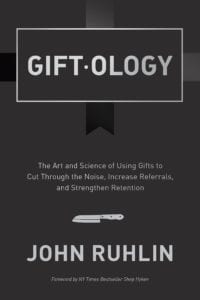
Let’s talk about the detail that you did on your book cover. It’s got shiny topography on it. It looks like it’s got a black ribbon on it. It’s got the knife. I’m sure some thought and effort went into that because I’ve seen a lot of books in my day and I’ve never seen a cover like that.
It costs three times as much to print that book as it does any other normal hardback. We actually have started to convert a lot of our books over to when somebody personally orders books from me. They don’t know this but for our first 50, for guys like Michael Hyde and Darren Hardy and Seth Godin, guys that read our friends, mentors or people I wanted to be, I made 50 of these books that look just like that but they were handmade. The book was handmade and then it went into a handmade leather bag. Then that went into a linen box that was padded and it was all color-coordinated with red. It was a $200 package and with a $9-metal letterhead, and hand-wrote notes to 50 of the top relationships. That’s a $10,000 expense. People are like, “That’s insane.” I’m like, “Let’s put it this way, Michael Hyde has one of the biggest audiences on the planet. He invited us to be on his podcast as a direct result.” He’s like, “I get thousands of books sent to me per year, yours is the only one I kept this year. It’s the nicest book I’ve ever seen.” He actually read it, as well as his twenty employees. People are like, “$200, that’s insane.” I’m like, “You’ll spend $200 on freaking flashlights and pass them out like they’re candy and not thinking anything of it. I’d rather spend $200 on one thing. Basically I call it shooting with a rifle versus most people shoot with shotguns. I’m going to go blow somebody’s mind with one thing versus sending out a thousand things that are just part of the noise and just vanilla and are nothing.”
We now have a VIP version of the book. That’s not $200 a piece but they’re very expensive; a leather bag, a linen box. When people get it they’re like, “Holy crap.” They only have to read the book and they understand what we do and what we teach and what we talk about and that we actually walk our talk. There are a lot of people that are big talking heads but are you willing to put your money where your mouth is and walk it out? For us, we’re this small little firm out of the Midwest, but we’re talking to the Washington Nationals right now about doing a big project with them. One of the reason is it’s because they’ve seen that we’re willing to walk our talk and they’ve heard about it from other people. It’s not that we don’t ever screw up. There are times that we drop the ball, we’re not perfect. Our intention is to fully play full on and do things that will level it, that most people are like, “That sounds great, but I could never do that.” They talk themselves out of it before they even engage.
That has so many layers; walking your talk, being authentic. It also reminds me of how the Italians wear clothes. They’d rather have one really wonderful handmade suit and wear that every day of the week than five so-so made suits. We go visit there and you think these people are really rich. They’re wearing these multi-thousand dollar suits and they’re like, “No, that’s all they wear. That’s their one suit.”
That’s their one suit. That’s their one leather bag. That’s their one watch. I’d rather have one really nice thing. My wife is the same way. She grew up in a farm and they took care of things. She’s like, “John, I don’t need a bunch of crap.” We don’t need more stuff, but everybody has room in their house for an artifact. I think that’s where people are like, “How do you send gifts? Doesn’t everybody just want experiences?” I’m like, “Experiences are awesome, I love experiences as gifts but I like to combine it with artifacts. Every time they see the item, they’re reminded of the amazing experience that they had with you or on their own or with their family or whatever else. I’m a big believer in do one really nice thing versus a hundred mediocre things.

I’m a big believer in do one really nice thing versus a hundred mediocre things.
Speaking of your wife, you talked about her throughout the book. You dedicate the book to her, you talk about how your favorite movie was The Notebook and that you weren’t around so much. Can you tell everybody what you did for your wife since that’s one of your favorite movies together?
Telling the whole story will probably take 30 minutes and usually that’s my wrap-up story when I give keynotes. The summation of it is I was broke as a joke when I started dating my wife. I had invested in a bunch of companies and real estate and I had an employee that was stealing from me, IRS audit. It was my lowest point. It was 2007, 2008. The world melted down financially on top of that. I went from sending saunas to people and Brooks Brothers and crazy over-the-top gifting experiences to living on $1,000 a month take home. The first two years of buying the company, didn’t take a salary, not one dollar.
I wanted to out-do myself of anything I’ve done for a client. I basically recreated The Notebook’s story. I was going to be on the plane with her in disguise, had arranged with Continental at the time. At 30,000 feet, she had read this notebook that I put together of 70 pages of our story. At the end it starts talking about, “Will you love me when I get older and when I’d gained 150 pounds?” There’s this old fat dude sitting next to her. She starts to realize, I’m the old fat dude, this is her boyfriend, I get down on one knee and pulled out the ring and proposed. Our 200 closest friends were waiting to celebrate in Cleveland where she was flying to, which is where I was living at the time. Her family had driven up. That was what was supposed to happen.
Unfortunately, I ended up collapsing in the airport, having to get on life support breathing machine. The FBI showed up because there was guy in disguise in an airplane in an airport. Everything that could go wrong with the story; they took me to the hospital, I was on breathing machine. It was like Romeo and Juliet. Fortunately, I didn’t die. I woke up the next morning and six days later got out of the hospital and was able to propose with no disguise. We read the notebook together with no disguise on the airplane and fortunately she still said yes after basically putting her through hell. It’s one of those stories that was told and written about. It wasn’t the version I thought it was going to be. It took a little bit of a U-turn, but it taught me some very valuable lessons along the way. It gave me an insane story involving FBI and TSA and hospitals and breathing machines. It’s probably the craziest thing in 37 years of living that I’ve lived through.
You’ve come up with this great term. Instead of an entrepreneur, you talk about being a giverpreneur. Can you define what that is for people in a way that they could start incorporating that into their business?
Yes. I came up with the term after reading Give and Take, Adam Grant’s book. I think that everybody is wired one of three ways. We all can be all three but we tend to have the tendency towards one of the three: a giver, a taker or a matcher. I think most people are matchers. If you do something for them, they’d do something for you. There are a handful of people that are givers in business, whether you’re a sales rep, an entrepreneur, an owner, that you give without expectation of anything coming back. Then the taker is obviously somebody that takes and is just looking out for themselves. What’s interesting about his book is the best performing entrepreneurs, lawyers, doctors, everybody, are givers. They’re also the worst performers. I think that it depends on how you give and there is a strategic way to give.
As an entrepreneur, we’re all looking for ways to grow our business and invest $1 and get $5 back. To me, a giverpreneur is somebody that has that giver mindset from Give and Take that gives with no strings attached. I think that a lot of the companies that scale the fastest are those that have the best relationships and have poured into them over and over and over again. Oftentimes, your first idea as an entrepreneur doesn’t hit. It’s the second, third, fifth, tenth, whatever idea, but if you’ve given along the way and poured into people, you start to stack up relationships and doors and opportunities and resources that by the third, fourth, fifth, tenth time, the idea is right, the timing is right, you have the right people on the team. I like to surround myself with other givers, whether it’s entrepreneurially or just in general, and have contests to see who can outgive each other. It’s amazing the things that start to happen and the doors that start to open and the people you start to meet.
To me, it sounds cool, giverpreneur. Really it’s just having a giving mindset and being strategic about surrounding yourself with other givers to grow whatever the business is, whether it’s the business you started or it’s operating as an entrepreneur or somebody that’s inside another company but acts like an entrepreneur. I want to surround myself with givers because those are the best performing people on the planet. Adam’s got the research to back that.
You’re also an investor so you hear a lot of people pitching you to possibly fund their startup. What do you look for in an entrepreneur, giverpreneur when you hear a pitch? Any tips on what a good pitch is?

Having some alignment from a core value perspective is really important to us.
We have pretty strict rights here. There are a lot of people that invest in tech and these different things. We do a little bit of tech investment but in general we’re looking for companies, one, where we trust the founder and that goes without saying. There are certain industries and arenas that, just based on core values, we’re just not going to get into. That’s just not the direction that we want to take even if it’s a massive opportunity. It’s just not who we are from a faith perspective and whatever else. Having some alignment from a core value perspective is really important to us. For us it’s not always, “Is the company going to grow to be the biggest?” but “Is there an opportunity to serve a niche and do something really unique and different and serve people?” At the end of the day, even if things don’t go perfect, we like companies where there’s not a huge amount of capital needs.
There are a lot of opportunities. Look at Amazon or Zappos. We’re not looking for companies to reach $1 billion in revenue before they’re profitable. We want the old school businesses where it’s like, “If this idea gets to $5 million, it’s going to throw off a lot of cash and help a lot of people.” If they can do those things and we feel like the niche is unique enough and we really trust the founder, then we’re open to invest in it. If not, it may be a $20 billion opportunity, at the end of the day that’s not necessarily why we’re investing. We’re not looking for unicorns. I know that hedge funds and all these other companies, they’re looking for the one unicorn. We’re looking for guys that can go out. I’d love home runs but base hits are just fine too. We invest in things that we understand as well. Like the one tech company we did invest in, it’s a gifting platform. I can add value to it and I understand it. Even though we don’t normally do tech, it was an area where we were like, “This could be really cool,” so we invested.
Movie studios have that same philosophy. They can’t all be blockbusters, some of them have to be base hits, as you described, back to the baseball analogy a little bit there.
Some of the movies that are consistently profitable are the ones that go directly to DVD or to Netflix or whatever else. They’re not the sexiest thing, they’re not going to do $100 million revenue, but they cost like $1 million to make and they produce $5 million in revenue. I’ll take a 5 to 1 ratio. It may not win an Oscar but I’m okay with that.
John, let me ask you about this situation. A lot of companies are invited to come and pitch, whether a magazine coming to pitch or brand to advertise or they’re an architect firm coming in with other architect firms to pitch to get the business to build the skyscraper or airport or whatever it is. They’re not quite sure if they should give a gift when they come to present or as a follow-up gift. They don’t want to have anybody accuse them of trying to “buy the business.” What are your thoughts on the best time to give a gift when you’ve been invited to come in and pitch, or should you give a gift at all at that time?
I think it’s a case by case basis. If it’s an RFP with Walmart or somebody like that where they can’t even accept a pencil or going out for coffee, then a gift isn’t appropriate. If you know those are the kind of people that you could take them to a ballgame or you can take them out to dinner, or there are more social experiences that are acceptable, then I would look to amplify. Let me take somebody out, if we were to take him out for a steak dinner, we might have personalized steak knives waiting for them when they got to the dinner that they could take home with them. It’s a cool thing that they can take home to their spouse and use. It was part of the experience, it elevated the experience, but nobody’s feeling like they’re being bought because there’s a $200 set of steak knives that they used at the dinner table. It was part of the experience. It was cool. It showed an attention to detail and personalization and class.
We do a lot of those things for clients when they’re in pitching stages or as a follow-up like we appreciate the time. We used the knives in that way like, “Thanks for carving up the time for us to be there and be a part of the things.” I think a lot of times, it’s sometimes those little things that show an attention to detail are huge. Sometimes, you’re pitching from afar. I know one of the guys that’s a client of ours, it’s an engineering firm, I was the only one that actually dropped everything, flew out and met with them to see what their real needs were, and that’s why I got the business. I wasn’t the cheapest but I was the only one that flew across the country to meet with them and really understand their needs. That’s why I won the RFP and the pitch.

If you don’t feel comfortable, like I can’t take them out for coffee, then don’t send a gift.
I think every industry and situation is different. If you don’t feel comfortable, like I can’t take them out for coffee, then don’t send a gift. The last thing you want to do is consistently spend money and have a negative consequence. What I will say is that most people play fearful when it comes to gifting. I would rather lose one of the ten pitches because they’ve misinterpreted the gift and stand out head and shoulders above on the other nine out of ten because I did. I think most people, all they remember is the one out of ten that got sent back to them or somebody was pissed off or upset or misinterpret it. I’m like, “Focus on the other eight or nine that loved it.” I love that people play scared because it means they won’t do what I’m teaching them to do. Five out of a hundred companies that we work with, they stand out head and shoulders above because even if their competitors know our playbook, they won’t do it because they play scared.
What’s interesting is my big takeaway, there are several, but the two that really stand out is the personalization combined with going the extra mile. There’s the young boy you described who drove so far, you getting on a plane, the personalization with the names on the steak knives, not just steak knives, that’s really key. My final question for you is, you talked about if you really get to know somebody, you can even really connect with them if you come up with a clever gift for their children. Have you ever done anything for someone who may not have children, but talks about their pets all the time?
I actually just sent one to Gary Vaynerchuk‘s former assistant who now runs Vayner Capital. We hosted Gary for the day. In Saint Louis, he toured our leather factory. He was like, “This is really cool stuff.” He’s like, “Phil, that’s this company.” I looked up and saw that he had a dog named Chloe, the dog loved peppers. I sent him a knife that was handcrafted exclusively for Chloe. It said something about Chloe’s pepper slicer or something like that. Sure enough, he responded. He was like, “That’s awesome,” because it was for his dog. We’ve done that with customized collars and leashes and beds and other things that are nice, classy, useful, high-end things for somebody’s pets absolutely. In many cases, people treat their pets better than they do their kids, it’s crazy. What lengths people go to. One of the few recession-proof industries is the pet industry. People eat Skippy peanut butter and be serving their dogs filet mignon. It’s amazing to me the level that people go to for their pets. Absolutely, that sets definitely a relevant angle to take.
Any last thoughts you have you want to leave us with on how we can be a giverpreneur?
[Tweet “Be A Giver-preneur”]
I would just say that a lot of times, people don’t think they can afford us or they get afraid on outsourcing and gifting to us. The reality is there are a lot of small companies that work with us. It’s like I’m going to take my three girls bowling. You just try to keep them out of the gutter and they have the bumpers that keep your balls over. We did create a PDF that has the ten worst gifts to avoid giving, just to give people a way to say, “At least it’s not one of these ten.” It eliminates. Most people are like, “Those are the ten I normally send, so I need to avoid those.” We confirm why they’re not great gifts. If you go to GiftologyBook.com/pitch, they can go download it for free and it summarizes some of what’s in the book. Obviously the book goes into detail on strategies, percentages, follow-up, case studies, and all that stuff. Sometimes people just want a little cheat sheet for them or their marketing team of like, “Keep these ten off of the list,” and it’s usually pretty helpful. I would say that that’s what I would wrap up with as far as a, “Go do this.” If you like the book, go download the book, and if you like the book and whatever else, you can reach out to us and I’m happy to help. That’s a good first step.
Thanks, John, so much. You’ve been a great guest and a giver.
Links Mentioned
- John Ruhlin
- Giftology
- Ruhlin Group
- Cutco
- Pre-Suasion
- Influence
- Michael Hyde
- Darren Hardy
- Seth Godin
- Give and Take
- Gary Vaynerchuk
Wanna Host Your Own Podcast?
Click here to see how my friends at Brandcasting You can help
The Successful Pitch – Book Trailer
Share The Show
Did you enjoy the show? I’d love it if you subscribed today and left us a 5-star review!
-
- Click this link
- Click on the ‘Subscribe’ button below the artwork
- Go to the ‘Ratings and Reviews’ section
- Click on ‘Write a Review’
How To Be Irresistible When You Pitch with Patrick Netter
Posted by John Livesay in podcast | 0 comments

 Episode Summary
Every success has a story behind it. People are pulled in by the origins of a person because that is where the connection happens. John Livesay tries something new as he gets interviewed instead by health and fitness industry influencer Patrick Netter. Listen to John Livesay’s story of origin as he shares his experiences from being inspired by Bewitched to working for Fujitsu and ultimately becoming The Pitch Whisperer. Stop being invisible and learn how to be irresistible.
This is a very special The Successful Pitch podcast because my guest, Patrick Netter, asked me if he could interview me instead of me interviewing him. I said, “Why not? Let’s see what happens.” I talked about things I’ve never talked about on any other podcasts. He asked me some really insightful questions that made me think. I think you’ll find it interesting to see how I share my own journey and how you can apply those lessons to your own life to go from invisible to irresistible.
Listen To The Episode Here
How To Be Irresistible When You Pitch with Patrick Netter
For the first time ever, I’m going to have my guest interview me at his request. I thought it’s all about embracing disruption and trying something new so why not? Patrick Netter is the guest/host. He is a health and fitness industry influencer and he has been called the Gear Guru. We met at an organization here in Los Angeles called METal. He’s been so kind and helpful to me about helping me with my sizzle reel. He’s been on television many times himself. He’s got a new product out called MuV that lets you exercise while you work sitting at your desk or at your home. Patrick, welcome to the show. You’re now the host.
You have been promoted, demoted but in any case, it’s great to be with you. I would just change one word. I’m not going to interview. I’m going to interrogate you. This will allow your audience to really find out the true John Livesay. We’ll extract the right information from you. I’ve got a bunch of questions that I’m sure your audience would like to know as well. You call yourself a Pitch Whisperer. We all know about the horse whisperer. It’s a trainer who has sympathetic view of needs and desires and motives of a horse. What’s a Pitch Whisperer?
Patrick, a Pitch Whisperer is a lot like a horse whisperer. The horse whisperer calms a horse down. A lot of people come to me because they have a big pitch coming up. Either it’s a big pitch to win a new client if it’s a big company or they’re pitching to get their startup funded. Most people get nervous when you pitch. I work with people as the Pitch Whisperer on helping get their confidence up. It really is your Super Bowl or your Olympic moment of meetings. If you can be confident, calm, and focused, then that’s the first part. The second part is, there are three unspoken questions that everybody has when they hear anybody pitch anything. I make sure that my clients have those three unspoken questions ready to go in their pitch.
When you say an unspoken question, you’re talking about whoever the potential client or customer is, they always have three questions in their mind that they want to find out?
Yes.
Give me an example.
The first one is a gut thing which is, “Do I trust you?” It’s the fight or flight response kicks in. That’s where the handshake came around, which is to show you don’t have a weapon. Once you feel that you can trust somebody and you can get some credibility going, then you’re willing to listen to them. Then it moves from the gut into the heart. Then they’re thinking as they listen to you pitch whatever it is, “Do I like this person?” The best way to increase your likeability is through empathy. The more the people trust and like you, then they’ll go into their head and say to themselves, “Will this product work for me? How would this investment fit in to my existing portfolio?” What I find is most people, A) Aren’t aware of those things going on, and B) If they are, they think it’s the reverse story. They think, “People have to know me. Then they get to like me and then they trust me.” I said, “No. You’ve got to start from the bottom and work your way up.”
Fear, fight or flight, is the limbic system. It’s the oldest parts of our reptilian brain. What you say makes sense and that’s the first thing that comes up. If you don’t feel trustworthy, if you don’t feel safe, then it doesn’t matter. You talked about story of origin on some of your podcasts. What really is that?
It’s a way to get people to take people back to, “How did you become you?” I love asking people that question because it lets them go back as far as they want. They can go back to childhood. They can go back to college. They can go back to a moment in time when they said, “This is where I came up with the idea from my company. or this is how I decided I wanted to be an architect,” or whatever their profession or choices are. I have yet to meet anybody who did a very linear path. I think that’s so valuable to hear people’s story of origin because that’s how we connect with each other is through stories. By telling people your own story of origin, “I thought I was going to do this. That didn’t work. I tried this.” Then people go, “Oh,” or, “I had a problem. I decided to solve it and that’s what made me want to start this company.” All of those things and big brands do it all the time like the Johnnie Walker Scotch. He used to be this poor Scottish farmer and now he became Johnnie Walker.

How To Be Irresistible: It’s so valuable to hear people’s story of origin. We connect with each other through stories.
There’s a great 60-second ad out that tells that whole story. That’s interesting.
That’s how we connect to something. It’s not this cold, big company. It’s an actual story of, “Once upon a time, somebody had an idea for a McDonald’s hamburger.” They made a whole movie about it. Those story of origins really pull people in.
What is your story of origin of why you’re the Pitch Whisperer?
I’ll take you back all the way to my days at the University of Illinois in Champaign-Urbana, when I was inspired to go into advertising in general from watching on a TV show called Bewitched.
You’re talking about Darrin and Samantha, but her husband Larry Tate and Darrin had an ad agency.
They did indeed. I thought Darrin Stephens had the coolest job ever of getting to go out and pitch new ideas to potential clients. On top of that, he got to be married to Elizabeth Montgomery. I thought, “She’s got magical powers. I want that whole life. I want the job. I want the whole experience. Never bored.” That’s what made me decide to go into advertising. When I moved to San Francisco in the 80s, that was when Steve Jobs was starting Apple. You could be in your twenties back then and be in computers. That whole thing fascinated me. I thought, “That seems a little more interesting than going into advertising and selling toilet papers,” or whatever the product was going to be that I’d be assigned to. I focused on learning how to sell mainframe computers.
For whom?
A big company called Fujitsu. We competed against IBM. They used to sell with FUD: fear, uncertainty and doubt. If you buy anything that’s not IBM and it goes down and it did all the time back then, we’re going to point the finger at the other vendor and you’re going to get fired. You can imagine how challenging that was to counter that culture they created to get people to take a chance.
What was your magical answer to that?
I would tell a story of another client of Fujitsu’s, Boeing, that had been all blue for one point. They needed to get a part from point A to point B. They got a plane to keep going. For whatever reason, IBM wasn’t able to do it. They realized they put all their eggs in one basket and that’s when they said, “We’re never going to do that to ourselves again.” That’s when they let another vendor into the shop. They had backed up. I painted that picture in a different way, a different kind of FUD.
What was yours?
That case was you need to be like Boeing and not have all your eggs in one basket. As great as IBM is, they’re still human. There could be a time when they’re not going to have what you need. If you’d only have that vendor, you don’t have anybody else to call.
From the high-tech computer business, you segued into what?
I moved down to Southern California and I segued into advertising. After all, I met this owner of a small agency that created commercials for movies coming out on video way before DVD. I said, “I majored in advertising. I loved it.” He said, “I’m looking for someone to sell our creative abilities to the big studios to let us cut down their movies into 30-second commercials to get people to rent the videos.”
Are these trailers?
No. Literally, TV commercials. There’s a budget back in the day where they ran commercials like, “Lethal Weapon, now on home video. Rent it now. Go to Blockbuster,” then they’d show the cassette box. I said, “Now, that’s much more exciting. I love entertainment. I’m going to quit my Fortune 500 job, take a risk at this small startup and learn how to produce a commercial from post-production to voiceover talent, to telling a story in 30 seconds or sometimes even 15 that makes people want to rent that movie,” and learning from what didn’t work in the theatrical campaign and repositioning the movie sometimes. That was fascinating and fun.
From there, I made the decision to go into print. I sold advertising for the American Film magazine, which is the American Film Institute. It’s a segue from entertainment to print. Then I ended up working at Condé Nast for fifteen years selling advertising for big brands like W. At the end, I was packaging all the corporate brands of Wired, GQ, Vanity Fair, Vogue altogether for Lexus and Guess jeans. During that whole path, three separate career paths, I thought, “No. These things will never intersect.” While I was at Condé Nast they’d said, “There’s this thing called the internet. We’re going have to have our website and our clients are going to start selling clothes on these websites. Does anybody know anything about computers?”
You’re talking about the Interweb, the new super highway that the kids are talking about today?
Yeah. I said, “I know something about computers,” so that helped. About a year later they said, “We’re no longer going to just put models on the cover of these fashion magazines. We’re going to start putting celebrities on them. Does anybody know anything about the entertainment industry?” “I do.” All of those seemingly unrelated careers totally dovetailed to the point now where people are saying to people, “What are you wearing?” on celebrities on the red carpet. The merger of fashion and celebrity really took off and I was uniquely positioned to brainstorm on how to make that come alive.
From Condé Nast, I understand you had some wins in that.
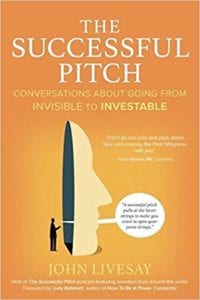
The Successful Pitch: Conversations about Going from Invisible to Investable
I did but before I had the wins, I had some disruption. Back in 2008, after being there for over twelve years, the economy tanked and all the luxury brand advertising dried up. They decided they had to lay off all the outside sales people that weren’t in the New York office including 30% of the New York people. I felt like, “What happened?” I got completely disrupted. Even though you could see it coming like a Titanic hitting the iceberg, when it does hit, it’s still a jolt to your system. I had to figure out how I was going to reinvent myself. A friend of mine said, “It’s like the actors going from silent movies to talkies. Some people are going to make this transition from print into digital and some aren’t.” I thought, “Am I going to be one of those people that makes the transition and learn something new? Got it.” I had to convince The Daily Beast to hire me with no real experience in digital when they were looking at other people that were younger, work for less money and had experience.
This is what year, John?
2010.
By then you already have some seasoned, digitally interested and digitally experienced people, younger, working cheaper than you and yet what was your pitch?
I knew on paper I didn’t look like I was qualified against somebody who’d worked at Yahoo, who’d also gotten laid off two years ago. I said to them, “I’m going to be in New York for the holidays. Why don’t I just come and meet you?” They said, “All right.” I flew myself there in my frequent flyer miles. I didn’t have a plan but I knew I had to get in front of them. I was like Kramer vs. Kramer moment. Do you remember that scene where Dustin Hoffman has to get a job in order to get child custody? He goes to somebody’s Christmas party and that agency’s Christmas party, that’s what it was like for me. I walked in the Christmas party I had been the night before. Streamers were still in the lobby floor and people are hung over. I’m like, “I like to talk to you about why I’m the perfect person for you to hire.” I basically sold myself on what I’d done at Condé Nast and what I would do here. I had created a mockup of how I would convince Lexus to sponsor their innovation channel on the website. I had all that ready. I acted as if I already had the job. I hired a coach actually who is a coach on helping people interview. People said, “Why would you do that?” I said, “Because I have interviewed so many years and I need somebody to get me on the top of my game.”
What do you remember your coach telling you that made the difference?
It goes back to the problem-solution storytelling scenario. He said, “Tell me about a success you had at Condé Nast.” I said, “Jaguar came to us with a problem that they wanted people to think of the car as moving sculpture. They didn’t know how to do it.” The solution I came up with was we would have some of the subscribers picked up in a Jaguar that had a lease expiring from Mercedes Benz or BMW and take them to a Golden Globes party. After they did that, they would be taken from the party to a private room at a nice, new restaurant with a chef and people from the Museum of Modern Art would be there. Jaguar could be in that conversation about art and sculpture. In between courses, people could take a test drive on yet another model. Jaguar gave me $500,000 worth of ads. Jaguar sold two cars that night.
Were they happy with that?
They were very happy with that. They got a return on their investment from the advertising. That whole structure of that story, I needed to really hone in on which is paint the picture. Who’s the client? What’s their problem? What’s my solution? Then the big part was, what’s the resolution? Most people stop at the solution, “I got the ads but how much money was generated?” and all that good stuff. Jaguar sold two cars. That makes the story compelling and that was a great example of what I do with clients, and then they could see how they could apply it to digital.
You talked about a five-step program.
It’s one of the things that I’ve really noticed that it’s a lot like dating. You go from invisible all the way up the rungs of this ladder to irresistible.
When you say invisible, let’s use that in a business sense. What do you mean by that?
One of my clients is Gensler, which happens to be the world’s largest architecture firm. They do billion dollars in revenue around the world building skyscrapers and airports and all kinds of things. Believe it or not, there is a lot of people who still haven’t heard of them, which is mindboggling to me that you could be that big. A lot of people, Gensler is invisible to them. Certainly, if you’re a smaller company than that, you’re probably invisible to a lot of your clients.
Particularly if you’re a startup or early-stage company, nobody knows you. There’s no brand awareness.

How To Be Irresistible: You have to first figure out where you are on that ladder.
You have to deal with that. I compare it to dating where you see somebody at a party and you’re attracted to them. You might as well be invisible. They don’t even know you exist. You have to first figure out where you are on that ladder. If you think you’re irresistible and you start acting like that, the person doesn’t even know you exist, you’re never going to get anywhere.
It’s too big a leap?
Exactly. It’s like saying to somebody on a first coffee date, “You want to marry me?” You’re like, “What?”
Invisible is at the bottom. Then, what’s the next stage?
We go up to insignificant. In the dating world, I don’t know what’s worse. Insignificant or invisible?
Not good on the ego for being either.
You think to yourself, “As soon as they see me, they’re going to just think I’m all that in a bag of chips.” “I see you and I’m still not interested.” The same thing is true with our marketing messages on emails and all that stuff. You give somebody your elevator pitch and they’re like, “I don’t need that. That’s insignificant to me. I don’t need insurance,” or whatever it is you’re doing. You have to say something that makes it seem significant to the person before you can ever get up to the next rung, which is interesting.
We’re from invisible to insignificant to interesting. Interesting on what level?
Back to dating, maybe I say something that’s funny or clever and someone’s like, “Maybe I wrote you off too soon. I’m interested to talk to you more but I’m still not going out with you yet.” In our business situation, you might say something like a statistic that people don’t know, “Do you know people remember your stories ten times more than they remember your numbers? The people who tell the best story get the sale.” “That is interesting. I’m interested to hear more about why I should talk to you about having you come in and speak to my team on storytelling.” That’s an interesting level but they haven’t hired me to be their keynote speaker yet.
Interesting means they’re leaning in. It’s now has application to their life, to their business.
Or you said something that they find interesting whereas before they didn’t even see it was relevant.
We’re now at the interesting level and we’re now progressing to what?
It becomes intriguing.
The interest level now is intensified.
[Tweet “The person who tells the best story wins the sale.”]
Back to dating, you say, “If we were to go out, here’s what I think I would like to do on our first date. I would like to have a limo pick you up and take you to a hard-to-get-in restaurant. After that, I thought we’d go to Griffith Park. I’ve arranged for a private tour of the observatory. Does that sound like something you’d be interested in? Are you intrigued a little more about what that could look like?” The same thing with marketing and selling yourself. I always like to say the best way to be intriguing is to start a sentence with what if. Anthem Insurance hired me to be a speaker. I knew I had to get up to the final rung of irresistible. I wasn’t quite there yet so I came up with an intriguing idea which for them was they’re only just going to have a keynote speaker come and leave and I said, “What if I stayed the whole day and people could ask me questions at lunch? Then you’re doing this improv session at the end of the day where people are going to be throwing objections for the audience. I could be on stage and be part of that improv and help people who get stuck know what to say and coach them through that and whisper in their ear.” They said, “That’s intriguing. Tell us more how that would work?”
Now, I’m really leaning in and now what are you going in for the close?
That’s the irresistible part. You’re doing something that no one else is willing to do. Most of the other speakers are like, “I’m in. I’m out. I don’t want to catch a red-eye at home and stay all day. Forget it.” I interviewed Charles Michael Yim who’s the only person on Shark Tank to ever get all five sharks to give him money because his pitch was so irresistible. Not only with his breathalyzer were you helping people not drive when they’re drunk, but you’re literally saving lives. People go, “I’ve got to be in on that. Not only this is a big market but I’m going to have a social impact.” That’s an irresistible pitch.
How would you define an irresistible pitch? That’s the goal pretty much of every pitch whispering session you have. Is it not?
It is. There are a lot of elements to it. You’re tugging at the heartstrings.
What are the indispensable aspects of being irresistible?
I think there are three things to it. It has to do with storytelling again. There is the problem that you’re solving for somebody. There’s the external problem you’re solving. Then there’s the philosophical problem that you’re solving. If you solve all three of those, that makes you irresistible. Let me give an example from a movie, Star Wars. When Luke shoots that weapon into the Death Star, the external problem is he’s destroying the Death Star. The internal problem he’s solving is, he’s proving himself worthy to be a warrior, which is what the whole movie was about, his own journey. The philosophical problem he’s solving is good does win out over evil.
Let’s say in a business situation.
Tesla, the external problem they’re solving is, “We’re so dependent on foreign oil. These cars are gas-guzzling and they’re polluting the world.” The internal problem you solve when someone decides to buy a Tesla is, “I want to be seen as someone who is cutting edge in technology.” The philosophical problem you’re solving is, “I can drive a car and make the world a cleaner place.”
Ideally, every single pitch will address those three: internal, external and philosophical issues.
Most people just try to solve an external problem and maybe an internal problem. When you get that combined with what’s the philosophical problem, then we’re tapping into the heartstrings. That’s what makes it irresistible like the Charles Michael Yim. The external problem is drunk drivers. The internal problem is, “My next door neighbor son died from a drunk driver and I’m committed to helping. That’s what started the Mothers Against Drunk Drivers. This is more than just a way to make money for me.” The philosophical problem is, “We’ve got to save lives here because it’s killing more people than heart attacks or whatever.”
Nowadays, social conscious companies are doing very well. In fact, so many big advertisers are now tugging at the heartstrings and giving back like car companies or all kinds. That all makes sense. Give me an example of a particularly thorny problem that you had recently and how you turned it around for this pitch.
I think the one I wanted to talk about is Gensler. They’re architects. They are amazing designers. They have a lot of hard skills of design. They’re invited to a lot of presentations because of their reputation. They have a marketing department that creates beautiful slides. What they don’t have are the soft skills, which I list as empathy, likeability, confidence and storytelling.
John, are you talking about the corporate communication doesn’t exude that or the individuals that are going out to pitch more business?
The individuals going out to pitch. The thorny problem they have was either they wouldn’t practice their pitch enough or they would just go and show their designs and hope that would get them the job. They’re solving just the external problem. One of the airports that they were pitching said to them, “We’re going to hire the people we like the most. All of you have good design. This is a six-year project. We’ve got to work with people we like.” That’s when they realized, “We have a problem.” Nobody has been trained on how to connect with people on a human level so that our team is perceived as not only competent but likeable.
If this were the Herrmann Brain Dominance Index: the blue, green, yellow, red paradigm, these guys are pros at being engineers at being scientific. They’re high tech but they don’t have it high touch.
It’s the hard skills versus soft skills. Without both, you don’t win as many pitches. Someone else could have an inferior design but if they come across as more empathetic, likeable, confident and better storytelling, they’re going to get the job. I help them with that.
How do you help somebody, an engineer type, even if it’s in sales, how do you develop that skill?
There were seven of them that had 45 minutes to an hour to pitch. There was somebody pitching before them and somebody pitching after them. It’s back to back. You’ve got to really stand out. I asked them, “What are you planning to say when you open your pitch?” They said, “We thought we’d say something like thanks for this opportunity. I’m excited to be here.” I go, “That is a snooze fest. Everyone says that and it has nothing to do with the audience. Let’s fix that right off the get-go. You have to do good reopening.” We did a deep dive into what’s important to the audience. The new opening sounds like this, “Your CEO has tasked you with getting this airport ranked from number 24 to number 1 in six years. We know exactly how to do that. We’ve done it for three other airports around the world. We have the right team to do it to make you look good.” Suddenly they’re like, “What’s in it for me?” Then when they would get to the team slide, which they show all the people who are in the room and what their jobs are and titles, it would be, “Hi, my name is George. I’d been here ten years. I’m in charge of this.” I’m like, “Oh my god.” Now, it is, “Hi, my name is George. The thing that inspired me to become an architect was I used to play with Legos when I was eleven years old. Now, I’m an architect and I have son that’s eleven and I still play with Legos. I’m going to bring that same passion to this job because I really care about architecture and making a difference in the world with airports and the experience people have there.”
Now, you’re connecting to their heart not just their logical mind, which is important. What I’m hearing from you, John, is that you’re teaching people who pitch to really connect on a logical basis, on an emotional basis with some call to action with hope.
The reason they got that multi-million dollar sale, when everybody laughed we said, “I like the team that one person played with Legos and somebody else on his team was from the Israeli army. She brings that discipline to making sure this is going to come on time and under budget.” They remember the stories.
They remember the story, which is the most important part. Why? Because that’s the way we’ve been learning for the last 100,000 years or whatever, storytelling.
That’s the secret weapon of how I make people go irresistible and how I can teach people how to do that on these big pitches.
What do you think of the line, “Never make a point without a story nor a story without a point?”
I think that’s great. I would add to that, never make more than three points. Our brain likes that, three things.
Why three?
It’s just the way things go in design and everything else. It’s an odd number versus an even number. We can remember three things. We like the structure of, “Here’s three reasons why we should hire you in summary,” that kind of thing. If you’re going to make three points, have three stories for each point. Every story should definitely have the structure which is the exposition, problem solution, resolution. That makes the story have a point when you talk about, “The moral of the story is, the outcome is.” You’re going to get your startup funded or whatever it is.
You’re right now spending most of your time as keynote speaker for what companies?
Last month, I spoke to Anthem Insurance. Their healthcare is being disrupted. They wanted me to speak not only about disruption and how to embrace it emotionally as a person, since I’ve went through it myself, but those people that are nurses and MBAs now have to sell. They were really resisting it. I said, “We’re just going to ask them to be storytellers, not sales people and that’s what really was.” “Thank God. Come, you’re the perfect person.” Coca-Cola had me speak at their CMO Summit where they had CMOs from Olive Garden, and McDonald’s, and art like movie theaters. They really wanted to have me talk about how can we figure out what technology is best for us to use in our marketing strategy and what’s going on in the startup world that we can learn and apply to what we’re doing.
[Tweet “Embrace disruption or perish; ie be Netflix, not Blockbuster”]
What did you come up with?
One of the people that I met with before the event, we all went to dinner the night before. There’s a brand called Schlotzsky’s which is a sandwich bar restaurant. People come in there to watch the games. If the games are not particularly interesting, people leave and then their food and liquor bill doesn’t go very high. I said, “Figure out what problem you want to solve and then figure out what technology can help you solve that as oppose to trying to pull the trigger on everything. In this case, I would recommend augmented reality because the replay of the game could pop up from the bar and people could watch that replay while the commercial is going on and start betting on what’s going to happen next. You’ll get them involved in a whole other way that even if the game isn’t particularly interesting, the technology, the camaraderie and the betting what’s going to happen next will keep them intrigued, drinking, and eating.”
A new way to engage them further?
Yes. Coldwell Banker had me come and speak to their Beverly Hills office. These people are cutthroat. They’re seen as a commodity. They need to learn how to brand themselves. I just said, “Whoever tells the best story gets the listing,” because they go in and pitch all these multi-million dollar homes. They need to have a good story of why they’re uniquely qualified and what they’re going to do to find these buyers and what their strategy is. Big companies that have a sales force in either technology or travel or automotive, all of those have sweet spots.
Back to the Coldwell Banker, they walked out of your event learning what?
That they had to think of themselves as storytellers, first of all, because they didn’t. They were going in with facts and figures, “The comps show that your house is worth this much.”
Something that every one of their competitors can come up with.
What I was showing them how to do was paint a picture of someone else who had a house that was very similar to this house in terms of the design and the price point. You tell the story if they were struggling to figure out which agent to use. Once I painted a picture of how we were going to not just have the classic open house but do an events at night and have an orchestra and get some press, after that happened, they actually found a buyer from China who saw the press and bought the house for cash. That is the pitch, which is a story of how you help someone just like them stand out from the crowd.
You find when you’re dealing with some of these brand enterprise companies, the things that they do wrong typically are what?
They go in with the numbers and logic as oppose to the emotion part. They think that data is going to convince people to buy from them. They get into the mudslinging of commodity and being seen as a commodity because they’re not tapping into the emotional reasons why somebody wants to be seen and heard and what you’re bringing to the table that is worth a premium price.
This empathy, this way of reaching their emotion, can you teach that?

How To Be Irresistible: Figure out what problem you want to solve and then figure out what technology can help you solve that.
Yes. There’s a difference between empathy and sympathy and rudeness at the bottom of the scale and just being aware of the range of what the differences are and how to do it. I have people visualize putting on an empathy hat to get them out of their own head, “What’s in it for me? What do I need from this situation?” Literally trying to put themselves in shoes. I have stories about it. When I used to call on Lexus’s agency I said to them, “My job is to make you look good to your client.” No other sales rep selling any kind of media whether it was print or TV or radio would ever say that and yet the agencies are like, “That’s what we need. We need somebody who’s on our side.” It’s a collaborative conversation because they’re not in any danger of losing the account tomorrow, but all agencies live in fear of losing the account. That’s an example of teaching somebody how to be empathetic.
What have you found at the end one of your events, one of your speeches that they come up and they say, “John, thank you so much for teaching me,” what?
The importance of how to be a storyteller. “We referenced your talk for the entire two-day summit. We thought we had heard it all. We realized that we all need to become better storytellers and tap into the emotional side of the brain as opposed to just being seen as another vendor. We’re totally excited to realize that when we become a better storyteller, we’re going to get more sales and prevent taking rejection personally and burning out, which is what we were starting to do with the old way.”
Why did you figure this out? Why are there other companies not hearing this more often?
I figured it out because I wanted to get off the self-esteem rollercoaster of only feeling good about myself when my numbers were up and bad about myself when my numbers were down. I think working in this corporate culture which is, “What did you do for me lately? How did this month’s number is compared to the last month’s, last year’s?” It’s all focused that way. I just started to realize my clients are just tuning out if all I do is talk them from a number’s perspective of how many readers and what’s the cost per thousand of all these advertising. I just said, “I’m going to start telling stories.” I did it fifteen years ago when I wrote my first book, The 7 Most Powerful Selling Secrets.
Can you divulge that now that it’s a few years? What are they?
The 7 Most Powerful Selling Secrets: Soar Your Way to Success With Integrity, Passion and Joy
The most powerful one is being comfortable with silence. When you ask a closing question like, “Do you want to buy the house?” Then you have all that negative self-talk going on in your head, “I really need this commission. If I have to show this person another house, I’m going to lose my mind.” You’d say, “If I throw the refrigerator in, would you buy it?” Then you’ve missed the chance for them to say yes or no. I tell people, “Do you like to buy the house?” The old way of sales training was whoever speaks first loses and it’s a battle of will. That doesn’t work. If you say to yourself, “Would you like to buy the house? I am patient and calm.” Three times to yourself, you literally put that energy out. You’re giving the person the chance to say yes or no without a lot of pressure. They can feel the difference. I’ve had real estate agents increased their sales by 30% just from that one secret. The other one is creating a sales flight plan for your whole experience, like you’re a co-pilot with your buyer.
When you say a flight plan, you mean what in this case?
Preparing before you go to the call, really doing a deep dive into what their needs are and not just giving the same old canned presentation over and over again, customizing it. You’re like a pilot and thinking of them as a co-pilot. You’re not just flying the plane. It’s a conversation. It’s not just, “I’m going to talk to you for twenty minutes or an hour and you’re not going to say one word.” That’s very hard to get a yes when you just talk, talk, talk.
We have silence, we have flight plan and the other five?
It would be not being attached to the outcome. Part of that is not taking rejection personally. The way to do that is you never reject yourself. The other part of this is just dealing with objections and having them prepared so you’re not a deer in headlights, “The people keep telling me my price is too high and I don’t have an answer.” Come up with an answer so you’re not a deer in headlights. One of the things I also do is give people some actual structure on how to handle an objection with feel, felt, found. Have you heard that before?
No. What is that?
Say that the price is too high, “I understand how you could feel that way. Other clients felt that way at first too but what they found is the investment they make is more than worth what the cost is.” That’s a big one. Just this whole concept of rapport building. Either people spend too little time on it or too much. You need a little bit but you don’t want to spend twenty minutes of a 30-minute call on talking about your kids and baseball and whatever.
It’s important to create the rapport but is there a way that you can actually condense that time? Are there techniques that you teach?
There are. I think the biggest one is going on a person’s LinkedIn profile and really dig around and see who you might know or where you all have something in common or you belong to similar organizations or find out what their charity is, read their blogs, follow them on social media, comment on that as an opener. The more specific you are on feedback to someone, the more meaningful it is. That’s one of the techniques I train.
As oppose to telling an author, “I really love your book.” You would be more specific, “I really found chapter thirteen of particular interest because when you talked about this specific time you spent in Vietnam,” blah, blah, blah.
They’re like, “You really did read it. I see why it’s so meaningful to you.” That and my new book The Successful Pitch.
What is the purpose of your book?
It’s ten of my favorite episodes where I’ve interviewed really interesting people like Jay Samit, Tim Sanders and asked them to share their experiences on what makes a good pitch. You get to eavesdrop in on those conversations in the book and digest it really fast and just go whatever chapter grabs you so that you can really learn a lot from people who are successful thought leaders and walk away with some new tools on how to give a successful pitch.
You’ve convinced me. I’m coming to you. I want you to whisper in my ear and up my game when we finally introduce ontheMuV because that’s something like every other early-stage company we want to get blown up. I think John Livesay, the Pitch Whisperer, is just the ticket for us.
Thanks, Patrick. This has been a lot of fun.
It’s been fun for me as well. I’ll be listening in for your next podcast.
Links Mentioned
- Patrick Netter
- METal
- ontheMuV
- Condé Nast
- The Daily Beast
- Gensler
- The 7 Most Powerful Selling Secrets
- The Successful Pitch
- Fujitsu
- American Film Institute
- Coldwell Banker
Wanna Host Your Own Podcast?
Click here to see how my friends at Brandcasting You can help
The Successful Pitch – Book Trailer
Share The Show
Did you enjoy the show? I’d love it if you subscribed today and left us a 5-star review!
-
- Click this link
- Click on the ‘Subscribe’ button below the artwork
- Go to the ‘Ratings and Reviews’ section
- Click on ‘Write a Review’