

Trustworthy: How The Smartest Brands Beat Cynicism With Margot Bloomstein
Posted by John Livesay in podcast | 0 comments
With competition getting tougher by the day, how can you make your brand stand out in the market? John Livesay has the perfect guest who can tell you which brands are doing it right and which ones are doing it wrong. He sits down with the creator of BrandSort, Margot Bloomstein. Bringing her book, Trustworthy: How the Smartest Brands Beat Cynicism and Bridge the Trust Gap, she highlights the importance of regaining the trust of cynical consumers through empathy and authenticity. While having the ability to understand and share the feelings of your customers is key, understanding yourself should come first. Margot then dives into the importance of knowing who you are as a company and brand so you can be in a better position to engage with audiences.
—
Listen to the podcast here
Trustworthy: How The Smartest Brands Beat Cynicism With Margot Bloomstein
Our guest is Margot Bloomstein, the author of Trustworthy. We get into conversations about which brands are doing it right, and which ones are doing it wrong, and why trust is so important as well as an interesting conversation around empathy. Enjoy the episode.
—
Our guest is Margot Bloomstein, who is one of the leading voices in the content strategy industry. She’s the author of Trustworthy: How the Smartest Brands Beat Cynicism and Bridge the Trust Gap and Content Strategy, with real world stories to strengthen every interactive project, as well as being the Principal of Appropriate, Inc., which is a brand and content strategy consultancy based in Boston. She’s a speaker and a strategic advisor. She works with marketing teams, leading organizations for the last several years. She’s the Creator of BrandSort where she developed the popular message, architecture-driven approach to content strategy. She teaches the content strategy graduate program at FH University in Austria, and lectures around the world about brand driven content strategy. Welcome to the show.
Thank you so much. I’m delighted to be here.
I always like to ask my guests their own story of origin. You can go back to childhood, school. Where did you get interested in this concept of trust and content and all that good stuff?
I’ve been working in the content strategy industry for many years, and over that time, I’ve had the opportunity to work with organizations in a pretty broad variety of industries in healthcare, retail and financial services. The common thread that I always see between all of them is this interest in meeting unsolved problems and identifying the problems for their audiences and their customers, and then figuring out how to combine what they offer with what their audiences need. My background before content strategy was in design focused on problem solving. That’s where my interest has remained over time. Our problems and our client’s problems have become more and more complex, but still, some of the tools that we use to meet them around establishing personal relationships and trading and empathy and compassion to meet their needs, those things haven’t changed.
[bctt tweet=”What responsibility do businesses have to care about trust? Why do trust and credibility seem like they’re under attack?” username=”John_Livesay”]
I am all about empathy. I’m always telling audiences when I’m in front of them about the importance of putting on your empathy hat, and the better you can describe a problem, the better people think you have your solution. What are you seeing in your work around empathy?
It’s interesting because in design, in content strategy, in the web industry and how we make the modern web, empathy has become almost like a buzzword in our industry. We talk about empathy and authenticity and transparency, a lot of marketing departments throw around those terms. Over the past several years as we’ve seen different social issues and different social movements come more and more to the forefront. Businesses are trying to figure out how they fit into them if they should comment on them at all. Empathy has become more and more of the latch word. I want to push back on that and say that sometimes empathy demands a level of arrogance of saying that “I can understand exactly your needs, even if I don’t have your life experience.” What we’re realizing more and more is that empathy maybe is a big ask for a lot of organizations, but let’s start with compassion and respect for our audiences first.
How did you come up with the name of your book, Trustworthy?
As I was looking at this problem of trust and seeing how cynicism and gaslighting were undermining the marketing and sales cycles in so many industries, I was starting to notice the brands that were doing it right, that were rising above and saying, “We can still combat cynicism. We can still establish rapport with our audiences. We can still build trust.” I want it to look and see what were the brands that were doing it right, and then figure out why, what can we learn from them, what can we unpack. In Trustworthy, a lot of what I profile are the organizations, brands, campaigns that are doing it right. It’s easy for us to find bad examples of organizations that are destroying trust and we can pile on them, but we don’t necessarily learn from them either.

Smart Brands: Empathy is a big ask for a lot of organizations. Start with compassion and respect for your audiences first.
What’s an example of one that you like?
They’re all my favorites in the book, but one of the ones that keep it much where we all are now is Zoom. When we look at how they’ve faced different challenges over the past several years, it’s a model in how you build trust. Starting back in probably December of 2019, they were seeing maybe 10 million daily users, 10 million daily business users. It’s mostly people coming from within businesses, within marketing departments, having meetings that were all supported by IT teams that were teaching them how to follow security protocols and set passwords. Within a few months, that all changed. Now they have something like 90 million daily users. People are using it that don’t have the support of an IT team. Every schoolteacher or preschool teacher, everyone that wants to get together with a happy hour with their friends over Zoom or celebrate a holiday with family over Zoom.
They’re not doing it with the support of an IT team. That’s when we saw the rise of Zoom bombers pretty early on in the pandemic and all sorts of problems around that. Zoom could have responded by saying, “You’re seeing problems because you’re using it wrong.” They didn’t. Instead, last April 2020, the CEO wrote this open blog post that came out as an apology to say, “You’re having problems with this? That’s our problem. That’s our fault. Thank you for noticing some of these security issues. We appreciate our critics calling out these problems. Here’s what we’re going to do about it.”
He phrased it first in the first-person singular saying, “I’m sorry,” and pivoted to that plural saying, “Here’s what we’re going to do about it.” Calling out his team and giving them credit. He proceeded to say, “Here’s what you can expect to see as far as changes from us. Here’s how we’re going to shift a lot of our engineering resources to support improving security and privacy. We’re going to submit to third-party audits. You can expect to hear from me at this frequency.” He was accountable. That way of building trust when he was at such a point of vulnerability, when the company was at such a point of vulnerability and in the public eye to say, “We’re sorry. Here’s how you can hold us accountable and here’s why things are going to improve from here.” That’s a model in building trust.
[bctt tweet=”Know what your organization is, who you are, and how you are so you don’t lose yourself when engaging with the rest of the marketplace.” username=”John_Livesay”]
The concept of building trust also comes into play for those companies that are trying to win back customers they’ve lost for whatever reason. I was working with one and they had said they didn’t make some deadlines. They were then let go for a year, then they had an opportunity to come back in and convince them to work with them again. I said, “What are you going to say?” They said, “We have all this research we’re going to share on how things have changed.” I was like, “You need to own that you caused the problem, even if it was other vendors and even if it’s the new team, you still have to own it.” What you said is so valuable. That’s why I want to underline it. You have to say, “Here’s what we’re doing to make sure this never happens again.” If you don’t have those systems in place, don’t even bother taking the meeting.
It sounds like you’re describing where a client was saying, “Here’s our new research. Here’s how things have changed maybe in the industry.” When you need to apologize, when you need to demonstrate accountability and show how you are responsible and ethical as a company, it isn’t about pointing to external research. You need to point the mirror back on yourselves and say, “Here’s what we’re doing. Here’s how we are changing.”
Texas was out of electricity and water. People want answers and they want to know what are you doing to make sure this never happens again? It’s not just a business thing. It’s a personal thing. It’s a political governing thing. This concept of trust is in the news.
Texas is a wonderful example. I had the opportunity to speak with someone in their Department of Public Works because I saw him tweeting in a personal way. It was a thread where he was saying, “Yes, this is a problem. I want you to know what I’m experiencing too in this leadership position. Here’s what went wrong. Here’s why we think we’re experiencing this problem. Yes, I am experiencing it too. Customer, as well as a leader here. Here’s what we’re going to do to make sure that hopefully we can right this ship now so that we don’t have this problem in the future.” I reached out to him because I said, “That’s wonderful.” I would love to see that level of discourse and detail and vulnerability as well as voice speaking in a way that your audience can understand. I’d love to see that from more public officials. We can learn from that. That’s what I would love to see moving forward.

Smart Brands: When you need to apologize, demonstrate accountability, and show how you are responsible and ethical as a company. It isn’t about pointing to external research; you point the mirror back on yourself.
You brought up something that if you can explain someone’s problem or their pain points, because you’ve experienced it yourself, your trustworthy factor goes up big time because you’ve been in their shoes. You also talked about that we should double down on qualities that we find that make us unique if we want to increase our social media engagement. The first question I’m thinking our readers will have is, what’s the quality that makes me unique? Let’s start there. How do we even find that?
As you mentioned, a lot of my focus within content strategy has been around brand-driven content strategy, looking at how organizations do identify, what makes them unique so that they can establish that consistent, cohesive, persistent tone of voice. When an organization does that, it does a few things. This is digging into ancient history, but that idea of gnothi seauton. It was carved over the door of the temple in Delphi. Ancient Greece, they said, “First, gnothi seauton.” Know thy self. Before you engage with anybody else, know who you are. In modern branding and modern marketing, we need to embrace that idea, know what your organization is, know who you are and how you are so that you don’t lose yourself when you’re trying to engage with the rest of the marketplace and prospective customers, prospective clients.
That idea of first figuring out who you are, that’s what I dig into around message architecture. A message architecture is simply a hierarchy of communication goals. I developed a tool called BrandSort to help organizations figure out is it more important for us to project that we’re innovative or traditional? We’re maybe witty and polished or scrappier and more creative, because knowing that can then help you determine which platforms should you be using. Where should you be investing your time? What’s the right tone of voice as well as then visually and verbally?
What’s the right look and feel and the color scheme and the style of imagery that projects those qualities? When organizations can first prioritize understanding themselves, then they’re in a better position to engage their audiences, as well as then differentiate better from their competition. I would argue it is a service that we offer our users, our audiences. It’s a service that we provide in saying, “It’s a crowded marketplace. If everybody’s competing with similar products, here’s how we’re different. Here’s how that we aligned with what.”
[bctt tweet=”When organizations can first prioritize understanding themselves, then they’re in a better position to engage their audiences.” username=”John_Livesay”]
Do you have a story from your book of a brand that does that well?
It’s one of the first examples that I have in the book. Writing this book was such a wonderful opportunity to talk with lots of different brands, hear their stories and gather up those examples because we all love the stories. It’s always good to get new stories from brands. One of the first organizations that I spoke with was Mailchimp, because in marketing, small business owners know them well. When Mailchimp first started out, they were a small business serving other small businesses. They’ve grown tremendously over time. Something like 60% of the world’s email marketing now goes through Mailchimp. As they’ve grown over time, they’ve offered new services. They’ve rolled out new offerings to their audience. That was always with a little bit of risk, because for their legacy customers, there’s always that concern of like, “Are you going to forget about me as you’re rolling out new eCommerce offerings? Are you going to forget about what I need and stop servicing basic email marketing customers?”
They’ve made choices to, first, solidify and codify what their brand means and how they manifest their brand. Their voice and tone guidelines are a model in the industry, and they’ve published them publicly so that other organizations can also see the level of detail that they document in them. Their design system, as well, is becoming more and more codified so that their content creators internally know where the guardrails are and then how to be creative within them. It helps them become more efficient and more effective. It also ensures that all their communication is more consistent. It’s serving their different audiences as well, because as they’ve grown over time, they’ve realized that there are parts of their brand that don’t scale or don’t make sense anymore.
It used to be that you would hear error messaging and calls to action in the voice of Freddie, their Mailchimp monkey, their little mascot. You don’t get error messaging from a monkey anymore though, but they have maintained other aspects of their brands, still the same sunny yellow, a lot of the tone of voice is still similar and it’s still consistent. They’ve varied other things around their illustration style, some of their phrasing. They’ve also varied it depending on the different audiences they’re trying to reach. Their guidelines document all of that, both to make things easier for their internal users, their copywriters and any freelancers that they might engage, as well as then their external audience. They know who they are, and they know how they’ve had to change over time to maintain visibility, a familiar face as well as then reassure their audience that, “Yes, we’re still Mailchimp, still the organization you’ve known and trusted for years. You can still make sure and feel confident that you know who we are and how we are and where we’re going.”
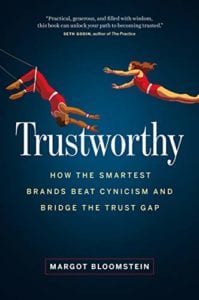
Trustworthy: How the Smartest Brands Beat Cynicism and Bridge the Trust Gap
You bring up a good point about the need to be evolutionary instead of revolutionary as you’re growing your business. If you’ve made your core customers feel they’re not seen and heard or appreciated trying to go after bigger ones, you can trip yourself up there.
Moreover, those customers need to feel both that they’re still important and that they still matter, but also that they know where you’re going. It can be as simple as strategically sharing your roadmap to build that buzz, but also so that people feel confident that, “This is a company I’ve known for a long time, and I know where they’re going in the future.” Also, by giving them hooks of familiarity so that you’re not relaunching your brand right now, you’re still maintaining elements of it that helps to maintain their confidence in themselves that they still know this brand. They feel like they can still trust this brand, that they made a good decision in going with this brand and investing with it. That’s especially important right now because there is so much upheaval in our world and in our economy. For organizations that say now is the time to relaunch, now is the time to completely overhaul our website, when I hear that, I shudder and my head and say, “No, now is not the time for revolution.” It’s more about evolution. Your audience needs to feel they still know you. If you can offer them that level of comfort and confidence in you and in themselves, that’s helping to ground them in a time that is so otherwise unsettled.
In your book, Trustworthy, you have a three-piece action plan. Can you give us the highlights of what that is?
The framework that I present in Trustworthy, it focuses on three parts, voice, volume and vulnerability. I present this as a framework for anybody that’s in professional communication. Designers, the CMO, copywriters, content strategists. If you’re the small business owner and you’re wearing all of those hats, great, this is something that you can take on. To build trust, you need to focus on those three areas. Voice, we’ve been talking about that a lot. Voice refers to the familiar and consistent way in which a brand engages with the world visually and verbally, so word, choice, the overall look and feel of the organization, the different content types you use across different platforms. That’s your voice. That’s what Mailchimp does so well. Some of the other examples I share like Banana Republic, the early days of that, they did so well.
[bctt tweet=”Be evolutionary instead of revolutionary.” username=”John_Livesay”]
The second section, volume, that refers to the volume of information that you’re publishing. The length and level of detail that you go into, in blog posts, in long form copy, if you’re deciding between long form copy and bulleted lists, as well as then, visually. Are you using images that maybe have a great level of detail in them, or are more streamlined to project the sense of simplicity? Do you have images that are maybe in 1 of 50 in a photo gallery or are things more streamlined so that people can get the gist more quickly? For some organizations, they feel like in order to build trust, they need to publish a lot. They need to have a lot of content marketing. That makes sense for some organizations. I profile in the book, Crutchfield Electronics, in order for their audience to feel good about a purchase, maybe it’s high-end audio equipment or camera equipment, they spend a lot of time on the site.
If you look at the pages on that site, they’re long. There’s a lot of different types of content there. You can make sure that you understand a product fully by the time you’re ready to buy because that’s what’s right for their audience. They know that it’s right. They can measure the success of that in the rate of product returns. They’re low because when people are finally ready to make that decision, they can make a decision with confidence. That’s how you know you’ve got enough content, when people can make good decisions and feel good about the decisions they make.
The third section, vulnerability, that focuses is, we were talking about on how organizations maybe prototype in public, come back from a big mistake, take that risk to say, “Do we double down on what we did that was maybe stupid? Maybe the CEO did something wrong or do we seize this opportunity to say we messed up. Here’s how we’re going to own it and here’s how we’re going to make sure it never happens again. Help us in this process, watch how we’re improving, keep giving us feedback.” It’s a tremendous opportunity to bring your audience closer.
The other way that I look at vulnerability in the book is also around how organizations make their values visible. One of the organizations that I profile there is Penzeys Spices. They’re a spice retail chain based in the Midwest. They’ve been bold talking about their politics, why they support immigration, why they oppose some of the other big intractable social problems that we’re facing now and their stance on it. When they first took to social media, sharing their politics, people pushed back. People said, “Stay in your lane there, spice boy. Why are you sharing this?” It was largely the CEO sharing his personal politics. He was pretty upfront about it. He said, “This is our lane. Not only are we a business that sees itself as part of a community, therefore issues in the community are important to us, but also the stuff that we trade in, spices, they come from war torn regions. Furthermore, cooking as an act of love, that’s not just our tagline. We believe that. Many of the recipes that we all love come here on the backs of immigrants. This is much our lane.” It was risky for him to take that position, but when organizations share their values in such a visible way, what usually happens is that people don’t look away. They respond loudly and they got a lot of headlines for that. They lost a lot of customers.
They expanded their audience. They gained a lot of customers, and they weren’t just people that were interested in cooking, they were people that said, “Your values align with my values. This is where I’m shopping next Christmas to get presents for my family. The people that I know that do cook, this is where I’m going to buy presents for them.” They saw something like 50% growth year over year in their profits after they got more political and made their values visible. It’s such an act of vulnerability, but more and more, what we hear is that people do want that level of insight into the organizations where they spend their money.
The book again is called Trustworthy. It’s available wherever you can buy a book. Any last thoughts or link you want to leave us with?
No, thank you so much. This was wonderful. If you want to learn more about it, please visit AppropriateInc.com/Trustworthy. You can follow me on Twitter @MBloomstein. I look forward to hearing how more people use the ideas in this book.
Thanks, Margot.
Important Links
- Trustworthy: How the Smartest Brands Beat Cynicism and Bridge the Trust Gap
- Content Strategy
- Appropriate, Inc.
- BrandSort
- @MBloomstein – Twitter
- Better Selling Through Storytelling Method Online Course
Wanna Host Your Own Podcast?
Click here to see how my friends at Podetize can help
Purchase John’s new book
John Livesay, The Pitch Whisperer
Share The Show
Did you enjoy the show? I’d love it if you subscribed today and left us a 5-star review!
- Click this link
- Click on the ‘Subscribe’ button below the artwork
- Go to the ‘Ratings and Reviews’ section
- Click on ‘Write a Review’
Love the show? Subscribe, rate, review, and share!
Join The Successful Pitch community today:
- JohnLivesay.com
- John Livesay Facebook
- John Livesay Twitter
- John Livesay LinkedIn
- John Livesay YouTube
Mr. Persuasion, Jeff Tippett
Posted by John Livesay in podcast | 0 comments

Episode Summary:
The success of your business depends on how well you persuade. Sharing his mastery on the art of persuasion is Mr. Persuasion himself, Jeff Tippett. As the founder of the award-winning PR firm, Targeted Persuasion, Jeff gives great insights on what it takes to successfully do a pitch, whether you are a new client, someone who wants to get hired, or looking for funding. He talks about what captures people’s attention and, at the same time, how to be consistent with your brand and messaging. Believing that everyone has this superpower to persuade, he suggests ways on how people can tap into that. Jeff also reveals the steps to building trust, crafting a call to action, and storytelling.
—
Listen To The Episode Here
Mr. Persuasion, Jeff Tippett
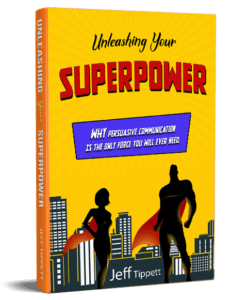
Unleashing Your Superpower: Why Persuasive Communication Is The Only Force You Will Ever Need
I have Jeff Tippett, who is known to many as Mr. Persuasion. He’s a subject matter expert on persuasive communications. He speaks to international audiences through keynotes and seminars and helps everybody become more effective and he has some secret tools to share. His book is called Unleashing Your Superpower: Why Persuasive Communication is the Only Force You Will Ever Need. His bold statement is that we all live or die based on our ability to persuade. He founded Targeted Persuasion, an award-winning PR firm and has worked with big brands like Airbnb and League of Women Voters. He’s an expert on how to get your heart and soul into an emotional story. Jeff, welcome.
Thanks for having me on. I’m excited for us to talk a little bit.
Tell me a little bit about your own story of origin. I know in your book, Unleashing Your Superpower, you have that. I’d like to go back to your high school days.
My first experience as a kid was founding what I thought was a company at the time that I called Snoopy’s Yard Club. At Snoopy’s Yard Club, I would go out and I would knock on doors. In the summertime, I would get gigs mowing grass. In the fall, I would get gigs raking leaves and pine straw. I would hire my friends to come and fulfill those contracts for me so I could go on to then securing the next job. Being an entrepreneur is in my DNA. I grew up this way. It’s who I am. I’m excited that we can talk especially with entrepreneurs to help them better themselves when it comes to persuasion and moving their audience.
You not only sold the job but then you hired other people to do the job. In your book, you talk about the importance of capturing people’s attention. What is the biggest mistake you see people make when they open a pitch, whether it’s to get a new client or to get hired or to get funding for their startup?
The mistake that people often make in capturing their attention is crafting that message. Understanding what it is they’re trying to say to people. We have so much content all over the place and we haven’t figured out how to narrow that content down. Make that content user-facing, make it user-friendly, and speak to the needs of the other person within that content. Once we have this great content out there, it is extremely important to capture people’s attention early especially in today’s world. We have many things that are bombarding us and are out there trying to capture our attention. Ralph Waldo Emerson said it this way, “Sometimes a scream is better than a thesis.” What can we do to be out there to capture people’s attention, but at the same time being extremely consistent with our brand and the look and the feel that we put out there for ourselves?
[bctt tweet=”Trust is the foundation to success.” username=”John_Livesay”]
I made a huge mistake in this at one point and here’s what I did wrong. I have a congenial type personality. I love to affirm people. I love to encourage people that match who I am. I love to see people succeed. However, when I look especially on social media and I see people make these little snarky posts and it seems to capture so much attention, they all of a sudden have 500 likes on their posts. I have to admit. I had this little jealousy, a little envy here of what other people were doing to capture attention. I tried it and I wrote a blog post. I sent it out on email, put it out on social media and it created a storm fire of negativity. The subject matter here was, “Your Social Media Sucks, But You Know That.” What I was trying to do here was to give people some great tips of what they could do to capture attention on social media and make things stand out. People took it personally because they know how much I care for people. They thought I had gone to look at their social media and I was upset. I spent days doing damage control over my brand because I tried to capture attention but I didn’t do it incongruity with my brand standards.
That’s a great distinction that it’s not just any attention you want to capture. You want to capture the right attention.
We all have to go through the phase of know, like and trust us. We’re dealing with new clients, pitches, whatever that looks like. We have to go through those phases and sometimes we’ve tried to push the envelope a little bit too much to gain more attention and it can backfire on us as it did for me.
One of the things you are an expert on is helping people unleash their superpower. You talk about that in your book and you say that everyone has this superpower which is to be able to persuade people. Can you tell us what you suggest people do to try and tap into that?
My bold statement in the book is that I believe that we all live or die based on our ability to persuade. That doesn’t matter if we’re a CEO moving a company forward, if we’re in sales, if we’re a sales manager, if we’re an entrepreneur. Maybe we’re pitching for funding. Maybe we’re trying to attract the right type of talent to help our company move forward. Maybe it’s attracting the right type of clients, the customers that we’re looking for. What I help people do is I go through the early stage of messaging, “How do you craft the message?” I talk about the audience and the importance of making that connection with the audience. We’re going to talk through how we position and how we structure a call to action. I talk a little bit too about trust and the importance of trust and building trust with our audience as well. I like to walk through all of those phases with people to help them understand and give them their cape of superpower to persuade others.
Let’s double-click on trust. Everybody knows it’s important to have it and get it. What shortcuts or ideas or must-have on a checklist do you come up with to give people some instant takeaways from the book, as well as your keynote and seminars on how to be better at building trust faster?
[bctt tweet=”In sales, it’s not just any attention you want to capture. You want to capture the right attention.” username=”John_Livesay”]
When I was finishing up my book, I got a note back from my editor. My editor said, “Jeff, you’ve talked about trust in every single chapter of your book. You haven’t hit this head-on, expounded and gone deep into the topic of trust. Is trust important to you? Is trust important to your message?” It was like a ton of bricks hitting me, “I really haven’t done this,” and here’s the point. Trust is the foundation. Without trust, every other chapter of my book you might as well shred it and put it into recycling. It’s of no value whatsoever. You can have the best message in the world. You can capture people’s attention. You can find ways to make your message stick. You can do all of those things, but if you don’t have the trust of your audience it’s not going to matter and you’re not going to go anywhere. In the book, I walked through ten tips that users can use to help them get trust with their audience. The first one is being consistent. That’s all areas of our life. Brand messaging, our imagery, our response, everything we do we have to create this consistency.
Sometimes especially with our online, we’re all over the place. People don’t even understand who we are. They don’t understand what they’re doing. How can they trust that? Be consistent day in, day out in every single aspect of our business. The second one is to deliver as promised. If we say that we’re going to get a proposal out by 5:00 PM on Friday, it needs to be there by 4:00 PM on Friday. People are watching every small move that we make, making sure that whatever we say that we exceed expectation. That we deliver as promised. This is one that we often don’t think about, but being open and being authentic with our audience. Sometimes we feel we have to have this fake facade of who we are and create this impression. We can gain more trust from our audience if we are open and we are authentic with them. When I’m on stage, people love to hear about my failures, which is great. I have many of those failures. I can be open about them. The fourth one is show confidence. If you believe that your product is the right solution, is a great solution, have confidence in your message. Have confidence in what it is that you’re doing. Be truthful with people.
Number six is to make people feel safe in our presence. That makes them feel safe with the things that we’re doing with them. If they’re on our website, make them feel safe. All aspects of interaction with people, making them feel safe. Number seven, saying no sometimes especially entrepreneurs. We want a break in the money or saying, “Yes.” Sometimes telling people no and say, “No, I’m not a good fit for what you’re doing here. However, let me tell you about my friend X or my friend, Mary, or my friend, John. That person would be perfect.” We can gain trust for them. When things do align in the future, they’re more likely to come back to us if we’ve been honest and we’ve said, “No, we’re not the right fit. No, this isn’t the right solution for you.” Being open to feedback, listening to what our audience has to say, and bringing value to what they’re saying to us. Making time for people sometimes in our busy schedule, we’re all over the place and we’re making things happen. We’re clicking but we forget the people portion of this. Making sure we make time for people. The last one that I talk about is being reliable in our relationships.
Talk a little bit about how you define reliability? The second one I sum up is integrity, doing what you say you’re going to do. You meet a deadline. Is that kissing cousins to reliability or is there a distinction between reliability and integrity for you?
Reliability for us is similar to some of these other aspects there, but what sets us apart is making sure that in whatever it is that what we’re agreeing to with our audience. Whether it’s through an email response or whatever it is. That without being reliable, the trust isn’t going to be there for our audience. Making sure that we’re following through, that we are the expert in this space, that they can count on us and they’re not questioning at any point, “Is Jeff going to show up? Is Jeff going to be on stage on time? Is Jeff going to return my email on time?” That reliability is there in every aspect.
The way to build that is through number one, the consistency. I love how there’s a thread that one of these characteristics supports the other, which is the overall vibe of at the end of the day, people trust you. I personally resonate with feeling safe and the biggest compliment I can ever give someone or get is that I feel safe enough to be myself in your presence. I can take down the mask, be open, and authentic. If you do that first, then when you’re giving your keynotes and you are open and authentic, that makes the audience feel like, “I can trust this guy. He’s not pretending like he never makes a mistake and therefore I can’t relate to him.” That’s a key takeaway for everybody in our audience.
[bctt tweet=”Without your audience’s trust, a good messaging and marketing is not going anywhere.” username=”John_Livesay”]
The foundation here is trust and we have to gain the trust of other people. Everything else is important. It all matters. This is the real foundation. We don’t even understand why, but if we were to get feedback from our audience, maybe they do not trust us for one reason or another.
I love saying no sometimes and how I don’t think I’ve heard that concept before. The clearer you are on what your product or service, who it’s for and who it’s not for, the better people can self-identify with, “He’s not trying to be all things to all people,” or “The brand isn’t trying to be all things to all people.” This willingness to say no is a huge differentiator if people are saying, “Suddenly, your trust factor in my book went up ten notches because you said, ‘No, I don’t do that. I’m not a specialist in blockchain or whatever it is. I know tech but not blockchain tech. I know sales but if you want marketing expertise, then that probably should be Jeff and not me,’” or whatever it would be. I always say that the riches are in the niches. Your niche is so clear that it’s persuasive communication. That could be for salespeople, but it’s a much broader use there because you’re doing deep dives in people’s culture from the work you’re doing. For example, with hospitals where everyone who’s not a salesperson somehow still needs to be working on customer satisfaction, which is different skillsets than selling skills. Correct?
Absolutely. When my editor first read this section on saying no, I got a little pushback from my editor and he was like, “Jeff, your whole book is about getting people to say yes. Does this fit in? Are you sure this fits because you’re giving them an out in this?” I was like, “Absolutely not about giving them an out and absolutely yes this is staying in.” This is extremely important. If someone comes to us and we know it’s not in our niche area, we know it’s not what we do too well, but we take it because we want the money, or we think we need it. We don’t perform well because it’s not what we do. We’re going to lose their trust versus handing this to someone else and saying, “No, I’m not good at crafting an exact pitch. I need to hand you over to my friend, John, because that’s his specialty,” and great. John makes the money. John gets the contract. They do the work there, but then that person will remember me and they’ll trust me because I didn’t lead them astray.

Targeted Persuasion: Sometimes, we’ve tried to push the envelope a little bit too much to gain more attention, and it can backfire on us.
This plays out into all areas of our lives. I’m thrilled to hear you say this about the message and the audience because that was my intent. I want to be a specialist. I am a specialist. I want to continue pushing that in persuasive communications. Does it play out in multiple fields? Absolutely. As an entrepreneur, does it play out? Yes. For healthcare professionals? I do a lot of work for healthcare professionals. Does it matter? Yes, because they have to work toward compliance. Sometimes they struggle a little bit in helping patients understand why this should be taken to the next step with them and what that looks like, but also satisfaction. Hospitals are graded by patients. Even now, a single tweet at times can create multiple havocs for us. It can span to go into the media. It can go all over the place if we haven’t had that customer satisfaction. Persuasion is around that as well.
One of your niches is how to craft a call to action that users can’t resist. Is this call to action something that’s on a website? Is it something a salesperson’s saying? Bring that to life for us.
The answer is yes. That’s what’s beautiful about this book. You could take the topics that are here and you can apply them to an email that you’re going to send. You can apply them to a face to face conversation with a person. You can apply them to a landing page that you’re creating. You could apply this to a regular website that’s part of your product. These tools apply across multiple platforms. They’re not media-specific. You can understand these tools and play them across a variety. Let’s talk a little bit about a call to action. I put thirteen tips in here to help people understand how to craft a call to action that users can’t resist. The first one is to make your ask clear. How many times have you read an email or left a meeting? You walked out scratching your head saying, “What exactly do they want me to do next?” Hang up the phone and like, “Am I supposed to do something?” What’s happening next in this whole thing? Making sure that our ask is clear.
[bctt tweet=”The riches are in the niches.” username=”John_Livesay”]
The second one is making sure that there are strong action verbs in the ask as well. We don’t want a passive voice. We want strong action verb in there. The third one is to make it personal. I encourage people to put the word you or your early in our communication, in our language, in our conversations. What it does is it pulls the person in. It helps them understand that this message is for them. This isn’t a generic message where it could apply to anyone. This is for you. This is for your success. This is for your results. When the user hears that or when they read that, they feel connected and they feel that what you’re offering is specifically for them. The fourth one is to communicate value. This is extremely important on the landing page. We’re asking people to give up something personal, oftentimes it’s their email address. What value are they getting in return? Making sure we clearly put in front of people, “This is the value,” and sometimes it’s affixing a number. Sometimes it’s an outcome. It can vary, but understanding, “What is the value that you’re offering? Have you clearly put that in front of the user?”
The fifth one is to be clever but don’t be tried in all of this. You’ve got to find a way that’s a little bit different, a little bit unique. It needs to adhere to your brand standards, but you’ve got to find some little way to stand out in all of this. Number six is emotion. We know that people buy for emotion, not logic, as Zig Ziglar has taught us. Making sure that we understand like, “How do we pull out the emotion in the person that we’re working with? How do we speak to that emotion?” The seventh one is to create a sense of urgency. Number eight is to create a singular call to action. Sometimes we have a call to action and there are five things that we’re asking people to do. They don’t know which one to do first, which one to do second. Am I supposed to do all five? Does number three fit me or is it number four? They look at all that and you know what they do? They do nothing. They take no action. I will admit, sometimes we do need people to take multiple steps with us to get somewhere but give it to me in a linear path.
Give me the first one. Get me to say yes. Get me to, “I bought into what you’re doing, and then take me to the second ask or the third ask.” That’s extremely important on landing pages and things of that nature, making sure there’s a singular call to action. I encourage people to use strong, punchy language when they’re asked to have the call to action there. “You were invited. Reserve your seat now.” Give us some strong, punchy language there. Number ten is to reduce the risk. Psychologically, when we look at this offer, we are analyzing the risk. What are the downsides? What bad could happen? Is this worth the money? How do we reduce the risk that’s there? Can we offer a 30-day money back guarantee? Can we offer three days? What can you do there? What risk are your users thinking of? What’s concerning them? How do you reduce the risk? Number eleven is scarcity. Pull back. Don’t have all of it out there. Create some scarcity. Number twelve is the social proof using the power of a crowd. The last one is make it easy, especially if it’s something online. If you make it too complicated, users are going to drop. You’re going to lose them. What is the easiest path forward for your user? Make it extremely easy. That’s my thirteen tips to craft a call to action that users cannot resist.
It’s similar to the steps you gave us on how to build our trust, in that a lot of these coexist. The sense of urgency is created by the scarcity. The clarity is connected to only talking about one thing to do next so you’re not confused. One of my favorite lines is, “The confused mind always says no.” People won’t even tell you that they’re confused, they’ll just say no. What I love is this emotional connection too. A lot of people intellectually know it and then forget it. That’s why I love storytelling so much because one of the best ways to have an emotional connection with people is to tell them a story. I know you have lots of great stories. Can you pick one? You can pick anything you want that gives people, “Intellectually I should have an emotional connection in what I’m doing. I’m going to remember the story Jeff told me about his personal life or whatever it is.” Maybe it’s your own journey of you can train at the same time, manipulation versus persuasion. What’s the story there? That’s an emotional hook.
I have a whole chapter in the book on making a connection and in that chapter, I’ll walk through five ways to make a connection with your audience, to make a connection with the other person. Number four is storytelling is extremely important. Early on when I’m on stage, I tell the story of going through an international adoption of where I brought a baby from the country of Haiti to the United States to be my daughter. It wasn’t a situation where I had a lifelong dream of adopting a baby or going to Haiti to bring someone here. It was not part of my thought process whatsoever. My father went over to do some humanitarian relief in Haiti. While he was there, he struck up a relationship with a translator who happened to be a ninth grader who was in an English-speaking Christian school and she happened to get pregnant. The school gave her a choice. They said, “Here’s what you’re going to do. You’re either going to give up your baby or you’re going to drop out of school because we’re not going to allow you in our Christian school as an unwed single mother.”
I can’t even imagine what was going through her head or heart to realize that she has to give up this baby in order to continue in school. I don’t know that I could even make a decision like this, but she did. She decided that the best for her was to be able to finish school. She wanted to graduate from high school. At the same time, she felt like if she could find a home that could take care of her baby, it would be the best for her baby. I looked at the picture of this unclothed baby being held there by her mom. For whatever reason, I knew in my heart that I was supposed to adopt her. I didn’t know what was going on in Haiti. At that time, Presidents Aristide’s government was collapsing. There were riots going on between his supporters and his detractors, happening all over the country. I had no idea. This was the first time in my life that I had a gun held at my head. Imagine what she would do with the machete held at your neck? Having to flee the city and jump in the back of a pickup truck to get out of the city because the college students are creating these riots and you feel unsafe. It was the first time I experienced anything like that.
[bctt tweet=”Sometimes, we do need people to take multiple steps with us to get somewhere.” username=”John_Livesay”]
The lowest point of my adoption was I was back in the States and my Haitian attorney sent me a note and he said, “Jeff, this governmental office that needs to sign this next document for you is closed. We don’t think it’s going to open. We don’t know if it’s going to open. At best, you should consider your adoption on hold. At worse, you need to accept the fact that this adoption may be over and you may not finish this adoption. You may never be this girl’s father.” I was devastated. I had already been there. I’d held her. I had kissed her on her cheek. I was in love with this baby. I flew over the next morning and he was my mode of operation. Every morning I got up and I walked with my translator from my attorney’s house to this government office that I needed the signature. I went every day, optimistic. I thought I was going to get it signed, only to walk back totally deflated, devastated the person didn’t show up.
About two weeks of doing this, finally the person showed up. You can imagine what’s happening in my head. I had all these emotions. All this stuff was happening in me. I didn’t have any English-speaking people around me to start with. I hadn’t had a chance to talk to a lot of this. I’m scared. I’m frightened. I’m afraid. I lacked hope for the future. I started talking to him and I’m going off. For 30, 60 seconds I’m expressing all this stuff. I looked at him and he looked at me. I asked if he would sign it. His response was, “No, I’m not going to sign this.” I had to figure out what was going on. I only had seconds to do this because the life of this girl, she was in an orphanage at this point. She didn’t have anyone take care of her. She didn’t have money. No promise of hope. Nothing was happening. I had to turn this around.
I had limited knowledge of Haitian culture, but what I knew was this. They loved their babies and they loved their children. They love family and they view them as jewels in their life. I turn this around because what I found was I had been using words like I, me and my in all of my ask. I was twisting his arm. I was forcing. I turned it around and I looked at him and I said, “I know you love children. I know that Haitian children are valuable to you guys as a culture. Here’s what’s happening with his girl. She doesn’t have a home. She doesn’t have anyone to love her. She doesn’t have anyone to provide an education, to provide hope for her. I’ll do that. I’ll offer that but I need you to sign this document to help me take care of this beautiful Haitian daughter.” In ten minutes, he signed it. I started walking back trying to figure out what happened in that. Here’s what I realized. I realized that I was manipulating. I was making this all about me using I, me and my instead of persuading. That was this a-ha moment that clicked for me when I began to understand what’s the difference in persuasion and manipulation? How is persuasion of value where manipulation is not? That was that a-ha moment for me that started this journey of persuasion and persuasive communication.

Targeted Persuasion: The clearer you are on what your product or service is and who it’s for, the better people can self-identify with them.
The stakes aren’t always that high but the lessons from that story resonate with us all. I totally get that I need to learn how to become more persuasive. I understand I need to build trust. I know I need to have a clear call to actions and I need to stop manipulating and use persuasion by shifting my language. Is there anything else to put it all together for us?
Let me leave with a conversation with this. I finished the adoption. We fly out of Port-au-Prince and I make it back to Miami. I’m in the Miami terminal. I make it through customs and all that. I’m standing in the terminal and I’m holding this baby. She’s whimpering. She had screamed the whole way. It turns out she had double ear infections and lots of things happening inside of her body. I hold her and I’m looking down at her as she was whimpering. I do feel accomplishment. I’m proud of myself that I did this in a few months during this devastating time in the country’s history. I’m proud. I’m excited. As quickly as that comes, it goes out of the window when it leaves. I looked down at her and I start wondering about her life. I began to wonder like, “What’s she going to be? Will she be a doctor and heal people? Will she become a humanitarian and relieve suffering? Will she become a teacher and impact hundreds of students that could then impact thousands of lives?” While I couldn’t answer any of those questions, what I understood at that moment was the adoption wasn’t over. This wasn’t something that was completed. This is only the beginning, like tossing a pebble into a lake or pond. We toss it in. We hear that thump that goes in. What happens next? We see those rings. They go out, the ripples that continue from that stone being tossed in.
My adoption was that stone being tossed in. I have no idea the lives that my daughter is going to positively impact because I took that step. Here’s what I do know is that she will impact lives that I will never know. People that will far exceed even her life because of the actions that I took and the lessons that I learned. Oftentimes in business and being entrepreneurs and running our companies, we can get so much into returning emails, going to meetings, doing our pitches. Going to mixers, trying to shake the next hand, meeting people, we get into all of that. Sometimes we forget that this is even bigger than these business transactions. Things like growing our companies so that we can hire people, which mean that a person can then put food on the table for his or her child. Maybe we grow the company and someone gets a promotion and they get more money. Now they can afford to tutor for the kid. The kid can then expand the knowledge there and maybe can get into a different type of college or maybe have a whole different future. This is much bigger than we think it is. It’s much bigger than the transactional elements. If we lift our heads up, we can be encouraged that our actions can live well beyond us and impact many lives.
[bctt tweet=”If we lift our heads up, we can be encouraged that our actions can live beyond us and impact many lives.” username=”John_Livesay”]
Jeff, thanks again for being such a great guest.
John, thanks for the opportunity. Thanks for being a gracious host and allowing me to share. I appreciate it. I’m grateful.
Links Mentioned:
- Jeff Tippett
- Unleashing Your Superpower: Why Persuasive Communication is the Only Force You Will Ever Need
- Targeted Persuasion
- https://JeffTippett.com/
- Quantmre.com
Wanna Host Your Own Podcast?
Click here to see how my friends at Brandcasting You can help
Get your FREE Sneak Peek of John’s new book Better Selling Through Storytelling
John Livesay, The Pitch Whisperer
Share The Show
Did you enjoy the show? I’d love it if you subscribed today and left us a 5-star review!
-
- Click this link
- Click on the ‘Subscribe’ button below the artwork
- Go to the ‘Ratings and Reviews’ section
- Click on ‘Write a Review’
Emotional Sobriety with Bill Stierle
Posted by John Livesay in podcast | 0 comments


Episode Summary:
Bill Stierle, founder of Corporate Culture Development and a dynamic and commanding thought leader in emotional intelligence and thinking styles, gives an interesting perspective on how we can communicate in business. Bill spills the secrets on how to resolve conflict while giving us a peek into his new book called Emotional Sobriety. He talks about how to become a communications lifesaver while laying down the differences between criticism and critical, empathy and sympathy, and truth and trust. Bill provides great examples that present situations where we can apply effective communication amidst tension where people become defensive in one way or another. He gives a great formula to handle the very common objection of, “I have to think about it.”
—
Listen To The Episode Here
Emotional Sobriety with Bill Stierle
Our guest is Bill Stierle and he is a dynamic and commanding thought leader in emotional intelligence and thinking styles. His impact has been felt everywhere from the top business schools to Fortune 500 companies, nonprofits, and even government institutions around the world. He’s the Founder of Corporate Culture Development and has a unique knowledge of how to create successful training programs. We’re going to ask him to open up the secrets on how to resolve conflict and what happens after he comes in is people have more productivity and performance and are generally more effective. Bill has a book called Emotional Sobriety that we’re going to talk about and he also speaks on the topic. Bill, welcome to the show.
Thank you so much for having me on. This is going to be a lot of fun.
I always like to ask my guest to take us back to their own story of origin. You can go back as far as childhood, high school, college. Nobody starts off as the expert on emotional intelligence. Where would you like to tell us of how this whole concept came about for you?
It came about when I was teaching high school anatomy and physiology many years ago. It started with a very simple question that my brain couldn’t let go of. The simple question was, “Why do people think the way they do?” That’s where it started. At that time of the mid-‘80s, there was a lot of brain research being done from the ‘70s and the ‘80s. They were having the tools and the abilities to stretch into what’s happening in the brain. How does thinking work? How does thinking works with certain jobs? I fell upon a good mentor. His name was Ned Hermann who worked at General Electric. He came up with this thinking tool called the Hermann Brain Dominance Instrument that he used at General Electric in management leadership training as well as human resources. This tool is a 120-question survey that talks about why people think differently. That tool allows us and gives us an insight into the differences between an engineer and a social worker. Those are two different people, as well as an artist and a drill sergeant. Those are two other different people. Those are extreme or focused thinking types.
Engineers are spending a lot of time in logic and rational thinking, whereas social workers are spending a lot of time in interpersonal and connection style of thinking and dealing with human interaction. Artists are in the visual space and drill sergeants are in the organized space and they’re into implementing things. An artist is into creating things. This is the start down the path of why do people think the way they do. I get a lot of work here in the corporate space when I do strategic planning or team analysis. When the start process takes place of here’s what a person is listening for and here’s what a person’s brain is shutting down or shutting off when you talk too much about a certain type of topic. The brain will shut off if a marketing person and an operations person are in the room at the same time because the marketing person is talking about risk and trying to catch as many eyeballs as possible. Whereas the operations person is, “How am I going to manufacture, implement or distribute what that guy over there is trying to sell?”
[bctt tweet=”What can I say or do to meet your need for truth? ” username=”John_Livesay”]
Those are two different brains that are working in different places. An executive team is much like The Avengers. The Avengers are a group of superheroes and they all are sitting in different thinking styles and they’re approaching the world in different ways. They’re doing that in different ways, they have to come together as a team in order to defeat the enemy. The same thing has to happen in an executive team. They all have to come together. The finance person, the CFO, has got to have an honest discussion with the VP of human resources about how much staffing it’s going to take to get certain work done and how much the cost is going to be. That’s called an honest executive discussion. The VP of sales has got to have an honest discussion with operations because whatever they’re selling, the operations person has to be able to distribute or deliver to the person’s doorstep. Those two people have got to talk because if the sales get too big, the customer service and the operations can’t deliver it. Can you see how that one works?
A lot of finger pointing and blaming. You talk about how to become a communication lifesaver. I used to be a lifeguard, so I’m interested to hear how you can help people become a communication lifesaver when those conflicts come up.
That’s the second part of my origin story. I noticed that this work on the brain and thinking only took me so far. Whenever emotions show up, a person’s brain will activate into a protective strategy. Being a communication lifesaver is that if the brain is communicating in a protective way, what winds up happening is not hearing what the other person is saying. As a lifesaver, I’ve got to throw them a communication life ring in order to keep them in a conversation that’s productive and healthy versus one that is safekeeping and reductive and one that puts people at their poles.
Do you have a story of how that would work? What does it look like when someone throws a communications buoy to somebody to keep them in the conversation?
What it would look like is if an engineer or somebody that’s thinking in a logical and rational way quotes a fact or an inaccuracy that another person has said in the room. It’s a critical accuracy piece. The problem is the rest of the room doesn’t hear it that way. The rest of the room hears it as criticism, not critical. A life ring in that moment would be, “Joe, it looks like you’re stating the accuracy for everybody in the room and you’re pointing out how it’s not 39% but it’s 41% when you consider these other data. Is that the accuracy we’re going for?” He wasn’t telling the other person that they were wrong for not knowing the number. He was stating the accuracy piece because his brain needed to express it. Criticism and critical are mixed up. Three-fourths of the people can’t tell the difference between critical and criticism.
Let’s underline that distinction one more time. Criticism sounds like versus being critical.
The distinction would be like this. Criticism is, “You should have known this answer already.” Critical is, “Here’s the fact I would like the whole room to know.” That’s different. The second thing that I need to throw a communication life ring at is the word defensiveness or the construct of defensiveness as a protective strategy. Defensiveness is when somebody is trying to create either order or safety and it’s not considering that the order or the safety or the sequence that they’re doing needs to change. They’ll become defensive and say something like, “That’s not the way it’s done. I’m just following procedures. It takes too much work to rewrite that procedure. We have to keep doing it that way. I’m following the letter of the law.”
All of those are and can be heard as defensive sentences that usually a person points out, “You’re being defensive.” It’s like, “I’m not. I’m just stating what the rule is. I’m just stating what the procedure is. If you want to write the procedure and you want me to retrain people on the procedure, I’ll be glad to do that for you. Right now, I’m trying to follow the procedure.” A drill sergeant is following a procedure. Why? They need to get 30 people to act as one person, to rely on the same set of rules and the same set of procedures. When you have a procedure that’s effective, it creates a lot of stability and a lot of trust. Everybody’s on the same procedural page.
People like structure but the flip side of not becoming defensive, I see that often in selling or pitching. Let’s say you’re pitching to investors to get your startup funded and they ask you some questions. The minute the founder gets defensive as opposed to collaborative then they don’t get funded. If you’re presenting to a customer your product or service and they give you an objection, if you become defensive you don’t get the sale. Do you have any tips on what people can do in those situations where they don’t become defensive?
I do. This one’s going to be a little bit difficult and we have to stretch this one a little bit because this one is a toughie. I’m going to start with a quote that I live by. This quote is valuable. If you can get it in your noggin and do it, it will save a month to two months of time over the next year. Get this sentence and apply it. Here’s the sentence, “Empathy before problem-solving.” Here’s the first problem you have to deal with. The problem is most people have a junkie or an ineffective definition for the word empathy. They don’t know what it means. Here’s the difference. What most people use is a form of sympathy. They don’t do a form of empathy. A form of sympathy is, “I understand what you’re going through.” That’s sympathetic. It’s not empathetic. Here’s another sympathetic sentence, “I hear that happened. That was too bad. I wonder what you can learn from this.” That’s sympathy. That’s not empathy.
[bctt tweet=”Empathy before problem solving.” username=”John_Livesay”]
One of the things that I do in my training on emotional intelligence for executives is I get them to practice real-time empathy and how it takes place. The guideline for a real-time empathy and to know that it takes place is to follow this definition. Empathy only occurs when a feeling word and a need word are connected and agreed upon. You’ve got to have those two fill in the blanks. There has to be a feeling word and there has to be a need word. Let me give you an empathetic sentence to the expression that you gave me. “Huh,” you said. The empathetic sentence would be, “John, could you be feeling inspired because your need for awareness or learning is being met?”
The feeling word is feeling inspired and it’s a question. It’s not an assumption. Could you be feeling inspired because of your need for awareness and learning?
The two of them worked in there and you’re going like, “Something’s moving across from Bill Stierle to John.” You got the jolt and you became a little inspired. Your eyeballs and eyebrows went up a little bit. You leaned in a little bit. Something significant is coming. You got to move across the plate. I better pay attention and my audience better pay attention. This is going to be helpful to the people that I’m working with. Immediately, it’s generating this quality of contribution that people experience on your podcasts. They experience the knowledge transfer and the wisdom transfer and that they can have helpful tools that can enrich their life and their life experience.
Nobody loves the formula and the step-by-step process more than I do. I love that concept of a feeling word and a need word and I totally get it from even a nonverbal response that can elicit empathy. Let’s take it one step further in a real-life scenario. Let’s say you’re pitching someone to buy your product. You’ve gone to all the steps and you’re getting ready to ask for the order and then the person goes, “Your price is too high,” which is a common objection to anything. Instead of trying to solve that problem or even active listening, the empathy factor combines active listening skills but in a new way of that. Let’s try to use this feeling word and need word around, “Your price is too high.”
Let’s do that in real-time. Pretend you’re the buyer and I’m the seller and say, “Bill, your price is too high.”

Emotional Sobriety: Whenever emotions show up, a person’s brain will actually activate into a protective strategy.
Bill, I like what you’re offering but your price is too high.
John, a part of you likes the product that I’m offering. Another part of you is feeling doubtful because you see the value is not at the same level as I see. Is that correct?
Yes.
Notice I got the word yes out of your mouth. That’s how you know empathy has taken place is when the person says yes to the feeling word doubt and the need word value. That’s what I did. In real-time, I filled in the blank of you giving me the objection.
Part of you likes what I’m doing but a part of you is also feeling doubtful that your need for value is not at the same place that I perceived it.
[bctt tweet=”Empathy only occurs when a feeling word and a need word are connected and agreed upon.” username=”John_Livesay”]
The person can’t help but say yes. You’ve actually removed the emotion from the discussion because you got the doubt out of the room. Now with lightning speed, I can say, “John, what do you think might be the value that would fit the product that I was offering?” I’m not trying to justify the value. I’m trying to find out what is in this person’s brain called the value or is it a red herring that they’ve used in the past? It’s too much money. “It’s not too much money, but it might be too much money, but not really.” The person could have a red herring. Now watch this and say, “Bill, it needs to be priced at $250, not $375.” Let’s try that.
Bill, it needs to be priced at $250, not $375.
John, I’m hearing that you’re feeling more confident that the $250 price would work better for you rather than a $375 price that would work in the marketplace. Is that correct?
Uh-huh.
You still gave me the “Uh-huh,” which is good because I’m still connecting with you and your objection. I still haven’t given in and I still haven’t become defensive. I still haven’t brought up criticism or justification. I didn’t bring out spreadsheets to show you that you’re wrong. I didn’t say, “The marketplace has already proved this.” I’m not interested in making them wrong and I’m also not interested in solving a problem that I don’t need to solve. Empathy allows us to get around this particular nuance of communication because the person is using their belief structure to fight my sale, not the reality. The reality is, “If we’re able to get the value or demonstrate in the marketplace that the $375 would work, would that be better for your investment?”

Emotional Sobriety: Empathy allows you to not solve problems that don’t need to be solved.
Yes.
Do you see how that, “Yes,” trickled out of your mouth? You go like, “How did Bill get me to say yes three times?” I’m not working yes on the deal. I’m working yes on the obstacle. This is particularly important in a slide deck. I did an investor slide deck for a workforce educational program. During the slide deck, I said to the guy, “Give me the top ten objections. I want to type them all up.” I typed all the top ten objections, it costs so much, etc. I’m like, “We do not need to prove any of these because I already have the data that proves all these. What we need to do is design empathy sentences for all of those.” “Empathy sentence?” He looks at me. I go, “If I got to get the person’s emotion to change before I get them to buy, not in the place of.” If the sale happens too soon, either they’ll have buyer’s remorse and kick out later or they will develop resentment on the money they spent.
I love what you said that empathy allows you to not solve problems that don’t need to be solved. That’s a big distinction between doing it before solving a problem. Sometimes another big benefit of it is we don’t even have to solve a problem because it may not be what the real objection is.
That’s a great catch there. That’s helpful because people come in with all or many or most, talk about many things that kill a business right now, this sentence here. People work out all the obstacles and overcome all the obstacles and wonder why the person doesn’t buy or refer the product. The reason why is that you did not allow the purchaser to be on the journey with you. You solve the journey before they could discover it themselves. People do not want to buy things that are done. They want to buy the journey of getting it. The sale is a mythic journey. It’s a journey of the hero. Who’s the hero? The person that’s buying it, not the person that’s selling it.
This is a big part inside of the investor pitch deck that I was working on. I told them, “We need to follow this investor, this person” and we’re looking for high net worth individuals to fund this that are looking for a legacy project. We’re looking for them to come in. It’s like, “We cannot solve this thing, it’s got to be a seven-slide slide deck. You’ve got to inspire them to get on that their money is going to get there and we’ll work out the details later.” If we come with all the answers solved, they’ll walk out. There’s no emotional connection. I have to build the investment inside their body before I can take the investment out of their pocket.
[bctt tweet=”People do not want to buy things that are done. They want to buy the journey of getting it.” username=”John_Livesay”]
I say there’s something similar. You have to tug at people’s heartstrings to get them to open their purse strings.
The heart string piece here, the way I see it and especially in the world of conflict is people are going to do something to meet a need of theirs, not to satisfy an emotion of theirs. They’re going to take the action towards the need. If it meets their need for trust, then they’ll invest. If it meets their need for certainty, then they’ll invest. If it meets their need for respect, then they’ll invest. If it meets their need for identity, then they’ll invest. If it meets their need for connection, then they’ll invest. The investment doesn’t come from how much money they’re going to get back. In fact, when surveyed, return on investment is number seven in the list before they invest. The question then is, what is the number one need of the investors that are at the top of the list before you can even get them to move? What do you think that number one is? I’ll push this one to you so you and I can have a little fun.
I would say that somebody has to trust you first.
You are right on top. Number one at the top of the list is the need for trust. That’s the number one need that needs to be met during the presentation, during the content, during the delivery. The weird part about it around the need for trust is you can’t get trust through over solving their problem or over presenting your product. You need to leave the mystery in the journey.
That’s what good stories have. I’m fascinated by the image that you created of how many times have our audience said, “It’s like whack-a-mole. If you got four objections and I whacked them each down, then for sure you will buy and not have four new ones pop up after I leave.” That is valuable. Few people have that awareness that you have, Bill, which the reason is you’re not taking them on the journey. The goal is not to just keep, as Maslow said, using your hammer over and over again looking for nails. It’s this empathy tool versus a hammer tool.

Emotional Sobriety: The feeling of doubt, most of the time, comes from the need for truth not being met.
That whack-a-mole metaphor is exactly right on target because if you empathized with the objection that comes up, you do not have to swing the hammer at all. You’re feeling skeptical and you need some more trust on this. “Tell me what trust looks like? I need to trust that your CFO runs the numbers correctly.”
Let’s do another one because besides money, the other big objection that everybody gets is, “I need more time to think about this.” Either I need to talk to somebody else or we’re not ready to make a decision yet. That’s a common objection, whether it’s an investment or selling something. How can we use this great formula of yours of feeling and a need, so that we can handle that common objection?
I usually empathize with the time objection with the following empathy sentence, “Could you be feeling hesitant because you might need more information or more clarity? Would you be willing to tell me which one is it? Is it more information or is it more clarity that you might need?” These need time. This is the fantasy that not just the investor has, but also the seller has is that they need more time and they’re going to start thinking about it, and then do what? The answer is once they’re walking away, they’re not thinking about your project anyway. What emotion they’re walking away with is skepticism.
Even relief that they didn’t get pressured into something.
I want to know what need is causing skepticism. It could be two or three or four, but watch what happens when I ask the question, “Could you need more clarity or do you need some more information? Which one of those two are you looking for?”
[bctt tweet=”You have to tug at people’s heartstrings to get them to open their purse strings.” username=”John_Livesay”]
That’s valuable because most people assume it’s the same thing. You’re saying, “Do you need more clarity on the information I’ve already given you? Is there something that’s missing for you to understand?” and then it goes back to because you don’t see yourself in the story.
What happens is that they’re looking for a way to get out of the journey. They’re looking for a way to use the great power of doubt and skepticism. Doubt and skepticism as feelings because both of them are two very different feelings. The feeling of the doubt most of the time comes from the need for truth not being met. The feeling of skepticism most of the time comes from the need for trust not being met, but it also could be clarity or it could be information that causes skepticism.
If something sounds too good to be true and you’re like, “I don’t trust this guy or gal.” Let’s double-click on the distinction for people between truth and trust because a lot of people go, “You’re trustworthy if you’re truthful.”
This is the best discussion ever. The reason why it’s such a vibrant discussion is that people don’t know how much power words and language have. Words and language change our physiology instantly. There’s a big difference between saying the word spider and the word ice cream. The same difference is between truth and trust. Truth is that there is either something factually inaccurate or informationally inaccurate or there’s something omitted. I don’t have some truth about something. When something’s too good to be true and I’ve solved all the problems and I don’t have any skin in the game, I will even manufacture doubt because this is all the things that have been answered. There might be something missing. What is the thing that’s missing? Doubt shows up in their body because what happens is they don’t buy the thing, they don’t make the next call, they don’t follow up. You chase them around and they start running. Trust, the reason why truth is a fact thing.
Trust has to do with, “I don’t have any memorable history with you. I don’t have a memorable history with someone that has vouched for you.” There’s no trust because there’s no experience that when the going gets tough, you’re going to be there with me. When the going gets tough for this product, you’re going to be there with the product and be there with my investment. You’re going to treat my investment as if it’s your money, not my investment. As if it’s my money that you get to spend any way you want like a seven-year-old because that’s going on in their mind. Somebody that’s an investor most certainly either has a family member that is not really good with money that they have to keep bailing them out.
They made bad investments before. They’re trying not to make that mistake before.
Truth and trust have a very different frequency to them and also a very different way to establish them. The key question then is to ask this question to the person that is sitting with doubt. It might sound like this. “What can I say or do to meet your need for truth in regard to this product or service that we’re looking to have an experience with? What could I say or do to meet your need for truth?” To the skeptical person, it’s going to be similar, “What can I say or do to meet the need for trust between the two of us?” What that does is that brings us closer together and puts us in the same tribe because now I’m listening and I am ready to repeat back what the person said to me. For example I said, “What could I say or do to meet the need for truth that the $375 would work a little bit better than the $250 thing that you recommended? What can I say or do to meet the need for trust that this number will work a little better?”
What happens there is we’re trying to extract the belief thought that is driving and pushing the button of truth or trust in their consciousness. We want that out in front of us not to solve it but to empathize with it. If I have an investor that’s been burnt before, I do not want that past relationship being in my relationship with him or her. I’ve got to pull that out. Let it air out. Create a new moment between me and that person. I’m not the same guy as that guy. That guy and that product had a whole another set of problems to it. It’s not to say, I don’t have the problems I’m going to have.
We’ve hit the reset button basically.
It’s a reset button because once I’m on truth or trust, once I’m on clarity or information, once I’m on respect or acknowledgment or the need for connection. Once I’m on that need and I know what it looks like to that person, the quality of relationship and the quality of connection deepens.
[bctt tweet=”People are going to do something to meet a need of theirs, not to satisfy an emotion of theirs.” username=”John_Livesay”]
Once you’ve got that connection deepened, then they’re on the journey with you as opposed to you jumping ahead to the end without them going on it. They feel that’s not for them.
They want the experience of incremental moments of success with our product. They are not as much interested in, “Give me the money back with my 30% in the next 60 days,” because they already have the money. They’re interested in the journey that the money’s going to provide them.
This is incredibly insightful and useful. I could talk to you forever. I can’t thank you enough. The book is Emotional Sobriety and there are all kinds of nuances. What’s the one thing you want people to know about your book?
The thing I like them to know about the book is it is the step by step way to diffuse the emotions that come up inside others, as well as the emotions that come up inside ourselves. We’re able to reduce the emotional load that we carry because many folks are carrying a lot of anxious, nervous doubt, some hesitancy, some depression, some anger. We want to be able to diffuse those things on our side and not make it to the outside world that’s doing it to us but it’s how we’re taking it.
We can control our reactions and when that happens, we’re free from walking around with all this anxiety and resentment. I’ve heard somebody say once in personal relationships, “As long as one of you stay sane at any one given moment, you’ll make it through it. We both can’t be crazy at the same time.” That’s the gist of what you’re saying here. If you’re walking around with anxiety of needing, a quota is met or whatever, a fear of losing your job if you don’t sell something. The buyer has got their own level of, “I can’t make a bad decision here,” that anxiety is never a good recipe. Whereas your book, Emotional Sobriety, can help people diffuse that. The buyer’s anxieties can be dealt with in a much cleaner way.
The thing that I like to say about what Emotional Sobriety gets you is with practice. This has been my experience when in the past I’ve been called to come into a city council meeting where people are screaming and feuding or other conflict situations. Usually, it takes me about somewhere between seventeen and 23 minutes to get everybody to calm down and to be on the same page and start working together even though they’d been feuding for months or sometimes years. That’s what it gets you.
What a great outcome. The book is Emotional Sobriety. If people want to reach you for seminars and workshops, what’s the best place to find you?
The best place is CorporateCultureDevelopment.com. You can also do it through my name, BillStierle.com.
I can’t thank you enough for sharing your wisdom on how we can get people to have more empathy connection with us and get out of solving problems that don’t need to be solved.
John, anytime you want to do other topics and things like that, have me back. I’ll be happy to contribute.
Thanks again, Bill.
Thank you.
Links Mentioned:
- Bill Stierle
- Corporate Culture Development
- Hermann Brain Dominance Instrument
- CorporateCultureDevelopment.com
- BillStierle.com
Wanna Host Your Own Podcast?
Click here to see how my friends at Brandcasting You can help
Get your FREE Sneak Peek of John’s new book Better Selling Through Storytelling
John Livesay, The Pitch Whisperer
Share The Show
Did you enjoy the show? I’d love it if you subscribed today and left us a 5-star review!
-
- Click this link
- Click on the ‘Subscribe’ button below the artwork
- Go to the ‘Ratings and Reviews’ section
- Click on ‘Write a Review’