

Sell Without Selling Out With Andy Paul
Posted by John Livesay in podcast | 0 comments

Sales isn’t a simple job; it takes a lot of skill to earn a buyer’s trust. So how do you sell without selling out? How do you earn that trust? John Livesay dives into sales with help from Andy Paul. With over three decades of experience under his belt, Andy gives us a glimpse at his sales insights. From building trust and communication to training and avoiding persuasion, this episode is one you can’t miss.
—
Listen to the podcast here
Sell Without Selling Out With Andy Paul
Our guest is Andy Paul, the author of Sell Without Selling Out. He talks about how influence rules and persuasion drools and that you are either a sales boss that is commanding people or a sales leader that inspires them. Find out how to be a learn-it-all instead of a know-it-all. Enjoy the episode.
—
Our guest on the show is Andy Paul, who is a leading global sales expert. He has over 180,000 people following his daily posts on LinkedIn. He is the host of the top-rated sales podcast Sales Enablement with Andy Paul, with more than over 1,000 episodes and millions of downloads. His podcast is a go-to resource for sales leaders and producers. He is the author of the Amazon best-selling book Sell Without Selling Out: A Guide to Success on Your Own Terms. He has also written other books and he is the Founder of Zero-Time Selling, which is an advisory firm. Prior to that, he had a successful sales career himself in tech startups, where he sold over $600 million of complex systems and services. Andy, welcome to the show.
John, thanks for having me.
Let’s go back in time to when you knew you wanted to get into sales. Maybe you had a paper out or you sold something and you went, “I am good at this. This might be my career.”
I did not know I wanted to be in sales after I had been in it for a couple of years. Up until that, I was not too sure that I wanted to be in sales. Like a lot of people, I fell into sales. I graduated from university and did not have any concrete plans about what I wanted to do. I worked at the college I graduated from during the summer. Fall came around and my parents were urging me to get more serious about things. I went to the career placement center around campus and the jobs that were available were all the major tech companies. They were trying to recruit people into what turned out to be sales. Interestingly, none of them called it sales positions. They are all marketing management training programs, but they were nothing about marketing. They are all about sales.
Marketing people do not have quotas. That is the big distinction I tell people.
It is this whole idea that sales is dirty and, “Who wants to be a salesperson?” It was evident even then. I fell into it and as I described in my book, I was not too comfortable with what I was being taught and how I was being taught how to sell. I reached the point about year two where it started making sense to me and I started to describe or define a way to sell that worked for me. I could start to see a future in it at that point.
[bctt tweet=”A sales boss commands, and a sales leader inspires. ” username=”John_Livesay”]
You and I both have a similar background in that we sold multimillion-dollar tech pieces of equipment. Tell us about that. What was that like in the ‘90s?
I started off selling roomfuls of computer equipment back in the day. They take a lot of space and a fraction of the computing power of our phones these days that major corporations are running their companies on. I swerved into the personal computer industry for a while and worked at Apple in the early days of Apple and a couple of others what we thought was going to be an interesting startup. I worked for a company that made the first battery-powered notebook computer. That was a glorious failure.
Somehow ended up, by default, I was looking for a job after the last company had been with that imploded. I saw a news article in Fortune Magazine about a company that was revolutionizing the satellite communications business with very small aperture satellite dishes for data communications. I cold-called them. That was a Friday. I called them on Monday. I did not have a job in sales. I was an account manager as a customer success person for about the first six months before I moved back over into sales. That was my introduction to the enterprise of selling large complex systems.
What would you say was your biggest challenge as a salesperson? Was it handling rejection, overcoming objections or getting the appointment? What was one challenge that you thought and you saw all the people struggling with?
I spent a big chunk of time in the satellite communications business and the wireless business and did not have a technical background. I was selling to very technical customers.
It was a different language, was it not?
For me, the challenge was internal sales. How did I rally people to support me and help make up for my deficits in a way that was still valuable for the buyer? I got pretty good at that after a while. It was matching the internal selling as well as the external selling. As in any startup, there are tons of competing priorities and people are ultra-busy doing multiple things and it is like, “How do I get this person to invest some of their time and attention in what is important to me?” That was the key for me to be able to rally support internally for big deals I was working on.
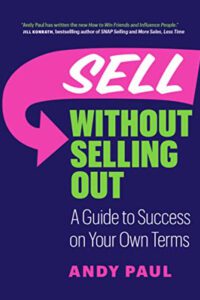
Sell Without Selling Out: A Guide to Success on Your Own Terms
How did you do that? Do you have any tips for someone who is thinking, “That sounds like my challenge, but I do not know where to start.”?
It is the same challenge you have with customers. I write about it in my book. You have to be able to connect with people on an authentic human level. You need to be able to use your curiosity and understand the most important things to them and how you can help them achieve that by working with you.
It is fascinating because you had said originally that people were like, “I am not so sure you will be good in sales because you are an introvert and an intellectual.” There are a lot of people who might identify as, “I am not extroverted. I cannot be the life of the party and entertain clients nonstop. I should not pursue this career.”
As I tell people that in the course of the first 24 years of my career when I was outselling the large 2/3 of billion dollars, I had dinner half a dozen times with clients. The opportunity presented itself. I was all over the world selling. For the most part, I had great relationships with my clients, but we did not feel like we had to have dinner with each other. It was not going to cement the relationship in a way that we were not doing in the office when we were talking with each other because their ability to trust me was based on what I was doing in the context of work more than anything else. Once I established that personal bond and rapport, I had to prove it every time I interacted with them.
How did you come up with the title of your book, Selling Without Selling Out? Do you feel like a lot of people feel like they do have to sell out in order to be successful?
They do. The simplest way to consider selling out is when you put your interests ahead of those of your customers. That is an external customer buying something from you or your internal customer. Whether you are working as part of a team or collaborating with people on things when you put yourself first, you start to sell out.
Do you have a story or example of that?
[bctt tweet=”Be a learn it all, not a know it all.” username=”John_Livesay”]
Think about it from a salesperson’s perspective. You go out at the start of the month or at some point when you start a relationship with a potential customer or client. You convince them through your actions that you are there to help them. They think you are there to help them, but then you get to that last week of the month and your boss says, “We need to bring this order in order to hit our month.” Early in my career, I was forced to go out and try to accelerate decisions that buyers were not prepared to make.
You start offering discounts and other inducements, delayed payment terms, or whatever the company does. In the mind of the buyer, suddenly, you went from being somebody that is there to help them to be purely transactional. It does not mean they will not buy from you, but they are under no illusion anymore that you are there to help them.
Once that trust is broken, it is almost impossible to get it back.
It is very difficult to get it back. They will stick with you as long as you are handy and convenient for them, but as soon as something better comes along, somebody they trust more or a product that is roughly equivalent to yours, odds are pretty high that you are going to be gone.
You talk about the difference between being a sales leader versus a sales boss. Can you give us that distinction?
A conversation that I had on my show with Stephen M.R. Covey, a great author who wrote the Speed of Trust. He has got a new book out called Trust and Inspire. It is about leadership modes. As he draws, the contrast is there are two dominant modes of leadership. There is the command and control, which we are all very familiar with because we have all been victims of it and then there is trust and inspire. That sums up the difference.
As a sales boss, it is all about command and control. Conformity and compliance are most important to me. Trust and inspire is, as a sales leader, you are going to sell to your person, “Here is your patch and territory. This could be your list of accounts of geographic territory.” I am going to support you the best way I can, but you decide the best way to get this business done in your territory. How can I help you achieve that? Trust people to continue to develop, expand, grow and learn with your support. The other is, “I know best. Do what I want you to do.”
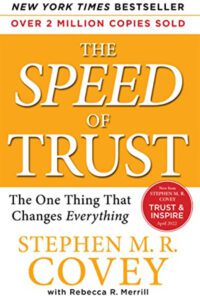
Speed of Trust: The One Thing That Changes Everything
One of the things both of you and I witnessed and experienced is a top producer is getting promoted into sales leadership without any real training and failing miserably as a leader versus a salesperson because they are different skills. Can you describe what someone should do to prepare to make that transition if they are not getting the training internally?
From my experience, I did a couple of things. I read what I could that was available about managing and leadership. I did not hesitate to ask people for guidance and mentors, internally, people that were more experienced in the role to give me some perspective on what they were doing. I asked the people that I was leading how I was doing.
It is part of your personality and it is not part of most people’s personality, the humbleness to ask for feedback, as opposed to, “I am going to pretend like I have it all together even though I had never done this before.” It is a completely different mindset to approach something with. In order to get feedback from people you are managing and/or your customers, you have to be willing to listen and not think you have all the answers all the time.
This is what I started pointing out in the book in terms of the contrast between a sales boss and a sales leader. One is a know-it-all versus one that is a learn-it-all. That is what you want to be. You want to be a learn-it-all. The humility you talk about is not just being modest and self-effacing, but it is about being intellectually humble. It is acknowledged that you do not know everything.
We put sales leaders, especially people who do not work in big companies that do not know very formal training programs and development programs, which the majority of companies out there put in tough positions. We promote them and then we do not enable them with the tools, the knowledge, and the training to have a better idea about what they are doing.
The thing that is ironic about that is that if you run polls, you look at the polls, surveys and research data, who is the single most influential in the life of an up-and-coming salesperson? It is their immediate manager. The people we should be investing in the most, we do not. According to LinkedIn, we spent roughly about $15 billion a year on sales training in the United States, of which 10% is spent on sales leaders and sales managers.
At least half of it should not be spent on sales managers. If they are the people having the most influence on the development of individual sellers, we cannot invest in them enough. Stop providing that training to sellers because they are going to get the guidance and knowledge they need from watching their sales managers.
[bctt tweet=”We are the sum of all the influences that are out there—our peers, our managers, the things we read, and the other information we absorb.” username=”John_Livesay”]
One of the things you talk about is people who say, “Let’s model what the top producer is doing. Let’s all march to that drum and say exactly what they are saying and try to be a clone.” You are saying, “That is the kiss of death. It is counterproductive.”
It is not like I was the best salesperson in the world, but no one sold like me because it was me. No one sells it like you. People did it better. That is great. I tried to learn from those people, but I had my own unique way of doing it. That has developed because we are the sum total of all the influences that are out there, our peers, our managers, the things we read, and the other information we absorb.
To force everybody into a single niche about how to sell is self-defeating. You have frameworks, you set up and you have expectations, “This is how we conduct business,” but within that framework, as a sales manager, I want to give you the freedom and the flexibility to go experiment and find out things that will work for you based on your unique strengths as a human being.
If you are going on a sales call with a boss and that boss is hyper-critical and expects you to be perfect, you do not have any room for failure trying something on your own, and then you are shutting down someone’s creativity and authenticity.
Selling is one of the most creative professions you can be in. To me, that was the one thing that has kept me in this, that in every situation, your approach is different. The way you present the solution and how you interact with the people will be necessarily different because they are also different if they are buying the same product. It is a fresh problem to solve, not solving the same problem over and over again.
I think of that as a doctor or a dentist. I thought, “How do they not get bored doing the same surgeries and over again?” I realized, much like a salesperson, in every patient and every situation, “We are putting a crown in your mouth,” or “We are removing your appendix.” Whatever it is, the outcome is the same, but there are so many unique things that require you to think, “I have never had to do it quite this way before.”
There are no small things to your customer. To your point, this is not to a patient. There are no small things when it comes to people’s health. As a seller, there are no small things in the buyer’s mind. If you try to serve to glom over those, assuming that they are like everybody else, you damage that relationship and the trust you have built.
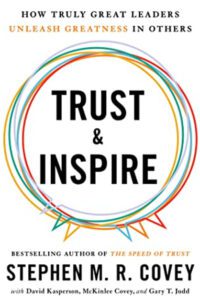
Trust and Inspire: How Truly Great Leaders Unleash Greatness in Others
One of the biggest reasons people are buying your book is that you have provided a guide on how to be successful on their own terms without having to fit into this mold of, “You have to be an extrovert. You have to do XYZ. You have to play golf.” All those stereotypical things of what salespeople used to have to do or would do and it is like, “I know what my terms are. This is how I entertain clients or not. This is how I sell. This is how I build rapport that might be different than you.”
It is becoming more essential because we are becoming more diverse in the people we are recruiting into sales. We are not doing enough. We could do more, but they all have different lived experiences. The perspectives people bring are what we need. We need more different perspectives. There is no one way.
You have so many great soundbites. One of my favorites is, “Influence rules, persuasion drools.” The visual on that is great. Tell us what you mean. A lot of people think, “I am going into sales. I am going to persuade you to buy this for this price.”
If you are persuasion-driven, you are putting your own interest ahead of those of the buyers. By definition, that is what you are trying to do. You are trying to persuade somebody to buy your product irrespective of their requirements, their needs and the things they want to achieve because you are in that mode where you are selling hammers and everybody is the nail. Even when you look at the definition of the word persuasion, it talks about prevailing or trying to prevail through force. In the wrong hands, persuasion is meant to be coercive and a little bit manipulative. Unfortunately, a lot of sellers are the wrong hands. That is not how buyers want to deal with the salesperson.
This is a big a-ha moment. I want to take a pause, circle it, underline it and highlight it. I am not in the persuasion business. Nothing against all the wonderful books about how to be persuasive, but let’s reshift this and start reframing how we think of ourselves.
Influence is all about having an effect on the thoughts and actions of others without the apparent use of force. That is what influence is and that is what position we are trying to get into. We are trying to build this connection with a buyer built on some level of trust that when the trust exists, they open up to us. When we bring our curiosity to bear, they will share information with us, perhaps at a deeper level than they would with someone where that trust and connection did not exist. Suddenly, we have more insight into the most important things to them in terms of the challenges they face and the outcomes they are trying to achieve by addressing those challenges.
When we have that understanding, we can work with the buyer to help shape this vision of success of what it will be like to get the value from the product or service you are selling. If you reach that point, that is something you do collaboratively with the buyer. It is not something you impose on them by trying to persuade them about it.
[bctt tweet=”Humility is not just being modest and self-effacing, but it is about being intellectually humble. It is acknowledging that you do not know everything.” username=”John_Livesay”]
I love that your definition of persuasion is, “I know better than you. I am right. You are wrong.” That is selling out. That is what this book is helping people not do. The opposite is the concept of selling which I have never heard of before. Therefore, there are no assumptions that you know more than they do or even vice versa. Think of it in terms of being a copilot with the buyer and this concept of, “Let’s make sure people feel heard and understood first before we jump into what we think they need.” It’s like when you go to a therapist, sometimes there is something called the presenting problem, which is a couple comes in and they say, “Our love life is not where we want it. That is why we are here.”
The therapist will go, “That is the presenting problem. I bet there are some reasons behind that.” As salespeople, we need to start thinking of ourselves as, “Whatever they tell you upfront, this is why we are changing, looking, upgrading or whatever the reason is for doing a proposal in the first place.” There might be other reasons they are unwilling to share yet, or maybe they do not even know yet. If you can help them discover that, then your trust factor has zoomed up.
Sometimes sellers are a little taken aback when I say this. I said, “You cannot take anything at face value that the buyer tells you.” They are not lying to you. They are not, not telling you the truth, but there is always more to it. If you accept what they tell you, you will hop down one path that is not the path the buyer wants to go down.
Building this level of trust so that they open up to you, as I write about in the book, then they give you permission to stick your nose into their business. What you are trying to get to is deeper level information that they do not readily share with everybody. I was in a conversation with someone on another podcast and they are talking about, “If you ask buyers scripted questions, you get scripted answers.”
If you are a robot, then they are going to give you robot answers.
You have trained them, not you, but sellers in general. Be the difference. This is the thing that I stress in the book. In the majority of instances, buyers oftentimes decide to buy from a seller despite the seller, not because of them.
If we flip that around and make it not in spite of but because we have a new tool in our box.

Sell Without Selling Out: In the majority of instances, buyers oftentimes decide to buy from a seller despite the seller, not because of them. In the majority of instances, buyers oftentimes decide to buy from a seller despite the seller, not because of them.
That is what you are trying to achieve. You become the reason they buy from your company. You, the individual. From supporting data from Gartner, Challenger and Forrester, we know that when customers make their decision, the majority of the criteria or factors in their minds are the experience with the salesperson.
That is everything from a home or the broker you pick to, if you are in Corporate America, deciding what vendor to make your equipment purchase from. People are buying your energy, your passion and your empathy.
How they experience you. Your understanding.
If people want to reach out to you and figure out how to get more coaching, more information and get on your email list, where should they go?
They can email me if they want to at [email protected]. They can connect with me on LinkedIn. Direct message me there. I would love to connect with people that are reading this.
Do you also have programs that you offer on your website?
If you go to AndyPaul.com and learn about the programs that I offer. You can download a free chapter of the book if you wish. We have an assessment that you can take there if you assume that selling out and selling in are polar opposite ends of a spectrum. You can start to determine where in that spectrum you sit. Are you leaning more towards selling out or selling in? It is not super scientific, but it is a fun quiz. Come buy the book on Amazon or wherever you purchase books.
[bctt tweet=”You cannot take anything at face value that the buyer tells you. They are not lying to you. They are not telling you the truth, but there is always more to it.” username=”John_Livesay”]
Thank you so much for sharing your insight. We are going to all become people who learn-it-all not a know-it-all. Any last thought or a quote you want to leave us with?
One of my favorite quotes is right at the beginning of the book from Ralph Waldo Emerson, “Insist on yourself. Never imitate.”
Most people think they have to become a clone in order to be successful. That is not the case at all. Thank you so much for getting us this new awareness and this new ability so that we can be ourselves and be successful at the same time. Who does not want that? Let’s go get the book, everybody. Thanks, Andy.
Thanks, John.
Important Links
- Andy Paul
- Sell Without Selling Out
- Sales Enablement with Andy Paul
- Stephen M.R. Covey – Sales Enablement with Andy Paul Episode
- Speed of Trust
- Trust and Inspire
- [email protected]
- LinkedIn – Andy Paul
- Better Selling Through Storytelling Method Online Course
Wanna Host Your Own Podcast?
Click here to see how my friends at Podetize can help
Purchase John’s new book
John Livesay, The Pitch Whisperer
Share The Show
Did you enjoy the show? I’d love it if you subscribed today and left us a 5-star review!
- Click this link
- Click on the ‘Subscribe’ button below the artwork
- Go to the ‘Ratings and Reviews’ section
- Click on ‘Write a Review’
Love the show? Subscribe, rate, review, and share!
Join The Successful Pitch community today:
- JohnLivesay.com
- John Livesay Facebook
- John Livesay Twitter
- John Livesay LinkedIn
- John Livesay YouTube
Winning Is Better With Bob Wiesner
Posted by John Livesay in podcast | 0 comments

“Winning is better” has got to be the slogan of many companies and businesses. The question is, how do you start winning? We tackle this question and more as John Livesay and Bob Wiesner of The Artemis Partnership grapple with the mechanics of persuasion. We take a deep dive into Bob’s book, Winning Is Better, to look at building trust, leveraging the non-technical aspects, and positioning yourself for success. Tune in to learn more from the masters in pitching.
—
Listen to the podcast here
Winning Is Better With Bob Wiesner
In this episode, Bob Wiesner talks about his new book, Winning is Better, and how to stop coming in second place. We talk about how important it is to build trust and how to do it fast. Finally, he talks about making a win room instead of a war room. Find out what he means. Enjoy the episode.
—
Our guest is Bob Wiesner, who has always been fascinated with how people make decisions. Even as a kid and a huge baseball fan, he was more interested in the operations of the front office than in action on the field. He studied Psychology as an undergrad and graduate student and went into advertising, where his focus on decision making shifted to the advertiser.
After several years where some of the biggest ad agencies like BBDO and McCann Erickson, he shifted focus again from the mass persuasion of advertisers to the individual persuasion of a seller relative to a buyer. He is all about this practice. People know him as the Pitch Doctor. As the Pitch Whisperer, I would like to welcome the Pitch Doctor to the show.
Thank you, and thank you for not whispering as well. We can talk out loud. I appreciate it, John. I’m glad to be here.
This premise of a whisper of anything, we horse whispers, dog whispers, we also go to the doctor for them. We trust them and ask a bunch of questions to figure out what is going on specifically. Before we get into how you came up with being known as the Pitch Doctor, take us back to what inspired you to be interested in how people get persuaded, I know for myself. I watched a TV show called Bewitched, where there was a character that worked for an ad agency. I thought, “That looks like a cool job.” What was the initial thing that pulled you into? I want to learn how people get motivated to change their minds.
It was not a lot unlike yours, John. I stumbled my way into advertising by accident. I graduated college, and before I decided to go to grad school, I was looking for a job, and I did not know what to do. I had a buddy who worked for a large ad agency. I asked him, “What did you do? It sounded interesting. Do you need special training or education for that?” He said, “Anybody could do it.” I said, “Sign me up.” I did find a job in agency life and enjoyed it.
What I liked about it was a combination of a couple of things. First of all, it was about persuasion. I found that getting an undergraduate degree in Psychology, there is nothing remarkable about that but the whole idea about how people think about things and how they perceive things, they perceived the impact of those things on themselves was something that I had studied, and it was interesting. I loved the creative aspect of it.
[bctt tweet=”Show you have a deeper understanding to build trust.” username=”John_Livesay”]
Here we were creating things for a reason. We were creating them to be different yet to be purposeful, to have an objective at the end of the day, which was to sell and soak. That was something I wanted to know more about. I stayed in the agency business in total for eighteen years with some graduate school mixed in there and focused entirely on mass persuasion, how advertisers who spend tens of millions of dollars persuaded millions of people. Later, I realized, I wanted to get a little bit more personal about it and turn my attention to how individuals are persuaded by other individuals.
What were you doing at the agency? Were you media account services selling the agency to win new business, or were you the creative team?
Yes and no. I started in media planning and buying. I moved over into account management. I spent some time in a new business. I forget what the 4th one was but not creative but I touched on all different facets of the agency. To this day, I feel like I do understand how agencies do their thing and how they persuade people.
You now are morphing into instead of trying to convince the masses to prefer one brand over another. Let’s get into helping one person persuade another person to pick a client, to hire them, whether it is a speaker or an architecture firm, you have several clients in several different industries. I love what you say in your book, Winning is Better: The Journey to New Business Success. Can people look at the roster of clients that you are now working with and say, “That does not seem to have a lot in common?” Yet, at the end of the day, there is one thing that is in common with all of them, and you say, “We are all people, and people are wired pretty much the same.”
Before I started Artemis, which is only two years old in 2022, I was doing this for other firms and doing this on my own since the mid-’90s. What fascinated me was that a decision-maker is a person. They are not a role or a job description. They are human beings. As human beings, while there are obvious differences from person to person, they are also predictable aspects about how they think. It does not matter whether they are thinking about advertising, accounting or management strategy. They are still a human, and they still have needs, desires, and mechanisms for processing information.
I don’t think that as a rule, a lot of professional services firms like advertising, architecture, and accounting understand that aspect of the person that they are pitching to. My goal since I’ve got into this part of the business is to help my clients get a deeper understanding about how decision-makers perceive their offers and use that understanding to differentiate their offers from their competitors.
One of the things you talk about in the book that is counterintuitive for many people is, “Don’t pitch everything.” Especially for me, coming from a sales background, we were told the old way of selling is to throw as much as you can up on the wall and hope some of it sticks, which is a nightmare. It is not targeted and strategic. You have a much more strategic approach to let’s define who your ideal client is and the work you love to do. In the book Winning is Better, you talk about how sometimes you can take a bid to get something, and you even win it. If it is not something you love, the win is a chore. It is not a joyful experience. I thought, “What a great distinction.”
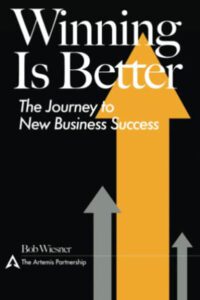
Winning is Better: The Journey to New Business Success
That is something that is easily overlooked by sales organizations and by business development professionals. It is the price of winning or the cost of winning. It is one thing to rack up numbers to get your percentages up. It is one thing even to get your revenue up but what is the impact of that win on my organization both short-term and long-term?
We define a chore as something that we are capable of doing that people will pay us to do but that nobody gets any leisure from doing. We are competent at it but that is far as it goes. You start layering a lot of that stuff into an organization, and people start turning off to it. Your workers start to shrug their shoulders and say, “Not again. Do I have to do another bathroom design? Do I have to design another landing page on a website? I would like to do something more exciting, interesting, meaningful, purposeful.”
John, everyone now knows about the Great Resignation. Is that even contributing to the Great Resignation? The fact that you are. “We are a successful company. We are growing and winning new business left and right,” your people have to do stuff they do not enjoy doing. Now, maybe they do not even want to stick around to do it.
Without people sticking around, the cost of turnover, and consistency, you are selling the team’s ability to work well together. If all that goes out the window, you are a commodity.
You have got this short-term impact of, do people want to be doing this work, and you get the long-term impact, which is if it is the work I do not love to do if people are not sticking around to do it, and if it is a commodity exactly as you say it, where is the growth opportunity going to come later on? How is this client going to turn into a bigger client down the road if the initial work that I won is one where I’m churning out a product without any passion, excitement or cultural lift from it?
Let’s double click on that word, that phrase without any excitement. I have a belief that people buy your energy. I know for myself, as a sales keynote speaker, I often have to compete. I get interviewed like big companies when they are in the final 2 or 3. I remember getting an email from the speaking bureau saying, “Congrats, they picked you. They liked your energy.” Rarely, it’s that specifically called out. I then talked to the person and they said, “You made us feel good. We figured you could make the whole ballroom full of people feel the same way.”
That energy you bring to the 45-hour however over your timeframe is presentation or interview, whatever you want to call it is important that people are going, “How do we feel? Can we see ourselves enjoying this journey if we are going to hire you to work with us?” In the case of an architect, sometimes 4 to 6 years on renovating an airport or something. People forget that that is a key part of you can’t give away anything you do not have. If you are burnt out from doing all these bathroom jobs of designing bathrooms, and you want to be designing a whole airport, you are not bringing your best energy to the room.
[bctt tweet=”Listening and empathy create chemistry.” username=”John_Livesay”]
What people lose sight of is not only that, and I’m not diminishing the importance of it but from a decision-maker standpoint, that is our thing. It is about the buyer. They are comparing you as the potential speaker to seven other people they are interviewing to be potential speaker. It is not your energy level in the absolute sense that they are looking at. It is you relative to everybody else.
How do you differentiate yourself from other people? Your content may be awesome but their content may be pretty good too. They might not be able to tell the difference between the topic you are going to speak about and the topic someone else is going to speak about. If it comes to your energy, passion, commitment, drive or what you might more broadly call the cultural fit, that could be the differentiator that wins you the business way more important than any topic or content that you might be proposing to them. That is what competing firms lose sight of is the importance of the non-technical aspects of their pursuit.
We talk about the importance of trust, and most people will go, “Yes, I know trust is important.” You have a formula for how people can be better at building trust that you reference here. I thought it was clever that trust is not just, “You are safe to be within the room. You’ve got a good referral. That is maybe 1/3 of it.” Can you walk us through what companies can do if they are walking into a room cold and have to present to build some trust?
The trust will worthiness equation was first identified by David Maister, Charles Green, and Robert Galford in a book called The Trusted Advisor, which alongside Winning is Better: The journey to New Business Success should be on everybody’s bookshelf. What they articulated was that trust has four components. It has credibility, reliability, transparency, and self-orientation.
One area that every sales organization blows consistently when it comes to building trust is this area of self-orientation. In other words, they always seem to be selling something. They seem as if the relationship that they are attempting to build with the buyer, again, buyer perception maybe not be a reality but it seems like all they want to do is talk about themselves, products, and price and try to extract money from the buyer.
All that torpedoes trust faster than anything you can possibly do. You layer onto that, whether they are credible in the space, deliver on their promises or are open and honest. All those factors together influence whether you are viewed as being tried trustworthy. Our point of view is that when initiating a conversation with a prospect, regardless of what stage you are in the sales journey, think about how are they perceiving your trustworthiness and what are you doing to build it up or diminish it?
Sometimes, part of it is being a little bit vulnerable and not pretending that you have all the answers all the time.

Winning Is Better: When initiating a conversation with a prospect, regardless of what stage you are in the sales journey, you have to think about how they perceive your trustworthiness and what you are doing to either build it up or diminish it.
That is what Maister, Green, and Galford called intimacy, which I don’t think is a 2022 word. I prefer the word transparency but being honest with people about, “Here is what I’m capable of doing. I’m good at it, and here is what I’m not so capable of doing. I’m not going to take on the project if it is not directly in my area of expertise and brilliance.” A lot of buyers appreciate that.
Let’s close that open-loop I did at the opening. How did you become known as the Pitch Doctor?
In the firm that I was working for at that time, the part of our practice that focused on helping our clients as you are doing now, John, is helping them be more effective with pitching. Not everybody in my firm back then liked doing that work. It was high-pressure work. Unlike the usual training and development stuff that the firm was doing back in the ‘90s and early 2000s, this one had results attached to it, either you win the pitch or you do not.
I loved that. That fits my personality and my motivation for working perfectly, so I raised my hand. I said, “I want to learn more about how to do this. I want to take our principles that we were training and apply them in real-time to actual new business pitches.” I did that. I worked on dozens of them for ad agencies, IPOs, and management consulting firms for an Olympic bid. I became the go-to person within the US operation when there was a client who wanted help on a specific pitch, so I became known as the Pitch Doctor.
When I talk to people who say, “We are so tired of coming in second place.” I know on The Artemis Partnership, that is one of the things that you are solving because, unlike in the Olympics, there is no medal for second place that will say, “Did you ask why you came in second place?” Oftentimes, they will say, “We were too salesy.” It goes back to what you were saying earlier, “You are too self-absorbed about bragging about how big your company is, and it has nothing to do with them.” Those kinds of things. Are you seeing a current consistent reason why people do come in second place that you are able to fix?
If someone tells you that you came in second because you are too salesy, that is great feedback, and it is better feedback than most organizations are either seeking or able to get. There are a couple of factors here. First of all, a lot of companies do not get accurate feedback at all, which makes it difficult for them to understand why they come in second.
That is a whole separate chapter of the book because it is important to get that good feedback. We hear this more from the buyers than we do from the sellers. Buyers will tell us that they did not select a firm because they did not trust them, did not connect with them, and did not provide any additional reason for why they should be hired. They followed the RFP. They met the minimum standards.
[bctt tweet=”What competing firms lose sight of is the importance of the non-technical aspects of their pursuit. ” username=”John_Livesay”]
The firms that win always have gone beyond what was initially accepted. Now the beyond could be defined emotionally. I knew you used the word energy before. We hear the word passion a lot, commitment, drive, and dedication. We also hear buyers say, “I selected that firm because they showed a deeper understanding of what I was looking for. They answered the questions in the RFP but they went beyond that to show that they understood what we looked for and they cared about it.” What is interesting is that a lot of losing firms wind up losing because they did what was asked of them but whereas the winning firms did what was asked of them and did more.
This is so insightful and valuable. For everyone reading, take that in, that it is not enough to answer the questions. You need to show the person making the decision that this is not another client or checklist for us to do. I have a philosophy. It sounds like you agree with this. The better you can describe someone’s problem and put it into words that they have not even used before, they think, “You get us that feeling of you understand us, the fact that you can express our challenges and what keeps us up in the middle of the night. Therefore, I trust you to have our solution because you understand our problem well, even if it is beyond what we described in a proposal.”
We see that manifested in a few different ways but the firm that stands out from others is a firm that shows a better understanding of the challenges of the problem. It could be the upside, a better articulation of the opportunity. That absolutely matters. That takes us back because everything is connected to a point you made earlier in our conversation, John, which is about the importance of pitching less or chasing fewer opportunities.
I cannot get the depth and the information that will help me win if I’m chasing everything. I do not have the time, bandwidth or energy for it. Whereas if I’m more selective about what I chase, I can get more depth and more understanding. I can have that diagnostic that you mentioned that deeper understanding of the problem because I took more time to do it. Everything goes hand in hand. The buyer gets that right away. They can distinguish the 6, 10 or 16 firms they are talking to. They can tell the 1 or 2 of them that took the time to get to know them from the other fourteen that did an autopilot and submitted a proforma response even if it answered all the questions.
You and I, as authors and being on a show, it is evidently clear within the first five minutes if the host has read your book or not, versus reading through some provided questions from the publicist. Going back to this concept that if you can go beyond the expectations and show a deeper caring than the come-up competition. I want to give people an example of what that looks and sounds like.
When I was working with an architecture firm on the presentation, we were having dinner the night before the practice. One of the guys said, “As an architect working in airports, I travel over the world and gets to move wherever the job is but this is my hometown. If we win this, this is a hometown game for me. The whole point of this airport is to reflect the new version of this city.” I go, “That is what we are going to be saying on the team slide. This isn’t another job for you.” That personal connection to the city for the people making the decision of what firm is going to redesign the city’s airport came through time and again. That is what you were talking about as an example.
I want to get into your wonderful pie chart on the truth about decision-makers here. You are helping people have empathy for what they are thinking about. The first part of this is people go, “You win or lose business based on what your solution is, and you say no.” That is only 28% of the decision. Let’s talk about what the other three quadrants are.

Winning Is Better: If you’re going to be a politically unsafe choice, compensate for that by pumping up some of the other parts of your sales initiative recommendation. But if you are going to be politically sound or even advisable, then leverage the heck out of it.
The next one up, which ranks higher than the solution, is the understanding me. We have touched on that. I want to get people the full fork pieces of the pie. If you have your solution, we can see that it would work. Now 31% of my decision is going to be based on how well you show me you understand me. That goes above and beyond my problems.
I’m glad that you emphasized the word me because decisions are made by individual people. They are not made by anonymous groups using groupthink. Each decision-maker is going to judge the options in front of them based on, “Did this team or organization understands what I personally was looking for, what my concerns were, what my fears were, what my hopes and dreams were, and what my own personal decision criteria are,” which might be completely different than anything published in an RFQ or RFP.
Each decision-maker, person, and influencer needs to know that the pitching team was addressing their individual needs. Sometimes, you have to be nuanced or careful about how you articulate them but you still have to make it clear that you heard them and that you’ve got it. Now that is distinguished from understanding my company or the project, which is important. They are both necessary but they are not sufficient to win. You have to go deeper, get to know the people, and show you understand the individuals.
The other part of it is chemistry. We know chemistry is with dating, and we know whether we have chemistry when we watch a movie. Although, those actors did not have the chemistry that does not work. The script is great. The chemistry in the business scenario is, “Do I want to work with you? Is this somebody I want to go have a drink with after work? Is this somebody who would have my back or would they throw me under the bus?” All those things come into play.
It is all of those but it does not necessarily have to go that deep. It depends, frankly, on whether or not I have spent enough time with you to even know that you have my back. In the first meeting that you will have with people, long before they reach the conclusions that you accurately pointed out, they are going to be able to perceive, “Do we communicate on the same wavelength? Do we use the same language? Do we waste each other’s time with irrelevant facts? Do we cut to the chase? Do we seem to care about each other as people? Are we listening well? Are we showing empathy?”
These are all factors that go into this idea of chemistry. They are easily represented even in a Zoom meeting, and they set you up for then getting to know the person even better. By the end of the process, I will believe that you and I are simpatico, we will look out for each other, I will enjoy having you around my job site for the next five years or having you auditing my books for the next three months. I would not say I would enjoy having you auditing my books but I will enjoy having you around my office. Those things will look eventually get there. I want people to understand that the chemistry is evident from the first conversation that you have with people, and it carries on from there.
Finally, chemistry is 25%. That leads a remaining 16% to the category of politics, which most people feel uncomfortable and hazy about, “Do I want to get involved with the company’s politics? Is it being aware that there is politics involved? If 16% of the decisions are based on politics, help me, Bob, how do I navigate that?”
[bctt tweet=”Competing firms lose sight of the importance of the non-technical aspects of their pursuit. ” username=”John_Livesay”]
You may not be able to but you at least have to be aware of what it is now. Internal politics are about, “What do decision-makers care about internally? Who evaluates them? Who needs to approve their decision? How will they look to these other stakeholders, that could be their bosses or colleagues? If you are selling into a marketing department, how will the marketing people feel when they go to the sales department and say to the sales guys, ‘We hired this firm to do our social media?’ Are they going to like it, or are they going to hate it?”
If you are a large organization, maybe you are publicly traded. You’ve got to worry about the shareholders. How will they feel about things? This information is not easily discovered but it is findoutable. If you can at least know what it is, you can anticipate how important it is. If you are going to be a politically unsafe choice, you can compensate for that by pumping up some of the other parts of your sales initiative. If you are going to be politically sound or even advisable, leverage the heck out of it.
If you say we have picked this social media company or we picked John as a speaker, we are going to have the Pitch Whisperer come to speak to us, give them some ammo to present why you are the good choice to get somebody excited with, especially if they are not involved in the choice. If you are an architecture firm pitching to redo an airport renovation, realize all the taxpayers and city officials that are involved in giving opinions on this as it goes along that is way more than the eight people in the room listening to the presentation. Before I let you go, I want to talk about your wonderful book at the end here, the pursuit field manual, where you have a win room. You are all about winning is better, focused on the winning more than the selling. What is a win room and how can people start to create their own?
Many people in sales and business development are familiar with the term war room. We prefer to call it a win room because we want to be more optimistic about what the purpose of the room is. The typical war room that I have seen, and John, you have probably seen it as well, is oftentimes constructed around what our offering is going to be. It is like, “What is our strategy? What is our weaponry out? How flank the other guy is? Where are we going to put our battalions? What about us?”
The win room is about the buyers. Not surprisingly, as we have been talking about. The win room is built around how much information you have about decision-makers and influencers. You probably do not have enough. How do you get more? It becomes a formula for how do I convert these inputs, which is the information you have about decision-makers and influencers, and convert that into outputs, which is your messaging.
Messaging that differentiates you from your competition persuades the buyer that you are not just viable but you are an optimal choice for them and seals the deal in your final proposals and your pitches. The win room differs from the war room, not in name or attitude but while war rooms are much more product and firm centric, the win room is entirely prospected centric and builds all of its efforts around that.
Before the show started, you and I had a little chat, and we talked about how you need to keep your flexibility at the moment. If you get feedback right before you are about to go present that a client checked your references, find out what the reference was asked, and possibly use that as part of their criteria that might not have been in the proposal to open up your messaging, you are playing at optimizing things in the win room.
[bctt tweet=”Pitching and winning isn’t about having the best product and solution, but how you position and offer it up.” username=”John_Livesay”]
One of the interesting things about the win room is that you never close your win room. It has never been done. You continually input right up until the last minute because every little nugget of information you get could make the difference.
The book again is called Winning is Better. You can get it on Amazon. People can also find you at TheArtemisPartnership.com.
Connect with me directly on LinkedIn. They are both effective.
Any last thought or quote, you want to leave us with Bob?
This has been a great conversation. I loved it. We are like-minded because we both believe that pitching and winning are not about having the best product and solution. It is about how you position it and how you offer it up. Your readers will do well to follow your advice on selling and storytelling. They would also want to read some that we have to say about the overall strategic approach to pitching, and you put these combinations together. You will be a powerful force in the market, and your competitors will be trying to figure out what the heck you are doing. That is driving them crazy.
Thanks again, Bob.
John, it was a pleasure. Thank you.
Important Links
- Bob Wiesner
- Winning is Better
- BBDO
- McCann Erickson
- The Trusted Advisor
- LinkedIn – Bob Wiesner
- Better Selling Through Storytelling Method Online Course
Wanna Host Your Own Podcast?
Click here to see how my friends at Podetize can help
Purchase John’s new book
John Livesay, The Pitch Whisperer
Share The Show
Did you enjoy the show? I’d love it if you subscribed today and left us a 5-star review!
- Click this link
- Click on the ‘Subscribe’ button below the artwork
- Go to the ‘Ratings and Reviews’ section
- Click on ‘Write a Review’
Love the show? Subscribe, rate, review, and share!
Join The Successful Pitch community today:
- JohnLivesay.com
- John Livesay Facebook
- John Livesay Twitter
- John Livesay LinkedIn
- John Livesay YouTube
Where Imagination Meets Business With Christopher Kies
Posted by John Livesay in podcast | 0 comments

Mark Twain once said, “You can’t depend on your eyes when your imagination is out of focus.” The same applies to the world of business. If you don’t have an imagination, then your venture will be in for rough sailing. In this episode, John Livesay speaks with Christopher Kies, Executive Sponsor at Blue Sky Consulting. Christopher thinks of Blue Sky as the place where imagination meets business, and that is exactly what he focuses on, helping others tap their imagination to succeed. Be inspired to unleash your imagination by tuning in to Christopher and John.
—
Listen to the podcast here
Where Imagination Meets Business With Christopher Kies
Our guest is Christopher Kies. He has many years of successful corporate sales experience and enjoys using his insight to help others achieve their goals. Many of his clients need a second opinion on a sales opportunity or a specific strategy to enhance a deal. He works with CEOs, entrepreneurs and executives on a wide range of opportunities, all with the same focus in mind, understanding what stops may happen along the way and how to move beyond them. Christopher, welcome to the show.
Thanks, John. I appreciate you having me on.
We met through a mutual friend, Ken Rutkowski, with whom you went to grammar school if I remember correctly.
I met Ken in sixth grade and I don’t care to count how many years ago that was. It has been a long time.
I love to ask my guests to take us back as far as they want to their own story of origin since you have a sales background as I do. We both are from the Midwest. I was interested to hear similar influences, concepts, motivations and all that good stuff. You can start in sixth grade with Ken if you would like or wherever you want to start your story in terms of understanding that you had an interest in communications and connecting with people.
We could start back in my past because things for me have always been about long-term relationships. It’s one of those moments in time where we have a mutual friend and somebody I have known for many years. I kept my relationship with my wife from first grade. I moved at a point in time in our relationship and we stayed in touch. We reconnected when we were in our late twenties. We dated for a while and then decided to get married. We were in our mid-30s. When I talk about meaningful relationships, it does focus on how I help folks. I hope those two little vignettes of my life and the way I communicate with people helps you out with that.
We both had a background selling tech equipment. You were at HP. One of the things that I noticed in that world was an emphasis on that term speeds and feeds in terms of relationships, empathy or let alone storytelling, which is my passion. What was your experience in that world?
That’s a great question because it does boil down to what type of salesperson you are. Are you transactional or relationship-based? Those are the two worlds that I grew up in. Probably, like you, I call those the go-go ’90s. It was back between 1995 and 2000, right before the dot-com boom in 2001. It was when I was getting my foot in the sales world.
One of the things that I saw very early on in my career was there weren’t many older men or women in sales that caught my attention quickly. I was like, “Anybody that was over the age of 45 was either a manager or senior-level executive that I didn’t have a lot of connection with.” Even my direct managers were still in their 30s or barely over the age of 40.
That caught my attention because even some of the older guys that I did work with and I say older back then because I was in my late 20s and they were in their 40s, I saw them get pushed aside quickly when the numbers didn’t match up. How I took integrated information as a salesperson in my younger career was, “This is a short-lived world. I better make hay while I can and enjoy it.”
[bctt tweet=”You are not just enough; you are more than enough. ” username=”John_Livesay”]
I went to relationship-based sales because that’s what I enjoy. I know you like the storytelling aspect because it does create a binder for the person that you’re speaking and communicating with. I take that from a relationship side because I wanted to get to know my prospects and customers. That was my initial focus.
I remember going to see Death of a Salesman play, where the guy stayed in sales way past his prime. It painted such a bleak picture of what it’s like to not be in management and still be in sales at a certain age and carrying a briefcase, quota and rejection, yet I still wanted to be in sales. I did see that you need to reinvent yourself almost like an actor or athlete. There’s a special premium time.
When you’re first starting, you’re in your early twenties. You don’t have enough experience. You get some experience under your belt. In 27 to 35, you’re getting offers left and right. You think it’s going to last forever. You were smart enough to zoom out and go, “This doesn’t last forever. How can I either not just enjoy this but have that awareness?” You’re not so shocked.
I used to see that in the publishing world that even at the top, the publishers would hit a certain age. The magazine is still doing great, but once 50 something happened, they were like, “We’re going to bring in somebody younger. It’s less money.” Everyone thought it wasn’t going to happen to them, especially if they had been in the company for a long time. That awareness, especially at a young age, is quite fascinating.
You have been doing your own consulting, Blue Sky. Let’s start with that name. I have a sense of where the name came from, but I’m always big on asking people stories of origin, including the story of origin around a company name. You could have named your consulting company anything. What made you pick that?
Blue Sky was easy for me because that’s always been me. When I was a kid in grade school, high school and college, I would always look out the window in class. I could take in the information in one ear, listen to it, decipher it relatively well, but I was always dreaming. I was always in another space. I was like, “What would I like to be doing?” I would imagine myself in situations. Blue Sky was what I always looked at. It was wide open. That’s what I look at my organization and company as wide open.

Imagination Meets Business: What you think is what you create.
I have been in sales for many years. I even manage and run my wife’s business as well and do her P&L. I understand finance very well and also roadblocks. Roadblocks aren’t always about who is stopping you. I find that it is more or less people stopping themselves and not having the imagination triggered. They are focused on their quota, what their lack and limitations are.
I have had this company for years. I would go in and out of it. I would get other offers and opportunities and work with people. Years ago, I finally said, “I’m done. I’m going to dedicate 100% of my time to helping those that are interested.” If you’re interested in what your Blue Sky or dream is, this isn’t a transactional deal. This is you pay me hourly. I’m not a therapist or licensed in any state. I’m just a guy that has been through a lot. I have been through the highs and lows of sales.
I have insights. There are not a lot of men or women over the age of 50 carrying a bag anymore. The insights and relationships that we sometimes have can enable people in our age group that are looking for the next step. That’s what Blue Sky does. It opens up possibilities. To finish that, my tagline is, “Where imagination meets business.” If you don’t have the imagination, I want to help you reignite that, find it again or cultivate it. If you do, look out there because what you think is what you create.
It’s very metaphysical, which is also another reason you and I clicked so fast because I have that same concept of energy and mindset. There is a great Mark Twain quote about, “It’s hard to keep things in focus when your imagination isn’t working.” I think to myself, “Most people think of business as unless you’re hired to be a graphic designer or something, it’s not that creative of a career. It can be extremely creative if you look for solutions where they are not obvious or what else needs to happen to zig and zag.”
If you’re on the left side of your brain trying to analyze things like it’s a math problem, you’re not going to see those. The roadblock is the roadblock. It’s black and white. It’s like, “If you’re doing accounting, it either adds up or it doesn’t. This is a no and it’s a no forever. I’m never going to try again. I’m going to take rejection personally and go down this downward spiral of who I am. I’m not worth anything and anybody else could have done anything else.”
[bctt tweet=”What fun can you bring to your job? ” username=”John_Livesay”]
You’re summarizing what I will say. I’ll contend everybody thinks at the moment. We always go from 0 to 100 miles an hour in the negative. You get down to the space like, “I’m worthless. I’m just lucky to have this job. I’m going to figure out how long I can keep it before I find my next opportunity because my numbers are crap. I’m not selling anything.” I always want to tell people, “Let’s take a breath and pull back. Let’s acknowledge you’re not where you need to be with your numbers. Let’s say that that’s a real thing. Let’s say, ‘What do you want to do?'”
Quite honestly, you have people take a breath for a moment. You and I believe in breathing too. Breath exercises are super helpful. We take breathing for granted because we do it pretty well. Unless you’re on a ventilator, you need support. You don’t think about it. In your life, you must stop and take a breath. That’s where the imagination comes in because it’s asking yourself questions like, “First of all, what am I doing? Is this where I want to be?”
People are like, “I got bills to pay. In the Midwest, it’s ComEd and Nicor. I have got a mortgage to pay and kids to put through school.” I get all of that. You’re young and ambitious. You’re like, “I’m trying to make a name for myself.” Those are all real things. I want to get out of the reality for a second because you’re doing that 99% of the day. Why don’t you take 1% of your day and start to imagine what it would be like if you had fun doing the job you do? Nothing has to change except the idea of having fun.
That’s where I start my clients like, “What’s fun to you in your job?” I have had every person tell me, “There is no fun at all. There is always some fun,” even if it’s your coworkers. It’s anything like, “I like the coffee service.” If you work for Microsoft, you’ll get a great coffee service or somebody still pushes an ice cream cart. That’s one aspect of it. What kind of fun can you bring to your daily routine?
This isn’t rocket science, but we don’t talk about it in business. As you so eloquently pointed out, once you look at your forecast, start getting the numbers and start realizing how many noes you have gotten in 1 week, 1 month or 2 months, your focus is on the lack. It’s a simple redirection. It’s not a trick. It’s like, “Let’s redirect on what’s fun.”
I’ll give you a story. I remember this was years ago and I was working for a company. The guy that was running the company, he and I had a long-term relationship. I had known him for many years. He had asked me to come on board and help him out in the sales area. We had a lot of success early on and then there was a dip. I started realizing that I was taking on the pressures of always being the closer. I would get the award every year for the best closer. I had the highest win percentage and then it became this thing where I was like, “I had to compete against myself. I’m not doing that anymore.”

Imagination Meets Business: Roadblocks aren’t always about who’s stopping you. It is more or less people stopping themselves.
That is such a common thing with all of the sales organizations that hire me to speak to their sales teams. The number one thing I hear is, “I have had this great year. How am I ever going to top my number?” I have been in their shoes and had that exact experience, so they go, “You get us. We want to hear what you have to say.” You think of, “You do this great movie, The Godfather, or you’re Michael Phelps and you have won all these medals. Now what? How do you keep topping yourself? There’s nothing better than a gold medal. You have got eight of them or more.”
In corporate, they can slice and dice your territory. It’s impossible to beat that number even because they don’t want to have to keep paying those bonuses. It’s a fascinating thing. I want to go back to what you said because it’s so important. I want to underline this for everyone. Instead of looking for, “What is this job doing to be fun for me,” you flip the question to, “What can I bring to this job that will make it fun?” It’s a whole different mindset.
The responsibility is not on the individual to make the company fun but to bring what they believe is fun or what they enjoy to the company because it will only make the company better. You will realize that there is not a match energetically and you will move on with complete consciousness that you did everything you could. You feel good about where you’re at and you take that. You have no idea what opportunities open up when you are in the center of having fun.
It’s like when you were a kid. You’re not worried about the bills and your grades. You’re worried about, “Where am I going to have fun? Who am I going to play with?” It’s the same idea. We got trained out of it. There’s nothing wrong with responsibility and wanting to provide the best possible life for yourself, your family and your friends. The point is I took a day off. We have this little pool in the backyard. It was a beautiful July afternoon. I said, “I’m shutting everything down. I’m going to lay in the pool and meditate.”
I laid on this big raft. I had my headphones on. Of all people, I was listening to Tony Robbins and Tony said something very interesting. He said, “I feel bad for people making over $200,000 a year.” It intrigued me. I thought, “What is he talking about? It’s a lot of money for a lot of people.” He goes, “You feel stuck because there are not a lot of jobs out there where you’re going to get paid out of the shoe $200,000. You can’t explore and imagine.”
That’s where I went back to what I was trained in, which was having fun. They had given me a client called Batteries Plus Bulbs. They are a national chain all over the place. We had told them three times, “We don’t want to work with you.” They were looking for a new marketing partner for database, email and digital. The guy that was running the deal left and they gave it to me as a save. I thought, “This is great. We got nowhere else to go but up because we completely embarrassed ourselves. The sales guy that was working with us left.”
The traditional way of doing it was to get 6 to 7 people together in my organization, have a quick meeting, develop a PowerPoint presentation, get everybody online and go do the pitch. I did none of it. My idea of fun was I created a 5-slide deck and the first 2 questions were, “Why do you want to work with us? What aren’t you getting from your current provider that you think we’re going to offer you?”
That’s where I led with and I told the seven people that were coming with me, who are all smart people., “I’m not going to ask you a question you can’t answer. Don’t raise your hand if you don’t know the answer to something. I won’t call on you. Just trust me.” This flew in the face of everything we did. We had everything always planned. It’s always very surgical and strategic. We had success with it.
I walked into that meeting and the first question I asked was, “Why do you want to work with us? We have turned you down several times. We’re not very friendly to what you want to offer. One of the main things you’re asking for, we don’t offer. That was the reason why we turned you down.” The Chief Marketing Officer stood up. She was a tiny little lady. She looked at me and I thought, “This is going to go one of two ways.” She goes, “Nobody has ever talked to us like this.” I said, “That may be the case.” She said, “I like it. Here’s why we want to work with you.”
[bctt tweet=”Build trust through transparency.” username=”John_Livesay”]
They are selling you instead of you selling them.
She laid out why they wanted to work with us and I said, “Here are the things we can do well. Here are the pieces we can’t do well. We never did that as an organization.” I like pointing out what we can do well and what we don’t do well. This company, Batteries Plus Bulbs, had problems and they were going through vendors every year. When you do marketing, you want to have a partner for five years minimum because it takes a while to build up the relationship.
What you said is gold. It’s this concept that when you ask people a question and are completely transparent about what you do and what you don’t do, most people try to hide that. It’s like going on a date. “Do I need to tell them I snore?” If you are that transparent upfront, “Here’s what we do well and what we don’t do,” your credibility, authenticity and trust are off the charts. “They are showing us the whole thing. They are not trying to pretend they are perfect, have all the answers all the time or can do anything.”
It’s when you say, “No, I don’t do that. That’s not what we’re known for. We would do a horrible job at that.” It’s who this is for and who this is not for, including even in a job interview if you say, “That would not be a good job fit for me. If you asked me to sit in a cube and do numbers all day in an Excel sheet, I would go crazy.” People are so afraid of showing when it does the opposite. It makes you magnetic because if you don’t have trust, as you know in any relationship, you don’t have anything. We have to start with trust. That’s a great way to build trust that most people don’t think of.
Even to echo your point further, I always do a post-analysis with a client or somebody I lost the deal to. I like to get information from both because there’s something that wasn’t a fit. I always wanted to be educated. It’s not about, “We can offer you less money.” I’m like, “Tell me what we did wrong. I’m not going to bother you anymore. You would be helping me in the future if I didn’t bring something to the table that we currently do offer.”
When I gave that pitch to Batteries Plus Bulbs, I said, “We’re not a silver bullet. First of all, there is no such thing, but I’m going, to be honest with you.” That was my lead-in. They said, “We’re only going to do a one-year deal and only want email marketing.” Within a month of talking to them and working with them, their team and my team, we sold the marketing database, email, digital marketing campaigns and creative because they needed all of that with that trust that you’re talking about.

Imagination Meets Business: You don’t have any idea what opportunities open up when you are in the center of having fun.
I said, “Here is the silver bullet that I do have. These are the four areas we’re excellent in and we have many references you can speak to.” They did their due diligence. In that one-year contract, I said, “That’s not a possibility for us.” After I got and earned their trust, I didn’t sign one-year deals with anybody. Other people in my organization do.
I don’t because I was like, “I need three years of your time in investment. Things are going to go sideways. They always do. If we correctly layer this and have the right people working together, we can make it through three years. You’re going to get a better discount on a three-year plan because I can go to management and save you money.” They ended up doing the three-year deal with all of those additional add-ons that we had. That’s one example of many.
To your point, the trust piece is simply, when you have fun, you let go of the tribal BS that you have brought to the table with everybody whispering in your ear as a salesperson or manager. “You need to sell, do and push this.” You don’t need to do anything. You need to be yourself because they bought from my company and team at the end of all of that experience. I represented them, and I don’t want people to forget that.
If you are not in a state of mind before you get into that meeting where you like and trust yourself, good luck selling that. You may be able to fool some people initially, and I have done it. Trust me. I have been in those places where I was like, “I don’t even know what I’m selling them when I go in there.” You have to like yourself. What I do is more about getting you back to understanding who you are, your values, and what you like having fun with.
All of the little tricks and things I can teach you all day. There are nuggets that all good sales and marketing people have that they are willing to share because it’s exciting to see somebody win. You want people to win, but unless somebody is willing to do the work on the front end, all those tricks and tips aren’t going to amount to much because the magnetic part of your personality is the fact that you like who you are.
At the end of the day, what people are buying is our energy if you zoom out and think about that. An example of that was I was up for a speaking gig. It was between two other speakers and me. I got a call from the agent going, “Congrats. They picked you. They liked your energy.” I thought to myself, “Rarely is that clearly stated.” I did my post after they hired me. I said, “What was it about me?” She goes, “I felt so good talking to you that I felt like you would probably make the room feel that good too through the 400 people.”
If we remember that our money is energy and action, that we’re in the energy business as opposed to the pitching business, that will shift your outcomes big time because you approach that from, “The vibe isn’t right. What am I creating here? Am I tense? Are they tense? Can we make this at all fun? Otherwise, why are we doing it and not trying to force something?”
In one of my quotes, Abraham Maslow, the therapist, said, “The only tool in your toolbox is a hammer you tend to go around looking for nails to hit.” The old way of selling was, “If you want to buy, you hammer.” You and I are out in the world telling people, “There’s a whole other way to do this that’s fun and less pushy. We’ll make you proud to be doing it as opposed to, ‘I’m drained.'”
It’s rewarding. You reward yourself, your customers, clients and prospects however you go about it. Let me share something with you. On my website, MyBlue.org, Neil Bohr was a quantum physicist in the late 1800s and early 1900s. He was talking about energy. Going back to what you talked about, “If quantum mechanics hasn’t profoundly shocked you, you haven’t understood it yet. Everything we call real is made up of things that we cannot regard as real.”
I have that on my website because 99.9% of you, me, the room you’re sitting in and the microphone I’m speaking into is energy. 0.1% of that is mass. You don’t have to be a quantum physicist to get excited about the fact that everything is energy. Even the analogy of if we took out all of the space in between the nuclei and atoms that are in our bodies and then all the physical objects, you could shrink the entire globe, this world, into the size of a marble when you get rid of all the space.
[bctt tweet=”This is a short-lived world, and you better make hay while you can and enjoy it.” username=”John_Livesay”]
You’re very profound when you said magnetic, “The energy you put out is the energy you get back.” That’s true. Not everybody is going to want to buy from you. Get out of that mindset. Get into the mindset of, “Where am I aligning myself in terms of how I feel about myself?” The people that are aligned with themselves will come to you. The people who want and feel your energy come to you too. Through your kindness and grace, you help them.
It’s not your job, but your energy helps them and they are like, “I can do this too.” What I found when I was selling was that not everybody was aligned with the way I was thinking, but all of a sudden, all the other salespeople would ask to partner with me after that deal. The account managers that had accounts started coming to me and said, “We have an account going sideways. Would you come in?”
My senior VP at that time was like, “What do you want to create?” I said, “I want to create a hybrid salesperson. I don’t want to just have to carry the bag. I also want to take on challenging clients and opportunities because I thought that was more fun.” Plus, I’m a low-risk guy. The crappier the account, the more fun you can have because if it goes down, it goes down. If you save it, you look like a hero.
No stand-up comic ever goes and tries a new joke out without saying, “What if nobody laughs? Nobody laughs. It’s not the end of the world.” It’s the same thing with rejection. What a treat to get to know your insights and all your wisdom put to use. Any last thought you want to leave us with? People can find you at MyBlue.org for coaching and other potential ways to work together.
It’s a simple support, an hourly rate and nothing fancy. The one thing that I would like to leave folks with is, you’re more than enough. I hear this little statement, “I’m enough.” It’s like, “No, you’re more than enough. You were born perfect. There are elements in this world that will try and train you out of that thinking. It’s not their fault. Nothing is being done to you. These opportunities are being done for you on your behalf for you to create what it is that you want to create. Take responsibility for your situation, own it and say, ‘I can do more. There’s more out there for me.'” That’s what I want to share with people, a simple message that you have so much more. You are not even aware of all the things that you are going to create. You have to get into the mindset that you are capable. You are totally more than enough in terms of being prepared for that opportunity.
If we have that mindset, we won’t ever have the imposter syndrome. That’s great. It’s not just, “I’m enough for this,” but, “I’m more than enough for anything.” Thank you so much, Christopher. Everybody, go to MyBlue.org to find out more.
Thank you, John.
Important Links
Wanna Host Your Own Podcast?
Click here to see how my friends at Podetize can help
Purchase John’s new book
John Livesay, The Pitch Whisperer
Share The Show
Did you enjoy the show? I’d love it if you subscribed today and left us a 5-star review!
- Click this link
- Click on the ‘Subscribe’ button below the artwork
- Go to the ‘Ratings and Reviews’ section
- Click on ‘Write a Review’
Love the show? Subscribe, rate, review, and share!
Join The Successful Pitch community today:
- JohnLivesay.com
- John Livesay Facebook
- John Livesay Twitter
- John Livesay LinkedIn
- John Livesay YouTube