

Social Selling With Tim Hughes
Posted by John Livesay in podcast | 0 comments

Do you have a hard time driving more leads from your LinkedIn account? Are you spending most of your time on your social media accounts? In this episode, Tim Hughes, the co-founder and CEO of DLA Ignite, discusses the social selling strategy to influence buyers and change makers. People are looking for experts that can help them. Tim Hughes suggests three things to attract leads: Build a Buyer Centric Profile, Network, and Content. Learn more from these three things to attract leads for your business. Tune in to this episode now.
—
Listen to the podcast here
Social Selling With Tim Hughes
Our guest on the show is Tim Hughes, the author of Social Selling. We talked about how to build trust, how to use social media, and most importantly, how to create a buyer-centric profile. Enjoy the episode.
—
Our guest is Tim Hughes, who is universally recognized as the world leading pioneer and innovator of social selling. He’s ranked number one by Onalytica as the most influential social selling person in the world. In 2021, LinkedIn said he was one of the top eight sales experts globally to follow. Brand24 announced that he was the sixteenth most influential person in marketing globally based on measured social media influence.
He’s also the Cofounder and CEO of DLA Ignite, and the co-author of bestselling books, Social Selling: Techniques to Influence Buyers and Changemakers and Smarketing: How to Achieve Competitive Advantage through Blended Sales and Marketing. He has launched a second edition of Social Selling: Techniques to Influence Buyers and Changemakers, which that’s been completely updated. Welcome to the show, Tim.
Thanks for having me on and spending time with me. I’m really excited.
I think this topic of influence is always something someone’s so interested in. More brands now are saying these earned impressions, people’s recommendations, and word of mouth, coming from someone that people trust are even more valuable than paid impressions. Before we get into all of this and how you became this influential social selling person, I want to hear your own personal story of origin. Did you grow up going, even before the internet was created, “I’m going to conquer this world,” or were you just the young boy at college that you could convince everyone to go to your restaurant of choice versus others? How did that all begin?
I’m a salesperson. I didn’t actually even know what sales was until I was in my twenties. I got into a graduate program at a company like many computer companies that were around in those days. It doesn’t exist anymore. I was in a technical role because I did Electronic Engineering. I made the mistake that a lot of young people make, which is I saw these technical people who were amazing and I thought, “I’m never going to be like that because it’s going to take me so long.” What we always do is measure things by 0 to 100, and we see the experts who are 100, and what we need to do is go from 0 to 1.
I was looking around for something else, and I could see these people out in the car park who had company cars. In those days, they just had started having mobile phones. There were these massive big brick phones. I thought, “I quite fancy some of that.” I went and started working. I got a job working with sales teams. When I was doing that, I really enjoyed it. I then moved into sales. I have now been in sales for several years. That’s my background, new business sales. I’m always the person that goes out and finds new customers and builds trust really quickly.
Let’s dive into that. I have worked as a sales keynote speaker with lots of different companies. I usually get involved. When they are already invited, they have done the RFP, they are in the door, and it’s between them and a competitor. This building trust quickly, especially for those people who have to cold call, I don’t think a lot of people think about cold calling as still a thing. Whether it’s somebody knocking on your door saying, do you want solar panels on your home, to all the medical sales teams that have to cold call on doctors and dentists, to try and get their attention? Let’s start with that because that’s one way of getting new business, and then there’s the other way of getting new business where you fill out a proposal, and you are invited to present. You cover both, I’m guessing.
In the past, I have sold to government organizations where you fill in RFPs. What you are trying to do is actually influence that early, so you are going out and you are contacting people. I started selling back in the ’80s when there was no internet and mobile, and you are just given a printout and said, “Go and call these.” That’s how I started. It was about making sure what you are doing is being able to come across as being the expert.
I started off selling payroll systems. I didn’t know anything about payroll and its technicalities. What you start doing, you start learning about it. You start learning about the verticals that you are selling into and stuff. What you do is feed off one conversation and take it to the next one. You take one conversation and use that as a way of asking questions. It’s that organic thing that takes place.
[bctt tweet=”Make your profile buyer-centric. Social selling is not about you.” username=”John_Livesay”]
What do you think is the biggest mistake people make when they are trying to build trust?
I wanted to set the record straight. As an organization, we have never cold-called ever. We have not ever made one cold call. We have never ever sent a spam email. We don’t have an email database. We deleted it in 2018 to be GDPR compliance. We have never placed an advert. What we do is we are an organization that teaches social selling, and therefore we see ourselves as the highest watermark in the industry. People want to see what good social selling is. They come to people who work for DLA Ignite because we are the high watermark of that. What we are doing is, if you think about what I did in the ’80s, going out and having conversations with people, but I’m doing that on social media rather than necessarily using the telephone to get it.
That doesn’t mean that we are anti-telephone. Sometimes people think and say, “It doesn’t work for us because we can’t do all of our business on social media.” I totally understand that. This is about using social media as a platform for you to get conversations. In the past, I used a telephone as a way to get through to people and start conversations. What I sell and what most people reading this sell, require us to have a conversation. What I’m doing is I’m using social media, and that allows me to have conversations at scale rather than doing it what I did way back in the ’80s.
Let’s loop back to my question because I think it still is relevant, your social selling and reaching out to people of let’s say, LinkedIn. I see one of the big mistakes people make is they ask people to connect, and then they try to sell them something in the same conversation. I’m sure you have examples of other mistakes like that.
The issue that we have now is way back from the 1980s, what we have always done is that we have used interruption as a way of selling. To make a cold call, I interrupt you and pitch. When I send you a spam email, I interrupt you and pitch. When I place an advert, what I do is I’m interrupting your day and basically pitching. Everybody thinks, “Therefore, that’s what you do in sales, you interrupt people.” They go to social media, and what they miss is in the title, social media, which it’s media where you are social. What you will find is that you have got a lot of people, for example, posting brochures. You research shows that nobody comes to social media to read brochures.
Everybody I talk to, I say, “Do you ever do this with your LinkedIn timeline? Boring.” “That’s interesting. I love John’s podcast.” “What’s he doing in that?” Everybody says, “I do that all the time. Don’t the organization do boring?” What you are doing is that this is not about going to social media and posting, this is about going to social media and posting to get a conversation. That’s fundamentally different. In this show, you introduced me before you started recording, and showed me your website and what you do. All of what you do there is a mechanism to create conversations.
That’s probably the best way to build trust, which is to have conversations.
One of the things about trust, what happens is that you like people who are like you. The other mistake that people make on social media is they think it’s about them, it’s about their company. The thing is, I don’t know anything about you or your company. What happens is I’m actually not interested. I’m not interested in what you are selling until I actually know you, maybe like you, trust you, and at that point when I understand that I have a need. Right now, all you have is you. Everybody goes to the market exactly the same way. What they do is that they say, buy my product because I’m great.
My background is in selling accounting systems in IT. All of the accounting system vendors go to market in exactly the same way. SAP, Oracle, Sage, and Xero all say the same thing. As a buyer, you cannot differentiate. What you can do, because we are really clever at this as humans, I can differentiate and say, “I just spent three minutes with John before I came onto this show. I think that John’s a really nice person. If I went out for dinner, I think he would be really interesting to talk to.” We were talking for 3 to 5 minutes, and I came to the conclusion that you would be interesting to talk to during dinner. That’s because as humans, we are really good at that.
Social Selling: Social Selling is not about understanding LinkedIn. It’s about understanding social media and what it’s like to be social.
I was going to elaborate on that and say trust is transferred. The fact that Hesha Abrams, who’s been on this show before, introduced us that trust gets transferred, “I think this is someone that would be a good guest on your show.” I read your book and bio, and I go, “Yes,” and then we start bonding. That concept of trust being transferred is something I wanted the audience to take away from this interview because you are big on that. Those warm introductions cannot be beaten in terms of social selling. If somebody is liking and comments on a post that you have made and you happen to know that person who liked and commented, there’s an example of social selling in action.
It’s about building trust and building it at scale. One of the things that you get a lot of people saying that they don’t do or they don’t like is, for example, posting something personal. Now, if you think about sales and the way that we have solved it for years, you say to a salesperson. How is it that you get the salesperson to trust you? You say, “I took them to the Super Bowl. We went out for a meal.” I said, “Did you take some brochures?” They say, “Don’t be so stupid. Of course, I didn’t do that.” I said, “What did you talk about?” “I talked about the fact that we like barbecues. We go to France.” “You are talking about yourselves?” “Yeah.” That’s how we bond, we learn about each other.
LinkedIn is a platform where you can learn about each other. One of the sales guys that work for me basically has just posted the fact that he’s taken his dogs for a walk. He’s English, but he lives in France. Now, if you have got dogs that are similar to that, you are going to look at that and go, “That looks fantastic. I can see it’s French the way it looks. I love France.” All of a sudden what you are doing is that you are bonding with that person. I won’t bond with someone posting a brochure or some brochure warehouse, or saying how great their company is. What I do is bond with you because I see that you are a human being.
I have a story about that in action, and then I’m going to ask you to share a story either from the book or what you worked with companies on. I was up for speaking at the Olympus medical sales convention, their kickoff meeting, and it was between me and another speaker. During that process, I saw that one of their VPs at a division had reached out to connect with me on LinkedIn. I accepted the request, and then I started looking at some of the posts he’s made. I instinctively just started liking and commenting on a couple of things I resonated with.
Later he told me that when they had the big meeting and they looked at my book and the other speaker’s book, our videos, and all the other things that he raised his hand, and this is always what you want is somebody to be your inside brand ambassador saying, “I really think we should pick John because I’m trying to teach my sales team to like and comment on the doctor’s social media posts. He did it to me. He walks his talk if he comes in, and encourages our team to do that.” I thought, what an amazing story of social selling in action that got me a speaking job. I’m sure there are other examples of that human connection that you might have to share.
We have got lots of examples. One of those is one of my sales team posts a picture of him and his son on the beach. It happened to be during COVID. It was his son’s sixteenth birthday. There was a lockdown. His son wanted to be out with his mates getting drunk, but he, unfortunately, had to go with his boring dad and they live by the sea and he took some photos. I just wanted to get the figures right. Off that post that he posted, he got 165 likes, 37 comments, and 18,000 views, which is pretty okay, and you would have seen lots of things like that on LinkedIn, but the thing is that behind it is a methodology.
That methodology allowed him to harvest that post to get 124 leads, 6 C-level meetings, 2 proposals, and 1 purchase order, and it took him 10 minutes to do that. Now, there’s not one single piece of demand gen out there that allows you to get that level of traction and results by doing something in that shorter time. That’s just an example of where people are using social media as a mechanism to get meetings and conversations that turn into commercial interactions, so sales.
Now, I think a lot of people reading are going to be wondering, is that post on LinkedIn or Instagram, or does it matter?
That particular post was on LinkedIn. One of the things that we talk about is the need nowadays to understand how to walk digital corridors and have digital conversations. What you will find is that a lot of people will teach you about LinkedIn. It’s not about understanding LinkedIn, it’s about understanding social media and what it’s like to be social. What that allows you to do is to pick up that skill and say, “I need to get in contact with the head of human resources. They are not active on LinkedIn, but they walk their dogs, and they have got two Labradors, and I know that they are on Instagram.”
[bctt tweet=”It’s about building trust and building it at scale.” username=”John_Livesay”]
How do I go across to Instagram, and basically enable me to have a conversation, so I don’t go to the person and say, “Buy my product because we are great.” Everybody says that. It doesn’t differentiate you. What you need to do is to do something different. It doesn’t matter whether it’s Twitter, TikTok, or Instagram, it allows you to walk that digital corridor and have that digital conversation. That’s fundamentally different from, “How do I hack the algorithm on LinkedIn,” which actually doesn’t help you.
What I’m hearing you say is it doesn’t matter what platform you are using, be yourself on all of them. Would that be accurate?
What you are looking for is to be your authentic self. In a world where everybody goes to a market and says exactly the same thing. The only thing that differentiates you is your experience, who you are, and what you believe in. That’s the thing that differentiates you as a salesperson.
In our pre-chat, I was talking about you being in England and I have a King Charles Cavalier Spaniel. I shot a short video of me with a baseball cap on taking my dog out for a morning walk. As I was narrating that, I said, when I took my dog to dog training, the trainer asked me, “Are you walking out the door first or is the dog?” I said, “I guess he walks out first and I follow.” He said, “No, you are making a mistake. Dogs are pack animals. You must be the first person out the door to be the leader of the pack” I just had this thought of, “How gay am I, as an openly gay man, that my little King Charles dog is butcher than I am?” That was me being authentically myself.
Dogs actually like hierarchy. You going to need to be a butch, John.
This dog is butcher than I am because he’s walking out the door fast. That was two minutes, and it was a cute little video. That got so many other fellow dog lovers to comment and connect with me. There are lots of ways to be authentic. I thought you’d like that story.
For those that are reading this to understand, if you post pictures or videos about your King Charles Spaniel all the time, they are going to assume that you are a dog walker. The same as if you are posting pictures of yourself on the beach, they are just going to assume that you spend all the time on the beach. When someone comes to your LinkedIn profile, what they need to see is what you stand for. In the B2B space where I work, what they are looking for is an expert.
You may have read the Matthew Dixon book on The JOLT Effect. What people are looking for is an expert. They are looking for somebody that can help them. When they do that, they are looking to see, does that person have that experience. Also, they are looking to see that if they are going to buy something, they are going to build a relationship with you. How do they do that? There are three things that you need to look at, and this is what we do in terms of helping people. The first thing you need is a buyer-centric profile.
What do you mean by the word, buyer-centric?

Social Selling: HubSpot says that the average person spends 2 to 4 minutes on a website.
A buyer-centric profile is a profile that is attractive to your buyer. The mistake that we all make is that, especially in sales, we think it’s about ourselves, and we think, “We are great relationship builders. I have been to President’s Club 5 out of 6 times.” That isn’t what buyers want. What buyers want is, does that person understand my business? Does that person understand my business needs? Will that person sell something, and then disappear? What we are looking for is someone that’s going to help us. What we need to do is come across as that. Now, the more you share about yourself, and we have done research on this, the more people will walk toward you. This is transformation.
When you look over at LinkedIn and you see salespeople, the first thing you think is, “I don’t like you. I don’t believe a word you say. You are just going to try and sell me something I don’t want.” That’s what buyers are thinking. By becoming buyer-centric, people are going, “I think that person can help me.” We know now, because the research shows this, that people under 30 search more on social media than they do on Google. We actually do it at the same time.
Quite often though, we use Google because we know what we want. Give me the capital of Nigeria. Tell me about the best Italian restaurants in London. The problem with Google is if you go to Google now and put in, what is the best CRM system, it won’t tell you. What will happen is there will be loads of people buying that search.
What happens is that people come to social. Quite often, they don’t know what they want. It’s called discovery rather than search. What’s happening is that they come, and make that discovery. They are looking for people again. It’s about thinking about, how can I get people to come and find me. Now, I’m not saying that you sit at home hoping that people are going to find you. We are going to talk about prospects at the moment. For example, for one of our clients, Namos Consulting, we have taught them how to have buyer-centric profiles. The other thing that we taught them is about building a network. What you need is a wide and varied network as you can.
This is about connecting into the account, so not going to them and saying, “Buy my product because we are great,” actually, going to them and saying, “I’m really interested in what you are doing. I’d love to connect with you because I’d like to learn from you.” This is switching it around from me trying to pitch to you. If anyone comes to you and basically flatters you, you fall for it. What you are able to do is then turn that into conversations.
The way that LinkedIn works is as you build up that network, what you are trying to do is getting the people that you are trying to influence, the customers that you are trying to sell to into that network, and all the people that it may influence them. You are doing that because the way that search works on LinkedIn is that it’s based on your network.
You need to get people in that network so that when they start searching, they will find you. For example, Namos Consulting. We taught them 2 of those 3 things. What happened was that one of the buyers was online looking for what it is that they sell, which is Oracle Consulting. The buyer said, “You look like a person that’s interesting.” He walks towards the salesperson, and you just don’t get that. What happened was that turned into a $2.6 million deal. They have subsequently taken another $500,000 out of that customer. This is what I’m saying, this is where people are using social as a mechanism to get conversations, doing it at scale, and making significant money from it.
You said there are three things, have a buyer-centric profile, build a network, and the third one is?
The third thing is content. Content is important because one of the things that we do when we are buying is that we are looking for content and insight. We are looking to be told things that we don’t know. We are not looking for brochures. Brochures and brochureware sit on the website. If I want to see whether you exist as a company, I will go to your website. HubSpot says that the average person spends 2 to 4 minutes on a website. That’s it. “Okay, they exist. I’m back.” I’m looking for a solution to my problem. I know I have got to talk to a salesperson. What I’m looking for is someone that can help you.
[bctt tweet=”A buyer-centric profile is a profile that is attractive to your buyer.” username=”John_Livesay”]
If people are posting authentic content about themselves, in accounting, for example. I think that the top three things impacting telco companies are the three things. For example, I met the chief financial officer of Vodafone, which is our biggest mobile company. I met that person and said to him, “What are the 3 to 5 things that are impacting telcos?” He told me, “You could walk out of that meeting, and turn that into the content.”
You wouldn’t necessarily mention the person or the company, but you could say, “This is insight.” As people say, what do you think? That would create a discussion. What happens is that would then go through people’s networks. You would then find people finding you go, “This person seems to know about accounting in telcos. I think I need to talk to them.” They then start inviting you in.
As a storytelling keynote speaker, I’m constantly posting clips of my talks on my LinkedIn profile. Part of your job as a speaker is to get through the clutter of all the other speakers out there and get bureaus to want to represent you, so you have all ways to build relationships and all that good stuff. You hear occasionally these, what I was calling urban myths, like an actor being discovered at the Schwab’s Drugstore.
Every once in a while, someone will say, “Somebody reached out to me and wanted to represent me, or they heard me speak,” and I thought that would be amazing. I thought that was just for a very few people that I couldn’t imagine that ever happening. A-Speakers Bureau based in Denmark reached out to me on LinkedIn and said, “We have been following you on LinkedIn. We see your clips, and we think we would like to represent you.” I was surprised.
I can believe that story. We get inbound all of the time. Part of that is you set it up. For example, I spoke at one of Hewlett-Packard’s kickoffs. I had basically decided that Hewlett-Packard was one of my key targets, so I connected to a whole bunch of people at Hewlett-Packard. It’s like a source sitting there simmering on great visuals. They then come and contact you. Someone says, “I don’t believe this social selling works.” You say, “How do you think I have got this speaker gig?”
People forget speakers have to sell themselves.
I have sat in front of so many CEOs. They fold their arms and say, “I don’t believe this works.” I say, “How do you think I got this meeting?”
One of the things I want to ask you about your wonderful book, Social Selling: Techniques to Influence Buyers and Changemakers, is the future of personal branding. Everyone always is interested in the future. Since you have your pulse on the zeitgeist, what do you think the future of personal branding is?
I think personal branding is so important. The thing quite often with personal branding is that people see it as being, I see Kim Kardashian, Brian Solis, and these influencers, and think, “I could never be like that.” This is about them thinking I have got to go from 0 to 100, where really where they need to go is from 0 to 1.
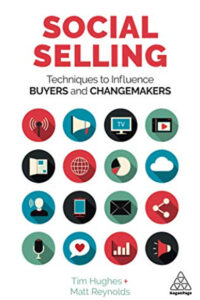
Social Selling: Techniques to Influence Buyers and Changemakers is the future of personal branding
Part of that is saying, “First and foremost, I need to have a buyer-centric profile. I need to do the basics out there to have a profile that is at least attractive to my bias.” Quite often, people don’t understand how to create content. Again, it’s about going to the gym. When I first went to the gym, I thought all the weights were really heavy. After you have been there six months, you go, “These weights aren’t heavy enough.”
Creating content is like a muscle, you just get used to doing it. One of the things that we are still going through a process is getting leaders to understand that this is how you prospect now. Quite often, people think of going onto LinkedIn, changing their profile, and creating content and a network. I can’t be bothered to do it because I have got all these other things to do. This is how we prospect. This is how we as a business run. What people need to do is make that switch to say, “In 2023, we need to stop using 1980s sales methods, and we need to start using 2023 sales methods.” It’s making sure that leaders understand that switch.
I think what you are saying is exactly what I say the old way of doing it is to push out information, as you said, brochures. The new way is to tell stories, which I love to teach people how to tell stories, and you are teaching people how to use social selling. Both of those things pull people in. If your content is story, people remember it, repeat it, and share it. I think that’s really the secret to all of this new way of being magnetic instead of repulsing. You pull people in with social selling and storytelling. Thank you so much. If people want to reach out to you, what’s the best way?
Thank you so much for having me on. It’s been fantastic talking to you. The best place to get me is on LinkedIn. I’m Timothy Hughes on LinkedIn. The website is DLAIgnite.com. I’m also @Timothy_Hughes on Twitter.
Thanks, Tim.
Thank you so much.
It’s so great talking with you. Congrats on the huge success and influence you are having. I’m sure that buyers and sellers are embracing this because nobody wants to be pushy, and you have shown us a new way.
Important Links
- Social Selling
- Tim Hughes
- DLA Ignite
- Smarketing: How to Achieve Competitive Advantage through Blended Sales and Marketing
- Hesha Abrams – Past Episode
- The JOLT Effect
- @Timothy_Hughes on Twitter
- Better Selling Through Storytelling Method Online Course
Wanna Host Your Own Podcast?
Click here to see how my friends at Podetize can help
Purchase John’s new book
John Livesay, The Pitch Whisperer
Share The Show
Did you enjoy the show? I’d love it if you subscribed today and left us a 5-star review!
- Click this link
- Click on the ‘Subscribe’ button below the artwork
- Go to the ‘Ratings and Reviews’ section
- Click on ‘Write a Review’
Love the show? Subscribe, rate, review, and share!
Join The Successful Pitch community today:
- JohnLivesay.com
- John Livesay Facebook
- John Livesay Twitter
- John Livesay LinkedIn
- John Livesay YouTube
LinkedIn Sales Playbook With Brynne Tillman
Posted by John Livesay in podcast | 0 comments
How can you effectively use LinkedIn as a tool to widen your connections, increase your sales and grow your business? Get ready to take notes as the Pitch Whisperer, John Livesay, joins forces with the LinkedIn Whisperer, Brynne Tillman, to talk about the most important things that you have to remember when selling on the platform. Brynne is the CEO of Social Selling Link and author of the LinkedIn Sales Playbook. Having been in this niche since people barely knew what LinkedIn was, Brynne redefines social selling as something that is beyond pitch-spamming. She teaches her clients how they can earn the likes and the right to connect with people on LinkedIn using strategies that put more emphasis on relationship building rather than sales pitching. Listen in as they discuss the importance of building connections and engaging in conversations and building a profile that reflects your brand message, as well as a number of real-life examples that illustrate these powerful principles.
—
Listen to the podcast here
LinkedIn Sales Playbook With Brynne Tillman
Tactical Guide To Social Selling
Our guest on the show is Brynne Tillman, the Founder of Social Sales. She talks about how we have to earn the likes and earn the right to connect with people on LinkedIn and the big mistakes that she sees people making on a connect and then they try to pitch, or they don’t have a picture on their profile or worse they connect and then forget. She’s going to show you how to avoid all these mistakes and some great tips to make your LinkedIn experience and connections grow your business. Enjoy the episode.
—
Our guest is Brynne Tillman and she is the LinkedIn Whisperer. The LinkedIn Whisperer and Pitch Whisperer have joined forces. She’s also the CEO of Social Sales Link. For over a decade, she’s been teaching entrepreneurs, sales teams, and business leaders how to leverage LinkedIn for social selling. As a former sales trainer and personal producer, Brynne adopted all of the traditional sales techniques and adapted them to the new digital world. She guides professionals to establish a thought leader and a subject matter expert brand, find an exchange, the right target market, leverage clients and networking partners for warm introductions into qualified buyers. She’s also the author of The LinkedIn Sales Playbook: A Tactical Guide to Social Selling. Brynne, welcome to the show.
Thank you. I’m happy to be here, John.
The premise of getting to have you on the show is the timing we were talking about before the show started. I got to see you and your amazing team in action with your clients, helping them go from pushing out content and wondering why they’re not getting engagements on their posts to creating value and building relationships, which is completely in sync with what I’m all about and what this show is all about. You are the perfect guest. One of the things I like to ask my guests is to tell us your own story of origin. You can take us back to childhood, school or wherever you were that you feel like you’ve got this burning desire to want to learn how to connect or sell or whatever you think has led you to become the success you are.
I’ve been in sales since I was a waitress at Friendly’s. I loved being in a server, upselling, tips, the competition. I was a cocktail waitress in college and the fattest of all the girls that made the most money. It didn’t matter. I was competitive and I was going to do it. That’s the way it was. I love sales. Even though my degree is in Culinary Arts and Hospitality Management, I went into a sales career. I ended up in the sales training path versus the sales management path because everyone rode with me.
Every new person sat with me when I was in inside sales and when I was in the field. That was great and I love to train. I started a sales training company and we were teaching LinkedIn as a loss leader, initially. It was like nobody even knew what the heck this thing was when we started teaching it and then I’d have to go back and train traditional sales training. It wasn’t feeling right. I’m like, “I want this LinkedIn thing.” Many years ago, I went off on my own and launched Social Sales Link to train LinkedIn, to help salespeople start more conversations.
[bctt tweet=”The worst thing you can do in LinkedIn is to connect and pitch, because it just makes you sound like every other seller out there.” username=”John_Livesay”]
That’s such a fascinating journey that when you know that something doesn’t feel right anymore and having been in the media ad sales world for so long and I realized that when an ad agency would call us in, they called it media day. We looked at 100 magazines and we’ve narrowed it down to 10. We’re going to run in three and you get to come in one after another, like an actor almost auditioning and you each have half-an-hour. For God’s sake, do not tell us how many readers you have. We know that already. Tell us an idea or have a conversation with us about who your reader is that most people weren’t on that script. They completely flipped out. That was my a-ha moment of, “I’ve got to start learning how to tell stories.”
Whoever my premise is, whoever tells the best story is the one that gets the sale or the new client and all of that because when we tell great stories of which you were the expert at doing, especially on LinkedIn, whether it’s a post or starting a conversation, it allows other people to remember our stories and then you’ve got brand ambassadors without having to pay for them influencers or whatever. It’s more organic. That’s what I saw you doing with your team. I saw you in action, creating authentic connections and not selling. What are the things that made me laugh? Thank goodness I was on mute is one of your clients was reading what his response was to someone and he went, “You spammed him.” I thought to myself being on that Nickelodeon show when you would get all gooey with that green spray, you got slimed. The digital version of, “You got slimed,” is, “You got spammed.” That could be a funny tweet for the show. Tell us what mistakes you see people making on their LinkedIn. Where do you begin?
Number one, absolute most terrible is connect and pitch. It’s awful. All get it. In a new environment, we’re getting them 3 and 5 times a day, “We help companies like you.” It’s connected and disconnect is what it is. It’s terrible. Stop doing that because most of the people reading are doing that because that’s what salespeople do. We want to tell everybody about, “We can help companies like you.” We think it’s going to work and it doesn’t. People say, “If I send a few more, it’ll be a few more, that doesn’t work.” We need to stop.
Number two, you are going out and engaging with a very bad profile. No picture, no banner, a headline that says you’re a sales rep, which makes them go, “I’m not having a conversation with that person or sales rep.” You’ve got to move your profile from your resume to a resource in order to be effective. Another mistake is to connect and forget and we’ve all done this. We connect to that engaging. To me, that’s like going to a networking meeting with a whole bunch of business cards and I walk up and I go, “John, take my card.” I walk away and we have no conversation. That’s what we’re doing on LinkedIn. We’re handing people our business cards and walking away. Let’s start a conversation. Let’s bring value.
If you go back to when you were able to go in person and do your pitch. I can feel the days like people invite you to come to their office and that still happens when the pandemic ends. Now, it’s a virtual invitation, but you fill out a proposal, you get a final 2 or 3, and you’re able to go in and then people think, “I’m going to tell you everything about me.” It’s vomiting of information and then you leave and their competitors come and basically do the same thing. The client turns to each other and says, “That all sounds the same. We should go with whoever has the lowest price.” You’re following up and you’re getting ghosted and like, “What’d I do wrong.”
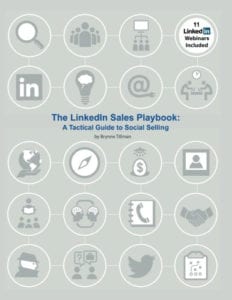
The LinkedIn Sales Playbook: A Tactical Guide to Social Selling
I love connecting with you because our belief systems and the teachings are in sync because my whole premise is, “If you want to be memorable, tell a story.” Your whole premise is, “If you want not to connect and be forgotten, have a conversation.” Most people are like, “If I’m socially awkward or an introvert in real life, I’m equally awkward and introverted in that situation.” That’s where you come in as the LinkedIn Whisperer says to them, “Take a breath, people. I’ve seen you do it. Be human. Tell me something real about yourself for me.” To me, “What’s your story of origin?” I work with a lot of healthcare professionals and they’re like, “You’re pastoring these doctors. Don’t you want to be seen as a welcome guest?” That’s my favorite soundbite with what we’re doing.
We’re taking people from being seen as an annoying pest to a welcome guest. How do you do that? What you’re teaching people to do is give them some content. One of the things that you said to your clients that were gold. I don’t know if they realized it, because sometimes when people are working with an expert like you, they don’t have any comparison, but I do. I was like, “They are getting incredible value one after another.” You said to them, “Instead of spamming somebody with your pitch, how about if you respond to their issue and say, ‘I might know someone else who could help you, would you like an introduction?’” That giving mindset and that extra effort to give instead of picked to, “What can I get?” is how you start a conversation and a relationship. I want you to speak a little bit about how did you learn to do that well?
Trial and error, AB testing, being hyper-aware of human beings in what they need and want, being a conscious person, not just awake, but try to be conscious of what’s happening, empathetic a little. I want to get in the shoes of the other person and a lot of self-reflection about how do I want to show up? What do I want to be? What’s my legacy? I do this to make a living, but what motivates me is when a client comes back to me and said, “I implemented what you taught me and closed a $1.5 million deal.” I go, “That’s my legacy.” We touched about this quote that I’m playing out with which I’m jumping ahead, “It isn’t about you hitting your goals. It’s about you helping your clients hit theirs.”
It’s like a new one. It’s the second time I’m saying it out loud. You’ve got to get a core philosophy. What do you want to achieve? Quarantine had everyone pivoting and making a shift and we recognized we had to redefine social selling because it was a different time. We redefined it as social selling is about showing empathy, building real relationships and being a resource. The sale will come when the time is right. If you can continue to help them achieve their goals when it’s time for them to need what you have you are it.
You’re memorable again because you better resource, you’ve developed a relationship and you’ve shown empathy. I talk about that based on a book I read years ago by Tim Sanders called The Likeability Factor. He did all this research around empathy and doctors spend more time with patients they like, teachers spend more time with students they like. It’s all about how do we up our likability factor? It’s about empathy. When we can show that we understand someone’s problem better than someone else can, the assumption becomes, “You must have then my solution if you’re able to phrase my inner feelings and thoughts in such a way that I haven’t been able to express it, you must have my solution because you’re ‘in my head.’” Part of what makes good headlines or content for LinkedIn is listening to the pain points your clients describe to you, what more of this client and your avatar, but then listen to how they say things. That becomes your headline or the title of a post where I have found works well. Do you have an example of that someone you’ve worked with or where you’ve heard someone say something and then you use that and you get more of your ideal clients from it?
[bctt tweet=”Social selling is about showing empathy, building real relationships and being a resource. The sale will come when the time is right.” username=”John_Livesay”]
All my content comes from conversations I have with clients. That line came from a conversation I had with a client that it’s not exactly like that, but there’s some gravitas here and I played with it until it came out and flowed. Everything that I am now is because a client had a question that needed an answer.
I’ve got a couple of examples myself because I think the more examples you and I toss out on this episode, the more this episode will be read to over again and they’re like, “Did you read that one? I hadn’t even thought of that one.” Working with the tech healthcare company, they were not numbered one in their market and one of the sales reps said, “We’ve got to stop playing defense.” I went, “That’s a headline.” A lot of people feel they’re constantly playing defense against the market leader and never getting to talk about their strengths and only being compared to the other. That was one. Another one, we are tired of coming in second place when we go pitch and then I have a whole thing around, “Unlike the Olympics in business, there’s no medal for 2nd or 3rd place.” Those things help our clients.
My biggest one is when people ask me about, “Is sales navigator worth it? Should I invest the money?” I had a client once, a prospect at the time we turned into a client who came to me and said, “I send it for sales navigator six months ago. I haven’t gotten one sale from it, but it’s because I haven’t logged in.” I said, “It’s like your gym membership.” He laughed. When people say to me and I’ve said this now 100 times publicly, sales navigator was like a gym membership. If you sign up for it and you’ve got a plan, you know when it’s leg day and when it’s arm day and when you’re doing your aerobics, you’re going to get in great shape. If you don’t show up, you’re going to pay your membership every single month and you’re going to look the same and feel exactly the same six months from now. You have to go to the gym three times a week in order to make use of it.
The other thing I heard you stated with your clients is, “Don’t connect and then ask someone to buy from you. It’s like going on a coffee date and asking somebody to marry you.”
This is dating. Take it slow.

LinkedIn Sales: Don’t just connect and be forgotten. Start a conversation.
“I’m not ready to go home with you yet.” I have done the same thing about how to go from invisible to irresistible. I constantly toggled back and forth between a dating scenario and a business scenario because it’s all relationship. In the middle of invisible to irresistible is the interesting rung. I said, “This is where most people get stuck.” In a dating scenario, maybe you say something at a cocktail party that like, “Maybe I wrote you off to pass, but I’m still not going out with you or going home with you, but I’m at least interested to keep talking.”
I see many salespeople and I can’t wait to hear your thoughts on this, get excited and even do a projection to their boss, “I’m going to get a sale. They said they were interested. They wanted some information.” I said, “It’s like being stuck at the friend zone at work.” That concept of going, “Interesting, is not a sale.” I’m stuck at the interesting rung of the ladder. I’ve gotten them into interested enough, but they’re certainly not buying yet and you must have seen that many times and still see it where someone may be interested enough to connect and you can’t get past that framework because you aren’t showing enough empathy or whatever it is.
There is a short game and long game on LinkedIn. I’m going to balance the two. The long game on LinkedIn is we’re connecting with people when they start to engage like, “They’re showing some interest.” We have a responsibility to earn the right for every next step. We put out a piece of content. They like it. We earned that like. We connect with them and thank them for liking our content and because our content was good enough, we’ve earned the right to have the connection. What’s our next step? How do we start a conversation without pitching? “John, thanks for liking the article that I posted out there. Not sure if this is a subject that’s top of mind for you, but I do have another post I’d love to share with you. Let me know. I’ll send you a link.”
Asking for permission. No spamming.
A lot more people are going to say yes, then would click on it If you sent the link.
[bctt tweet=”Don’t spam your clients with your pitches. Interact with them.” username=”John_Livesay”]
They’re engaged. They feel like, “I’m in control.”
It could be a white paper or download. You let them know. When they say yes, if you give them a gated piece of content, you ask permission. They’re not going to feel spam and now we see, did they download it? It’s a conversation and it could be a lot of things, but what level are you exploring? Where are you in exploring this? I’ve got lots of other insights that I’d be happy to share with you. Where are you in this journey? I’d be happy to share insights with you, even if we never worked together. “I’m in this industry. I’ve got lots of ideas. I’m happy to share them with you. Let me know. I’ll send you a link to my calendar. We can set up a time to talk.”
I see you have that on your About Page. It’s inviting. Let’s go back to one of the mistakes you said at the beginning, which is no picture. That’s obviously a square one. Square two is the wrong picture that still is not appropriate. Someone goes to my LinkedIn profile you see a picture of me in front of hundreds of people at a ballroom giving a talk. You know I’m a speaker from that picture, before you even read it in my profile. Make sure the picture you tell the story you want to be telling. I can’t emphasize enough the importance of someone working with someone like you ran because LinkedIn caused me to get my highest speaking engagement. Most people think, speakers spend a lot of money on SEO to get people to come to our website and look at our speaker video demo reels and all that good stuff and all that happened.
It was between me and another speaker, which is often the case. Sometimes it’s between me and multiple speakers. After I got hired, I heard the story because you and I are the same. We were like, “Can you tell me how you found me?” “It just pops in.” The marketing department picked the theme of storytelling, found me and another speaker and presented this to eight different regional vice presidents. One of those regional vice presidents was looking at the two profiles in addition to the video demo reels and the books. On my profile is very clear that I had a career at Conde Nast and I won Sales Person of the Year. It’s a big part of the profile. The other speaker, from what I can see, if I read the fine print was also in sales, but it doesn’t say what company, it’s obscure. That regional vice president said, “I think I prefer a speaker who’s been in sales and has been in my team’s shoes, has quotas, deadlines and pressures.” Here’s the secret sauce, which is when I saw you teaching.
As they were still debating after they had their meeting, it’s almost every sale. Even with hiring the speaker for the meeting, lots of decision-makers. That’s the norm. He reached out to me and I’m like, “I know that client name.” That’s not the person that I’ve been interacting with, but, “He’s in one region.” He asked to connect. I went on his profile, liked and commented on a couple of the articles that he had posted. I responded to the connection and I said, “Your company’s considering me. Would you like me to mail you a copy of my book?” He said, “That’d be great.” He sends me his address. Now, I have an inside brand ambassador salesperson cheering for me. I found out later, he said, “This is what I’m trying to teach my team to do is interact with the doctor’s posts and the fact that you did it, it will be organic for you to teach them how to do it.” There are many things with my LinkedIn that I think a lot of people think, “I’m not looking for a job. I don’t need to have a LinkedIn profile.” You can emphasize how many people you’ve helped like that.
LinkedIn Sales: Using Sales Navigator is like a gym membership. You need to show up for what you paid for.
The first story, I got into Aramark when I was a teeny tiny one person, starting locally still selling sales training, but doing this little LinkedIn thing. Aramark was looking for sale for a LinkedIn trainer. They had gone through the challenger sale training. This was the next thing. I raised my hand, I reached out to the person and she said, “I’m sorry, we’re Aramark. We need a bigger company than you.” I looked at our shared connections and I saw my friend Professor Richardson who taught at Rutgers at that time was connected to her. I taught for free a LinkedIn class one semester for her at Rutgers. I reached out to him and I’m like, “How do you know Nicole Bradley at Aramark?” who is not there anymore. She said, “She was my student.” I said, “Can you throw in my name? Here’s the situation.” She took her to lunch and said, “I’m not going to tell you Aramark who to hire, but you need to talk to Brynne.” Needless to say, I got the gig, they handed me the book and they said, “The way you got in here is the way we want our reps to get into.”
Walk your talk. That’s what you do. That’s what I pride myself on doing too. That’s why the LinkedIn whisperer and then the bitch whisperer is we’re giving people lots of context and content on how to go from invisible to irresistible. SocialSalesLink.com that’s the best place to connect with you. Go to your LinkedIn profile and connect, reach on your company team site if anybody’s looking forward. Here’s the big problem I keep hearing you with companies hire me, especially now during a pandemic, we’re having trouble starting conversations with clients that we normally could either cold call or catch in the hospital where we’re not allowed anymore and all the normal ways of connecting and meeting people is gone. We’re struggling with that first reconnection whether it’s a subject line in an email or what to say when you’re asking someone to connect. We’ve skipped put as might be obvious, but I would be remiss if I didn’t ask you, how important is it when you’re inviting someone to connect, to do it from your laptop and not your phone so you can put a note with it?
You can put a note on your phone. If you’re on your mobile device and you click on the More Button, you can go personal invite. I prefer connecting on the phone because on the desktop, it sends an invite without a message. It says, “If you’d like to add a message, you still can.” You want to hit the More Button and then hit Personalized Message from the phone.
That’s when people can tell that it’s not spam, especially, if you customize it and say how you know them or something you read. The more specific, the feedback or why you like someone’s work or what you like about it whether it’s a poster or an invitation, the better.
Look at their profile, engage on their content before you connect so there’s more con.
I can’t thank you enough for sharing these valuable tips. It’s interesting how certain situations create a need for something that existed before, but now is needed. You’re at the right place at the right time. All that preparation and long game playing have paid off for you and I’m cheering you on every step of the way.
I appreciate it. Thanks for having me, John.
Important Links
- Social Sales Link
- The LinkedIn Sales Playbook: A Tactical Guide to Social Selling
- The Likeability Factor
- LinkedIn – Brynne Tillman
- https://SocialSalesLink.com/brynne-tillman-headshot/
- Better Selling Through Storytelling Method Online Course
Wanna Host Your Own Podcast?
Click here to see how my friends at Podetize can help
Purchase John’s new book
John Livesay, The Pitch Whisperer
Share The Show
Did you enjoy the show? I’d love it if you subscribed today and left us a 5-star review!
- Click this link
- Click on the ‘Subscribe’ button below the artwork
- Go to the ‘Ratings and Reviews’ section
- Click on ‘Write a Review’
Love the show? Subscribe, rate, review, and share!
Join The Successful Pitch community today:
- JohnLivesay.com
- John Livesay Facebook
- John Livesay Twitter
- John Livesay LinkedIn
- John Livesay YouTube
Social Selling And Making Creative Presentations With Mike Montague
Posted by John Livesay in podcast | 0 comments

Age old principles of sales hold true even in the era of social selling. Just with traditional selling, it is all about being creative with your presentation – a feat that can only be achieved by knowing what your client needs and building a relationship of trust with them. Joining John Livesay to talk about this is, Mike Montague, Global Head of Content and a Certified Trainer at Sandler Training. Mike is author of LinkedIn the Sandler Way, a groundbreaking book that documents some of the best practices of social selling from Sandler graduates. He also hosts the How to Succeed Podcast. In an in-depth conversation, Mike delves into the world of social selling, dispels the myths and misconceptions surrounding it and gets clear about the principles that really matter.
—
Listen to the podcast here
Social Selling And Making Creative Presentations With Mike Montague
Our guest is Mike Montague. He shares with us his expertise on what it takes to use LinkedIn for social selling. He talks about how to have opportunities, people, and build relationships around that. He also talks about how to avoid sales malpractice and the way to do that is to ask the right questions. He said that the best presentation is the one that your prospect will never see because they don’t need to because you’ve done a good job of connecting with them. Finally, he says negotiate terms, not dollars. Enjoy the episode.
—
My guest is Mike Montague, the Global Head of Content and a Certified Trainer at Sandler Training. He’s also the author of LinkedIn The Sandler Way, which talks about social selling, as well as the host of How to Succeed Podcast. He’s got a lot of creative ideas he’s going to share with us from his days as a DJ. I can’t wait to hear his own personal story. Mike, welcome to the show.
Thanks for having me.
I teased out a little bit about you. You’re an expert in helping people ask better questions. You’ve got a book out about social selling, but I want to start with your creativity background. You and I before the show talked about your days as a DJ and how you’ve come up with all creative ways to grab people’s attention. If you don’t mind, take us back to your childhood. Were you a magician as a little boy? Where did you learn all this creativity?
I did do a little bit of that. My family has a term called Creative Nerdery and I own it. If you want, you can to go to CreativeNerdery.com. What that meant for us was being our authentic natural child self of nerding out and geeking out on something or entertaining the family. We would do fake radio shows, we swim across the pool and then interview how it feels to be the winner and do those weird creative projects. I have a cousin that’s a podcaster, interesting designer, rock musicians. My brother did stand-up comedy and we all nurtured our creative artistic side.

Social Selling: The best presentations are ones that don’t look like a presentation. The best salesperson doesn’t like one either.
I loved music and I found deejaying in college. As soon as I turned 21, it was a cool way to make money and meet girls instead of paying money and sitting in the back, not talking to anybody. I did that for twelve years, made it all the way up to the top 40 radio station here in Kansas City. I was on Mix 93.3 as Romeo because of my last name there. I think entertaining and getting people’s attention and having fun brings interest to whatever you’re doing, but even sales pitches.
This concept of creativity and even a little bit of magic, you hinted that you did something with time travel to entertain people. Tell us that story.
That was the presentation that I did in Orlando right before everything shut down. We set it up as a video pitch for the launch of a new Alexa app that we have. We have a My Sandler skill on Alexa. We did this Alexa Powered Time Travel thing where I did the evolution of dance type of video, but I did it live. We went back to the 1960s. I was a salesperson in the 1960s, and then I was a salesperson in the 1980s and a salesperson in the early 2000s. I changed wigs and changed clothes during the presentation and had to run from stage-to-stage. It was a whole lot of fun. I also thought an interesting way to tell the story and get people’s attention rather than say, “Sandler has been around for 50 years. While you might think we’re old, we have a new voice-activated Alexa app.” That’s great, but that’s boring. Instead, we got some good laughs and had some fun.
Tell us a little bit about what the Sandler Training is. I know that you had mentioned to me the importance of asking the right question because you and I talked about you’re going to have a great presentation, but if it’s in the wrong room with non-decision makers or people who don’t see a need, it’s throwing your pearls before swine. What is this premise of the training that you specialize in at Sandler?
[bctt tweet=”When selling don’t try to get married on the first date.” username=”John_Livesay”]
David Sandler himself started many years ago and he passed away in the 1990s, but he had a rule that the best presentation you’ll ever give, the prospect will never see. What that means is if you do a good enough job of asking the right questions, understanding their needs, talking about how they’re going to make decisions and how your solutions might fit, there might be a chance that you don’t even need to give a presentation that they go, “That sounds great. I’ll buy it.” You don’t do this formal dog and pony show and break out the PowerPoint because they trust you to continue to do what you say, work with them on crafting the solution and you move forward.
The other part of that is there is this old stereotype of the salespeople need to be pushy, that they need to be convincing and they need to jump up on tables and make a lot of noise to get people’s attention. You and I both know that’s not true. That sometimes the best presentations that you give are ones that they don’t even recognize as a presentation. Like in your book, a great story doesn’t feel or look like a presentation. That person doesn’t feel or look like a salesperson. They never even see it coming when you do it that way.
I wanted to ask your opinion around this because my belief is that the premise of people has to get to know you and then they might like you and eventually trust you is all wrong. We’ve heard that phrase, you got people to know like, and trust you. I remember in my days of competing against IBM, we were trained. You have to earn the right even to ask a question. My premise is that people have to trust you first before they will even let you ask them questions. What are your thoughts on that?
I think trust is the keyword in that know, like, and trust. Sometimes people will buy from people they don’t like if they trust them more. All things being equal, people still do like to buy from people that they like. They have to know that you exist. All of those things are relevant, but sometimes they do give the wrong stereotypes or they slow down your sales process because you think, “First they have to know everything about me.” No, that’s not true. They need to know that you exist. They don’t need to know your company history and your background. What they need to know is that you can solve their problem and that they can trust you to do what you say you do. You’re right on there. That’s also a lot of what we do at Sandler is talking about, “Before you give this pitch, how can you thoroughly understand their needs so that you’re solving the right problem?” A lot of times, the problem the buyer brings you is not the real problem. They’re bringing you a symptom of something else. If you pitched that symptom, you’re not solving the real issue and they’ll give you a, “Yeah, but,” answer.

Social Selling: Sometimes, what a buyer brings you is not the problem, but a symptom of something else.
It is much like a doctor who has to ask the right questions to figure out what’s causing the symptom and not just deal with the symptom of things are slow here or there’s no engagement.
We use that doctor analogy a lot because it’s a great one for a good professional salesperson that you can trust. They’re going to ask you, “How long has it been hurting? Does it hurt when you do this? What have you tried to do to fix it?” “Are you taking any other medications?” Those are all great questions as salespeople too. We need to know the whole scope. Otherwise, it is the sales malpractice. You’re guessing at the solution and you’re prescribing an answer before you know what the problem is.
I’ve never heard that combo before. I like that a lot. I want also to ask you about your book. This concept of social selling and that LinkedIn is a platform where that probably works, people run ads on Facebook. I see it now, a lot of sponsored things on Instagram. This concept of social selling, tell us where the concept came from. What’s a big mistake people make when they’re trying to sell on social media platforms?
There are two things. The first one is that we wrote this book with LinkedIn and I teamed up with a guy named Koka Sexton at LinkedIn. It’s authored by Sandler and LinkedIn and you can get it for free at Sandler.com/linkedinsecrets. We wrote it because there’s so much stuff out there about social media marketing. When people hear social selling, they think the wrong thing, they think making sales pitches or blasting out a tweet or update posts that people click on and they buy from you. That’s not what we’re talking about here. I’m talking about salespeople in the sales profession and people that need to build relationships and they want to add more information about a current relationship. I know you did a lot of enterprise selling. If you’re selling to Coke or Pepsi, you’re not going to send out a tweet and have them send you a $1 million advertising contract.
[bctt tweet=”Avoid sales malpractice.” username=”John_Livesay”]
You’re going to need to build that relationship, but you can find out so much more information about the organizational structure of a Coca-Cola by going on LinkedIn. The other thing people don’t do is they don’t listen. If you go on social media to look for opportunities and you see what the other people, your clients and buyers are posting about, that’s where you can find a lot of gold, not worrying about what you’re going to post. That was my way of flipping the script on traditional social marketing and talking about how salespeople can use it as a tool to make headway and get more deals in their pipeline because that’s what we’re all trying to do.
I was up for a speaking engagement for a high-tech medical company. It was between another speaker and me. People don’t realize the irony sometimes of being someone who gets hired to train salespeople or be a speaker at an annual sales meeting is you have to sell yourself to get the job in order to train salespeople. You’ve literally been in their shoes. During that process, one of their regional vice presidents reached out on LinkedIn. I accepted the connection. I took it a step further and started looking at some of the articles he had written or posted, and not only liked them, but commented on them. He said, “That’s what I’m trying to get my sales team to do with the doctor’s posts.” The fact that you organically did it means you’re the right fit for us because you’re doing it. I’m not asking you to teach them something to do that you’re not doing. I wanted your thoughts on that of building the relationship through something. When I say make a comment, I mean not a good job or interesting. Make a thoughtful comment, show you’ve actually read it.
I think even likes and shares do count there. You went above and beyond by making a thoughtful comment. The way I explained it is there are millions and millions of people on social media begging for someone to pay attention to them. If you’re the one that’s paying attention, you’re the one that’s valuable on social media, not the people trying to get attention. What you did is by commenting on their stuff or replying and making messages is you get to start a conversation about sales things and about stuff that’s important to them versus trying to be the one broadcasting messages and hoping that somebody sees it and it starts a conversation with you. It’s a lot more proactive. It’s what people want. They’re dying for people to listen and pay attention to them.
I also have experienced this and I see other people complaining about it. As the expert around this, do you see it? What are your thoughts? Someone that you don’t know invites you to connect with no real reason. Supposedly, if you put a note with your request to connect from your desktop versus a mobile where you can’t make a big difference. When you say yes and then the next thing you get from them is, “Do you want to buy X, Y, Z?” No relationship building at all.

Social Selling: People are dying to get others to pay attention to them. Comment on their stuff on social media and start talking sales from there.
It’s the trust factor. They’ve immediately destroyed the trust because they’re pitching right away. Would you like the other tweetable comment? The other thing we call it is, “Premature presentation syndrome.” Prematurely trying to sell something before you understand if that person has a need, if they have a budget for the year solution and if they have decision-making authority over it, all of that is trying to get married on the first date. What we want to do on social media is that’s the bar scene. We want enough interest to get a phone number, enough interest in a phone conversation to get a face-to-face appointment or a Zoom call, and then enough interest there to get a second one. Eventually, somewhere down the line, we’ll get married. I know that sounds like a lot of work and it sounds like it will take a while, but that’s the only way successful relationships are built. Everything else is transactional.
It’s also interesting that I’ve noticed, Mike, is that a lot of people don’t spend a lot of effort on their LinkedIn profile. They’re like, “I’m not looking for a job. What do I care?” I tell you as a speaker and an entrepreneur myself, I have found that the time I’ve spent making sure that the visuals on my LinkedIn profile are strong, that you instantly know what I do. Seeing me speak in front of a crowd, detailing that I had a sales career, where it was, what accomplishments I had there, that helped me get this speaking engagement. This was between another speaker and me.
The guy said, “You have been in sales. I wanted a speaker that’s been in salespeople’s shoes.” The other speaker just looked like they wrote a book on it. I thought to myself, “That’s not the case in the other candidate, but the other candidate didn’t make it clear. It was buried in a paragraph that they’d done sales. It wasn’t detailed, ‘Here’s the company,’ or anything like that.” What are your thoughts on the importance of a LinkedIn profile and making it clear where you got your credibility from?
A lot of tips here and you can check out a bunch of these in the book. The first thing is to have it filled out and make it look like you know what you’re doing and showing up. The way I relate this is to in-person events. You don’t show up in a T-shirt and shorts if you’re trying to get booked as a professional speaker or somebody in financial services that are always wearing a suit. The old dress for success. Dress for the job you want, not the job you have. I think the LinkedIn profile is the same in what you said there, but also a lot of times people fill that out backwards in retroactive looking and we encourage people to make a forward-looking profile about your customers.
[bctt tweet=”Negotiate terms not dollars.” username=”John_Livesay”]
When you fill in your job description and your summary, talk about who you help and the problems you solve for those people versus your background, your track record, your history of success. Those things are all great, but nobody cares. What they’re looking for is, “What can you do for me?” If you put that front and center on your profile, I think you’ll have a lot more success. That’s talking about the job you want, not the job you have, even if that job is working as a speaker or as a salesperson for that buyer.
It’s like a good elevator pitch in your LinkedIn profile. I don’t have to work that hard to understand who you help and what problem you solve to decide whether that’s something I might want.
That’s exactly what you should put in your summary is your 30-second commercial. The other one to note is that the headline area, a lot of people get way too cute with that. They start using resume speak and it’s like, “I help companies increase their revenues and decrease their costs.” I still have to click on your profile to find out what you do. I don’t even know what you’re selling there. I like to position company, industry, major keywords that you’re looking for there, make it simple to know that people found the right person and that you’re a salesperson. There’s one stat that it’s people that have sales on their business card and on their LinkedIn profile sell more than those that don’t. They’re confusing the issue like, “I’m a territory executive representative.” People don’t know if you’re looking to buy, would you contact the territory manager or would you contact a salesperson?
All of these buzz words like I literally have virtual sales keynote speaker, not hiding it, not trying, my title, Better Selling Through Storytelling. I embrace the word, selling, and many people in sales, I’m biz dev, I’m this, I’m that. I’m everything, but a salesperson, because of all the negative connotations around it. My whole premise is, if you embrace it through storytelling, it’s not such a negative stereotype. How about the concept of recommendations on LinkedIn? Another, I believe overlooked key element, what I love about these recommendations are that person has to write it. It’s not something that you can say, “Here’s what so-and-so said about me.” This is something right from their LinkedIn that they have to take the time and it’s a little bit of effort. To me, that makes it even more meaningful.

Social Selling: Get really good at disqualifying. Do not try to negotiate on bad terms and bad footing.
It does for everybody else too. We’re seeing social proof becoming more and more important in the sales process. Whether that’s Google reviews, if you have a retail establishment, LinkedIn reviews and testimonials and enterprise sales that use G2. I think all of those are great when they’re written. Just a thumbs up or five-star on Amazon, “That’s great. We’ll take it.” When you get that personal testimonial and you can see that they will recommend and speak on your behalf to people, I think that’s when it gets powerful and it means something. You don’t have to go out and get hundreds, but I encourage people to get at least five and at least overwhelming support. Whatever that is, you want, ten times more good ones than you have bad ones on whatever reason for review side.
Is there a tip you have for someone who wants to say, “I don’t know that I could be as creative as Mike with the time travel and change the costumes and wigs, but I would like to do something creative maybe. I don’t even know where to start to think creatively.” What recommendations do you have for people?
I think the easiest way to do something novel is to combine other stuff. When we combined the idea of the evolution of dance video with the history of Sandler, it became something that nobody’s ever done before. An example I have given speeches a lot to is if you think about stormtroopers, stormtroopers are a dime a dozen in Star Wars movies. If you think of the idea of a circus that’s been around for a couple of hundred years and not popular anymore. Either wouldn’t even be particularly creative, but a stormtrooper circus would be something that nobody’s ever seen before. If you take 2 or 3 ideas and combine them together, you’ll have a lot of fun. What I did, we did a masked trainer contest in the middle of our virtual sales kickoff.
I put the COVID mask over our presenters from our last meeting and had people guess who was in the picture and we did a trivia game there. It’s easy to combine a trivia game with relevant content to them, anything like that, or you can do a fill-in-the-blank or a word search or other things like that to have people pay attention and listen to your presentation and actively participate. It makes it much more powerful than, “Let’s hear what you got. I’m going to sit back and sleep for the next 30 minutes.”
[bctt tweet=”Sales malpractice is guessing the solution and prescribing an answer before even knowing what the problem is.” username=”John_Livesay”]
Our mutual friend that introduced us, Mark Olsen, talks about in terms of mental real estate and that the premise of, “You’re The Pitch Whisper.” “I know what a horse whisper and a dog whisper is. What’s a pitch whisper?” I moved to Austin and I asked somebody, “Is there a place around here to get your shoe repaired?” He goes, “There’s the shoe hospital.” I’m going just for the name.
You remember those things and it’s proven by human memory that the more connections you make, the more memorable things are. If you tell somebody something they hardly ever remembered, if you tie it to one of their favorite childhood memories of eating a cold popsicle on a hot day, they know what their favorite Popsicle from the ice cream man is when that song starts playing. You run it by and you go, “I’m going to bon bon or I’m going ice cream sandwich.” You know what your favorite is and when you can tie those memories together, those make permanent long-lasting impressions.
My advertising background and jingles and music and emotional connections, that music evokes an emotional connection. You and I had a conversation around the a-ha moment for many people that people buy emotionally, and then back it up with logic. Let me hear your thoughts on that.
It doesn’t have to go long. If you’ve ever had an argument with your spouse or child about what they want. You can tell that they want it because they want it. The rest of it becomes a reason why that’s a good idea. There’s also been a lot of psychological and physical studies about how the brain works and the chemicals in the body. Basically, we make a lot of our decisions on gut instinct and on our buyer feelings. Our brain works to make that true. That can happen in a lot of different ways when we’re talking about goal-setting and what you want for your future is to decide first and then work out the details later.
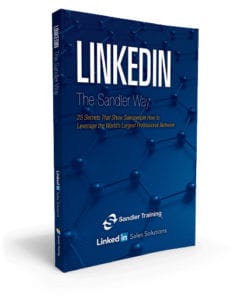
LinkedIn the Sandler Way
Even when we’re buying in a short impulse purchase is when you’re walking through the checkout in the grocery store and you see the Snickers bar over there, your body is already decided it wants the Snickers bar. From there, you’re going, “Did I work out today? How can I logically justify the Snickers bar?” I don’t know about you but for me, it’s like, “I had a rough day, I have the extra money in my pocket, I worked out hard or I’m going to be working out this weekend.” You can stretch those reasons far.
It’s true that the voice of justification one way or the other, whether it’s getting us off our goals or keeping us on our goals. It’s important to be aware of how loud we are letting it become. I know a big part of your focus is helping people become better salespeople through The Sandler methods. One of the things you also talk about besides asking great questions so you don’t waste your time, anybody’s time is also you have a lot of focus on how to be better negotiators. I briefly want to get a little snippet to entice people enough to want to know more about your tips on negotiation.
You’re trying to talk somebody into something or talk them out of something, the same rules apply. What we were talking about is when you want something, you will intellectually justify it. If somebody doesn’t want to buy your stuff, there’s no negotiating or talking them into it. We have a gumball analogy. If you think back the old big gumball machines when you were a kid. If you want a green gumball, you put your quarter in and you crank it. If you get an orange one, you can’t get mad at the gumball.
You can’t get mad at yourself. There wasn’t anything you did. There’s nothing you can do to talk that orange gumball into being a green ball. I would say the first step would be you got to get really good at disqualifying and not try to negotiate on bad terms and bad footing. You have to have a willing partner and you have to have somebody that has a problem that you can solve and that wants that problem solved and has the budget and everything. Even when that comes down to it, the other subtle stuff that we were talking about does play a huge difference that you probably again happen with a spouse, a business partner, a child where if they say, “Do we have $100 to go to dinner?” If you say yes too fast, that ask becomes $200. They go, “I should ask for more,” all of a sudden.” There is a little bit of gamesmanship and psychology in this that we work with in Sandler.
We don’t think about it manipulatively or taking advantage of anybody, but sometimes people are going to try and take advantage of you. We think about judo and karate. How do you have defensive moves when people are trying to cut down your price so that you can have equal business stature and maintain the profit level that you set, not take advantage of people, but get your price and make that non-negotiable and negotiate terms instead of dollars?
How can people find out about your book, about Sandler and about following your creativity?
If you want to learn more about Sandler, our sales management and customer success programs, go to Sandler.com/sell. There’s a ton of free resources. You get a year’s worth of access to thousands of podcasts, videos, webinars and stuff that we’ve done from people like Bob Burg, who wrote The Go-Giver, Olympic athletes, the drummer for Pink and cool stuff in there. If you want to get the free copy of my book specifically, go to Sandler.com/linkedinsecrets. My side project, the personal passion thing, is CreativeNerdery.com. It’s a private social media site for people who are trying to be more creative, be more authentic and their real selves and not hide that nerdery passion topic, whatever it is for you, if you like to geek out on stuff, it might be for you.
Any last thought or quote you want to leave us with?
My favorite quote is, “Whatever you are, be a good one.” That’s Abraham Lincoln. To follow that up would be Steve Martin, “Be so good they can’t ignore you.” I think those go hand-in-hand that if you’re trying to give a presentation or you’re trying to be a salesperson and you’re upset and frustrated that people aren’t paying attention to you, the question is not what’s wrong with them. It’s what you can do to make yourself more interesting and worthy of being paid attention to.
What a great note to leave it on. Who could have ignored that time travel opening that you gave? Thanks for showing us and not just telling us.
Thank you.
Important Links
- Mike Montague
- Sandler Training
- LinkedIn The Sandler Way
- How to Succeed Podcast
- CreativeNerdery.com
- Better Selling Through Storytelling
- The Go-Giver
- My Sandler
- https://www.Sandler.com/linkedinsecrets
- www.Sandler.com/sell
- Better Selling Through Storytelling Method Online Course
Wanna Host Your Own Podcast?
Click here to see how my friends at Podetize can help
Purchase John’s new book
John Livesay, The Pitch Whisperer
Share The Show
Did you enjoy the show? I’d love it if you subscribed today and left us a 5-star review!
- Click this link
- Click on the ‘Subscribe’ button below the artwork
- Go to the ‘Ratings and Reviews’ section
- Click on ‘Write a Review’
Love the show? Subscribe, rate, review, and share!
Join The Successful Pitch community today:
- JohnLivesay.com
- John Livesay Facebook
- John Livesay Twitter
- John Livesay LinkedIn
- John Livesay YouTube