

Dream Business Mastermind With Jim Palmer
Posted by John Livesay in podcast | 0 comments

Creating a successful business is more than just financial gain; it’s about achieving a satisfying lifestyle by doing what you love and living life on your own terms. In this episode, we have Captain Jim Palmer, the Founder and Creator of the Dream Business Mastermind and Coaching Program. Jim shares his fascinating background and journey to becoming a successful entrepreneur and business coach. He shares his unique approach to creating dream businesses and how he has helped hundreds of entrepreneurs achieve their goals. He discusses his “big adventure” lifestyle, working only three days a week and spending the rest of his time renewing and doing what he loves. He also shares the challenges of living on a 50-foot boat during the pandemic, and how he and his wife overcame them. Jim shares his expertise in helping entrepreneurs get lucrative, high-ticket clients and his unique approach to handling objections. He also discusses the importance of empathy and understanding your audience when creating marketing materials. Tune in now and learn how to start creating your dream business.
—
Listen to the podcast here
Dream Business Mastermind With Jim Palmer
Our guest is Captain Jim Palmer. He is the Founder and Creator of the Dream Business Mastermind and Coaching Program. He is also the Creator of Dream Business Academy and the host of Dream Business Radio, which is a weekly podcast based on his unique brand of smart marketing and dream business-building strategies.
His other business ventures include No Hassle Newsletters, Success Advantage Publishing, and How To Sell From The Stage Like A Pro. He is the developer of The Cashflow Conversation Code™ and the acclaimed author of several books. In 2016, after raising four kids and leading a practical and predictable life, Jim and his wife, Stephanie, sold their home in suburban Philadelphia and are now living and traveling on their yacht. They call it the Floating Home. Jim, welcome to the show.
Thanks for having me on. I’m a big fan of your show.
I wanted to ask you your own story of origin before we get into this major decision you and Stephanie made. How did you get into learning about creating dreams for yourself and all these hundreds of entrepreneurs that you have helped?
Many people ask me, “Do you work three days a week?” I have for the last several years. Part of my backstory is I had cancer at 41. I was out of work at that time. It was a low point in my life. When I decided to start my first business for the next several years, as I’m sure a lot of entrepreneurs can attest, it was the old 80-hour-a-week nose to the grindstone.
After three years, I started doing okay. Five years in, I started learning about internet marketing from Corey Rudl. I got introduced to Dan Kennedy and that whole group. It took off from there. That is when I started No Hassle Newsletters and five other internet businesses. I started coaching in 2009, but somewhere around 2014 or 2015, things were great. A friend of mine said, “Are you ever going to buy a boat, or is that something you are going to talk about the rest of your life?”
[bctt tweet=”You grow faster when you take time off to renew.” username=”John_Livesay”]
It was my own words right in my face. We all have friend friends, but this is one of two people who know so much about me, my struggles, my bad money mindset, and all the different things. He is one of my personal mentors. We have mentored each other. He said, “You are much farther along than you said you wanted to be when you would get a boat, slow down, and start enjoying life.” I’m like, “My own words are coming back to bite me.”
I did buy a boat because I couldn’t face the prospect of being that wooz who talked a big game. We bought our first boat. Stephanie and I loved boating on the Chesapeake Bay on the weekends. It was a 30-foot boat. We could sleep on it. At that point, I loved it so much. I said, “I’m going to stop doing coaching calls on Friday so I will always have a three-day weekend.” About a year later, I liked that so much. I said, “I don’t wanna go back to work on Monday.” I took off Monday as well.
I made it sound easy, but it was not. It was a little scary. What is going to happen to my business? Over the course of a few years, John, I got clear on what I wanted the next several years of my business to look like. I didn’t want to keep working 80 hours a week. At that point, we had paid down debt. We were able to make some good decisions, but I got clear on what I wanted my personal life and business life to look like. I wanted to work three days a week. I thought that was amazing.
I did a little reverse engineering and figured out that if I’m busy on Tuesday, Wednesday, and Thursday and I have the right client mix, I have three different levels of coaching programs, I can earn what I need to earn to fund our lifestyle and keep the fund for retirement. This is how much I need. I figured it out, took that shot, and it works. Many people read the stories or hear them, or people that work and face plant on the desk.
The other big pivotal point for us was when Stephanie left her high-pressure job. I’m location independent, but she had a job to go to. When she stopped working, she said, “We should go on a big adventure. Kids are gone. Both of the girls are married. The two boys are on their own. Why don’t we do something fun and not wait several years?”
Long story short, we thought about a lot of different things and said, “Why don’t we live on a boat for a year?” We sold our house and 1 of our 2 cars. We sold the 30-foot boat and bought a 50-foot boat and moved on that boat in April 2017. I’m not having a lot of experience, and when I say not a lot, not having any experience driving a 50-foot boat in the ocean. Our first trip was from the Chesapeake Bay to Rhode Island.

Dream Business: Don’t charge based on the number of calls or the hours. Charge based on the transformation somebody is going to have.
How long did that take?
It is 330 miles. It was about a five-day trip. It could be longer if you have to stay in port due to the weather because being in the ocean could be a little rough. You have to wait for a calm day. Funny thing, John, we loved it so much, even the challenges and having the occasional pee-your-pants-with-fear. Our big adventure became our lifestyle. We did it for five years. Winter of 2022, we traveled down to the Keys and then back to the Chesapeake Bay. We sold the boat in July 2022 after 12,248 miles.
We are going to live for a year or maybe longer on land but in a stationary environment to be near the kids and grandkids. Stephanie’s dad passed away, but because we were here and close by, that was special. That is where we are now. I’m not rocking myself to sleep in the boat. We are on land now. Who knows what we will do? We are thinking of maybe a land yacht, like a big RV, and traveling the country. I would love to go out West, Midwest, Dakotas, Montana, and Wyoming. I would love to see all of that before it is unsafe for me to drive.
I love this line you said, “Our big adventure became our lifestyle.” What a great brand that is. Let me ask you a couple of questions. Do you find working 3 days a week and having 4 to renew and do what you love that you are somehow more refreshed, which makes you more productive on those 3 days that you are working?
That is part of it. When we were on the boat, one of my challenges was no matter where we were, I needed good Wi-Fi because your client calls unlike several years ago when it was Skype audio. It became Skype video and now it is on Zoom. That is data intensive. I’m not plugged in so I needed portable Wi-Fi. Other than that, I have to manage my energy level. Instead of having 5 or 6 calls in a day, you get a little break in between. I’m busy 2 of the 3 or maybe 3 days because you are compressing about a week’s worth of normal flow client calls into three days. By the end of it, I’m brain wary and probably shouldn’t do heavy math. Don’t take the boat off the dock when you are this tired because that is when mistakes happen.
I learned many years ago from another mentor of mine, Melanie Benson. She told me, “Jim, you are working way too hard.” I say, “I got to keep growing.” She says, “You will grow more if you would take time off.” She pushed me. She said, “Take the next 3 or 4 days off.” I took one. I shut everything down. I drove up to the Eagles training camp. It is something I have always wanted to do, and I did it. I thought about my work on the drive. I took my camera. I was doing videos at that time. I shot a video, but I was out of the office. There is something to be said for quieting yourself and getting refreshed.
[bctt tweet=”Sell the outcome not how you do it.” username=”John_Livesay”]
All of us were confined during the pandemic to spaces that we hadn’t planned on being confined to. In your case, it was a 50-foot boat. Were there any challenges like, “I wish we could have more space?” Did you find that you got on each other’s nerves being in a smaller space than you might have been used to before?
There are moments because of the lifestyle. Stephanie and I were together 24/7 for five years, other than when I would work. Sometimes she would explore and go off her bike ride. She got a paddle board. During the pandemic, almost our life didn’t change at all. We were in a marina. We were in Cocoa Beach, Florida, when that happened, and the town had shut down. We could go out for a walk or go bike riding. There are no cars. There’s nobody out. It was strange. We wanted to see the town, but every restaurant was shut down. This is the early two weeks to slow the curve. Everybody was inside.
I would be walking and somebody is coming the other way. Half a mile away, they see us and cross the road. I remember the early days when you didn’t know what the heck was going on. As far as our own life, it didn’t change. We didn’t leave the marina because they weren’t taking anybody in. If we had left, we would have had no place to go. We are not self-sustaining. I need to be plugged in. I have a generator but there are certain things. I have holding tanks. They eventually get filled. Generally, our life didn’t change too much.
Let’s dive into some of your expertise, which is helping entrepreneurs get lucrative, high-ticket clients. That is my background as well, which is selling. Everyone has the objection of, “I like to hire you and buy this program and course, but I can’t afford it.” You help people handle that objection in a fairly unique way. Can you give us a little hint of what that looks like?
There is an expression that Dan Kennedy said, and I love it to death. It was like, “Slow down the sale.” You don’t go, “I’m Jim. Do you want to buy my high-ticket coaching program?” On a blind date, you are like, “Do you want to get married and have kids?” It is very icky to do that. It is a whole strategy, but the big nub of it, John, is if you give people enough opportunity to get to know, like, and trust, that happens over time. People could take all of my books and read them in the next 30 days, but they still don’t know me well enough. They are going, “This is a good book.” It is a process. You have to get to a point where you are not cash-starved in every potential sale and make it or break it for your business. That is not what this is about.
The other thing which I’m a big fan of is stair stepping it. Don’t go right for the big sale. I have read a lot of books in my earlier life about mergers, acquisitions, selling businesses, and franchising. One of the things I learned in the MA world is that sometimes a company would be bought whole, and it has several divisions. The person would buy it, split up and sell the divisions for more than they bought the whole company for meaning it is worth more in its pieces.
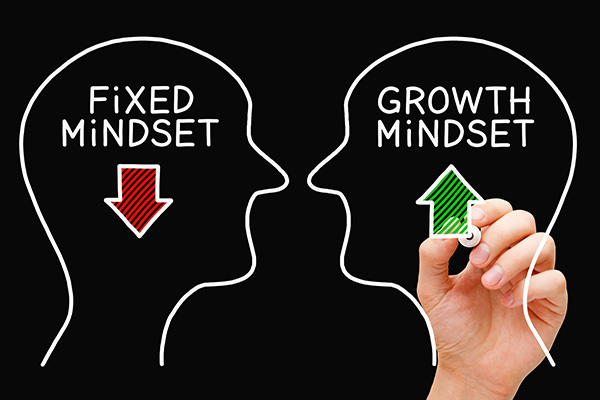
Dream Business: Every time you make a leap, it is a different mindset. You are making different decisions. You are making them faster. They are larger.
As I got more into coaching and started teaching other coaches, I said, “What you want to do is not sell them your annual program. Sell them something like a 90-day fast start.” That will be attractive for a couple of reasons. Number one, it is a lower threshold. It is only 90 days. I’m not making a year’s commitment. It is also going to be at a lesser price point. You just wow the you know what out of the whole 90 days and deliver so much value. They are going to be breathlessly saying, “What’s next?”
Not to be too crass, but the wallet will open up and say, “I don’t want to stop, do more.” This is the next step. That could either be two steps to fast start into a big program. There could be three steps to it. I’m not allowed to use some of their names. I have my mastermind, and people sometimes know who is in that I have some private clients. In one of the deals, some people know who they are, and they don’t want to say, “I’m getting coached.”
One of my private clients sells high-ticket coaching himself. When he came to me, he said, “I got a 60-day program, and I do pretty well. It is $7,500.” He can have a big smile on his face. I said, “That is good.” We started working together, and I’m like, “We got to start bumping that up.” He was telling me about what he does in that 60 days and, more importantly, what the value is or what the transformation is. I said, “Tell me everything you do for them.” His response was very much like a retail feature benefit. He was like, “They get this many calls. We do this. I help them with their cut.”
I said, “That is all stuff you do. If someone has a successful 60-day intensive program with you, can you tell me about one that worked out well?” He went, “I have a guy with a mortgage company. He makes $150,000 a year. In 60 days, I taught him so much about persuasion and the other thing. He is over $200,000. In 60 days, he is going to keep going.” I said, “Let me ask you a question. You took a guy and added $50,000. Potentially he is going to maybe be at $1.50, an increased personal take-home pay, and he paid you $7,500. Does that seem a good deal?” He goes, “No.”
What I’m saying is you don’t charge based on the number of calls or the hours. You charge based on the transformation somebody is going to have. He said, “What if we go to $15,000?” I said, “Let’s start there.” He doubled it. It didn’t slow him down. He made a couple of more sales at $15,000 for the same program. I said, “Let’s try something. Let’s make it a 90-day program. Whether you spread out the calls, add 2 more, or do 1 or 2 other things, you can put them in bullet form. Why don’t we try something like 23/5?” He sold it. He is now at 27/5 for the same program. He was selling for $7,500.
Here’s the exciting part. This client has been with me for several years now. He describes his big clients as whales, not in their personal size. He was like, “I got a guy. He got $1.5 million in revenue business.” He came to me and said, ‘I want to work with you for a year on these three things.’” He stated three big objectives. One of them being his own personal mindset. Even though he is doing great, I don’t care where you are. You got mindset hangups, Imposter syndrome, and money issues. He said, “I want to work on my executive team. I want to roll something out to the company. Give me a price for everything.”
[bctt tweet=”Don’t take the boat off the dock when you are too tired because that is when mistakes happen.” username=”John_Livesay”]
He goes, “Jim, how do I quote that? I think it is worth $50,000.” I said, “You are underselling yourself. First of all, do not quote an annual program. What is going to happen is if you quote them $50,000, it is a little more than I was thinking. What your natural thing is we will do a few calls.” You are starting to peel away all the good stuff and all those benefits of that beautiful car you wanted to try. The next thing is it is not the car you want so you are going to say no.
I said, “What you are going to do is pitch a 90-day fast start mindset program for him. Him being the leader first. When that happens, together, you guys will work with the executive team, and you will roll it out to the whole company. What I want you to do is price it at $7,500 a month.” It is $27,000 or $26,000 for the whole first 90-day program.
He said, “Why don’t I quote that?” I said, “No, quote $7,500 for the month for three months. As he likes that, you are going to say, ‘We are going to do stages 2 and 3.’ Even though it is a long time, I’m going to be more involved. We are going to keep the same $7,500 figure.” People get used to a monthly payment. It is usually the big number that freaks them out. He pitched it. He goes, “We are going to do you first. We got to get your mindset fixed. It is $7,500 a month. It will take us 90 days. We will do this and the other thing. That is the plan. Let’s get going.”
Ten months would be $75,000.
That’s $90,000. He closed this way. It was a ten-month program because I remember $75,000, but he thought $50,000 would be amazing. There are a few things about how to close high ticket items, slow down the sale, break it up into segments, and quote more than you want to quote like what is the monthly and not the total because the total will freak him out.
For people who don’t believe me about the total investment, let’s say you are going to buy a house for $300,000, but over 30 years, you are going to end up paying $680,000 with interest. The way you think about that, “I can have this $300,000 house and my house payment is only $2,200 a month. I can handle $2,200.” It is the monthly payment that people get fixated on. They don’t even think, “I’m paying twice as much for the house over 30 years.”

Dream Business: Life has taken over and they are busy. It is amazing how that simple thing of picking up the phone and talking to your customers can bring in more business without you having to sell.
It is the same thing as buying a car. I put solar on my home. It was like, “How much are those panels costing me?” Who is your ideal client, whether they are coaching with you or joining your mastermind, and is it the same person?
I have been doing it long enough. I know who that is. It is not people that are at the bottom at the beginning. A lot of my clients are somewhere around six figures to $200,000 a year. They have hit a plateau. My largest client was doing $32 million a year. I helped him learn how to sell from the stage. For the most part, the people in my mastermind are small business owners, entrepreneurs, and solopreneurs. Sometimes people got 2, 3, or 4 team members. I’m helping them get to that $250,000 to $500,000.
Every time you make a leap like that, it is a different mindset. You are making different decisions. You are making them faster. They are larger. There are decisions about investment and learning what ROI is and not the so-called cost of what it is. It is pretty much small business owners and entrepreneurs. I work with an awful lot of coaches and service providers.
As a sales keynote speaker, I tend to think of myself as a stock. When you are investing in a stock, you go, “I hope this is going to grow.” I have a sense of what the culture is, what problem they are solving, what the competition is, and what the team is like, even if you don’t know all the employees at Tesla or whatever stock you are buying.
If you think of yourself as a stock, and in my case as a sales keynote speaker, I was like, “I need to invest in getting my sizzle reel video that agents showed potential clients greatly.” That requires spending quite a bit of money on editing, shooting, and music. That might take me 2 or 3 talks to pay for. A lot of people struggle with investing in themselves like that. I can tell you from my own personal experience it is paid off. For me, the mindset is I know my work ethic and skills. I believe in myself as a stock that I’m investing in. What do you think of that mindset?
I learned many years ago. I was working for a chain of stores that started franchising. Franchising is incredibly expensive to get started. You have the registration and legal. Before you sell your first franchise, you are probably at $200,000. The owner of this company was bootstrapping it. When we started exhibiting it at International Franchise Association events, he had this beautiful booth made. He did everything first class. He knew that would pay off in the long run. I help people get books published. My private clients work with my designer, but somebody might say, “I can get that done on Fiverr.” They have a piece of clip art that has two hands shaking that have been used 52 million times. They got the green arrow going up the graph to show an increase. That makes you look like such a commodity.
[bctt tweet=”If you give people enough opportunity to get to know, like, and trust, that happens over time.” username=”John_Livesay”]
I applaud you because I know it is expensive putting those sizzle reels together, but yet somebody who doesn’t know you is going to make an assumption based on how they perceive that reel. I used to get into all kinds of arguments with one of my boys many years ago about wearing silly clothes to school. They were like, “What if you go for a job?” They need to understand who I am. They are not going to get past to know who you are until they see you are wearing these shorts that look like pajamas or something. I don’t know the exact thing.
Look at we do make assumptions. That is a lot of what social media is. We make assumptions based on what we see. If you have a great sizzle reel, they are going to make an assumption like, “This guy is out there speaking. He is good.” It is called marketing and positioning. If you try and cheap out, people will sense that. Fairly or unfairly, they are going to make certain decisions based on how they perceive whether you are good or not.
The analogy I use is if you think of speakers as all being diamonds, and you can go down to the diamond market, get a diamond for asking someone to marry you, or you can go to Tiffany’s and they give you the diamond that is more expensive because it comes in this beautiful blue box. The packaging does set you apart. This concept of mitigating the risk for the people booking you as a speaker. If you have that mindset, and that is what you do well with your clients from what I have heard from your stories, is you zoom out and say, “What problem are you solving here?” In the case of an event planner booking a speaker, it is, “If that speaker bombs, it is on me.”
What are you doing as a speaker to mitigate the risk of me hiring you? Showing me a video of you in front of hundreds, if not thousands, of people and testimonials, help mitigate that risk. If you don’t have that empathy and the ability to realize how they are making their decision, and more importantly, what their fears are and how you could solve that, you are making a video with no intention behind it.
As you say, “If that speaker bombs, it is on me.” You want to have a great relationship and understand what they are looking for. When I do my podcast now, and it is the tenth year, and you have been on the show a couple of times, I’m like, What would make this a great experience for you?” It is one of the questions I ask because I want to know, and you’ve done the same for me. Is there anything specific you want to talk about? It is good to know that.
A franchise consultant is like a real estate broker who makes a commission when the sales close. You are doing an awful lot of work upfront, hoping there is going to be a sale. We helped her publish a book. Of all the franchise consultants, most do not have a book. Her book has been out for less than 60 days. She has already resurrected three leads. Everybody that reaches out and they have a conversation, she is now shipping a signed book. People reach out. They were like, “Thanks for the book. I wanted to let you know I’m selling one of my other companies. In quarter 2 or 3, I’m going to be looking at this, and I will be sure to reach out.” She was off the chart excited.
[bctt tweet=”A franchise consultant is like a real estate broker who makes a commission when the sales close.” username=”John_Livesay”]
One of the things we do when we are trying to nurture these prospective client relationships is, how often do I reach out? What do I reach out to? Are you ready to go? This book is not only a positioning tool, but it is a reason for them to get back in touch with you. I told her, “Even if they never cracked the cover and read it, Kate is an author. She wrote the book on how to buy a franchise.”
One of my favorite things about being an author myself is when I realized that the word authority is the word author, even though you don’t hear it when you pronounce authority. It is subtle, “You are the authority on this topic.” You have to own that you are the authority on storytelling and sales, in my case, to even finish the book. Although you won’t let yourself finish it. There are all kinds of obstacles. I love that you are helping people with the mindset and stretching like, “Do I deserve to charge this much?” Being able to say that with confidence to someone is everything. If you don’t believe it, they are not going to believe it.
What is more important than if your prospective customers believe what you are saying is if you do. I realize that confidence comes from success. Success comes from being in activity, closing more sales, having them go well, and delivering a great experience. Everybody starts somewhere, but after a while, you got a track record. Keep thinking about reviewing that track record if you start feeling down. I used to have it in my home office picture and cards. People would send me things. When I’m having a bad day, I will look through there. I had even printed out emails because I didn’t want to lose them. I put them in the folder. I’m having an impact.
It eventually clicks on you, which sounds egotistical or chest-bumping, but I’m good at what I do. You need to believe that. Whether you are selling a product or a service, what your customers are buying is hope and certainty. They want to feel certain. They don’t want to think, “I think this might go well.” Based on your sizzle reel, books, and testimonials, whatever else you put out there, you want your customer to go, “This is going to be a great experience. I have a lot of hope that John is going to get me to where I need to be. I feel certain it is going to go well.” If you got hope and certainty, they would make the connection to move forward at some pace.
I compare it to being in a restaurant. Sometimes, if it is a fancy restaurant, they will bring you a sorbet to cleanse your pallet between courses. What we need to do as salespeople is cleanse our mind pallet. If you have a no, rejection, or you are not feeling like things are going well, I tell people to call up a client.
When I spoke at a luxury automotive sales dealership meeting, I said, “You know you get the rejections. Instead of staying in that mindset the next time somebody walks into the dealership or you get a phone call, you initiate a phone call to someone you sold a car to in the last 60 days. Check in and hear firsthand how happy they are driving their new Jaguar, Land Rover, or whatever it is you sold them. That puts you in a new mindset. It is great customer service. Sometimes you even get a referral from it, but you are not calling for that reason. You are calling to hear how happy they are with their decision. You can have that mindset the next time somebody comes in.”
[bctt tweet=”Social media is basically making assumptions based on what we see.” username=”John_Livesay”]
I firmly believe that if you make phone calls to your current or past customers without selling but to check in, “How is it going? What is working? What’s not working? Can I ask you if are we doing well? Where can we approve?” Whatever it is. It could be a 2, 5, or 10-minute call, but you are not there to sell. Invariably, I bet you 30%, 40%, and 50% of the calls, they’re like, “I’m glad you called because I have been meaning to call you.” Life has taken over and they are busy. It is amazing how that simple thing of picking up the phone and talking to your customers can bring in more business without you having to sell.
Our time has gone so fast. You are a great storyteller. I wanted to see if there is a quote or a book that you want to recommend, besides your own, for us, and we are going to talk about how people can get ahold of you.
I made the digital versions of all my books free. It’s my legacy-building program because I’m starting to get white on my face. Time is slipping. My books are free on Amazon as Kindle. If you are into Nook books, they are at Barnes & Noble. They are also in the iBookStore. They are free. If you want to connect and learn more about me, it is GetJimPalmer.com. The latest report I put out, which we talked about, is about how I work three days a week and how charging what you’re worth is the key to that. Work3DaysAWeek.com is where people can get ahold of that report and some good information in there.
Thanks for sharing your story, passion, and valuable takeaways on how to segment and price things in a way that gets people more money than they ever dreamed possible.
John, great to connect with you again. I know we have been on each other’s shows a few times now over the years. It is always a joy.
Important Links
- Jim Palmer
- Dream Business Mastermind and Coaching Program
- Dream Business Radio
- No Hassle Newsletters
- Success Advantage Publishing
- How To Sell From The Stage Like A Pro
- The Cashflow Conversation Code™
- Work3DaysAWeek.com
- Better Selling Through Storytelling Method Online Course
Wanna Host Your Own Podcast?
Click here to see how my friends at Podetize can help
Purchase John’s new book
John Livesay, The Pitch Whisperer
Share The Show
Did you enjoy the show? I’d love it if you subscribed today and left us a 5-star review!
- Click this link
- Click on the ‘Subscribe’ button below the artwork
- Go to the ‘Ratings and Reviews’ section
- Click on ‘Write a Review’
Love the show? Subscribe, rate, review, and share!
Join The Successful Pitch community today:
- JohnLivesay.com
- John Livesay Facebook
- John Livesay Twitter
- John Livesay LinkedIn
- John Livesay YouTube
Social Selling With Tim Hughes
Posted by John Livesay in podcast | 0 comments

Do you have a hard time driving more leads from your LinkedIn account? Are you spending most of your time on your social media accounts? In this episode, Tim Hughes, the co-founder and CEO of DLA Ignite, discusses the social selling strategy to influence buyers and change makers. People are looking for experts that can help them. Tim Hughes suggests three things to attract leads: Build a Buyer Centric Profile, Network, and Content. Learn more from these three things to attract leads for your business. Tune in to this episode now.
—
Listen to the podcast here
Social Selling With Tim Hughes
Our guest on the show is Tim Hughes, the author of Social Selling. We talked about how to build trust, how to use social media, and most importantly, how to create a buyer-centric profile. Enjoy the episode.
—
Our guest is Tim Hughes, who is universally recognized as the world leading pioneer and innovator of social selling. He’s ranked number one by Onalytica as the most influential social selling person in the world. In 2021, LinkedIn said he was one of the top eight sales experts globally to follow. Brand24 announced that he was the sixteenth most influential person in marketing globally based on measured social media influence.
He’s also the Cofounder and CEO of DLA Ignite, and the co-author of bestselling books, Social Selling: Techniques to Influence Buyers and Changemakers and Smarketing: How to Achieve Competitive Advantage through Blended Sales and Marketing. He has launched a second edition of Social Selling: Techniques to Influence Buyers and Changemakers, which that’s been completely updated. Welcome to the show, Tim.
Thanks for having me on and spending time with me. I’m really excited.
I think this topic of influence is always something someone’s so interested in. More brands now are saying these earned impressions, people’s recommendations, and word of mouth, coming from someone that people trust are even more valuable than paid impressions. Before we get into all of this and how you became this influential social selling person, I want to hear your own personal story of origin. Did you grow up going, even before the internet was created, “I’m going to conquer this world,” or were you just the young boy at college that you could convince everyone to go to your restaurant of choice versus others? How did that all begin?
I’m a salesperson. I didn’t actually even know what sales was until I was in my twenties. I got into a graduate program at a company like many computer companies that were around in those days. It doesn’t exist anymore. I was in a technical role because I did Electronic Engineering. I made the mistake that a lot of young people make, which is I saw these technical people who were amazing and I thought, “I’m never going to be like that because it’s going to take me so long.” What we always do is measure things by 0 to 100, and we see the experts who are 100, and what we need to do is go from 0 to 1.
I was looking around for something else, and I could see these people out in the car park who had company cars. In those days, they just had started having mobile phones. There were these massive big brick phones. I thought, “I quite fancy some of that.” I went and started working. I got a job working with sales teams. When I was doing that, I really enjoyed it. I then moved into sales. I have now been in sales for several years. That’s my background, new business sales. I’m always the person that goes out and finds new customers and builds trust really quickly.
Let’s dive into that. I have worked as a sales keynote speaker with lots of different companies. I usually get involved. When they are already invited, they have done the RFP, they are in the door, and it’s between them and a competitor. This building trust quickly, especially for those people who have to cold call, I don’t think a lot of people think about cold calling as still a thing. Whether it’s somebody knocking on your door saying, do you want solar panels on your home, to all the medical sales teams that have to cold call on doctors and dentists, to try and get their attention? Let’s start with that because that’s one way of getting new business, and then there’s the other way of getting new business where you fill out a proposal, and you are invited to present. You cover both, I’m guessing.
In the past, I have sold to government organizations where you fill in RFPs. What you are trying to do is actually influence that early, so you are going out and you are contacting people. I started selling back in the ’80s when there was no internet and mobile, and you are just given a printout and said, “Go and call these.” That’s how I started. It was about making sure what you are doing is being able to come across as being the expert.
I started off selling payroll systems. I didn’t know anything about payroll and its technicalities. What you start doing, you start learning about it. You start learning about the verticals that you are selling into and stuff. What you do is feed off one conversation and take it to the next one. You take one conversation and use that as a way of asking questions. It’s that organic thing that takes place.
[bctt tweet=”Make your profile buyer-centric. Social selling is not about you.” username=”John_Livesay”]
What do you think is the biggest mistake people make when they are trying to build trust?
I wanted to set the record straight. As an organization, we have never cold-called ever. We have not ever made one cold call. We have never ever sent a spam email. We don’t have an email database. We deleted it in 2018 to be GDPR compliance. We have never placed an advert. What we do is we are an organization that teaches social selling, and therefore we see ourselves as the highest watermark in the industry. People want to see what good social selling is. They come to people who work for DLA Ignite because we are the high watermark of that. What we are doing is, if you think about what I did in the ’80s, going out and having conversations with people, but I’m doing that on social media rather than necessarily using the telephone to get it.
That doesn’t mean that we are anti-telephone. Sometimes people think and say, “It doesn’t work for us because we can’t do all of our business on social media.” I totally understand that. This is about using social media as a platform for you to get conversations. In the past, I used a telephone as a way to get through to people and start conversations. What I sell and what most people reading this sell, require us to have a conversation. What I’m doing is I’m using social media, and that allows me to have conversations at scale rather than doing it what I did way back in the ’80s.
Let’s loop back to my question because I think it still is relevant, your social selling and reaching out to people of let’s say, LinkedIn. I see one of the big mistakes people make is they ask people to connect, and then they try to sell them something in the same conversation. I’m sure you have examples of other mistakes like that.
The issue that we have now is way back from the 1980s, what we have always done is that we have used interruption as a way of selling. To make a cold call, I interrupt you and pitch. When I send you a spam email, I interrupt you and pitch. When I place an advert, what I do is I’m interrupting your day and basically pitching. Everybody thinks, “Therefore, that’s what you do in sales, you interrupt people.” They go to social media, and what they miss is in the title, social media, which it’s media where you are social. What you will find is that you have got a lot of people, for example, posting brochures. You research shows that nobody comes to social media to read brochures.
Everybody I talk to, I say, “Do you ever do this with your LinkedIn timeline? Boring.” “That’s interesting. I love John’s podcast.” “What’s he doing in that?” Everybody says, “I do that all the time. Don’t the organization do boring?” What you are doing is that this is not about going to social media and posting, this is about going to social media and posting to get a conversation. That’s fundamentally different. In this show, you introduced me before you started recording, and showed me your website and what you do. All of what you do there is a mechanism to create conversations.
That’s probably the best way to build trust, which is to have conversations.
One of the things about trust, what happens is that you like people who are like you. The other mistake that people make on social media is they think it’s about them, it’s about their company. The thing is, I don’t know anything about you or your company. What happens is I’m actually not interested. I’m not interested in what you are selling until I actually know you, maybe like you, trust you, and at that point when I understand that I have a need. Right now, all you have is you. Everybody goes to the market exactly the same way. What they do is that they say, buy my product because I’m great.
My background is in selling accounting systems in IT. All of the accounting system vendors go to market in exactly the same way. SAP, Oracle, Sage, and Xero all say the same thing. As a buyer, you cannot differentiate. What you can do, because we are really clever at this as humans, I can differentiate and say, “I just spent three minutes with John before I came onto this show. I think that John’s a really nice person. If I went out for dinner, I think he would be really interesting to talk to.” We were talking for 3 to 5 minutes, and I came to the conclusion that you would be interesting to talk to during dinner. That’s because as humans, we are really good at that.
Social Selling: Social Selling is not about understanding LinkedIn. It’s about understanding social media and what it’s like to be social.
I was going to elaborate on that and say trust is transferred. The fact that Hesha Abrams, who’s been on this show before, introduced us that trust gets transferred, “I think this is someone that would be a good guest on your show.” I read your book and bio, and I go, “Yes,” and then we start bonding. That concept of trust being transferred is something I wanted the audience to take away from this interview because you are big on that. Those warm introductions cannot be beaten in terms of social selling. If somebody is liking and comments on a post that you have made and you happen to know that person who liked and commented, there’s an example of social selling in action.
It’s about building trust and building it at scale. One of the things that you get a lot of people saying that they don’t do or they don’t like is, for example, posting something personal. Now, if you think about sales and the way that we have solved it for years, you say to a salesperson. How is it that you get the salesperson to trust you? You say, “I took them to the Super Bowl. We went out for a meal.” I said, “Did you take some brochures?” They say, “Don’t be so stupid. Of course, I didn’t do that.” I said, “What did you talk about?” “I talked about the fact that we like barbecues. We go to France.” “You are talking about yourselves?” “Yeah.” That’s how we bond, we learn about each other.
LinkedIn is a platform where you can learn about each other. One of the sales guys that work for me basically has just posted the fact that he’s taken his dogs for a walk. He’s English, but he lives in France. Now, if you have got dogs that are similar to that, you are going to look at that and go, “That looks fantastic. I can see it’s French the way it looks. I love France.” All of a sudden what you are doing is that you are bonding with that person. I won’t bond with someone posting a brochure or some brochure warehouse, or saying how great their company is. What I do is bond with you because I see that you are a human being.
I have a story about that in action, and then I’m going to ask you to share a story either from the book or what you worked with companies on. I was up for speaking at the Olympus medical sales convention, their kickoff meeting, and it was between me and another speaker. During that process, I saw that one of their VPs at a division had reached out to connect with me on LinkedIn. I accepted the request, and then I started looking at some of the posts he’s made. I instinctively just started liking and commenting on a couple of things I resonated with.
Later he told me that when they had the big meeting and they looked at my book and the other speaker’s book, our videos, and all the other things that he raised his hand, and this is always what you want is somebody to be your inside brand ambassador saying, “I really think we should pick John because I’m trying to teach my sales team to like and comment on the doctor’s social media posts. He did it to me. He walks his talk if he comes in, and encourages our team to do that.” I thought, what an amazing story of social selling in action that got me a speaking job. I’m sure there are other examples of that human connection that you might have to share.
We have got lots of examples. One of those is one of my sales team posts a picture of him and his son on the beach. It happened to be during COVID. It was his son’s sixteenth birthday. There was a lockdown. His son wanted to be out with his mates getting drunk, but he, unfortunately, had to go with his boring dad and they live by the sea and he took some photos. I just wanted to get the figures right. Off that post that he posted, he got 165 likes, 37 comments, and 18,000 views, which is pretty okay, and you would have seen lots of things like that on LinkedIn, but the thing is that behind it is a methodology.
That methodology allowed him to harvest that post to get 124 leads, 6 C-level meetings, 2 proposals, and 1 purchase order, and it took him 10 minutes to do that. Now, there’s not one single piece of demand gen out there that allows you to get that level of traction and results by doing something in that shorter time. That’s just an example of where people are using social media as a mechanism to get meetings and conversations that turn into commercial interactions, so sales.
Now, I think a lot of people reading are going to be wondering, is that post on LinkedIn or Instagram, or does it matter?
That particular post was on LinkedIn. One of the things that we talk about is the need nowadays to understand how to walk digital corridors and have digital conversations. What you will find is that a lot of people will teach you about LinkedIn. It’s not about understanding LinkedIn, it’s about understanding social media and what it’s like to be social. What that allows you to do is to pick up that skill and say, “I need to get in contact with the head of human resources. They are not active on LinkedIn, but they walk their dogs, and they have got two Labradors, and I know that they are on Instagram.”
[bctt tweet=”It’s about building trust and building it at scale.” username=”John_Livesay”]
How do I go across to Instagram, and basically enable me to have a conversation, so I don’t go to the person and say, “Buy my product because we are great.” Everybody says that. It doesn’t differentiate you. What you need to do is to do something different. It doesn’t matter whether it’s Twitter, TikTok, or Instagram, it allows you to walk that digital corridor and have that digital conversation. That’s fundamentally different from, “How do I hack the algorithm on LinkedIn,” which actually doesn’t help you.
What I’m hearing you say is it doesn’t matter what platform you are using, be yourself on all of them. Would that be accurate?
What you are looking for is to be your authentic self. In a world where everybody goes to a market and says exactly the same thing. The only thing that differentiates you is your experience, who you are, and what you believe in. That’s the thing that differentiates you as a salesperson.
In our pre-chat, I was talking about you being in England and I have a King Charles Cavalier Spaniel. I shot a short video of me with a baseball cap on taking my dog out for a morning walk. As I was narrating that, I said, when I took my dog to dog training, the trainer asked me, “Are you walking out the door first or is the dog?” I said, “I guess he walks out first and I follow.” He said, “No, you are making a mistake. Dogs are pack animals. You must be the first person out the door to be the leader of the pack” I just had this thought of, “How gay am I, as an openly gay man, that my little King Charles dog is butcher than I am?” That was me being authentically myself.
Dogs actually like hierarchy. You going to need to be a butch, John.
This dog is butcher than I am because he’s walking out the door fast. That was two minutes, and it was a cute little video. That got so many other fellow dog lovers to comment and connect with me. There are lots of ways to be authentic. I thought you’d like that story.
For those that are reading this to understand, if you post pictures or videos about your King Charles Spaniel all the time, they are going to assume that you are a dog walker. The same as if you are posting pictures of yourself on the beach, they are just going to assume that you spend all the time on the beach. When someone comes to your LinkedIn profile, what they need to see is what you stand for. In the B2B space where I work, what they are looking for is an expert.
You may have read the Matthew Dixon book on The JOLT Effect. What people are looking for is an expert. They are looking for somebody that can help them. When they do that, they are looking to see, does that person have that experience. Also, they are looking to see that if they are going to buy something, they are going to build a relationship with you. How do they do that? There are three things that you need to look at, and this is what we do in terms of helping people. The first thing you need is a buyer-centric profile.
What do you mean by the word, buyer-centric?

Social Selling: HubSpot says that the average person spends 2 to 4 minutes on a website.
A buyer-centric profile is a profile that is attractive to your buyer. The mistake that we all make is that, especially in sales, we think it’s about ourselves, and we think, “We are great relationship builders. I have been to President’s Club 5 out of 6 times.” That isn’t what buyers want. What buyers want is, does that person understand my business? Does that person understand my business needs? Will that person sell something, and then disappear? What we are looking for is someone that’s going to help us. What we need to do is come across as that. Now, the more you share about yourself, and we have done research on this, the more people will walk toward you. This is transformation.
When you look over at LinkedIn and you see salespeople, the first thing you think is, “I don’t like you. I don’t believe a word you say. You are just going to try and sell me something I don’t want.” That’s what buyers are thinking. By becoming buyer-centric, people are going, “I think that person can help me.” We know now, because the research shows this, that people under 30 search more on social media than they do on Google. We actually do it at the same time.
Quite often though, we use Google because we know what we want. Give me the capital of Nigeria. Tell me about the best Italian restaurants in London. The problem with Google is if you go to Google now and put in, what is the best CRM system, it won’t tell you. What will happen is there will be loads of people buying that search.
What happens is that people come to social. Quite often, they don’t know what they want. It’s called discovery rather than search. What’s happening is that they come, and make that discovery. They are looking for people again. It’s about thinking about, how can I get people to come and find me. Now, I’m not saying that you sit at home hoping that people are going to find you. We are going to talk about prospects at the moment. For example, for one of our clients, Namos Consulting, we have taught them how to have buyer-centric profiles. The other thing that we taught them is about building a network. What you need is a wide and varied network as you can.
This is about connecting into the account, so not going to them and saying, “Buy my product because we are great,” actually, going to them and saying, “I’m really interested in what you are doing. I’d love to connect with you because I’d like to learn from you.” This is switching it around from me trying to pitch to you. If anyone comes to you and basically flatters you, you fall for it. What you are able to do is then turn that into conversations.
The way that LinkedIn works is as you build up that network, what you are trying to do is getting the people that you are trying to influence, the customers that you are trying to sell to into that network, and all the people that it may influence them. You are doing that because the way that search works on LinkedIn is that it’s based on your network.
You need to get people in that network so that when they start searching, they will find you. For example, Namos Consulting. We taught them 2 of those 3 things. What happened was that one of the buyers was online looking for what it is that they sell, which is Oracle Consulting. The buyer said, “You look like a person that’s interesting.” He walks towards the salesperson, and you just don’t get that. What happened was that turned into a $2.6 million deal. They have subsequently taken another $500,000 out of that customer. This is what I’m saying, this is where people are using social as a mechanism to get conversations, doing it at scale, and making significant money from it.
You said there are three things, have a buyer-centric profile, build a network, and the third one is?
The third thing is content. Content is important because one of the things that we do when we are buying is that we are looking for content and insight. We are looking to be told things that we don’t know. We are not looking for brochures. Brochures and brochureware sit on the website. If I want to see whether you exist as a company, I will go to your website. HubSpot says that the average person spends 2 to 4 minutes on a website. That’s it. “Okay, they exist. I’m back.” I’m looking for a solution to my problem. I know I have got to talk to a salesperson. What I’m looking for is someone that can help you.
[bctt tweet=”A buyer-centric profile is a profile that is attractive to your buyer.” username=”John_Livesay”]
If people are posting authentic content about themselves, in accounting, for example. I think that the top three things impacting telco companies are the three things. For example, I met the chief financial officer of Vodafone, which is our biggest mobile company. I met that person and said to him, “What are the 3 to 5 things that are impacting telcos?” He told me, “You could walk out of that meeting, and turn that into the content.”
You wouldn’t necessarily mention the person or the company, but you could say, “This is insight.” As people say, what do you think? That would create a discussion. What happens is that would then go through people’s networks. You would then find people finding you go, “This person seems to know about accounting in telcos. I think I need to talk to them.” They then start inviting you in.
As a storytelling keynote speaker, I’m constantly posting clips of my talks on my LinkedIn profile. Part of your job as a speaker is to get through the clutter of all the other speakers out there and get bureaus to want to represent you, so you have all ways to build relationships and all that good stuff. You hear occasionally these, what I was calling urban myths, like an actor being discovered at the Schwab’s Drugstore.
Every once in a while, someone will say, “Somebody reached out to me and wanted to represent me, or they heard me speak,” and I thought that would be amazing. I thought that was just for a very few people that I couldn’t imagine that ever happening. A-Speakers Bureau based in Denmark reached out to me on LinkedIn and said, “We have been following you on LinkedIn. We see your clips, and we think we would like to represent you.” I was surprised.
I can believe that story. We get inbound all of the time. Part of that is you set it up. For example, I spoke at one of Hewlett-Packard’s kickoffs. I had basically decided that Hewlett-Packard was one of my key targets, so I connected to a whole bunch of people at Hewlett-Packard. It’s like a source sitting there simmering on great visuals. They then come and contact you. Someone says, “I don’t believe this social selling works.” You say, “How do you think I have got this speaker gig?”
People forget speakers have to sell themselves.
I have sat in front of so many CEOs. They fold their arms and say, “I don’t believe this works.” I say, “How do you think I got this meeting?”
One of the things I want to ask you about your wonderful book, Social Selling: Techniques to Influence Buyers and Changemakers, is the future of personal branding. Everyone always is interested in the future. Since you have your pulse on the zeitgeist, what do you think the future of personal branding is?
I think personal branding is so important. The thing quite often with personal branding is that people see it as being, I see Kim Kardashian, Brian Solis, and these influencers, and think, “I could never be like that.” This is about them thinking I have got to go from 0 to 100, where really where they need to go is from 0 to 1.
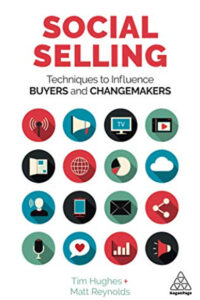
Social Selling: Techniques to Influence Buyers and Changemakers is the future of personal branding
Part of that is saying, “First and foremost, I need to have a buyer-centric profile. I need to do the basics out there to have a profile that is at least attractive to my bias.” Quite often, people don’t understand how to create content. Again, it’s about going to the gym. When I first went to the gym, I thought all the weights were really heavy. After you have been there six months, you go, “These weights aren’t heavy enough.”
Creating content is like a muscle, you just get used to doing it. One of the things that we are still going through a process is getting leaders to understand that this is how you prospect now. Quite often, people think of going onto LinkedIn, changing their profile, and creating content and a network. I can’t be bothered to do it because I have got all these other things to do. This is how we prospect. This is how we as a business run. What people need to do is make that switch to say, “In 2023, we need to stop using 1980s sales methods, and we need to start using 2023 sales methods.” It’s making sure that leaders understand that switch.
I think what you are saying is exactly what I say the old way of doing it is to push out information, as you said, brochures. The new way is to tell stories, which I love to teach people how to tell stories, and you are teaching people how to use social selling. Both of those things pull people in. If your content is story, people remember it, repeat it, and share it. I think that’s really the secret to all of this new way of being magnetic instead of repulsing. You pull people in with social selling and storytelling. Thank you so much. If people want to reach out to you, what’s the best way?
Thank you so much for having me on. It’s been fantastic talking to you. The best place to get me is on LinkedIn. I’m Timothy Hughes on LinkedIn. The website is DLAIgnite.com. I’m also @Timothy_Hughes on Twitter.
Thanks, Tim.
Thank you so much.
It’s so great talking with you. Congrats on the huge success and influence you are having. I’m sure that buyers and sellers are embracing this because nobody wants to be pushy, and you have shown us a new way.
Important Links
- Social Selling
- Tim Hughes
- DLA Ignite
- Smarketing: How to Achieve Competitive Advantage through Blended Sales and Marketing
- Hesha Abrams – Past Episode
- The JOLT Effect
- @Timothy_Hughes on Twitter
- Better Selling Through Storytelling Method Online Course
Wanna Host Your Own Podcast?
Click here to see how my friends at Podetize can help
Purchase John’s new book
John Livesay, The Pitch Whisperer
Share The Show
Did you enjoy the show? I’d love it if you subscribed today and left us a 5-star review!
- Click this link
- Click on the ‘Subscribe’ button below the artwork
- Go to the ‘Ratings and Reviews’ section
- Click on ‘Write a Review’
Love the show? Subscribe, rate, review, and share!
Join The Successful Pitch community today:
- JohnLivesay.com
- John Livesay Facebook
- John Livesay Twitter
- John Livesay LinkedIn
- John Livesay YouTube
Human Factor Media With Zack Slingsby
Posted by John Livesay in podcast | 0 comments


Storytelling is an effective way of getting people to buy into what you are selling. As long as you can harness the human factor in your story, you will always find someone interested in your brand. In this episode, John Livesay teams up with Zack Slingsby, the Founder of Human Factor Media. Zack discusses using literary techniques to gain attention and how to effectively leverage story-telling. Full of great insights, tune in and learn how to use story-telling to create the perfect pitch.
—
Listen to the podcast here
Human Factor Media With Zack Slingsby
My guest on the show is Zack Slingsby, who created an agency that does amazing videos using storytelling. He said, “When you create wonder and awe with stories, you pull people in.” Find out what he means. Enjoy the episode.
—
My guest is Zack Slingsby, who is the Founder of Human Factor Media, focusing on redefining branded storytelling. Zack is a writer, Short Film Creator, and Founder of Human Factor Media, which is an award-winning branded storytelling company that has worked with leading brands and publishers to create videos people want to watch. He graduated from Fordham University, received his MFA from the New School, and published in over a dozen creative and industry publications. He believes the ingredient that makes a literary story great is the same that makes for a great video. Zack, welcome to the show.
John, how are you?
I’m great. It is nice to have someone so creative as you on the show. Let’s go back to your own story of origin. You can go back to childhood, college, wherever you want. Were you someone who loved to read? Obviously, you have a lot of books in your background here. I’m curious as to your own interest and passion for where storytelling got.
My love of reading came a little bit later like early college. Growing up, I loved shows. The emergence of basically TV shows had literary qualities, starting with the West Wing and Sopranos. Everything from the late ’90s through 2010. It was such a great time for television. That got me obsessed with storytelling. I would write the scripts for my favorite shows. Growing up, I would write my own versions of them alone for many hours while my friends were out doing more normal things at that time.
When I’ve got the MFA program after college, which is called the Master of Fine Arts, for those whose background may not be creative, I had been very obsessed with the traditional path for a creative, which is, do great work and try to find an avenue that already existed to push that work out there. In my case, it was literature. Everyone in the MFA is pretty sure that within a year or so, they will be Hemingway. They are pretty positive that it is common. You need to get discovered and write a perfect paragraph. You are side by side with these people. You build each other up and think, “It is not good. It is going to be me. It won’t be these other 30 guys. It will be me.”
Very quickly, that gets deflated. I had a good amount of early success. I finished a book, got an agent, and published some short stories. My book went out to press to be sold to a publisher. We went to all the big guys, and you have to get unanimous consent from an acquisitions board. With some of the big ones, Random House, Picador, and these guys, we had 9 out of 10 people say yes or it is 8 out of 12. It is short of where you want to be. At that time, it was in my early twenties and crushing. As I’ve got older, I went to Washington and started writing.
I saw the way branded content was going. It was a vehicle for storytelling. I thought that I would be very happy to have a career like that. Some friends and I started this thing where we tried to make creative and funny videos, and over time it evolved. We are this group of creatives who make story-driven videos for brands. I do not know if that was a longer answer than perhaps you intended.
[bctt tweet=”Fear kills creativity. ” username=”John_Livesay”]
Everyone’s story is not usually linear. You took your love of literature and created something that pulls people in. That is what a good story does, whether you are watching it as a video or listening to someone tell you a story. What are some of the mistakes that you see people making when they create branded videos these days? Is it that they are trying to make it like a commercial? Is it they are making it too long or they are trying to be funny, and they are not? What are some of the things that you see entrepreneurs do that aren’t working?
There are different tiers to this. There is a startup, a brand, and obviously, the established brands. We have gotten worked for both kinds and done a lot of work with nonprofits and startups. We have also gotten to work with some bigger brands like LG, Planet Fitness, and New York Post. Let’s say on the startup front. There is this need to focus on the product because you feel this is your one chance. You have this certain amount of money and are going to do a blast. You have to get home the differentiating features of your product or service very quickly.
I am totally sympathetic to that and understand how that could happen. It is not always the wrong strategy either. Maybe that is where you are but at a certain point, that brands have to ask themselves if they see value in being even tangentially entertaining and some scale going into the entertainment business. The age of the traditional ad, we all agree, is behind us. We need to find a way to access a wonder and awe in the people we want to reach.
Teaming up with actual storytellers to do this tends to be a strategy that is rewarded by the market. Laughter is older than language. Music is older than human speech. When you only appeal to the rational side of consumers, you are leaving all these other things on the table. The new trends are bearing this out more and more.
How did you come up with the name of your company, Human Factor Media?
I do not know. There is a novel by Graham Greene called The Human Factor, which is about spies. There was one passage in that where he said that he could empathize too much with both sides. He can empathize with the communist and the capitalist. It drove him crazy because he could see the human factor in both camps. More to the point is we are trying to find something resonating about a story that moves beyond the product. Those are the stories you could eventually find on a streaming platform.

Human Factor: We are this group of creatives who make story-driven videos for brands
We are trying to find something that relates to people as people. There is an old definition of commerce that you want to lower uncertainty about one another so that we can exchange value. I thought that is what great branded content does is lowers the scale. I know this is primarily an audience of entrepreneurs. I’m sure you know more than I do but the great salespeople I have met were not even doing sales anymore. They found something else to do that simulates the effect of sales. They are not saying over and over, “Can I have five minutes of your time?” They found some creative way to lower the skepticism of the prospect. Narrative video is simply a way to scale that strategy.
It is interesting because, in the core startup world around trying to get investors, the phrase is, “How do you mitigate the risk for an investment?” You are saying the same thing needs to happen even at the consumer level and the B2B level when you are selling a product. Are there certain things that you think a story needs to have so that it, in fact, resonates?
It has to be motivated the way the story is motivated, which is to say that it is not motivated to manipulate an end product. It has to be motivated by a genuine desire to tell that story or create that piece of art, for lack of a better word. That won’t be the priority of every brand out there and fair enough but it will have to be something where you say, “We are telling the story of this woman or this man on this journey.” That has to be all we are in this for and the whole point of this video. It can’t be that 2/3 of the way through, and we give you a list of the reasons why this razor is better than the razor that you are currently using.
Are there any rules about how long a video should be? Thirty seconds is too short. Ten minutes is too long. Anything like that?
I do not think so. I think that people say that maybe. When we do a campaign now, we do long videos, sometimes five minutes. We did a documentary that was 30 minutes. Sometimes they are long but we always break down tons of small content from that. You can take 15 to 30-second clips out of everything. We try to cover the scorcher of the content strategy. I do not know. It is a weird time. TikTok is 15 seconds but Joe Rogan’s got 4 hours and he is the most popular media figure out there. It is so bizarre. What do you think about that, John? Have you had any experiences?
A good story pulls you in and keeps your attention if there are open loops, hooks, and something unexpected. It depends on what platform the story is but in terms of businesses that have hired you, as you mentioned, Planet Fitness and LG, can you tell us a story of what the scope of work was or what problem they were trying to solve, and how were you able to use storytelling to solve that problem?
[bctt tweet=”Lower the risk so you can share value.” username=”John_Livesay”]
Let’s say Planet Fitness was integrating a new product into several locations. That was more along the lines of traditional branded storytelling, and they had something they wanted to impart to an audience. It had something to do with the brand itself. It wasn’t a documentary or comedy series as we have done for other companies. In that case, in terms of content length, we did, once again, everything that was the long stuff, 3 to 4 minutes stuff. For the short content for LG, we were brought in similarly to do a product integration video. We’ve got to talk them into letting us do a 90-second to 2-minute vignette to go along with it.
A common pattern is we will start the conversation on the level of traditional branded videos and we will say, “Give us some percentage of the budget over here to do something that is a little more experimental, run that through your channels, and see if there is any value to this.” Oftentimes, the client is surprised and wants to experiment more.
We have case studies on a ride-hailing app that did a comedy music video side by side of a product video. We did this with a couple of nonprofits, a water company that we are doing a documentary for now, and a jewelry brand that did a series of funny videos. In some sense, this is a trend but also, by and large, most companies are still making ads. The market is wide open for these experiments.
Are these videos living on their website and their social media platforms, and that is it or where do they go?
It is everywhere. We are engaged now pretty much ends at the content creation. We do not oversee the distribution generally. Sometimes occasionally, we do, but they are ad assets, social videos, and sometimes website videos. Sometimes, they are sales videos. How weird is that? We are working with one company now in the tree-free paper product space, which is a very niche space. We want to use these to strengthen our prospects or leads because what is better a sales intro than some content that seeks to lower the guard. It is not coming in with five reasons why you should book a meeting with us.
That brings up the point. We briefly discussed the relationship between sales and marketing. That has been a theme that comes up a lot in our conversations lately. You have this strategy for creative content. You live in the clouds, which is fair enough as a lot of us do. How do we connect that to our actual sales strategy? I do not know. Have you experienced that at all?
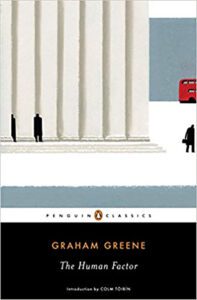
The Human Factor
Yes. As a storytelling speaker, I often get brought in because they realize that they are not telling stories in the marketing materials or what is coming out of the salespeople’s mouths. Especially in medical tech sales, they love to get stuck into the percentages. This makes this surgery go 30% faster. Speeds and feeds, as I call it, in the tech world. When did you start to get them to tell a story of what is 30% faster means, and who cares about that? Is it strictly an ROI? In one case, I helped them tell a story of how it made a patient’s family not have to wait an extra hour to find out if somebody was going to have cancer or not.
You start going, “It never occurred to us to tell a story and let alone make the patient’s family a character in this story.” Part of what I do is take these facts and figures or even basic case studies and turn them into case stories, and then they start using that as their marketing material. As opposed to listing features, they start having little 2 or 3 sentence case stories about how happy the family was. The doctor, who was the hero of the story, came out an hour earlier than expected and put them out of their waiting misery.
You are doing the human factor the same way we are.
When I start to work with sales teams, sometimes they think, “If I’m going to tell a story, surely I’m the hero of the story.” I go, “No, the goal is to make a potential buyer.” If you are telling a story about a doctor, the doctor is the hero. Another doctor sees himself in the story and wants to go on the journey. People are like, “I thought I was a pretty good storyteller but I have never thought about how to make people see themselves in that story.” When that happens, we are all in.
My ad week about what Super Bowl commercials I think are the best, and it is fascinating to put it through the lens of, “Was it entertaining? Yes. Is it memorable? Yes. Do I remember the product? Whoops, no.” There are a lot of boxes to be checked off besides that was great content but I have no idea who or why that brand should be part of that content.
That is a common thing that we come up against, and it is a fair objection. What do you think is the difference, though, between storytelling on TV and digitally?
For certainly like the Super Bowl that is appointment viewing and what is fascinating about that is the commercials now are released before the Super Bowl. People are literally interested in watching your commercial and seeking it out. Not just the trades are covering it. The Today Show was revealing a new Super Bowl commercial every day before the countdown.
[bctt tweet=”The most coveted real estate now in media is the subscriber base on social channels.” username=”John_Livesay”]
Do you think we have a long time left to do that? Do you think that is dated or that it is going to expire? Do you think we will always do that?
Obviously, the award shows are struggling for viewers but in sports, when people get together, it is a whole experience and eating good foods. It is almost like an American tradition. There is still that window. I saw a brand using storytelling, and they weren’t paying to be on the Super Bowl yet. They were part of the Super Bowl buzz.
I would love your opinion on this. It is called Enfamil, and they work with babies that are premature. They started showing commercials, “This baby was due on February 13th, which is when the Super Bowl was airing but it came two weeks early. We are taking good care of it.” It was very clever marketing on a lot of different levels to get part of that buzz without having to pay the fee to run it on that.
Much of marketing is cleverness like that. I do not think that is our core competency. I wouldn’t have thought of that. I had to leverage what is going on in the country to get attention, for what you are working on is a special skillset. It is not ours. We have an ability to tell stories that will be as impactful as they will be in five years. They can transcend what we do. That is our goal for what we are making and to try to appeal to people the same way your favorite show would appeal to you.
Can you give an example of that jewelry one you said that had some humor in it?
In that case, what we were doing was how can you compete as a jewelry brand. You have Diamonds Are Forever. Kate Spade had a web series. I remember they brought in Tina Fey or Amy Poehler or somebody but products like that are CPG products or luxury products. They only can compete on the story that they are going to tell. The commodity itself is too ubiquitous. We are too used to it as consumers and too commonplace. To me, it is crazy that when you are in a highly competitive market like that, you are not figuring out ways to make the coolest web series.

Human Factor: It is crazy that when you are in a highly competitive market like that, you are not figuring out ways to make the coolest web series. That is the greatest tool you are not using if you are in that space.
That is the greatest tool that you are not using if you are in that space. We tried to do some very small versions of that. You could see how these things can be scaled up or down based on resources and the size of the brand. In that case, it was a smaller one. It is accessible to everyone. To try to use the power of entertainment, you do not have to be Prada or Kate Spade to do that. It is so strange what is happening when you touch on it with the television medium. Movie stars are trying to find television shows to go on or TV series. The TV stars are going to YouTube.
The YouTube stars do not care about anything. Those people who have 5 million to 10 million people do not care. They do not want anything else. They feel they are the kingpins of entertainment. They are right. The most coveted real estate now in media is the subscriber base on these social channels. It has happened very quickly and is bizarre but anybody can try to do that. They won’t all succeed but their barriers to entry are gone. You have to make a commitment to recurring storytelling and genuine entertainment value. We think that, in our humble way, literary style can have someplace in that.
Let’s say you have got this amazing web series you have created for this diamond company. If the salespeople at the retail stores are not aware of that and someone comes in and references it, all that creativity and momentum has gone. If, on the other hand, there are images in the store reminding people of it or maybe they didn’t see it and go to a QR code and download, or the salesperson brings it up, now that is when sales and marketing are working well together. That is what I love to see.
Your whole goal is to get someone to put something on their shortlist of things they are considering and break through the clutter. That is what you are doing. For me, as a speaker, there are some similarities in what you are doing as an agency because every agency I have ever worked with is usually asked to come in and pitch or present. It is between you and 2 or 3 other agencies or other people who do something similar to what you do. We all have to sell ourselves, our company, and what makes us unique.
I certainly have to do that as a speaker. We will tell a story about another talk I gave and the outcomes that happened that people say, “That is what we want.” Do you have any tips for someone? We are all in that. If we do not have stories, my whole line is we are drowning in a sea of sameness. I do not think it is good enough for anybody to go, “Let my work speak for myself.” I have had people hire me from watching my demo videos, my TEDx, which is lovely but we still need the skill to sell ourselves to get picked. People could watch your amazing videos and go, “We want that,” but I’m still guessing you might need to quote, pitch, interview, whatever you want to call it.
We do that every week. We generally get hired through making presentations on spec. We think that we haven’t been an idea. We want to present them and try to get the attention of a brand manager, a CMO or a business owner. I have an incredibly deep respect for salespeople after starting this business that I lacked beforehand. The answer is definitely, yes.
[bctt tweet=”Everything about the creative mindset is in opposition to the act of creation itself.” username=”John_Livesay”]
What is it that you say in those presentations without giving away any of your intellectual property secrets? My belief is that people buy your energy. I think because you are so likable and approachable, they think that this guy has the skills to do it. Probably another agency we are looking at might have the same skills.
At the end of the day, is he going to be easy to work with? Is he going to take our feedback? Is he accessible? Those are some skills and unique selling benefits that we sometimes might overlook. I have literally had given a presentation, an interview by a potential client to hire me, and knew they were looking at 1 or 2 other speakers.
My bureau agent calls me, “Congrats. They picked you. They liked your energy.” Rarely is it that spelled out. I spoke to the client later and said, “That was so nice of you to say shit.” I felt bad. I am better about myself. I felt energized about the possibilities of what you could do at our meeting. I figured, “If you make me feel like this, you will make the hundreds of people that are coming to the ballroom feel the same way.”
All that other stuff gets us to that interview. We have got a referral. They have seen your video. They did not see it at all or whatever it is, then we need to have storytelling. My latest book is The Sale Is in the Tale, which is a business fable. It is a story about storytelling. Your presentations are hiring us. We are going to tell you a story of why we are the best people to create your stories. It is very parallel.
We will have a couple of slides that our accolades, awards, and some brands that we have worked with him. We try to rush through that because it is important to say but it is not something we want to be overly self-conscious about or reference about. We get to a couple of slides on where content is going, how we move from the idea of commercials to the idea of the content, and the skip rate for, let’s say, traditional ads or the amount of money wasted every year on interruption marketing, which we become geniuses at obfuscating as consumers.
We get to the ideas themselves and usually have 2 or 3 ideas. To your point about the energy, I agree, and it is hard to articulate that and even talk about it because it is such a nebulous force. It doesn’t always work in your favor. You almost go through a prism of insincerity before you come out yourself again. You have to go through all these things to go back to who you normally are in your life. When that person comes through again, you are like, “Now I can talk to these people genuinely.” When we first started out, it was very hard for me to feel like I could be myself in those situations. That worked against us. I do not know if you have ever experienced that.

Human Factor: Creatives generally are hostile to routine and discipline. They do not want to be put in a category or a box.
I tell people the gateway to the Imposter syndrome is to start comparing yourself to other people. The minute when you start that, you are down that rabbit hole. If I start to find myself doing that, I go pull up like an airplane. We do not want to go down that path. It is a conscious decision, and it goes back to some core beliefs of who I am is enough. This is what I have to offer, and not needing it. It is like dating. Nobody wants to date anybody desperate and wants to work with somebody who’s desperate.
Sometimes when we pull back a little bit and say, “I may not be the right speaker for you but I probably know somebody who is.” Those kinds of comments as go back to mitigate the risk of working with you because we do not feel like you are being pushy. That goes full circle to why I love storytelling, and I like talking to people like you who make wonderful stories. Stories pull us in. We are not being pushed out a bunch of facts, figures, bells, and whistles to look at this price. “It is 20% off, this weekend only.” You are not creating that content.
That is self-consciousness that gets you into trouble. It is incredibly inherent to the creative mindset. It is a very weird and cruel trick of nature. Everything about the creative mindset is in opposition to the act of creation itself. Creatives generally are open to so many possibilities. It is hard to marry themselves to anyone. They become hyper-aware of cliché. They would rather die than repeat a cliché. They want to try new things but they think most of them won’t work. They generally are hostile to routine and discipline. They do not want to be put in a category or a box.
All these instincts could generally make you a good storyteller. They also can be paralyzing when it comes to something concrete and important like growing a business. It is like you try to convince someone that you have something to offer them. You have to go through that ring of fire to be able to come out of the other side and say, “I can help you here.”
What I heard you say is fear is the killer of creativity, and so you cannot be afraid of whether you get the business or not because then you can’t be creative at the moment. A friend of mine asked me to read the draft of something they are working on. He literally wrote, “That family made lemons out of lemonade.” Please do not say that. There’s got to be a better way to say that. We all need editors. Zack, if people want to find out more about the Human Factor Media, where should they go?
They can go to our website, HumanFactorMedia.co. We have got a portfolio on there as well as a form to contact us. You can also get in touch with me directly at [email protected].
Thanks so much for sharing your insights into what is going on that will continue to grow. I think you are in a good niche there. Congratulations.
Thank you. I appreciate this. It was good to talk to you.
Important Links
- Human Factor Media
- The Sale Is in the Tale
- [email protected]
- The Human Factor
- Better Selling Through Storytelling Method Online Course
Wanna Host Your Own Podcast?
Click here to see how my friends at Podetize can help
Purchase John’s new book
John Livesay, The Pitch Whisperer
Share The Show
Did you enjoy the show? I’d love it if you subscribed today and left us a 5-star review!
- Click this link
- Click on the ‘Subscribe’ button below the artwork
- Go to the ‘Ratings and Reviews’ section
- Click on ‘Write a Review’
Love the show? Subscribe, rate, review, and share!
Join The Successful Pitch community today:
- JohnLivesay.com
- John Livesay Facebook
- John Livesay Twitter
- John Livesay LinkedIn
- John Livesay YouTube