
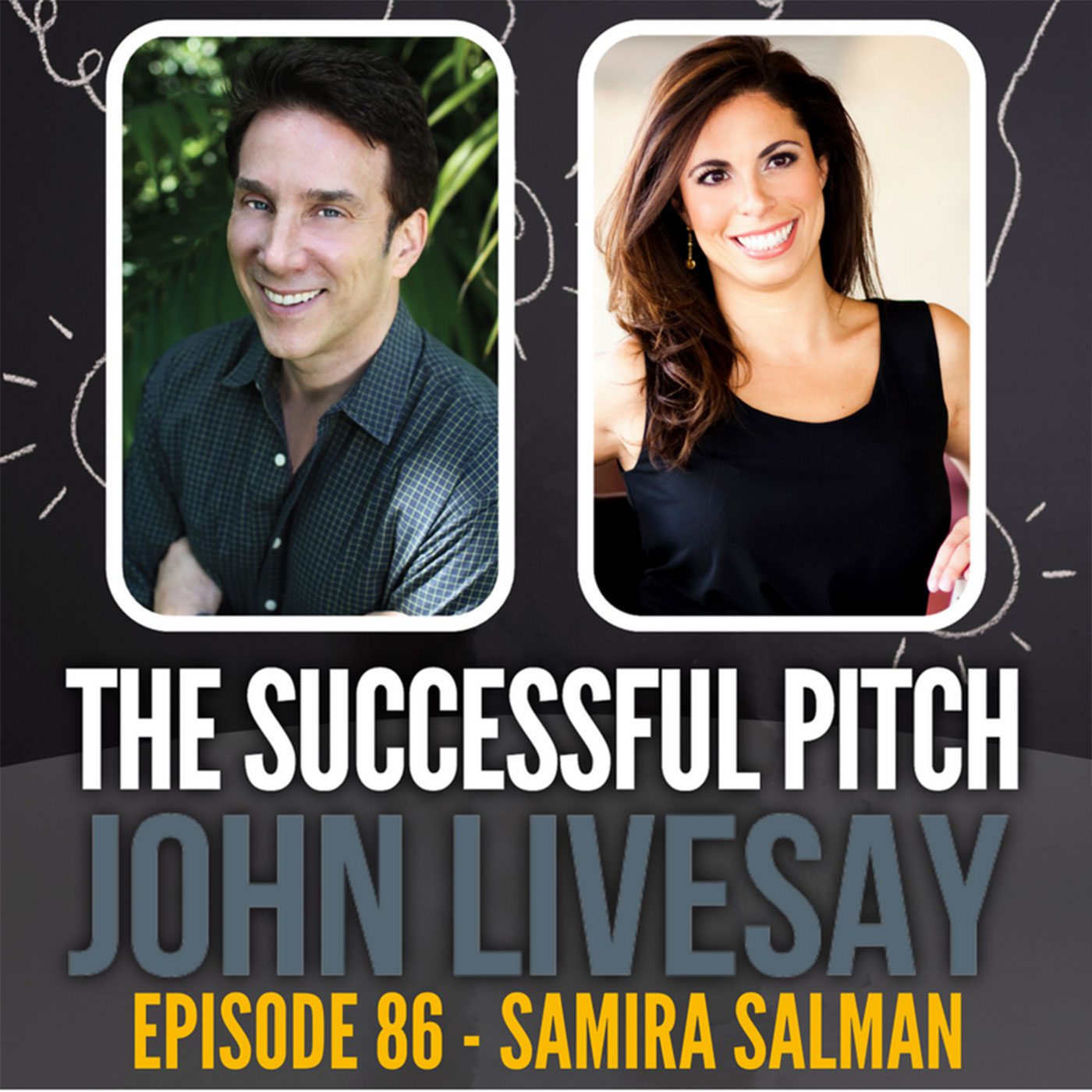
Holistic Entrepreneurship – Interview with Samira Salman
Posted by John Livesay in podcast | 0 comments
Listen To The Episode Here
Episode Summary
Samira Salman is the CEO & Founder of Salman Solutions, a firm that advises executives, startup founders, and entrepreneurs on how to build better companies and raise capital. Samira had a very successful career as a tax lawyer. Now, she uses her expertise in both corporate and tax law to advise her clients, and she speaks heavily on topics such as entrepreneurship, brand building, negotiation, and more. Discover how you can build trust with an investor, on this week’s episode!
Holistic Entrepreneurship – Interview with Samira Salman
Hello and welcome to The Successful Pitch Podcast. Today’s guest is Samira Salman, who is a business advisor, a tax lawyer, and entrepreneur, and a speaker. She’s the founder and CEO of Salman Solutions, which is a strategic planning and business development firm. For the past 20 years, she’s been all about out of the box thinking, not only in corporate and tax law, but she’s advised over 75 executives in all kinds of businesses, built and sold over 30 companies and, get this, raised over $60 million in startup and growth capital. Clearly, she’s someone we want to have on the show. Welcome, Samira.
Thank you, John.
I’m always fascinated to see someone’s journey of how did you get to where you were, and most people have to have quite a bit of experience. I know you went to law school, obviously, and studied in a lot of other places. Can you talk about some of your experiences when you were in law school? Did you always know you wanted to get into the tech investment world? How did all of that come about?

I wanted to buy and sell companies and I wanted to be a deal lawyer.
When I was in law school, I wanted to be Richard Gere in Pretty Woman. I wanted to buy and sell companies and I wanted to be a deal lawyer. When I started doing that type of work in the corporate section, I realized and learned very quickly that the tax lawyers were the ones who actually structured the nitty gritty of the deal. That’s what I chose to do as my legal profession and I practiced tax law for eight and a half years. I worked in a very exciting time. I worked at Arthur Andersen in Houston when the whole Enron scandal was happening. I also was in house at Shell Oil Company. I got to see some really interesting transactions throughout my career.
I’ll say.
One day, I woke up and I said, “It can’t just be these different deals and transactions.” I was like, “I really want to do more and I want to help companies with more than just the tax structure or the financial modeling.” I went on a year and a half personal development journey, trying to figure out exactly what I wanted to do next. The whole time, I was still employed at Shell Oil Company as a lawyer, but I was also exploring. I was doing a lot of informational interviewing, reading, speaking to people, trying to figure out what I wanted to do.
I decided that I was going to open up a firm, and I called it Salman Solutions. My purpose was to help build and grow companies and brands, and to put deals together and raise funding. I wanted to help companies holistically, not just with tax law or a financial model. I wanted to be able to come in and be a trusted advisor to whoever was leading the company and really help them problem solve at a comprehensive level.
I love that because it’s not just one little piece of the pie. It’s the big picture from start to finish, it sounds like. Because if you’re an investor and a trusted advisor, that’s gold. Because you’ve got skin in the game, you care about the founder, you care about the company.

Holistic Entrepreneurship: Do the hard work that’s necessary to take companies to the next level.
Right, absolutely. My clients become a part of my life, a part of my family, and I really enjoy rolling up my sleeves and getting in there and sitting next to them and helping do the hard work that’s necessary often to take companies to the next level or to turn them around if they’re not experiencing the type of growth that they’d like to.
When do startups typically start engaging with you? Is it at the very beginning before their revenue, or do you like to engage with more series A?
I work with companies in all different stages. I’ve worked with brand new startups that don’t even have a penny of funding. I’ve also worked with companies in the mature stage who are trying to figure out what their exit plan, succession planning is. The only criteria for me to work with a company is that the place where they want to accomplish what it is they say that they want to accomplish, and that they’re really engaged in the process and all hands are on deck.
I think a lot of our listeners are probably startups that are pre-revenue, but they’ve got a couple of people on their team, they might even have a little bit of traction. What do you look for when you hear a pitch from someone like that?
The first thing I always ask for is I ask to see what they have organized as their pitch materials and their financial model. That really speaks volumes about where they are in the, “We’re starting our company and we’re laying the platform and the foundation for real growth.” Too many times, companies are making these pitch decks to just look pretty and snazzy and help them with the pitch, but they’re not really, really understanding the components of what it takes to build a company and penetrate a market.
[Tweet “Holistic Entrepreneurship: A business is 100% based on the numbers.”]
Once I first look at those materials and I first look at them, from there, I can tell, “Okay, here’s where we need to start.” It’s very important that I understand where the client is so I can move with them where they need to go, but I always like to start where they are. The other component is a financial model, and as you know, and I’m sure many of your listeners know, a business is 100% based on the numbers. If it’s not, then it’s just a hobby. I like to really understand what they built in their financial model, and really to understand what are the assumptions behind this. “Okay, so you’re projecting revenue of X in year one? How are you going to get those revenue projections, and have you modeled out the necessary expenses that you’re going to have to incur in order to meet those revenue projections?”
I can tell a lot about where a company is in position just from reviewing their initial materials. Then from there, we sit down and we work on a process to ensure that all components of the financial model and the business model have been thought through before we go and sit down with investors. We have our process and it lasts anywhere from 4 to 12 weeks, and it’s called capital raise consulting. It’s a straight-up process that only prepares you to go sit in the meetings. Because it’s not just about having a beautiful pitch deck and financial model, but it’s about having thought through all the necessary components to success of your business and being able to answer all those questions when an investors asks you, “Have you thought of this? What about that? How are you going to address this?”
We really do a very deep dive under the hood, especially with market positioning and understanding what are the pain points that this product or solution or service is solving, what is the value proposition, why is your company much better positioned to solve this problem, what are your unique qualities, characteristics, attributes. There’s a lot of work that needs to be done with companies before they sit with investors. That’s my favorite thing to do, because it’s really like a birthing process.
[Tweet “Holistic Entrepreneurship: Starting a company is like a birthing process.”]
You’re taking something and you’re planting a seed in the ground and then you’re watering and you’re allowing the sun to shine on it. Then later, the seeds sprouted, which means we’re able to raise funding. It’s a very rewarding process for my team and I, and it’s exciting to see a company go from having an idea and maybe a skeletal business plan and financial model, and then really to build those things up robustly and to get into the meat and the nitty gritty. When we sit with the investors, we’ve unturned every stone and we’ve answered every question, and we’re fully, fully prepared.
That’s really what makes investors say yes, is the credibility is there. They see how you think and that you’ve thought through something. Because, they’re going to say no, I have found, and I’d love your opinion on this. If two things happen, one, if you confuse them, if you don’t have a clear pitch on who you are and what problem you’re solving, and secondly, if your numbers don’t make sense. They’re either too aggressive or not big enough for them to see a big ROI. Are those the two things that you see is big challenges and mistakes people make?
I absolutely agree. I think the first one, if you confuse them, what that means is you don’t understand your company. You don’t understand the business, you don’t understand the marketplace, and you don’t understand the necessary critical components to get your company from point A to point B. The second component about the numbers. I see a lot of inflated pitch decks, and I’m okay with very large numbers. I worked at Shell Oil Company, so I saw huge numbers.

Holistic Entrepreneurship: If you confuse your investors, that means you don’t understand your company.
But, you need to be able to explain exactly how you’re going to accomplish those numbers, and what are those numbers based on, what are the assumptions, and what are the marketplace steps that are going to lead you from point A to point B. Because, at the end of the day, we both know that investors invest in people, and what they’re looking for is a person who has done their homework, they’re organized, they’re thorough, they play in correctly, but yet, they’re nimble enough to make decisions on their feet and to move and to pivot when necessary.
I always teach my clients, “You’re negotiating from the first communication with the potential investor, whether it is a text message, an email, you bump into them in a cocktail party and you say hello.” You want to make sure that you have your A game on and you’re presenting excellence in communication. Even the way that you type your emails speaks volumes about, are you going to be thorough? Are you going to be organized? Are you going to make sure that things are written correctly and you’ve thought through what you’re actually saying? Your use of social media is another dictator to investors about do you have good judgment? Do you post things you shouldn’t be posting? These are all things that I try to bring to my clients and I educate them.
Another big mistake that I see, and this one’s a little bit funny, but I see clients interrupting potential investors in meetings. The potential investor will be speaking and the client will feel the need to jump in and share their viewpoint right then. We do a lot of that coaching, we do a lot of role playing. At the end of the day, nothing replaces having done your homework, and having done your homework 500 times. Especially in this day and age, I think investors are inundated with all kinds of interesting companies and projects. You really have to do the homework to clearly communicate why are you different and better, and going to be more successful and less risky than the 50 other really cool tech companies that that investor has probably seen that month.
[Tweet “Holistic Entrepreneurship: Do the homework.”]
Yes. You touched on so many great things there. I love this emphasis on doing your homework and being prepared because I keep telling people, “You cannot wing your pitch. It doesn’t have to sound robotic, but you better practice it enough that you can come across conversational and clear.” Because nobody has a great pitch without practice, and the same thing is true with their numbers. I love that you are all about the preparation from top to bottom.
You also really brought up a great point there, Samira, about branding. You brand yourself from the way you dress, the way you talk to somebody. Even what you put in an email, the subject line. Is it concise? Is it compelling? Or is it hard to follow? All that stuff is so important for people. It’s your A game. I say when you meet with investors, it’s the Super Bowl of the meetings, it’s your Olympic moment. That’s, to me, what you just described.
Absolutely, and one of the things that I think is most important is the speed of your communication also. If your investor is emailing with you, make sure you email him back in a very timely manner.
Yes. Don’t go, “I’ll get to that later,” because then they think it’s not important. Listen. They should be your number one person. If you’re trying to woo somebody in dating, you don’t wait four days to get back to them, do you? No, of course not. There’s two things more I want to talk about: use of social media and this all-important active listening. Let’s do a deep dive into social media for a minute. I have a lot of founders that say, “I don’t really have much on my LinkedIn profile because I’m an entrepreneur. I’m not trying to get a job.” I said to them, “You don’t think investors are looking at your LinkedIn profile?”
That should be a branding opportunity, that should be a place for references, a whole history of how you got to where you are, any successful exits. You need to have not just crazy pictures deleted from your Facebook, or Pinterest, or Instagram, or whatever, but a really professional LinkedIn profile for investments, don’t you think?
I absolutely agree with that. I teach classes called Building Your Personal Brand. I teach in the law school, Building Your Business and Your Brand. I teach a lot of personal branding seminars and I give a lot of how to build your brand keynote speeches to all different groups. I believe that there is no difference in your personal life or your business life now, especially with transparency and the internet. You are who you are, and how you put yourself out there and present yourself speaks volumes about how you’re going to do business.

Holistic Entrepreneurship: There is no difference in your personal life or your business life
Do you pay attention to details? Is your LinkedIn profile organized? Is it clear? Have you listed your education? Have you listed your jobs sequentially? Are there major gaps in your work history? All these components, you’re exactly correct. Investors are looking at that. Before I even take on a client, I Google and I look at who they are. I look at their social media pages, because that tells me a lot about their judgment and their attention to detail. Especially if you’re the founder or CEO of a business, you have an obligation to be the face of the business and to be out there selling your business.
LinkedIn is a really great tool for doing that. If you don’t understand that, or you don’t believe that, or you haven’t invested the time to use it, what that’s going to tell the investor is you’re not going to use their resources wisely. Because here’s an amazing resource that’s free that you could use. You have to understand that it’s not just about, “You need to be active on social media,” but social media, in general, is an amazing, economical resource for building a business and building a brand. If you’re not using that and you’re not maximizing the free tools, why am I going to give you money? Because that tells me you’re not going to use my money in a really efficient, effective manner.
Let me just underline that for all the listeners. I’ve never heard anybody put it quite like that, Samira. I love the way you’ve connected the dots of how an investor thinks. If you’re not using a good, free tool like LinkedIn, professionally, to establish your brand, then you probably will not be a good person to use my resources and my money wisely. It all just points to authentic, who you are is how you perform in small details and big details. If you can’t be bothered to take care of branding yourself as the founder especially on social media, then you probably will not take care of the big details of managing all the way you could spend my money as an investor. That is so valuable. I love it. Thank you, thank you.
You’re welcome, and I want to add, if you don’t mind.
Yes, please.
Let me add one more component to this that’s super important that adds onto that. We also look at how have you used your money to date. If I’m seeing that you have all these company cars and a really fancy office with fancy furniture and you’re still in startup mode, that tells me you’re not going to be a good steward of my cash. Another thing that I look at, and I think this is a little, this one’s funny, but it’s really true. When you’re in a super startup mode and I see pitch deck materials that look like they’ve had $50,000 spent on them and they’re all beautiful and on thick paper and in fancy customized folders, what that tells me is you’re wasting my money.
[Tweet “Holistic Entrepreneurship: It’s not about materials, it’s about the content.”]
Most of the money that I’ve raised, I’ve used really it was like Word documents or very simple PowerPoints printed on regular paper with a staple. Because it’s not about the quality of the materials, it’s about the content of them. It’s that funny thing. You can’t really put lipstick on a pig. If you have really, really good stuff there and there is substance in there, you don’t have to dress it up with too much fancy school supplies. The numbers and the words will speak for themselves.
At the same token, don’t ignore details. God forbid, if you have a typo on your pitch deck or if you have really ugly slides that are not pleasant to look at. It doesn’t have to be $50,000, but it should be, in my opinion, at least somewhat professionally designed, because everyone now has the skills to do that, or hire a graphic designer for a nominal amount of money to make it look professional. There’s a minimum standard of what’s acceptable, I think, especially when you’re asking for money.
Absolutely, and there’s really creative ways to be able to execute that. You don’t have to spend a ton of money. You can figure out, “How do I get a professional, great looking product without spending a ton of money?”
One of the other things you talked about, which I just love, is not interrupting investors, or in my case, what I talk to people about is active listening to make sure that they ask you a question. First, don’t interrupt them. Second, if they ask you a question, make sure you heard the question properly before you answer it. Because what I hear time and again, and I love your insight on this, is you get asked a question or you as an investor ask somebody a question and they don’t answer the question, maybe because they didn’t hear you properly. They thought you asked something else, and you feel like, “They’re trying to avoid answering my question. I’m so frustrated.” What are your thoughts on active listening going along with not interrupting people when they’re talking?
I agree with both of those points. What I would say is this. You’re in that meeting to have a conversation with the potential investor. Your job is to be extra 500,000% prepared, but then put all your notes and pitches aside and walk into that ring with a blank slate, prepared to have a conversation. Don’t feel like, “I’m not going to get my funding if I don’t put these certain things out there into the conversation.” Sit there and really listen to what they’re asking. Pause to make sure you understood it, and then answer. If you don’t fully understand the question, ask for clarification. A common technique that’s useful is after you’ve answered them, “Did I answer your question? Do you have any follow-ups?”

Holistic Entrepreneurship: You’re in that meeting to have a conversation with the potential investor.
Additionally, the other thing that I see is you have to really read body language. If you’re so intent on getting out your statements and your phrases, and things that you feel you must tell them and you’re not watching them, they may have questions throughout your presentation. It’s a really good idea to pause and say, “Do you have a question? Is there something I can answer for you?” Because, what does that do? That keeps the listener, and in this case, your potential investor, interested and it keeps them in line with the conversation so you’re not going to lose them.
If you keep talking and talking and you have to get everything you say out and he or she has questions that are not getting answered, by the time you get to the end, they’re not going to be with you through the end of your story. I always encourage individuals to understand, this needs to be a conversation. You need to be able to talk to this person the same way as you would be talking to anybody else in a give and take, pause, ask for clarification, make sure you’re understanding. It’s not just a fire hose of information.
Right. Nobody wants to drown in information. I really like this technique of not only after you answer the question saying, “Did I answer your question?” Let’s just, again, have some empathy for the investor. If you were the investor and someone said that to you, think how you would feel. You would feel great. You would feel listened to. “Wow, that guy or that women really cares that they’ve answered my question. I’m going to like working with them.” You could either say yes or, “No, I have a follow-up.”
The other thing you said, Samira, that is so valuable is watch the body language. Sometimes, people can just show you slight, the brows go like, “I’m confused.” People will wrinkle their brows when they don’t understand something. That’s your cue to pause and say, “Do you have a question?” Invite them to ask a question. If you have 10 minutes or 15 minutes and you want to cover, let’s just say, three points, it’s more important, if I’ve heard you properly, to cover two that’s a dialogue where the person has all those questions answered and not get to everything that you have prepared. Because, if they’re interested and don’t have any questions and feel like they have a connection with you, they’ll set up another meeting.
[Tweet “Holistic Entrepreneurship: People do business with people.”]
You are extremely 120% correct. The other component that I want to add to that is people do business with people. They do business with people they like and people they trust. They always have and they always will. That’s a Samira Salman phrase and you can take that phrase and extrapolate it to, investors invest in people. People they like and people they trust. They always have, they always will. There are countless examples of times that a person went in to pitch a certain company or a certain business concept to an investor, and the investor says, “I really like you but I’m not into this business. Go back to the drawing board, tweak these seven things, reposition a bit, and come back and visit me.”
That’s how you start building a relationship and you’re able to go back to the same investor for multiple projects because they like you, they want to work with you, they like the way you work, they like the way you communicate, and they want to work with your team. I think that’s the most important message to get across, is your job is not to sell your company, but it’s to sell yourself, as a founder, as a leader, as the CEO, and as a person that this investor can work with on a long-term basis, build a relationship, and you guys can be nimble and make good decisions and be good stewards of the investor’s money together.
[Tweet “Holistic Entrepreneurship: Don’t sell your company. Sell yourself.”]
I think that that’s a big gaping hole that I’ve seen in the pitch world, is that the people pitching forget that. They skip that part of building rapport, finding common ground and especially making assumptions about what the investor is looking for. Unless it’s a fund that has very strict details and we know what the criteria is, it’s always a good idea to have some rapport building, stakeholder analysis questions at the beginning to make sure you understand who this person is, what makes them tick and how they make investment decisions, especially if they’re raising from a private individual, or a family office or some other type of entity that doesn’t have a strict scripted mandate for how they invest. It’s important to ask questions and make sure that you understand what they are looking for and who they are, because that’s what you need to speak to.
Do you have any stories that you can share with us about someone that either was introduced to you or somehow you guys connected and you said, “This is my person, and I’m going to help this person go from, basically, just an idea to getting funded”?
I do. I have several stories where clients came to me and they had very infancy projects and businesses. Some of them were product-based, some of them were service-based. What I pride myself on is I say that I have a unicorn picker, which means when I choose a company or a project to work with, most of the time, it ends up being successful. The reason why is because I have this innate gift for knowing, will this product and service, coupled with this leader and this team, be able to make it? What we do is we provide the funding and we provide the strategy and the know-how and the secret sauce that sticks everything together. But is that leader, that company founder, do they have what it’s going to take to make it to the next level?

Holistic Entrepreneurship: I say that I have a unicorn picker, which means when I choose a company or a project, most of the time it ends up being successful.
I do come across a lot of projects that I pass on, but every now and then, when I come across one, I’m like, “I’m going to go work with this person because I see a future there.” I’ve worked in different consumer goods industries, but I’m pretty good at calling it. It’s just the way that the person has what it takes to move through each day of being entrepreneur, because as you know, entrepreneurship is not for the faint of heart. It’s a pretty brutal, grueling profession. I really look for the people, because I can teach anybody any aspect of the business.
One of my most proud accomplishments is we have somebody who’s the right hand person of one of our founders and they graduated from college not too long ago with a Liberal Arts degree. We were able to teach them how to build financial models. They keep all the books, they do all our monthly reporting. We basically turned him into a CFO overnight. My point in that illustration is when you have really great team members who are open and willing to learn, anybody can learn anything.
The most important part is the demeanor and the disposition of the team. You have to find people that work the way you do and the team has to work together in a cohesive mechanism. Even if components of the team have these really stellar resumes, if the people can’t work together, it doesn’t matter because it’s not going to work. That’s what I look for, is a leader who has the right leadership skills and they know how to properly and lovingly motivate their teams and I look for team members who are willing to learn, and who are comfortable working in the very nimble startup entrepreneurial environment.
[Tweet “Holistic Entrepreneurship: Demeanor and disposition of the team is vital.”]
Sometimes I see teams that they have really great resumes but all the folks came from corporate America, and those teams sometimes have problems gelling and learning how to work in the nimble startup environment, especially when there’s funding gaps and it’s very stressful. Sometimes we bring in professionals to help us work through that team building and we do all kinds of different interesting things. My role as the trusted advisor is to keep my eye on all these components and make sure that everything is moving in the right direction.
One of the most successful characteristics I see of founders and CEOs, leaders of companies, is that they cut off the dead tree limbs when they need to. If an employee’s not working out or a team member’s not working out, they make really quick, nimble decisions. That always ends up being the better answer than the long run. When you keep folks around that aren’t really an asset to the team, it tends to affect the entire team and moral, etc.
Great advice. You sound like you’re an air traffic controller as this trusted advisor, making sure there’s no problems. I love this cut off the dead tree limbs when you need to because that whole analogy, one bad apple causes the whole group to go bad.
My best friend says that phrase.
Is there a book you’d recommend for people to read either about entrepreneurship or life, in general?

The 50th Law – written collaboratively by rapper 50 Cent and author Robert Greene.
My favorite business book is called The 50th Law. It’s written by 50 Cent, the rapper, and Robert Greene. He’s a motivational speaker. He had some financial challenges, bankruptcy, and financial fluctuation I think is a rite of passage for entrepreneurship. The book has 10 different rules to get basically from the streets to becoming a multi-hundred-million dollar businessman. The thing that I like about the book is it’s really different from most other books out there on business. It’s more on the scrappy human side of business and not necessarily the metrics and the spreadsheets and the numbers. Even though I’m a former tax lawyer, at the end of the day, people do business with people.
What his rules help you understand is how to move within this web or network of people more nimbly and more strategically and more successfully. Because really, when you break it all down, business is just a bunch of people running around. Some of us are investors, some of us are CEOs, some of us are secretaries, but we’re all human beings trying to figure out how to work together. That’s what a lot of my career has been, at this point. I do a lot of coaching and a lot of consulting on how to work more effectively with clients, with team members, with investors. At the end of the day, the communication is what makes or breaks a company. If the environment and tone is set for open and honest communication and subordinates feel comfortable going to leadership and voicing problems, we can solve those problems sooner. I really enjoy that book.

The Alchemist; Novel by Paulo Coelho
One of my all-time favorites is The Alchemist by, the famous alchemist, Paulo Coelho. I just love that because it really helps you understand you have to go through some of the same lessons in life over and over. I think many of the lessons in that book are very applicable to the entrepreneurial journey. I think you can take some of those phrases and paste them. One of my favorite quotes is from that book and it says, “The soul of the world tests you about lessons while you’re on the journey not because it’s cruel, but it wants to make sure you’ve mastered the lessons.”
It’s basically saying you may run into some of the same challenges over and over not because it just wants you to learn from it, but master the lesson. I think a lot of times when you see entrepreneurs in the entrepreneurial world, they may have had some of the same challenges, whether it came to funding, or selecting partnerships, or strategic collaborations, or whatever their Achilles heel is. They’ll continue to have some of those same lessons until they master them. I just love that because I think it speaks volumes to how we are on this journey and you’re just collecting skills and experiences as you go.
I can’t thank you enough for all your words of wisdom about what it takes to be successful as a founder, as a team member and what investors are looking for. Samira, how can people follow you? What’s your Twitter handle and all that good stuff?
My Twitter is @samira_salman. My Instagram is SamiraSalman. I’m on Facebook. Salman Solutions is my company. I have a professional Facebook. It’s just Samira Salman Professional Page. I also have a YouTube. If you go to my website, it’s SalmanSolutions.com, you can click, all my social media links are on there.
Perfect, and we’ll put those in the show notes as well. Thank you so much. You’ve been a great guest. We look forward to watching and tracking all your posts. Thanks again.
Thanks so much, John. I appreciate it.
Links Mentioned
J Robinett Enterprises
John Livesay Funding Strategist
Crack The Funding Code!
Register now for the free webinar
The Successful Pitch – Book Trailer
Share The Show
Did you enjoy the show? I’d love it if you subscribed today and left us a 5-star review!
-
- Click this link
- Click on the ‘Subscribe’ button below the artwork
- Go to the ‘Ratings and Reviews’ section
- Click on ‘Write a Review’
How To Get Investors To Trust You, Samira Salman | TSP086
Posted by John Livesay in podcast | 0 comments
Listen To The Episode Here
Episode Summary
Samira Salman is the CEO & Founder of Salman Solutions, a firm that advises executives, startup founders, and entrepreneurs on how to build better companies and raise capital. Samira had a very successful career as a tax lawyer. Now, she uses her expertise in both corporate and tax law to advise her clients, and she speaks heavily on topics such as entrepreneurship, brand building, negotiation, and more. Discover how you can build trust with an investor, on this week’s episode!
What Was Covered
- 04:05 – How did Samira get into tech investments?
- 06:35 – Samira works with companies at all funding stages.
- 07:00 – What does Samira look for when a company is pre-revenue?
- 11:05 – If you don’t know what problem you’re solving, then you don’t understand what your company does.
- 13:45 – You can’t wing your pitch! You have to prepare, and prepare, and prepare, if you really want to wow investors.
- 16:05 – Samira believes there’s no difference between your personal life and your business life. The internet makes our lives so transparent.
- 16:40 – Before Samira takes on a client, she Googles them.
- 17:40 – Brand yourself! investors will be looking at your online profiles.
- 20:10 – Make sure your pitch deck looks professional. These days you don’t have to spend a lot of money to create a good looking presentation.
- 22:10 – It’s always a great idea to pause your presentation, and ask whether your investors have a question. Think of your pitch deck as a conversation between investors.
- 24:10 – Remember, people do business with people they know, like, and trust.
- 25:30 – You job isn’t to sell your company, it’s to sell yourself.
- 26:55 – Samira knows how to pick unicorns.
- 30:15 – You have to ‘cut off the dead tree limbs’ when you need to. If an employee isn’t working out, it’s best to let them go.
- 31:20 – Samira recommends the book, The 50th Law, by 50 Cent and Robert Greene.
Tweetables
[Tweet “Cut off dead tree limbs whenever someone is not working out on your team”]
[Tweet “Show investors you are prepared and organized”]
[Tweet “Use LinkedIn to brand yourself to investors”]
[Tweet “Be authentic and have a conversation where you listen”]
Links Mentioned
J Robinett Enterprises
John Livesay Funding Strategist
Salman Solutions Website
Samira on Twitter
The 50th Law, by 50 Cent and Robert Greene
Crack The Funding Code!
Register now for the free webinar
Share The Show
Did you enjoy the show? I’d love it if you subscribed today and left us a 5-star review!
-
- Click this link
- Click on the ‘Subscribe’ button below the artwork
- Go to the ‘Ratings and Reviews’ section
- Click on ‘Write a Review’
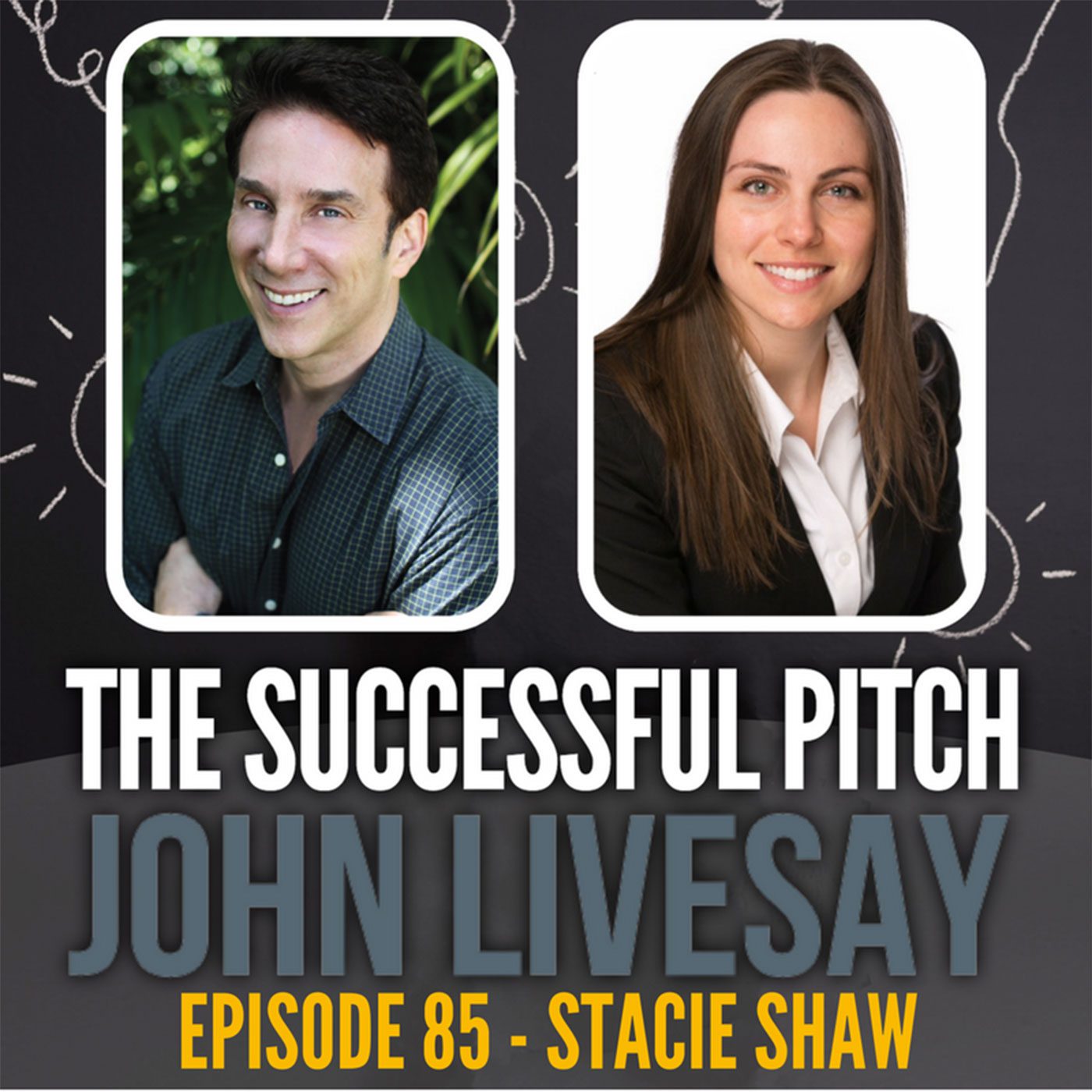
Pitch Deck Fire – Interview with Stacie Shaw
Posted by John Livesay in podcast | 0 comments
Listen To The Episode Here
Episode Summary
Stacie Shaw is the Founder of Pitch Deck Fire, where her company creates engaging and effective pitch decks for startups. As Stacie says, she is a startup storyteller! Entrepreneurs need to realize that when investors are hearing your pitch for the very first time, they are hearing it with their more primitive reptile brain and not their analytical brain. This is why you need to make your pitch incredibly simple and easy to understand, even if what you do is a complex.
Pitch Deck Fire – Interview with Stacie Shaw
Hello and welcome to The Successful Pitch podcast. Today’s guest is Stacie Shaw who is the founder of Pitch Deck Fire. She is a startup storyteller specializing in pitch deck design and presentation which we all know is so important. Stacie, welcome to the show.
Hi, how’re you doing, John?
Good. I’m so happy to have you here because as you know the podcast is called The Successful Pitch and you and I are on the same page of one of the things that it takes to have a good pitch, which is storytelling.
Definitely.
But before we get into that, I want to hear about you, Stacie. Did you know you wanted to be a storyteller? How did you get to be an expert on pitch decks?
Yeah, that’s great question. I’ve worked with several companies as a leader as well as a founder of startups and found very quickly in building those companies that how you tell your story about your startup really affects how people get energized and excited to be a part of that story. It helps with getting funding, it helps with getting clients, it helps with getting your employees. How you actually tell your story really affects your success. I figured that out pretty quickly in the businesses that I’ve worked with.
Where did you go to college? Did you know when you were in college this is what you wanted to do? Tell us of a situation or one of the companies you worked on where you went, “I’m going to go out and become my own entrepreneur.” I want to hear that journey.
I went to college at Emory University and studied business. I knew I really enjoyed companies, understanding how they worked, the market that they were in, and how they grew their companies. When I started my career, I worked at really large corporations as a management consultant and figured out pretty quickly that I wanted to focus on smaller companies, more growth-oriented companies.

Pitch Deck Fire: There’s an art to it, there’s an art to storytelling and to design
From there, I launched companies of my own, learned how to grow a company, and how to tell that story from a marketing perspective within the company as well as to potential investors and things like that. From my experience, I have experience in design and in business strategy, and the combination of those two things is really what led me to pitch decks and to Pitch Deck Fire because it’s a great balance of my right and left brain.
There’s an art to it, there’s an art to storytelling and to design of course. On the business side of it, it has to be very closely linked with that when you’re doing a pitch. When you’re pitching, it is about your company and about the details of what’s going to make you successful, but there’s that combination of the art. I think it’s the two of those together that really drew me to launching Pitch Deck Fire and to helping all the clients that I’ve helped.
I love to have conversations about left brain, right brain, creative side versus analytical side. Most people are dominant in one and very uncomfortable in the other, don’t you find?
I do find that for sure, and I find that a lot with my clients. Definitely, I think people tend to self-identify as one or the other. Whether we’ve been told that we are one or the other, you’re either a right brain or a left, and you’re either type A or type B. I don’t know that that’s the case, I think we all have a little bit of both but definitely people put themselves in that bucket. I think there’s always an opportunity to be a little bit of both and it to bring both to the table in everything that you do.
Let’s talk about the importance of how something looks when you first see it. If you put yourself in the shoes of an investor for example and they see 2,500 pitches in a year, and pick 25 to fund, they’re looking for a reason to saying no. If you have a typo, ugly slides, too many words, etc., you’re automatically a no, don’t you think, Stacie?

Pitch Deck Fire: The professionalism of your slide deck, of your pitch deck is really important.
I think definitely that’s the case. The professionalism of your slide, of your slide deck, of your pitch deck, of everything you come to the table with, is really important. Having even tiny mistakes like that, a typo here, too much text, anything that makes it look less professional, while it may not register in an investor’s mind, they may not see, “They misspelled that word, that’s why I’m not going to go with this company or invest in this company.”
It will be a factor and it will be something in the back of their mind. It won’t be a conscious thing but it will be in the back of their mind to where it will add up all together and make them feel a certain way about you or your pitch, perhaps a negative way. That’s the danger of those little mistakes.
On your website, Pitch Deck Fire, you have a great section in here about, what is a pitch deck? Let’s start there. What should people include and what design makes it appealing?
A pitch deck is pretty simply a visual representation of your company. You might be using it to pitch to an investor for funding, you might be using it to send to, let’s say, an accelerator for an acceptance to an accelerator. You might even be pitching to get clients, it may not even be for funding. It could be, “This is my service offering and we want to bring you on board with that service offering.”
[Tweet “Pitch Deck Fire: A pitch deck is a visual representation of your company.”]
It’s just a visual representation of your company. It’s a way to put a story behind who you are, what you bring to the table, what’s unique about your service offering, your product, whatever it is that you do, and why they should go with you. There’s always an ask or something you’re seeking with a pitch deck. With funding, perhaps it’s, “I need a certain amount of money so I can grow my company.”
For clients, it’s, “I want you to come on board. I want to provide my services to you.” There’s always that ask and it’s a challenge with pitch decks to make sure that the focus of the pitch deck is on your company and not on that ask. The ask is after they’ve fallen in love with you.
It’s like you have to date somebody first before you get married.
Exactly, for sure.
There is a big difference in my mind between a pitch deck for an investor and a pitch deck for a customer. Sometimes I see a lot of people thinking, “I’ll just pitch them like I do a customer.” I’m thinking, oh my god that’s a big mistake because the investor is not a customer. They’re not going to buy the product, you don’t have to go into all the details of a product demo that a potential customer might need to see, correct?
Definitely. When I lump them together I’m saying they’re both pitches but they’re definitely very different in terms of what you include, what you don’t include and the flow of how you go about a pitch. To be honest, all companies are going to have a very different pitch. It’s going to always depend on your audience. The audience is absolutely key to how you put together your presentation.

Pitch Deck Fire: Some audiences are going to care about some information and some are going to care about very different information.
Because some audiences are going to care about some information and some are going to care about very different information. If it’s an investor, definitely they’re going to care about things that are much more macro about your company than a potential client is going to care about.
A potential client wants to know that you know your stuff and you can provide the services that you say that you can provide. A potential client is going to want to know what about the market and what are your competitors and how is it that you’re going to excel in that macro scale of things, the bigger scheme of where you play with the company?
The other thing I think is so important is if you’re given ten minutes at an angel group to pitch, you probably don’t want to have more than ten slides, right?
Agreed. The less is more. In fact, one of the things that I think about a lot when I’m building decks for my clients and helping them put together their story is that we … This is going to sound really scientific for a minute here and I promise I’ll get back to Pitch Deck.
We have three parts to our brain. We have the reptile brain, which a fight or flight part of our brain, worries about things that are too complex and those things scare it. We’ve got our mid-brain and then we also have our pre-frontal cortex part of our brain. That’s more the analytical, the reason part of our brain. The part that understands complex systems that can put together essentially stories or analysis.
[Tweet “Pitch Deck Fire: Don’t confuse investors with complex concepts”]
What I find really interesting is that when we build a pitch deck, we’re using our pre-frontal cortex part of our brain. We’re going to analyze our company, we’re going to try to put together that story. But I think what we’ve failed to realize is that we’re actually pitching too.
When someone’s listening to a pitch deck, they’re listening with their reptile brain, especially in the beginning of a pitch deck. Things that are very complicated or messy, especially messy on the slides, heavy, heavy information early in the presentation is a really dangerous thing because we’re going to scare away our audience.
I love that.
Clearly they’re not going to fight or flight and run away, but definitely it’s that part of their brain that’s listening to us. We have to keep that in mind we’re putting together our decks.
Our brains don’t want to work that hard. That’s the bottom line.
Exactly.
They’re like, “Don’t make me think this hard. Just tell me simply what it is you do. I don’t want to have to understand the idiosyncrasies of artificial intelligence in the first five seconds of what you’re talking about. You will overwhelm me.” I like to say the confused mind always said no.
That’s the danger of confusing people. Everyone thinks they’re so special. “What I do is so complicated.” I’m like, “Then our job is to make it simple.” It doesn’t mean it’s not sophisticated, it just means you have to really understand it well, according to Einstein, to be able to explain something simply.
[Tweet “Energy is contagious when you pitch”]
Exactly. Simplification does not mean that the company is simple. It’s the way we explain it is simple so that we can get people on board with the complicated idea. We’re just simplifying how we talk about it. That’s really, really important with pitch decks because you have very limited attention span and time to get someone’s attention, regardless of who they are, but especially a VC or an investor who is looking at a lot of these companies. It needs to stand out and the best way to do that is to make sure you’re talking to the audience correctly. You’re not overwhelming them with information. You’re being simple and explanatory early on in your presentation. It’s absolutely key.
What’s going on here is the investor, the listener, is listening through their reptile brain of fight or flight. “Is just too hard to understand or I’m going to check out, or is there something that’s grabbing my attention?” You, as the presenter, the founder, are also having your fight or flight response kick in usually because you’re nervous.
That’s definitely true.
What are your tips of overcoming nerves when you’re presenting?
That’s a great one. It’s definitely the biggest challenge I think you have when you’re pitching, is the nerves. Because it feels like this massive position that you’re in. You’re in front of someone very important doing something very important for your company. You want to do it right. There’s a lot of pressure built up onto that. I think there’s a couple things that I recommend to my clients that will help you with those nerves, help you be more confident.
[Tweet “Pitch Deck Fire: Practice in front of strangers”]
The first one is the most important one, it’s just practice, practice, practice, practice, practice as much as you possibly can. In front of other people that are not a mirror, that are not family and friends. Try to get in front of other people to really get the right level of practice because you’re not going to be as nervous in front of a mirror as you are in front of a VC or in front of your friends and family or your co-workers. You definitely want to put yourself in as close a position as you can to really get that practice down. I think it helps you be much more confident when you get into that position because you’ve done it before.
That’s the tip. Because most people go, “I know I’m supposed to practice.” Before we get to the other tips, because I want to hear them all, let me just ask you a little about this practicing. Because sometimes, I have people say to me, “John, I don’t want to sound like a robot, I know what I’m doing, I don’t want to practice too much.” Do you think there’s such a thing as practicing too much?
I would say yes and no. No, there’s not a thing as practicing too much. That is not a thing, but there is practicing too much in the wrong way. If you wrote down verbatim every exact word that you wanted to say and then practiced that over and over again, you will sound like a robot. That’s not the best way to practice.

Pitch Deck Fire: If you practice and you say it a little different each time, you’re going to sound conversational.
What I recommend is when you practice, write down roughly what you want to say, then turn that into bullet points and then take those bullet points and just remove all the ones that are not key. Just leave in the most important bullet points so what you’re left with is a skeleton framework of what it is you want to say.
Because you know your company and you know your stuff, and if you don’t say it the exact same way every time, that’s not a big deal. It’s whether you cover the points you wanted to cover in the right order. That’s what’s key. Practicing with all the words figured out, that’s bad. Don’t do too much of that. You will sound like a robot. If you practice those bullet points and you say it a little different each time that you practice, you’re going to sound conversational. Like you know what you’re talking about and you will not fall off track and you won’t sound like a robot.
I love that distinction Stacie, thank you so much for that. What else do you have for us about overcoming the butterflies in our stomach?
There was a study awhile back about your body language and about how your body language affects how you feel. We know that how we feel affects our body language. If you’re standing very close, that means that you were feeling maybe sad or inside yourself or depressed maybe or something.
It’s actually true the other way around as well. The way you stand has a lot to do with the way you feel. It will affect the way that you feel in the opposite direction. One of the things that this study had basically recommended or had proven was that before you do a public speaking engagement, to feel more confident, there’s something called the superman pose.
[Tweet “Pitch Deck Fire: How you stand impacts how you present”]
I know it well, I love it, yes.
You know, it good. You stand in the superman pose. You stand feet apart, hands on your hips, up tall, keep your back up straight, like Superman or Superwoman. What that will do is it will give you a boost of confidence. I recommend doing that before you pitch, maybe in the bathroom, maybe in the parking lot before you go in or something like that. Just to put your body and your mind in the right frame so that you have the confidence in your presentation.
Love it. We’re going to practice in front of strangers, we’re going to do the superhero pose. Any other tips to overcome nerves?

Pitch Deck Fire: When you stand, it just does a lot for the way you’re going to speak and project.
Where possible, try to stand. Like you said before, we have our reptile brain that goes in a fight or flight mode as soon as we start a presentation. Especially in the beginning because all of a sudden you’re there and there’s just this rush of adrenaline through your body. When you stand, your diaphragm is positioned in such a way that you can breathe more easily and deeply. When you do that, you will not have the same, I would say, stutter and shakiness that comes with that adrenaline rush at the beginning of your presentation.
Sometimes it’s not possible. Maybe you’re at a lunch meeting. You’re not going to stand in the middle of a restaurant and talk to your investor. But a lot of times you’re standing in front of a presentation. Make sure you stand. It might feel awkward, everyone else is sitting and you’re the only one standing in this room. When you stand, it just does a lot for the way you’re going to speak and project and it’s going to calm your nerves quicker in the presentation.
Great. Now that we’ve talked about the importance of how you present something, let’s dive into one of your big areas of expertise, which is the graphic design element. What mistakes do you commonly see that people have on their pitch decks before they work with you?
Biggest mistake is always too much text or too much information, too many bullet points. There’s just a lot you want to say and it feels like it all has to be on that slide, and it doesn’t. If you know what you’re talking about, which you will when you practice, you won’t need to use your slides as a cue so you don’t need that as a crutch. A lot of people I think put a lot of that information on the slide as a crutch. From a design perspective, less is always more.
[Tweet “Pitch Deck Fire: Your pitch deck needs to support and not detract.”]
The biggest thing I recommend is removing as much text as you possibly can from slides. The overall presentation and design of the deck needs to support and not detract from your presentation. If you have too much on that slide, like I said before, reptile brain goes crazy, doesn’t like it, they’re not looking at your slide anymore. They’re not even listening to you anymore. They’re just thinking about something else completely, looking out the window, whatever it is. It needs to support and not detract. It needs to be more simple. That’s the biggest thing I see, is just too much text, too much information.
Also, I’ve seen on some of your samples that you are very consistent, and I love it, with the color schemes you use throughout the whole deck.
Definitely, yes. Everything should be very customized and branded to your company. It’s that thing I said earlier about that little bit of professionalism. It’s not that they’ll choose you for those things. It’s just that all added together, it feels good. The investor inside, they’re going to feel good, it feels consistent, it feels like I get it, I get the vibe of this company. Because you already have a brand. Most companies do.
If you bring that branding to your pitch deck and you keep it really consistent throughout, then it’s just going to feel good to your audience. It’s hard to explain, but it’s unconscious. They feel the consistency in the design you’ve put together.
Now let’s talk about how some people think one pitch deck fits all. There’s a pitch deck that you present and then there’s a pitch deck you send.

Pitch Deck Fire: Build two decks at the same time. The one you’re going to stand in front of and the one that can stand without you.
Yes, definitely. I think that’s a huge trap and part of why we get those decks with tons of content on them, way too much content, is that people think you have one pitch deck. You may have more than one pitch deck. It may be the same pitch but you have different versions of that deck that you’re going to use for different things. Sometimes, you’re going to be presenting in front of your deck and you’re going to be standing there and talking and so it needs to support you, it can have less information.
Other times, you need your deck to stand on its own, when you’re going to send it ahead of maybe leave behind after your presentation. You want to give them one that has more information in it. Often what I do for my clients is build two decks at the same time. The one you’re going to stand in front of and the one that can stand without you.
I also know that you do some market research to get to the right data points. Can you talk about that?
Definitely. Some of my clients don’t have all the information that you need from a perspective about where your market is, how you compare to your customers and how you fit. It’s a very important piece of when you’re talking to potential investors, is how is this company is going to be successful.

Pitch Deck Fire: It’s a very important piece of when you’re talking to potential investors, is how is this company is going to be successful.
Part of that is talking about where we play, what is the space we play within. We help with that. We have clients that come in and they have a great product but they don’t quite know maybe the size of their market or what is feasible for them to acquire as a part of that market in terms of market share.
Maybe they understand who their competitors are but don’t have a clear understanding of maybe how they’re better. I hope most companies always have some idea of it, but we definitely help with getting that more formalized so that we’re telling that story and making sure that we really explain the full story of how that company is going to acquire customers and grow within the market that they play.
One of the questions that people always gets asked, and if you haven’t even thought about it you’re in trouble, you become the deer in headlights, I call it, which is what’s your barrier to entry from competition or a bigger company getting more funding and duplicating what you’re doing. All of those things that I think really need to be thought out and have some answer.
Definitely, they do. It’s something that, at least when I help the clients that I work with, that come to it with all sides. I have the business background to where I can help describe the market that you play. I can help determine how do we talk about those barriers entry. How do we bring up within this story all of these details, what’s important to talk about from a business strategy, or how the business is formed, business model, whatnot, perspective, in addition to the design aspect.

Pitch Deck Fire: One of the challenges that my clients have faced is they’re trying to do it themselves.
I think one of the challenges that my clients have faced before working with me is one of two things: either they’re trying to do it themselves, which is, I commend entrepreneurs, they always have that optimism that they can do everything. As an entrepreneur in the past with other companies that I founded, I was the same. I tried to do everything myself.
I think you don’t know what you don’t know and it’s definitely something to keep in mind. Someone else who is more experienced in something like pitch deck design can help with preventing you from hitting those points where you don’t know what you don’t know and prevent you from making mistakes that you might otherwise make if you try to do them yourselves.
We talked about at the beginning the importance of storytelling. So you have a case study or a story you can tell us of how you took someone’s original pitch and turned it into a story that got them some funding?
That’s a good question. I do it a lot with a lot of my clients in terms of helping to get that story together. When I say storytelling, what I’m really talking about is we’re putting together this pitch, we need to excite and interest our investors and our audience. Doing that is going to be very different for company A versus company B, depending on how that company is organized or what it is that they bring to the table that’s unique.
[Tweet “Pitch Deck Fire: We need to excite and interest our investors”]
Say I had a company who had a really amazing team. They are just so experienced in the industry. They’ve been in there 20 years. They know what they’re doing. That’s what really makes it so that they could capture this market. They’re the exact right team for this market. The way I tell their story might focus on that, it might start with that. The flow of that presentation would start with, “We know what we’re doing.” That’s how we tell that story.
Whereas if I had another company, company B, they may not have the team. Maybe they’re newbies and that’s not the thing that’s special about them. What’s awesome is they have come up with this idea that takes over this niche market, this problem that nobody ever thought of before but when you say it, it’s like, “Yeah, that totally should exist.” I know you’ve heard of some of those, John.
Yes.
Those kinds, I’m going to tell that story differently. We’re going to focus a little bit more on that problem statement, that this is the visceral negative current state that we’re in, this is the challenges that this specific group faces. Then go into how amazing our idea is and what the future state is. That juxtaposition between negative current state and positive future state is a really important one when it comes to storytelling. Talking about that for that a company would be the way I would go about that story.
[Tweet “Pitch Deck Fire: Negative current state and positive future state”]
When you’re working with people, do you first say, “Let’s get the content down and then work on the delivery,” and not try to do both concurrently?
That’s a good question. Most of the time yes, because I think it’s good to know what you are going to cover before you talk about how you’re going to cover it. You have to get yourself to ground zero to, “This is what I’m wanting to convey,” before you start to talk about about how we’re going to go about conveying that.
That’s a lot of what I do when I’m building decks with my clients, is we need to figure out what we know first, figure out what we need to know, what we need to add to that in terms of content. From there, we can talk about how do we do that story, how do we define the flow of this presentation so that it really engages our audience.

Pitch Anything
Nice. Are there any books about life, business, pitching, anything at all, that you want to recommend to our listeners?
Definitely, I like Pitch Anything. It’s a good book that I have read in the past. They talk a little bit about that reptile brain and how we are pitching to the reptile brain. I think that’s a really good one. From just more of a business standpoint and a life standpoint, there’s a good book called Essentialism. It’s by Greg McKeown.
What I like about Essentialism is the basic premise of that book is do only that which is essential. Decide what it is that you want to do, let’s say with your life, or it could be honestly, with your pitch deck. Do only that which is essential. All the other stuff is extra and it’s too much. If you focus, you’ll be more successful.

Essentialism
I love that. I once had an investor on The Successful Pitch tell me, “So many people come to me and they’re trying to boil the ocean.” I thought, what a great analogy. You need to focus.
Fantastic, yes.
There we go. Stacie, it’s been a delight. How can people follow you, learn more about how to get a good pitch or how to practice with you?
You can follow me on Twitter. I’ve got Pitch Deck Fire on Twitter. We’ve got Facebook and LinkedIn. Check out our website. We have articles that we post all of the time. I’m actually working on an article right now called Your Pitch Deck Should Be Like A Mullet. If you’d like to know more about that, that will be on my blog as well.
Nice. Your blog is on your website?
On the website.
On your website, fantastic. Stacie, I can’t thank you enough. We’re going to remember that we need to practice in front of strangers, not just the mirror. I love that take away. Thanks, everybody.
Thank you, John.
Links Mentioned
J Robinett Enterprises
John Livesay Funding Strategist
Pitch Deck Fire Website
Pitch Deck Fire on Twitter
Crack The Funding Code!
Register now for the free webinar
Fox 11 News Los Angeles John Livesay The Successful Pitch book
Share The Show
Did you enjoy the show? I’d love it if you subscribed today and left us a 5-star review!
-
- Click this link
- Click on the ‘Subscribe’ button below the artwork
- Go to the ‘Ratings and Reviews’ section
- Click on ‘Write a Review’