
How to Get 7M in Funding with Mark Sears
Posted by John Livesay in podcast | 0 comments


Episode Summary
 Today’s guest on The Successful Pitch is Mark Sears, the CEO and founder of Cloud Factory. Mark turned a two-week vacation to Nepal into a six-year journey creating his startup. He’s raised over $7 million in multiple rounds of funding and takes us through the journey of just how he did it. He said, “When you see the world as flat, you can then build your brand globally. They key is punch above your weight limit.” In other words, get top talent. When you have a culture that defines your why, your passion, your mission attracts the top-T people to join your team and that’s really what investors are looking for when they give you funding. Enjoy the episode.
Listen To The Episode Here
How to Get 7M in Funding with Mark Sears
Today’s guest is Mark Sears, the founder and CEO of Cloud Factory, which is a startup focused on changing how the world works by using technology to make it easy for startups to scale. Who doesn’t want to do that? It believes that talent is equally distributed around the world but opportunity is not. He has a mission to create meaningful work for one million people in the developing world. That’s going to be an interesting topic for sure. Mark, welcome to the show.
Thanks very much. It’s my pleasure, excited to chat.
Mark, I always like to ask my guests, what was your passion for starting Cloud Factory? How did you get on this entrepreneur journey?
It definitely was born out of a passion, out of a personal life event, you’d say. 2008, my wife and I are Canadian, we decided to head over to the Middle East. My wife got an opportunity for a job there and I was running an online company receiving software royalties and we were just in a position where we could do it. We don’t have kids yet, we want to travel and we can do that from the Middle East.
It was back in 2008 when we were there that we had an opportunity to travel. On our bucket list was to go to Nepal, so in 2008, we went to Nepal for a two-week vacation. I had two very good Nepali friends that I had the opportunity to go meet their families. It was during that time, you mentioned in the intro, that we’ve learned and believed in the thesis that talent is equally distributed around the world but opportunity is not.
It was definitely on that trip where I recognized that. I met three young software engineers and just was blown away. I’m a software developer as well, I don’t get to do too much anymore, but that’s how I started. We really saw the opportunity. It’s something like there’s 1.1 billion people have come online for the first time in the last five years and there’s another billion coming online in the next five. We’re in the middle of a decade where two billion people are coming online. They’re super talented, they’re hungry, they’re hardworking and we just really found this opportunity. That two-week vacation actually turned into living in Nepal for six years. It was. It was Kathmandu, Nepal. That’s where a lot of our operations are today. It certainly wasn’t a vacation. We’ve worked pretty hard those six years to get things off the ground.
[Tweet “Get 7M in Funding: A 2 week vacation in Nepal turned into 6 years”]
I’m always interested in helping startup founders, when they’re working on their pitch, come up with the reason why. Your “why” of why are you doing this besides making money has to be so much bigger than just making money. Investors want to know what your “why” is when they decide whether they’re going to fund you when you’re pitching because that’s what keeps you going when things don’t go well. Let’s talk about your philosophy on why they must, not only define it but you say redefine their “why.” Can you tell us what your “why” is and how you’ve defined and redefined it?

Get 7M in Funding: Our “why” is creating meaningful work.
You’ve allude a little bit to the crazy ambitious social mission of connecting a million people to online work. Our “why” is creating meaningful work. We believe that work is this a huge and wonderful thing when it’s done right. There are so many people in the world that do not have that opportunity to work. Earning, learning, growing, finding community, work is more than a paycheck. That for us is what drives us. We‘ve all received opportunities to get where we are. As a team, we get to come together, build a really great profitable business that can scale and create opportunities for many others, and especially for people that live in places where there aren’t many. Our “whys” is definitely about that. We’ve got tons of t-shirts, create meaningful work t-shirts, lots of different things that continue to remind us of our “why.”
It has been a really big focus of the company. We spend a lot of time thinking about what is meaningful work, why are we doing what we are doing, and building a culture really around that idea. The opportunity and the responsibility for us is operating in places like Kathmandu, Nepal and Nairobi, Kenya, where our operations are, is how do you do this in a way that can really invest into the next generation of leaders? Because we employ mostly eighteen to thirty year olds, about 2,500 people on a part-time basis, and around almost 200 on a full-time basis. It’s really an important aspect for us and I think it served us well. Like you said, when things don’t go as planned, you hit road bumps, things never go in a straight line. It’s always a crazy jagged left and right turns, and there’s no question that being able to make decisions through the lens of your “why” is important. It served us well.
Assembling a team is one of the most important things that investors look for. I think having a “why” defines the culture of the startup you’re doing and then that helps you filter out who belongs to your team and who doesn’t. Would you agree?
No question. It’s played a big role. The “why” is a big part of attracting the right talent and filtering out some of the talent that we don’t want as well. We absolutely want people who want to be a part of a growing successful tech startup. But we also want people that get excited about the opportunity that we specifically have as a company. I believe it has attracted people for the right reasons. I believe we’ve been able to punch above our weight in terms of recruiting people that are excited about the social mission that we have. Like we talked about, it also helps us all stay united and grounded in the ups and downs that can be the startup life.
[Tweet “Get 7M in Funding: Punch above your weight class, get top talent.”]
Because it allows you to attract better talent when you have a culture and a “why” defined that makes it really strong, right?
Yeah. It’s no question. Everyone talks about millennials and just how they’re looking for more purpose necessarily than just compensation. I think that in general, there’s been a big shift obviously. When you’re dedicating so much of your life to work, you want it to be something that has some purpose and meaning and end-of-the-game game. I know for me, I was a part of a great startup, we raised $40 million. We grew from five to 140 people in fourteen months. It was fantastic. But I ended up leaving that startup because they didn’t have a “why.” I literally woke up, sleeping under your desk, working 20 hours, sleeping for four hours under a desk as a developer and project manager and product manager.
The only why that I was given was we’re making games run faster on Japanese teenager phones. That wasn’t enough for me to continue investing what I was investing. A lot of people have that. A lot of people are looking for and really needing to understand. Even as families, people want to understand when their spouse is going to be gone, and sacrificing. What exactly are we even as a family investing into?
That’s clever. Everybody has to be invested in making this a success. Take us back, Mark, to how you raised money. Can you take us back to what it was like pitching for funding? Tell us exactly how you came up with the amount you wanted, was it from one investor, multiple investors? Anything you can share on that journey would be very helpful for our audience.
Certainly, I can take you back but I don’t even have to go back that far. We’re very active in a fundraise right now. We’re daily in the thick of it, which is great. It’s fantastic. I’ll go back to beginning. We’ve raised about $7 million to date. We started with a $700,000 seed round about four and a half years ago. It very much shapes the company that we are today. We found a small private equity fund. It’s a $12 million initial fund. The second fund is now $50 million. We ended up connecting at a conference. They were just raising the fund. They really liked what we were doing. Had a thesis that involved emerging economies and the rising middle class as producers and consumers, etc. It was very, very interesting conversations. It led to us coming to Raleigh, Durham, North Carolina where they were based. We ended up opening up our US sales marketing headquarters here, which was not the plan.
That was a very interesting raise that has led to a very significant partner, obviously a board member and mentor in many ways. That was an interesting raise because they were actually, like I said, raising their fund at the same time. We were their first investment for that fund. I was doing a little bit of a dog and pony show for them as they were raising their funds saying like, “This is the type of company that embodies our investment thesis.” It was weird to be helping them actually raise their money in order to get a portion of that as our seed investment.
It’s so important that your investors also fit into your culture as well. That sounds like you found the perfect fit there.
It’s actually been hard because they set the bar pretty high. It’s hard for us to find, since then, to find people that are really ready to get strapped to the mast and bring more than just capital.
I always talk to people about, when you pitch, especially for the seed round, you need to be able to say, “Here’s who we help and what problem we solve.” Can you take us back a little bit, Mark, to a 90-second elevator pitch that would describe that so people would go, “That’s interesting, we want to have you come in and give a ten minute pitch to the group,” or what have you.

Get 7M in Funding: The story was really mostly around the opportunity; what would it look like if we were able to take this platform.
Four and a half years ago, it seems like a century ago. It’s hard to do the time travel back. There’s no question that seed round versus our series A versus our series B that we are currently raising, absolutely different things that we are talking about and able to talk about in our pitch. Back to the seed round, we didn’t necessarily have a large established team even at the time, in terms of a leadership team. We weren’t putting forth team. We weren’t putting forth revenue, obviously at that stage.
The story was really mostly around the opportunity. We talked a lot about what would it look like if we were able to take this platform, at that time we had a technology platform or work platform that split work up into small micro-tasks and allowed us to do a lot of automated quality control and really allow us to connect to a company so that they could send work in via API, so over the internet. We had some technology. We definitely did a lot of demos of that to help them understand the vision and the fact that we have some progress. The problem that we really pitched was more of the bad alternatives that are out there right now for our target customers. People that need to get back office work done right now are doing it in a pretty old stale traditional way. It’s the typical outsourcing type model. We just knew that there was a better way to do it that was very, very tech-centric in its approach.
We talked a lot about the pain that was involved in the current ways that the customers we talked to were getting it done and how we can use technology to do it much better. It was more from that perspective. It was more from the opportunity of the amount of talent that’s available in what we call emerging or frontier locations, like Nepal and Kenya. You have obviously Urban India and Urban Philippines and China that obviously are contributing a lot to getting work done. Be that high level IT to more of the back office business process outsourcing, etc.
We talked a lot about the emerging locations and how they’re coming online with such amazing talented people. Obviously, at that time we were based solely in Nepal, we hadn’t expanded to Kenya. We talked a lot about that. We were in a great place. We had a great engineering team at that time, so we were able to train up and see a great Ruby on Rails team. We had a lot of fire power in terms of engineering. We had a great opportunity, obviously a huge supply of talent. We were able to show a glimpse through our technology that there’s a better way to get routine repetitive work done.
I want to underline something you mentioned there, that you really were able to paint a picture of the pain of your ideal customer or potential customers. The more you understand your customer’s problems, the better the investors think you have the solution. It sounds to me like that’s exactly what you did there.
I would maybe just tweak that to say that it proved that we knew how to build the solution and deliver the solution that could take away that pain. Obviously, at the seed stage, you may have something but you’re still far away from product market fit, most companies. For us, it was showing that we understood the bad ways that are trying to solve the current problem their customers face is one thing. Like you said, gave the confidence that we could build and scale a solution.
[Tweet “Get 7M in Funding: Understand your client’s pain to show you can execute the solution.”]
Now, you’ve got some revenue. You hit some milestones, I’m assuming, and you decide, “Now, we’re going to go for series A.” How much was that?
It was a total of $5 million. It was $3 million equity and $2 million debt.
What were the differences in the pitch? Obviously, you now have some traction. Do you talk about what we’re going to do with this $5 million? Do you talk about exit strategies at this point? What kind of questions are you getting asked that are different from the seed pitch?
That’s a good question. The story and the pitch around our series A was a lot of it had to do with our growing customer base. Yes, we had a revenue that was trending well. The numbers were good for the stage. That was there. The biggest story that we centered on was the quality of our growing client base. We had a group of customers that really proved that we were onto something. If so and so is trusting you and paying you this much money this quickly, that’s exciting. Having that referenceable client base that’s actually paying significant money, and the key was that it was growing. We’d have a customer that came on at $10,000 a month and they were going to $20,000, $30,000 a month. That kind of expansion from quality names was probably the biggest story in our series A pitch.
Let me ask you a couple more questions around that because it triggers three questions. The first one is, do you keep in regular contact with your clients? Because I know a lot of investors tell me that that’s one of the key things that they look for, that you’re proactive in reaching out to your customers to see what they like and don’t like. Do you have a system in place to do that?

Get 7M in Funding: We’ve actually recently launched a formal customer success team. We work with our customers regularly.
We do now. We’ve actually recently launched a formal customer success team. We work with our customers very, very regularly. But like you said, that’s a little bit more in the reactive way when things need to get done. We do now have a customer success team that is proactively checking in. Those touches have been really, really key for us. For us, it’s different because our motivation obviously is to have very satisfied customers, but we have so much expansion opportunity. When people like using Cloud Factory, when they trust it as a great way to get their work done, they grow their spend immensely. That makes it really easy for us to not look at it as an expense at all. It is absolutely a great investment for our business. That makes it easier. You want to stay in close contact.
Would you recommend startup founders like yourself to start that proactive connection sooner than later?
I think it’s definitely required. Obviously, everyone’s deal size and model is different. If you’re selling something that’s a one-time versus a SaaS subscription, if it’s a $300 deal size, if it’s a $100,000, obviously, there is a correlation between how much you can really invest into each client relationship depending on some of those variables. For where we’re at, there’s no question that if you have the ability to really be touching key accounts regularly in a proactive way, then of course, there’s the question of, is it over email? Is it over phone? Is it over video, Skype, or what have you, or is it in person? Then we really look at all of those mediums and determine really according even to customer spend. When we have a quarterly business review, that’s the proactive. We have a quarterly business review with our larger clients and that’s on site in person for our top accounts. For medium sized accounts, we do a QBR but it’s probably over video conferencing.
You said an acronym there, QBR. I just want to make sure everybody knows what that means. Would you define that really quick?
Quarterly Business Review.
Did the investors talk to your top customers to see why they were sticking and growing so fast before they give you your series A funding?
Yeah. We did do client references. Ironically, literally five minutes before we started talking today, John, we actually just initiated another round of client interviews with the investors we’re talking to for this round.
You are getting customers to scale very fast, right? That’s one of the things that investors love to see when they’re putting money in at any round level. Let’s talk about your expertise that you can share on how can startups scale smarter and faster?
Like you mentioned at the very beginning, that’s our core business. Essentially, that is what Cloud Factory’s whole purpose is in coming along side clients to help them scale their operations. Every business nowadays is thinking differently than they were ten, twenty years ago, where it’s not about necessarily having all full-time employees. We see most of our customers and companies thinking that I’ve got strategic work and non-strategic work.
For strategic work, I need to have my employees. I need to own that workforce, those need to be my actual employees. But for everything that’s not strategic, I really need to be thinking about more contingency ways to really staff that part of my business, to get more elasticity and sometimes to get more expertise. We often will draw a pyramid where at the very bottom base of the pyramid is automation and AI. Everyone wants to shift as much work as they can for efficiency reasons to that place. All the work that we can possibly automate, that’s what we do. We can justify the upfront investment of actually developing those models and technology.
Above that is looking more at a solution like Cloud Factory, where you’re able to get an on-demand workforce, where you’re able to have some levels of elasticity. You pay for what you use. Learning how to almost use a company like Cloud Factory as a tool in your tool belt to grow your company is something that we’re seeing is what a lot of winning companies are doing. Then you’ve got your full-time employees, doing your strategic work. Even at the very top of the pyramid, we often put experts. Even looking at freelancers, consultants, and contractors, I don’t necessarily need to hire those people, but there’s times when you have to pay $200-$500 an hour. Beginning to think about that core, middle of that triangle or pyramid as your full-time employees, but how do you then compliment and build your business, call it an enterprise 2.0 model, where you’re really thinking about how to augment your employees for growth and scaling operations.
It sounds like you’re using and applying this pyramid to your clients, which allows them to scale, which in turns then gives you more revenue because they’re seeing success so they spend more money with you. Is that accurate?
That’s exactly right. You got to get work done and you’re trying to find the best way to do it. Efficiency is important, but convenience and there are a lot of other factors. When someone begins to understand that, “I don’t have to do a traditional outsourcing. I don’t have to just hire freelancers. I don’t have to try and hire full-time employees or interns or temps or all these different ways to do it.” We love when people get it. That’s exactly how we can help them grow and they can obviously help us grow.
Let’s go back to, whether it was your seed round or your series A, because I’m imagining the answers are very different. One of the questions that comes up when you pitch for funding is, what’s your barrier to entry to competition? In other words, why can’t Microsoft or Google do what you’re doing? They’ve got all the money in the world and just wipe you out. That’s a big concern that investors have no matter what business you’re in. How did you prepare for that question?

Get 7M in Funding: For us, going to strategic locations and building those data centers looks completely different.
That’s a great question. Defensibility. I have a pretty non-standard answer for a tech company. I’m still a little apprehensive in sharing it, but you asked it so directly I feel like I have to. There’s no question, obviously in terms of intellectual property and protecting intellectual property and technology. We’ve got 55 engineers who have been working for years on our technology. We feel really confident that we’ve got a great head start in terms of technology.
That’s not actually where I usually go in answering this question. It’s really more about something we talked about earlier, with the “why” and the culture. The branding and for us, we have this thesis as a business that someone’s going to create the world’s workforce. The same idea of Cloud computing and AWS and other companies going to strategic low cost locations, building massive data centers, writing software on top of it to virtualize it and rent out slices of that to the world, to power the computing resources of the world. We believe that Cloud labor is also completely inevitable and someone’s going to do it.
For us, going to strategic locations and building those data centers looks completely different. It’s actually building delivery centers and it’s building very intelligent workforce model where we’ve invested a ton into. In 2012, we hired our first 25, what we call Cloud workers. We tried putting them in teams of five and they’re working from home but they would meet weekly with one of our full-time employees and a full-time employee, we call it Cloud seeder, would actually supervise twenty teams of five or 100 of these Cloud workers. We would do leadership lessons every week. We did community service projects. We’ve done over 4,700 community service projects as a company.
All that I say is that we’ve actually spent a huge amount not just developing technology, but developing a workforce model and a culture and iterated on a way to really know. The key is that we’ve done this with boots on the ground. This was me and my family and then other people coming from Canada and America and other places to live in Kathmandu and now to live in Nairobi and for us to partner all together to really do that. Whereas a lot of our competitors are tech companies building platforms in New York, San Francisco, Seattle, etc. that have never met any of their workers. They certainly have not been through to it. I usually get fairly graphic. How many of the other tech CEOs have gone through thirteen bouts of whatever living in a developing country?
We know that that’s a big part of the future of work, truly seeing the world as flat and leveraging technology to do it. But it’s a lot more than just technology. It involves building a culture, building a workforce model, being the best gig in town for the people that you’re trying to actually hire a talent for. We believe defensibility can be in that area of culture. It can be related to why. It can be a little bit more intangible than just how many patents you have.
[Tweet “Get 7M in Funding: See the world as flat when you build globally.”]
The fact that you have boots on the ground, it keeps going back to the team. Everything is the team at any stage of the funding and not only is of the team that are here in the States, but the team around the world that you have boots on the ground. That’s a great, great answer. One final question, do you get asked a lot at any of these funding rounds about the exit strategy during due diligence? Do you think that the investors are looking to get a return on their investment in three to five years with somebody big buying you?
No question. Literally this morning, I had that conversation with investors that are pretty late stage. This is definitely a very recent and relevant question. Almost every fund that you talk to, they’ve got a life cycle, they’ve got a term. The key question I think to ask is, “How many years into the fund are you?” Usually, if it’s a ten-year term, they have to place all their money in the first five years. If they’re in year three or four, that’s trying to get later in the sense that they’re going to be looking for a faster return than if they just started in the last year or two. I think that’s something we’ve learned as we’ve talked more with different funds. Three to five is obviously a very standard answer. You can give whatever answer you want. When you sign that final definitive agreement and close, there’s usually going to be some terms that are related to them getting liquidity in some way, shape or form. It’s a key part of the terms.
When you have a growing company that really has big ambition to really continue growing and scaling, you’re going to be taking follow-on capital. Oftentimes, that follow-on capital is actually another option. It’s not as simple as, “Are you thinking acquisition or IPO?” There are different management bio and other PE, private equity type options that really do provide a very potential path for exit for funds that are on a fixed term.
Mark, is there a particular book you would recommend someone read, either about startups or life in general the “why,” anything that you think would help people.

Get Backed: Craft Your Story, Build the Perfect Pitch Deck, and Launch the Venture of Your Dreams
The first that comes to mind is a couple friends put out a book, I think it’s probably about a year ago. I went through a business accelerator with them. It’s a great book called Get Backed. Definitely, for anyone who’s raising capital, it’s 100% required. Everything from email templates, in reaching out to investors, getting warm intros, a big part of it is around creating the pitch deck, creating a story, forming a storyline, story arch, it’s an essential. I definitely broke it out again as we prepared for this round.
How can people follow you? What’s your Twitter handle? All that good stuff.
I’m @MarkTSears on Twitter and Cloud Factory is The Cloud Factory. Fairly active on Twitter and quite active overall on social media. CloudFactory.com, our blog is there. That’s probably the best ways.
Thanks, Mark. Congratulations on all your success. I’m sure the next round is going to be equally successful and we’re going to look forward to you coming back on and telling me about your successful exit in a year or so.
That’s good. Sounds like a plan, John. Thank you.
Links Mentioned
- J Robinett Enterprises
- John Livesay Funding Strategist
- Cloud Factory
- @MarkTSears
- @TheCloudFactory
- Get Backed
Crack The Funding Code!
Register now for the free webinar
Fox 11 News Los Angeles John Livesay The Successful Pitch book
Share The Show
Did you enjoy the show? I’d love it if you subscribed today and left us a 5-star review!
-
- Click this link
- Click on the ‘Subscribe’ button below the artwork
- Go to the ‘Ratings and Reviews’ section
- Click on ‘Write a Review’
Bring Value To Build Trust with Josh Elledge
Posted by John Livesay in podcast | 0 comments


Episode Summary

Today’s guest is Josh Elledge, who is an expert in public relation and pitching yourself to get on television and get media exposure. Investors love to see start-ups that have some publicity because it shows some traction and some social proof. He said, “You need to be more transparent and authentic when you pitch yourself and bring value as a way to build trust.” If you want to get an investor to trust you, bring value. If you want to get a TV producer to trust you, bring value to them. He said the big framework is, “Who can I serve versus who can I sell.” That big distinction along with don’t be a “ME” monster is really just the tip of the iceberg of great things that you’re going to hear.
Listen To The Episode Here
Bring Value To Build Trust with Josh Elledge
Today’s guest is Josh Elledge, who is on a mission to help entrepreneurs attract the perfect audiences. He’s the founder and chief executive of SavingsAngel.com, and has literally emerged as one of the nation’s leading experts on consumer savings. SavingsAngel.com has become a major operation, employing up to 50 employees and grossing more than five million in sales over the past eight years with less than 500 spent in advertising. Hint: it’s all public relations, which he’s an expert in.
He shares his successful couponing and saving expertise with millions of families, both online, a speaker, daily syndicates. Columnist for nine newspapers. He’s appeared on television and radio over 1,500 times. He also has his own podcast, the SavingsAngel Show, which is the number one consuming shopping and savings lifestyle podcast on the planet. He shares life hacks and deals and who doesn’t want that?
He’s consulted hundreds of successful entrepreneurs in creating that same sort of success which led to the creation of upendPR.com, which I’m proud to say I am a client that I fully endorse this because he has done amazing help for me. It’s a Software as a Service membership-based website which provides a step by step video coaching live training access to a million plus media content. Let me tell you, startups, you need to get PR. That’s what investors want to see as social proof that your idea is going to get traction. Josh, welcome to the show.
John, thank you so much. That was quite an introduction. I’m all flustered almost.
I mean every word of it. The passion behind it is authentic, as you know. Let’s talk about, you are a multi-hat entrepreneur, which I think is going to be really interesting to the listeners to learn how you took your five years in the US Navy with Desert Storm. Obviously, that taught you some lessons. Then you went right into starting your business and your podcast, and now this upendPR. I’m sure it all dovetails together, doesn’t it?

Bring Value | PR is all about relationships.
It does. It’s really amazing because I have all these individual experiences. For example, I went to school to become a Family Therapist. I got to the end of that and I started doing a lot of work in internet development and I thought, “Did I just waste three years of my life in studying Family Therapy?” It comes to find out that my experience there has been extremely valuable. Because in my work now in helping so many other businesses get PR, one belief that I have is that PR is all about relationships. I take a family science approach and a relationship-psychology approach to public relations. I think that’s part of the success not only are we having with our other clients, but with my own public relation success for SavingsAngel.
We’re going to do a deep dive into that because, as I constantly tell all my listeners on The Successful Pitch, it’s all about the relationship that you build with the investor before they give you money, that they want to invest in people they trust and like and know. The same is true whether you are talking to an investor or talking to a journalist to cover you in the press or have you on their television show, right?
Yes. I think more than ever, everybody craves authenticity. Investors crave that. Audiences crave that. When you’re wanting to work with influencers and journalists, they crave that. The more you can give that and the less that you can just take off the sales and marketing hat. Yes, we have sales and marketing objectives that we need to hit but I’m telling you that based on my experience, the best way to achieve those goals is you’ve got to be real. This old day of Popeil’s Pocket Fisherman or just these fast talking pitch people. That’s great and they’re fine, they’re successful. But I think that audiences more than ever, they just want to know what the real you is like. They don’t mind the warts. They don’t mind the ugly, as long as you are willing to be transparent with them. I find that the more transparent you can be, the more audiences seem to like that.
[Tweet “Be more transparent”]
The investors tell me all the time, “Please have your clients be more human when they pitch and not become robotic.” The same is true when you’re in front of the camera, right?
Yes. John, I’m sure you have seen some incredibly stilted, robotic, inauthentic pitches and you’re probably like, “Okay.” I’m not making fun of anybody because we all have the tendency to do that. Again, as a potential investor myself, I would look at somebody, and if they will just have a conversation with me and just say, “We really got our nose bloodied on this and we learned this.” I would love that. I would feel like I’m just having a conversation with somebody who’s very excited, very passionate about what they do. But yet they don’t have to give me this glossy, veneer feel to their company. Because again, that’s going to cause me to put my guard up.
The investors tell me all the time, “We actually like people who’ve bloodied their knees a little bit and tried other things that haven’t work because that show us resilience and perseverance, and all the skills that are necessary.” That they can’t just say that I’m this kind of person. They tell a story that shows that and the vulnerability, now we’re connecting.
Let’s go back to your Family Therapy expertise. Long time ago, I was actually in a car accident and had to wear a neck brace for a short time. Nothing serious like a metal thing, but like a thing where you don’t turn your neck. I was going to go see a friend of mine I hadn’t seen for years perform. I took that off in the car, because I didn’t want to draw a lot of attention to myself and I didn’t want to seem like I’m this weak injured person. I went and saw her perform and talked to her and then left. Somebody said to me, “Why would you ever do that? That needs to be perfect. You could damage your neck and you were in pain.” As opposed to saying, “I was in a car accident, I hurt my neck.” It was my big a-ha moment, that when we’re vulnerable, that’s how people connect to us.
If you look at social media celebrities, I think that some of the most successful celebrities and bloggers and podcasters are the ones who are not afraid to be vulnerable and share very personal things. Now, you may or may not be comfortable or willing to share the very personal things in your life, and that’s fine. But just know that audiences like that. We started figuring this out with the advent of reality TV shows, and of course we know that that is not real reality, but it’s manufactured authenticity. The fact is we still like to see the daily lives of individuals. We love Shark Tank. We love seeing those failures and those frustrations. We learn from that. I love seeing where other people fail. I love sharing my own failures and hoping that somebody else is going to learn and not make the same mistakes that I did.
Since you opened that door a little bit and talked about the value of vulnerability, let’s hear about one of your failures. Because it looks like everything you touch turns to gold.
If you only knew. I think that any successful entrepreneur will tell you the exact same thing, “You don’t know the backstory.” It’s the backstory that is always the one where people change their answer from, “I wish I could have what they have.” No, you probably don’t because you wouldn’t be willing to make the sacrifice. In my case, I lost not one home, but two homes. One a little bit more graceful than the other. I also had ended up declaring personal bankruptcy long ago, in trying to grow a business that wasn’t necessarily a very good business model. I experienced that. Again, this was a long time ago. But that experience toughened me up. I’m so grateful that I had those experiences of failure.
When I owned a small town newspaper for a couple of years, one of my biggest problems and one of the biggest reasons I failed is because I was afraid to “sell.” The reason why, John, is that I felt so inauthentic when I would go and offer this to potential advertisers for the newspaper. Even though I had a great product, yes, we had evidence that our product worked for the businesses that we worked with. But for some reasons my idea of what selling was, was that it was just trying to convince somebody to do something.
[Tweet “Bring value as a way to build trust”]
In fact, my definition today has nothing to do with that. It is finding ways that you can bring value to other people. If there’s a fit, great, if there’s not, that’s fine. Find other ways. You bringing value to somebody doesn’t necessarily mean that they are going to buy your product or service today. You are going to find a way to bring value to them, give them some kind of insight, give them some great advice, give them some tips and lead them to a competitor. What’s going to happen is they’re going to trust you. Even if it’s not a perfect fit today, in the future, they’re going to say, “That John Livesay guy, he really stirred me right. I want to do business with him because he gave me some good advice, and he had nothing to gain from that.”
I just want to pause there for a second because I want everybody to really digest what you said. Everyone says, “I need to build trust. That’s a given. But how the heck do I do it?” You just gave us the secret. Build value by giving away some advice, some content, whatever it is, that may or may not result in an immediate sale, but it builds trust.

Bring Value | Their guard is going to be down because you are just focused on serving them.
That’s why I’m such a fan of using publicity. Of the millions of dollars that we’ve earned for SavingsAngel, we’ve done no advertising or marketing, next to none. Everything we do and how I’ve just trained myself is just to give, give, give all your best stuff away for free, and people will appreciate that. They’ll get to know you. Their guard is going to be down because you are just focused on serving them. They’re going to get to like you because they’re spending time together with you. Eventually, that time together is going to lead to trust.
We’re always moving the “know, like and trust” factor by just being in service. Again, I know a lot of us are like, “We’ve got to earn money. We’ve got to increase profits.” A lot of the stress that I think a lot of us have as entrepreneurs and startups is that we need to make sure that money is coming in and we’re growing financially. That generally leads us to, who am I going to sell to today? I would just ask you to consider reframing that first question when you start thinking about work, to instead be, who can I serve today? If you do this, it may take a little bit longer. It’ll feel like it’s taking a little bit longer at first because again, you’re focused on just serving, becoming a thought leader, becoming a subject matter expert and being respected in your industry. But here’s what happens. After maybe it’s a year, maybe it’s two years, what are you in such a big hurry for, really, honestly, when most of us are going to be on this earth for at least 70-80 years. I don’t want to say that you’ve got plenty of time, but you’ve got time if you set this up for yourself right.
[Tweet “Who can I serve vs who can I sell?”]
Instead of focusing on selling, selling, selling, just spend a lot of time just networking. Go do pro bono stuff. Find incubator and accelerator groups that you can volunteer with as opposed to just being a student. Find groups, meet-ups, organize groups, or you just say, “I’m going to do a free workshop on this online, nothing for sale. If you know someone who could use my services, great, but that’s not why I’m doing this. My goal is just to become more well-known in this industry.” It feels so good to be a proprietor in a business where that is your question for the day.
Josh, I want to share with the audience one of the amazing tips that you gave me. Since you’re all about, “Who can you serve?” let’s give them something really smart and tactical that you shared with me, since I’m one of your clients. I want to give this to the listeners because we’re in that same mindset of who can we serve.
You were watching me on a television show and I was saying that a pitch should be clear, concise and compelling. You said, “Those are great three words but you’re saying them too fast for the listeners to really grasp that.” The same would be true when you’re pitching an investor. What is your technique that really works now? The next time I was on television I used it and it was fantastic, much better. I want everyone to really have at least one amazing tactic that they can see just how great you are in helping people get better.
If you rifle through those three words so quickly, John, those are your words and those are not the words of the viewer. If, however, you say, “You need to be clear,” and then you pause, what’s happening now is the listener is now internalizing that word because you’ve paused. Now, as opposed to just taking your word for it that you have a definition of what clear is, it forces me to think about, what does clear mean to me? Now, I’ve internalized that definition.
If you say, “To have a great pitch, you need to be clear, concise, and compelling.” You’ve got those pauses, those pregnant pauses in between there. We need those verbal pauses. I don’t know who said this but, “The most beautiful music is the silence between the notes.” I don’t know where that came from or if that’s a real, legit quote or not. It really caused me to think about that, especially as speakers, as a broadcaster. I’ve done a lot of radio. I was a broadcast journalist for the United States Navy. When I was in school, you we’re always just petrified of dead air, of not filling up the silence with noise. It’s the silence where your investor that you’re pitching to gets the moment to just think to themselves about what you just said, what it means to them.
It really exudes confidence because only people who are confident can take that pause. If you’re nervous and your adrenaline’s going 240, there’s no way you can pause. That is the importance of confidence with practice.
You are so right. I really didn’t think about it that way. Another thing, I used to volunteer to teach high schoolers. One thing that I just hated was you would ask a question and then they wouldn’t answer. Everyone just gives you black stares. That used to make me so uncomfortable. Instead, I read it or learned it. I was reading about becoming a better teacher. Learn to enjoy that uncomfortable silence because that is what is pushing those students to come up with an answer. Because it’s uncomfortable for you. It’s even more uncomfortable for your audience. But this is good because we want to force them to share an answer.
One thing we do, and in sales we can do this too, is we ruin it. We ask a closing question but the person that we’re chatting with, they don’t answer right away. It could because they’re formulating the best way to answer that and we mess it all up by saying, “Oh, blah blah blah,” because we don’t want them to feel uncomfortable. No. We need them to feel just a little bit uncomfortable so that they engage with us. It’s not a bad thing if people are staring at each other for a few seconds while somebody decides that they’re going to open up their mouth and talk.
In sales, they would say the first person to speak loses, which I think is a horrible way of saying that. The first person who generally speaks is going to be the one who makes some concession. They’re going to move forward in a direction that perhaps they weren’t thinking about before. It’s not against their will, it’s just they’re going to say, “Okay, I guess we are going to dance.” They are going to take a step in dancing together that maybe they were just nervous about at first.
That was one of the big secrets that I talked about in my first book, The Seven Most Powerful Selling Secrets. The most powerful selling secret is getting comfortable with the silence in the room. The way that I have learned to do that is to become comfortable with the silence in your head first. Then you become comfortable with the silence in the room. Because many people have all these negative self-talk going on. That’s what causes them their own anxiety to fill the silence.
I tell people, “Just say, ‘I’m patient and calm’ three times after you’ve asked somebody if they want to invest or want to buy, whatever it is.” That gives the person some time to say yes or no or ask a question without feeling this whole old school way of selling that you referred to of whoever speaks first loses. People can feel that energy. As opposed to, “I’m patient and calm,” while you decide whether you want to say yes or no. That has really been a big tip for my clients to sell more, get investors to engage with them more. You open the door and now we continue the dance and say, “Here’s what not to do and here’s the best way to become comfortable with the silence, is to get comfortable with the silence in your head.”
I am telling you that this conversation right here, this is like a million dollar gold right here that you’re getting if you put this into practice. Take it from two people that have done relatively well in business, and it works.
It does. Josh, what do you think makes a good pitch? When you’re pitching, it’s all the same. You’re selling yourself. Whether you are selling yourself to a print journalist, a television producer, an investor to fund your startup, somebody to join your team, the list just goes on and on. It’s so important that we learn how to pitch ourselves in a way that seems authentic. What are some of your best tips on that?

Bring Value | If I can see that they’re passionate about the industry that I’m looking to hire them in.
Authenticity is extremely important. I know one thing that you talk frequently about is the fact that a lot of times, and I have this from time to time, when you interview somebody and you say, “Do you have any questions?” If the first word out of their mouth is they start asking about their salary, their benefits or that kind of stuff. It’s like, “Wrong answer.” It felt like, “Okay, I get it.” You have concerns, you’re interested in yourself. I totally get that, but it’s not very impressive. What I’m looking for, if I’m interviewing somebody, is if I can see that they are passionate about the industry that I’m looking to hire them in. Or if they are passionate, I’ve shared with them my mission and they’re like, “Oh my gosh, I love that.”
If they can understand why I do what I do and I can tell that they’ve enrolled themselves into my enthusiasm, then I’m going to feel a real connection with this person. I’d love to bring them aboard my team. I feel like skills are easy. Anybody can learn skills. But if the passion, the drive and the love is not there, then it’s just not very attractive. Similarly, if someone is pitching their product or service, if they know a little bit about me as an investor and they know the kind of things that I’m really passionate about and they tailor that pitch to the things that they know that I’m really into, I’m going to resonate with that. Because they may find out some of the causes that I really care about. It’s not that difficult to find that out from potential investors. Just do a little bit of due diligence and you can find that out. You might want to target your message.
When you talk about pitching your product or service, you might be talking in terms of all the things you need and want, but really you should be thinking about, what does the investor want? What do they really want out of it? Yes, they want to make money out of it, but there are some emotional intangible things that money can’t buy. I wonder, and John, I suspect that you have some great information on this, what are those intangible things? How can we make that a part of our pitch?
Everything you’ve said I’m completely in sync with. Doing the due diligence on an investor before you go pitch them, looking them up on LinkedIn, see what other charities they might be involved in; if they are a foodie, if they like travel. Find some point of connection outside of the business that allows you to establish rapport with them. I did this with a television host I was going to be on, AM Northwest. I watched a couple of segments that they had on their website to see what she was like, the host of the show. One of the people she had on her show the day before she had me on was a therapist talking about your hot buttons and how do you get rid of them and where do they come from. She said, “My hot button is I don’t feel good enough.” This is someone who’s had a talk show for 22 years in Portland.
I had about 30 seconds to talk her before we went live on camera. I mentioned to her that I watched that episode and I said, “I was so surprised to see that was one of your issues. A lot of people have, “I’m not good enough” as an issue.” I said, “Do you think that’s what motivates you so much?” She’s like, “I’m not sure. That’s an interesting question.” She said, “I grew up poor. When I was ten years old, my mom took me to the grocery store and they were giving out free samples of cookies. I just said, ‘Do they have nuts in them?’” and the woman looked me up and down and said, ‘Beggars can’t be choosers.’” The entire set gasped. No one had ever heard her tell that story and they’ve known her for years. I just touched her arm and I said, “I’m so sorry that happened to you.” “And three, two, one. You’re live. Hello and welcome.” But we had that moment of bonding and she couldn’t have been nicer to me on camera. It’s one of my favorite interviews, because of that due diligence.
Wow. It’s one of those simple things that if you’re thinking only about yourself and what you want, you might not take that extra step to learn. If I’m working with an investor, and obviously this is something that we’re going to be attached at the hip on, they’re going to be nervous. They’re going to want to make sure that this is a smart investment for them. What value can I bring them? It’s those sorts of things that make all the difference.
Now, speaking of bringing value, the audience of The Successful Pitch is a lot of founders looking for ways to stand out from the crowd. Investors hear about 2500 pitches in a year and only fund 25. How are they going to get that 25? Having publicity is one great way to do it, yet they can’t afford a $5,000 a month publicist. Tell them what they can do with upendPR?
That’s who we work with, and honestly, that’s why I started upendPR. SavingsAngels has done fine. We’ve had a great run now. We’ve been in business for about ten years. We just never did regular advertising because at the beginning, especially, I didn’t have the money to do it. I really just leveraged my experience of working with the media. Along the way though, I tried hiring PR firms. At one point, I blew over $25,000 trying to hire it out myself. Unfortunately, the returns just weren’t there because what most PR firms like to do is charge you a lot of billable hours for a lot of work. They like to manage stuff, which if you’ve got a big, big, big budget, it’s a fine way to go. But if you’re really nervous about how you’re spending your money, just know that someone is going to have to just put in the time.
PR is one of those things that you cannot outsource completely until you’re rolling in the cash because it gets real expensive. Nobody, John, and I know you’ll agree with this, nobody can represent your brand, your company, as well as you can or the founder can. When you try and outsource that, if the pure message was solid black and you’re trying to outsource the selling of your brand and the pitching of your brand, it’s just going to be a light shade of grey. No one can explain it. No one is going to have the passion like you are.

Bring Value | What we designed upendPR to do would be to be very friendly to any brand who’s looking for a solution that’s about $2,000 or under.
What we designed upendPR to do would be to be very friendly to any brand who’s looking for a solution that’s about $2,000 or under. That’s the first thing. Knowing that and knowing that our target audience just doesn’t have a huge budget to do that, but yet they want results, what can we do? Instead of outsourcing everything to us, we work in conjunction with the founder, with the owner. Sometimes they are really busy, so we have to be very careful about giving them too much stuff to do. But what we want to focus on is say, “Look, if you want media exposure, it’s not that hard. We’re going to help make introductions, we’ve got access to all the software just like any other PR firm. We’re going to help design and write pitches with you so we can send to the media. We’re going to identify exactly who you should be communicating with. We’re going to make sure that your press kit and everything about your website communicates authority because that is going to improve our success rate. But at the final leg where you are actually going to start interacting with the journalist or the producer or the writer, whoever it is the influencer, we need to make sure that that communication comes from you,” because that’s the most authentic way of doing it.
A lot of journalists, and I worked as a journalist myself, see public relations people as a necessary evil. In most cases, PR people are just trying to sell you stuff. Our guard as a journalist, your guard is just up. You’re like, “Okay, someone is paying you to sell the blah blah blah.” I shut down a little bit when I get an email, unless it’s from a really, really big company that I know and love already. If it’s from a company I’ve never heard of, why would I interface with them? However, if I get an email from the founder of a startup and they’re like, “Hey, Josh. I’ve been following you on SavingsAngel for quite some time. I read your column. I’ve seen your TV segment, blah blah blah. I really love the emphasis that you put on helping consumers save money. You may or may not be interested, but we developed this service. I’m not sure if it would be a fit for your audience but it would be my dream to be able to, in some way, provide service or value to your audience, just because you’ve done so much for me.”
That pitch right there, your success rate just went from 10% to 20% up to 70% to 80% easily. Because you approached that influence or that producer, that journalist, as a fan. Their guard is down. Everyone wants to feel appreciated for their work. If you begin with appreciation and then you’re authentic about what your ask is, you start there, and then you also share, “The reason I thought of this is because I’ve gained so much from you. I’d really love just the opportunity to reciprocate in some way or be able to serve your audience in some way.” This is the most important thing, in terms of pitching, you have to remember, there is going to be an ask. Let’s say you’re pitching a blogger, now my recommendation, if you’re pitching a large prominent blogger or a social media person, you should not ask for anything in return. You just want to provide content.
As a matter of fact, I would go so far as to say these words, “I don’t need any links back. I don’t need any promotion. I don’t need any kind of traffic or anything. That’s not why I am doing this. I just love what I do and it would be a huge honor to be able to serve your audience.” Now, here’s what’s going to happen. Professionals will reciprocate. But you have to give them the space to reciprocate. I get emails all the time. You know why they’re doing it. They’re doing it just so they can have the incoming link juice. All influencers know exactly what you’re doing when you want to guest blog or whatever. If you just approach them and say, “Look, I’ve followed your blog. I really love it. I’ve learned so much. I specialize in this one very specific thing and it would be an honor for me to be able to serve your audience in some way.” You tell them, “I don’t need any links back.” You have given them the space to reward you back.
It’s almost like another way of silence, isn’t it? It’s the same space, the three to five seconds after you’ve asked someone if they want to buy. You’re giving someone space to decide if they want to have a link back or not.
[Tweet “Don’t be a ME monster”]
Yes. Again, you know what a professional is going to do? They’re absolutely going to hook you up. Sometimes amateur bloggers will forget, but all the professional ones I know, they’re not going to use your content and not source you. You just have to let them do that. It’s like if you’re at a social function and you’re networking, we’ve all been there, right? Where this one motor mouth, he’s a “ME” monster. You start talking with them saying, “Where are you from?” Then all of a sudden he just goes into robo pitch mode. It’s like you want to wave your hand in front of his face and go, “Is there anyone in there? Is there a human being?” Let’s have a conversation first and if it comes up naturally and organically about your product and service, that’s cool. But otherwise, just ease off on the selling machine there.
You said something earlier. Before I let you go Josh, I just want to really get into it just a tad, which is you’re complimenting someone about how great their blog is. I just want to encourage everybody to literally really prove that you’re being authentic by being specific. “I’m a big fan of your blog and one specific blog you wrote where you said X, Y and Z really resonated with me because I went through something similar or it helped me get over the death of my grandparent,” whatever it is. If you get that specific and personal, that means so much more than just saying, “I’m a fan.”
Yes, absolutely.
Josh, how can people follow you on social media? How can they learn more about upendPR.com? Any posts you want to recommend?
If you don’t mind, I actually prepared a gift for everybody too. I do a lot of work on Twitter and I love connecting with people on Twitter. I find it just such an efficient way of communicating and networking. I get so much business through Twitter. You can follow me @JoshElledge. If you Google me, Josh Elledge, you’ll find all kind of stuff about me. The gift I was going to give is I actually have a Twitter Publicity Mastery Course that I normally sell for $100. For those who are listening, please don’t post this on social media. This is only for people who have listened to this entire program. If you go to upendPR.com/pitch, it should fill in a coupon code for you. If it doesn’t, then just type in the word PITCH in the coupon box. That will give you that course for free.
Wow, that’s just generous. Thank you.
Yes, because I have just been so richly blessed by the connections that I have been able to make on Twitter. I think Twitter is confusing for a lot of people in that they just don’t really understand how to use it. They understand how to follow a hashtag during a presidential debate or a sports game or something like that. But wow is it powerful. That is probably one of the most important tools you can use to increase your own PR.
Thanks again, Josh. You’ve been a fantastic guest, as I knew you would be. I am honored that you decided to come on The Successful Pitch.
Thank you so much, John. The honor is mine.
Links Mentioned
- J Robinett Enterprises
- John Livesay Funding Strategist
- SavingsAngel.com
- SavingsAngel Show
- UpendPR.com
- The Seven Most Powerful Selling Secrets
- @JoshElledge
- UpendPR.com/pitch
Crack The Funding Code!
Register now for the free webinar
The Successful Pitch – Book Trailer
Share The Show
Did you enjoy the show? I’d love it if you subscribed today and left us a 5-star review!
-
- Click this link
- Click on the ‘Subscribe’ button below the artwork
- Go to the ‘Ratings and Reviews’ section
- Click on ‘Write a Review’
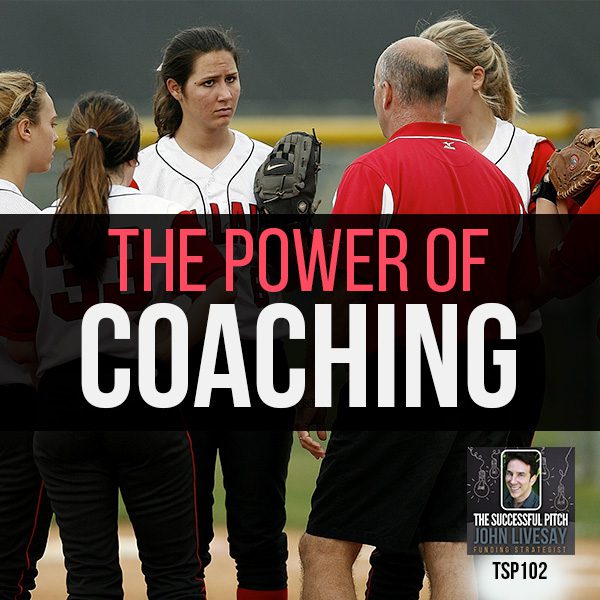
The Power Of Coaching with Michael Bungay Stanier
Posted by John Livesay in podcast | 0 comments

Episode Summary

The Successful Pitch guest today is Michael Bungay Stanier who wrote a wonderful book called The Coaching Habit. He says, “If you explain too much, you provoke too little.” He said, “The goal is to stay curious longer and rush to advice slower when you’re coaching people on your startup team.” He said, “If you don’t know what your trigger is to break a habit, then you can’t change it.” That, “45% of our waking time is spent on habits.” If you really want to change the way you coach people on your team and get coached by investors, you need to learn to break those automatic responses that you have of trying to fix everything. One key question he talks about is called the AWE question. Find out if that’s literally the most important question you can ask someone on your team.
Listen To The Episode Here
The Power Of Coaching with Michael Bungay Stanier
I’m very excited today because we have Michael Bungay Stanier, who is the founder and senior partner of Box of Crayons, which is a company that helps people and organizations all over the world do less good work and more great work. Box of Crayons is best known for its coaching programs that give busy managers the tools to coach in ten minutes or less. Who doesn’t need that? Michael left Australia 25 years ago to be a road scholar at Oxford University. He fell in love with a Canadian and that’s why he lives in Toronto. He’s also lived in London and Boston. He’s written a number of books. His latest is called The Coaching Habit: Say Less, Ask More & Change the Way You Lead Forever. The book he’s proudest of is, End Malaria, a collection of essays on great work from leading thinkers that literally raised over 400,000 for Malaria No More.
Clearly, Michael knows how to raise money. He knows how to get things done in a short amount of time, and that’s exactly what you need to have a successful pitch. Michael, welcome to the show.
I’m so excited about this. I’ve always thought how the art of a great pitch is as much as anything to provoke curiosity as it is to besiege people with information. My humble and obviously largely ignorant position around this is people often explain too much and provoke too little. I think great questions can provoke something really interesting. I think we’re going to have a great conversation here.
[Tweet “Explain too much and you provoke too little.”]
When you explain too much, you provoke too little. You’re absolutely right. The whole goal of a pitch is to get people to say, “Hmm, that’s interesting. Tell me more.” Not to tell the whole thing in a ten-minute pitch or 90-second elevator pitch. One of the quotes you have in your book, The Coaching Habit, which really stood out to me because I’m a big fan of Jonas Salk. I’ve actually been to the Salk Institute. I got to be friends with his widow, Françoise Gilot, who was with Picasso before she was with Jonas Salk. She’s got quite an interesting life.
That’s a woman who knows how to pitch.
She does indeed. She was interviewed on Charlie Rose and he said, “Look, you have been with two of the most powerful men of the 20th century. What do you attribute that to?” She said, “Lions mate with lions. They don’t mate with mice.” She had a very strong sense of self, which totally ties into that’s what you’re looking for when you pitch an investor. You have to be just as confident. You don’t have to know everything, but you have to be able to have a strong sense of self to get someone to want to fund your idea or your startup.
Jonas’ quote here, which I just love, it’s a great way to open your book and our conversation is, “What people think of as the moment of discovery is really the discovery of the question.” Clearly, that relates to what he did with Polio discovery. Also, it’s very relevant to the concept of pivoting in the startup world. Michael, what made you pull that quote and give it a whole page? I just love that you did.
The heart of the book, the heart of the work we do is actually trying to increase many curiosities in this world. I’ve been talking about training, promoting the power of coaching for a long time. Over the years, my explanation of what coaching is has got simpler and more and more humble. The first thing is I’m not trying to turn anybody into a coach, just trying to have leaders, managers, entrepreneurs be more coach-like, which is different. When people go, “What does that mean? What does more coach-like mean?” It’s about this: How do you stay curious just a little bit longer? How do you rush to action and advice just a little bit slower? We are all so wired to rush into, “Let’s get it done, let’s have the answer, let me tell you what to do.” There can be something so powerful about, how do we stay curious just a little bit longer. It means that where we end up is likely to be a little bit more interesting.
[Tweet “Stay curious longer and rush to advice slower.”]
That’s so fascinating because one of the things investors tell me all the time is, “We want to invest in people that are coachable and not just take our money but let us give them some advice and ideas.” This concept of being coachable and learning how to be a coach to your team is completely intertwined. That is really a very exciting way to look at that that I don’t think I’ve ever heard anybody talking about. That’s why you’re the perfect guest to really bridge that concept of, “If I want to be perceived as someone who’s coachable to an investor when I pitch, I want to be able to coach people on my team to be more productive and feel appreciated so we can impress the investor that we have a good team here.” The topics that you’re going to talk about from your book, The Coaching Habit, is really spot on in my mind.
I think it will be useful for folks.
I was going to ask you, one of the things that really jumped out at me is you talk about 45% of our waking hours is spent in behavior that are just habits. I thought to myself, “Wow, almost half my waking time is just…” I know I have some routines and a little bit of a rut here and there, but even the way I respond to people is a habit, isn’t it?

The Coaching Habit: Say Less, Ask More & Change the Way You Lead Forever
Book by Michael Bungay Stanier
You’re right. There’s a study from Duke University. I came across that first quoted in Charles Duhigg’s book, The Power of Habit, which in a sea of terrible business books, this is actually a pretty good business book. It’s disconcerting when you think about it. On the one hand, part of why we are brilliant as human beings is we’re a habit machines. It’s what allows us to get through the day. Most of what we do is actually run by our unconscious brain because it’s the far more powerful engine, the big part of our brain. It just means that we don’t have to think hard about getting dressed. We don’t have to think hard about going to sleep. We don’t have to think hard about driving into work. We don’t have to think about any of that stuff. It’s kind of an autopilot.
It’s a blessing and a curse. It means that on the other hand, because the brain is all about, “How do I save energy? How do I be efficient?” We get to be efficient with that stuff. On the other hand, it does take us down ruts and pathways of behaving that may no longer serve us. One of the ways to be thinking about this is the building blocks of behavior change are habits. That’s useful for everybody listening and just as individuals, which is if you want to do something, you’ve got to understand the science of habit building.
Knowing that so many people listening in are in start-ups, are in small entrepreneurial companies, the other key thing to takeaway here is that what your organizational culture is, is a collection of habits. It’s the way we do things around here when we’re not really thinking too hard about how we do things around here. Everybody knows that one of the reasons people invest, one of the reasons organizations flourish is your corporate culture. You know the Drucker quote, “Culture eats strategy for breakfast.” If you want to be building a culture that eats strategy for breakfast, in other words that will flourish, in other words that will have impact, in other words that will get investment, you’ve got to be thinking about your culture. If you want to think about your culture, you have to be thinking about your habit. What are your habits? Particularly those as a founding team because the founders’ habits so deeply influence the culture that that organization will have.
The culture is everything. That’s so important, even if you’re a small company, to have a culture that you can then decide if the investor fits that culture or not. If you don’t have that defined, then you really created a disaster for not only creating the right people on your team. One of the habits that you talk about breaking is the habit of trying to fix something when somebody comes to you with their problem that’s on your team. Also, the habit of not being comfortable with silence. Let’s break both of those down.
Let’s first talk about the kick-start question, when you want to start a conversation with one of your employees. It’s a drive by ten-minute check-in as opposed to this formal way of doing things. If you’re the founder of a company, your question, “What’s on your mind?” is really open-ended and it invites people to have the focus beyond them without you saying that you’re going to fix anything.
What’s useful about what you’re pointing at is part of our strong belief is twofold. First is coaching is at its best, not an occasional formal, “Hey John, come into my cubicle because we’re doing our coaching session together.” That just fills everybody with dread. I want people to be thinking about coaching as a way of showing up and being with each other. Every interaction can be a little bit more coach-like. We’re looking to go, coaching is at its best, it’s day-to-day interactions that you’re a little bit more curious and rushing to advice next and just a little bit slower.
The other belief we have is if you can’t coach in ten minutes or less, you just don’t have time for this coaching stuff. You’ve got to be able to get into a real conversation fast. Part of the baggage of coaching is everybody goes, “I don’t have time for this. I don’t have time for this touchy, feely HR stuff. We’ve got to get stuff done.” Of course that’s true, you’ve got to get stuff done. But what you want to do is make sure you’re getting the right stuff done, not just getting stuff done.

“What’s on your mind?” is a way of saying, “Look, your choice.”
To do that, you’ve got to get into the real interesting conversations more quickly. That’s part of the role of the kick-start question, is to ask, “What’s on your mind?” Rather than in most one-to-ones where you just report out on that old stuff that everyone has been doing and honestly everybody’s a bit bored by this conversation. “What’s on your mind” is a way of saying, “Look, your choice. You get to actually do or tell me what you want to talk about, it’s up to you. But let’s go somewhere important, somewhere that’s exciting you or worrying you or consuming you, or filling up your life. Let’s go there, let’s have a real conversation.” That’s the power of the kick-start question.
Within that, you talk about the three Ps, the Project side, the People side and Patterns that you might see that could get in your way. That’s to help people if they say, “I don’t have anything on my mind.” Because some people, especially younger people, I don’t want to pick on any younger people, but the go-to response to “What’s going on” is, “Nothing.” One word answers. Even though you ask, “What’s on your mind?” they say, “Nothing.” Then you’re like, “What’s going on this project? What’s going on with your coworkers? What’s going on with this pattern of having trouble getting your projects done on time?” or something.
You can always frame context around it. “Hey, I know you’re working on this, this is your key deliverable this month. In terms of hitting it out of your park, because that’s my expectations for you, that you’re going to be brilliant in 30 days’ time. Let me just check in with you. What’s on your mind here?” If they’re like, “Nothing,” probably they have got this totally under control and it’s awesome, or they don’t know what’s going on, in which case maybe I need some sort of intervention. It actually leads us to the next question, which is number three in the book.
In the book we just say, “Look, if you have seven good questions, you can go a long way down the path to be a more effective leader and more effective manager.” Question number three is the focus question. When they come back to you and say, “Okay. John, here’s what’s on my mind. Blah blah blah …” What this is going to do to most people is trigger the advice monster. “Here’s my challenge.” They’re like, “Good. I’m about to add value here by telling you what to do, how to fix it, how to solve it, what your opinion is.” Here’s the problem, you’re probably solving the wrong problem because the first challenge that shows up is almost never the real challenge.
The second thing you’re doing is you’re effectively disempowering this person. This is a perfect opportunity for them to figure some stuff out for themselves, to expand their own level of confidence and experience and trying to do that, all in the meantime supported by you. You snuff the moment out. You step in to fill the void with your ideas and your solutions. That’s why the focus question is so powerful, because the focus question is, “Okay, if that’s what’s on your mind, what’s the real challenge here for you?” That is when we start getting into an interesting conversation.
Let’s back up one second within that focus question, because you’ve tapped on something that is so valuable. Investors are going to ask you when you’re pitching a question either during your pitch to see how you respond to that interruption or if you get defensive or not. Secondly, they’re definitely going to ask you questions after the pitch. One of the big problems I see, time and again that I coach my clients on not making, is make sure when you get asked a question by an investor, that you rephrase it to make sure you understood the question right. Because if you don’t answer their question, they’re going to think you’re avoiding something and not invest in you because they don’t trust you.
This whole concept of answering the wrong problem just because someone says what’s on their mind without being comfortable with silence enough to say, “I just want to make sure I understood your question to me.” After you answer it, really clarifying, “Did that answer your question?” I think that skillset you talk about of really getting people honed in on, “Is this what we’re focusing on? Are we complete now? Or do you still have more questions based on my answer?” That is what a good experience is for anyone.

That focus question, “What’s the real challenge here?” can be extremely powerful as a way of testing your own pitch.
You know this better than I do, I don’t have a whole lot of experience in Silicon Valley VC investment and that pitch process, I know a little bit but not a whole lot. Here’s my guess. If I’m an investor, I want you to make sure that whatever you’re building is actually solving a real problem. That’s the point of this thing. If you’re fixing something that doesn’t actually have a need, then there’s not going to have a big audience base for that. What’s the real issue that you’re trying to get to the heart of here? That focus question, “What’s the real challenge here?” can be extremely powerful as a way of testing your own pitch, your own proposal to say, “Yes, there’s a real need that we’re answering here.” If you don’t feel like you’ve hit the essence of what the real challenge is here, then maybe your pitch isn’t quite ready to go yet because you’re not going to hook some investor’s interest if you’re not really clear on the problem you’re solving.
That’s so true. In fact, the investors tell me, “The more you can show me that you understand the problem better than anybody else, the more I assume you have the solution better than anyone else.”
Exactly.
Let’s go to question number two. I love acronyms. Your acronym is AWE. You would be asking someone, “What’s on your mind?” Then they tell you, and then you can follow that up, and you said it’s a lazy way to continue a conversation, which is intriguing to most people because they’re like, “What? I’m not lazy.” But just having this prepared really keeps the doors open. Tell us what AWE stands for.
We make a proud boast in the book that this is in fact the best coaching question in the world. AWE stands for, “And What Else?” There’s always that moment of slight anticlimax where you make the announcement “And What Else?” is the best coaching question in the world. Everybody goes, “Oh.” I was hoping for something shinier and louder and brighter than that. “And What Else?” has a double impact.
First is, you can know for sure that the first answer to a question is never their only answer. If I’m on the other side of the table and I’m an investor, and I’m asking you a question of somebody and I go, “So, what is the blah blah blah?” Whatever they say, I’m not going to be interested in what they say. I’m actually going to ask, “And what else is going on here?” It’s when you ask, “And what else?” you get into often the better answer, the real answer, or you find gaps in people’s knowledge. What else can be a really powerful as a way of going, there’s always more, the first answer is never the only answer.
[Tweet “A.W.E.- And What Else?”]
In therapy, when someone comes in and says, “I’m here because my spouse and I are always fighting about who does the dishes.” You go, “Okay, and what else is the problem?” “The real problem is …” It’s never about the dishes.
The other thing that’s powerful about the “And What Else?” question is, it’s a self-management tool. When we train people and organizations to be more coach-like, one of the key things we’re changing is this difficult but simple behavior change. Stay curious a little bit longer. Rush to action and advice just a little bit slower. The problem is that that habit runs deep for many people. One of the powers of “And What Else?” is that when you ask that, you’re actually staying curious a little bit longer. You’re actually self-managing your own desire to rush and fix it, solve it and sort it out. It can be really powerful for that reason as well. That’s why we think it’s got this one-two blow that makes it such a powerful coaching question.
It’s that breaking that habit of, “Just let me answer that presenting problem and then move on.” You usually try to ask that question three times, no more than five. That’s going to take some practice to break out of that habit, before you come up with your advice.
It feels just a whole lot better to be telling people what to do. Somebody comes into your office, your cubicle, on the phone, whatever, and goes, “How do I …?” You puff up a bit inside like, “Awesome. I get to be smart. I get to be in control of the conversation and I get to add value. I get to assert my seniority. I get to show off how brilliant I am.” It’s awesome giving people advice. The only downside is this, A) nobody really follows our advice. They just don’t. They listen, they nod along. They act on it far less frequently than you think. In part, that’s because you are solving the wrong problem. You’re trying to fix the first thing that shows up rather than the real thing.
Thirdly, your advice actually just isn’t as good as you think it is. You’re pretty confident, but honestly it’s not that great. It might be sometimes, but often it’s not that great. Even though it feels better to give advice, in yourself, “I feel in control here,” it actually doesn’t play the bigger game. Asking a question is harder because it’s ambiguous. It’s uncertain. You’re empowering the other person. You’re handing control to them with the conversation. It’s less comfortable to sit in but often has a far more impact.
I’m a big fan of storytelling and using stories to really hammer home a point. You did a great job in your book talking about the AWE question when you talk about the three year olds being told not to play with a toy. Can you tell us that story?
It’s a great story about self-control. The way I remember it being told is, it’s either with toys or with marshmallows, but it’s basically to say to kids, “Here’s a simple task for you.” Either don’t eat the marshmallow or don’t look at the toy. If you can do that for like two or three minutes, you get a prize. You get another toy, you get another marshmallow. You get something that’s great. If you can’t resist, then you miss out on the toy or the marshmallow or whatever it might be. Three year olds find that incredibly difficult. There’s a really interesting correlation between the kids that manage to resist temptation as two or three year olds, ones that grew up with a greater sense of self control and therefore success in their future lives, rather than the ones that didn’t have that and maybe didn’t succeed to the same extent.
I remember with this story you’re telling in the book about the toy is even after some of them said, “I didn’t look at it.” You just ask the next question, “What does the toy look like?” Then they’re busted because they describe what the toy is. Asking that additional question really gets to the truth of the matter, which is my big favorite takeaway from that.
You have three things in here about being successful coaching yourself, being coachable: be lazy, be curious and be often. We’ve touched on the “be lazy” by the AWE question. We’ve certainly talked about “be curious” longer than you are willing to take action. Just this concept of “be often,” can you expand on that one?
Let’s go back to “be lazy” just a little bit because that’s such a provocative thing to say. We know that people in startups are working like crazy weasels. Nobody’s sitting and lying around on a hammock. You might be in one of those places where you’ve got hammocks and bean bags and stuff where it looks like you’re relaxing, but everyone knows you’re putting in hours and hours and hours. “Be lazy” is such an anathema to what most people are used to hearing or assuming that requires success.

“Be lazy” is about stopping rushing in to do the work for other people.
I’m sure most people have already figured out why we’re saying “be lazy,” which is about stopping rushing in to do the work for the other people. Not only does that leave you overwhelmed, exhausted, frustrated, too much work on your plate, a bottleneck for your team. But it also dis-empowers those around you. You’ve hired these brilliant people and then you don’t trust them because you rush in to doing the work for them. You diminish their potential. You diminish their impact while leaving you overwhelmed.
I’m not saying never be helpful. I’m not saying never give anybody advice anymore. That would be ridiculous. I’m saying, can you slow down the rush to move to action, the rush to move to advice? That’s the whole piece around “be lazy,” which is if you can just hold back for a minute or two. Let’s make it a challenge, 120 seconds. Can you go two minutes without telling people what to do, without giving them advice? Just see how that shifts the dynamic of work.
Being curious, we’ve talked about it. Our basic stand is that people are advice-giving maniacs. They don’t even know what the problem is, but they’ve got some initial ideas on how to fix it. How do you move to questions? In the book we say, seven good questions are all you need to really elevate your leadership game.
Being often connects to this piece we’ve talked a little bit about before, which is just to say, “Let’s not make a big deal about coaching.” This isn’t some sort of a formal conversation where you take off your normal clothes and you put on your coaching outfit, like, “Okay, I’m coaching you now and we’re going to do active listening and wear pastel colored clothes, whiff perfume in the air.” It’s merely saying, every interaction with somebody, be it one-to-one meeting, team meeting, email, chat, any of that stuff, you can lead with a little more curiosity.
The metaphor we use is if you’re looking to have impact in the way that you manage and lead, and the way you have impact is you help people have new insights about themselves and about the situation. You help them change their behavior so they’re doing things differently. Then you help them, through that, have increased positive impact. What you need to do is be lazy, be curious and be often. The metaphor we use is, “Drip irrigation always beats a flush flood.” Little interactions are far more effective in driving behavior change than one occasional big push, one big wave.
The same thing is true about expressing your feelings too. If you let it go like a fire hydrant as opposed to the drip system, then people go, “Where did that come from?” You have to keep it all going. You’ve really touched on the importance of breaking this habit of feeling like we need to fix everything right away. You have a formula that I’d love you to go through: when this happens, instead of, and the 60 seconds. Can you touch on those?
This is a new habit formula. You’ve heard me say that there are seven good questions in the book. Actually, the very first chapter is so focused on this habit building piece. If you don’t understand how to change you behavior through creating new habits, you’re always going to be struggling. You’re always going to be behind the 8-ball. I’m no original researcher here. I’m standing on the shoulders of giants. People like Charles Duhigg, BJ Fogg, who is very well-known in Silicon Valley. He’s got a great website called TinyHabits.com. Leo Babauta, also based in California, ZenHabits.net, and a bunch of other people have all thought long and hard about the signs of behavior change and habit building.
We’ve taken what we think is the best to make a simple formula. When this happens, instead of, I will. It’s got three parts to it, I’ll break those down for you. The first part is, when this happens. What this is all about is articulating what the trigger is. The trigger is the context or the situation or the occasion, the moment that starts the old behavior that doesn’t serve you so well. It’s that moment. If you don’t know what your triggers are, it’s always impossible to change a habit, so figure out your trigger.
It’s why you end up going, “Oh man, I said I was going to stop eating a pint of ice cream at 11:00 at night and here I am holding a pint of ice cream and I’m half way through eating it. How did I get here again?” That’s because you’re not sure what your trigger is, so you’re not aware of that thing that sets you down that path.
[Tweet “If you don’t know what your trigger is, you can’t change it.”]
The second part is “instead of” and that’s where you get really clear on what the behavior is that you want to change. If you don’t really crisp on that, it’s very hard to think of an alternative. When this happens, part one, the trigger, instead of the old behavior. In that context, we’re talking about, “I tell people what to do,” would be the broad summary of what that’s going to look like.
Part three is you define the new habit in a way that takes 60 seconds or less to complete. That 60 seconds piece is part of BJ Fogg’s contribution to this work. It’s got great insight. If you define a habit that takes more than a minute to do, your big brain will basically find a way to hack the system and get you back to doing the old way. There’s always a reason not to spend more than a minute. Who has time for that?
The story he tells us, which is a great one, is trying to get to floss more often. We’ve all had that moment where we go to the dental assistant and she’s cleaning her teeth and she goes, “How the flossing going?” We confess to going, “I’ve flossed six times in the last 48 hours” to make up because I haven’t flossed at all up to now. Here’s the whole piece of 60 seconds or less. His commitment to flossing was, “After I’ve cleaned my teeth, I commit to flossing just one tooth.” Because he knows that if you floss one tooth, you’ve got this micro habit defined so that you’re set up now. You’re like, “I might as well finish off the job, because why wouldn’t I?”
So it is with the habit piece, the coaching piece, which is around, “How do you use this to build a coaching habit?” For instance, it could sound something like this. When I have my weekly one-to-one meeting with John and he goes, as he always does, “Michael, how do I …?” That’s part one. Instead of sighing deeply inside and then going, “John, let me tell you again how you do this, blah blah blah …” and explain it.
Part three. I will ask him, “John, let me ask you, what’s the real challenge here for you?” Now, you’re walking away not with an abstract commitment to be more coach-like, because that’s noble but largely useless. What you’re walking away with is a really specific way to use one of these coaching questions that can be so powerful. When I’m on my one-to one-meeting with John and as he always does, he asks me, “Tell me what to do?” instead of telling him what to do, which is what I’ve done for the last two years, I’ll ask him, “What’s the real challenge here for you, John?” Now, you’re into a completely different conversation and I get to practice being lazy, being curious, being often.
This whole 60-second flossing one tooth, the same thing is too in the analogy of, if I know I get triggered and want to eat a pint of ice cream at 11:00 at night when I start stressing out about my money, that’s my trigger. When that trigger happens, I’m now going to go outside no matter what the weather, and for 60 seconds, just walk. Then if I still want the ice cream, I’ll have it. You’ve broken the pattern, the habit of, “I get triggered by fears of money and then I eat. By just going for 60 seconds, I’m taking a walk.” If you can just get through that 60-second anxiety and then the fear is lowered, and you probably won’t need to eat the whole pint of ice cream then.
If pints of ice cream are your problem, there are all sorts of great alternative things you can do. You drink two pints of water. You call up your ice cream friend and go, “I want to eat ice cream, talk me out of it.” There are a lot of things. The secret thing is disrupting the mindless step towards the freezer to pull out the Ben and Jerry’s. You’ve given us lots of great examples on how to do that.
I just want to sum up how you were so resilient and use your sense of humor, two great qualities that investors look for in someone they want to fund. Let’s face it, people like to give money to people that they like and are fun to be around. It’s not suddenly you have to be a standup comic, you have to be authentic. When you were trying to get your book published, you realize that the team was the key factor between getting a yes and getting a no. Let me tell you that that’s the key factor in getting a yes or no with a startup. Any last thoughts of what people can do to show their resilience and possibly even sprinkle in some bits of humor into their personality?
One of the things that we talk about in the book is the TERA model. That’s at the heart of the newest science of engagement. Here’s what you need to know. This is happening in the moment when you are pitching. As the investors are sitting across the table from you, your brain and their brain, everybody’s brain is scanning the room and going, “Is it safe here? Or is it dangerous?” If the brains thinks it is a dangerous situation then it moves into a fight or flight mode. What does that mean? What does that look like? You’re in the defensive. Everything is black and white. You assume it’s you versus them. You assume that things are going badly rather than going well. It’s actually not a great place to be because it’s all about protecting you at all cost. If things are going well, if it feels safe, if it feels like a place of reward, you’re more generous, you’re more subtle, you’re nuanced, you hear better. You are able to be more agile in the way that you think. A better version of yourself shows up.

What does TERA stands for? Tribe, Expectation, Rank and Autonomy.
You can guess that when you are in a pitch mode, your brain is freaking out. You’re like, “It’s dangerous here. It’s not safe at all.” Honestly, that could be happening with your investors as well. It behooves you to do whatever you can to make it feel like a place of reward for you and for them when you’re in this pitch mode.
There are four key driving factors that influence that. We call it The TERA model. It’s another acronym. What does TERA stands for? Tribe, Expectation, Rank and Autonomy. Tribe-ness, the basic question the brain is asking you is, “Are you with me or are you against me?” Expectation, the brain is going, “Do I know it’s about to happen here or do I not know?” Rank is basically saying, “Are you more or less important than me?” Autonomy is saying, “Do I get to have some choices here or are you making all the choices for me?” That’s actually a really powerful insight to go, “How do I have a pitch session where the TERA quotient is high rather than low? Because that’s going to help me and it’s going to help my investors like me more. I’m going to like them. They’re going to like me. If they like me, they’re going to give me money.”
The question about humor, one of the most powerful ways to increase a sense of tribe-ness is to have people laugh together. If there is way of making people laugh early on, so much the better. One of the greatest ways of doing that is through self-deprecation because what that does is it shows how confident you are in yourself, that you can be a little self-deprecating. That’s not to mean you’re apologetic. It’s different. You don’t want to be apologetic.
For instance, sometimes when I’m introduced to giving a keynote speech or something like that, I’ve got a bunch of things in my bio that are status building, makes me sound more important than I am. I’m a road scholar. I was the first Canadian Coach of the Year. I’ve just been chosen as the number two coaching guru in the world. It’s all great. But also in my bio it says, “Michael was sued by his law school lecturer for defamation. He was banned from his high school graduation for something known as the balloon incident. His first piece of writing was Mills & Boone short story. He knocked himself unconscious while being at labor by hitting himself on the head with a shovel while trying to dig a hole.”
There’s a way that this makes the audience laugh at me. I’m fine with that because what that does is it increases their status, their rank, and diminishes mine slightly. I do that in service of a better experience. I know that if I’ve increased their rank, they’re more engaged with what I’m about to say.
I can see why you won Coach of the Year. I have the build you back up. What’s the best way for people to follow you on social media and your website and all that good stuff?
If you’re interested in the book, there are seven good questions and the secret to habit, the best place to go is TheCoachingHabit.com. Even if you don’t want to pick up the book, there’s a ton of downloads, videos, audiobooks, all sort of stuff that you can pillage there. If you happen to be interested in our programs at Box of Crayons, BoxofCrayons.biz. In terms of social media, I’m on Twitter @BoxOfCrayons and LinkedIn is the other social media place I hang out at. I’m actually the only Michael Bungay Stanier in the entire universe, so you should be able to find me.
Congratulations on that. Not many people can have a unique name like that. Michael, it’s been a pleasure. I can’t thank you enough for sharing your insights on the AWE question and the TERA model too, so we can bond with people and get over our fear of pitching in front of anybody with some unique tactics here. Thanks again.
It’s been a real pleasure, John. Thank you for having me.
My pleasure.
Links Mentioned
- J Robinett Enterprises
- John Livesay Funding Strategist
- The Coaching Habit
- Box of Crayons
- End Malaria
- Malaria No More
- Charles Duhigg
- TinyHabits.com
- Zenhabits.net
- BJ Fogg
- Michael Bungay Stanier LinkedIn
- @BoxOfCrayons
- TheCoachingHabit.com
Crack The Funding Code!
Register now for the free webinar
Fox 11 News Los Angeles John Livesay The Successful Pitch book
Share The Show
Did you enjoy the show? I’d love it if you subscribed today and left us a 5-star review!
-
- Click this link
- Click on the ‘Subscribe’ button below the artwork
- Go to the ‘Ratings and Reviews’ section
- Click on ‘Write a Review’