

The Selling Well With Mark Cox
Posted by John Livesay in podcast | 0 comments

Sales is a critical part of any business. So, how do you ensure your sales team is supported so they can perform at their best? Here to share his insight is Mark Cox, the Chief Revenue Officer of In the Funnel Sales Coaching and podcast host of The Selling Well. Joining John Livesay, Mark highlights the impact of mindset on performance by looking into how the sales process is about working together with your team and a relentless focus on the client’s needs. Stay tuned as he shares advice for sales leaders on bringing important strategies to propel your team and your business forward.
—
Listen to the podcast here
The Selling Well With Mark Cox
Our guest is Mark Cox who’s the Founder of In The Funnel, which is all about helping sales teams become more productive. He said, “Don’t try to describe a color no one has ever seen before when you are painting a picture, and no one ever goes to a sales call and says, ‘Did I over prepare for that?’” Instead, he said, “You must have a relentless focus on what the client needs.” Enjoy the episode.
—
Our guest is Mark Cox, who has sold, structured, and negotiated some of the largest single-family transactions in North America, including a $1 billion transaction with the top US bank. After several years working for large corporations, he founded In The Funnel, ITF, sales coaching with the mission to dramatically improve the performance of business-to-business sales teams.
With a focus on strategy, process, tools, and discipline, he has helped hundreds of companies achieve predictable double-digit sales growth by implementing the ITF proprietary sales playbook. He’s been named one of the leading sales consultants of 2022 by Selling Power Magazine. He’s also been appointed to partner with the Canadian Professional Sales Association with all of his training content being officially accredited. While he’s not coaching clients to sell better, he can also be found goaltending in the local hockey rink, playing drums, or doing fitness training. When he’s not doing all of that, he hosts his own podcast. It’s called The Selling Well. Welcome to the show, Mr. Cox.
First of all, thank you so much for inviting me here. I have never been as excited about my past as much as when you described it. It sounds so much more exciting when it comes from you.
We try to bring a little passion and energy to everything we described, edify our guests, make them feel welcome, and let the audience know how much of a treat they are in for, which is certainly the case with you. Before you start playing hockey and winning all kinds of sales awards, can you tell us a little bit about how you got into sales in the first place?
This is our second conversation and I was so looking forward to it. I will be honest. I fell into sales. During college and university, I got the opportunity to run a small business, these student franchise companies for painting, and so forth. Way back in the day, years ago, I had that opportunity, maybe even more. It changed my life. It made me realize that my heart that I’m probably an entrepreneur and I loved every aspect of it. It was crazy hard. It was my first introduction to sales.
Even back then, this organization at the time was called AAA Student Painters, and now it’s called the Student Works. They were so good at teaching and coaching on sales, making sure the whole conversation was about the client and their better future after having worked with you. Looking back, I’m amazed at how good that sales training was.
I partied my way through university for a few years, and when I graduated and was looking for a job after starting that company in a couple of different areas in North America, I went full-time into this student franchising. I ended up deciding I had to get back into the corporate world, and the one skill that was easy to translate was sales. I have been an entrepreneur.
When you are applying for a job or talking to somebody in HR about running a business, they have no idea what you are talking about. You are describing a color they have never seen. When you are talking about your capabilities in sales, they could sense that. I started selling photocopiers as my entrance into the corporate world into professional selling with a great company Kodak in the early-90s.
What a phenomenon that company was. Who would have ever predicted they would get out of business? It’s like Google going out of business. That had been around for so long and did so many things right. Also, Xerox had great sales training, I imagine.
They did. They are a good example on the business side. They never wanted to cannibalize their cash cow. When you study them as a business case now, they had traditional film, insanely profitable, and digital film was coming on the table. They invented it, but they’d never invest enough in it because they are always worried about cannibalizing the cash cow.
[bctt tweet=”Have a relentless focus on the clients’ needs.” username=”John_Livesay”]
While they waited to decide what to do, other companies cannibalized their cash cow. Agfa, Sony, and all these guys got into it, but we got hired and we went down to Rochester, New York, and the sales training program was 90 days. Put up in a beautiful townhouse, and we went to a marketing education center, which was a sales university. Each week you had some tests, demos, and recorded sales calls that were being graded. You were rated against the other 80 people in the program every week. Every week, they tapped a couple of people on the shoulder, and unfortunately, they had to go home.
Hearing that is so valuable for people who are in sales to realize that it is a profession like being a lawyer, doctor, professional athlete, or actor that there’s a structure to it, and there are people who don’t always graduate, especially in law school. Also, it helps your mindset go, “My confidence is going to be so much stronger because I’m not just learning product detail. I’m role-playing. I remember when I went through sales training, we were timed.” How long did it take you to give the person your business card in case they forgot your name?
It’s little subtle details like that of trying to anticipate somebody being embarrassed to have you repeat your name again, and you hand the business card back when people did that in a way that the person didn’t have to read it upside down. Taking in a lot of details, especially in my case, I was selling multimillion-dollar mainframe computers and there were so many different decision makers, the financial people, software people, and analyzing.
What I admire about your work is the structure and making sure people don’t forget a step. It’s ironic because if you are baking a cake and you leave out a major ingredient or have it at the wrong temperature, that doesn’t turn out. The same thing is true in sales. I would love you to speak to that. How important is it to have a process and then follow it?
Which mainframe company were you with? Which computer company were you with?
A company called Amdahl that was owned by Fujitsu.
I remember Amdahl. That was a great time to be selling those mainframes. Those were early days for large computing technology. It’s competitive, but those were great days indeed. You described a complex sale. Those were the earliest days of the complex sale with multiple people influencing the decision to move forward.
One of the important things now is that there are steps in any process. Edwards Deming has that comment. I will get the quote wrong but, “It’s not enough to work hard. You have to know what to do and then work hard.” There is this way that you try and engage somebody and build trust and credibility, and then earn the right to proceed with a discussion or conversation about them and their business.

Sales: It’s not enough to work hard. You actually have to know what to do and then work hard.
You can collaborate to figure out how you can help them get to a better future. Whatever that means for their company, and for that particular individual in the company because everybody has these personal and emotional things. They have these things they are trying to accomplish for their client. Whatever role you play in professional sales, whether you are that sales leader, that process is a lot about working with your team and ensuring that, the Liz Wiseman, you are multiplying their capabilities instead of diminishing them when you are trying to coach them and develop them that you are coaching them.
From the salesperson’s perspective, there’s this constant and relentless focus on, “How do I help the other side of the table run a better business?” If they believe your intent is always to help them and that you’ve got some skills, experience, capabilities, and resources to help them do that, I don’t think they go quiet on you. With sales development, the more junior roles in professional sales, but hard now, I do think the checklist and the coaching are so important for them because those poor folks get hired on, get completely lost and overwhelmed, and turn at a shocking rate.
You have a statistic that about 1/3 of salespeople are churned every year. The Great Resignation, the lack of training, overwhelm, and all of those cost companies so much money, doesn’t it?
It sure does. It’s shocking. It’s the bigger cost. You were gracious enough to ask me about my start in professional sales. When I started selling back in the day and I’m selling photocopiers, it was a pretty big deal to get my first corporate job. For my generation, that first start was important and everybody knows you are in that job, and you’ve told your parents or a peer group.
I couldn’t believe how badly I felt for these people at Kodak who got tapped on the shoulder because it didn’t work out. There were tears. This was a major thing and the embarrassment and the impact on self-esteem for young people. That’s where I think about it a lot with the sales teams that we are coaching and developing. We have this responsibility to enable their success.
They have to put the work in. Don’t get me wrong and it’s 51% then, but there are too many environments that have this sink or swim and we’ll hire 30 and hope 15 works out. I don’t like the impact on somebody’s self-esteem or their future when they have got a mishit with the first job they get out of college or university.
When you talk about self-esteem, one of my big purposes and mission now is to help as many people, but specifically, salespeople get off that self-esteem rollercoaster because you get so attached to your results, determining whether you feel like you are a worthy person, let alone worthy salesperson. You are up and down all day long, vetting when you make a sale or not. Many salespeople only focus on the noes and not the yeses. They don’t celebrate the yeses. They move on. Maybe they had a boss that said, “You are only as good as your last sale.” What advice do you give people to make sure they don’t get on that self-esteem rollercoaster?
I’m a big believer in focusing on the positive. I’m no different. Nobody can see us now but I got a little journal beside me here. I do, particularly on a Sunday, sit down and jot down a few of the great things that happen during the week because you and I are entrepreneurs, and the professional salespeople out there are entrepreneurs as well. So much happens in a given week, and you are always on to the next thing. We rarely take a pause and go, “Let’s jot down or write down in a journal all the amazing things that happened this week.” That’s a big one. I like to do that. I find it changes my mindset setting. It gives me energy and enthusiasm for the week.
[bctt tweet=”What is your intent when you meet. ” username=”John_Livesay”]
The second thing is in sales we have got a tough job. We do things and we are trying to help people. At the end of the day, we introduce people to something they’d never thought of before, that can help their business in a way maybe they have never even considered before, and we invite them to spend money that they hadn’t budgeted to spend oftentimes. It’s a pretty tough thing to do.
I’d rather focus on the activities that I can control. If I try and do the right things, the outcomes will come. We have been through this for a long time. We have done things and great things have happened for us that maybe we didn’t deserve it. It just came our way. There were a lot of other times when we put enormous amounts of work, heartache, stress, and commitment into something and it didn’t go our way. I do find that everything reverts to the mean in terms of a large enough sample size. Over the course of a career, it’ll even out.
That’s great advice, especially for somebody starting out. I remember when I was interviewing for a job selling digital ads and I had never done digital, only print. I was giving it my all. I learned how to put a PowerPoint presentation together because I used to have an assistant that did that. I did all this research, mock-up, and preparation for this interview.
A friend of mine said, “You are certainly putting in a lot of effort for one interview. What if you don’t get it? Aren’t you going to feel bad?” I said, “I’d feel bad if I didn’t give it my all,” but a lot of people say, “I’m going to give a 50% effort. If I don’t get it, I will not feel bad.” What do you think about that mindset?
It’s so obvious what the right answer is. Have you ever left a sales call or left a client meeting and said, “I over-prepared for that, what a mistake?” I will be honest with everybody. Even at this stage with what I do, I remember a couple of years back, we had a great sales development team and someone said, “We have got this company and they want to talk to you and all of this.” I had a quick chat with the CEO and whether he was distracted, doing three things at the same time, or something didn’t go very well, and he said, “Come and see me.”
I had very little hope for this and the only way I agreed to see him was I was thinking to myself, “He’s in the same building as my gym. I will go in and go see him, and then right after that, I will do my workout and go home.” I remember showing up for that meeting. This was a few years ago. I hadn’t had time for the proper prep.
When I walked into his boardroom, he had our website up online. He’d been watching our digital video testimonials. He’d been contemplating getting us in for sales consulting. I knew the prep he did for the meeting immediately as I walked in. He was more prepared for that meeting than I was and the confidence came right out of my feet. You know that feeling. This was a few years ago, so I should have known better by this point in time.
I probably came out of an event where I was coaching people on now doing the same thing. I always liked that idea, whether it was playing a game of hockey or working out. I like to develop that DNA that says, “I will give it 100%. I’m going to do my best.” Sometimes things are going to go well, and sometimes they are not going to go well, but I will try and coach myself on the mindset that says, “If it doesn’t go well but I did my best, I’m going to sleep like a baby.”

Sales: Have you ever left a sales call or left a client meeting and said, “Boy, I over-prepared for that. What a mistake!”?
A skill is like a muscle. You get stronger and stronger at those presentation skills and interview skills and nobody bats 1,000 for every goal. That big picture zooming out is key. Since you are a Canadian and you play hockey, is it the Wayne Gretzky quote that says, “You anticipate where the puck is going?”
Thank you for making me comfortable by using a Wayne Gretzky quote. That’s the only language we speak as you well know. He said he’s not looking where the puck went. He’s looking at where the puck’s going. The other quote he’s well known for is, “You miss 100% of the shots you don’t take.” He was well-known that be shooting from behind the net and somehow would go in.
There’s a lot of positive there. One other note since you brought up our cultural hero, one of the things that he always said he learned when he was playing with a team called the Oilers and they were trying to win their first Stanley Cup. They were going against the team that had been on a roll, winning Stanley Cups, which was the New York Islanders in the US.
They, once again, lost to the Islanders in the final, and they were disappointed. As the Oilers left their dressing room, they had to walk by the Islander’s dressing room. They couldn’t believe what they saw. They saw the Islanders team walking around on crutches. Many of them had limbs in casts. What they realized was they were all warriors playing wounded, giving an enormous amount of commitment, and that woke up the Oilers. They didn’t walk away saying, “We are so talented. We’ll beat them next year.”
They started the next season saying, “We have learned something here about what commitment it takes to win.” They showed us. Thank you, Islanders. In the following year, they beat the Islanders in the final, and the commitment, and all those kinds of good things. I bring it up. When we were talking about self-esteem, sometimes when we have a failure in life, we see it as this scarlet letter.
I have had those failure failures as much as anybody else. When I was in my twenties, I started a business. It failed. It wasn’t like now. Now any startup that fails, it’s like a badge of honor. Back then, it was just a failure. That ever sit with me for a long time. It was because I had a bit of a mindset issue where instead of seeing it as an opportunity to learn, I used it as a judgment against myself and that stung. There’s this real opportunity for all of us to think about that, particularly in sales. If something goes bad, what can I learn from it to apply for the next time?
We talked about two companies we worked for before. In your case, it’s Kodak. In my case, it’s Amdahl. They are no longer here. What if those companies or us as entrepreneurs that are reading, start taking that Wayne Gretzky quote to heart and go, “Where’s the market going? Are print sales dying down? Maybe I need to learn digital. Are we ever going to be able to replace the number of digital sales with print sales? I don’t see a way path for that. What else can we do?”
That anticipation of what clients are needing before it becomes so obvious that the competition’s figured it out and you don’t have a product or whatever it is that’s causing you not to win is valuable. Doctors have meetings after they lose a patient to try and figure out what went wrong, learn from that every time, no finger-pointing. I don’t hear a lot of companies doing that in sales when they lose a sale. It’s a lot of finger-pointing. A lot of, “They beat us on price,” or whatever, and then move on. That’s not an in-depth analysis, is it?
[bctt tweet=”Being good at sales solves any other problem in a business for the most part because it’s going to bring revenue in the front door. It’s critically important. ” username=”John_Livesay”]
It’s not. Maybe it’s because some of those environments aren’t psychologically safe. I have no problem. Everybody jokes that I’m self-deprecating most of the time, but it’s also easy to be self-deprecating when you are running everything. Nobody’s judging me and I don’t feel it that way. I want to want to get better.
One of the things we have to think about is if we are going to do a loss review on an account or even do a strategy workshop, we have to go in and understand the rules of conduct. If we want to work on some collaboration or strategize on an account or a big deal we are working on, that meeting isn’t inspection and judgment about what the quarterback of the deal has or hasn’t done.
There might be a time for a little coaching there but put it into a different meeting. If you kick those things off and it’s not about an inspection or judgment, let’s assume you’ve got three other sharp people in a room here as your think tank to help. Maybe that’s a big topic in sales these days. Do we have environments where there’s psychological safety?
Let me ask a really basic question. Sometimes I have worked with sales teams. First of all, not everyone thinks of themselves as a sales team. I have worked with architects who don’t like to consider themselves sales and they have to go in and present. Some of them are so uncomfortable even standing up to speak. “Can’t I just stay seated and read my notes?” At a certain point, you go because I have told you all the reasons to stand up. Your energy changes. You come up in the room on and on. How do you work with people who don’t even want to stand up?
I will be honest with you. I may not be the biggest expert on that, but I do like to try and focus on the positives. I want to make sure that anyone we are working with knows our intent. A fellow by the name of Dr. Nick Morgan has got a couple of books out. His principle is he says, “When we meet someone, what we are always trying to assess is what’s their intent.” It goes back hundreds and hundreds of years that we shake hands. Remember when we shake hands? It’s to prove I don’t have a weapon where I’m going to club you.
To that extent, I’m always trying to make sure that folks understand the intent is only to help to make you better, but if that’s what you say, then you have to back it up. Am I saying that? I’m walking out of the meeting going, “Mark needs a little work here.” Am I being upfront and honest and practicing Kim Scott’s Radical Candor, but doing it so that you are not leaving a bruise? There’s a real art to that.
Feedback without leaving a bruise is one of my favorite things that you said. You also talk about virtual selling and certainly, with the pandemic, that was a big issue. One of my clients said, “Can you teach my sales team how to look and sound good on Zoom? They are uncomfortable presenting on camera,” especially if the client has their camera off.
It was interesting because I was talking to some of those people and they said, “What if a competitor is listening in?” They started making up all these worst-case scenarios. What if the doctor is not even listening? I’m like, “I don’t think virtual selling is going away. It’s going to be a hybrid like this return to the office.”

Sales: Sometimes things are going to go well and sometimes they’re not going to go well, but try and coach yourself in a mindset that says, “if it doesn’t go well, but I did my best, I’m going to sleep like a baby.”
They will be some people, all virtual, everybody, every day, 9:00 to 5:00, but this hybrid 3 days in 2 days off. We’ll continue the need to be good at virtual selling. That’s one of the things you’ve written about, and it’s one of the pieces of training you offer. Tease us a little bit with what you give people that help them in those situations.
Remember when we were kids and the first time you heard your own recorded voice? We can’t stand it and it’s, “I don’t sound that bad.” When I’m doing a face-to-face sales call, nobody’s recording it. I’m not watching myself in real time. You and I do these podcasts and I’m not sure how many of your podcasts you listen to after the podcast from start to finish, but it’s not that much fun.
We all have these kinds of barriers. None of us like seeing ourselves on camera or hearing our voices. A few of us who do become actors in Hollywood. Maybe you need that personality. A couple of thoughts for the meeting, there’s the Albert Mehrabian stuff that says, “A lot of communication is non-verbal.” With all of your training, you are much more of an expert in that area than me, but ridiculous percentages, well north of 80% of non-verbal communications. Where you are trying to make a connection, it’s important. A Zoom call or a video call sound, believe it or not, is more important than the visual.
It’s far more annoying if you can’t hear the person or there’s background noise and all of those kinds of good things. For all the salespeople out there, think of this. Where are you more compelling? If I’m trying to convince somebody and build a relationship and trust, is it best that I’m physically in their building, or do I want to pick up the phone? Easy answer. I have got to be in the building.
Virtual selling was a bit of a bridge between the phone and being in person. It’s the next best thing. If our intent is to make a connection, communicate clearly, demonstrate some energy and enthusiasm, and also play off some cues of other people, you’ve got to have the camera on. You got to be in the center of the screen. For some, they should be able to see your hands when you are on that call.
There are a bunch of subconscious ticks. Somebody else’s brain is going to be wondering about things, so you’ve got to be cognitive. Stress comes into play if you’ve got a complicated background. They can’t see your hands. You are not staring into the camera. You are not squaring the screen. For all of those reasons, remember that at the beginning of the pandemic, that’s why we are all so exhausted after five hours of meetings. Our brain was processing everything. When you are in a big group and you have the gallery view, so you can see twenty people at a time, it makes your brain tired subconsciously.
There are a lot of those things that come into play, and the only thing I can say to folks on the video side is that we have to get over it. None of us like ourselves on video. I’m not sure exactly why a lot of psychological stuff is in there, but it is critical for a connection. Try and stare into your camera, which is quite awkward because I can’t see you perfectly when I’m staring into my camera, but for you to feel a connection to me, you have to see my eyes and vice versa. Those are a couple of quick tips on the virtual side.
You’ve covered so many great tips. There’s no such thing as ever being over-prepared to relentlessly focus to my favorite, “Give feedback without leaving a bruise,” and now these great virtual tips. Do you have a last thought or quote you’d like to leave us with?

Sales: It’s a bit of a responsibility for all of us in sales today to make sure it moves forward as a profession and not a trade.
My first thought is to thank you, John. Your books are fantastic in terms of the importance of storytelling in sales. I love your focus on helping the self-esteem of salespeople. My last thought for everybody is that it’s a bit of responsibility for all of us in sales to make sure it moves forward as a profession and not a trade.
Applying that focus and some discipline, our relentless focus is on putting a client first or a prospect first and making it all about them. For the most part in most businesses now, the most important line item on a P&L is the revenue. Being good at sales solves any other problem in a business for the most part because it’s going to bring revenue in the front door. It’s critically important. It’s going to continue to be so, and it’s been a pleasure connecting with you again. I appreciate being a guest on your amazing show.
Thanks. If people want to reach out to you, they can find you at InTheFunnel.com where they can learn more about your sales workshops and your wonderful podcast, and explore learning how to be better at sales and drive that bottom line. Mark, thanks so much.
John, thank you. We’ll talk again for sure.
Important Links
- In The Funnel
- The Selling Well
- Radical Candor
- Better Selling Through Storytelling Method Online Course
Wanna Host Your Own Podcast?
Click here to see how my friends at Podetize can help
Purchase John’s new book
John Livesay, The Pitch Whisperer
Share The Show
Did you enjoy the show? I’d love it if you subscribed today and left us a 5-star review!
- Click this link
- Click on the ‘Subscribe’ button below the artwork
- Go to the ‘Ratings and Reviews’ section
- Click on ‘Write a Review’
Love the show? Subscribe, rate, review, and share!
Join The Successful Pitch community today:
- JohnLivesay.com
- John Livesay Facebook
- John Livesay Twitter
- John Livesay LinkedIn
- John Livesay YouTube
Win-Win Selling With Doug Brown
Posted by John Livesay in podcast | 0 comments

Overcoming objections is perhaps a salesperson’s biggest challenge when making a sale and the best way to do it is to make the deal a win for both parties. Doug Brown comprehensively discusses how this is done in his bestselling book, Win-Win Selling. In this conversation with John Livesay, Doug explains that storytelling, asking discovery questions, and doing follow-ups are immensely effective tools for win-win selling. If you’re having difficulty in selling and closing the deal, then this episode is for you. Join in the conversation and come out confident and ready to master the art of win-win selling!
—
Listen to the podcast here
Win-Win Selling With Doug Brown
Our guest on the show is Doug C. Brown, who is the Founder of Business Success Factors and also the author of Win-Win Selling. We talked about how 90% of people won’t buy unless they’re asked. What’s causing people to hesitate to ask people to buy? If you’re one of those people who hesitates to ask for the order, this is the episode for you. We also talked about how follow-up is just common courtesy and how in the dating world, if you don’t do it within 12 to 24 hours, you’re out of luck. The same thing is true in business. Enjoy the episode.
—
Our guest is Doug C. Brown, who is the CEO of Business Success Factors. He started working for family businesses at the age of three and now has built over 35 companies himself. He’s got three degrees. He’s America’s number one expert in revenue expansion and sales optimization. When he was at college, he supported himself by selling music equipment to the colleges and some of the world’s biggest bands, such as Billy Joel and the Eagles. He also served twelve years in the US Army where he was awarded a Distinguished Soldier. He graduated second in his class, and then went on to enroll at the Massachusetts Military Academy.
After his service, he worked at and became a top-selling sales representative for a $2 billion company, which laid the groundwork for him to form his own consulting and auditing company. He’s traveled to 47 out of the 50 States. I’m curious to hear which three he hasn’t been to. He’s been an independent president of sales and training companies like Tony Robbins and many others. His efforts have generated over $500 million in sales. Welcome to the show, Doug.
Thanks, John. I appreciate you having me on here. I’m very grateful to be here. It was Alaska, North Dakota, and New Mexico I haven’t been to.
I have not been to nearly as many States as you had. I highly recommend Alaska when the cruise industry comes back. It’s an incredible experience and New Mexico, Santa Fe is amazing and the hot air balloons in Albuquerque. You’ve got lots to look forward to. First of all, thank you for your incredible years of service. I think that’s worth acknowledging. I’ve had some other veterans who have taken their learnings and expertise from the military into the business world. The most intriguing thing for me and the readers from that wonderful introduction that you have is, can you tell us what it was like to go from selling equipment to colleges to getting to be hanging out with the Eagles and Billy Joel?
I was hanging out with Billy Joel’s people. The guitar players in there. It was awesome. I had Billy Joel’s band. I had Paul McCartney’s Wings. I had some of their peeps. I had Extreme Boston, Aerosmith, Joe Wall, the Eagles, and so on. There were others, too. What happened was I was selling music equipment, supporting myself through college, and then one thing led to another. Some of these guys were starting to come into the store and I got to know them. I started becoming their preferred provider. I went to Berklee College of Music in Boston so that’s opened up some other avenues for me. It was a lot of fun. It was one of those things that you were out all night, you get up and had to be back to work at around 10:00 to 10:30 in the morning. You do it all day long and then you go back out again at night. It was how I lived my life going through college.
What a great foundation between the military, the music, starting all these companies and getting to work with big ones. I’m fascinated by CBS television. What were you doing for them?
I was working with the president of CBS eventually. Initially, I started working with CBS as a division that’s like PBS, Public Broadcasting. Their concern and frustrations were they weren’t producing enough sales. I got the call to come into work with them. At that time, they had guys who have been there forever. I was surprised that the imprints of their bodies weren’t firmly affixed somewhere. They were trying to sell like the old Tin Men days, where you beat up on the client and move it forward. We had how to adjust that. Eventually, we ended up having conversations with the president at that time and I worked with them for a while. It was a good gig.
[bctt tweet=”Follow-up is common courtesy.” username=”John_Livesay”]
For those of you who may not know, networks have to convince advertisers to buy time to advertise on their show. They have something called an upfront, where they try and wow them with their pilots. It’s all typically ratings-based, but it’s gotten a lot more sophisticated now where there are some stories to tell, instead of pushing numbers, which is the old way, Tin Men. You referenced it. You’re talking about it there. Sophisticated selling requires storytelling and not more so than in any other industry, which is the entertainment industry. Having lived in LA and worked in that business, the good salespeople would say to an advertiser, “This particular show is going to attract families and your Olive Garden. You’re going to want to be in an environment that is family-friendly while also having some emotion.”
I remember talking to the CMO of Olive Garden about that very thing, “How do you decide which shows you advertise on?” They were going to go on The Good Doctor, which targeting families but also had some drama. It’s very difficult now for families to find a show that they all want to watch because everyone can watch something separately. That industry has changed. I’m sure they needed your help to figure out, “How do we make our show stand out to advertisers against all the other shows?”
You brought up the keyword, which is storytelling. We used to do something called the core story. It’s telling the picture and getting motivation, inspiration and a little bit of pain when needed throughout the story to get the clients to understand to move and you’re right. That industry has changed so much. Streaming services are everywhere and like any technology, it evolves. What was happening is they weren’t evolving their sales process around that. Now, with things going on, even more so. Storytelling is even more important now than it used to be in the past because you can’t get together now, have drinks, lunch and all that other stuff. People are so jaded from not being able to see one another that they love a good story. Isn’t that the way we learned as children? We were told stories.
When you talk about the process, you have worked with so many companies and you see consistent problems across industries. One of them, from what you have said, is that there aren’t systems in place. When that happens, let’s say, for whatever reason, you’ve got an onslaught of demand. Your leads are being lost. It’s taking forever to close a sale. You come in and help fix that. How do you do that? Do you have a story to share on how you’ve done that?
The short way of explaining it and then I’ll be happy to share stories. The first thing to understand is a lot of companies lack systematic processes that are measurable. Take something as simple as hiring. They all want to hire top-producing sales salespeople but the question is, “If you want to hire an A player, are you a company that can achieve holding onto an A player?” We start with what I call the truthful goal, not honest and subjective, but this is the concrete measurable goal. We get very clear about that then we assess the process of where they are right now. What do they have? What’s working great? What could be optimized? What’s not working well? What’s missing? What are the constraining factors in the process as well as all the assets they have?
We build a growth plan together based on what they want to achieve on that truthful goal. It’s a bit different for every company because every company is individual, although most companies have the same 10 to 12 issues going across the board. Smaller companies tend to lack systems. The larger companies because they’ve had to grow larger, it’s a need and a must. They got to have systems and processes in place. Even that gets out of skew because of the people. They’re not following the system and not being held accountable to the system. I had a company that was doing $50 million. They called me and said, “I’d like you to come here and talk with us.” I came in and I did my thing. The truthful goal is they wanted to double their business. On the assessment, I had to go back to the owner of the company and explain to him, “You’re about to lose 60% plus of your sales team.” They had things crazy, John. They had an 82% turnover of help annually.
Some of those reasons are unattainable quotas and bosses who micromanage them. You hit your quota and they double it for next year.
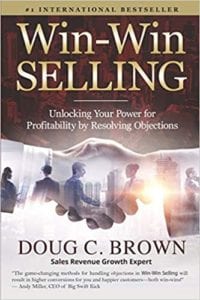
Win-Win Selling: Unlocking Your Power for Profitability by Resolving Objections
It was like, “You’re never good enough no matter what’s going on.” Even the top producers were producing top-wise weren’t rewarding them or showcasing their egos. Let’s face it, salespeople have egos. They wouldn’t be salespeople otherwise. We all have egos to a degree. Some good, some not. I went to him and he said, “No. I built a growth plan.” He was like, “I’ll take it from here.” Two months later, he called me. They have fallen from $50 million to $48 million. Sixty-two percent of his sales team quit in 60 days. He called me back and went, “Can you fix this?” I said, “Sure, I’ll give my best.” I got back in there. I started re-recruiting the people that had left. I got him to agree that this is how we should run the company going forward.
We got some of those back. We hired other new people. After I was doing this actively, I found out that almost 60% of his leads were never going from a lead stage to the first contact. I went back to him again and explained to him. He told me, “No, you’re crazy. This can’t be happening.” A lot of times companies manage numbers from top-line revenue or top-line numbers. They don’t look down below what’s going on and they go, “We’re making money. This is good.” Long story short, we fixed that one ratio. Within the first 30 days, it dropped by half. In the second 30 days, it dropped by another 25%. In the third month, it dropped by a little bit more. Installing that and a couple of other things because it’s usually only a few 3, 4, 5 things. They went from $48 million to $110 million over the next two years.
You get the right processes and systems in place, leads aren’t lost and you treat their people well. It’s not rocket science and yet companies are too inside their own bottle to read the outside of the label. That’s why they need people like you to come in. Almost like a child sometimes with a parent. The parent can say the same thing. Until a teacher says it, it doesn’t stick. Whether it’s a speaker like I am or an outside consultant like you are, sometimes having another perspective and voice helps people go, “That’s the sixth time I’ve heard that. I got to fix it. Let’s try it. What do we have to lose at this point,” especially when things are going down? Thank God he called you when they were only at $48 million and not $20 million and trying to turn that ship around as much harder.
In about six months, he would have been at $20 million.
What do you see the big problem is that salespeople have around rejection? Are they giving up after the first no? They take it personally. I have some ideas around that I’ve experienced being in sales myself for many decades. I’d love to know what you see that causes salespeople to not close sales and take rejection so personally that they are giving up quickly?
No person I’ve ever met loves rejection. I’ve had the opportunity to work with some big names and people. They don’t like rejection, behind every corporate objective is always personal or something. One of the reasons that people do not like rejection is because of how they grew up. All of this goes back to our roots. We grow up and we’re habituated to our behavior. We’re told what’s right and what’s not right by parents, preachers, teachers, classmates and all kinds of things.
What we don’t realize is we’re making agreements all the way through based on what we agree to, even if we don’t agree with it. That sneaks up on people as they become adults because adults are nothing more than grown children who have been taught how to navigate their way through society. However, if one grows up in an environment where it’s rude to interrupt the adults and they are admonished, punished and publicly humiliated going all the way through this, eventually, that starts to become a pattern that they go, “I cannot interrupt people because it’s rude. I won’t get mom and dad’s love.”
[bctt tweet=”Start with a truthful goal.” username=”John_Livesay”]
The core beliefs are founded right there.
They even value it because when they’re not doing that, they might get praise. “Look how well the children are behaving,” and all of that good stuff. That’s well-meant. Fast forward 30 years, they’re now 34 years old. They’re in a sales job. The goal is to make 100 cold calls a day, which is interrupting 100 people a day. What ends up happening is when they start getting rejected, it reminds them of the pain of their youth. There’s a set frame there that until they are aware of it, it’s on autopilot, too. That’s the whole thing. It’s the same thing with closing. It could be a myriad of different things that they learned growing up.
Let’s say that they were taught not to pressure people for whatever reason. No matter how their moral obligation says, “This person needs this. This person wants this.” They’re going to have that duality and that fight within them. I had one sales guy that I help with this. He grew up in an environment where everything was negotiated. “It doesn’t matter. You close the deal, negotiate. That was how we grew up.” I’m sitting there watching. He closed this deal and I was like, “That’s a good deal.” What did he do? He started negotiating right after the deal. Instead of pushing the paper forward and saying, “Can we have your endorsement on this?” He goes, “Well.” He started backing it up again and he undid the deal.
I’ve seen it happen so many times. I tell people, “When you get someone to say yes, stop talking. Don’t tell them ten more features.” It’s so bizarre to me that people feel the false belief that, “You got to get people to know, like, and trust you. I’ll push out a bunch of information. Do you know enough about me now or you still don’t? Even if you want to buy, I still need to give you more facts.” It’s fascinating to tie it all the way back to childhood beliefs that get formed of either the fear of rejection and/or pushy or “I need to negotiate in order to feel like I won.” You’re talking about getting people in the right roles. Some people love to nurture existing clients. Others only like to get the sale and then turn it over to somebody else. They hate the servicing of the clients. If you’ve got the people doing something they don’t like, that’s a big problem, too.
It’s a huge problem. I fully agree with you. Sometimes, that is the solution. I always talk to owners and a lot of times, they make this mistake. They take their top-producing salesperson and promote them to a manager. A top-producing salesperson loves to go out, be social, prospect and do all of those things. A manager loves to do spreadsheets and metrics. You try to take that and say to a top-producing salesperson, “I need you to create pivot tables and this and that.” Without question, it’s a problem. If you have people in the wrong role, they’re not happy and productive.
What I use is sales-specific assessments which will pinpoint, “Are they a farmer? Are they a hunter? Do they have the will to sell?” That’s another closing thing. Because if they don’t, then they’re not going to close well. Closing is not hard. In fact, closing could be a very simple question. “Would you like to move forward with this at this time?” Closing is so important. I’ve seen statistics out there that highly suggest all of them. About 92% of people won’t buy unless they’re asked to buy.
Let’s take a moment on that, 90% won’t buy unless asked. It’s like dating. You’re not going to get someone to knock on your door out of the blue unless you’ve asked them out. No one is sitting at home alone single going, “I don’t know why nobody’s asking me out, knocking on my door. I’m not putting myself out there, but yet I expect that I should not have to do that.” This premise of, “I’ve given you all the information. Please don’t make me ask the closing question because I hate it,” or whatever the belief is, yet I compare it to being a copilot with your buyer.

Win-Win Selling: Storytelling is even more important now than it used to be in the past. It’s telling the picture and getting motivation, inspiration, and a little bit of pain when needed throughout the story to get the clients to understand to move.
I tell the story when I give a talk. When I flew from LA to New York or wherever, the pilot comes on at the end and says, “We’re now landing in New York.” Nobody stands up and says, “What? We’re landing. I thought we’re going to fly around forever.” We see so many salespeople who are afraid to land the plane. The clients are like, “If you’re not going to ask, I’ll keep dragging this thing on forever. I’ll keep picking your brain or asking for more information. We’re doing this endless flight.” Someone is going to run a fuel one way or the other until you start from the get-go going, “This whole journey is expected to have a landing point at someplace. It’s not going to be a shock when I ask you. Does that sound like something you want to move forward with?” It’s like the plane ride. We have a destination in mind. Otherwise, we wouldn’t get on.
We all want that plane ride when it touches down to be smooth and effortless. For too many people in sales, because they’re afraid, they have a fear of rejection or they grew up in whatever environment, “You’re good, but never good enough,” they don’t ask the question or wait until they’re desperate to ask the question. It’s like the plane hitting the runway very hard. No one likes to be in a plane and feel kaboom when it hits the ground because you don’t know what’s going on. When they ask closing questions, a lot of objections will come up because they’ve asked the question in the wrong way. They haven’t made the flight, staying with the analogy, enjoyable all the way through, informative and value-based. Closing begins before you ever meet.
Sales aren’t lost at the end where most people think they’re lost. It’s lost, as you said, even before they meet because of the lack of preparation. Again, with the airplane analogy, pilots don’t just hop on. They go outside and do a whole preflight checklist. We should be doing the same kind of preparation.
If you think about it, the pilot is positioned as the expert because she or he has all of these people’s lives in their hands literally, holding onto the plane. They’re positioned in a place where we respect the pilot. The pilot is like the captain of the naval vessel. What kind of positioning are the salespeople coming in with? Are they positioned as experts, authorities, and advisors? Are they positioned as, “Two salespeople and a manager just came through the door? I bet there are two liars and maybe one honest guy.”
When the pilot comes on and says, “We’re going to be hitting turbulence. Put your seatbelt on.” Nobody says, “How does he know? I don’t believe that he knows we’re going to be hitting turbulence. No, I’m going to risk it. That’s where I’m going to choose to go to the bathroom.” I was like, “Nobody does that.” They went, “He must know coming up. He’s done this 100 times.” Let me ask you about the other big problem salespeople have that I’m sure you have a solution. They struggled to create a sense of urgency. I see that so often without being pushy. Urgency is not, “I need to make my quota.” Many people think that’s what makes this urgent. Can you speak to how you help companies create a sense of urgency for their potential clients?
Again, closing begins before you ever even talk to someone. All of the positioning, marketing and prospecting should be set up in order to have the expectation of what we want as an outcome in a win-win fashion for both parties. In the sales part of this, the conversation that’s going on, all of this urgency must be discovered prior to ever presenting. This is where a lot of salespeople make a mistake. They’re not going through what we would call the discovery process. They’re not asking questions on and around, “What time frame is this to be accomplished? Where are you at? If you made decisions like this in the past, how have you made these decisions?”
They’re not figuring out what the potential is for the close on that particular call. Whether this is a one-call, two-call, or three-call close, whatever it might be in a meeting. A larger sales generally take a little longer time. Not always, but generally. They’re not doing it in the early stages of this. What I see happen with salespeople is they get to this, present, do all this other stuff, and then, “I got to close.” The urgency comes in between the presentation, objections and close side or somewhere around there.
[bctt tweet=”Don’t be afraid to ask questions.” username=”John_Livesay”]
That’s like going up on a big slide and jumping on the slide. When you get toward the end, you figure out where you’re going. You’re going into the water or the sandpit, whatever’s below that slide. If the salesperson or the person selling asks these discovery questions in a non-threatening manner, they will elicit the response that they’re looking to find. Here’s the thing, not everybody is ready to close, no matter what. There’s a Law of Averages. There will be a certain percentage of people who are and a certain percentage of people who are not.
That leads to my next question, which is you have this whole process to help people with follow-up. Much like those leads that get lost, the follow-up and if the system is not in place, “I’ll call you in 30 days.” It’s not on my calendar or whatever and then I never do. Those people aren’t going to call you. Let’s talk about the importance of follow-up and having a system for that. You’re solving all these leaks, I call them, throughout the whole process.
Follow-up is a big leap for a lot of organizations or people, even if they’re solo entrepreneurs. I’ve worked with lots of coaches, consultants and solo entrepreneurs as well. I’ll illustrate it this way. This blew my mind a little bit. I was invited onto a sales consultants’ training call as a guest. I got onto this call and listened to these people. This woman said, “I blew it this time, guys.” They went, “What do you mean?” She went, “I lost 700 units at $500 a unit because they bought from someone else because I didn’t follow-up with them. I did all the work. I got all the way there. We had potential. I didn’t think they were that interested, so I moved on to something else.” That’s a $350,000 sale, if I remember correctly. John, her commission was 50%. Here’s this thing. The average client stays with that particular product or service for 5 to 10 years. She lost somewhere around $175,000 a year in commission for 5 to 10 years each year. The challenge is follow-up is not part of a sale that can be left out because follow-up is a common courtesy. If we think about it in terms of dating, we go out on a date and we have a great time. I have surveyed women for this.
If you don’t call, thank them within a certain period of time, and you try it later, it’s too late. They’re hurt and angry. They’ve made up a story in their head.
It’s 12 to 24 hours depending on the situation. If you don’t call within 12 to 24 hours, every single hour going past there, you’re becoming more in the dirt at that point with the relationship. We meet with somebody, let’s take the first meeting and nothing is recapped and sent. I had another client who went to a trade show. They called me and said, “We went to this trade show.” I said, “How many sales you got?” I think they said about $30,000 in sales. I said, “How many leads you got?” “175.” I said, “When did you get back from the trade show?” They went, “A week ago.” He went, “I called you for a reason.” I said, “I’m not talking to you until you get off this call and at least send all 175 an email or call all of them.”
He went, “I can’t call all of them now.” I said, “Get your team to.” He said, “Why?” I said, “Because you are losing money right now.” They sent an email. They picked up another $35,000 in sales off the email. They followed up with calls. They picked up almost $100,000 more on the calls. All this stuff was going to die. The worst part about follow-up when a person does this is they go through all of the work. They get the client right there and they’re ready to go. They should be calling their competitors, saying, “Give a call upon this client that I just went. They’re all warmed up and you are not going to get the sale.”
I love what you do and how scientific it is. It’s not just guessing. It’s based on data. You’re able to spot these leaks. People can find you at BusinessSuccessFactors.com to explore how you can help them scale their business and fix all these leaks as we described them. Any last thought or comment you want to leave us with, Doug?

Win-Win Selling: If you have people in the wrong role, they’re not happy and productive.
Can I promote my book?
Please.
As we’ve been talking about storytelling, frames, and all of this, I wrote this book called Win-Win Selling: Unlocking Your Power for Profitability by Resolving Objections. You can get it at WinWinSellingBook.com. It brings you right to Amazon. It’s $0.99 for the digital copy. I dropped the digital copy for your folks, John, or $24.95 for a hardcover. This book is written specifically on human-to-human communications. It goes into the psychology, philosophy, formulas and practicality to resolving objections in a win-win fashion. That means they win, you win. It’s not just about business. I’ve had a lot of people comment that they use this in their personal lives and their relationships are better. I go into a lot of what we were discussing on the show. I highly recommend people go do that.
That website again is WinWinSellingBook.com, where you unlock your power for profitability by resolving those objections. It’s a great offer. Thank you so much for that, Doug. Thanks for sharing your wisdom of what’s going on behind these behaviors. Once we identify those beliefs of where did I get so afraid to interrupt anybody and make a cold call, we can get unstuck.
That comes from Alcoholics Anonymous. The first step is awareness or something like that.
Business and personal indeed.
Important Links
Wanna Host Your Own Podcast?
Click here to see how my friends at Podetize can help
Purchase John’s new book
John Livesay, The Pitch Whisperer
Share The Show
Did you enjoy the show? I’d love it if you subscribed today and left us a 5-star review!
- Click this link
- Click on the ‘Subscribe’ button below the artwork
- Go to the ‘Ratings and Reviews’ section
- Click on ‘Write a Review’
Love the show? Subscribe, rate, review, and share!
Join The Successful Pitch community today:
- JohnLivesay.com
- John Livesay Facebook
- John Livesay Twitter
- John Livesay LinkedIn
- John Livesay YouTube
Raise Your Game With Alan Stein Jr.
Posted by John Livesay in podcast | 0 comments


The world tends only to see the wins and glorious moments in life. Many overlook the fact that behind all the success is the amount of work behind it, the blood, sweat, and tears shed leading towards that moment. In this episode, John Livesay is joined by the author of Raise Your Game, Alan Stein Jr. to share with us why we should not let outcomes determine our behavior and how the unseen hours we put in when no one’s looking determines our success. Having worked with amazing athletes, including Kobe Bryant, he then tells us some of the lessons he learned from the basketball court to the business world, such as preparing to do sales, focusing on being great where we are, and the difference between motivation and discipline. At the end of the day, success is not about the outcome but the preparation put into it. Join Alan in this conversation to find great nuggets of wisdom that will have you rethink the way you see success.
—
Listen to the podcast here
Raise Your Game With Alan Stein Jr.
Our guest is Alan Stein Jr., the author of Raise Your Game. He’s worked with amazing athletes, including Kobe Bryant. He shares the lessons he learned from the basketball court to the business world, including don’t let outcomes determine your behavior, how the unseen hours that you put in when no one’s looking determines your success. His big advice about being a star right where you are, and how that led him to incredible success. Enjoy the episode.
—
Our guest is Alan Stein Jr. He teaches proven strategies to improve organizational performance, create effective leadership, increased team cohesion and collaboration, and develop winning mindsets, rituals and routines. He’s a successful business owner and a veteran basketball performance coach. He spent fifteen years working with the highest performing athletes on the planet, including NBA superstars Kevin Durant, Stephen Curry and Kobe Bryant. In his corporate keynote talks and workshops, he reveals how to utilize the same approach in business that elite athletes use to perform at world-class level. He delivers practical lessons that can be implemented immediately. His clients have included everything from American Express, Pepsi, Starbucks, Penn State Football, and many more. The strategies from his book, Raise Your Game: High-Performance Secrets from the Best of the Best are implemented by corporate teams and sports teams around the world. Alan, welcome to the show.
I’m excited to be here. Thank you so much, John.
I’ve been a big fan of your work and your passion. I got to hear you speak at a virtual meeting. I thought I’m going to reach out because you and I love this passion for getting people to stretch themselves a little bit beyond who they are or what they think they can do. Let’s take it back a little bit to your own story of origin. You can go back to the first time you ever shot a basketball to wherever you want to start the story. Before you became such an expert in all of this and working with these athletes, what is your own little story?
[bctt tweet=”Don’t let outcomes determine your behavior.” username=”John_Livesay”]
The point of origin that is applicable is that basketball was my first love. It was my first identifiable passion. I fell in love with the game at 4 or 5 years old, several decades later, basketball is still a major pillar in my life. For that, I’m thankful that I’ve been able to build a life and make a living built around something that I enjoy and have a passion for. That stems from arguably the best piece of advice I ever received when I was young, which is find what you love, find what you’re good at, and then find where those two things intersect. For me, that’s always been around the game of basketball. Even now that I left the direct training space and do mostly corporate keynote speaking and workshops, it’s still centered on all of the themes, lessons, principles and strategies that I learned through the game. Most of the stories that I tell on stage or to a webcam are rooted in my basketball experience. Basketball is still a foundational pillar in my life.
For frame of reference, because everyone is always curious, how tall are you?
I’m 6’1”, which according to the average height of males in America puts me a little bit on the taller side, but it’s funny because I looked like an absolute shrimp in some of the pictures that I have because I’m usually standing next to someone that’s 6’8”, 6’9”, 7 feet tall. Even when I worked at the high school level, even though they were 15- and 16-year-old kids, many of them were 6’8”, 6’9”, 7 feet tall. When you see a team picture, it makes it look like I’m 5’4”.
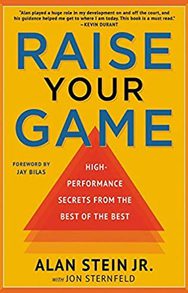
Raise Your Game: High-Performance Secrets from the Best of the Best
If you’re built a certain way in basketball heights, I remember in gym class in high school, the guy goes, “You got muscular legs.” I go, “I’m a competitive swimmer.” He goes, “You should be on the football team with those legs.” I had the opportunity to meet Michael Phelps and everyone was like, “He’s a successful swimmer because he’s got a big lung capacity.” There’s so much more to that success in any career, whether it’s an athlete or a salesperson or whatever you’re doing, than just your physicality. I wanted to start there. Did you have anybody encourage you or discouraging you like, “I don’t know if you’re tall enough?” What was it about basketball versus other sports that you go, “This is for me?”
I was always on the taller end of kids in my class. I’m not freakishly tall, 6’1” is a hair above average. It’s not like I’m 6’10”. My main attraction to basketball funny enough was, and this is a little-known fact that most people don’t know about me, is I’m heavily introverted. I love solitude. I love alone individual time. That’s how I recharge my battery. That was what unconsciously attracted me to the game of basketball because it’s one of the only team sports that you can practice by yourself and still improve the major skillsets. As long as you have a ball in a hoop, you can work on your ball handling, you can work on your shooting. Whereas when you think of soccer or baseball or football, you need someone else there with you to throw the ball and to catch or to tackle or to do whatever it is that you’re going to do. It’s harder to improve those sports in solitude. I love that I could take a few hours on a Saturday, go down to the park, work on my game by myself in complete silence.
Back in the ‘80s and ‘90s, we have a little boom box with some hip-hop music playing. I could go with my team and be around others and contribute to the greater good. That was one of the early attractions. I have seen in my time since the pressure that people put on young people when they’re tall at an early age. They make the assumption, “You should be playing basketball, or you should be playing volleyball because you’re tall.” They don’t quite get that. I understand that’s helpful, but they have to have a passion for it, for this to come to fruition.
[bctt tweet=”Emotions inform not direct your life.” username=”John_Livesay”]
I love that inside story of your introversion allows you to be by yourself to recharge and still be part of a team and toggle back and forth. That’s why basketball resonated with you. That’s nothing to do with your height, which is I happily found that insight for people. A lot of people think, “Why did you pick that or why does that resonate with you?” Let’s talk about your book, Raise Your Game. You’ve got some secrets in here. How did you come up with the title? That’s always a fascinating question for me, because as a fellow author, I know it’s not the first thing that comes to top of mind. There are many things that are considered.
Before we do that, I want to take one quick step back and say that my introversion is also what drew me to keynote speaking. I get to spend so much time by myself rehearsing, writing, and working on my craft. People often make the mistake of thinking if you’re introverted, you’re not social, that you don’t like people, that you don’t like large groups. Nothing could be further from the truth. I love being on stage and I love being around people, but that’s what drains my battery. It’s solitude that allows me to recharge. That’s the definition of introversion versus extroversion.
Extroverts get their energy from other human beings. Whereas for me, when I do a 60-minute keynote onstage and then mingle with some folks after, I can’t wait to get back to my hotel room and be in full solitude because I am emotionally exhausted at that point. I’ve been able to embrace my introversion and know that if I can put in the individual time to fill my bucket, then I can be of more value and of more service when I step on stage. I took that same mindset that drew me to basketball. That’s one of the key things that drew me to keynote speaking as well.

Raise Your Game: If you do have tendencies of being introverted, that in no way, shape or form should limit your potential as a sales professional.
That’s helpful because a lot of our readers are entrepreneurs. That’s a lonely job. I don’t think people, unless you’ve done it, realize that speaking can be a lonely job. The joke is we speak for free. They pay us to travel. If you’re a salesperson like I was, you’re on the road, you’re in a hotel room, people don’t realize it. If you are recharged by being around your friends and family, and you’re on the road in a strange hotel in a strange city, then that drains you. If you’re someone like you, it recharges you. The things that are hard for people who are extroverts, being on the road, alone in an airport, and all that isolation of not having one to talk to, it drains them. For you, it recharges you. It’s the same thing with sales. It’s like, “You got to be outgoing to be in sales.” Maybe or maybe not. It depends on how you can frame it.
If you are naturally extroverted, you will gravitate to something like sales because you make that connection of, “Nothing would make me happier than meeting with eight clients or prospects a day and talking.” While that may be true, that doesn’t mean that if you’re naturally introverted, that you should have an aversion to sales. You can still be an incredible sales professional if you’re introverted. You have to know your lane. You have to know that, “I’ve got a sales call today at 4:00, or I’ve got a presentation this evening.” I need to be in solitude to prepare for those two events so that I can bring my best and that I can show up as my best self. For the readers, if you do have tendencies of being introverted, that in no way, shape or form should limit your potential as a sales professional.
Also, as an entrepreneur. Bill Gates and Zuckerberg are quite introverted person. They’ve figured out ways to deal with that and make that work for them. You’ve said something that stands out to me, which is the need for preparation. We know athletes do it, Broadway performers do it, movie stars don’t get in front of the camera without rehearsing. Yet I see many sales professionals that are like, “I’m just going to wing it.” Whether they’re pitching for funding or pitching to win a new client, this resistance to practicing is the same personality that doesn’t like to stop and ask for directions before GPS. What is that do you think that causes people to realize, “All these people need to practice, but I don’t?”
[bctt tweet=”Don’t play the comparison game.” username=”John_Livesay”]
In any work that I’ve done with sales organizations, that’s one of the chief recommendations I make. You need to develop some type of system for practice. Whether you want to call it rehearsal, role-playing, whatever you need to do, you need to get into reps. It is interesting that we make that assumption with sports. We make an assumption when we’re watching a movie. None of us think that when we’re watching a movie that the first time Al Pacino or Meryl Streep is saying those lines is when the camera is on. Of course not. They said those things hundreds of times in preparation so that when the lights go on, they can nail it. Sales professionals should be doing something of the same effect.
One of the concepts in the book is we talk about the unseen hours. It’s the hours that you put in when no one is watching. A basketball player is made during the unseen hours. Us as novice fans, we get to enjoy their greatness when the lights come on, and the cheerleaders start dancing, but their game was built in an empty gym, working on their game by themselves. It’s the same thing with sales professionals. If you can start to look at that sales call you have or that presentation you have, if you can look at that as your game, or you can look at that as showtime on Broadway, then you’ll do what you need to do to prepare and to anticipate, “What am I going to need to be able to do during that sales call? What are some of the potential objections they may have or excuses they may make? What are the most insightful questions that I can ask them to get to know them, and qualify them as a legitimate prospect, and make sure that what I’m selling is the right fit for them.” That’s another important key.
A lot of sales professionals want to lead with their features and their benefits and what makes them unique. That stuff is important. However, it’s way more important to show the customer or the prospect or the client, how much you care about them and how invested you are in what will solve their problem. You’re not worried about selling them anything. You’re worried about making sure that you understand what it is that they need. If what they need is what you sell, then the sale will take care of itself. You don’t have to force it. You don’t have to manipulate. You certainly don’t have to convince anyone. You simply have to make sure that they can see the alignment between what they need and what you have. Once you get to that point, then you can share some features and some benefits and your unique selling proposition. It’s way more important to go into it with asking insightful questions and getting to know them.

Raise Your Game: With sales professionals, if you get too hung up on the outcome and the sale, it’s going to erode your preparation and your mindset.
This concept of the unseen hours, even as a speaker, sometimes people come up to you and go, “You’re a natural.” I smile like you did because nobody wants to hear about the work, unless they’re a speaker and then you’re having a conversation about the draft. People want to think that you can do that because you’re a “natural.” They don’t realize how much time you’ve spent crafting that TEDx Talk or whatever it is, let alone the keynote.
There’s no question that a certain level of charisma might be innate. You and I may have been born with certain personality traits that make it more conducive for us to be speakers and to be on. I say this respectfully and politely because people say the same thing. It’s almost insulting when someone says, “You’re a natural.” I do appreciate the intended compliment, but there’s a lot of work that goes into this. Ray Allen is one of the all-time best shooters in the history of the NBA. He’s still the leader in three pointers made.
He used to say the same thing because people would tell him, “You are such a natural shooter.” He said, “Natural shooter? Do you have any idea how many baskets I’ve made in the unseen hours in a dark gym by myself? This is not natural.” He would acknowledge. Maybe he was blessed with above average hand-eye coordination or spatial awareness. He was on the taller end. He was around 6’6”. He wasn’t discounting that he had some advantages, but at the end of the day, the reason he’s one of the best shooters ever to play the game is because he put in the work and he honored preparation.
[bctt tweet=”Find what you love, find what you’re good at, and then find where those two things intersect.” username=”John_Livesay”]
It’s the same thing for speakers. Could guys like us get away with not preparing? We might be able to do okay if we go up there and wing it, but we won’t come anywhere close to being as impactful and as influential as we’re capable of if we do prepare. This is why you can’t play the comparison game in speaking or in sales. If you’re comparing yourself to others and you’re using that as your yardstick, you’re going to fall short. My only comparison is, “Did I do as well as I’m capable of? Did I turn over every stone in preparation to make sure that I could deliver a customized message for this client? Did I bring my A-game and show up as my best self?”
If the answer to that at the end of the day is yes, then I know that I honored that client, respected that client, and did the best that I was capable of. The hardest part about that is learning to detach yourself from the feedback. There have been times where I felt like I killed it on stage and got good feedback, but they weren’t rave reviews. There have been other times where I got off stage and thought like, “Today wasn’t my best day. I was a little off my game.” I get some of the best feedback that I’ve ever gotten. It’s so important to keep all of these things in perspective and have some balance with them.
A lot of people secretly suffer and struggle with the imposter syndrome sometimes. A lot of that comes from comparing ourselves. We say, “Why am I not more successful by this age or by this stage of my career?” The first time I learned this was when I was in high school competitively swimming. They lined us up in heats. There’s always this guy that was faster than I was. They measure your time to the thousands of a second when you touched the wall. They said, “You won.” I said, “How did that happen?” They go, “He turned his head when he took a breath to see if he was ahead or not, and you stayed focused on the wall.” That was my first life lesson of, “When I focused on my own progress, I win.” When I was in the world of fashion, luxury entertainment magazines like, “Vanity Fair and Style are having an Oscar party. What should we do?” I was like, “Not that.” When you watch the Tiger Woods documentary, all that pressure and the crowd cheering, when you’re in basketball, you have that and so much at stake. It’s the same thing with salespeople when they’ve got the big sale coming up. I’m sure you’ve trained some of these athletes on how to be focused and turn off the noise.

Raise Your Game: Discipline is so much more important than motivation because discipline will get you through times when you’re not feeling motivated.
We can use swimming as a perfect example when we play the comparison game. If we compare you to me in swimming, you come out on top by a fast margin. I don’t even know anything about you, but I know I’m not a great swimmer. However, if we compare you to Michael Phelps, he’ll more than likely come out on top. It’s all a frame of reference. Yet, in both instances, you are the exact same swimmer. Nothing changed other than who we compared you to. It’s same thing with going out to eat. Some people will say that the Outback is expensive and other people say, “No, Ruth’s Chris is expensive.” It doesn’t change how much either one of them are charging, all it changes is what you decide to compare it to.
One of the hardest parts, especially in sales, because sales is numbers driven. Most sales professionals have sales goals and they have quotas. They’re earning a commission on sales, but when you can learn to detach from the outcome and learn to love the work, the process, and the preparation, that’s when you take that next step to being an incredible sales professional. If we use basketball as an example, there have been times I’ve been part of a team that did not play well and still won the game. There have been times where the team played the best they were capable of and they still lost the game. It’s the same thing with swimming. All you needed to worry about was, did you swim the best race you were capable of? It doesn’t matter whether the guy next to you beat you or you beat him, all that matters is that you did your best.
With sales professionals, if you get too hung up on the outcome and the sale, it’s going to erode your preparation and your mindset. You need to love the work because there will be times where you don’t get the sale, but you did everything right. You prepared. You were thorough. You brought your best self and they simply didn’t think it was a good fit. There will be other times where you nail it in, and somebody gives you the biggest check you’ve seen all year. You can’t let outcomes dictate your behavior. You need to be process focused, preparation focused, and aim to perform at your best. If you perform at your best consistently, I’m a believer that those things will take care of themselves.
I’m not saying that getting the sale isn’t an important because it is important, but that can’t be the focal point. It’s the same thing in basketball. Winning is important, but if you focus on winning every possession and you focus on taking great shots and playing great defense, the wins will take care of themselves. When you put your head down, your goggles in the water, and you swim your best race, chances are winning takes care of itself. It’s the same thing with sales, do all of the things that you’re supposed to do, and the sale will naturally be a by-product of that. We don’t focus on the sale. We focus on the preparation and the process. The end result more times than not will be the sale.
[bctt tweet=”Be a star where you are, no matter what level. Be great where you are, be great where your feet are planted.” username=”John_Livesay”]
I love what you said, “Don’t let outcomes determine your behavior.” I talk about it in terms of get off the self-esteem rollercoaster. You only feel good about yourself if your numbers are up and bad about yourself if your numbers are down. You can go up and down that multiple times in a day even. Our identity is bigger than anyone’s outcome. When we get that in not just an intellectual level, but a gut level, then we certainly don’t say, “I missed that shot. Therefore, I’m a bad basketball player.” Kobe doesn’t think like that.
Where this is so important is we don’t control outcomes, but we have much more control over the process, the preparation, our attitude, and our efforts. Most of this comes back to the happiness and fulfillment you’ll derive by taking control. I don’t want to give my power away. You said it so insightfully and perfectly. If my happiness and my self-worth is based upon the decision that someone else makes, that is a slippery slope. I don’t ever want to go down that path. I want to say that I prepared. I showed up as my best self. I did everything that I could, and then whatever happens happens. Either way, I’m going to feel good about the work that I put in. With that being said, I don’t want people to think that I’m a robot and that I’m completely stoic.
These are difficult principles to live by. It’s not easy when you think you’re going to get a speaking engagement and you find out they went with someone else. I’m not pretending that this is easy to do, but this is something we should all be striving for, which is detaching from outcomes and learning to love the work and love the process. Make that your enjoyment. When you can get as much satisfaction out of preparing for a sales call as you do from landing the sale, you own your happiness. No one else can control you. With that said, it reminds me of an important lesson I learned that our emotions are designed to inform us. They’re not designed to direct us. That’s so important when, as you said so perfectly, we can go on this roller coaster of highs and lows.
Some days we can sell anything and some days, we can’t sell anything, but that shouldn’t dictate the way we show up in our behavior. Hopefully, on the heels of a global pandemic where many sales professionals have been challenged, it’s okay if you’re feeling disappointed or pessimistic, or you’re in a low mood. There’s nothing wrong with having those feelings, but you can’t let those feelings dictate the way you behave, the way you prepare, and the way you show up. That’s what being a professional is all about. If you’re frustrated with a prospect, and then you act on that frustration, and you lash out at them, now you’ve got a problem. If you’re frustrated at that prospect, and you find a way to have the emotional regulation and control to still treat them with respect and civility, now you are a professional.
[bctt tweet=”Do the best job you’re capable of where you are. That will open doors and give you new opportunities.” username=”John_Livesay”]
Let’s loop back to how did you come up with the title, Raise Your Game, because we all are playing our own game whether we’re athlete or not. What was it that you said, “That’s the title for me, Raise Your Game?”
You hit it perfectly, almost as if you were reading my mind. I wanted to take something that I knew came from my sports background, which is playing games, but that would resonate with folks in other areas of life, business is a game. I want to raise their parenting game. I want them to raise their game as a spouse or leaders in their community. I wanted to find something that had a sports connotation, but was applicable and would resonate to anyone.
How did you get to, not only become a speaker, but get to work with the Kobe Bryant’s of the world? There are a lot of people who have your background maybe, but you’ve taken it to another level like the triangle on your book. You got one and then they send you referrals or what even made you want to do it or think that you could do it?
This is another lesson that applies directly to sales. I wasn’t always great at this when I was younger, but I’m getting better at it now. The answer to that is be a star where you are. Whatever level you are, even if you’re the lowest ranking sales professional, be great where you are, be great where your feet are planted. Do the best job you’re capable of where you are. That will open doors and give you new opportunities. The reason I say that is I worked at two different high schools here in the Washington DC area. Most of my work has been with high school age players, but I poured into them and did the best job I could as a high school strength coach. That opened the eyes of some people at Nike, the Jordan Brand, and USA Basketball. They gave me invites to come work at their events with Stephen Curry, LeBron James, Kyrie Irving, Steve Nash, and a whole host of players. That started, first and foremost, by focusing on, “Can I make the kids at my high school the best that they’re capable of, and then someone will take notice?”
[bctt tweet=”Folks are always focused on the next step that they don’t give the current step everything they’ve got.” username=”John_Livesay”]
A part of that, and this is an important part too, which also goes to sales, I’ve always been a relationship type guy. I’ve always valued relationships over about everything else. This wasn’t transactional of, “Can I make my high school players run faster and jump higher?” This is, “I truly care about them as human beings. I want to see them successful in life. I care about the coaches on the staff.” If you introduce me to somebody at Nike, I’m going to want to build a relationship with that person and find ways to add value to them, so the relationship, as well as the mindset of star where you are is what opened up the door.
That’s all any of us should be looking for, the opportunities and doors to open. Once you get in, clearly you need to be good at what you do, or they’re going to send you right back out that same door you walked in. Once I was able to work at Kobe Bryant Skills Academy, I’d like to believe I delivered at a high level, which is then what allowed me to work some other events, but that only came from focusing on and embracing the current role that I had instead of always having one foot out the door. I noticed that in a lot of professions, folks are always focused on the next step that they don’t give the current step everything they’ve got.
Whether you’re shooting a basketball or getting ready to do a race, and what I noticed with Michael Phelps, people forget he did not win gold, and yet he was able to let that go and get in the mindset of, “This is what I’m doing now.” Not let that loss of the gold, “I got a silver,” affect him for the next race. That’s what’s so challenging for many salespeople. “I lost a sale. Now I have to pretend like I’m in a good mood.” That resilience is what you’re showing and teaching people. I would be remiss if I let you go without asking the Kobe Bryant story. Talk about not comparing yourself to other people, but I have never had to swim against Michael Phelps or even being in the water with him, just at a party. You have a wonderful story of Kobe and even the timeframe that made me laugh of, “I’m going to get to work out with him.”
Kobe was an anomaly. The way he approached the game, and his now infamous mamba mindset is unlike anybody else that we’ve ever seen in sport. I would always have, and still to this day, have a lot of younger players that reach out to me and say, “I heard Kobe worked out three times a day for 2 or 3 hours at a clip. I want to be great. Should I do that also?” I say, “No, not necessarily.” Kobe had a work capacity and a mindset. I don’t know that we’ve ever seen anybody at that level. The goal is not to try to carbon copy what Kobe did. This would be something I’d tell young players, but it’s so applicable to sales professionals and to speakers. I’ve got a handful of speakers that do a remarkable job. They are some of the best people I’ve ever seen take the stage. I admire them and I respect them, but I’m not trying to copy them and I’m not trying to be them.
[bctt tweet=”Motivation is fleeting. Even the most motivated individuals don’t feel motivated all of the time.” username=”John_Livesay”]
They may have some traits that I’d like to emulate. I might be able to see you on stage, John, and go, “John has such a mastery of his content. He’s so captivating in his delivery that I would love to have a similar mastery of my content. I’d love to be able to deliver my stories with the same type of conviction.” That doesn’t mean that I’m trying to be you or that I’m trying to carbon copy you. It’s so important with anybody that we put up on a pedestal, that we look at some of their traits and try to emulate those traits, and figure out how we can take advantage of similar mindsets, but we don’t try to follow the script or the blueprint of somebody else.
We’ve heard some of these stories with Tom Brady. Tom Brady’s up at 5:00 in the morning watching 2 or 3 hours’ worth of film before the team comes in to practice. Once the team has done practicing, he stays after and watches more film. That doesn’t necessarily mean that if every quarterback did that, they would be as good as Tom Brady. Everybody’s got to find what makes them tick in their own recipe. That goes back to this comparison game. That’s why it’s such a slippery slope. If you think you have to do what everybody else is doing, that might not be what’s best for you.
There are many great takeaways, but the one that’s landing with me is be the star where you are and find your own rhythm, which allows you not to play the comparison game. That’s where the patience comes. Part of discipline is incredible patience of, “Why isn’t this happening faster? Why is it taking so long for my book to get published?” Whatever we can be impatient about. When we get in that zone of, “I’m at the right place at the right time doing the right thing. That’s all I can control. That’s all I have to worry or think about.” The anxiety and the stress level get so much lower and we do our best work. Is there any last thought you want to leave us with?
I’m so glad that you brought up discipline because motivation gets a tad bit overrated in this society. We’re all taught that we need to be these highly motivated people, and that everyone should be waking up at 4:00 in the morning, ready to hit the ground running. Motivation is fleeting. Even the most motivated of individuals don’t feel motivated all of the time. Discipline is so much more important than motivation because discipline will get you through times when you’re not feeling motivated. My goal is to perform at a high level consistently. My goal would be that you have no idea whether or not I was motivated to come on your show or not because it’s irrelevant.
Who cares whether or not I was motivated? All that matters is that I have the discipline and that I show up as my best self because I respect you, and because I respect your audience. I want to deliver as much value as I can. If you happened to schedule a show on a day where I wasn’t feeling motivated and I chose not to bring my best self, how is anyone going to attain any level of success or any type of reputation if that’s the case? Discipline is so important. I didn’t want you to think that I skirted your Kobe Bryant question. Arguably, the most important lesson that I got from watching Kobe workout at 4:00 in the morning during an off season, was that he has a strong appreciation for the fundamentals.
The line that he said to me, which changed my life forever was, “The reason I’m the best player in the world is because I never get bored with the basics.” I’m hoping that you and I collectively added tremendous value to your readers. If they can process that one nugget that “I’m going to focus on the basics and the fundamentals relentlessly during the unseen hours,” then you can become the best sales professional you’re capable of. Each reader needs to ask themselves, “What are my basics as a sales professional?” Preparation is a basic, active listening is a basic. Figure those things out and create a system to practice those things relentlessly, and you’ll become the Kobe Bryant of sales.
Your website is AlanSteinJr.com. The book is Raise Your Game in all areas of your life. Alan, thank you so much for hopping on, showing us how to be the best we can be. I loved all the secrets you shared. What a pleasure.
Thank you so much.
Important Links
Wanna Host Your Own Podcast?
Click here to see how my friends at Podetize can help
Purchase John’s new book
John Livesay, The Pitch Whisperer
Share The Show
Did you enjoy the show? I’d love it if you subscribed today and left us a 5-star review!
- Click this link
- Click on the ‘Subscribe’ button below the artwork
- Go to the ‘Ratings and Reviews’ section
- Click on ‘Write a Review’
Love the show? Subscribe, rate, review, and share!
Join The Successful Pitch community today:
- JohnLivesay.com
- John Livesay Facebook
- John Livesay Twitter
- John Livesay LinkedIn
- John Livesay YouTube