

What Is Your Competitive Edge? With Jose Palomino
Posted by John Livesay in podcast | 0 comments


Do you know what your competitive edge is? It’s what sets you apart from your competitors and attracts customers. In this episode, Jose Palomino, CEO of Value Prop Interactive and expert in value proposition, defines what competitive edge and how you can determine what it is for your business! He gives tips on making the most of your operational advantages and turning them into customer magnets. Want to learn more? Jose also discusses The Competitive Edge Program, which walks people through designing, deploying, driving, and getting those incremental wins that set you apart—in less than 12 months. Find out more about Value Prop’s powerful new program and how it can help you win more business!
—
Listen to the podcast here
What Is Your Competitive Edge? With Jose Palomino
Do you know what your competitive edge is? If you want to get some insights on how to define it, then this episode with Jose Palomino, who’s an expert in value proposition, is for you. He said, “Not only do you have to show that you’re saving time and money but you have to show how you’re reducing the hassle of the whole experience as well as reducing the risk.” Enjoy the episode.
—
Our guest is Jose Palomino, who’s the CEO of Value Prop. He’s helped over 100 business-to-businesses unlock over $250 million in new growth. He’s got decades of experience helping these business-to-business owners work through and overcome their strategic marketing and sales challenges. He’s also the author of the foundational book Value Prop and host of The Revenue Throughput Podcast. He holds an MBA and teaches candidates strategic marketing management. Welcome to the show.
It’s great to be here, John. Thanks for inviting me.
Let’s go back to your own story of origin, Jose. You can go back to school, college or your youth. How did you get interested in business in general and specifically, finding your niche in B2B?
That’s a long story, so I’ll give you the very short version of it. I didn’t start out knowing I wanted to be in business. I wanted to be a comic book artist. I was a comic book collector. I started taking courses in some of the New York City-based where I was born and raised, art schools like Parsons and FIT to learn anatomy and things like that. I was doing that but meanwhile, I didn’t pay the rent or even buy a bag of chips. I have to figure something out. I started working doing whatever. It led to me working in back-office operations for a major brokerage house.
I had a real affinity for numbers, processes and working hard. I learned at the age of 20, 21, what it meant to bang out work if you had to do it. That became something where I said, “I will never be outworked.” I could be outsmarted maybe, but I won’t be outworked. Everyone wants to say it’s a four-hour workweek, this and that. The reality is most of successful people know how to work hard when they have to work hard. That journey took me into starting a business a couple of years later, notably in selling comics to collectors.
[bctt tweet=”Be innovative, indispensable, and inspirational.” username=”John_Livesay”]
Through that, I had to learn programming to build an inventory system on one of the first IBM PCs that were available. That’s how I got into technology and business entrepreneurship. Since that journey, I ended up mostly going into IT-based companies, ended up working as an analyst working for some large IT companies, including one very large computer manufacturer. That’s when I transitioned to sales and marketing. I moved into sales roles whilst carrying a bag as it were. I didn’t look back from there.
What’s interesting about your background to me, Jose, is you have toggled back and forth between sales and marketing. You were CMO, as well as being a sales director. I don’t see a lot of people doing both. They usually pick a lane and stick with it. Sometimes as you probably know, marketing and sales don’t get along so well at big companies. There is a lot of pointing of fingers. What a wonderful perspective you bring to your clients. What is the big myth that you think is out there those salespeople have about marketing and vice versa?
A lot of them are based on some facts. Maybe it’s not a myth but a real belief. Sales think that marketing is only concerned with aesthetics, the look of the brand, the material, stuff like that. You’ll hear statements like this, “They don’t get it.” Marketing’s thinking like, “We’ve given these guys and gals everything they could need to be successful. Why aren’t they putting points on the board?” You have this sense from both sides, especially those who are in large companies where those things get very siloed shortly. The reason we are not getting to the top of the mountain is because of the other guys.
Success has many fathers. If we’re kicking butt, then everybody’s happy, high fives all around. The stress points are always when things are a little bit not great and you have to figure that out. What’s changing is the move, especially in larger companies. The technology towards what’s being called account-based marketing will come downstream, which is account management for large accounts. They have to give it a new name and so on.
There’s going to be an increasing melding of those disciplines. Things that used to be seen as strictly marketing activities, salespeople have to be good at. The big change there, John, I see is this. Marketing by definition, has a longer time horizon as they look at things. They have to look at a 1-year, 3-year plan or maybe the 6-month plan if they incorporate things like event marketing and things like that. They have a schedule for the future.
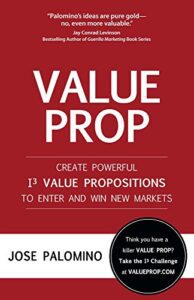
Competitive Edge: Value Prop
Your sales team, on the other hand, in a lot of organizations, have to live week by week. I’ve seen multibillion-dollar companies have a weekly stand and deliver calls on the pipeline. A salesperson is thinking, “I got to make this stuff happen now.” The marketing person is saying, “We have to make this thing happen this year.” That’s the disconnect. Until they understand that one feeds the other both ways, that’s when you have that separation. It’s a hard thing to crack.
I’ve worked with companies where within different sales divisions they’re siloed. Marketing is pulling their hair out saying, “Why aren’t we growing an existing client with another division but the other divisions have no clue what the other ones are doing? There are no even intros being made.” That’s B2B and law firms. It’s this lack of cross-selling and marketing. We don’t need to keep spending the same money if we already have a relationship with a client, a hospital or whatever the industry is. I see that as a big problem that I’m guessing you might have some ideas around solving.
It all comes down to this, especially sales, more so than marketing. Marketing folks with formal marketing titles like chief marketing officer, director of marketing, so on usually have some very small or no variable compensation in their package. It’s very negligible if it’s there at all. Gunning for raises is what you’re doing.
Sales is all about variable comp by and large, still in B2B. If you tell me there’s a sister division that has a great product that would be useful for my customer, the first question I’m going to ask because I’m carrying a bag is, “How will I get paid for that introduction?” “You got to be a good corporate citizen.” That’s fine. I agree. I should be a good corporate citizen.
Meanwhile, I tell my boss that when he’s hammering me to hit my goal, unless you’re going to give me a goal and align me to it financially, I’m incentive to ignore it no matter how well you tell it. I’ve seen bosses from the front of the room. “We’re going to bring the year synergy. This is a year we bring it all together. We’re going to deliver the total value to our customers.”
I say, “Yes, but your comp plan doesn’t reflect any of that.” Salespeople are always going to say, “You can tell me whatever you tell me but whatever the comp plan says is what I’m going to do.” In substantial, you want people to be good corporate citizens and high in integrity. Those are the things that you don’t pay for in a general sense.
This is the thing I always emphasize when I probably work with sales teams. In an average selling year, you have at most 220 selling days in a year, 55 selling days a quarter, 17 per month. It’s rough math. If you asked me to use up 2 or 3 of those 17 selling days in a month, you’re cutting into bone. Unless you’re going to give me some either quota relief on the other side say, “We need you to focus 20% of your time here,” reducing your quota, that’s never going to be the way it’s going to go. It goes the other way.
You’re not going to get the behaviors you think you should get. No amount of fist-pounding is going to get a few. You can try to browbeat people. You got to bring alignment and say, “What’s in it for you?” It is the question you have to answer for your customers but you have to answer that for your internal stakeholders as well.
Let’s bust another myth. I see a lot of sales management saying, “These reps are doing well. He or she killed it. They exceeded their quota. Let’s hire another salesperson and break that territory in half, then we’ll get even more.” The rep is furious. The myth is, “Let’s hire more salespeople to get more sales.” You say that’s not true. Tell us what you mean.
[bctt tweet=”Show your offer reduces hassle and risk.” username=”John_Livesay”]
Especially in the mid-market, it’s different if you’re talking about a company that routinely has 100 territory reps like billion-dollar companies. If you’re owner-led or in the mid-market, you’re a $10 million, $20million, maybe a $50 million company, maybe you have 8 sales reps. You are attracted to that kind of thinking because you’re thinking, “I don’t have to be a rocket scientist to say if I have 10 people and add 1 rep, that’s 10% growth. It should be.” The challenge I would say to that leadership team is this. If you hire the right or wrong person, you’re going to be into it for $100,000, $150,000 in costs, all of that, plus the possibility of deflating your top performers.
There are all these negative things that can happen but I’m not saying never hire a salesperson. The reason you’re looking to hire salespeople is because you’re having some struggles and you think you need to increase sales. You say, “I need to have more coverage.” Then I would say, “Take a look at your sales process first and the other moving parts of your sales continuum from the customer’s point of view.”
Are you sharply focused on your right target market? Have you thought through of your value proposition in the last year? Supply chains are still being stretched. That’s very different than what the world looked like years ago. Have you rethought your value proposition in that context? Have you thought through your lead generation? Things are changing. Things that work technique-wise, LinkedIn blasting don’t work anymore. Emails work differently. Trade shows as a strategy. Does your industry still have its trade show?
Until you ask those questions and get at, “Do I have my house in order?” It’s like your house is laid and being built. You say, “I’m going to add some carpenters to it.” Maybe it’s the plumbing that’s holding you up or the electrician. Maybe you’ve had bad weather and having another carpenter means another payroll. That isn’t going to get the house built any faster. You have to get to the root of it before you start designing solutions.

Competitive Edge: “What’s in it for you?” It is the question you have to answer for your customers, but you have to answer that for your internal stakeholders as well.
Also, are your current sales reps doing things the way you think they should have? You look at how they do things. Are they making customers happy? Last but not least is critical, especially where we are where supply chain and expectations are being all over the map. People don’t know what to expect. If you said yes to all of the above, are you delivering successfully on your promises as a company? That will unwind sales. That makes people that were loyal customers go back into the markets and say, “I got to find a different solution.” This happens time and again.
Adding a salesperson could be the exact right thing to do but not until you’ve checked off. It’s a few things, value prop, target market, your marketing programs, are they creating the leads for you? Are you delivering on your promises? Do you have a sales process? If you bring your sales team into a room with a whiteboard and you say, “Draw our process,” if they’re drawing like customer calls, we call back, make proposals, sell the deal, that’s not a sales process unless you’re purely transactional and you’re selling paperclips.
A lot of challenges that I hear lately in the marketplace, especially since the pandemic, in the healthcare industry, where pharmaceutical or medical equipment reps, talk to doctors between surgeries, especially if the rep is allowed in the surgery. Bought by the office, drop off some Starbucks and catch the doctor between patients, that’s gone. I don’t see it returning anytime fast.
These are people that have never been trained on how to formally request an appointment or they have to present on Zoom and not in person. There are all kinds of obstacles that people are having for the first time in their career. Do you have some insights into that? Do you see that happening with your clients?
Here’s the thing. Probably within the first six months of COVID becoming a real thing, from March of 2020 towards the fourth quarter of 2020, there was a sense among many people I talked to that when we get back to where we were. That isn’t happening and we see that with workers not wanting to go back to the office. I talked to one sales team that had huge success. They’ve embraced and leaned right into it. It’s all Zoom all the time. They were like a ten-person team. They saved $500,000 on their travel budget. It’s real money. It’s a big organization that scales.
[bctt tweet=”The reality is most of the successful people know how to work hard when they have to work hard.” username=”John_Livesay”]
Here’s the other thing. A lot of customers are saying like, “It’s okay. I don’t need to spend three hours entertaining somebody when we can have a half-hour call and get to the thing of it.” I’m not saying face-to-face doesn’t matter. Relationships matter. All those things matter. The reality is they mattered at the beginning of a relationship. They matter less over time. Have you ever seen the old Ed Sullivan show? There’s a lot less energy needed to keep the plates going.
You’ve got trust built up. If you’re delivering on your promises, you’re in good shape.
You don’t need to do all of that. I would say to that team, “Whatever it is that’s keeping you from what was normal to you years ago, go with a blank sheet of paper and say, ‘If I landed from Mars and I had to make a living doing this job, what would I say is possible within what I see with my eyes, not with my nostalgic eyes?’” Your eyes will get you in trouble. You’re hoping for something that may never come back.
Always think about it this way. Where are you now? This is very often overlooked, John, but where are your customers? What do they want? How do they want to be dealt with? That’s the thing you have to zero in on. How does the buyer want to buy? We can’t give a buyer a script and say, “When I say this, you say that,” if it were that easy.
The traditional way of a sales funnel is you reach out to somebody, develop a rapport, maybe set up a meeting to do some needs analysis or they send out an RFP that describes what the needs are. I’m hearing more often that clients are less willing to share what their needs are. It’s on the RFP or we’re interested to talk to you but we don’t want to spend any time sharing what our challenges are or our pain points. Is that the lack of time or is it not even a trend? What are your thoughts around that?
It is a very big trend and it depends on the category. For example, if an executive is looking to hire an executive coach, they’re going to open up and have a much more open dialogue because they want to see how they feel about that. That’s one example. Let’s say I’m buying a 3D printer for manufacturing. There are $300,000 machines available from three different manufacturers. My expectation is I can totally investigate, get the specs, see the testimonials, the machine and operation online before I talk to anybody. Further, I expect that a salesperson can look me up on LinkedIn. They can look up my company website and they should know.
Let’s cut to the chase is going to be a more common theme. You’ve hit on something very strong and true, John. Chit-chat is going to be far less. I know that people will say, “How are you going to build a relationship?” You build it through trust. Trust means that you say what you mean, you mean what you say and you deliver on what you promise. That’s what a buyer in an industrial B2B category is most looking for. “Can I count on you?”
From that, you earn the right to say, “I’m glad we got this 3D printer installed. There are some other applications that we’re finding some clients are having success with. Can I ask you a few questions around your situation to see maybe there’s something there that you can use and save 20% of production time?” All of a sudden, a person says, “Sure, because you made me look good.”

Competitive Edge: As much as sales veterans don’t like this, the buyer is increasingly at the wheel of the process.
As much as sales veterans don’t like this, the buyer is increasingly at the wheel of the process. They probably always were but we felt like we could do Jedi mind tricks. We could set up funnels. We’re running through people through stages and stuff. The buyer is saying, “No, I’m not having any of that.” They’re not playing along any longer. Sales teams that adapt to that reality will do well. Those that try to squeeze the buyer back into the nice, neat submarine of stages and stuff like that, you’re going to find a lot of kicking back.
You talk about getting back to some basics, which is making sure that the sales and the marketing messages fit the value proposition. Do you have an example of a company that has a great value prop and maybe one that didn’t? That would be helpful. We can talk about the confusion that can happen with marketing and sales don’t understand it.
I’ll give you two quick examples that might help frame the idea of what value proposition is. At the end of the day, value proposition is the idea that answers the question, “Why should anyone buy X from you at Y price?” It’s not the tagline. The tagline comes from a good value proposition. It’s the actual truth. I always say, “Stay true truth your business or your product line if you have multiple product lines.”
I had one client that delivered home heating oil. That’s a declining market. That’s existentially threatened. There’s nothing you could do about that. You can’t do anything to the oil itself. Automatic delivery of heating oil is done on the basis of a timeworn algorithm that all the oil companies use. It allows them to figure out when Bob McAllister is going to run out of oil out of his 285-gallon tank. There’s no Wi-Fi or anything like that. It’s all done through this algorithm as usage, weather, dewpoint, things like that.
This company, a client of mine, was having a lot of overtime runs because they had to do last-minute runs on a Saturday, so it costs a lot of money. They commissioned a superior algorithm. They spent a lot of money on it. I asked him about it. I said, “How’s that worked out?” He said, “We did 60,000 deliveries.” I said, “How many did you miss?” We’re supposed to be exact. He said, “9 over 60,000.” That’s like 99.999. I said, “Is anyone even close to you?” “No one’s even close.”
We started marketing a no run-out guarantee. We said, “If we let you run out of oil, we will fill the tank for free at our expense.” That’s a big thing. 285 gallons is $4 or $5 a gallon. It’s a lot of money. They were able to do that confidently. What ended up happening is they acquired, as a result, the higher end of that market. Even as the customer said, “I don’t want to tolerate any risk of me having a cold winter night where my oil company lets me run out of oil.” We were able to turn an operational advantage into a marketing and sales advantage.
[bctt tweet=”You have to get to the root of it before you start designing solutions. ” username=”John_Livesay”]
Another company in a totally different category, a pure B2B, made a machine that mixes powder. They’ve had it for years. There are lots of companies that do this, but they have unique technology and they are like the best-kept secret. The person who bought the company did very well, operationalizing, efficiencies and how they build a machine. We realized something talking through it. I said, “This machine does what the alternative technology would require three machines.” You need one to do the same thing and it does it like twice as fast. Those are huge advantages that they have to take forward.
They did a lot with video on their website. They promoted this one-stop-shop advantage and sure enough, the company has grown. It’s done very well. The principle of what makes a good value prop is a lot of things. In my book, Value Prop, I talk about I3. It says, “Is it innovative? Are you bringing something new to your market? Is it indispensable? Is it useful over time? Is it inspirational?” Is your execution something that somebody in the trade would go, “That’s pretty cool how they did that?”
Somebody not at a trade may find that very boring. That looks like steel. They don’t care but somebody in the trade would take it. I’d also say there are four things from a selling to marketing perspective that is essential for any value proposition to be effective in B2B. There are four things that buyers are always going to look for. “Can you save me time? Can you save me money or make me money? Can you reduce my hassle factor?” Especially in times like this, where everything seems like a drag and a hassle. “Can you reduce my risk?”
“I don’t know you and I’m buying you a 3D printer. I’ve never used your model before. What assurances do I have? What if you don’t perform as well as your demo say you do?” You have to look at those four things in your value proposition and your promises to the customer. You have to say, “This is how we’re going to save you time, money, hassle and risk.” If you can do that, you’re going to win a lot of business and at least get an at-bat.
What I love about that is most people are talking about saving time and money. If you’re the one that’s talking about personal issues like what keeps you up at night, the hassle factor is, “I can set it and forget it. I’m done. You’re in.” It’s all that kind of stuff because it’s an emotional buy even if it’s B2B. Those are some emotional solutions that you’re giving to someone. Is this making my life easier or harder?
We’re in the process of shopping for a new refrigerator. We had a built-in. It’s getting old, so we need to replace it. I said, “You’re going to take it out of my house?” They said, “We don’t do that.” I’m thinking like that’s like half the solution. What I want is the new refrigerator in the spot where the old one was. I don’t want to deal with the 250 pounds, all refrigerator, having to dispose it and call people up. Make sure that whatever you’re offering your customers is a complete answer to their question, not half of it. If their thing isn’t quite as good as yours but they solved my whole problem, they’re going to get the business.

Competitive Edge: Make sure that whatever you’re offering your customers, especially now, is a complete answer to their question, not half of it.
You were generous enough to offer a free gift, which is your book to the readers. What websites should people go to get the free book?
Our book has been on Amazon and still on Amazon in hard copy but if they want and I’m happy for them to have a PDF of the book Value Prop, it’s available at ValueProp.com/book. They can download a free copy of our foundational book for our programs Value Prop.
You’re also coming out with something new to give people a Competitive Edge because I’m always dealing with clients that say, “We feel like we’re drowning in a sea of sameness. Everyone sees this as a commodity. “Give us a little hint about what that is.
The Competitive Edge takes value prop to the next level. It’s saying this and it’s a powerful thought, especially in the mid-market, “Not every company is going to be able to create Apple.” They’re not going to be able to create the next Google. It’s reality. You’re a $20 million company making a small machine or apart. You’re not going to be the Apple.
Think about the Olympics. In the Olympics, the winner wins by a fraction of a second but they get the entire gold medal. They don’t get a fraction of the gold medal. They get the whole gold medal. In B2B, especially in the mid-market, when you win the deal, your competitor did not. They don’t make you share the deal.
If you lose, you might get a phone call that sounds like this, “You were close. We liked your proposal.” You try to tell that to your boss, “We were close but you can’t cash.” The Competitive Edge program walks people through how to get those incremental wins that set you apart at a very practical level in your day-to-day competition. To find out more about it, we have a nice page set up to describe the details of this program. It’s at ValueProp.com/edge.
I hear a lot of clients say, “We’re tired of coming in second place when we pitch against our competitors.” Unlike the Olympics, there’s no medal and money for second place. What a great way to frame. Let us all zoom out a little bit and figure out what is the value prop. Put yourself in the other person’s shoes. I know that this book, PDF and this additional edge will help a lot of people start closing more sales and get along with marketing better. Thank you so much, Jose.
It’s my pleasure, John. Thanks for having me.
Important Links
- Jose Palomino
- Value Prop
- The Revenue Throughput Podcast
- ValueProp.com/book
- ValueProp.com/edge
- Better Selling Through Storytelling Method Online Course
Wanna Host Your Own Podcast?
Click here to see how my friends at Podetize can help
Purchase John’s new book
John Livesay, The Pitch Whisperer
Share The Show
Did you enjoy the show? I’d love it if you subscribed today and left us a 5-star review!
- Click this link
- Click on the ‘Subscribe’ button below the artwork
- Go to the ‘Ratings and Reviews’ section
- Click on ‘Write a Review’
Love the show? Subscribe, rate, review, and share!
Join The Successful Pitch community today:
- JohnLivesay.com
- John Livesay Facebook
- John Livesay Twitter
- John Livesay LinkedIn
- John Livesay YouTube
Bulletproof Selling With Shawn Rhodes
Posted by John Livesay in podcast | 0 comments


Take your sales career to a skyrocketing improvement when you learn the secrets of bulletproof selling as told by a war correspondent-turned international expert in improving teams’ pipeline and performance. Shawn Rhodes is a Tampa-based TEDx speaker published in news outlets like CNN, TIME, BBC, and Forbes. He joins John Livesay to share what he knows about the sales industry and the secrets that made him who he is today. For Shawn, his experience in the military jumpstarted his love for sales. He made use of it to continue excelling in the world of business by understanding the whole sales process around pipeline improvement. Uncover the methods to become a successful salesperson, as Shawn outlines what one must understand when making sales in the industry.
—
Listen to the podcast here
Bulletproof Selling With Shawn Rhodes
My guest is Shawn Rhodes, the author of Bulletproof Selling: Systemizing Sales For the Battlefield Of Business. Imagine if any objection or rejection would bounce off you like a bullet. He has got a great way of reframing how you look at things and creating a pipeline that will keep generating leads for you so that you can come up with a bulletproof offer. Find out how to do this and trim hope from your sales strategy.
—
My guest is Shawn Rhodes who’s leveraged his former life as a war correspondent to become an international expert in how the best teams continuously improve pipelines and performance. He’s a Tampa-based TEDx speaker and his work studying teams in more than two dozen countries, in some of the most dangerous places on the planet. He has been published in news outlets like TIME, CNN, NBC and Forbes. His clients have included Deloitte, Coca-Cola and dozens of similar businesses. He’s a nationally syndicated columnist with the business journals and author of a book, which I am a big fan of, Bulletproof Selling: Systemizing Sales For the Battlefield Of Business. That is a ton of alliterations. No one loves literation more than I do. Welcome to the show, Shawn.
It is a pleasure, John. Thanks for noticing all the alliterations.
It is just golden, the battlefield of business. It’s a really interesting place to start because people talk about the war, The Art of War, and all these other things. Are you in fact in a battle when you are in a sales situation or has the buyers become more sophisticated? I like to think of it as you are more of a co-pilot as opposed to behind enemy lines. We are going to get to how you came up with the title because before the show, you and I were talking about how we spend so much time and care crafting even with the cover image is going to be, let alone with the title and subtitle are. I want to have you start your story at the beginning. I’m going to give you complete freedom to start that story anywhere. Childhood, college, wherever you want that you were like a lot of kids grow up going, “I see they are covering the war on TV. I want to go there and do that.” How did that even happen?
This is something that a lot of entrepreneurs will recognize. In high school, I had a lot of potentials but really no outlet for it. I knew that if I went to college right after high school, I was going to do a lot of drugs, probably make a lot of bad life decisions and potentially waste that opportunity. Talking with mentors and friends, I realized I just didn’t have some life skills that I might need like self-discipline, integrity, ambition, the ability to define a goal and then plan the steps out to achieve it. Things that make us successful as adults and successful in the world of business.
The choices for me were to wander the country with a flute-like Caine in Kung Fu. That was an option for me. The other choice was to join the military. It’s polar opposites if you will. The military seemed like it would be more regular meals and maybe a place to sleep every once in a while, so that’s the choice that I made. I started looking at the branches because each branch, you will get this as a marketer, they have a very specific pitch. They are looking for a very specific type of recruit. The Army is all about travel. The Air Force, wants intelligent people to work with technology. The Navy, also about travel, got to love the water and being on the ocean. The Marines were the only ones that were communicating this warrior ethos as a recruiting pitch. Honor, courage, commitment, the few, the proud, these tag lines that we really become familiar with, especially the United States and uniform, obviously can’t be beaten.
As I started talking to the Marines, they took a look at my test scores because you take a test to find out where you might belong in the military. Every job you could do as a civilian, they have it in the military. They said, “Shawn, you failed everything, except for verbal comprehension. On that account, you are off the charts.” They looked at all the jobs and they said, “You would fail as an infantryman so we are not going to let you do that. You would not be a good engineer. Everything you built would fall apart immediately so you are not going to do that.” They went down the list of jobs. The one that they had that would be a good fit for verbal comprehension was as a journalist, writer, photographer, broadcaster, what they called a combat correspondent.
[bctt tweet=”Improve your pipeline with a bulletproof offer.” username=”John_Livesay”]
For your readers that have ever seen the old Stanley Kubrick movie, Full Metal Jacket, the 1970s, 1980s movie about the Marines in Vietnam, I was Joker, running around on the battlefield with a camera and a notepad, just capturing the stories like old school. It was so much fun. I’ve got to travel the world. I did two combat tours in Iraq. I was there for the initial invasion in ‘03 and went back for the battles of Fallujah and Ramadi in ‘04. I’ve got to meet a lot of amazing human beings. It really prepped me for the work that I do now because I saw these men and women achieve the impossible every single day.
For those who are reading right now that aren’t familiar with urban combat, it got about a 50% mortality rate. If 50 people go into a building to clear it and there are bad people in there waiting to take them out, only 25 are expected to walk out of that building under their own power. Those are the statistical averages. You think the entrepreneurs that are trying to factor what their conversion rate might be for customer conversion or pitch 50% expected loss. That’s pretty steep, especially when it’s your life on the line. Yet, these Marines and Navy SEALs, Army Green Berets and Air Force Air Rescue men, I’ve got to work with the best to the best. They all had an incredible rate of coming out alive. The military wanted to know how they were able to do that. We recognized it wasn’t because they were hoping that they were going to be successful like so many entrepreneurs do. You think about the high failure rate of small businesses, it’s one lack of conversion, lack of sales, lack of revenue but the underlying issue is so many of us are just hoping that we are successful. We are not taking the time to train, plan, prepare, map out our strategy and then break it down into time-bound tasks that we can execute.
In addition to taking a look, I made that pitch. I’ve either got the funding or I didn’t. I’ve got the customer or I didn’t. What went right? What went wrong? How can I do better next time? These Marines that I was studying every day, that was their life because their life was on the line. They made sure after every mission to debrief and to take a look at how we could get better. What did we encounter that was unique? How do we share that with our sister units as fast as possible so they don’t have to learn the hard way? Look for that tripwire in that particular location, for instance. That allowed me to really begin taking what I have learned and saying, “How can I apply this into something that I’m in love with, which is the world of sales, the world of business?” That’s where the battlefield of business came from. Bulletproof Selling is all about building those types of systems into your sales process so that you can remove hope as a strategy as well.
That’s a great tweet. Hope is not a strategy. This concept of debriefing after every call whether you win or lose, I think that’s where a lot of people think, “We don’t have to take a look at why we won. We won, who cares?” You are missing a huge opportunity there to figure out why you won so you can repeat that process. I guess we’ve just got lucky. Doctors do this when they lose a patient. They have an M&M thing where they literally sit around and talk about, “Was there anything we could have done that we don’t make that same mistake again or was this person terminal regardless?”
I can walk your readers through that process if you would like as it applies to a pitch for instance.
I think that would be incredibly valuable. I have had over 300 episodes, no one has offered that, so, please.

Bulletproof Selling: Systemizing Sales For The Battlefield Of Business
Whether you get off of a call or you are pitching your company for some funding, whatever that looks like, there are three places that you need to debrief after a sales meeting. We will just lump those all in the term sales meeting for ease of use here. The first thing you want to do is debrief yourself as the salesperson. What that looks like is, what could I have, knowing what happened, I know all the questions that were asked, I know what my responses were or were not if they ask a question, I couldn’t answer and that tainted, what was that situation. Debrief yourself. Knowing what you know now, what could you have researched, prepared, studied, done going in? What objections might you have really benefitted from in studying? I don’t have enough money or it doesn’t sound like you’ve got enough recurring capital. Your model is not sustainable. Whatever objections you’ve got that either got you the solution you want or didn’t, debrief yourself.
The second thing you want to debrief is your prospect. Debrief the customer on the other side of the call. Knowing what you know about them now, what would have been valuable to have to go in there? What pieces of knowledge do you know at the end of a call where they went to school? Where they live? How many family members they have? What interests they have? What challenges their company is going through? How much budget they do or don’t have for the product or service that you are offering? All of that might have been valuable to know going into you now know. Capture that. You are not going to be able to replicate it because you don’t have a crystal ball. Knowing what questions to ask earlier on in the sales process may be what comes out of debriefing your prospect.
The third thing and this is especially applicable if you work with anybody else, or you work for someone else, debrief your company. What could your company have provided to you in the way of samples, in the way of pricing sheets, in the way of training, in the way of anything that is really the company’s job to provide to you? If you are a team of one, like a lot of us are, that ball is back on you again. If you work for somebody else, what could they have done, provided to you or taught you that would have made a difference? Even if you close that sale, getting a larger margin on it, not having to negotiate down so much or being able to cross-sell, upsell or down-sell into different areas of the organization that you just now have as a customer.
Debrief yourself, your prospect and your company, after every what you might consider a major sales call. If you are an inside sales rep and you are making 200 calls a day, that’s not the process for you. If you are using those calls to drive into sales meetings that do make a difference because money is on the line and maybe half of your calls or a dozen a day or whatever that looks like for you, very valuable process. Debrief those three things after every call.
I really want to double-click on the one you are talking about debriefing the company. Having worked in big companies myself and now speaking to a lot of them and their sales teams, there’s this competition, a little rivalry and resentment between marketing and sales a lot. Sales are like, “We need better whatever. The leads are bad. We need a discount. We need this,” and marketing is like, “We’ve got a brand to protect. We are not going to give you a discount. We legitimately do want to give you some tools but we don’t see you using the tools.” I think that is one big thing if marketing and sales could debrief together without finger-pointing as to why, “Your idea wasn’t good enough, that’s why they didn’t buy. You did a horrible job presenting that.” We can get a place where they are not pointing fingers at each other.
You’ve tapped into what I see and I can’t wait to hear your opinion of this, it’s one of the biggest problems in big companies is that everything is siloed. That lack of cross-selling causes the marketing department to pull their hair out because they’ve got to start from scratch every time. There are no introductions between departments, whether it’s a law firm or a medical firm. They don’t even know what to say or they are suddenly afraid of rejection or ruining their existing relationship. There are so many problems. I would love to hear your thoughts and observations and how you help them solve those problems with Bulletproof Selling, with this debriefing process.
[bctt tweet=”Debrief your sales calls.” username=”John_Livesay”]
I will take you a couple of steps back even before this book because the first book that I ever wrote was called Pivot Point: Turn On A Dime Without Sacrificing Results. It was the story of a mission that we ran in Fallujah with former Secretary of Defense James Mattis. This is back when he was a General of Marines rather than a Secretary of Defense. Briefly, the reason we were in Fallujah with him at all, we were having a lot of trouble in that city. If you know anything about the war in Iraq, Fallujah was a big hotspot. Every time we had to send a patrol in there, we were getting shot at. That didn’t allow us to bring in humanitarian aid to turn the water on. People were just living in bad conditions. Sanitary conditions were just awful for the population of 300,000 human beings. They deserve the same stuff that we have, basic health, sanitation, all that. To bring the parties to the table, we have politics in America where we have to create something big to bring the parties to the table to talk, General Mattis shut it all down for the city. He shut down water, electricity, sewage. He said, “Your tribal leaders need to talk with us because we are not going away anytime soon. If you want your stuff turned back on, we need to be able to access your city without getting shot at, let’s meet.”
The tribal leaders being the smart people that they were said, “We are happy to do that General, but we need you to be the one at the negotiation table. You are not going to have more than three Marines in that room with us. You are going to have a small patrol to bring you into the city of 300,000 very angry Iraqis.” General Mattis is a smart guy. He’s a strategist. He knew that this was an invitation for him to be kidnapped, like Blackhawk down was waiting to happen. The patrol that he was on, they called it the Dead Man’s Patrol because they didn’t expect anybody to come back alive. They needed somebody to cover it on the off chance that everybody survived this thing. I was the journalist that they tapped. It was me and maybe a dozen vehicles in the middle of a city of 300,000 by ourselves.
Just to be clear on your story. Journalists don’t get to have the big red cross on their back that people like, “Don’t kill that person because they are medical.” They don’t know the difference between you and anybody else.
There are civilian war correspondents on the battlefield, Rolling Stone, Esquire, GQ, and all that. They normally wear stuff that identifies them as such. It doesn’t keep them from getting hurt, unfortunately. For me, I was a full battle guard with a rifle because I was trained as a Marine. I had a rank and all that stuff. I was in the Marine Corps. We get into the city. The reason I bring it up to answer your question is that you think of this patrol going into the city as the sales team. They were the marketing team, the planning team, the logistics team, the operational team, the warehouse to ask to deliver the product or service, the sales team and selling. All that stuff is happening back at the home base. If the sales team just decides to get a wild hair and take a patrol in the middle of Fallujah without letting anybody know or getting any kind of support, their chances of success are very slim, even if they are the best sales team in the world.
We learned this a long time ago so we definitely were practicing it in Iraq. They had to get together before a big mission like this before a big sales call so to speak and get the input, advice and assistance of anybody that might help them become more successful. Instead of building their plan in a vacuum, which is what I see marketing doing a lot of companies and the same sales team doing in the same company, also building in a vacuum. The planning table involved all the parties that were going to be involved, not just the patrol going in but the artillery, the tanks, the air support, even the intelligence community. What have they noticed there in the last couple of weeks that might be helpful? What routes to take, not to take?
Everybody was at the table so that the Marines that were on the line going in, the sales team, had all of the assistance, advice and preparation they could possibly have to do everything to stack the deck in their favor. If companies began coming to the table like this with a singular goal and objective and letting sales be the tip of the spear but understanding, there are a lot of the spear beside the tip. There are all this stuff going on that really has to come into play, like marketing, operations, delivery, customer service, we would do a better job of solving that problem where people are pointing fingers due to lost sales.

Pivot Point: Turn On A Dime Without Sacrificing Results
The other thing that intrigued me about Bulletproof Selling is this concept of the danger with sales improvement program. It’s not that the information is used once and forgotten. It’s the people who forget what all the salespeople are saying. If you are someone who’s just pushing out facts, figures, and feeds or whatever you want to call it and wondering why no one is remembering anything you say, that is not a good strategy.
No. I think it comes from not putting a client-centric focus on your messaging. I made this mistake for a long time before it was finally pounded out of me due to a lot of lost sales. I was talking about me. Everything that you mentioned in my bio, that’s pretty sexy. It’s not the average person can put a claim to being a war correspondent doing all this cool stuff. I learned to never open my sales calls trying to leverage my uniqueness because nobody cares how unique I am or what a special snowflake I can be. I say that tongue-in-cheek.
What you have said is so valuable. I want to circle and highlight it. If I hear one more sales presentation opening with the cliché, “Thanks for inviting us. I’m excited or we are excited to be here,” I think I’m going to scream. It’s what you just said. No one cares that you are excited to be there. It’s the most boring opening to every sales presentation ever. People don’t put the thought and effort into coming up with something unique. The fact that you are talking about you have this amazing, unique thing and you are not opening it and still not making it about you, how much more interesting your bio is that I’m excited to be here? Still, you don’t use it. That’s what I wanted to take a pause there. You are not using that and other people are falling back to that, “I’m excited to be here,” opening. Maybe somebody should really think about what their opening is going to be now.
I would advise you, just try it differently. Do a split test. If you get to do enough of these types of pitches, open it up the way you have been opening. Maybe even embellish your company, its history, the specifications of your product or service, how many gigabytes of RAM it can pull through in a minute or whatever kind of sexy tech specs you’ve got. Try that. On the other side, try something different. Ask yourself, if someone buys my product or service and they use it, they really get 100% of use out of it, not just lip service but they put it to work in their company or their lives, how are their business and their lives different? What changes for this person on a personal and professional level? Whatever your first answer is, go a level deeper and ask, “Why is that important?”
An example, you are selling an efficient solution to a widget manufacturer. What’s that going to allow them to do? Produce more widgets efficiently? I’ve got more widgets on hand, why is that important? I can sell more widgets. What happens if you sell more widgets? I might be able to hire more people in my community. Put some underprivileged kids to work out of high school. Get a nice pipeline in from the technical college. I could make an impact in my hometown. I’m not selling the efficiency of widgets. If I know that going into a sales meeting, I’m going to do everything I can to highlight that person’s hometown, the impact that it would have if they were able to hire more people. I’m just going to happen to build the bridge to the widget efficiency product or service somewhere in the sales pitch. It’s not going to leave there and end there because that’s not what that person cares about. They care about the end result.
We take the time to learn what that end result is, what the actual mission objective is or what we are trying to sell, it’s going to be amazing. How many more conversations we get in because people are going to be more interested in talking with us because we are talking about what they are concerned with, not what we think they are concerned with. They are going to just pretty much open the treasure chest of all the information that we would have had to pry out of them otherwise. If you can help me reach a big goal I have had in my life, all I’ve got to do is reveal some sensitive stuff, like how much budget I might have for it. I still don’t have to cut you a check if I don’t like it but now, we are talking about stuff I’m interested in. What do you need to know? That’s the attitude I hear. We have tracked this across more than 10,000 sales calls. The data holds up pretty consistently.
[bctt tweet=”As a salesperson, you have to break through the noise until you discover what’s your prospect’s preferred method of communication.” username=”John_Livesay”]
You also talk about a bulletproof offer. I’m sure a lot of people would think, “I know what a bulletproof vest does.” What in the world would be inside a bulletproof offer?
We learned this by studying how car dealerships work. We saw it play out over the military and great salespeople. Let’s say you walk into a luxury car dealership, John. If you ever had that experience, Lexus, BMW, Acura, whatever that might look like, you walk in there, they are not going to ask how much money you planned on spending that day. They might not even ask what kind of car you think you are interested in. They are going to say, “Welcome to the dealership. Here’s a nice cup of espresso if that’s your jam. Let me walk you over to our brand new car. It just got in yesterday.” It’s inside the dealership, nice and air-conditioned. Let’s play around with everything just to get you a feel of this brand. Assuming you didn’t walk in and say, “I need to see this car from this year,” You are just here to look around. That’s how they are probably going to treat you.
When you get done looking at this beautiful car and it’s got everything, the Corinthian leather, the claw that comes out and scratches your head in traffic, the autopilot Tesla features, all that good stuff. They are then going to say, “What do you think? Would you like to dig a little deeper into the financing? What else?” Your questions are going to probably be, “How much is that going to cost? What’s the cost to take this baby home?” “This car with the package you are looking at right now is $85,000.” If you are not planning on spending $85,000, what they are not going to do is ask how much you were planning on spending. What they are going to do is say, “What can you live without that we have shown you? What is a non-essential item in this vehicle?” “I don’t need the Corinthian leather. The claws are creepy. It would probably cause me to get into some accidents.” They might take you outside the dealership to maybe the next model down in the line. They will show you that one. They will keep playing this game with you until you settle on something that’s probably going to be above what you plan on spending going in.
I have seen this happen with homes as well. You don’t have the view and pool, and the grade school system. What are you willing to give up? I worked with Infinity and they renamed it. Instead of test drives, they would say, “Would you like to go on a guest drive?” Trying to get people to feel like you were a guest in their home for the essence of what that brand would be. That bulletproof offer is completely reframing it.
Any salesperson can use it. What most salespeople are doing and this is endemic in our industry, John, with our three-tiered packages, you want to hire me to speak at an event? I’ve got the gold, the silver, and the platinum level package. Tell me which one you want. Everybody’s leaving so much money on the table by doing that. What we learned how to do that really made the difference for us, we studied other salespeople that are doing this. They strip away everything that is frivolous. They build a massive singular package, an all-inclusive offer, you might call it. What is your platinum offer? Somebody had an unlimited budget, unlimited time to implement, they just wanted the full effect of your product or service.
What can you sell them? You build this massive package, dozens of items, training, implementation, online courses, the whole thing. Anything you could possibly throw in there because they are paying for it? Why not offer that out of the gate? All they can tell you is, “That’s too expensive.” Your response can be, “What on that list can you live without?” By the end of it, they might have thought they were going to spend $5,000 on your product or service. They will scrape together every bit of budget they can if you can explain how the items on the list that are leftover help them achieve their strategic outcome to our earlier conversation.

Bulletproof Selling: Take the time to learn what the end result is, what the actual mission objective, or what you’re trying to sell. It’s going to be amazing.
What is the difference it’s going to make in their lives, $5,000? If I can spend $12,500 and get twice the amount of impact, twice as fast, I will take out a loan if I care enough about what I’m trying to buy. All-inclusive offer, we wrap it in the terms of bulletproof offer because it’s bulletproof. The sexy thing, John, is if, at the tail end of one of these conversations, you can ask the debrief process again. Debrief yourself, the prospect, the company to say, “We sold a $12,500 package. It came in wanting $5,000, we made $7,500. How could we have gotten more? How could we have delivered more value?”
Continue to ask those questions even on a great close like that, that’s a bulletproof offer because the economy is going to change. The next pandemic might come along. I pray it doesn’t but I can’t tell the future. I want to learn from every sale that I close or don’t close and shift how I’m selling the language I’m using and the offers I’m putting out to my prospects to make sure that I’m staying ahead of my competition. Do you know what our competitors are not doing? Improving after every single call. They are hoping they remember what happened last time that worked well.
It’s like looking at your footage after a talk like an athlete does. They go, “Maybe that pause there really worked or didn’t work.”
“That joke really pulled off. I would never have said it before. It just seemed funny at the moment,” and now you build it in as a joke in every single speech.
“That works in live events but not so much virtually,” or all those little nuances. Let’s hear a little bit more about your ideal audience and some of your keynote topics.
Bulletproof Selling, the idea behind it is that could encompass a whole host of things inside of the sales process but it’s really around pipeline improvement. We find so many salespeople, so many entrepreneurs are treating their prospecting, their outreach, their closing situations out of a funnel. They are using a funnel to do this. The definition is, “I’m going to reach out to 50 people, maybe I will get in five conversations and close one of them.” That’s a simple funnel. The challenge is, if you are qualifying the people going into that funnel and you only close 5, 45 people are going to buy something that you are selling but it’s not going to be from you and it’s not going to be now. The idea behind creating a real pipeline, you can do this inside of a CRM, a spreadsheet if you are savvy but CRM is built to handle this, any CRM. You can set up multiple stages, multiple funnels so that if someone doesn’t convert out of one funnel, they don’t leave your view, your pipeline. They just go to the next stage in the pipeline, the next funnel and you reach out again.
[bctt tweet=”Let’s start removing hope as a sales strategy.” username=”John_Livesay”]
Which is like what you were describing with the car. “If you can’t afford that, you might want this.” It’s the opposite where someone does buy something and then you upsell them after that. It funnels up and funnels pricing down. I love that you have such a specific niche. When people don’t realize, if you don’t have a niche, “You are a sales speaker, Bulletproof Selling, I get it. I know a lot of speakers that talk about selling.” “No. My expertise is pipeline improvement.”
Suddenly, I think to myself, “That’s not my niche.” My niche is helping people on the actual pitch, tell a better story at that moment. I don’t have anything to do with getting them in the room to give that. I’m all about what story you are telling to be memorable. You are all about, “Let me get you to that point.” Of course, you have great strategies and systems to analyze but you are almost, “Let’s look and see what you said and did that work.” I’m like, “I don’t do that either.”
I know five clients that I have spoken to that I can send or I have clients telling me, “In healthcare, during a pandemic, our team never in their career had to make an appointment. They are used to dropping by the office or catching the doctors between. Any suggestions on how we can even get to the place where we can tell the story?” I have a few ideas but again, not my area of expertise. Now, I know, you should talk to Shawn Rhodes. That’s a pipeline problem. That’s getting in the virtual door problem. Amazingly, a whole generation of people has never had to develop that skill but they didn’t. It’s not just one company. It’s the entire industry.
You have heard the saying, “You’ve got a niche to get rich.” I refuse to niche inside of industry but I love niching inside of expertise because I don’t just want to work with healthcare, manufacturing or services. I love working with all of them. If I only had to work with one, I would probably just get out of the business because I do enjoy being challenged learning new things and that helps me really apply a singular skillset to a lot of different customers. Ask any salesperson or any entrepreneur. If you are an entrepreneur and you are reading this, you are a salesperson. Welcome to the club. I encourage you to look outside of your industry for a potential customer basis to ask yourself, “I do sell to this type of person now but who else is also challenged with their problems that could benefit from my product or service. Maybe it was specifically built for financial services and that’s who I have been selling to but who else is akin, who else is in kind of the network of financial services as an industry that could also use this?” Now you can expand from playing in this little, tiny puddle to now being in a pond. Eventually, you can open it up to a whole ocean.
I have a lot of experience in the healthcare industry but there’s a whole, “Does that really include insurance?” Not necessarily. I have architects saying, “We would love to hear what you have learned from healthcare.” That applies here. If you can connect the dots for people, it allows you to play a bulletproof game.
You mentioned outreach is being a big challenge. I will give you three Ms to remember in outreach. This is something that took me years and years and thousands and thousands of lost sales to be able to figure out. The first thing you’ve got to track with your outreach is movement. We are talking about pipeline movement. Many salespeople enter the conversation, not knowing what pieces of information are missing about the prospect they are about to reach out to. Do I know who the decision-maker is in the company, what the budget is when they are buying my product or service if it is time-based? If you don’t know any of those things, now you know what to ask. If you know a few of them, then you know to focus on the missing pieces to get that person closer. To either let’s get a proposal out now, a quote, whatever that looks like for you or if it can’t happen now, reach out in October. You put that in your CRM for follow-up. Without knowing movement, you are just throwing stuff at the wall and hoping you hit something.

Bulletproof Selling: So many business owners are just hoping to be successful. They are not taking the time to plan, map out a strategy, and then break it down into time-bound tasks that we can execute.
The second piece you need to understand is the type of platform you are on the method of outreach. Many salespeople will revert to their most comfortable form of outreach, email, LinkedIn. Even old-school salespeople will rely on the phone, yet I hear tons of times that old-school salespeople are now selling to a generation of Millennials and Generation Y-ers that won’t pick up the phone. They don’t know what to do. You’ve got to expand your outreach. It’s not to say that you need to only use this new thing that’s out like only try to prospect through TikTok. No, mix it all up. Use the phone, email, LinkedIn, social media, direct mail still and alternate how you are reaching out. That’s the method of outreach. You’ve got to break through the noise until you discover what that prospect’s preferred method of communication is.
You’ve got movement and pipeline method of outreach. The third one, this is the one that you are an expert at, John, is the message. The way that I term it is, what is the client-focused story that I need to tell in my outreach that will drive them to the table to want to have a conversation? How can I educate them? How can I engage them? How can I more specifically find out what they are challenged with that’s within my skillset to help?
The movement, the method and the message. Another alliteration. It makes it memorable, doesn’t it? Also, groups of three, lots of techniques that people may not be aware of and they try to just jam so much information out. They don’t group it. They don’t think of a clever way to package it. They are not aware of even what somebody else’s method is. You have given us a lot to think about. The book again, Bulletproof Selling. If someone wants to reach out to you by your book, they can go to Bulletproof-Selling.com and find out how to get you to come to speak to their audience, how to get the book, there’s a podcast. The whole theme, everything is the same font, the same color scheme because somebody cares, people. Any last thoughts or a quote you might want to leave us?
On that website, if you would like essentially a free chapter of the book, we stood up a five-minute sales assessment. It will ask you to choose between 60-plus different pieces of the sales cycle, then you choose the one that’s most important to you. It will reach into the book, pull out that chapter and deliver it to your email. We made standalone resource pages for every single one of our chapters in that way. If you would like to test the book out, take it for a guest drive, as you said, John. That would be a great way to do it. Other than that, let’s start removing hope as a sales strategy. It works in a lot of areas in life. I love hope. I’m a spiritual guy. We could do a whole other show on that. In my sales and my business, I like to fall back on certainty so that I know I can leave my office and go be with my family without having to hope that things work out in my business. Let’s make selling bulletproof.
Thank you, Shawn. I couldn’t agree more. What a treat. What a great gift, not just a gift but a free customized gift. People, look at all those details. That’s a professional in action right there. Thanks again, Shawn.
Important Links
- Bulletproof Selling: Systemizing Sales For The Battlefield Of Business
- Pivot Point: Turn On A Dime Without Sacrificing Results
- Podcast – Bulletproof Selling
- Better Selling Through Storytelling Method Online Course
Wanna Host Your Own Podcast?
Click here to see how my friends at Podetize can help
Purchase John’s new book
John Livesay, The Pitch Whisperer
Share The Show
Did you enjoy the show? I’d love it if you subscribed today and left us a 5-star review!
- Click this link
- Click on the ‘Subscribe’ button below the artwork
- Go to the ‘Ratings and Reviews’ section
- Click on ‘Write a Review’
Love the show? Subscribe, rate, review, and share!
Join The Successful Pitch community today:
- JohnLivesay.com
- John Livesay Facebook
- John Livesay Twitter
- John Livesay LinkedIn
- John Livesay YouTube
Raise Your Standards With Mark Evans
Posted by John Livesay in podcast | 0 comments

There’s an old way, and there’s the new way of selling – which side are you on? It’s about time you raise your standards and get intentional with your sales. In today’s episode, host, John Livesay, is joined by Mark Evans, author and Standard Sales Company founder. Mark talks about the significance of building systems into your sales process and salespeople. He also deals with the subject of fear of rejection, the four types of people you interact with, and how to do follow-ups without being pesky. Discover how sales is not something you do to somebody and how to ask the right questions to start meaningful relationships that close the deal.
—
Listen to the podcast here
Raise Your Standards With Mark Evans
Our guest is Mark Evans, the author of Raise Your Standards: The Definitive Guide to Building Seven-Figure Sales. One of the things that Mark is known for is his energy. People call him one of the most enthusiastic people you’ll ever meet. His love of sales and the game of business is infectious. That’s one of the reasons I wanted to have him on the show. He believes that in its very core, sales doesn’t have to be manipulative or sleazy. He thinks it’s the greatest job in the world and he helps companies and individuals reach the seven-figure sales mark and beyond. Mark, welcome to the show.
John, thanks for having me. It’s a treat to be on here.
You are welcome. One of the questions I always love to ask my guests is to tell us your own story of origin. Were you born happy and enthusiastic? Did you love selling as a kid? Take us back as far as you want and tell us how you get to become you.
I come from a family of entrepreneurs. My parents are both entrepreneurs. My wife and her side of the family are all entrepreneurs. My story started back my parents, when I was a young boy probably 3 or 4. They had always been a part of other family businesses and that worked out okay, but they decided to risk it all and start their own business. They moved my entire family, my three sisters and I, about four hours away to a town they had never been in, to a city that they didn’t have any connections with to buy this business. From a young age, I was working with them and that’s where I got my first exposure to realize that sales is critical. It’s the lifeblood of all organizations, especially small and medium-sized businesses. At a young age, that was drilled down into me. It wasn’t just sales for corporate earnings or for a private jet. We weren’t close to that at all, but sales were what led to our family vacations and the tuition to my little parochial school in the town where we came from and basketball shoes. That’s where I got started and fell in love with sales as a young kid.
[bctt tweet=”Don’t just show up without preparation. Be like a chef. ” via=”no”]
I’m fascinated that you grew up with entrepreneurs and you married one. Sometimes for couples, it’s challenging if one is an entrepreneur and one is not or doesn’t have that background. They don’t understand the ups and downs, and the lack of a steady paycheck. It can be a big challenge for people to adjust to. What was your first sales job once you got out of school?
My family is in the printing industry and when I graduated, it was the week where the recession hit. I remember there was a Newsweek article or there was some news publication that probably isn’t even in business anymore that said, “Now is the worst time ever to get a job.” I remember thinking like, “This is something great to see after our graduation ceremony.”
To be clear, this is not the 1932 crash, correct?
Correct.
[bctt tweet=”Use video in your emails.” username=”John_Livesay”]
I’m guessing this was back 2008?
Yes. It’s the 2008 Great Recession. I may be balding but I’m not that old. I graduated and I went to work at a company. This is the start of my new book that’s coming out. I went to work for a commercial printing company and within three days of me being there, they laid off 40% of their workforce. In that same conversation said, “Don’t worry. Mark is here. He’s going to help us.” I said, “Is there someone else here besides me?” That’s where I started and that’s where I got the idea of two types of different companies. One that have and build systems into their sales process, where they’re systematic and intentional with their approach, both in their systems as well as with their salespeople. Those that are scattershot, are showing up and throwing up all over the place, whether it comes to their sales systems or their salespeople in general.
That concept, the old way of selling, “Let’s just throw a bunch of spaghetti up against the wall and see what sticks.” It doesn’t work well anymore. Let’s talk about the three things that you have of mindset, the preparation and the actual work of asking the right questions and getting the yes. Let’s start with the right mindset. Many people, especially if they’re professionals, architects or lawyers, you name it, they don’t like to think of themselves as salespeople. How do you help people who have that mindset?
There’s an old saying that I’m sure you’ve heard as well as the rest of the ones have heard, “If a tree falls in the forest and nobody’s around to hear it, does it fall?” The same thing can be said for companies. If you have a product, a widget or service and it can’t be sold, do you have a company or do you just have a hobby? That’s where I like to start the conversation off with people that say, “We’re not in sales.” You’re in business. I hate to break it to you, but sales are going to be the lifeblood of your organization. It’s going to be critical to everything you do. That’s where I start the conversation off. My book goes into four parts of what I consider the standard sales models. The first is mindset. You have to build your house on rock, not on sand. If you don’t have the proper mindset, whether it’s going to be in sales or whether you’re in any career, you’re not going to have a successful life and I truly believe that. The next part is prep work. John, are you familiar with a concept called Mise en place, a French cooking technique?
[bctt tweet=”Curiosity is a lost art.” username=”John_Livesay”]
I’m not since I don’t cook American, let alone French.
That’s okay. You’ve probably experienced it. Whether you’ve gone out to a great restaurant in LA or you’ve gone to waffle house, not that it’s not great, but let’s call them two different restaurants. Both of those restaurants are using a technique called Mise en place. If you have an 8:00 PM dinner reservation, the chef didn’t show up at 6:30 or 7:00. They’d been in the kitchen all day. They’d been there since 9:00 AM or 10:00 AM prepping, cutting vegetables, getting the meat ready, and getting the sauces right. When you come and experience the restaurant, you get this amazing experience where the dinner service flows and you have a great meal. Many salespeople and many sales-driven companies are showing up and throwing up. They’re showing up with no intention and with no schedule. If we can do this in a restaurant and if restauranteurs, chefs and servers can be intentional with their approach, then why can’t we do that in sales? The second principle that I talk about is all about making sure everything’s in its place before you start reaching out, start emailing, start cold calling or whatever you’re going to do to make that happen.
The tweet will be, “Don’t just show up without preparation. Be like a chef.” People will get that because everyone knows a chef, if you’ve hosted any dinner party, don’t show up when people are arriving to eat. That analogy is fantastic. Going back to the mindset, I want to get your thoughts, Mark, on rejection. People have such a fear of rejection. Since that falls under mindset, any tips that you have in your book or in life on that?
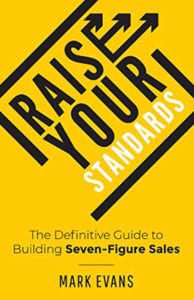
Raise Your Standards: The Definitive Guide to Building Seven-Figure Sales
I saw this study back a couple of years ago or so. I believe that about 90% of all the prospects that you meet, at any given time, aren’t ready to do business with you. Only 10% are ready to do business now. I was having this conversation with a client who was putting all of this weight into every single meeting. He was psyching himself out, to be honest with you. He’s trying to change almost his entire business model because 1 or 2 people have said no to him. We had this conversation, “Not everybody’s going to be ready that day to sign on the line that is dotted, especially the higher end and the higher level of service, widget or product that you provide.” You know this better than anyone, John, when selling luxury goods. Not everybody’s ready to drop six figures on something.
The next part of this is the actual selling and there are a lot of different steps to that. Do you reverse engineer it? Do you think to yourself before you even start building rapport, “How can I create a win-win?”
In creating a win-win and creating that type of scenario, you’ve got to have that in your mind. You’ve got to go in with some intention, but I caution salespeople to come in because I’ve been in situations where what the salesperson thinks I’m coming in for and the solution that I want are apart. We’re almost like train tracks where this person is going in one direction and I want to go somewhere else or we’re completely apart. I do a little reverse engineering, but honestly, I just want to be curious in sales conversations. That curiosity is a lost art and a lot of salespeople could benefit from being curious about the other person across the table, the company, the solution and where that company or person is trying to go.
I love a story, so I’m guessing you have a time where the buyer and the seller had a different track, then you had come in for something. Give people a story so that it locks in, whether you’re buying a car or matches.
I’ve made every mistake when it comes to sales, so I’ve got lots of horror stories if you will. I believe that there are about four types of people and I consider them to be either bowls. If you’re type A, you go get them and take no prisoners type of people. You’ve got your party people, that’s someone like me, energetic. We usually got cocktail parties. You’ve got your fact folks. Those are usually your CPAs and your engineers. The I’s are dotted, the T’s are crossed, and then they want to show you the math behind all of it. Your people pleasers are the type of individual that even if you eat their lunch right in front of them, they won’t say anything. They just want everybody to get along. How we interact with those types of people can be successful in a sales conversation.
[bctt tweet=”Sales is the lifeblood to all organizations, especially small and medium-sized businesses.” username=”John_Livesay”]
One story that comes to mind is I was trying to sell someone who is an electrical engineering manager. It’s almost the definitive individual when you think of fact folk. I saw his garage 1 year or 2 later and it was like you could eat off of it. It was impeccably clean. For the better part of a year as I tried to sell a high-end engineering solution to his company, I was constantly going up to this individual and there’s a way to build rapport and relationship. I was offering him tickets to a local sports team and front row seats. I offered him these great events where we’d have a table where he could network with fellow engineers and fellow people. I didn’t realize that and it didn’t dawn on me until a little bit later, that this person going out in public and trying to meet someone who is a complete stranger is a nightmare scenario for this guy and for this individual. He said, “Mark, I don’t want to be in a crowd. I don’t want to be around people socializing and networking. That’s a nightmare to me.” It was only when I said like, “Yeah.” Instead of trying to push these tickets on them, how about I just provide the facts and the figures that he’s asking for? As soon as I was able to do that, the business became a lot easier. We formed a great relationship.
You also talked about the fourth thing being follow-up and most people don’t do it. I know in my own career, it’s a big key to my success. How do you suggest people follow-up without being pesky?
A lot of people don’t want to be that “used car salesperson” where they feel like follow-up is something scary. They don’t want to be a pest. If you have a solution that’s providing value to someone, it’s in your best interest to follow-up with them. You can change their life if you follow-up and have a good consistent follow-up process. There’s a stat that I read that said something like 20% of salespeople are following up more than 3 or 4 times, whether by call or by email. That same study said that only 80% of all buyers will only respond to or buy something after the sixth or seventh connection attempt. We got this massive difference between salespeople that are stopping at three connects and people that are only buying at 5 or 6. John, for example, how many emails do you get in a general day?
I don’t even know anymore. It’s a lot. I can barely keep track.
[bctt tweet=”As a salesperson, your one voicemail or email is not going to make a difference. Don’t be afraid to follow up.” username=”John_Livesay”]
Probably north of 100, 150 or 200. The average executive gets over 250 emails a day. If you, as a salesperson, are out there thinking that your one voicemail or your one email is going to make a difference and reach out, that’s not going to happen. People are busy. They have lives, kids, spouses and parents that get sick or they get busy going on vacation. I always tell people like, “Don’t take it personally. It’s not up to you. It’s not about you, so don’t be afraid to follow up.”
You’re also a keynote speaker. Who’s your ideal audience?
I try to speak to companies that are looking to go to becoming sales-driven organizations. Maybe in the past, they’ve had a couple of salespeople or not professional sales organization and they want to be proactive when it comes to the sales process. That looks like a variety of different industries, whether it’s software as a service, professional services like CPAs, commercial real estate or realtors. It’s about those individuals and those entrepreneurs that want to grow their business, but they just don’t know how to get to that next level, especially when it comes to becoming sales-driven.
How did you come up with the title of your book, Raise Your Standards?
[bctt tweet=”If you have a solution that’s providing value to someone, it’s in your best interest to follow up with them.” username=”John_Livesay”]
I struggled with a title for a couple of weeks and nothing was coming up at all. I liked the Raise Your Standards part. I have a business coach. His name is Craig Ballantyne and he is out of Canada. He’s a New York Times bestselling author for 3 or 4 times and he’s a great guy. I was beating my head up against the wall for 3 or 4 weeks and within five minutes of one of our first conversations, he said, “It should be Raise Your Standards: The Definitive Guide to Building Seven-Figure Sales.” After explaining what I do and how I help a lot of sales companies, I loved it, but at the same time I was like, “Craig, how could you do this to me? You’ve figured this out right away.”
That’s what good people who have experienced do. I figured it out quickly, but it was 30 years of experience that allowed me to do that fast. We talked that your book can help people not feel pushy, sleazy or even difficult. Is there something in the book using these standards that takes it from feeling complicated or sleazy?
The core thesis of the book is that sales is changing. There’s the old way of selling and then there’s a new way of selling. John, I love your perspective on the new way of selling and you preach an intentional type of sales process. What I’m talking about is your personal interactions. Sales don’t have to be something that you have to do to somebody. You don’t have to use manipulation and kitschy techniques in order to close a sale. All you’ve got to do is ask some good questions, build some great rapport, and understand where that person is trying to go. If you have a solution, a product or a widget that can help them, then it’s your duty to make that pitch to make that ask of them. The sales approach and the sales genre that I’m trying to preach is that you don’t have to change and be the guru in front of a private jet or in front of a Lamborghini. You can work with someone else in order to get a win-win and to create a good long-lasting relationship.
Mark, what do you think makes a good question? We all know the difference between a close-ended question, yes or no or an open-ended question, but sometimes people feel awkward asking people a question. They don’t want to feel intrusive. How do you help people ask good questions?

New Sales Approach: Being in sales is like being a chef. You don’t just show up when people start coming in. There is an intentional approach and lots of preparation before you start reaching out to people.
When it comes to asking questions, that’s the core element of a good sales meeting and a good sales approach. The questions are where the magic happens. The level of depth, level of intention and level of thought that you put into your questions reflect on how you are approaching and how you are respecting your client or your prospective client. The framework that I like is thinking about what’s in it for the other person. Everybody’s tuned into the most, “What’s in it for me?” They’re trying to think of, “Where are they at currently? Where are they looking to go?” Those are the questions I tried because I firmly believed that if you can articulate the problem that your buyer or your prospect is having, better than even they can, they’re automatically going to think that you have some answer.
That’s the a-ha moment for many people. The better you can explain the problem, the better they think you have their solution, which in my mind requires some homework and some empathy. It’s not just, “It sounds like your problem is this,” but put some feeling behind it. “It must be frustrating to struggle with this particular problem and never figure out how to solve it or the same thing keeps happening and all that.” That is what makes people think, “You get me.” You have something where you say, “The first objection is not a real objection.” That intrigued me, Mark. Let’s say a couple goes into therapy and they said, “We’re here because we’re having trouble with our sex life.” The therapist is like, “That’s what you think is the problem, but there’s something underneath that.” How does that work in the sales world where you say, “Your first objection is not the real one.”
I had not heard that part but I liked that. That’s true and it’s an a-ha moment for me. John, if you’ve ever gone into a store even if you’re busy and even if you’re looking for someone and that helpful clerk comes scampering around and says, “Can I help you with anything?” Most people’s first answer is, “No, I’m just browsing. I’m just looking.” People naturally love to buy, but they don’t like being sold to. “I want to buy a new car. I love the thought and the thrill of driving off the lot, but I don’t like being sold at all.” That first objection often is real, whether it’s that therapy case. We put up these guards and barriers because we don’t want to let people in. We don’t want to be vulnerable and answer some questions. You’ve got to break through that.
Are you considered a Millennial or not?
I still fly into that, but I watch a lot of old movies and old books. I’m an old soul.
You’re what’s considered a digital native which is someone who grew up with computers as opposed to older people who had to learn it. You have whole expertise around how to stand out using video email. A lot of people don’t even know you can do it and they don’t even know what video to put in an email. Because this is your digital native, can you give us some tips on that?
One tactical that anybody who’s out there that is cold prospecting or trying to book appointments or book meetings with about anybody can benefit from is through video email. The average executive gets, let’s say 200 plus emails a day. Most of those are all text-based. One way I’ve found and my clients have found that’s effective in standing out in the inbox is a video email. The system that I use is called Vidyard. There’s a paid version and a free version. I use the free version, to be honest with you. I record a simple and easy video that can be converted into a GIF of me waving or me holding something up where I hold up my book and say, “John, it’s Mark. I’m the author of Raise Your Standards. I’d like to talk to you about X, Y, Z. We’d love to do this. I’d love to make an introduction.”
That little video stands out in people’s inboxes. Every time I send this or every time one of my clients starts using this practice, we see their conversion rates immediately jump. We see conversations come out of it. I use this to schedule a bunch of different appointments at a conference that I was attending, a big industry event. I was reaching out to different CEOs and executives and I became almost like this little mini-celebrity at these events. People are like, “I got your video. I loved it. It was amazing.” I’m still seeing the puddling effects or the ripple effects from that.
Give me the name of the service that you use.
There are two. The first is called Vidyard and the second one is a Wistia product called Soapbox.
Do people know that it’s a video in the email with the subject line somehow or you still got to get them to click to see the video?
They’ll see it when the actual video uploads. You can load it directly into your email, especially if you have Gmail or Outlook. In the email itself, there’s a little thumbnail like you would see any thumbnail. It almost looks like a YouTube box and you can turn that into a GIF. There’s motion like I’ll wave in it, I’ll move around or I’ll hold a sign up of that other person’s name. It will say like, “John, watch this video.” People naturally want to click. It’s clever. People can’t help but click on it.
What can sales teams learn from sports teams since you’ve written about this?
There are a ton that they can go with. Let’s start with the CEO, the entrepreneur who’s the head coach. I see a lot of CEOs who are the head coach and also trying to be the quarterback, the linemen, the person popping popcorn and the guy parking cars out in the parking lot. These small and medium-sized business owners are trying to be everything for everybody. The first thing is to start getting a team. Get your star performers and also start getting a good set of other coaches that can help you level up the entire team.
The book again is called Raise Your Standards. Any last thoughts or enthusiastic tidbits you want to leave us with?
In the end, sales are one of the greatest crews you possibly can be in. It doesn’t have to be something that’s manipulative. It can be a great career and at its core, it’s all about helping someone else.
Thanks for being with us, Mark.
John, thanks for having me. I appreciate it.
Important Links
- Raise Your Standards: The Definitive Guide to Building Seven-Figure Sales
- Vidyard
- Soapbox
- MarkPatrickEvans.com
- Vidyard.com
- Better Selling Through Storytelling Method Online Course
Wanna Host Your Own Podcast?
Click here to see how my friends at Podetize can help
Purchase John’s new book
John Livesay, The Pitch Whisperer
Share The Show
Did you enjoy the show? I’d love it if you subscribed today and left us a 5-star review!
- Click this link
- Click on the ‘Subscribe’ button below the artwork
- Go to the ‘Ratings and Reviews’ section
- Click on ‘Write a Review’
Love the show? Subscribe, rate, review, and share!
Join The Successful Pitch community today:
- JohnLivesay.com
- John Livesay Facebook
- John Livesay Twitter
- John Livesay LinkedIn
- John Livesay YouTube