

Why Customers Leave With David Avrin
Posted by John Livesay in podcast | 0 comments

Customers have more power now than they had before. If your service or product isn’t great, they won’t think twice about leaving. They’re going to write you a bad review and that could be it for you. It’s very important to understand your customer’s journey really well. Know what they value and offer that to them. The competition is only getting tougher so you need to be conscious, creative, and intentional with how you deal with your customers.
Join John Livesay as he talks to David Avrin about the new landscape of business and why customers leave. David is a best-selling author and an in-demand customer experience speaker. Learn how to properly do your business by putting the customer front-and-center. Start upping your game when it comes to customer experience.
—
Listen to the podcast here
Why Customers Leave With David Avrin
Our guest for this episode is David Avrin who’s the expert on why customers leave and how to get them back. He said, “You need to keep changing to match customers’ ever-changing needs and when your customers have a problem in their mind, you have a problem you need to solve. Reputation is more important than any marketing.” Finally, his big tip is to be ridiculously easy to do business with. Enjoy the episode.
—
Welcome to the show. Our guest is David Avrin who is one of the most in-demand customer experience speakers in the world. He shares his high-energy and content-rich presentations with audiences across North America and the world, including presentations in Singapore, Monte Carlo, London, and Dubai.
He’s the author of five books, including the acclaimed, It’s Not Who You Know, It’s Who Knows YOU!, Visibility Marketing, and Why Customers Leave (and How To Win Them Back). He’s a former CEO Group Leader with Vistage International and a marketing firm owner. He’s also the Chairman of the Legacy Board. David, welcome to the show.
Thanks for having me.
Let’s start with your own story before you became a customer experience expert and speaker. We can go back to childhood, high school, or college.

Customer Experience: With a customer journey, you can have a greater predictability of your customer’s behavior. You can plan and budget for that. The problem is your customers don’t know how they’re supposed to do it.
It was interesting. I’m the second oldest of six and maybe it’s an issue of trying to stand out in a crowded field of competitors for that last slice of pizza, but I was involved in the performance. I did theater and music. I went to college on a full-ride theater scholarship and realized about halfway through that, “At some point, I’m going to have to be able to support a wife and kids.” I didn’t want to see myself doing community theater in God’s Wrath, Iowa when I’m 50 years old. Apologies to those who live in God’s Wrath, Iowa.
Now, playing the father and Captain Von Trapp in The Sound of Music, David.
In with 42 seats in the back of a converted movie house. I went to college and changed my major halfway. I gave up my scholarship and went into Broadcast Journalism. When you got a deep voice people are like, “You should be on the radio.” I did radio for a while and I studied Journalism. When I came out, I have lots of friends in the press. I did PR for several years and they said, “I went to the dark side,” and I became a PR flack.
It was PR and marketing for much of my career as you do. Talk about how we describe what we do in a way that is persuasive, whether it’s for sales, helping politicians with constituents, or corporations better manage their image. It’s how we describe ourselves and communicate that. It was a big part of my career for years.
[bctt tweet=”If there is a problem in the customer’s mind, there is a problem.” username=”John_Livesay”]
In recent years, I’ve come to the recognition that while what we say about ourselves is important, it is less powerful now than what other people say about us. I have made a pretty profound shift in my business, research, and books to talking to organizations about how we provide an experience that creates true differentiation. Now, I speak and consult on customer experience.
With the pandemic and all the complaints, the post-pandemic of shortage of staff makes the service go down. There’s the unspoken second part of it that I wanted your expertise on. If the majority of people in business have any interaction with the public, whether it’s an airline, a restaurant, you name it, or have new people because of turnover, then what happens to all those people’s first day on the job?
You make a lot of mistakes. You leave the restaurant and think you have your order right, and it’s not. Not only is there a shortage of staff causing planes to be canceled or restaurants saying, “We can’t take a reservation,” but when you do get the service, it’s not usually very good because they’re new and that’s another reason to leave. I’m sure you’re seeing that as a speaker. People are going, “Can you help us in this situation?”
We’re seeing it a lot. What’s interesting is customer experience is evolved into a separate discipline, even from customer service. We’ve been talking about customer service for years. If you don’t know how to be nice to people, you’ve got bigger issues in your business. The experience has changed in so many significant ways how we engage with businesses. It’s not just that straight retail transaction.

Customer Experience: Rules and regulations seem to grow every year. The reality is it should be reducing every year. People should be putting leaders in a room to simplify the process.
In 1968, walking into an appliance store and having some old guy or teenager explain the features of a refrigerator. Now, how we communicate, buy, complain, and have products and services delivered to us have changed in profound ways. Back to your point, there are so many mechanisms we can put in place and safeguards that should help to make those situations better, but they don’t. Part of it is because we’ve become a little bit rigid.
Businesses have become wary of so many external forces they cannot control. We can’t control the internet, governments, pandemics, Amazon, or anyone else. We try to control what we can. We create this customer journey. “Here’s how they’re going to learn about us and reach out, contact, communicate, buy, modify or customize, pay, and deliver. All of that works and we tweak it. It works for us if we’re in business. Where it doesn’t, we fix or tweak it. If we can have greater predictability of our customer’s behavior, then we can plan and budget for that.
The problem is your customers haven’t read your employee manual. They don’t know how they’re supposed to do it, but what they are learning is that they can do it faster, cheaper, and more conveniently through so many other retailers that the patience is down to zero. People are getting annoyed very fast. When mistakes happen, we have so many vehicles at our disposal to complain about. We have Yelp, Tripadvisor, Rotten Tomatoes, and Glassdoor, and that social proof has become a primary drive in all of those.
There are all of these things that are converging at the same time that make it very challenging for businesses to compete and keep people happy. That said, here’s my response. “What are you going to do about it?” The nice thing is there are so many great new mechanisms for helping people replicate in some ways of things that Amazon and Apple are doing with being able to track merchandise when you order something when you know it’s coming. “I’ve got furniture delivery coming sometime in the next 45 minutes or so, and it will show up on my phone. They will be at the door.” I don’t know if I’m answering the question, but it is a challenging environment.
[bctt tweet=”You need to change to keep up with customers’ changing needs.” username=”John_Livesay”]
One of the things you have on your website that is a great soundbite is customers are changing, and so if you wanted to stay competitive, you need to change as well. When I spoke at the Coca-Cola CMO Summit, I met the CMO of Domino’s Pizza. I said, “I love your app because it’s so specific. Sally put the pizza in the oven. George is going to deliver it. It will be there in ten minutes. You will have a sense of where things are and who the people are.” He said, “That’s our marketing challenge is to get tech people to come work here.”
For me, that was a big a-ha because I always think of marketing in terms of, “How do we get more customers?” They have to use marketing to get tech people to go there instead of Amazon. That is another way of how things have changed so much that getting the messaging, not just for customers, but also for the right employees to come.
Reputation is important. They call that EX for employee experience. There’s CX for customer experience and then UX for the user experience. Can you do it with facial recognition? If you put in your username and your password and one letter’s wrong in the password, you have to put your username back in, which is so frustrating. That said, a problem in the mind of your customer is a problem.
These tech teams that you’re talking about are trying to shave quarter seconds off the process. Smart companies are simplifying the process. I interviewed somebody on my show who was talking about how the rules and the regulations seem to grow organizations every year. “Here’s a new policy. Here’s a new procedure.” The reality is we should be reducing them every year. We should be putting leaders in a room. “How can we simplify the process? How can we shorten the timeframe? How can we expedite contact, delivery, communication, and complaint resolution?” Smart companies are the ones who are putting a mind toward that customer journey and becoming more customer-centric.
Customer Experience: Companies can’t just form alliances to bolster their offerings, they still need creativity. They need to understand what the customers value and how they can deliver that differently.
We’re looking to shave microseconds off that transaction so that people can get what they want quickly or get resolution faster. They can get communication, delivery, and all of those things. The reality is people won’t wait. It’s not that they’re getting furious. They are, but we can bolt a transaction like that. We have all gotten the email, “You left something in your shopping cart.” There was a reason. Something frustrated us. Something wasn’t intuitive or overly complicated. We know that the next choice is one click away.
For organizations looking to be competitive, walk your customer’s journey and simplify that process. Eliminate hassle, time delays, and frustrations. This is interesting because several years ago, who had the most clever jingle made you more memorable. Now, everybody’s good. I speak across the country and around the world and they argue with me about that all the time. “We’re better at this.” “You might be, but sometimes good enough at a better price point is a better choice. The reality is everybody’s at least good enough because if you weren’t, you would be outed quickly on social media, Yelp, Tripadvisor, and all the above.”
There’s been this universal leveling. The bad players are weeded out pretty quickly. What’s left is a marketplace replete with quality choices. The words are important because we have to be able to clarify and educate our people, get that pitch, get the description and the benefits clear. What people say about you is more meaningful, oftentimes than what we say about ourselves because we trust the preponderance of the evidence. There was some article about Yelp that as much as a third of the reviews are fake. Nobody’s surprised by that, but it starts with the recognition that the world has changed. That’s a real opportunity for a lot of entrepreneurial companies.
Going back to the Domino’s Pizza CMO, he said, “From the time someone has a thought, ‘I want a pizza,’ we want to shorten that time to when they have a pizza at their door and in their mouth.” It’s the same thing with Amazon. I happen to live here in Austin, Texas near one of their distribution centers, and the first time I got something on the same day I ordered it, I looked outside for the drone. I was like, “What?” That’s a whole another level of fast.
[bctt tweet=”What you say about yourself is less powerful today than what other people say about you.” username=”John_Livesay”]
We’re getting that stuff all the time. I saw a story on the news and I was talking to my wife about this. We were watching TV and I’m one of those annoyingly interactive with the TV, “That’s crap.” She nods her head, “Yes, dear.” There was a story about Bed Bath & Beyond. There was a representative from Bed Bath & Beyond that was trying to explain that their revenues had dropped significantly for the last couple of quarters. The person said, “We’ve had supply chain issues. People are frustrated and haven’t been able to find some of the things.”
I looked at my wife and I said, “That’s a complete pile of garbage.” They aren’t down because people couldn’t find what they were looking for at Bed Bath & Beyond. They’re down because people bought their stuff on Amazon. They didn’t go to some other store and say, “I can’t find it. I better go to Amazon.” They go straight to Amazon because it’s that fast. Sometimes it’s the same day. Sometimes it’s the next day. Even retailers are having to think about where their competitive advantage is. “Are they a showroom for the online retailers? Can they be a showroom for their own online presence?”
I saw that big time with Best Buy in electronics. People were coming in and shopping for what they want to go and then go buy it online.
I will freely admit that I’m one of those people. I had to buy a higher-end camera for my studio and I wasn’t going to buy it online. I went in, looked at them, felt them, and compared them, then I walked out, hit buy on Amazon, and bought it for $162 less. Should I feel bad about that?
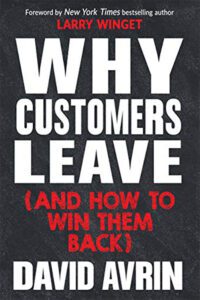
Why Customers Leave (and How to Win Them Back): (24 Reasons People are Leaving You for Competitors, and How to Win Them Back*)
No, they need to get their pricing competitive. I would love your insights on this. What I find interesting is that Walmart and Target, two typical rivals, join forces to try and compete against Amazon. Because the behavior is so ingrained and I’ve got the Prime membership already, it’s working, and you’re not going to give me a cheaper price than Amazon, I’m not so sure that even the Walmart-Target combination can’t get people to change the behavior. There’s no real reason to change unless Amazon messes up that I would maybe consider getting stuff.
It’s interesting. We’re going to see a lot of creative alliances. We’re seeing that certainly in media with a lot of integration on some of the media outlets. We’re seeing that integration in terms of home security, Wi-Fi, ring doorbells, and all of that as well. We’re going to see a lot of that to bolster the offering to be more competitive, but it also requires and continue to require a pretty high level of creativity of recognizing being more customer-centric, understanding what we value as customers, and being able to deliver that differently. Not everybody can do what everybody can do. The question is, “What can you do?”
I was talking to a huge group of small business owners, probably 1,500 in the audience. I did a session afterward. They were saying, “We can’t compete with Amazon and they’re doing free shipping. We can’t afford that.” I said, “What can you do?” The whole idea of positioning yourself as a specialist in a sea of mega generalists is a real opportunity.
I always counsel clients, “Never trash your competitors ever. Compliment your competitors. Just don’t compliment what your customer needs.” You say, “They’re phenomenal if you need this and this, but this is what we do. We do this better than anyone. Everything we do is geared towards delivering this.” “That’s what I need.” “We’re a better choice.” You aren’t one of many different things.
[bctt tweet=”When dealing with customer, you have to be conscious, creative, and intentional. You can’t afford to be in cruise control right now.” username=”John_Livesay”]
I talk about it and not drowning in a sea of sameness and stories that you can share and make you memorable of what makes you unique. You travel so much and a lot of people can relate to this. It’s that excuse you were referring to with Bed Bath & Beyond. If the planes are being canceled now and they go, “It’s the weather or pilot shortage,” I’m like, “I don’t believe it. You didn’t sell enough tickets. It’s not profitable to have this flight go out half empty, so you’re canceling the flight and jamming us all into another one.” My question is it’s not a shock why customers leave, but it’s more about how we win them back. What can an airline do to win them back or do they even care about winning us back?
You stand in any line at an airport and there is constant exasperation up and down the line. You look at the people look and they’re like, “Unbelievable. What’s going on?” They do know what they’re doing, but they’re wrestling a lot of beasts. I don’t have a lot of sympathy for them because we’re all paid full-time wages to get the job done, but we’re seeing it worldwide.
We’re coming out of the pandemic. There was no script for this. What they thought was a great short-term measure to save revenue is they gave early retirement to a lot of people, and then everything came roaring back. The part I will fault them for is they continued to sell tickets for flights that they didn’t know they had pilots for. They assumed they would find some way, even though understanding it takes weeks.

Visibility Marketing: The No-Holds-Barred Truth About What It Takes to Grab Attention, Build Your Brand and Win New Business
I’ve been speaking for 25 years. I’ve never missed a scheduled presentation. Six times, I’ve driven all night to make it to an event. Eventually, knock on wood here, something’s going to happen, but in the last few weeks, I’ve been at three events where a speaker was unable to show up for their time slot. This is my livelihood. This feeds my family and my staff. It’s the same thing when somebody needs something delivered to their home. What’s the backup?
I spoke at a huge conference of major manufacturers. They’re backed up for several months because of supply chain issues. They were talking about 600 vehicles sitting on a lot for a year, waiting for a small motor for the windshield wiper blades that they could not deliver to their clients. It’s going to take years. There is no political party that is to blame because this is global. If I had the answer, I would be far too rich to be taking time to be on shows with my good friends and colleagues. We’ve got to be conscious, creative, and intentional, but nobody can afford to be in cruise control mode.
Speaking of being creative, your website is one of the best I’ve seen for speakers.
Thank you, sir.
24 countries, 13 lost luggages, 1 million plus miles flown, 3 million plus laughs, and 0 events missed. You have a strategy to make sure you can continue to deliver on that promise. Putting it in there in a playful way is also creative. I’ve never seen anybody else do it.
Think about this in terms of the pitch. Let’s take it back to that. What is it that in every industry, there are certain criteria that the people buy from you or looking for? First and foremost, it’s safety. Is this a safe choice? Am I going to get screwed? Can I mitigate the risk? If it is package delivery, you mitigate through risk by giving a tracking number. It also reduces the number of incoming calls from people checking the status.
In my industry, the number one concern is whether it is going to be relevant and well-received. I put a video to alleviate that. They can watch me speak and see what I’m doing. When I throw in little funny things like zero missed engagements, that says something. Maybe it’s subliminal or other, but it’s important for every business to say, “What are the criteria by which the people are choosing between competitors? Are they going to hire you?”
They’re saying, ” I have a need and a number of options. Who’s the best choice for me? Who’s the safest choice? Who’s the most tailored choice?” It’s the same thing when we talked about the specialist over the generalist. When I go to a professional speaker’s website and they say, “Specializing in leadership, change, future, and marketing,” I’m not going to hire them for any of those things because if I need somebody who’s a futurist. I’m going to hire somebody that’s all they do because it’s their gig. They’re futurists.
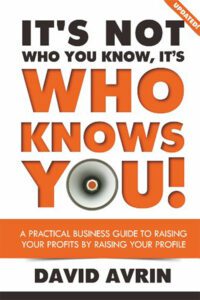
It’s Not Who You Know, It’s Who Knows YOU! A Practical Business Guide to Raising Your Profits By Raising Your Profile
What I love is the story behind the six times you had to drive. That shows the willingness to do what it takes to have zero events missed. In addition to double booking flights, driving when you need to, cars, planes, and whatever, there also is a subliminal message there that you keep yourself healthy. I saw a speaker posting about having to give a talk with a bad back going out. You never know what’s going to happen. You can still get to the city and then have something go wrong. There’s a lot of thought that goes into it. You’re probably not out partying the night before an event.
If I did, they would never know. Here’s the other thing. I don’t understand this. I’m an oversharer on social media, but sharing every time that you’ve got sick, or “I’m at this event. I feel horrible,” sounds heartless. They have booked you several months in advance. They have 900 people sitting in that audience, but it’s the same thing. I have this video series called The Morning Huddle that I have a new book based on.
Don’t be the hero of your own story. “Look what a martyr I am.”
It goes back to the story, but we deliver because people are relying on us. Whether it’s our staff, our family, our audience, or our customers, we step up.
If anybody wants to book you as a speaker and get your books, they can find all of them on your website, DavidAvrin.com. Is there a last quote or thought you want to leave us with?
The last thought is the real key post-pandemic in the new world is you can win in business. Quality is a foundation by being ridiculously easy to do business with. Don’t make your people work for it. I’m so geeked out on new technology. I’m so bullish on the opportunities that have come about as a result. In many ways, COVID accelerated what’s long been predicted about how we’re going to do business. The ones who sit back, waiting for the cheese to come back are going to be left behind. There are huge challenges, but that creates opportunities for those who are willing to do more, and I am.
I love it. Note, be easy to work with. Thank you so much, David. It’s been a pleasure hearing your stories and wisdom.
Be well.
Important Links
- David Avrin
- It’s Not Who You Know, It’s Who Knows You – Amazon
- Visibility Marketing – Amazon
- Why Customers Leave (and How To Win Them Back) – Amazon
- The Morning Huddle
- The Morning Huddle book – Amazon
- Better Selling Through Storytelling Method Online Course
Wanna Host Your Own Podcast?
Click here to see how my friends at Podetize can help
Purchase John’s new book
John Livesay, The Pitch Whisperer
Share The Show
Did you enjoy the show? I’d love it if you subscribed today and left us a 5-star review!
- Click this link
- Click on the ‘Subscribe’ button below the artwork
- Go to the ‘Ratings and Reviews’ section
- Click on ‘Write a Review’
Love the show? Subscribe, rate, review, and share!
Join The Successful Pitch community today:
- JohnLivesay.com
- John Livesay Facebook
- John Livesay Twitter
- John Livesay LinkedIn
- John Livesay YouTube
Command Your Brand With Jeremy Slate
Posted by John Livesay in podcast | 0 comments

Doing business involves trial and error, and some mistakes are bigger than others, but that shouldn’t stop you from striving for the top. Today’s guest is entrepreneur, media expert, author, host of the Create Your Own Life Podcast, and CEO/Co-Founder of Command Your Brand, Jeremy Slate. In this episode, he joins John Livesay to share what it takes to pave your path to success. Jeremy shares his journey and the major mistake that led him to success. The two also discuss how to grow a business and differentiate public relations, marketing, sales and how these three should interact to help you succeed. Plus, he talks about how he got into podcasting and why it’s the next big thing. Get valuable business insight and life advice as Jeremy shares insight from his upcoming book, Unremarkable to Extraordinary: Ignite Your Passion to Go From Passive Observer to Creator of Your Own Life. Stay tuned!
—
Listen to the podcast here
Command Your Brand With Jeremy Slate
Our guest is Jeremy Ryan Slate, who’s an entrepreneur, a media expert, author, CEO, and Founder of Command Your Brand. He studied Literature at Oxford University and is a former champion powerlifter that helps visionary founders to impact the world and better mankind through podcasting and new media to create trust and opinion leader status. He has experienced some of life’s toughest challenges will certainly get into, including a routine surgery that led him into receiving last rights from a priest.
A few years later, his mom had a massive stroke which left her with permanent disabilities. Professionally, he’s tried it all, from teaching and network marketing to selling life insurance but he’s good at creating debt and not paying bills. He had an idea to start a podcast. Rock Your Life was the first one that didn’t do so well.
I love that part of the story because everyone thinks the first thing you try is always going to be a hit. He launched another one called The Create Your Own Life Show, which saw 10,000 listens in the first 30 days, which has led him to speaking to many of his heroes and on stages globally. Jeremy, welcome to the show.
Thanks for having me. I’m stoked to hang out.
You have done a lot in a short amount of time because your podcast literally took off, and you were named one of the top Millennial influencers by Buzzfeed. A lot of people in that generation are still thinking, “I’m not quite sure what I want to do with my life. I haven’t had my big break yet.” You are like, “I have probably lived three times than what most people have lived.” You also have a book, Unremarkable to Extraordinary, that we want to get into as well. Let’s go back to your own childhood or in college. Where did you get this tenacity? Was it from sports or this concept of, “I’m going to create my own life and not follow everyone else’s path?”
It was more of frustration at the life I had. My parents are both two hardworking, blue-collar people, neither of which went to college. They always thought college was that thing that was always imprinted on me like, “You’ve got to do that because that’s going to help you get that career and go wherever it may be.” For me, I created a lot of debt. I basically became a professional student. I’ve got a Master’s degree in Ancient History. It’s not a very usable skill in the world of getting jobs but I have always loved to learn. I have always enjoyed that. At the same time, it was a frustration with the world we are in.
Interestingly, you mentioned in your intro a lot of people in my generation are still trying to figure it out like, “What does that look like?” One of the main problems with that is they’re not willing to try things and fail at them to find the thing they want to do. You’ve always got to keep moving forward, trying things, and working. There’s this weird idea. I don’t know where it came from. “If you find your purpose, you’re never going to work a day in your life.” The first part of that is key, and that’s to find your purpose.
You’ve got to do some stuff to find your purpose. That’s one of the biggest things that has been a key guider in my life. I have worked hard on a lot of different things. Some were right, some were wrong for me but all of those experiences have helped me to become the person I am now. When I look at being back in college at that point in time, I came out in 2011 with a Master’s degree in Ancient History in a bad economy, which is funny looking at now, this economy. We’ve lost 20% of the value of the dollar of that day versus now.
There weren’t a lot of jobs for coming out of school at that point in time, especially for somebody that has a Master’s degree because it’s like, “What are you working, in a museum? What do you do?” I came out and ended up working for a house painter during the day. This is old school, by the way. We did everything by hand, hand scraping, 40-foot wooden ladders. It was wild.
No electric sanders for you, right?
No, we did all old Victorian homes where everything was supposed to be done by hand and things like that. I did that during the day from 7:00 AM until 5:00. I had come home. I had dinner and showered quick, and I had had to be at the gym at 6:00 where I had worked as the nighttime Manager from 6:00 to 11:00, and then I would be sleeping in between that. I ended up running into a priest friend of the family. He’s like, “The Catholic school I used to teach at is looking for teachers. You don’t need any requirements other than a college degree.” I’m like, “I’m in.” For me, it was going through and realizing like, “This isn’t what I wanted to do with my life.”
[bctt tweet=”PR is the cornerstone to growing your business. ” username=”John_Livesay”]
When my mom had a stroke when I was 24, it made me look at a lot of what I’m doing and realize like, “There’s got to be something more than this. You don’t work and be miserable until you are 65 and then end it. What’s the point?” From there, I took that jump to entrepreneurship and tried a bunch of things. It didn’t work. You’ve got to try some things and find out what you like. That’s how you find your purpose.
One of the things that fascinated me about you when I was preparing for this interview was this wonderful combination of intellect and physical fitness. The two are not known to be going together. In other words, there’s the “stereotype of the dumb jock” or “the nerdy skinny intellectual” that studies history all the time. You, right off the get-go, have blown that stereotype out the window.
That are the diametrically opposed parts of my life. I was always the guy sitting in the front asking way too many questions, unable to fit in my shirt.
The biceps are bursting. The assumptions that people make about you, either way, is interesting in terms of your potential because you are now working on this remarkable, extraordinary. Where are the book and the journey? Are you still interviewing people?
The podcast is still always an ongoing thing. We started it back in 2015. That was where the bulk of the conversations that I have had that are in the book came from. We are launching on June 7th, 2022. The advanced reader copy came in. We’ve got the cover design going. We are setting up media, waiting up to the launch. It has been an interesting experience to do that. I have learned a lot, even in the process of putting it together, even that formative process can change you as a person.
To get people at the level that you’ve gotten to be agreed to be on your podcast, you are having to sell yourself. There’s a lot of trepidation that would be worth going through because as both of us being podcasters, launching and wanting the big names or at least somebody with this incredible story, for me, there was the fear of rejection.
If I asked somebody from Shark Tank, especially at the beginning, when you don’t have a lot of episodes under your belt or the fear of rejection, the fear of failure, nobody listens, and then the fear of the unknown of like, “How do you do all this?” You go to school and learn how to be a good host, let alone all the tech stuff behind it. Can you walk us through your process of how you dealt with those three fears, launching your podcast? It’s relevant to launching anything. The first one is, do you ever struggle with the fear of rejection? If so, how do you handle it?

Command Your Brand: You’ve got to try some things and find out what you like. That’s how you find your purpose.
I sold life insurance for a year. That will solve your fear of rejection. The biggest transformative thing in my life was selling life insurance for a year because you’ve got to make 50 to 100 phone calls a day. When you first start, that phone is heavy. Once you realize that people, maybe, will verbally assault you but they cannot physically assault you through the phone, that’s a big freedom point, frankly. For me, that willingness to keep going, I’ve got a lot of that of selling life insurance.
I feel like anybody that’s willing to go get a commission-only sales job or anything like that will learn so much from that experience. You will become better at accepting rejection because of that. To me, you’ve got to do things where you are willing to fail and realize the estimation of effort. That’s the other biggest thing. A lot of people reach out to 1 person or 2 people, they don’t hear anything, and they are like, “I will quit.”
When you realize you’ve got to reach out to 50 to 100 people, whatever it may be, to get what you want, that’s all the difference. I would say for most people, get yourself a commission sales job and an internship where you are good at. Do something like that, and you will find that rejection doesn’t hurt much when you have been rejected a lot.
For me, my whole thing is I never take it personally. No now is a no forever. I’m not so freaked out by getting a no or rejection, I go into the fear of failure. You touched on that a little bit but it’s a separate fear in other words, “I’m going to keep calling people to sell insurance or I sell whatever it is I’m doing.” In this case, getting a great guest on the show.
I remember for myself, when Larry King interviewed me, I was like, “Game on.” I never dreamed that was ever going to happen. I’ve got to be prepared. I don’t want to blow it when I have the amazing opportunity. When you are interviewing somebody, the kinds of people you have had on the show, that could be a little intimidating for someone. I’m not saying it was for you but how do you handle that? What advice do you have around that?
It’s gradients. When I first started, I was afraid of a microphone. I was afraid of those conversations. The first conversations I had is I took a look at people I knew locally that had successful businesses. I went to their houses, and we recorded it on my MacBook, which I did not know how to do audio mapping or anything at that point in time.
The sound quality wasn’t good but it allowed me to have those first conversations with people I was comfortable with and people I know. That’s one of the biggest things. It’s something that I have talked a lot about in the book. It’s consistency, doing things over and over again, and continuing to do it until you get better at it.
[bctt tweet=”Focus on what you can control when dealing with fear. ” username=”John_Livesay”]
That’s how, for me, how you get more comfortable at either reaching out to a guest or that’s how you get more comfortable with doing an interview with somebody. As you mentioned, being on the other side of the mic, even from somebody that’s well known. You have to have more conversations and be willing to handle that. If you do it on your first time, it may not go as well for you because you need to be get used to that. It is that continue doing it. At first, I started in people’s homes, then I went to doing it on Skype, without video, by the way, because I was too nervous to talk to people that I didn’t know with the video on.
We moved from there to then doing it on Zoom. I’m like, “They can see me now. I’m okay with that.” Now I look at where we are at several years later, we do a full video show on YouTube, Rumble, and all those places. We are talking to some great people but I could not do the show now like several years ago. It had to get through, continually showing up and improving every day.
One of the tweets is, “Consistent practice delivers excellence and not being frustrated that you don’t hit a home run in your first time at-bat.”
There’s an Abraham Lincoln quote around that, too. I don’t remember exactly what it is but it’s something like, “I will prepare my day will come.” That’s one of the biggest things. I’m a huge football fan. One of the things that is a big deal is something I like to call a Mo Lewis moment. Mo Lewis was a former linebacker for the Jets. In 2001, he hit the quarterback of the New England Patriots, Drew Bledsoe. He almost killed him, by the way.
After that hit, in walks a little-known guy named Tom Brady. Tom Brady became the starter of the New England Patriots for many years, won six Super Bowls with them and another one with the Bucs. Had he not prepared every single day for his moment to come? There’s no Tom Brady. What you have to look at is you don’t know when that moment or opportunity is coming but you always need to be preparing in the background.
I also find it fascinating that you, as a professional power lifter, and that is all about being seen, and little clothing usually, that you would still have situational confidence almost. To get in front of the camera with your clothes on is still a whole new trip. That’s why as a sales keynote speaker, I always go on the stage the night or the morning before the audience comes in so that my brain does not say, “We have never been up here before. What’s happening?”
I do that same thing, by the way, because you’ve got to feel the room. You’ve got to be able to sense the back of the room, the front of the room, see how big or small the room is, because at the same time, how you show up in that space is going to be vital to how you understand that space.

Command Your Brand: When you let go of that stress, a lot of good things start happening.
Let’s deal with that third fear that I have experienced. This is so valuable for everyone reading. Try and fail until you find what you love to do. Realize that progress is in steps, not leaps. Where you will be a year or three years from now is not even possible now. Don’t even compare it to that. This almost stopped me from doing it is the fear of the unknown. For my solution, don’t go it alone. I have somebody produce the show for me. Let’s face it, we have all been through a pandemic. There’s so much unknown going on in the world now, even after the pandemic is starting to not be such a threat but the fear of the unknown is not going anywhere.
We don’t know what shoe’s dropping next.
How do you, as an athlete, as a successful business person, and running a team of people and ideally inspiring people of all ages but in particular your own niche, I always think that, “You are old. You figured it out but I’m still going to have ten years of being afraid of the unknown.” Some people never stop being afraid of the unknown. What is it that you do, Jeremy, that you think could help people around that?
The thing to take a look at in this situation is you look at what things you can control. “Can I control what John’s doing? No. Can I control what my kids are doing? Sometimes. Can I control what my animals are doing? It depends how well-trained they are.” The only thing you can control is yourself and your reaction to things. Frankly, the biggest thing that I try to make a major thing that I do every day is making sure my fitness, the way I eat, and the way I go through my routine is taken care of.
At the same time, even looking at situations and saying, “How can I manage myself in that situation?” We’ve got some rough situations. If you come at that situation with a head of steam, you are going to make it worse. The only thing you can control is yourself and your reaction to things. When you do that, you can change the game a lot of times. It’s interesting.
I’m thinking where sometimes you get your stressful days. It is what it is. I had one of those days where you say, “Whatever. What comes, comes. I’m going to continue to prepare and keep going in the right direction.” You find when you let go of that stress, a lot of good things start happening because you are not focused on the stress you have loosened and opened up. That’s what you have to take a look at. You can control yourself and your reaction to things. That’s it.
What I’m hearing is when you have a system in place, a structure, and a routine, we all know our children likes structure.
[bctt tweet=”You’ve got to do things where you’re willing to fail and realize the estimation of effort.” username=”John_Livesay”]
Mine doesn’t.
Even our pets like structure. They need to know where they are getting fed at a certain time. Even if a child says they don’t like structure, they really do. They might fight the bedtime. We have seen a lot of parents struggling with the lack of structure with the kids being homeschooled, totally throwing off the routine of kids, interacting with themselves, and having trouble waking up since it’s just a Zoom call, it’s not leaving the house. All that stuff was stressful on a lot of levels.
You need to keep your fitness up no matter what’s going on. It’s a baseline, let’s say, and then the eating, so that you are prepared for whatever surprises because if you are not rested and on a sugar plunge, you are not nearly as equipped to think clearly. Your success on how you help other people become successful, tell us a little bit about what your business model is.
We believe that podcasting is the next great frontier. It is that place where incredible conversations can happen. It’s the direction the media is going. The incredible thing about it is, it’s user-driven. You look at why people watch Netflix and Prime. It’s because they can decide what they want to watch. The same thing with podcasts. People are making the decision to spend time with us and listen to it, their leisure.
That’s an important thing to think about. It’s because of that we have decided that we help people to tell stories on the podcast medium. We have been doing this back since 2016, where we help people to tell a better story. We find the right podcast for them. We helped them get booked in those shows because we see this as the new world PR play to be telling your story on the podcast.
There have been all kinds of research that the number one thing that sells books for new authors are podcasts. Not TV, being in The Wall Street Journal or whatever. Part of it is behavioral. If you are listening to a podcast on your iPhone or whatever, and you go, “That sounds like a good book. I like what that person said in the interview. I probably would like the book,” you are a click away from ordering the book. Whereas if you are seeing somebody on TV, you are like, “Maybe I should get that book.” You’ve got to go find your phone as opposed to the phone being in your hand when you are listening.
That’s even if you watch TV. I don’t even watch TV anymore. I listen to podcasts and that’s it. That’s where I find everything anyway.

Command Your Brand: Public relations should always be the first thing you’re doing because it should be something where you create that “know, like, and trust” factor.
This is part of my background and one point of your niches, there’s a right combination to public relations versus marketing versus sales. First, let’s do a quick definition for people who might not understand the distinction of paid versus unpaid exposure. Let’s start with PR. Most people have a sense of it but what’s your definition of PR?
Public Relations is how you relate to your public but the public, in this way is a type of audience. It’s the people that you want to know you. You may say, “My public is business owners. My public is CEOs.” It’s basically how you want to be known and seen by those people. There are different types of public relations within that. There could be crisis public relations. “If the ships are burning down, you’ve got to figure out how to bail it out.” There could be an awareness campaign or a launch campaign but it’s how you relate and create a relationship with your public or your audience. That’s Public Relations.
Also, it’s not paid for. Whatever you are creating, the content you are creating is newsworthy in some way, shape, or form.
It’s made newsworthy too because the positioning of it and how you position it can make it seem newsworthy.
Versus marketing, which for the most part is paid advertising. Some things can go viral, and then you get unpaid exposure. Part of PR can be seen as part of marketing. For the readers who are entrepreneurs, understanding one is paid, one is non-paid. Marketing and sales sometimes in big companies can butt heads, and the salespeople are demanding.
The sales guys were like, “Those marketing guys stinks.” The marketing guys were like, “Sales guys can’t close all the leads I’m getting.”
What is the right combination if you are a business owner, do you think?
[bctt tweet=”You don’t know when that moment’s coming, you don’t know when the opportunity is coming, but you always need to be preparing in the background. ” username=”John_Livesay”]
It’s all three. I look at it this way. If your sales aren’t working, you take a look at marketing. If marketing isn’t converting, you take a look at public relations. Public relations should always be the first thing you are doing because it should be something where you create that know, like, and trust factor. You could have a great marketing program but if a lot of people are landing on your site and never heard of you, they are not going to convert. They need to know who you are, like you, and trust you. That’s why I look at it as the combination of things. You always work it backwards. If sales isn’t working, you take a look at marketing. If marketing isn’t working, take a look at public relations.
You can work it back the other way now, public relations create the things for marketing to now promote because they are creating the pieces where that can be seen as trustworthy and create that opinion leader status for you. Now you promote those things, and you get them out there, and either paid traffic, a social media campaign or something like that, to then get somebody in front of you to sell. When you look at it that way, you can work it back and forth, and you can find out what’s wrong in your organization if one of those things isn’t working well.
A lot of people think, “I don’t even need PR. I’m going to focus on spending ads. That should drive people to my funnel, and then I will close them.” You are like, “You forgot a big part of that ingredient there.”
There’s a misconception in that too, John because a lot of people will say, and this happens in sales conversations for us, “I’m going to wait until people find me.” To me, that tells me that you don’t quite understand how the media world works. When you understand how the media world works, they are not looking for feel-good stories all the time because they are more interested in telling you about, “Something on the news at 10:00 could scare you and buy our products.” They are 24 hours a day trying to fill a new cycle of things that do get eyeballs and attention. For you, you have to be the one willing to get out there, tell your story and get it in front of people because they are not going to be looking for you.
Let’s close up our interview with a happy story, not a sad story or a scare you story, of how you were able to make your brand grow 71% in the economy, and what other people can be doing to get those same kinds of result.
Frankly, the biggest thing that we did was the whole COVID situation, we have been a digital company since 2015 or 2016. We had that foot above. What we did is when companies started laying people off, we started hiring. That was the biggest thing we looked at. Now there is a talent pool of people that were not available to me a year ago or a month ago or whatever it may have been. We started hiring because we are like, “You can work from home. You are incredibly talented. We are excited to have you.” We focused on hiring. The next thing we focused on was our training. Our company training was okay but now if we are going to hire all these good people, we need to train them better.
We focused on having better company training. That was vital. The other thing we focused on is better processes. Especially since we are hiring and training more people, you need a better-written process. When we write our processes, we call them hats. It’s the hat you wear to do a job. Within that, it’s, “How should that person be? What should they be doing on a daily basis? What is every single step to what they are doing every single day?” Our job descriptions are like little books. There’s so much to them. Focusing working on our business rather than in it was one of the biggest things that helped us to growth because we were able to locate the right people, put the right processes there, and focus on how can we train them better. When you do that, everything else you are doing works better.
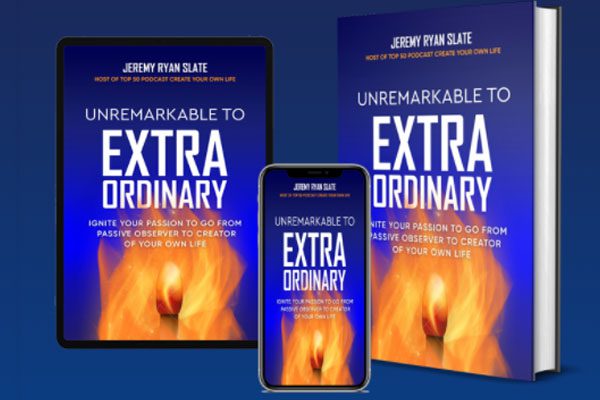
Unremarkable to Extraordinary: Ignite Your Passion to Go From Passive Observer to Creator of Your Own Life
That’s a huge takeaway. Most people don’t spend the time training people. They figured, “I’m hiring you. You should be able to hit the ground running.” We don’t even talk about our culture and whether you are a fit or not.
That’s a huge misconception.
If you don’t have clear expectations or boundaries like we were talking about with children and pets, for the employees, they don’t know. “Is it okay if I come in at 10:00?” “Not really.” “Nobody told me.” I can set up a problem right off the get-go. “Here’s what we do. This is our workday. We are totally flexible. As long as you get the work done, you can come in what time you start.” Everyone is different. That training as a speaker who gets hired to sometimes also train after the keynote and help people get a new skill because the skills you have are not enough. You have to constantly be learning new skills is my experience.
That’s one of the things. If you are not growing, you are dying. You always need to be growing and working on what you are doing. That goes back to what we have been talking about all through this conversation. It’s about incremental improvements and consistent improvements. You have to be thinking about the same thing for your team. They should be training weekly, whether it’s on some sort of new process, some process you have been running for all, whatever it is, they need to be improving as much as you do because that’s how you keep your organization growing.
If people want to listen to your podcast, it’s called Create Your Own Life. If people want to learn how you can help them with their branding, they should go to CommandYourBrand.media.
CommandYourBrand.com or CommandYourBrand.media, either one will get them to us.
Any last thought you want to leave us with?
I would encourage people to go out and grab my book, which is now in pre-order. It’s going to be released on June 7th, 2022, which distills down a lot of what we talked about and brings that into something that you can bring into your life to make some huge improvements and find your extraordinary. It’s Unremarkable to Extraordinary. They can get that over at GetExtraordinaryBook.com.
Jeremy, thanks again for inspiring us all to put a little structure in our life and get some practice in.
John, thanks so much for having me. It’s a lot of fun.
Important Links
- Command Your Brand
- Create Your Own Life Show
- Unremarkable to Extraordinary
- YouTube – Jeremy Ryan Slate
- Rumble – The Create Your Own Life Show
- CommandYourBrand.media
- Larry King – YouTube, Larry King interviews Sales Keynote Speaker John Livesay
- Better Selling Through Storytelling Method Online Course
Wanna Host Your Own Podcast?
Click here to see how my friends at Podetize can help
Purchase John’s new book
John Livesay, The Pitch Whisperer
Share The Show
Did you enjoy the show? I’d love it if you subscribed today and left us a 5-star review!
- Click this link
- Click on the ‘Subscribe’ button below the artwork
- Go to the ‘Ratings and Reviews’ section
- Click on ‘Write a Review’
Love the show? Subscribe, rate, review, and share!
Join The Successful Pitch community today:
- JohnLivesay.com
- John Livesay Facebook
- John Livesay Twitter
- John Livesay LinkedIn
- John Livesay YouTube
Booking Celebrities: The New Storytellers With Bruce Merrin
Posted by John Livesay in podcast | 0 comments

Booking celebrities for appearances is one of the most important functions of public relations and management teams because those appearances, more often than not, really do mean a lot to the people there to witness it. Just being in that space with a speaker who’s also a storyteller can take a person to so many worlds beyond themselves. Bruce Merrin is the Founder and Owner of the Celebrity Speakers & Entertainment Bureau. Joining John Livesay, he shares some of his most heartwarming stories on the job about both celebrity speakers and the people who got to see these celebrities in the flesh.
—
Listen to the podcast here
Booking Celebrities: The New Storytellers With Bruce Merrin
Our guest is Bruce Merrin who is the Celebrity Speakers Bureau Founder which is then a top ten grossing firm in both Los Angeles and Las Vegas. In 1973, Bruce booked his PR client, actor Michael Landon, on The Tonight Show starring Johnny Carson. Bruce credits Carson for inspiring the idea to launch a Celebrity Speakers Bureau. After the show at NBC in Burbank, Johnny Carson invited Michael Landon and Bruce to his Malibu home for dinner. When Carson suggested that he create Bruce Merrin’s Celebrity Speakers Bureau, Landon offered to be Bruce’s first client. That’s quite a wonderful story of origin. Bruce, welcome to the show.
Thank you. It’s an honor and a privilege.
I am fascinated not only to know the story of the origin of how your Celebrity Speakers Bureau started, but also to hear your personal story. You can take us back to your childhood, school, wherever you want that you knew you wanted to be in the entertainment business or the speaking business or PR. Tell us what your early childhood inspirations were.
First of all, I was born in Louisville. My first and big sports star was Muhammad Ali. When I met him, he got such a kick that I was born in Louisville and he was too. We moved to New York City. I lived there until I was graduating in the sixth grade. The important story that ties into my business is my dad was a big Brooklyn Dodgers fan. He took me to the Brooklyn Dodgers games often. One of my favorite players was Jackie Robinson who wore number 42. Fast forward, he became my second sports client that I ever represented. When we were living in New York, that was a real impactful thing for me that I became a Brooklyn Dodgers fan and that Jackie was my hero and became my client.

Booking Celebrities: You find out the true value of a person by how they treat people, how kind they are not only to people who are like them but to regular people.
After graduating sixth grade, we moved to Las Vegas where I am. My dad was the President of the Flamingo Hotel back then and this is where the entertainment side comes in. Dad, because he was the president of the Flamingo, he and my mom would take me to all the big headlining shows here in Vegas. Judy Garland, Sammy Davis Jr., Frank Sinatra, Ella Fitzgerald, Lena Horne, the way the entertainment side comes with a great story. When I was in the seventh grade, they took me to see Sammy Davis Jr., certainly one of the greatest performers of all time. I was a young junior high guy at the time. I had heard of Sammy Davis, but I had never seen him perform.
We went to the Sands Hotel, we sat in the front row and Sammy as his closing number does a song that was called Mr. Bojangles. Everybody knew that was his song. After the show was over, dad and mom took me to Sammy Davis Jr.’s dressing room and I got to meet him and I was impressed with Sammy. He’s one of the greatest entertainers that I’ve ever seen. We were driving back home and I was in the seventh grade then, I said to my mom and dad, “Mom and dad, I want to work in the entertainment industry.” At a young age, after seeing Sammy Davis Jr., thanks to Las Vegas and my mom and dad, those are what gave me that first spark of loving entertainment.
I imagine that being around that much talent and seeing it close-up gives you a different perspective that you get to see them as people and not somebody famous that doesn’t have challenges and things that other people have.
Thanks to my mom and dad, I did. I get to meet these people up close and on a friendly basis as well. The other Vegas story that I’ll share because this is something that affected my life as well. Brenda Lee, the great country music artist, had over 40 top ten Billboard hits. When she first headlined in Las Vegas at the Flamingo where my dad was president, she was only twelve years old. She was the youngest headliner ever to perform in Las Vegas. She was twelve and I was twelve. My dad said, “How would you like to come to the Flamingo pool? We’re having a twelve-year birthday party for Brenda. You can meet Brenda and then you’ll sit in the front row and watch her show.” She had a big hit. It was a number one hit. It was called Jambalaya. I was familiar with her because I would hear her song all the time on KRM Radio here in Vegas. Not only was I her date at the Flamingo pool party, but at the dinner show, I sat in the front row. I’m blessed at a young age. Thanks to my mom and dad, I got exposed to the entertainment industry and it was in my blood from a young age.
The fact you got invited to Johnny Carson’s Malibu home and he was such a private person, that shows that celebrities feel safe to be with you. I want to put that out to everyone reading this episode. In life, whether it’s your personal life or your career, if people feel safe to be themselves around you that you’re not going to judge them or be star struck or whatever the issue is, it’s the best compliment anyone can ever give is I feel safe to be myself. Certainly for me, if someone feels that they can be safe to be themselves with me, that’s what I try to create here as the host of the show. In my personal and business life, that is what’s jumping out at me about you is that all these people felt safe to be themselves in front of you.
[bctt tweet=”Be A Giver, Not A Taker. ” username=”John_Livesay”]
That’s a kind comment to make and you’re right, because imagine I was a young guy at the time when I went to Johnny Carson’s home and Michael Landon was my first big celebrity client. What you’re saying is certainly correct but think this was 46 years that I was at Johnny Carson’s home. Think about how Johnny and Michael impacted my life? Your comment is accurate. The funny story is the next day after the dinner, Ed McMahon calls me up. He said, “Johnny tells me you’re starting a celebrity bureau. I’d like to be your third client.” He was. I’m blessed but that’s an insightful comment that you make because if people don’t have that trust, it never would’ve happened.
One of my big inspirations, I like to quote him quite often, it’s Dr. Wayne Dyer. One of his wonderful quotes is, “If you squeeze an orange, you always get orange juice. It doesn’t matter what time of day, middle of the room, in the corner.” He said, “What happens when you get squeezed and you’re under stress and you’re squeezed into a corner?” It was such a great metaphor. I know that you booked him with Steve Jobs and Apple. Would you share that story with us?
Having done this many years, I’ve been blessed to book about everybody in the world. Dr. Dyer, without question, would be in my top five of all time because I use the term. I already know you and you’d like this term as well, impact lives. I like to have the ability to impact people’s lives. One of the ways that I can do that is by booking clients like Dr. Wayne Dyer, and he was such an amazing speaker. Whenever I booked him, I’d always get a call or a text or some message from the client saying, “Dr. Dyer was the best speaker we’ve ever had. Bruce, you’re my hero.” Dr. Dyer was an amazing man. The lady that was the main executive that worked with Dr. Dyer lived in Miami.
I was in touch with her all the time, but Dr. Dyer truly, he’d be in my top five because of what he talks about and writes about in the books. He had a great quote that you mentioned. For me, he’s still alive. He was such an amazing guy and every time he went out and talked to audiences, he did impact their lives. I will say, of all the speakers that I booked them all. He would sell more books at his engagements than anybody because everybody wanted to get a copy of his book. I’m glad that you did mention Dr. Dyer. He truly was one of the greatest of all time. I love him and I do miss him.
The other thing that you talk about is the impact and there’s a whole philosophy of a good speaker can hold an audience’s attention. A great speaker might give them some takeaways that they can start using in their career, but an extraordinary speaker is someone who has an impact for months, if not years after their talk. I know for myself when I hear people echo back something I’ve said, the old way of selling is to Always Be Closing, the old ABC. I reframe that to ABK, which is Always Be Kind and to the way you talk to yourself and your coworkers and the people you’re working with, telling people to put ABK on a Post-It note. That one little takeaway, people will come up to me and say, “ABK,” and it stuck. It had an impact. That feels like you’re on purpose and doing what you’re supposed to be doing in your life. Do you have a story of a speaker you booked had that impact either there’s a story or when so-and-so spoke they said this, and people still talk about it?

Booking Celebrities: Instead of trying to sell or close with people, ask them this question: What is important to you?
Yeah, and I love what you’re saying about kindness because I believe you find out the true value of a person. If they’re at a hotel, how do they treat the valet? How do they treat the concierge? It’s not the people that are millionaires or billionaires. How did they treat regular people? I love what you’re saying about kind. The instance story that hit me was President Gerald Ford. I, as you know, have been lucky to book all of the past presidents, starting with President Reagan. Here in Nevada, we booked President Ford for a big event along with many other people. One of the people on the stage that same day was Bruce Jenner. We get a talk show about some stories there. President Ford was such an amazing gentleman. A gentleman is a word that I would think. He was on the stage in front of about 5,000 people. When he finished his talk, he got a well-deserved standing ovation with the past presidents.
The Secret Service is with them. As soon as he finished, they were storming the stage and they wanted to whisk them away to the limousine. President Ford holds his hand up to all the Secret Service and says, “Gentlemen, these nice people out here have some questions they’d like to ask me.” He was kind about that and he stayed for 30 extra minutes answering questions. He didn’t have to do that. He easily could’ve gotten into the limousine and left. In terms of kindness, that was a story that immediately made because he was such a kind person that he cared about all the people there in the audience that was there instead of leaving and getting in the limo. He wanted to answer some questions and make them happy. To me, that showed a lot of his character, which had nothing to do with politics.
One of the things I talk about is trying to find something you can do that’s unexpected. Luxury is defined as giving somebody something that they didn’t even know they needed. If you can do something that makes you irresistible and helps you stand out against other people, that extra bit staying for an extra 30 minutes, people want to know that it’s not another job to you. When you come and give a talk and then the more you can customize it and be available and sign books or take pictures or talk to people before you give a talk and customize it to them. I know when I spoke to Anthem Insurance after my talks and said, “How long have you worked in healthcare? I don’t, I took the time to learn your acronyms.” Some people said to me, “Our biggest challenge is, we’re asking people who are nurses and MBAs to sell.” I said, “Let’s ask them to become a storyteller instead of a salesperson.” “They’d like that.” Here’s the secret sauce, Bruce, that people can read, which is trying to do what you’re afforded. What else could I do to give extra value?
In this case with Anthem, I said to them, “What’s happening after I give my talk?” They go, “At the end of the day, we’re going to have an improv session and people from the audience are going to shout out objections they get from doctors and people are going to on stage role-playing.” I said, “What if I stayed and was helping them if they got stuck in the improv of what to say? I could whisper in their ear?” They went, “No one’s offered that. We didn’t even think to ask a speaker to do that.” That’s what made them select me versus someone else. They said, “I wish you could be in my ear all the time. You are The Pitch Whisperer.” It became that extra bond. There’s another example of letting people who are reading our blog think to themselves, “What can I do that would show part of my character and give extra value that’s not even anticipated or requested?”
It’s a beautiful story and I admire and respect what you do. When you mentioned storyteller, no matter who the speaker is, if they are a good storyteller, then they got me at hello. You can get people that are experts and then you can throw out all these different facts. If they’re a good storyteller, especially one of the things I tell to younger speakers who are starting to try to make it, I said, “At the beginning of your talk, if you can touch the hearts of the people in the audience, that goes a long way. If you can touch their hearts, what is your story that would touch their heart and have them at hello? Also, if you can make them laugh, that’s great too.” I love what you were mentioning about storytelling. It’s such an important aspect of a good speaker to be a good storyteller.
[bctt tweet=”When people feel safe to be themselves with you, they want to work with you.” username=”John_Livesay”]
Stories make us memorable. A lot of clients that I work with, whether they’re architects or law firms or tech companies or healthcare companies, they usually get down to a final three where they have to present. Fill out all the paperwork and it’s between them and two other people, and they say, “We hope we get to go because we think whoever goes is memorable.” The problem is you can’t control the order you present like an interview for a job. I said, “Whoever tells the best story are people going to be memorable.” That’s what our brain is wired to remember a story. It’s coming up with things that touch the heart. One of the upcoming social media posts I’m going to be doing, because buildings and restaurants are being closed does not mean you have to close your heart to other people. That’s what good communicators and storytellers do is you take what’s going on and try to have people see it differently. That everything is closing. Don’t close your heart. Still have heart connections with people.
It goes back to the networking phrase, “Givers gain.” It’s not having your hand out saying, “What can you do for me? Instead, it’s what can I do for you?” Especially at this time. I love what you’re sharing. To me, that’s important. I believe the greatest gifts are free. What can you do for somebody else that doesn’t have to do with the money? The way you can touch your heart or impact your life, I applaud you. I’m giving you a sitting ovation.
One of the things that you have talked about, great soundbites and I love a good sound bite because it’s memorable, you tell people that hire you, whether it’s IBM or other Fortune 500 companies. Never hear the sound of one hand clapping at your event. Can you tell us a story of a speaker that you booked that took people from being bored to being entertained and how that all works?
It’s interesting when you’re talking like this, it’s what pops into your head because I’ve been doing this so long, I got to work with all of the astronauts starting from the beginning of the John Glenn’s of the world but Wally Schirra was one of the early astronauts to became famous and he was good that he wound up going on CBS Evening News with Walter Cronkite. What impressed me with Wally Schirra is he was able to connect with his audience by inspiring and motivating them with experiences that he had in space, but yet taking it down to the earth and the people got what he was trying to say. As an astronaut, he was somebody that I enjoyed working with because he was a hero to everybody in the United States and around the world. He was able to speak on the same level with the people in the audience. He was one of my favorite speakers of all time because, while I worked with all the astronauts, he was one of the early ones, but it shows how good he was the fact that Walter Cronkite, the great newsman, said, “Wally, I want you on my broadcasts.”
I know I’ve had the privilege of being interviewed by Larry King. I did my homework. You can imagine and I read that he does not like small talk. I read his story of origin because I’m always fascinated to hear that. It turns out his big break was interviewing Frank Sinatra. At a time when Frank Sinatra was not doing interviews because his son had been kidnapped and the media was saying it was because of possible mafia connections. Larry has a great story about all of that. I brought that up to him before we went on camera and he said, “That was a great night.” When he asked me what makes a good story in my interview, I was able to say, “You have a great story how you got your big break interviewing Frank Sinatra. Would you mind telling that story and then we could break it down for everyone watching as to what the elements to that story?” The famous tennis pro Arthur Ashe said, “The key to success is confidence. The key to confidence is preparation.” If you’re going to interact with somebody iconic, whether it’s Walter Cronkite or Larry King, you best be prepared.

Booking Celebrities: Instead of trying to sell or close with people, ask them this question: What is important to you?
Larry is one of my favorite people of all time. I first met Larry when he was hosting his radio show in Florida. I was booking clients on his radio show and then when he went to CNN because of the nature of our public relations to business, I got to know him well and I did book them. I’d say maybe about ten times for speaking engagements. When you mentioned Larry, I love him and I was sad when he finally did go off CNN because I thought he did a great job. I love the story about Larry, and I’ll trace it back to Johnny Carson. One of the great things about Johnny Carson, he was a comic genius, but something that I heard from all the celebrities that went on his show when he did his interviews, all the celebrities would say, “Bruce, he is such a great listener. He didn’t always interrupt and he left the person who was his guest do the talking.” Larry had that same quality. Without mentioning names, some people who do shows are always interrupting and they always want to give their point of view and get in but Larry was a good listener. Whenever I book PR clients, they loved it because he was able to listen without always having to feel that he had to throw in his two cents. I love Larry King.
One of the things I work with salespeople on is improving their listening skills because if you ask someone a question and they don’t hear the question properly and they answer something, you feel like, “What is this? A politician trying to avoid the question?” Sometimes it is because you didn’t hear it. I often tell people, “Before they’re willing to listen to you, they have to know you care enough to listen to them.”
That’s a brilliant comment that you’re making. One of our clients is a gentleman named David Fabricius. He’s spoken in over 100 countries. He’s one of the best speakers that I’ve ever seen, but he has a tagline that he shares with audiences in the sales area that you can identify with and certainly people that are reading. That is instead of trying to sell them and close them, ask them this question, “What is most important to you?” Not selling them but try to find out from them what’s most important to them. When they answer that question, that can give you a good idea of how to then follow-up.
That helps people ask good questions when they’re interviewing for a job. When I was on television that was what they wanted to talk about. We have to sell ourselves, including getting a job and daytime TV. Help anybody who’s watching tell stories, bring your resume to life through storytelling. At the end of most interviews and when they’ve asked you hundreds of questions, they will typically say, “Do you have any questions for us?” Unfortunately, a lot of the younger people are saying, “When does my vacation start?” I ask this question, which is, “What would it look like if I were to exceed your expectations in this job?” You’re future pacing and you’re showing not telling that you’re someone who goes above and beyond the minimum job requirements. That’s the joy of well-crafted story question that makes people start to think of, “I got somebody hired from asking that question.”
Going back to your story about your astronaut speaker. People often will say to me, “I’m looking for your help in coming up with a story. I haven’t climbed Mount Everest. I haven’t been to the moon.” I opened my TEDx Talk, which is called Be The Lifeguard of Your Own Life, with a story of being a lifeguard when I was in high school, having to save a young girl. The lesson I learned from that situation is to don’t panic and stay calm. How that helped me in my career when I got laid off and that’s another takeaway that people say, “Not only does that help me in my career, but it’s helped me with my life when things get off track.” With the entire world being disruptive, we want to be people who stay calm and don’t panic when the world is panicking. Buying everything off the shelves and all that other stuff that’s going on that is creating such. We don’t want to contribute to that. We want to be the voice of calm and confidence in our social circle and certainly when we’re able to be in front of an audience. I thought you might have a story of your career when you didn’t panic and stayed calm.
[bctt tweet=”The greatest gifts are free.” username=”John_Livesay”]
I’ve got to throw in one thing because when you mentioned the astronaut. We booked Buzz Aldrin many times and he was on the moon. He has the most spectacular videos and stills from the moon. When I do book Buzz Aldrin, I always get big thank you’s from everybody because they’re dazzling and they’re amazing. There’s one story that comes to mind. I had booked Magic Johnson for a big event in California and this was before we had iPhones and texting. He was late. He was over 45 minutes late. Number one, my face was getting red and I was getting nervous. I thought, “What if he doesn’t show up?” We didn’t have cell phones at this particular time. I couldn’t use a cell phone. What I decided to do was I took the microphone and for about fifteen minutes, I interacted with the audience and I told them some stories.
Thank goodness after I did my best to charm the people in the audience because for me, it was an emergency, it was a red alert. He wasn’t there. There were about 100 kids there that were going to get signed basketball. Instead of panicking and maybe going in the other direction, I decided to take charge, stay calm, and interact with the audience. They appreciated that I did that rather than making them keep looking at their watches and like, “Where is Magic Johnson?” I felt good about the fact that even though it was a mini crisis, for me because he was a big star. I’m a Lakers fan and one of the greatest Lakers fan of all time. Instead of panicking, I did that and thank goodness it ended up good.
That’s another example of your professionalism. In the entertainment business, they call it vamping, to keep it going because that dead time seems eternal if someone’s not up there filling the space with other questions and ideas. That’s as good a place as any to leave. Is there a quote or a book that you’d like to leave us with that you recommend, that you find inspirational or helpful?
I can’t think of a quote, but I will say, because when you said inspirational, the greatest stand-up comic and actor to me in showbiz was Robin Williams. I booked Robin Williams many times and Robin at the end of his speaking engagement, would come up to me and shake my hand and say, “Bruce, you’re the greatest.” It’s meaningful to me because Robin is my all-time hero in the comedy area. The fact Robin Williams would say to Bruce, “You’re the greatest,” that does stand out in my mind.
That shows that no matter how successful you are, it’s important to give people feedback to appreciate them. Do you want to tell people how else they can find you or follow you on social media?

Booking Celebrities: Instead of panicking and going in the other direction, you have to decide to take charge and stay calm in the face of adversity.
On Twitter, it is @CelebSpkrs4U. We have Bruce Merrin’s Celebrity Speakers on Facebook. On LinkedIn, they can follow me on Bruce Merrin and then on Instagram, it is @BruceMerrinSpeakers. Those are four different ways that they can follow me. You’re a delight and I admire and respect all that you’re doing in this area because you impact lives. That’s a plus.
Thank you, Bruce. That means a lot. I appreciate that.
Important Links
- Bruce Merrin
- Be The Lifeguard of Your Own Life – John’s TEDx Talk
- @CelebSpkrs4U – Twitter
- Bruce Merrin’s Celebrity Speakers – Facebook
- Bruce Merrin – LinkedIn
- @BruceMerrinSpeakers – Instagram
- Better Selling Through Storytelling Method Online Course
Wanna Host Your Own Podcast?
Click here to see how my friends at Podetize can help
Purchase John’s new book
John Livesay, The Pitch Whisperer
Share The Show
Did you enjoy the show? I’d love it if you subscribed today and left us a 5-star review!
- Click this link
- Click on the ‘Subscribe’ button below the artwork
- Go to the ‘Ratings and Reviews’ section
- Click on ‘Write a Review’
Love the show? Subscribe, rate, review, and share!
Join The Successful Pitch community today:
- JohnLivesay.com
- John Livesay Facebook
- John Livesay Twitter
- John Livesay LinkedIn
- John Livesay YouTube