

Ready To Be A Thought Leader – Denise Brosseau
Posted by John Livesay in podcast | 0 comments
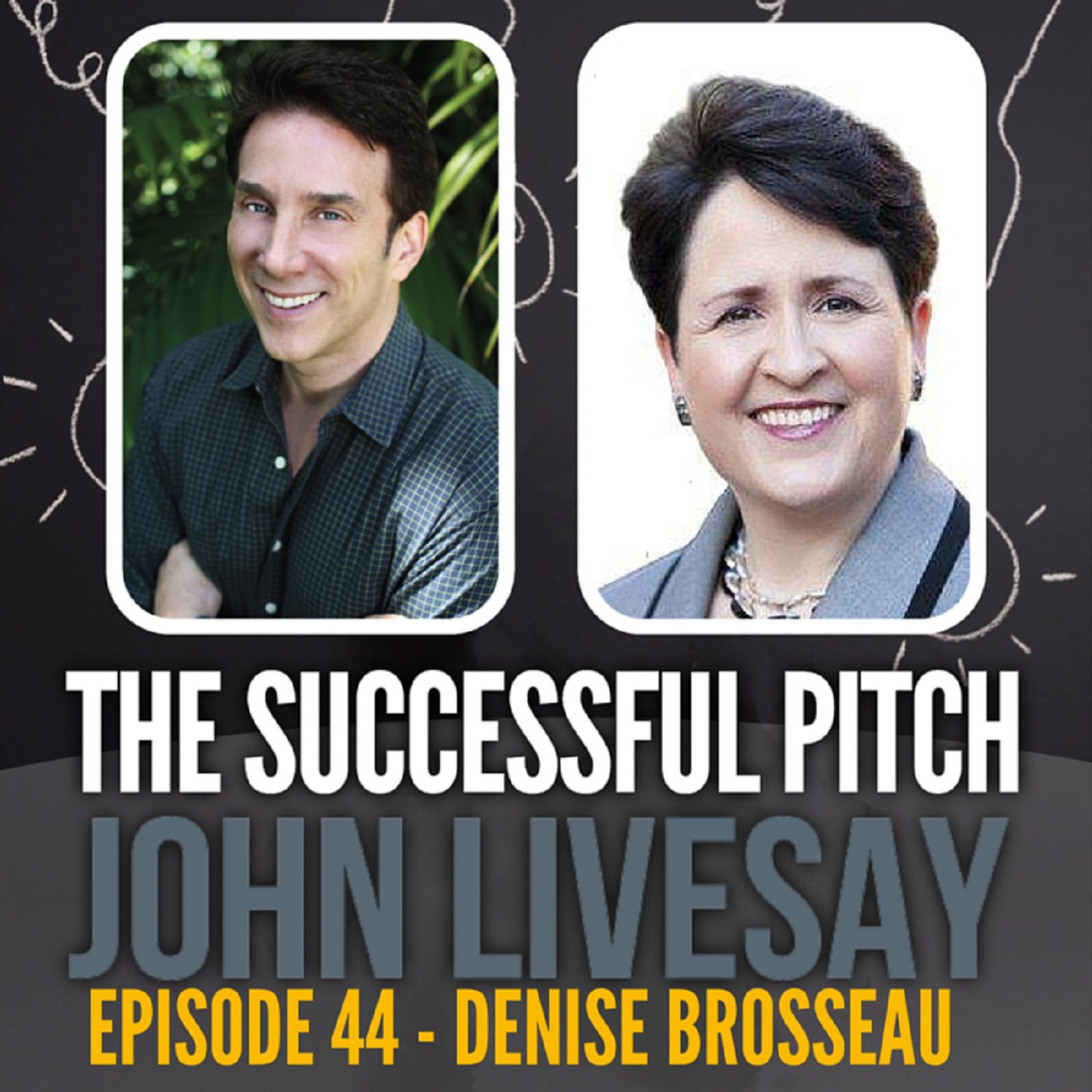
Listen To The Episode Here
Episode Summary
Denise Brosseau is a thought leadership strategist, author, and business advisor. Denise is the CEO of Thought Leadership Lab, which specializes in building leaders into thought leaders. She serves on several startup advisory boards such as Vermillion and Kokko, Inc and talks to John about what thought leaders do differently from regular leaders.
Ready To Be A Thought Leader – Denise Brosseau

Ready to Be a Thought Leader?: How to Increase Your Influence, Impact, and Success
Hi and welcome to the Successful Pitch Podcast. Today’s guest is Denise Rosseau who is the CEO of Thought Leadership Lab. She’s the author of Ready to be a Thought Leader?. She was the 2012 Champion of Change at the White House, and in 2014 was named one of the Top 100 Women of Influence in Silicon Valley. Denise, welcome to the show.
Happy to be here.
You have so many great accomplishments and awards, but I always love to hear of what inspired you to become involved in Silicon Valley and entrepreneurships and helping other women get involved in this. Take us back to your first thoughts of, “I’m going to make a difference.”
It’s always such a good thing to start back at that. What’s the why? What is it that drives us to keep going? There is a lot of that thinking that I try to do with people who come to me who think about this idea of taking the stage, is to start with that why.
For me, it really began actually in business school. I took this wonderful course on creativity in business. The leader of that course was really a guru in that arena and he had us do a lot of very deep thinking about our vision for our future and what we stood for in the world. I came away from a several month exercise with a mission statement. That mission statement was really around more women leaders at the top of every organization.
It came from a deep place that I look around me and I say, “The world is not really working the way I want it to. If we had more women’s voices, more diverse voices at those tables, I believe that some of the issues that I really, deeply care about are going to come out differently.” My work for the last 20 years has been really around all the different ways in which I can help move that agenda forward.
I love it. The research certainly backs you up, that women CEO’s perform extremely well. I’m curious, was this creativity in business class at Wellesley, or was it at your Stanford graduate?
It was actually Stanford Business School.
Interesting. How nice that they have a class like that.
I know. It was definitely my favorite course, along with the entrepreneurship course I actually had the chance to take with Jim Collins. You have these unique opportunities in your life that just coalesce around the future that unfolds for you. Those were two of them.
[Tweet “There are opportunities that coalesce around the future that unfolds for you.”]
Anytime a guest, and there’s not many, you’re in a very select few, that have been involved in any way, shape, or form with the White House, I’m always curious to hear about that. Can you tell us about this Champion of Change award?
Absolutely. You go along in your life and you work hard and you try to make a difference and it’s occasionally true that somebody reaches out from a place like the White House where it’s one of those astonishing moments. You get those emails saying, “You’ve been recognized as a Champion of Change.” You’re like, “Wow. Okay.” First, you look at the return address to be sure it’s real.
Not a prank.
Let’s be honest, you don’t always believe it. For me, it was such a wonderful culmination of the deep amount of work I’ve done in women’s entrepreneurship. I was actually nominated by Springboard, the group that I helped start years and years ago. I still serve on the national advisory council. The Champion of Change award was really around people in the country, men and women, who had been doing work around encouraging entrepreneurship in a lot of different communities around the country.

The Champion of Change award was really around people in the country, men and women, who had been doing work around encouraging entrepreneurship around the country.
They selected a group of us to come and be recognized for that work, and also to have a real tribe sharing. It was just such a wonderful event because in addition to the recognition and the chance to hear of some great stories, which of course, we all want to hear about how others did it and be able to tell our own stories, also having these private rooms where everyone at the table is equally committed to the same cause, and to have a chance to talk.
It was co-led by this great group, Startup America, and their work around how can we get communities to coalesce around ecosystems to help everybody collaborate and cooperate to work even more effectively. They were sharing what they learned, we were all sharing what worked in our communities, and we all came away more energized and empowered and also educated on what was working, the best practice sharing that we all seek and we can’t often find. I thought it was a win-win for me and of course it’s lovely to put that on your resume. It’s fun to go to the White House and meet all these amazing people.
I can imagine. I love what you said about the tribe sharing. That really is one of the keys to being a successful anything, whether you’re an entrepreneur, a founder, an investor, is finding your tribe and finding those people that you can learn from and that you can hopefully contribute something to. Don’t you agree?
Absolutely. So much of the way that I’ve learned to think about this is how much more powerful we can be when we find our tribe. This came to roost for me. I’m running this non-profit years ago here in Silicon Valley, called the Forum for Women Entrepreneurs. I was the founder of the organization with some other fabulous people. We were really churning some great programs and great events and really getting women out there and doing great things. Then we started to grow to other offices and other cities.

That was my invitation into this entire tribe of people like me who were working hard at the grassroots level to help women who were growing big business.
One day in 1999, I get this phone call from the National Women’s Business Council. I’d never heard of them. What’s the National Women’s Business Council? That was my invitation into this entire tribe of people like me who were working hard at the grassroots level to help women who were growing big businesses. Not a lifestyle business, but a scalable business that is technology, life sciences companies, media companies, who are really thinking big, raising venture capital.
Once I realized I wasn’t the only one, it took everything to another level. I’m always encouraging people to think, “Where is your tribe? Can you amplify those other voices? Can you convene those people? Can you create much more rapid change by bringing those people to the table together?”
[Tweet “Where is your tribe? Can you amplify those other voices?”]
That’s it, isn’t it? Rapid change when you’re not doing it alone. Not two years later, last year, you were recognized as one of the Top 100 Women of Influence by the SV Business Times. Is there one thing that they really pointed to and said, “That’s why we’re putting you in the top 100 for?”
I think what I’m known for in Silicon Valley is being the one who starts everything. The organization I started, what was called the Forum for Women Entrepreneurs, now called Watermark, is very well known here. I also started another group called Invent Your Future, which is also quite well known and runs a conference here in the Valley. I started Springboard, which has impacted a lot of people. I’m the gal who starts great programs and conferences and events and tribes for women. I think it was the culmination of all of those things together that led to that award.
Our listeners can certainly relate to that, because if you’ve got the entrepreneur spirit, you’re inspired by starting new things. You have multiple things that you’ve started which have all been hugely impactful and successful. Tell the listeners who may not know about Springboard, how great it is and what it is.
Sure. When we first began the journey to create Springboard, it was a time in the United States where there was literally no opportunity or at least not a very visible opportunity for women to come to the stage in front of a community of investors to pitch their big business ideas. At the time, there was really only one, VentureOne was the conference. If you saw two women on the stage it was a really unique year.
Most of what we realized at that time was that there just wasn’t this preparation that was necessary. Most women were doing big businesses for the first time and they were not serial entrepreneurs, like many of their male colleagues. Venture capital was, for the first time, even slightly available for women.
Our thinking was, if we could create a venture conference that was for women, if there was a three to six month program prior to the event, that was actually selecting the best entrepreneurs and then putting them through a boot camp, a series of mentorship opportunities and a chance to really prep their business before they got on that stage, and then in addition, some introductions to the right people, the lawyers, the bankers, the accountants, the folks who can really help them shore up their business idea and get it ready for prime time, those women were really going to shine.

Most women were doing big businesses for the first time and they were not serial entrepreneurs, like many of their male colleagues.
We started this here in Silicon Valley in January of 2000. Since then, we’ve hosted these programs, not only across the United States in multiple cities, but we’ve also gone internationally and hosted programs in Australia and Israel and down in South America. The work has now brought, I think we’re close to 600 women entrepreneurs. The numbers are astonishing. Participating businesses have raised $6.7 billion in capital in fifteen years. We really have an amazing track record.
What I’m even more proud of, because of course the numbers say a lot, but there’s another piece to it and that is this tribe of 600 women who have now, many of them are serial entrepreneurs. They’re coming back to us for the second and the third business. They are supporting each other, they are serving on each other’s advisory boards, they’re nominating and recognizing each other and helping each other to get to that finish line, and also supporting when things don’t work.
I think that’s the gift that keeps on giving, is this alumni community that we created and continue to bring together every other year. I just love going and I try to MC those events every other year and getting to see what’s come as a result and seeing the power of these women now. They’re in big companies, they’re entrepreneurs, they’re executives, consultants. The knowledge and information that they got and the connections that they got took their careers to a whole other level.
How exciting. You have also written what is a big favorite of many, many people. A great book called Ready to be a Thought Leader?. What I find so interesting about that is it’s not just ready to be a leader, but ready to be a thought leader. Can you give us your definition of the difference between the two?

Being a thought leader is to realize that that change that they’ve created within their own organization or their product or their service could really have a wider impact.
That’s such a great question because I do think it’s a journey from leader to thought leader. Leader is someone obviously within a single organization or entity usually, who begins to make change, who begins to create a followership around an idea of doing things newly, doing things better, shipping a better product, creating a new service, whatever it might be.
Then, to me, to take it to the next level, is to realize that that change that they’ve created within their own organization or their product or their service could really have a wider impact. They understand that by building a tribe of followers, by creating a blueprint of what they have, by convening within their industry, that they can broaden their change.
That, to me, is thought leadership. It’s taking that knowledge of what you’ve done, the best practices, the lessons learned, and sharing them in a way to impact and broaden the impact that you’ve had.
We’re going to tweet that out.
That is when it really makes a difference, I think.
[Tweet “Create a tribe of followers.”]
Fantastic. I love it. You write for many, many companies, like Fast Company and Inc. and other big publishers. I love your story, which I believe you said comes from your blog, Why Leaders are Great Storytellers.
When you’re pitching someone, I’m constantly telling clients, it’s all about being a good storyteller because people remember your stories, not your numbers. I’d love to take a little deep dive, if we could, into why is storytelling so important. You said this line in here about, “We see ourselves in a story.”
Yes. It’s exactly what you said. We remember those stories. We engage with story. We don’t engage with numbers. They’re forgotten moments later. A good story where you can share what’s the change that you’re bringing about, I learned this from two places. I learned this for myself when I was pitching the Springboard conference, going out and talking to media and talking to funders.
When I could share the stories of the women entrepreneurs we were helping, that’s when I got people on board. It wasn’t the story of Springboard, that was somewhat interesting. When we could share the stories of iRobot and Constant Contact and ZipCar and the companies we were helping, people are very involved and engaged with those stories. They want to see how women are making a difference and the great ideas that they have.
[Tweet “They want to see women making a difference and the great ideas they have.”]
Secondly, I learned it when I was trying to create a community of people who understood how to pitch their businesses. Here we are at Springboard and we get women up to tell their story about their companies. I have to say it was a little painful sometimes. They just couldn’t do it and they would not understand that a simple story of why they were doing their business was far more compelling and more likely to get an investor to come up to you after the session than it was if you stood up there and, “Our financials say we’re going to … ” Nobody cares. Yes, you have to have that, that is necessary, but not sufficient. The story is what people engage with.
I love that line.
[Tweet “Your why is more compelling than your numbers.”]
Yes, it is.
One of the things I love that you wrote is, “When you simplify something, it doesn’t mean you’re dumbing it down.” So many people, especially in technology, whether it’s about artificial intelligence or whatever it is, they try to wow everybody with just how important this is and how it all works. It’s like, “No, explain it to me like I’m a seventh grader.” It doesn’t mean that we’re taking away or dumbing it down.
The guy who I think really showcased this so well in the book is the guy Avinash Kaushik. Avinash was at Intuit and he started this wonderful blog called Occam’s Razor. When he talked to me about that decision to step into being a blogger and, in his field which is search engine optimization and web analytics, there was a lot, a lot, a lot of blogs out there.

Avinash Kaushik realized that the gift that he could bring to his followers was this idea of un-complexifying.
It’s very complex talking about digital marketing and web analytics and search engine optimization.
Which is that idea that we’re not dumbing down, but we’re simplifying information so that others of our followers can understand and actually learn from.
He was trying to get other people to adopt these search engine optimization tools, see what worked and what didn’t. As he focused on writing every blog post, he realized they had to be un-complexified, which of course is a made up word, but it just sums it all up for me. That’s what we’re doing here in the world. We’re not trying to wow people with the acronyms.
Right. Denise, can you also speak to what you wrote about the importance of a metaphor as a way to tell stories?
Yes. I really learned this so beautifully from Robin Chase of Zipcar. She was one of the people that I immediately reached out to when I started my book because she’s always been a leader that I’ve followed and has built a tribe around her ideas on how do we use peer to peer networks and, as the founder of Zipcar, how she’s learned how building collaborative economy businesses is going to actually help transform the global economy by eliminating some carbon emissions.
That’s a pretty complex story. Instead, she says what she’s always looking for is, what are the metaphors that people can understand? She did this great blog post, Fossil Fuel is the New Slavery, morally and economically corrupt. When you think about that, I want to read that article. I want to know why is fossil fuel the new slavery and what does that mean for my decisions everyday as I drive my car. Should I be driving a Prius or a hybrid because I don’t want to be engaging in slavery? Slavery is obviously not something I believe in.
[Tweet “Metaphors captures people’s attention.”]
That metaphor captures people’s attention and gets them to re-examine their preconceived notions. That’s what we’re hoping for all of us when we’re trying to engage people in a new idea. We have to get them out of the mindset that they’re already in that’s the way it’s always been done, and get them to reexamine and think in a new way. That’s what metaphors help people to do.
The other thing that’s really valuable from your expertise and your storytelling is the importance of being vulnerable, which is so counterintuitive to what people think they need to do when they’re presenting or pitching. It’s like, “I need to come across completely confident and 100% always perfect.” Ideally, when you show a little bit of vulnerability, that’s how people connect to you. You have a wonderful example of that, if you wouldn’t mind sharing that.
I learned this myself, and I like to share this story, that in 2011, here I am, I’ve been invited to speak on women’s entrepreneurship at the governor’s conference for women down in southern California. There’s 12,000 people at this conference, at least a thousand of them are in the room, maybe more. I’m on the stage with these three very impressive women. One of whom is literally a swimsuit supermodel who had a big business and was very well known and successful, and then these two women who’d written a book on entrepreneurship. Then there’s me who runs the Forum for Women Entrepreneurs and Springboard.
I’ve obviously been invited there to be the content speaker, because I had all the resources and I knew everything about women and entrepreneurship. These other women were really there to be the pizzazz. I’m listening to them, they’re all presenting, presenting, presenting. I realize, I’m four out of four. If I go to my content, I’m going to be a blur rather than this whole amazing voice of the future among all these amazing women. I realized, I just have to get real. I have to rethink my presentation style.

I realized, I just have to get real [and be vulnerable]. I have to rethink my presentation style.
I’ll tell you, it was this remarkable moment. After the talk, there was a line around the corner to talk with me. Here’s the swimsuit model who has five people. I’m thinking, when they walked in that room, I’m sure they all thought they were going to talk with her because she’s the famous one. By sharing this personal epiphany … Not just for the sake of getting people to cry and not for the sake of getting people to like me, but really from an honest place of why I went back to business school, why I realized entrepreneurship was the path for me, why it can be for you.
There was a theme and there was a line that I was drawing between that story and what I wanted them to be thinking. That caused this huge outpouring of people coming up and approaching me. That’s what we want as thought leaders. We want to be approachable. This is not about telling stories just for the sake of stories, but for helping people see a path forward for themselves.
That’s brilliant. That is just everything. The same thing is true when you’re pitching an investor. You want them to see themselves in your story and be part of your team and be inspired to wait in line. Of all the pitches they heard at demo day or whatever the situation is, they want to ask you more questions because they want to know more about your story. It’s just a great, great example.
That’s in fact what happened at our first Springboard. There was a woman whose business was not the best business of the 27 businesses that presented that day, but she walked out on the stage twirling a basketball. First of all, that got everybody’s attention, and then she told her personal life story about how basketball and this ability to be good at sports had allowed her to go to college and get these college scholarships, and now she was starting a business to help other athletes from very poor families get scholarships.
[Tweet “As entrepreneurs, we need to be good at telling stories.”]
Everybody was talking about her for the rest of the day. Everyone wanted to go and fund her business. Again, as I said, the business model? Nothing much. She, and her story, we all wanted to help those athletes because we saw ourselves in her, we saw the help she was going to offer as something we could get on board with. It was such a magical moment. It’s totally underlined for me why, as entrepreneurs, we need to be good at telling stories.
Great. One of your other amazing skills is really helping people sell themselves. Let’s face it, that’s what you’re doing when you’re pitching for investors. You have this great one page plan that you talk about how you put that together, that your goals about being visible and being credible and your reputation and how the fact that you had written that down and even shared it with some people was what somebody’s reminded you of. “Oh, I should put my name in for something as well because that’s on my one-page plan.” Can you tell us about that?

The One Page Business Plan: Start with a Vision, Build a Company!
There’s funny reminders of your life. I had the opportunity years ago to become certified to teach and to use, of course, the one-page plan. A guy named Jim Horan over in Berkeley wrote this book called the One Page Plan. There’s numbers of other versions of the book. I read the book. I used it for my own business. I immediately called him and said, “Wow. This was great. How do I help other entrepreneurs use this tool?” I got certified and then of course wrote my own plan as you’re supposed to do when you learn a tool like that.
Then, I had this opportunity. This woman from my past called me and said, “There’s a board position open for a for-profit board. Who do you know who should be on this board?” I said, “I’ll drop you an email, let me think about it overnight.” In the morning, I dropped her three names of great people that I thought should join the board, and she wrote back and she said, “Didn’t you show me your plan, and wasn’t it on your plan that you wanted to serve on a for-profit board?” I’m like, “Oh, yeah!”
With your own plan, you can’t put it in the drawer. You’ve got to share it with other people and have them hold you accountable. She put all four of our names forward, by the way, and I got the job being on that board. It was so much about having written it down, having committed to it, and having publicly shared it in a way that let those other people bring it back to me and invite me to live that future that I had seen for myself.
[Tweet “Have a ‘one-page plan’.”]
I love it. Write it down and share it. It’s really the key. You had someone who’d hold you accountable. One of the things I want to ask about, it’s a perfect segue when you’re talking about how that led you to being an advisor, is you’re an advisor on multiple companies, but two that really jump out at me, and I’m probably going to mispronounce both of them … K-O-K-K-O. I’m to even going to try.
Kokko. Okay, just like Coco Chanel.
Yes.
Tell us about Kokko. I see that it develops color accurate mobile apps for making shopping easy, which I’m guessing has everything to do with fashion, but maybe paint colors? That sounds like a really great product.
Eventually, it will be all of those things. The CEO is actually a woman from Hewlett-Packard. I had met her, we’d served on a panel together years ago. She told me about this idea she’d come up with for using the color technologies within HP to create an app for one of their clients to actually help women choose their foundation makeup color. Turns out, you probably had never this challenge, but walking into a store and trying to buy foundation that matches your skin color when you cannot see the color on your skin, it is very hard. Women often buy the wrong makeup.

You could take a picture of your skin, and in any lighting it would do the color match and then come back to you with recommendations for the perfect makeup for you.
Yet they often stick with that make up for years because they don’t know how else to do it. Kokko created an app to actually do that matching. You could take a picture of your skin, and in any lighting it will do the color match and then come back to you with recommendations for the perfect makeup for you. They built this within HP, but nobody in HP had ever actually done anything with it.
Eventually, she was able to take that IP out and that was what she built Kokko around. That technology, she’s now rebuilt and owns the IP for that, and this first app is going to launch I hope in the next month or two. It’s a very cool little app that allows you to do that. Take a picture and then get your perfect matching foundation.
More than that, it also then recommends other products that would be good for your color and skin tone. Eventually, absolutely, for paint colors, for men to buy the right tie to go with the right shirt, there’s all kinds of color challenges for us, especially when we’re shopping online. You can’t touch it, you can’t see it, you can’t compare it. Kokko technology allows you to do that.
I could even see it for cars. Do I like that shade of car? It looks different in certain sunlight versus not, and all that great stuff. What I also find fascinating about that is her background in HP, which is known for having the best inkjet printers, which is all about color, and she’s completely taken that expertise. The questions investors ask a lot is, “Why you and why now?” She is the perfect background for why she’s the one to be running Kokko.
[Tweet “The questions investors ask a lot is, “Why you and why now?”]
Which is why I love to tell the story of the day that she decided she was leaving HP and she called me because she’s thinking, “What am I going to do next?” I went and had lunch with her. She didn’t know me that well at the time, we’d met a few times. I’d heard about this technology for so long and had been so excited about it that I literally said to her at lunch, “I know you don’t know me well, but I just want to say that right now, I would get down on my hands and knees and beg you to leave HP and start this company.”
She looked at me very startled. We had a long conversation that day of what it would take for her to do that. She now calls me the fairy godmother of that business because I really saw that future that she’s now living, and she’s living it so beautifully. Now I’m an investor to her company, I’m an advisor of the company. Now she can blame me if it all doesn’t work out.
I’m sure it’s going to work out with you as part of her tribe. The other one, let’s just briefly touch on that if we could, is Vermilion? Did I pronounce that right?
Yes.
I love the concept that there’s a blood test to decide whether a tumor is malignant or not. What a problem solution you’ve got going on there.

Valerie Palmieri, who is the CEO [of Vermillion], was a Springboard presenter and now a serial entrepreneur.
It’s a women’s health company. This is the first of their blood tests that is going to be used for identifying these markers that are now being able to be identified, and using some very complex algorithms, to be able to identify and help save lives. I think it’s remarkable what they’re doing. I’m so proud to be part of it. Even more exciting, is Valerie Palmieri, who is the CEO, was a Springboard presenter and now, as I said, serial entrepreneur. She’s now coming back with another company. Using her knowledge from the first one, she is likely to have even bigger success on this next one.
Great examples of how to pitch something in a very short amount of time. We easily understood what the problem was, and what the solution was, and why the people running it are the perfect people to be running it. That’s incredibly useful. Before I let you go, I just want to ask, really quickly, about your VRE program. When you’re selling something it’s, have a vision, be able to execute it, and focus on relationships. That’s what the VRE stands for. Do you have any words of wisdom you can share with on that?
[Tweet “Vision, relationships and execution.”]
This model was developed by Dr. Frank Greene, one of my mentors who’s now passed, but he really studied, deeply, a lot of very, very successful executives and entrepreneurs. He recognized that the skillset we all need to be successful as leaders is this ability to craft a vision and be able to articulate it, then to build the relationships that it takes to implement that vision, and third to be able to execute.
His point of view is that the best leaders are good at all three of those things. Those of us who may not be (good at all three) had better figure out how to supplement our skills. Mostly, what we need to be doing is building on all of those skillsets throughout our career to get better and better.
Love it. So helpful. Besides your wonderful book, Ready to be a Thought Leader? and the One Page Plan, are there any other books that you would recommend either about business or life to our listeners?

Switch: How to Change Things when Change is Hard
I’m really fond of that book Switch by Chip and Dan Heath. I don’t remember the subtitle, but they give some very terrific stories to start with and, secondly, some blueprints for how to make change when change is hard.
I quote them in my book and I use their theories as I go out and talk about being a change maker. Ultimately, being a thought leader is about starting as a change maker, so you have to be successful at that and I think that book is very good at helping you to do that.
That’s fantastic. Denise, we’re obviously going to list your book and these other books in the show notes for people to click and buy it, but how can people follow you on social media, what’s your Twitter and all that good stuff?
They can find me on my website at ThoughtLeadershipLab.com. Secondly, my Twitter handle is ThoughtLeadrLab. I’m also on LinkedIn and very active there. People can find me there. I have a Facebook page under Thought Leadership Lab as well.
Fantastic. It’s been a pleasure. Thank you. You are so full of information. I can see why you’ve won all these awards and why you’ve started all these things. It’s all full circle that the things you started are now the things that you’re advising and investing in. It all comes back to you, which I’m just thrilled to see. Thanks again for being on the show, Denise.
Thank you for including me. I appreciated the conversation.
Links Mentioned
Thought Leadership Lab
Ready to Be a Thought Leader by Denise Brosseau
Springboard Enterprises
Kokko Inc.
Vermillion Inc.
Switch by Chip and Dan Heath
Denise Brosseau Twitter
Denise Brosseau LinkedIn
Want the Transcription?
Crack The Funding Code!
Register now for the free webinar
Check out John’s Latest Book
Share The Show
Did you enjoy the show? I’d love it if you subscribed today and left us a 5-star review!
-
- Click this link
- Click on the ‘Subscribe’ button below the artwork
- Go to the ‘Ratings and Reviews’ section
- Click on ‘Write a Review’
Getting There And In Front Of Anyone – Interview with Gillian Zoe Segal
Posted by John Livesay in podcast | 0 comments
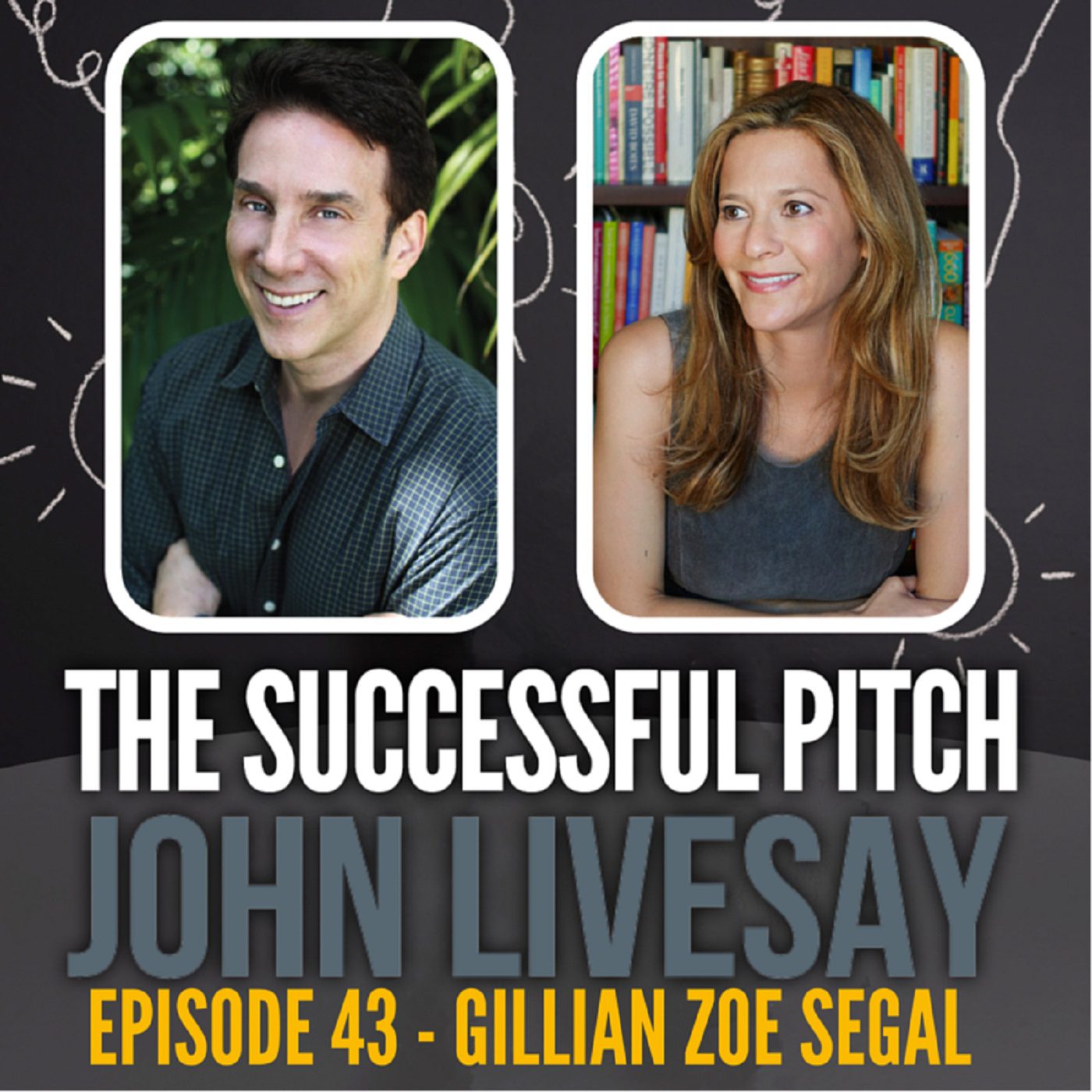
Listen To The Episode Here
Episode Summary
Gillian Zoe Segal is the author of Getting There: A Book of Mentors. She interviewed highly successful entrepreneurs, mentors, and inspirational people such as Warren Buffett and Anderson Cooper for her book, which took roughly five years to complete. Gillian talks about some of the key lessons entrepreneurs can learn from successful individuals, how to not take rejection personally, and why persistence is one of the keys to success.
Getting There, Getting In Front Of Anyone – Interview with Gillian Zoe Segal
Hi and welcome to The Successful Pitch podcast. Today’s guest is Gillian Zoe Segal. She is the author of the book Getting There; A Book of Mentors. Gillian has incredible access in this book from Warren Buffet to Michael Bloomberg, Anderson Cooper, to Kathy Ireland. Gillian, welcome to the show.
Thank you so much for having me.

Getting There: A Book of Mentors
The people who listen to The Successful Pitch podcast are often curious about, “How can I get in front of the right investors? I know I need to know how to pitch, but how do I get to meet these people?” You’ve written an incredible blog on your LinkedIn profile with over 128,000 views, congratulations on that. It’s been featured in Fortune and Inc., about how you can meet anyone you want and here’s the formula you use.
Before we get into the incredible interviews, I’d love to have you walk us through how do we understand the lay of the land of these busy people?
For my book, I interviewed 30 luminaries. It took me five years to complete the book, mainly because getting these super busy people to participate was really hard. I put a tremendous amount of effort into it. The blog post you’re talking about is really all the tricks I used. It was a learning curve to do it. I learned from mistakes and that kind of a thing.
First of all, you were talking about the lay of the land. I think that you’ve got to understand, if you’re trying to get in touch with a very successful person, for whatever reason, they are going to be extremely busy. You just have to know you are not the most important thing on their radar. You have to not be upset if they ignore you and reject you. You have to know that that’s going to happen before you even set out, and not let that take you off course.
I love that. It’s so relevant to founders trying to get in front of investors. Sometimes, even if you have a warm intro into an investor, and I’m assuming you had some warm intros into some of these amazing people, they still can ignore and reject you even with a warm introduction. It’s not always a guarantee.
It’s completely not a guarantee. You have to know that if someone’s ignoring you, it doesn’t mean that they don’t like your product. It might mean that they’re just too busy so try again, try again, try again.
I love this whole concept of how do you handle rejection and not taking it personally, is so important because if you take it personally, then you’re going to be depressed and discouraged, as you said. You start doubting yourself. Then it becomes a self-fulfilling prophecy.
Completely.
How did you learn not to take rejection personally, personally?
I think if you put yourself in a position where you get rejected enough times, you get a tougher skin. When I was contacting all these luminaries, I just got rejected over and over again and I just learned to not let that bother me. What’s interesting about that is that a lot of people in my book, the people who are billionaires in the book, credit early jobs in sales with giving them the skills they needed for their ultimate success.
[Tweet “If you get rejected enough, you get a tough skin.”]
Basically, it all goes down to rejection. The early sales job puts you in a position where you’re going to pitch something and get rejected again and again. It toughens your skin. I think that’s really one of the big names of the game, is to have a tough skin and get back up and be as enthusiastic in your fifteenth pitch as you were in your first.
There you go. You can’t let the previous no affect your next request.
Exactly. You can’t walk in like you’re already defeated. You have to walk in with some good energy and like you’re excited about your product or your idea or whatever it is you’re trying to sell.
What gave you the idea to write this great book about getting there and finding these mentors?

At a certain point in my life, I found myself looking around at different highly successful individuals and thinking, “I wonder how he figured his career path out?”
Growing up, I never really had a mentor. At a certain point in my life, I found myself looking around at different highly successful individuals and thinking, “I wonder how he figured his career path out? How did he get there? How did she become so successful? Why are these people successful and so many others aren’t? I wonder what the trick is?” I just decided to knock on their doors and ask everybody all of the questions that I wanted to know.
I love that. Your curiosity was your passion, basically. That’s what kept you going.
Exactly. I asked all the things I was curious about and I assumed that if I was curious about it, other people would be too.
Did some of the people want to know who else was already committed to being in the book to make sure that they were part of an elite group? Was it difficult getting the first one or two?
You know what’s interesting, some people did want to know who was in it, but the real, real, real, the biggest leaders, I would say, Michael Bloomberg and Warren Buffett, they didn’t care. They didn’t ask. If you’re up there, you know that if you’re in it, it’s going to …
That automatically elevates it.
I don’t know if it’s because they knew what I just said or because they’re such independent thinkers that they don’t care. If you’re invited somewhere, you could just say yes. You don’t need to say, “Who else is going to be there? What’s it like?” That’s a little bit more of an insecure way to behave.
I also really love what you write here about never accept no from someone who can give you a yes.
I love that. That is a piece of advice that a friend of mine gave me early on in the process. Basically, what that means is if you’re approaching someone and you get bounced by that person’s publicist or that person’s assistant or something, don’t get defeated. Try another angle. I use this metaphor that if you can’t get in the front door, try the back door. If you can’t get in the back door, try the side door. If that is locked, then try climbing in a window.
[Tweet “Never accept no from someone who can give you a yes.”]
Basically, there are different avenues to get to people. Sometimes, if I called someone’s office and they rejected me, I might call a business that that person owns and try to get in that way. The toughest part about approaching people is having the person know that you’re even there. Everybody has so many guards around them, gatekeepers, that you can’t be sure. If you’re contacting Warren Buffett, how can you be sure he ever even saw your request? That’s the tough part.
That resilience is exactly what startup founders need. They have got to figure out a way to get in front of the investors through warm intros or whatever it takes. One investor said, “If you can’t figure out a way to get to me, you probably can’t figure out a way to get to your customers.” Part of that test is, “Oh, are you smart enough and resilient enough to find me, to get to me?” Your examples here are spot on.
The other thing that’s so great that you write about here is, once you get a response, don’t let go. Instant follow-up is everything. You cannot let that die down because they’ll forget you in ten minutes.
They’ll forget you, yes. Exactly. Think about how many emails are coming into their inbox. Basically, if you see a sign of life, grab a hold of it and keep the ball rolling in the direction you want it to go in. Say, “Can I meet with you,” or this or that, whatever it is you’re after.
I used to send people a copy of my first book. I’d always try to get as personal as I could. Get the assistant’s name, that kind of thing. Try to form a connection so that at least when your package comes to the office, it might say, “To …” whoever you’re after, “To the bigwig, care of …” and give the specific assistant’s name.
[Tweet “You have to do whatever you can to not be shuffled to the bottom of a huge pile.”]
At least you know that assistant will get it and open it and you’ve emailed with that person. You have to do whatever you can do to get yourself noticed or to not be shuffled to the bottom of a huge pile.
Also, you talk about, the more human you are, the harder it is for them to say no. That personal touch that you just described is a great example of that.
Definitely try to form a connection with whoever you can form one with, whether it’s an assistant, or a manager, or a publicist, or whatever.
That’s really what it’s all about, especially in the world of startup founders. Founders need to have a connection with investors because, at the end of the day, when everything else is what it needs to be … You know your numbers, you have a great product, you have proof of concept, all that good stuff, they’re going to invest in people they like and know.
You’ve got to make sure that you’re putting your best foot forward even in how you approach to get the meeting. If their assistant says, “Oh, this guy’s a nightmare,” then the person’s like, “Oh, then if we invest in them, they’re going to be a nightmare to work with.”

Don’t be rude to anyone, always be pleasant and nice.
Yes. You have to be the kind of person that you are to work with all around. Don’t be rude to anyone, always be pleasant and nice. A little anecdote on being a real person when you can, I get a lot of requests on LinkedIn and I don’t accept any of them from people who don’t put a picture up. I think it’s just a widget to me. If they’re not putting a photo up, they might have something to hide. For all I know, the people with photos, it’s a fake photo, but I know that they’re at least holding themselves out there.
I love that because one of the investors I interviewed said, “Make sure you tell your clients to make sure they’re LinkedIn profile represents them and their brand.” You did such a great job of that on your LinkedIn profile where you have the actual book as your title, as your background picture. It’s not just your profile picture, step it up, people. Have some branding going on on your LinkedIn profile so that when people click on it, especially if you want to connect there, that they know what you stand for.
Yes. People do judge books by their cover.
I’m sure there’s a story there about working with … Were there other titles before Getting There? Or were there other choices of colors that you had to decide?
I liked Getting There. Actually, at one point it was called The Crooked Path because most people don’t have a smooth, steady ascent to the top. Most people have some kind of failures or obstacles they have to overcome. Then that title, The Crooked Path, sounded like it could be about something illegal, the word crooked. Then it got to be The Jagged Path, but I liked Getting There.
I like it too. I also love hearing the back story and that’s what you are able to get so many of these people in your book to open up about the back story. In fact, I remember Anderson Cooper talking about overcoming his fear of taking the first step and that it’s not a linear straight up path to success. You look at his life and you look at his connections and his background and his career and you assume, “What did he have to be afraid of?” But everyone has fears.

Everybody has a good story. The trick was to get people to be open and talk about it.
That’s what was interesting. When I first started doing the book, I thought that I had to find highly successful people who had a good story. Then I soon realized that all I had to do was go for highly successful people because basically, everybody has a good story. The trick was to get people to be open and talk about it.
The way I did that is that I told everybody to just talk and that I would absolutely send them their essays before publishing and if they wanted to change anything or cut, they could. Almost no one changed … People changed like, “Oh, my daughter, Sarah with an H, not just an A,” or whatever. I had a really good response from the essays.
I love it. One of the people you interviewed of course is Matthew Weiner, the founder, the co-creator, or the creator of Mad Men, one of my favorite shows. He talked about how a lot of artists don’t like, they hide the brush strokes. They want to make it all seem so easy.
For you, you were willing to not hide your brush strokes and say, “I had other titles before I got to Getting There.” There’s a process. The end result is not always the first thing. In the founding world of startups, it’s called pivoting. You keep changing it until you get it just right. Never assume that you’re going to not have to keep evolving the idea and evolving your pitch.
It took Matthew Weiner seven years to get his show, Mad Men, on air. That’s the time from when the script was finished until finally somebody wanted to put it on air. During that seven years, it was being rejected all over Hollywood. He really has an incredible story and he really persevered.

It took Matthew Weiner seven years to get his show, Mad Men, on air. He really persevered.
One of the things that he says that I love, which might be applicable to this audience is that he says that, “When you get rejected, you should register the fact that the person doesn’t want whatever you’re pitching, but don’t always listen to the reason why.”
He says that a lot of times people would give capricious justification to stop from hurting your feelings. If you go around altering your work or your company, whatever it is, for every rejection, you’re going to be running around trying to please an imaginary audience.
People would say to him, “Yes, I like this. If only Mad Men wasn’t a period piece,” or, “If only it wasn’t this, or if only that,” or whatever. He really stuck to his guns because he really believed in his original vision and it ended up paying off.
I love that. We’re going to tweet that out. When it comes to rejection, don’t always listen to the reason why. Matthew Weiner took seven years before he got his show done and you took five years to get your book done. There’s some similarities of perseverance and action, that’s for sure.
[Tweet “When it comes to rejection, don’t always listen to the reason why.”]
One of the things I love about what Kathy Ireland said to you was a lesson she learned from her father, having a paper route myself when I was a little boy, she said her Dad said, “People expect the paper to be on the driveway. You over deliver and put it on their front porch.” What a great life lesson.
She has an incredible work ethic. She’s another one who is like Anderson Cooper. People like to look at her also and see how gorgeous she is and that she was a Sports Illustrated swimsuit model and they like to assume that she probably had everything pretty easy.

Kathy Ireland talks about almost going bankrupt and how she would have to sleep in airports to save money.
She now runs a two billion dollar business called Kathy Ireland Worldwide and she brands over 15,000 products. She failed for years at starting her own brand. It wasn’t easy. She was finally able to launch her own brand with, of all things, a line of socks.
The way that that came about is that she was pregnant and she was offered the big opportunity to model a pair of socks, which was not quite what she was hoping for after being on the cover of Sports Illustrated. She said to the guy, “I’ll do it if I can partner with you. If it can be Kathy Ireland Socks and we go into business together.”
That’s how she started her two billion dollar business. Even once it started, it wasn’t easy. Kathy, in her Getting There essay, talks about almost going bankrupt and how she would have to sleep in airports to save money. It was not easy for her.
I love that. Thank you for sharing that Gillian, because I think everyone assumes supermodel, gazillions of millions of dollars. You don’t need to worry about saving money. That’s great.
Let me ask you about Graydon Carter. Having worked at Conde Nast myself, was it at all intimidating interviewing someone who’s such a great editor?
Totally. It was also intimidating interviewing Anderson Cooper because that’s what he does. I had to figure that my questions are as good as anyone else’s and I’m a good representation of the average Joe. If I’m curious about this, my readers will be too. Basically, I wrote it up, the essay, and I gave it to him and he had very few changes. I guess I’m flattered.
That’s a huge compliment because I know he’s known for circling a lot of things with a red pen, like back in school.
Yes. I also photographed everybody, the book has a portrait of each person. That was also intimidating because Vanity Fair is known for its amazing portraits.
Annie Leibovitz, yes.
I was going up against someone who works with Annie Leibovitz every day. He’s happy with his portrait and so am I.
I love what you said to Warren Buffet when he said, “Look, you can’t take my picture,” and you’re like, “It won’t cut into our ten minutes of time even if I have to take a picture of you running away from me.”
I had a ten minute slot with him. To take someone’s portrait and interview them in ten minutes is really a tall order. I knew that to have him in the book, I had to keep up the formula, which was having a portrait of each person along with their interview. I figured, even if it’s one of him pushing me out his door, I’m going to get one.
Do you notice a similarity between Laird Hamilton, obviously an incredible athlete, John Paul DeJoria, incredible entrepreneur who started that wonderful John Paul Mitchell hair care. Are there similarities between successful entrepreneurs, successful athletes that you can see through their story lines from the interviews?
I think that the most common thread between all of the subjects is resilience and determination. It goes back to what we talked about, what I had to channel when I was trying to get people to participate in the book. Nothing is easy. Nothing worth doing is easy.
[Tweet “Resilience and determination are keys to success.”]
In order to do something and do it well and do it better than others, you have to really be determined and resilient. You’re going to get knocked down and knocked down and knocked down. Everybody in my book found a way to keep getting up after they got knocked down. That’s Laird Hamilton, that’s John Paul DeJoria. You name it. Everybody has been rejected and had failures and obstacles, but they didn’t let it deter them.
That goes back to the rejections that you experienced, which is you kept saying to yourself, “I am passionate about this. What I have to ask these people is just as valuable as any other person interviewing them.” Your confidence level has to be there so you’re not taking rejection personally and that you have a reason to pick yourself back up. Is that a good summary of what you learned and what you did?
Definitely. Kathy Ireland actually has a quote in her essay that I love. She says, “If you never fail, it means you’re not trying hard enough.” I think that if you can look at failure that way instead of taking it personally and letting it deflate you, if you fail and the next time you do it, you say, “This means I’m doing my job. This means I’m doing what I’m supposed to do. I’m trying hard and I’m going to get back up and get back out there. Try the same thing, try something different, learn from this mistake,” whatever it is.
I think you’re really ahead of the pack if you can look at it that way. Remember that quote. “If you never fail, it means you’re not trying hard enough.”
[Tweet “If you never fail, you are not trying hard enough.”]
That’s good feedback. What kinds of challenges did Frank Gehry have, because he’s just so known now for incredible architecture, like the Disney Hall here in Los Angeles. You can’t imagine that anybody would ever reject him, but I’m sure he wasn’t always as successful as he is now.
Absolutely not. He does things a little differently than other people do. He doesn’t fit into a certain mold, especially when he started out and his buildings were different. He wasn’t doing what people thought architects should be doing. On account of that, a lot of his colleagues rejected him and made fun of his work.
He fell in with artists because artists didn’t mind people who did things differently. They embraced that. He had a really tough time. For years, he was on the verge of bankruptcy. Finally, things hit. He has a great story. You’ll enjoy his essay.
Hard to imagine that somebody like Kathy Ireland or Frank Gehry, both facing bankruptcy. Talk about having to pick yourself up. It’s an interesting similar thread there. Talking about Frank finding comfort in the family of artists, you were also able to get Jeff Koons which is again, really someone who has this distinct unique look to his art. It’s not for everybody, but he must have held on to his vision. Do you have anything you can share with us about that essay?
You know what I love? First of all, when he was younger, he worked at the Museum of Modern Art in New York, selling tickets. He loved art and loved being around art. Basically, the way he got to where he is is that he just never said no to an opportunity to share his work in any way. If someone said, “Do you want …” he’d say yes before they finished their sentence, if it was anything. I think eventually, if you’re out there enough and you’ve got some talent, you’ll be noticed.
[Tweet “If you’re out there enough and you’ve got some talent, you’ll be noticed.”]
That’s a great lesson.
I love that. I love his attitude.
This has been an incredible interview. Thank you for taking so much in depth of how you got these amazing people and what you learned from them. It’s certainly incredible information that our listeners can take with them about if you get rejected, don’t listen to the reason why and change your ideas all the time, resilience and determination, and, if you never fail, it means you’re not trying hard enough.
Those are such valuable life lessons, especially for iconic people who we look at and assume, “I don’t know if I’ll ever get to be as successful as they are.” You figured out a way to not only show us how to get there, but how you got there, and that is just as valuable. Thank you so much, Gillian.
Thank you.
Before I let you go, I want to see, how can people … Obviously, we’re going to put your book in the show notes for people to click and buy it. They should definitely check out your LinkedIn blogs. Is there any other way for people to follow you on social media or anything like that?
Facebook, I’m on Facebook. You could give my email address, if you want. It’s [email protected], if anyone wants to contact me about anything. I have that one for book stuff.
Your Twitter is?
That’s easy enough, isn’t it? Are there any other books that you recommend that inspired you about perseverance and resilience that you want to recommend over and above Getting There?
Nothing above.
In addition to, excuse me.
I’ll go recommend Dorie’s book, Stand Out.
Excellent choice. We’ll put that in the show notes of your episode as well. Thanks again. Be sure, everyone, to get this book. If you want to know how to get there, including how to get in front of the right investors, Getting There is a great road map to do it.
Thank you.
Okay, Bye.
Links Mentioned
Gillian Zoe Segal Website
Gillian Zoe Segal LinkedIn
Gillian Zoe Segal Facebook
Gillian Zoe Segal Twitter
Gillian Zoe Segal Email
Getting There: A Book of Mentors by Gillian Zoe Segal
Stand Out by Dorie Clark
Crack The Funding Code!
Register now for the free webinar
Author John Livesay at NewsChannel 5
Share The Show
Did you enjoy the show? I’d love it if you subscribed today and left us a 5-star review!
-
- Click this link
- Click on the ‘Subscribe’ button below the artwork
- Go to the ‘Ratings and Reviews’ section
- Click on ‘Write a Review’
TSP040 | Brandon Esposito – What VCs Want To See In A Pitch
Posted by John Livesay in podcast | 0 comments

Listen To The Episode Here
Episode Summary
Brandon Esposito is an associate at PMA Venture Capital Group where he provides operational oversight, strategic management, and direct operational support to PMA’s portfolio companies. Brandon does a deep dive with John on his LinkedIn article, Paring your Pitch: What a VC Wants to See, and follows up on what VCs are looking for in their entrepreneurs.
Key Takeaways
- 00:02:15 – How did Brandon become a VC?
- 00:05:55 – Investors want to know if your team can execute the idea.
- 00:11:50 – Ask yourself: What’s the problem and whose problem is it?
- 00:13:40 – Does the problem affect a large enough demographic?
- 00:23:55 – Entrepreneurs should be thinking about exit strategies.
- 00:26:35 – What does Brandon look for in an entrepreneur?
- 00:29:35 – Brandon shares his investment process.
- 00:33:40 – Brandon recommends the book Start Something That Matters
Tweetables
[Tweet “Passion with poise is what founders need.”]
[Tweet “The more adaptable you are the more investors want to fund you.”]
[Tweet “Execution and competence are keys to getting funded.”]
[Tweet “How you pitch, shows how you think.”]
Links Mentioned
PMA Ventures
Start Something That Matters by Blake Mycoskie
LinkedIn Post – Paring Your Pitch
Want the Transcription?
Share The Show
Did you enjoy the show? I’d love it if you subscribed today and left us a 5-star review!
-
- Click this link
- Click on the ‘Subscribe’ button below the artwork
- Go to the ‘Ratings and Reviews’ section
- Click on ‘Write a Review’